









Stories

London City Airport Asks for Permission to Increase Passenger Numbers

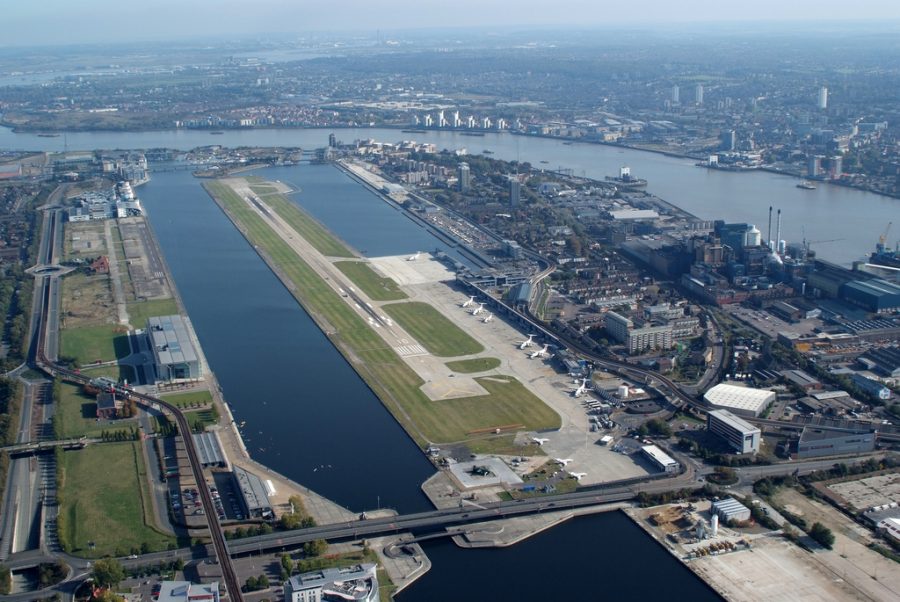
Aerial View of London City Airport (Photo: London City Airport)

London City Airport, one of the five airports serving the Metropolitan area of London, and one of the only two inside the M25 orbital, has filed an application to change its existing planning permission in order to increase its traffic by 38%.

Located in the East London Borough of Newham, just a few miles away from the City of London and its business district, London City Airport is subject to operational restrictions in order to limit the noise disturbance to residents of the area. The total number of flights per year allowed at the airport will remain at 111,000 and no change will be made to the 8-hour per night curfew imposed on operations. However, the press release issued by the airport on Tuesday reports that after a 10-week non-mandatory consultation involving 5,000 respondents, the request was filed to increase the number of total passengers from 6.5 million per year to 9 million by 2031.

Airport to Operate on Saturday Afternoons

Other requests contained in the filing include the extension of operational hours on Saturdays: currently the airport opens at 6.30 a.m. and closes at 12.30 p.m., but the plan is to delay the closure until 6.30 p.m., with an additional hour in the Summer for arriving flights only, up to a maximum of 12.

The initial plan submitted to the respondents involved in the consultation involved also a proposal to anticipate the opening hours by 30 minutes to 6 a.m., but the issue raised convinced the management at the airport to scrap this proposed extension, although the request to have three additional departures between 6.30 a.m. and 7 a.m. has been upheld, bringing the total number of flights leaving the airport during the first 30 minutes to nine.

On Sundays, the airport will continue to operate between 12.30 p.m. and 10 p.m. and the number of movements allowed during the last 30 minutes of operations each day will remain capped at 400 per year and only for later departures or arrivals.

Slots Reserved for Cleaner Aircraft

During the new hours of operations on Saturday and during the first 30 minutes of each day it will be possible to operate new flights only with next-generation, cleaner, quieter aircraft. Due to its proximity to the skyscraper at Canary Wharf, London City Airport has a steeper approach path than most airports: aircraft approach the short runway on a 5.5 degrees slope instead of the usual 3 degrees, therefore each aircraft operating at the airport needs to be appositely certified. Both the Airbus A220s and the Embraer E2s operating on new generation engines are certified to operate at London City and will have to be used to avail of the new slots during the additional opening hours.

Commenting on the plans, the airport’s Chief Executive, Robert Sinclair, said: “As we bounce back from the pandemic and demand increases, we need to ensure London City can accommodate the increase in business and leisure passengers forecast over the next decade or so, particularly as East London grows, and more and more passengers choose to fly through London’s fastest and most convenient airport. Most importantly, the proposals have been very carefully designed with input from our airlines to ensure that flying from London City becomes more sustainable, with more new generation aircraft, reducing noise impacts and emissions per passenger.”

“We are committed to working with our local community to ensure our plans work for residents as well as our airlines and passengers – said the London City Airport’s Chief Executive, Robert Sinclair – We have listened to the feedback provided in our extensive consultation, and have adjusted the proposals to reflect the concerns raised, including reducing the proposed increase in operating hours on Saturdays, reducing the proposed increase in flights in the first 30 minutes and retaining the existing limit on flights in the last 30 minutes. Our proposals will create more jobs, invest more money into the local community, fund better transport connections and improve sound insulation for local residents.”

Over 2,000 New Jobs

The growth in passenger numbers is going to create approximately 2,200 direct and indirect jobs in an area of London that has been particularly hit by the increase in cost-of-living in the U.K. Of these jobs, 1,340 will be directly created at the airport.
London City will also contribute directly to the Borough of Newham through a Trust established to distribute up to 3.8 million pounds ($3.41 million) to local good causes.

Vanni Gibertini

Vanni fell in love with commercial aviation during his undergraduate studies in Statistics at the University of Bologna, when he prepared his thesis on the effects of deregulation on the U.S. and European aviation markets. Then he pursued his passion further by obtaining a Master’s Degree in Air Transport Management at Cranfield University in the U.K. followed by holding several management positions at various start-up carriers in Europe (Jet2, SkyEurope, Silverjet). After moving to Canada, he was Business Development Manager for IATA for nine years before turning to his other passion: sports writing.

U.K. Border Force Agents Strike Amid Holiday Travel

A British Airways Airbus A319 on approach to London's Heathrow Airport. (Photo: AirlineGeeks | William Derrickson)

The wave of industrial actions has no sign of abating in the U.K. Britons could spend two hours on passport control as the Border Force agents are set to walkout amid the festive season. 1,000 staff are going to strike on the travel season. The first strikes will take place from Dec. 23 to Dec. 26, and the second strike period will be on Dec. 28 to Dec. 31. 


The U.K. is expecting an extremely busy holiday after the pandemic, but the strike could cost Britons and their holiday plans. The industrial action will affect the major airports across the country, including London’s Heathrow Airport, London’s Gatwick Airport, Manchester, Birmingham, Wales’s Cardiff and Scotland’s Glasgow Airport. 


More than 100,000 members of the Public and Commercial Services (PCS) have voted in favor of industrial action. 75% of Border Force agents are among the members of PCS. The PCS has demanded a 10% pay rise, preventing job redundancy in the future and reductions on pensions.


Home Office is “disappointed with the union’s decision” and mentioned the government has robust plans in place to minimize any delays. Earlier, Suella Braverman, the Home Secretary of the United Kingdom, asked the citizens to “think carefully“ before making decisions on traveling abroad during the Christmas holidays.


The government forecasted the strike could leave the arriving passengers facing two hours at the border and the second strike could affect the travelers coming back to the U.K.


“If everything backs up, or anything fails, the airports will have to instruct that passengers are held on planes to prevent overcrowding,” according to reports from local media.


According to local media, a total of 10,072 arrivals with more than two million travelers could be affected. Heathrow would be the most affected airport during the industrial action.

 Heathrow said the ”vast majority of a journey through will be unaffected”, but it “strength contingency plans and minimize any disruption.”


It is expected 625 military personnel and civil servants have been deployed on standby to cover the airport. Meanwhile, Border Force has urged the airlines to reduce their schedules by 30%. However, there is no cancellation has been made thus far.

Free Ticket Changes for Passengers

In response to the strike, British Airways and Virgin Atlantic have restricted their ticket sales from Christmas Eve to New Year’s Eve. Both airlines are continuing to work closely with the government to minimize the impact of the strikes.


“We’re offering anyone booked to travel on an international flight into London Heathrow or Gatwick Airport on strike dates the option to change their flight dates.,” British Airways said.


Virgin Atlantic allows their passengers at Heathrow and Manchester to change their flights on strike days as a result, but the new travel dates must be completed by Jan. 14.  Jet2 is going to operate a full schedule throughout the strike period. EasyJet, the budget carrier, has informed their passengers could face long queues at the airports.


Kenya Airways Begins Nonstop Flights between Mombasa and Dubai

A Kenya Airways Boeing 787-8 at Schiphol Airport. (Photo: AirlineGeeks | James Dinsdale)

Dubai, United Arab Emirates’ International Airport now has a new African destination in its network of 200 plus international destinations on Friday, with the recent launch of Kenya Airways’ inaugural service from the coastal city of Mombasa, Kenya.

Kenya Airways will now be operating four weekly flights between Mombasa and Dubai’s Terminal 1 on a B737-800 aircraft, increasing the carrier’s frequency to Dubai to 14 roundtrips a week.

The flight will originate from Nairobi, Kenya and make a stop in Mombasa to pick up passengers. The airline already operates 10 weekly flights to Nairobi, Kenya and will be adding 4 weekly flights to Mombasa, Kenya, which was an unserved destination in Dubai, United Arab Emirates.

Kenya Airways chief commercial and customer officer Julius Thairu said, “The introduction of this route is key and strategic as it will open up the Kenya coastal region, boost the tourism and hospitality industry as well as stimulate trade to the coastal city. This launch is part of Kenya Airways network expansion strategy and commitment towards supporting the recovery of the tourism and hospitality industry in Kenya.”

The introduction of this route is in response to demand from the market and is expected to boost the Kenyan coastal region tourism industry through direct access to and from the Middle East. In 2019, nearly 650,000 passengers flew between Dubai and cities in Kenya.

The Dubai, United Arab Emirates – Mombasa, Kenya route will give tourists from the Middle East, Russia, Northern Europe and Australia direct access to the wonders of coast region tourism and hospitality industry.

In addition,  the Mombasa – Dubai route is expected to attract travelers to the Middle East for holiday or religious trips. The region’s traders of electronics, clothes and other consumer goods will also benefit from the belly cargo capacity that will be available on the flight. Additionally, the flights offer increased capacity for direct exports of seafood and fresh produce directly to the Middle East.

The table below shows the flight details: Mombasa to Dubai
Day Flight No Depart Arrive
Mon, Tue, Thur, Sat KQ 306 23:10 p.m 05:45 a.m
Dubai to Mombasa
Day Flight No Depart Arrive
Tue, Wed, Fri, Sun KQ 307 06:55a.m 11:20a.m

While speaking on the sidelines of the inaugural event, Kenya Airports Authority (KAA) Managing Director, Alex Gitari noted that the city of Mombasa is internationally recognized as one of the most attractive tourist destinations in Africa and therefore the introduction of the new route by KQ was key & strategic not only to the national airline but also to the airport.

“By having direct access to and from the Middle East, this new flight will greatly contribute towards the growth of passenger traffic at this airport, enabling Moi International Airport to become the premier tourist hub of the East African region,” Gitari said.

Kenya Airports Authority (KAA) recently completed the rehabilitation & expansion of the airside pavements i.e the runway, taxiway and apron as well as the Airfield Ground Lighting (AGL) systems at Mombasa, Kenya’s Moi International Airport.

This has greatly improved the airport’s safety and efficiency standards while ensuring that air operators enjoy world-class airport services and facilities.

Victor Shalton

Victor Shalton's love for aviation can be traced to when he was 11-years-old. As a seasoned aviation writer, he takes pride in providing the best aviation coverage around the globe and is passionate about advancing his skills in the aviation space. In addition, he loves travelling, writing, arts and while his speaking engagements have taken him around the world, he is proud to call Nairobi home.

Laminar Research Releases X-Plane 12

An Airbus A330-300 exterior during take off in X-Plane 12.(Photo: Laminar Research)

Laminar Research announced the official release of X-Plane 12 today. The simulator has been in early-release testing since September. If you have not heard of them, they are one of Microsoft Flight Simulator’s main competitors. The company specializes in simulating realistic flight dynamics. They even offer an FAA-certified version that allows pilots to accrue training hours.

The latest iteration of the flight simulator features 18 unique aircraft models as well as over 17,000 accurate 3D airports, with new ground textures, towers, and pavement effects to improve reality.

Another aspect is that X-plane is also available on Mac for those who do not own a PC or Xbox.

New Airplanes

Like the Microsoft Flight Simulator, the new X-plane has a small list of default aircraft out of the box. The only new addition on the airliner side is Airbus A330, while the version inherited McDonnell Douglas MD-82 and Boeing 737-800 from the previous version. However, X-plane has a large community of developers for add-on aircraft. The developers also ensured backward compatibility with plug-ins for X-Plane 11. 

Notably, the developer also included an eVTOL airplane designed by Beta Technologies. The piloted Alia-250 is still in development. However, it has already attracted the airlines’ attention. For instance, UPS holds an order of 10 Alias with the option to purchase another 150. According to AOPA, ‘A spokesperson from Beta Technologies said that Beta uses X-Plane along with its in-house simulation software to power the company’s simulators and is excited to share some of the simulations its engineers and test pilots use to build and fly their aircraft with the X-Plane community.’ This new addition is certainly interesting to help people understand the dynamics of an eVTOL airplane.

Below is the complete list of new aircraft in X-Plane 12,

  • Airbus A330
  • Cessna Citation X
  • Lancair Evolution
  • Cirrus SR22
  • Piper PA-18 Super Cub
  • Van’s RV-10
  • F-14 Tomcat
  • Robinson R22 (plus a floats version)
  • Beta Technologies Alia-250 eVTOL

New Engines

One of the most significant selling points of Microsoft Flight Simulator is the fantastic scenery upgrades. While there is still a noticeable difference in the world scenery between the two simulators, the new X-Plane also included many engine updates to provide a more authentic flight simulation experience.

One of the features highlighted in the announcement keynote was the continuous weather engine. In addition to using real-world METAR weather information, the latest simulator also pulls forecast models from NOAA to construct more comprehensive and continuous weather systems.

Version 12 also added additional support for its sound engine. In addition to making designing sounds for plug-ins easier, it also improved features such as ground vehicle sounds at airports.

New Engine Features in X-Plane 12

  • Volumetric 3D Clouds
  • Physics-Based Photometric Lighting Model
  • Worldwide 3D Water
  • Rewritten AI Air Traffic Control System
  • Global 3D Forests
  • Seasonal Textures and Weather Effects
  • Revamped Real Weather Data

X-Plane has long been dubbed as the most realistic flight simulator regarding flight dynamics. I’ve enjoyed the simulator, especially how it visualizes forces and environments in the simulation. I can’t wait to spend some time flying in the latest version. 


Fangzhong Guo

Fangzhong grew up near an OEM airport in northeastern China, where he developed his enthusiasm for aviation. Taking upon his passion, he's now working as an aircraft interior design engineer. Besides working in the aerospace industry, Fangzhong enjoys trying out different types of airplanes and seeing how airplane interiors have evolved. So far, he's flown on over 80 types of aircraft. He also planespots in his spare time. His rarest catches included the 747 Shuttle Carrier Aircraft and AN-225.

ATSB Recommends Improving Boeing 737 Inspections

A Southwest 737-800 approaches Dallas Love Field. (Photo: AirlineGeeks | Parker Davis)

The Australian Transportation Safety Bureau (ATSB) has recommended that inspections for Boeing 737 wing flaps be improved, following an investigation of an incident earlier this year in Australia. The said incident — involving a Virgin Australia 737-800 — occurred on a flight from Queensland, Australia’s Gold Coast Airport to Sydney, New South Wales on April 27, 2022.

According to ATSB Chief Commissioner Angus Mitchell, an issue occurred on the Boeing aircraft, registered as VH-YFZ, “immediately after take-off.” The pilot observed the aircraft began a right-rolling tendency. Although the roll stopped after the retracting flaps, the roll occurred once again when the flaps were extended for landing in Sydney.

Mitchell said, ” A walk-around inspection after the flight found the outboard aft flap on the left wing had not completely retracted, and a subsequent inspection found several components in the aft flap actuation system had failed.”

Following the investigation, the ATSB concluded the cause was due to a pre-existing fatigue crack in the flap’s inboard programming roller cartridge, which houses and secures the flap’s roller. During the inspection, part of this cartridge was found to have caught on the underside of the main flap from which the outboard flap extends, damaging the flap and preventing a smooth retraction. The remaining sections of the roller and cartridge were not found, with the ATSB noting the parts had detached from the aircraft.

Commenting on the last inspection, Mitchell said, “The last general visual inspection had been carried out on (the aircraft’s) left outboard flap, according to Boeing’s specifications, in October 2020, and no defects were found,” adding “the ATSB believes the reduction in safety margins… warrants safety improvement in the detection of fatigue cracking prior to failure.”

Boeing’s Disagreement with ATSB

Boeing, according to the ATSB, does not agree that the fatigue cracking issue requires further safety action. According to Boeing’s guidance on the aircraft’s programming roller cartridge, a general visual inspection is scheduled for either every 6000 flight cycles or every 36 months.

The general inspection, described by Boeing, is to involve “a visual inspection of an interior or exterior area, installation or assembly to detect obvious damage, failure or irregularity,” adding that the inspection is to be made from “within touching distance” of the parts mentioned. According to the ATSB report, Boeing only recommends a detailed visual inspection of inboard and outboard programming rollers every 12,000 flight cycles.

Being manufactured in 2017, the Virgin Australia aircraft had only flown a total of 6,377 cycles, meaning the parts were not due for a more scrupulous inspection. The ATSB went on to say that Boeing noted a “review of prior failures showed that airplane-level effects were correctly mitigated by the flight crew,” and that the aircraft affected had landed without any incident.

Mitchell concluded by stating, “Inclusion of the cartridges in the detailed inspection would provide the greatest opportunity for fatigue cracks to be identified prior to failure.”

Mike Mangano

Mike’s love affair with flight and mechanical objects in the sky began at an early age, fascinated by space documentaries and the vintage Flight Simulator ’95. He currently works as an instructor for UAVs and is training to receive his Private Pilot Licence with the goal of working in manned flight instruction. An avid reader of all things aviation and manned space flight, Mike stays close to developments in aerospace while reminiscing and sharing the rich history of flight with others. He loves writing, engineering and science.

Embraer E195-E2 and E190-E2 Receive Type Certification in Canada

A rendering of E19-H2FC over the skies of Istanbul. (Photo: Embraer)

The Brazilian aerospace company announced a few days ago that the E195-E2 and E190-E2 aircraft, have received type certification from Transport Canada Civil Aviation (TCCA). This is a great achievement for Embraer as it adds another country after the certifications issued by ANAC (Brazil), FAA (US) and EASA (Europe) in 2019 and 2018, respectively.

Embraer is the leading manufacturer of regional commercial jets up to 150 seats and is the leading exporter of high value-added goods to Brazil. The Brazilian company produces aircraft for commercial and executive aviation, defense and security. Since its founding in 1969, Embraer has delivered more than 8,000 aircraft.

Porter Airlines, a Canadian regional airline based in Toronto, has already ordered one hundred E195-E2s (50 firm commitments and 50 purchase rights. The delivery of the first of these aircraft will take place in the next few days at Embraer’s headquarters in São José dos Campos, Brazil. Note that this, will also be the first E195-E2 to operate in North America.

However, according to Embraer’s own statement, the E190-E2’s performance will improve if the aircraft takes off from airports with hot-and-high conditions, such as Denver and Mexico City, increasing the aircraft’s range by 600 nautical miles compared to current generation aircraft. 

According to Embraer’s announcement, the E195-E2 is the most environmentally friendly aircraft in its class, consuming 25 percent less fuel than the previous generation, while the E190-E2 has 17 percent lower emissions. Both aircraft have the lowest external noise levels and longest maintenance intervals in the single-aisle jet category, with 10,000 flight hours for basic checks and no schedule limits for typical operations. This means 15 more days of aircraft utilization over a 10-year period than the current generation.

The Brazilian aerospace company also recently announced that Embraer Aircraft Maintenance Services (EAMS) has signed two heavy maintenance service contracts totaling $72 million. The contracts were signed with Envoy Air Inc. and JSX and will provide each company with airframe maintenance and repair services.

Embraer is apparently also in discussions with Singapore Airlines, but there is no certainty of a deal. The airline, if the deal with the Brazilian company is confirmed, would add a third airplane manufacturer to its fleet, after Boeing and Airbus.

If the talks are successful, Singapore Airlines will purchase up to 50 Embraer jets, which can seat 80 to 146 passengers.

These events follow what Embraer had announced in early December through the hour-long presentation streamed live on YouTube from São José dos Campos in Brazil and Amsterdam in the Netherlands, namely the new aircraft concepts as part of the Energia Progress Report, Embraer’s initiative to bring the aviation industry to zero emissions by 2050.

Vincenzo Claudio Piscopo

Vincenzo graduated in 2019 in Mechanical Engineering with an aeronautical curriculum, focusing his thesis on Human Factors in aircraft maintenance. In 2022 he pursued his master's degree in Aerospace Engineering at the University of Palermo, Italy. He combines his journalistic activities with his work as a Reliability Engineer at Zetalab.

Spirit Looks to Enhance Guest Experience with New HAECO Seats

Spirit's new Vector Light seats (Photo | courtesy HAECO)

Not that long ago, in 2019, Spirit Airlines promised to enhance the passenger experience by adding wider seats and larger tray tables. Recently Spirit once again renewed its commitment to improving passenger comfort by unveiling a new product, the Vector Light and Vector Premium seats. These new seats will be rolled out on their A320neo aircraft as early as January 2023.

“Our cabin refresh in 2019 was a significant enhancement in the Guest experience, and these new seats are another great step forward in increasing value for our Guests. We’re adding new features while, at the same time, continuing to provide More Go with our same ultra-low fares,” said Lania Rittenhouse, Vice President of Guest Experience, Brand, and Communications for Spirit Airlines.

The new seats will add half an inch with a “new seat technology unlocks previously unused space with a design that fits closer to the wall of the aircraft”. Additionally “this innovation also supports the optimization of cabin operations by adding the extra room without removing space from the aisle to ensure fast boarding and deplaning for Guests. Spirit’s middle seats will continue to be an inch wider than aisle and window seats.”

Adding to the comfort of the new seats in the curved seatback design that Spirit says adds two inches of legroom to the seat pitch by allowing for more knee room. All seats will have increased cushion as well.

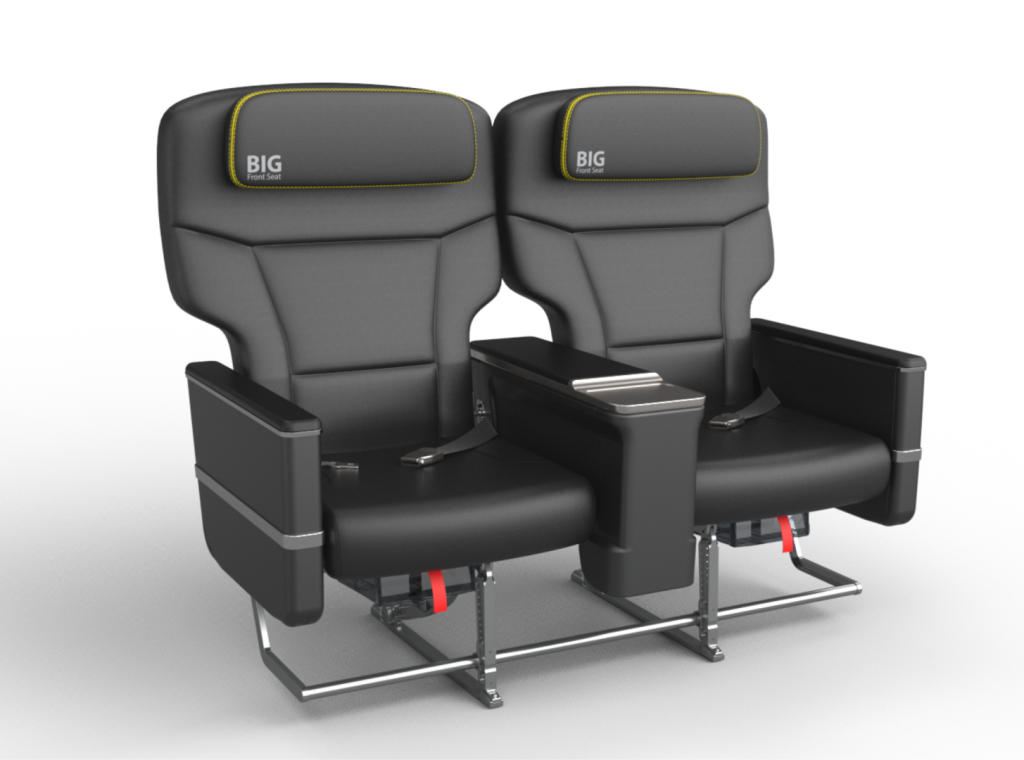
The most exciting upgrades are coming to the “Big Front Seats” which will have “more cushion, nearly an inch more pre-recline, easier to reach tray tables and a wider seatback.”

Spirit Airlines new Big Front Seat. Courtesy Haeco

According to Spirit’s press release the new seats come with a small environmental benefit as well. The weight of each new Vector Light seat will amount to a decrease of nearly 11 ounces per seat due to the new technology HAECO Cabin Solutions is employing. These small changes have outsized effects in a large-scale operation, resulting in sizable reductions of fuel burn across the fleet.

These new changes will first rollout on Spirit’s 33 new Airbus A320neo aircraft that are scheduled for delivery in 2023.

What does this mean for the passenger experience?

Spirit Customers can look forward to a more comfortable flight experience across the fleet as the new seats start their roll out. Despite the lackluster reputation this move proves that Spirit is focusing more and more on the happiness of their passengers, all while maintain low costs.

JetBlue has already stated that they want to integrate the JetBlue style into Spirit’s customer service model, so I guess you could say it’s time to become a fan of Spirit Airlines.


NASA Awards Ampaire for Hybrid Powerplant

Ampaire's ARPA-E Bird test bed aircraft in flight. Photo: Ampaire

Hybrid aircraft developer Ampaire has been awarded $150,000 in funding from the National Aeronautics and Space Administration (NASA) for Innovative Hybrid Powerplant System Research. With Ampaire having made the announcement on Dec. 9, the award is the first of a multi-phase Small Business Innovative Research (SBIR) program, adding to Ampaire’s increasing award portfolio.

Received by Ampaire for the High Efficiency Powertrain for Hybrid Aircraft (HEPHA) project, the funding will be used for sizing, architecture and other analytical studies over six months as a prelude to a potential second-phase award. Under NASA’s SBIR program, Ampaire intends to install and test the powerplant system on its Cessna Skymaster testbed – the ARPA-E Bird – with the aircraft having been previously used in the US Department of Energy (DOE)’s research.

In a statement, according to Ampaire CEO Kevin Noertker, the award helps “recognize the near-term potential to field hybrid-electric aircraft that will revolutionize aviation by lowering emissions and the cost of travel,” adding that it has been Ampaire, who operated the first flight of the world’s largest hybrid-electric plane, the nine-passenger Eco Caravan on Nov. 18; a global MRO support agreement with Air France Industries KLM Engineering & Maintenance; and an order for 50 Eco Caravan aircraft from lessor/financier MONTE.

Ampaire’s New Powertrain

With funding from NASA’s SBIR program, Ampaire’s ARPA-E Bird would be configured with a hybrid propulsion drivetrain in the aircraft’s nose, along with an electric drive system in the aircraft’s rear. According to Ampaire, the system could be scaled and certified for light aircraft, such as the Skymaster, or for larger systems, such as regional jets and transport category single-aisle jets.

Ampaire’s new powertrain — AMP Drive AMP-H270 — is smaller than that which powers its Eco Caravan but promises improved efficiency and diverse fuel compatibility. The system is able to generate 270kw — a full 200kw less than the Caravan’s AMP-H570 — but utilises a DeltaHawk DHK180A4 compression ignition engine with an integrated electrical drive designed by Ampaire.

Capable of both Jet-A and sustainable aviation fuels, the compression ignition system means the engine uses all the fuel in the combustion chamber without burning all the air. In this way, fuel use is maximised while the heat is lowered, meaning heat transfer to the coolant is lower while also lowering exhaust temperature. According to Ampaire, this system provides a 45% cruise efficiency gain over standard combustion engines for the Skymaster, and a doubled efficiency when compared to gas turbines.

NASA Investments Lead to Returns for Both

NASA’s SBIR program will allow Ampaire to continue developing its intellectual property on new hybrid configurations. According to the company, the investment could aid Ampaire, as it seeks to participate in other NASA programs, such as the Subsonic Single Aft Engine Aircraft program.

Under this program, Ampaire proposes a combustion powerplant in the tail with an electric propulsion system distributed along a commercial aircraft’s wings. Such investment from NASA has the potential to strengthen and grow national aerospace businesses. The research and development will help build upon its more famous X-plane series and airfoil research.

Mike Mangano

Mike’s love affair with flight and mechanical objects in the sky began at an early age, fascinated by space documentaries and the vintage Flight Simulator ’95. He currently works as an instructor for UAVs and is training to receive his Private Pilot Licence with the goal of working in manned flight instruction. An avid reader of all things aviation and manned space flight, Mike stays close to developments in aerospace while reminiscing and sharing the rich history of flight with others. He loves writing, engineering and science.

Porter Airlines Announces Early 2023 U.S. and Canadian Network Expansion

A Porter Airlines Q400 taking off. (Photo: BriYYZ from Toronto, Canada (Monday evening departure) [CC BY-SA 2.0 (https://creativecommons.org/licenses/by-sa/2.0)], via Wikimedia Commons)

This week, Porter Airlines — a Canadian regional carrier — announced a series of new destinations and routes to the short-haul carrier’s network. Edmonton, Canada and Calgary, Canada will be added to the airline’s destinations, and the Canadian capital of Ottawa, Canada will have four routes added.

On Feb. 14, Porter’s new 132-seat Embraer E195-E2 jets will operate between Toronto’s Pearson International Airport and Edmonton, Canada’s International Airport. The service will also provide connecting services to Ottawa and Montreal, Canada. The operations will initially be daily increasing to three times daily in April.

Kevin Jackson, executive vice president and chief commercial officer, of Porter Airlines said, “This represents the introduction of Edmonton to our network and also a new approach to flying that Edmontonians haven’t experienced in the past. Our emphasis on high-quality service and competitive fares for every passenger sets Porter apart. No other airline does this and we are eager to remind Edmontonians that flying is something to look forward to.”

Calgary will also be added to the E195-E2 aircraft’s schedule from Toronto Pearson with a double daily service beginning on 22 February. Rob Palmer, Vice President, Commercial, Strategy and Chief Financial Officer of Calgary stated, “With Porter being the third new airline to connect its fleet to YYC Calgary International Airport in under a year, the airline’s entrance into the Alberta region signals strength in the industry’s confidence in our airport and region. We look forward to working with Porter to deliver elevated experiences for our guests and bringing more economic benefits to our communities.”

In a reference to the other carriers operating from Calgary Mr. Jackson added, “With Porter, Calgarians can now also enjoy a new level of generosity and thoughtful service that is non-existent today in economy air travel.” The airline states that passengers will enjoy “no middle seats, free, fast Wi-Fi, complimentary beer and wine served in real glassware, and premium snacks.”

Continuing Porter’s series of announcements this week, the carrier will commence operation to four new destinations from Ottawa, beginning March 27. The airline’s 78-seat De Havilland Dash 8-400 aircraft will operate to Boston and Newark, N.J. in the U.S. from the Canadian capital. Domestic operations to Quebec City, Canada and Thunder Bay, Canada with the Bombardier Dash 8-400’s will also commence on the same date.

Porter Airlines President and Chief Executive Officer, Michael Deluce said, “Ottawa was our first destination when we launched in 2006, and it has always been a critical location for Porter throughout our history. The network expansion in Ottawa shows our commitment to the Ottawa-Gatineau region and its people. We expect our presence in Ottawa will continue growing.”

The airline had previously announced operations between Toronto and Ottawa beginning in February and a new maintenance base to open at Ottawa in late 2023.

John Flett

John has always had a passion for aviation and through a career with Air New Zealand has gained a strong understanding of aviation operations and the strategic nature of the industry. During his career with the airline, John held multiple leadership roles and was involved in projects such as the introduction of both the 777-200 and -300 type aircraft and the development of the IFE for the 777-300. He was also part of a small team who created and published the internal communications magazines for Air New Zealand’s pilots, cabin crew and ground staff balancing a mix of corporate and social content. John is educated to postgraduate level achieving a masters degree with Distinction in Airline and Airport Management. John has held the positions of course director of an undergraduate commercial pilot training programme at a leading London university. In addition he is contracted as an external instructor for IATA (International Air Transport Association) and has been a member of the Heathrow Community Fund’s ‘Communities for Tomorrow’ panel.

Boom Announces Engine Partner, But Questions Remain on Proposed 2029 Timeline

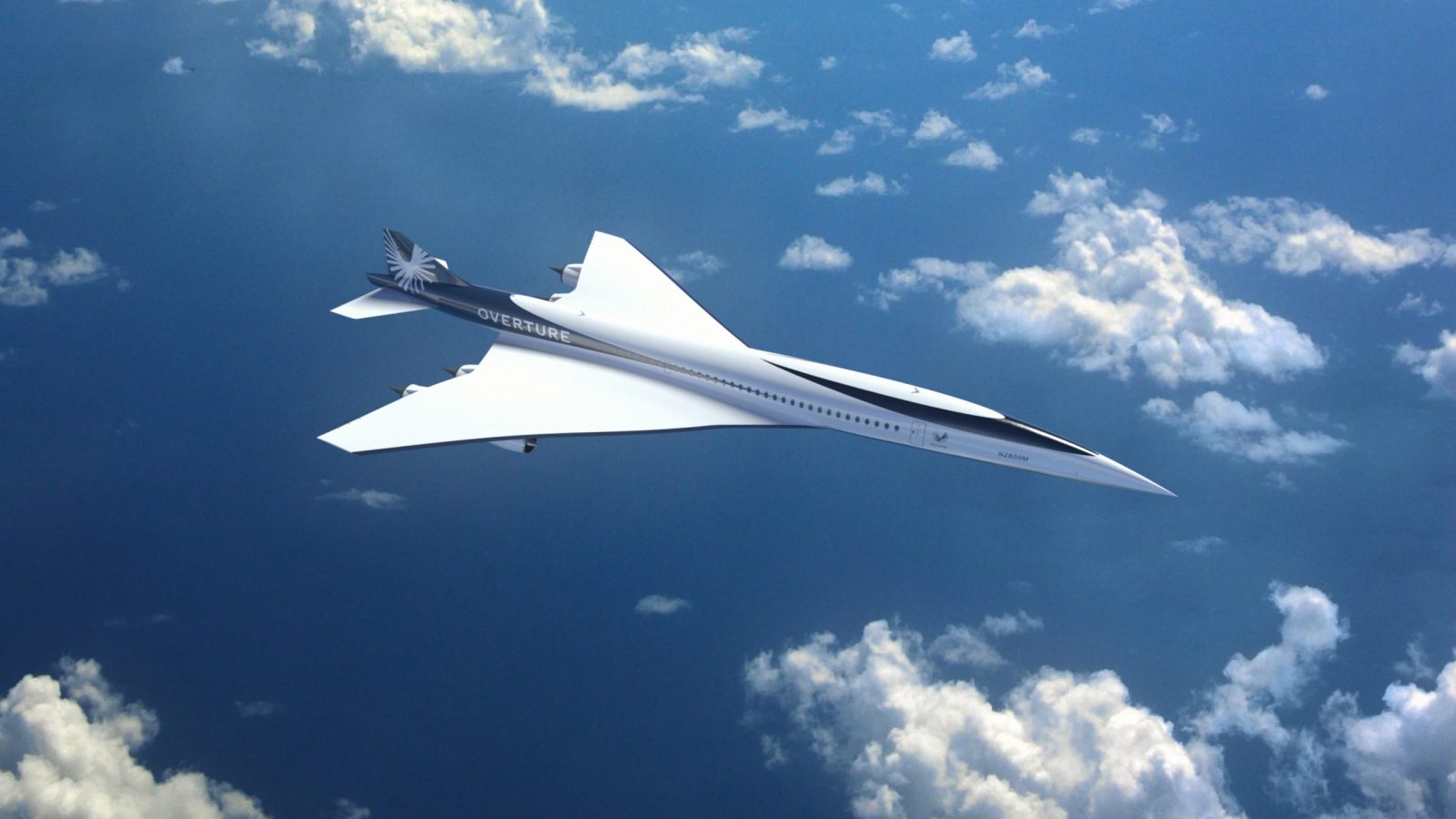
A rendering of Boom's Overture aircraft. (Photo: Boom Supersonic)

Denver based startup Boom Supersonic announced on Tuesday that it had finally found a designer and manufacturer for the engine it hopes will power its Overture aircraft. Boom has selected Florida Turbine Technologies (FTT) to produce the engine dubbed “Symphony.” Florida Turbine Technologies has built a reputation as a producer of cruise missile and drone engines with little experience in commercial aviation, Boom’s main goal. 

Blake Scholl, President and CEO of Boom Supersonic said in a press release: “Developing a supersonic engine specifically for Overture offers by far the best value proposition for our customers,” adding, “Through the Symphony program, we can provide our customers with an economically and environmentally sustainable supersonic airplane—a combination unattainable with the current constraints of derivative engines and industry norms.” It shouldn’t come as a surprise to anyone that this engine needs to be specifically developed for the Overture. It would be great for Boom if they could just throw GE, CFM or Rolls Royce’s latest and greatest commercial jet engine onto an airframe but in the world of supersonic jets, everything must be custom made. 

The engine is being developed in part by GE Additive and Standard Aero. Chris Schuppe, General Manager of Engineering and Technology at GE Additive said, “We are excited to support Overture and Symphony. GE Additive will bring industry-leading capabilities to Symphony, providing additive manufacturing design consulting and technology, while looking for additional areas to potentially collaborate.”

It is unclear what the various financial commitments look like for Boom and the three companies signing the deal, though it would not be unreasonable to think that Boom is likely paying a significant sum to FTT, GE Additive and Standard Aero for their support. 

A Tight Timeline

Boom is aiming to have these engines ready to test on Overture aircraft by 2027, which is not aided by the fact that at the end of 2022, the manufacturer and its partners are announcing plans for an engine that Boom says has already been partially designed, will not enter production until 2024.

The company says that the new engine will be optimized for 100% sustainable aviation fuel also known as SAF which if true could go a long way towards convincing airlines towards coughing up those hard earned government subsidy dollars that will most certainly be doled out in efforts to boost SAF. 

The skepticism that has surrounded Boom within many aviation circles since the day it was founded in most cases is not a matter of feasibility, because Concorde showed supersonic travel is technologically possible (and was decades ago). Instead, most questions stem from how long it will take for any real product to be developed and fly with paying passengers.

Boom says it is on target to carry passengers with its Overture aircraft by 2029 but doubts continue to abound regarding its path to commercial use.

Ezra Gollan

Ezra Gollan is a student, photographer and aviation enthusiast based in New York, New York. He has spent over half a decade around New York City’s airports as a photographer.
Sign-up for newsletters & special offers!

Get the latest stories & special offers delivered directly to your inbox

SUBSCRIBE

Uh-oh! It looks like you're using an ad blocker.

Our website relies on ads to provide free content and sustain our operations. By turning off your ad blocker, you help support us and ensure we can continue offering valuable content without any cost to you.

We truly appreciate your understanding and support. Thank you for considering disabling your ad blocker for this website