









Stories

COMAC ARJ21: Opening China’s Regional Network?

C909 aircraft
The Comac C909, formerly known as the ARJ21. (Photo: COMAC)

For many aviation enthusiasts outside of China, the COMAC ARJ21 is not an aircraft that they are often familiar with. The “Advanced Regional Jets of the 21st Century” was only operated by Chinese carriers as of this moment. Since the certification of COMAC ARJ in 2014 and its first flight in 2016, a total of 79 aircraft have been delivered to carriers. Before ARJ21 went into service, many people looked pessimistically at the future of this jet. However, this jet may have stimulated the long-ignored regional jet market of China, and paved the way for the larger COMAC C919 that will finally deliver by the end of 2022.

The design of COMAC ARJ21 resembles the design of the MD-80 series. The jet can carry 90 people and fly 2,200KM. Such capacity and range can fit into a sizable regional market globally, however, the operational efficiency and economic performance of ARJ21 are still slightly short of its competitors, such as Embraer’s E-series jets.

Since 2016, COMAC ARJ21’s operation has been quite limited, and the aircraft’s average daily usage was below par. Chengdu Airlines, an airline that is partially owned by COMAC, was the sole operator of the jet and has only operated ARJ21 in a handful of airports. COMAC took the feedback and experience of operating ARJ21 and installed improvements on its products.

In 2019, the opportunity finally came for COMAC ARJ21. The big three airlines, Air China, China Southern, and China Eastern, each ordered 35 ARJ21. Those carriers have little experience operating regional aircraft or managing regional networks. Many speculated that those orders were political tasks, which was very likely, considering all three airlines are state-owned.

New Regional Horizons

Previously, regional flights in China are mainly operated by regional airlines with relatively small networks. Those airlines do not have a lot of opportunities to gather regional passengers to a hub and connect them further. Route planning tends to tilt towards the airport which offers a higher subsidy. China still has a large portion of the population that has no access to air transportation, and the lack of a regional network is one of the factors causing the situation.

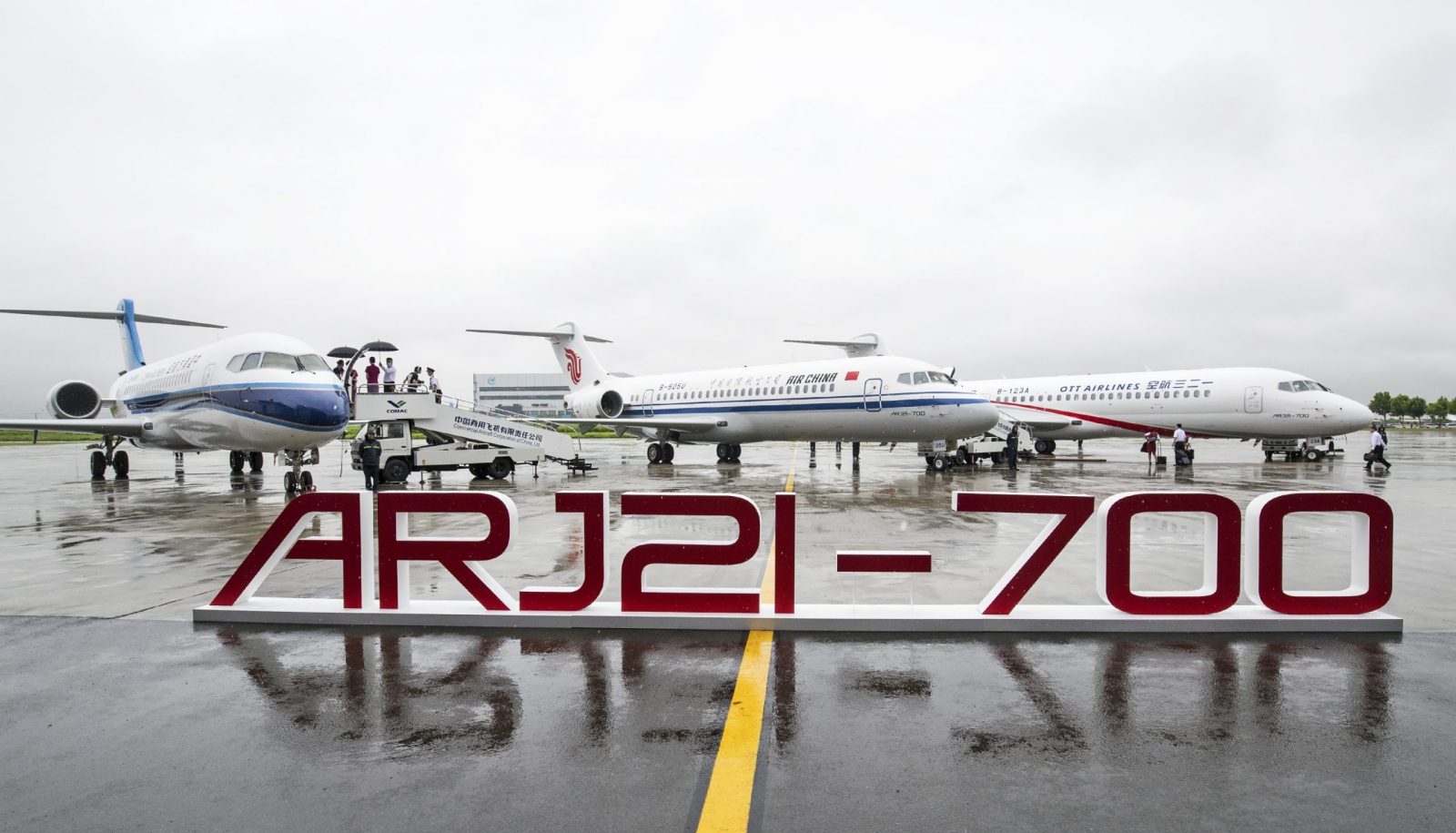
In May 2020, COMAC ARJ21s were delivered to Air China, China Southern, and OTT Airlines (a subsidiary of China Eastern) on the same day. Air China positioned its ARJ21s in Hohhot, China, mainly eying on the vast regional market of Inner Mongolia; China Southern used its ARJ21s operating regional flights in the Guangdong area, aiming to solidify its market share in Southern China; China Easter used its ARJ21 for some low-throughput routes, and increased frequency to improve passenger satisfaction.

Outside of everybody’s expectations, the ARJ21 was a perfect complement to the big three airlines all mainline aircraft fleet. Especially during the COVID-19 period, ARJ21 is enough to support the reduced traffics, and maintain air connections between cities. The advantage of a big airline is that they have an extensive network, and ARJ21 did not only thrive in such a network but also unveiled new opportunities for those carriers.

Last month, COMAC C919 was certified by the Civil Aviation Administration of China, marking the milestone for COMAC to deliver its first mid-sized mainline aircraft. The experience from ARJ21 certification and operation surely contributed to the certification process for C919.

COMAC ARJ21 may have been a political task for Chinese carriers, but it demonstrated the potential and robustness of regional flight markets, drawing major players into the field. The operational experience from ARJ21 gives the Chinese a path to develop even bigger aircraft. As the Chinese regional markets expand, it is foreseeable that foreign players, such as Airbus’ A220 and the Embraer E175, will also have a chance to compete in this market.

Lei Yan

Lei is from Inner Mongolia, China, and now lives in Guangzhou. He grew up in an aviation family, where his passion began. During his time at Penn State University, he studied Industrial Engineering specializing in operations research, and he graduated with an honor’s thesis on airport gate assignment optimization. Now, he is a Purchasing Manager with Procter & Gamble. In his free time, he enjoys flying, reading, and wandering around the city.

Aer Lingus Resumes Flights to Miami

An Aer Lingus A330 (Photo: AirlineGeeks | Parker Davis)

On Friday Oct. 21, Aer Lingus resumed its non-stop services between Dublin (DUB) and Miami (MIA) with two weekly flights. The airline’s last operation on this route was on March 27, 2020, operated on an Airbus A330-200.

This will be the airline’s second destination in the state of Florida, complementing its operations from Orlando (MCO) to the Irish capital and Manchester (MAN).

According to data obtained by Aviacionline through Ireland’s Central Statistics Office (CSO) 56,937 passengers were mobilized in 2019 between Dublin (DUB) and Miami (MIA). The Irish airline will have an offer of 1,878 seats per week on this route for this northern winter season, this represents a 20% increase in capacity compared to 2019 levels.

«As the only airline operating direct flights to Miami from Ireland, we are also able to serve the UK and European market thanks to the seamless connections we offer to travelers transiting through Dublin,» said Susanne Carberry, Aer Lingus Chief Customer Officer.

«Restarting our Miami service is further evidence of our ambition to continue to grow our network in North America,» Carberry added.

Flight Itinerary

  • Dublin – Miami Flight EI 141 DUB 15:40 – MIA 19:55 Friday and Sunday.
  • Miami – Dublin Flight EI 142 MIA 22:00 – DUB 11:15+1 Friday and Sunday.

From November 2 the company adds an additional service on Wednesday increasing its operation to three weekly flights. This route will be seasonal and will be available from October 21, 2022, to March 24, 2023.

Flights will be operated on Airbus A330-300 aircraft with a capacity of 313 seats in two classes (30 Business Class/283 Economy) and promotional fares are available from EUR 159 each way.

The resumption of service between Dublin (DUB) and Miami (MIA) is part of the growth of the carrier’s transatlantic network, complementing the launches of the new route to Cleveland (CLE) and the return of Hartford (BDL) for the 2023 summer season schedule.

Aer Lingus offers routes between Ireland and the United States to New York (JFK), Newark (EWR), Philadelphia (PHL), Boston (BOS), Chicago (ORD), Orlando (MCO), Los Angeles (LAX), San Francisco (SFO), Seattle (SEA) and now to Miami (MIA).

The article was written by Rainer Nieves Dolante

Avelo Airlines To Open Its Fourth Base

The Avelo aircraft is seen during the Avelo Air aircraft shoot at Hollywood Burbank Airport on April 07, 2021 in Burbank, California. (Photo: Joe Scarnici/Getty Images for Avelo Air)

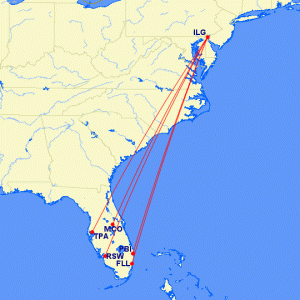
Avelo will open its fourth base in Wilmington (ILG) starting in February 2023. The U.S. airline’s current hubs are Burbank, New Haven and Orlando.

Initially, Avelo will serve five popular non-stop Florida destinations from ILG: Fort Lauderdale, Fort Myers, Orlando, Tampa and West Palm Beach.

Avelo Airlines Founder, Chairman and CEO Andrew Levy said, “The Delaware Valley region wants and deserves more affordable, convenient and reliable air travel. Avelo was founded with a simple purpose – to Inspire Travel. Our very low fares and nonstop flights to five sun-soaked Florida destinations coupled with the fast and seamless experience at Wilmington Airport will make traveling easier than ever. We appreciate the warm reception and support Avelo is receiving from Delaware Governor John Carney, New Castle County Executive Matt Meyer and so many other government and business leaders here. We look forward to welcoming everyone aboard Avelo’s first ILG flight in February.”

Avelo Airlines’ destination map from Wilmington (ILG) – (photo Aviacionline)
  • Orlando (MCO): inaugural flight – February 1 (Monday, Friday and Saturday).
  • Fort Lauderdale (FLL): inaugural flight – February 2 (Thursday and Sunday).
  • Tampa (TPA): inaugural flight – February 2 (Thursday and Sunday).
  • Fort Myers (RSW): inaugural flight – February 3 (Monday and Friday).
  • West Palm Beach (PBI): inaugural flight – February 4 (Wednesday and Saturday).


Alaska Airlines Sees Strong Third Quarter Results

Alaska Airlines Boeing 737-800 on final Approach to SeaTac (Photo: AirlineGeeks | Joey Gerardi)

On Thursday, Alaska Airlines released its results for the third quarter ending Sept.30 of this year. The announcement comes with positive feedback, as the company showed great recovery from its last two years — a difficult time for the entire aviation industry.

The Seattle-based carrier set an airline record in terms of total quarterly revenue. Alaska Airlines brought in a total of $2.8 billion, as a result of strong pricing and an uptick in passenger air travel.

“I am incredibly proud of our entire team for the strong results they delivered in the third quarter, through the busiest travel season in two years,” stated Alaska CEO Ben Minicucci in a press release. “We ran an industry-leading operation with completion rates over 99% every month. We set a new revenue record and our double-digit pretax margin will likely lead the industry. Alaska and Horizon also ratified three major labor deals. This is a strong foundation that we look forward to building on in 2023.”

Alaska’s $2.8 billion in total revenue is up 45 percent from last year’s third-quarter results of $1.9 billion and 2019’s pre-pandemic reported revenue of $2.3 billion — a 20 percent difference.

The primary revenue maker for the airline is its passenger market, bringing in $2.6 billion of the total revenue, with cargo racking up $67 million in revenue and Mileage Plan and others bringing in the remaining $147 million.

During the three-month period, the airline carried 11.4 million passengers with a revenue per Available Seat Mile (RASM) of ¢17.30, up 28 percent from last year’s ¢13.50. These results can be attributed to Alaska’s, “strong pricing, a robust demand environment, and the execution of our commercial roadmap.”

The record quarter resulted in a net income of $40 million for the airline, or $0.31 per share. This is down $154 million from the carrier’s third-quarter income in 2021.

Airline’s Notable Moves

Alaska Airlines had many contributors to the success of the third quarter. A major contributor to the success of a company begins with its employees. On that note, the carrier was the first major carrier to ratify a new labor agreement with mainline pilots, ratified a pilot retention agreement in September with 700 Horizon Air pilots represented by the International Brotherhood of Teamsters (IBT). T

he carrier also ratified a two-year contract extension in August with nearly 5,700 Alaska Airlines employees represented by the International Association of Machinists and Aerospace Workers (IAM). From an operation standpoint, Alaska Airlines achieved a 99 percent completion rate for both mainline and regional for the quarter, a large contributor to creating customers who keep coming back.

In the ongoing attempt to drive economic benefits through cost savings as well as continuing the transition to single fleets, Alaska retired six Airbus A320 aircraft and nine Bombardier Q400 aircraft during the quarter. In return, they received five Boeing 737-900 aircraft in the third quarter, bringing the total number of 737-900s in our mainline fleet to 33. Additionally, they began to retrofit their 737-800 fleet with new interiors.

Chase Hagl

Chase Hagl grew up in Twin Falls, Idaho. His love and passion for Aviation landed him in Orem, Utah where he obtained a B.S. in Aviation Management with a minor in Business Management from Utah Valley University. Chase currently works as a flight attendant in Charleston, SC and is also the primary Inflight ASAP ERC representative for startup airline, Breeze Airways. His experience in the aviation industry spans back four years, working in areas including agriculture application, customer service, maintenance, and flight ops. In his free time, Chase enjoys road biking, astronomy, and flying.

Canadian Carriers Announce Codeshare and Interline Agreements

Image-1 (6)
An Air Transat A321 featuring a special "Kids Club" sticker on its livery. (Photo: AirlineGeeks | William Derrickson)

Canadian airlines Air Transat and Porter Airlines announced a bilateral codeshare this week for select flights on each other’s networks. The codeshare agreement encompasses Porter Airlines’ domestic flights to and from Toronto’s Billy Bishop Toronto City Airport and Halifax, Canada and a number of Air Transat flights to and from Montreal, Canada’s Pierre Trudeau International Airport.

“We have found an ideal partner in Air Transat to launch Porter’s first codeshare agreement,” said Kevin Jackson, Porter Airlines’ Executive Vice President and Chief Commercial Officer. “Connecting passengers in two of our most important markets, Toronto and Halifax, with Air Transat’s European and North American network is a great benefit. This is just the beginning, as we intend to expand Porter’s own network to create many more travel opportunities between our two airlines.”

Air Transat has a leisure travel focus and operates a fleet of Airbus A321-200, Airbus A321LR, Airbus A330-200 and Airbus A330-300 aircraft. According to Air Transat’s website, the airline flies to 60 destinations in the Americas and Europe. Porter Airlines operates a fleet of De Havilland Dash 8-400 to a range of Canadian and U.S. destinations in addition to international routes in collaboration with partner JetBlue.

Michèle Barre, Air Transat’s Vice President, Network, Revenue Management and Pricing said, “We are delighted that our codeshare agreement with Porter Airlines is taking off. Our respective networks are highly complementary, with Porter serving Toronto and Halifax, and Air Transat serving some 15 countries. This will provide both our passengers with an expanded, yet seamless experience, and is perfectly in line with Air Transat’s strategy initiated earlier this year to develop our network through alliances.”

Air Transat is using its flight designator code on flights operated by Porter Airlines between Toronto City and Montreal as well as between Halifax and Montreal. Passengers on Porter Airlines flights can then connect to Air Transat destinations by transiting through Montreal.

The codeshare agreement will allow connections to and from London, Paris and Lisbon, Portugal this winter with domestic routes and several warmer, leisure destinations popular with Canadians. Transit codeshare connections to other parts of the United States are scheduled to be added by the end of 2022.

Other Regional Partnerships

Earlier this week, Calgary, Canada-based WestJet announced a ‘reciprocal interline relationship’ with British Columbia, Canada-based Pacific Coastal Airlines. The cooperation agreement is the first for Pacific Coastal which operates to 17 airports in its home province and a number of other destinations with its affiliate, Wilderness Seaplanes.

“Pacific Coastal Airlines is proud to partner with WestJet on our first interline,” Johnathan Richardson, Vice President of Customer and Commercial, Pacific Coastal Airlines, said. “We look forward to working together to connect the communities we serve and bring them exciting new options for their global travel needs.”

John Weatherill, WestJet’s Chief Commercial Officer added, “This new interline complements our network growth in Western Canada and the strong schedule we’re bringing to the communities we serve directly and through our partners like Pacific Coastal.”

John Flett

John has always had a passion for aviation and through a career with Air New Zealand has gained a strong understanding of aviation operations and the strategic nature of the industry. During his career with the airline, John held multiple leadership roles and was involved in projects such as the introduction of both the 777-200 and -300 type aircraft and the development of the IFE for the 777-300. He was also part of a small team who created and published the internal communications magazines for Air New Zealand’s pilots, cabin crew and ground staff balancing a mix of corporate and social content. John is educated to postgraduate level achieving a masters degree with Distinction in Airline and Airport Management. John has held the positions of course director of an undergraduate commercial pilot training programme at a leading London university. In addition he is contracted as an external instructor for IATA (International Air Transport Association) and has been a member of the Heathrow Community Fund’s ‘Communities for Tomorrow’ panel.

Amid Internal Tensions, ITA Airways Board Removes its Executive President

ITA Airways aircraft at Rome Fiumicino Airport. (Photo: ITA Airways)

In a brief statement this Thursday, ITA Airways’ — the Italian State-owned airline that is the effective successor of Alitalia — confirmed that the company’s Executive President, Alfredo Altavilla, was stripped of “all [of its] powers” in the airline by the airline’s board of directors.

Altavilla had been running the airline from the start, serving as the Italian Government’s bet, after a successful record of accomplishment in the automobile industry.

The move had been in the making for some weeks now, the move being “ordered by a resolution on October 12”. Now, the press release adds, “the attribution of those powers [goes] to the Chief Executive Officer Fabio Maria Lazzerini”.

Corriere della Sera’s aviation journalist Leonard Berberi reported, on the 12th, that the situation between Altavilla had its breaking point when Altavilla refused to give “sensible”, “route-by-route” profitability information to the consortium headed by private equity fund Certares. The situation between Altavilla, the board and Lazzerini was already difficult for months.

Certares is leading the privatization efforts of ITA Airways, and the sale has the commercial participation of Delta Air Lines and Air France-KLM. Effectively, the move will give Lazzerini control of the privatization process — and to the granting of information to Certares.

“The Board of Directors”, finished the short announcement, titled only “ITA Airways Press release” or “NOTA STAMPA” [sic] in the Italian version, “reiterated that the Company’s main task is to remain focused on the industrial plan, continuing along the road taken that is providing better results than expected, with the aim of consolidating the relaunch of ITA Airways and protecting the company’s workers who have taken the challenge”.


This article was originally published at Aviacionline.

Path to Recovery: American Airlines Reports Record Quarterly Revenues

American 737-800
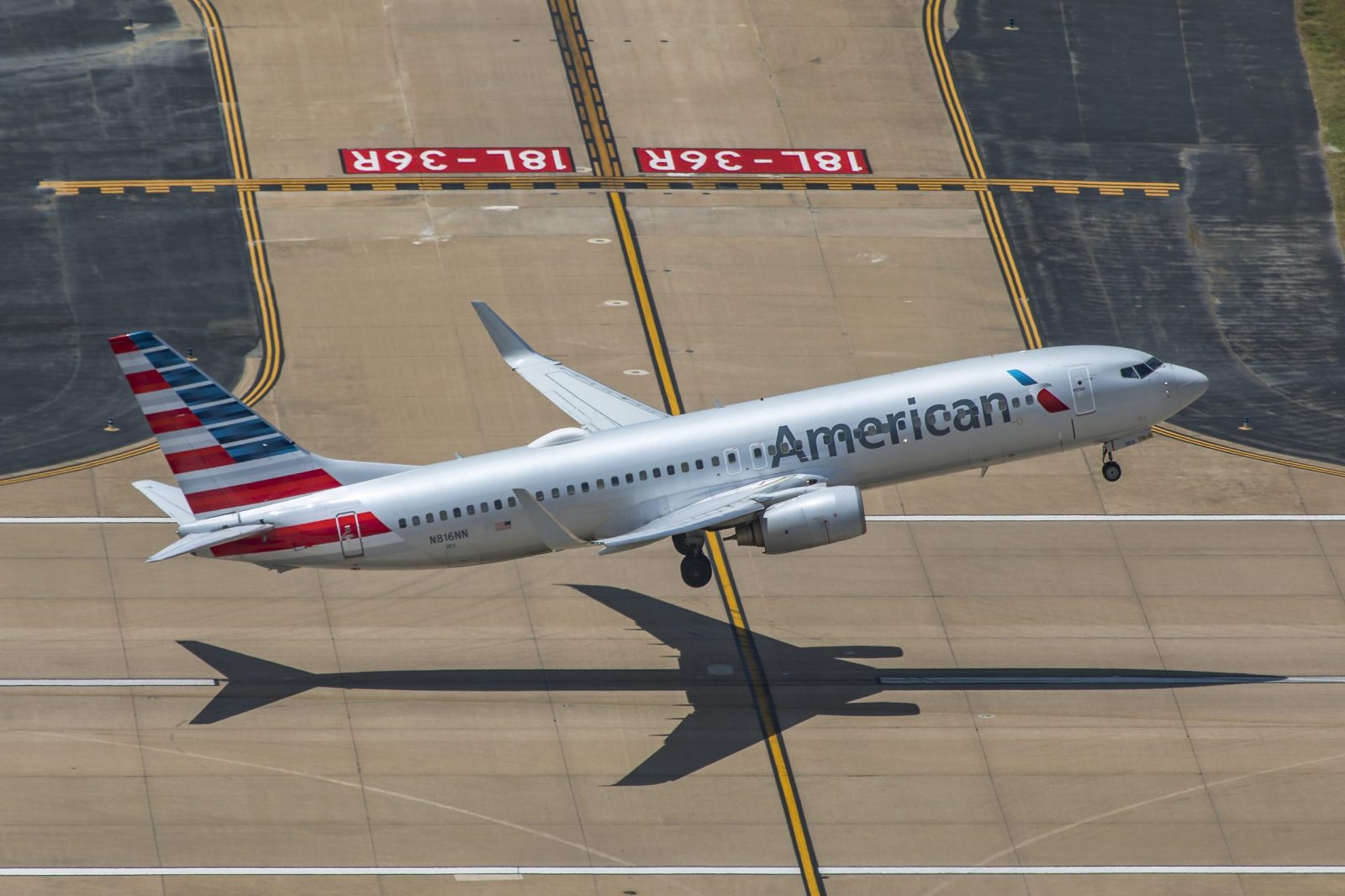
An American 737 departs from Dallas/Forth Worth. (Photo: AirlineGeeks | William Derrickson)

American Airlines today reported its financial and operating results for the third quarter of 2022.

“The American Airlines team continues to deliver on our goals of running a reliable operation and returning to profitability”, said Robert Isom, the company’s CEO. “Demand remains strong and it’s clear that customers in the United States and other parts of the world continue to value air travel and the ability to reconnect post-pandemic”, he added.

The company said that despite a “challenging operating environment” because of hurricanes that affected operations in Florida and the Caribbean and flooding in Dallas-Fort Worth, it was able to “restore its operational reliability” thanks to a good on-time arrival rate and completion factor

American Airlines third quarter 2022 key financial and operating results

  • Record quarterly revenue for the company totalled 13.5 billion dollars. The figure represents a 13 percent increase over the same period in 2019, despite recording 9.6 percent less capacity compared to the third quarter of 2019.
  • Net income of 483 million dollars, or 0.69 dollars per diluted share.
  • Fuel expenses of 3.8 billion dollars, 97.1 percent higher than in the same period of 2021.
  • Operating margin, excluding net special items, of 7.2 percent.
  • Liquidity of 14.3 billion dollars, more than double that of the same period in 2019.
  • The company made approximately 380 million dollars in scheduled debt and lease payments between July and September.
  • As of 30 September 2022, it had reduced its total debt by 5.6 billion dollars from peak levels, reported in the second quarter of 2021.
  • “Debt reduction continues to be a top priority”, the company said. In that regard, it stressed that it would continue to pursue its plan to reduce total debt levels by 15 billion dollars by the end of 2025.
  • American Airlines and its regional partners operated more than 500.000 flights in the third quarter of this year.
  • The average occupancy rate reached 85.3 percent, up 6.6 percentage points from the same period in 2021.

Projections for the last quarter of the year

Based on current trends, the company expects its total revenue for the fourth quarter to be 11 to 13 percent higher than that reported in the fourth quarter of 2019. However, it expects total capacity to still be 5 to 7 percent lower. The airline maintains a schedule that includes more than five thousand daily operations on average until the end of the year.

With the current demand trends and fuel price forecast, American Airlines expects to have a positive operating margin of between 5.5 and 7.5 percent between October and December this year. In addition, it forecasts its diluted earnings per share, excluding net special items, to be between 0.50 and 0.70 dollars.


This article was originally posted at Aviacionline.

Italian ITA Airways and Colombian Avianca sign codeshare agreement

An Avianca A321 prepares for its next flight at LAX. (Photo: AirlineGeeks | William Derrickson)

Avianca and ITA Airways, the Italian airline heir to Alitalia, have signed a codeshare agreement to connect their respective networks on both sides of the Atlantic through Bogota, Cali, Medellin, Miami, and Rome.

The agreement will come into effect on October 31 and will allow Avianca passengers to fly between Bogota and Rome using the Colombian airline’s flights to London, while ITA passengers flying to Miami will be able to connect with Avianca’s flights to Bogota, Cali, and Medellin, and then also take advantage of Avianca’s more than 125 routes in Latin America.

ITA currently operates a daily flight between Rome and Miami. As shown on Cirium, four weekly operations are operated on Airbus A330-200 aircraft and three on Airbus A350-900 aircraft, totaling 1,942 seats each way.

Avianca operates one daily flight between Bogota and London-Heathrow on Boeing 787-8 aircraft, providing a weekly offer of 1,750 seats each way, while it operates forty-four weekly flights between Bogota and Miami totaling 4,456 seats per leg.

“At Avianca, we continue to promote international connectivity, offering our customers multiple travel options to easily and efficiently fly to the world’s main destinations. With this agreement, we expect to transport together with ITA Airways close to 1,000 additional passengers between Colombia and Rome, boosting tourism and business between both countries. With this codeshare we offer another option to further enhance connectivity between Latin America and Europe,” said Julio Ordóñez, Avianca’s Director of Alliances.

Andrea Benassi, Chief of Network, Fleet and Alliances ITA Airways, said that “this collaboration allows us to bring our passengers to Colombia thanks to flights connecting to Bogota, as well as to bring Avianca passengers to Italy and Europe with convenient flights connecting to Rome Fiumicino. This new agreement brings ITA Airways’ codeshare agreements to thirty, an important result achieved by the airline in just 12 months”.


This article was published -in Spanish- at Aviacionline. 

United Strengthens Transatlantic Connectivity at Shannon with New Service from Chicago

A United Boeing 757 departing Los Angeles. (Photo: AirlineGeeks | William Derrickson)

United is strengthening transatlantic operations at Shannon, Ireland’s Airport with a new seasonal service from Chicago’s O’Hare Airport. This route will boost Shannon’s international connection, as the airline also offers a nonstop connection from Newark, N.J.

The airline’s last operation between Chicago’s O’Hare Airport and Shannon was on September 6, 2017. During that summer season, this route carried 24,818 passengers, United operated continuously at Shannon between 2013 – 2017 and offered a five-times-weekly operation.

“Today’s announcement from United Airlines that they plan to expand their network at Shannon with new daily service between Shannon Airport and their hub at Chicago O’Hare Airport next year is fantastic news for our customers and our staff at The Shannon Airport Group,” said Mary Considine, Chief Executive Officer of The Shannon Airport Group.

Flight Itinerary

  • Chicago O’Hare – Shannon Flight UA 288 ORD 18:20 – SNN 07:30+1 daily flights.
  • Shannon – Chicago O’Hare Flight UA 289 SNN 09:30 – ORD 11:45 daily flights.

The route will be operated on Boeing 757-200 aircraft with a capacity of 169 seats in three classes (16 Business Class/45 Economy Plus/108 Economy), the service will start on May 25 and will be available until Sept. 4. By the 2023 summer season, United will offer two daily flights at Shannon and will have a weekly seat offering of 4,732 seats and will be the only foreign carrier to provide transatlantic operations at Shannon.

According to data compiled through Cirium, United will offer 15,190 seats per week between North America and Ireland in 88 operations, making it the third largest operator in this market, behind only Aer Lingus and American Airlines. It will also be the U.S. airline to provide the most destinations and routes to Ireland.

“As the only U.S. airline to offer direct flights from Shannon, we are pleased to announce this new expansion of our route network from Ireland to the U.S.,” said Martina Coogan, United’s Ireland Sales Manager.

“We look forward to another busy summer for international travel in 2023 and are proud to leverage our industry-leading global network to offer our customers in the west of Ireland even more travel options and the ability to connect through our U.S. hubs to other destinations in the Americas,” Coogan added.

United’s schedule for the 2023 summer season:

(Sourced through Cirium, subject to change)

Dublin

  • Newark: two daily flights on Boeing 757-200s and Boeing 767-400ERs.
  • Washington – Dulles: daily flights on Boeing 757-200.
  • Chicago O’Hare: daily flights on Boeing 757-200.
Shannon 
  • Newark: daily flights on Boeing 757-200.
  • Chicago O’Hare: daily flights on Boeing 757-200.

This article was originally written by Rainer Nieves Dolande for Aviacionline.

Tamarack Joins Hybrid Aircraft Manufacturer Ampaire to Upgrade Aircraft

A formation flight of Ampaire Electric EELs. (Photo: Ampaire)

American hybrid aircraft manufacturer Ampaire has signed a memorandum of understanding with Tamarack Aerospace Group for aircraft upgrades. The agreement will allow Ampaire to utilize Tamarack’s research and development for the aerodynamic improvement of its fleet, aiding in increased efficiency and flight time.

A key benefit of the joint development is Tamarack’s advanced SMARTWING active winglet technology, with Ampaire eager to deliver its vision of sustainable aviation in what is an increasingly sustainability-focused industry. According to Ampaire, the Tamarack’s active winglets increase fuel efficiency and range, smooth flight and improve the ability to take off and land on shorter runways regardless of high/hot conditions and payload”.

For customers of Ampaire, the improvements translate as a two-in-one performance enhancement and cost reduction, with the optional  SMARTWING addition compatible with the entire fleet of Eco Caravan, Eco King Air, and Eco Otter.

Speaking on the benefits of Tamarack’s active winglet technology, Tamarack CEO Nick Guida said, “Tamarack’s Performance SMARTWING technology has demonstrated substantial aerodynamic improvements on multiple platforms including 160 upgraded CitationJets, and our goal aligns closely with Ampaire’s to make every aircraft more efficient and sustainable”, with Ampaire CEO Kevin Noertker adding the “technology is a great match with Ampaire’s hybrid propulsion system, as both work synergistically to upgrade the performance and economics of the proven aircraft operated by our customers”.

Understanding Tamarack’s “Active Winglets”

Far from a recent innovation, winglets have seen extensive use in aviation since the late 1970s in an effort to increase fuel efficiency. As an extension of an aircraft’s wing, the winglet aids in the reduction of wingtip vortices — a dragging force — generated during the lifting process. To produce lift, a wing must generate both a low pressure above and a high pressure below. Simply put, the pressure difference causes the wing to rise, in effect being pulled up by a suction force.

This lift is typically strongest around the center of the wing, however the same cannot be said about the wingtip. Without any surface extending beyond the wing, the higher pressure below is sucked into the lower pressure above, producing a mixing of the air — vortices. Since the air above the wingtip is no longer low pressure, lift is reduced and drag increased. The result is an inefficient wing and an aircraft that requires more fuel.

The winglet, essentially a vertical extension of the wing, reduces the drag effect of vortices by inhibiting the movement of higher-pressure air below into the low pressure above. When designed correctly, the winglet can even add a small degree of thrust.

While many modern aircraft utilize winglets to reduce the negative impact of vortices, Tamarack believes its SMARTWING active winglets can outperform others. According to Tamarack, SMARTWING technology can adapt to different regimes of flight, allowing the winglet to always perform at its optimum level, including changing load conditions of the aircraft. Automatic, and functioning autonomously from other aircraft systems, Tamarack’s active winglets are designed for simple installation and require no structural changes or additions.

According to Tamarack, the efficiency increases are significant – a huge bonus for the rapidly developing electric aviation industry. In terms of numbers, Tamarack says “a flat wing Cessna CJ/CJ1 (CitationJet) aircraft that could fly three hours nonstop prior to installing Active Winglets can now fly four hours nonstop on the same fuel with Active Winglets,” adding “a flat wing aircraft is generally a 900 nautical miles aircraft. However, equipped with Active Winglets, the same flat wing aircraft can fly at least 1,200 nautical miles”.

Mike Mangano

Mike’s love affair with flight and mechanical objects in the sky began at an early age, fascinated by space documentaries and the vintage Flight Simulator ’95. He currently works as an instructor for UAVs and is training to receive his Private Pilot Licence with the goal of working in manned flight instruction. An avid reader of all things aviation and manned space flight, Mike stays close to developments in aerospace while reminiscing and sharing the rich history of flight with others. He loves writing, engineering and science.
Sign-up for newsletters & special offers!

Get the latest stories & special offers delivered directly to your inbox

SUBSCRIBE

Uh-oh! It looks like you're using an ad blocker.

Our website relies on ads to provide free content and sustain our operations. By turning off your ad blocker, you help support us and ensure we can continue offering valuable content without any cost to you.

We truly appreciate your understanding and support. Thank you for considering disabling your ad blocker for this website