Stories

Korean Air to Launch Boeing 737 Max Flights from March

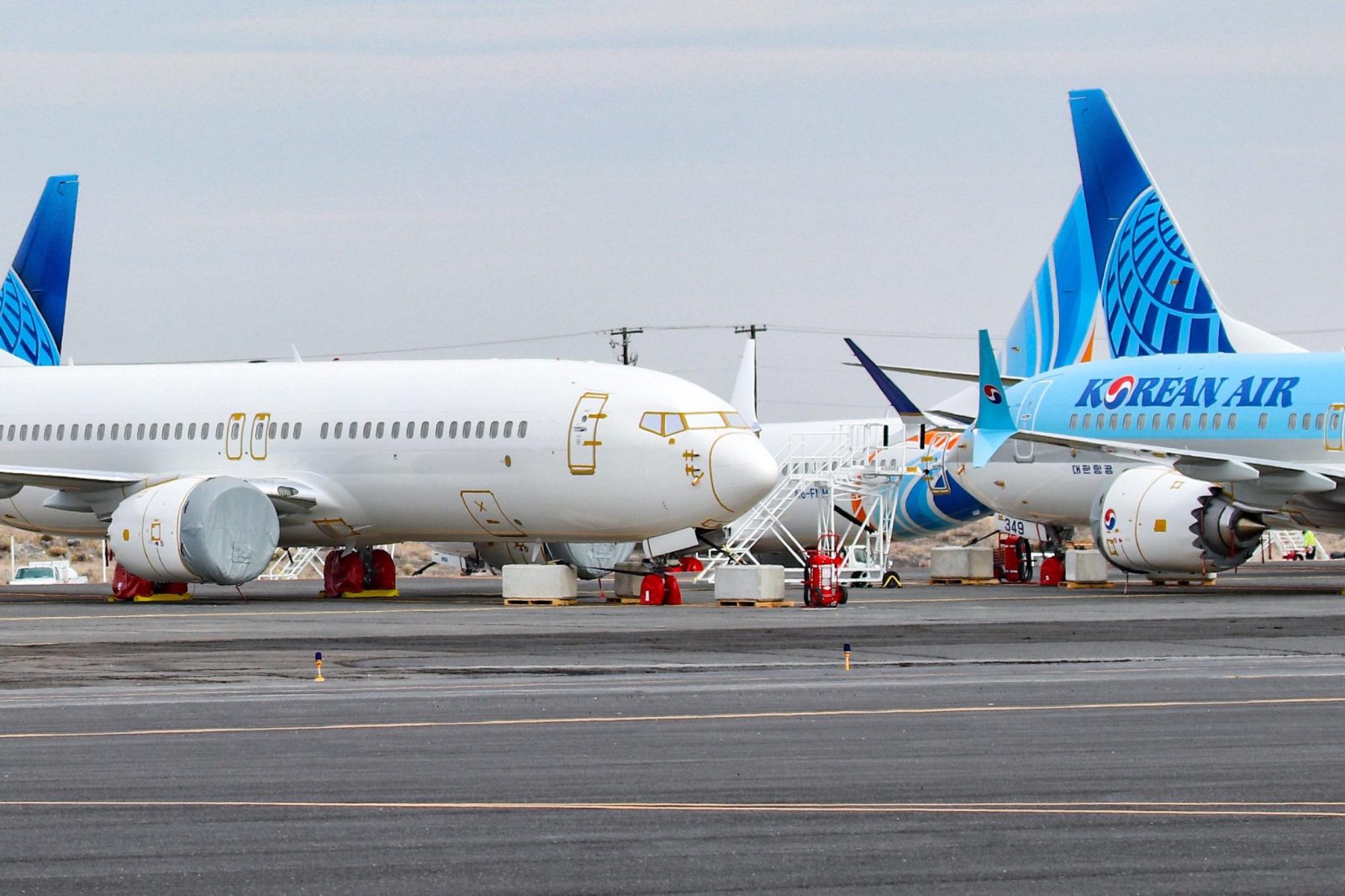
Boeing 737 MAX aircraft
Boeing 737 MAX aircraft (Photo: AirlineGeeks | Katie Zera)

Korean Air officially announced its plan to start flying the Boeing 737 Max in March, following the aircraft’s ferried flight from storage to Seoul, South Korea on Feb. 13. The Korean flag carrier confirmed a deal of 30 737 Max in 2015. However, the delivery has been delayed due to two deadly accidents involving the aircraft in 2018 and 2019 — leading to months of investigation into safety protocols and improvements.

Six 737 Max will join Korean Air’s fleet in the early phase. It is expected the remaining 24 aircraft will be delivered by 2028.

According to the carrier, it will carry out its own safety measures, including dispatching a special maintenance team consisting of veteran engineers and pilots with more than 7,000 hours of flight to operate the new aircraft. In addition, South Korea’s Transport Ministry will work closely with the airline over the safety concern.

“We will put all efforts for its safe operation under the supervision of the Transport Ministry,” the airline said, in a statement.

Other carriers gradually started operating the 737 Max after grounding the aircraft for 20 months. Boeing said more than 30 airlines flying the plane virtually without incident for more than 800,000 hours. Even Qatar Airways canceled its order from Airbus, inking the deal of 25 737 Max, along with options to subscribe 25 additional aircraft. According to Boeing, the order is worth $34 billion.

Meanwhile, the Hong Kong government approved the airline can operate the 737 Max. Meanwhile, China’s Civil Aviation Administration of China (CAAC) issued an Airworthiness Directive (AD)  for the 737 Max, paving the way for 737 Max to return to the skies. However, the Chinese government hasn’t provided further details for the 737 Max. According to the CAAC, China’s 13 airlines own a total of 97 aircraft.

Despite the pandemic not being out of the woods, Korean Air is seeing the light at the end of the tunnel. Due to the strong demand for cargo services, Korean Air has reported a net profit of 638.6 billion won ($530 million) in 2021, compared to a net loss of 194.6 billion won in the previous year.

Merger with Asiana 

According to the government’s figure, passenger traffic has dropped 7.7 percent, compared to 2020. The number of international travelers has plummeted by 78 percent, but domestic travel has increased 32 percent.

The airline said the spread of Omicron and other possible virus variants still threaten the aviation industry in 2022.

In addition, Korean Air moved a step closer to merging with Asiana Airlines after Singapore had given a green light. The airline still needs to wait for the six other countries and parties’ approval, such as the U.S., European Union, United Kingdom, Japan, Australia and China to complete the acquisition.

“In order to finalize the acquisition process as early as possible, Korean Air will continue to proactively communicate and cooperate with the remaining regulatory bodies,” the airline added.

Newborn Italian National Airline Heads Toward Privatization

An ITA Airways Airbus A320 with the new livery named after "Fausto Coppi" at Leonardo Da Vinci International Airport. (Photo: ITA Airways)

The Italian government recently approved the decree for a new path to be taken by the newly formed Italian national airline, ITA Airways. Currently, the airline is 100% owned by the Italian state, specifically the Italian Ministry of Economy and Finance. However, the future of ITA Airways will be privatization.

Recently, Italian Minister of Economy Daniele Franco commented on the approval of the privatization decree as necessary to find a partner for ITA. The Italian state’s initial objective is to maintain a minority stake — 15% — and then eventually sell its shares. The “dream” of an Alitalia-style return of the national airline is therefore definitely no longer feasible.

The complete privatization of the Italian airline has not gone unnoticed. Many companies have been interested in the acquisition despite the last not exactly profitable results. Consider that ITA Airways’ revenues amounted to 86 million euros ($98 million), 50% less than those forecasted in the business plan.

These initial difficulties, however, have not discouraged possible contenders who are very interested in investing in the airline for a long-term project. These include the Swiss group MSC Cruises, which is interested in a majority stake, the German Lufthansa and U.S.-based Delta Airlines. Moreover, it has been confirmed that two international funds will also ask to enter the ITA Airways data room to see and analyze all the accounts of the company and its industrial plans. The data room won’t be accessed by Lufthansa due to the lack of formalization of interest in the purchase. However, the German giant has confirmed its interest in a subsequent entry into the shareholding structure.

At the moment, therefore, only the MSC cruise group will have access to the sensitive data of ITA Airways. It should be remembered that the Swiss group is the only one to have spoken of a firm offer, which it pegged at around 1.4 billion euros. This number, if it is indeed the real sale figure, would be excellent news for the Italian government since the money it has spent so far is around 700 million euros, 400 million of which are still in the airline’s coffers. The conditions set by the Mediterranean Shipping Company include three pieces: the strategic partnership with Lufthansa, the acquisition of the majority shares and minority ownership by the Italian government.

The opening of the data room will, however, have to be evaluated carefully because full of valuable information that could be useful to other airlines. For this reason, the Ministry of Economy will have to appoint consultants to evaluate the real interest of other companies and allow access to the data only to those who are really interested.

Vincenzo Claudio Piscopo

Vincenzo graduated in 2019 in Mechanical Engineering with an aeronautical curriculum, focusing his thesis on Human Factors in aircraft maintenance. In 2022 he pursued his master's degree in Aerospace Engineering at the University of Palermo, Italy. He combines his journalistic activities with his work as a Reliability Engineer at Zetalab.

Avelo Marks 100 Days of New Haven Operations

Avelo's 737-800 aircraft in Burbank (Photo: AirlineGeeks | Ryan Ewing)

Houston-headquartered Avelo Airlines celebrated 100 days of operations from Connecticut’s Tweed-New Haven Airport this week. The airlines launched service to the small airport in southern Connecticut on Nov. 3 and currently runs six routes to cities across the East Coast.

New Haven serves as the airline’s base for the coast, and it is currently the only airline operating service from the airport. Avelo says since they started service, the airline has contributed 100 airline jobs and $20 million in economic impact to the local area. 

Avelo’s current base in New Haven consists of three Boeing 737-700 aircraft and 109 employees including crew, flight attendants, customer service representatives and operations agents. They also plan to hire an additional 100 local employees by the end of the year. Since beginning operations at the airport, the airline has carried nearly 70,000 passengers on nearly 600 flights. Based on their 147 seat aircraft, this gives them an average load factor of 79% for the period. 

The airline has also impressed with its reliability. Between November and January, the airline only canceled 1% of flights, excluding weather-related cancellations. As well as the low cancellation rate, the airline has also managed to operate 80% of flights on time. The choice of New Haven has also led to a better passenger experience, with fewer waits in security and crowds for travelers. 

A Unique Hub

Tweed-New Haven Airport is located in southern Connecticut, on the coast of the Long Island Sound. The small airport has historically seen light airline traffic. The airline was only served by American Eagle, however, that service was temporarily paused during the Covid-19 pandemic, before being reinstated as part of the CARES Act. The service would not last though, and American Airlines left New Haven on Sept. 30, 2021, leaving no commercial service at the airport till Avelo began service on Nov. 3. 

The airport happens to be conveniently located for most of Connecticut, with it being less than an hour’s drive to Hartford and Stamford. Avelo is committing to New Haven in the future as well. The airline is investing $1.2 million in upgrading the infrastructure at the airport. The overall $100 million plan by airport operator Avport, includes the construction of a new terminal and extending the airport’s runway to accommodate larger aircraft. The development is projected to have a $275 million economic impact in the southern Connecticut region.

Expansion on the Horizon

Avelo started operations at the beginning of 2021 from a west coast base in Burbank. The airline focuses on offering leisure travelers low-cost options, often between underserved markets. The airline currently has six Boeing 737 aircraft and serves 18 destinations from there Burbank and New Haven bases.  Currently, there are plans to add nine additional aircraft and expand to 40 destinations by the end of 2022. 

Daniel Morley

Daniel has always had aviation in his life; from moving to the United States when he was two, to family vacations across the U.S., and back to his native England. He currently resides in South Florida and attends Nova Southeastern University, studying Human Factors in Aviation. Daniel has his Commercial Certificate for both land and sea, and hopes to one day join the major airlines.

Ottawa Airport Notes Some Interference with Ongoing ‘Freedom Convoy’

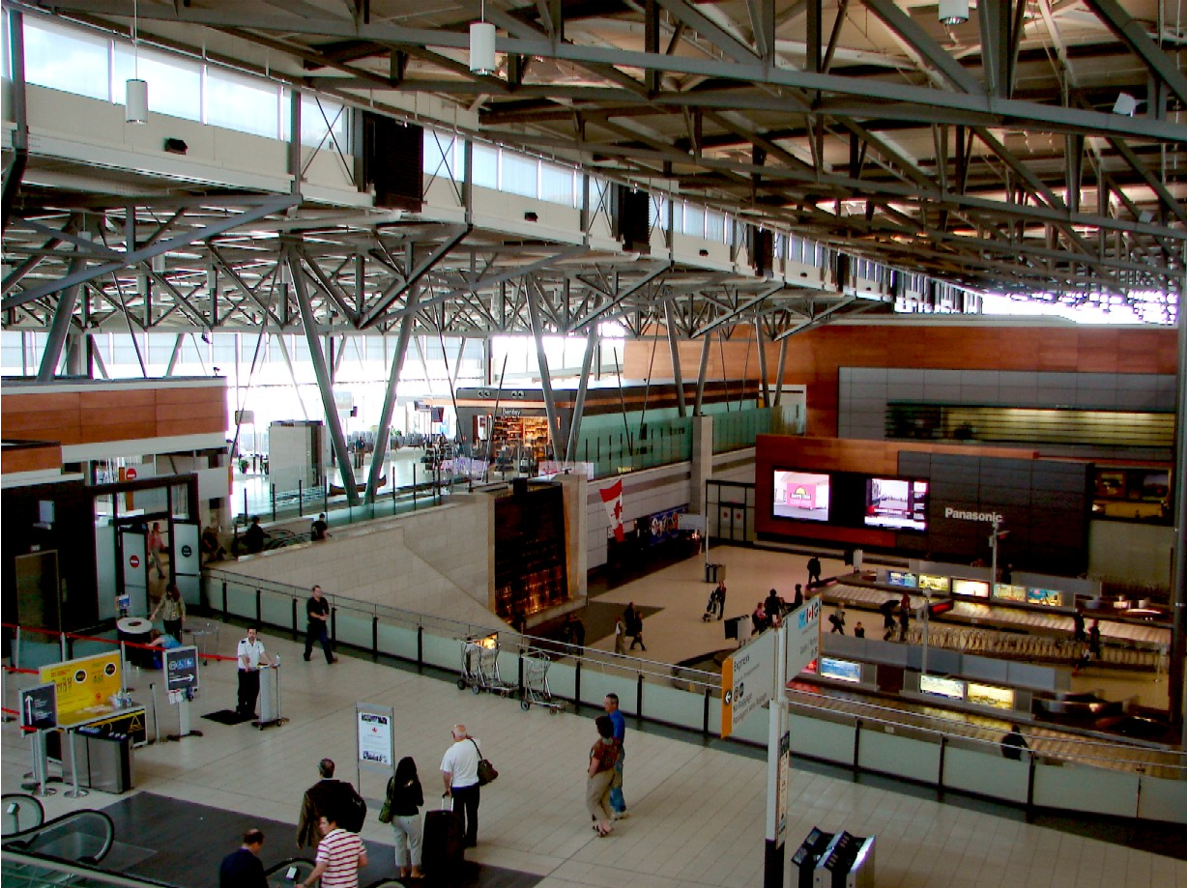
Interior of Ottawa Airport terminal, Ontario, Canada (Credit: P199, Wikicommons)

The ongoing “Freedom Convoy” that is occurring in Canadian capital of Ottawa has made its way to the airport. On Thursday, the airport noted that traffic had become fixated on taking the airport loop and driving very slowly to disrupt travelers from making their way to the terminal. A couple dozen vehicles were blocking Ottawa MacDonald-Cartier International Airport’s arrivals and departures roadways through the day but were not blocking aircraft movements.

In a press release, the airport noted, “There are currently 60 to 70 light trucks circling the Ottawa International Airport’s arrivals and departures roadways in an attempt to disrupt operations. Airport traffic is already extremely light due to the pandemic so the impact so far is minimal. We are monitoring the situation with our security and airport policing teams and advise anyone who is travelling today to give themselves extra time to get to the airport.”

The ongoing “Freedom Convoy” has stifled life for Ottawans for roughly 2 weeks now as Canadians protest the ongoing mandates to combat Covid-19. What started as a journey from as far away as British Columbia has resulted in truckers from across Canada blockading the streets of Ottawa as the group wants Covid-19 mandates eased in as the pandemic nears the completion of year two in the country. The movement has promoted similar protests and public backlash in other western countries that have seen the ongoing pandemic slow down the return to normalcy.

For Ottawa MacDonald-Cartier Airport demand for travel is still forced to be focused on domestic traffic. The airport saw one international flight on Thursday, with United Airlines Flight 3899 operating to Washington Dulles International Airport with a Bombardier CRJ-200.

The rest of the traffic in Ottawa is domestic, with flights to Toronto and Montreal dominating the schedule. The airport is serviced by a plethora of Canadian airlines like WestJet, Air Canada, Flair Airlines, Porter Airlines, Sunwing Airlines, Air Transat and Air North. The airport will welcome low-cost option Swoop, a WestJet subsidiary, in three months’ time with service to domestic destinations Edmonton, Halifax and Winnipeg.

Also in the press release, the airport said, “We are very disappointed that the protesters have chosen to disrupt an industry that has already been decimated by the pandemic. The Ottawa International Airport is an important link for essential products and services for Canada’s north, and an important economic engine for the region. Disrupting our airport will hurt people who are already suffering, including passengers and employees who rely on our industry for their livelihood and wellbeing.”

While the protest died down after a few hours of encircling, the airport still encourages passengers to arrive early and expect delays as the Freedom Convoy shows no interest in disbanding anytime soon.

Ian McMurtry

Although Ian McMurtry was never originally an avgeek, he did enjoy watching US Airways aircraft across western Pennsylvania in the early 2000s. He lived along the Pennsylvania Railroad and took a liking to trains but a change of scenery in the mid-2000s saw him shift more of an interest into aviation. He would eventually express this passion by taking flying lessons in mid-Missouri and joining AirlineGeeks in 2013. Now living in Wichita, Kansas, Ian is in college majoring in aerospace engineering and minoring in business administration at Wichita State University.

An Adventure with Aircraft of Years Past: Mexico City’s Zombie Theme Park

One of the many aircraft at the adventure park just outside Mexico City. (Photo: AirlineGeeks | Mark Evans)

Mexico has always been a great place for seeing old planes. Airports like Mexico City and Toluca still have lots of old aircraft parked up, and there are several other airports in just the same situation. Some of those aircraft have been left to rot for over a decade. But fortunately, some of them get preserved for use as other attractions. From a DC9 preserved in Mexico City as a library to a Boeing 727 preserved as a virtual and educational theme park on the side of a hill in Tlaxcala, their uses have become almost endless.

For the last few years, Zombie Adventure Park has been using aircraft as part of its adventure playground alongside other vehicles and props. Participants have to navigate their way through the course attempting to avoid being killed by zombies, part of which includes zip lining onto a Gulfstream and exploring inside.

Should you want to participate, the courses only operate on selected dates and are for up to 400 people. But the park was open for me to walk around when I visited, and many of the attractions can be seen from the entrance. It’s located in San Nicolás Totolapan on the outskirts of Mexico City and is listed on Google Maps. It has five aircraft on site, although only two appear to be in active use as part of the course.

N899GA  Gulfstream 2

Constructed over 50 years ago — in 1969, to be exact — this Gulfstream was initially purchased by Prince Kiram Aga Khan and registered as F-BRUY. After 13 years, it was sold in the U.S. where it remained registered with various different owners. In 2007 it was reportedly seized in Mexico by the Procuraduria General De La Republica. It was seen parked at Mexico City before being purchased by the adventure park in 2016.

XA-UGF  Boeing 737-300

Coming off the production line in 1987 this was the 1435 Boeing 737 built. It was initially delivered to Piedmont Airlines, before merging with US Air  in 1989. It remained there until 2006 when it was purchased by Aviacsa.

XA-UGF, a Boeing 737-300. (Photo: AirlineGeeks | Mark Evans)

It only lasted a few more years and was put into storage in Mexico City in 2009. It now sits at the adventure park but has been broken up into several pieces and doesn’t seem to form part of the adventure course at this time.


XA-UFW  Boeing 737-300

Boeing 737-300 XA-UFW sits at the park in Mexico. (Photo: AirlineGeeks | Mark Evans)

This Boeing 737 came off the production line just a few weeks later than XA-UGF with line number 1449, and strangely enough, has the exact same history, having been delivered to Piedmont Airlines and purchased at the same time by Aviacsa. Also placed into storage in 2009, the aircraft now resides at the adventure park. Its fate is much better though. The aircraft is intact and used as one of the attractions.

3104  Antonov 32

An Antonov at the adventure park. (Photo: AirlineGeeks | Mark Evans)

Delivered in 1992 as RA-48060, it was initially operated by Krylya Sibiri and based at Novosibirsk, before being transferred to Sibir Airlines in 1995. It was sold to the Mexican Air Force in 2000 and then sold for scrap in 2013. The adventure park purchased the aircraft and has beautifully preserved it at the entrance of the park in a very colorful and tropical-looking color scheme.

AMT-212  Antonov 32

This one was delivered in 1993 to Ukraine Air Alliance. But it didn’t last long and was sold to the Mexican Navy in 1996. It was presumably sold for scrap at a similar time to the one above. However, this aircraft was not looked after so well. It has been broken up with the bare metal fuselage sitting in a field at the adventure park covered in graffiti.

Mark Evans

Mark has been interested in aviation since the age of eight when he first went plane spotting at Manchester Airport, England. Trips around various European airports in the following years and then to the USA as a teenager furthered his desire. This led to Mark wanting to work in the industry and at the age of twenty one was accepted to train as an Air Traffic Controller. After training and working for several years in England, Mark moved to Bahrain in the Middle East where he worked for six years. He then moved to Sydney, Australia where he resides today after twenty years in the profession. Mark's pursuit to see planes has seen him visit over 140 countries and territories, including places, like North Korea, Sudan and Iran. He has flown over 1,100 times, visited over 700 airports and can always be found researching his next trip.

United Now Serving Cape Town Year-Round

A United 787-9 in Los Angeles (Photo: AirlineGeeks | William Derrickson)

As the second-largest city in South Africa, Cape Town has become extremely famous for its scenery, sun and the sea – making the city an extra hot tourist destination for travellers all over the world, with the top five countries with the largest number of tourists consisting of the U.S. the UK, France, Germany and the Netherlands.

This is why it would be without a doubt that airlines worldwide would want to have either nonstop or a codeshare route to the popular South African city – something that is easier said than done, considering that airlines would have to look at operational capacity, government regulations and overall market status.

Even though it holds the title as one of the major U.S carriers, Atlanta-based Delta Air Lines had to scrap its plans to fly its Atlanta-Johannesburg-Cape Town triangle route as it was unable to get the approval from the South African government despite months of repeated requests – causing the airline to only be able to serve a nonstop flight to Johannesburg instead.

No Stopping United

With Delta Air Lines out of the Cape Town picture for now, this gives way to another prominent U.S carrier, Chicago-based United Airlines which managed to launch a seasonal nonstop service between Newark and Cape Town back in late 2019. However, the pandemic caused a big pause on the service before it was resumed in December 2021.

It would seem like the route has had quite the success for United Airlines, as the airline is planning to move forward and expand from seasonal to year-round service starting later this year from June 5 – although this too is subject to government approval.

Should the Star Alliance member get the go-ahead, it plans to operate the year-round service through a three-times-weekly flight schedule using its Boeing 787-9 Dreamliner fleet. Besides the long-haul prospect, the flagship aircraft of United is the perfect fit as the fleet boasts 48 lie-flat, United Polaris business class seats, 21 United Premium Plus seats and 39 seats in Economy Plus for the passengers’ ultimate comfort during the long flight.

The Eastbound flight is timed at 14 hours and 55 minutes and will operate on Sundays, Wednesdays, and Fridays, whereas the Westbound flight is timed for 15 hours and 40 minutes, operating on Mondays, Thursdays, and Saturdays. At just slightly 7,800 miles for each direction, this will be one of United’s longest flights.

Growing African Network

As it so happens, United Airlines is currently the only airline to offer nonstop flights between the U.S. and Cape Town, and also offers more flights to South Africa than any other North American carrier – whereby on top of Cape Town, the airline also has direct flights from Newark to Johannesburg, Washington D.C and Accra as well as Washington D.C and Lagos.

Presumably, the demand for the non-stop service is definitely going to skyrocket even more with South African Airways – a fellow Star Alliance partner with United Airlines – having a limited international network after being struck severely hard by the pandemic. A struggling airline and a restricted network provide a clear indication of the pent-up frustration to travel overseas present in South Africa and United could very well be the key to releasing it.

Charlotte Seet

Fascinated by aircraft from a very young age, Charlotte’s dream was to work alongside the big birds one day. Pursuing her dream, she went on to achieve her diploma in Aviation Management and is currently working on her degree in Aviation Business in Administration with a minor in Air Traffic Management. When she’s not busy with school assignments, you can find her aircraft spotting for long hours at the airport. In Charlotte’s heart, the Queen of the Skies will always be her favorite aircraft.

WestJet Reduces Flight Operations By 20% in March

WestJet Paine Field
A WestJet Boeing 787 enters the runway at Paine Field in Washington. (Photo: AirlineGeeks | Katie Bailey)

Canadian airline WestJet is set to reduce flight operations across its network by 20% in March, citing continued restrictions for international travel. The Calgary, Canada-based carrier will also be extending reductions in capacity that were implemented for January and February.

“It’s disappointing that Canada remains stagnant in its approach and continues to make travel inaccessible and punitive for Canadians and inbound tourists,” Interim WestJet Chief Executive Officer Harry Taylor said in a statement.

Passengers arriving into Canada must be vaccinated or have a medical exemption and regardless of vaccination status are currently required to undertake a pre-departure Covid-19 test within 72 hours of flight departure. Further testing and restrictions are also currently in place for arriving passengers with self-isolation requirements for unvaccinated passengers and vaccinated passengers awaiting arrival test results.

CTV News reported that Taylor stated, “Canada remains the only country among G7 nations to still require mandatory pre-departure and on-arrival PCR testing. Countries across the globe are recognizing the importance of travel and tourism on economic recovery and we are witnessing them take measures to safely re-open their borders and make sensible adjustments to overall travel guidance and testing requirements.”

Last month, the chief medical officers for WestJet and Air Canada, in addition to major hub Toronto Pearson Airport, called on governments to “shift PCR testing from airports to communities.” In an open letter, Dr. Tammy McKnight, Dr. Jim Chung and Dr. Edward Wasser stated that in one week of arrival testing, “over 123,000 PCR tests were conducted at Canada’s airports with an average positivity rate of 3%.” They compared this to the average community positivity rate that was 30% at the time and questioned the imbalance in the allocation of testing resources.

On Wednesday, Alberta Premier Jason Kenney backed the aviation industry’s calls to remove and relax travel restrictions. Speaking at the Council of the Federation meeting of Canada’s premier’s Kenney said, “Our response to Covid needs to change as the disease and the threat change, and with respect to travel, there are many jurisdictions around the world that have adopted more common-sense travel protocols than we have now in place in Canada.”

According to Lethbridge News, Kenney is calling for the federal government to eliminate three current restrictions on international travel: the requirement for a molecular test 72 hours prior to flight departure, testing and self-isolation upon arrival, and the requirement for children under the age of five to quarantine upon arrival.

The calls for the easing of restrictions come amidst protests in Canada’s capital — Ottawa — against federal vaccine mandates. Protests that have disrupted the nation’s capital and spread to Canada-U.S. border crossings restrict the movement of trade.

John Flett

John has always had a passion for aviation and through a career with Air New Zealand has gained a strong understanding of aviation operations and the strategic nature of the industry. During his career with the airline, John held multiple leadership roles and was involved in projects such as the introduction of both the 777-200 and -300 type aircraft and the development of the IFE for the 777-300. He was also part of a small team who created and published the internal communications magazines for Air New Zealand’s pilots, cabin crew and ground staff balancing a mix of corporate and social content. John is educated to postgraduate level achieving a masters degree with Distinction in Airline and Airport Management. John has held the positions of course director of an undergraduate commercial pilot training programme at a leading London university. In addition he is contracted as an external instructor for IATA (International Air Transport Association) and has been a member of the Heathrow Community Fund’s ‘Communities for Tomorrow’ panel.

Norse Atlantic Airways Prepares for Second Quarter Debut

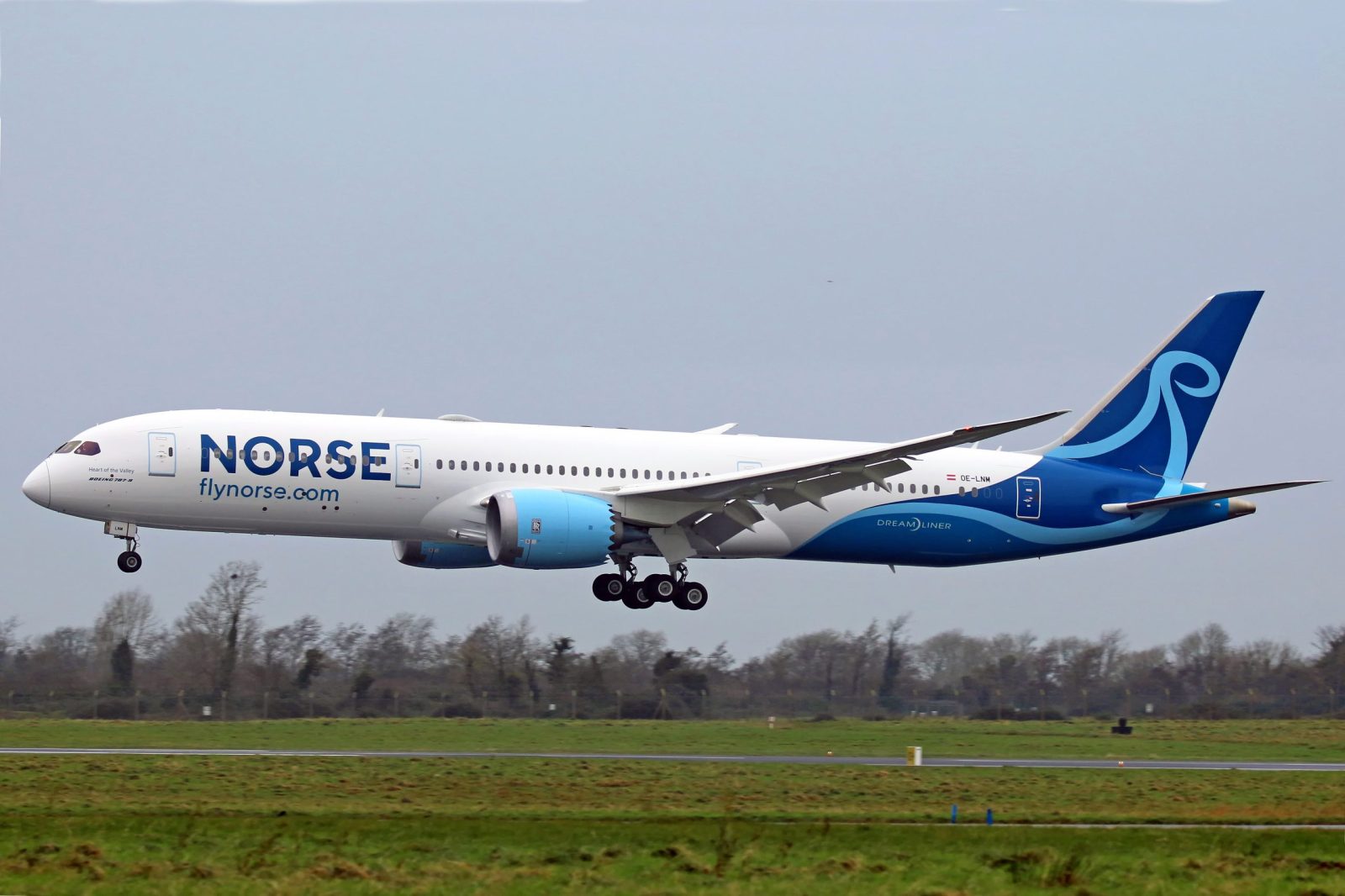
A Norse Boeing 787
A Norse Atlantic Airways 787-9. (Photo: Norse Atlantic Airways | Malcolm Nason)

Norse Atlantic Airways is preparing to land soon. The airline, founded by former Norwegian executives, plans to launch ticket sales at the end of March and the first commercial flight in the second quarter from Oslo (OSL) to a U.S. destination.

“Prospective customers on both sides of the Atlantic contact us every day to ask when they can start buying tickets, when we will be in the air, and most importantly, what routes we will offer,” said Bjorn Tore Larsen, CEO of Norse Atlantic.

“We are working to finalize our route network and look forward to announcing our destinations when we open for sale,” Larsen added.

Recruiting Pilots and Cabin Crew

The company has received more than 3,000 applications for the first 50 pilot jobs at Oslo (OSL) and has now started the training process. The first cabin crew base will be established in Fort Lauderdale, Flo. and the first training for a total of more than 400 people will begin in the coming weeks.

Crew bases will be established in other cities as activity at the airline increases. Norse Atlantic has signed collective bargaining agreements with pilot and cabin crew unions in Norway, the United States, and the United Kingdom.

Dreamliner Fleet

Norse Atlantic will have an all-Boeing 787 Dreamliner fleet. The first four aircraft are already in Oslo (OSL) and are Norwegian-registered. The remaining 11 Dreamliners will be delivered gradually over the coming months. The company will start operations cautiously and add capacity as demand dictates.

“We believe transatlantic travel will resume in full force once the pandemic is behind us. People will want to explore new destinations, visit friends and family and travel for business,” Larsen added.

In December 2021, Norse Atlantic received its Air Operator Certificate from Norwegian authorities and permits from the U.S. Department of Transportation in January. The company plans to offer flights to Fort Lauderdale (FLL), Ontario (ONT) and Newburgh (SWF).

This story was originally published on Aviacionline by Rainer Nieves Dolande.

Ryan Ewing

Ryan founded AirlineGeeks.com in February 2013 and has spent more than a decade covering the airline business. His work has been featured by CNN, WJLA, CNET, and Business Insider. His aviation experience spans airport operations, Part 135 regulatory compliance, and airline crew workforce planning, along with time behind the yoke of a Cessna 172 and interviews with airline executives. Ryan now serves as Group President of Firecrown Media’s Aviation Group. He holds a B.S. in Air Transportation Management and an MBA from Arizona State University and teaches Airline Management at Embry-Riddle Aeronautical University.

Ultra-Low-Cost Airline Swoop to Add 737 MAX Fleet

A Swoop Boeing 737-800. (Photo: Swoop)

On Wednesday, one of Canada’s ultra-low-cost carriers (ULCC), Swoop announced that it will be adding six new Boeing 737-MAX 8 aircraft to its fleet. The move will increase the carrier’s fleet from 10 to 16 aircraft.

The 737 orders will help the airline accommodate the significant increase in passenger demand on the current routes served. 

Owned by parent company WestJet, Swoop operates out of Calgary and was first introduced on Sept. 27, 2017. Based in Calgary, the airline was named after WestJet’s desire to “swoop” into the Canadian market with a new business model. 

Operating its first flight on June 20, 2018, the airline has found great success in the markets served, so much so, the airline also announced on Tuesday a significant expansion of 14 new non-stop routes in its domestic network. 

“We saw demand for travel return in a very meaningful way over the holidays, signaling that Canadians are ready to reunite with family and friends,” stated Bert van der Stege, Head of Commercial & Finance, Swoop in a press release. “The acquisition of six new aircraft in response to anticipated demand will ensure Swoop reconnects more Canadians this summer while accelerating Canada’s economic recovery.”

Swoop plans to increase its presence in Atlantic Canada by adding non-stop flights to Newfoundland. When compared to pre-pandemic levels, service across the region will increase capacity by 273 percent.

To prepare for Canada’s busy summer season, the ULCC has also announced the addition of six new routes in Ontario and the Prairies. 

Despite the difficult year of travel restrictions due to the pandemic, the airline continued to see strong demand on its markets. Swoop carried upwards of one million passengers in 2021, and continued to prove reliable with a flight completion rate of 99.4 percent and on-time arrival of 78 percent.

The additional aircraft in its fleet and the route expansion will continue fostering the growth of the airline, as the announcement brings its total domestic routes served to 37. 

Route Expansion

Newfoundland and Labrador

  • Deer Lake – Hamilton, 2x weekly (May 21) 
  • St. John’s – Hamilton, 5x weekly (June 13) 
  • Deer Lake – Toronto, 2x weekly (June 20)

New Brunswick

  • Moncton – Hamilton – 4x weekly (May 9) 
  • Saint John – Toronto – 4x weekly (May 12) 
  • Moncton – Edmonton – 2x weekly (May 9)

Prince Edward Island

  • Charlottetown – Hamilton – 4x weekly (May 1) 
  • Charlottetown – Toronto – 3x weekly (May 2) 
  • Charlottetown – Edmonton – 2x weekly (May 1)

Halifax, Nova Scotia

  • Halifax – Edmonton – 5x weekly (May 1) 
  • Halifax – Ottawa – Daily (June 19)

Ontario

  • Ottawa – Winnipeg – 4x weekly (June 19) 
  • Winnipeg – Toronto – Daily (June 20)

Saskatchewan

  • Saskatoon – Winnipeg – 2x weekly (June 14) 
  • Saskatoon – Toronto – 2x weekly (June 22) 
  • Regina – Winnipeg – 2x weekly (June 16) 
  • Regina – Toronto – 2x weekly (June 22)
Swoop’s route network (Photo: Swoop)

Chase Hagl

Chase Hagl grew up in Twin Falls, Idaho. His love and passion for Aviation landed him in Orem, Utah where he obtained a B.S. in Aviation Management with a minor in Business Management from Utah Valley University. Chase currently works as a flight attendant in Charleston, SC and is also the primary Inflight ASAP ERC representative for startup airline, Breeze Airways. His experience in the aviation industry spans back four years, working in areas including agriculture application, customer service, maintenance, and flight ops. In his free time, Chase enjoys road biking, astronomy, and flying.

London’s Luton Airport Announces Expansion

An easyJet A320 taxiing at Schiphol Airport. (Photo: AirlineGeeks | William Derrickson)

Luton Rising, the owner of London’s Luton Airport, one of the busiest airports in the United Kingdom, has begun a new consultation on its long-term proposals to expand the airport. Luton Rising is owned by Luton Council, the local governmental authority for the area.

Luton is expected to expand by building a new terminal to increase its passenger capacity. After the new terminal is completed, it may handle 32 million passengers annually.

According to Luton, the expansion can create more than 6,000 new jobs in the airport and its neighboring counties, boosting the area’s economy by one billion pounds. The airport said that it has supported 11,000 jobs directly employed at the airport and 28,000 jobs across the country over the years. The community organization’s benefit from Luton was 20 times greater than any other airport in the country, according to the report.

Graham Olver, the Chief Executive of the Luton Rising, said the latest proposal and what it proposes “differ in significant ways from those presented at the previous statutory consultation in 2019. Our new Green Controlled Growth framework is at the heart of our sustainability measures, which we believe are some of the most far-reaching ever put forward by a U.K. airport.”

Luton has signed up Toulouse Declaration, committing to achieving net-zero carbon emissions by no later than 2050.

Luton expects to expand the original terminal, associated facilities and the new terminal, making the airport can handle 27 million passengers. A further expansion of Terminal 2 and associated facilities to increase to 32 million in the future.

This is not the first time to reveal the proposal of the new terminal. Earlier, Luton revealed the new terminal proposal, expecting to be completed by 2041, but Covid-19 could delay the project until 2045. “Terminal two remains a very key part of our plans,” Olver said in last May.

Opposition To The Plan

Luton is best known as the hub for low-cost carriers such as easyJet and Wizz Air. During the pandemic, Luton had suffered from the Covid and needed a support package to survive. The single-runway airport handled nearly 18 million passengers in 2019, plummeting to 4.1 million passengers in 2021.

However, the expansion is not for everyone. Andrew Lambourne of the Luton and District Association for the Control of Aircraft Noise said, “The last thing people who live in this area want, having been barraged by a constant stream of ever-noisier flights, clogged roads and standing room only on trains, is the prospect of the situation getting far worse than that.”

Earlier, Luton has been given a green light from its owner, Luton Council, to increase the passenger capacity from 18 million every year to 19 million, but it is still waiting for the final approval. Luton said the increase in passenger capacity will not have any “physical changes or new construction” at the airport. The people living around the airport are also concerned with noise pollution.

Sign-up for newsletters & special offers!

Get the latest stories & special offers delivered directly to your inbox

SUBSCRIBE

Uh-oh! It looks like you're using an ad blocker.

Our website relies on ads to provide free content and sustain our operations. By turning off your ad blocker, you help support us and ensure we can continue offering valuable content without any cost to you.

We truly appreciate your understanding and support. Thank you for considering disabling your ad blocker for this website