Kenya Airways' 787 Dreamliner arrives at JFK. (Photo: AirlineGeeks | Tom Pallini)
Kenya Airways has appointed Seabury Consulting, part of Accenture, to advise its board on the restructuring process to be undertaken by the airline as it seeks to re-settle its debt as well as improve its revenues on a long-term business plan.
Confirming the deal, KQ Board Chairman Michael Joseph said, “They [Seabury Consulting] will assist with the restructuring as part of the financial support from the National Treasury.” Last year, the International Monetary Fund (IMF) highlighted the Importance of having an international aviation consultant to prepare an in-depth financial assessment of Kenya Airways essential for the country’s state-owned enterprises (SOE).
“Given the special circumstances and uncertainty facing the global airline industry, Kenya Airways has retained an international aviation expert to assist in defining a set of strategies for its future. Kenya Airways has experienced losses in recent years and faces significant future challenges. Sector-specific expertise will contribute to a better understanding of major trends in the regional and local aviation market, the formulation of a viable business model for Kenya Airways and ensure the consideration of all least cost alternatives for the Exchequer,” the IMF said.
Continued Government Support
While Seabury works on its report, the Kenyan legacy carrier began another painful restructuring that will see a significant number of employees getting fired as it attempts to remain airborne. This comes at a time when the Kenyan government will reportedly inject another KES26.56 billion shillings (USD233.7 million) into the cash-strapped airline in supplementary budget estimates by the National Treasury presented to Parliament recently.
This is in addition to KES53.4 billion (USD470 million) in direct budget support already allocated to the airline for the fiscal year ending June 2022, with the government having promised to absorb KES92.5 billion (USD814 million) of its debts accumulated by the end of 2020. The government last year decided to reverse earlier plans to nationalize the carrier and will instead look at other ways to safeguard money it has loaned the carrier, according to the International Monetary Fund.
The extra allocation to the airline and other parastatals constitutes the highest of the National Treasury’s extra spending of KES108.5 billion (USD954.9 million) in the fiscal year ending June 2022 as the carrier appears to be facing costly operational issues.
Kenya’s Business Daily reported the airline needs funds for the maintenance of grounded aircraft, payment of salaries, and the settling of utility bills, and to ease the effects of the COVID-19 pandemic on travel demand. Kenya Airways is at risk of running out of funds amid reluctance by commercial banks to extend further liquidity.
Towards the end of last year, Kenya Airways and South African Airways announced plans to launch a pan-African airline group by 2023 in a partnership that will see the airline duo share the exchange of knowledge, expertise, innovation, digital technologies, and best practices
Victor Shalton's love for aviation can be traced to when he was 11-years-old. As a seasoned aviation writer, he takes pride in providing the best aviation coverage around the globe and is passionate about advancing his skills in the aviation space. In addition, he loves travelling, writing, arts and while his speaking engagements have taken him around the world, he is proud to call Nairobi home.
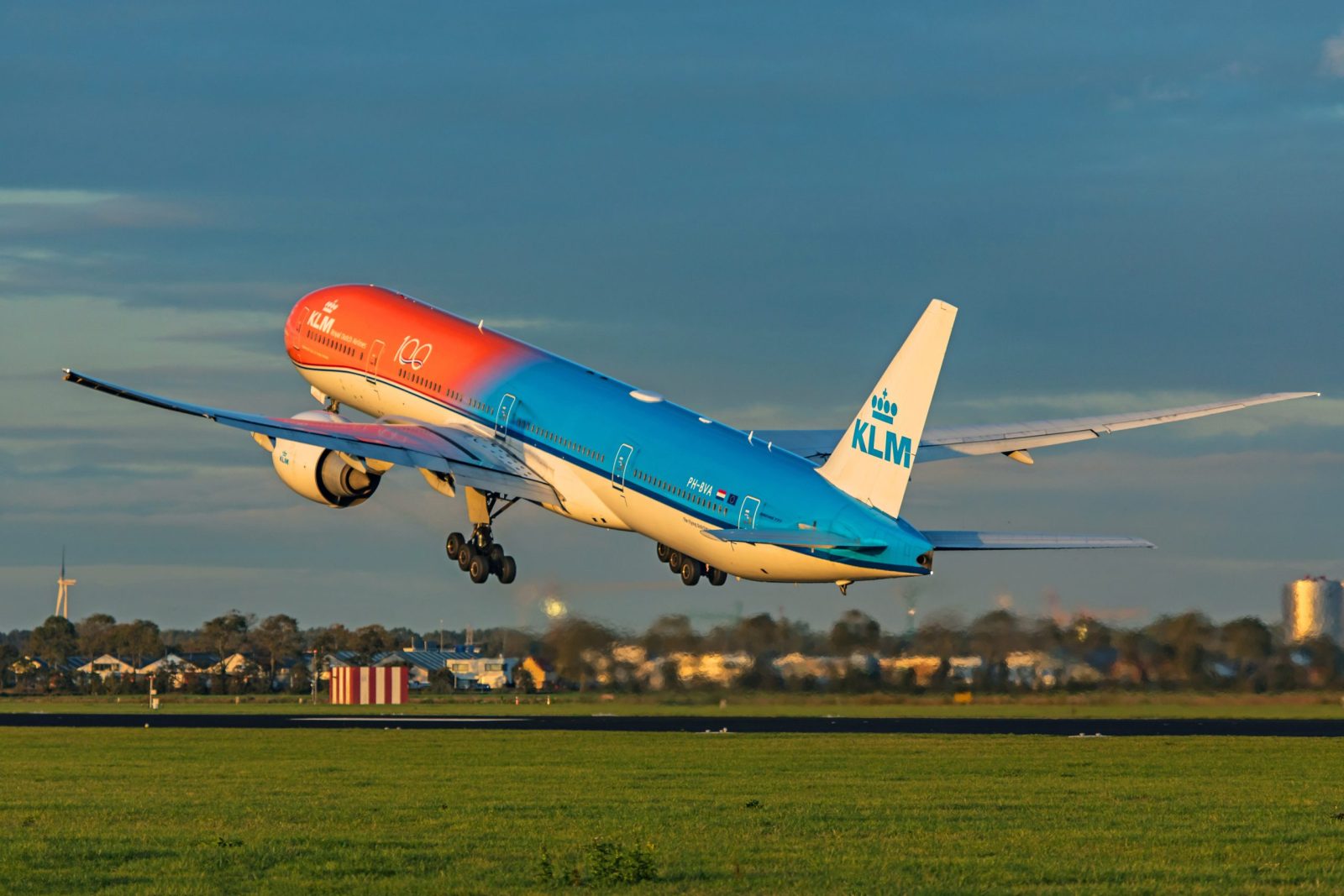
A KLM Boeing 777 aircraft (Photo: AirlineGeeks | William Derrickson)
On Feb. 4, the French and Dutch embassies in Peru issued a statement addressed to the Peruvian Ministry of Foreign Affairs showing their concern about the air operations’ continuity between Peru and Europe. This message was issued after the La Pampilla refinery — operated by the Spanish company Repsol — stopped its operations on Feb. 1 by express order of the Peruvian government.
This stoppage was decreed after an ecological disaster occurred on Jan. 15, when an average of 11,900 oil barrels were spilled into the Peruvian sea in Ventanilla, Peru.
According to the Peruvian government, the interruption of the activities at the La Pampilla refinery was necessary, since the company does not have the appropriate plans to face a major accident like the one that occurred on Jan. 15.
La Pampilla is the largest refinery in Peru, in terms of the volume for refined oil each day, processing around 120,000 barrels per day and supplying 40 percent of the Peruvian fuel market. Regarding the fuel supply for aircraft at Lima, Peru’s Jorge Chávez International Airport, La Pampilla provides 75% of the fuel for them.
For this reason, the French and Dutch embassies in Peru expressed their interest and concern in guaranteeing operations between Peru and Europe. The embassies’ main concern is the supply of fuel to the Air France and KLM aircraft in Peru since Repsol supplies 70% of the fuel both carriers use for their operations in the country.
According to what the embassies expressed in a statement issued, there was fuel for only 15 more days to supply the eleven weekly operations that Air France and KLM have in Peru. The embassies requested the Peruvian Ministry of Foreign Affairs for its special and urgent attention to this matter, to guarantee the fuel supply to ensure smooth and uninterrupted flight operations.
Peru finds itself in a very complex situation as it cannot guarantee the supply of fuel for aircraft operating in the country. For this reason, the Peruvian government is negotiating with Ecuadorian and Colombian companies for a possible fuel supply channel for the country.
The Peruvian government is monitoring its fuel inventories on a daily basis and evaluating other possible supply scenarios. Lima, Peru’s Jorge Chávez International Airport has more than 250 daily operations, between domestic and international flights.
Fuel shortages would represent a major threat to the country’s connectivity and to its economy. A possible fuel shortage would generate a new crisis for the aeronautical sector which is currently trying to recover from the crisis caused by the global pandemic. A new crisis in the sector would have serious consequences and an uncertain future in finding a long-term solution could compromise a recovery.
The three things Juan Pedro loves most about aviation are aircraft, airports, and traveling thousands of miles in just a few hours. What he enjoys the most about aviation is that it is easier and cheaper to travel around the world and this gives you the opportunity to visit places you thought were too far away. He has traveled to different destinations in North, Central, South America and Asia. Born, raised and still living in Perú, Juan is a lawyer, soccer lover, foodie, passionate traveler, dog lover, millennial and curious by nature.
A Frontier A320neo in Denver (Photo: AirlineGeeks | William Derrickson)
Early Monday morning, U.S.-based ultra-low-cost carriers Spirit and Frontier announced their plans to merge the two airlines in a $3 billion cash-stock deal. The airline duo expects annual run-rate operating synergies once full integration is complete. While the deal is expected to close in the second half of 2022, a variety of movements are crucial to the success of this merger in its infancy.
Indeed, it has been quite a while since a full-fledged merger has taken place among a group of U.S. airlines, so here are five key points to watch in the Frontier-Spirit deal:
Regulatory Oversight
U.S. anti-trust laws and airline mergers have not always meshed well, and time will tell if this deal is sniffed out by the Department of Justice (DOJ).
In 2013, the U.S. sued American Airlines and US Airways as part of their merger with Attorney General Holder stating, “This transaction would result in consumers paying the price—in higher airfares, higher fees, and fewer choices…If this merger goes forward, even a small increase in the price of airline tickets, checked bags or flight change fees would result in hundreds of millions of dollars of harm to American consumers. Both airlines have stated that they can succeed on a standalone basis and consumers deserve the benefit of that continuing competitive dynamic.”
The parties eventually settled the case on terms that the airlines would divest slots and gates at key constrained airports across the country to ultra-low-cost carrier airlines (ULCCs), which included cities such as Boston, Los Angeles, New York’s LaGuardia Airport, Washington, DC and more. The key point here is the emphasis on low-cost carriers.
Frontier, Spirit and Southwest planes meet in Orlando (Photo: AirlineGeeks | Ian McMurtry)
In 2016, the DOJ again sued Virgin America and Alaska Airlines over their merger, resulting in a requirement where Alaska would ‘significantly’ scale back its codeshare agreement with American.
Anti-trust divisions within the upper echelons of the DOJ have long advocated for LCCs and ULCCs. They believe that these airlines are key to sustaining a healthy competitive environment, which may prove key for Spirit and Frontier in appeasing the regulators.
It is a safe bet that these regulators are already sniffing around, and of course, the carriers have prefaced much of their merger marketing material on ‘subject to government approval.’
Organized Labor Unions
Most of the workgroups at Frontier and Spirit are unionized, including pilots and flight attendants. In the past, integrating these workgroups has proven to be a major hurdle, especially when factoring in things like seniority, bid schedules and contracts.
According to an Association of Flight Attendants statement regarding the recent merger news, the union said it represents over 4,600 Spirit flight attendants and 2,900 at Frontier. While both Frontier and Spirit do not plan on any job cuts as part of the merger, there’s been no mention of seniority integrations.
“Our first priority is to determine whether this merger will improve conditions for Flight Attendants just like the benefits the companies have described for shareholders and consumers. Our support of the merger will depend on this,” the statement added.
The airlines expect to add 10,000 direct jobs by 2026 with 83% of the combined workforce unionized. Airline leadership says union leaders and employees also found out about the merger early Monday morning.
Blending Unique Brands
While Frontier and its parent company Indigo Partners are acquiring Spirit on paper, both maintain separate brands. Among them is Frontier’s famous aircraft livery, which includes an animal on each tail.
So far, there has been no mention of branding plans as part of the merger or if a completely new brand will be created. This plan is expected to be announced by the merger’s close date.
For example, even though US Airways technically acquired American on paper in 2013, the American Airlines brand prevailed.
Even though Frontier will be the surviving entity here, it is unclear how the two airlines plan to brand blend.
Will Spirit’s bright yellow Airbus jets fall to Frontier? Or will Frontier’s iconic tail animals become ‘Spirit Animals?’
Combining Networks
Per Cirium data, Frontier maintains a 2% market share, while Spirit controls 3% of the U.S. domestic market. Notably, the carriers overlap on about 18% of flights and operate similar schedules out of a variety of key low-cost destinations, including Orlando and Las Vegas.
The combined route networks would make it the U.S.’s fifth-largest airline — stepping on the toes of JetBlue and Alaska.
As Aerology points out, both airlines maintain similar regional market shares in several areas. Adding these two networks would result in over 1,000 daily flights opening the door for routes to smaller cities and ones previously exited, such as Washington Dulles.
Don’t think the DOJ will consider a state a market (nor would an 18% share be alarming), but combined carrier set to become second largest in Florida, jumping DL and WN (and behind only AA—with hub in MIA).
Leveraging each airline’s unique crew bases, hubs and focus cities will be critical from a network strategy point of view. They’ll need to refine these networks to not overshadow but instead compliment each other. Some point-to-point operations in addition to ultra-low-cost constraints and targeting markets correctly could make or break the merger.
Keeping Costs Low
This one is key. Airline mergers aren’t cheap and often come with a mirage of operational and administrative difficulties. The premise behind both Spirit and Frontier’s business models is keeping costs low, resulting in lower pricing for the consumer. Often, operational issues – including delays/cancellations caused by the airline – are costly. These types of issues can hinder an ultra-low-cost carrier’s growth.
In this case, it isn’t like US Airways-American where one was saving the other post-bankruptcy. These are two financially healthy airlines with business models that have stood the test of time. Diluting this health with union conflict, fleet planning, messy network strategy, etc. could certainly slow down its anticipated growth.
Now, there are a lot of factors that Spirit-Frontier has working in their favor, including all-Airbus fleets, healthy route networks, and a clear strategic business focus.
Ryan founded AirlineGeeks.com in February 2013 and has spent more than a decade covering the airline business. His work has been featured by CNN, WJLA, CNET, and Business Insider. His aviation experience spans airport operations, Part 135 regulatory compliance, and airline crew workforce planning, along with time behind the yoke of a Cessna 172 and interviews with airline executives. Ryan now serves as Group President of Firecrown Media’s Aviation Group. He holds a B.S. in Air Transportation Management and an MBA from Arizona State University and teaches Airline Management at Embry-Riddle Aeronautical University.
Inside the flight deck on Honeywell's 757 (Photo: AirlineGeeks | Ryan Ewing)
Throughout aviation history, the steady advance of technological progress in the cockpit has greatly simplified the job of piloting aircraft. While statistically there’s no disputing the parallel between innovation and improved safety, I fear that this generation of aviators may be among the last to grace the skies with stick-in-hand and rudder pedals at our toes.
I am quite confident that there’s no stopping the automation locomotive here; we are already well past the point of no return, but I do believe that we — as early 21st century aviators — are actively working against our own interest in how we train and how we fly. Autonomous commercial flight is coming, but how soon the flying public welcomes that change might just have something to do with us as pilots.
Reality check: the technology required to completely automate the process of operating airliners is certainly not some futuristic dream. It’s here, and it’s getting cheaper and more reliable every day. Elon Musk’s solid rocket boosters can return from depositing satellites in orbit and land on a nickel. NASA’s Perseverance project deposited a fully autonomous, nuclear-powered go-cart on Mars and flies an unmanned helicopter around a planet that humans have yet to visit.
Sure, we’re not quite there yet with airline travel, but from a tech standpoint, we certainly could be. Do you really think your A320 needs you to type navigation fixes into the MCDU in order to get your passengers to El Paso? The reason we still have jobs is that the passengers still trust us more than they trust a machine. How long that lasts may be in our own hands.
The Boeing 777 is equipped with a computer called the Thrust Asymmetry Compensation (TAC). Its only job is to apply the appropriate amount of opposite rudder automatically to counteract the loss of thrust from a failed engine on one side during take-off because 90,000 LBS of thrust is still raging out of the other engine on the good side. This immediate automated action keeps the aircraft, and its nearly 400 occupants, moving in the right direction in the event of an engine failure on takeoff.
Other similar multi-engine airliners require the same rudder response, but instead of the TAC serving as the thin line between life and certain death, that burden falls on the reaction time and muscle memory of the flying pilot.
Automation of the thrust lever or auto thrust started becoming mainstream in airliner cockpits in the 1980s, and since then, the technology has become so solid that any prolonged manual thrust actuation in most modern jet aircraft is highly abnormal situation. Auto thrust transforms manual flying from a two-handed job to a one-handed one, and when used in combination with autopilot: a simple exercise in screen monitoring and button-pushing. Auto thrust also removes the entire sensory experience that engrains the pitch-power and energy management reflex into a pilot’s muscle memory.
While auto thrust has no doubt simplified the pilot’s job, it’s also directly translated to a generation of pilots with drastically reduced hand-flying skills. Sriwijaya 182, Atlas 3591, and Ethiopian 302 are all examples of recent fatal crashes that might have been avoided with better manual thrust actuation skills and familiarity. Although the airlines generally still include some limited manual thrust procedures in the training environment, even the most grizzled veteran pilots get rusty when every revenue flight operated entails auto thrust usage from takeoff to the short final. Like any other task, practice makes perfect.
The modern cockpit asks less of its humans with every evolution cycle. In the early days, an aircraft’s fuel, electrical, hydraulic, and powerplant systems required a third crew member — the Flight Engineer — to monitor and manually actuate the systems. Now, every aircraft flying has computer systems that automate these mundane tasks.
In those days, many pilots cycled through the crew ranks by starting as a Flight Engineer before their seniority allowed them to progress to one of the front seats. It could certainly be said that the “FE generation” had a much better understanding of “how an airplane works” than the pilots that came after, but it doesn’t mean we stopped providing crews with systems training.
I’m in no way suggesting that automation technology is bad, or that the use of automation shouldn’t be part of the Standard Operating Procedures (SOP) at airlines and commercial operators. It very much is and absolutely should. The problem though is that many airline SOPs and training programs lean too heavily on automation. Emirates’ policy of mandatory autopilot use nearly cost the lives of all aboard a 777 recently, and they’re not alone. I believe that as professional pilots, we should be clicking off the automation more to maintain our basic flying skills. Every commercial airliner in the skies today still has the interface to be flown by hand, and there’s no good reason we shouldn’t make a point to actually fly them.
I think there is room to innovate here, and the time is ripe for part 121 training departments to think outside of the box. It could be as simple as adding hand-flown visual circuits to a sim check or as complicated as providing incentives and opportunities for crews to get back to their roots by flying light general aviation aircraft on a semi-regular basis. For me, buying and operating a 1969 Aerostar 600 was quite an eye-opener after 20 years of burning Jet-A fuel.
The CDFA technique is a safer way to fly an instrument approach, but it’s easy and it’s not always going to be available in every situation one may encounter. I was shocked recently to learn that pilots training these days have never done a “dive and drive” approach.
As the trend lines of increasing automation and decreasing pilotage converge, the intersection of those lines represents a point in time where human flight crews become the weak link in the cockpit and not the failsafe. The flying public will steadily become more accepting of the idea of autonomous flight. With incidents resulting from a lack of basic flying skills on the increase, it’s only a matter of time before the public perception reverses course viewing pilots as a handicap in the cockpit versus the arbiter for safe operations.
While I do believe the end of the human-powered commercial flight is inevitable, I am confident that we can help defer this outcome by returning to basics in how we train and ultimately how we embrace our role alongside automation in the cockpit.
This post is written by guest author Steven Giordano
Steve Giordano (@JTTsteve) is a former airline pilot, and the Managing Director of the Nomadic Aviation Group; a commercial aircraft flight test and transactional flight operations company that operates a wide range of Boeing and Airbus aircraft on behalf of aircraft leasing companies. Giordano holds an FAA ATP with PIC type ratings and currency on the Boeing 737, 757, 767, 777, Airbus A320, A330, A340, Douglas DC-9, Bombardier DHC-8, and Citation CE500 with over 20,000 hours of command time in transport category jets.
AirlineGeeks.com was founded in February 2013 as a one-person blog in Washington D.C. Since then, we’ve grown to have 25+ active team members scattered across the globe. We are all here for the same reason: we love deep-diving into the fascinating realm of the airline industry.
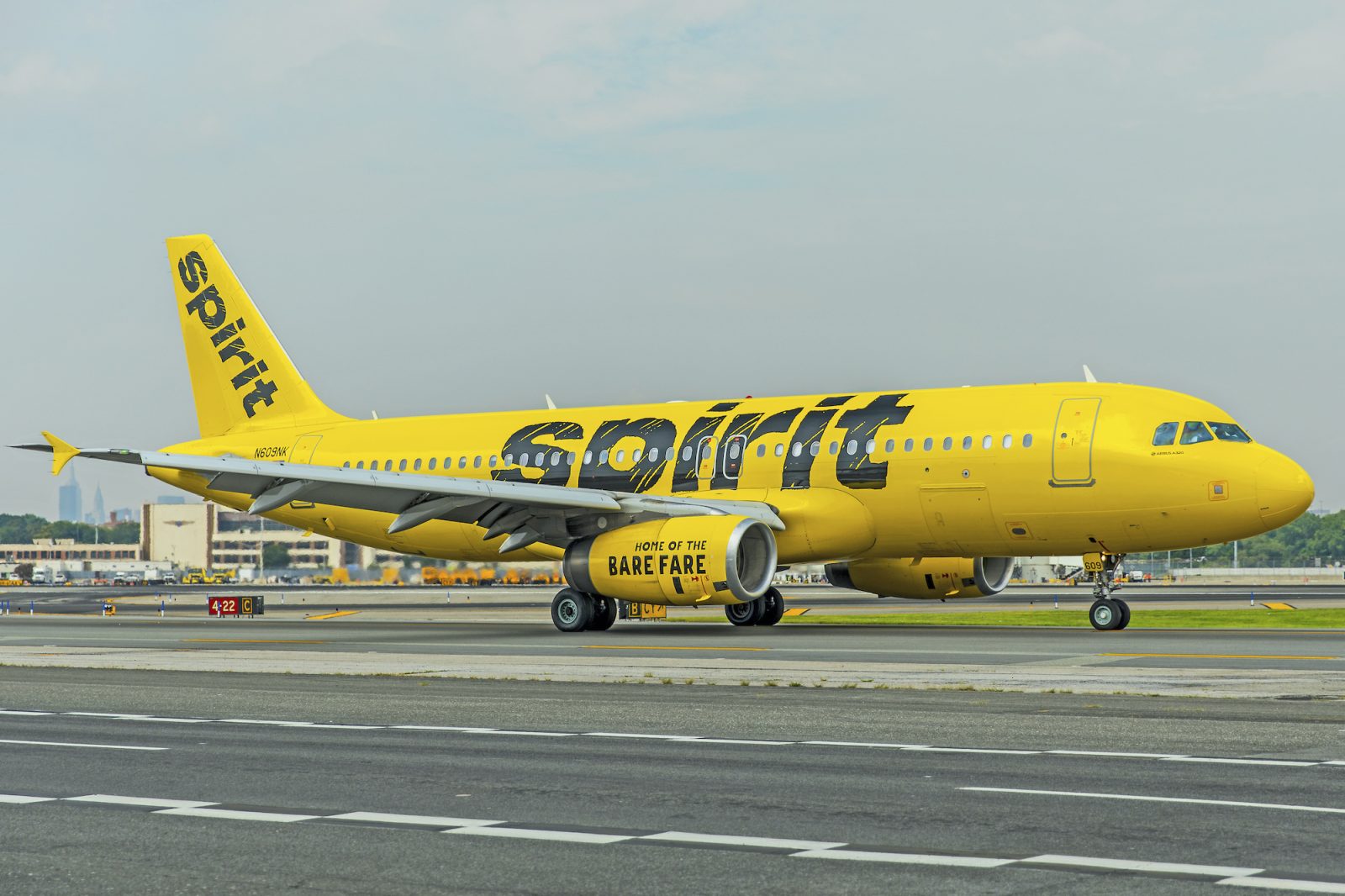
A Spirit A320 in New York. (Photo: AirlineGeeks | William Derrickson)
The low-cost carrier industry is about to have some major breakthrough changes, beginning with the definitive merger between two of the largest and most prominent low-cost carriers in the U.S.; the first airline merger since Alaska purchased Virgin America back in 2016.
Under a $6.6 billion deal that was unanimously approved by both companies’ board of directors on Monday, Frontier Airlines will be acquiring and merging with fellow rival Spirit Airlines to go from competing against each other, to creating what might be the U.S.’s fifth-largest airline, as well as the largest low-cost carrier in the entire country.
Even prior to today’s deal, both low-cost carriers were already bigger than competitors such as Allegiant, and the combined airline will then go on to be larger than Alaska Airlines and even JetBlue.
Inside the Deal
This merger will give Denver-based Frontier Airlines a majority 51.5 percent stake in the new combined airlines, and Florida-based Spirit Airlines will own approximately 48.5 percent of the company, allowing for it to be able to give its investors 1.9126 shares of Frontier Airlines, with an additional $2.13 in cash for each share they own, giving Spirit shareholders an implied value of $25.83 per share – representing a premium of 19 percent.
With the branding of the new airline still unknown, the overall combined revenues are estimated to be at $5.3 billion based on the airline’s respective financial results for 2021. And considering that both low-cost carriers have highly varied route networks, this merger will allow for the new carrier to offer more than 1,000 daily flights to over 145 destinations in 19 countries across the U.S., the Caribbean and Latin America, including the likes of major cities as well as underserved communities.
An A321 in Frontier’s “Spot the Jaguar” livery on approach into Las Vegas. (Photo: AirlineGeeks | William Derrickson)
“We are thrilled to join forces with Frontier to further democratize air travel,” said Ted Christie, President and CEO of Spirit Airlines in a press release. “This transaction is centered around creating an aggressive ultra-low fare competitor to serve our Guests even better, expand career opportunities for our Team Members and increase competitive pressure, resulting in more consumer-friendly fares for the flying public. We look forward to uniting our talented teams to shake up the airline industry while also continuing our commitment to excellent Guest service.”
Good Rivals, Better Partners
Frontier Airlines and Spirit Airlines definitely made good rivals along the years, but this merger shows that they are indeed better as merged partners – considering that both airlines operate an all-Airbus only fleet, as well as similar business models of being ultra-low-cost carriers and extremely comparable fare structures. Additionally, both airlines have overlapping hubs, as well as unique destinations such as the Spirit Airlines hub in Fort Lauderdale.
And so besides a shake-up in competition and ample new job opportunities for the aviation industry, the merger of the two airlines will also be creating many more low-cost varieties for passengers as well. The new airline will have a combined fleet of one of the youngest, and most fuel efficient aircraft across the U.S, allowing for it to deliver an estimated $1 billion in annual consumer savings and to be even more reliable in service through a variety of operational efficiencies.
This story was updated on Feb. 7, 2022 at 4:55 p.m. ET to correct an error regarding the Virgin America / Alaska merger.
Fascinated by aircraft from a very young age, Charlotte’s dream was to work alongside the big birds one day. Pursuing her dream, she went on to achieve her diploma in Aviation Management and is currently working on her degree in Aviation Business in Administration with a minor in Air Traffic Management. When she’s not busy with school assignments, you can find her aircraft spotting for long hours at the airport. In Charlotte’s heart, the Queen of the Skies will always be her favorite aircraft.
Unique Connection Series Trip Report: Watertown, South Dakota
On board a Denver Air Connection Embraer E145 (Photo: AirlineGeeks | Joey Gerardi)
If you have read my articles in the past, you know I love out-of-the-way airports, airlines, and aircraft. This will be the second trip report in my “Unique Connection Series”, the first of which can be found here.
Overview
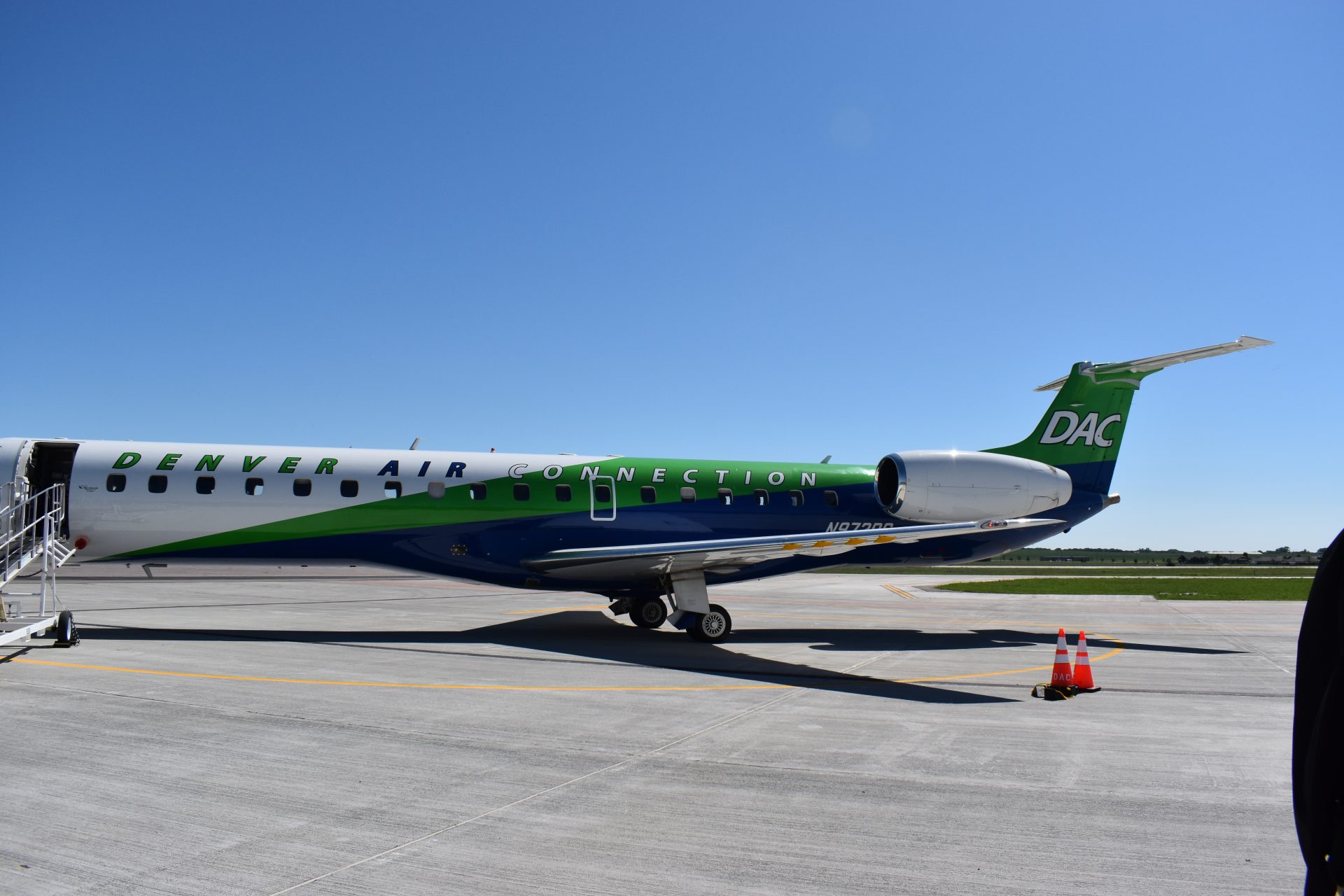
For this Unique Connection, I will be starting in Chicago and flying to Denver using a connection in the Essential Air Service, or EAS, city of Watertown, S.D. with Denver Air Connection. The airline is most well-known for operating the only passenger flight in the United States on a Fairchild Metroliner to Alliance. All of Denver Air Connection, or DAC, flights are operated by and are also a subsidy of Key Lime Air, an Englewood, Colo.
At the time this trip was taken, SkyWest under the United Express brand operated flights to Watertown, S.D. SkyWest lost the EAS contract in both Watertown and Pierre and fought to keep it, but the subsidy they asked to operate the EAS flights in these communities was twice that of DAC, so the Department of Transportation chose the DAC to operate the flights. United/SkyWest ended service to Watertown and also Pierre at the beginning of January 2022.
Day of the Flight
The morning of the flight, I arrived on an American Eagle flight from the northeast so I was already in the secure area of the airport, and passengers don’t need to leave if you are connecting from another flight, but because I wanted to get a paper boarding pass, I did leave the secure area. Unlike the last time I flew DAC back in the summer 2020, the airline now offers a mobile boarding pass option that can be obtained from their website when you check-in online, I screenshotted the boarding passes and saved them to the camera roll of my phone
The mobile boarding pass for my DAC flight (Screenshot: AirlineGeeks | Joey Gerardi)
The DAC ticket counter was at the east end of Terminal 3. I would like to point out that the scene is inaccurate, as neither Boutique Air nor Air Choice One operates flights to Chicago anymore, leaving just DAC and Cape Air at the east end of the check-in area.
DAC check-in area at Chicago O’Hare (Photo: AirlineGeeks | Joey Gerardi)
They handed me paper boarding passes and pointed me towards TSA, but the closest checkpoint didn’t offer a PreCheck lane so I headed to the nearest one that did: Checkpoint 8.
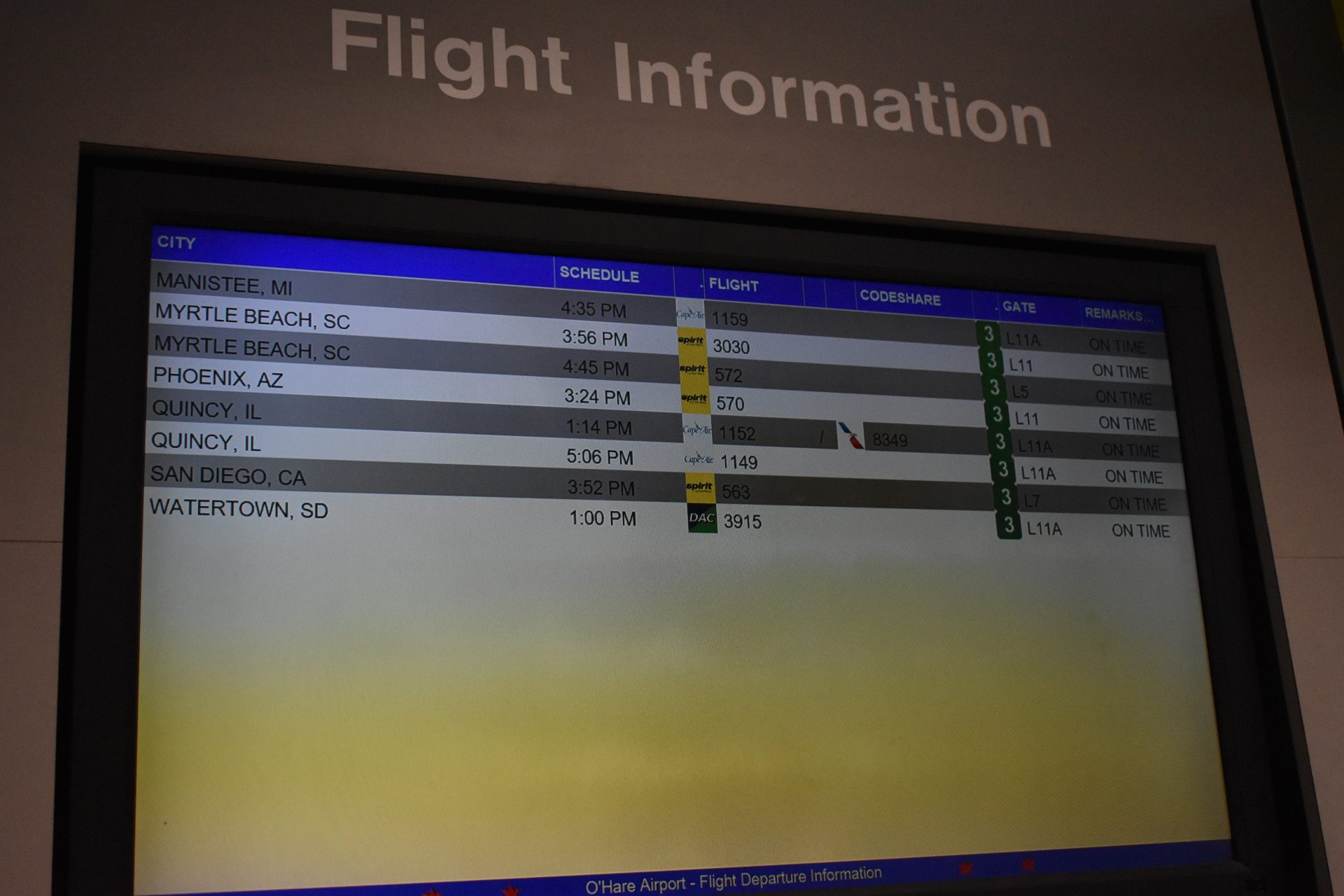
I knew where I was headed, to gate L11A, but those that aren’t familiar with the airline might have a little trouble finding them if they don’t know where to look. Flight information for DAC, as well as Cape Air and Spirit, are only found on the white display monitors in the terminal.
The white flight information signs, where the DAC flights are found Photo: (AirlineGeeks | Joey Gerardi)
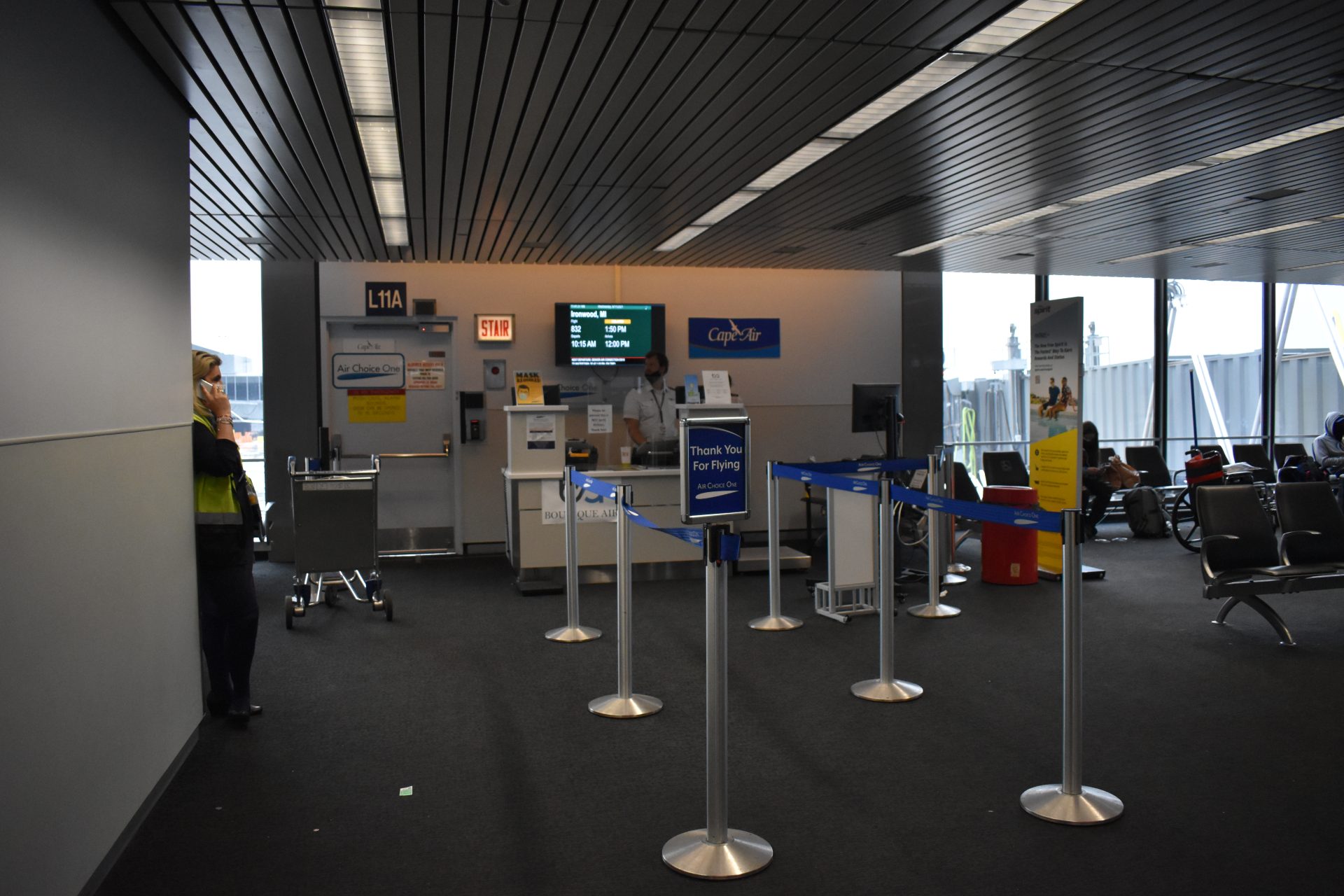
Cape Air and DAC also share a single departure board monitor at the gate, so only the flight that is closest to the current time shows up which can be a little confusing. But as long as you are at gate L11A you are in the right place.
Gate L11A at Chicago O’Hare (Photo: AirlineGeeks | Joey Gerardi)
The flight was running a little late due to weather around the area, but this aircraft will take you all the way to Denver so there is no risk of missing your connection in Watertown.
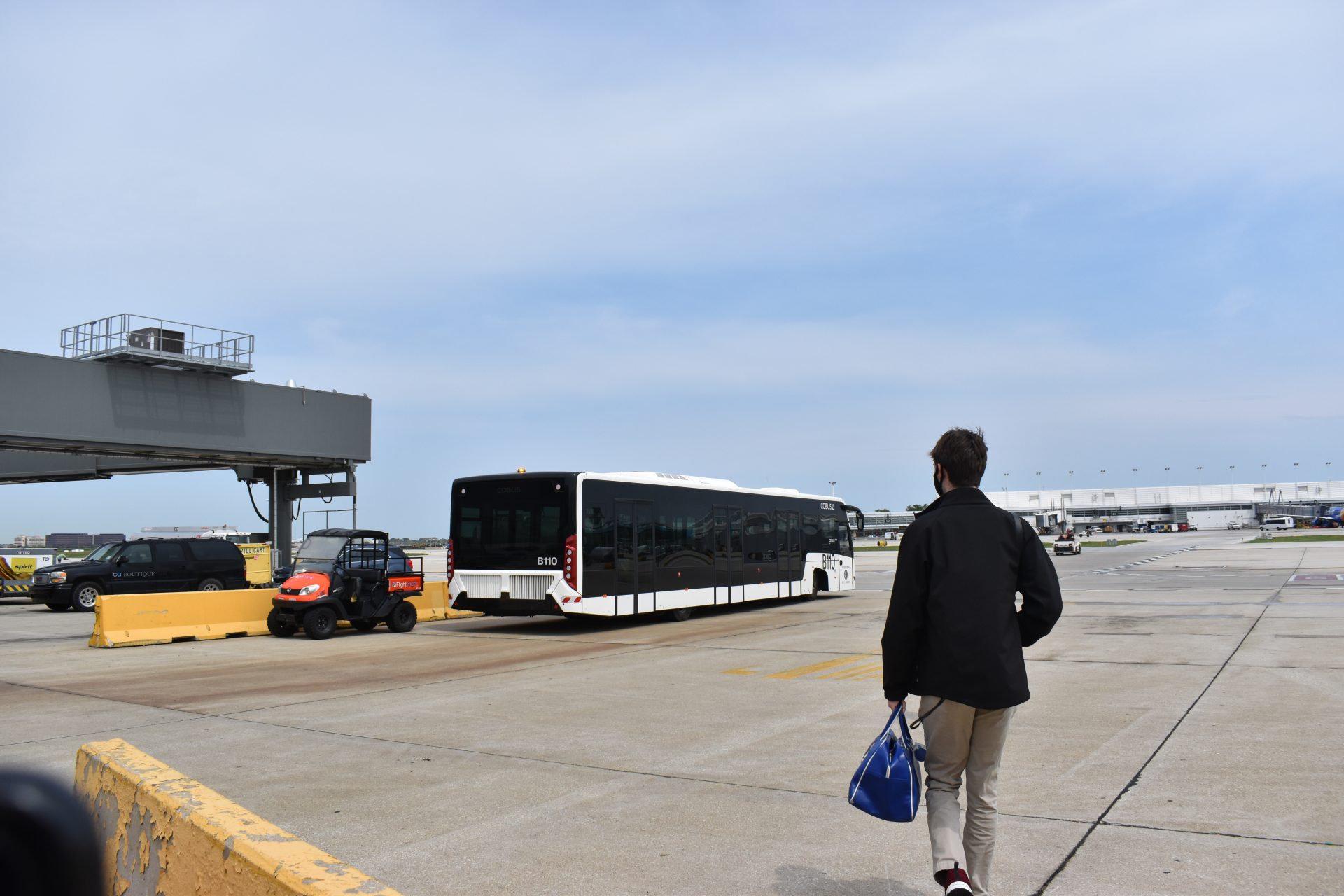
The smaller aircraft of Cape Air, park right next to the terminal, and passengers can walk right out to the plane. But DAC operates an Embraer E145 on flights to Chicago so it won’t fit directly next to the terminal. The aircraft instead parks at Terminal 5 — or T5 for short — and passengers are put on a bus out to the plane.
The bus out to our aircraft for the day (Photo: AirlineGeeks | Joey Gerardi)
DAC doesn’t have seat assignments, and the seating on the aircraft is first come, first serve unless the crew says otherwise. So if you want to get your pick of the seats, make sure to be near the door of the bus or you could be stuck without a window seat.
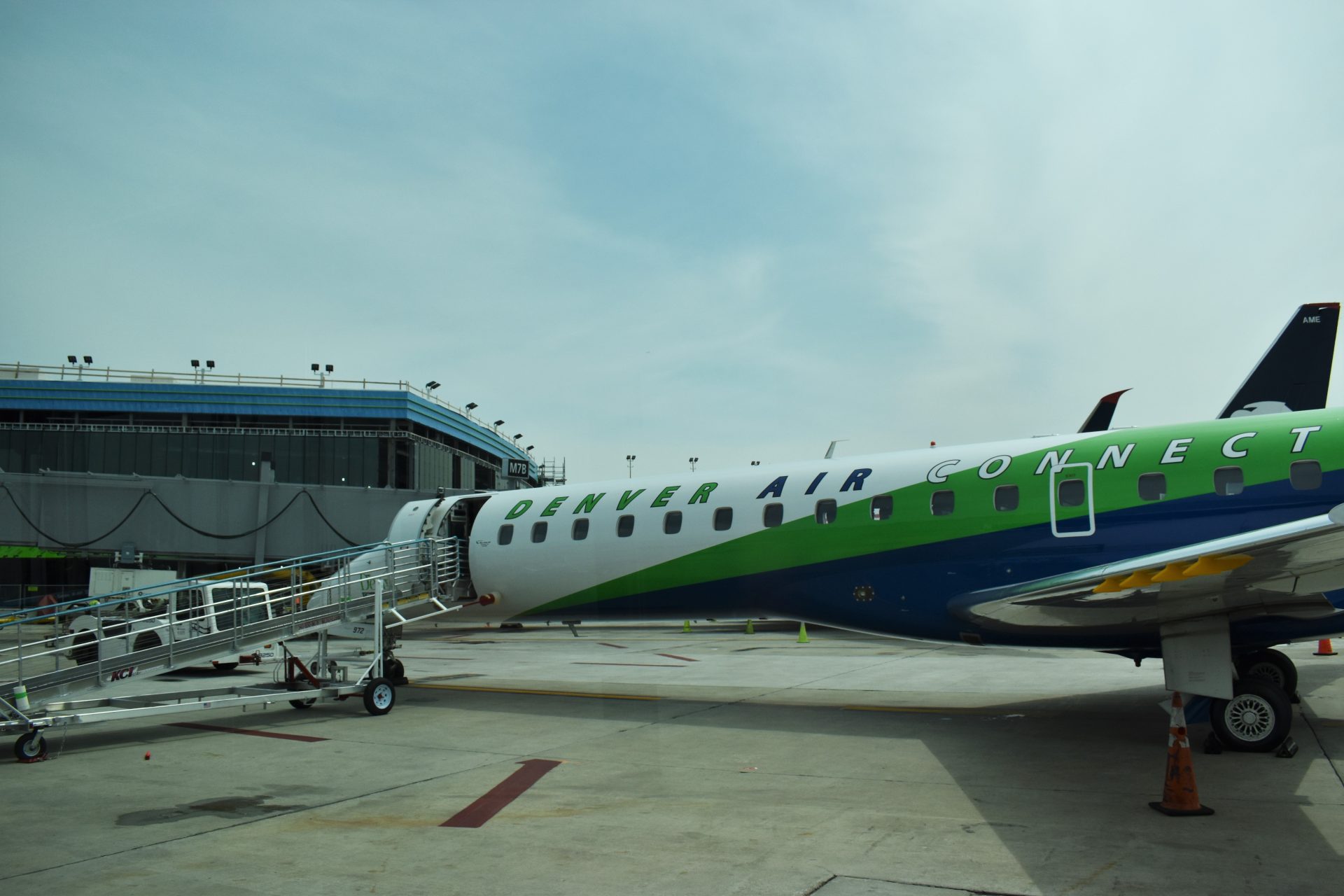
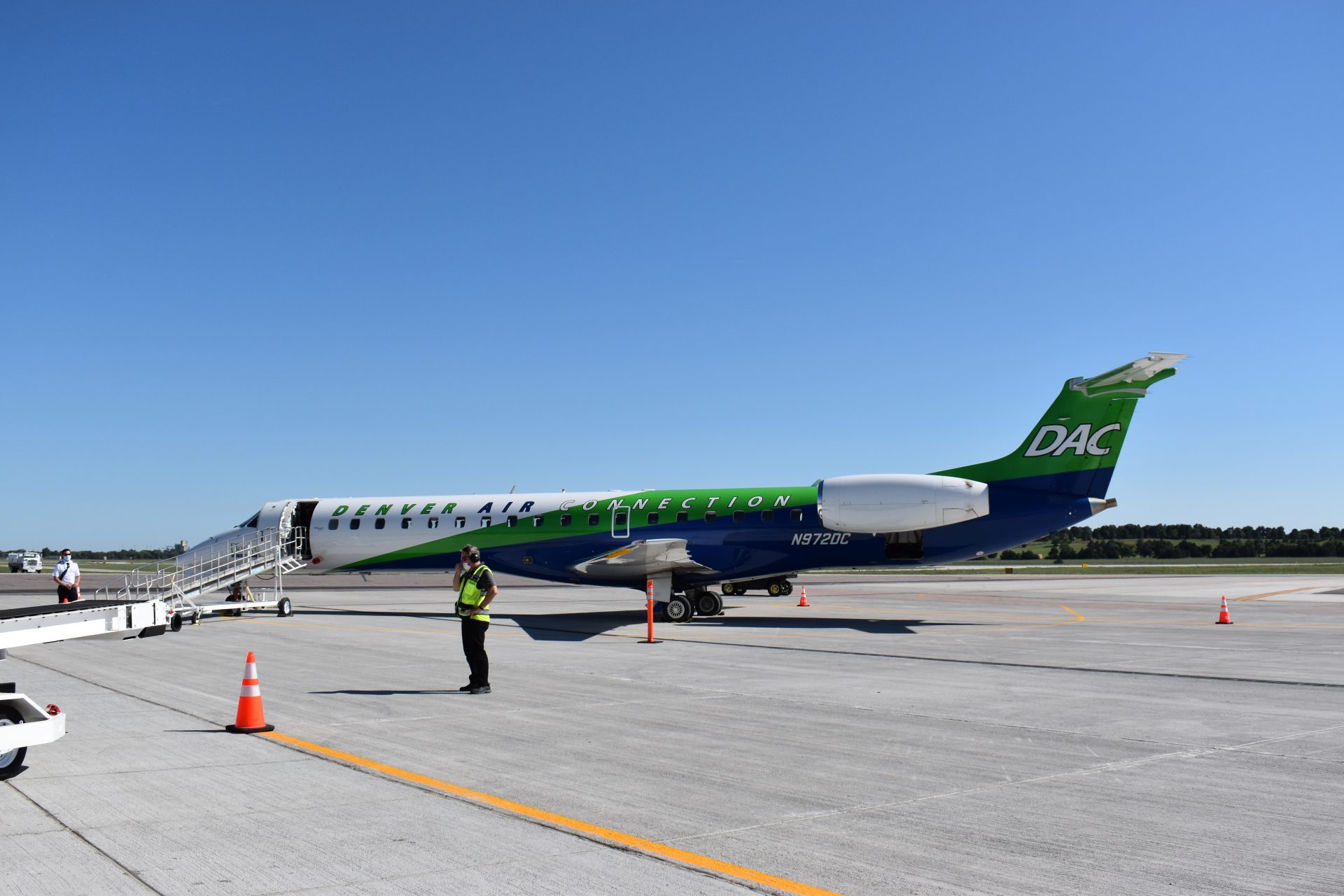
Pulling up to our aircraft, an Embraer E145 (Photo: AirlineGeeks | Joey Gerardi)
I took a seat in 15A, a window/aisle combo as the aircraft is configured in a 1-2 layout. There were only four total passengers on this flight, but like I said before that was due to the fact that United/SkyWest was operating the exact same flight at almost the exact same time. Coincidentally, United canceled their Chicago to Watertown flight the day I took this trip, so the four of us ended up being the only passengers going to Watertown from the Midwest that day.
Everyone boarded onto our first flight to Watertown, S.D. (Photo: AirlineGeeks | Joey Gerardi)
I reached out to the airline to see how the service is doing now that United/SkyWest has left Watertown. Flights are averaging around 50% capacity on the routes to/from Watertown, which is good considering this is a low travel month and positive Covid-19 cases have gone up again. That 50% average for DAC is also really solid considering United was flying the route at an average load factor of 40.5% in January of 2020, according to aviationDB, before the pandemic even began in the U.S.
We then got into the long line of aircraft waiting to depart, and not long after we blasted off the runway westbound approximately one-hour behind schedule.
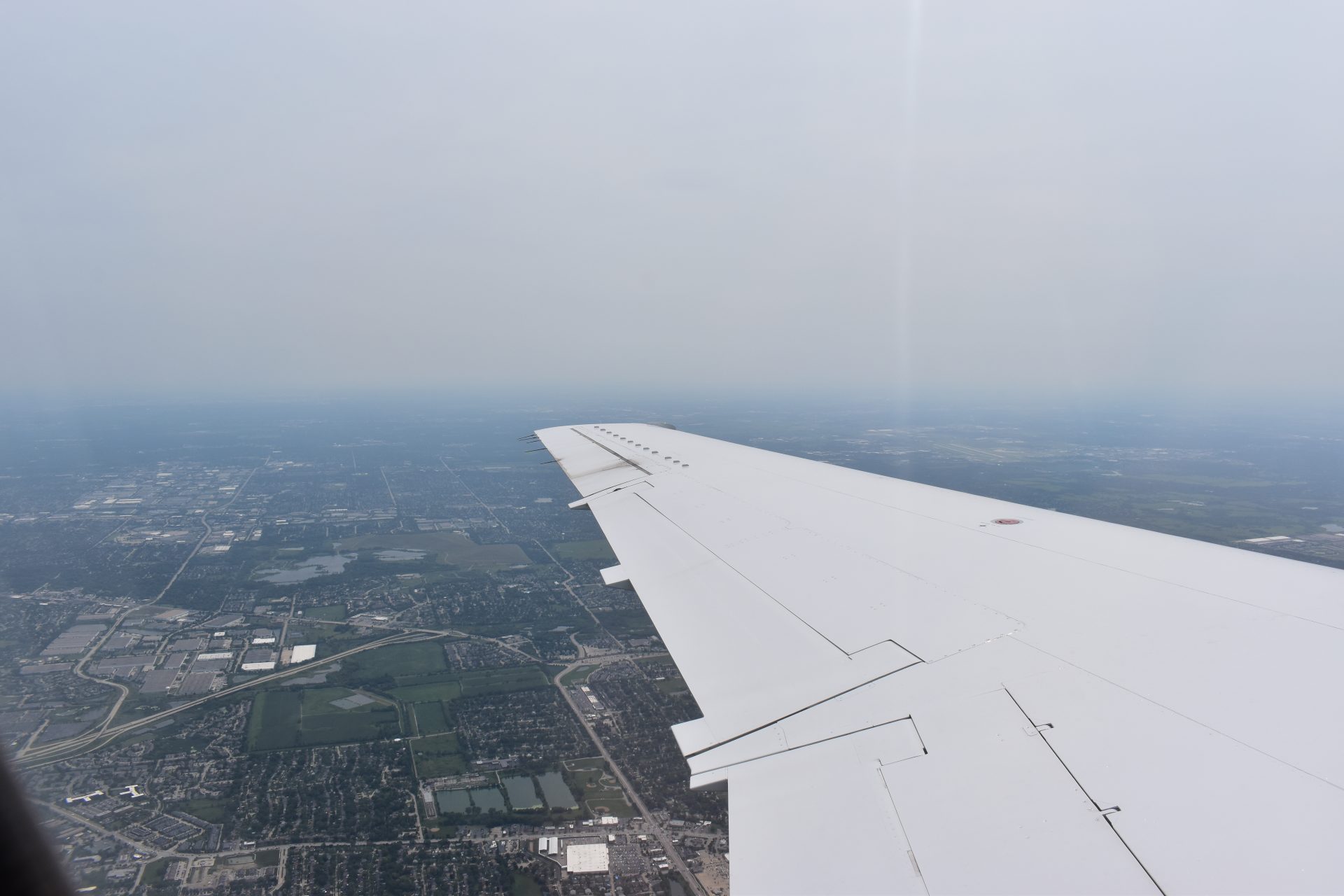
Just after departing Chicago O’Hare (Photo: AirlineGeeks | Joey Gerardi)
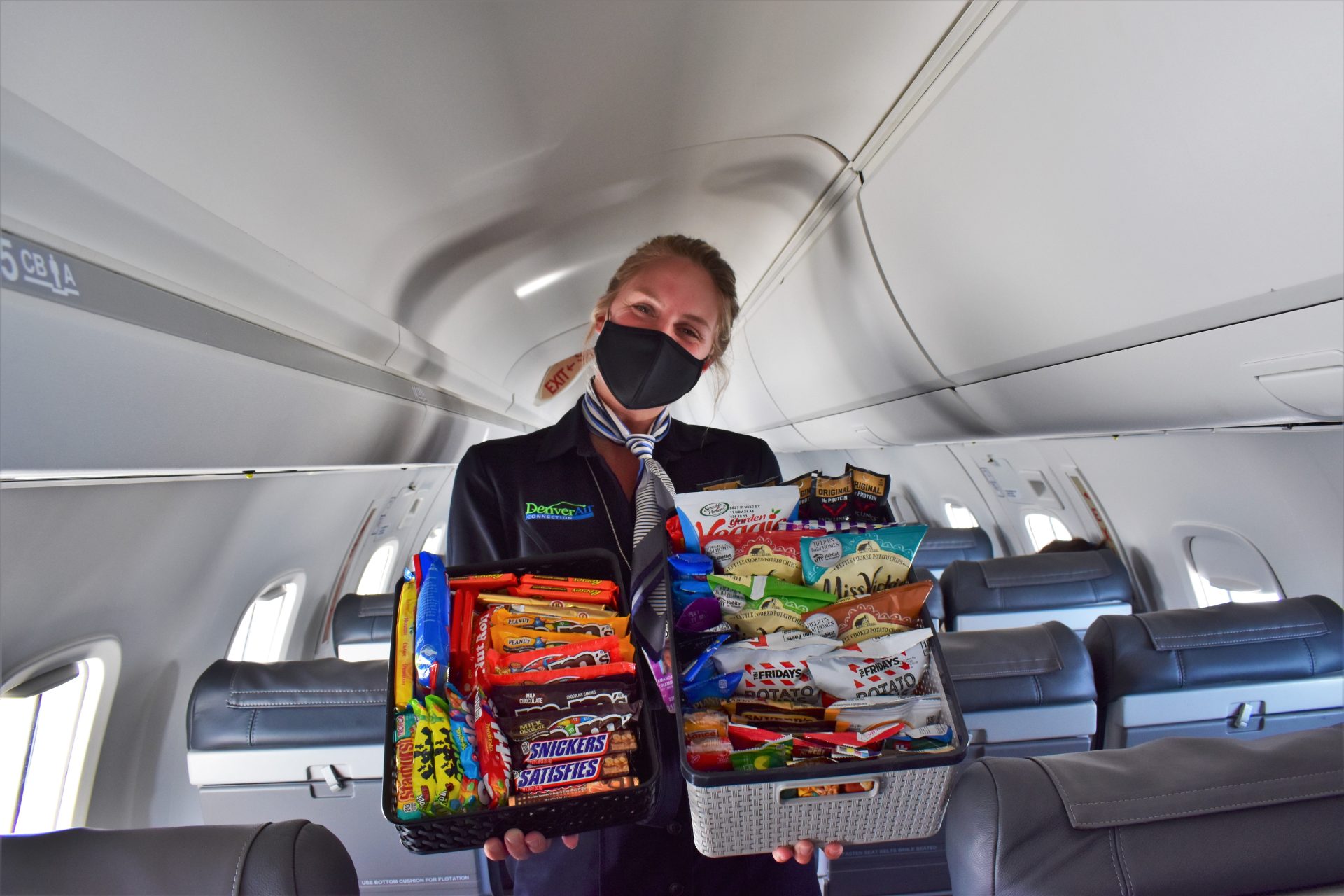
Even before we reached our cruising altitude of 36,000 feet, the flight attendant came around with the baskets of food and snacks, and yes, baskets plural. DAC offers one of the very best snacks and drinks options in the sky for economy passengers and rivals that of the larger carriers like JetBlue. One basket was full of brand-name snacks like Fridays potato chips and Jack Links beef steak sticks and another basket featured full-sized candy-like Skittles and Snickers.
The snack and candy options on DAC flights (Photo: AirlineGeeks | Joey Gerardi)
Due to the emptiness of my particular flight, I opted to walk around the cabin to get some pictures to find the best seats.
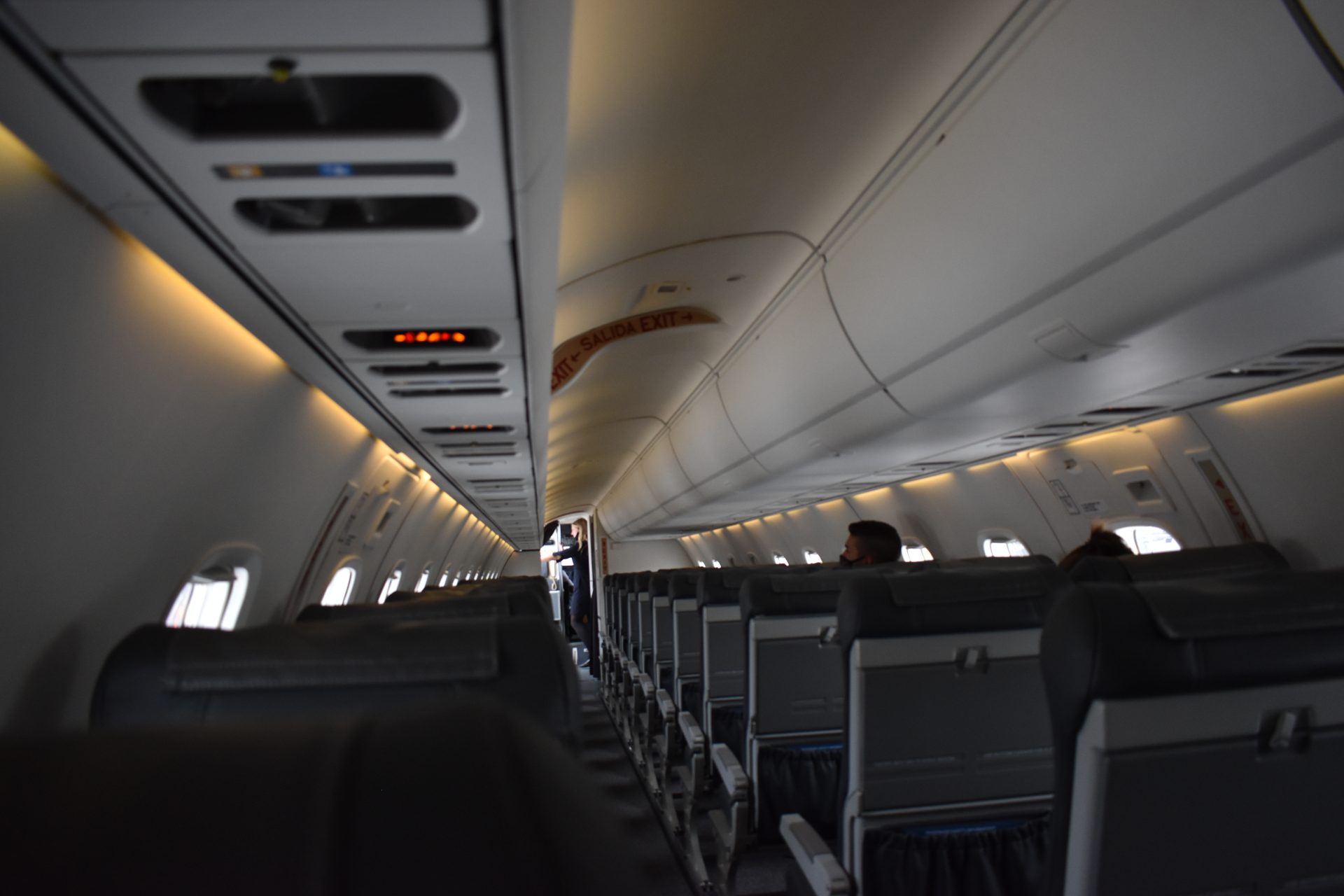
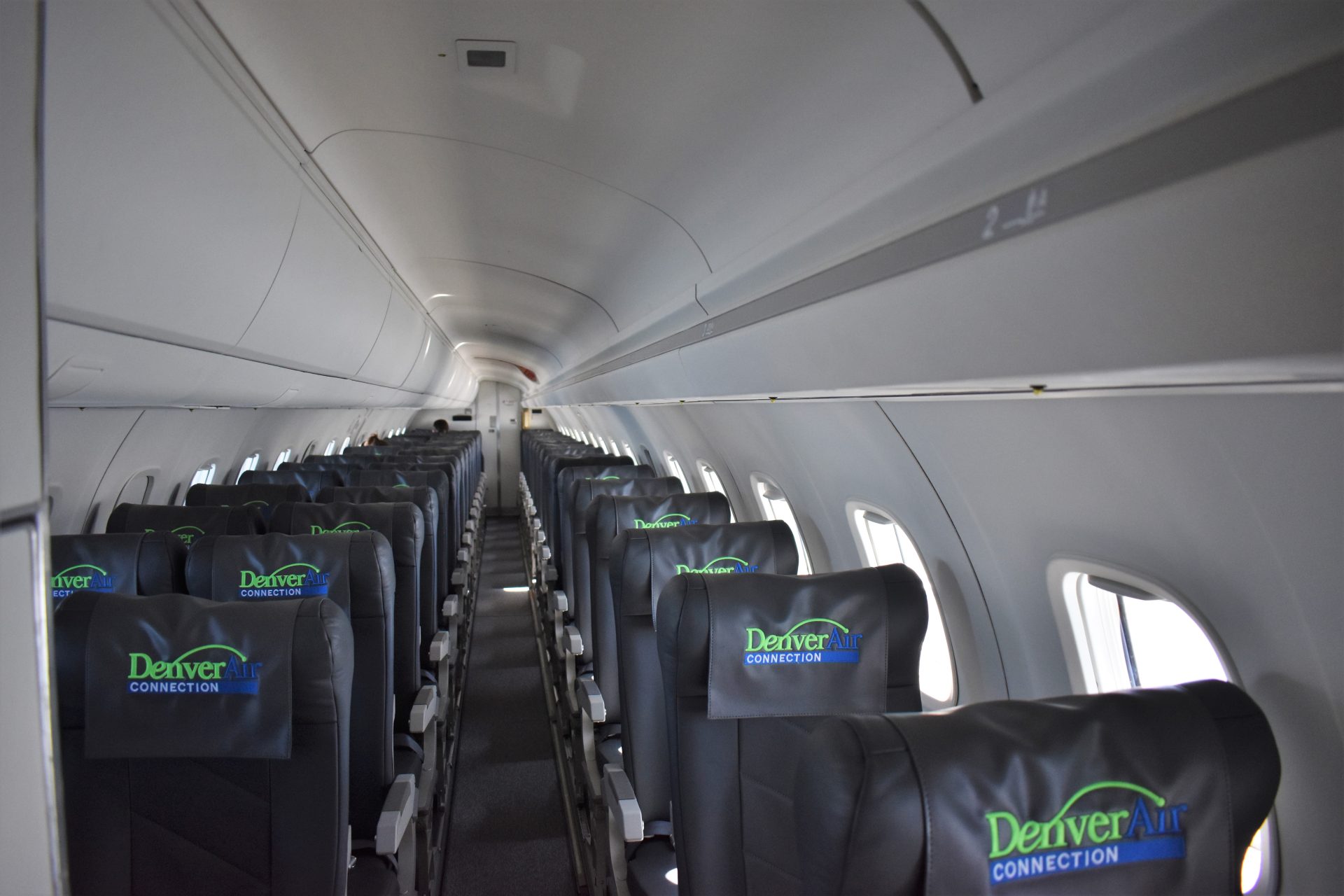
The cabin of our aircraft (Photo: AirlineGeeks | Joey Gerardi)
The cabin was pristine and clean, with the DAC logo embroidered on the headrest cover. If you are looking for an engine view, absolutely sit in the very back row of the aircraft, while it is a bit noisier than the front of the cabin the engine views are worth it. But those pictures will come later as I sat in that seat for the second leg. At this point, I decided to take a short nap before we began descending into Watertown, S.D. and when I woke up roughly 30 minutes later, I could see the farms of South Dakota below us.
Beginning our descent into Watertown (Photo: AirlineGeeks | Joey Gerardi)
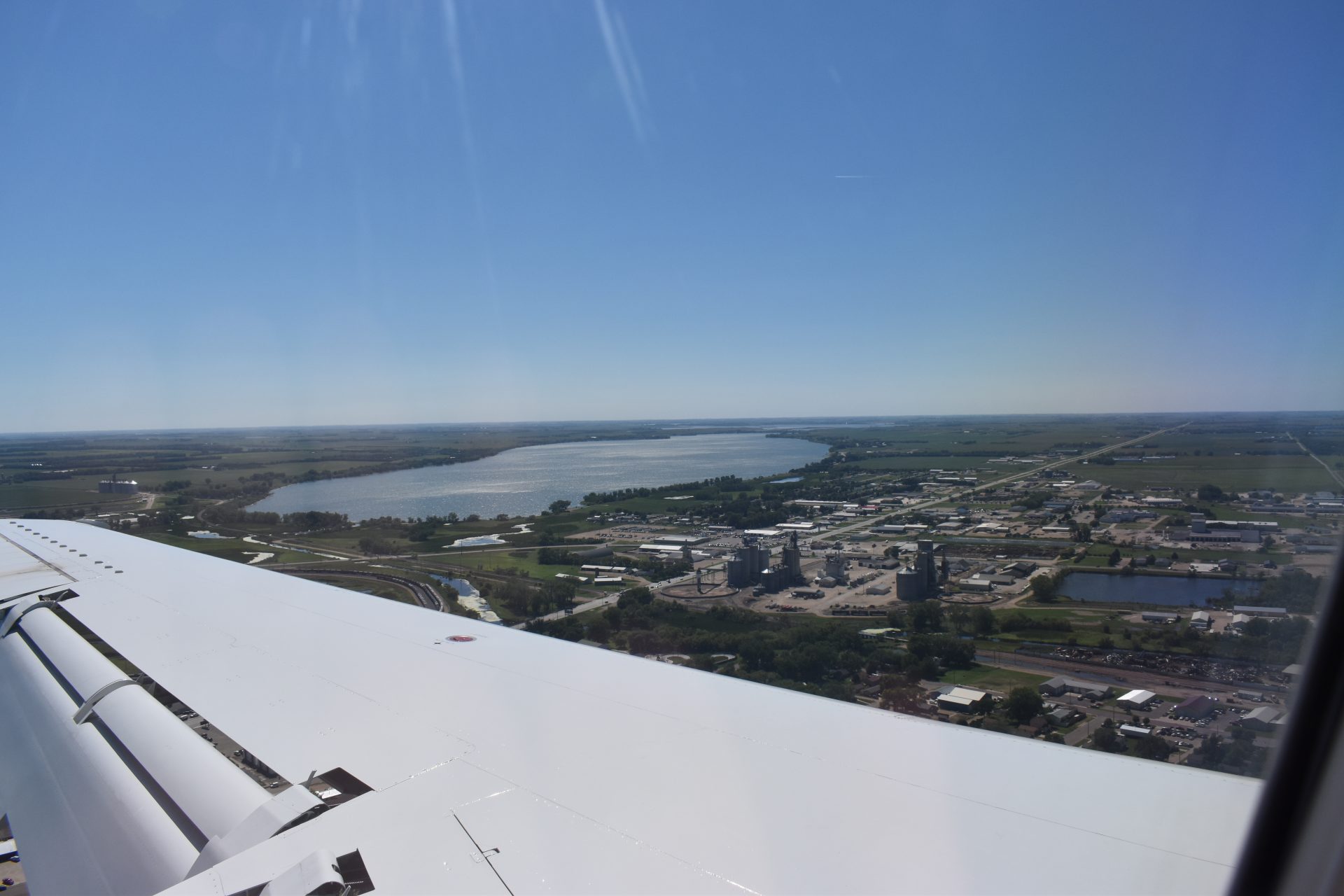
The flight attendant came around one last time for this flight and took any garbage and candy wrappers we had created during this flight. Flaps came down and soon after I could hear the main landing gear locking into place. Just before landing, we flew over the southern end of the city of Watertown.
Flying over the community just prior to landing (Photo: AirlineGeeks | Joey Gerardi)
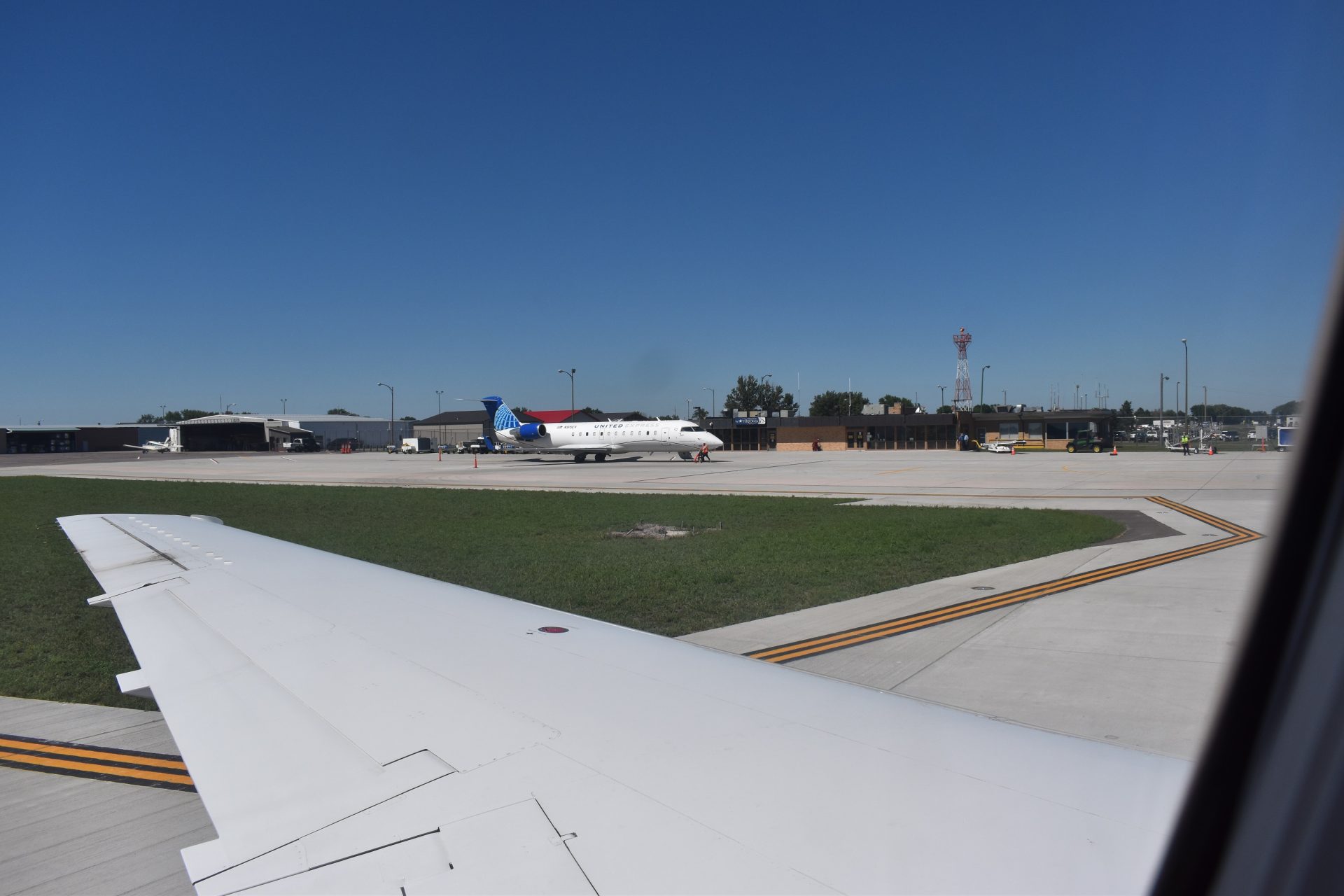
After landing we taxied to the small terminal and saw a United CRJ-200 that was getting ready to depart to Denver. It was truly a unique sight to see two airlines at an airport of that size, of which that sight disappeared at the beginning of Jan. 2022
Pulling into the gate in Watertown (Photo: AirlineGeeks | Joey Gerardi)
We had arrived an hour late into Watertown due to the weather in Chicago, but originally the connection/layover time here was one hour 45 minutes. So now with the delay, the connection was only 45 minutes, but the good news was that we were back on schedule for the flight to Denver.
Getting off the aircraft in Watertown (Photo: AirlineGeeks | Joey Gerardi)
After stepping off the aircraft and tripping over a cone on the ramp, I and the other three passengers were ushered inside to the non-secure area, and I re-checked myself in for the flight onto Denver. I did have my mobile boarding pass for the second flight, but I still wanted to get a printed copy of it for my collection and they were unable to print the second segment while I was in Chicago.
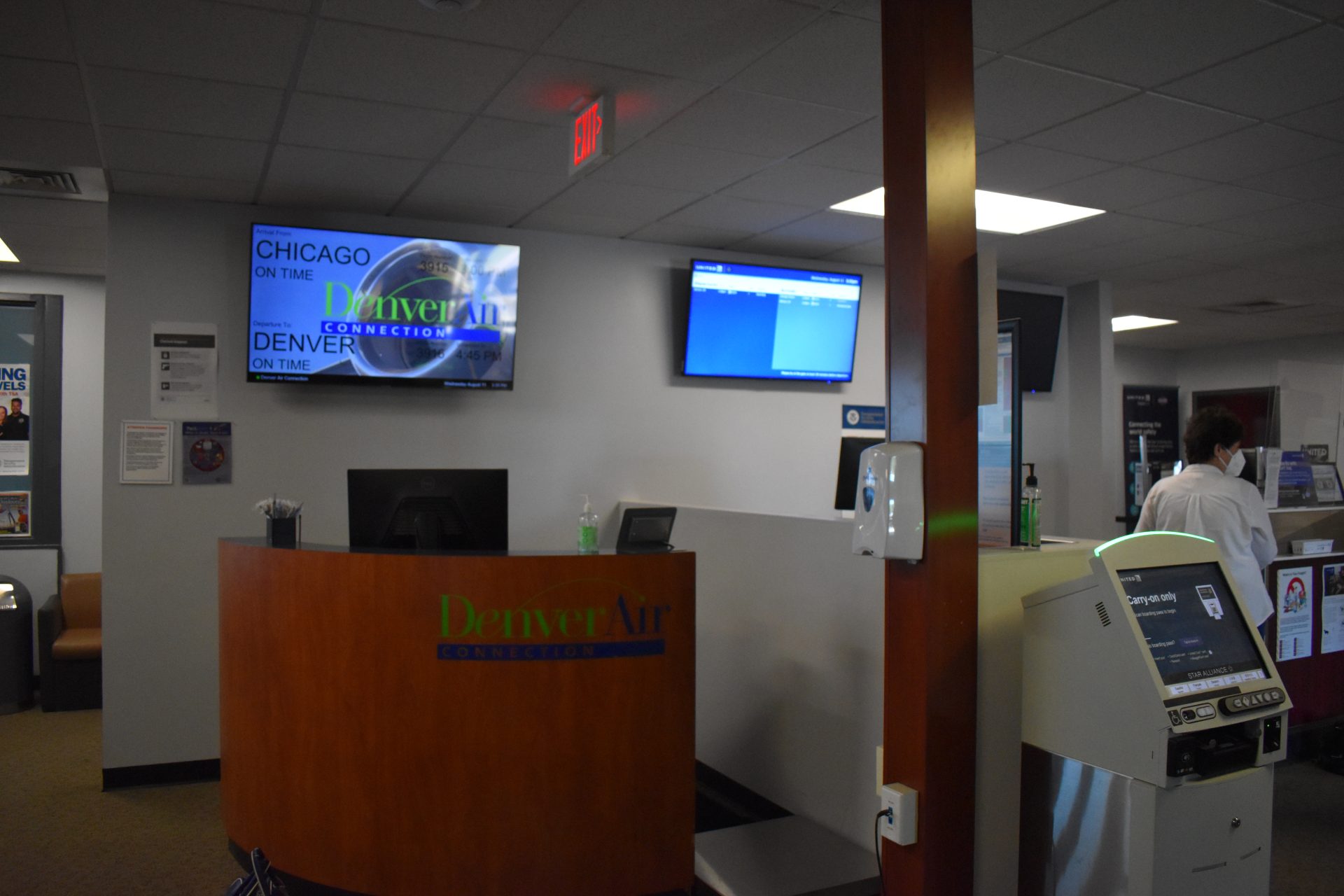
One thing I’ve noticed from the Denver Air Connection desks is that they are all so unique. Unlike at larger airlines where everywhere you go the check-in desk looks exactly the same, every DAC counter has its own unique look to it. Some have beautiful wood facades like here in Watertown and in Alliance. Denver has a very unique 3D sign behind the counter with mountains in it. It definitely stood out from United’s metal podium next to it.
The DAC check-in desk in Watertown (Photo: AirlineGeeks)
As I had a little bit of time to spare, I headed out to the front of the airport to see the entrance. The smaller EAS airports usually try to have their own unique look or sign, this airport had a bench with the words ‘Fly ATY’ on it, and ATY is this airport’s code. This was the 34th EAS Airport I have visited.
I then headed back inside, they had passengers wait in a pre-security waiting area but it wasn’t for long as they began to send people through security. Although there was no separate security line for TSA-PreCheck, they did offer it.
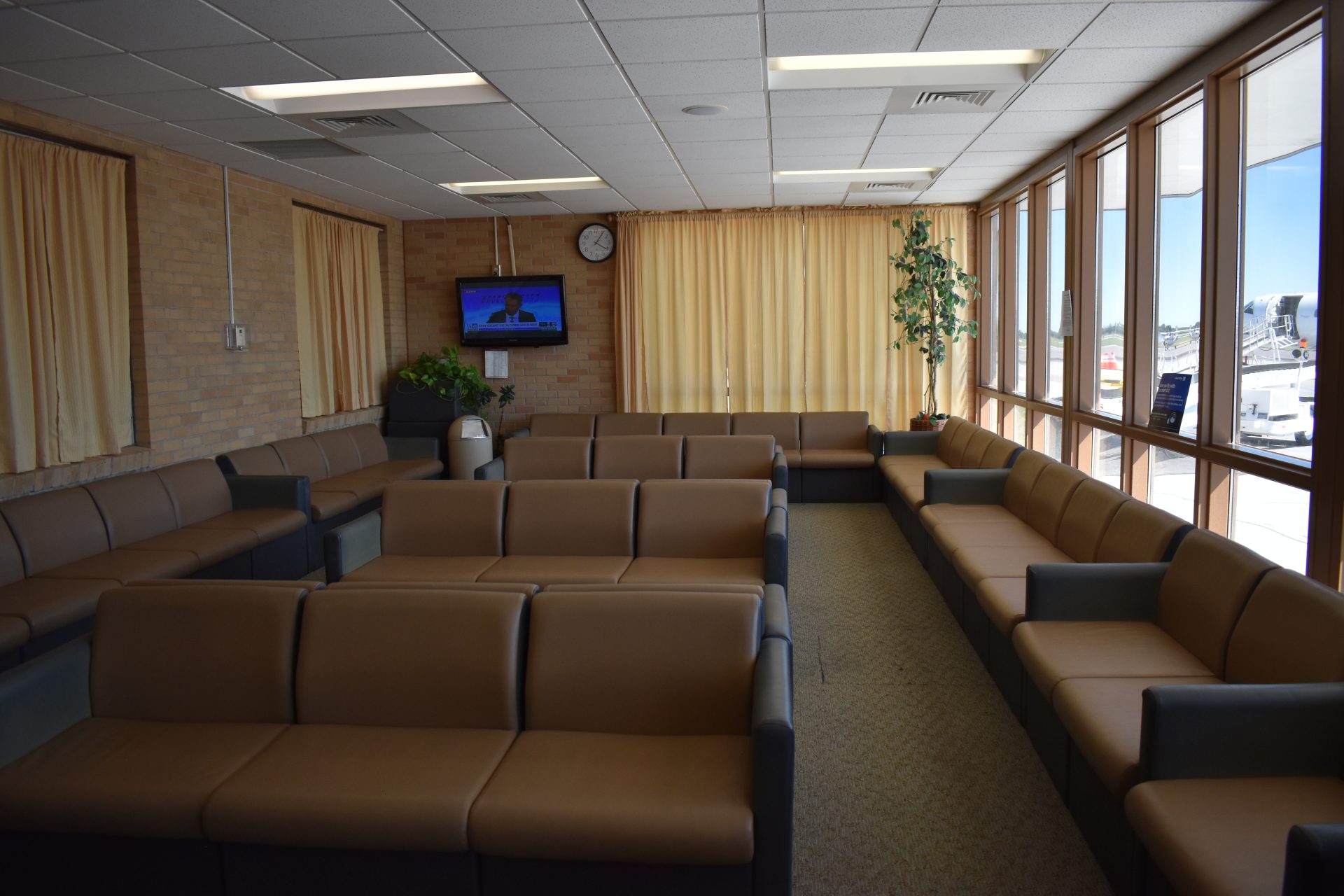
The waiting area post-security looked virtually the same and featured roughly the same number of seats and benches.
The gate area (Photo: AirlineGeeks | Joey Gerardi)
Not more than five minutes after going through security, they came and I and the other six-passenger for this flight, making the total number of passengers seven for this leg onto Denver.
Walking out to the aircraft (Photo: AirlineGeeks | Joey Gerardi)
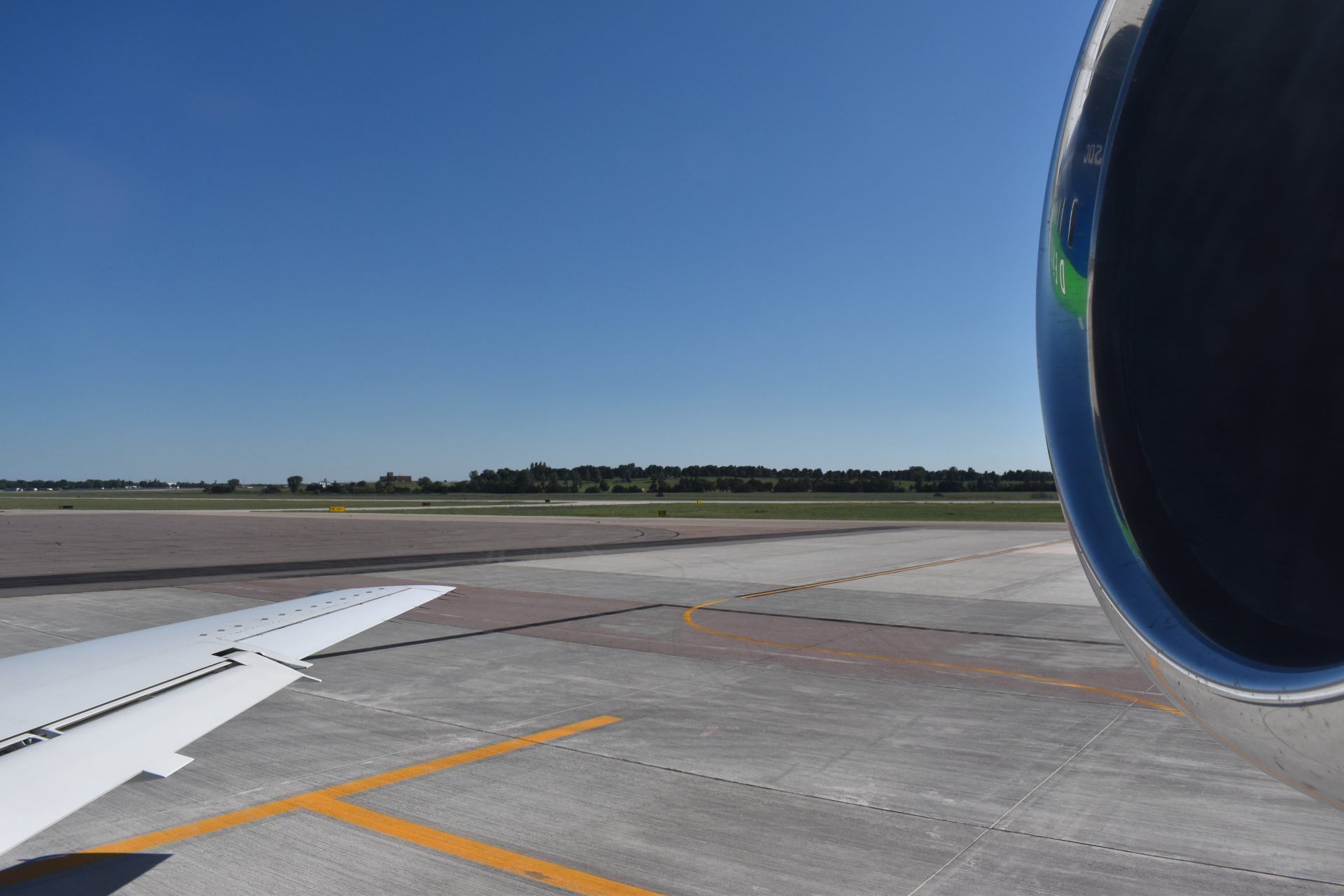
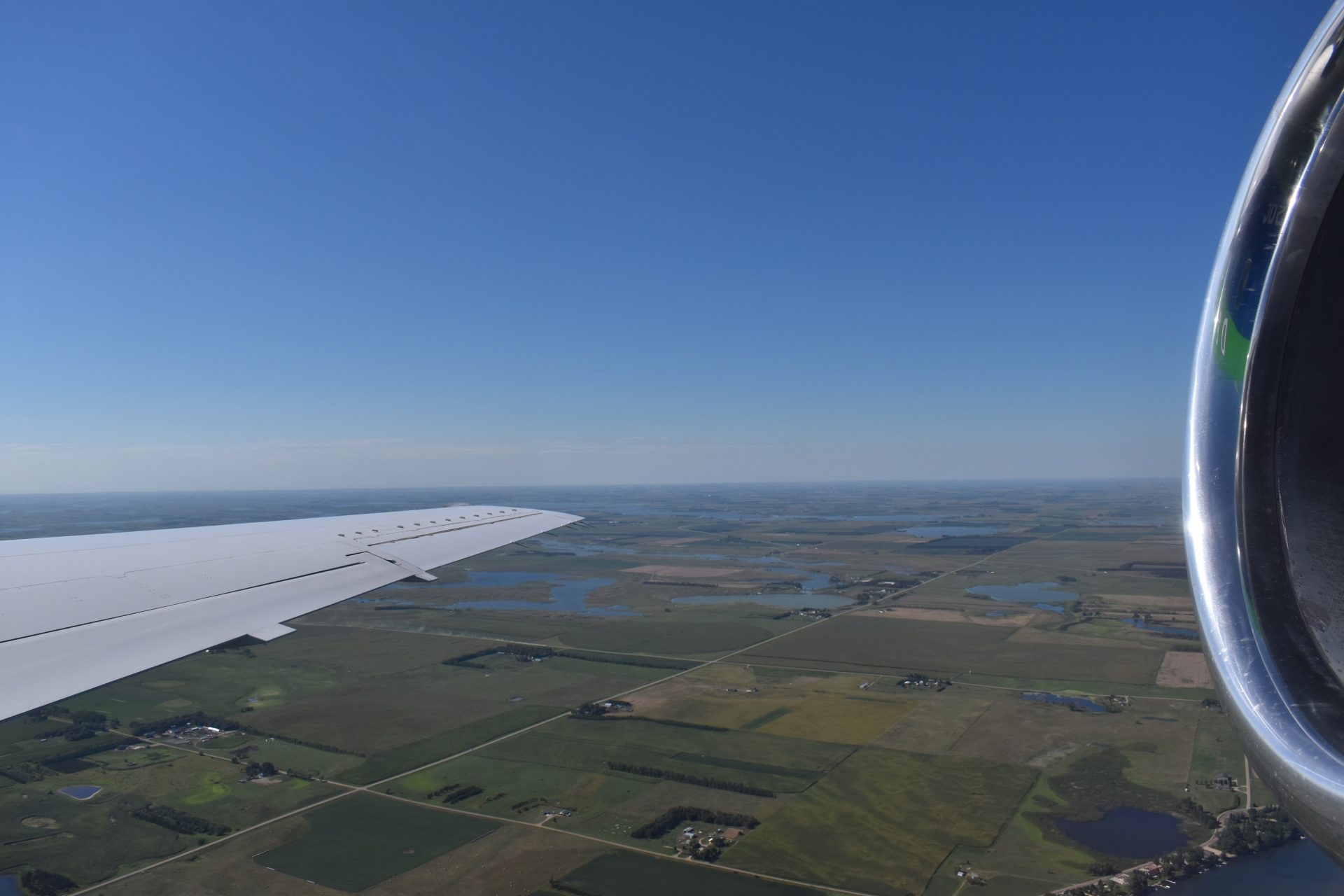
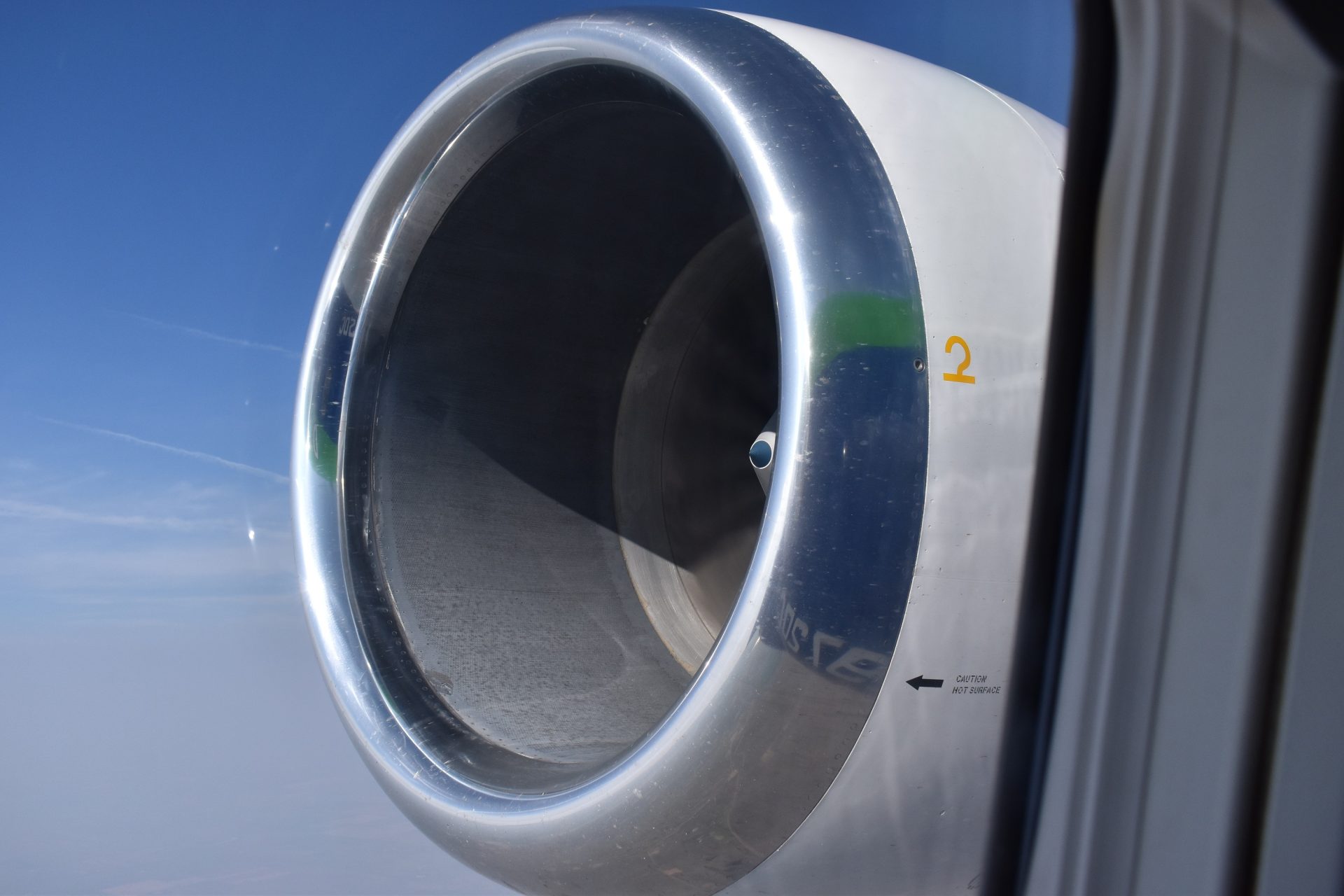
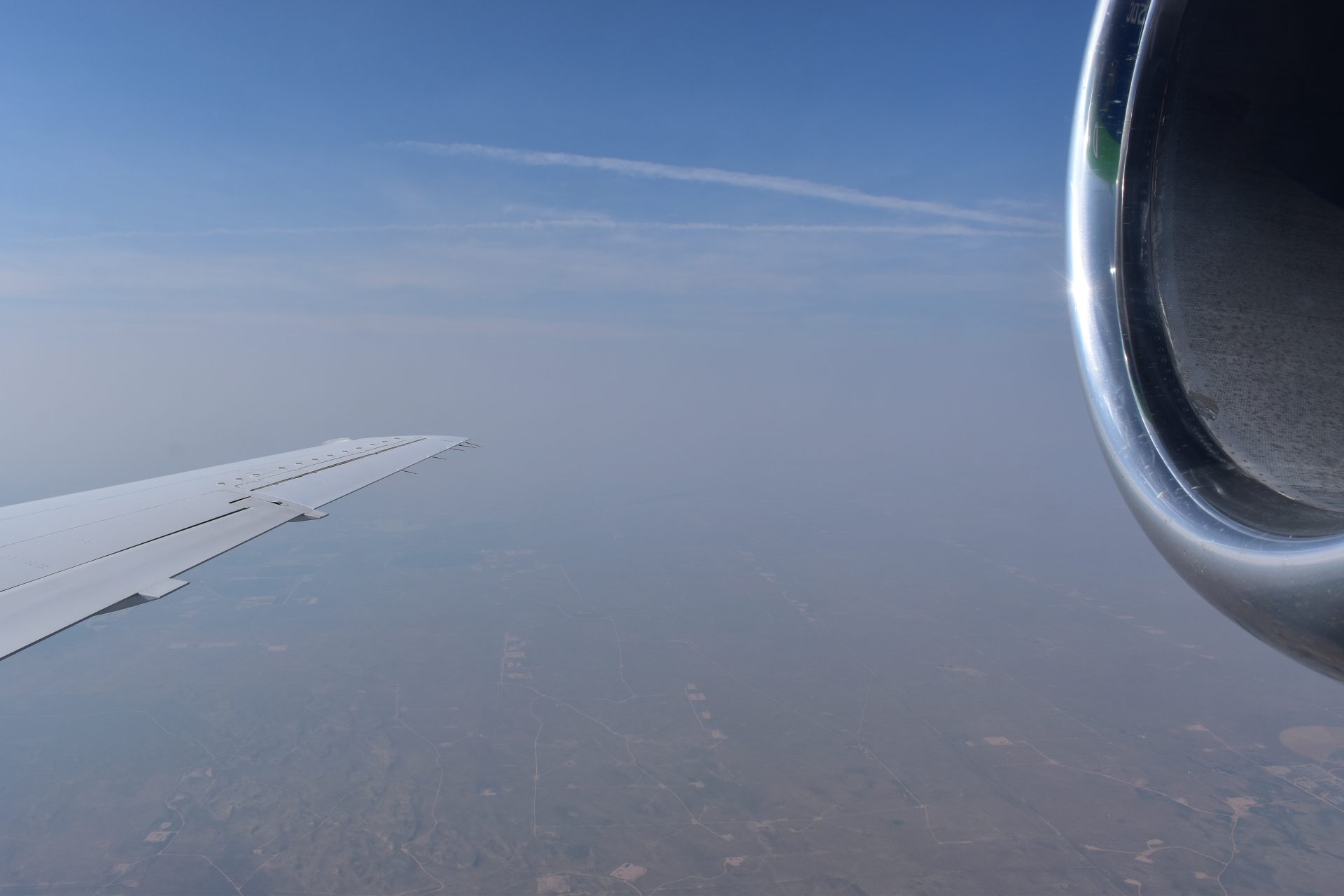
For this flight, I chose a window seat in the very back of the aircraft, 18C, in order to get some engine views, and the way the aircraft is set up, I was also able to get the wing in the photo as well.
The view from my seat, 18C (Photo: AirlineGeeks | Joey Gerardi)
From here everything progressed as a normal flight, engine start-up a short taxi out to the runway, and we blasted off for our flight to Denver.
Taking off from Watertown, S.D. (Photo: AirlineGeeks | Joey Gerardi)
Same as the last flight, about 20 minutes after departure, the flight attendant came around with the snacks and drinks. On DAC flights, in addition to the amazing snack and candy options, they also offer juice, soft drinks, water, and even full-sized Gatorade. I chose Ritz, a Twix bar and Gatorade.
My snack and drink choice on the flight to Denver (Photo: AirlineGeeks | Joey Gerardi)
Also, not long after taking off, the clear blue skies slowly began to turn into a dense cloud of smoke due to fires west of us, and the closer we got to Denver, the heavier the smoke layer became.
But before the smoke completely set in, I was able to see Alliance, Neb., below. This is the location that DAC fly’s their Metroliner to from Denver.
Flying over Alliance, Nebraska (Photo: AirlineGeeks | Joey Gerardi)
As we came closer to Denver, the smoke got thicker until I could barely see the horizon which was unfortunate. But despite the smoky skies, this trip was still amazing and very enjoyable.
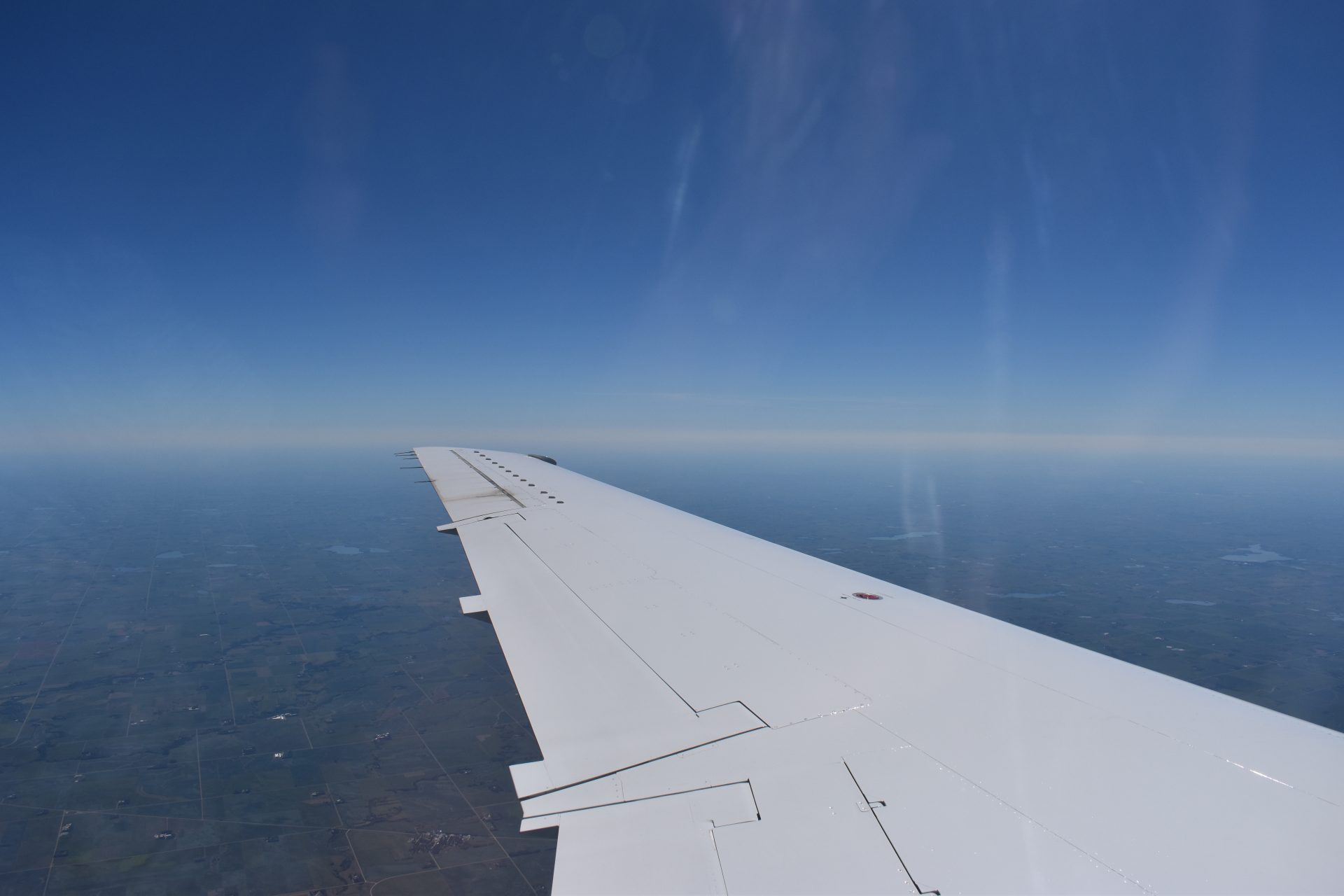
The engine view from my window at 18C (Photo: AirlineGeeks | Joey Gerardi)
Before long, we began our descent into Denver, and the flight attendant made the final round to collect garbage or anything else we’d like to get rid of. The approach into Denver was particularly bumpy that day, but the crew handled it wonderfully.
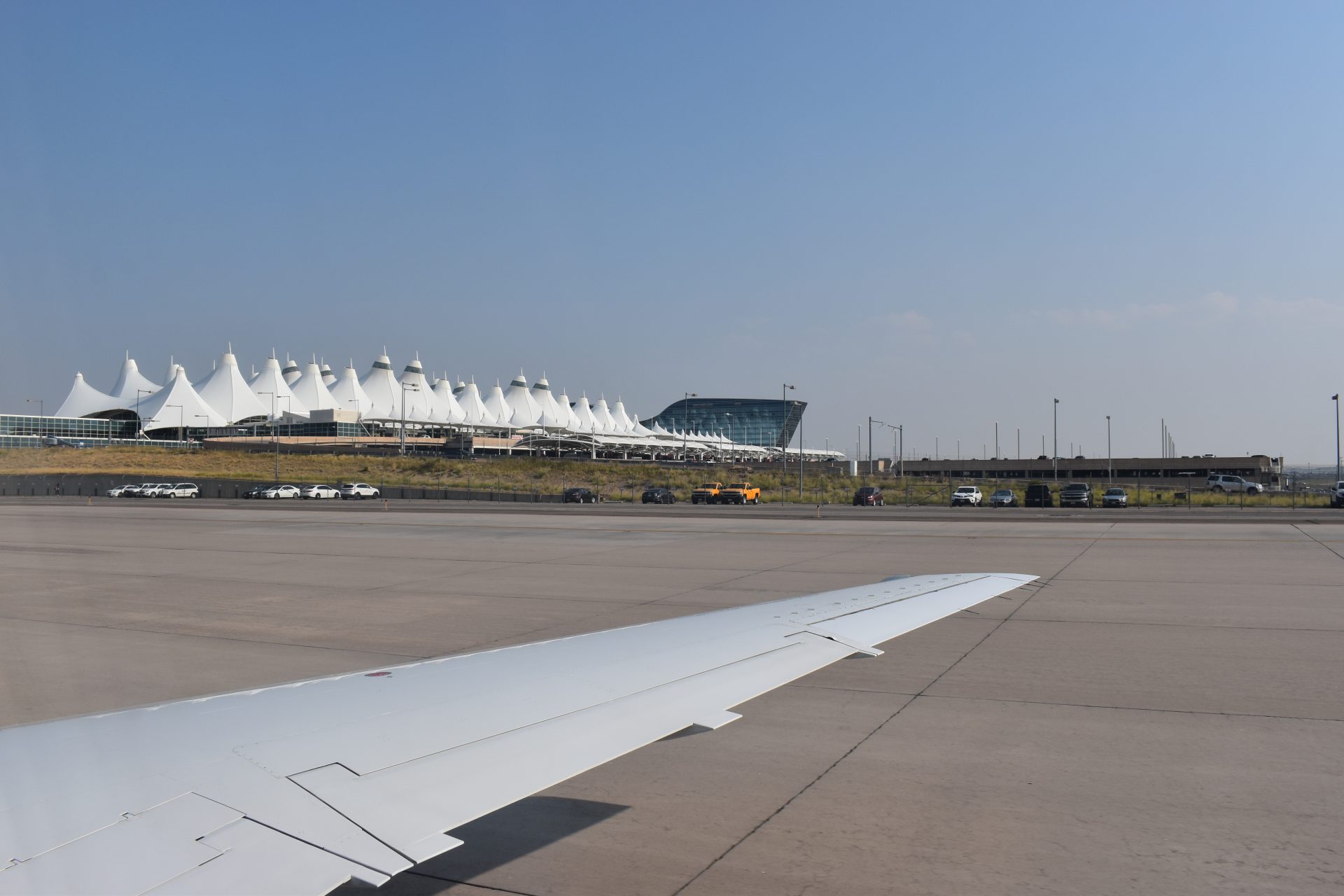
The very smoky skies headed into Denver (Photo: AirlineGeeks | Joey Gerardi)The unique architecture of the Denver Airport (Photo: AirlineGeeks | Joey Gerardi)
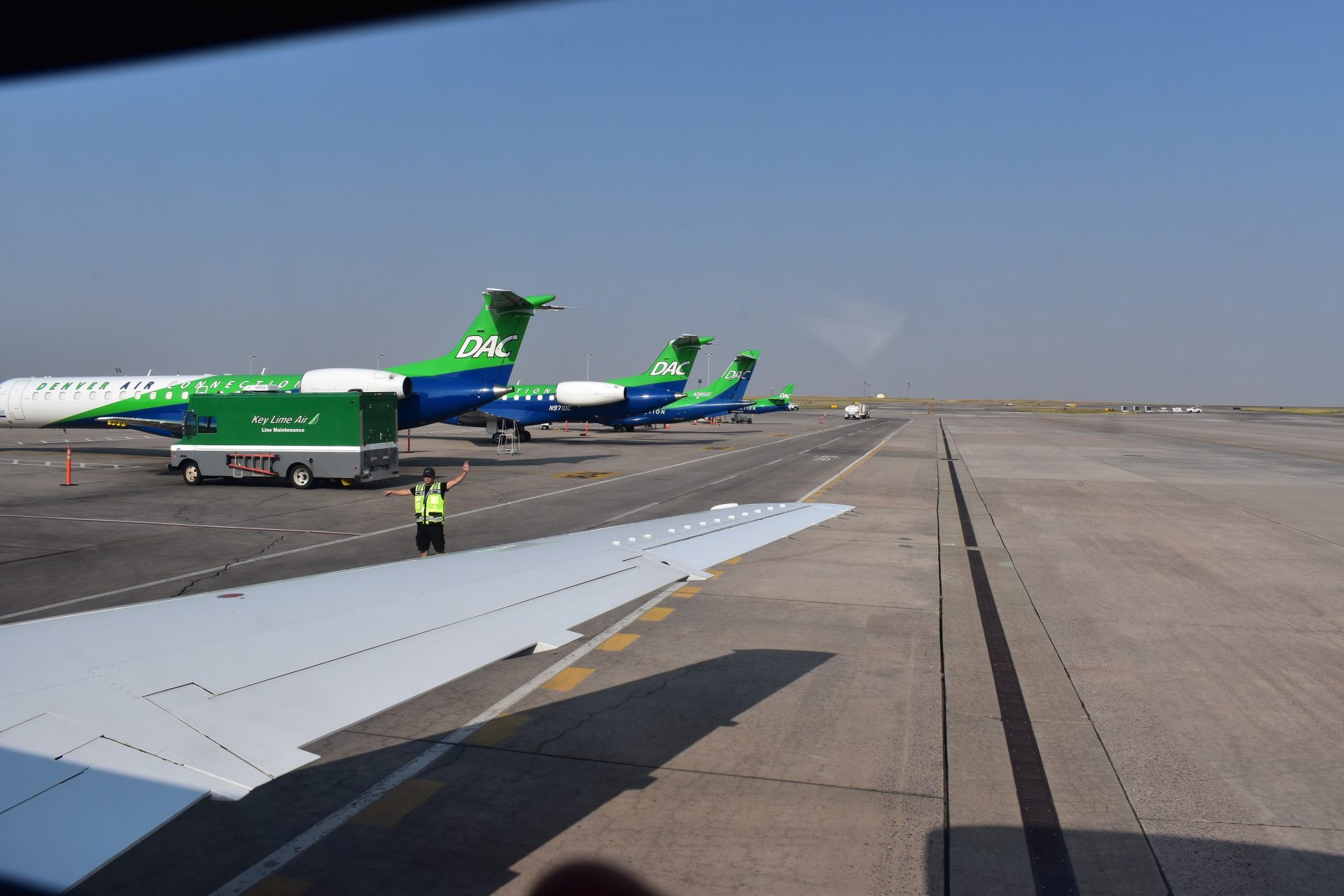
From the time we took off from Chicago until we landed in Denver, the time was roughly four hours. So it is definitely not the fastest way of getting between the cities, but with premium snack and drink selection on the Denver Air Connection flights, it may very well be the most unique and fun way of getting between the cities. As we pulled into the gate in Denver I noticed something, a large number of DAC aircraft on the ramp.
A large number of DAC aircraft in Denver (Photo: AirlineGeeks | Joey Gerardi)
Denver Air Connection has rapidly grown in the past two years, more than doubling the number of destinations and routes they serve. Hopefully, with any luck, this soon won’t be the only Unique Connection that the airline offers. For the time being, this connection is only possible going westbound from Chicago to Denver as the timing of the flights isn’t possible going east from Denver through Watertown, S.D. unless you want to stay overnight in Watertown.
If you haven’t flown Denver Air Connection, give them a try if you have the chance, it is truly a unique way of getting between the Windy City and the Mile High City and is an adventure for any AvGeek. And while you are at Denver International, you might as well fly on their Fairchild Metroliner to Alliance, but that trip report can be found HERE.
For a video account of this Unique Connection in Watertown, check out the link below.
Joey has always been interested in planes for as long as he can remember. He grew up in Central New York during the early 2000s when US Airways Express turboprops ruled the skies. Being from a non-aviation family made it harder for him to be around planes and would only spend about three hours a month at the airport. He was so excited when he could drive by himself, the first thing he did with his driver's license was get ice cream and go plane spotting for the entire day. He graduated from Western Michigan University in 2022 with a B.S. in Aviation Management & Operations and a Minor in Business, and currently works for a major airline in his hometown.
Canada’s ULCC Swoop To Triple Its Fleet To 30 Aircraft
As the world progresses towards re-establishing some kind of post-pandemic normality and the airline industry works at regaining the years of lost growth, carriers are doing their best to position themselves so they can take advantage of the rebound in demand.
Canadian Ultra Low-Cost Carrier Swoop, a fully-owned subsidiary of Westjet, has been expanding its footprint from the original base in Hamilton, Canada, just over an hour drive southwest of Toronto, and has been launching services to other Canadian cities in the Western part of the country.
Last November Swoop announced a 76% increase in capacity at Edmonton Airport, supporting the creation of 140 direct and indirect spin-off jobs and an anticipated 120 million Canadian dollars ($94 million) of economic output activity in 2022. The expansion has seen the progressive introduction of non-stop flights from Edmonton to eight Canadian cities as well as three destinations in the U.S. — Las Vegas, Phoenix and Palm Springs).
“This is a major milestone for Swoop as we underscore our commitment to leading the way for ultra-low fare air travel in Canada and reaffirm our position as the airline with the most destinations from Edmonton,” said Charles Duncan, President of Swoop, in a statement. “With a strong focus on growth and Edmonton as our partner, we will continue to provide our travelers with more non-stop flights and ultra-low fares while supporting the recovery of Canada’s travel and tourism economy.”
Fleet growth
But Swoop is not only focusing on short-term expansion: the carrier is in the process of planning the expansion of its fleet from the current 10 Boeing 737-800 NG aircraft in order to achieve a size more in line with its ambitions. The airline was in fact created to “swoop” into the Canadian market with a new business model and make travel more affordable to everyone. President Charles Duncan has confirmed to anna.aero that more than 50% of the tickets sold have been priced below the C$100 mark ($78) which of course excludes all the other ancillary services that are sold separately to passengers, such as checked baggage fees, carry-on fees and seat selection fees that can increase considerably the total cost of a flight.
“Our ambition is to have 16 aircraft for the coming summer, and ultimately grow to 30, so the excitement for our whole team at Swoop is that after an almost two-year pause we can now get on the front foot and focus on growth,” said Duncan.
The Westjet group operates an all-Boeing fleet as far as jet aircraft are concerned. Regional subsidiaries Westjet Encore and Westjet Link provide short-haul services with Bombardier Dash 8-4000 and Saab 340 aircraft respectively, but all jet flights are operated using Boeing aircraft. Swoop has a single type fleet of Boeing 737-800 in a single-class 189-seat configuration, much like Irish low-cost behemoth Ryanair successfully operates in Europe.
Duncan has confirmed that the airline is currently in the process of sourcing the additional six aircraft needed for the planned expansion in summer 2022, but has not disclosed whether the single aircraft type rule will continue to be observed in the near future.
Currently, Westjet has orders for 42 short-haul Boeing aircraft, all of which are Boeing 737 MAX. However, Westjet mainline operates 38 Boeing 737-800 aircraft that could potentially be replaced by newer MAX aircraft with the older frame to be handed over to Swoop after an interior reconfiguration since Westjet 737-800s have 174 seats, 15 fewer than Swoop’s.
Vanni fell in love with commercial aviation during his undergraduate studies in Statistics at the University of Bologna, when he prepared his thesis on the effects of deregulation on the U.S. and European aviation markets. Then he pursued his passion further by obtaining a Master’s Degree in Air Transport Management at Cranfield University in the U.K. followed by holding several management positions at various start-up carriers in Europe (Jet2, SkyEurope, Silverjet). After moving to Canada, he was Business Development Manager for IATA for nine years before turning to his other passion: sports writing.
Toulouse Aviation Summit Calls on All Countries to Decarbonize Aviation Sector By 2050
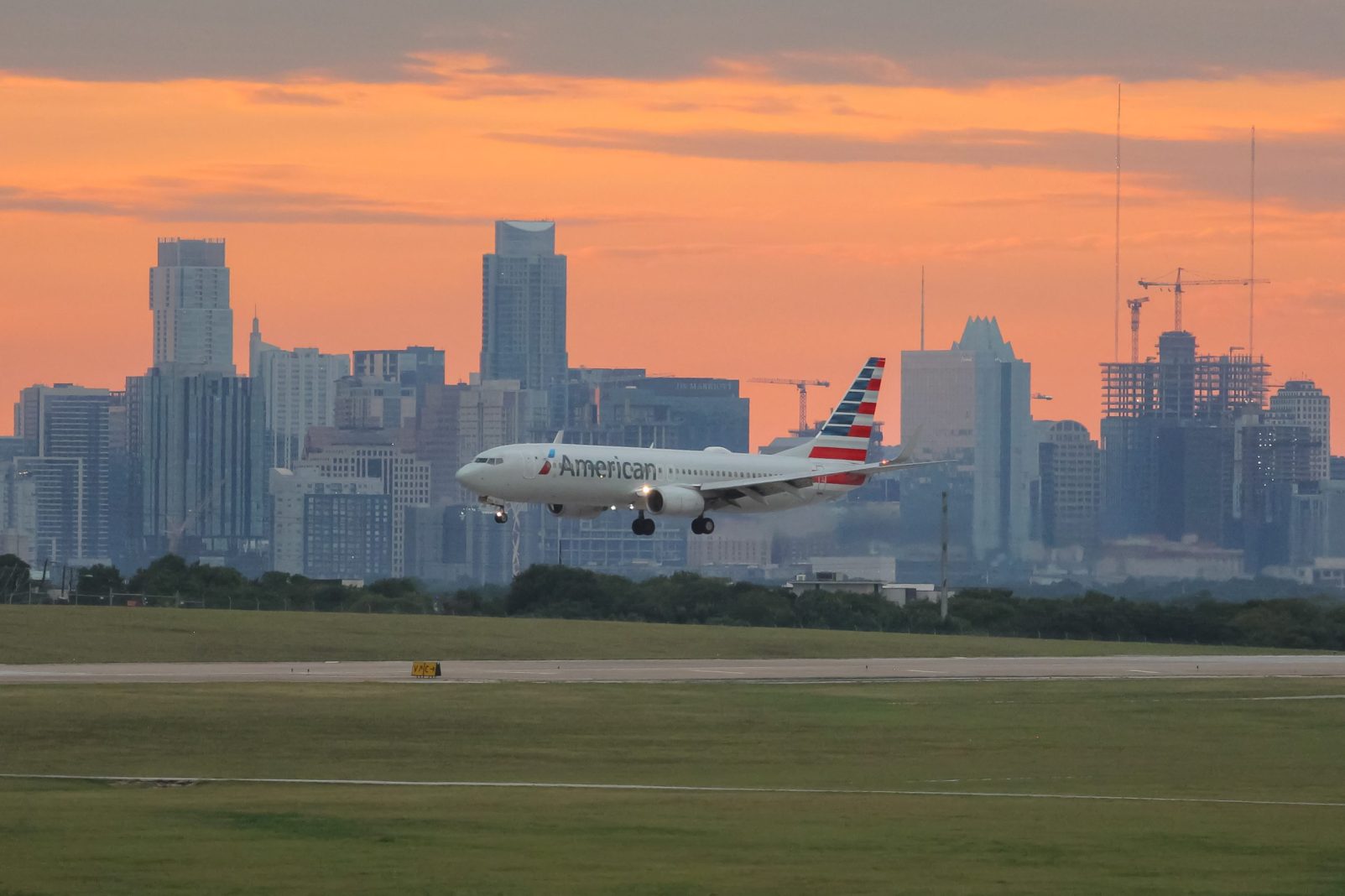
An American Airlines jet landing on runway 18R with the Austin skyline in the background. (Photo: AirlineGeeks | Mateen Kontoravdis)
The so-called “Toulouse Declaration” promoted by the French Presidency of the Council of the European Union on Feb. 4 was the first initiative between the public and private aviation sectors to achieve zero CO2 emissions by 2050. This agreement involved many European airports and airport associations agreeing on the need to decarbonize and radically transform the European aviation industry. Seventy-seven airport operators have expressed their support for the Toulouse Declaration.
The declaration was signed by 42 states, including the 27 EU member countries, Canada, the United States and the United Kingdom. It was adopted by 146 aviation industry stakeholder groups that attended the event, including the five major European aviation associations. These associations were represented through “Destination 2050,” the European aviation industry’s flagship sustainability initiative, based on the Paris Agreement and the European Green Deal.
ICAO President Salvatore Sciacchitano said that the targets set with this declaration are a testimony of the strong commitment to continue working in the right direction, stressing that the focus must be global and long-term. He also stressed the particular importance of sustainable aviation fuel (SAF). The world’s first passenger flight operated with 100% SAF at one of the engines was operated by United Airlines with a 737 MAX 8 from Chicago’s O’Hare International Airport to Washington’s Reagan National Airport with 115 people on board on Dec. 1, 2021. Boeing had already committed to enabling all the aircraft being manufactured at its facilities to fly on 100% Sustainable Aviation Fuel by 2030.
The recognition of the essential role of aviation in ensuring and improving regional and global multimodal connectivity for Europe and the rest of the world is one of the essential points of the declaration. Aviation emerges as the engine of socio-economic development and cohesion between peoples and the need for immediate and appropriate action to support and incentivize the decarbonization of aviation is recognized, particularly in light of the EU’s climate commitments for 2030 and 2050.
With this declaration, public and private aviation stakeholders affirmed that to achieve net-zero carbon emissions by 2050, they are committed to supporting improvements in aircraft technology, operations, and the use of sustainable aviation fuels. Airport operators commit to recognizing the social dimension of the green transition to sustainable aviation and the importance of adequate social dialogue as well as retraining and upgrading workers’ skills.
Finally, all signatories have committed to inviting other countries and international organizations to join this declaration to develop this project together towards the total aviation decarbonization at the global level.
Vincenzo graduated in 2019 in Mechanical Engineering with an aeronautical curriculum, focusing his thesis on Human Factors in aircraft maintenance. In 2022 he pursued his master's degree in Aerospace Engineering at the University of Palermo, Italy. He combines his journalistic activities with his work as a Reliability Engineer at Zetalab.
An El Al 737-800 with an anti-defense system installed on the bottom of the fuselage
(Photo: AirlineGeeks | Fabian Behr)
El Al Airlines — Israel’s flag carrier — has reached a non-binding agreement to acquire Arkia, a smaller carrier. On Thursday, the carrier formed a non-binding memorandum of intent to buy smaller local rival Arkia after being forced to shrink down following a government bailout during the pandemic.
Arkia would become a wholly-owned subsidiary of El Al under the proposed acquisition. In exchange, Arkia shareholders would receive a 10 percent -14 percent stake in El Al through shares and options, according to a regulatory filing by the airline. The arrangement must be authorized by Arkia’s employees, who own 30% of the company, as well as the Israel Competition Authority.
Arkia will become a subsidiary of El Al and is valued at between NIS 85-120 million ($26.5-$37.4 million) under the terms of the agreement. The agreement states that Arkia will continue to operate as a separate brand with its own staff, most likely as El Al’s low-cost subsidiary.
The Israeli carrier is taking its initial steps toward recovery thanks to the acquisition of IZ, following the reductions in staff and fleet size required to acquire government funds in 2021. It will also enable the airline to pursue its strategic goal of being more than just an airline.
“El Al is entering an era in which it will allow travelers to Israel to enjoy a complete tourism package that includes, among other things, a very high-level flight experience, a wide range of hotels and accommodation options; ground services, including car-rental and public-transportation management applications; insurance products; and tickets to a variety of attractions and events,” Avigal Soreq, CEO of El Al Airlines.
The intention to acquire Arkia fits in nicely with this viewpoint because it will allow EI AI to fly to the Red Sea tourist city of Eilat in southern Israel — which is currently controlled by Arkia and Israir. This comes after EI AI attempted to acquire Israir in 2018 but was denied the merger by competition regulators.
The Airline’s Next Steps
Any agreement would need to be approved by the government, Israel’s competition commission, and the companies’ labor unions. Following a month of due diligence, the companies want to negotiate a contractual agreement within 30 days. Following that, they will have up to 150 days to complete the acquisition.
“We still have a long way to go before the deal to acquire Arkia is completed, which is part of El Al’s strategy to expand into additional areas of activity,” said El Al chairman Amikam Ben Zvi.
Back in October, El Al began talks with Arkia — who is a leisure-focused airline — about a prospective takeover. However, The COVID-19 epidemic has taken a heavy toll on both airlines with Israel’s borders being mainly closed to international travelers since March 2020.
El Al — which recently changed ownership and management — was compelled to decrease its personnel by one-third, terminate routes and lower its total Boeing fleet size to 29 from 45 jets in exchange for a government bailout. Arkia joins this agreement with seven aircraft — primarily flying domestic routes and to Europe using Embraer and Airbus aircraft.
Kalai has always wanted to work in the aviation industry, having been fascinated by its inner workings since he was a child. In pursuit of his dream, he obtained a diploma in aviation management and is currently interning with a low-cost airline, under in-flight policies. In his free time, he loves to engage in recreational activities, and watch sports. In the upcoming years, Kalai intends to pursue his degree at a business school before working as an executive for a global airline around the world.
Cessna Rolls Out First Skycourier Slated for Delivery
Cessna's First Production Rollout with Staff (Photo: Cessna)
Cessna continues to push forward with the unveiling of the SkyCourier, its newest twin-engine aircraft that is expected to start service soon. This week, the airline officially rolled out the first production SkyCourier which will take delivery once testing is complete.
The manufacturer was quick to thank Federal Aviation Administration and customers for their feedback in the design, noting that the clean slate has allowed Cessna to create a fresh design to maximize the current aviation scene and help customers with issues that current competing aircraft plague their operations with.
Textron Aviation CEO Ron Draper commented on the event, saying, “today is a rewarding day for our employees who have worked to design and build what I believe will become a legendary airplane for our company. The SkyCourier brings an impressive combination of cabin flexibility, payload capability, performance and low operating costs to the twin-engine utility segment. We look forward to this highly versatile aircraft entering the market very soon.”
The Cessna SkyCourier takes into account multiple new machining and designing techniques to take Textron into the next generation of aircraft, including monolithic machining. Monolithic machining is the milling of parts on a single piece of material instead of assembling smaller parts, cutting down on tolerances and relying less on cutting parts out of many different pieces of material. The aircraft is also equipped to come with quick-change seats and the ability for maintenance to access the aircraft from many additional points than previous Cessna designs.
Built-in Wichita, Kansas, the SkyCourier is a 900-mile radius twin-engine turboprop driven aircraft that is focused on replacing existing Cessna 208s and Beechcraft 1900s. The self-named 408, has a capacity of 19 passengers and a max payload of 6,000 pounds at a speed of 200 knots. The aircraft is powered by two Pratt & Whitney Canada PT6A-65SC turboprops delivering roughly 1,100 horsepower each.
The aircraft took flight in May 2020 following a rollout a few weeks prior to the first airborne operation. Since then two more SkyCouriers have joined the initial aircraft in the skies, accumulating over 2,100 hours of testing and finishing the final stages of testing now before the first delivery can be made.
Deliveries are expected to begin in the first half of 2022, with the launch airline FedEx Express expected to see their first aircraft soon thereafter. The express logistics carrier has a firm order for 50 aircraft placed with Cessna and an additional 50 on offer for options. This aircraft will go to work replacing the FedEx Feeder fleet of Cessna 208s which service smaller markets throughout the United States and Canada.
Although Ian McMurtry was never originally an avgeek, he did enjoy watching US Airways aircraft across western Pennsylvania in the early 2000s. He lived along the Pennsylvania Railroad and took a liking to trains but a change of scenery in the mid-2000s saw him shift more of an interest into aviation. He would eventually express this passion by taking flying lessons in mid-Missouri and joining AirlineGeeks in 2013. Now living in Wichita, Kansas, Ian is in college majoring in aerospace engineering and minoring in business administration at Wichita State University.