Stories

British Airways Announces Sustainability Customer Service Initiatives

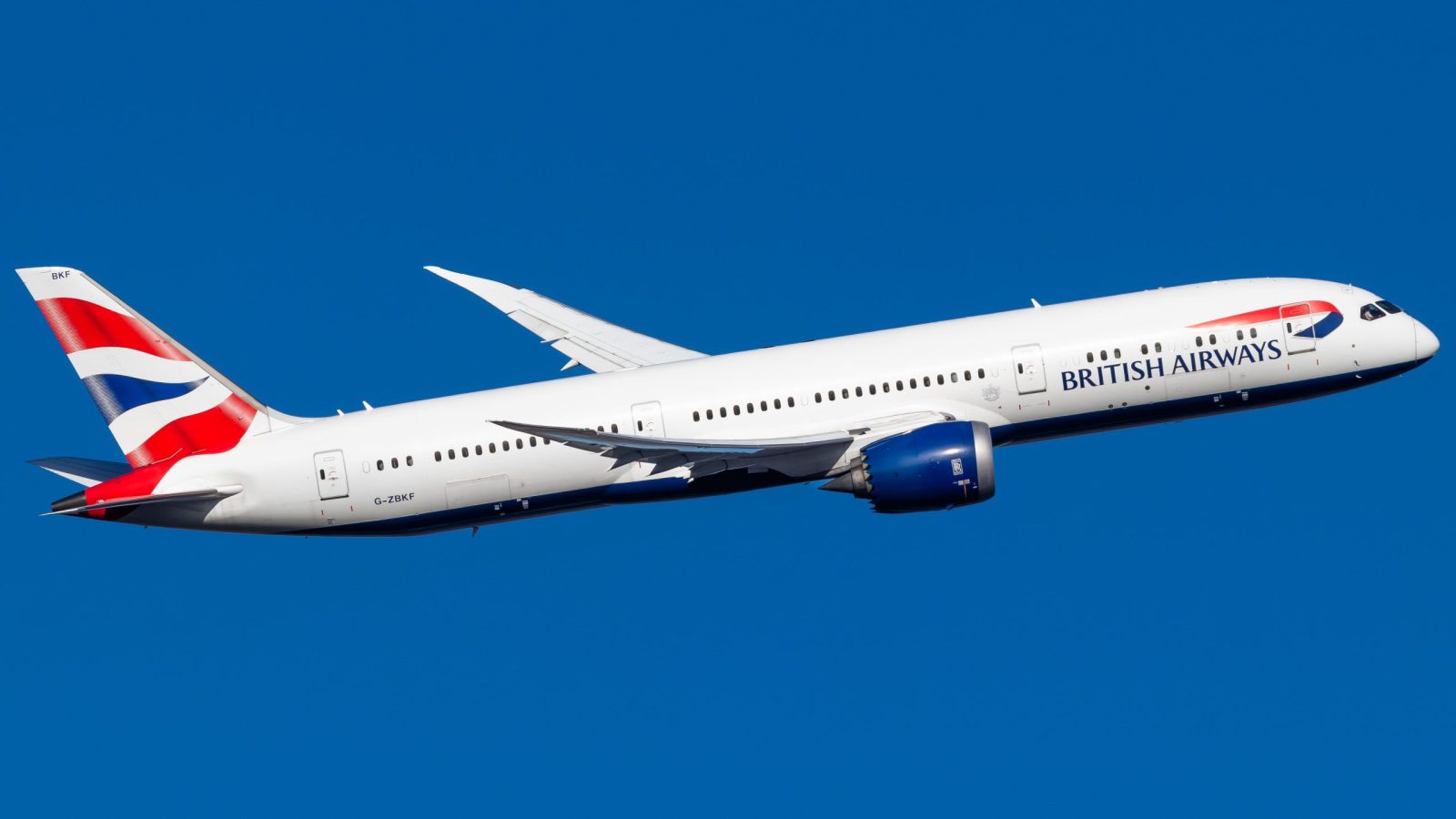
A British Airways Boeing 787-9 Dreamliner (Photo: AirlineGeeks | James Dinsdale)

British Airways has announced a number of customer experience enhancements across its network both in the air and on the ground. Tom Stevens, British Airways’ Director of Brand and Customer Experience, said, “We’re committed to ensuring we deliver a premium proposition for our customers throughout their journey with us and when we do so, we need to ensure that sustainability is at the heart of it.”

The enhancements include the creation of plant-based menus to provide for a wider customer choice. Initially, these additions will be implemented at the airline’s lounges at London Heathrow before being introduced to lounges in the U.S. The airline will also be taking the initiative to remove all plastic water bottles from U.K. lounges in the next month and replace them with glass. A broader strategy of removing single-use plastics from all aspects of the airline’s operation is also underway.

Last September the airline introduced its sustainability program ‘BA Better World’ to accomplish net-zero carbon emissions by 2050. According to the airline ‘, this includes improving operational efficiency, investing in more efficient aircraft, funding carbon offset and removal projects to mitigate emissions on UK domestic flights and progressively introducing sustainable aviation fuels using waste feedstocks. In the medium to longer-term it is continuing to invest in the development and scale-up of sustainable aviation fuel and looking at how it can help accelerate the growth of new technologies such as zero-emissions hydrogen-powered aircraft and carbon capture technology.’

In further news, British Airways has signaled a number of customer service initiatives to address elements of dissatisfaction that have arisen in the last several years. City A.M. reported chief executive Sean Doyle spoke directly to customers by stating: “We know that for many months now, we’ve been asking you to be patient with us. Patient while we bring multiple aircraft back from airfields around the world. Patient while we rebuild our network, retrain and recruit people to serve you better, and patient while we deal with the thousands of customers that need our help.”

“To be frank, we’ve been moving from one set of restrictions to another and the amount of change we’ve been dealing with over the past couple of years from week to week has been relentless,” he said. This had unsurprisingly led to pressure on the airline’s communications channels and so an upgraded phone system is in the works.

In further positive developments changes made to British Airways’ short-haul onboard service offering during the pandemic will continue. In an email, to the airline’s frequent flyers Mr. Doyle said, “You’ve told us you appreciate the complimentary water and snacks we’ve been offering on short-haul flights in our Euro Traveller cabin, so we’ll be continuing with these too.”

Mr. Stevens stated, “We want to create an even better British Airways and know that we need to keep making changes to the customer experience with things like alternative menus, reducing plastics and introducing new technology to get us to where we want to be.”

John Flett

John has always had a passion for aviation and through a career with Air New Zealand has gained a strong understanding of aviation operations and the strategic nature of the industry. During his career with the airline, John held multiple leadership roles and was involved in projects such as the introduction of both the 777-200 and -300 type aircraft and the development of the IFE for the 777-300. He was also part of a small team who created and published the internal communications magazines for Air New Zealand’s pilots, cabin crew and ground staff balancing a mix of corporate and social content. John is educated to postgraduate level achieving a masters degree with Distinction in Airline and Airport Management. John has held the positions of course director of an undergraduate commercial pilot training programme at a leading London university. In addition he is contracted as an external instructor for IATA (International Air Transport Association) and has been a member of the Heathrow Community Fund’s ‘Communities for Tomorrow’ panel.

Aeroméxico Plans for Bankruptcy Exit

Aeromexico Boeing 787
An Aeromexico Boeing 787 Dreamliner flares for landing. (Photo: AirlineGeeks | William Derrickson)

In 2020, Aeroméxico voluntarily entered the Chapter 11 process for financial restructuring to be able to face the billionaire debt that reached up to $5 billion.

The Mexican carrier has debts with banking institutions, airport groups, Mexican government entities and suppliers including Boeing. Aeroméxico saw the number of passengers drop by more than 90% as governments suspended flights and travelers stayed home.

Despite being in this process and the situation in the world due to the COVID-19 pandemic, flights were not disrupted. The carrier continued working to get out as soon as possible from the bankruptcy process.

The Mexican flag carrier has known how to strengthen its financial position, as well as protect and preserve its operations and assets and implement the necessary operational adjustments to overcome the crisis. In addition, the Mexican carrier’s history is a success story of a company that managed to get out of a severe financial crisis.

Aeroméxico did not have the support from the Mexican government — unlike airlines from other countries that received funding from their governments. The Mexican airline had to find its own way out. Now, after 20 months of being in the restructuring process, the Mexican airline would be officially leaving the process.

Recently, the airline received approval from a New York Bankruptcy Court to eliminate $1.1 billion debt, by giving Aeroméxico’s stakes to Apollo Global Management. In the end, as in all restructuring processes, many shareholders, including the largest group, will lose a good portion of their capital.

With this Aeroméxico’s shares emission, the carrier’s shareholding composition would be as follows: Apollo will have 22.4%, Delta Airlines will go from 51% to 20%, the Mexican shareholders will have 4.1%, and 53.5% would be between new investors and creditors who capitalize their recognized credits.

In this sense, Aeroméxico will release more than 682 billion new shares that will be paid by capitalizing $3.4 billion in liabilities and injecting $828 million.

Future Expectations

At the end of 2021, Aeroméxico transported more than 16.5 million passengers, thus becoming the second airline with the highest number of passengers transported, after Volaris.

Despite this, the company closed in 2021 with 20% below pre-pandemic levels. Aeroméxico plans to recover pre-pandemic levels in 2024.

By the end of 2025, the Mexican carrier plans to mobilize more than 32 million passengers, doubling the number of passengers it transported in 2021. Aeroméxico’s financial restructuring plan also contemplates an addition of 36 aircraft between 2022 and 2024.

In the last couple of months, Aeroméxico’s strategy was to strengthen its presence in the domestic market, as well as to continue contributing to the tourism reactivation in the main cities in the country.

Juan Pedro Sanchez Zamudio

The three things Juan Pedro loves most about aviation are aircraft, airports, and traveling thousands of miles in just a few hours. What he enjoys the most about aviation is that it is easier and cheaper to travel around the world and this gives you the opportunity to visit places you thought were too far away. He has traveled to different destinations in North, Central, South America and Asia. Born, raised and still living in Perú, Juan is a lawyer, soccer lover, foodie, passionate traveler, dog lover, millennial and curious by nature.

Chinese State-Owned Airlines Took Heavy Losses in 2021

China Eastern's flagship Boeing 777-300ER at Shanghai's Pudong Airport (Photo: AirlineGeeks | Albert Kuan)

On the evening of Jan. 28, the three biggest state-owned airlines of China — Air China, China Southern, and China Eastern — announced that all three airlines are expecting over 10 billion yuan ($1.5 billion) in losses during the calendar year 2021. Those losses may surpass their records set in 2020.

Over the past year, the aviation market in China has still been heavily impacted by the pandemic. The authority maintained the zero-tolerance policy against the virus, and one of the consequences was low travel demands from both domestic and international markets. All three airlines attributed the main reasons for heavy losses to the influence of the pandemic.

During the traditional peak travel seasons in China, heavy restrictions were put in place to reduce traffic, especially in and out of areas that had Covid-19 cases. The Chinese New Year travel rush, summer season and the summer travel peak included a few of the major traveling seasons. Both of which were impacted by Covid-19 resurface in some cities, resulting in much lower traffic compared to projections.

Air China

Air China announced that the airline is expecting a 14.5-17 billion-yuan loss in the calendar year 2021. The losses were attributed to the continuing pandemic leading to the limitation of international travel, uncertainties of domestic traffic due to China’s zero-tolerance policy towards Covid-19, and fluctuating oil price and foreign exchange rates. In 2020, the company lost 14.4 billion yuan.

The first Air China A350-900 taking off. (Photo: Airbus)

Air China is the leading international carrier in China. Before the pandemic, over 30% of Air China’s traffic and revenue was contributed by international passengers and cargos. Chinese Authority’s strict limitation on international travel chipped away one of the most profitable sectors of the airline.

Additionally, the heavy losses of Cathay Pacific held back the performance of Air China. The Chinese Flag Carrier is the second-largest shareholder of Cathay Pacific, the Hong Kong-based international airline. Air China owns 29.99% of Cathay Pacific, right behind The Swire Group, which owns 40% of the airline.

China Southern

China Southern released that the airline is expecting an 11.3-12.8 billion yuan loss in 2021. The airline attributed the reasons for heavy loss to the weak recovery of the domestic market, and the lowered margin resulting from lowered prices. The Guangzhou-based company is heavily relying on domestic traffic as their profit engine. However, the traffic was still concentrated in first-tier cities such as Beijing, Shanghai and Guangzhou. The recurring Covid-19 cases in those cities heavily impacted airlines’ performances.

A China Southern Airbus A319neo | (Photo: Airbus)

China Eastern

China Eastern is expecting an 11-13.5 billion-yuan loss in 2021. The driver behind the heavy loss is the soft travel demands across the year and the high operating expense of the airline.

Chinese carriers maintained a low level of layoffs since the start of the pandemic, and they are cutting the human resource expense by reducing hours of work.

A China Eastern Airbus A319 retracts its landing gear on departure. (Photo: AirlineGeeks | Ben Suskind)

A Long Way to Go

Later this week, the highly anticipated Beijing Winter Olympics Games will commence. However, due to the strict international travel restriction placed by the authority, virtually no traffic from the public will be induced by the big event. The authority is slowly carefully lifting the travel limitations within China and trying to tailor the policy to each region. However, airlines still have a long way to go to break even in 2022.

Lei Yan

Lei is from Inner Mongolia, China, and now lives in Guangzhou. He grew up in an aviation family, where his passion began. During his time at Penn State University, he studied Industrial Engineering specializing in operations research, and he graduated with an honor’s thesis on airport gate assignment optimization. Now, he is a Purchasing Manager with Procter & Gamble. In his free time, he enjoys flying, reading, and wandering around the city.

Qatar Airways Becomes Launch Customer for Boeing 777X Freighter

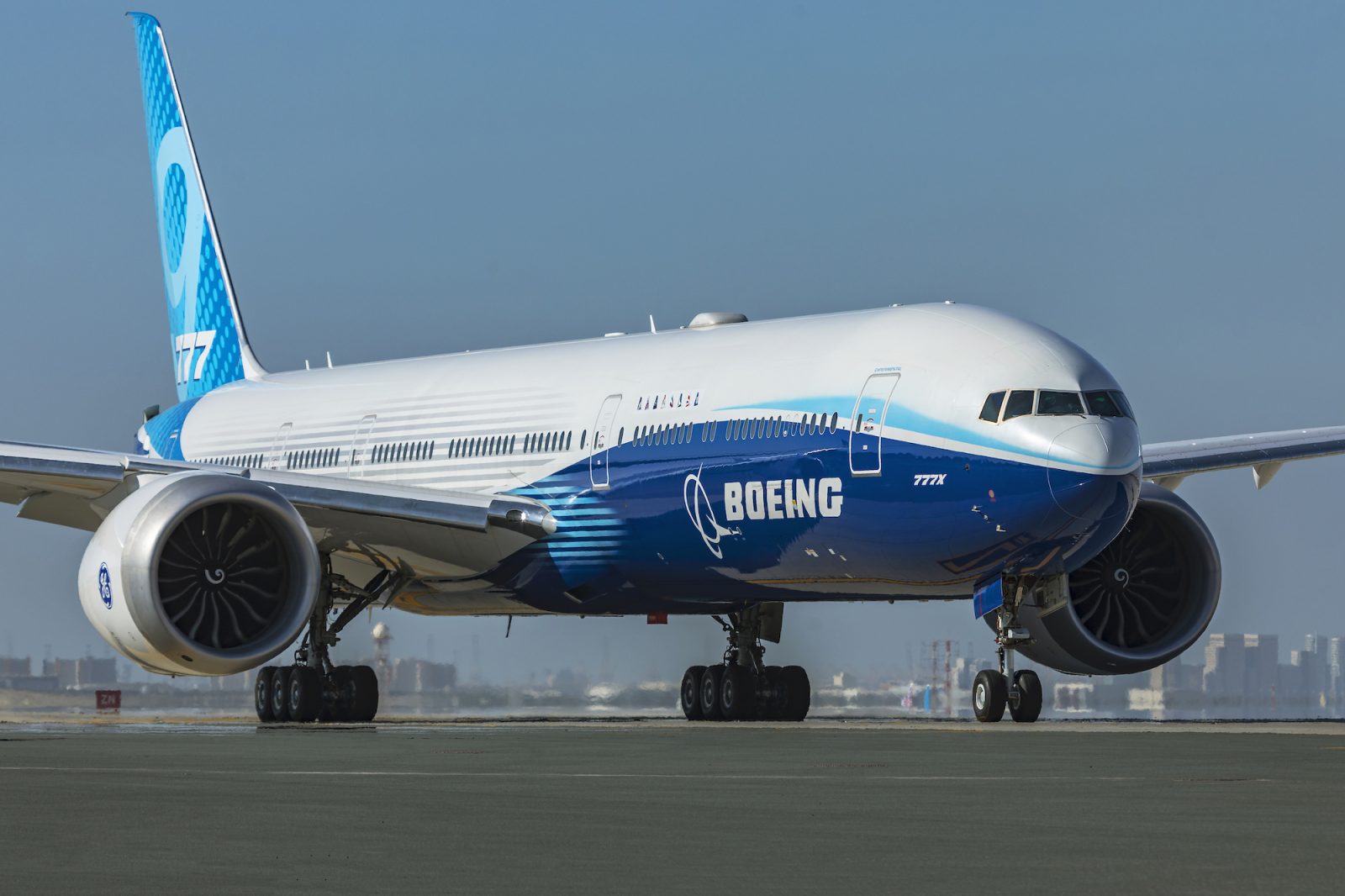
A Boeing 777X at the Dubai Airshow. (Photo: AirlineGeeks | William Derrickson)

Since June 2021, what was initially thought to be a relatively small dispute between Airbus and Qatar Airways has evolved into a massive legal dispute.  Signs of the rift between the two parties gave rise due to the surface pain issues on the airline’s flagship Airbus A350s for both the -900 and -1000 variants, which eventually led to several tossing of blames here and there.

The drift between the two parties showed signs of having been even wider when it was announced that Singapore Airlines, and not Qatar Airways, was going to be the launch customer for the freighter version of the widely-popular Airbus A350 — the A350F. As more airline customers started placing their orders, many were left wondering just when Qatar Airways who also stands on the podium for being one of the largest A350 operators would place an order.

Then things probably took a more sour turn when perhaps one of the most shocking turns of events amidst the legal dispute happened. Airbus terminated its contract to sell Qatar Airways 50 Airbus A321neos — a massive slap to the airline since it has been one of the most prominent airline customers for the Toulouse, France-based aircraft manufacturing giant.

It eventually led the industry as a whole to wonder what the airline’s next move might have been, either in reconciliation to recover ties with Airbus or to cut even deeper to cease what’s remaining of their relationship.

Big Win for Boeing

It would seem that Qatar Airways has no immediate plans for reconciliation with Airbus, because the airlines placed a huge order with Boeing instead, worth up to a whopping $20 billion at just list prices for a total of 102 Boeing aircraft. This order also includes up to 50 Boeing 737 MAX aircraft, including 25 confirmed orders for the 737 MAX 10, and 25 options. Additionally, the carrier has orders for up to 50 Boeing 777X freighters, including 34 confirmed orders for the 777-8 freighter and 16 options and finally, two current-generation Boeing 777 freighters.

“Boeing has a long history of building market-leading freighter aircraft and Qatar Airways is honored to have the opportunity to be the launch customer for the 777-8 Freighter, an aircraft which will not only allow us to further enhance our product offering for our customers but also help us meet our objectives to deliver a sustainable future for our business,” Mr. Akbar Al Baker, Qatar Airways Group Chief Executive, said, in a press release.

This big order is a huge win for Chicago-based Boeing not just in terms of its order books, but also because it has finally landed the first customer for the 777X freighter. On the flip side, this proves to be a huge blow to fellow rival Airbus and is definitely widening the rift between the two disputing parties – because Qatar Airways not only found a replacement for those terminated A321neos, but it will also become the launch customer for the 777X freighter.

“We are delighted to launch Boeing’s next great cargo airplane – the 777-8 Freighter – with Qatar Airways, one of the world’s largest cargo carriers and our partner since the airline began operations 25 years ago,” Boeing Commercial Airplanes President and CEO Stan Deal, said. “Our team is ready to create an airplane that will serve them well for many decades. Qatar Airways’ selection of the efficient 777-8 Freighter is a testament to our commitment to provide freighters with market-leading capacity, reliability, and efficiency.”

Recurring Problems

Good news aside, this big order could eventually backfire on Boeing, especially considering the fact that the passenger version of the highly-anticipated Boeing 777X has not even entered service yet — despite having been originally scheduled to arrive by June 2020. Currently, the 777X does not seem to be ready to fly yet as it’s only scheduled to finally fly in late 2023.

The lagging of the aircraft delivery timeline has caused great upset amongst the likes of Emirates — another Gulf carrier —  which had over 100 on order, but the constant lagging has caused Emirates President Tim Clark to threaten the refusal of the 777X delivery, as well as resorting having to switch some of the 777X out for the smaller Boeing 787 Dreamliner.

Furthermore, Qatar Airways originally had approximately 60 of the passenger version on order, which included 10 Boeing 777-8s and 50 Boeing 777-9s. Interestingly and as part of the new big order, 20 of those on order have been replanned to be converted into freighters. Nonetheless, the delay in the passenger jet version highlights a recurring problem within Boeing whereby delays seem to be rather inevitable and even more so, as the 777X freighter version is only expected to enter service by 2027 at the earliest.

One can’t doubt that should the freighter version experience tremendous delays as well, then Qatar Airways might not be too happy either as Mr. Akbar Al Baker, added, “We certainly push Boeing hard to deliver upon our expectations, and the team at Boeing consistently strives to meet and exceed our expectations, giving the opportunity for us to be here today to launch the most significant new freighter aircraft for a generation.”

Striking Back at Airbus

Hailing as one of the world’s leading international air cargo carriers, it does make sense for Qatar Airways to invest much more into its cargo airline, which currently boasts a fleet size of 28 aircraft consisting of only the Boeing 777F and the Boeing 747F. So perhaps one could attest that the 777X order was just in-line with the current freighter partnership that the airline already had with Boeing, especially since the manufacturer claims that the payload of the 777X freighter is nearly identical to that 747-400F, with a 25 percent in fuel efficiency, emissions, and overall operating costs.

However, the Gulf carrier only has a fleet of Airbus-manufactured narrow-body aircraft — the A320s. Fleet renewal is still a necessity, so that could be perceived as the main reason why it placed such a big order for the 737 MAX. Additionally, another reason could be attributed to the loss of the A321neo contract and this was maybe the airline’s manner of delivering a message to Airbus through such politics.

Whilst the fleet renewal might not be as stunning considering the A321neo family outbids the 737 MAX in terms of versatility and range, it would also mean that Qatar Airways would have to juggle its crew and cabin services between two different aircraft types and quite possibly scrap any long-haul flight plans it initially had for its narrow-body fleet.


Charlotte Seet

Fascinated by aircraft from a very young age, Charlotte’s dream was to work alongside the big birds one day. Pursuing her dream, she went on to achieve her diploma in Aviation Management and is currently working on her degree in Aviation Business in Administration with a minor in Air Traffic Management. When she’s not busy with school assignments, you can find her aircraft spotting for long hours at the airport. In Charlotte’s heart, the Queen of the Skies will always be her favorite aircraft.

Etihad Receives IATA IEnvA Stage 2 Accreditation

Etihad's 787 Greenliner sitting on the ramp prior to the 2021 Dubai Airshow (Photo: Etihad)

Etihad Airways successfully completed IATA’s Environmental Assessment stage 2 and received accreditation in four key operational areas. The areas include facilities management, flight operations, Etihad technical division and Etihad Catering Services.

The IATA Environmental Assessment (IEnvA) program is a blueprint for airlines to achieve sustainability in all air and ground operations. It is an evaluation system designed to independently assess and improve the environmental management of an airline.

Stage 2 represents the highest level of IEnvA compliance and requires an airline to demonstrate ongoing environmental performance improvement. Etihad has committed to achieving net-zero carbon emissions by 2050 and halving its 2019 emission levels by 2035.

Mariam Al Qubaisi, Head of Sustainability and Excellence Division, Etihad Airways, said, “Our world is becoming more environmentally conscious by the day. Etihad is proud to play a major part in reducing the carbon impact of the aviation industry, in the UAE and around the world. We have recorded many great achievements, from our first ecoFlight from Abu Dhabi to Brisbane in 2019, to the recent launch of our Sustainability-focused loyalty program, Conscious Choices, to reward guests for making sustainable choices when they travel and in their everyday life.”

CEIV Certification

The United Arab Emirates’ national carrier is also received IATA’s CEIV Live Animals, CEIV Fresh and CEIV Pharma certifications.

The certification was awarded — following an IATA-led assessment of Etihad Cargo’s dedicated LiveAnimals program — for animal transportation, SkyStables, equine transportation, products and its logistics’ audit checklist to ensure compliance with standards, requirements, and Live Animals Regulations (LAR).

In addition, the certification endorses and accredits Etihad’s services for the transportation of live animals —reinforcing its position as a prominent international air cargo carrier and reaffirming its commitment to animal welfare.

The key benefits of CEIV Live Animals certification include improving animal welfare and safety through appropriate quality and risk management and enhancing standardization and professionalism in the handling and transportation of live animals in a multimodal environment. The certification also enforces compliance with the IATA LAR, elevating staff competency through efficient and robust training programs, and enabling increased collaboration among stakeholders and certified trade lanes.

Brendan Sullivan, IATA’s Global Head of Cargo, said, “Handling and transporting live animals is challenging. Each type of animal has its own specific requirements. Achieving CEIV Live Animals certification means Etihad Cargo’s customers can benefit from extra assurance that their precious cargo is in safe hands. We congratulate the airline on becoming the first in the Middle East to complete the suite of CEIV certifications – Pharma, Fresh and Live Animals.”

Victor Shalton

Victor Shalton's love for aviation can be traced to when he was 11-years-old. As a seasoned aviation writer, he takes pride in providing the best aviation coverage around the globe and is passionate about advancing his skills in the aviation space. In addition, he loves travelling, writing, arts and while his speaking engagements have taken him around the world, he is proud to call Nairobi home.

Ethiopian Airlines’ Boeing 737 MAX Returns to the Skies

Ethiopian 737 MAX
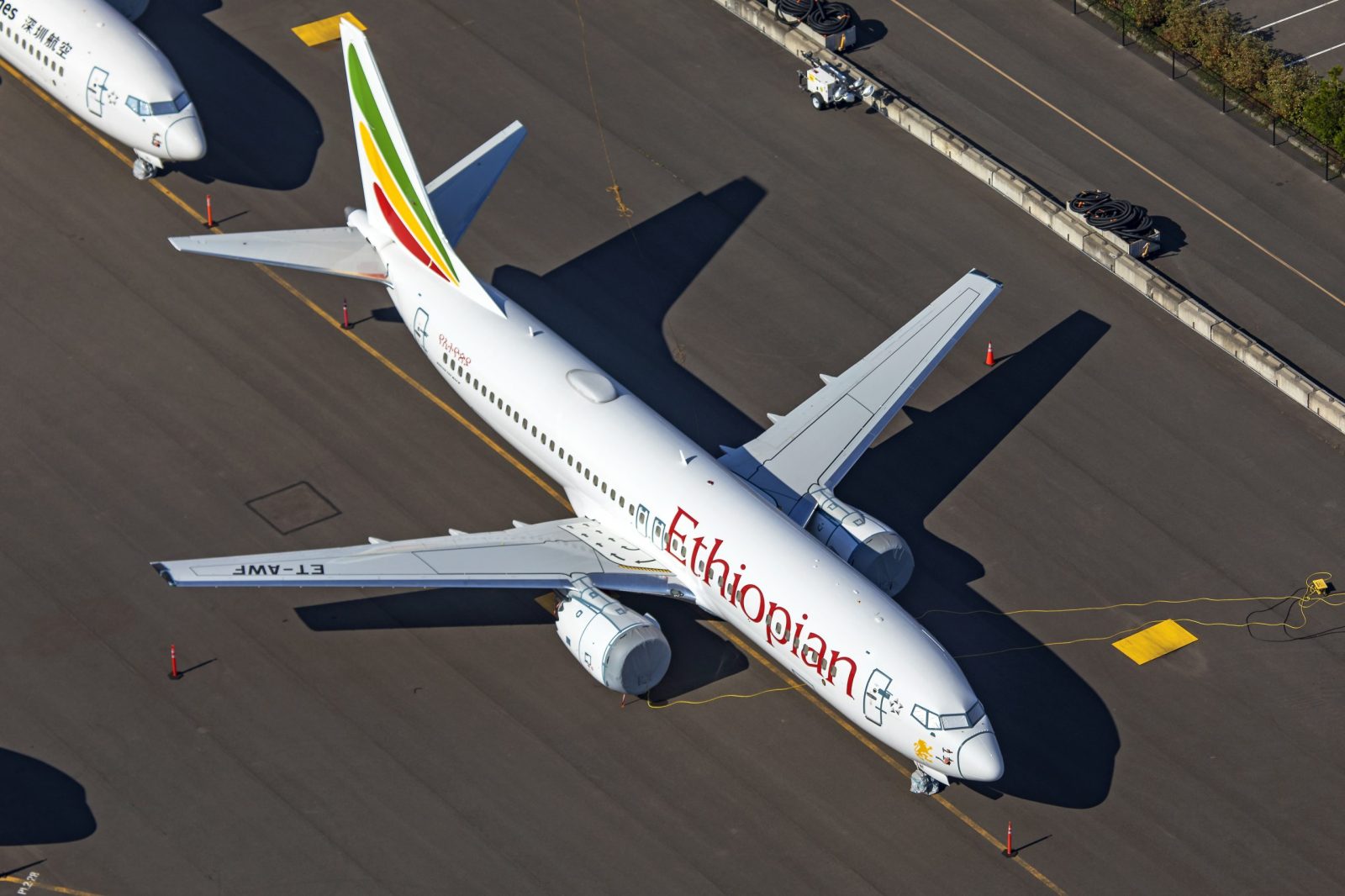
An Ethiopian Airlines 737 MAX 8. (Photo: AirlineGeeks | William Derrickson)

On Tuesday, Ethiopian Airlines operated its first Boeing 737 MAX flight almost three years after regulators grounded the fleet globally — following two deadly accidents involving the aircraft. 

The flight was scheduled for arrival in Kenya but remained within Ethiopia due to weather surrounding the area. Passengers on board the flight included government officials and diplomats. 

While en route, acting Chief Executive Officer Esayas Woldemariam said, “We made sure everything is in order. Now we are doing a demo flight so to speak. It is after this that we are availing it to commercial aviation,” while talking to reporters about how commercial flights would resume after the demonstration, and the airline showed that the aircraft was indeed safe. 

The aircraft was originally grounded by aviation authorities globally, following the second fatal accident in March of 2019, which involved a 737 MAX aircraft operated by Ethiopian Airlines, resulting in the loss of all 157 souls on board. Five months prior to this accident, Lion Air Flight 610, crashed and killed all 189 souls on board. Both flights were operated by the Boeing 737 MAX aircraft. 

“Safety is the topmost priority at Ethiopian Airlines and it guides every decision we make and all actions we take,” CEO Gebremariam said in a statement. “In line with our initially stated commitment to become among the last airlines to return the B737-Max, we have taken enough time to monitor the design modification work and the more than 20 months of rigorous recertification process and we have ensured that our pilots, engineers, aircraft technicians and cabin crew are confident on the safety of the fleet.”

For the airline, the return of the aircraft comes over a year after the Federal Aviation Administration lifted the grounding order on November 19, 2020, allowing it to return to the skies in the United States on these mandatory fixes:

  • MCAS must compare data from more than one sensor and avoid relying on a single angle-of-attack sensor that’s giving faulty readings.
  • All aircraft must have a warning light that shows when two sensors are disagreeing.
  • When MCAS activates, it must do so only once, rather than activating repeatedly.
  • If MCAS is erroneously activated, flight crews must always be able to counter the movement by pulling back on the control column. 
  • Pilots must get more-rigorous training on MCAS, including time in a MAX simulator

Currently, the aircraft has been given approval in most areas of the world including Europe, Australia, Japan, India, Malaysia, Singapore, Indonesia and Ethiopia. However, the plane remains grounded in some countries including Russia and China, but the list continues to grow smaller as the plane proves to be safe.

Since the approval to return to operation a year ago, the MAX aircraft has amassed over 900,000 total flight hours in 349,000 commercial flights. 

Ethiopian Airlines currently has four 737 MAX aircraft in its fleet — with 25 on order.


Chase Hagl

Chase Hagl grew up in Twin Falls, Idaho. His love and passion for Aviation landed him in Orem, Utah where he obtained a B.S. in Aviation Management with a minor in Business Management from Utah Valley University. Chase currently works as a flight attendant in Charleston, SC and is also the primary Inflight ASAP ERC representative for startup airline, Breeze Airways. His experience in the aviation industry spans back four years, working in areas including agriculture application, customer service, maintenance, and flight ops. In his free time, Chase enjoys road biking, astronomy, and flying.

Chilean Government Imposes New Consumer-Friendly Airline Regulations

A JetSMART Argentina A320 taxiing in Mendoza. (Photo: AirlineGeeks | João Machado)

On November 30, the Chilean government issued Law No. 21392, a regulation that modifies the aeronautical code, which allows air tickets’ endorsement or transfer, as well as its full refund.

The rule states that, as well as the endorsement or transfer and the full refund procedures, can be carried out through a digital form, or personally at the ticket sales offices, airport counters and authorized agencies that the carrier has.

The rule in question states that the passenger may freely endorse or transfer his air ticket, for one way and/or round trips, at no cost. The passenger can endorse or transfer the ticket up to one day prior to the flight.

The transfer of the right in question may be possible between people and only once for each ticket. During a year, the passenger may only use this a maximum of two times per carrier, at the rate of one transfer per semester.

On the other hand, passengers will have the right to unilaterally terminate the air transport contract, nullifying the ticket and receiving a full refund without penalty. This procedure can be done within 48 hours after purchasing the ticket, for trips that are purchased at least seven calendar days before the date and time of the scheduled departure.

In case the scheduled departure is within a period equal to or greater than 180 days from the purchase of the ticket, the withdrawal period must be done within seven days after the air ticket’s purchase. The air ticket refund must be reimbursed within a period of 10 days, through the same payment method used for the ticket purchase.

In case the air ticket was purchased in cash, the carrier must agree on the passenger’s method to make the reimbursement.

The first airlines in Chile to change its fare policies were Sky Airline and JetSmart.

Although LATAM is the Chilean airline with the largest number of operations within the country, it has not yet updated its fare policies according to the new Chilean regulations. It is important to point out that if an airline does not comply with this new regulation, it may be fined by the Chilean authority in charge of safeguarding customer protection.

Finally, it is necessary to mention that the rule in question has not specified whether it applies to international flights and foreign airlines that operate in Chile. This new law is a great step to avoid the excessive charges that airlines often impose on passengers.

Juan Pedro Sanchez Zamudio

The three things Juan Pedro loves most about aviation are aircraft, airports, and traveling thousands of miles in just a few hours. What he enjoys the most about aviation is that it is easier and cheaper to travel around the world and this gives you the opportunity to visit places you thought were too far away. He has traveled to different destinations in North, Central, South America and Asia. Born, raised and still living in Perú, Juan is a lawyer, soccer lover, foodie, passionate traveler, dog lover, millennial and curious by nature.

PLAY Announces New Flights To New York Stewart

PLAY Airbus A321neo in flight (Photo: PLAY)

Today, Icelandic low-cost airline PLAY is announcing a new service connecting Iceland to the United States. Starting June 9, PLAY will fly between its main base at Rekjavik, Iceland’s Keflavik Airport and New York’s Stewart International Airport

The airport is located in Orange County, N.Y., near the towns of Newburgh, N.Y. and New Windsor, N.Y. — which is approximately 60 miles north of Manhattan.

There are currently three U.S. carriers operating or planning to operate from the airport: Allegiant, Frontier and JetBlue. PLAY will be the only airline planning to operate international services from this airport, and its passengers will be the first to benefit from the recently-constructed $37 million U.S. Customs facility.

PLAY began its operations in May 2021 — making it the first airline to launch after the COVID-19 crisis swept the world of commercial aviation. During the first six months of operations, PLAY carried over 100,000 passengers on more than 1,000 flights, achieving a 53.2% load factor and a 96% on-time arrival rate.

“New York is a critical location for both European tourists looking to explore Manhattan and American travelers heading to 22 destinations including Iceland, Paris, Dublin, and more. Stewart International Airport is uniquely situated as a hub for travelers in New York and surrounding states. Passengers have convenient transportation options to reach the airport, in addition to short wait times in the security line and low costs for parking their cars,” PLAY CEO Birgir Jónsson said.”The low fares and flexibility that passengers experience at Stewart International Airport are exactly what passengers seek when they book their travel with PLAY.  We anticipate strong bookings in 2022, and with New York as our third U.S. destination, PLAY passengers will have more choices when booking last-minute trips, work-cations, and spontaneous adventures.”

New York Stewart will be the carrier’s third destination in the U.S. after Baltimore and Boston. As a result, the airline’s new service will be an expansion of its existing services to the growing Hudson Valley, New Jersey and Connecticut — known as the Tri-state area.

Flights will be operated on the Airbus A321neo aircraft that are capable of carrying 192 passengers in a single-class configuration.

Iceland Commercial Aviation: From Boom To Bust (And Back?)

During the last decade, very few countries saw as many dramatic changes in their national commercial aviation competitive arena compared to Iceland. The meteoric rise and growth of ultra-LCC WOW Air and the parallel expansion of incumbent flag carrier Icelandair that tried to keep up with the “new kid on the block” made Keflavik International Airport an important crossroad for passengers looking to cross the Atlantic on a budget.

However, after the demise of WOW in 2019 and the subsequent collapse in demand due to international travel restrictions brought by the COVID-19 pandemic, Keflavik Airport saw its terminals that just a few months earlier were bursting at the seams during peak hours turn into desolate empty quarters. Icelandair drastically reduced staff levels and salaries to cope with a very uncertain future as it integrated its domestic operations under the mainline brand to rationalize its services.

In this almost post-apocalyptic scenario, PLAY took on the challenge to fill a void left in the market and revive the option for passengers looking to travel between Europe and the U.S. at lower fares — possibly while making a stop to visit the natural wonders of Iceland.

Gateway To Europe

Ticket sales for PLAY flights departing New York Stewart will start on Fe1.1 and will include 22 destinations in Europe including Stuttgart, Germany; Trondheim, Norway; Gothenburg, Sweden; Copenhagen, Denmark; London, Paris, Dublin, Berlin and Brussels.

PLAY offers passengers the ability to tailor their travel experience to their needs with a-la-carte add-ons such as in-flight meals, carry-on bags, checked bags among other options. With a flexible COVID-19 policy, travelers have peace of mind that they can adjust their flights as needed.


Vanni Gibertini

Vanni fell in love with commercial aviation during his undergraduate studies in Statistics at the University of Bologna, when he prepared his thesis on the effects of deregulation on the U.S. and European aviation markets. Then he pursued his passion further by obtaining a Master’s Degree in Air Transport Management at Cranfield University in the U.K. followed by holding several management positions at various start-up carriers in Europe (Jet2, SkyEurope, Silverjet). After moving to Canada, he was Business Development Manager for IATA for nine years before turning to his other passion: sports writing.

UK Airlines May Face Pay Out for 1 Hour Delays

An aircraft lands at Heathrow Airport (Photo: London Heathrow Airport)

Under proposed rules in the United Kingdom, airline passengers on domestic flights may receive compensations for flight delays of an hour, according to the BBC.

Currently, the country still follows rules from the European Union, in which airline passengers are only entitled to compensation for a delay if the delay extends beyond three hours. The new law in the U.K. would introduce a tiered compensation system for delayed passengers based on the length of the delay. The structure of the compensation offered is similar to already existing models on the U.K.’s railways and ferry systems. 

Passengers on flights under 1,500 kilometers are entitled to £220 for flight delays of three hours. With the country leaving the European Union a few years ago lawmakers are looking to create new laws independent of previous rules from Brussels. The country’s lawmakers are also looking at giving the Civil Aviation Authority (CAA) more power to enforce consumer laws and in turn, give air carriers fines for breaches.

Compensation Based on Ticket Price

The new tiered system for domestic flights will see passengers able to claim up to 25% of their ticket price for delays between 1 hour and 2 hours, 50% of their ticket price for delays of more than 2 hours and less than 3 hours, and 100% of their ticket price for delays of 3 hours or more.

The new laws are still being discussed and compensation could be changed if a final deal on new rules is made. The new regulations would also require airlines to sign up for the alternate dispute resolution scheme, which helps travelers claim compensation without going to court. 

Lawmakers developing the new regulations are also looking to give those in wheelchairs more compensation when things go wrong. Proposed rules would require airlines to pay the full amount for a broken or damaged wheelchair. Currently, airlines are only obligated to pay £1200 for damage to people’s belongings, while some wheelchairs can cost tens of thousands of pounds.

Another objective of the new proposed regulation is to give the Civil Aviation Authority, the regulator for aviation in the United Kingdom, more powers to fine airlines for breaches of consumer laws. 

No details on the amount or types of fines that airlines could pay under the power given to the CAA. Consumer confidence in airlines plummeted during the COVID-19 pandemic as airlines refused to pay out to passengers for canceled flights. New laws, aimed at giving regulators more power to enforce breaches of law, could help to restore some of this consumer confidence. Representatives for Airline UK, a body that represents the airlines, say they will be responding to the proposed changes but add that all their airlines try to ensure the most enjoyable and smoothest experience for the consumer. 

Daniel Morley

Daniel has always had aviation in his life; from moving to the United States when he was two, to family vacations across the U.S., and back to his native England. He currently resides in South Florida and attends Nova Southeastern University, studying Human Factors in Aviation. Daniel has his Commercial Certificate for both land and sea, and hopes to one day join the major airlines.

Ryanair Asks Italian Government for Cancellation of Boarding Charges

A Ryanair 737 descends into Milan. (Photo: AirlineGeeks | Fabian Behr)

In 2004, a municipal surtax on passenger boarding fees was established by the Italian government. The purpose of this tax — one euro for each passenger boarded — is 20% for the benefit of the municipality in which the airport is located and 80% to find the necessary resources to strengthen security in airport facilities and main railway stations against international terrorism.

In truth, this tax only ends up in the pockets of airport operators and benefits passengers if the total amount of the tax exceeds 30 million euros annually. Any money below this threshold, it is ordinary tax revenue of the Italian State, able to be used for any purpose and for anyone’s benefit. The tax was suspended from August 2021 through December 2021 to assist airlines.

For these reasons, Ryanair has once again asked the Italian government to eliminate this tax for all Italian airports and all airlines until 2025. The removal of this tax “would be crucial in driving the recovery of Italian tourism and ensuring Italy remains competitive with other EU countries that are trying to attract airlines favoring the rapid recovery of the tourism sector,” the airline said in a statement. Boarding fees are due directly from the carrier to the airport management company, but it is the passenger who is the real recipient of the economic burden represented by boarding fees.

This aspect has been stressed several times by the Irish company, as it is convinced that the removal of this tax would give an important boost to regional connectivity to the benefit of millions of Italian passengers and local tourism. During the period when the tax was removed, Ryanair launched 13 new routes and over 20 additional frequencies on 17 existing routes, proving that it was a significant incentive.

The Irish low-cost company stated that if the Italian government eliminated the surcharge, it would invest at least $4 billion in the Italian network over the next four years, creating over 1,500 new jobs.

No Reimbursements to Covid-Positive Passengers

The Irish airline denies flight reimbursement to passengers who, having tested positive for Covid-19, cannot leave. Even when faced with the presentation of the positive molecular swab to prove the actual impossibility Ryanair considers Covid “not a serious illness”. This issue has been submitted to ENAC, the Italian Civil Aviation Authority, which may open proceedings against Ryanair, and which could lead to sanctions.

The problem is that Ryanair, due to a passenger’s problem, has limited itself to proposing to the customer the shifting (not free of charge) of the flight date. In Europe, unfortunately, there are no regulations that provide for this type of case and therefore the problem will have to be resolved by finding a bilateral agreement.

Vincenzo Claudio Piscopo

Vincenzo graduated in 2019 in Mechanical Engineering with an aeronautical curriculum, focusing his thesis on Human Factors in aircraft maintenance. In 2022 he pursued his master's degree in Aerospace Engineering at the University of Palermo, Italy. He combines his journalistic activities with his work as a Reliability Engineer at Zetalab.
Sign-up for newsletters & special offers!

Get the latest stories & special offers delivered directly to your inbox

SUBSCRIBE

Uh-oh! It looks like you're using an ad blocker.

Our website relies on ads to provide free content and sustain our operations. By turning off your ad blocker, you help support us and ensure we can continue offering valuable content without any cost to you.

We truly appreciate your understanding and support. Thank you for considering disabling your ad blocker for this website