










Stories

Essential Air Service News — January 2022

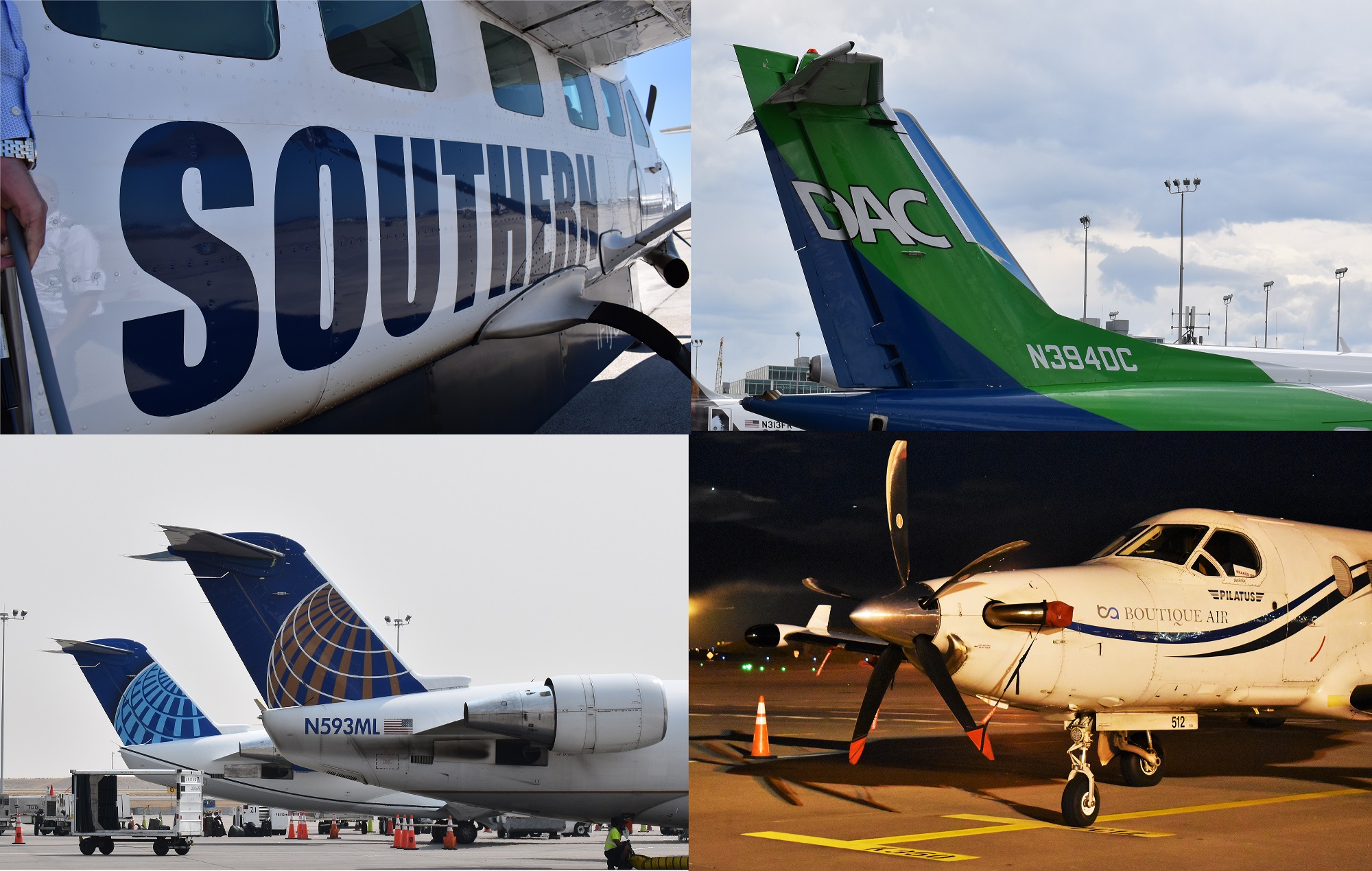
The EAS Carriers discussed in this article (Photos: AirlineGeeks | Joey Gerardi)

Note from the writer: In the commercial aviation world, there is always news to report, and even the smallest airports have news to report on. This will be a different segment than the “EAS Round-Up” stories, which focus only on the Essential Air Service contracts that have been changed or renewed. This new segment will focus on other news that isn’t primarily centered on the contracts, although it might touch on it from time to time. – Joey Gerardi

New Partnerships

Denver Air Connection is a Colorado-based airline that is well known for operating the only passenger flights using a Metroliner in the United States, as well as being the only airline to fly commercial flights into the high-end ski town of Telluride, Colo. They are entering their 25-year according to the carrier, which has been operating flights since 1997, the airline teamed up with United Airlines in 2018 and has since been offering an interline agreement with the airline, seamlessly connecting passengers from DAC served cities onto the United network.

A Denver Air Connection Dornier328Jet near the American AstroJet livery in Denver (Photo: AirlineGeeks | Joey Gerardi)

But come March 2022, it will enter into an interline agreement with their second carrier, American Airlines. According to the press release which the carrier posted to their Facebook page, This new interline agreement will allow passengers to fly directly on American Airlines flights and have their checked bags transferred seamlessly onto flights with DAC. This new partnership will help immensely at the American hubs that they currently fly to, including Dallas/Fort Worth International Airport, Chicago’s O’Hare International Airport and Phoenix Sky Harbor International Airport, the last of which is only served on a seasonal basis from Telluride, Colo.

Record-Breaking Numbers

As the first month of the new year is coming to a close, airlines are finishing up calculating the total passengers they’ve flown the previous year. San Francisco-based Boutique Air had a great year in the tiny EAS community of Altoona, Penn. of which this was the airline’s first full year serving the community. According to Brian Kondrad, VP of Business Operations at Boutique Air, the airline flew 8,915 passengers in or out of the Altoona Airport in 2021. This was the first time the airport received over 4,461 enplanements since 2009.

One of Boutique Air’s Pilatus PC-12’s in Carlsbad, N.M. (Photo: AirlineGeeks | Joey Gerardi)

Despite the ongoing pandemic, the carrier managed to double the past record number and did it during their first year of service to Altoona as well. Kondrad said he is optimistic and plans to increase that number even further in 2022.

Route Termination Denied

On Jan. 15, AirlineGeeks reported that United Airlines via regional affiliate SkyWest would be terminating two EAS cities in northern New York state. SkyWest posted an application to “Terminate its current EAS contract,” to which the Department of Transportation swiftly declined. The DOT essentially said that if no airline is chosen within the 90-day period, SkyWest is set to leave, then they will be required to stay in both Ogdensburg and Plattsburgh until a new carrier is found and has begun service. So, the bidding process has begun and is moving at a very quick pace relative to other contract decisions.

A United Express CRJ-200 exiting the runway in Ogdensburg, N.Y. (Photo: AirlineGeeks | Joey Gerardi)

Usually, when a contract is set to expire, the process will usually take four to five months before — almost a month for prospective airlines to submit contracts for the city in question, then 25 days or so for the community and its leaders to comment on what airline they want to see chosen and to what cities.

Following that the city and its community comments are posted online and the DOT has roughly 20 days or so to decide which airline and destination will be chosen for the community. Once the DOT decides what airline will serve, the chosen airline will have to begin services to the community when the contract begins, which by this point is usually somewhere 60-90 days away.

On the Order Prohibiting Termination for Plattsburgh, which was released and decided on Jan. 21, the DOT also requested proposals from airlines that would like to serve the community next. But the deadline for airlines was only six days away on Jan. 27, of which only four working days, only a single airline submitted a proposal for Plattsburgh. It is unclear whether this lack of airlines is due to the insanely short amount of time for proposals to be submitted, or another outside factor.

Nevertheless, with Cape Air being the only airline that submitted a bid, it is essentially a lock that the airline will serve Plattsburgh once again. Cape Air last served in 2010 when they lost the EAS contract to Colgan Airways and U.S. Airways Express. In the 12 years since Cape Air left Plattsburgh, the airline saw service from U.S. Airways Express on Colgan, followed by Alaska-based PenAir until that airline collapsed in 2018, at which point United Express on SkyWest began service.

So after 12 years and millions of dollars in renovations to the terminal to entice more air service, the airport will once again find itself with an 8-9 seat propeller aircraft to Boston with Cape Air. Allegiant still serves the airport at least twice weekly, and Spirit stopped service in the early days of the Pandemic.

In Ogdensburg, the DOT gave airlines a little bit more time, but still not much. Airlines have until Feb. 10 to submit their EAS proposals for Ogdensburg, but until an airline is chosen, SkyWest is required by law and binding contract to serve both communities until another airline is chosen for the contract and begins flights.

Sky High Completion Rates

Southern Airways Express took over the EAS contract in the Nebraskan community of Chadron back in June 2021, and since then the airline has completed the flights, all of them. The carrier has announced a 100% controllable completion rate for their flights to and from Chadron, meaning not due to weather, ATC issues or any other factors they can’t control. The airline didn’t cancel a single flight due to maintenance or crew issues in the first six months of service to the community.

SAE showing off their new plane in Chadron back in Dec. of 2021 (Photo: Southern Airways Express)

The carrier received its first of three King Air 200s at the end of December and is awaiting governmental paperwork and approval to fly it. But until that day happens, it will continue flying the Chadron flights on the Cessna 208 as they have successfully since June 2021.

Joey Gerardi

Joey has always been interested in planes for as long as he can remember. He grew up in Central New York during the early 2000s when US Airways Express turboprops ruled the skies. Being from a non-aviation family made it harder for him to be around planes and would only spend about three hours a month at the airport. He was so excited when he could drive by himself, the first thing he did with his driver's license was get ice cream and go plane spotting for the entire day. He graduated from Western Michigan University in 2022 with a B.S. in Aviation Management & Operations and a Minor in Business, and currently works for a major airline in his hometown.

China Airlines Orders Four Boeing 777F Freighters

A China Airlines Cargo Boeing 777F freighter. (Photo: China Airlines)

With its team of approximately 800 cargo employees worldwide, China Airlines was able to continually expand its freight network that eventually led to the China Airlines Cargo business soaring past new heights, even so making last year the best-ever year in the operation’s 62-year history – as air cargo revenue was up 186 percent above the pre-pandemic year of 2019, which nearly balanced out a 96 percent drop in passenger revenue.

This was all made possible because the airline switched to a cargo-centric business model that enabled its fleet of 21 freighters to be fully utilized, China Airlines kept the continuity of supply for economic growth goods and everyday necessities ranging from auto parts, semiconductor chips to actual vehicles and high-precision wafer machinery, amidst the usual epidemic supplies such as masks and personal protective equipment.

Cargo Focused, Cargo Ready

Currently, China Airlines hails as the fifth largest air cargo carrier in the world and having undoubtedly seen the positive effects of air cargo, the airline has decided to continue mounting heavier focus on its cargo operations – but it would require much more than its current fleet of 18 Boeing 747F and three 777F freighters.

This is why China Airlines has decided to purchase four new Boeing 777F freighters to aid in the effort of capturing new market opportunities as air cargo demand rapidly grows around the globe. This ongoing fleet acquisition program will boost operating performance by balancing network development and market movements against the aircraft replacement schedule.

“The 777 Freighter has played a critical role in our efforts to maintain profitability during the pandemic, and these additional airplanes will be an integral part of our long-term growth strategy,” said China Airlines Chairman Hsieh Su-Chien in a press release. “We are excited to add more 777 Freighters due to their operational efficiency and reliability. Our fleet modernization program will enable us to deliver added value to our customers, especially as the global supply chain continues to evolve.”

China Airlines had already begun taking delivery of six 777F freighters in December 2020. Three have been delivered so far with two more slated for 2022 and one more lined up in 2023; delivery of the four newly ordered 777F freighters will commence in 2023 and be completed in 2024.

Rapidly Rising

It definitely is a smart move made by the Taiwanese flag carrier to expand its freighter fleet, as besides the last year being a blooming year of records for its cargo business – it was just as a booming year for Taiwan’s exports as well as it rose a record-high of 29.4 percent.

And considering that the 777F freighter is currently the world’s largest twin-engine freighter with a maximum revenue payload of 102 tonnes, as well as being slightly more environmental with a 17% reduction in fuel use and CO2 emissions per tonne compared to prior generation airplanes – the freighter then allows for China Airlines to make lesser stops on long-haul routes, further reducing associated expenses such as landing and parking fees.

Additionally, the main cargo hold can be fitted with cargo pallet restraint systems used for carrying semiconductor machinery and engines, providing high-value cargo such as precision instruments and temperature-controlled goods with optimal carriage services – going in line with what China Airlines have been transporting and much more.

Charlotte Seet

Fascinated by aircraft from a very young age, Charlotte’s dream was to work alongside the big birds one day. Pursuing her dream, she went on to achieve her diploma in Aviation Management and is currently working on her degree in Aviation Business in Administration with a minor in Air Traffic Management. When she’s not busy with school assignments, you can find her aircraft spotting for long hours at the airport. In Charlotte’s heart, the Queen of the Skies will always be her favorite aircraft.

Philippine Airlines Returns to Tel Aviv After A 60-Year Absence

Philippine Airlines' new A350 (Photo: Philippine Airlines)

Philippine Airlines is returning to Tel Aviv after a six-decade hiatus, with the first trip scheduled to take off in April. The market between the Philippines and Israel is vast, with 72,800 passengers expected in 2019. It will be a mostly leisure-oriented route with a focus on out-of-country Filipinos, pilgrims, and tourists in both directions. It comes at a time when the airline is reorganizing to become more profitable.

After a 60-Year hiatus

Philippine Airlines will resume service to Tel Aviv, which it last served in the 1940s and 1950s. It will begin operating twice weekly on April 6, with reservations being available since the end of October.

According to ch-aviation.com, it will employ 295-seat A350-900s, of which Philippine Airlines currently owns three. They were delivered in June, September, and May of this year. They’re all the same with 30 business seats (totally lie-flat), 24 premium economy seats, and 241 economy seats

It’s the most recent expansion for Tel Aviv, which has just welcomed brand-new connections to the United Arab Emirates, Bahrain, and Morocco. It’s also another significant long-haul route from the Philippines, after Turkish Airlines’ recent launch of Cebu.

Why go from Manila to Tel Aviv?

According to booking statistics, over 72,000 round-trip passengers flew between the Philippines and Israel in 2019, with 90% of those traveling to and from Manila. That’s a lot of people, and the average one-way trip was over $502 – roughly double the price of Manila-Dubai.

Hong Kong received the most number of passengers, followed by Bangkok, Istanbul, and Amman. With so many flights to Dubai presently, things are likely to change dramatically in the future — even before the new non-stop is considered.

Filipino workers, pilgrimages to Israel, and tourism in both ways will be the emphasis of the new service. About 23,000 Israelis visited the Philippines in 2019, and the nation is visa-free for Filipinos. At least 30,000 Filipinos reside in Israel, making them one of the country’s most populous immigrant groups.

Philippine Airlines’s Middle East operation

The Philippine flag carrier flies to five Middle Eastern locations, as stated below, as of the first week of July. With 26 departures, this area accounts for less than half of the carrier’s North American operations. Philippine Airlines largely serves abroad Filipinos, which is a key commonality between the two areas.

  • Manila to Dubai: once-daily by the A330-300
  • Manila to Riyadh: once-daily; A330-300
  • Manila to Doha: five-weekly; A330-300
  • Manila to Dammam: five-weekly; A330-300
  • Manila to Tel Aviv: twice-weekly; A350-900

This story was corrected on Tuesday, Feb. 1, 2022 at 10:34 a.m. ET. A previous revision of the article stated there were 72,800,000 passengers on average between Israel and the Philippines. However, this is not correct with the figure instead being 72,800. 

Putu Deny Wijaya

Putu Deny Wijaya was always an aviation enthusiast by heart, growing up in Indonesia where air transport is very vital. His first love is The Queen of The Skies, serving the trunk routes between Jakarta and Denpasar. He brought along this passion with him throughout college by conducting his bachelor study abroad in the Netherlands for the purpose of experiencing a nonstop 14-hour long-haul flight. For Putu the sky's the limit when talking about aviation. He hopes that he would be able to combine his passion for aviation and knowledge of finance at the same time.

Upsizing Cargo With The Airbus Beluga

Beluga #3 takes off from Novosibirsk Airport in Russia on its final destination to Kobe, Japan. (Photo: Airbus)

Having flown its maiden flight in 1994, the Airbus A300-600ST Super Transporter — also known as the adorable and oversized Airbus BelugaST — became the world’s most unique cargo carrier as it featured one of the biggest cargo holds of any civil or military aircraft flying today in quite an unorthodox shape.

Such massive volume allows for Airbus to keep up an efficient line of production and assembly network operations as the BelugaST ferries aircraft components between the manufacturing giant’s facilities in Toulouse, France, and Hamburg, Germany. And in 2020, Airbus began introducing a new fleet of six new-generation BelugaXL versions that will eventually replace the older generation completely, this time basing designs on the A330s instead of the older A300s.

Airbus Beluga Transport

A complete eventual replacement does mean the end-of-life for the original five BelugaSTs. Despite their ripe ages, Airbus plans to tap further into the air cargo market by introducing a brand-new service called the Airbus Beluga Transport, which will offer freight companies and other commercially-contracted customers in various sectors a solution for their outsized cargo transport needs.

In fact, the new service has already completed its first mission at the end of 2021, a delivery from Airbus Helicopters’ manufacturing site in Marignane, France, to Kobe, Japan for an undisclosed customer. Operating on this mission was Beluga #3, which completed the mission through refuels at Warsaw, Poland; Novosibirsk, Russia and Seoul.

“The Beluga’s wider cross-section will open up new markets and new logistical possibilities for customers,” said Phillippe Sabo, Airbus Head of ATI and Air Oversize Transport. “In the case of loading helicopters, not having to dismantle them first really is a plus. Similarly, the largest commercial aircraft engines can be accommodated in a fully-dressed configuration.”

Brand New Subsidiary

Currently, the Toulouse-based manufacturer has only enabled Beluga #2 and Beluga #3 for this service, considering that not all of the six new BelugaXLs have been commissioned yet. Once the replacement of the fleet is complete, however, Airbus plans to hand over the older BelugaST fleet to a newly created subsidiary airline with its own Air Operator Certificate and staff.

“Whereas the ATI structure is inherently focused around the European network of Airbus’ plants, the new airline which we will create will be flexible and agile to address the needs of external markets,” Sabo said. “Moreover, it will have a worldwide scope and we will be organized for that around the globe.”

But even the old would need a little touch-up because to maximize the BelugaST’s reactivity and short turnaround capability required by its targeted international customer base, new loading techniques and equipment are being developed for the operation. A couple of examples include an automated on-board cargo loader for airports that may not have the suitable loading and unloading platforms and an upgraded Flight Management System with ADS-B for enhanced intercontinental navigational capabilities.

For aviation geeks around the world, this new venture by Airbus is certainly exciting news as the possibility of seeing the BelugaST or even the BelugaXL in action will eventually be increased.

Charlotte Seet

Fascinated by aircraft from a very young age, Charlotte’s dream was to work alongside the big birds one day. Pursuing her dream, she went on to achieve her diploma in Aviation Management and is currently working on her degree in Aviation Business in Administration with a minor in Air Traffic Management. When she’s not busy with school assignments, you can find her aircraft spotting for long hours at the airport. In Charlotte’s heart, the Queen of the Skies will always be her favorite aircraft.

Inside United’s New $10 Million Arizona Flight School

United Aviate aircraft
A United Aviate Academy aircraft (Photo: AirlineGeeks | Ryan Ewing)

United officially opened its new Phoenix, Ariz.-area flight school, dubbed the United Aviate Academy (UAA), this week amid an ongoing pilot shortage. The airline becomes the only U.S. carrier to wholly own and operate its own flight school.

At 340,000 square feet and valued at $10 million, the newly-leased facility is located at Phoenix Goodyear Airport, about 17 miles west of Phoenix proper. The United Aviate Academy sits in a prime flight training region with year-round favorable weather and a plethora of smaller airfields.

“We’re going to ultimately expect to train about 500 pilots a year through this facility,” added United CEO Scott Kirby, speaking to AirlineGeeks at the training facility’s unveiling event.

United CEO Scott Kirby at the Phoenix, Ariz. Aviate Academy (Photo: AirlineGeeks | Ryan Ewing)

United will share the space with Lufthansa, who also trains pilots at the airport and previously owned the majority of this space. For United, the company will also operate a fleet of Cirrus SR-20 aircraft.

The first class of 30 students started at the academy on Dec. 6, 2021 where they’ll go through a roughly year-long program that’ll allow them to fly for smaller regional airlines before eventually joining United.

Combating the Pilot Shortage

Opening this new flight training facility is a strategic move for the Chicago-based airline who notes that 100 regional jets are grounded due to the ongoing pilot shortage. Several operators serve the United Express brand, which operates shorter regional routes throughout North America, including CommutAir, GoJet, Mesa Airlines, and Skywest.

Often, regional carriers like these serve as a stepping stone for pilots to gain a competitive number of hours between early training and joining a mainline carrier.

A United Aviate Academy SR-20 (Photo: AirlineGeeks | Ryan Ewing)

Asked how he expects the United Aviate Academy to lessen the pilot shortage, Kirby added, “So it won’t have a big impact on the regionals in the short term. This is really much more about the long-term and it is about the business imperative: addressing the pilot shortage.”

“But more than that, it is about the opportunity to create a diverse workforce in pilots, and to create a level of training from day one that people that spend their career at United have the customer service and the safety culture that we want built-in from the first day they start flying,” he continued.

Increasing Opportunities

The new facility is expected to generate hundreds of new jobs and increase opportunities for women and people of color. The airline says that its first class was made up of 80% women or people of color.

The airline’s new academy received 7,500 applications in six months, according to a recent press release. Per the airline, that number has risen to 9,600 since applications opened.

Ribbon cutting event held for the United Aviate Academy (Photo: AirlineGeeks | Ryan Ewing)

United says it continues to maintain the most diverse group of pilots among any U.S. airline with 20% women or people of color.

“I’m sitting here and I’m full of emotions,” said Federal Aviation Administration (FAA) Deputy Administrator Bradley Mims speaking at the event. “It takes a lot of resources to train a young pilot.” Mims described his flight training experience in the past and vowed federal support for training programs.

Some of the first students to join United’s Aviate Academy (Photo: AirlineGeeks | Ryan Ewing)

Investing in Futures, Reducing Training Costs

Kirby notes that he doesn’t think about the academy as a return on investment but rather “the right thing to do.”

“One we need to train the next generation of pilots and two, we have an opportunity to address diversity and three, we have an opportunity to train them and immerse them in the customer service and safety culture that we want them to have for the next 40 years.”

The academy is expected to teach students early in various emergency scenarios and upset recovery training, which are usually done in a simulator or military aviation environment. “I am an aviation geek…we are going to train a lot closer to how the military trains,” Kirby said while speaking at the grand opening event.

SR-20 aircraft at the United Aviate Academy (Photo: AirlineGeeks | Ryan Ewing)

With the cost of flight training often burdensome, United says it has partnered with JPMorgan Chase offering $2.4 million in financial aid to the ‘best and brightest talent,’ according to the academy’s website. The company is also partnering with a variety of non-profits to offer scholarships to aspiring aviators.

“So number one, every single student that’s here is getting their private pilot certificate on United; we’re paying for it. So United is sponsoring everyone. So there’s no cost at all for the private. We have 9,600 applicants right now to the Aviate Academy,” said United’s Managing Director of Aviate and Pilot Strategy Curtis Brunjes to AirlineGeeks.

“After that, they have a loan product. We have a loan product and we’re working to get a better and better loan product as we go. So they’ll pay for the latter portions of training after private,” Brunjes continued. “We don’t have a profit motive here. [We’re not] making a margin on it, right? We need to do a net cost. So we need to give them the first part away for free, do the rest of it essentially at a cost and make sure we have a very good loan product to help people be able to afford [it] and graduate.”

United joins a shortlist of airlines worldwide to offer similar programs aimed at speeding up and simplifying the pilot flow process.

“Once we get our supersonic planes, you all will be the captains,” Kirby concluded while speaking to the academy’s students.

Ryan Ewing

Ryan founded AirlineGeeks.com in February 2013 and has spent more than a decade covering the airline business. His work has been featured by CNN, WJLA, CNET, and Business Insider. His aviation experience spans airport operations, Part 135 regulatory compliance, and airline crew workforce planning, along with time behind the yoke of a Cessna 172 and interviews with airline executives. Ryan now serves as Group President of Firecrown Media’s Aviation Group. He holds a B.S. in Air Transportation Management and an MBA from Arizona State University and teaches Airline Management at Embry-Riddle Aeronautical University.

The Boeing 737 MAX Will Soon Fly Again in China

A China Southern 737 MAX heads to storage in Everett, Wash. (Photo: AirlineGeeks | Katie Bailey)

A week before Chinese New Year, Chinese carriers are still busy readying their Boeing 737 MAX aircraft to get back to the sky. They are hoping to use those jets to add capacity to the travel rush around Chinese New Year.

On Dec. 2, 2021, the Civil Aviation Administration of China (CAAC) reissued the airworthiness certification to the grounded jet. China was the first country to ground the aircraft after the fatal crashes of Ethiopian flight ET302 in early 2019 and Lion Air flight JT610 in late 2018. After 32 months, the jet is finally certified to fly again.

However, the unsealing of grounded aircraft is a complicated process. Aircraft need to be thoroughly inspected, and pilots and engineers need to be trained with the updated hardware and software. The initial projection was that Chinese carriers would resume operating flights with Boeing 737 MAX starting by the end of 2021. Now, the date was projected to be the end of Feb 2022, but still without any official announcements from airlines.

Moving Forward

Although the process is complicated, airlines are making progress unsealing the Boeing 737 MAX. On Jan. 9, a Hainan Airlines Boeing 737 MAX registered B-207T lifted off from Taiyuan, China, bound for Haikou, China. The repositioning flight HU8009 took off at 4:42 p.m. and landed three hours later at the company’s headquarters. This was the first flight after the Chinese authority rectified Boeing 737 MAX.

Almost two weeks later, a China Southern Boeing 737 MAX lifted off from the carrier’s headquarters — Guangzhou’s Baiyun Airport — for a test flight. The test flight operated under the number CZ2007 and by aircraft B-1206, lasting about three hours.

Air China’s first 737 MAX 8 taking off (Photo: Boeing)

All Chinese airlines are accelerating the pace of unsealing the grounded Boeing 737 MAX. According to internal resources, Air China opened multiple training programs for its engineers and pilots to familiar with the redesigned Maneuvering Characteristics Augmentation System (MCAS). It is expected that Air China will soon fly its Boeing 737 MAX for testing.

Other airlines in China are also preparing to welcome Boeing 737 MAX back to their daily operations. However, smaller airlines will likely only be able to fly their 737 MAX later on, since they have to leverage those resources from major airlines. Resources such as simulators and pilot trainers are not easy to find, especially under current Covid-19 conditions.

An Air China 737 MAX 8 (Photo: AirlineGeeks | Katie Bailey)

Grounding Situation

Previously, Hainan airlines placed its grounded 737MAXs in Taiyuan, a city located in Northern China, because the environment of Taiyuan is more suitable for long-term aircraft storage, compared to its headquarter in Haikou.

Similarly, China Southern moved some of their Boeing 737MAXs to Urumqi, China, a metropolis located in the northwestern province of Xinjiang. The dry environment there is more friendly compared to the humid Guangzhou.

As of this moment, most countries in the world have lifted the grounding order on the Boeing 737 MAX. Passengers are slowly reaccepting the once-troubled jet. In China, neither Boeing nor carriers started any campaigns to advertise the Boeing 737 MAX, a move that likely would have drawn the ire of regulators. The public in China is generally holding a wait-and-see attitude toward the jet, though local communities of aviation enthusiasts are certainly excited to see the iconic jet back in the sky.

Lei Yan

Lei is from Inner Mongolia, China, and now lives in Guangzhou. He grew up in an aviation family, where his passion began. During his time at Penn State University, he studied Industrial Engineering specializing in operations research, and he graduated with an honor’s thesis on airport gate assignment optimization. Now, he is a Purchasing Manager with Procter & Gamble. In his free time, he enjoys flying, reading, and wandering around the city.

U.K. ‘Open for Travel’ with Lifting of Testing for Vaccinated Passengers

Virgin Atlantic 787-9
A Virgin Atlantic 787-9 departing London Heathrow. (Photo: AirlineGeeks | William Derrickson)

The U.K. government has declared that England is “open for travel? with the announcement that all Covid-19 testing requirements will be lifted for vaccinated travellers starting at 4 a.m. on Feb. 11. The removal of the often-changing and expensive testing conditions comes ahead of the one-week mid-term school holiday break that is popular with families heading away on European holidays.

“We made the right calls at the right time and thanks to our vaccine and booster rollout it’s paying off – allowing us to safely remove nearly all COVID-19 travel restrictions for vaccinated travellers,” U.K. Transport Secretary Grant Shapps stated while announcing the changes. “We already have one of the most open economies in Europe with the least restrictions, and because of the changes today we now have a travel sector to match it. This final step in our stable and safe full return to international travel is a major boost for UK tourism, setting Britain free ahead of the crucial half term and spring holiday season.”

The U.K government — and Shapps specifically — have been criticized by industry bodies in the past for the lack of rationale, complexity and short notice of the implementation of travel restrictions. The complicated traffic light system in particular was seen as overly restrictive with inconsistent application affecting passenger demand. However, this week’s news was universally welcomed by leaders in the aviation industry.

Tim Alderslade, chief executive officer of Airlines U.K., the industry body representing UK-registered carriers, said, “This is a landmark day for passengers, businesses and UK plc. Nearly two years since the initial Covid restrictions were introduced, today’s announcement brings international travel towards near-normality for the fully vaccinated, and at last into line with hospitality and the domestic economy.”

“The removal of all testing for vaccinated passengers is the final step in moving towards frictionless air travel, allowing passengers to reconnect with loved ones and business colleagues. It restores customer confidence and demand will be boosted in a critical booking window for the travel industry,” Virgin Atlantic said in a statement to BBC News.

Heathrow Airport chief executive John Holland Kaye called the government’s lifting of testing for vaccinated travellers “a really good step forward and we should celebrate it, and I think the government has made the right step in taking an international lead in reopening international travel.”

In an article in The National, Holland-Kaye also called on the U.K. government to do more in preparation for any further variants of concern and any reintroduction of restrictive measures.

“We hope those [restrictions] will be targeted just on countries which have the variants of concern, rather than the blanket ban that we saw a couple of months ago,” he wrote.

John Flett

John has always had a passion for aviation and through a career with Air New Zealand has gained a strong understanding of aviation operations and the strategic nature of the industry. During his career with the airline, John held multiple leadership roles and was involved in projects such as the introduction of both the 777-200 and -300 type aircraft and the development of the IFE for the 777-300. He was also part of a small team who created and published the internal communications magazines for Air New Zealand’s pilots, cabin crew and ground staff balancing a mix of corporate and social content. John is educated to postgraduate level achieving a masters degree with Distinction in Airline and Airport Management. John has held the positions of course director of an undergraduate commercial pilot training programme at a leading London university. In addition he is contracted as an external instructor for IATA (International Air Transport Association) and has been a member of the Heathrow Community Fund’s ‘Communities for Tomorrow’ panel.

Boeing and Its Labyrinth: In 2021, Manufacturer the Lost $4.3 Billion Due to Aircraft Defects

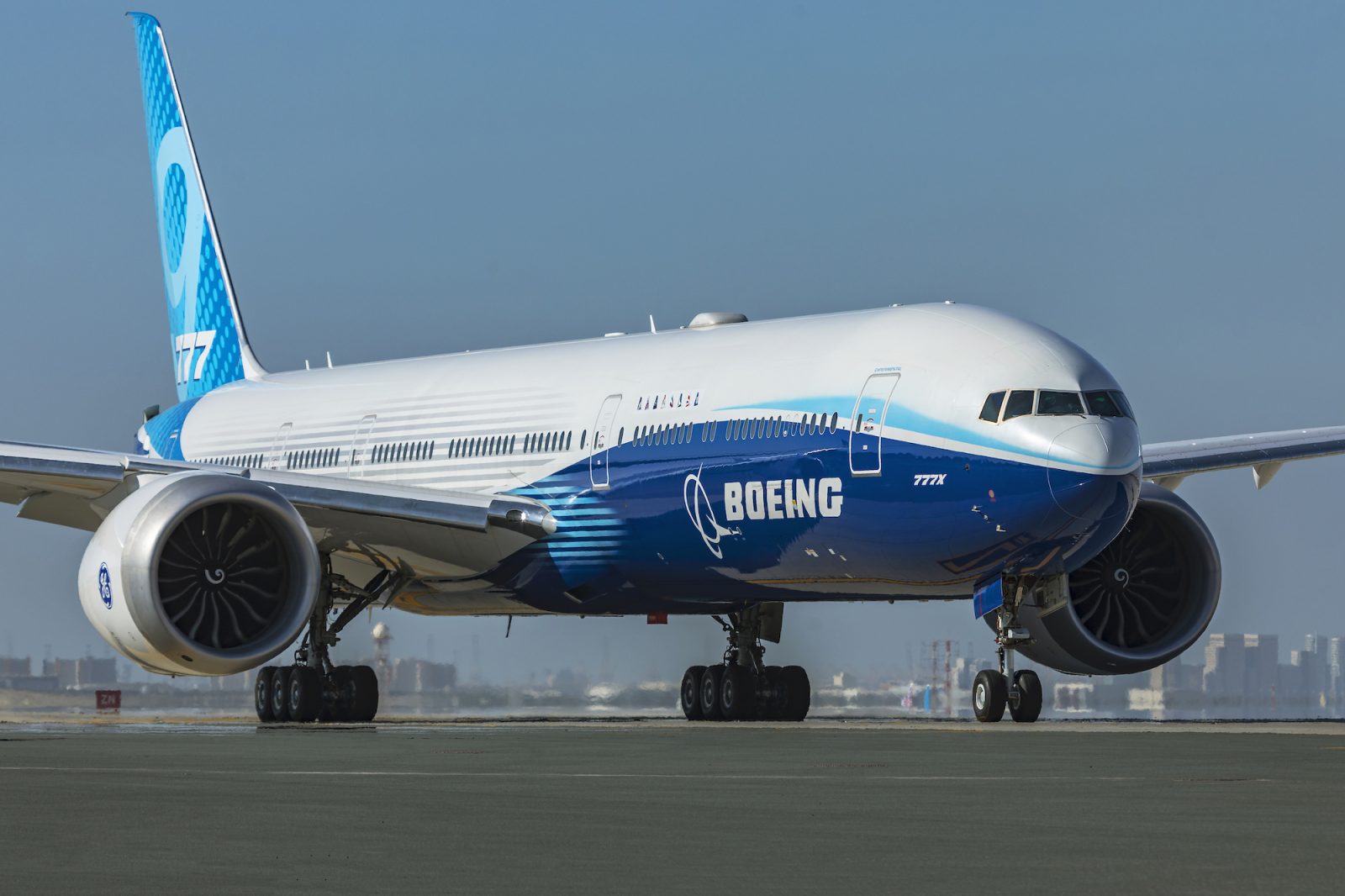
A Boeing 777X at the Dubai Airshow. (Photo: AirlineGeeks | William Derrickson)

It is no surprise that 2021 was a bad year for aviation globally, however, for many players, a timid recovery began to be seen. In the case of Boeing, such recovery became visible in the last quarter but did not prevent a loss of $4.3 billion, pushed mainly by the production problems of its airplanes.

In the case of the 787 Dreamliner, the accumulated costs in this period reached $5.5 billion. The KC-46 Pegasus, of course, recorded a provision for production problems of $402 million.

For the first time in years, the good news comes from the 737 MAX: the production rate is already at 26 aircraft per month and will reach 31 before the end of the year. Chinese recertification, which is getting closer, will drive the rapid reduction of the backlog. Boeing’s cash flow synthesized the positive impact of resuming deliveries and generated the first positive quarter since the beginning of 2019.

Charges for the 787 Dreamliner include a $3.5 billion write-down to cover compensation to airlines for delivery delays and $2 billion in manufacturing costs stemming from the slow production pace and rework of completed aircraft.

In an internal memo sent to employees Wednesday morning, Calhoun said he sees the 787’s financial hit as “a long-term investment.”

In the meantime, the KC-46 continues to generate losses. The remote viewing system (RVS) continues to generate delays and write-offs, and under the terms of the firm-fixed-price contract signed with the USAF, until the force approves the aircraft and all its components, Boeing must pay the cost overruns out of its funds.

The bill so far comes to $5 billion, and while the RVS is expected to be completed this year after the redesign, the damage is done and the KC-46 as a product is unlikely to meet the company’s economic expectations.

Boeing once again decides to give up on the year and charge the write-offs of its troubled programs – those of the MAX and 777X it had charged in 2020 – in the hope that 2022 will finally, and after a good number of years, be a profitable period.

This article was written by Pablo Díaz for Aviacionline.

Parker Davis

Parker joined AirlineGeeks as a writer and photographer in 2016, combining his longtime love for aviation with a newfound passion for journalism. Since then, he’s worked as a Senior Writer before becoming Editor-in-Chief of the site in 2020. Originally from Dallas and an American frequent flyer, he left behind the city’s rich aviation history to attend college in North Carolina, where he’s studying economics.

American Airlines, British Airways Redevelop JFK’s Terminal 8

JFK Airport Terminal 8 entrance.American Airlines JFK Terminal 8 check-in. (Photo: AirlineGeeks | Tom Pallini)

On Tuesday, American Airlines announced further plans to significantly enhance Terminal 8 at New York’s John F. Kennedy International Airport. The carrier — partnered with British Airways on the project — will redevelop and expand to the existing terminal, not only bringing a world-class experience to its customers but will build upon the Atlantic Joint Business partners relationship.

The project is made possible through a $400 million investment and has an end goal of creating a more seamless and efficient experience for its customers. The upgrade will help the Port Authority of New York and New Jersey move closer to its vision of transforming JFK into a leading global airport. 

The intensive redevelopment project had initially begun early 2020 when the two airlines broke ground on five new widebody gates, four new widebody hardstand parking positions, an enhanced baggage handling system, new customer amenities and expanded premium guest offerings — including approximately 130,000 square feet of new and renovated terminal space.

The two airlines plan to co-operate out of Terminal 8 in December of 2022. Currently, British Airways operates out of JFK’s Terminal 7 but will relocate operations.

“American is eager to welcome British Airways to their new home at JFK,” American’s Chief Customer Officer Alison Taylor said in a press release. “Their move to Terminal 8 further deepens our longstanding partnership and makes it easier than ever for customers traveling between New York and London or onward across our global networks.”

The oneworld alliance partners plan to create a simpler travel experience through the redevelopment.  Currently, American Airlines and British Airways offer the most flights for those passengers making the trip across the pond between New York and London.

“New York holds a special place in our heart as one of our most well-loved and important destinations,” British Airways’ Director of Brand and Customer Experience, Tom Stevens, said. “Our move to the redeveloped and expanded Terminal 8 will bring a range of benefits for our customers, including a better transfer experience, enabling them to travel to more than 30 destinations across the U.S., Caribbean and Latin America with American Airlines. British Airways will remain in Terminal 7 until Dec. 1, 2022, and we have continued to invest in the experience for our customers, including our check-in area, concessions and lounges.”

Elevated Airport Experience

Customers arriving at Terminal 8 can expect to be greeted by the co-branded premium check-in area. 

Once past security, select guests have access to three custom lounges based on the cabin of travel and loyalty program status. The lounges will combine the best of both brands, creating a very unique experience. Each of the three lounges incorporates unique options — allowing all guests to experience 

The most exclusive lounge for top-tier customers will have an all-new champagne bar, fireside lounge and a la carte dining room, which reimagines American’s Flagship First Dining into a fully immersive experience.

Across the way will be another premium lounge including airside views, a wine bar, cocktail lounge, library and buffet. The third lounge will be a contiguous lounge for eligible business class customers repurposed from American’s Flagship Lounge and Concourse B Admirals Club.

Chase Hagl

Chase Hagl grew up in Twin Falls, Idaho. His love and passion for Aviation landed him in Orem, Utah where he obtained a B.S. in Aviation Management with a minor in Business Management from Utah Valley University. Chase currently works as a flight attendant in Charleston, SC and is also the primary Inflight ASAP ERC representative for startup airline, Breeze Airways. His experience in the aviation industry spans back four years, working in areas including agriculture application, customer service, maintenance, and flight ops. In his free time, Chase enjoys road biking, astronomy, and flying.

Lufthansa, MSC Group Interested In Majority Stake of ITA Airways

ITA Airways
An ITA Airways Airbus A320 with the new livery at Leonardo Da Vinci International Airport. (Photo: ITA Airways)

After years of being eschewed like a pariah by all major players in the commercial aviation arena, ITA Airways s.p.a — the airline that was born from the ashes of chronically loss-making Alitalia — has received an expression of interest for ownership of a majority stake by two large companies.

“The Company announces that today it has received an Expression of Interest from the MSC Group and Lufthansa to acquire the majority of ITA Airways,” ITA Airways said in a statement. “The MSC Group has agreed with Lufthansa its participation in the partnership on terms to be defined during the Due Diligence”.

Mediterranean Shipping Company (MSC) Group is a Swiss-Italian international shipping line operating both passenger and cargo services. Its cargo division includes the shipping company MSC operating 570 container vessels, while the passenger division encompasses MSC Cruises and ferry companies GNV and SNAV providing services across the Mediterranean. It employs over 100,000 people.

The Lufthansa Group would be the industrial partner providing the airline-specific know-how to make ITA Airways a significant player in the increasingly crowded European skies.

MSC Group is said to be interested in establishing synergies with ITA Airways in the cargo area and “both MSC and Lufthansa have expressed the wish that the Italian Government maintains a minority stake in the Company. Furthermore, the MSC Group and Lufthansa have requested 90 days of exclusivity to work on this Expression of Interest”, continues the note.

ITA Airways is currently half the size of what the old Alitalia used to be, and its presence is currently focused on domestic and short-haul services from Rome Fiumicino and Milan Linate, with long-haul services being limited to a handful of routes mainly to North America — due to a reduced long-haul fleet.

Now that the old debts have been offloaded to Italian taxpayers through the Alitalia bankruptcy procedure, staff levels have been significantly reduced with a new more competitive contract in place for all remaining employees. As a result, the airline suddenly became an interesting asset, after several rounds of restructuring and bankruptcy failed to attract viable suitors, beginning with the extraordinary administration that started in May 2017.

Change of Airline Alliance

Should the acquisition deal go ahead, ITA Airways would most likely need to exit the SkyTeam Alliance it has recently joined, although just on a temporary one-year basis, and enter the Star Alliance in order to align with Lufthansa.

According to the Italian newspaper Il Correre della Sera, there should be no hurdles to the acquisition imposed by the European Commission, since Lufthansa has already repaid 75% of the 6 billion Euros ($6.81 billion) loan it had received from the Government as a subsidy to help the company through the COVID-19 pandemic. “That loan was approved subject to specific conditions, one of them being a ban on acquisitions,” said a spokesperson from the European Union. “Lufthansa remains subordinate to some of the other conditions imposed, but since most of the loan has been repaid the ban on acquisitions can be removed”.

Lufthansa already has a very strong presence in Northern Italy where it funnels passengers through its Frankfurt, Germany and Munich hubs for its long-haul flights, and it also operates Air Dolomiti — the carrier’s 100%-owned subsidiary — who focuses on regional flights from its base in Verona, Italy but also using its Embraer 190s to perform feeder flights into Munich.

The Lufthansa Group also owns and operates SWISS and Brussels Airlines which both have a significant presence in Italy.

It is unlikely that there are going to be issues with traffic rights, given that MSC is an Italian corporation, despite its headquarters in Geneva, Switzerland, and Lufthansa is an E.U. carrier. There may be some concessions that ITA Airways and Lufthansa will have to make in terms of slots at Rome’s Fiumicino Airport, Frankfurt, Germany’s Airport and possibly the heavily-constrained Milan’s Linate Airport in order to convince the European Commission that the merger is not going to stifle competition on some routes.

Although other carriers have repeatedly passed at the opportunity of buying any kind of stake in the Italian flag carrier,  it will be interesting to see how Air France-KLM and Delta — the main carriers in the SkyTeam alliance — will react to the loss of ITA Airways as a member but most importantly a significant increase of Lufthansa’s footprint in the Italian market.

Vanni Gibertini

Vanni fell in love with commercial aviation during his undergraduate studies in Statistics at the University of Bologna, when he prepared his thesis on the effects of deregulation on the U.S. and European aviation markets. Then he pursued his passion further by obtaining a Master’s Degree in Air Transport Management at Cranfield University in the U.K. followed by holding several management positions at various start-up carriers in Europe (Jet2, SkyEurope, Silverjet). After moving to Canada, he was Business Development Manager for IATA for nine years before turning to his other passion: sports writing.
Sign-up for newsletters & special offers!

Get the latest stories & special offers delivered directly to your inbox

SUBSCRIBE

Uh-oh! It looks like you're using an ad blocker.

Our website relies on ads to provide free content and sustain our operations. By turning off your ad blocker, you help support us and ensure we can continue offering valuable content without any cost to you.

We truly appreciate your understanding and support. Thank you for considering disabling your ad blocker for this website