









Stories

Opinion: The U.S. Should Reconsider How it Handles Unruly Passenger Incidents

American's Boeing 737-800 aircraft at Washington Reagan National Airport (Photo: AirlineGeeks | Ryan Ewing)

As a country, the U.S. needs to seriously re-evaluate how it deals with the rise in unruly passenger cases onboard flights nationwide. An astonishing 5,981 cases of unruly behavior onboard commercial aircraft were reported to the Federal Aviation Administration (FAA) in 2021. Despite this high number, 350 enforcement actions were issued by the FAA’s investigations office.

Only 6% of these unruly passenger cases were enforced by the aviation regulator in 2021. This is a classic example of agency bureaucracy getting in the way of meaningful action and the sharp rise in unruly behavior onboard commercial airliners is teetering on the edge of a broader aviation safety issue.

A Recent Incident with Little Accountability

On Tuesday, an American Airlines flight from San Pedro Sula, Honduras to Miami was scheduled to leave on time until a passenger decided to rush into the flight deck at the gate, damaging several critical flight controls. The male passenger then proceeded to try and exit through one of the cockpit windows before the pilots stopped him.

An unconfirmed image following the incident showed significant damage to the throttle quadrant, making the Boeing 737-800 no longer operational. As a result of this brief incident, the airline ferried an empty aircraft to San Pedro Sula to rescue stranded passengers. According to one airline source, the damage will require significant time and cost to repair, not to mention the original cost of ferrying an empty airplane to South America.

But what happened to this individual you may ask? Next to nothing. Per an Associated Press report, the man was released by the Honduran authorities, who said the airline did not press charges.


“He was freed because the airline did not press charges,” said Security Secretary spokesman Edgardo Barahona to the AP. “The aggression toward the pilot and the crew of the airline was not serious.”

On the contrary, an airline spokesman confirmed to the AP that they will press charges, though it is unclear how it’ll go about that given the complexity of international jurisdiction and Honduras’ civil law legal system.

To me, this incident points to a clear safety and security issue. What if the individual were to have done the same thing inflight? Attempted flight deck breaches have occurred in the past year among U.S. carriers.

In this case, it’s more than likely the man will face any legal action or charges. At most, he’ll be blacklisted by the airline. However, this lack of prosecution in these types of cases is all too common.

Why Now?

In the past and prior to the COVID-19 pandemic, unruly passenger incidents that made their way through the news cycle were few and far between. Now, they’re overtaking it. But why?

The days of the TSA PreCheck lines being longer than general screening are long gone as business travel continues to dip. Selectively lower fares and cabin fever has driven people to fly who otherwise wouldn’t. Leisure travelers make up the majority of passengers these days.

Generally speaking, these types of passengers typically do not travel often, and the added stress of being told what to do constantly only fan the flames. And then, throw mask requirements in the mix.

FAA data indicates that 4,290 of last year’s reported incidents were mask-related, over 70%. The polarization regarding mask-wearing and the different requirements per state certainly isn’t helping the case.

Who Regulates What?

There are tons of regulatory agencies and law enforcement agencies involved in U.S. aviation. From the TSA, FAA, FBI, and local law enforcement to name a few, the enforcement of unruly passenger incidents has turned into a game of regulatory hot potato.

Agencies like the FAA and Transportation Security Administration (TSA) are specifically enabled by Congress to enforce certain incidents. Their scope can often be wide, but agency inspectors are often careful about stepping out of bounds. And – in my opinion at least – checks and balances on these agencies is a very good thing.

Nevertheless, talking about the two primary U.S. commercial aviation regulators – the TSA and FAA – it can get murky involving bad behavior onboard flights. The TSA is authorized under 49 USC 114 and the FAA under 49 USC 106. Neither of these agencies has direct criminal enforcement authorization and can usually only assess enforcement actions, which may or may not come with a civil penalty.

The TSA and FAA often default to their fellow government agencies to pursue criminal enforcement. If their respective chief counsel or inspector general’s office deems it appropriate, cases will be referred over to the DOJ, or the FBI (which falls under the DOJ), for criminal charges. In the case of disruptive passengers at least, only 37 cases were referred by the FAA in 2021, according to CNN.

The TSA will more than likely refer cases to local airport law enforcement, which is what happens when an individual is found to possess a firearm at a screening checkpoint. Indeed, the individual might get a slap on the risk depending on state laws and a so-called Notice of Violation (NOV) from TSA headquarters in the mail, but that’s about it. Transportation Security Officers (TSO) are not empowered to arrest or charge an individual.

That is why airport police are seen in videos removing disruptive passengers at the air carrier’s request. Often, the offender will be charged, booked, but released later. This all boils down to state and even municipal laws.

Aviation is well-protected under U.S. Code (i.e. 49 USC 46504 – Interference with flight crew members and attendants). Statutes such as this one allow for criminal charges, but pursuing those can often be tricky with too many agencies involved. Nonetheless, when these cases are actively pursued, they can yield full accountability.

For example, in December 2021, Vyvianna M. Quinonez, a Sacramento, Calif. resident, pled guilty after assaulting a Southwest Airlines flight attendant, sending her to the hospital with three chipped teeth and several other injuries. This high-profile will go to sentencing in federal court in March.

So, What’s The Solution?

The solution to this surge of onboard unruliness ultimately falls on the private sector. Regulators are tripping over their own red tape and it’s time for the industry as a whole to take aggressive action. This should start with a unified blacklisting database among operators to bar anyone who doesn’t comply with crew instructions or acts out of line.

In addition, airline lobbying groups should push harder for increased criminal penalties against offenders. Indeed, even with measures in place, passengers will still act out, but basic actions and a solid public-private partnership will significantly reduce onboard incidents.

The essence of a foundational aviation safety culture centers around the totality of the operation. This includes passengers onboard an aircraft, especially when the way in which they behave harms the flight’s safety profile. Aviation regulators and operators need to take a proactive, rather than a reactive approach to this ongoing issue before an unruly passenger event takes a more serious turn.


Ryan Ewing

Ryan founded AirlineGeeks.com in February 2013 and has spent more than a decade covering the airline business. His work has been featured by CNN, WJLA, CNET, and Business Insider. His aviation experience spans airport operations, Part 135 regulatory compliance, and airline crew workforce planning, along with time behind the yoke of a Cessna 172 and interviews with airline executives. Ryan now serves as Group President of Firecrown Media’s Aviation Group. He holds a B.S. in Air Transportation Management and an MBA from Arizona State University and teaches Airline Management at Embry-Riddle Aeronautical University.

SkyWest Requests More Route Terminations

United CRJ-200
A United Express CRJ-200 exiting the runway in Ogdensburg, N.Y. (Photo: AirlineGeeks | Joey Gerardi)

United — through its regional carrier United Express — ended service to 11 small cities around the country, not more than two weeks ago. Unfortunately, in the next 90-days, they will be adding two more destinations to that list both of which are located in northern New York State. St. George, Utah-based SkyWest Airlines operates many Essential Air Service (EAS) government-funded flights to communities across the country, but even that subsidy wasn’t enough to save the United’s service to the communities of Plattsburgh, N.Y. and Ogdensburg, N.Y.

Both communities receive twice-daily flights onboard SkyWest-operated Bombardier CRJ-200s to Washington Dulles. SkyWest sent a document to the Department of Transportation (DOT) with a letter of intent to stop services to each community and pull out of the active, ongoing EAS contract.

The current term EAS contract in Plattsburgh is set to expire in roughly six months, on June 30, whereas the EAS contract in Ogdensburg still has over two years to go with that one expiring on March 31, 2024. The DOT could theoretically deny the intent to leave. It isn’t a 100 percent guarantee, and the agency could tell the current carrier to stay until the contract expires. However, as long as another carrier steps up to fill the void with their own contract, then there is a good chance the airline will not be serving either when summer rolls around.

The terminal building in Ogdensburg, N.Y. (Photo: AirlineGeeks | Joey Gerardi)

North Country Public Radio cites the loss of the airline, as a response to the closed Canadian border causing a loss of 2/3 of the passengers since the pandemic started. Allegiant Air — who served Ogdensburg and catered primarily to Canadian traffic — ceased services in 2020 and has made no plans to return to the airport.  According to NNY360, a news station in Northern New York, SkyWest was “navigating staffing shortages generated by a surge in Covid-19”, and that was the primary reason for leaving the Ogdensburg, N.Y.

The terminal in Plattsburgh, N.Y. (Photo: AirlineGeeks | Joey Gerardi)

On the other side of the state in Plattsburgh, N.Y., the Press-Republican has a quote from the chairman of the county’s airport committee, Bobby Hall, who said, “They didn’t want to leave because they were doing very well here, but they just don’t have the staff, so they are pulling out of the Northeast”. Spirit Airlines pulled out of Plattsburgh, N.Y. in the early months of the pandemic, but Allegiant does offer semi-daily flights to destinations in Florida.

As the bidding process hasn’t begun yet for either city, there is no telling what airlines will bid for it or who might win. Flights and schedules are subject to change.


Joey Gerardi

Joey has always been interested in planes for as long as he can remember. He grew up in Central New York during the early 2000s when US Airways Express turboprops ruled the skies. Being from a non-aviation family made it harder for him to be around planes and would only spend about three hours a month at the airport. He was so excited when he could drive by himself, the first thing he did with his driver's license was get ice cream and go plane spotting for the entire day. He graduated from Western Michigan University in 2022 with a B.S. in Aviation Management & Operations and a Minor in Business, and currently works for a major airline in his hometown.

Photos: First Delta A321neo Out of Paint Shop in Hamburg

Delta's A321neo at Airbus' Hamburg facility (Photo: Tobias Gudat)

Delta’s first A321neo made its debut on Friday after exiting Airbus’ manufacturing facility in Hamburg, Germany. The Atlanta-based airline has 155 total A321neo aircraft on order after recently adding 30 more to its book in August 2021.

The new aircraft’s rollout for the U.S. airline was captured by local planespotters.

According to the carrier, delivery of the new jet is expected in the first half of 2022 with deliveries continuing to 2027. The A321neo fleet is expected to initially operate out of Delta’s Boston focus city, largely replacing the aging 757.

Delta’s first A321neo in Hamburg (Photo: Tobias Gudat)

The airline will use Pratt & Whitney PW1100G powerplants, which, according to Delta, achieve 12% greater fuel efficiency on a per-seat basis versus its A321ceo counterpart.

These A321neos will complement Delta’s existing fleet of 127 A321ceo aircraft of which Delta received Airbus’ last delivery for the type in December 2021, per planespotters.net data.

Per the airline, the A321neo will seat 194 passengers, including 20 in first class, 42 in Delta Comfort+, and 132 in economy.

Delta will join Alaska Airlines, American Airlines, Hawaiian Airlines and jetBlue in operating the A321neo across the United States.

Ryan Ewing

Ryan founded AirlineGeeks.com in February 2013 and has spent more than a decade covering the airline business. His work has been featured by CNN, WJLA, CNET, and Business Insider. His aviation experience spans airport operations, Part 135 regulatory compliance, and airline crew workforce planning, along with time behind the yoke of a Cessna 172 and interviews with airline executives. Ryan now serves as Group President of Firecrown Media’s Aviation Group. He holds a B.S. in Air Transportation Management and an MBA from Arizona State University and teaches Airline Management at Embry-Riddle Aeronautical University.

UK Startup Airlines Hans Airways Signs LOI For Its First A330-200

A Hans Airways A330-200 (Photo: Hans Airways)

Hans Airways, a UK-based airline startup, has sent out a letter of intent (LOI) for its first aircraft, bringing it one step closer to its first commercial flight. The airline stated today that it has signed a deal for an Airbus A330-200 and has applied for its Air Operators Certificate with the UK Civil Aviation Authority (CAA). It plans to start offering services as early as this summer.

The airline expects to receive an A330-200 later this year, with high hopes of starting operations by the end of the summer.

The A330-200 in question is a 13.5-year-old A330-200 that has been in service with Air Europa since its inception. It was delivered new to Air Europa in September 2008 as EC-KTG, and it is being leased from Carlyle Aviation Partners. The plane left Spain at the end of December, according to RadarBox.com, and is presently in Abu Dhabi for some maintenance.

Hans Airways shared that the A330 will be re-registered G-KJAS – a nod to one of the airline’s principal early investors, Kirpal Singh Jass. It will retain its current Air Europa cabin layout, which features 275 economy and 24 premium economy seats.

“We are delighted to have achieved this very important milestone in our two-year journey,” Hans Airways CEO Satnam Saini said in a statement. “Our scheduled operations center on the Airbus A330, a popular and spacious long-haul widebody, excellent for cargo too, and we are grateful to everyone who has helped us to ratify this agreement at the start of the new year.”

The airline submitted for its air operator certificate (AOC) in March 2020 and expects to receive clearance within the next several weeks. It intends to commence services before the end of the summer, depending on the timeframes for this and the status with worldwide travel restrictions.

Moving Ahead

Hans Airways started looking for crew in August of last year. The airline said the first flight crew, which includes four pilots and cabin staff, began training with its training partner IAGO Flight Training on Jan. 3.

The airline is trying to establish a base in Birmingham, U.K. in order to connect the U.K. to secondary locations in India. Its website features Amritsar, which may be a desirable destination for a direct Birmingham trip, despite the fact that it hasn’t specified any Indian towns precisely.

While this market is likely to be price-sensitive, Hans Airways is not pursuing these routes as a low-cost carrier. It plans to run a hybrid model, combining exceptional value for money with some of the more in-demand extras like inflight entertainment and food, according to the company.

The airline has assembled a board of directors with long pasts and much success in the airline industry. Dr. Barry Humphreys, a non-executive director, is a former regulator with the UK CAA and a former director of Virgin Atlantic. Dr. Peter Malanik, a fellow non-executive director, is the former CEO of Austrian Airlines. Ruchir Verma, the Chairman, has worked on projects with Microsoft, Zurich Insurance, and other corporations. Similarly, the leadership team includes officers who had worked for the likes of Easyjet, BA CityFlyer, TUI, Virgin and more.

While the jury is still out on whether the U.K.-to-India market needs another player, Hans Airways believes in its strategy. It has already planned a frequent flyer program and is keenly eyeing the start of operations later in the year.

Putu Deny Wijaya

Putu Deny Wijaya was always an aviation enthusiast by heart, growing up in Indonesia where air transport is very vital. His first love is The Queen of The Skies, serving the trunk routes between Jakarta and Denpasar. He brought along this passion with him throughout college by conducting his bachelor study abroad in the Netherlands for the purpose of experiencing a nonstop 14-hour long-haul flight. For Putu the sky's the limit when talking about aviation. He hopes that he would be able to combine his passion for aviation and knowledge of finance at the same time.

Peruvian Airports To Receive Updates In Years Ahead

Inside Lima's airport terminal. (Photo: VasenkaPhotography - https://www.flickr.com/photos/vasenka/8722356428/, CC BY 2.0, https://commons.wikimedia.org/w/index.php?curid=26698429)

The Peruvian aviation industry ended 2021 and started 2022 with some key news regarding airport infrastructure: the Peruvian government has already started the procedures and other measures for the airport expansion at Cajamarca, Iquitos and Pucallpa.

As the Peruvian government continues to advance the lands expropriation plan that will be used for airport expansion, there are other plans to modernize and improve the airports’ facilities.

Aeropuertos del Perú (AdP) —the concessionaire in charge of the design and improvement in the infrastructure and quality of the service, maintenance, operation, and exploitation of the airports — announced new projects for airports located in Anta, Cajamarca, Chachapoyas, Chiclayo, Iquitos, Pisco, Piura, Pucallpa, Talara, Tarapoto, Trujillo, and Tumbes.

On Jan. 7, AdP presented to the Ministry of Transport and Communications (MTC) and the Supervisory Agency for Investment in Public Transport Infrastructure (OSITRAN) the technical file for the optimization of the electrical system and the sanitary block of nine airports of its network in the country.

The concessionaire company indicated that the works would require an investment of approximately $8.8 million and will improve the terminal’s electric installations’ safety levels.

Through the file, the concessionaire seeks to ensure the airports’ operations continuity.

With this file, it will seek to adapt the security levels of the airports’ electrical, guaranteeing compliance of the electrical system with Peruvian laws, as well as carrying out the total independence of AdP’s electrical systems from Corporación Peruana de Aeropuertos y Aviación Comercial S.A. (CORPAC), as indicated in the air terminals’ Concession Contracts.

The project also aims to ensure adequate compliance with the comprehensive solid waste management plan, optimizing the infrastructure of the nine airports under the AdP concession, in accordance with the solid waste management law, minimizing and controlling health and occupational risks, as well as the impact on the environment.

With these projects, AdP seeks to modernize the passenger terminals it manages, thus granting a better experience to the Peruvian passenger.

It is important to note that these improvements go with air tickets’ sell increase in the Peruvian market, as well as the entry of new competitors.

The airlines that operate in the country: LATAM Airlines, Viva Air Perú, Sky Airline, JetSmart, Star Perú, ATSA, are in constant competition to offer to its passengers more modern and efficient aircraft, as well as more destinations and itineraries.

In this sense, airports must be modernized to be consistent with the service offered and the competition between airlines.

With this airports’ facilities renewal, Peruvian aviation takes a great step towards improvement in every sense, and thus will seek to enter to compete with other aviation markets in the region.

Juan Pedro Sanchez Zamudio

The three things Juan Pedro loves most about aviation are aircraft, airports, and traveling thousands of miles in just a few hours. What he enjoys the most about aviation is that it is easier and cheaper to travel around the world and this gives you the opportunity to visit places you thought were too far away. He has traveled to different destinations in North, Central, South America and Asia. Born, raised and still living in Perú, Juan is a lawyer, soccer lover, foodie, passionate traveler, dog lover, millennial and curious by nature.

Omicron Hits Aeromexico, Cancels More Than 260 Flights in Four Days

Aeromexico Boeing 787
An Aeromexico Boeing 787 Dreamliner flares for landing. (Photo: AirlineGeeks | William Derrickson)

Aeromexico canceled more than 260 flights from Jan. 6-10 due to a highly contagious outbreak of Covid-19 that has spread amongst its pilots and flight attendants. According to the Mexican government’s Consumer Protection Office (PROFECO) who provided the statistic, a high number of crew members on the sick list has caused staff shortages for the Skyteam carrier, resulting in subsequent delays and cancellations.

A majority of the cancellations originated at Benito Juárez International Airport in Mexico City, where Aeromexico is based. Hundreds of affected travelers this past weekend were not able to take their flights due to the cancellations, and the airline set up temporary modules inside Terminal 2 to provide information and accommodate affected travelers.

According to the union representing Aeromexico’s flight attendants (ASSA), at least 140 Aeromexico flight attendants were infected with Covid-19 and taken off flights. And according to the union representing Aeromexico pilots (ASPA), more than 83 pilots, including 14 from Aeromexico Connect, have developed symptoms and are also in quarantine.

According to a source close to the airline, many able pilots and flight attendants are now being flown in mass to the airline’s hub in Mexico City from other Aeromexico crew bases such as Guadalajara to cover the affected flights.

Aeromexico acknowledged the impact of the Covid-19 and flight delays due to this situation and is still bracing its customers for more cancellations as case numbers continue to increase among their staff. The airline has added a flexible travel waiver for flights booked on or after January 11 which allows travelers to change the date of their flight at no extra cost.

“The new wave of infections by Covid-19 has impacted world aviation causing effects on some flights. For Aeromexico, the safety of our customers and collaborators is and will always be the main priority,” said Aeromexico during a press conference in Mexico City.

“We focus efforts on minimizing the impact and we work to serve in the best possible way customers who have had modifications in their travel plans, to take them to their destination with the greatest safety and in the shortest possible time.”

Aeromexico added that a flight delay or cancellation is not a decision they take lightly and is always taken as the last resort. According to the airline, 95% of its 1,800 union pilots have a complete vaccination scheme against Covid-19.

Mexico’s VivaAerobus and Volaris have also seen an uptick in cases amongst its crew members and staff but very few flights have been delayed or canceled thus far.

Albert Kuan

Most people hate long flights or overnight layovers, but Albert loves them. The airport and flying parts of traveling are the biggest highlights of any trip for him – as this avgeek always gets a thrill from sampling different airline cabin products and checking out regional developments happening at local U.S. airports. He’s flown on almost every major carrier in the U.S. and Asia Pacific, and he hopes to try out the new A350s soon. Albert recently completed his undergraduate studies in Business Accounting at USC in Los Angeles and he is currently recruiting for a corporate analyst position at one of the U.S. legacy carriers. During his college years, he interned at LAX for Los Angeles World Airports working behind-the-scenes (and on the ramp) in public relations and accounting. Outside of writing for AirlineGeeks, he enjoys trekking the Hollywood hills, visiting new hotspots throughout SoCal, and doing the occasional weekender on Spirit Airlines.

Austin Welcomes New Airlines, Prepares for Record-Breaking Capacity

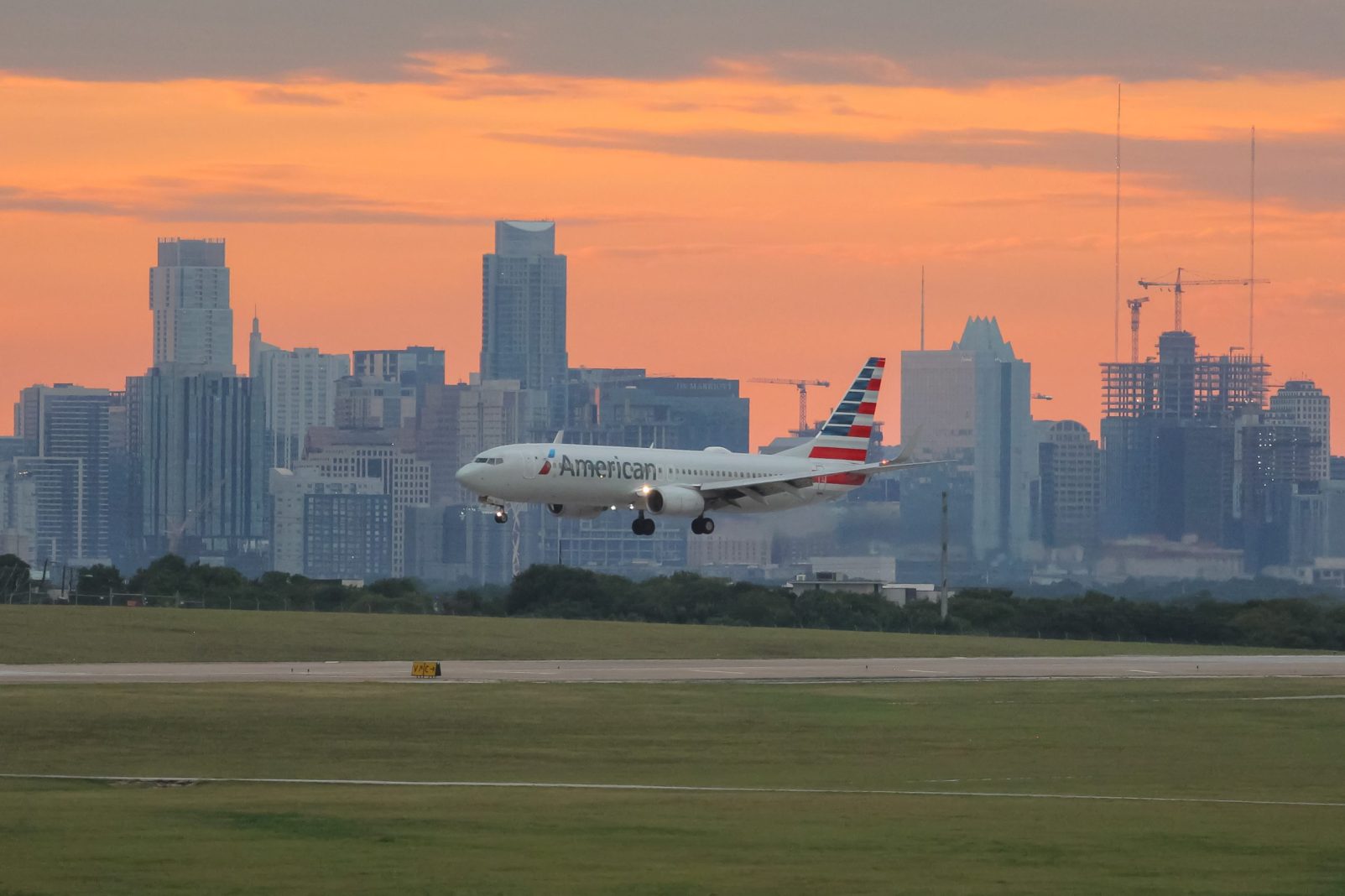
An American Airlines jet landing on runway 18R with the Austin skyline in the background. (Photo: AirlineGeeks | Mateen Kontoravdis)

Austin landed another high-profile route this week when Virgin Atlantic announced its plans to connect the Texas capital with London Heathrow. The new year-round service will commence on May 25 and operate four times weekly. This marks the first new U.S. route for Virgin Atlantic since 2015. The airline currently serves 10 U.S. cities from its Heathrow hub.

Virgin Atlantic will deploy its Boeing 787-9 on the new service. The aircraft features 31 Upper Class seats in the business cabin, 35 premium economy seats and 192 economy seats. The new flight will operate on Mondays, Wednesdays, Fridays and Sundays.

Juha Jarvinen, Chief Commercial Officer at Virgin Atlantic, said, “The U.S. has been our heartland for more than 37 years since our first flight to New York City in 1984. Since U.S. borders opened to U.K. travellers on Nov. 8, it feels extra special to be launching new flying, especially to the fantastic city of Austin.”

The airline’s new service will serve as the carrier’s first foray into the Texas market. In a state that is dominated by expansive Oneworld and Star Alliance networks in Dallas and Houston, Austin remains a battleground city.

As the city shapes into the ‘Silicon Hills,’ with companies such as Tesla, Oracle, and Apple establishing a significant footprint, various airlines have expanded their networks to accommodate Austin’s growth and demand for non-stop flights. While Virgin Atlantic is not a member of the SkyTeam Alliance, the airline participates in a joint venture with Delta Air Lines and Air France-KLM.

Passengers traveling from the U.K. to Austin onboard Virgin Atlantic will be able to connect to 10 additional U.S. cities on board Delta. Business class travelers will also have access to the recently opened Delta Sky Club in Austin.

Virgin Atlantic also notes that its 787-9 will offer 20 tons of cargo space on each flight. The airline says that, “This fast cargo service will offer new opportunities for companies looking to export and import goods such as high-tech products and e-commerce between prime markets in the U.K. and U.S.”

A Virgin Atlantic 787-9 departing London Heathrow. (Photo: AirlineGeeks | William Derrickson)

Saying Howdy with a Partner

Virgin Atlantic’s entry into Austin will come just two months after its joint venture partner KLM adds service to Amsterdam. The Dutch airline first announced flights to Austin in 2019 and expected to fly the inaugural flight during spring 2020. Following a nearly two-year delay due to the pandemic, KLM is set to commence Austin flights on March 28.

The airline will fly the new route on Mondays, Thursdays and Saturdays using a 294-seat Boeing 787-9. The aircraft features 30 business class seats, 48 economy plus seats and 216 economy seats. The flight is timed to offer expansive KLM connection opportunities in Amsterdam for passengers.

Austin will mark KLM’s third Texas destination. This route is also operated as part of the joint venture between Delta, Air France-KLM and Virgin Atlantic. The airline also flies to Dallas (DFW) and Houston (IAH) from its Amsterdam hub.

Familiar Competition, New Players

British Airways first offered nonstop flights between Austin and Heathrow in 2013 when it utilized its then-new Boeing 787-8 to connect a medium-size U.S. city with its U.K. hub. The airline was the exclusive option for nonstop flights to London until 2018.

Following the success of British Airways, Norwegian began offering seasonal service between Austin and London Gatwick in spring 2018. Despite the competition, both airlines found success. During the summer 2019 season, British Airways averaged an 88% load factor and Norwegian averaged 91% in Austin according to Cirium data.

Norwegian’s inaugural service to Austin in spring 2018. The airline closed its long-haul unit in 2020. (Photo: AirlineGeeks | Mateen Kontoravdis)

Virgin Atlantic will serve the same airport as British Airways and offer multiple amenities that Norwegian did not such as a business class product and the opportunity to redeem tickets and earn miles through the airline’s loyalty program or its joint venture partners.

Since Norwegian’s exit, a lot has changed in the aviation industry as a result of the pandemic. While historical traffic data shows that the Austin-London market can support two players, it remains to be seen what transatlantic demand will look like in 2022 and beyond.

Airport Reaches Record Transatlantic, Terminal Capacity

With the addition of two new airlines, passengers traveling between Austin and Europe will have access to a record number of seats. During the June 1 to Aug. 31 summer travel period, four airlines will offer over 70,000 direct transatlantic seats to Austin. This marks a 24% increase over summer 2019, the previous busiest year for transatlantic traffic.

During summer 2019, British Airways, Norwegian and Lufthansa collectively averaged an 85% load factor on their Austin flights according to Cirium data. Since the airport first saw transatlantic flights in 2013 with British Airways, Austin’s summer transatlantic capacity has grown 270%.

As we inch closer to summer 2022, British Airways will upgrade its Austin service to the 331-seat Airbus A350-1000 on Feb. 28. The airline will also transition from five weekly flights to daily service on April 24.

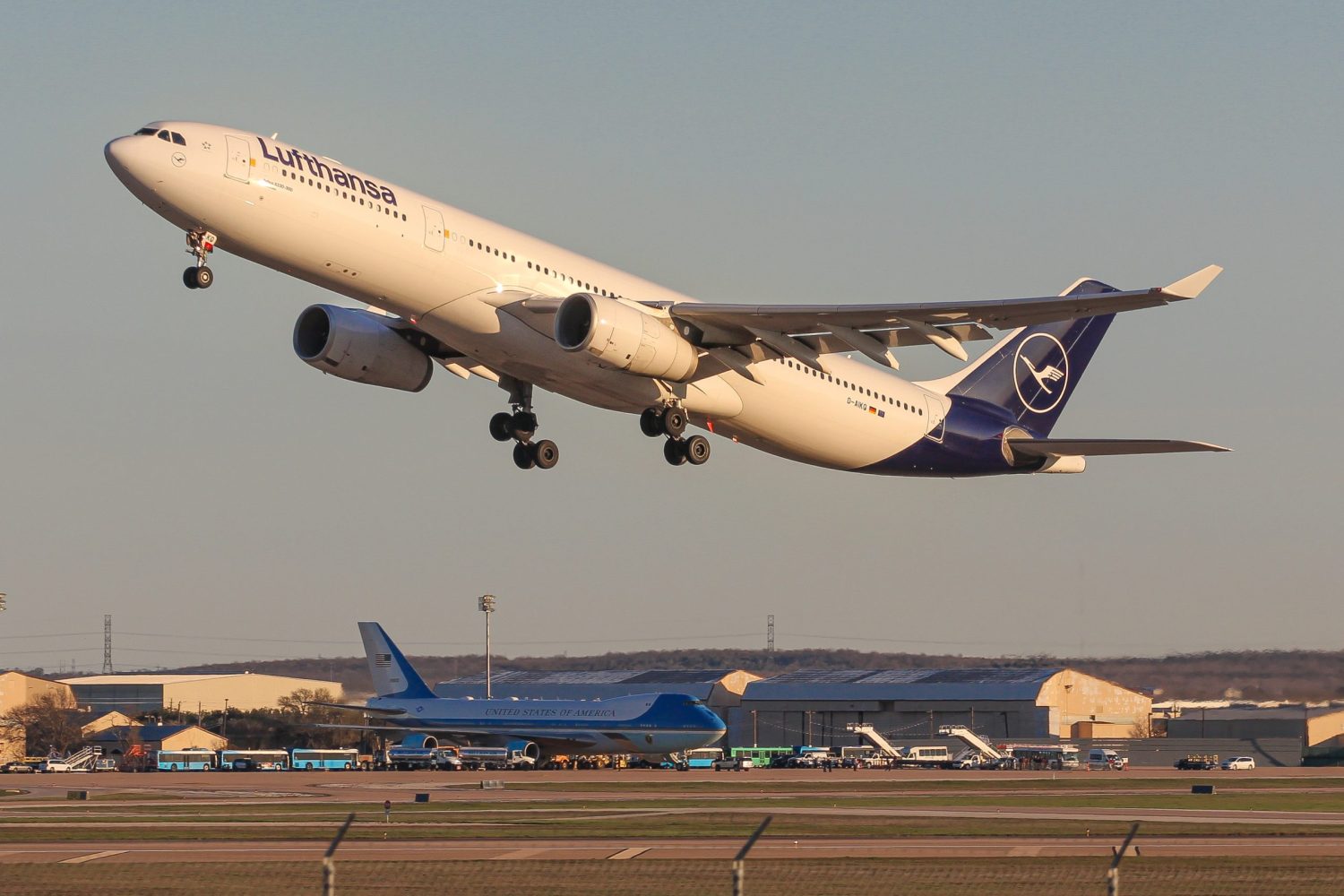
Lufthansa will also resume flights on March 2, ahead of SXSW. The airline will return to Austin with five weekly flights using a 255-seat Airbus A330-300.

Prior to shuttering its long-haul unit, Norwegian announced plans to serve Paris with seasonal flights during summer 2020. While this route was never launched, the airport’s international incentive program lists Amsterdam, Beijing, Dublin, Paris, Seoul, Shanghai and Tokyo as high-priority routes as of Jan. 2021.

With the increase in service, the airport will handle up to four back-to-back and simultaneous wide-body flights on Mondays. A media spokesperson for Austin-Bergstrom confirmed to AirlineGeeks that the airport can currently handle three simultaneous wide-body aircraft and that there are no short-term plans to increase this capacity.

Nonstop Growth All-Around

While new long-haul flights make big headlines, the airport has continued to welcome new domestic and international flights throughout the pandemic. Austin secured a non-stop flight to Hawaiian in late 2020 and welcomed 24 new American Airlines routes throughout 2021. Southwest, Austin’s long-time largest airline, recently announced seven new destinations to defend against competitors and JSX recently joined in the airport’s busiest domestic route.

This summer, ten airlines will offer up to 14-peak day international departures to destinations including Liberia, Puerto Vallarta, and Cozumel. Five airlines including American, JetBlue, Spirit, Sun Country and Southwest will offer flights to Cancun.

With both domestic and international route expansions, space inside the Barbara Jordan terminal is quickly running out. The airport regularly sees lengthy TSA lines during peak hours and airlines are constrained on gate space to allow for further schedule growth.

The airport’s 2040 master plan calls for a new midfield concourse, but the terminal won’t be open until at least 2025. In the short-term, the airport is focused on optimizing the infrastructure in the Barbara Jordan terminal.

A fourth TSA checkpoint with three lanes was opened in Dec. 2021. The airport is also currently optimizing Gate 13, the ground-level regional jet hold room, to allow for remote hardstand operations on the east end of the terminal. The three bus gates will come online later this year, but it’s unclear which airlines will utilize them. Ultimately, the airport plans to create up to six hardstand operations positions on the east apron.

For a more long-term solution, the airport is increasing its gate capacity by adding three new permanent gates on the west side of the Barbara Jordan terminal. No open date has been provided, but project construction is expected to last into 2023.

The airport has proposed two concepts for the west-side permanent gates. (Photo: City of Austin Aviation Department)

Austin-Bergstrom’s development team will also create an improved space for ticket counters and is working with airline partners to bring in new touch-less and self-service technologies for bag check and flight check-in, according to an airport spokesperson. Construction on a new baggage handling system will also begin this year, increasing the number of bags the airport can process.

The airport will host a virtual meeting on Jan. 29 to give community members an update about the master plan and a new fuel facility.

As the city continues to grow, the airport is expected to follow. As of now, eight new routes are expected to launch prior to the summer season.

AirlineGeeks’ Mateen Kontoravdis and Charlotte Seet contributed to this story.

Mateen Kontoravdis

Mateen has been interested in aviation from a very young age. He loves learning about different aspects of the industry. Mateen has been an editor for the website since early 2017. Most recently, Mateen is additionally the website’s overall strategist. In addition to writing for AirlineGeeks, Mateen is a sophomore at the University of Texas studying Human Dimensions of Organizations. You can also find him on Instagram (@Plane.Photos) where he enjoys sharing his aviation photography with thousands of people on a daily basis.

A Deep Dive Into the Aviastar Tu-204 Fire in Hangzhou

Aviastar Tupolev Tu-204 Burnt Down at Hangzhou Airport (Photo: Courtesy Weibo @三七V博)

On Jan. 8, an Aviastar Airline’s Tupolev Tu-204 freighter caught on fire on the ground of Huangzhou, China’s Xiaoshan Airport. Thanks to the swift action by the airport firefighting crews, no one was hurt or killed during the accident. The plane was burnt into three pieces, and the cause of the fire is still under investigation.

Aviastar Tupolev Tu-204 Burnt Down at Hangzhou Airport (Photo: Courtesy Weibo @三七V博)

The Fire Scene

The cargo flight 4B6534 was scheduled to take off at 4:40 a.m. local time, bonded for Novosibirsk, Russia with packages for online shoppers. The fire broke out just after the aircraft started to push back from parking bay 204. The fire started from inside of the aircraft and spread to the entire body. The airport rescue and firefighting (ARFF) crews were on the scene within two minutes after pilots reported the fire, and eight crew members are all safely rescued from the burning aircraft.

By the time of the accident, the aircraft was carrying 26 tons of aviation fuel, and the fuel was secured by the ARFF team. By successfully removing the aviation fuel from the aircraft, the ARFF team prevented the risk of a massive explosion caused by aviation fuel leakage.

Airport Operating Normally

The operations at the airport was not interrupted by this incident. No flights were delayed due to this accident.

As of this moment, the remains of the fatally damaged aircraft are still on the ramp. Considering the magnitude of damage, the aircraft will likely be dismantled at the stand, then transport to a facility for disposal. The aircraft with Cai Niao Logistics livery is still visually accessible by passengers traveling through the airport and spectators outside of the airport.

A Rare Freighter

The Tupolev Tu-204 is painted with Cai Niao Logistics Livery. Cai Niao Logistics is a subsidiary of Alibaba, and Alibaba is headquartered in Hangzhou, China. The company is actively expanding its business overseas, including to Russia.

Aviastar Tupolev Tu-204 at Hangzhou Airport (Photo: Courtesy Weibo @三七V博)

Only three Tupolev Tu-204 cargo jets are still in service today, all of which are operated by Aviastar. The carrier is a Moscow-based charter cargo airline operating three Tupolev Tu-204 and six Boeing 757-200PCFs. The airline encountered multiple safety incidents since 2010, and luckily, no fatal accidents occurred.

Previous Accidents

Similarly, on July 22, 2021, an Ethiopian Boeing 777-200F ET-ARH caught on fire while loading cargos at Shanghai’s Pudong International Airpot. No deaths or injuries were reported from the accident. However, the aircraft was fatally damaged, and it is still parked at Pudong Airport.

Before the Ethiopian accident, in 2019, an Air China Airbus A330-300 B-5958 bonded for Tokyo from Beijing caught on fire when boarding. The fire burnt through a hole at the top of the aircraft. As of this moment, the damaged aircraft is still parked in Air China’s hanger in Beijing, waiting to be scrapped.

The cause of both accidents was lithium battery-induced fire. After the fire on Ethiopian Freighter, Chinese airports tightened the controls for air freighting products with batteries.

Lei Yan

Lei is from Inner Mongolia, China, and now lives in Guangzhou. He grew up in an aviation family, where his passion began. During his time at Penn State University, he studied Industrial Engineering specializing in operations research, and he graduated with an honor’s thesis on airport gate assignment optimization. Now, he is a Purchasing Manager with Procter & Gamble. In his free time, he enjoys flying, reading, and wandering around the city.

Icelandair Adds New Destinations to Network for Summer 2022

An Icelandair Boeing 737 MAX 8. (Photo: Icelandair)

Icelandair is adding three more European destinations to its schedule this summer with the addition of Rome; Alicante, Spain and Nice, France to the network.

“As we enter the New Year, we are seeing the signs of recovery for the travel industry,” Bogi Nils Bogason, Icelandair’s president and chief executive officer, said in a statement. “We are excited to be able to add these three new destinations to our already extensive route network, further facilitating growth in both the inbound and outbound markets. With the additions of Rome, Nice and Alicante for the summer, Icelandair is committed to offering our European and North Atlantic customers more choice and convenient connectivity.”

Service to Alicante will commence on Feb. 10 with up to two flights per week in the peak season. Nice will have a seasonal service twice a week during the peak northern summer months of July and August. Flights to Rome Fiumicino Airport will operate on Wednesdays and Sundays beginning July 6, operating through Sept. 4 connecting with Icelandair’s same-day services to North America destinations.

The airline has also announced that it will reinstate flights from Reykjavik to Montreal for summer 2022. A thrice-weekly service will operate from Montreal’s Trudeau International airport from June 24 through Sept. 25 on Wednesdays, Fridays and Sundays. Vancouver will also be reinstated on the airline’s network.

This week’s announcement comes after the news that Raleigh-Durham International Airport would be the latest U.S. city to be serviced by the Icelandic carrier. The airport, located in the state of North Carolina, will be added to the network in May with four services per week to Reykjavik’s Keflavik airport operated by the 160-seat Boeing 737 MAX-8.

“This exciting announcement signals that demand for international travel is increasing as we head into the new year and a new phase of recovery,” Michael Landguth, president and chief executive of the Raleigh-Durham Airport Authority, said at the time of the announcement. “Icelandair will help meet that growing demand by offering leisure and business travelers nonstop service to a new destination and global connections to major cities on both sides of the Atlantic.”

Icelandair leverages its home base location mid-Atlantic to offer European and North American passengers a range of destinations and ‘a multi-day stopover in Iceland, en route, at no additional airfare’. Summer 2022 will see Icelandair offer direct flights to 29 cities in the U.K. and Europe and 14 in North America with a range of connection options for travelers.

“We have steadily been ramping up our operations while adapting to the situation at each time,” Bogason said. “Now we present an ambitious summer schedule with 43 destinations in Europe and North America.”

John Flett

John has always had a passion for aviation and through a career with Air New Zealand has gained a strong understanding of aviation operations and the strategic nature of the industry. During his career with the airline, John held multiple leadership roles and was involved in projects such as the introduction of both the 777-200 and -300 type aircraft and the development of the IFE for the 777-300. He was also part of a small team who created and published the internal communications magazines for Air New Zealand’s pilots, cabin crew and ground staff balancing a mix of corporate and social content. John is educated to postgraduate level achieving a masters degree with Distinction in Airline and Airport Management. John has held the positions of course director of an undergraduate commercial pilot training programme at a leading London university. In addition he is contracted as an external instructor for IATA (International Air Transport Association) and has been a member of the Heathrow Community Fund’s ‘Communities for Tomorrow’ panel.

American Airlines And Aer Lingus Launch New Codeshare

Aer Lingus
An Aer Lingus Airbus A320. (Photo: AirlineGeeks | William Derrickson)

Tuesday morning, legacy carrier American Airlines announced their new code-share agreement with Aer Lingus — the national carrier of Ireland. The agreement will initially target those routes between the United States and Europe — giving passengers far more options to travel between the two countries. 

The bilateral agreement will allow American Airlines to add their “AA” IATA designator to Aer Lingus flights between London’s Heathrow Airport and Dublin. Additionally, customers will be able to book codeshare flights on Aer Lingus from Dublin to Birmingham, United Kingdom; Manchester, United Kingdom; Amsterdam and London’s Gatwick Airport . Additionally, codeshare flights will be available from London’s Heathrow Airport to Belfast City, Northern Ireland; Cork, Ireland and Shannon, Ireland.

“We are excited to extend our relationship with our newest joint business partner, Aer Lingus, with this codeshare agreement. Through our trans-Atlantic joint business, customers have more choices to key destinations in Europe and now, Ireland,” Anmol Bhargava, American Airlines Vice President of Alliances, said. 

For Aer Lingus, the codeshare agreement will place its IATA designator, “EI”  on American Airlines flights from Chicago’s O’Hare Airport to Albuquerque, N.M.; Nashville, Tenn.; San Jose, Calif.; Tucson, Ariz.; Dallas/Fort Worth, Los Angeles, Seattle and San Francisco. 

The carriers have plans to expand upon this codeshare agreement in the near future as the industry moves towards normalcy again and the airlines continue to operate in the post-Covid-19 world. Finding and implementing different strategies are key for a successful recovery. 

“After almost two years of restricted travel, we know that demand for dream vacations, business travel, and reconnecting families and friends in 2022 and beyond will be stronger than ever. We are delighted that through the codeshare agreement with American Airlines, Aer Lingus customers will be able to avail of greater connectivity options and more seamless travel between the U.S. and Europe via our Dublin hub, which also has the added benefit of US Customs & Border Protection (CBP) pre-clearance located in Dublin,” Reid Moody, Aer Lingus’ Chief Strategy and Planning Officer said.

American’s Codeshare Reestablishment

This announcement comes just days after SriLankan Airlines announced the reestablishment of their codeshare agreement with American Airlines, allowing travelers more options to travel between the United States and Sri Lanka.

The partnership between both oneworld airline alliance members will also increase connectivity between European countries and the states. This particular codeshare agreement will place SriLankan’s “UL” code on several of American’s routes: Miami to Heathrow Airport and Paris, New York’s John F. Kennedy Airport to London and Paris, Dallas to Paris and Frankfurt, Germany. Other routes that will have the codeshare include Los Angeles to Heathrow and Chicago’s O’Hare Airport to Heathrow Airport. 

As neither American nor SriLankan Airlines fly direct between the two locations, passengers can expect to fly from Colombo, Sri Lanka to any of these European hubs prior to their connection to the United States. 

Both American’s codeshare announcements are positive signs of a healthy return for international air travel in 2022. Ultimately, people undoubtedly want to travel abroad despite the new Covid variants. However, codeshare partnerships such as those of American’s will play a huge role in facilitating the opportunity to more easily travel. 

Chase Hagl

Chase Hagl grew up in Twin Falls, Idaho. His love and passion for Aviation landed him in Orem, Utah where he obtained a B.S. in Aviation Management with a minor in Business Management from Utah Valley University. Chase currently works as a flight attendant in Charleston, SC and is also the primary Inflight ASAP ERC representative for startup airline, Breeze Airways. His experience in the aviation industry spans back four years, working in areas including agriculture application, customer service, maintenance, and flight ops. In his free time, Chase enjoys road biking, astronomy, and flying.
Sign-up for newsletters & special offers!

Get the latest stories & special offers delivered directly to your inbox

SUBSCRIBE

Uh-oh! It looks like you're using an ad blocker.

Our website relies on ads to provide free content and sustain our operations. By turning off your ad blocker, you help support us and ensure we can continue offering valuable content without any cost to you.

We truly appreciate your understanding and support. Thank you for considering disabling your ad blocker for this website