








Stories

Aviation Capital Group Ends the Year with Aircraft Deliveries and Orders

Aviation Capital Group rendering for the A220-300, A320neo and A321XLR. (Photo: Airbus)

With approximately 400 aircraft in its inventory being leased to an estimated 90 airlines worldwide, Aviation Capital Group remains one of the world’s most premier full-service aircraft lessors as the company ends this year with a couple of deliveries.

Delivering Presents

On Dec. 30, Aviation Capital Group delivered not just one, but two brand-new aircraft to different airlines. The first delivery was an Airbus A321neo aircraft on long-term lease to STARLUX Airlines – a Taiwan-based luxury boutique airline that currently operates a sole fleet of A321neos for use within the Southeast and Northeast Asia region.

This delivery marked the first of three new A321neo aircraft that are confirmed to be delivered to STARLUX from the lessor’s order book with Airbus and is proudly featuring the CFM International LEAP-1A30 engines. “We are extremely excited to deliver this A321neo to STARLUX Airlines,” said Tom Baker, CEO, and President of ACG in a press release. “We look forward to STARLUX operating this highly fuel-efficient aircraft in their growing route network.”

And as for the second delivery made, it features one new Boeing 737-8 MAX aircraft powered by CFM International LEAP-1B engines. Coming from an aircraft lessor, it makes considerable sense that this aircraft is also on long-term lease to the TUI Group as part of an ongoing multi-aircraft transaction between these two parties. The 737 MAX aircraft was chosen by the TUI Group for its cost-saving and emission-efficient features, which corresponds with the Group’s initiative on modernizing its Europe-wide aircraft fleet to be more economical and environmentally friendly.

Committing to Airbus

Besides the last deliveries for the year, Aviation Group Capital has also been busy committing to some last-minute orders with Toulouse-based manufacturing Airbus. With a vision to grow its fleet in the coming years, the aircraft lessor company has signed a Memorandum of Understanding with Airbus for 20 A220s and an additional firm contract for 40 A320neo Family aircraft, of which five are A321XLRs – the anticipated aircraft that could possibly reshape the long-haul market for narrow-bodied aircraft.

“We are delighted to expand our portfolio with additional A220 and A320neo Family aircraft.  These highly advanced aircraft will enhance ACG’s strategic objective to offer our airline customers the most modern and fuel-efficient aircraft available,” said Baker in a statement.

Prior to this year-ending agreement, Aviation Capital Group already had close to 40 firm commitments with Airbus, and an additional 17 with Chicago-based Boeing. As though the difference in firm commitments wasn’t big enough, this newest agreement will now take the numbers with Airbus to 99.

“The order is another gratifying endorsement of our single-aisle products by one of the world’s premier aircraft asset managers, ACG and the Tokyo Century Group. It also forcefully confirms the A220 as a growingly desirable aircraft and investment in the commercial aviation landscape. We congratulate and thank ACG for its decision to select both, the A220 and A320neo Families,” said Christian Scherer, Chief Commercial Officer and Head of Airbus International.

Breaking Even

Just a while before the agreement with Aviation Capital Group, another aircraft lessor company had bagged another huge order and this came from Air Lease Corporation, adding an additional 116 aircraft to its Airbus order book. And when these order books are paired with the newly-launched A350F, which itself has already attracted several orders from major airlines and aircraft lessors, it is quite safe to say that Airbus has been on the good ends despite an extremely turbulent past couple of years.

Whilst Airbus is certainly reeling in the goods as opposed to fellow rival Boeing, whose been riding on bumpier roads with fewer orders and nagging problems with its 787 Dreamliner productions, causing an additional delay to its undelivered and unfulfilled backlogs – a potential problem that could occur for Airbus as well.

In the middle of this year, Airbus has unfortunately gotten into a rift with one of its biggest airline customers Qatar Airways over surface paint degradation issues that were affecting other airline customers as well such as Cathay Pacific, Finnair, Lufthansa, and Air France – a rift which has just recently been taken to court. Fortunately, Airbus and the affected airlines maintain that the paint issue does not affect the overall safety integrity of the A350, but it could be shedding some light on either a potential paint problem or even a potential manufacturing flaw.

Whatever it is, it doesn’t take away the fact that this year has indeed been a splendid one for Airbus especially and the manufacturer definitely has the world actively anticipating for its supposed game-changers such as the A321XLR and the A350F in the coming years.

Charlotte Seet

Fascinated by aircraft from a very young age, Charlotte’s dream was to work alongside the big birds one day. Pursuing her dream, she went on to achieve her diploma in Aviation Management and is currently working on her degree in Aviation Business in Administration with a minor in Air Traffic Management. When she’s not busy with school assignments, you can find her aircraft spotting for long hours at the airport. In Charlotte’s heart, the Queen of the Skies will always be her favorite aircraft.

Opinion: Is This The End For Jumbo Jets?

Parked Lufthansa 747s at Frankfurt. (Photo: AirlineGeeks | Fabian Behr)

Taking a flight down memory lane to the aviation market in the 1960s and all the way till the early 2000s, airlines then needed bigger aircraft capacity to ferry as many passengers as possible for a variety of reasons that still exists today – from weeding out the competition to maximizing whatever airport slots these airlines had.

When there’s a need, there is an idea bound to arise allowing for the concept of “jumbo” jets to come about. Fast forward to today, whenever one thinks of the term “jumbo” jets, quite a limited number of aircraft types come to mind – from the iconic “Queen of the Skies” Boeing 747 line to the “Superjumbo” Airbus A380 line.

Jumbo Gamechanger

The era of the “jumbo” jets revolutionized the aviation industry to grow beyond what was then thought to be possible. Their enormous sizes changed the way manufacturers approached aircraft engineering and aerodynamic designing and allowed for airlines to be creative in-cabin retrofitting to excel in this ever-competitive world. For passengers, it wasn’t just the amazement of seeing giant chunks of metal flying on four engines – but also the in-awe feeling of arriving in bigger airports and the ability to fly around the world in shorter durations and cheaper prices.

Given how well-loved these “jumbo jets” were and still are, several airlines still use them as their flagship aircraft. Even in the current pandemic era whereby the majority of these “jumbo” jets have since been retired or remain in storage, the likes of Emirates, Singapore Airlines, and Qantas still consider the A380 as their flagship aircraft. And as for the 747, Lufthansa still loyally chooses the 747-8 as its flagship.

And as the years went on, cargo numbers boomed alongside passengers, and these “jumbo” jets – more specifically the Boeing 747 – were versatile enough to change the face of air cargo as well. Changing the game with nose-loading abilities and a full deck of cargo, the 747 remains quite the icon in the air cargo industry as well. Although the Airbus A380 never quite made this milestone, it’s not to say that Airbus isn’t still trying to design one in the books.

End of the Line

They say that all good things must come to an end, and that’s exactly what’s happened to these “jumbo” jets as this very year saw the production line of both the A380 and the B747 halting completely. And while the B747s are still being produced for the next couple of years to fulfill orders, the last A380 has already been delivered, marking the interrupted end to perhaps one of the shortest productions for a commercial aircraft.

As with everything in life, the end of the line for these “jumbo” jets was a definite in the distant future, but it was also without a doubt that the pandemic sped things up immensely. The massive jets proved to be too expensive to operate with little-to-no passenger demand, and it certainly didn’t help when paired with how airlines were consistently bleeding money. From being money-makers to money-bleeders, these “jumbo” jets ended up being stored away for the longest time or sent for early retirement.

One can certainly imagine that when news of the return of these “jumbo” jets started coming in, it certainly made me extremely happy because their long-term storage and retirement felt like it came too soon. Still, it didn’t alleviate the sadness knowing that although they were returning, their time in the skies won’t be for very long either.

Going for Small and Green

But is the pandemic truly all to blame for such an end? I would say not, and if anything besides speeding up the end, the pandemic ironically opened the eyes of the aviation industry on the overdue importance of becoming cleaner and greener. It’s honestly no big secret that aviation contributes massively to global warming, but yet it is still quite the necessity for globalization to occur. This means that a compromise is needed for airlines to not only do their part for the environment but also to simply do their job, ferrying passengers and cargo across the globe.

The passenger demand – although slowed down by the pandemic – is still on track to keep growing in the years to come with countries still depending on tourism to survive, and the demand for air cargo isn’t expected to settle down anytime soon either. And although these “jumbo” jets carry the capacity to meet demand, they don’t quite cut it both environmentally and financially. This is why lately, airlines have been shifting their focus to the next-generation widebody families such as the Airbus A350s and the Boeing 787 Dreamliners – whereby the compromise is on passenger capacity, but the advantage is on fuel efficiency and overall cost savings – the main big win for airlines right now as they hone in on carbon neutrality.

It’s not just for commercial aviation, but over in the air cargo industry, the focus seems to be on becoming cleaner as well. Despite its long-lasting legacy as a freighter, the B747F is slowly, but surely fading away too with even cargo-dedicated airlines such as UPS ordering up more B767Fs instead due to the aircraft’s versatility and fuel efficiency as compared to the “jumbo” freighter.

And whilst the freighter version of the A380 never materialized, but the A350F has already made it out of the drawing board and has been receiving numerous orders – another clear indicator of how airlines are changing their perspective for their fleets. Priorities have somewhat changed for the aviation industry as it’s no longer about being able to ferry more load in a single flight, but more so on becoming cleaner every flight.

Are Jumbo Jets Coming to An End?

With this ironic shift in focus for the aviation world, paired with the unforeseen circumstances brought by the pandemic, the era of the “jumbo” jets had no choice but to come to quite an unwilling end. This begs the question, is the concept of “jumbo” jets facing extinction, or a possible look at renewal in the future?

I’d say it’s a mix of yes and no, although the very-near future will bring about the long-awaited Boeing 777X which many have dubbed as the “Mini-Jumbo”, the 777x doesn’t quite have the iconic dual-leveled cabins and quad-engines as its predecessors. Perhaps it’s an indication that whilst dual-leveled cabins are probably not coming back anytime soon, but the new generation of “jumbo” jets will be along the lines of being designed to be longer and not taller.

Charlotte Seet

Fascinated by aircraft from a very young age, Charlotte’s dream was to work alongside the big birds one day. Pursuing her dream, she went on to achieve her diploma in Aviation Management and is currently working on her degree in Aviation Business in Administration with a minor in Air Traffic Management. When she’s not busy with school assignments, you can find her aircraft spotting for long hours at the airport. In Charlotte’s heart, the Queen of the Skies will always be her favorite aircraft.

Norse Atlantic Airways Receives Air Operator’s Certificate Ahead of Spring 2022 Launch

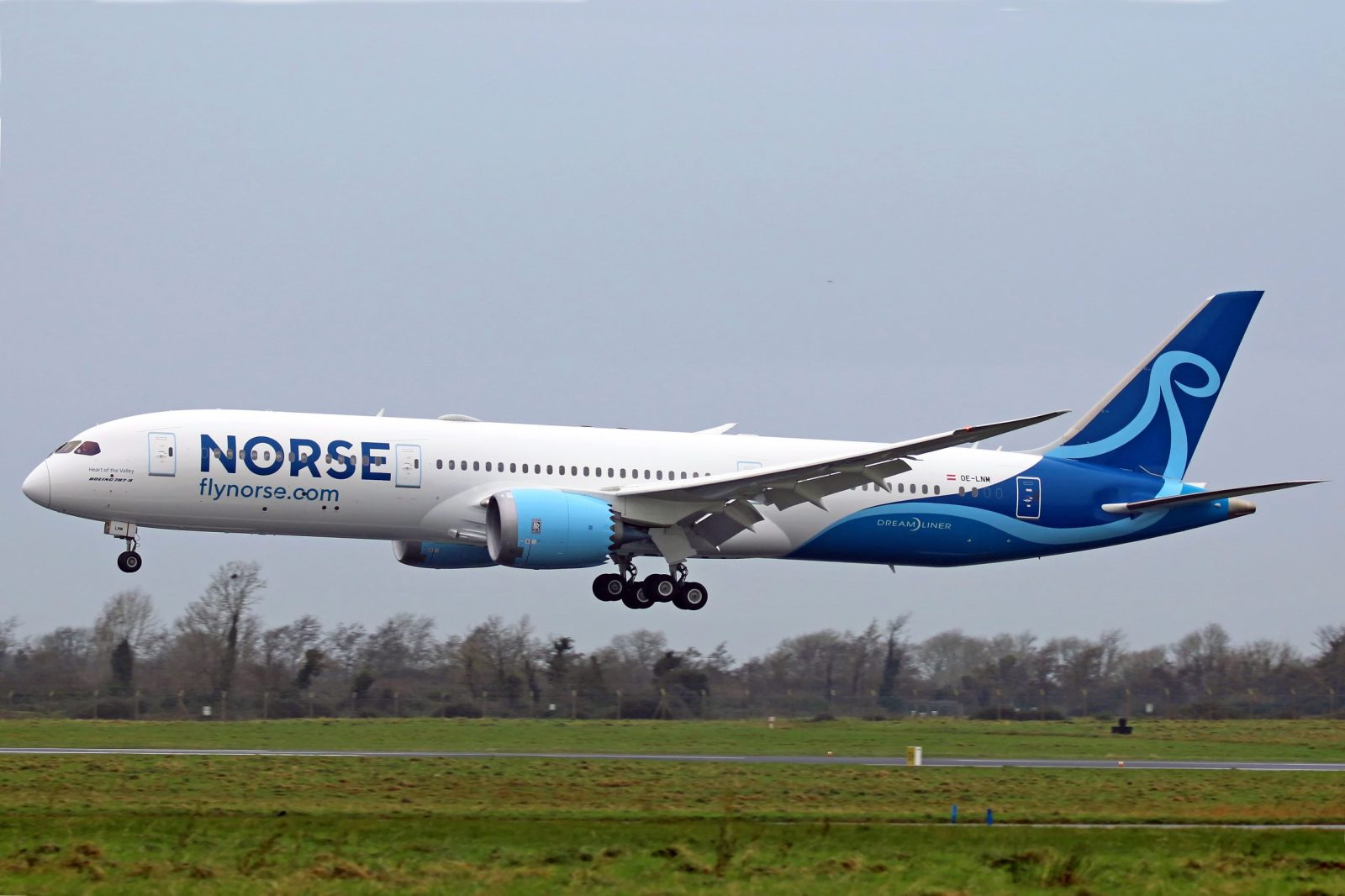
A Norse Boeing 787
A Norse Atlantic Airways 787-9. (Photo: Norse Atlantic Airways | Malcolm Nason)

Norse Atlantic Airways has had a busy few weeks in the lead up to the commencement of operations in early 2022. The start-up based in Arendal, Norway was granted an air operator’s certificate (AOC) by the Norwegian Civil Aviation Authority on Wednesday. The AOC approval certifies that Norse Atlantic Airways has the personnel, assets and systems in place to meet the required safety standards of the national authority and commence commercial flight operations.

“We’ve had a good and constructive dialogue with Norse throughout the process of issuing a Norwegian AOC. We wish them the best of luck and look forward to a continued fruitful relationship going forward,” Lars E. de Lange Kobberstad, Director-General of the Civil Aviation Authorities of Norway, said in a statement.

“We would like to thank Norway’s Civil Aviation Authority for a constructive and professional process,” Norse CEO and Founder Bjørn Tore Larsen said in a release. “We are now one important step closer to launching our attractive and affordable flights between Europe and the U.S. in spring next year.”

Norse Atlantic’s website is yet to open ticket sales to destinations from Oslo, Norway that are expected to include airports in Los Angeles, New York and Florida. London and Paris are also showing on the website as destinations but as yet have not had sectors loaded into the system for sale.

On Dec. 20, the airline took delivery of its first Boeing 787-9 Dreamliner aircraft leased from Singapore-based aircraft lessor BOC Aviation. The arrival of the aircraft is the first of 12 787-9s and three 787-8s that will be based at Oslo Airport with further deliveries slated to extend through April. Norse Atlantic’s aircraft will be named after Norwegian national parks with the first of the 15 aircraft being named Rondane.

According to a press release from the airline, “The aircraft lease is at attractive rates and payment terms, allowing the company a flexible implementation during start-up of its operation, with Norse only paying on a ‘power by the hour’ basis at the outset.”

“We believe that transatlantic travel will resume with full force once the pandemic is behind us,” Larsen said, striking an optimistic note as his first aircraft arrived. “People will want to explore new destinations, visit friends and family and travel for business. Norse will be there to offer attractive and affordable flights on our more environmentally friendly Dreamliners to both the leisure and cost-conscious business traveler.”

Norse Atlantic Airways is currently recruiting for positions based at the airline’s head office in Arendal, Norway and an office in London, United Kingdom. Lasse Sandaker-Nielsen, the airline’s chief communications and public affairs officer, has said that once all 15 aircraft are in operation, the airline is expected to have 1,600 employees.

John Flett

John has always had a passion for aviation and through a career with Air New Zealand has gained a strong understanding of aviation operations and the strategic nature of the industry. During his career with the airline, John held multiple leadership roles and was involved in projects such as the introduction of both the 777-200 and -300 type aircraft and the development of the IFE for the 777-300. He was also part of a small team who created and published the internal communications magazines for Air New Zealand’s pilots, cabin crew and ground staff balancing a mix of corporate and social content. John is educated to postgraduate level achieving a masters degree with Distinction in Airline and Airport Management. John has held the positions of course director of an undergraduate commercial pilot training programme at a leading London university. In addition he is contracted as an external instructor for IATA (International Air Transport Association) and has been a member of the Heathrow Community Fund’s ‘Communities for Tomorrow’ panel.

China Southern Receives 2 New A350s

China Southern Airbus A350-900 MSN398 (Photo: Airbus)

On Dec. 29, China Southern received two new Airbus A350 XWBs from Toulouse, France. The new aircraft will be the 11th and 12th A350s operated by China Southern.

The added capacity will be based in Shenzhen, China, the southern city that borders the special administrative region of Hong Kong. Shenzhen has been a strategic market for China Southern, as its proximity to the headquarters of China Southern in Guangzhou and its vast travel demand resulting from its status as the tech capital of China have led to rapid growth in its network.

China Southern Airlines A350-900 MSN411(Photo: Airbus)

New Seating

Two new aircraft — registered as B-324R and B-324S — will be the first two-class configured A350s in China Southern’s fleet. They will each have 335 seats, including 28 business class seats and 307 economy class seats. Previously delivered China Southern A350s are equipped with 28 business class seats, 24 premium economy class seats and 262 economy class seats. The new seating configuration allows the carrier to add two more rows of economy class.

Currently, the two aircraft are parked at Guangzhou’s Baiyun International Airport. When the importation paperwork is completed, the two aircraft will be transferred to Shenzhen’s Baoan International Airport, where they recently opened a new satellite concourse.

As international travel in and out of China is still restricted, those new aircraft will likely operate domestic main lines first, such as Shenzhen to Shanghai and Shenzhen to Beijing. After travel restrictions are lifted, China Southern may resume its flights from Shenzhen to Melbourne and Shenzhen to Auckland, likely to be operated by those A350s.

Competition in the Shenzhen market is heating up. China Southern has long planned to expand its Shenzhen operations, and it is the first airline to have A350s based in Shenzhen.

Currently, Air China — along with its subsidiary Shenzhen Airlines — is the largest player in Shenzhen. In addition, China Eastern established its Shenzhen base before the pandemic, and the Shanghai-based airline pledged to continue to allocate more capacity to Shenzhen.

Beloved Aircraft

The Airbus A350 is widely liked by Chinese airlines. China Southern has an order of 20 A350s, 12 of which have been delivered so far. China Eastern has also ordered 15 of the type. Air China initially ordered 10 A350s during its development phase, and added an order of 20 jets, with the option to swap the final five aircrafts into the larger A350-1000 variant.

Hong Kong-based Cathay Pacific has ordered 46 A350s, and Taipei-based China Airlines has ordered 14 to operate its international flights. Sichuan Airlines, the largest all-Airbus airline in China, also ordered 10 A350s to operate its international flights as well as domestic main lines.

Air China’s A350 Star Alliance Livery approaching at Singapore’s Changi International Airport. (Photo: AirlineGeeks | Lei Yan)

After the pandemic, Chinese airlines have shown a preference for Airbus and Boeing to deliver to their doorsteps, instead of picking up their aircraft from Europe or the U.S.

For this, Airbus is leveraging its Tianjin facility to deliver to its Chinese customers. In July, Airbus delivered the first A350 from China to China Eastern. The aircraft was initially assembled in Toulouse, France, and then flew to Tianjin, China for final decoration and painting.

This week, however, the aircraft were delivered from Toulouse. China Southern sent one team to pick up 2 aircraft, so fewer people will have to travel and go through the mandatory quarantine after returning to China.

As the travel rush associated with the 2022 Spring Festival is set to begin soon, airlines are readying their capacities for the traveling public. The national government has projected that the period would be “significantly busier” for air travel than it was in 2021.

Lei Yan

Lei is from Inner Mongolia, China, and now lives in Guangzhou. He grew up in an aviation family, where his passion began. During his time at Penn State University, he studied Industrial Engineering specializing in operations research, and he graduated with an honor’s thesis on airport gate assignment optimization. Now, he is a Purchasing Manager with Procter & Gamble. In his free time, he enjoys flying, reading, and wandering around the city.

Indonesia Removes Ban On Boeing 737 MAX

The airplane involved in the accident departing on its delivery flight from Boeing Field (Photo: Lion Air)

On Tuesday, the Indonesian transport ministry lifted its ban on the Boeing 737 MAX aircraft, three years following the first deadly crash involving the Indonesian carrier, Lion Air, killing all 189 people on board. 

The aircraft was originally grounded by aviation authorities globally — following the second fatal accident in March 2019 — which involved a 737 MAX aircraft operated by Ethiopian Airlines, resulting in the loss of all 157 souls on board. 

The release of the ban on the 737 MAX aircraft in Indonesia comes over a year after the Federal Aviation Administration lifted the grounding order on November 19, 2020, allowing it to return to the skies in the United States on these mandatory fixes:

  • MCAS must compare data from more than one sensor and avoid relying on a single angle-of-attack sensor that’s giving faulty readings.
  • All aircraft must have a warning light that shows when two sensors are disagreeing.
  • When MCAS activates, it must do so only once, rather than activating repeatedly.
  • If MCAS is erroneously activated, flight crews must always be able to counter the movement by pulling back on the control column. 
  • Pilots must get more-rigorous training on MCAS, including time in a MAX simulator

The approval in Indonesia also comes months after the aircraft was given the green light in Europe, and more recently in Australia, Japan, India, Malaysia, Singapore and Ethiopia. However, the plane remains grounded in some countries including Russia, but the list continues to grow smaller as the plane proves to be safe. 

Indonesia’s announcement of the recertification of the aircraft comes shortly after Ethiopian Airlines revealed their plans to resume 737 MAX flights. Indonesian authorities will implement the requirements for the aircraft set by the FAA — with the exception to the stick shaker removal procedure.  

Ethiopian Airlines announced plans on Monday that they will return to flying the type of aircraft in February 2022. 

“Safety is our topmost priority, and it guides every decision we make and all actions we take,” Ethiopian Airlines CEO Tewolde Gebremariam, said. “We have taken enough time to monitor the design modification work and the more than 20 months of rigorous rectification process, our pilots, engineers, aircraft technicians, cabin crew are confident on the safety of the fleet.” 

However, for Indonesian carriers, the lifting of the ban is effective immediately, and carriers planning to operate the aircraft must follow the rigorous airworthiness directives followed by inspections from both the company and the government. 

Currently, there are only two carriers in Indonesia who utilize the 737 MAX which includes, Lion Air which operates nine, and Garuda Indonesia who currently has one in their fleet. Garuda Indonesia has orders for 49 aircraft, and Lion Air has 237  orders on backlog. Deliveries of these aircraft will be able to resume relatively shortly, assuming that individual airlines are willing and ready to accept them. 

Chase Hagl

Chase Hagl grew up in Twin Falls, Idaho. His love and passion for Aviation landed him in Orem, Utah where he obtained a B.S. in Aviation Management with a minor in Business Management from Utah Valley University. Chase currently works as a flight attendant in Charleston, SC and is also the primary Inflight ASAP ERC representative for startup airline, Breeze Airways. His experience in the aviation industry spans back four years, working in areas including agriculture application, customer service, maintenance, and flight ops. In his free time, Chase enjoys road biking, astronomy, and flying.

Singapore Airlines Suspends Flights To Los Angeles

A Singapore Airlines Airbus A350 (Photo: AirlineGeeks | Katie Zera)

Singapore Airlines will be suspending operations from Los Angeles to Taipei, Taiwan beginning mid-February — the end of the airline’s winter schedule. According to sources close to the airline, the last flight from Los Angeles to Taipei, Taiwan’s Taoyuan Airport, SQ 35, will operate on Feb. 16.

Singapore Airlines Singapore to Los Angeles flight via Taipei, Taiwan currently operates three times a week,  flying eastbound on Wednesdays, Fridays and Sundays. Flights operate westbound on Mondays, Thursdays and Saturdays. Due to Taiwan’s ongoing transit ban due to Covid-19, the fifth freedom flight exclusively carries travelers between Singapore and Taipei or between Taipei and Los Angeles and doesn’t carry people between Singapore and Los Angeles.

All flights operating to Taiwan can only carry single-sector travelers with this ongoing ban. Singapore Airlines, however, does fly daily non-stop to Singapore from Los Angeles using its three-cabin Airbus A350-900 in a 3-class configuration, including economy class.

The airline’s Los Angeles to Taipei, Taiwan service has operated for less than 6 months since the service’s reinstatement earlier this year on Aug. 25.

Seeking to capitalize on passenger and cargo demand outside its home base, Singapore Airlines reinstated flights between Los Angeles to Taipei, Taiwan last summer after a 13-year hiatus. The airline’s fifth freedom route was relaunched due to the strong demand for travel to the United States from Taiwan for vaccination tourism at that time. The only other dominant carriers flying non-stop between the United States and Taiwan are Taiwan’s China Airlines and EVA Air. Taiwan’s new Starlux Airlines is expected to launch service to Los Angeles in 2023.

Current Restrictions

Since the U.S. federal government’s stricter travel requirements for vaccination and pre-flight testing for non-citizens traveling to the United States were enacted in November, passenger numbers from Taiwan have plunged significantly. Furthermore, all Taiwan-bound travelers, including those that are vaccinated, are still required to quarantine for 14 days on arrival, a rule that has been in effect since the start of the pandemic.

Taiwan still does not allow foreigners to enter the country without special permission or residency and is quarantining for 14 days everyone arriving, including those that are vaccinated. Taiwan travelers can either exercise quarantine for 14 days in a government-approved hotel, or for those that are vaccinated, quarantine for seven days in a government-approved hotel and another 7 days in their own home.

As vaccination rates rose this past year, Taiwanese were hoping their government would ease quarantine requirements for the upcoming Lunar New Year with the likes of other Asian nations such as Singapore and Thailand. On the contrary, the Taiwanese government only allowed vaccinated travelers to do part of their quarantine at home to save on accommodation expenses — continuing a strict “zero covid” policy.

Singapore Airlines’ Los Angeles to Tokyo flight — the only other fifth freedom route from Los Angeles — will still continue to operate past the end of the winter schedule. The route was resumed in June 2020.

Albert Kuan

Most people hate long flights or overnight layovers, but Albert loves them. The airport and flying parts of traveling are the biggest highlights of any trip for him – as this avgeek always gets a thrill from sampling different airline cabin products and checking out regional developments happening at local U.S. airports. He’s flown on almost every major carrier in the U.S. and Asia Pacific, and he hopes to try out the new A350s soon. Albert recently completed his undergraduate studies in Business Accounting at USC in Los Angeles and he is currently recruiting for a corporate analyst position at one of the U.S. legacy carriers. During his college years, he interned at LAX for Los Angeles World Airports working behind-the-scenes (and on the ramp) in public relations and accounting. Outside of writing for AirlineGeeks, he enjoys trekking the Hollywood hills, visiting new hotspots throughout SoCal, and doing the occasional weekender on Spirit Airlines.

Ethiopian Airlines Prepares For Boeing 737 Max Return

An Ethiopian Boeing 737 MAX departs after delivery from Boeing Field (Photo: Boeing)

Ethiopian Airlines is now laying the groundwork for the return of the Boeing 737 Max. The airline on Monday issued an Airworthiness Directive (AD) on the Boeing 737 MAX that will help pave the way for the model’s return to service with the first flight expected on Feb. 1.

Ethiopian Airlines Group CEO Tewolde GebreMariam, said, “Safety is our topmost priority at Ethiopian Airlines and it guides every decision we make and all actions we take. It is in line with this guiding principle that we are now returning the B737 MAX to service not only after the recertification by the Federal Aviation Administration (FAA), EASA of Europe, Transport Canada, CAAC, ECAA and other regulatory bodies but also after the return to service by more than 34 airlines around the world.”

According to the OAG schedules update, Ethiopian Airlines intends to resume flying the 737 MAX 8 with services from the airline’s hub in Addis Abba, Ethiopia to Istanbul, Turkey; Khartoum, Sudan; Enugu, Nigeria; Entebbe, Uganda; Moroni, Comoros; Nos By, Madagascar; Victoria, Seychelles and Cairo.

“In line with our initially stated commitment to become among the last airlines to return the B737 MAX, we have taken enough time to monitor the design modification work and the more than 20 months of rigorous recertification process and we have ensured that our pilots, engineers, aircraft technicians, cabin crew are confident on the safety of the fleet. The airplane model has accumulated more than 275,000 commercial flights since the resumption of the B737 MAX operation a year ago,” GebraMariam added.

Ethiopian Airlines currently has four Boeing 737 MAX 8 aircraft in its fleet, with a further 25 on order.

The Airline’s CEIV Certification

Meanwhile, Ethiopian Airlines was awarded IATA’s Centre of Excellence for Independent Validators (CEIV) certification in pharmaceutical logistics. CEIV Pharma is an industry-wide standard, addressing the industry’s need for more safety, security, compliance and efficiency, by the creation of a globally consistent and recognized pharmaceutical product handling certification.

GebreMariam said, “We are delighted to receive this important global certification, IATA CEIV Pharma certificate, which is a strong assurance of one of the highest global standards in the aviation and logistics industries. With an annual capacity of more than a million tons, our global air cargo and logistics hub in Addis Ababa has various special cargo handling facilities like Pharma and Life Science, Live Animals, Perishable cargo, live seafood, dangerous goods, etc.”

The airline switched to cargo, maintenance and charter operations to help soften the Covid-19 blow. As a result, this achievement certifies the airline’s expertise and efficient handling of pharmaceuticals and life science products.

“Accordingly, we have been working very hard on our Pharma and Life Science handling facility to meet global standards in technology, processes and training. The IATA CEIV Pharma Certification has come at an opportune time for Ethiopian Cargo and Logistics team as they continue to play a key global role in the transportation of life-saving COVID-19 vaccines around the world and particularly in the continent of Africa. The journey to even greater success in the logistics market has started for Ethiopian Airlines as we are already equipped with a huge capacity in terms of state-of-the-art cold chain facility, equipment, system, process and dedicated pharma handling professionals,” GebreMariam added.

In addition, the strategic and geographical location of Ethiopian Airlines’ hub airport — located in Addis Ababa, Ethiopia — makes it highly preferable for the transportation of highly temperature-sensitive products.  The natural temperature stability year-round ranges between +15 degrees celsius to +25 degrees celsius, which will play an important role to minimize potential temperature deviation through the value chain.

Ethiopian also deployed smart cool dollies to ensure smooth transportation of temperature-sensitive pharmaceutical products from the warehouse to the aircraft & vice versa with a capability to maintain an internal temperature between -29 degrees celsius to +27 degrees celsius.

Victor Shalton

Victor Shalton's love for aviation can be traced to when he was 11-years-old. As a seasoned aviation writer, he takes pride in providing the best aviation coverage around the globe and is passionate about advancing his skills in the aviation space. In addition, he loves travelling, writing, arts and while his speaking engagements have taken him around the world, he is proud to call Nairobi home.

Kenya Airways To Undergo $1 Billion Restructuring

Kenya Airways B7878 LHR William Derrickson (1)
A Kenya Airways 787-8 arriving at London Heathrow. (Photo: AirlineGeeks | William Derrickson)

With the international airline market still struggling to recover from the drop in demand driven by the Covid-19 pandemic, carriers deeply relying on international connections have had to face tough choices in the past 24 months. One of these is SkyTeam member Kenya Airways, which will have to completely overhaul its structure in order to reshape itself to become sustainable in this new reality. The entire operation will cost over $1 billion, with most of the funds to be provided by the government budget.

During the summer, the Kenyan government toyed with the idea to renationalize the airline after it was successfully privatized in 1996, but recent reports suggest the hypothesis has been shelved by the East African country. The government, which still owns a 48.9% stake in the company, has already issued creditor guarantees for $750 million in order to allow the airline to continue operating in the face of dwindling cash flow due to lower demand. The Treasury has acquired an additional 19.1% stake in the carrier, and domestic lenders agreed to convert their debt into equity.

Kenya Airways has not reported an operating profit since 2014, and the losses have added to the heavy debts contracted to renew the long-haul fleet with the introduction of Boeing 787 Dreamliners.

According to CAPA, the International Monetary Fund is stating the airline will undergo a deep restructuring that will replace the nationalization plans. “The authorities do not intend to nationalize the carrier and are considering appropriate mechanisms to protect the Exchequer’s financial interests during the restructuring process,” the IMF said. In a letter to the IMF, Kenyan Finance Minister Ukur Yatain said the Government will take over $827 million of Kenya Airways’ debt, Reuters reported, at the same time providing $473 million as direct budgetary support for the 2022 and 2023 fiscal years.

Kenya Airways will also need “a radical overhaul of its business model to minimize the burden it places on the state given challenges threatening the aviation industry in the post-pandemic environment,” the letter stated. Changes will include “cutting back on its operations and staff, enhancing efficiency and renegotiating leases and suppliers’ contracts,” it said.

As of December 2019, Kenya Airways was operating a fleet of 36 passenger and two cargo aircraft. The short-haul fleet was made up of a mix of 12 Boeing 737 and 15 Embraer 190 aircraft, while the long-haul fleet consisted of 9 Boeing 787-8 aircraft. Its network included 41 destinations in Africa, only five of which are domestic, five in Europe, one in the Middle East — Dubai — three in Asia — Mumbai, India; Bangkok, Thailand and Guangzhou, China — and only New York in North America. Kenya Airways employs almost 4,000 people.

Vanni Gibertini

Vanni fell in love with commercial aviation during his undergraduate studies in Statistics at the University of Bologna, when he prepared his thesis on the effects of deregulation on the U.S. and European aviation markets. Then he pursued his passion further by obtaining a Master’s Degree in Air Transport Management at Cranfield University in the U.K. followed by holding several management positions at various start-up carriers in Europe (Jet2, SkyEurope, Silverjet). After moving to Canada, he was Business Development Manager for IATA for nine years before turning to his other passion: sports writing.

Found To Operate 19 Troubled Aircraft, Citilink and GMF Aeroasia Receive Strict Warning

A Citilink Airbus A320 (Photo: Andrew Thomas from Shrewsbury, UK (PK-GLC Airbus A320-233 (cn 892) Citilink.) [CC BY-SA 2.0 (http://creativecommons.org/licenses/by-sa/2.0)], via Wikimedia Commons)

The Indonesian Directorate General of Civil Aviation, sitting in the Ministry of Transportation, issued a warning to local-based carriers Citilink and GMF AeroAsia after the company continued to operate 19 aircraft that were experiencing technical issues with their braking systems. The warning was delivered in a letter dated Dec. 22 and signed by Director of Airworthiness and Aircraft Operations Dadun Kohar. The warning letter was addressed to the GMF AeroAsia accountability manager and Citilink’s vice president of engineering and maintenance.

According to the letter, based on the results of the corrective action discussion on the findings of the GMF AeroAsia audit on Dec. 17, the Ministry of Transportation found the Citilink Airbus A320 operated from Dec. 1-17 with a dummy brake assay still installed on the aircraft with tail number PK-GQJ.

“And in the last three months, there have been six brake occurrences [melting, jammed, rotor damage, over temperature].” Dadun wrote in this letter.

The Ministry of Transportation also sent a warning letter to GMF AeroAsia In this letter, the Ministry of Transportation asked GMF AeroAsia to immediately repair the brakes on the hold item list (HIL) — a list of work orders that were suspended because parts or equipment were not available or could not be used — on 19 Citilink A320 aircraft. The company is also asked to immediately review the HIL status from August to December 2021 to ensure that the HIL closing is truly appropriate.

GMF was also asked to immediately identify the serial number of the problematic components to be removed from the aircraft and stored in a quarantine area. The Ministry of Transportation also asked the company to ensure that the problem of unavailability of spare parts and supply chain management does not become a latent hazard that affects flight safety and compliance with applicable regulations and procedures, something the airline has vehemently denied is happening.

So far, the Ministry of Transportation has not made any statement regarding this matter. Citilink Corporate Secretary Diah Suryani stated the company continues to closely coordinate and entrust all aircraft maintenance to GMF as a provider of aircraft maintenance services. Thus, all Citilink aircraft under maintenance meet the established flight safety standards. Meanwhile, GMF Vice President Rian Fajar Isnaeni stated that his party had confirmed that all customer aircraft — in this case, Citilink — had been declared airworthy.

“GMF has met the requirements as stated in the operator’s minimum equipment list [MEL] document, namely Citilink, which has been issued by the aircraft manufacturer and approved by the local authorities,” Rian said in an official statement.

Citilink and GMF Aeroasia Respond

Isnaeni said that his airline had made several repair efforts and have always obeyed government regulations, in particular those with regard to the airworthiness of the aircraft.

“Amid a pandemic, GMF and Citilink always prioritize aviation safety and security, including complying with all regulations set by the regulator regarding the airworthiness criteria of aircraft when operating,” Isnaeni said in a statement received by local outlet Kompas.com. “GMF has met the requirements as stated in the operator’s minimum equipment list (MEL) document, namely Citilink, which has been issued by the aircraft manufacturer and approved by local authorities.”

Isnaeni said that GMF had taken several corrective steps, including reviewing, mapping, and identifying the HIL.

“However, it does not reduce the safety and airworthiness of the aircraft,” he said. “Not only that, but GMF also formed a special team for HIL completion in accordance to the regulation and standard set by the government.”

Putu Deny Wijaya

Putu Deny Wijaya was always an aviation enthusiast by heart, growing up in Indonesia where air transport is very vital. His first love is The Queen of The Skies, serving the trunk routes between Jakarta and Denpasar. He brought along this passion with him throughout college by conducting his bachelor study abroad in the Netherlands for the purpose of experiencing a nonstop 14-hour long-haul flight. For Putu the sky's the limit when talking about aviation. He hopes that he would be able to combine his passion for aviation and knowledge of finance at the same time.

Air India Avoiding Afghanistan Airspace While Saving an Hour to North America

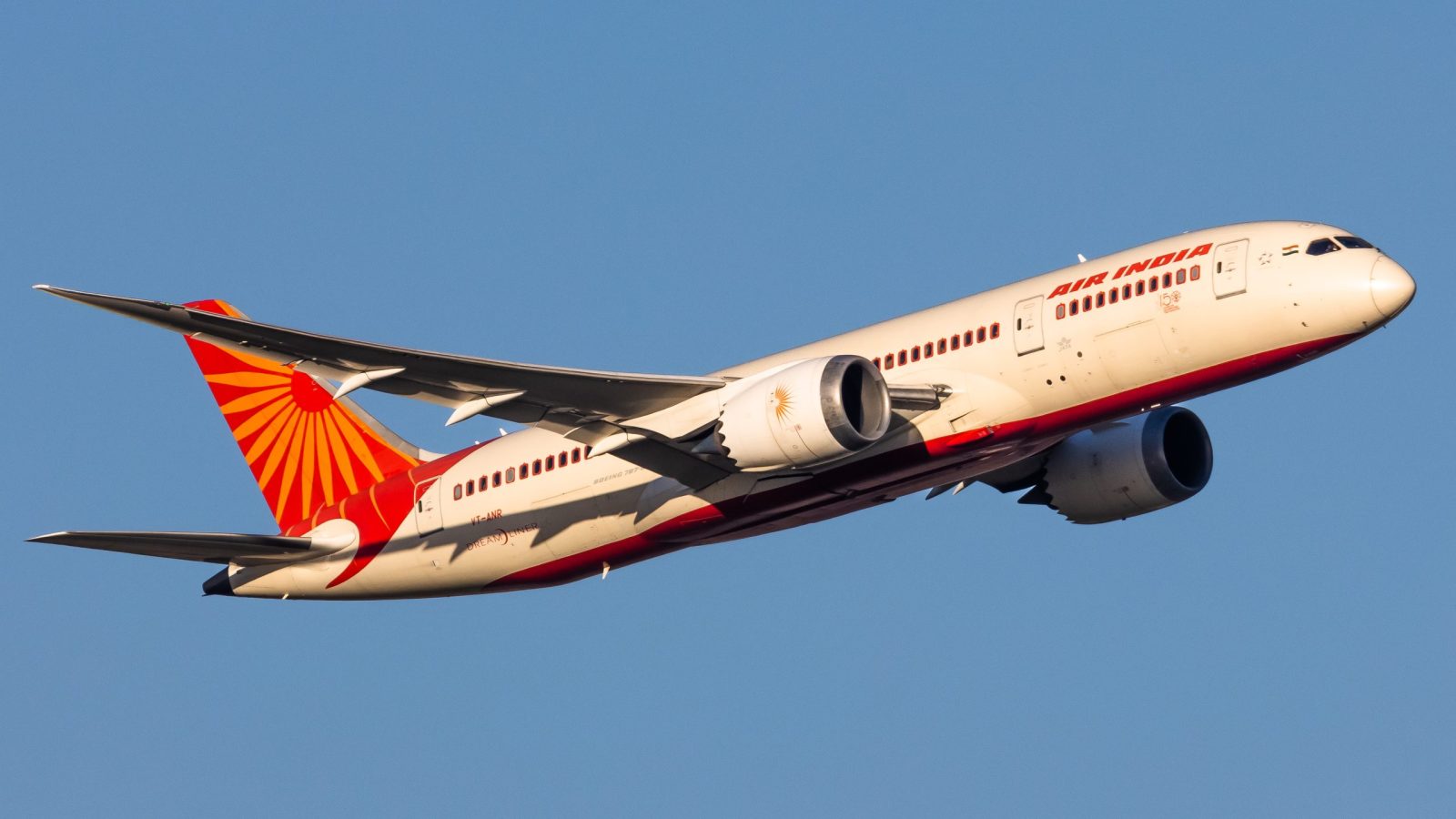
An Air India Boeing 787 Dreamliner departing London Heathrow.
An Air India Boeing 787 Dreamliner departing London Heathrow. (Photo: James Dinsdale)

Due to Air India’s newly permitted Hindu Kush route for its 777s, passengers flying to and from North America may expect their flights to be up to an hour shorter. Airlines linking India with Europe and North America have had to take a detour to avoid restricted airspace since Afghanistan closed its airspace to non-defense aircraft in August. The new route saves Air India a lot of money and time, which is a win-win situation for both the airline and the customers.

 Time to Head North

Air India’s flights to North America are among the company’s most popular and longest. Flights from India to places such as New York, Toronto, San Francisco, and Vancouver are regularly near the 777’s maximum range when fully laden. As a result, rigorous preparation is essential for these routes.

A normal west-bound aircraft from New Delhi would have flown through Pakistan and Afghanistan before proceeding north to Turkmenistan and Uzbekistan before the Afghan blockade. After August 16th, the same planes flew across south Pakistan, skirting the Afghan border before crossing into Iran-Turkey.

According to the Times of India, Air India planes have been flying straight north over the Hindu Kush range since December 16th, before returning to their customary path to North America. A trip from DEL to JFK that used to take more than 16.5 hours may now be accomplished in less than 16 hours. The new route is also cost-effective for the carrier, saving roughly 7 tonnes of fuel every trip.

While Air India has just recently cleared this route for its flights heading for North America, a quick review of flight monitoring applications indicates that American and Canadian carriers on similar itineraries have already flown over the Hindu Kush range.

The Two Most Important Airspace for Indian Aviation

The importance of Pakistani and Afghan airspace for carriers traveling between India and the west is plainly evident. Any political instability in these two nations that results in airspace closure has a significant impact on airline operations.

When rising tensions between India and Pakistan resulted in the shutdown of Pakistani airspace in 2019, some airlines were forced to rethink their itineraries or cancel flights entirely. Before restarting flights from Newark to Delhi and Mumbai, United Airlines chose to wait for the airspace to reopen.

Not the first choice

Even while the Hindu Kush route saves time and fuel, it isn’t the first choice for carriers. Air India began flying its 787s over the mountain range for flights to London in October, but it took a while for its 777s to be allowed to fly the same route to North America. It was a “particularly vital and hard sector,” according to the pilot of Air India’s aircraft from Toronto to New Delhi on December 16.

Times of India quotes a senior AI official on the matter as saying, “The logistics of B777 and B787 are very different. A fully laden B787 (with passengers, cargo, and fuel) can have a maximum altitude of 35,000 feet. But a 777, due to factors like its different wing design and the fact that more fuel has to be carried for the much longer North America nonstops, can have a maximum altitude of 29,000 feet.”

These figures are especially noteworthy when you consider that certain peaks in the Hindu Kush range may reach a height of 25,000 feet. Airlines avoid the Himalayan range for the same reason, as well as many more.

When Afghan airspace reopens, Air India has announced that it would return to its old route, and other airlines are expected to follow suit.

Putu Deny Wijaya

Putu Deny Wijaya was always an aviation enthusiast by heart, growing up in Indonesia where air transport is very vital. His first love is The Queen of The Skies, serving the trunk routes between Jakarta and Denpasar. He brought along this passion with him throughout college by conducting his bachelor study abroad in the Netherlands for the purpose of experiencing a nonstop 14-hour long-haul flight. For Putu the sky's the limit when talking about aviation. He hopes that he would be able to combine his passion for aviation and knowledge of finance at the same time.
Sign-up for newsletters & special offers!

Get the latest stories & special offers delivered directly to your inbox

SUBSCRIBE