An Allegiant A320 on final approach to Austin-Bergstrom International Airport. (Photo: AirlineGeeks | Mateen Kontoravdis)
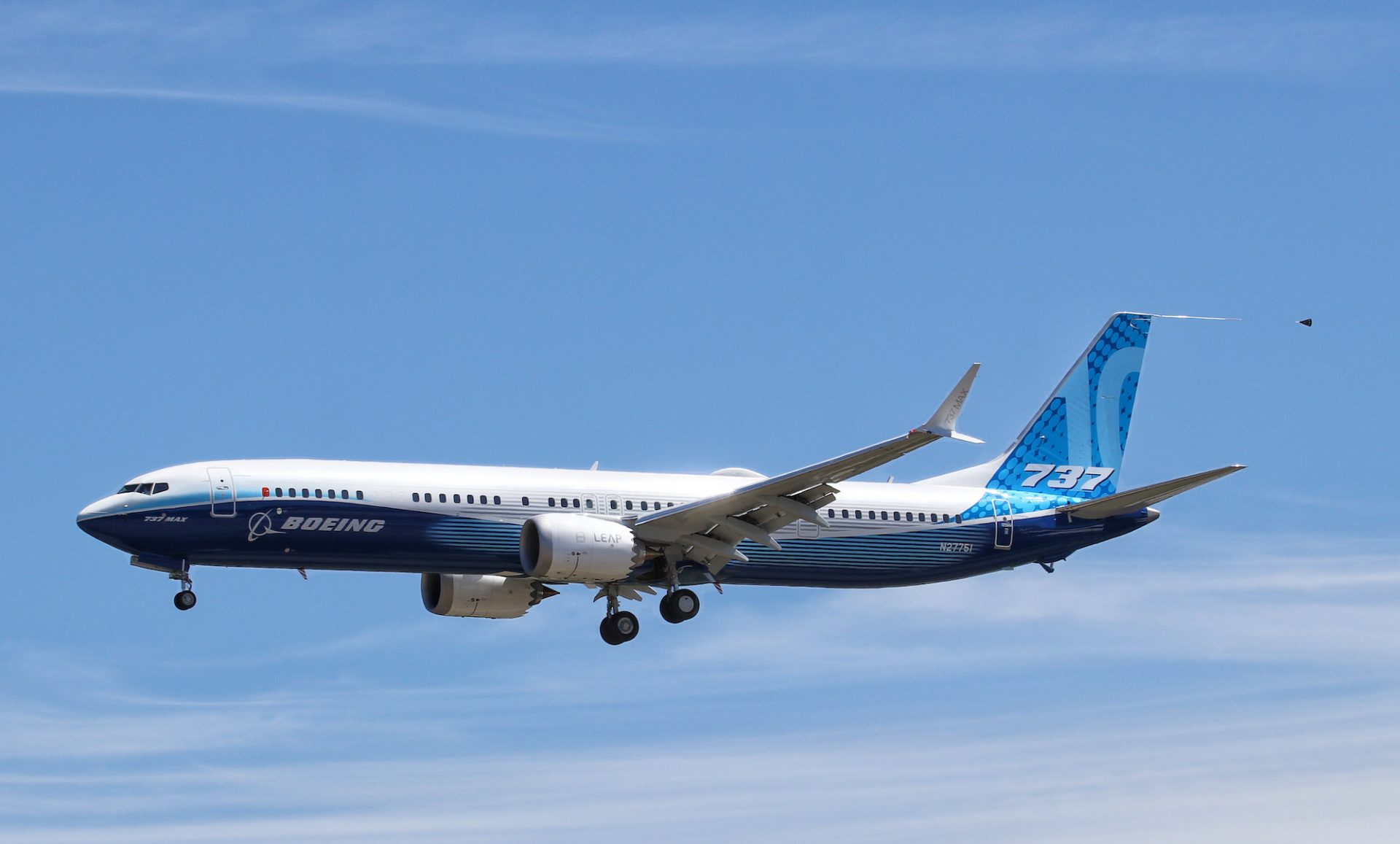
U.S. ultra-low-cost carrier Allegiant Air has announced an order of 50 Boeing 737 aircraft comprising a mix of 737-7 and 737-8-200 models — model names airlines have started using to replace that of the beleaguered Boeing 737 MAX — with the option for a further 50 aircraft. The announcement by the airline’s parent company Allegiant Travel Company is somewhat of a surprise for the leisure carrier given that its current fleet is comprised of 108 Airbus A319 and A320 aircraft that were all previously owned.
Maurice J. Gallagher, Jr., Allegiant chairman and chief executive officer stated, “Our approach to fleet has always been opportunistic, and this exciting transaction with Boeing is no exception. While the heart of our strategy continues to center on previously-owned aircraft, the infusion of up to 100 direct-from-the-manufacturer 737s will bring numerous benefits for the future – including flexibility for capacity growth and aircraft retirements, significant environmental benefits, and modern configuration and cabin features our customers will appreciate.”
The order is also the first deal for Boeing of their 737 series aircraft with a ultra-low-cost carrier based in the U.S.
“We are thrilled that Allegiant has selected Boeing and the 737 MAX as they position themselves for future growth, improved efficiency and operational cost performance,” Boeing Commercial Airplanes president and chief executive officer Stan Deal said in a statement. “This deal further validates the economics of the 737 MAX family in the ULCC market and we’re excited to stand alongside Allegiant as they integrate these new airplanes into their fleet.”
The first batch of new 737s is scheduled to be delivered to Allegiant in 2023 with the remainder of the initial order arriving throughout 2024 and 2025. The more fuel-efficient 737s will replace retiring aircraft and assist in the airline’s goal of 10 percent annual growth. The press release from Allegiant also adds that the airline will continue to source additional used A320 aircraft to expand their fleet. In addition Allegiant has signed a 12-year exclusive maintenance agreement with CFM the makers of the LEAP 1-B engines chosen for the 737s. The maintenance agreement will also cover support for Allegiant’s current Airbus fleet.
Allegiant has benefited from the rebound of the US domestic leisure travel market in the wake of the impact of coronavirus. The airline’s latest traffic figures for November 2021 showed a 7.8% increase in the number of passengers carried on its scheduled services in comparison to November 2019. The number of scheduled flight departures had also increased (by 9 percent) adding 10 percent more capacity to Allegiant’s network. However the all-important metric of load factor, particularly crucial for an ultra-low-cost carrier, fell by 2.8 percentage points from 80.4% in November 2019 to 77.6% in November 2021.
Allegiant Travel Company has scheduled a call with investors on Thursday to discuss the Boeing 737 agreement.
John has always had a passion for aviation and through a career with Air New Zealand has gained a strong understanding of aviation operations and the strategic nature of the industry. During his career with the airline, John held multiple leadership roles and was involved in projects such as the introduction of both the 777-200 and -300 type aircraft and the development of the IFE for the 777-300. He was also part of a small team who created and published the internal communications magazines for Air New Zealand’s pilots, cabin crew and ground staff balancing a mix of corporate and social content.
John is educated to postgraduate level achieving a masters degree with Distinction in Airline and Airport Management. John has held the positions of course director of an undergraduate commercial pilot training programme at a leading London university. In addition he is contracted as an external instructor for IATA (International Air Transport Association) and has been a member of the Heathrow Community Fund’s ‘Communities for Tomorrow’ panel.
A Philippine Airlines aircraft. (Photo: AirlineGeeks | William Derrickson)
Just a few hours before one of the worst years on record for commercial aviation came to a close, Philippine Airlines announced it was exiting U.S. Chapter 11 bankruptcy protection after successfully restructuring its business.
Less than four months earlier, the airline had voluntarily entered Chapter 11 on Sept. 3 and was able to emerge from bankruptcy after its turnaround plan was accepted by all its creditors, including aircraft lessors and lenders, OEMs, MRO providers and other debt lenders, Businesswire reported.
The strong support from all the creditors allowed for over $2 billion of existing debts to be permanently eliminated from the carrier’s balance sheet. At the same time, over $505 million of additional liquidity was arranged through long-term equity and debt financing. PAL also has the option to avail of $150 million of extra financing from new investors.
“Philippine Airlines stands ready to help grow back the Philippines’ local and international air travel markets in ways that renew the tourism industry, serve the needs of global citizens including overseas Filipinos, and contribute actively to the recovery of the Philippine economy,” said PAL Director Lucio C. Tan III, quoting PAL Chairman and CEO Dr. Lucio C. Tan. “Our mission as the flag carrier matters more than ever, and we are thankful for the chance to rebound from the pandemic and continue to fulfill this mission as best as we can.”
Fewer Planes and an All-Cargo Unit
The new business plan included a cut to its fleet by approximately 25% while contextually reaffirming PAL’s role as the only full-service carrier in the country with a network extending as far West as Israel and as far East as Canada, Hawaii and the U.S. mainland, including also multiple services to Australian cities like Brisbane and Melbourne.
It is the only domestic carrier providing a business class cabin and it has a predominantly Airbus fleet including A320 and A321 aircraft with the A320s being progressively replaced by Airbus A321neo with delivery planned until 2026. The long-haul fleet includes 10 Boeing 777-300ER aircraft, 12 A330-300 and four newer A350-900 XWBs.
Philippines Airlines will restore its links to multiple cities in mainland China as soon as restrictions to international traffic into the country are lifted in order to capitalize.
The Covid-19 pandemic decimated passenger numbers in the Philippines: domestic and international traffic collapsed by more than 75% from the 60 million passengers recorded in 2019 to the 13 million passengers of 2020, Channel News Asia reports.
A particular focus will be placed on competitive pricing, an overhaul of the Mabuhay Miles frequent flier program and improvement in customer experience, with a special focus on technological improvements.
The newly-created cargo business unit created to respond to increased freight transport demand during the pandemic will be expanded and will include all-cargo flights.
Vanni fell in love with commercial aviation during his undergraduate studies in Statistics at the University of Bologna, when he prepared his thesis on the effects of deregulation on the U.S. and European aviation markets. Then he pursued his passion further by obtaining a Master’s Degree in Air Transport Management at Cranfield University in the U.K. followed by holding several management positions at various start-up carriers in Europe (Jet2, SkyEurope, Silverjet). After moving to Canada, he was Business Development Manager for IATA for nine years before turning to his other passion: sports writing.
Uganda Airlines takes delivery of its first Airbus A330neo
(Photo: Airbus)
COVID-19 has drastically decreased airline traffic across all routes, raising questions as to whether the current crisis will lead to structural changes within the industry.
On the network side, this includes a debate about when and if traffic will return to normal. Uganda Airlines — like other carriers —will have to cater to these challenges as it faces a ban on its newest long-haul flights to Dubai.
The Entebbe, Uganda-Dubai, the United Arab Emirates service launch was suspended after three months — disrupting the airline’s growth plans. This flight service was expected to be the most lucrative route.
The October launch of the Uganda Airlines flight came two months after the United Arab Emirates lifted a travel ban on several countries including Uganda in August, put in place in June last year — due to surging new coronavirus infections.
According to the Airline’s acting Chief Executive Officer Jennifer Bamuturaki, Uganda Airlines has been operating between near to full capacity since it’s maiden flights to the United Arab Emirates.
“On the first commercial flight, we had 80 passengers on our 258-passenger Airbus to Dubai. On the second flight, we had 220 passengers,” Bamuturaki, said, on the capacity of Uganda Airlines.
This has been the same picture on the regional routes like Dar-es-Salaam, Tanzania and Johannesburg. However, navigating new testing rules and entry restrictions as more details about the new variant emerge is proving to be a big challenge for the airline.
Passengers from Uganda — along with numerous other African nations — have been barred from entering Dubai since December 28th as part of official policies to try and mitigate the spread of Omicron.
“Business was affected by the ban. We were making 60,000 to 70,000 US Dollars per flight before the ban,” the CEO says in regards to the Dubai flight suspension.
The carrier operated direct flight services between Entebbe, Uganda and Dubai, the United Arab Emirates on the Airbus A330-800 Neo three times a week, hoping to increase these to five with increasing demand. However, Bamuturaki notes that cargo remains crucial for the airline, allowing it to record notable income despite the travel ban.
Fleet Expansion
While recently speaking to AviaDev Africa Podcast, Bamuturaki reiterated the need for mid-range jet equipment to join the airline’s fleet.
“When you look at the type of aircraft we have now and based on the routes we want to fly, we realized we needed a mid-range jet, something between the Airbus and the CRJ,” Bamuturaki said.
However, Bamuturaki expressed the hope that the induction of new mid-range equipment to the Pearl of Africa’s fleet would further enhance the national flag carrier’s capability to operate flights to more new destinations.
“So the plan is to look for equipment that carries between 120 and 150 passengers that can do long-range without a stop-over. At the moment, with the CRJ, we fly direct to South Africa, to Johannesburg O.R. Tambo, but we have to ‘cut’ it because of weight, volume and all that. It’s got its limitations which makes it unprofitable on the route. Also, baggage becomes an issue. So the need for a 120-150 seater is becoming important for us,” Bamuturaki added.
Victor Shalton's love for aviation can be traced to when he was 11-years-old. As a seasoned aviation writer, he takes pride in providing the best aviation coverage around the globe and is passionate about advancing his skills in the aviation space. In addition, he loves travelling, writing, arts and while his speaking engagements have taken him around the world, he is proud to call Nairobi home.
A Virgin Atlantic Airbus A350-1000 on the production line. (Photo: Airbus)
On Monday, Airbus — the prominent, European aircraft manufacturer — announced the launch of Airbus Atlantic, which will become their new wholly-owned subsidiary. The combination of Airbus’ two major production sites located in Nantes, France and Montoir-de-Bretagne, France with Stelia Aerospace — their seat design and manufacturing subsidiary — will potentially make Airbus Atlantic, the second-largest S corporation in the world.
The subsidiary was officially established on Jan.1 and brings together a total of three production sites located in the Loire-Atlantique — one of France’s administrative departments.
Airbus’ production site in Nantes, France employs more than 3,000 Airbus employees and is home to the production of center wing boxes for all Airbus’s commercial aircraft. The production site is for air inlets on nacelles for the Airbus A350, the Airbus A380 Superjumbo, the specific Airbus A320 CFM International LEAP-1A and Airbus A330neo engines. The Nantes location also includes the manufacturing of the A380’s and A330’s ailerons, the A350’s belly fairing, and is the leading in manufacturing of structural parts in carbon fibre reinforced plastic (CFRP) — the weight-saving composite material that Airbus has increasingly incorporated into its aircraft.
Meanwhile, Airbus’ Montoir-de-Bretagne location employs 3,060 staff and is focused on the assembling, equipping, and testing of the forward sections of all A320 Family aircraft as well as both forward and center sections of A330 and A380 aircraft. Following assembly, fuselage elements are equipped with the essential systems before being transported to their final assembly locations.
Stelia Aerospace staffs 6,900 employees and is a wholly-owned subsidiary of Airbus. This subsidiary specializes in the design and manufacturing of aerostructures, premium class passenger seats and is the leading manufacturer of pilot seats for aircraft in the commercial sector.
Through consolidation and the combining of forces of all three production locations, the subsidiary will employ 13,000 staff located throughout five countries and three continents with an estimated business volume of $4 billion. The move will help strengthen both Airbus’ value chain and supply chain which includes 500 direct suppliers and 2,000 indirect suppliers.
“At the heart of Airbus, Airbus Atlantic aims at meeting the great challenges linked to a sustainable aviation industry, pioneering new technologies. Our first mission will be to ensure the satisfaction of all our customers and to establish new standards of excellence in terms of quality and operational efficiency,” the new Airbus Atlantic CEO and former CEO of Stelia Aerospace, Cédric Gautier, said. “I have full confidence in the talent, enthusiasm, and commitment of the Airbus Atlantic teams to write this new chapter of our history with success.”
The Larger Project
This move will play an important role in enabling Airbus to focus on their industry segment allowing them to be more agile, fostering competitiveness, innovation and quality to the benefit of all Airbus programs through the simplification of both governance and interfaces in the new industrial setup.
The Airbus Atlantic subsidiary is only half of the transformation project announced earlier last year by the manufacturer. Airbus has plans for an additional subsidiary in Germany and looks to simplify the work that occurs prior to the final assembly of aircraft. The name for the German subsidiary has yet to be announced, but it can be expected within the first half of 2022.
Chase Hagl grew up in Twin Falls, Idaho. His love and passion for Aviation landed him in Orem, Utah where he obtained a B.S. in Aviation Management with a minor in Business Management from Utah Valley University. Chase currently works as a flight attendant in Charleston, SC and is also the primary Inflight ASAP ERC representative for startup airline, Breeze Airways. His experience in the aviation industry spans back four years, working in areas including agriculture application, customer service, maintenance, and flight ops. In his free time, Chase enjoys road biking, astronomy, and flying.
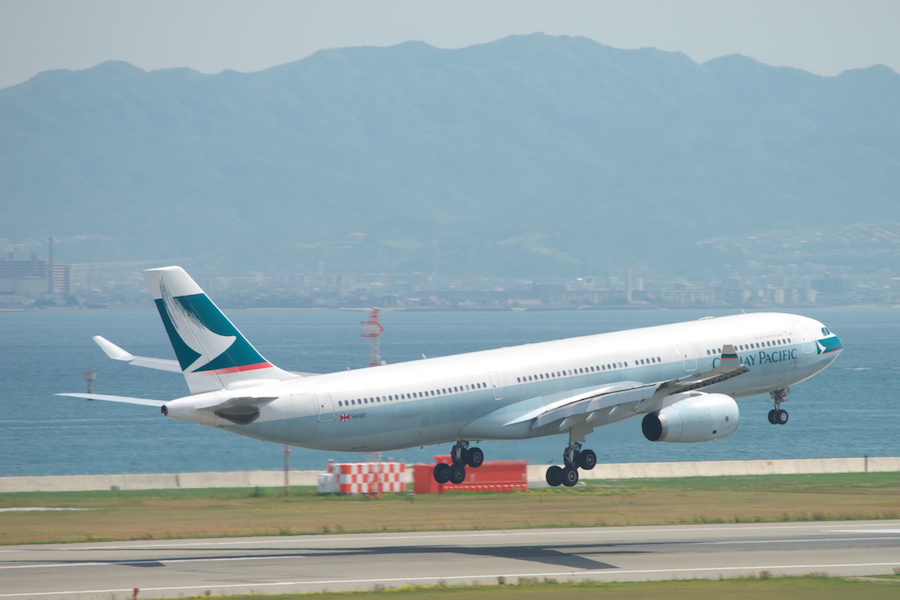
Photo: Yamaguchi Yoshiaki from Japan (Flickr) [CC BY-SA 2.0 (http://creativecommons.org/licenses/by-sa/2.0)], via Wikimedia Commons
Cathay Pacific Airways announced that it will suspend its long-haul cargo services until Jan. 6 due to a shortage of staff. The Hong Kong government has tightened its restrictions in the wake of the Omicron variant. The flight crew needs to take seven days isolation in a designated hotel after arriving in Hong Kong, instead of three days isolation.
The latest suspension is expected to threaten the supply chain during the Lunar New Year Holidays.
Meanwhile, two staff have been sacked who tested for positive for Covid-19, breaching the Covid-19 protocols. A new cluster of cases in Hong Kong restaurants has emerged, which is believed to be linked to Cathay Pacific’s staff going to the same indoor public spaces.
“Failure to comply with medical surveillance regulations will lead to disciplinary procedures. Two of the individuals are no longer employed by Cathay Pacific.” The airline said in a statement. The city has recorded zero local transmission over 70 days.
Hong Kong Government blasted the airline for not following the restrictions. At least five crew members have tested positive for the Omicron, according to the airline.
The latest incident has been a sense of déjà vu for the carrier. Three Cathay Pacific aircrew were sacked after breaching the carrier’s Covid protocol in Frankfurt — back in November.
The aviation industry in Hong Kong is facing turbulence. FedEx has also shut down its crew base in Hong Kong. Al Baker, Qatar Airways CEO, told SCMP, he was “a little bit disappointed”, in response to Hong Kong’s tough travel restrictions. Qatar Airways owns a nearly 10% stake in Cathay Pacific.
The city has implemented the “zero covid” policy where most travelers coming from overseas need to quarantine for 21 days, and the airline staff also need to quarantine and self-test from time to time.
Earlier, the airline said it will start hiring pilots this year. Cathay Pacific staff revealed that the morale of the airline staff has dropped quite significantly because of facing too much isolation. Meanwhile, the airline has seen an increase in resignation.
The Airline’s Future Obstacles
Earlier, the airline revealed its passenger capacity in November. The airline’s operations were extremely challenging. The airline carried about 70,000 passengers — an increase of 85.2% — compared to the same time last year, but a 97.3% drop compared to November 2019. The airline has operated 12% of flights — compared to November 2019. However, the airline has seen strong demand for cargo services.
Cathay Pacific will have to overcome the Omicron variant, which currently has an impact on sentiment for travel over the holiday season.
Additionally, the carrier is facing another setback in the new year, forcing to suspend the Manchester, U.K. services for 14 days. Under the latest travel restrictions in Hong Kong, if a total of five or more passengers among all flights from the same place — regardless of airline — were confirmed positive through testing or relevant virus mutation within one week, then the airline will be banned from entering the city for two weeks.
A United Express CRJ-200 (Photo: AirlineGeeks | Joey Gerardi)
The New Year celebrations have come and gone and while some are still coming out of the weekend celebrations in a good mood, employees and passengers in 11 cities are likely not too thrilled. United Airlines, more specifically United Express, will be cutting services from their respective cities.
Kalamazoo and Lansing, Mich.; Columbia, Mo.; College Station, Texas; Evansville, Ind.; Monroe, La.; and Twin Falls, Id. all had their final United flights depart to the airline’s various hubs in the early morning between 6 a.m. and 9 a.m. local time on Monday.
The four cities of Kileen, Texas; Wausau, Wis.; Pierre, S.D. and Watertown, S.D. will see their final United departure Monday evening between 3 p.m. and 6 p.m. local time.
Watertown and Pierre, S.D. are being dropped as SkyWest – a United Express operator – lost the Essential Air Service (EAS) contract in both cities to Denver Air Connection. The decision to drop the other cities is due to “changes in the long-term sustainability” of the routes, all of which are operated on regional jets such as the ERJ-145 and the CRJ-200.
Twin Falls, College Station, Watertown, Pierre, and Killeen will all be left with only a single carrier serving them once United has departed for the final time. Although the airline didn’t say it would be leaving the 11 cities permanently, it did say it would be indefinite.
Joey has always been interested in planes for as long as he can remember. He grew up in Central New York during the early 2000s when US Airways Express turboprops ruled the skies. Being from a non-aviation family made it harder for him to be around planes and would only spend about three hours a month at the airport. He was so excited when he could drive by himself, the first thing he did with his driver's license was get ice cream and go plane spotting for the entire day. He graduated from Western Michigan University in 2022 with a B.S. in Aviation Management & Operations and a Minor in Business, and currently works for a major airline in his hometown.
Undoubtedly, 2021 was another historic year for the aviation industry. On a global scale, airlines continued to fly through turbulent times as the Covid-19 pandemic dragged on and new variants arose. With vaccine availability increasing around the world, the industry slowly blossomed: countries loosened restrictions, opened borders and once again welcomed travel. In the U.S., this summer marked a unique recovery with unprecedented leisure travel demand as wide-body jets found a new niche whisking passengers around the U.S., and new airlines began operations on both coasts.
As we fly into a new and promising year for the aviation industry, let’s take a moment to look back at some of this year’s biggest headlines. The articles below are listed in chronological order and relevant articles may be linked in each header.
2021 began with a promising outlook as multiple airlines reported growth despite the onset of the pandemic. Both Sun Country and Allegiant expanded their fleet to support new ventures such as cargo flying.
A Boeing 777X at the Dubai Airshow. (Photo: AirlineGeeks | William Derrickson)
After posting a $11.94 billion loss for 2020, Boeing announced a launch delay for its new 777X jet. After the delay was announced, the FAA also sent a letter to the manufacturer in June clarifying that the manufacturer will likely not receive certification until mid to late 2023.
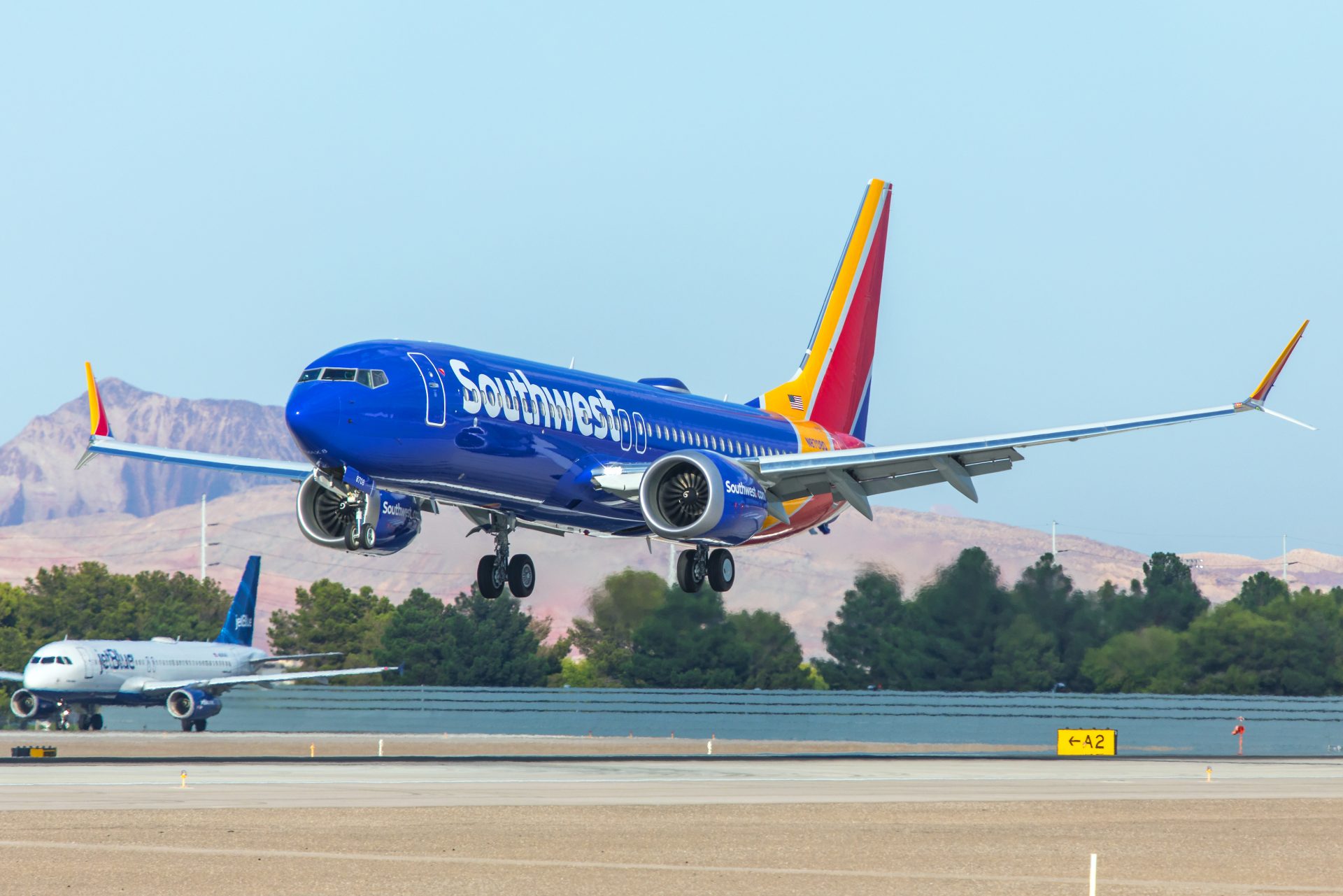
A Southwest 737 MAX 8 over the threshold in Las Vegas. (Photo: AirlineGeeks | William Derrickson)
After receiving the green light to re-enter commercial service in the U.S. in Nov. 2020, the Boeing 737 MAX received a major vote of confidence when Southwest topped its previous order for 100 additional jets. The airline now has 380 MAX aircraft on order.
While slots at U.K.’s busiest airport are very hard to come by during a normal year, the pandemic opened opportunities for new airlines to enter the market. JetBlue has successfully secured an extension of its slots at Heathrow until at least fall of 2022.
In a year when multiple airlines expedited the retirement of its 747s, one unique 747-300 made an unexpected return to the skies. After over five years of work, a heavy C-check and with two engines replaced through the cannibalization of EP-MND, a retired Boeing 747-300 also previously owned and operated by Mahan Air, the aircraft was able to return to service.
Boarding Avelo’s first ever commercial flight in Burbank. (Photo: AirlineGeeks | Taylor Rains)
Avelo was the first of three new airlines to take off in the U.S. in 2021. Since commencing operations in Burbank, Calif., the airline has also added an east coast base. Just a few weeks later, Breeze Airways operated its first flight from Tampa, Fla. The airline has since added its first Airbus A220 to its fleet and announced additional destinations for 2022. Aha! Airlines — the reincarnation of ExpressJet — began operations from Reno, Nev. in late 2021.
The European aircraft manufacturing giant said in a statement that it booked a bottom-line net profit of $440 million during the January to March period, compared with a loss of $581 million from the previous year. The manufacturer received orders for 906 jets in 2021 — outpacing Boeing by 58 orders.
Irish low-cost carrier Ryanair found itself in the middle of an international political incident when one of its flights was forced to divert to a foreign capital, and one of its passengers was apprehended by law enforcement.
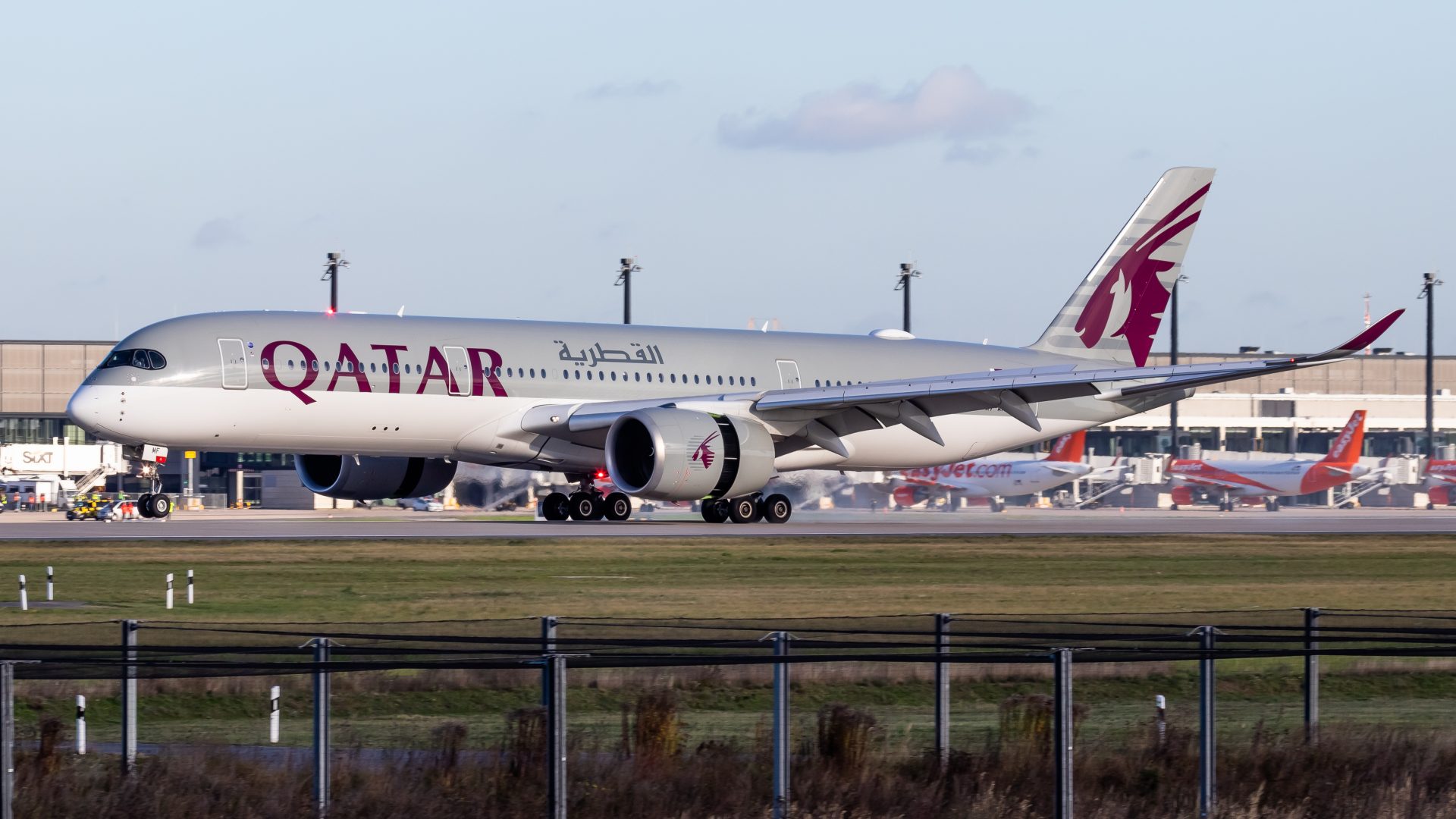
Qatar Airways A350-900 A7-AMF touching down on runway 25L at Brandenburg Airport (Photo: AirlineGeeks | James Dinsdale)
At the request of Qatar’s aviation regulators, the nation’s flag carrier has grounded 21 Airbus A350 jets. The airline recently sued Airbus as the dispute between the two companies continues.
United Airlines and start-up company Boom Supersonic announced an agreement for up to 50 supersonic aircraft to be delivered from 2029. The airline also made headlines this year when it announced an order for 270 narrow-body jets as well as an investment in Heart Aerospace’s electric aircraft.
Boeing’s first 737 MAX 10 arriving after an initial test flight (Photo: AirlineGeeks | Katie Bailey)
The Boeing 737 MAX 10 is the largest version of the latest type of the Boeing 737 family. Boeing touts the MAX 10 to offer up to 204 seats in two-class configurations and 230 seats in a single class. The aircraft offers the shortest range of the family at 3,300 nautical miles but has the largest length at 143 feet, 8 inches.
The Secretary of Defense officially ordered the third activation in the history of the Civil Reserve Air Fleet — utilizing Stage 1 of its operations. Previously, the Civil Reserve Air Fleet served in Operation Desert Shield/Desert Storm from August 1990 to May 1991 and Operation Iraqi Freedom from February 2002 to June 2003. The program was launched after the Berlin Airlift, which took place in the late-1940s.
Italia Trasporto Aereo (ITA) succeeded Alitalia as Italy’s flag carrier with a fresh balance sheet, 52 aircraft from its predecessor and 2,800 employees on Oct. 15.
The new engine will be installed on a De Havilland Q400, operated by Alaska’s wholly-owned subsidiary Horizon Air. Alaska and ZeroAvia will work together to modify one of ZeroAvia’s existing powertrains to a new ZA2000 engine family that will be able to produce between 2,000-5,000 kilowatts of power.
An SAS A320 in Oslo. (Photo: AirlineGeeks | William Derrickson)
The move was followed by other local carriers Norwegian, Flyr and Widerøe, the latter two of which have route networks that are much more heavily concentrated within the Nordic countries. In the U.S., the TSA has extended its mask mandate through March 18, 2022.
Play is bringing competition back to Iceland after the closure of WOW Air. The airline commenced flights in June and will begin flights to the U.S. this year. Play’s first U.S. destinations will be Baltimore/Washington International Airport and Boston.
Emirates’ final Airbus A380 delivery. (Photo: Emirates)
As the year came to a close, Airbus also delivered the 251st and final A380 to Emirates. The end of 2021 also marked the return of the A380 back into the skies for multiple airlines including British Airways, Singapore Airlines and Qatar Airways.
AirlineGeeks 2021 Review
2021 was another significant year for AirlineGeeks.com. We welcomed readers from 235 countries to our website. Internally, we grew our team with eight new writers based in countries around the globe including Australia, China, Indonesia, Italy and Singapore. As the site continues to grow, we are continuing to recruit for various positions. Additionally, we hosted multiple webinars including a unique discussion with Honeywell’s chief pilot.
As we take off into 2022, we look forward to expanding our global coverage of the aviation industry and look forward to hosting several exciting events for our readers.
Most importantly, we would like to thank all of our readers for your continued support, and we can’t wait to show you what we have in store for the future.
While there were many unique stories to hear this year, the following list includes some of our favorite exclusives that we posted in 2021.
Mateen has been interested in aviation from a very young age. He loves learning about different aspects of the industry. Mateen has been an editor for the website since early 2017. Most recently, Mateen is additionally the website’s overall strategist. In addition to writing for AirlineGeeks, Mateen is a sophomore at the University of Texas studying Human Dimensions of Organizations. You can also find him on Instagram (@Plane.Photos) where he enjoys sharing his aviation photography with thousands of people on a daily basis.
HK-3133X preserved as a hotel room at Hotel Costa Verde, Costa Rica. (Photo: AirlineGeeks | Mark Evans)
Plane hotels have become more and more popular over recent years. From the Boeing 747 hotel at Stockholm’s Arlanda Airport to the TWA Lockheed Constellation at New York’s JFK Airport. Some have actually been converted into hotel rooms while other hotels simply use the aircraft as a theme to entice customers to stay at the hotel.
One of the very first ones was in Costa Rica at Hotel Costa Verde. They helped start a growing trend when they took an Avianca Boeing 727 and turned it into a hotel room amidst the Costa Rican Jungle. Purchased in 2006 the B727 has been available to guests since 2008. Located on the west coast near the town of Quepos the B727 offers panoramic views over the Pacific Ocean and Costa Rican coastline.
The hotel didn’t stop there though. They converted an Aeropostal Douglas DC9 into another room and recently converted a third aircraft. A McDonnell-Douglas MD-82 previously operated by UM Air.
All three have been beautifully renovated with hand-carved teak wood furnishings and have additional outside decking attached to them providing outdoor space for guests. Positioned on the hillside amongst lush rainforest they all offer majestic views out to sea, as well as the local wildlife with sloths, toucans and monkeys living in the surrounding trees.
Another business in Costa Rica followed suit and also converted a B727 into a hotel room. Located a bit further south from Quepos near the town of Dominical sits a former Allegro Air Boeing 727. The Ricar2 El Avion bar-restaurant purchased the aircraft and converted it into the Suites Charter Boutique hotel.
HK-3133X
This Iconic B727 rolled off the production line over 56 years ago in 1965 starting life with South African Airways. After 16 years it found a new home in Africa with Liberia World Airlines before heading across the Atlantic for Colombia in 1984. It flew with Avianca for another 7 years until it was withdrawn from use at San Jose in 1991.
Many parts were removed and the aircraft was left derelict there for many years until the Hotel Costa Verde stepped in to save it in 2006.
TI-AZS
TI-AZS preserved as a hotel room at Hotel Costa Verde, Costa Rica. (Photo: AirlineGeeks | Mark Evans)
First flying in 1968 this DC9 spent almost 20 years in Scandinavia with SAS. It then found its way to Venezuela with Aeropostal who then transferred it to its Costa Rican venture, Aeropostal Alas De Centro America. It was put into storage at San Jose in 2007 and broken up into pieces. Hotel Costa Verde purchased the front fuselage section to be used as a second plane hotel room.
N570SH
N570SH preserved at Hotel Costa Verde, Costa Rica. (Photo: AirlineGeeks | Mark Evans)
The youngest of the pack at a mere 37 years old, the MD-82 started life in 1984 with Continental Airlines. After a brief spell with Vanguard Airlines and a few years in storage, it ended life with UM Air or Ukrainian-Mediterranean Airlines. After a few years in Ukraine, it went back into storage in 2009. It found its way to San Jose in 2011 where it remained parked for several years, eventually being broken by 2018 and moved to the hotel.
The rear of the aircraft is displayed as an exhibition next to the restaurant. Guests are able to walk up the rear stairs and into the fuselage. The front fuselage took a little longer to renovate but has recently become available for guests as an additional hotel room.
N369FA
This Boeing 727 started life in Germany with Hapag Lloyd in 1979. After only 5 years it was sold to Ethiopian Airlines where it spent the next 5 Years. It then spent the next ten years moving around various airlines in Colombia, Spain and South Africa. Lastly, it found a home in Mexico with Allegro Air in 1999.
N369FA preserved as a hotel room near Dominical, Costa Rica (Photo: AirlineGeeks | Mark Evans)
Unfortunately, Allegro Air ceased operations in Nov. 2003 and the aircraft was placed into storage at San Jose. Unable to find another airline it eventually found its new home as a hotel near Dominical in 2010.
Mark has been interested in aviation since the age of eight when he first went plane spotting at Manchester Airport, England. Trips around various European airports in the following years and then to the USA as a teenager furthered his desire.
This led to Mark wanting to work in the industry and at the age of twenty one was accepted to train as an Air Traffic Controller. After training and working for several years in England, Mark moved to Bahrain in the Middle East where he worked for six years. He then moved to Sydney, Australia where he resides today after twenty years in the profession.
Mark's pursuit to see planes has seen him visit over 140 countries and territories, including places, like North Korea, Sudan and Iran. He has flown over 1,100 times, visited over 700 airports and can always be found researching his next trip.
Icelandair Applies for Cuban, Other Charter Flights
Icelandair Boeing 757 wearing the "Vatnajökull" livery (Photo: AirlineGeeks | Joey Gerardi)
It is not unusual for an airline to operate charter flights during schedule downtime. Airlines in the U.S. have been found to operate many sports and athletic charters during off-peak seasons of the year. But Icelandair aircraft have been found in the most unusual places almost on a yearly basis, as the airline has been sending charters to the world’s most uninhabited continent, Antarctica.
The Icelandic airline has applied for an interesting set of flights, this time in a more tropical climate. The airline has requested to the Department of Transportation (DOT) for nearly 276 round-trip flights from the U.S. to Cuba, Ecuador and the Dominican Republic. The company requesting the charter flights, called the “charterer,” is Anmart Superior Travel LLC, a Miami-based travel agency that offers charter packages around the Caribbean and South America.
These charter flights have yet to be approved by the DOT, but the applied for charter flights are as follows:
• Houston Bush – Havana, Cuba >> 17 round-trip flights
• Orlando – Havana, Cuba >> 21 round-trip flights
If approved, all of the flights will take place between Feb.1, 2022, and May 31, 2022, with the exception of four of the 17 Orlando-Havana flights, which would take place between Jan. 11, 2022 and Feb.1, 2022. The aircraft type that would be operated on the routes wasn’t mentioned in the application but could be either of the airline’s aircraft types, the Boeing 757 or 737 MAX.
An Icelandair 737 MAX 9 landing at Paine Field after a test flight. (Photo: AirlineGeeks | Katie Bailey)
Charter flights to Cuba from the U.S. have become very popular, especially the Miami to Havana flights, of which Icelandair has applied to operate 136. Like anything, there will be — and has been — major opposition from the current operators on the route. Perhaps the largest charter airline flying between the U.S. and Cuba is Swift Air LLC, and they have sent in a letter to the DOT heavily objecting to the Icelandic carrier’s application, which they call a “Memorandum of Objection.”
Since the Swift Air objection letter was posted, two other charter airlines operating the Florida to Cuba sector have chimed in and joined Swift’s objection to the Icelandair application. The other two airlines are Caribbean Sun Airlines — a.k.a. World Atlantic Airlines — and recently started U.S.-based carrier Global Crossings Airlines a.k.a. GlobalX.
None of the objections mention any Icelandair’s applied for routes except flights to Cuba, with GlobalX specifically mentioning the Miami and Orlando flights. The Icelandic carrier submitted a reply to the objections from the three airlines, saying that “Swift’s objection is entirely misplaced and does not warrant denial of the instant applications” and that the Department of Transportation “should properly grant Icelandair’s requested allotment from the 2021-2022 Cuba pool.”
With the proposed Orlando to Cuba flights tentatively beginning in less than two weeks on Jan.11, 2022, the DOT should be posting a response to the airline’s objections, as well as the decision regarding Icelandair’s application very soon. None of the cities that Icelandair has applied for, except Orlando, currently offer scheduled flights onboard Icelandair, so this could be a great spotting opportunity for those in any of the mentioned cities, especially Miami, which could possibly see daily charter flights on Icelandair aircraft.
Joey has always been interested in planes for as long as he can remember. He grew up in Central New York during the early 2000s when US Airways Express turboprops ruled the skies. Being from a non-aviation family made it harder for him to be around planes and would only spend about three hours a month at the airport. He was so excited when he could drive by himself, the first thing he did with his driver's license was get ice cream and go plane spotting for the entire day. He graduated from Western Michigan University in 2022 with a B.S. in Aviation Management & Operations and a Minor in Business, and currently works for a major airline in his hometown.
ITA Airways Launches ‘Superior Class’ on All Domestic Flights from January 10
An ITA Airways Airbus A320 with the new livery at Leonardo Da Vinci International Airport. (Photo: Massimiliano Ciriaci)
According to ITA Airways, the Italian national airline offers three travel classes onboard its aircraft: Business Class on long- and medium-haul flights, Premium Economy on long-haul flights only, and Economy. However, on Dec. 26, the airline launched its new Superior Class, a service that was present in old Italian flag carrier Alitalia but had since been eliminated. Superior Class will be available on some domestic flights, and later — after Jan. 10 — it will be available throughout the airline’s entire domestic network.
ITA Airways Superior Class passengers will be able to check-in at the Skypriority counters, check two pieces of luggage weighing 23 kilograms each for free, use the fast track system to quickly pass through security gates — at Rome Fiumicino, Milan Linate, and Turin airports — and have access to priority boarding at the gate.
In addition, customers will have a reserved cabin and the guarantee of always having a free seat next to them, and a dedicated and differentiated catering service according to the time of day.
An Airline Still Unprepared
The cost of the Superior Class ticket is approximately double that of the Economy Class, but on paper, it offers more advantages. However, the airport lounges a Superior Class ticket promises access to are still inactive, and the waiting rooms in Milan and Rome are closed.
Moreover, although the first aircraft with the new livery is already operational, the interior of the cabin is all still branded “Alitalia”, plastic cups, seats, handkerchiefs, etc.
However, the airline is working to put its best foot forward. Following the Italian government’s requirement for compulsory FFP2 masks onboard, ITA Airways has made available 100,000 courtesy FFP2 masks for all its flights for those who board with surgical and/or unauthorized masks for air travel. This is another sign of the customer-first strategy.
Moreover, in a press release, ITA Airways reminds that “all aircraft in the fleet are sanitized with high sanitizing products every day and that the air on board, is not only renewed every 3 minutes but is 99.7% pure, as in a cleanroom.”
ITA has ended its short stint in 2021 and is forecasting strong results for 2022. In its short period of operation, ITA Airways carried 1.25 million passengers, thus surpassing the million passenger target predicted by the airline’s chairman. According to the Italian newspaper Corriere Della Sera, the carrier brought in an estimated 74 million euros in revenue in the period from Oct. 15 to Dec. 31.
In 2022, the president expects the airline to surpass 13 million travelers and hire at least 1,000 people based on market trends, reaching about 3,000 total employees. Next year, the fleet — currently 52 aircraft — will reach 84 aircraft with new Airbus aircraft.
Vincenzo graduated in 2019 in Mechanical Engineering with an aeronautical curriculum, focusing his thesis on Human Factors in aircraft maintenance. In 2022 he pursued his master's degree in Aerospace Engineering at the University of Palermo, Italy. He combines his journalistic activities with his work as a Reliability Engineer at Zetalab.