









Stories

Breeze Airways Adds New Routes For Early 2022

Breeze Embraer
A Breeze Embraer taxies for takeoff. (Photo: Cean One Studio | Cean Orrett)

On Monday, U.S.-based startup Breeze Airways announced the addition of two destinations to its route network, boosting its route portfolio to a total of 18 destinations and 42 routes. Specifically, the airline is adding eight flights to Long Island’s MacArthur Airport in New York and Palm Beach International Airport near West Palm Beach, Fla.

New Offerings

From Feb. 17, Breeze Airways will initiate flights from Long Island, N.Y. to Norfolk, VA, four times a week on Thursdays, Fridays, Sundays and Mondays. In addition, the airline will commence flights from Long Island, NY  to Charleston, S.C., two times a week on Fridays and Mondays, starting Feb. 18.

Meanwhile, from February 19, 2022, Breeze Airways will start six flights from West Palm Beach, Fla. to Akron/Canton, Ohio; Charleston, SC; Columbus, Ohio; Norfolk, VA; Richmond, VA and New Orleans. 

“Breeze’s business model is to add “nice, new nonstop” flights on routes where only connecting service is offered by other carriers,” Breeze’s Chairman and CEO, David Neeleman, said in a statement. “We’re excited to introduce Breeze service to South Florida and the New York area, and look forward to adding more routes from both Palm Beach and Islip.”

Long Island’s MacArthur Airport serves as a secondary airport in the New York City area near Islip, N.Y., primarily targeting travelers on Long Island in New York. Islip will see a new fourth carrier join its network and add two destinations, adding new options other than services on American, Frontier and Southwest. Meanwhile, Palm Beach International Airport serves West Palm Beach, Fla. and the surrounding South Florida area. The airport will gain a new carrier for a total of 16 airlines and add six destinations to its route network.

Based on schedule data, none of Breeze Airways’ new routes face any direct competition as part of the airline’s plan to serve underserved routes. In an interview with AirlineGeeks earlier this year, Neeleman detailed 700 unserved city pairs that Breeze Airways intends to target. 

Breeze Airways will launch these flights with its’ fleet of 13 Embraer E190s and E195s. The Embraer E190 features an Economy class configuration with 108 seats, while its Embraer E195 features an Economy class configuration with 118 seats. 

In mid-2022, the carrier will start services with its first Airbus A220s, broadening Breeze Airways’ range to transcontinental flights or even international flights across the Atlantic or the Pacific to Hawaii. These aircraft will feature 126 seats, including 36 first-class seats, ten extra-legroom seats and 80 economy seats.

Rise Of U.S. Airline Startups

Earlier this year in May, Breeze Airways revealed its initial route network, comprised of 39 routes and 16 destinations. Primarily, its announcement revolved around four major airports: Charleston, New Orleans, Norfolk and Tampa, Fla., flying to underserved destinations like Huntsville, Ala. and Bentonville/Fayetteville, Ark.

Over these past months, Breeze Airways tweaked its network to optimize its service and fleet. The airline cut routes from New Orleans and San Antonio to both Tulsa, Okla. and Oklahoma City, in addition to New Orleans to Huntsville, Ala. Moreover, Breeze Airways tinkered with its schedules by boosting and cutting frequencies to select routes like Charleston to Akron/Canton.

Breeze Airways is not the only airline startup in the United States making headlines. Avelo Airlines — An airline startup targeting secondary markets — launched its first flights from New Haven, Conn. on the East Coast in November. The Houston-based airline intends to launch six destinations from New Haven, one of which is West Palm Beach.

Avelo Airlines operates another base in Burbank, Calif., where it flies to underserved markets on the West Coast. In addition, American startup Aha! — formerly ExpressJet — launched flights from Reno, NV to a variety of airports on the West Coast. 

Winston Shek

Ever since Winston was a toddler, he has always had a fascination for airplanes. From watching widebodies land at Washington Dulles to traveling the world, Winston has always had his eyes towards the skies. Winston began aviation photography in 2018 and now posts his photos occasionally on his Instagram account. He previously wrote for a blog. In his free time, Winston loves to play chess, do recreational activities, and watch sports. Looking into the future, Winston plans to service the aviation industry.

Virgin Australia Inks Agreement With Link Airways.

Virgin Australia Boeing 737-800
Virgin Australia B737-800 Departing Sydney
Virgin Australia has signed an exclusive agreement with Link Airways to restart Sydney to Canberra, Australia services. Flights will commence from 30 January 2022. They will operate 53 times per week, adding up to 16,250 seats between the two cities each month. 
 
The route — which was first paused in April 2020 at the height of the pandemic — will be operated using Link Airways’ Saab 340B+ aircraft and crew, with up to 9 flights per weekday available to be booked now on Virgin Australia’s website.
The resumption of Sydney-Canberra services will be good news for corporate, leisure and government sector customers who will now have more choice and flexibility when traveling to and from Capital Hill. 
The agreement with Link Airways will extend Virgin Australia’s domestic network into markets that its’ own Boeing 737-800 aircraft cannot serve effectively.  As the airline quickly ramps up capacity across domestic and short-haul international services it will continue to evaluate new destinations and opportunities to connect Australia.  
“Canberra is a very important destination for Virgin Australia and we’re excited to re-launch a Sydney-Canberra service,” Virgin Australia Group CEO Jayne Hrdlicka said “We’ll also continue to offer some of the best value fares in the market which are now available to be booked via our website.”
“Virgin Australia is always looking for new ways to connect Australians and today’s announcement is a really great example of how we are working strategically to benefit our customers. Our Sydney-Canberra services is the 15th new service we have added to our domestic network since September, and we are looking forward to launching many more next year,” Hrdlicka added.
Link Airways was formerly known as Corporate Air. Corporate Air is still the parent company but it rebranded in August 2020. It has bases in Canberra, Goulburn and Brisbane, operating to destinations across Australia in New South Wales, Queensland and Tasmania . The fleet comprises of 5 Saab 340Bs and 3 Fairchild Swearingen Metroliners.
Link Airways CEO, Andrew Major said “Link Airways are excited to work with Virgin Australia on the resumption of their services connecting Canberra and Sydney. The frequency of the services offered is a strong indication of the value Virgin Australia places in facilitating connections between Canberra and interstate destinations. As a Canberra headquartered airline, we particularly look forward to the commencement of the services in January”.  

Mark Evans

Mark has been interested in aviation since the age of eight when he first went plane spotting at Manchester Airport, England. Trips around various European airports in the following years and then to the USA as a teenager furthered his desire. This led to Mark wanting to work in the industry and at the age of twenty one was accepted to train as an Air Traffic Controller. After training and working for several years in England, Mark moved to Bahrain in the Middle East where he worked for six years. He then moved to Sydney, Australia where he resides today after twenty years in the profession. Mark's pursuit to see planes has seen him visit over 140 countries and territories, including places, like North Korea, Sudan and Iran. He has flown over 1,100 times, visited over 700 airports and can always be found researching his next trip.

LATAM Colombia Launches New Routes, Adds A320s

LATAM
A LATAM Brasil A320 taxies in São Paulo/Guarulhos. (Photo: AirlineGeeks | João Machado)

LATAM Colombia this week inaugurated five new routes of the seven it announced last October, with which it reaches a total of 32 routes in its rapidly expanding domestic network. With this growth rate, the recovery of the Colombian LATAM Airlines Group subsidiary projects this month will reach 135% of traffic during December 2019.

In a press release, LATAM Colombia informed that Cali, Colombia will be connected with Pasto, Colombia via a daily flight and with Monteria, Colombia via three-times-weekly flights operating on Tuesday, Wednesday and Sunday.

For its part, Medellín, Colombia will have two new routes: Pereira and Leticia, Colombia. The first will operate with a daily flight for a total of seven weekly frequencies, while the second will have five frequencies and will operate from Monday to Friday. Finally, Pereira will see the addition of the direct route to Cartagena, Colombia with one daily flight.

In addition, the airline will add three Airbus A320 aircraft to its fleet during the month of December with a capacity of 177 passengers each to support the growth of its domestic network.

After the additions, the fleet in Colombia will be made up of 24 aircraft, 22 that will be in operation and two back-up aircraft that will be oriented to continue strengthening the levels of compliance and service of the operation in the South American country.

10 Years In

The LATAM Airlines Group subsidiary recently celebrated 10 years in the country. In this period, the carrier reached a 25% share in the national market, operating 34 routes in 17 destinations and has a fleet of 24 aircraft transporting more than 600,000 passengers per month.

Its strategy has been aimed at challenging the paradigms of the Colombian market in areas such as punctuality, sales model, digital transformation and sustainability.

During this time, it managed to bring the levels of punctuality that were around 40% upon arrival in Colombia, to levels higher than 90% in 2015, being recognized as the most punctual airline in the country and consolidating punctuality as the basis of its offer of service and a primary attribute in the sector.

In 2017, LATAM Colombia was the first carrier to introduce the sales model under the “branded fares” scheme, which allowed passengers to personalize their travel experience and pay only for the services they want to use, revolutionizing the local market.

Its most recent achievement was the launch of the LATAM Airlines Group’s sustainability strategy, which raises clear and ambitious commitments on issues such as circular economy, climate change management and generation of shared value.

In this way, the Colombian carrier’s goals were defined such as being carbon neutral in 2050, the elimination of single-use plastics by 2023 and being a zero-waste airline to landfill by 2027.

Juan Pedro Sanchez Zamudio

The three things Juan Pedro loves most about aviation are aircraft, airports, and traveling thousands of miles in just a few hours. What he enjoys the most about aviation is that it is easier and cheaper to travel around the world and this gives you the opportunity to visit places you thought were too far away. He has traveled to different destinations in North, Central, South America and Asia. Born, raised and still living in Perú, Juan is a lawyer, soccer lover, foodie, passionate traveler, dog lover, millennial and curious by nature.

Air North Announces Toronto to Yukon Route

Tail of an Air North 737-500 in Yellowknife, N.W.T. (Photo: AirlineGeeks | Joey Gerardi)

Air North — more commonly known as Yukon’s Airline — will be bringing its services to Canada’s biggest city, Toronto, with flights to Whitehorse, Canada, the capital of the Yukon Territory, beginning next summer. The new route will operate twice a week onboard the carrier’s largest aircraft, a Boeing 737-500, which is becoming a rarity on this side of the globe and is only operated by just a few airlines worldwide. Flights to Whitehorse from Toronto will operate via a stop in the Northwest Territories capital of Yellowknife, Canada.

An Air North Boeing 737-500 in Yellowknife, N.W.T. (Photo: AirlineGeeks | Joey Gerardi)

The new service was announced via the airline’s Twitter page on Nov. 25. Although this is the first time ever that Toronto will be receiving nonstop service to Canada’s far north, it’s not the first time the Province of Ontario will offer service, as Air North has been providing seasonal service between Ottawa and Yellowknife since 2014.

Flights to Toronto will begin on May 10 and will operate on Tuesdays and Thursdays out of the Whitehorse and Yellowknife with the return flight from Toronto leaving on Wednesdays and Fridays. Flights will be complemented with the airline’s once-weekly service from Yellowknife to Ottawa that operates on Saturdays.

The flight will depart from Whitehorse around 9 a.m. local time with a connection in Yellowknife and will arrive in Toronto around 6 p.m., with the return flight departing Toronto the next morning around 11 a.m. and arriving back in Whitehorse around 3 p.m. after a stop in Yellowknife. All flights and schedules are subject to change.

Joey Gerardi

Joey has always been interested in planes for as long as he can remember. He grew up in Central New York during the early 2000s when US Airways Express turboprops ruled the skies. Being from a non-aviation family made it harder for him to be around planes and would only spend about three hours a month at the airport. He was so excited when he could drive by himself, the first thing he did with his driver's license was get ice cream and go plane spotting for the entire day. He graduated from Western Michigan University in 2022 with a B.S. in Aviation Management & Operations and a Minor in Business, and currently works for a major airline in his hometown.

Belavia Looks to New Leasing Options Following EU Sanctions

A Belavia Embraer 195 departing Berlin Brandenburg Airport. (photo: AirlineGeeks | James Dinsdale)

In the wake of the standoff at the Poland-Belarus border, the national airline of Belarus is looking for an alternative arrangement for future leasing deals that parts ways with leased aircraft that are tied to the European Union.

The airline itself was called out this fall after being accused of bringing migrants from Iraq and Yemen to Belarus and having them walk to the border in response to the European Union showing doubt regarding the legitimacy of Belarusian President Alexander Lukashenko’s rule. The nation has been on rough terms since the arrest of oppositional journalist Roman Protasevich this summer, which ultimately led to the European body banning Belavia from flying throughout the block.

But after the latest attempt to flood the European Union with migrants, the tensions have risen to a new level. The organization has stepped up sanctions and empowered allies on the border with Belarus as they face the consequences of their unruly neighbor.

Margaritis Schinas, the Vice President for Promoting our European Way of Life, commented on the ruling, saying, “In the past weeks, we have managed to bring the EU’s collective weight to bear in face of the hybrid attack directed at our Union. Collectively, the EU made clear that attempts to undermine our Union will only solidify our solidarity with one another.  Today we are giving living manifestation to that solidarity: in the form of a set of temporary and exceptional measures that will equip Latvia, Lithuania and Poland with the means needed to respond to these extraordinary circumstances in a controlled and swift manner and to operate in conditions of legal certainty.”

Big Consequences for Belavia

The fallout of the impact is the national airline rethinking both its fleet and leasing strategy. Belavia noted that it would slash its fleet by nearly 50%, downsizing from 29 aircraft — split from 14 Boeing 737s and 15 Embraer E-Jets — to just 15 aircraft.

The airline has previously relied on leasing aircraft from Irish-based lessors like Air Lease Corporation but has found working with a Western Europe-based leasing company has become increasingly unbearable as the European Union and U.S. have put pressure on the nation. According to the Centre for Aviation’s database, Belavia has a mix of Embraer and Boeing aircraft tied to leasing companies like AerCap, SMBC Capital, Air Lease Corporation and Nordic Aviation Capital.

The aviation leasing world has sought refuge in Ireland for decades, finding the nation’s legal system conducive for doing business all over the world. The country also has a reputation as a tax haven for U.S. companies. Companies like AerCap, BOC Aviation and Air Lease Corporation have held offices in Ireland for the goal of negotiating lease deals in a nation that follows the Cape Town Convention, which allows for a smoother repossession of an asset in the face of a leased aircraft falling into the hands of a financially failing airline.

Belarus, which also follows the Cape Town Convention’s rulings, will not see the brunt of the changing fleet according to the airline for the time being, and the government will continue to support the airline. Belavia said that it will begin pursuing lease deals with companies that do not have ties to the European Union. The airline said that its existing fleet will continue to provide enough aircraft to run its current schedule and will have its fleet replenished by the summer of 2022.

The airline was not ready to talk about any fleet changes, but a reduced flight schedule as the airline has still not been allowed reentry to Europe. Belavia says it can still operate its current route map with no issues and does not plan to lose any vital aircraft in the short term. The airline says that the reduction on the European alliance will reduce stress at the airline and will prevent assets from being suck in distant nations.

Members noted that talks with leasing companies have become increasingly difficult the last six months and even seen the European Union put pressure on these companies to track Belavia aircraft to prevent the border crisis back in November. Getting out of contracts will be difficult for Belavia, with deliveries of aircraft like the Boeing 737-8 MAX happening as recently as the previous summer season prior to sanctions beginning.

Ian McMurtry

Although Ian McMurtry was never originally an avgeek, he did enjoy watching US Airways aircraft across western Pennsylvania in the early 2000s. He lived along the Pennsylvania Railroad and took a liking to trains but a change of scenery in the mid-2000s saw him shift more of an interest into aviation. He would eventually express this passion by taking flying lessons in mid-Missouri and joining AirlineGeeks in 2013. Now living in Wichita, Kansas, Ian is in college majoring in aerospace engineering and minoring in business administration at Wichita State University.

The Revived Jet Airways Is Preparing A Huge New Aircraft Order

A Jet Airways 777-300 landing at London Heathrow (Photo: AirlineGeeks | William Derrickson)

According to reports, the new owners of India’s former full-service airline Jet Airways are in negotiations with aircraft manufacturers about placing a large order. Jet Airways’ ambitions for a comeback have seized the interest of industry insiders, former Jet fans, and aviation enthusiasts for months. The news of the airline’s probable billion-dollar aircraft deal has given the carrier’s second attempt at flying even more momentum.

Taking The Indian Market By Storm

According to Bloomberg News, Jet Airways’ new owners, the Jalan-Kalrock Consortium, are in talks with both Boeing and Airbus about placing an order for at least 100 narrowbody planes, with a budget of roughly $12 billion.

Ankit Jalan, the nephew of one of the winning bidders, Murari Lal Jalan, spoke with Bloomberg about the revival plan for Jet 2.0 — as some have taken to calling it. If all goes according to plan, the company might invest roughly $200 million in the next six months through equity and loans.

The newest development comes after a string of events in the airline’s resurrection efforts, including the new owners winning the bid and the National Companies Law Tribunal approving Jet’s revival plan in June, as well as the renewal of the airline’s Air Operator Certificate.

Speaking about how Jet is gearing up for its relaunch in the coming few months, Jalan told Bloomberg, “We are working on all the things that we need to do to make an airline operational — whether that’s the training infrastructure, whether that’s the IT systems, whether it’s the marketing plan — all that is being worked upon as we speak. All these things will come beautifully together in the next two or three months.”

Airbus or Boeing?

Jet Airways is down to just a few planes and will need to consolidate its fleet before resuming operations. The company’s long-term expansion strategy is matched with the goal for 100+ jets, and the recent rumor has many asking if the new planes will be American or European.

With the A320neo family of planes, Airbus has a hit on its hands, with clients waiting up to place orders. The European manufacturer’s delivery slots are, of course, fully occupied for several years. However, if a contract with Jet materializes, it has been said that Airbus is searching for a possible early delivery timetable.

A Jet Airways 777 in Amsterdam (Photo: AirlineGeeks | Fabian Behr)

Then there’s Boeing, which has lately re-entered India’s narrowbody market thanks to a lucrative agreement with Akasa Airlines. Boeing might give comparable pricing to Jet to outbid its European competitor and strengthen its position in India. Jalan also hinted that Boeing could dust off the previous order of 225 Boeing 737 MAX airplanes by Jet before it went under.

Creating A New Space

Since Jet Airways’ collapse in 2019, India’s aviation environment has changed dramatically. Jet’s new owners are injecting working capital to restore a full-service airline at a time when India’s skies are expected to see a massive influx of passengers.

Jet’s second stint, according to Jalan, will be similar to the first: It will be a full-service airline with a business class and a frequent flyer program. The airline will try to court business travelers once more, especially on major trunk routes, as it did in the past.

But, with the Tatas likely to merge Air India and Vistara to create a robust full-service offering and the domestic market dominated by ever-hungry low-cost airlines, the biggest remaining question is how much room exists for Jet 2.0.

Jalan believes there is “enough room” in India for more airplanes and says that Jet also has the advantage of its legacy and loyal customer base, stating,

“The reaction that we saw of the Jet Airways brand coming back was motivation in itself. That’s exactly why Jet is coming back; to serve the loyal fan base, to serve the people who miss Jet.”

Putu Deny Wijaya

Putu Deny Wijaya was always an aviation enthusiast by heart, growing up in Indonesia where air transport is very vital. His first love is The Queen of The Skies, serving the trunk routes between Jakarta and Denpasar. He brought along this passion with him throughout college by conducting his bachelor study abroad in the Netherlands for the purpose of experiencing a nonstop 14-hour long-haul flight. For Putu the sky's the limit when talking about aviation. He hopes that he would be able to combine his passion for aviation and knowledge of finance at the same time.

Ryanair Announces Strategic Partnership to Boost European Destinations

A Ryanair 737 descends into Milan. (Photo: AirlineGeeks | Fabian Behr)

Ryanair has announced a partnership with Junta de Andalucía to promote tourism to Spain’s southernmost region. The joint communications campaign aims to strengthen Spain’s position as an attractive tourist destination and to stimulate visitors from across Europe. The airline specifically highlights the following European countries as targets for the campaign: Belgium, Denmark, France, Germany, Italy, Ireland, Norway and Sweden.

Dara Brady Ryanair’s Director of Marketing said: “We have already significantly increased connectivity to/from the Spanish region with the introduction of new routes and additional frequencies from across Europe. This partnership will further promote this beautiful region and Ryanair’s network of low fare routes to Spain, which are becoming increasingly popular among our growing customer base as they plan their well-deserved new year breaks.”

Eurocontrol has reported that flights arriving and departing Spain are only 20% below 2019 levels as of 01 December. The country also ranks fourth below Germany, the United Kingdom and France for the number of arrivals and departures. However, those countries are operating significantly fewer flights this year as a percentage compared to 2019 levels.

The Andalucian region is famous for its Moorish architecture, region of hills, clear-blue rivers, and cuisine. Vice President and Minister for Tourism of the Regional Government of Andalucía, Mr. Juan Marín said: “We are very excited to work with Ryanair, Europe’s no.1 airline, on this incredibly important campaign promoting Andalucía as an attractive tourism destination for European travelers.”

Ryanair continues its positive bounce back from the troubles of 2020 with 10.2 million passengers carried in November. This compares to only 2 million travelers in the same month last year when Europe had significantly more lockdowns in effect, particularly in the crucial UK market. Crucially the 62,300 flights operated last month were 86% full compared to a load factor of only 62% in November 2020.

Ryanair’s announcement on traffic figures follows last week’s update that the airline has added 560 new routes and opened 14 bases throughout the last 12 months. The airline is also expected to receive 65 new B737-8200 aircraft for 2022’s summer season. An aircraft that the carrier has touted as ‘Gamechangers’ with each plane offering four percent more seats, 16% less fuel consumption and a 40% reduction in noise emissions.

However, with the reintroduction of travel restrictions in the UK and across other key markets in Europe the next few months will again be uncertain for the Irish carrier and the aviation industry.  Therefore Ryanair has its sights set on a rebound for summer 2022 and an increase in leisure travel once the winter months are over. To bolster this the airline has had several aggressive marketing campaigns to coincide with the now worldwide Black Friday and Cyber Monday periods.

John Flett

John has always had a passion for aviation and through a career with Air New Zealand has gained a strong understanding of aviation operations and the strategic nature of the industry. During his career with the airline, John held multiple leadership roles and was involved in projects such as the introduction of both the 777-200 and -300 type aircraft and the development of the IFE for the 777-300. He was also part of a small team who created and published the internal communications magazines for Air New Zealand’s pilots, cabin crew and ground staff balancing a mix of corporate and social content. John is educated to postgraduate level achieving a masters degree with Distinction in Airline and Airport Management. John has held the positions of course director of an undergraduate commercial pilot training programme at a leading London university. In addition he is contracted as an external instructor for IATA (International Air Transport Association) and has been a member of the Heathrow Community Fund’s ‘Communities for Tomorrow’ panel.

Viva Aerobus, Allegiant Announce Low-Cost Alliance

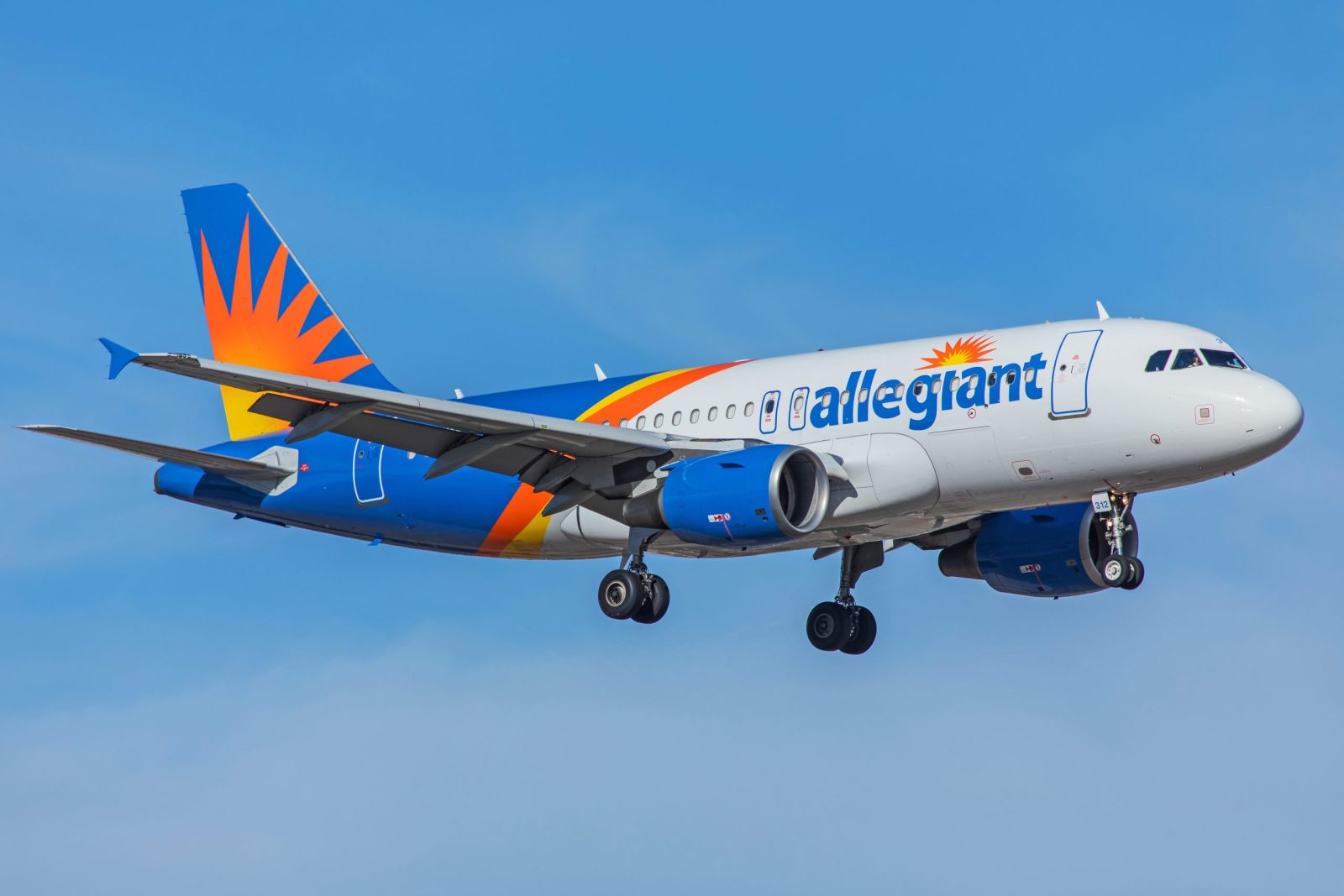
Allegiant A319
An Allegiant A319 in Las Vegas. (Photo: AirlineGeeks | William Derrickson)

Allegiant and Viva Aerobus announced on Wednesday their intention to set a fully integrated Trade Alliance Agreement designed to significantly expand the low-cost, nonstop flight alternatives between the U.S. and Mexico. This alliance is the first agreement of this nature in the aviation industry between two ultra-low-cost airlines.

Allegiant and Viva Aerobus have submitted a joint petition to the U.S. Department of Transportation (DOT) requesting antitrust approval and immunity for the alliance agreement. Allegiant will also make a $50 million equity investment in Viva Aerobus, and its President and CEO, Maurice J. Gallagher, Jr. is expected to join the Viva Aerobus Board of Directors.

These operations are also subject to prior authorization from the Federal Economic Competition Commission. According to a press release published by the Mexican ultra-low-cost carrier, the unique value proposition of its products, its extensive route network and the market experience of two of the world’s fastest-growing ultra-low-cost airlines, the alliance will achieve significant consumer benefits that would not be possible to achieve independently.

Allegiant, based in Las Vegas is an ultra-low-cost carrier focused exclusively on leisure travel, which currently offers nonstop flight service to more than 130 cities in this country, with no operations in Mexico.

For its part, Viva Aerobus, based in Monterrey, offers a wide service within Mexico, as well as non-stop flights to the main destinations in the U.S. and Latin America.

This agreement will provide Allegiant’s passengers the opportunity to expand its travel offer to include world-class vacation destinations in Mexico such as Cancun, Los Cabos, Puerto Vallarta, among others.

At the same time, Viva Aerobus will have access to the Allegiant sales and route network, increasing its customer base in the U.S.

A VivaAerobus A320 in Las Vegas (Photo: AirlineGeeks | William Derrickson)

The alliance will also allow Viva Aerobus to add routes in the U.S., particularly in underserved or untapped markets to Mexico where Allegiant has a significant presence such as Las Vegas and other cities in Florida, which are very popular destinations for Mexican tourists.

This fully integrated alliance will allow the coordination between Allegiant and Viva Aerobus in all areas of its operations, including codesharing, scheduling, marketing, information systems and loyalty programs, providing agile access and benefits for customers of both ultra-low-cost carriers. The alliance is expected to generate new cross-border, nonstop routes to destinations where only connecting flights are currently available. More than 250 potential routes have been identified as part of the DOT application, although specific routes will be announced later, following approval of the application.

As of today, Allegiant and Viva Aerobus expect to offer flights under this alliance beginning in the first quarter of 2023, pending government approval. In accordance with national requirements, Allegiant and Viva Aerobus will also be requesting approval of the alliance in parallel with the regulatory authorities in Mexico, including the Federal Economic Competition Commission.

Juan Pedro Sanchez Zamudio

The three things Juan Pedro loves most about aviation are aircraft, airports, and traveling thousands of miles in just a few hours. What he enjoys the most about aviation is that it is easier and cheaper to travel around the world and this gives you the opportunity to visit places you thought were too far away. He has traveled to different destinations in North, Central, South America and Asia. Born, raised and still living in Perú, Juan is a lawyer, soccer lover, foodie, passionate traveler, dog lover, millennial and curious by nature.

Geese Inspire New Airbus Formation Flying Technology

Two aircraft flying in formation in a rendering from Airbus's fello'fly program, modeled after the flight patterns of geese. (Photo: Airbus)

Few aerial sights are as majestic as a V-formation of Canadian geese honking overhead against a blazing autumn sunset.

The last time geese and Airbus made airline history together was when the big migratory birds got sucked into Captain Sully’s Airbus A320 engines over New York City, 208 seconds before his famed landing on the Hudson. That was 2009.

Coincidentally that same year, a group of doctoral Stanford University students entered an Airbus “Fly Your Ideas” contest, an international competition searching new concepts to make commercial aviation more environmentally responsible.

The Stanford team’s pitch was simplicity gleaned from nature: if airlines mimicked the V-formation flying technique of geese, they could save fuel. And beyond reducing fuel costs, also decrease carbon emissions. Decades earlier, scientists learned that birds flying in formation exerted less energy. Similar to humans trudging through snow, the person breaking trail has to use substantially more energy than the followers in their footsteps. Heart monitors strapped to migrating birds showed those flying at the back of the V had slower heart rates than those at the front, and flapped their wings less often, using up less critical energy on long migrations.

Although Stanford’s team didn’t win the contest, Airbus liked their geese idea. So much that eventually, Airbus launched the fello‘fly demonstrator program, hosted within UpNext, their innovation subsidiary created to fast-track future technological breakthroughs.

On Nov. 9, Airbus departed two state-of-the-art Airbus A350s test jets from Toulouse, France. Once airborne the duo commenced a rendezvous, then maneuvered into a tandem position and crossed the Atlantic in formation flight, before landing in Montreal. The event was the first long-haul demonstration of formation flight in regulated transatlantic airspace. The two airliners, flying approximately 1.5 nautical miles apart, were called leader MSN1 and follower MSN59.

So, how does formation flight for airliners work? Geese conserve energy by “surfing” the invisible upwash of smooth air from the flapping wings of the birds ahead. A technique known as wake energy retrieval (WER) allows a trailing aircraft to take advantage of the rotating vortices left behind a lead jet’s wing and retrieve its lost kinetic energy by surfing the invisible air upwash. This upwash enables the following aircraft to benefit from a little free lift.

WER commences once the two jets are separated longitudinally by 1.5-2 nautical miles, and 1,000 feet in altitude. The magnitude of the effect from the updraft varies with the lead aircraft’s weight and wingspan, so aircraft selection plays a significant role. To remain in level flight, the trailing aircraft flies at a pitch-down attitude, descending relative to the upward moving air, tilting the normally vertical lift vector slightly forward. The reduction in drag translates to a reduction in fuel burn.

What did the Airbus trans-oceanic demonstration flights prove? That the long-haul formation concept was feasible, safe, and as predicted – reduced fuel burn and carbon emissions from the trailing jet. Over 6 tons of CO2 emissions were saved on the trip, confirming the potential for more than a 5% fuel savings. Formations are still viable even if the aircraft depart from separate airports, as long as they are within 50 nautical miles of each other.

Yet to many, the very idea of flying in or near vortexes sounds counterintuitive. Or dangerous. Pilots view wingtip vortices and wake turbulence as hazards to avoid, and with good reason.

In 2017 a Bombardier Challenger 604 business jet over the Arabian Sea encountered the wake of an Emirates Airlines Airbus 380, flying overhead in the opposite direction. The two jets were separated vertically by 1,000 ft. As the Challenger got caught in the wake, the business jet rolled to the left multiple times, plummeting 9,000 ft., and pulling a minus 3.2 negative G load in the chaos. Two passengers were badly injured, and the aircraft was later written off as a loss. At the time of the wake encounter, the two aircraft were estimated to already be fifteen miles apart.

The interior of a Challenger jet after a wake turbulence encounter. (Photo: Ops Group)
The interior of a Challenger jet before and after a wake turbulence encounter with a larger aircraft. (Photo: Ops Group)

To enable close in-trail flight, Airbus developed a flight control system that positions the follower aircraft safely in the wake updraft of the leader and keeps the two jets connected and communicating. A ‘sweet spot’ lateral distance must also be maintained as the updraft intensity diminishes the further the trailing jet moves sideways away from the vortices.

Daniel Percy, fello’fly Product Development Director, told Airline Geeks that Airbus test pilots relied on the autoflight system to perform the tasks required for a safe tandem flight. “The two demonstration flights we completed recently have shown that this new technology is capable of doing everything, from preparing the rendezvous, to identifying and then tracking the wake updraft, and also to keeping the aircraft safely positioned in the updraft no matter the weather conditions or leader behavior.”

A sample display for aircraft flying in formation. (Photo: Airbus video)

The visionary project will require strict protocols to assure the airlines and their passengers that the formation flights can be conducted safely. Initially, there could be pushback from industry organizations ranging from flight crew unions to passenger groups, but every great aerospace leap forward has had its detractors. From the first passenger flight to the moon landing. It will be exciting to experience V-flight technology if in the future it becomes mainstream.

To earn the eventual trust of the traveling public, perhaps cargo carriers could be the first adopters of the new technology. But Airbus’ Percy reports that a fully automated formation flight is designed to ensure no impact on comfort, adding that “the findings from our test flights so far have been that there is no difference compared to the cruise phase of a normal flight.” If widely adopted, Airbus predicts fello’fly could eliminate at least 3.5 million tons of CO2 emissions annually. Next steps are to gain widespread industry support so that the new operational concept can be certified.

Bird flight research showed that flying in formation isn’t just about staying in the right place. It also involves wing movements at just the right time, as each trailing bird adjusts their own flapping to stay within the moving zone of free lift. Makes one wonder if someday beyond two jets in tandem, we’ll see entire fleets in formation like flocks of geese, conserving energy for their long-haul journeys across the sky.

Kathleen Bangs

Kathleen Bangs is an Aerospace Journalist of the Year overall winner who specializes in aviation safety. She is a former commercial airline pilot, airline instructor, and check airman. Kathleen can also be seen on-air covering breaking aviation news and airline events.

Vietnam Airlines Debuts Regular US Direct Flight

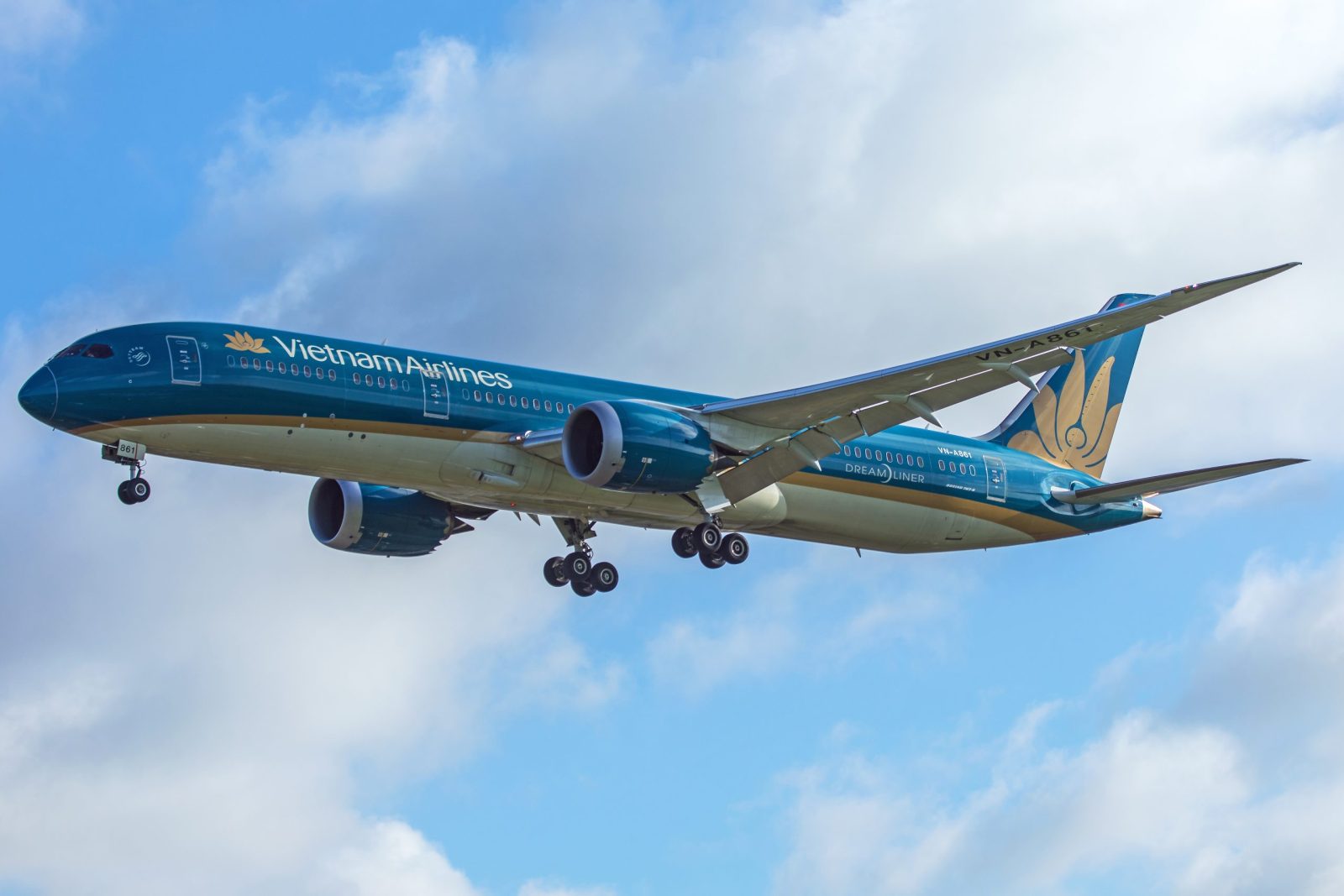
A Vietnam Airlines Boeing 787 Dreamliner
A Vietnam Airlines Boeing 787 Dreamliner on approach into London's Heathrow Airport. (Photo: AirlineGeeks | William Derrickson)

Vietnam Airlines has launched its first nonstop flight to the U.S. On Nov. 28th, the flight from Ho Chi Minh City arrived at San Francisco International Airport at 6:42 p.m. The inaugural trip from Ho Chi Minh City to San Francisco, designated flight VN98, took off at 8:40 p.m. local time on Nov. 28. The Boeing 787-9 Dreamliner, registered VN-A861, crossed the international dateline and landed at SFO after a journey of slightly over 13 hours and a 15-hour time change.

Vietnam Airlines is emphasizing the fact that travel from the Southeast Asian country to the U.S. has traditionally required a connection until now, saying in a statement, “The flight between Vietnam and the U.S. is usually quite long, so when buying a plane ticket to the US, you often have to transit in a 3rd country before you officially set foot in the U.S. This partly has passengers feel tired, anxious and overwhelmed in the middle of a crowded airport, encountering language barriers, or even missing their flight.”

Rather than changing aircraft in a city in China, Taiwan, South Korea or Japan, travelers can now fly directly from Ho Chi Minh City on Vietnam Airlines.

The flight will be exceptionally long for passengers, with the eastbound leg taking 13 hours and 50 minutes and the westbound journey taking 16 hours and 40 minutes. Round-trip economy flights are estimated to start at around $1,000, relatively competitive with other fares in the market. Vietnam Airlines CEO Le Hong Ha also stated that the route will not be profitable for the next five to ten years.

The airline and Vietnam’s aviation industry have been working for 20 years to establish a regular air connection to the U.S. The arrangement was completed on Nov. 4, when the national flag carrier got approval from the U.S.’s Federal Aviation Administration (FAA) to operate nonstop commercial flights between the two countries. 

Vietnam’s planned service means the country has beaten Bamboo Airways, another Vietnamese carrier hoping to be the first to offer regularly scheduled nonstop service between the two countries.

A Successful Inaugural Service

Vietnam Airlines hailed its first direct, nonstop flight to the U.S. as a triumph and an “important development milestone.” Vietnam Airlines chose the American-made Boeing 787-9 and equipped it with 28 business class seats, 35 premium economy seats, and 211 basic economy seats. The airline is also emphasizing that the flight will have “U.S.-produced cuisine” matched with California wine.

“The success of the inaugural commercial direct flight to the U.S. marked a new milestone for Vietnam Airlines in particular and Vietnam’s aviation in general,” Ha said in a statement.

This service is expected to boost economic activity and deepen ties between the two countries.

In a statement issued by Vietnam Airlines, Ivar C. Satero, Director of San Francisco Airport, stated, “We are honored to be the first airport in the United States to provide nonstop frequent flights to Vietnam. We are thrilled to provide a world-class experience with seamless access throughout the San Francisco Bay Area, and we are grateful to Vietnam Airlines for selecting San Francisco as their first U.S. destination.”

Service to gradually ramp-up

Initially, Vietnam Airlines will operate two flights each week from Ho Chi Minh City to San Francisco, using its longer-range widebodies — a choice between the Boeing 787 and the Airbus A350 XWB, the two newest wide-body aircraft. After the Covid-19 outbreak is contained and the government agrees to restart regular commercial flights, the airline plans to raise the frequency to seven trips per week. Last Monday, Prime Minister Pham Minh Chinh stated that Vietnam intends to resume regular foreign flights beginning next month.

Vietnam Airlines is also considering new routes to the U.S., possibly including service to Los Angeles from Hanoi or Ho Chi Minh City, the country’s two largest cities. According to official figures, there are roughly 24,000 Vietnamese students and approximately 2.2 million abroad Vietnamese living in the United States, indicating a demand.

Vietnamese travelers are now permitted to enter the U.S. after changes instituted Nov. 8, but they must produce a certificate proving they have been completely vaccinated as well as a negative test result received within 72 hours. Although it is not required, the American government advises people to isolate themselves for 7-10 days upon arrival.

Kalai Raajan

Kalai has always wanted to work in the aviation industry, having been fascinated by its inner workings since he was a child. In pursuit of his dream, he obtained a diploma in aviation management and is currently interning with a low-cost airline, under in-flight policies. In his free time, he loves to engage in recreational activities, and watch sports. In the upcoming years, Kalai intends to pursue his degree at a business school before working as an executive for a global airline around the world.
Sign-up for newsletters & special offers!

Get the latest stories & special offers delivered directly to your inbox

SUBSCRIBE