








Stories

American Airlines’ Travel Plans Jeopardized Due To Boeing Dreamliner Delays

An American Airlines Boeing 787 at LAX. (Photo: AirlineGeeks | Ben Suskind)

American Airlines Group said it would trim international flights next summer because of Boeing’s delays in delivering new 787 Dreamliners. A timetable cut by the world’s largest carrier by passenger traffic is the latest evidence of greater damage from Boeing’s long-running Dreamliner production issues, which have kept the popular wide-body jets from being delivered to airlines for more than a year.

American Airlines has promised to minimize interruptions to its international schedule as a result of Boeing’s inability to deliver at least thirteen 787s due to continued issues with gaps between the model’s fuselage sections. Nonetheless, AA chief revenue officer Vasu Raja acknowledged in a memo to workers on Thursday that the airline has opted to cut service to Edinburgh, Scotland; Shannon, Ireland; and Hong Kong, as well as scrap plans to restart summer service to Dubrovnik and Prague. It will also significantly reduce frequencies to Asia-Pacific cities such as Shanghai, Beijing, and Sydney across its network while delaying the opening of new markets such as Seattle to Bangalore.

“Without these widebodies, we simply won’t be able to fly as much internationally as we had planned next summer or as we did in summer 2019,” said Raja, American Airlines’ CRO, in the memo.

A Background Context

Boeing halted Dreamliner deliveries late last year but managed to complete two by the end of the first quarter of this year. It delivered another 12 until late May when shipments were once again halted due to an FAA request for additional documentation regarding the quality issues. Boeing discovered in September of last year that mechanics clamped together certain components in the horizontal stabilizer with more force than required by engineering specifications, potentially resulting in improper gap verification or shimming as workers assembled the component. This issue slowed deliveries even more as the company performed special inspections to address flaws in fuselage skins and shimming issues in some of the planes’ aft fuselages, which were discovered in 2019.

In July, Boeing stated that it discovered more issues with the forward pressure bulkhead. During the checks, engineers discovered minor holes between two parts of the bulkhead and reported the issue to the FAA. Then, in October of this year, Boeing discovered that a subsupplier utilized defective titanium in parts provided by Leonardo. Boeing stated that the issue did not jeopardize flight safety, but it did complicate efforts to return the 787 to service.

Impact of the Delay

A Boeing spokesman said the company deeply regrets “the impact to our customers as we work through the process to resume deliveries of new 787s.” Deliveries are expected to resume by April. 1, 2022, at the earliest, later than previously anticipated, according to people familiar with the matter.

According to a source familiar with the airline’s intentions, American had planned to offer a summer 2022 schedule with 89 percent of the long-haul international flights it had before the epidemic. Instead, due to the delayed Boeing deliveries which consisted of wide boy aircraft, American is scheduled to fly 80 percent as often on similar itineraries as it did during the summer of 2019. The memo sent to workers stated that American intends to maintain its presence in Mexico, the Caribbean, and Latin America, as well as fly a full schedule to London, Dublin, and Madrid, and to add a route between New York and Doha, Qatar.

American had been counting on Boeing’s Dreamliners to help it recover from the pandemic. As governments across the world tightened travel restrictions and airlines canceled foreign flights, American expedited the retirement of its aged wide-body Boeing and Airbus planes. It received one new Dreamliner during a brief resumption of deliveries earlier this year and had expected 11 by the end of the year, according to a July securities filing. People familiar with the situation say it’s unclear when they’ll arrive.

Boeing’s Struggle

Boeing has been coping with significant production flaws since halting Dreamliner deliveries in October 2020. For much of this year, the company has been seeking pre-delivery inspection certification from US aviation regulators.

Boeing slowed production earlier this year, citing an undelivered inventory of more than 100 Dreamliners valued at more than $25 billion. According to a Boeing representative, the manufacturer is continuing to inspect and repair undelivered 787s as needed, intending to take the “time needed to assure compliance to their rigorous specifications” while regulators assess the company’s processes. Boeing’s production problems have also impacted its suppliers. A company official said that Leonardo SpA, an Italian aerospace maker, plans to lay off 1,000 people in southern Italy who construct Dreamliner fuselage sections for around three months early next year.

According to Cirium, by April.1, Boeing is expected to have as many as 66 constructed Dreamliners at risk of cancellation under aircraft purchasing contracts that normally allow buyers to walk away without penalty if deliveries are a year late. Earlier this fall, American executives suggested in a call with their Boeing counterparts that the carrier could walk away from at least some undelivered aircraft, according to people familiar with the conversation.

Conclusion

Summer itineraries for airlines have not yet been finalized, and carriers may consider additional variables such as reduced demand due to the most recent coronavirus variations and remaining travel restrictions when determining which areas to serve. Long-haul foreign travel has been the slowest to recover since the pandemic began, but airline executives expect pent-up demand to spur a rise in bookings next summer.

Because of the supply delays, American Airlines will no longer use widebodies in domestic or short-haul international service, instead of focusing on long-haul international markets with each of its twin-aisle jets.

“Despite this delay, we still have great confidence in the Dreamliner and continue to work with Boeing on when these planes can be ultimately delivered to us,” Raja told employees. “In addition, Boeing has advised us that they will compensate American for their inability to deliver the aircraft.”

Kalai Raajan

Kalai has always wanted to work in the aviation industry, having been fascinated by its inner workings since he was a child. In pursuit of his dream, he obtained a diploma in aviation management and is currently interning with a low-cost airline, under in-flight policies. In his free time, he loves to engage in recreational activities, and watch sports. In the upcoming years, Kalai intends to pursue his degree at a business school before working as an executive for a global airline around the world.

Blue Panorama Airlines Struggles To Find Solution Amid Financial Crisis

A Luke AIr Airbus A330 nears the runway. (Photo: Alessio Zausio | Milano Spotting)

On Thursday, Dec. 9, at Milan’s Malpensa airport, many Blue Panorama Airlines employees protested near the Italian Civil Aviation Authority or Ente Nazionale per l’Aviazione Civile (ENAC) offices.

The airline has suspended business operations as of Oct. 27, due to financial reasons caused by the industry crisis resulting from the Covid-19 pandemic. The carrier proceeded with the suspension of its Air Operator’s Certificate (AOC) due to its financial situation.

On Nov. 5, professional associations of civil Aviation in Italy, such as the Associazione Nazionale Professionale Aviazione Civile (ANPAC) for pilots and Associazione Nazionale Professionale Assistenti di Volo (ANPAV) for flight attendants, requested the Italian Ministry of Economic Development and the Italian Ministry of Infrastructure and Sustainable Mobility to call for an urgent meeting on the situation of Blue Panorama Airlines.

Despite this, on Dec. 5, one of the airline’s Boeing 737-800 aircraft left the fleet and on Dec. 9, the Court of Milan gave the airline until Feb. 28 to seek a financial solution and get out of the difficult situation. Salaries have not been paid since October, and the airline will likely continue this way until Dec. 31. After that date, uncertainty remains. 

The Airline’s Rebranding Attempts

Two years ago, Blue Panorama Airlines rebranded itself as Luke Air.  Last June, at Milan’s Malpensa Airport, the carrier received its first aircraft, one of two A330-200s, with the new livery for long-haul routes. 

Blue Panorama Airlines established itself over time — both in Italy and abroad —with routes to Africa, the Caribbean, Albania and Greece. It is the fifth-largest Italian airline, the third-largest carrier operating in Italy in terms of the number of passengers and has over 500 employees — mainly divided between Rome-Fiumicino International Airport and Milan’s Malpensa Airport. It also operated some humanitarian flights to carry out repatriation flights during the pandemic.

Will History Repeat Itself?

Blue Panorama Airlines, is not the first case in Italy of an airline in deep crisis and perhaps close to bankruptcy. We should consider the cases of Ernest and Air Italy, while not considering the much-debated case of the national airline Alitalia. Ernest Airlines declared bankruptcy at the beginning of 2020.  Meanwhile, in 2011, Meridiana acquired Air Italy — founded in 2005 — in 2011, maintaining its name. 

 Air Italy’s entire fleet was grounded. From that moment on,  over 1,300 workers — currently on redundancy payments— have been waiting for the dismissal that will probably take place after Jan. 1 — following the dissolution of the company and the subsequent voluntary liquidation in February 2020. 

The terrible period continues for Italian civil aviation, which seems unable to recover in any way, not only because of the pandemic whom probably gave the finishing blow to already dire situations. Perhaps the “rebirth” of Italy’s national airline, ITA Airways, will usher in a promising future.

Vincenzo Claudio Piscopo

Vincenzo graduated in 2019 in Mechanical Engineering with an aeronautical curriculum, focusing his thesis on Human Factors in aircraft maintenance. In 2022 he pursued his master's degree in Aerospace Engineering at the University of Palermo, Italy. He combines his journalistic activities with his work as a Reliability Engineer at Zetalab.

Bringing Europe Closer: VietJet Reveals Initial Airbus A330 Routes

A VietJet A321neo arrives in Hamburg from a test flight. (Photo: AirlineGeeks | William Derrickson)

Vietnamese low-cost carrier VietJet has announced Moscow as its first European destination. From July, the airline has announced that the Russian capital will be connected to three Vietnamese cities. From next year, 10-hour flights will connect Hanoi, Ho Chi Minh, and Nha Trang, Vietnam with Moscow’s Sheremetyevo International Airport twice per week.

Speaking at the launching ceremony on Dec. 2, Vietnamese Ambassador to Russia Dang Minh Khoi said the nonstop flights indicate the increasing importance of Vietnam-Russia economic relations, undoubtedly boosting trade relations and tourism flows between the two countries.

“Vietjet is ready for international routes. We will continue to invest in a modern fleet of aircraft and will expand our intercontinental flight network in the near future. I believe that the routes to Russia will reflect our product and service commitments to customers,” said Vietjet CEO Dinh Viet Phuong.

The Addition

The airline said it would launch the new long-haul routes in early July, when its short-haul international services are expected to be fully operational.

Hanoi is slated to start with two weekly flights on July 3. From July 10, Ho Chi Minh will be served via a one-stop through-plane service through Hanoi, while Nha Trang will be operated twice weekly.

Although not yet bookable, Moscow appears to have a better chance of materializing than Bamboo Airways’ many new long-haul flights to the U.S., Melbourne, Prague, Munich, and other destinations.

Why Russia?

Russia is a lucrative outbound market. Russia is already Vietnam’s largest European source market, as the number of Russian travelers to Vietnam has surged in recent years. Before the pandemic flared up in early 2020, Vietnam welcomed nearly one million Russian visitors in 2019. According to ForwardKeys, the growing number of Russian visitors to Vietnam was attributed to a surge in the seating capacity from Russia to Vietnam, which was up 153% in 2019.

So far, the connection between the two companies has been the purview of Russian airlines, some of which have operated seasonal charter flights between Russia and Vietnam in recent years. VietJet would be the first Vietnamese airline and the first low-cost carrier to serve the routes.

Vietnam has emerged as a favorite destination in the post-pandemic thanks to its natural scenery and reasonable prices. Of tourist attractions, Hanoi is a political, economic and cultural center that offers routes to famous places like Sapa, Ha Long Bay, Trang An in the north. Ho Chi Minh City, meanwhile, is a dynamic city with financial and economic hubs. Nha Trang is the most favorite place in Vietnam for Russian visitors with typically tropical weather, world-class beaches, and amazing food.

VietJet’s Incoming A330s

VietJet announced plans to purchase three leased Airbus A330s in early November, marking the airline’s first foray into the widebody market. They will probably be deployed around Asia as well, especially at peak periods, in addition to Moscow and any other European destination that the airline may seek to add.

VietJet owns 75 Airbus A320ceos andAirbus  A321neos, according to ch-aviation.com. It has placed further orders for 320 aircraft, mostly the A321neo and Boeing 737 MAX. Thai VietJet, on the other hand, has 16 planes, all of which are A320ceos or A321ceos.

The airline was founded in 2007 as the first privately-owned airline to launch in the country in recent history.

Putu Deny Wijaya

Putu Deny Wijaya was always an aviation enthusiast by heart, growing up in Indonesia where air transport is very vital. His first love is The Queen of The Skies, serving the trunk routes between Jakarta and Denpasar. He brought along this passion with him throughout college by conducting his bachelor study abroad in the Netherlands for the purpose of experiencing a nonstop 14-hour long-haul flight. For Putu the sky's the limit when talking about aviation. He hopes that he would be able to combine his passion for aviation and knowledge of finance at the same time.

Aer Lingus, JetBlue Expand Codeshare Partnership

Aer Lingus
An Aer Lingus Airbus A320. (Photo: AirlineGeeks | William Derrickson)

Aer Lingus and JetBlue have announced an expansion of their codeshare partnership with an emphasis on the U.S. airline’s Northeast focus cities. The bilateral codeshare agreement will see the Irish flag carrier add JetBlue’s “B6” airline code designator on four Aer Lingus routes. The applicable routes are flights from Dublin and Shannon, Ireland to New York’s John F. Kennedy International Airport and Boston Logan International Airport.

“Connecting our customers with more of the destinations they want to fly to ensures JetBlue grows its relevance in the Northeast, and by expanding our partnership with Aer Lingus we’re introducing new options for travelers flying between the U.S. and Ireland,” said Joanna Geraghty, JetBlue president and chief operating officer.

According to the dual press releases for the partnership announcement, “JetBlue and Aer Lingus customers purchasing a codeshare itinerary benefit from having a single ticket that includes flights operated by both carriers, as well as conveniences on their day of travel like one-stop check-in and baggage transfer.”

Aer Lingus became JetBlue’s first international airline partner 13 years ago, and the airlines formed a unilateral codeshare agreement in 2013. Passengers who depart Dublin and Shannon on Aer Lingus have the benefit of pre-clearing U.S. customs in Ireland, allowing for an expedited arrival into the U.S. This in turn creates advantages for connecting passengers on JetBlue’s network with a speedier transit through the New York and Boston airports. At present, JetBlue has the Aer Lingus “EI” airline code designator on more than thirty-six flights from those northeastern cities.

Lynne Embleton, Aer Lingus’ chief executive officer and chairman said of the partnership, “Our relationship with JetBlue is long-standing and valued. All at Aer Lingus are looking forward to extending a warm Irish welcome to more JetBlue customers. These customers can now travel seamlessly to Dublin and Shannon airports as we continue to connect friends and families, businesses and colleagues from the U.S. and Europe.”

JetBlue is expected to add its code designator to further Aer Lingus flights in the future as the Irish airline seeks to expand its international network with services directly from the United Kingdom. Earlier this month the airline recently began Airbus A321LR operations from Manchester, United Kingdom to New York following an inaugural service from the northern English airport to Barbados in October. A service from Manchester to Orlando airport in Florida is scheduled to commence on Dec. 11.

Manchester Airport is set to play a big part in Aer Lingus’ post-pandemic recovery and was welcomed by Manchester Airport Managing Director Karen Smart.

“The fact Aer Lingus has chosen Manchester Airport as its first U.K. base for transatlantic flights is a great boost for the region, creating hundreds of jobs in the process,” Smart said of the launch. “Aer Lingus’ transatlantic routes will no doubt be hugely popular with the 22 million people that live in our catchment area, especially now the U.S. has opened up to British travelers.”

John Flett

John has always had a passion for aviation and through a career with Air New Zealand has gained a strong understanding of aviation operations and the strategic nature of the industry. During his career with the airline, John held multiple leadership roles and was involved in projects such as the introduction of both the 777-200 and -300 type aircraft and the development of the IFE for the 777-300. He was also part of a small team who created and published the internal communications magazines for Air New Zealand’s pilots, cabin crew and ground staff balancing a mix of corporate and social content. John is educated to postgraduate level achieving a masters degree with Distinction in Airline and Airport Management. John has held the positions of course director of an undergraduate commercial pilot training programme at a leading London university. In addition he is contracted as an external instructor for IATA (International Air Transport Association) and has been a member of the Heathrow Community Fund’s ‘Communities for Tomorrow’ panel.

African Airlines Association Calls on Countries to Revoke Unilateral Travel Restrictions

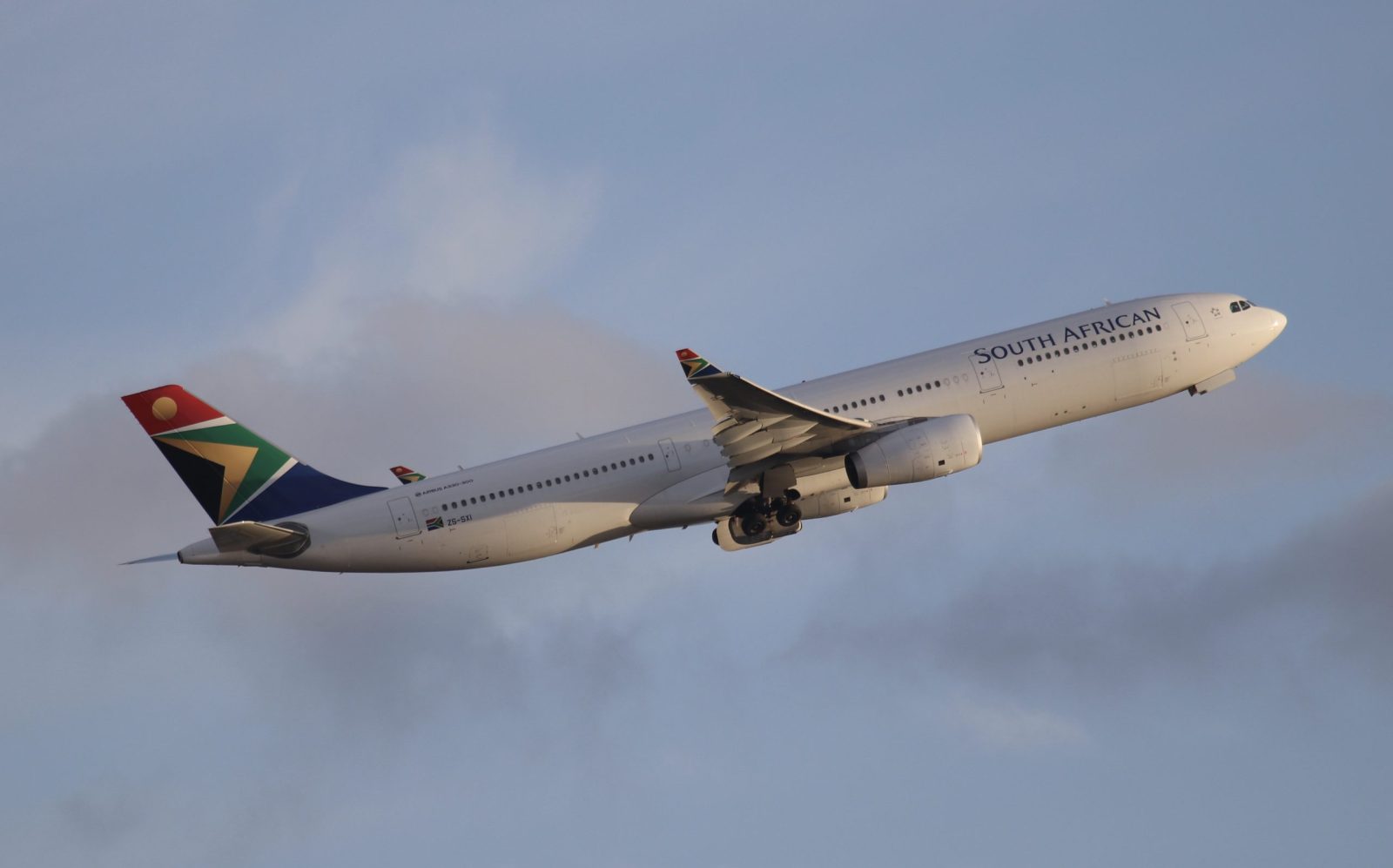
A South African A330 taking off. (Photo: AirlineGeeks | James Dinsdale)

While the last few days have been among the most frustrating in the world of travel after the discovery of a new coronavirus variant in South Africa — one that become widely known as Omicron — which panicked governments into once again restricting or entirely removing the freedom to travel.

The African Airlines Association (AFRAA) has called for the removal of travel bans imposed on some African countries, emphasizing that the world should have progressed beyond the “uncoordinated” responses after nearly two years of dealing with the Covid-19 pandemic.

Medical experts have said we should be expecting variants to emerge, and by the time they are detected, the reality is that they are probably already present around the globe.

The African Trade Organisation has noted that restricting travel has never been the solution to curtailing the spread of Covid-19, and on the contrary, restrictions have only adversely impacted economies and unleashed untold hardship.

An Outspoken Response

Referring to the travel bans imposed by some EU nations to ban travel to South Africa and other neighboring countries in Southern Africa, AFRAA Secretary General Abdérahmane Berthé said, “The Omicron variant is now detected in several regions of the world, yet the travel bans seem to be targeted at Africa. This is an affront to the global efforts to find an enduring solution. We will be better off confronting the virus if we work together for solutions and avoid discrimination.”

“Why target Africa when the virus is reported in other regions as well?” Berthé asked. “Any attempts to stigmatize Africa through travel bans will not work. We should not confuse politics with science.”

While the world is already finding Omicron in other parts of the world far from South Africa, where it was first identified, the African trade union insists that travel restrictions are not going to stop the spread, instead, they will do real harm to people and economies.

AFRAA is calling on all countries that have issued unilateral travel restrictions to immediately revoke them and instead seek collaborative measures that will address the Covid-19 challenge holistically.

AFRAA is also urging African governments to speak out against any attempts to smear the continent with propaganda and medical mischief. They must remind the world that we can only defeat Covid together not divided.

Victor Shalton

Victor Shalton's love for aviation can be traced to when he was 11-years-old. As a seasoned aviation writer, he takes pride in providing the best aviation coverage around the globe and is passionate about advancing his skills in the aviation space. In addition, he loves travelling, writing, arts and while his speaking engagements have taken him around the world, he is proud to call Nairobi home.

Introducing AirlineGeeks’ Flight and Hotel Booking Engine

Nearly two years into the COVID-19-induced global pandemic, people are once again hopeful of seeing distant friends & family, going on vacation, and exploring the places they still have not yet checked off their bucket list.

As travel begins to ramp back up, it’s important to plan ahead. Just like you, many people have been sitting on the sidelines patiently waiting to resume globetrotting. A spike in demand can quickly cause prices to rise so it pays to be proactive. In addition to planning ahead, it’s equally as important to do your homework in researching the best options and prices available.

As such, we are excited to announce our partnership with BookingVault and the launch of our new flight and hotel booking engine! Specializing in finding the cheapest rates with the best suppliers, AirlineGeeks’ online booking engine has a unique flight and hotel search algorithm that improves the chances of finding you the cheapest unpublished airfare and hotel rates.

By leveraging industry relationships, we’re able to search for private contract rates, bulk fares, and consolidator inventory. This technique allows us to provide rates that are not typically offered to the public, saving you up to 70% off retail pricing daily.

So, for any of you hoping to find some great last-minute deals this holiday season or looking to book that dream vacation next year, head over travel.airlinegeeks.com to search for flights and hotels, comparative shop, and book online with just a few clicks.

Your next vacation awaits!

Learn more about BookingVault: https://bookingvault.com/home 

Learn more about AirlineGeeks: https://airlinegeeks.com/about-us/

AirlineGeeks.com Staff

AirlineGeeks.com was founded in February 2013 as a one-person blog in Washington D.C. Since then, we’ve grown to have 25+ active team members scattered across the globe. We are all here for the same reason: we love deep-diving into the fascinating realm of the airline industry.

San Antonio International Airport Gets Unanimous Approval For Expansion

San Antonio International Airport $2.5 Billion Overhaul Approved (Photo: San Antonio International Airport )

The San Antonio City Council recently reached a unanimous decision to grant the San Antonio International Airport $2.5 billion in funding to be put towards major improvements such as the revamping of their existing Terminal A, as well as a prospective new third terminal, which will become Terminal C. The proposal looks to bring more foot traffic to the city by making the airport more accessible and attractive to potential serving airlines, including international flights. 

The nation’s seventh most populous city’s airport currently operates out of two terminals — Terminal A and Terminal B — utilizing 24 gates. The proposal has the potential to increase that gate number by 2040 to 37 with the additional Terminal C. 

Prior to moving forward with the plan, the Federal Aviation Administration must sign off on it to ensure the safe, efficient use and preservation of the airspace. 

The Airport’s Potential Growth

The San Antonio International Airport continues to bring in more and more traffic each year. Prior to the Covid-19 pandemic in 2019, 10 million passengers flew in and out of the south-central Texas airport. It is projected that within the next 20 years, the airport’s passenger count will nearly double, bringing in a total of 18 million passengers. 

“This plan is warranted and will prepare us for future demand and transform the passenger experience at the airport” stated Jesus Saenz, Director of airports for San Antonio Airport Systems. “It will be a world-class facility that everyone will be proud of and reflects our city’s rich culture, diversity, and charm.”

Unfortunately due to the extremely large price tag, the city cannot just build a new airport. John Dickson — Chairman of Mayor Ron Nirenberg’s Airport System Development Committee — believes a new airport would cost roughly $4 billion to $8 billion to build. 

A large portion of the $2.5 billion would go towards the construction of the brand new Terminal C. With an expected finish date of this terminal by 2030, it is projected to cost upwards of $840 million. Of the $2.5 billion, some funding will go towards the renovation of the existing international terminal, Terminal A which contains 17 gates with one to be added in 2022. 

While including the new terminal building in the first phase of construction, it will also encompass a runway extension. Currently sitting at 8,500 feet long, a runway of 10,000 feet is needed to accommodate those aircraft operating long-haul flights from markets in eastern Europe, South America, and Asia. More international flights serving the airport will help the city enhance its economic development by transporting more cargo, and most importantly, people. 

Currently, the airport offers nonstop flights to 39 destinations while only serving international destinations located throughout Mexico. The serving carriers include AeroMexico, Alaska, Allegiant, American, Breeze Airways, Delta, Frontier, JetBlue, Southwest, Sun Country, United, Viva Aerobus, and Volaris.

Chase Hagl

Chase Hagl grew up in Twin Falls, Idaho. His love and passion for Aviation landed him in Orem, Utah where he obtained a B.S. in Aviation Management with a minor in Business Management from Utah Valley University. Chase currently works as a flight attendant in Charleston, SC and is also the primary Inflight ASAP ERC representative for startup airline, Breeze Airways. His experience in the aviation industry spans back four years, working in areas including agriculture application, customer service, maintenance, and flight ops. In his free time, Chase enjoys road biking, astronomy, and flying.

Qantas Boosts Cargo Capacity Amid Holiday Season

A Qantas Airbus A330 arrives in Sydney (Photo: AirlineGeeks | Hisham Qadri)

The growth rate of online commerce has increased much faster than anyone would have predicted just a few years ago. E-commerce has grown over 76 percent in the last two years alone.

Christmas is fast approaching comes the season of gifting, which draws up a massive surge in online commerce as consumers worldwide scramble to ensure their gifts get delivered to their intended recipients in time. In response to the surge for online shopping,  Qantas — Australia’s flag carrier — has chosen to convert passenger aircraft into freighters to ensure their operations can meet the additional demand for parcels and mail.

Additional Capacity

The oneworld carrier has taken the initiative in permanently converting two of its Airbus A330-200 passenger aircraft into freighters to provide additional support for the significant shift towards consumers using online commerce.

One of the Airbus A330P2Fs will be used to support Qantas Freight’s international network, whereas the other will be a brand-new addition to the dedicated fleet that will solely serve Australia Post’s domestic parcel and mail business.

In addition, Qantas Freight will also be expecting its third Airbus A321P2F freighter by the end of this week, and it is planned to be operating for the Australia Post as well.

Having previously operated passenger flight services for Jetstar, and will be providing significant added capacity for what’s likely to be the busiest Christmas period ever for air cargo.

“Our freight business has boomed during the pandemic and while some of that is temporary, COVID has accelerated the permanent expansion of eCommerce and online shopping in this country,” Alan Joyce, Qantas CEO, said, regarding the air cargo in Australia.

“That’s why we’re working with key partners like Australia Post to respond to this structural change and increase the amount of parcels that we can carry by air to ensure they arrive to people’s homes as quickly as possible,” Joyce added, in response to a massive increase in demand.

Air Cargo Sustainability

It would come as no surprise that the new additions were decided upon as part of the consistent efforts of the Australia Post to increase efficiency through air freight. The Australia Post also plans to exercise carbon emission reductions wherever possible — hence the use of the A330P2F and the A321P2F to operate large volume sectors within the network.

According to the CEO and Managing Director of the Australia Post, Paul Graham, the A330P2F was the right choice as it will eventually provide an important boost to Australia Post’s existing dedicated air freighter network operated by Qantas, and will enable the Australia Post to continue powering eCommerce, supporting Australian businesses and delivering for its customers both domestically and internationally.

The A330P2F — expected to start its conversion in August 2022 — is scheduled to start operating for the Australia Post in mid-2023, with the second aircraft scheduled to start operating thereafter in late-2023.

Once converted, each A330P2F will be able to carry approximately 50 tonnes of cargo per flight. This cargo load is already more than double the capacity that any of the other freighters operating for the national postal service is offering, which is much more sustainable with lesser air movements for larger loads.

While A321P2F is smaller in size, it can still offer to carry an estimated 20 tonnes of cargo each flight, which results in twice as many parcels to be carried with lesser fuel required per kilo of mail and parcels uplifted — proving to be yet another sustainable option.

Charlotte Seet

Fascinated by aircraft from a very young age, Charlotte’s dream was to work alongside the big birds one day. Pursuing her dream, she went on to achieve her diploma in Aviation Management and is currently working on her degree in Aviation Business in Administration with a minor in Air Traffic Management. When she’s not busy with school assignments, you can find her aircraft spotting for long hours at the airport. In Charlotte’s heart, the Queen of the Skies will always be her favorite aircraft.

Toronto City Airport Anticipates US CBP Preclearance Facility In 2023

Billy Bishop Toronto City Airport (Credit Nieuport.com)

The U.S. Border Preclearance program is about to add a new airport to the list of facilities where passengers can clear U.S. Immigration and Customs before departure. Billy Bishop Toronto City Airport announced last week that it is on track to open its own U.S. CBP Preclearance facility by 2023 as the authorization process is well underway and the physical space for the facility is available on-site and could be easily constructed in as little as 18 months.

Toronto will become the only city in the world to have two airports with its own U.S. CBP Preclearance with Toronto Pearson International Airport having the ability to pre-clear passengers into the United States at both its terminals. However, Billy Bishop Airport is located on a small island on Lake Ontario right in front of Toronto’s downtown business district and it is much more convenient than Pearson that requires a 30 to 45-minute drive from the city center in good traffic conditions.

“The costs associated with the Customs and Border Protection Agents agents and other factors have proved challenging, and PortsToronto and other stakeholders such as Porter [Airlines] and [terminal building operator] Nieuport have been trying to get the federal government to prioritize the service implementation. Now, as we emerge from the pandemic and are all focused on economic recovery, U.S. CBP at Billy Bishop Airport would be an effective measure to support the economy and get people moving again,” said Debra Wilson, Vice-President for Communication with PortsToronto, the company owning the airport, during a council meeting at Toronto City Hall as reported by the Toronto Sun.

It has been estimated that building the facility at the airport is likely to cost around 20 million Canadian dollars ($15.5 million), with operating costs running at approximately another 10 million Canadian dollars per year. The U.S. Government requests local operators and authorities to contribute to the operating costs incurred in running the facility. The most recently established operation at Abu Dhabi International Airport — in the United Arab Emirates — is rumored to be 80% subsidized by the local government.

More Routes, More Passengers

Preclearance allows international flights to arrive at U.S. airports like domestic services, therefore reducing connecting times for U.S. carriers at their hubs, but also allowing Canadian carriers to serve airports unequipped to handle international flights. For example, a U.S. CBP Preclearance facility at Billy Bishop would allow local carrier Porter Airlines to operate into airports such as New York’s LaGuardia Airport and Washington National Airport, while at the moment they are serving New York City and Washington flying to Newark, NJ and Dulles respectively. Currently, no U.S. airline operates into Billy Bishop Airport, which only allows turboprop aircraft due to very restrictive noise regulations.

Before the COVID-19 pandemic hit, the airport served 2.8 million passengers in 2019, a mere fraction of the 50 million that flew from Pearson International. TorontoPorts, Nieuport and Billy Bishop-based Porter airline are confident that a U.S. CBP Preclearance facility would be an invaluable booster to airport traffic numbers: in fact, when Halifax International Airport opened its Preclearance facility in 2006 it experienced a 29% increase in transborder traffic, the Toronto Star reports quoting a study performed by Nieuport and York Aviation Consulting.

There are currently flights to five destinations in the US: Newark, NJ’s Liberty International Airport, Boston’s Logan International Airport, Washington Dulles Internationa Airport and Chicago’s Midway Airport, plus a seasonal link to Myrtle Beach, SC), but it projects to be able to add services to Minneapolis, Philadelphia, Baltimore, Atlanta, Detroit, Raleigh, NC and Nashville, Tenn. by 2025 once the Preclearance facility opens.

There are currently eight airports in Canada with their own Preclearance facility: Toronto’s Pearson International Airport, Montreal-Trudeau International Airport, Vancouver, Calgary, Edmonton, Ottawa, Winnipeg and Halifax. It is also present in Ireland (Dublin and Shannon), Bahamas (Nassau and Freeport), Aruba, Bermuda and the United Arab Emirates (Abu Dhabi).

Vanni Gibertini

Vanni fell in love with commercial aviation during his undergraduate studies in Statistics at the University of Bologna, when he prepared his thesis on the effects of deregulation on the U.S. and European aviation markets. Then he pursued his passion further by obtaining a Master’s Degree in Air Transport Management at Cranfield University in the U.K. followed by holding several management positions at various start-up carriers in Europe (Jet2, SkyEurope, Silverjet). After moving to Canada, he was Business Development Manager for IATA for nine years before turning to his other passion: sports writing.

China’s Haikou International Airport Debuts New Terminal and Runway

A Hainan 787 Dreamliner in Los Angeles. (Photo: AirlineGeeks | William Derrickson)

China hasn’t stopped improving its aviation facilities during the pandemic. Phase two of Haikou, China’s Meilan Airport is completed and started its operation. Haikou is located in Hainan province — the tourist hotspot for Chinese citizens in southern China — which is only about one hour flight from Hong Kong.

The new terminal of Meilan is another major infrastructure for the Chinese aviation industry this year, following the opening of Tianfu International Airport in Chengdu, China and Jiaolong International airport in Qingdao, China.

Phase two of Meilan Airport consists of a new terminal and a runway. Terminal two covers 300,000 square meters, is almost double the terminal one in size, and the new runway is 3,600 meters. The expanded airport is expected can handle 35 million passengers and the cargo throughput can reach 400,000 tonnes annually by 2025. The expansion also improved the ground transport facilities, such as railway and highway. According to the media, the airport is considering building phase three at the moment. Also, the brand-new air traffic tower launched in November. The new tower is 108 meters — 42 meters taller than the original tower.

Meilan is the hub of Hainan Airlines. HU7181 — operated by one of the carrier’s Boeing 787 Dreamliners — leaving Meilan for Beijing was terminal two’s maiden flight. Following HU7181, a China Southern Airlines flight CZ6444 which was bound for Shenzhen, China, became the terminal two’s second departure flight.

In response to the launching of terminal two, Hainan Airlines switched some routes to the new terminal temporarily, such as Haikou – Chengdu, China; Haikou – Chongqing, China and Haikou – Urumqi, Mongolia. According to the airline, the carrier will offer a free change to the passengers missing the flights for going to the wrong terminal. Also, it is believed that more passenger flights will move over to the new terminal in the future.

Meanwhile, Hainan Airlines has setup a VIP lounge in the new terminal, it covers 1283 square meters. The airline has a nearly 22% market share within the entire Hainan province and 27% in Haikou.

The Airport’s Tibet Service

The new terminal brings the new route and passengers immediately. Meilan has expanded its route map through the addition of flights for Lhasa, Tibet-Chengdu, China-Haikou, China. Meilan became the last province to connect with Tibet in China. Tibet Airlines’ flight TV9851 —operated by an Airbus A320 — became the first flight to connect two provinces. It is expected that Tibet Airlines will provide a daily services from Lhasa to Haikou with a layover. Haikou, China’s Meilan Airport currently connects 123 cities and 236 routes.

According to Civil Aviation Administration of China (CAAC), the low coronavirus cases in the country is paving the way for recovery of the domestic aviation industry, although the pandemic is far from over and the international travel restrictions in place. CAAC believed the new terminal can meet the travel demand in Hainan.

Sign-up for newsletters & special offers!

Get the latest stories & special offers delivered directly to your inbox

SUBSCRIBE