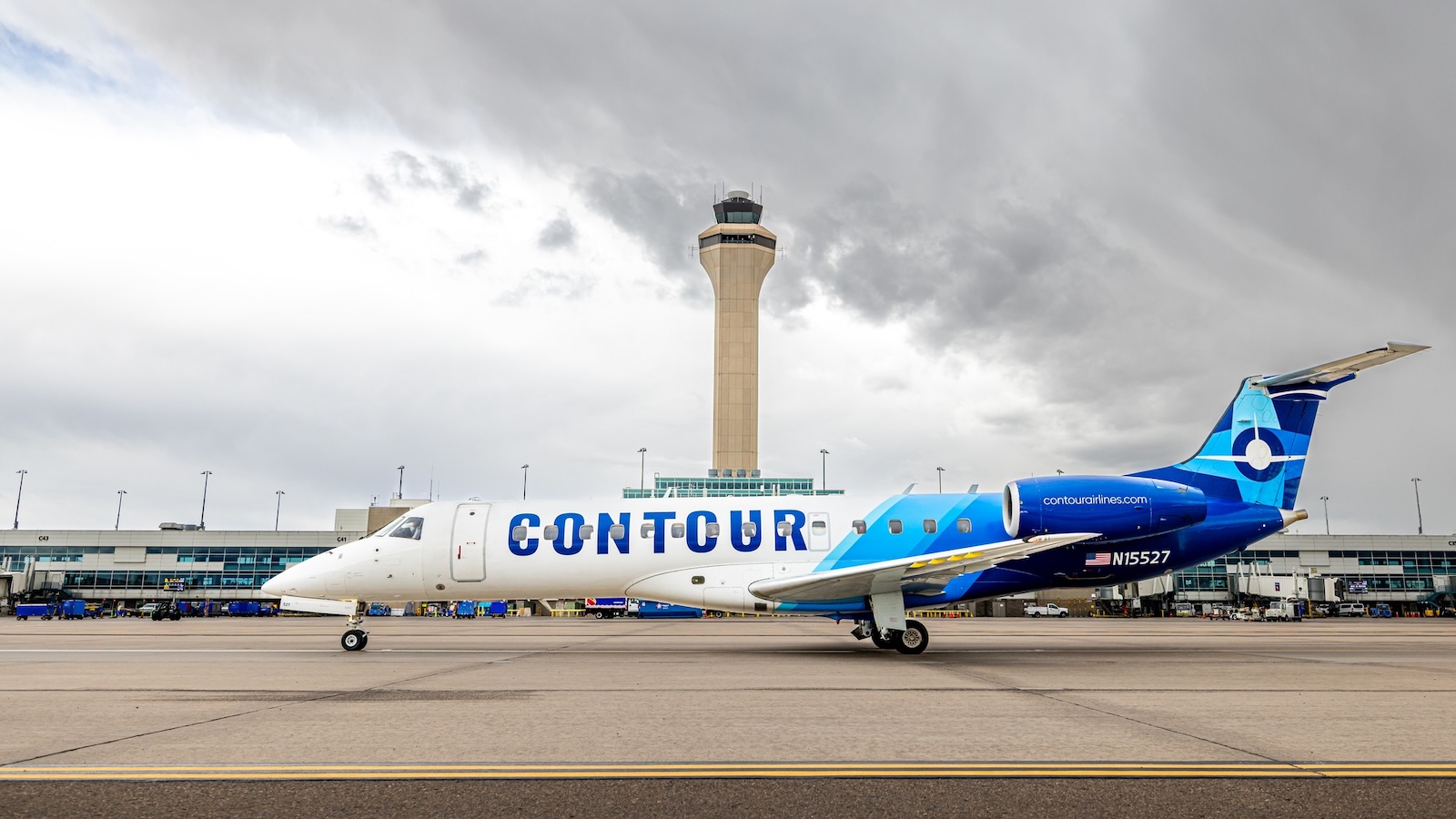
A Contour Embraer jet. (Photo: Denver International Airport)
Contour Airlines will bring a new destination in central California into its route network this summer.
Starting July 1, the independent regional carrier will connect Merced, California, with Los Angeles and Las Vegas. Service to Los Angeles will operate daily, while service to Las Vegas will run five times per week, on Mondays, Wednesdays, Thursdays, Fridays, and Sundays.
Contour will operate the connections using 30-seat regional aircraft.
“These routes not only make travel more convenient for local residents and businesses but also support economic growth by strengthening Merced’s connectivity to key markets,” Contour President Ben Munson said in a news release. “We look forward to delivering a dependable and comfortable travel experience for all our passengers.”
Contour has been steadily expanding its network over the last several weeks, announcing new connections to Fort Leonard Wood, Missouri; Macon, Georgia; Beckley, West Virginia; and Page, Arizona. The airline serves destinations across the Southwest, Midwest, and Southeast, as well as the eastern Caribbean.
Zach Vasile is a writer and editor covering news in all aspects of commercial aviation. He has reported for and contributed to the Manchester Journal Inquirer, the Hartford Business Journal, the Charlotte Observer, and the Washington Examiner, with his area of focus being the intersection of business and government policy.
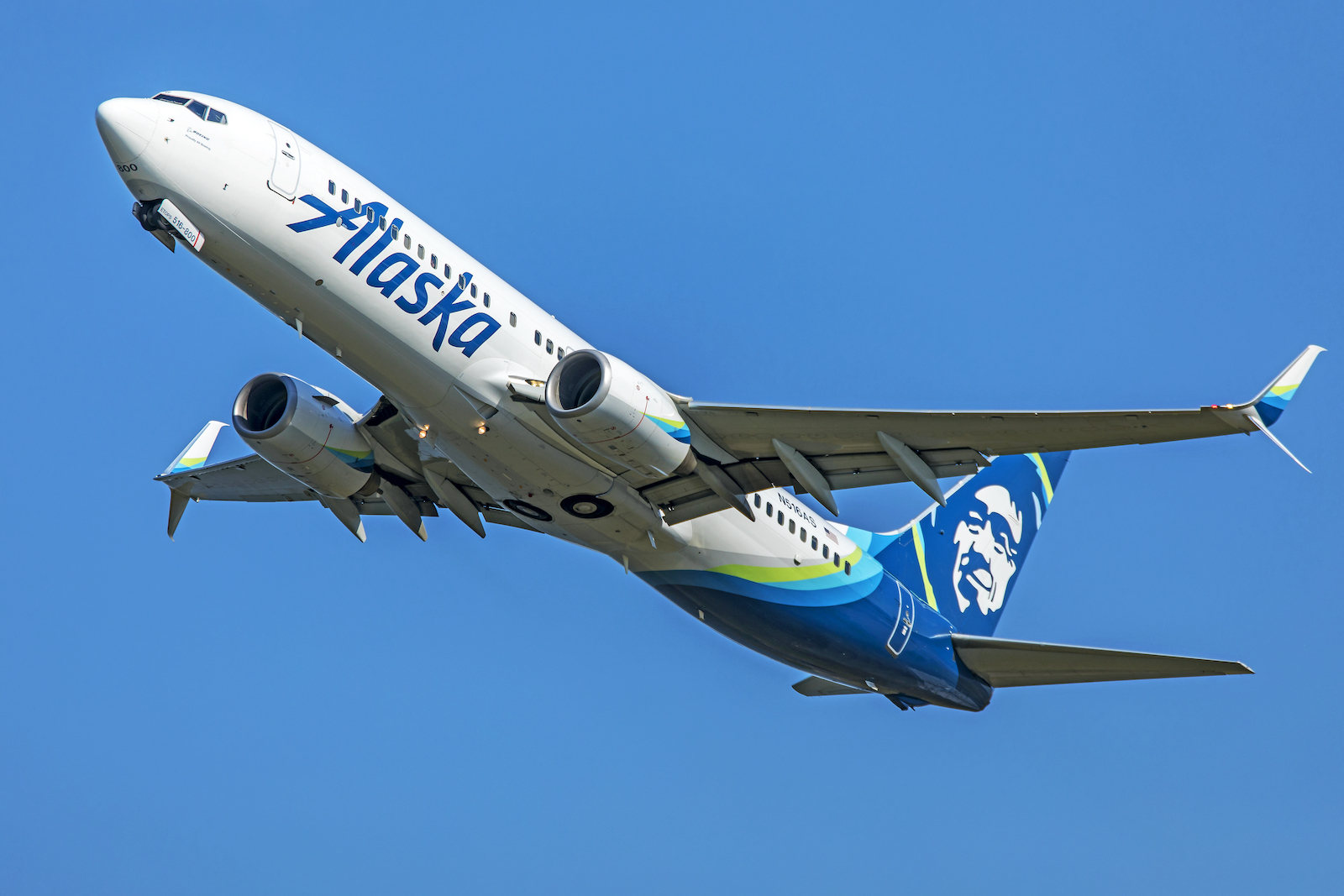
An Alaska Airlines 737-800. (Photo: AirlineGeeks | William Derrickson)
American Airlines and Alaska Airlines are discussing a potential revenue-sharing arrangement and other partnerships, Bloomberg reported on Wednesday.
The financial news outlet cited people familiar with the talks. Neither American nor Alaska has commented on the potential partnership.
According to Bloomberg, the idea of a merger between the two carriers was floated early in the discussions but did not garner support. Instead, American and Alaska will pursue a revenue-sharing deal, which would allow coordination on routes, planning, and pricing. The partnership would have to be approved by the federal government before taking effect.
American has been at the center of considerable industry speculation after a report, also from Bloomberg, that United CEO Scott Kirby pitched a merger with the Fort Worth, Texas-based airline to President Donald Trump in February. American initially declined to comment on the news, then said last Friday that it was not in discussions with United and didn’t want to be.
Separately, the president told CNBC that he does not support a United-American combination.
While few details have been established – and none officially confirmed by the airlines involved – an alliance between American and Alaska could give American greater access to Alaska’s West Coast network, while Alaska would benefit from American’s other airline partnerships.
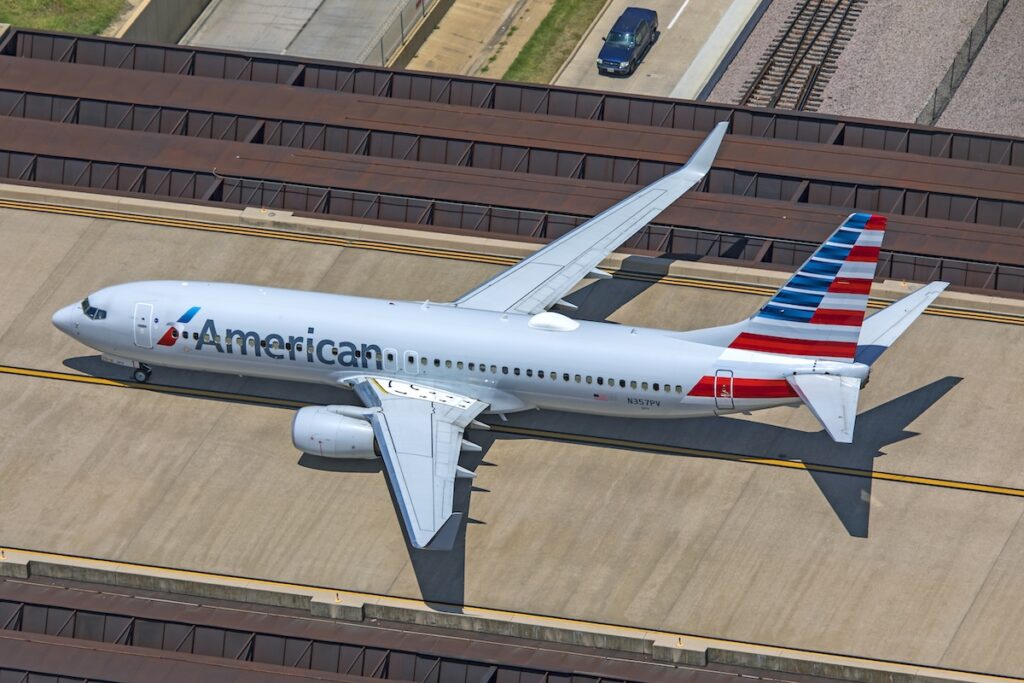
An American 737 at Dallas/Fort Worth (Photo: AirlineGeeks | William Derrickson)
American lags behind its two main competitors, United and Delta, in profitability, and a closer relationship with Alaska could be seen as a potential revenue generator with limited upfront costs.
Both American and Alaska are members of the oneworld alliance. They also have a codeshare agreement in place and offer some reciprocal benefits and upgrades.
Zach Vasile is a writer and editor covering news in all aspects of commercial aviation. He has reported for and contributed to the Manchester Journal Inquirer, the Hartford Business Journal, the Charlotte Observer, and the Washington Examiner, with his area of focus being the intersection of business and government policy.
Aer Lingus Cuts Flights, Routes
The carrier cited "mandatory maintenance on aircraft."
An Aer Lingus Airbus A320. (Photo: AirlineGeeks | William Derrickson)
Numerous Aer Lingus flights and routes have been removed from the airline’s summer schedule.
According to the BBC, the airline has cut back on connections from Dublin to several destinations in Europe, including Amsterdam, Athens, Berlin, Faro, and Zurich. The carrier has also canceled flights to destinations in the U.K. These include London Heathrow, Manchester, Birmingham, and Edinburgh.
Aer Lingus said most affected passengers are being placed on other same-day flights. About 2% of the carrier’s flight schedule is impacted.
The BBC said Aer Lingus cited aircraft maintenance as the reason behind the service adjustments. But the carrier is also likely seeing effects from the soaring cost of jet fuel. The closure of the Strait of Hormuz has forced airlines around the world to rework their schedules and improve efficiency, both to contain costs and conserve fuel.
Lorne is a South Africa-based aviation journalist. He was captivated and fascinated by flying from the day he took his first airline flight. With a passion for aviation in his blood, he has flown to destinations in all corners of the globe. Lorne has traveled extensively and lived in various countries. Drawing on his travels and passion for aviation, Lorne enjoys writing about airlines, routes, networks, and new developments.
FAA Investigating Close Call at JFK
One aircraft strayed into the flight path of another while approaching the airport for landing.
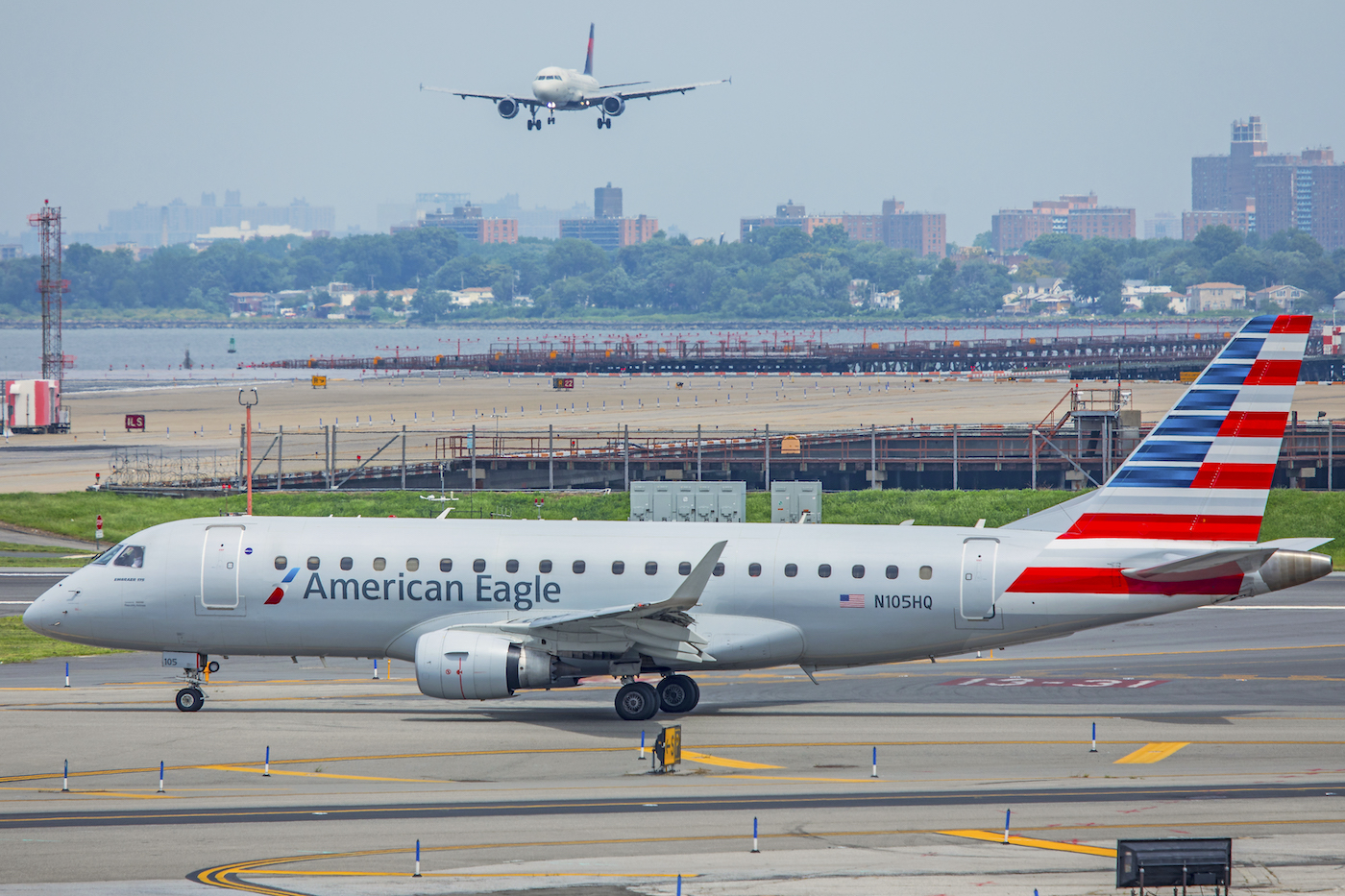
A Republic Airways Embraer 170 in New York. (Photo: AirlineGeeks | William Derrickson)
The FAA said Tuesday that it is looking into a reported close call at New York-JFK involving two passenger jets.
The incident took place on Monday and involved an American Airlines flight operated by Republic and an Air Canada flight operated by Jazz.
“The crew of Republic Airways Flight 4464 performed a go-around at John F. Kennedy International Airport after missing the intended approach path and flying too close to Jazz Aviation Flight 554, which was cleared to land on a parallel runway,” the FAA said in a statement. “Both flight crews responded to onboard alerts.”
Air traffic controllers gave the pilots instructions to increase separation, and both were forced to abort their landing attempts and go around.
According to Reuters, the two aircraft were about 350 feet apart vertically and 0.62 miles apart horizontally at their closest. The outlet reported that, on air traffic control recordings, anti-collision alarms could be heard going off both in the tower and aircraft cockpit.
Both flights landed safely at JFK, and there were no reports of any injuries to passengers or crew.
Zach Vasile is a writer and editor covering news in all aspects of commercial aviation. He has reported for and contributed to the Manchester Journal Inquirer, the Hartford Business Journal, the Charlotte Observer, and the Washington Examiner, with his area of focus being the intersection of business and government policy.
Report: Trump Admin Working With Spirit on Potential Rescue Deal
The carrier is believed to have reached out to the White House last week.
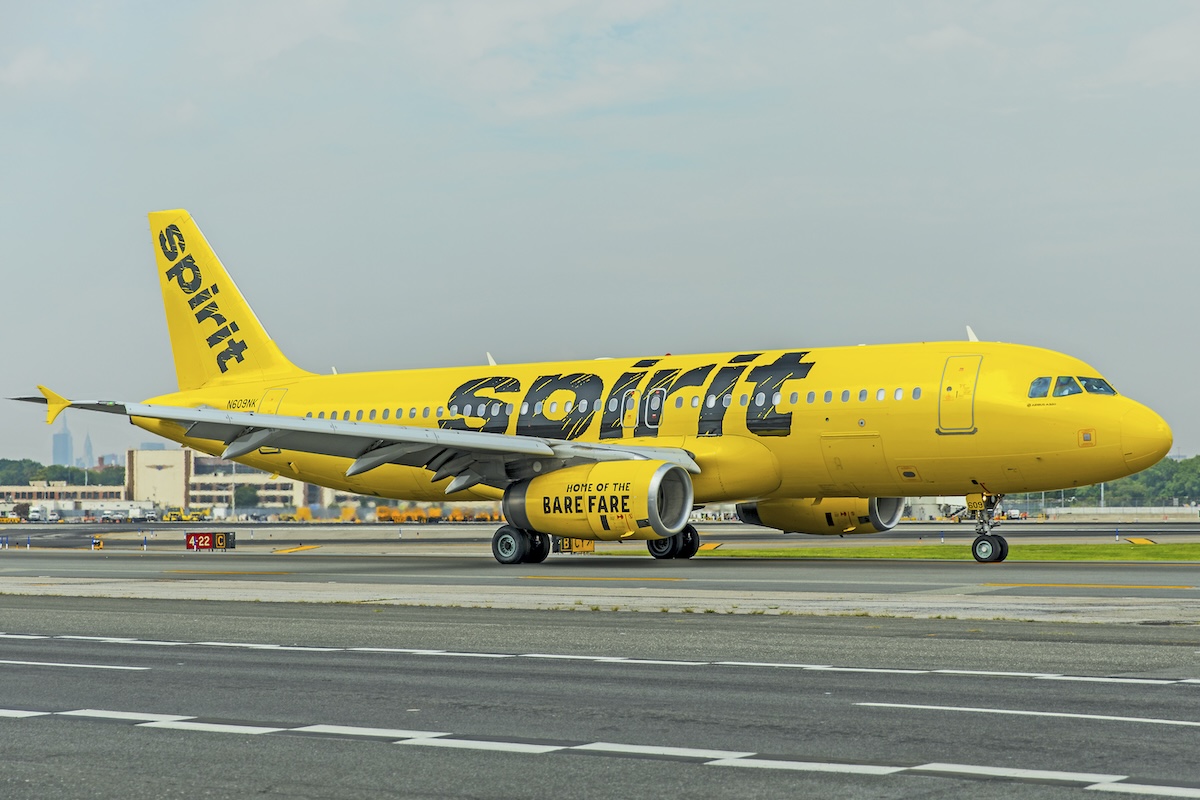
A Spirit A320. (Photo: AirlineGeeks | William Derrickson)
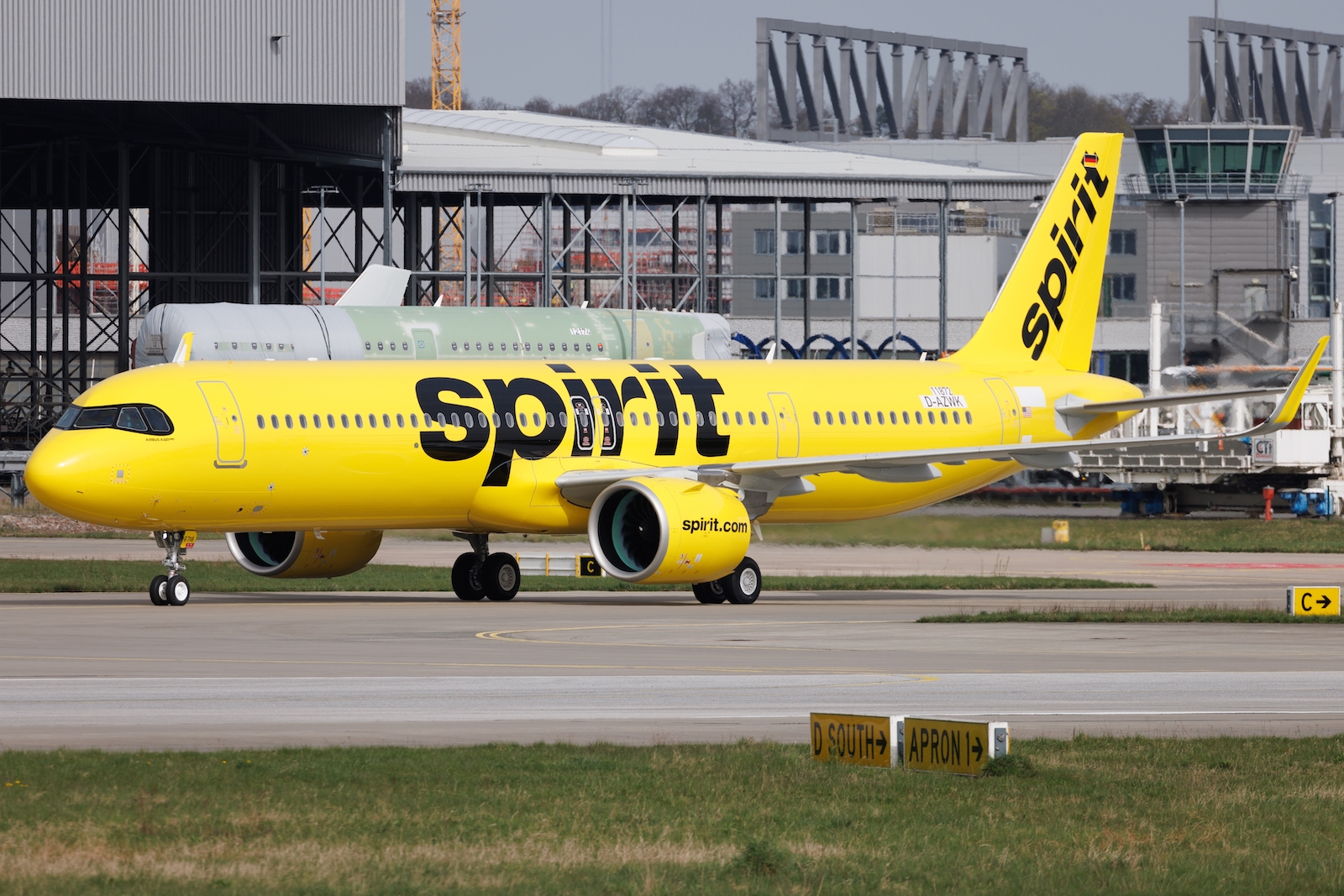
Spirit Airlines and the Trump administration are in advanced talks over a potential half-billion-dollar rescue package for the embattled budget carrier, The Wall Street Journal reported Wednesday.
Citing sources with knowledge of the discussions, the newspaper said the White House is considering loaning Spirit up to $500 million. In return, the U.S. government would receive warrants for a stake in the airline.
Direct federal investments in private-sector companies are rare but not unheard of, especially for the current administration, which bought stakes in chipmaker Intel and mining and manufacturing company USA Rare Earth. But unlike Spirit, neither of those companies is in bankruptcy.
The Air Current broke the news late last week that Spirit had asked the administration for help, but it was not clear until the Journal’s report if any negotiations were taking place.
Spirit was set to emerge from its second stint in bankruptcy protection this spring, but the recent surge in jet fuel prices has put the carrier’s very survival in question. Reports circulating last week suggested the airline could opt for liquidation within a matter of weeks.
President Donald Trump told CNBC on Tuesday that he would “love” for another airline to buy Spirit. He also suggested that the federal government could intervene to help the carrier, though he did not elaborate on what that assistance could look like.
CBS News reported Tuesday that Trump had instructed the U.S. Department of Transportation to review possible options for Spirit.
“He’s directed us to take a look,” Transportation Secretary Sean Duffy told the network. “I’ll have a conversation with the president later today.”
Duffy was also scheduled to meet with representatives from several budget carriers Tuesday to discuss the impact of higher fuel prices on their operations and financial health.
Zach Vasile is a writer and editor covering news in all aspects of commercial aviation. He has reported for and contributed to the Manchester Journal Inquirer, the Hartford Business Journal, the Charlotte Observer, and the Washington Examiner, with his area of focus being the intersection of business and government policy.
Lufthansa Group Cuts 20,000 Flights Through October
The reductions are expected to save about 40,000 metric tons of jet fuel.
The company said Tuesday that the affected flights have been removed from its schedule through October. The cuts are expected to save about 40,000 metric tons of fuel.
“The schedule adjustments reduce the number of unprofitable short-haul flights across the Lufthansa Group network,” officials said in a statement. “The planned consolidation of the European network is being carried out across Lufthansa Group’s six hubs in Frankfurt, Munich, Zurich, Vienna, Brussels, and Rome. Passengers will therefore continue to have access to the global route network, particularly long-haul connections. However, due to the increase in jet fuel prices, this will be achieved significantly more efficiently than before.”
Lufthansa Group has already implemented some short-term flight reductions – about 120 per day – and plans to publish details of its new summer schedule later this month.
Airlines in Europe are considered especially vulnerable to fuel price volatility and potential shortages stemming from the conflict in Iran. Lufthansa Group has been proactive on the issue, pruning routes and temporarily grounding some of its less efficient aircraft. The company also accelerated the shutdown of Munich-based Lufthansa CityLine earlier this month in a bid to contain the subsidiary carrier’s longstanding losses.
So far, Lufthansa Group has temporarily removed three destinations from its summer lineup: Bydgoszcz and Rzeszów in Poland and Stavanger, Norway. Service to 10 other European destinations will be reworked and consolidated across the company’s member airlines, officials said.
Zach Vasile is a writer and editor covering news in all aspects of commercial aviation. He has reported for and contributed to the Manchester Journal Inquirer, the Hartford Business Journal, the Charlotte Observer, and the Washington Examiner, with his area of focus being the intersection of business and government policy.
BeOnd Suspends Flights Between Europe and Maldives
Service is expected to resume in October for the winter season.
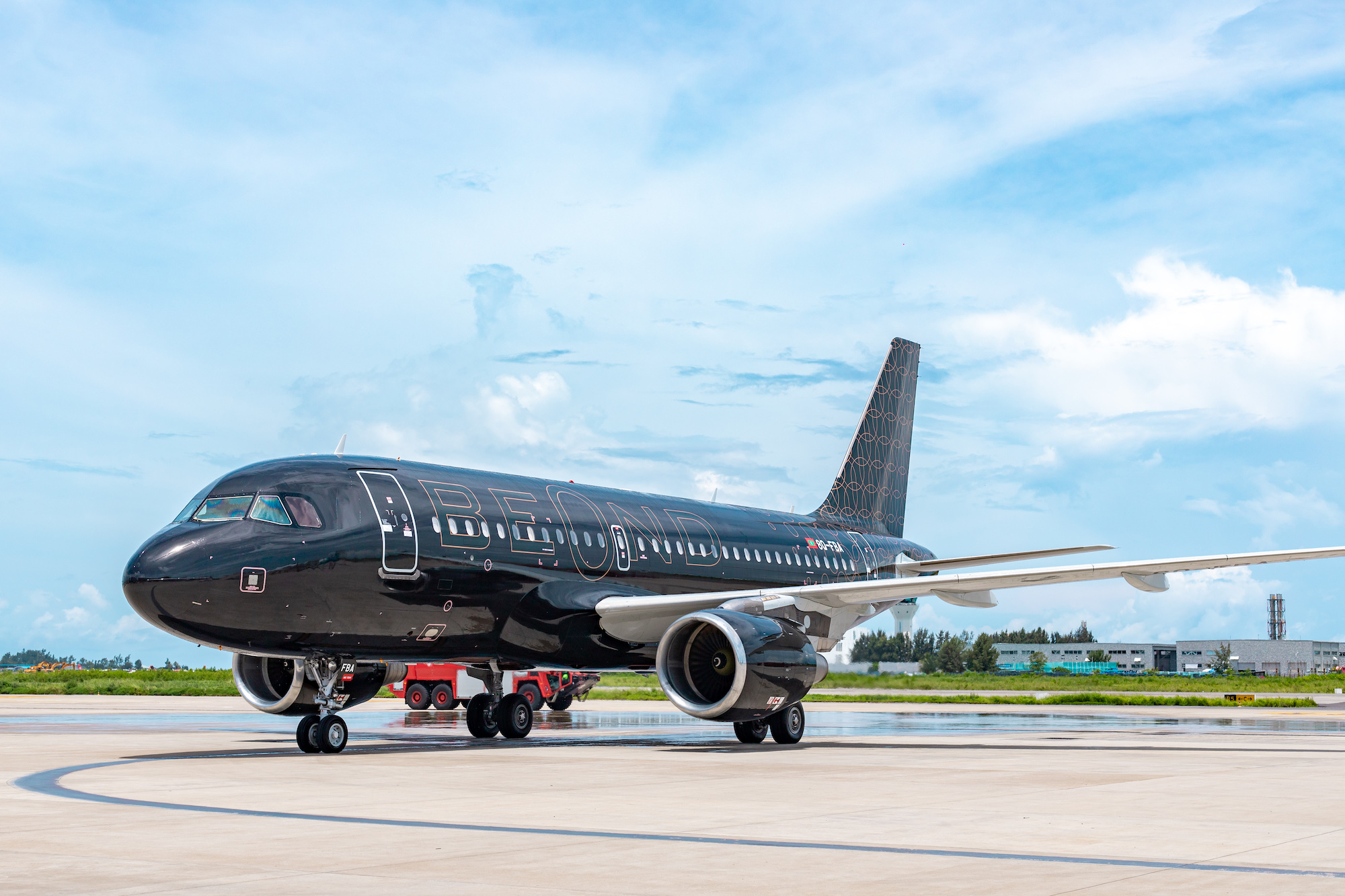
All-business class carrier beOnd has paused flights between Europe and the Maldives – the vast majority of its scheduled operations – through the summer.
In a statement on social media, the airline said its guest experience team is reaching out to affected customers and will offer “flexible” options, including fee-free rescheduling for the winter or a full refund. Service will resume in October, the message said.
The carrier did not provide a reason for the pause, but it could be connected to higher jet fuel prices, which have forced airlines around the world to adjust their schedules.
BeOnd is headquartered in Dubai and operates from Velana International Airport in the Maldives. It connects the island chain’s capital city, Malé, with London, Paris, Moscow, Munich, Zurich, and Milan via Dubai, and operates nonstop flights from Riyadh and Red Sea International Airport in Saudi Arabia.
BeOnd advertises its flights as an alternative to private jet travel, with fully reclining flat-bed seating, gourmet meals, and boutique crew-to-passenger ratios. It currently operates two aircraft, an Airbus A319 and an A321.
Zach Vasile is a writer and editor covering news in all aspects of commercial aviation. He has reported for and contributed to the Manchester Journal Inquirer, the Hartford Business Journal, the Charlotte Observer, and the Washington Examiner, with his area of focus being the intersection of business and government policy.
Breeze Integrates AI-Enhanced Platform into Dispatch Operations
The Weather Company’s Maverick Dispatch is simplifying workflows for dispatchers, the carrier said.
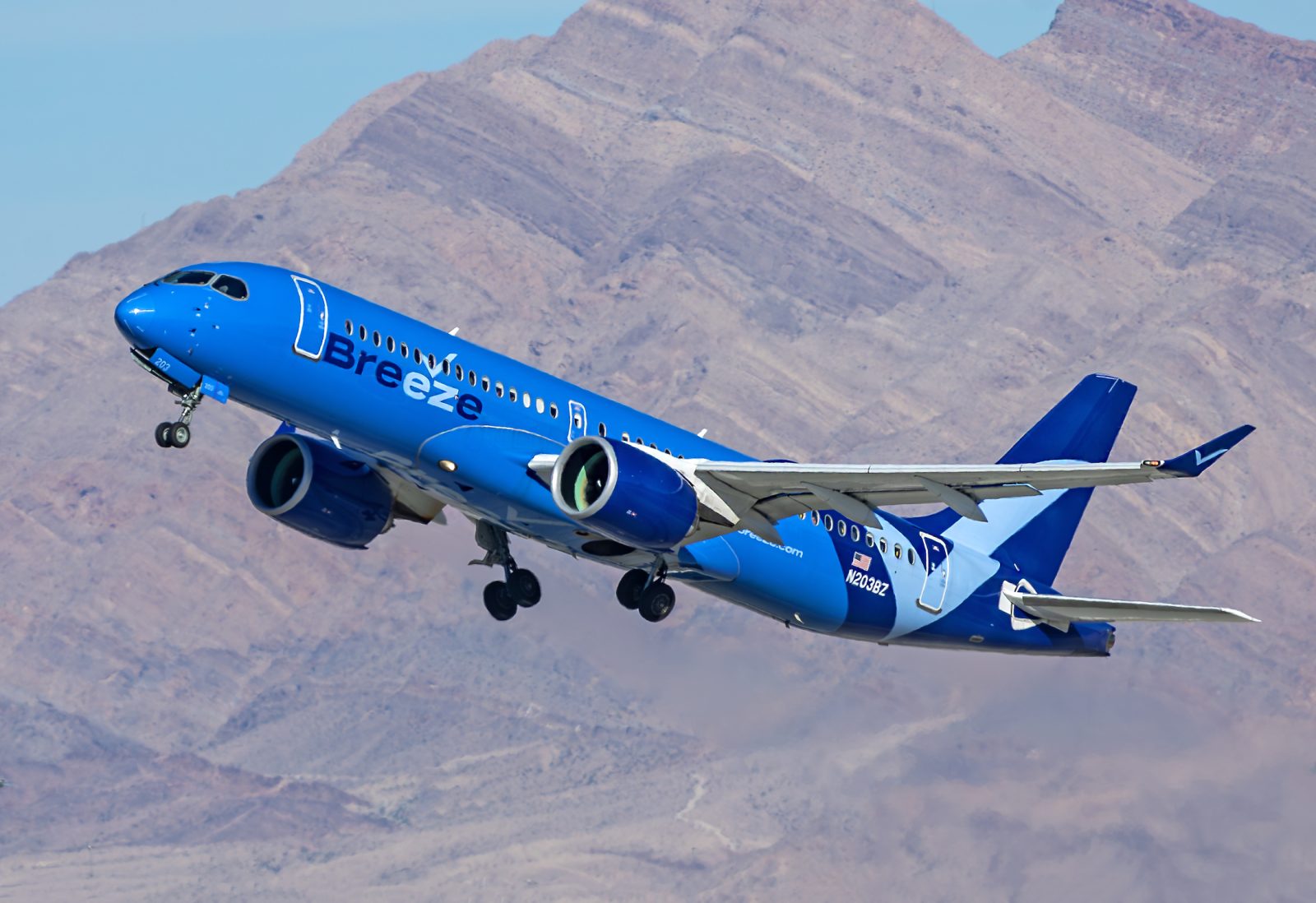
A Breeze A220 aircraft. (Photo: AirlineGeeks | William Derrickson)
Breeze Airways is rolling out a new flight-following solution designed to streamline critical information for its dispatchers.
The platform, known as Maverick Dispatch, was developed over the last year by The Weather Company with input from Breeze’s teams. It folds together numerous data streams, including weather imaging, into a single and more easily digestible interface, attributes the airline believes will improve efficiency, mitigate operational disruptions, and reduce the mental burden on dispatchers.
“One of the biggest tasks when it comes to dispatching is that you have so much information that you’re trying to compile and make decisions on, and really reducing that cognitive load is the biggest focus of the solution,” said Garrett Urry, manager of flight dispatch at Breeze. “Now we’re condensing and compiling it down into a single interface so that dispatchers are not trying to find multiple tabs, multiple URLs, that help them make those decisions.”
According to Urry, a typical dispatcher might have between 22 and 25 different browsers open at any one time with software and websites needed to help make a single decision about a flight.
“Reducing that to a single display really relieves that burden and cognitive load on the dispatchers and assists them in making those education decisions,” he said.
Maverick Dispatch comes with enhanced weather visualization, a consolidated alert dashboard, predictive modeling for storms, analytics tools, and a new NOTAM viewer, among other features. The Weather Company’s meteorological data and forecasting capabilities are directly integrated into the system.
“Dispatchers don’t have to go through other experiences to find the best weather,” said Chris Oak, aviation product leader at TWC. “They can trust that we have integrated the best-in-class weather directly into the experience, and they know that’s what’s driving the insights that are coming out of the platform.”
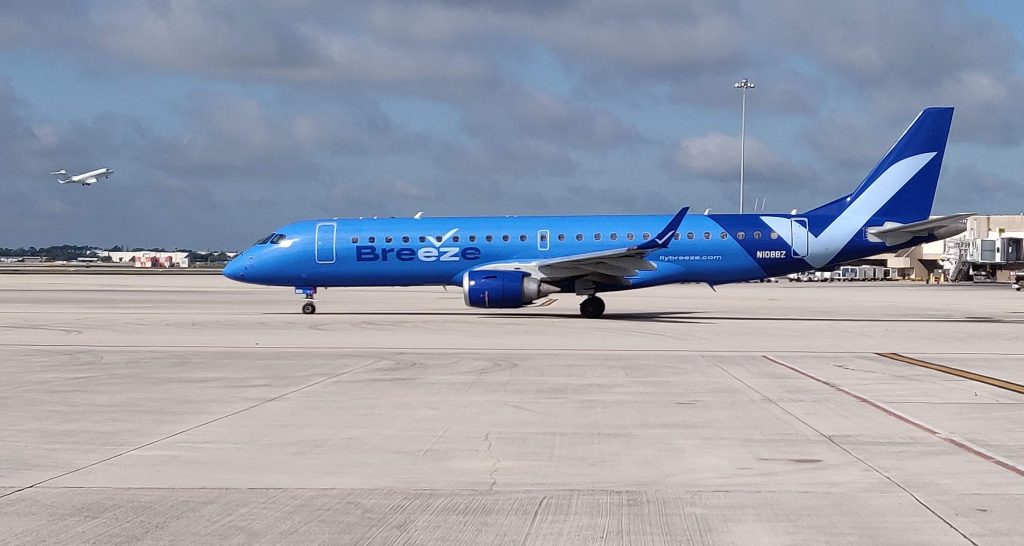
Breeze Airways Embraer 190 at Palm Beach International Airport. (Photo: AirlineGeeks | Vanni Gibertini)
Breeze has already been using TWC’s flight tracker Fusion. Maverick Dispatch expands on Fusion, moving from an app-based solution to a cloud-based platform accessible from a web browser, officials said.
A group of Breeze employees provided feedback to TWC as Maverick was developed, helping guide decisions about functionality and display methodologies.
“We can figure out which ideas are hitting and which aren’t,” Oak said. “We could talk about a solution for an hour, but with a picture in front of someone, they can tell you, ‘That’s what I need.’ So that is what some of those sessions helped flesh out.”
AI is blended into several of the features offered by Maverick, including weather modeling. Meteorologists continuously check the forecasts to ensure accuracy, creating a system that dispatchers can use comfortably without having specialized knowledge about artificial intelligence.
AI is also used in Maverick’s Smart NOTAMs tool to help organize information.
“You click on NOTAMs, we take all the airport NOTAMs in context, and we’ve sorted them and filtered them and within two seconds we can start streaming a Smart NOTAMs summary based off what dispatchers have told us is the most important thing,” Oak said. “They don’t have to worry about, ‘How is this happening?’ They just know they click and get a quick AI summary.”
“That’s how we want some of our AI tooling to be in Maverick,” he continued. “We want to show AI transparency, but we don’t want people to have to be experts in AI to use the product.”
Breeze said it completed training of dispatchers on Maverick earlier this month.
Zach Vasile is a writer and editor covering news in all aspects of commercial aviation. He has reported for and contributed to the Manchester Journal Inquirer, the Hartford Business Journal, the Charlotte Observer, and the Washington Examiner, with his area of focus being the intersection of business and government policy.
JetBlue in Line for A320 Cockpit Display Upgrades
The carrier entered an agreement with Airbus for improved display systems on over 40 aircraft.
Airbus will install Enhanced Electronic Instrument System (EEIS2) displays on 46 aircraft, officials said. The new systems come with high-resolution LCD technology intended to improve the visualization of information for pilots.
The enhanced displays will also help create a common technical foundation for future avionics upgrades, according to Airbus.
Financial details of the agreement were not disclosed, nor was the timeline for installations.
EEIS2 equipment is designed and supplied by Thales and integrated by Airbus.
“Investing in upgrades like EEIS2 is an important part of our JetForward strategy, supporting our focus on delivering reliable and caring service for our customers,” David Marcontell, vice president of technical operations at JetBlue, said in a news release. “Enhancements like these advanced cockpit displays help us modernize older aircraft, ensuring every aircraft remains safe, reliable, and ready to perform.”
JetBlue operates one of the largest Airbus fleets in North America, with both A320-family and A220 aircraft.
Zach Vasile is a writer and editor covering news in all aspects of commercial aviation. He has reported for and contributed to the Manchester Journal Inquirer, the Hartford Business Journal, the Charlotte Observer, and the Washington Examiner, with his area of focus being the intersection of business and government policy.
Trump: ‘I’d Love Somebody to Buy Spirit’
The President said the federal government may have to step in to help the struggling budget carrier.
A Spirit Airbus A321neo aircraft. (Photo: Shutterstock | Kevin Hackert)
Days after news broke that Spirit is seeking financial assistance from the federal government, possibly to the tune of hundreds of millions of dollars, President Donald Trump is weighing in.
Phoning in to CNBC’s “Squawk Box” on Tuesday, the president first fielded a question about a potential merger between United and American. Trump said he doesn’t support the idea but emphasized that he’s not opposed to all mergers and acquisitions in the industry.
“I’d love somebody to buy Spirit, as an example,” he said. “You know, Spirit’s in trouble, and I’d love somebody to buy Spirit. It’s 14,000 jobs, and maybe the federal government should help that one out.”
The president did not elaborate on that point and moved on to discuss consolidation in the defense sector.
The Air Current reported late Friday that Spirit, beset by soaring jet fuel prices, had approached the Trump administration with a request for emergency funding. Earlier reports suggested that the carrier could be on the brink of liquidation due to higher energy costs.
According to The Wall Street Journal, the administration is considering a government investment in the airline. Direct investment by the U.S. in a private-sector company is rare but not unheard of, and Trump has shown openness to the idea. Last year, the federal government acquired a roughly 10% stake in technology company Intel.
Spirit is currently navigating its second stint in bankruptcy protection. It had hoped to emerge from bankruptcy by the late spring or summer, but that timeline has almost certainly been pushed back.
Representatives from Spirit and other low-cost airlines are expected to meet with U.S. Transportation Secretary Sean Duffy this week to share how higher fuel prices are impacting their operations and financial viability.
Zach Vasile is a writer and editor covering news in all aspects of commercial aviation. He has reported for and contributed to the Manchester Journal Inquirer, the Hartford Business Journal, the Charlotte Observer, and the Washington Examiner, with his area of focus being the intersection of business and government policy.
Sign-up for newsletters & special offers!
Get the latest stories & special offers delivered directly to your inbox