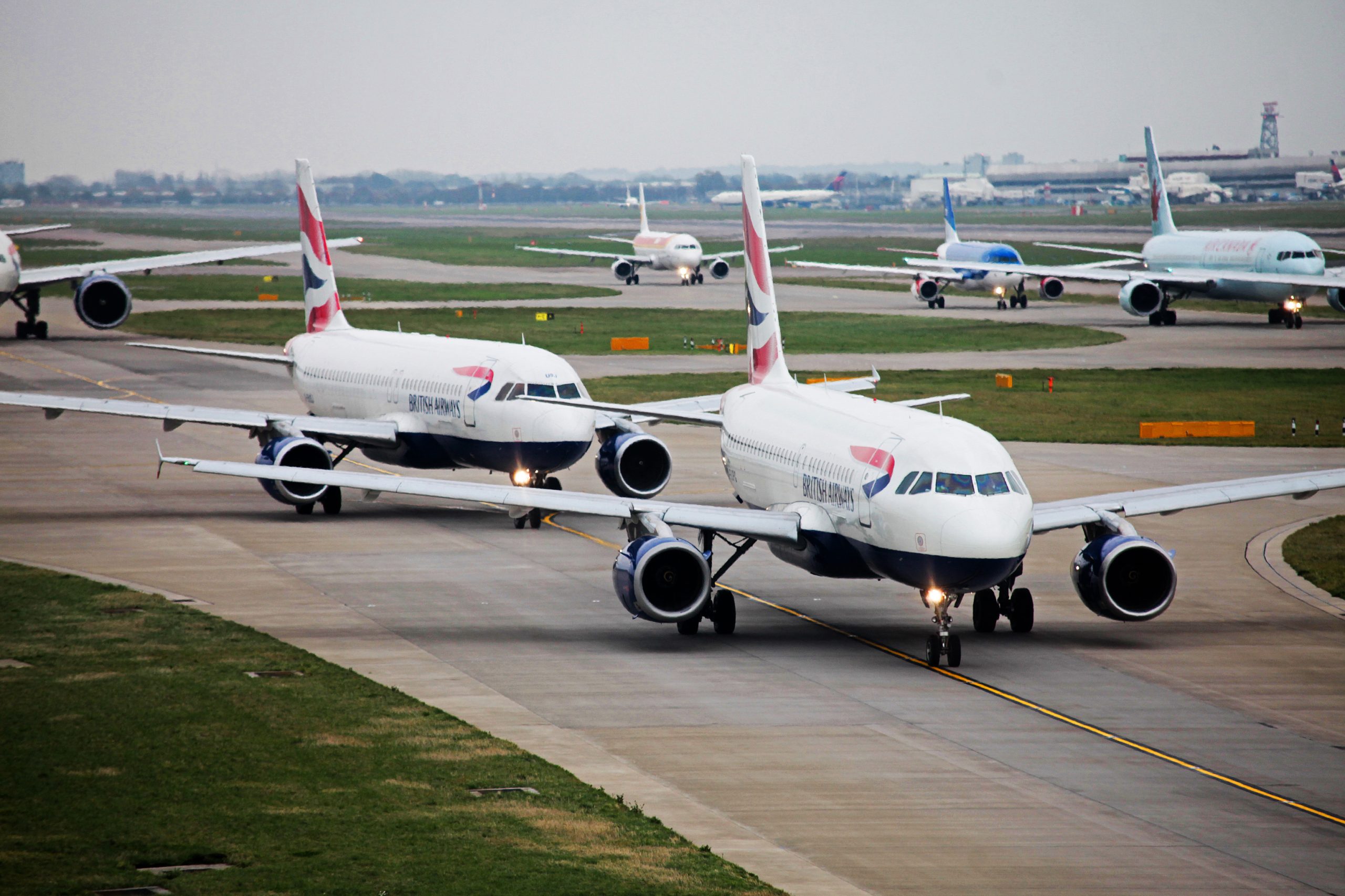
The carrier will operate the service daily, on a year‑round basis.
The route was last served in 2020 by regional carrier Flybe, which ceased operations in March of that year. The new flight is the only nonstop service linking Guernsey with Heathrow.
Chief planning and strategy officer at British Airways, Neil Chernoff, said the route is an important addition to BA’s network as it strengthens connectivity between the Channel Islands and the British capital. It also opens up access to other destinations.
The Committee for Economic Development is supporting the new service through a public subsidy.
Lorne is a South Africa-based aviation journalist. He was captivated and fascinated by flying from the day he took his first airline flight. With a passion for aviation in his blood, he has flown to destinations in all corners of the globe. Lorne has traveled extensively and lived in various countries. Drawing on his travels and passion for aviation, Lorne enjoys writing about airlines, routes, networks, and new developments.
Trip Report: Condor’s Premium Economy Experience from JFK to Frankfurt
We got to travel on "Germany's Vacation Airline," and now understand perfectly why Condor carries that title.
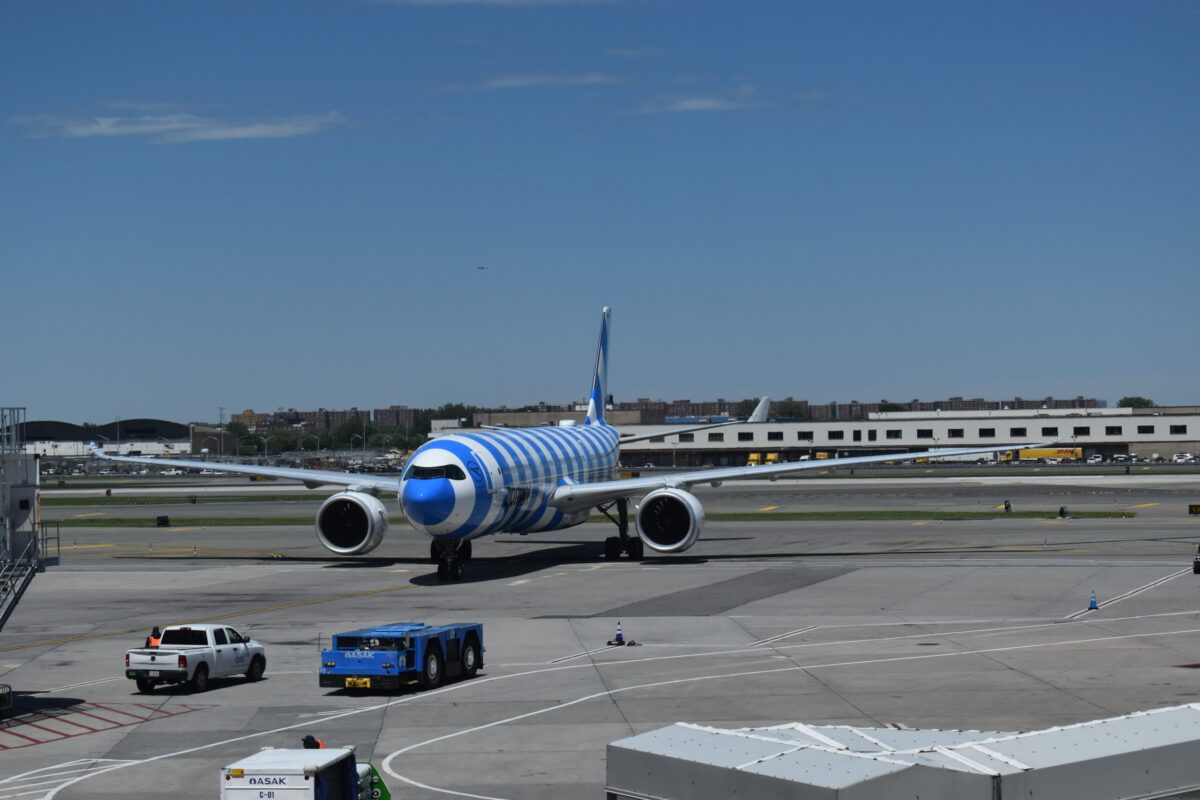
My Condor A330-900neo for the flight over to Frankfurt, arriving into the gate. (Photo: AirlineGeeks | Joey Gerardi)
Condor, known in Germany as Condor Flugdienst, has an extensive network out of its main hub in Frankfurt, and despite being labeled a “vacation airline,” the onboard service is better than that of full-service German airline Lufthansa.
The airline overhauled its onboard product a couple of years back, and its interiors now feature more of the iconic striped pattern found on the exterior of Condor’s aircraft. Plus, the onboard service is said to be pretty good for premium economy, so we decided to try it out for ourselves on a flight from JFK to Frankfurt.
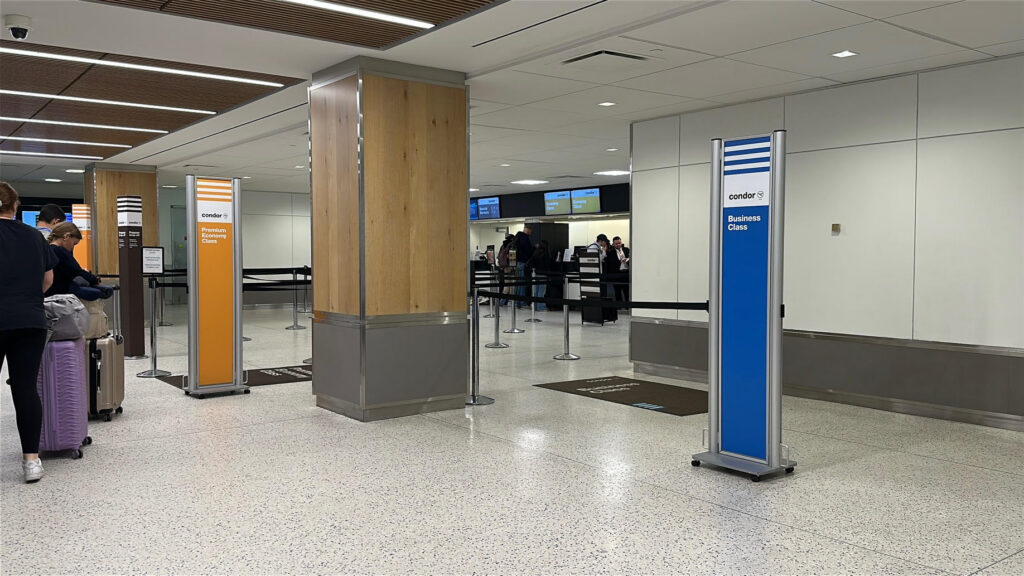
My day started out in a different airport, so I made sure to arrive plenty early so I could transfer terminals and check in. Condor operates from T7, alongside a handful of other international airlines, as well as domestic carriers such as Alaska Airlines, with which they are partners. The airline does offer online check-in, but for those wanting a paper ticket or needing to check a bag, the ticket counter opens three hours before the scheduled departure time.
Condor’s check-in area at JFK. (Photo: AirlineGeeks | Joey Gerardi)
Condor’s famous and very noticeable striped livery was unveiled back in April 2022, and is featured on nearly everything Condor has, from signs at the airport to ticket stock to the aircraft themselves, and much more. Condor does participate in TSA PreCheck, so it took almost no time to get through the checkpoint, especially at a time of day when there were not many flights departing.
Passengers in the premium economy cabin do not get lounge access included in their ticket, and with Terminal 7 being a little bit sparse in terms of amenities and things to do other than shopping or eating, there’s no reason to get here any earlier than three hours before your flight unless you want to do some duty-free shopping.
It wasn’t long after getting to the gate that the aircraft for my journey to Frankfurt arrived. My aircraft was D-ANRF, an Airbus A330-900neo which was delivered directly to Condor in September 2023, and wears the Blue Sea livery.
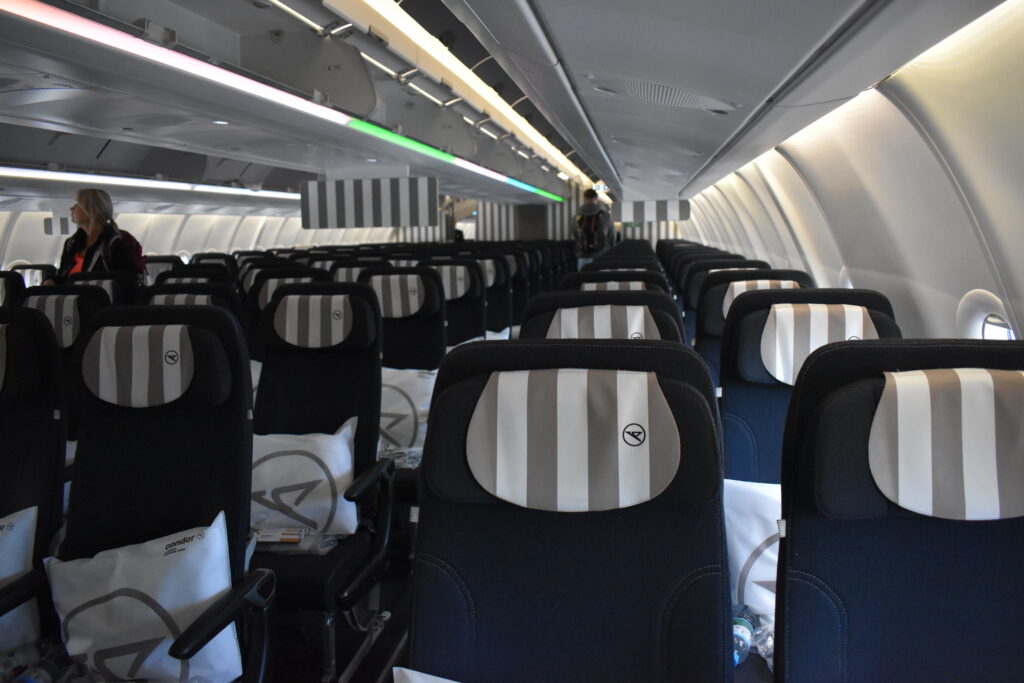
The deplaning process for incoming passengers went quickly, and before I knew it, they were lining up the passengers going out to get ready for the departure. All of Condor’s A330-900neos have 310 total seats, with 30 in business, 64 in premium economy, and 216 in economy.
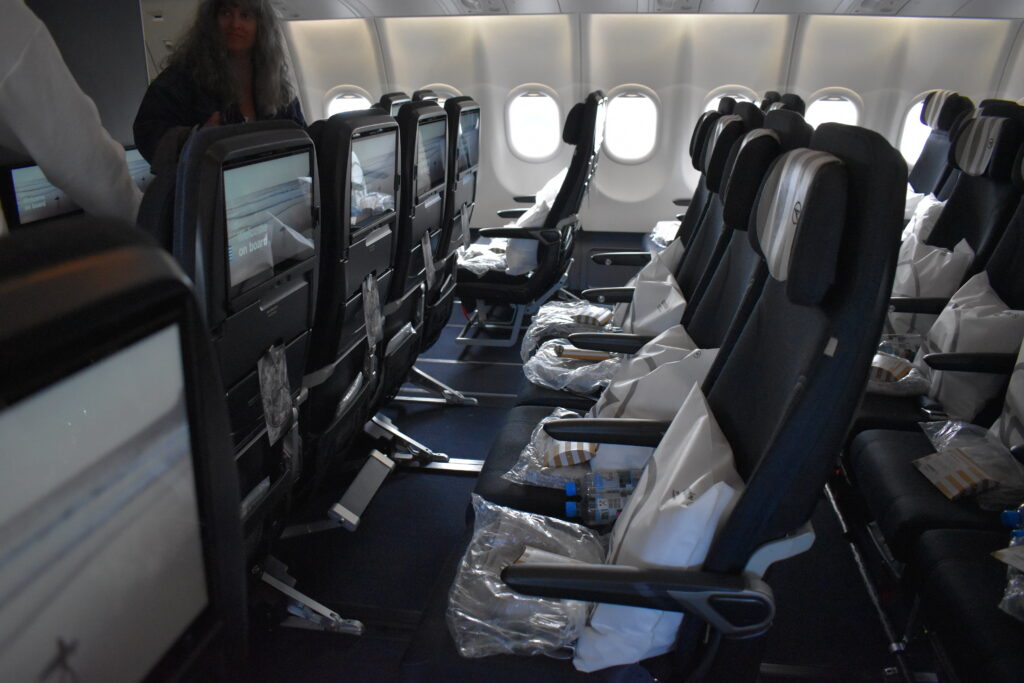
The premium economy section on Condor’s A330-900neo. (Photo: AirlineGeeks | Joey Gerardi)
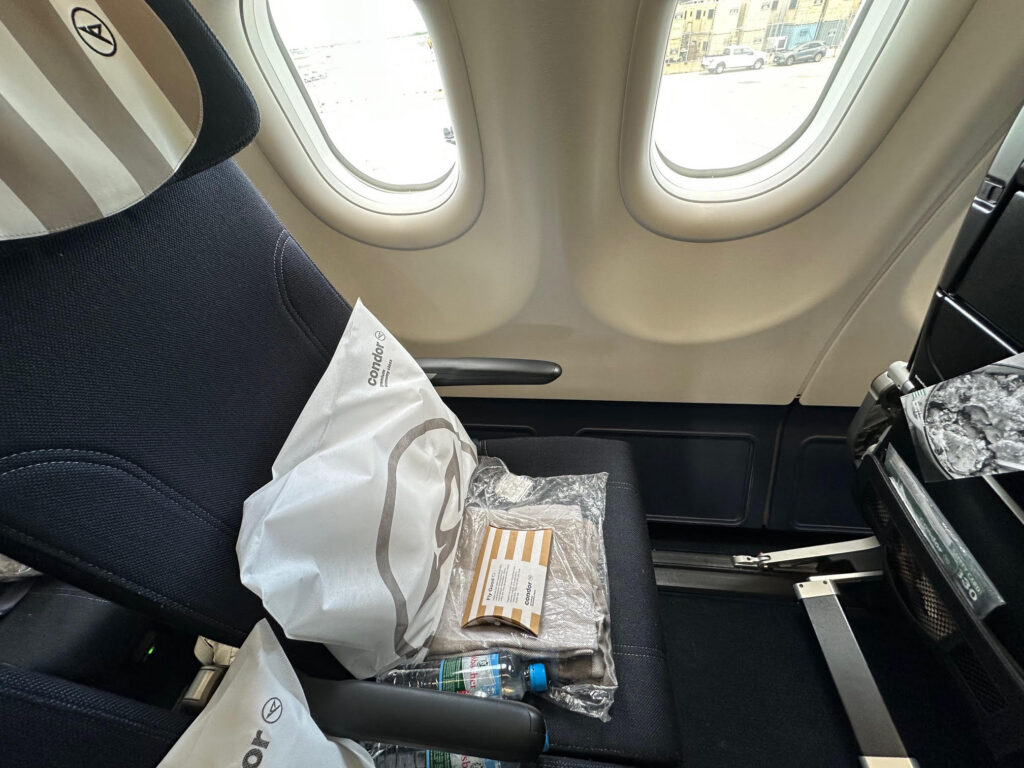
My seat would be 12A, a window on the left side of the aircraft, and I was fortunate enough to have an empty seat next to me. Waiting for me at my seat was a pillow, blanket, and water bottle, as well as an amenity kit and a menu for the dinner choices.
My premium economy seat, 12A, for the flight to Frankfurt. (Photo: AirlineGeeks | Joey Gerardi)
Despite boarding a little bit behind schedule, we managed to push back on time and actually even a little bit early. Taxi out to the runway was quick as well, and we blasted off into the skies. This flight was actually the first time I had ever ridden on an A330-900neo.
Taking off from JFK. (Photo: AirlineGeeks | Joey Gerardi)
There was a lot of room between my knees and the seat in front of me, and tons of space under the seat for my feet, especially with no bag under the seat, since I could put it there next to me with nobody sitting there. Even if there had been someone in that seat, I would’ve still had plenty of room.
A better view of the legroom in premium economy. (Photo: AirlineGeeks | Joey Gerardi)
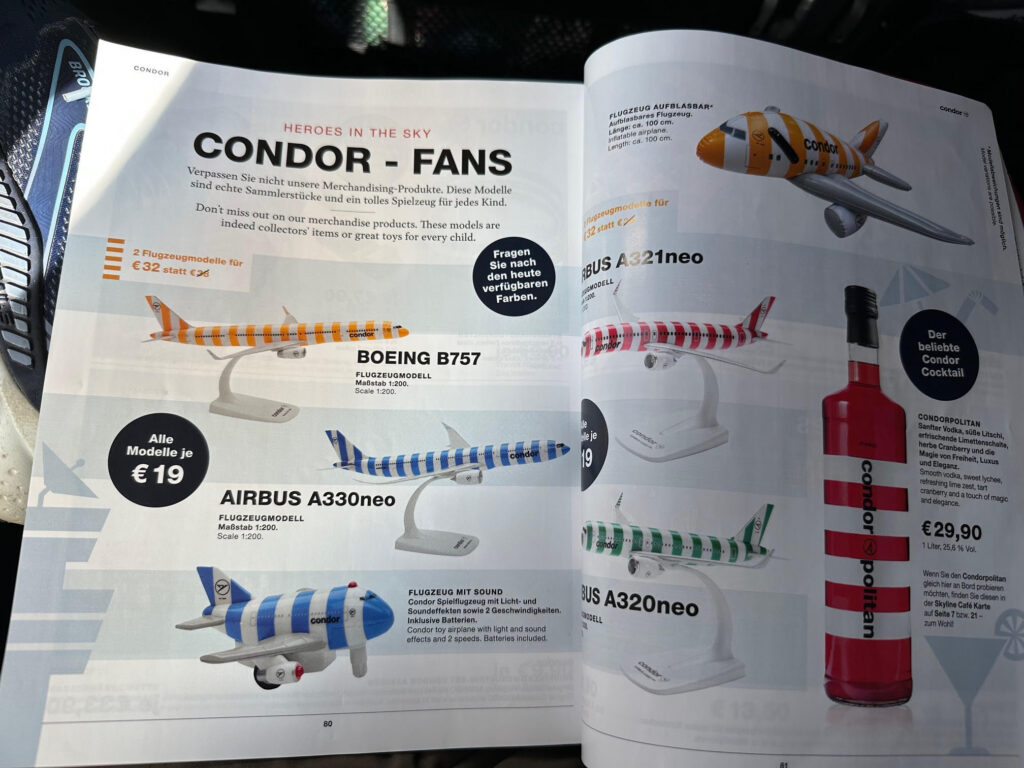
In the seatback pocket, there is a safety card along with a pamphlet showing what drinks are sold on Condor flights. There is also a magazine selling duty-free items that flight attendants bring through the cabin later during the flight, including a couple of aviation enthusiast-themed items such as models and even a Lego set of their A330. All of the scale models they sold on board the plane were really reasonably priced, with a 1:200 model of the A330 only costing €19, and although I didn’t get one on this flight to save room in my suitcase, I did get one on my return Condor flight.
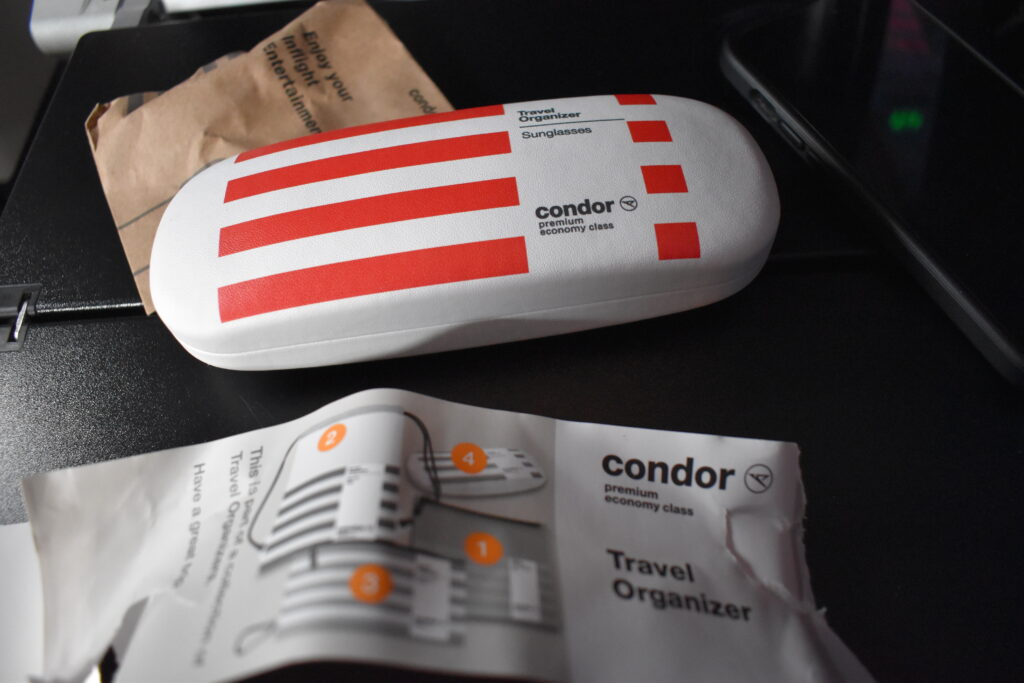
On all Condor flights, gifts are handed out to passengers in every cabin, and what you receive depends on the cabin. For those in premium economy, you could get one of four items: a sunglass case, a drawstring bag, a toiletry bag, or a makeup bag. For this flight, I got the sunglass case.
One of Condor’s gifts. (Photo: AirlineGeeks | Joey Gerardi)
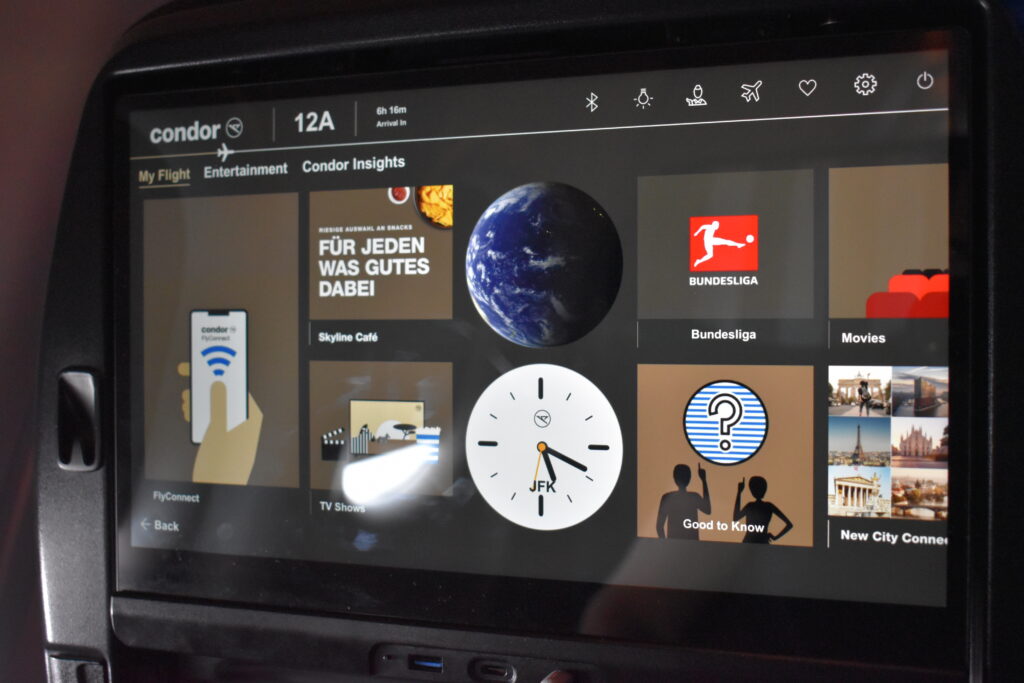
The seatback has many features to it, and along with having an IFE system, if you would rather just watch something on your own personal device, there is a device holder just below the IFE screen. The amenity kit was stocked very well for a premium economy cabin, with an eye mask, socks, toothpaste, and a toothbrush. And yes, the socks did have the airline’s logo and the famous striped color scheme.
The home screen on Condor’s IFE system. (Photo: AirlineGeeks | Joey Gerardi)
As far as stuff to do, the IFE includes the Skyline Cafe, where you order snacks, a clock with the local time from JFK and Frankfurt, movies, TV, relaxation tips, and much more. One feature I thought was cool was videos from landing at different Condor destinations from the point of view of the landing gear. And of course, an AvGeek favorite, the in-flight moving map, where you can see the overview of the flight, including the altitude, temperature outside, how much longer is left in the flight, and other details.
Roughly an hour after takeoff, flight attendants brought around the drink cart, followed shortly after by the meal. For the main course, I had a choice of chicken or pasta, and I chose the chicken option.
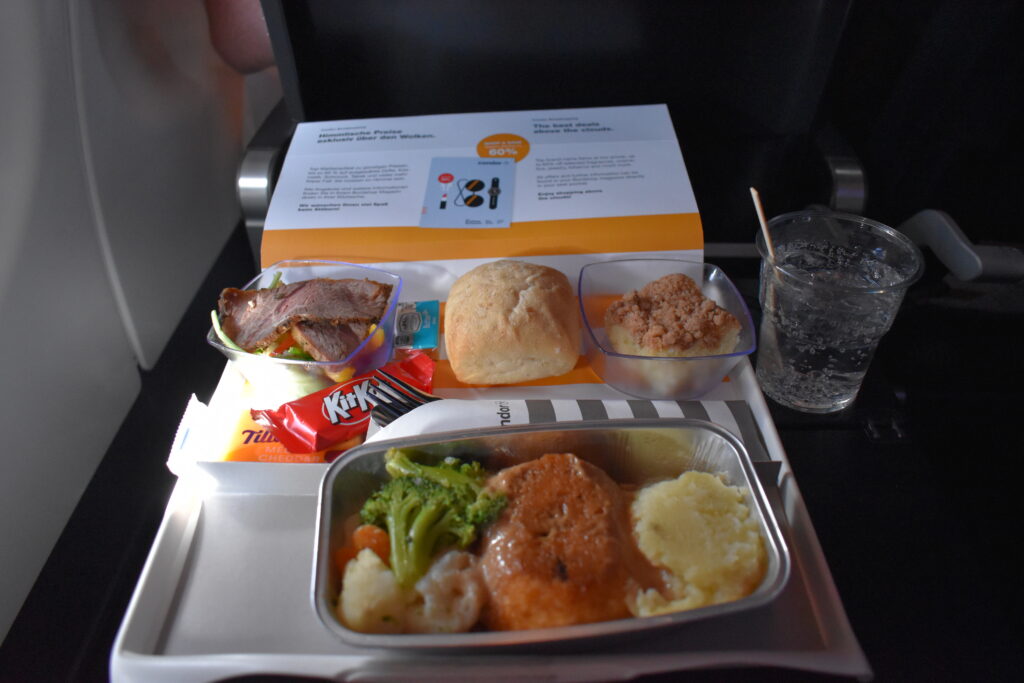
My starter consisted of marinated Cajun beef with vegetable quinoa salad and spinach. The main course was chicken cordon bleu with vegetables and mashed potatoes, and for dessert, there was apple crumble and a KitKat bar. There was also a side of bread and butter. Although the bowls and plates were made of plastic and tin, the silverware was real metal, which was a nice change from plastic or wooden cutlery, and while a small detail, it made the meal more enjoyable.
The premium economy dinner. (Photo: AirlineGeeks | Joey Gerardi)
Considering this was a premium economy meal and not first class, it was really, really good, going well above my expectations, and was probably some of the best chicken cordon bleu I’ve had, and definitely the best chicken-based meal I’ve ever had on a plane. What Condor serves in premium economy is very similar to what a lot of major airlines serve in first-class cabins in the U.S.
About 45 minutes after the meal was served, the cabin was cleaned up, and the cabin lights were turned down to a calming blue and orange to simulate the setting sun. I decided to recline my seat and try and get some sleep before breakfast in a couple of hours.
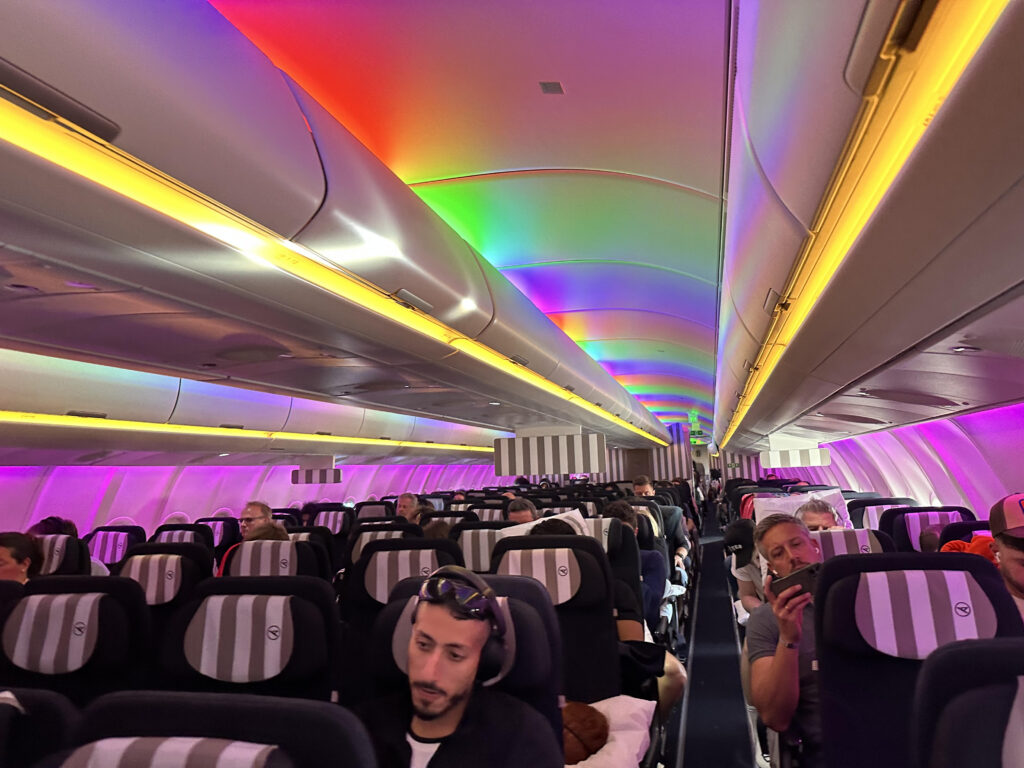
After about four to five hours of OK sleep, I woke up when the plane was somewhere over England, to the smell of food being prepared in the galleys. By this time, the cabin lights had been changed from darker colors to a rainbow of different bright colors, giving the cabin a wonderful festive feeling.
Cabin lights being turned on before the breakfast service. (Photo: AirlineGeeks | Joey Gerardi)
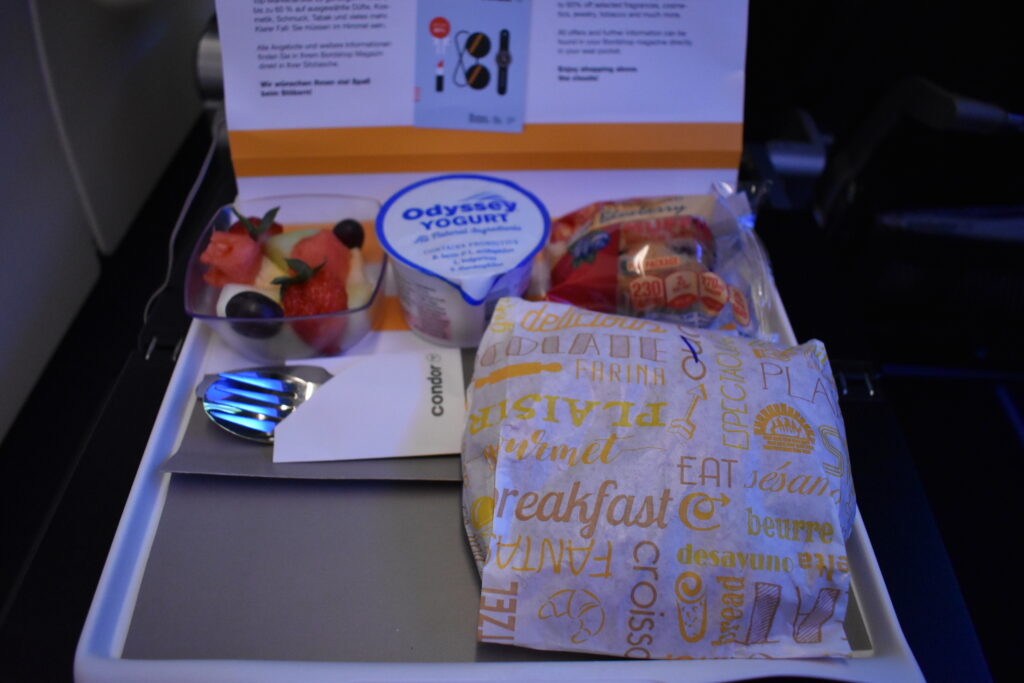
About an hour and a half before the landing is when the breakfast came out. Just like with the meal the night before, there was a choice for breakfast. The option I chose was an egg and cheese croissant, along with a muffin, yogurt, and a small bowl of fresh fruit on the side.
Again, just like the night before with dinner, breakfast was also served in paper and cardstock packaging but featured real silverware, a nice touch, especially for an industry where every pound counts.
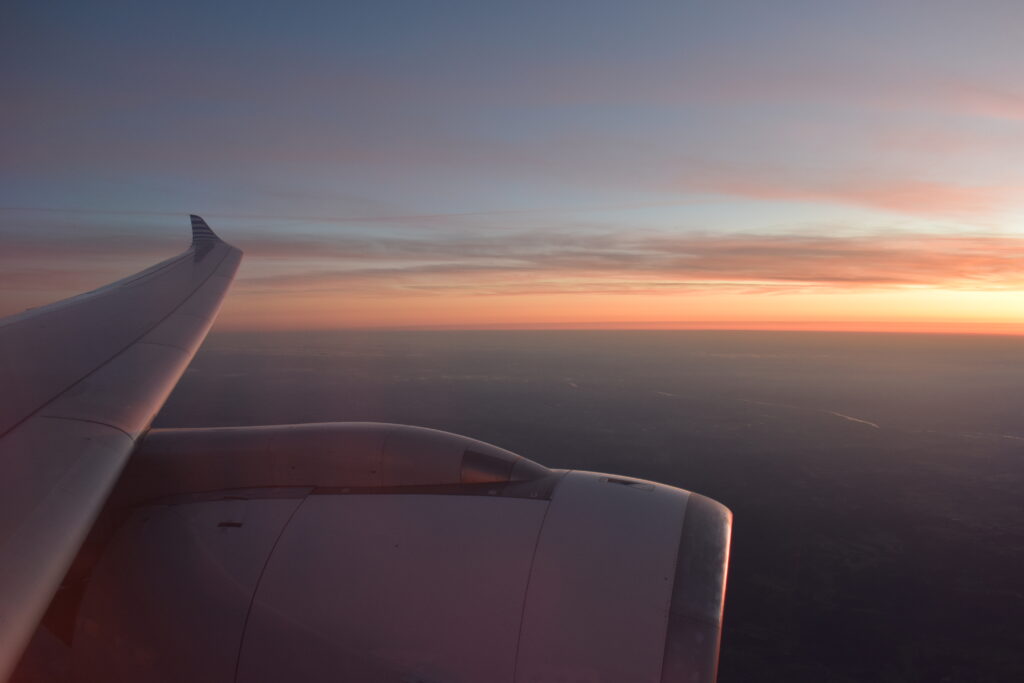
By this time in the journey, there wasn’t enough time left in the flight to start another movie, so I decided to sit back and relax and enjoy the sunrise over the northern German coastline.
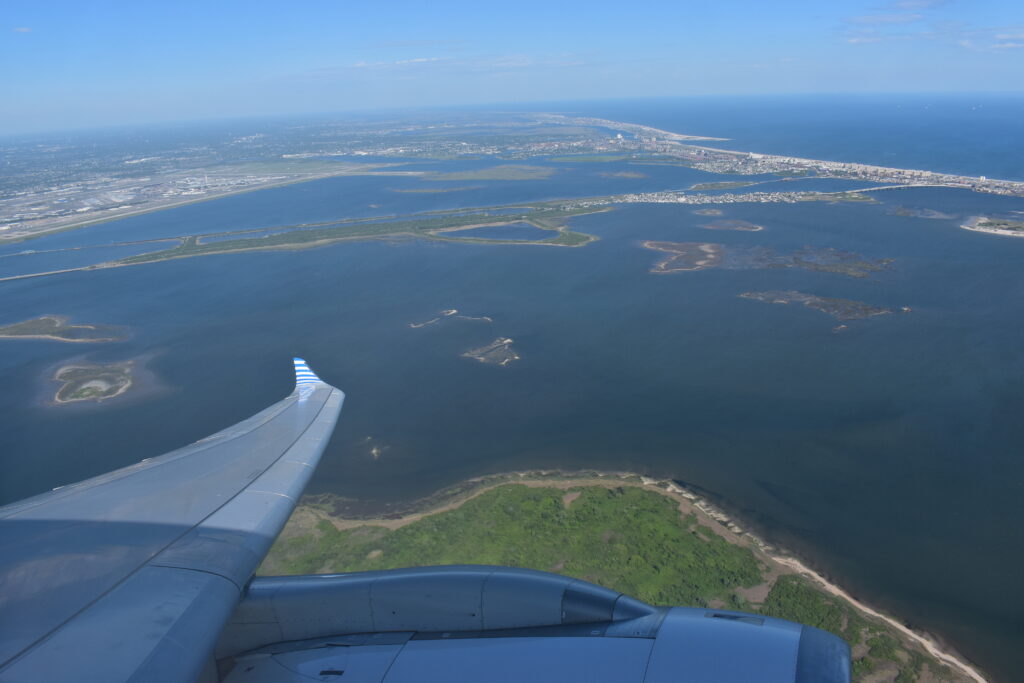
Beginning our descent into Frankfurt. (Photo: AirlineGeeks | Joey Gerardi)
Not long after breakfast had been cleaned up, the crew prepared the cabin for arrival, and we began our descent into Frankfurt. The weather was wonderful, and there were barely any clouds as we made our final descent into Frankfurt International Airport.
In the far-off distance, I was able to see downtown Frankfurt, although it was pretty hard to get a nice shot of it with a camera because it was directly behind the sunrise.
We landed in Frankfurt at 5:42 a.m. after just over seven hours of flying time, about 20 minutes ahead of schedule.
Conclusion
Despite Condor being a “vacation airline,” it definitely goes a step above some of the full-service airlines.
It is nice that it goes beyond what is necessary for passengers, especially outside of the high-end business cabin, as most airlines don’t do anything special for passengers who don’t pay tons of money for their seats.
The food in premium economy is good, and a big step above economy despite being only slightly more in price.
Fully lie-flat seats in Condor’s business class. (Photo: Condor)
Condor flies to some unique destinations and caters to the European leisure market. It serves locations in the Indian Ocean, Southeast Asia, even Anchorage, Alaska. Condor is the only passenger airline connecting the state with Europe.
Even though Condor isn’t the size of Lufthansa, given the great experience I had, I wouldn’t hesitate to fly with the airline again.
A video account of this trip can be found below.
Editor’s Note: Condor provided AirlineGeeks with a seat on this flight, but this trip report is an objective portrayal of events.
Joey has always been interested in planes for as long as he can remember. He grew up in Central New York during the early 2000s when US Airways Express turboprops ruled the skies. Being from a non-aviation family made it harder for him to be around planes and would only spend about three hours a month at the airport. He was so excited when he could drive by himself, the first thing he did with his driver's license was get ice cream and go plane spotting for the entire day. He graduated from Western Michigan University in 2022 with a B.S. in Aviation Management & Operations and a Minor in Business, and currently works for a major airline in his hometown.
Contour Sets Date for Return of Seasonal Route
The carrier said it will offer two flights per week for the summer.
“We’re pleased to bring back our seasonal Pensacola service for travelers in the Shoals area,” Contour President Ben Munson said in a news release. “This route offers a simple, stress-free way to reach one of the Gulf Coast’s most popular beach destinations without the need to drive to a larger airport.”
Contour did not provide an end date for the service.
The carrier offers mainly short-haul flights, and has been adding seasonal and year-round routes ahead of the summer.
Zach Vasile is a writer and editor covering news in all aspects of commercial aviation. He has reported for and contributed to the Manchester Journal Inquirer, the Hartford Business Journal, the Charlotte Observer, and the Washington Examiner, with his area of focus being the intersection of business and government policy.
Livery of the Week: Bamboo Airways
A soft color transition and minimalist layout define the Vietnamese carrier’s modern look.
A Bamboo Airways Boeing 787-9 Dreamliner at Charleston International Airport, before its delivery. (Photo: Bamboo Airways)
Editor’s Note: AirlineGeeks is proud to present our ‘Livery of the Week’ series. Every Friday, a team member will share an airline livery, which can be from the past, present, or even a special scheme. Some airline liveries are works of art. The complexity associated with painting around critical flight components and the added weight requires outside-the-box thinking from designers. The average airliner can cost upwards of $200,000 to repaint, creating a separate aircraft repainting industry as a result.
Have an idea for a livery that we should highlight? Drop us a line.
Bamboo Airways’ standard livery is built around a teal-to-navy gradient that flows across the tail and rear fuselage, creating a smooth and modern visual identity. The gradient effect, uncommon among traditional airline designs, gives the aircraft a subtle sense of motion while maintaining a clean overall presentation.
The vertical stabilizer features the airline’s stylized bamboo leaf logo in gold, positioned against the darker portion of the gradient. The emblem reflects the carrier’s name and ties the design to Vietnamese cultural symbolism, where bamboo is associated with resilience and growth.
A Bamboo Airways 787 departs from Hanoi for its inaugural flight to the U.S. (Photo: Bamboo Airways)
The fuselage remains primarily white, allowing the gradient tail to stand out as the focal point. “Bamboo Airways” titles appear along the forward section in a dark teal tone, with matching accents that connect visually to the tail design. Engine nacelles are typically finished in a darker shade, complementing the gradient without overpowering the layout.
The livery is applied consistently across Bamboo Airways’ fleet, including Airbus A320-family aircraft, A321neos, and Boeing 787-9 Dreamliners. While the scale of the gradient varies depending on aircraft size, the core design elements remain uniform.
Introduced alongside the airline’s launch in 2019, the livery reflects a contemporary approach to branding, emphasizing simplicity and color transitions rather than complex striping or large graphic elements.
Looking for a new airplane model? Head over to our friends at the Midwest Model Store for a wide selection of airlines and liveries.
Ryan founded AirlineGeeks.com in February 2013 and has spent more than a decade covering the airline business. His work has been featured by CNN, WJLA, CNET, and Business Insider. His aviation experience spans airport operations, Part 135 regulatory compliance, and airline crew workforce planning, along with time behind the yoke of a Cessna 172 and interviews with airline executives. Ryan now serves as Group President of Firecrown Media’s Aviation Group. He holds a B.S. in Air Transportation Management and an MBA from Arizona State University and teaches Airline Management at Embry-Riddle Aeronautical University.
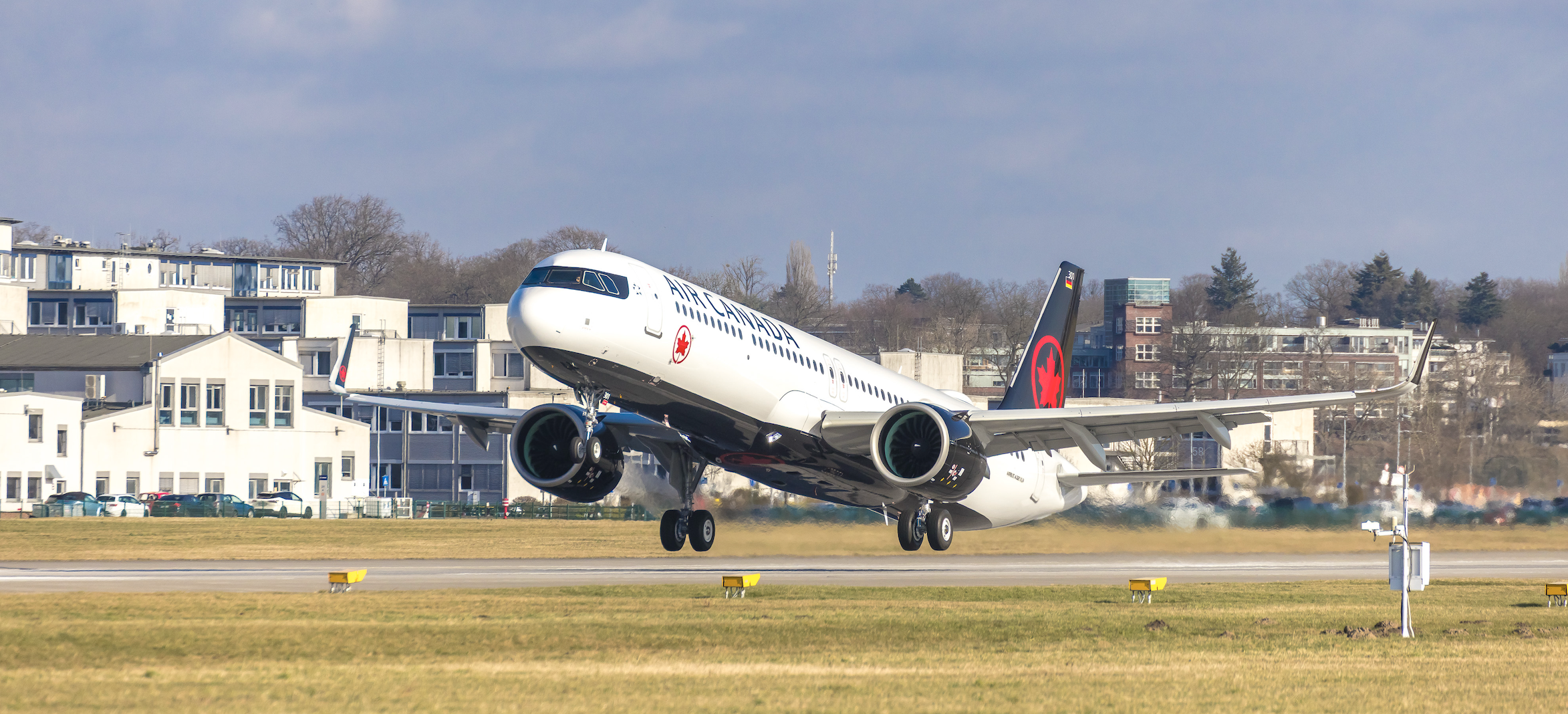
The aircraft is the first of 30 A321XLR ordered by Canada’s largest airline, and is being leased from SMBC Aviation Capital. The handover took place in Hamburg, Germany.
Airline officials said the variant will be used on transatlantic routes from Toronto and Montreal, as well as on North American transcontinental service. The aircraft is also expected to improve operational flexibility around seasonal- and demand-based route changes.
Airbus said Air Canada will be the first operator of the type in Canada.
“The Airbus A321XLR introduces a dynamic new component to Air Canada’s growth strategy, greatly expanding our flexibility to launch new international routes and improve our offering on existing markets,” Mark Galardo, Air Canada’s executive vice president, chief commercial officer, and president of cargo, said in a news release.
Fifteen A321XLRs will be delivered directly to Air Canada, and the other 15 will be leased.
The carrier recently showed off new design concepts for its -XLR interiors. The cabins, which include lie-flat Signature Class seats, will bring the type into Air Canada’s “Glowing Hearted” design standard.
Zach Vasile is a writer and editor covering news in all aspects of commercial aviation. He has reported for and contributed to the Manchester Journal Inquirer, the Hartford Business Journal, the Charlotte Observer, and the Washington Examiner, with his area of focus being the intersection of business and government policy.
American CEO Rules Out United Proposal, But Not All M&A
Robert Isom said the airline has a history of being “aggressive” with the right opportunities.
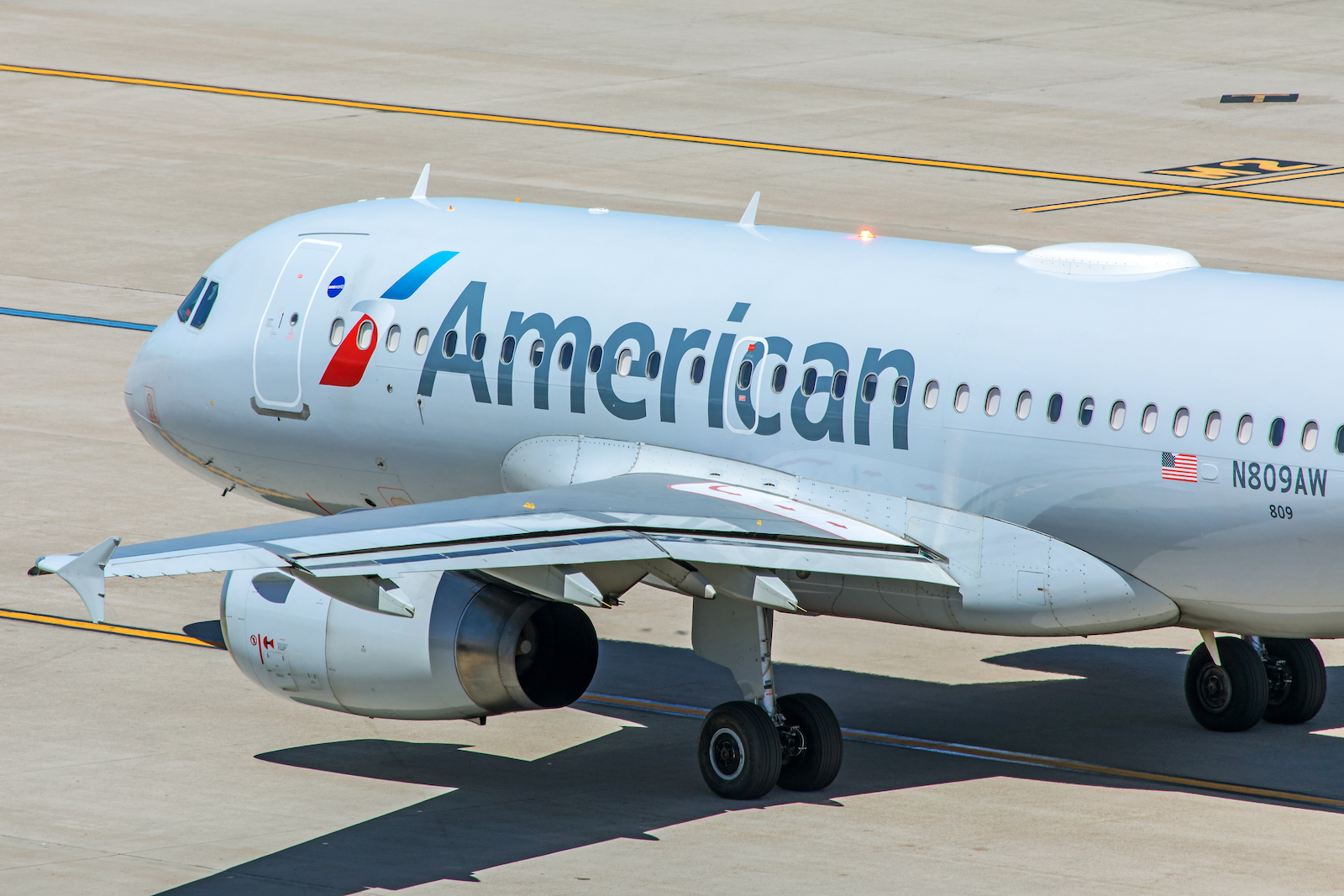
An American A319 in Phoenix. (Photo: AirlineGeeks | William Derrickson)
American Airlines CEO Robert Isom poured more cold water on talk of a potential merger with United during an earnings call Thursday but did not rule out future deals if the correct partner and circumstances are present.
Asked if the environment is right for consolidation in the industry, Isom stressed that a combination with United, reportedly pitched by CEO Scott Kirby in February, was a nonstarter.
“We’re going to be roommates and we’re not getting married,” Isom said, referring to American’s competition with United at Chicago O’Hare. “The idea of the two largest airlines in the world getting together, that’s something that we’ve viewed as being anticompetitive, and obviously everybody who has weighed in has said the same thing.”
For now, “American will focus on American,” he said, with an emphasis on expanding the carrier’s reach through international partnerships. But Isom also left the door open to future prospects.
“If there are opportunities from a consolidation perspective, or if there’s assets that become available in the marketplace, American has a long history of being aggressive,” he said. “We’ve got a lot of experience, and whether it’s the potential for M and A, or the work we’ve done to pioneer partnerships, we’re going to be on the forefront of that.”
Kirby reportedly floated the idea of a United-American merger in a meeting at the White House, arguing that the resulting carrier would be better positioned to compete internationally. American initially declined to comment, then released a statement saying that it was not in discussions with United and does not favor a linkup. Separately, President Donald Trump said he would oppose such a deal.
The recent spike in jet fuel prices has destabilized a number of low-cost carriers and encouraged speculation that those airlines may have to merge or be acquired to survive.
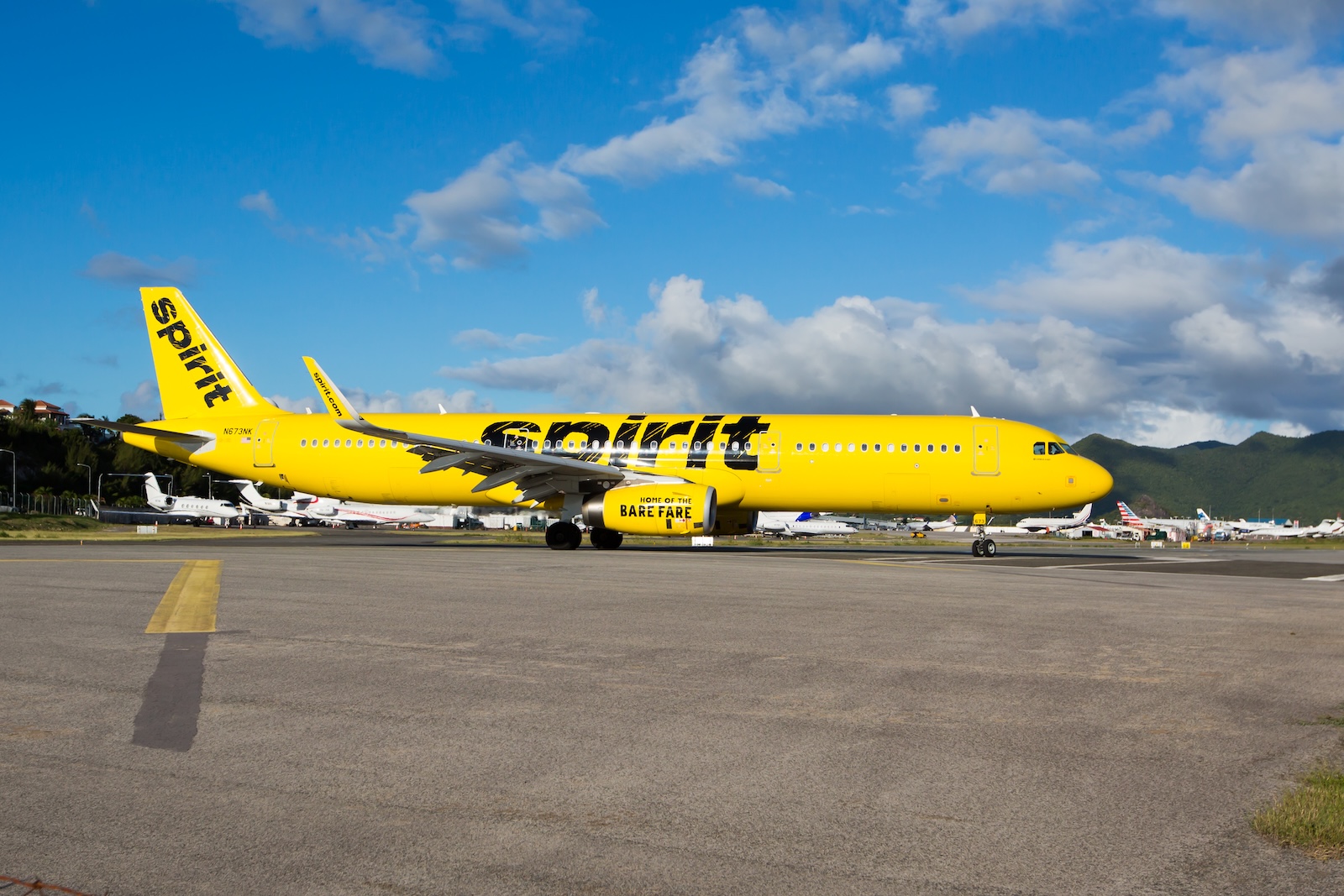
Spirit is currently in discussions with the White House over a potential rescue package, which could be worth up to $500 million.
American and Seattle-based Alaska Airlines are believed to be in discussions over a new strategic partnership, which could include revenue sharing. Bloomberg, which broke the story earlier this week, reported that the idea of a merger between the two carriers was brought up but failed to gain support.
The airlines have not commented on the report, and so far no new partnership has been announced.
Zach Vasile is a writer and editor covering news in all aspects of commercial aviation. He has reported for and contributed to the Manchester Journal Inquirer, the Hartford Business Journal, the Charlotte Observer, and the Washington Examiner, with his area of focus being the intersection of business and government policy.
Trump Suggests U.S. Government Should Buy Spirit
The president said he'd like to acquire the budget carrier and then sell it for a profit when oil prices come down.
“We’re thinking about doing it,” Trump told reporters at the White House. “Helping them out, meaning bailing them out. Or buying it. I think we just buy it. We’d be getting it virtually debt-free. There’s some good aircraft, some good assets. And when the price of oil goes down, sell it for a profit.”
Spirit was known to be in talks with the administration, but until Thursday no official on either side had suggested the federal government would purchase Spirit and operate it as a state asset.
Trump said he would make such a deal if Spirit agreed to “the right price.” He then suggested bringing in “someone who wants to run it” to turn the airline around.
Whatever form it ultimately takes, a rescue for Spirit aligns with the administration’s goals of saving American jobs and preserving competitiveness in key industries, the president continued.
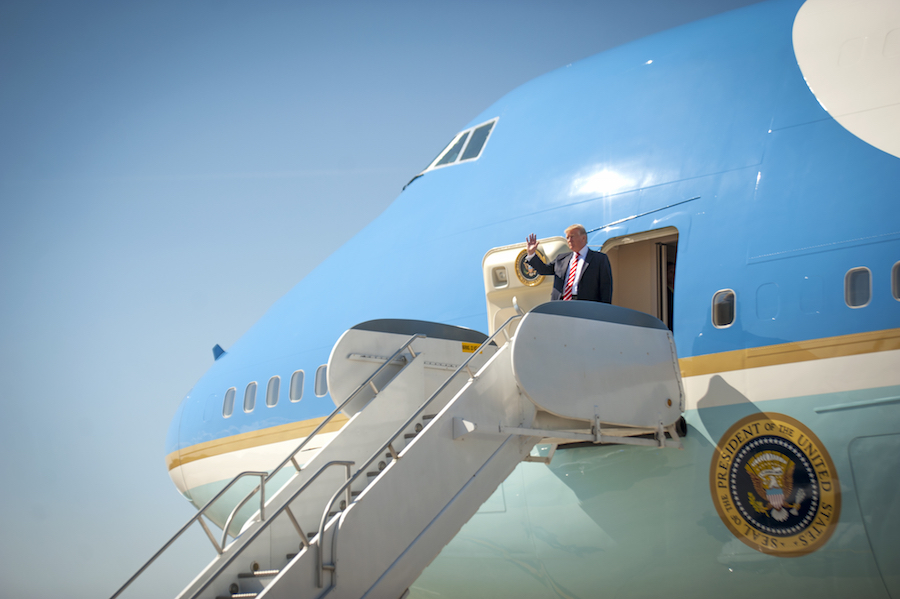
President Donald J. Trump waves as he exits Air Force One at MacDill Air Force Base, Feb. 6, 2017. President Trump flew to MacDill to visit with senior officials at USCENTCOM to discuss issues affecting USCENTCOM’s 20-nation area of responsibility. (Photo: U.S. Air Force photo by Staff Sgt. Ned T. Johnston)
“I’d love to be able to save those jobs,” he said. “I’d love to be able to save an airline. I like having a lot of airlines, so it’s competitive.”
Spirit was set to emerge from its second stint in bankruptcy protection some time this spring or summer, but surging jet fuel prices risk undoing much or all of the ultra-low-cost carrier’s progress. Reports circulating earlier this month suggested Spirit is looking at liquidation.
The Air Current broke the news late last week that Spirit had asked the administration for help. A later update from The Wall Street Journal said the White House is considering a rescue package worth up to $500 million in loans. In exchange, the federal government would own a part – though not the majority – of the airline.
Direct federal investments in private-sector companies are rare but not unheard of, especially for the current administration, which bought stakes in chipmaker Intel and mining and manufacturing company USA Rare Earth. But unlike Spirit, neither of those companies is in bankruptcy.
Unlike many other countries, the U.S. has never had a state-owned passenger airline.
Zach Vasile is a writer and editor covering news in all aspects of commercial aviation. He has reported for and contributed to the Manchester Journal Inquirer, the Hartford Business Journal, the Charlotte Observer, and the Washington Examiner, with his area of focus being the intersection of business and government policy.
Hawaiian Joins Oneworld Alliance
Officials said membership will improve connectivity for customers and expand access to the Hawaiian Islands.
Hawaiian’s new status allows members of Atmos Rewards – Alaska and Hawaiian’s shared loyalty program – to earn and redeem points while flying with other oneworld carriers.
Other perks include the ability to book flights with oneworld airlines on Alaska and Hawaiian’s websites, priority check-in and boarding, and, for elite Atmos members, equivalent oneworld status and access to nearly 700 premium airport lounges, including oneworld branded lounges at Amsterdam Airport Schiphol and Seoul’s Incheon International Airport.
“We are excited to give Hawaii residents and all of our Atmos Rewards members access to exciting destinations around the world – from Honolulu to Hong Kong, Maui to Melbourne, and Līhu‘e to London, and to welcome new oneworld guests with our genuine Hawaiian hospitality while inspiring visitors to appreciate Hawaii’s people, culture, and natural environment,” Hawaiian CEO Diana Birkett Rakow said in a news release.
Oneworld’s other members include American Airlines, British Airways, Cathay Pacific, Qatar Airways, Qantas, Japan Airlines, and Royal Jordanian. The organization’s CEO, Ole Orvér, said the addition of Hawaiian will strengthen the alliance’s presence in the Pacific.
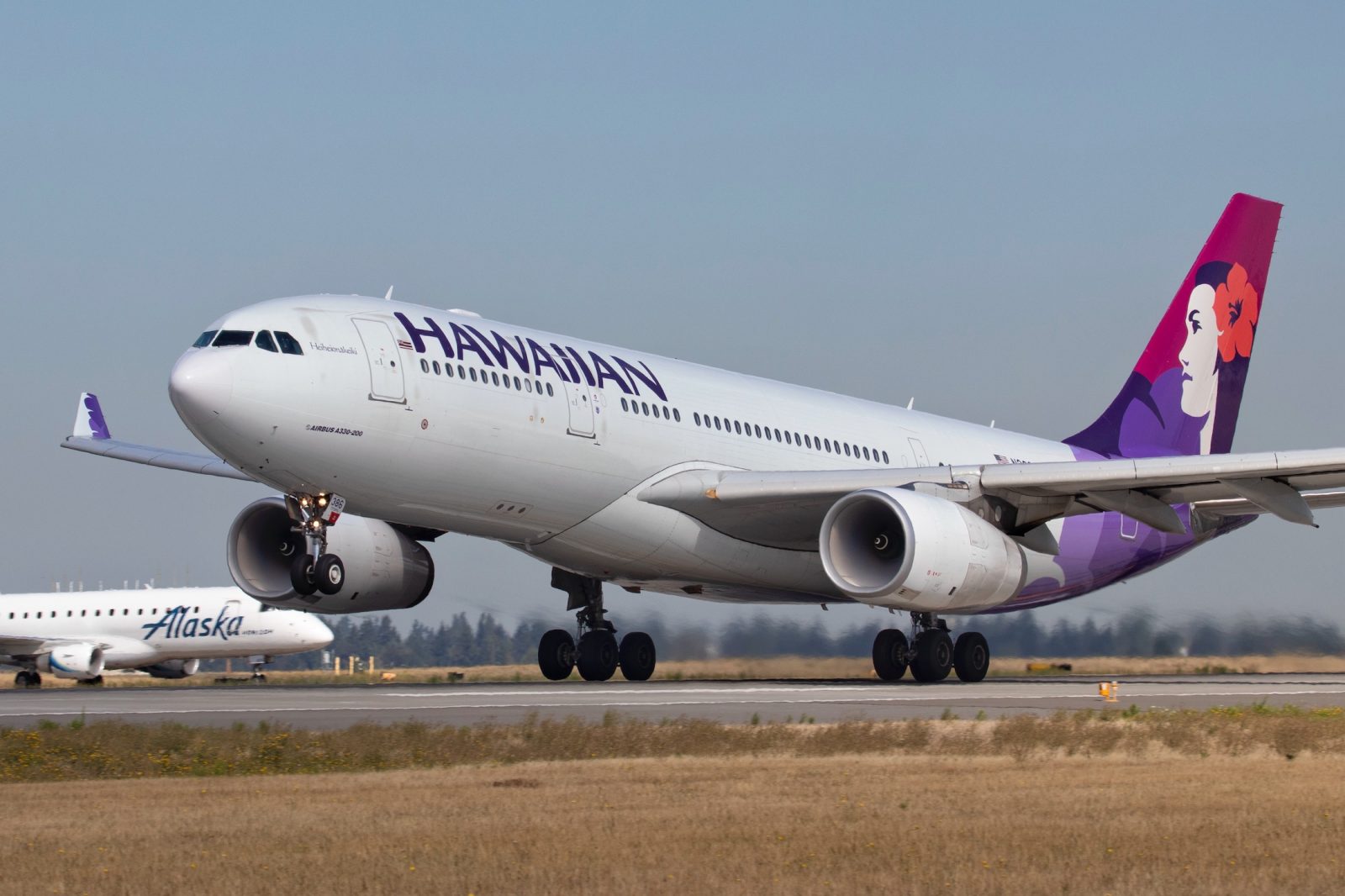
Hawaiian plans to celebrate its oneworld membership with a special themed livery applied to an Airbus A330, officials said. The design will debut later this year.
Alaska, which acquired Hawaiian in 2024, has been a oneworld member since 2021.
Zach Vasile is a writer and editor covering news in all aspects of commercial aviation. He has reported for and contributed to the Manchester Journal Inquirer, the Hartford Business Journal, the Charlotte Observer, and the Washington Examiner, with his area of focus being the intersection of business and government policy.
Allegiant to Expand Board Following Sun Country Acquisition
New additions include Sun Country’s current CEO and board chair.
Allegiant announced this week that its board will grow from eight to 11 members with the planned addition of Jude Bricker, Jennifer Vogel, and Thomas Kennedy.
Bricker serves as Sun Country’s president and CEO, and Vogel as the carrier’s board chair. Kennedy, president and CEO for North America at SIXT Rental Car, is also a member of Sun Country’s board.
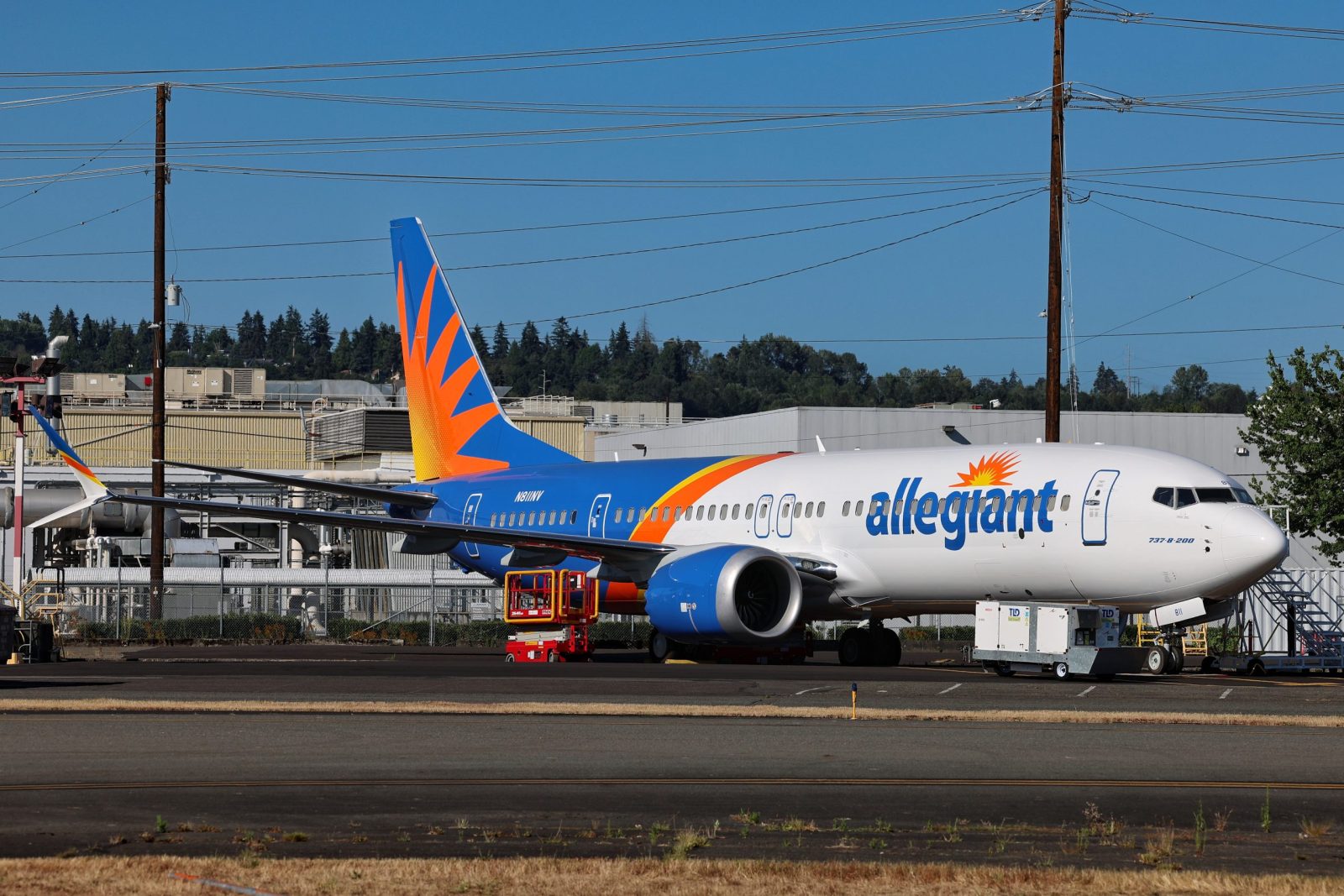
Allegiant is set to acquire Sun Country in a cash-and-stock deal valuing Sun Country at $18.89 per share. The combined airline would serve about 22 million customers annually and operate in nearly 175 cities.
The partners recently won approval from the U.S. Department of Transportation to continue operating as separate entities under common ownership after the merger is complete. The exemption will allow for continuity in operations until the airlines obtain a single operating certificate from the FAA.
Allegiant officials have said the transaction could close as soon as May 13.
“We are excited to welcome these accomplished leaders to Allegiant’s board upon closing,” Allegiant CEO Gregory Anderson said in a news release. “Their experience and perspective will be valuable as we continue building a stronger, differentiated airline that better serves the communities and customers across our combined network.”
Zach Vasile is a writer and editor covering news in all aspects of commercial aviation. He has reported for and contributed to the Manchester Journal Inquirer, the Hartford Business Journal, the Charlotte Observer, and the Washington Examiner, with his area of focus being the intersection of business and government policy.
Contour Adds New Airport to Network
The airline will launch two new routes in early July.
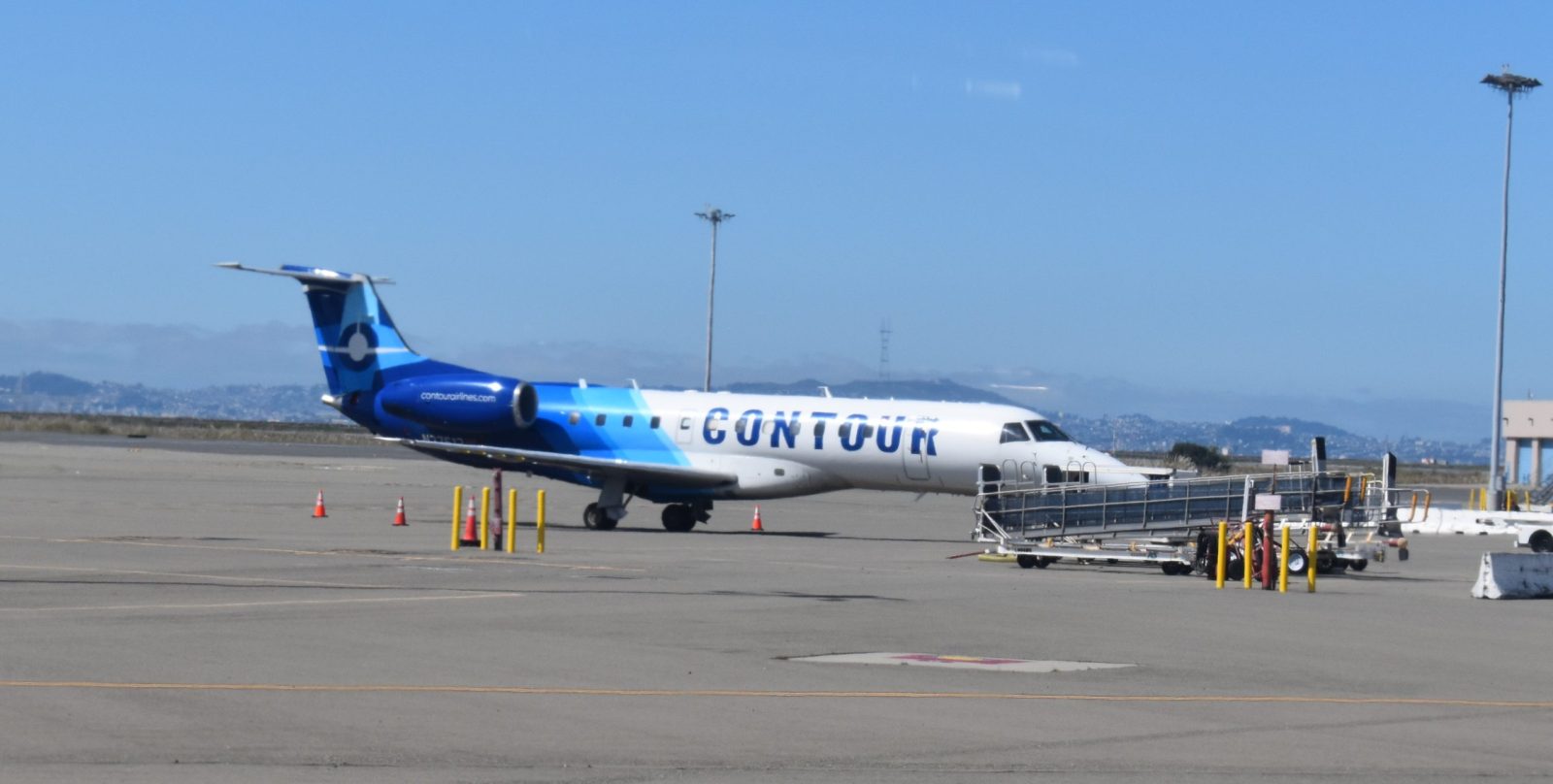
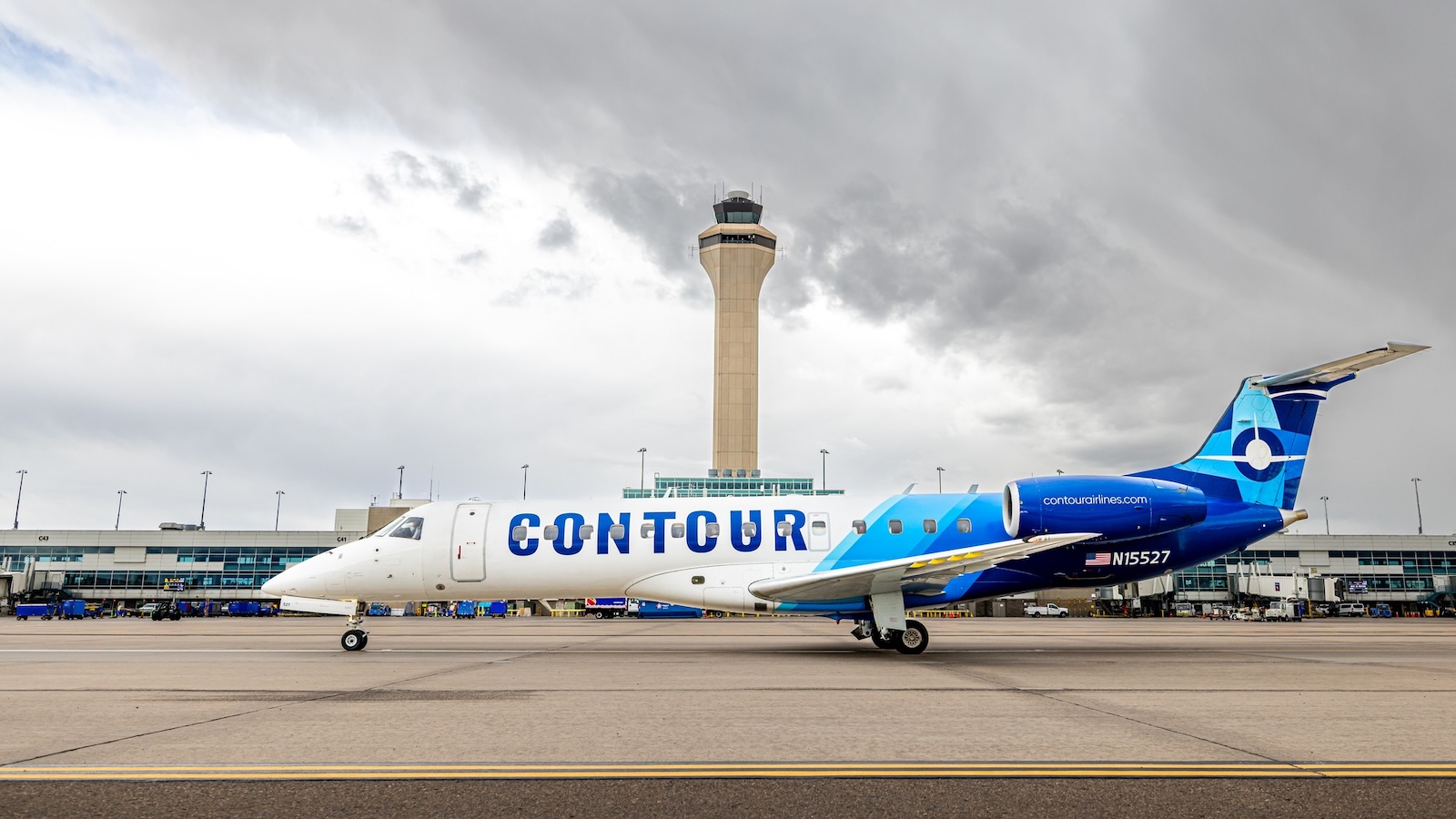
A Contour Embraer jet. (Photo: Denver International Airport)
Contour Airlines will bring a new destination in central California into its route network this summer.
Starting July 1, the independent regional carrier will connect Merced, California, with Los Angeles and Las Vegas. Service to Los Angeles will operate daily, while service to Las Vegas will run five times per week, on Mondays, Wednesdays, Thursdays, Fridays, and Sundays.
Contour will operate the connections using 30-seat regional aircraft.
“These routes not only make travel more convenient for local residents and businesses but also support economic growth by strengthening Merced’s connectivity to key markets,” Contour President Ben Munson said in a news release. “We look forward to delivering a dependable and comfortable travel experience for all our passengers.”
Contour has been steadily expanding its network over the last several weeks, announcing new connections to Fort Leonard Wood, Missouri; Macon, Georgia; Beckley, West Virginia; and Page, Arizona. The airline serves destinations across the Southwest, Midwest, and Southeast, as well as the eastern Caribbean.
Zach Vasile is a writer and editor covering news in all aspects of commercial aviation. He has reported for and contributed to the Manchester Journal Inquirer, the Hartford Business Journal, the Charlotte Observer, and the Washington Examiner, with his area of focus being the intersection of business and government policy.
Sign-up for newsletters & special offers!
Get the latest stories & special offers delivered directly to your inbox