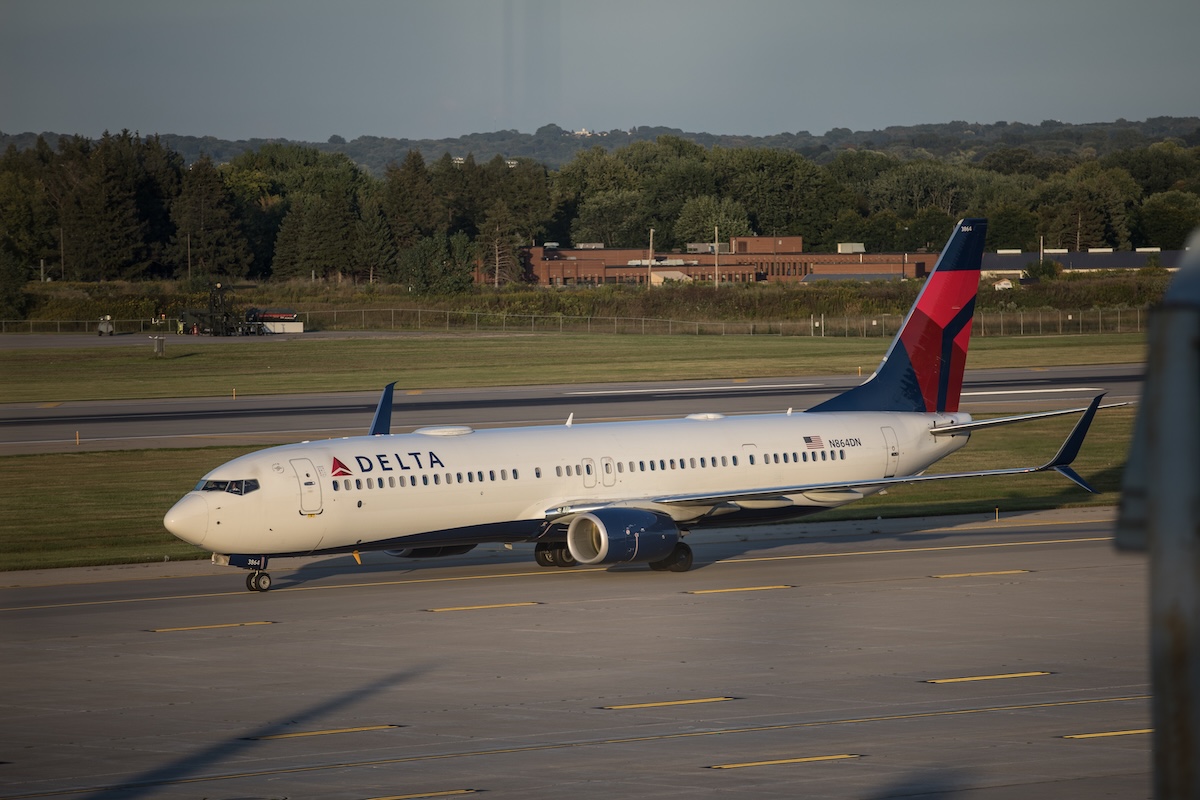
A Delta 737-900ER (Photo: Shutterstock | fivetonine)
Delta is pausing or reducing several routes this summer and fall, including service from Salt Lake City, Seattle, and Los Angeles.
The Atlanta-based carrier said the changes are part of its ongoing network planning process. The adjustments were loaded as part of last week’s Cirium Diio schedule update.
“As part of its routine network planning, Delta is updating its Salt Lake City–Little Rock service for the summer season,” a Delta spokesperson said in a statement. “The route will be paused beginning June 6, 2026, and is scheduled to resume September 8, 2026. We apologize for this inconvenience and Delta will directly contact customers to discuss alternate options.”
During the pause, Little Rock passengers will still be able to access Delta’s network through Atlanta, where the airline operates up to seven daily flights.
Mexico Reductions
Delta is also making several adjustments to its Seattle-Mexico schedule. The airline said flights from Seattle to Cancun, Los Cabos, and Puerto Vallarta will be paused or reduced between June and November.
“Delta is updating its planned service from Seattle to Cancun, Los Cabos, and Puerto Vallarta as part of its ongoing planning for the summer and fall seasons,” the spokesperson said. “Select routes will be paused or reduced between June and November. We apologize for any inconvenience, and Delta will contact affected customers directly to discuss alternate options.”
Seattle-Cancun service will not operate from June 2 through Nov. 8 and is scheduled to resume Nov. 9. Seattle-Los Cabos flights will operate on Saturdays only from June 2 through June 30 before being suspended from July 1 through Nov. 8. That route is also scheduled to resume Nov. 9.
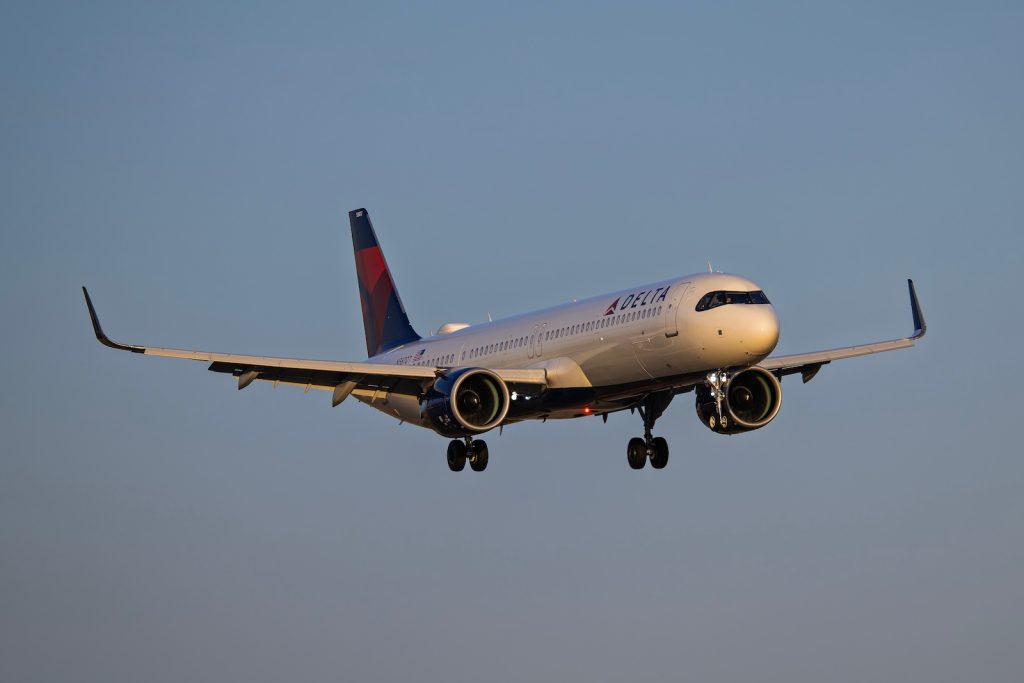
A Delta Airbus A321neo. (Photo: Shutterstock | Robin Guess)
Seattle-Puerto Vallarta service will be paused from Oct. 6 through Nov. 8 and is scheduled to resume on Nov. 9.
Delta said Seattle passengers can still reach Cancun through Salt Lake City or Atlanta on Delta, or through Mexico City on Aeromexico. Los Cabos and Puerto Vallarta will remain accessible through Salt Lake City and Los Angeles.
In addition, Delta is pausing its Los Angeles-Mexico City route from June 2 through Nov. 8. Service is scheduled to resume on Nov. 9.
“Delta periodically adjusts its network, and as part of this process is updating its Los Angeles–Mexico City service,” the spokesperson added. “The route will not operate from June 2 through November 8 and is scheduled to resume November 9. We apologize for this inconvenience and Delta will directly contact customers to discuss alternate options.”
Ryan founded AirlineGeeks.com in February 2013 and has spent more than a decade covering the airline business. His work has been featured by CNN, WJLA, CNET, and Business Insider. His aviation experience spans airport operations, Part 135 regulatory compliance, and airline crew workforce planning, along with time behind the yoke of a Cessna 172 and interviews with airline executives. Ryan now serves as Group President of Firecrown Media’s Aviation Group. He holds a B.S. in Air Transportation Management and an MBA from Arizona State University and teaches Airline Management at Embry-Riddle Aeronautical University.
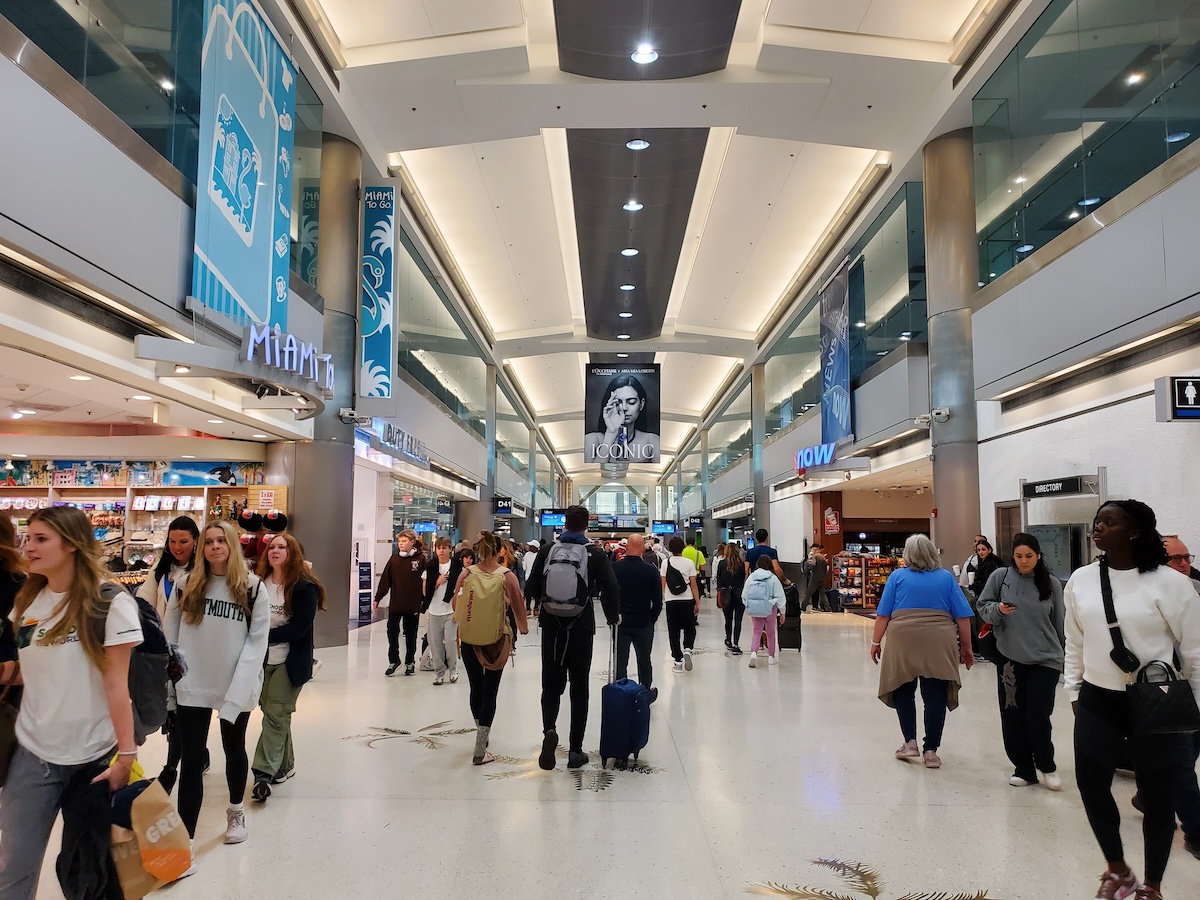
A terminal in Miami. (Photo: Shutterstock | Khairil Azhar Junos)
Officials in Miami-Dade County have raised the possibility of building a second major commercial airport to accommodate increasing traffic.
According to WPLG-TV, a recent report from the county’s mayor found that Miami International Airport is operating at 80% capacity and nearing the threshold where the FAA normally recommends adding more infrastructure and space for takeoffs and landings.
The county’s commissioners are reportedly looking at three potential options to relieve Miami International – expanding Miami Executive Airport or Miami Homestead General Aviation Airport into a major commercial airport, or building an entirely new airport somewhere else in the county.
“Capacity challenges could impact growth, create travel delays, and affect our competitiveness,” Miami-Dade Commission Chair Anthony Rodriguez told WPLG. “We have to act now and plan ahead.”
It would take 12 to 15 years to expand either of the existing airports and more than 20 years to build a new one, the station reported.
According to OAG, Miami International was the tenth-busiest airport in the U.S. last year, with about 32.8 million seats. It is the second-busiest airport in Florida, behind Orlando, and the fifth-busiest airport in the South.
Miami is a major gateway for flights to and from the Caribbean and South America, especially for American Airlines, its largest passenger carrier.
Zach Vasile is a writer and editor covering news in all aspects of commercial aviation. He has reported for and contributed to the Manchester Journal Inquirer, the Hartford Business Journal, the Charlotte Observer, and the Washington Examiner, with his area of focus being the intersection of business and government policy.
IATA Chief Warns of Possible Jet Fuel Shortages This Summer
Willie Walsh said Asia and Europe will likely be affected first.
An employee of a ground service company refuels an aircraft. (Photo: Shutterstock/Karolis Kavolelis)
Airlines around the world could be forced to cancel flights this summer as supplies of jet fuel run low, the head of the International Air Transport Association said this week.
In an interview with Reuters, IATA Director General Willie Walsh said Asia will likely be affected first, followed by Europe, then Africa and Latin America.
“I think we will see airlines starting to reduce some of their schedules as we go towards the peak summer period in anticipation of some fuel shortages,” Walsh said.
Still, the IATA chief said he does not expect a complete collapse in air travel in the coming months.
“I think that people will continue to fly through the summer period and that people will expect to have a holiday during the summer as they have in previous years,” Walsh said, pointing to ongoing strong demand.
The price of jet fuel has doubled since the beginning of hostilities between the U.S., Israel, and Iran in late February. Iran has effectively closed the Strait of Hormuz, through which about one quarter of the world’s seaborne oil passes in peacetime. Iran’s Islamic Revolutionary Guard Corps has also bombed oil and natural gas infrastructure in neighboring U.S.-allied Arab countries, including Saudi Arabia and Qatar, further disrupting energy markets.
Asia is considered particularly vulnerable to the crisis because many countries there rely heavily on imported fuel. At the same time, Asian countries with their own production and refining capabilities, including China and South Korea, are reducing exports to ensure their domestic needs are met.
Zach Vasile is a writer and editor covering news in all aspects of commercial aviation. He has reported for and contributed to the Manchester Journal Inquirer, the Hartford Business Journal, the Charlotte Observer, and the Washington Examiner, with his area of focus being the intersection of business and government policy.
First Look: Southwest Rolls Out U.S. 250th Anniversary Livery
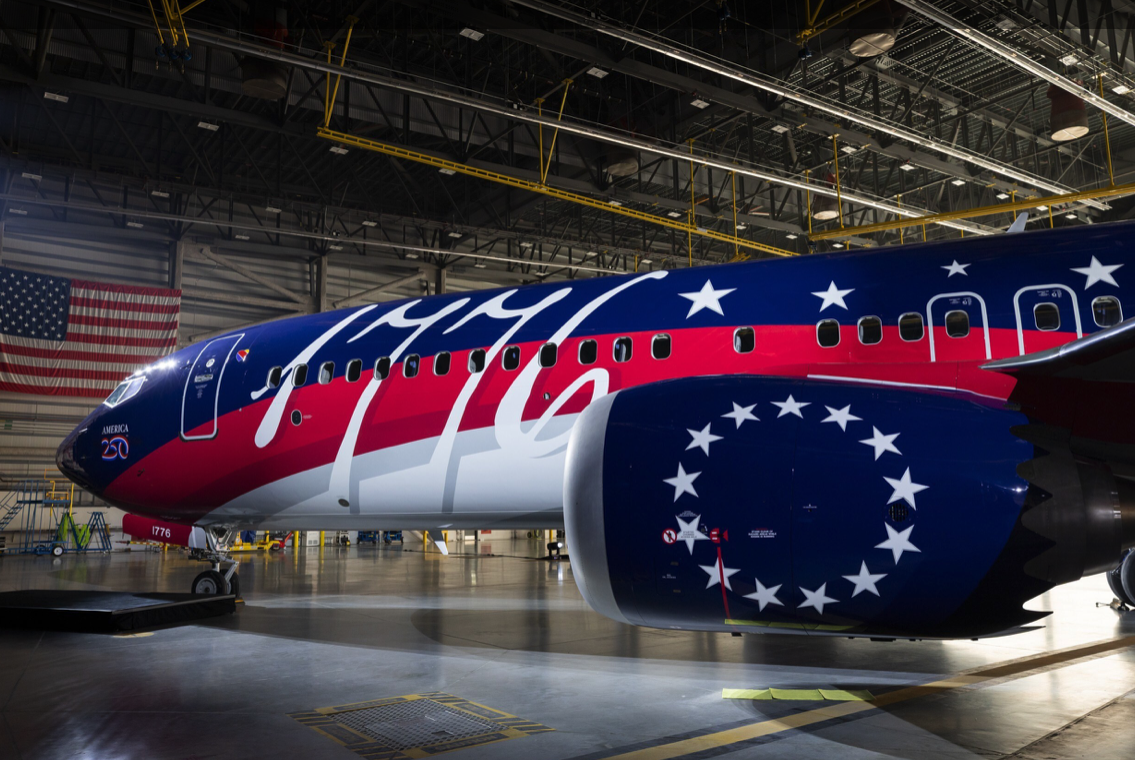
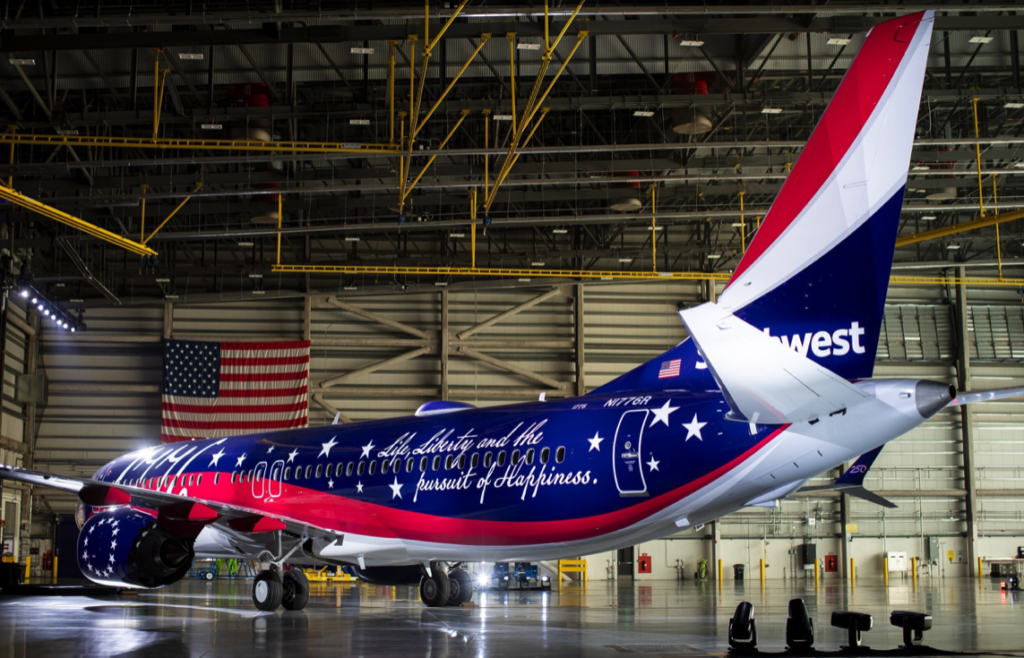
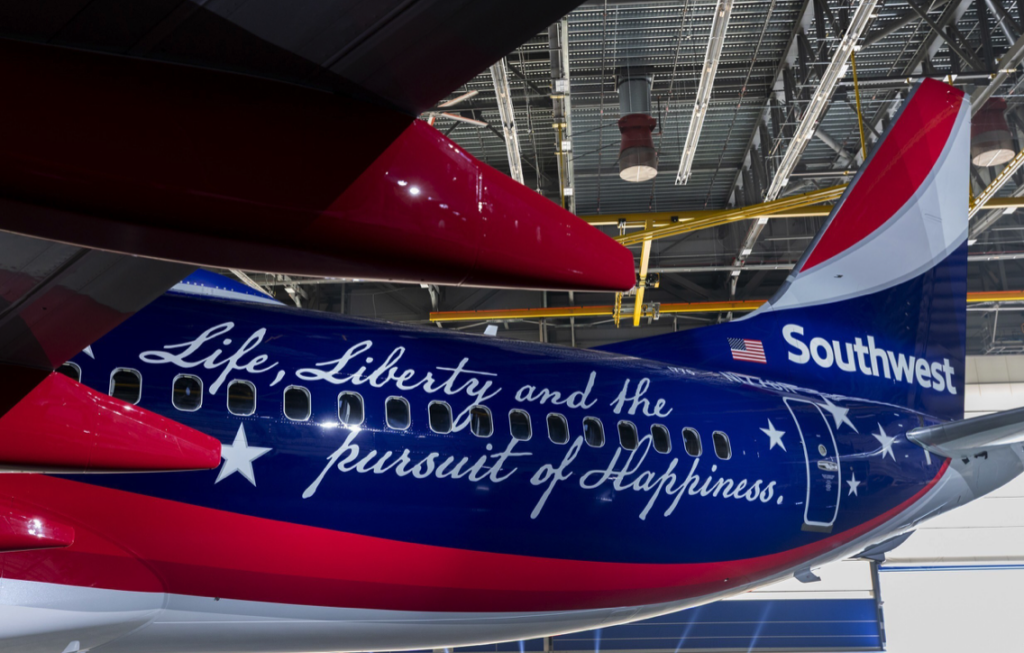
Crews applied a red, white, and blue paint scheme to a Southwest Boeing 737, now nicknamed “Independence One.” The design includes 13 stars for the original colonies; circles of stars on each engine cowling, recalling the Betsy Ross flag; the date “1776” written in giant quill script; and the phrase “Life, liberty, and the pursuit of happiness,” taken from the Declaration of Independence.
Independence One will join two other U.S.-themed aircraft in Southwest’s fleet – “Freedom One,” which was introduced in 2021, and the more recent “Liberty One.”
Southwest’s new “Independence One” livery. (Photo: Southwest Airlines)
The unveiling came as Southwest announced a new partnership with America250, the organization coordinating the country’s 250th anniversary celebrations this year. The airline plans to give up to $250,000 to nonprofit groups that its employees serve.
“With our new Independence One and Liberty One aircraft, we honor this important milestone in our nation’s history, and the generations of customers that Southwest has carried,” Southwest President and CEO Bob Jordan said in a news release. “Southwest is proud to be a part of the 250th national celebration and to honor the same spirit of innovation, resilience, and optimism that has shaped our country and our company.”
Close-up on text reading “Life, liberty, and the pursuit of happiness.” (Photo: Southwest Airlines)
Independence One will enter service on Wednesday with a flight from Dallas/Fort Worth to Philadelphia.
American Airlines and Alaska Airlines have also partnered with America250. In March, American and subsidiary Envoy each announced plans for new patriotic liveries, which are expected to debut later this spring or summer.
Zach Vasile is a writer and editor covering news in all aspects of commercial aviation. He has reported for and contributed to the Manchester Journal Inquirer, the Hartford Business Journal, the Charlotte Observer, and the Washington Examiner, with his area of focus being the intersection of business and government policy.
Airline Trade Group Asks for $2.5 Billion ‘Liquidity Pool’
The money would be used exclusively to offset rising fuel costs, representatives said.
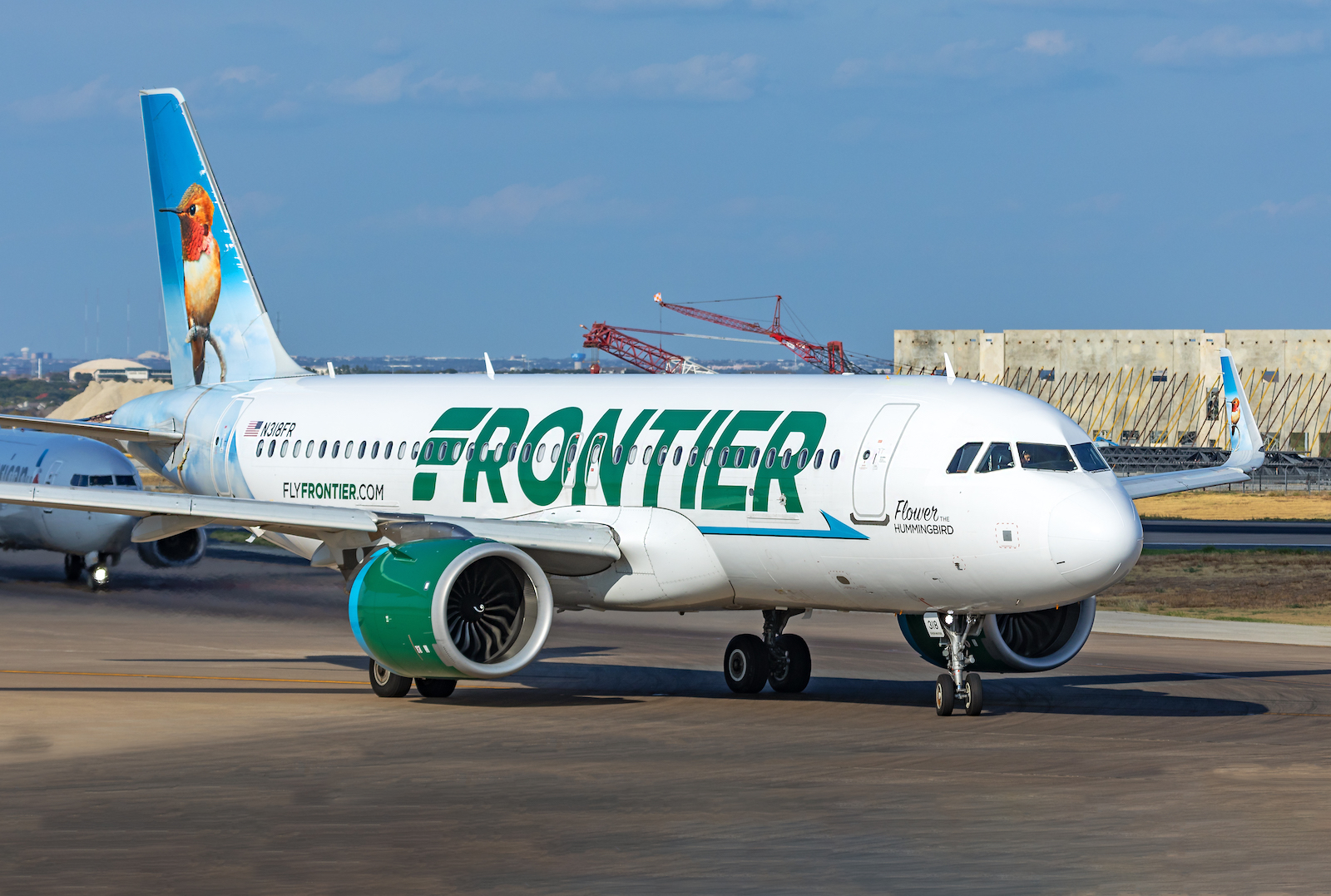
A Frontier Airbus A320neo. (Photo: AirlineGeeks | William Derrickson)
A trade association representing five low-cost U.S. airlines confirmed Monday that it is seeking $2.5 billion in assistance from the federal government.
In a statement, the Association of Value Airlines said it has asked the Trump administration to create a “liquidity pool” that would be used only to help offset “incremental fuel costs.”
The association cited as a precedent the federal aid packages made available to airlines during the COVID-19 pandemic, when virtually all commercial air traffic worldwide was temporarily suspended.
According to its website, the organization’s “full members” are Allegiant, Avelo, Frontier, Spirit, and Sun Country.
Jet fuel prices have nearly doubled since late February, putting intense pressure on budget airlines, which must carefully manage and contain every expense to stay financially viable.
In its statement, the AVA said its members keep the airline industry competitive and help reduce fares.
Separately, Spirit is pursuing a $500 million bailout from the administration. The carrier is currently in bankruptcy protection, and insiders said earlier this month that if Spirit’s financial position is not stabilized soon, liquidation could be on the table.
Zach Vasile is a writer and editor covering news in all aspects of commercial aviation. He has reported for and contributed to the Manchester Journal Inquirer, the Hartford Business Journal, the Charlotte Observer, and the Washington Examiner, with his area of focus being the intersection of business and government policy.
Lufthansa Completes First A380 Retrofit
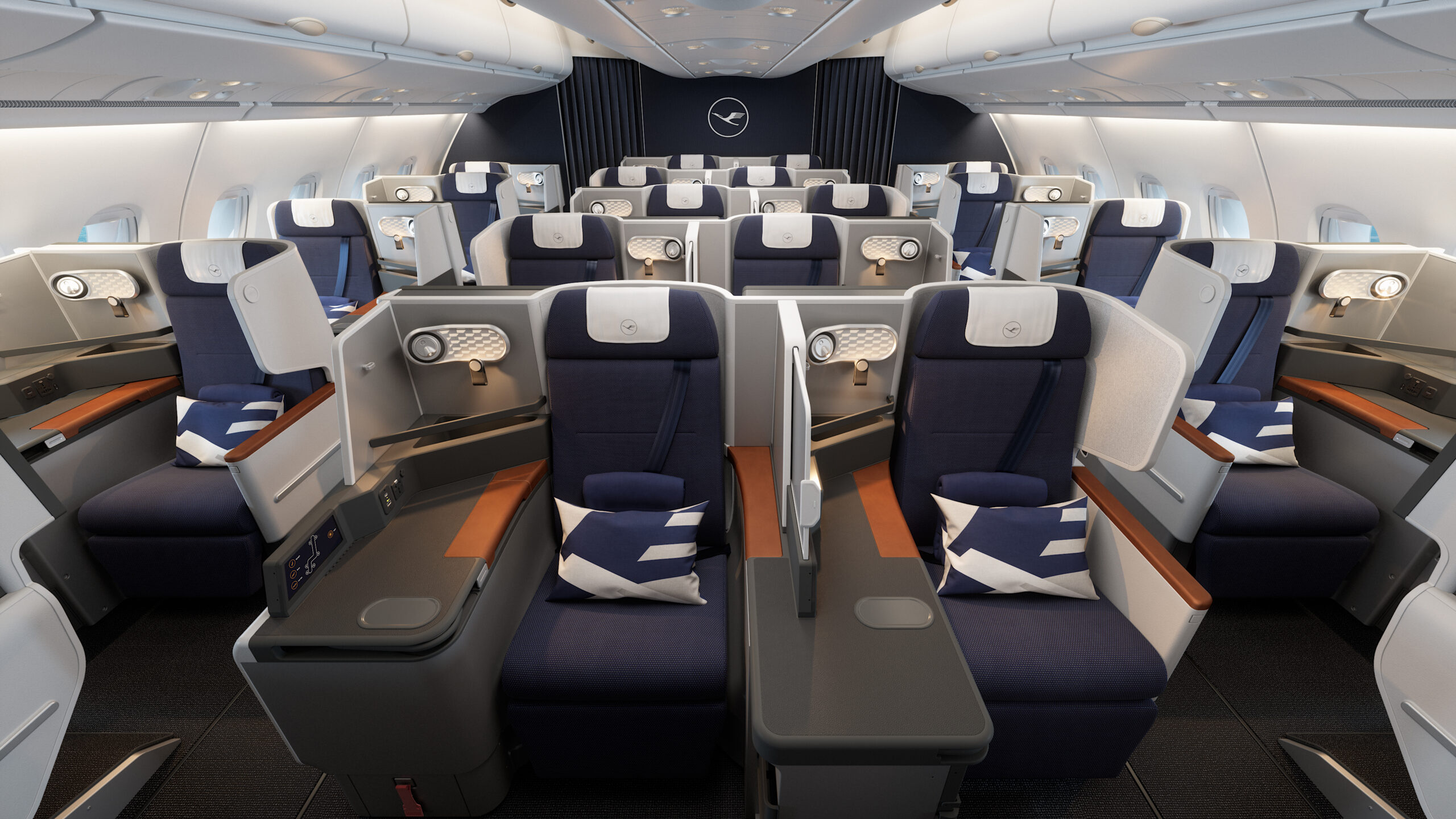
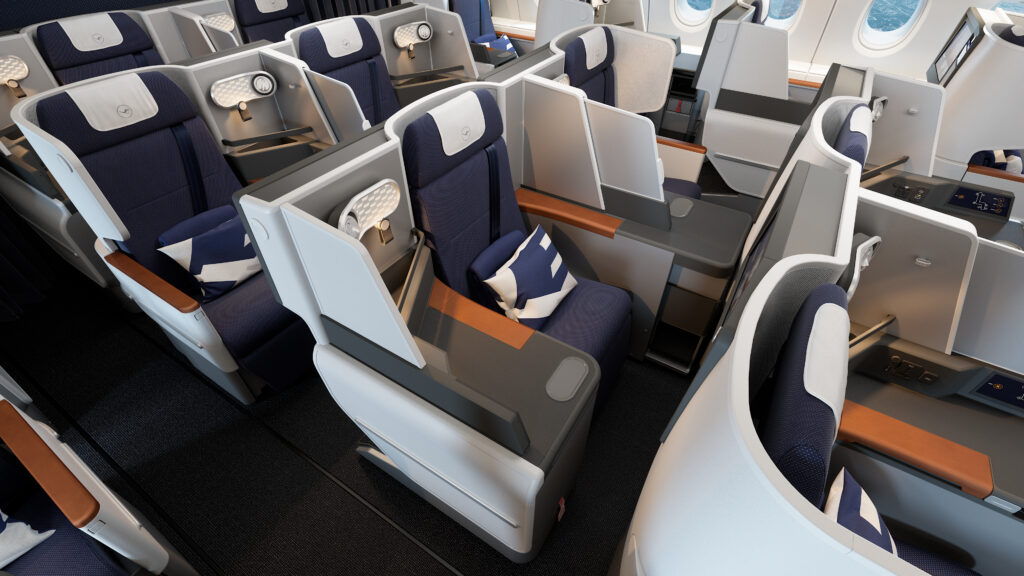
The carrier is installing an entirely new business class on its largest aircraft.
The main focus of the retrofit is the installation of an entirely new, 68-seat business class on the aircraft’s upper deck. The new cabin includes Thompson seats, six-and-a-half-foot beds, flexible partitions, and 18-inch Panasonic entertainment screens.
Lufthansa is also carrying out routine maintenance work on the jets while they are at the Elbe Flugzeugwerke facility in Dresden.
Lufthansa’s new A380 business class. (Photo: Lufthansa)
The first A380 to complete the overhaul, D-AIMC, officially reentered service on Thursday with a flight from Munich to Los Angeles.
The next Lufthansa A380 in line for retrofit work is D-AIMH, which currently sports a special dark blue and white livery honoring the airline’s 100th anniversary. It arrived in Dresden on the same day work wrapped up on D-AIMC.
All eight A380s are scheduled to be retrofitted by mid-2027, officials said.
Zach Vasile is a writer and editor covering news in all aspects of commercial aviation. He has reported for and contributed to the Manchester Journal Inquirer, the Hartford Business Journal, the Charlotte Observer, and the Washington Examiner, with his area of focus being the intersection of business and government policy.
Air Premia Begins Service to New U.S. Destination
The connection will operate four times per week year-round.
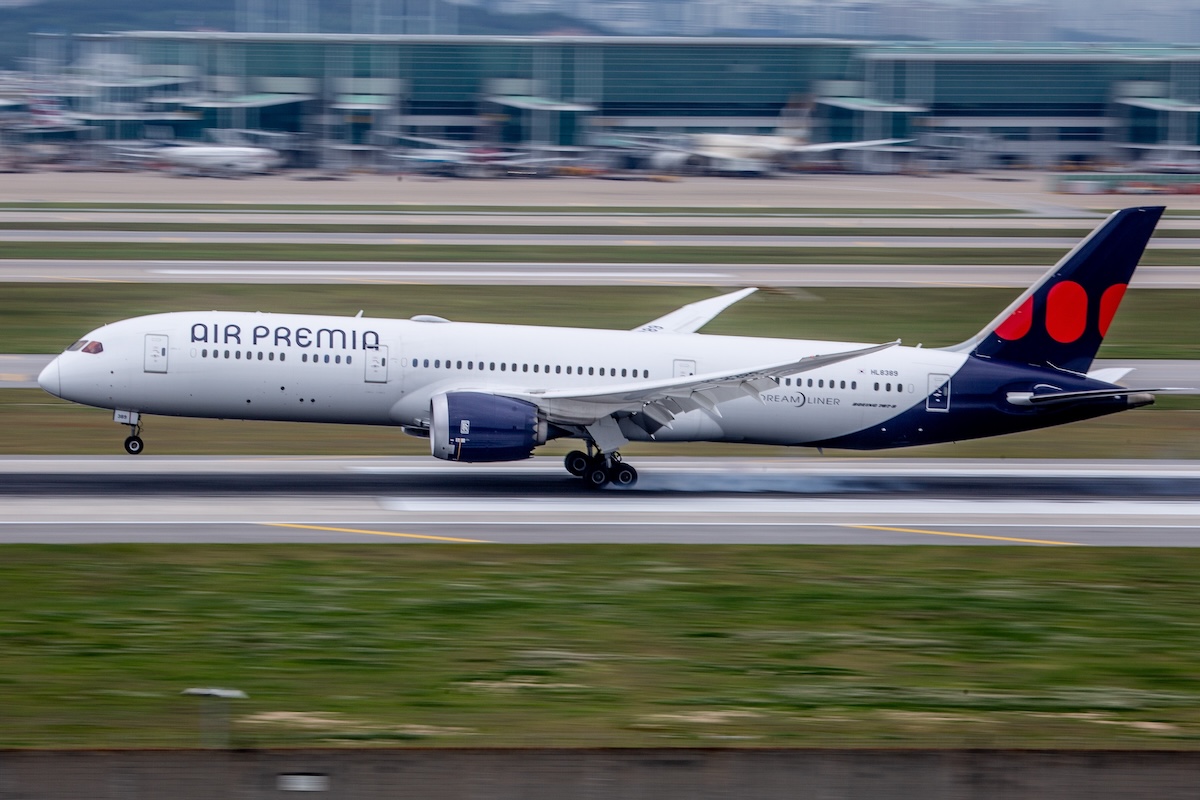
An Air Premia Boeing 787-9. (Photo: Shutterstock | Komenton)
South Korean carrier Air Premia on Friday began service to a new destination on the U.S. East Coast.
After a gate ceremony at Seoul’s Incheon International Airport, the airline operated its first revenue flight to Washington Dulles. Air Premia first announced plans to bring Washington, D.C., into its international long-haul network in December.
Flights will now operate four times per week, on Mondays, Wednesdays, Fridays, and Sundays.
Officials said the new connection is the first time in 31 years that a Korean carrier has added a route to Washington.
All of Air Premia’s long-haul flights operate on what it calls its “wide premium” model, meaning roomier seats at more affordable prices than standard business class.
“Launching service to Washington, D.C., is an important milestone that completes our East-West U.S. network,” Air Premia CEO Yoo Myung-sub said in a news release. “We hope more travelers will experience a new standard in long-haul travel through our Wide Premium service.”
Washington is Air Premia’s second destination on the East Coast, and its fifth in the U.S. overall.
The carrier also serves Los Angeles, San Francisco, Honolulu, and Newark, New Jersey.
Zach Vasile is a writer and editor covering news in all aspects of commercial aviation. He has reported for and contributed to the Manchester Journal Inquirer, the Hartford Business Journal, the Charlotte Observer, and the Washington Examiner, with his area of focus being the intersection of business and government policy.
Report: Budget Airlines Seek $2.5 Billion Rescue from U.S. Government
A deal could open the door to unprecedented federal investments in low-cost carriers.
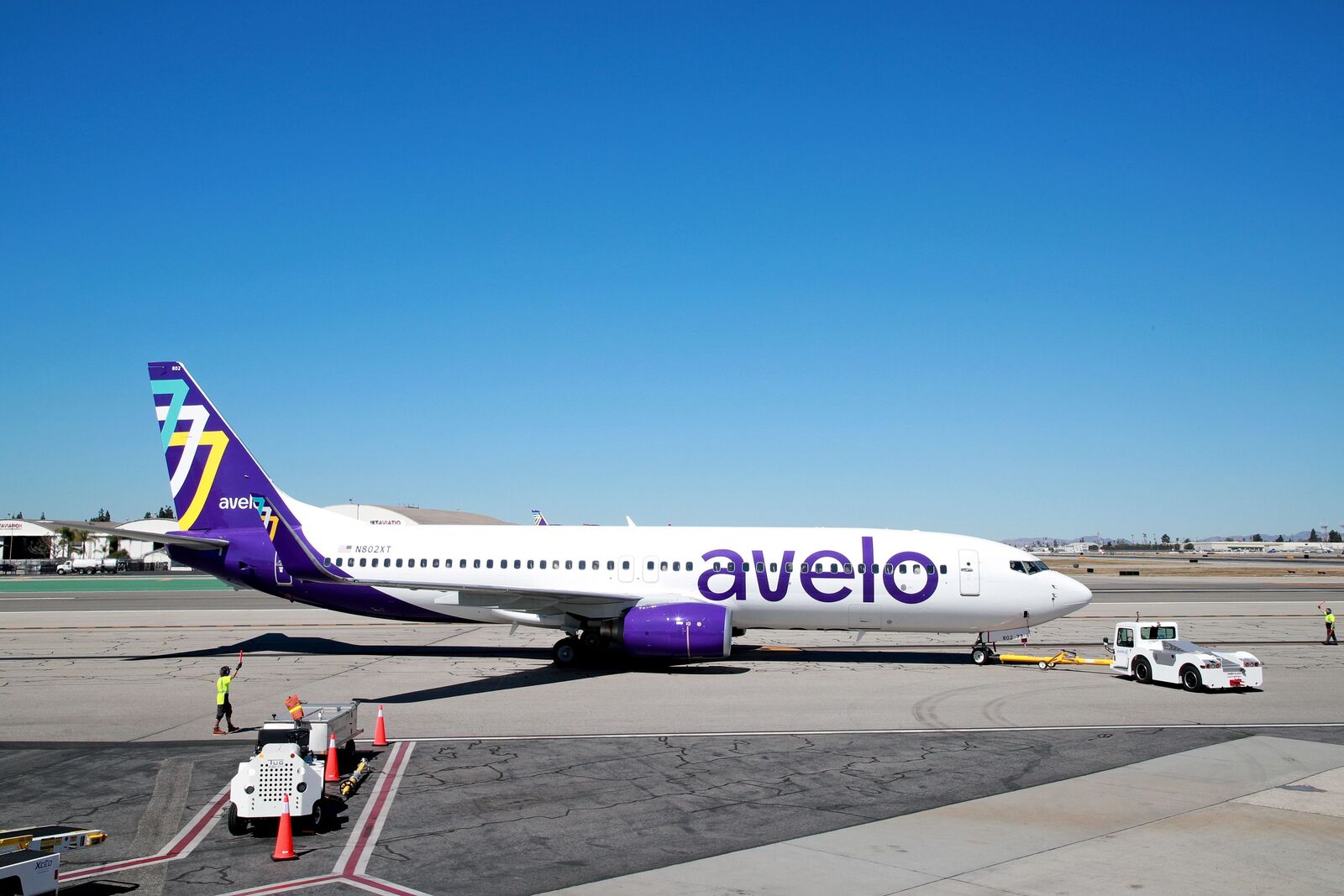
An Avelo Boeing 737 aircraft. (Photo: Avelo Airlines)
A group of budget airlines is reportedly seeking $2.5 billion in assistance from the federal government to help offset the rising price of jet fuel.
The Wall Street Journal reported Sunday that the group, which is believed to include Frontier and Avelo, made the request at a meeting with U.S. Transportation Secretary Sean Duffy and FAA Administrator Bryan Bedford last week. In exchange for the bailout, the federal government would receive warrants that it could convert to ownership stakes in the airlines.
The newspaper cited people it said are familiar with the discussions.
It was not immediately clear which other low-cost airlines are part of the group seeking a federal rescue. It was also not known how far along the talks have come, or if the DOT and FAA are inclined to accept the deal.
The U.S. government has authorized financial assistance to air carriers in exchange for warrants before, most notably during the COVID-19 pandemic. Those warrants were later auctioned off, with the proceeds flowing back to the U.S. Treasury.
A decision by the federal government to convert those warrants and actively maintain investments in a group of low-cost carriers would be unprecedented, and could transform the sector by providing an implicit guarantee that the airlines will not fail.
Separately, Spirit is reportedly working with the administration on a potential $500 million assistance package. The deal would also come with equity for the federal government.
Zach Vasile is a writer and editor covering news in all aspects of commercial aviation. He has reported for and contributed to the Manchester Journal Inquirer, the Hartford Business Journal, the Charlotte Observer, and the Washington Examiner, with his area of focus being the intersection of business and government policy.
United CEO Confirms He Pursued Merger Talks With American
Scott Kirby defended his vision of a massive combined airline that would create “millions” of jobs and make the U.S. more competitive globally.
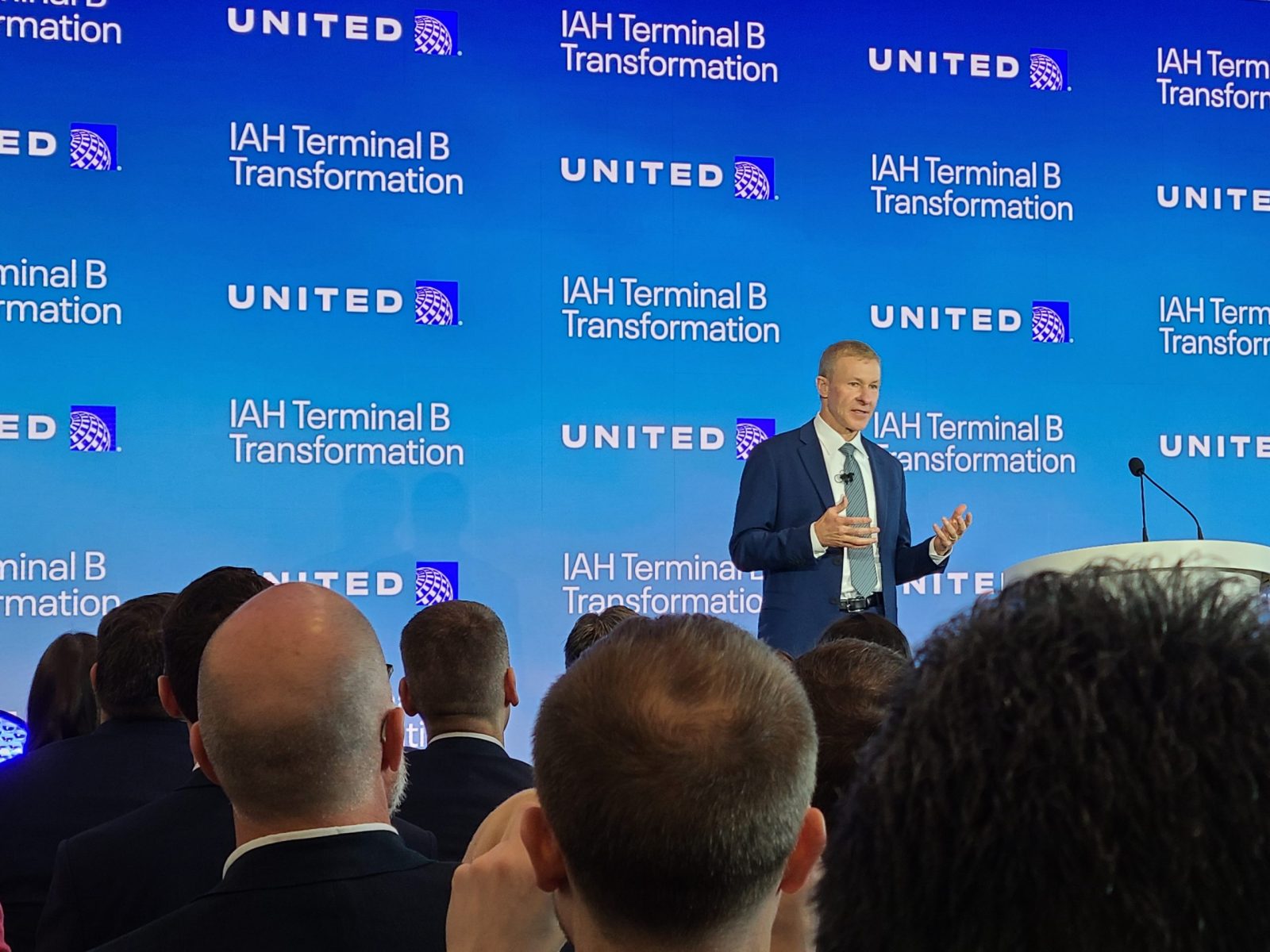
United Airlines CEO Scott Kirby addresses members of the Houston business community at an event showcasing the Terminal B transformation project. (Photo: AirlineGeeks | Andrew Chen)
In a statement released Monday morning, Kirby confirmed that he approached American with the idea of a merger, but said no serious discussions ever took place.
“I approached American about exploring a combination because I thought we could do something incredible for customers together,” he said. “I always knew that the only way any merger could be successful (and approved) is if it was great for customers and with a willing partner that shared my big, bold vision… I was hoping to pitch that story to American, but they declined to engage and instead responded by publicly closing the door. And without a willing partner, something this big simply can’t get done.”
In a somewhat unusual move, Kirby then launched into a lengthy defense of a deal he acknowledged will not happen. A United-American merger, he said, would allow United to rapidly scale its “best-in-class” products, technology, and services, deliver more value to customers, and create “high-paying, unionized” jobs within the new airline.
Currently, foreign carriers fly about 65% of international long-haul seats into the U.S., Kirby noted, even though only 40% of the customers are foreign nationals. A larger U.S. airline could rebalance that “deficit,” he argued, while at the same time delivering jobs and new economic opportunities.
The CEO went on to highlight potential benefits for the airline manufacturing industry. The combined airline’s need for new aircraft “would have supported American manufacturing and domestic supply chains and driven even more job creation,” he said.
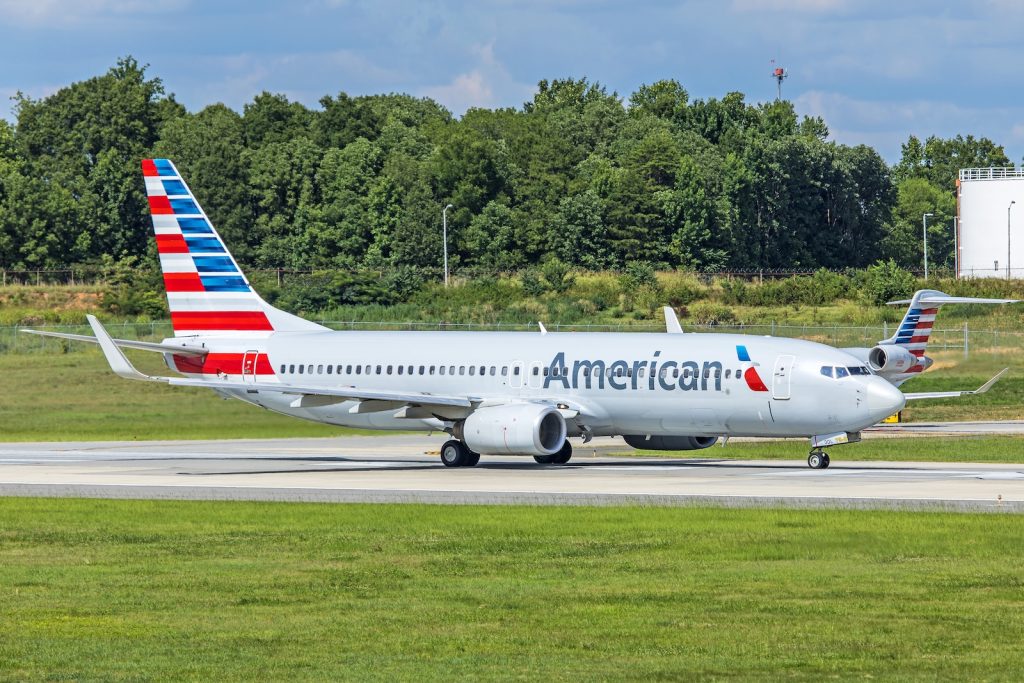
An American Boeing 737-800. (Photo: AirlineGeeks | William Derrickson)
Pushing back on conventional wisdom, Kirby also argued that a United-American merger could have survived scrutiny from federal regulators.
“Since previous mergers have been about saving struggling airlines, previous legal and regulatory reviews have always focused on subtraction and what’s being lost,” he said. “But, a different kind of merger proposal – one that’s focused on growth, customer investments, and global competitiveness – would have been a different proposition altogether. And, while divestitures in certain domestic markets obviously would have been required, I believe regulators would have approved such a deal because they would have recognized the benefits to customers, our shared employees, and communities from coast-to-coast and around the world.”
Bloomberg broke the news earlier this month that Kirby had pitched the merger idea to the White House in February. The news sent shockwaves through the airline industry and drew generally skeptical reactions from analysts, who said the U.S. Justice Department’s Antitrust Division would almost certainly intervene to block such a deal over concerns about consolidation and price inflation.
On April 17, American said it had no interest in pursuing talks with United, but Kirby did not provide a public statement on the matter until Monday.
Neither the Justice Department nor the Transportation Department have weighed in, but President Donald Trump has said he does not support a United-American tie-up because it would, in his view, harm competition.
A merger between the two carriers would give the combined company a market share of just over 34%, a level of dominance not seen by any U.S. airline in years.
Zach Vasile is a writer and editor covering news in all aspects of commercial aviation. He has reported for and contributed to the Manchester Journal Inquirer, the Hartford Business Journal, the Charlotte Observer, and the Washington Examiner, with his area of focus being the intersection of business and government policy.
American Celebrates 100 Years—And Prepares For the Next 100
The carrier is looking to add to its history with premium options and improved customer experiences.
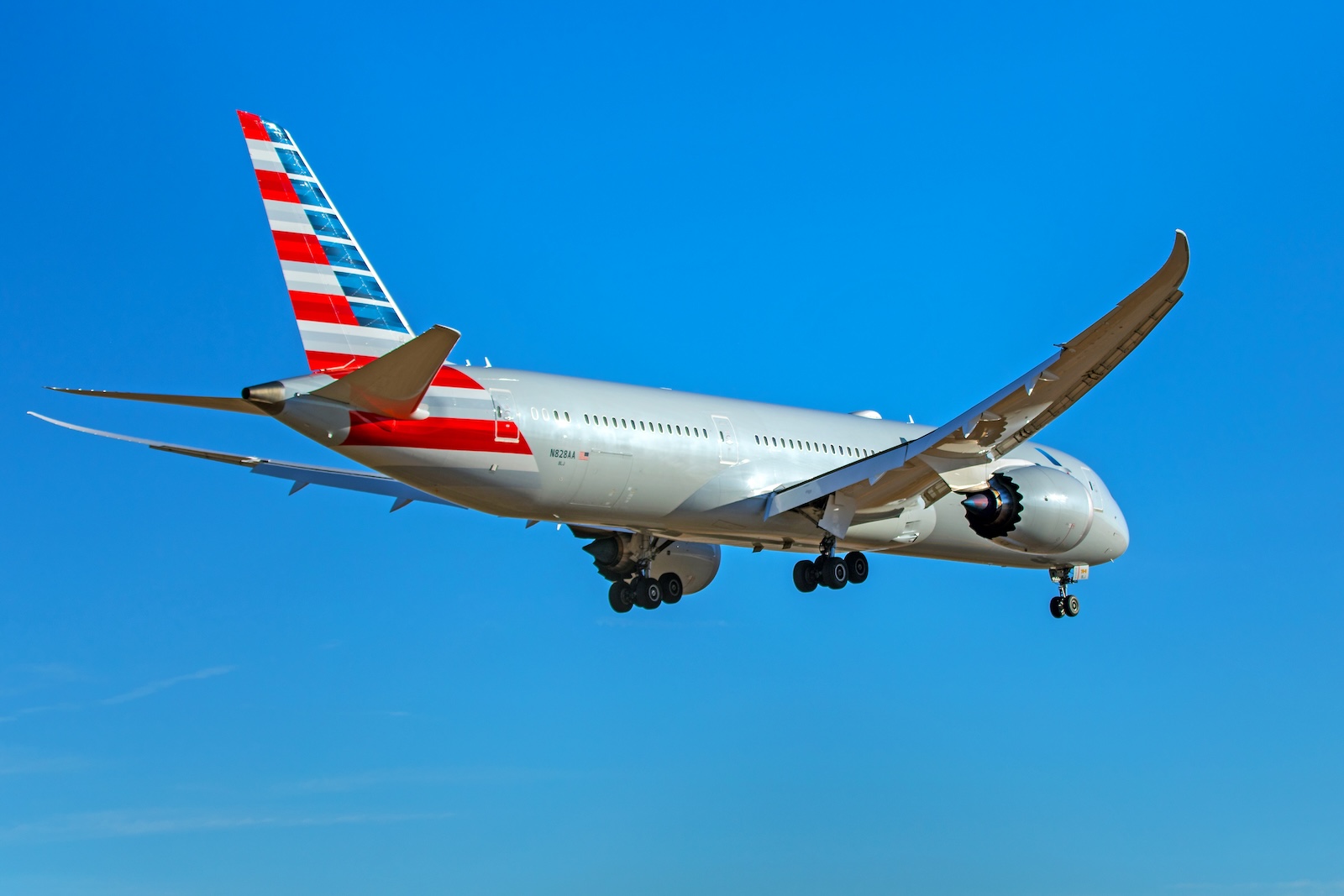
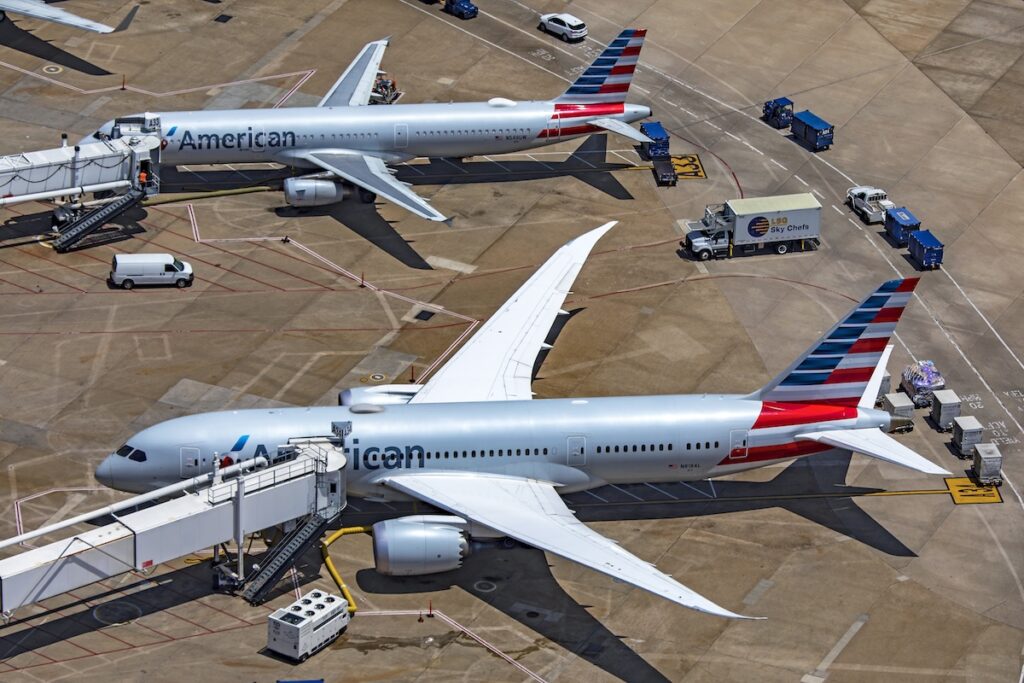
An American 787-9 (Photo: AirlineGeeks | William Derrickson)
As American Airlines celebrates its centennial – commemorating its first flight back in 1926 – the carrier is equally focused on maintaining its relevance for another 100 years.
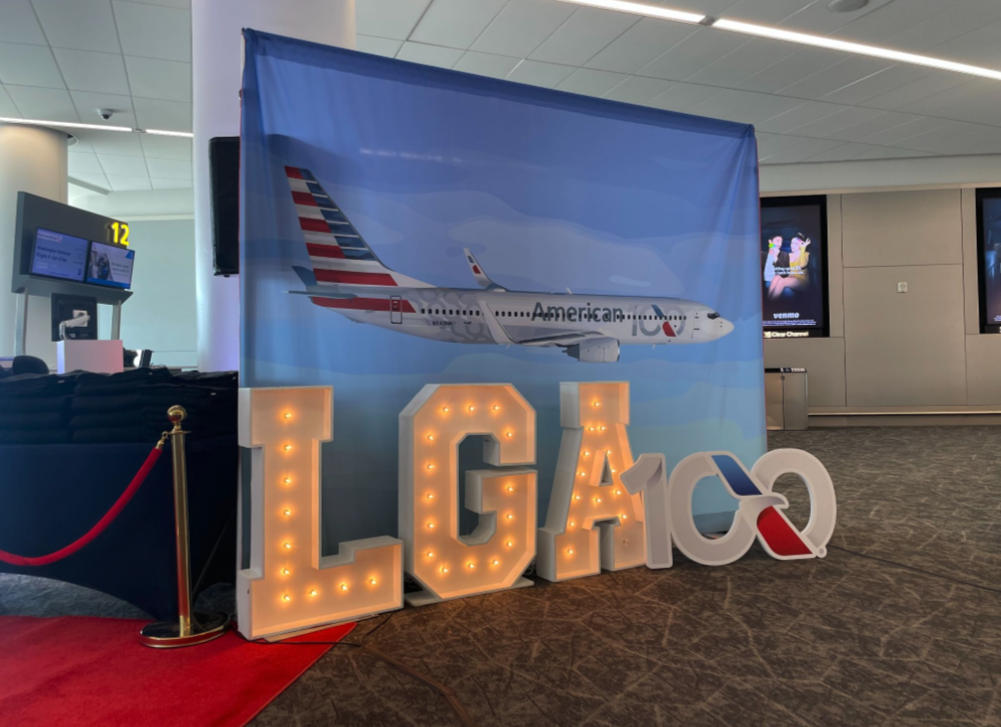
Passengers boarding the 100th scheduled flight at 11 American hub airports on April 15 were serenaded with DJ sets, mocktails, and goodie bags stuffed with neck pillows, candy, and other gifts.
Centennial-themed trading cards featuring the airline’s Airbus A321neo and Boeing 737-800, 777-300ER, and 787-9P aircraft – as well as special edition cards paying homage to its Douglas DC-3, Boeing 707-123, and McDonnell MD-80 fleets – were distributed to pilots to hand out to passengers.
A special “Flagship DFW” livery graces one of American’s 777-300ERs. Throughout April, customers can enjoy premium bites and cocktails at the airline’s Admirals Club and higher-end Flagship lounges.
“Not a lot of companies make it to ten years or 50 years, let alone 100 years, and we could not do it without the support of all of the team members and customers,” Heather Garboden, chief customer officer at American, said at LaGuardia Airport last week.
The atmosphere around American has not been entirely celebratory, however.
American gave passengers a special send-off at LaGuardia Airport and 10 others on April 15. (Photo: Jack Daleo)
The airline canceled 2.2% of its flights in 2025, beating only JetBlue and Frontier and topping The Wall Street Journal’s annual scorecard. In January, Winter Storm Fern hit American harder than any U.S. airline, stranding thousands of travelers and forcing some of its pilots and flight attendants to sleep on airport floors.
More recently, the airline’s pilots union, flight attendants union, and four others have united against its leadership, citing profits that trail competitors. Flight attendants in February issued a vote of no confidence in CEO Robert Isom, while pilots in March demanded a meeting with the full board.
Earlier this month, United CEO Scott Kirby’s reported pitch to President Donald Trump – a merger between United and American – sent the carrier’s stock tumbling.
The past few months have been tumultuous for American. But with a new strategy to win over corporate and business customers with premium offerings such as lounges and Flagship seats, the airline is targeting a sixfold increase in revenue for 2026 that could help right the ship.
How American Got Here
American has one of the most storied histories of any airline, not just in the U.S. but worldwide.
The journey began in 1926, when a DH-4 biplane operated under Robinson Aircraft Corporation delivered a bag of mail from Chicago to St. Louis, Missouri. By 1930, Robinson and about 80 other small airlines had consolidated into the Aviation Corporation, which formed American Airlines predecessor American Airways. It officially became known as American Airlines in 1934.
American Airlines aircraft at DFW Airport. (Photo: AirlineGeeks | William Derrickson)
The year before, American began operating the 18-passenger Curtiss Condor, which it billed as the world’s first complete sleeper plane. It also added flight attendants, called stewardesses at the time. Though it was comfortable and fast, the Condor was not cheap to operate.
One of the most critical moments in American’s history came in 1936, when it revolutionized the comfort, safety, and economics of air travel with the Douglas DC-3. C.R. Smith, its first CEO, was a catalyst behind the DC-3, persuading Douglas to develop it as a replacement for the Condor. The 21-seat aircraft flew short-haul routes between New York and Chicago. In 1937, it carried American’s millionth passenger.
The ensuing decades included many more firsts. In 1939, American opened the airline industry’s first airport lounge at LaGuardia. Five years later, it launched the industry’s first scheduled air cargo service out of the New York hub.
The 1940s saw the introduction of transatlantic flights and the fully pressurized DC-6, which opened up cross-country trips between New York and Los Angeles. It added the DC-7 in 1953, pioneering nonstop, transcontinental service.
American in 1957 was the first airline to fly jets coast-to-coast, with scheduled transcontinental service on the Boeing 707 cutting travel times by three hours and ushering in the Jet Age. That year, it also opened the industry’s first dedicated flight attendant training center.
A series of acquisitions in the 1970s – including Trans Caribbean Airways and AirCal – expanded American’s reach. It broke a barrier in 1973 when Bonnie Tiburzi Caputo became the industry’s first female pilot. The carrier in 1974 made its first flight into Dallas/Fort Worth International Airport, which would become its headquarters in 1979.
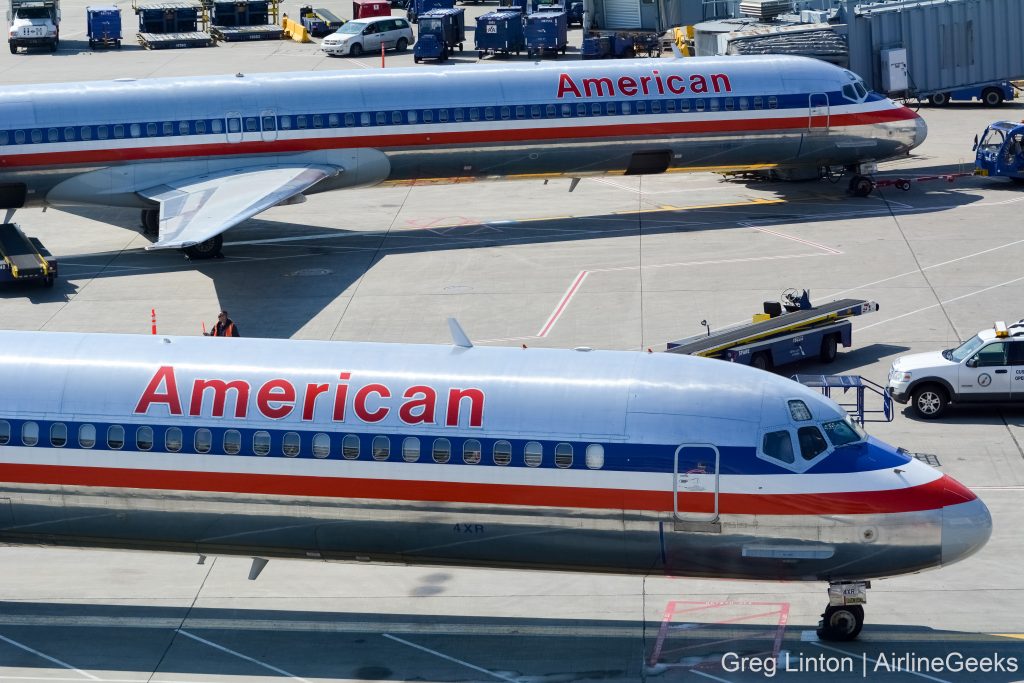
Former American MD-80s at O’Hare. (Photo: AirlineGeeks | Greg Linton)
Dallas/Fort Worth was established as American’s inaugural hub in 1981, the year it launched the first frequent flyer program for a major airline. It expanded operations throughout the 1980s with hubs in Chicago and Miami and the introduction of its American Eagle regional network.
By 1991, American flew its billionth passenger.
Growing for the Future
In the 21st century, American has continued to expand.
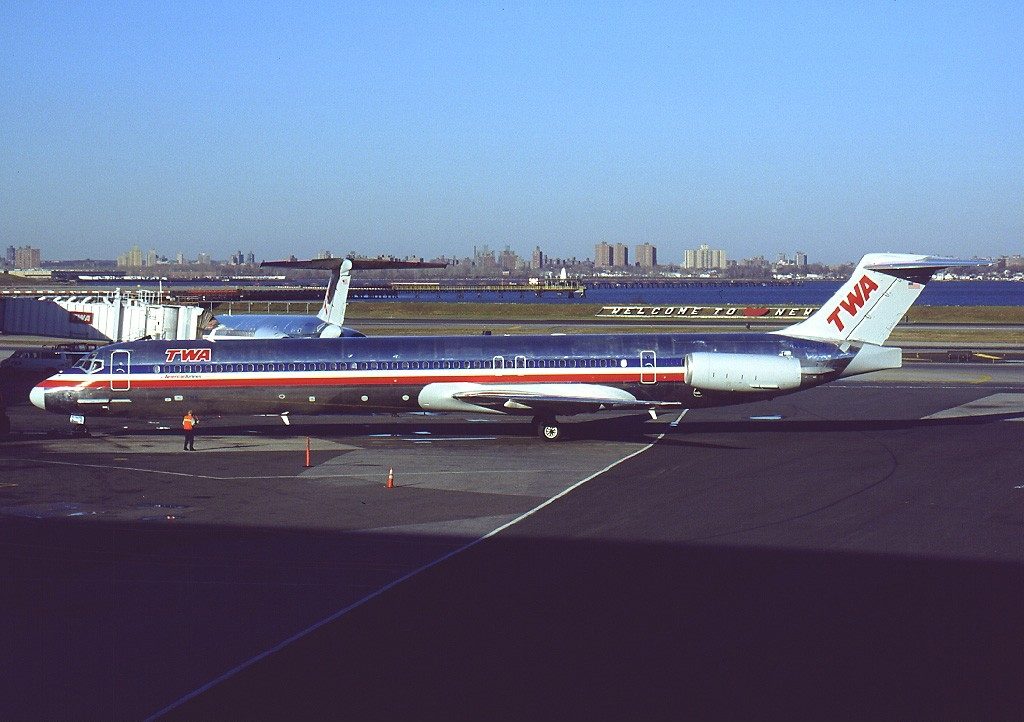
In 2001, it acquired the assets of Trans World Airlines, one of the former “Big Four” domestic carriers. A 2013 merger with U.S. Airways created the world’s largest airline at the time and added hubs in Charlotte, North Carolina, and Philadelphia.
Today, American flies 700,000 daily customers to more than 350 global locations out of nine major hubs. Its Dallas/Fort Worth hub sees more than 930 peak daily departures on nonstop routes to more than 240 destinations, employing more than 37,000 personnel.
American customers have access to nearly 50 Admirals Club lounges, most in the U.S., and 120 partner lounges worldwide.
The TWA/American interim livery. (Photo: Konstantin von Wedelstaedt [GFDL 1.2 (http://www.gnu.org/licenses/old-licenses/fdl-1.2.html) or GFDL 1.2 (http://www.gnu.org/licenses/old-licenses/fdl-1.2.html)], via Wikimedia Commons)
Improved airframes have helped the airline maintain its relevance. It phased out the last of its MD-80s – the workhorse of its fleet for 36 years – in 2019 for modern alternatives. Its 777-300ERs carry more than 300 passengers on routes extending as far as Los Angeles to Sydney, Australia, a far cry from the DC-3 days.
Passengers now have more premium options as well. In 2025, American debuted Flagship seats on its premium-configured 787-9s and A321XLRs, adding privacy doors, extra storage, Bluetooth connectivity, and new food and beverage options. In January, it launched free in-flight WiFi for most of its fleet.
The company also offers streamlined booking through its mobile app and on Wednesday expanded TSA Precheck Touchless ID for AAdvantage members at all of its hub airports.
American’s motto for its centennial is “Forever Forward,” which Garboden said “represents everything that we’ve done over the last 100 years to get here, but also as we think about the next one hundred years in everything that we have to do.” To that end, it plans to continue making upgrades.
In addition to new Boeing and Airbus aircraft with additional business class seats, the airline is seeking to add Vertical Aerospace’s Valo electric air taxi, Boom Supersonic’s quiet supersonic Overture, and other new entrants undergoing certification.
Garboden said the plan is to open several new lounges in the coming years after opening its sixth Flagship lounge in Philadelphia in 2025. Another is being built in Charlotte, while Admirals Clubs in locations such as Washington, D.C. are set for expansions and upgrades.
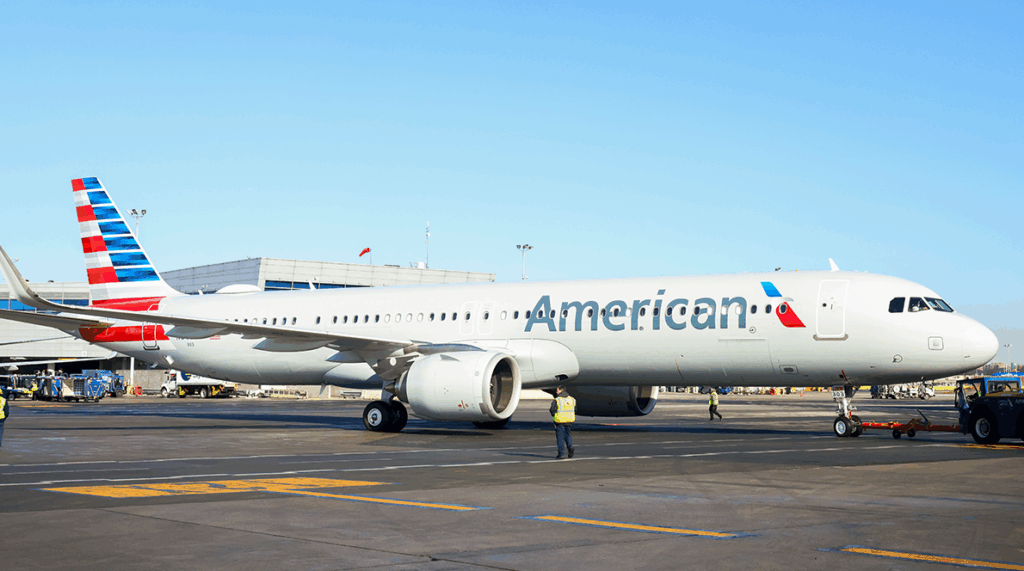
American Airlines’ first A321XLR. (Photo: American Airlines)
American is simultaneously undertaking a multiyear, multibillion-dollar modernization project at Dallas/Fort Worth. Earlier this month, it introduced a 13-bank schedule that it said has improved on-time and baggage performance.
The airline’s recent initiatives appear to be paying early dividends. It reported its first-quarter 2026 earnings on Thursday, recording record first-quarter revenue of $13.9 billion – up 11% year-over-year – and its lowest total debt level since 2015 as demand rose. Revenue from its premium units, it said, continued to outperform the main cabin.
“This revenue momentum is the result of focus on our four commercial priorities – elevating the customer experience, growing our global network, driving premium revenue, and leading in loyalty,” Isom said in a statement. “Demand for our product is growing, and our customer satisfaction scores are improving.”













![An employee of a ground service company refuels an aircraft. [Credit: Shutterstock/Karolis Kavolelis]](https://airlinegeeks.com/wp-content/uploads/2026/03/Screenshot-2026-03-17-at-3.52.26-PM.png)