Stories

American Unveils Special U.S. 250th Anniversary Livery

The aircraft will relaunch American's nonstop service to Venezuela this week.

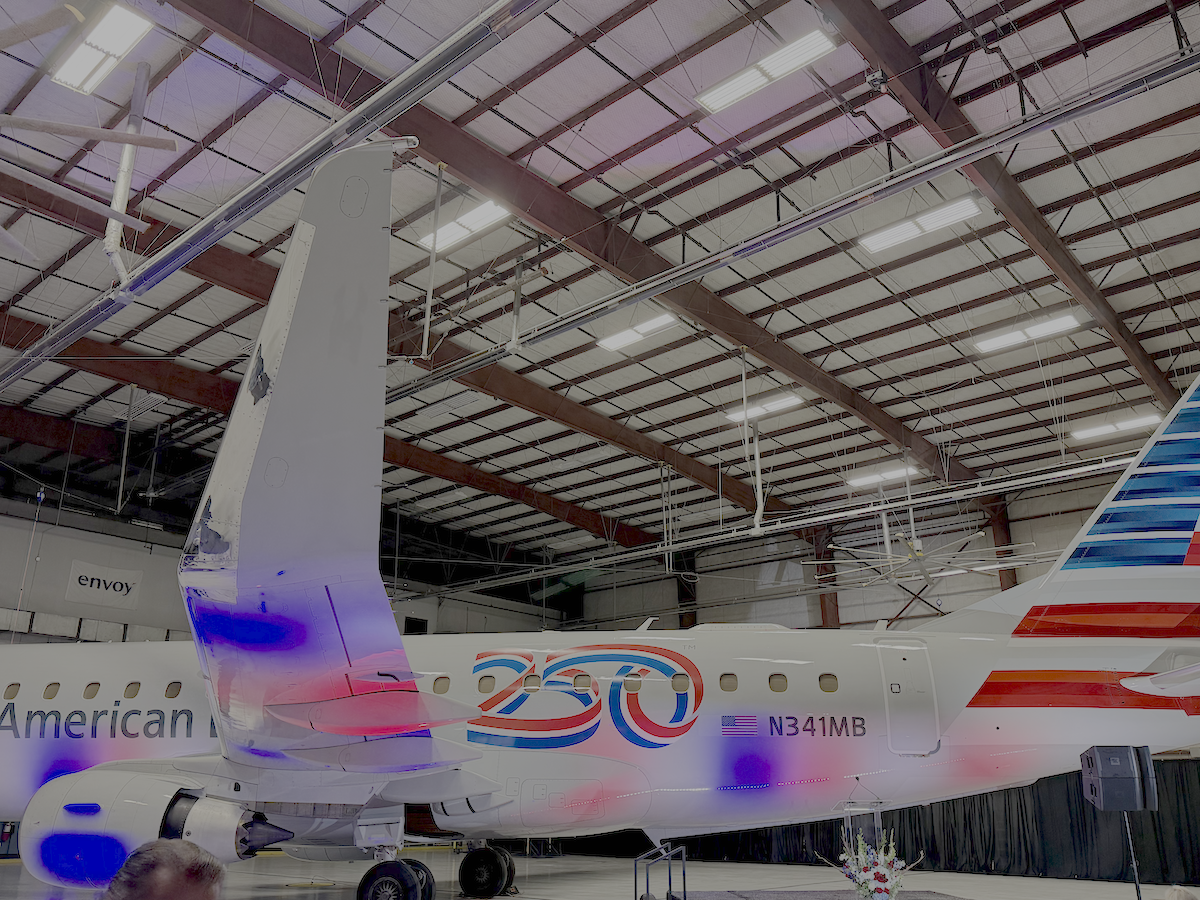
America 250 decal on an Embraer E17
America 250 decal on an Embraer E175 (Photo: AirlineGeeks | Ryan Ewing)

The first of two American Airlines aircraft to receive a special livery marking the nation’s 250th anniversary made its public debut at an event in Fort Worth, Texas, on Wednesday.

Red, white, and blue lettering spelling out “250” was applied to the sides of an Embraer E175 regional jet.

The aircraft will relaunch American’s nonstop service between Miami and Caracas, Venezuela, on Thursday. No U.S.-based passenger carrier has flown to the country in about seven years.

The route will be operated by American subsidiary Envoy Air.

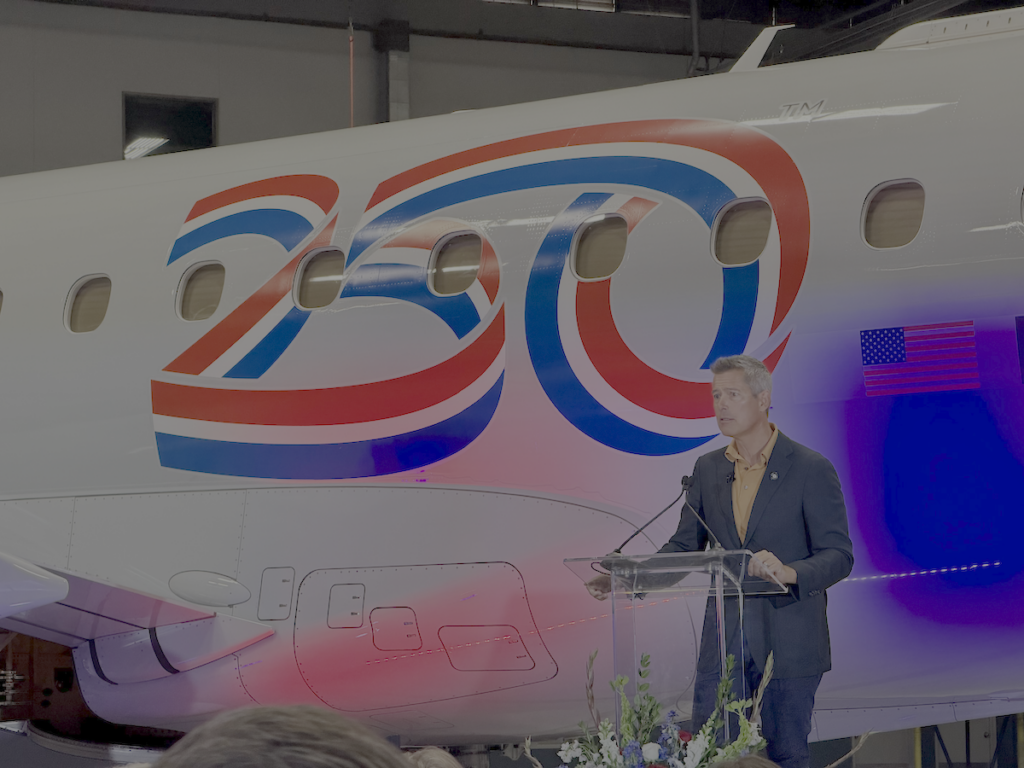
Transportation Secretary Sean Duffy speaks at unveiling event
Transportation Secretary Sean Duffy speaks at the unveiling event (Photo: AirlineGeeks | Ryan Ewing)

“As we celebrate our centennial, it’s especially meaningful to unveil an aircraft that honors our country’s 250th anniversary and the shared story of progress, perseverance, and innovation that defines both America and our airline,” American CEO Robert Isom said in a news release.

American will apply a similar patriotic design to a Boeing 737 in its mainline fleet.

Zach Vasile

Zach Vasile is a writer and editor covering news in all aspects of commercial aviation. He has reported for and contributed to the Manchester Journal Inquirer, the Hartford Business Journal, the Charlotte Observer, and the Washington Examiner, with his area of focus being the intersection of business and government policy.

Duffy: Passenger Fee Could Keep FAA Systems Updated

The transportation secretary said a dedicated funding stream could help modernize the nation’s air traffic control system.

Transportation Secretary Sean Duffy speaks at an event in Fort Worth, Texas.
Transportation Secretary Sean Duffy speaks at an event in Fort Worth, Texas. (Photo: AirlineGeeks | Ryan Ewing)

Transportation Secretary Sean Duffy said Wednesday that he would be open to exploring a new passenger fee to help continually fund Federal Aviation Administration upgrades, pointing to the September 11 Security Fee as one possible model.

Speaking at a transportation safety conference hosted by American Airlines in Fort Worth, Texas, Duffy said the U.S. aviation system will need a more consistent way to pay for modernization efforts rather than relying solely on periodic congressional funding.

“I would welcome an opportunity to think through how [we could] have a small fee that went into us, and I want us to continually upgrade our systems,” he shared.

Duffy did not outline a formal proposal, a dollar amount, or a timeline for a potential fee. He framed the idea as one option for creating a dedicated revenue stream that could support long-term infrastructure investments.

The transportation chief compared the concept to the existing September 11 Security Fee, which is added to airline tickets and helps fund TSA operations. That fee is currently $5.60 per one-way trip originating at a U.S. airport, according to the agency.

“I’m not sure if Homeland Security has taken that now,” Duffy said, referring to the existing fee. “But maybe we want [it] — and maybe several object to that.”

Looking Beyond Congress

Duffy said a dedicated funding source could give the federal government a different way to finance major aviation projects, including potentially using capital markets and paying back investments over time.

“We go back, then go to the capital markets, and you can pre-fund [it], and then we have a revenue source to pay that back over time,” he said.

He also pointed to the challenges of relying on Congress for long-term aviation infrastructure planning.

“I don’t want to take away from Congress. I spent nine years in Congress. I love the body. I love the people there, but I don’t think you notice this, but sometimes it’s dysfunctional,” Duffy said. “Sometimes it doesn’t work well.”

Duffy said the goal is to avoid allowing the system to fall behind again after the current round of upgrades.

“What we don’t want is to hopefully — hopefully we’ll be successful — but on the backside, we wait another 30 or 40 or 50 years to keep the system up there,” he added.

Any new passenger fee would likely require congressional approval. Duffy did not say whether the administration would seek a new fee, redirect an existing charge, or make changes to the current FAA funding structure.


Ryan Ewing

Ryan founded AirlineGeeks.com in February 2013 and has spent more than a decade covering the airline business. His work has been featured by CNN, WJLA, CNET, and Business Insider. His aviation experience spans airport operations, Part 135 regulatory compliance, and airline crew workforce planning, along with time behind the yoke of a Cessna 172 and interviews with airline executives. Ryan now serves as Group President of Firecrown Media’s Aviation Group. He holds a B.S. in Air Transportation Management and an MBA from Arizona State University and teaches Airline Management at Embry-Riddle Aeronautical University.

Report: Spirit Bailout Talks Hit Impasse

Some of the airline's creditors have raised concerns about a potential rescue's impact on their investments.

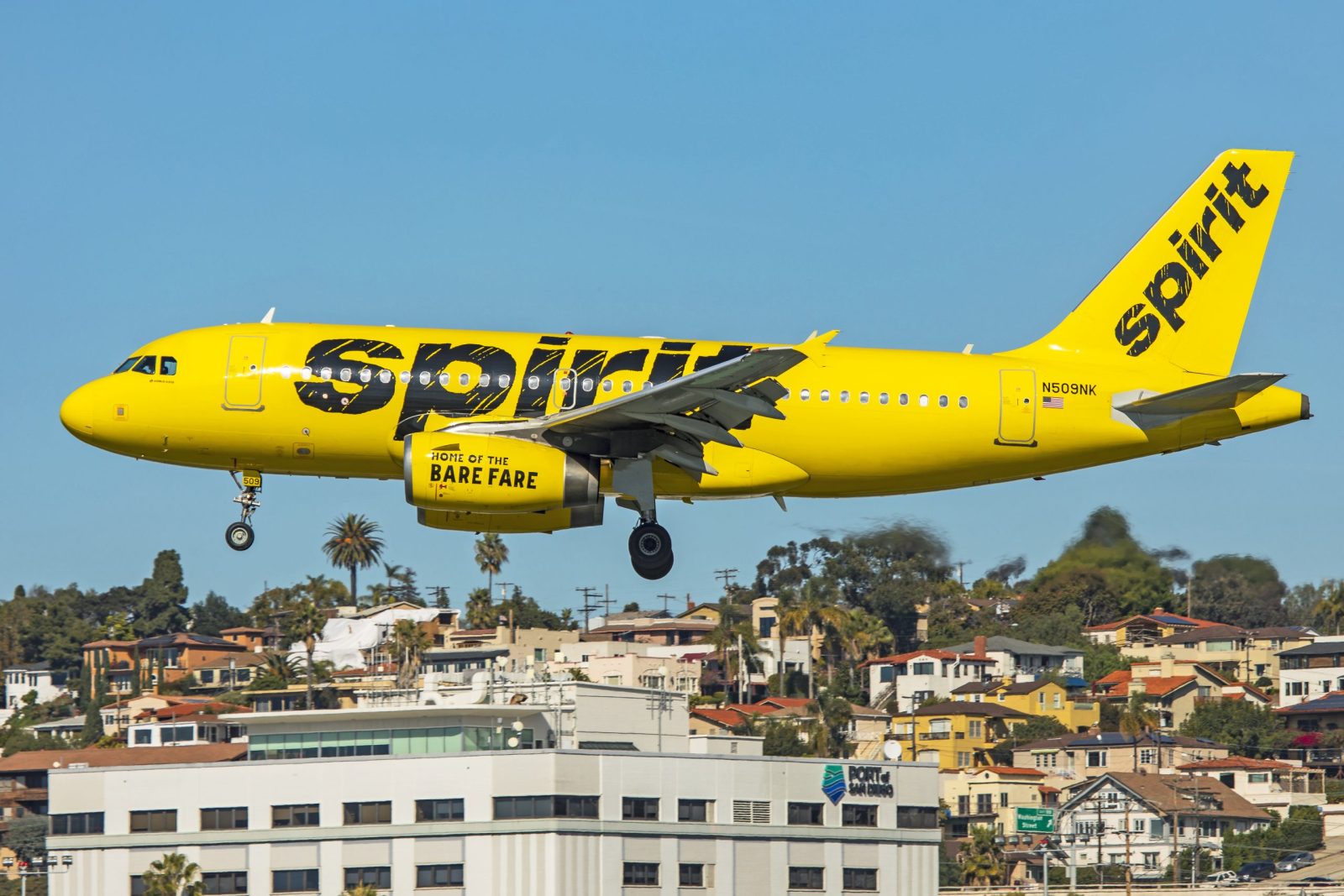
Spirit A319
A Spirit Airlines Airbus A319 prepares for landing. (Photo: AirlineGeeks | William Derrickson)

Negotiations over a potential $500 million rescue package for Spirit Airlines have stalled, in part due to concerns from the ultra-low-cost carrier’s creditors.

Bloomberg reported Tuesday that a group of lenders, including hedge fund Citadel, came out against proposed terms and conditions that could affect the value of their claims. The investors reportedly made a counterproposal.

The newspaper cited people with knowledge of the negotiations.

Earlier reports suggested that Spirit was making progress on the deal and had the backing of two of its three major creditor groups. It will need the support of all three to make a binding deal with the federal government.

The airline has not commented publicly on the talks.

Spirit entered discussions with the Trump administration earlier this month over a potential bailout. The carrier is struggling to cover the rising cost of jet fuel, an issue which could derail the company’s plan to exit bankruptcy protection later this spring or summer.

In exchange for financing, the administration would likely receive warrants that it could convert to ownership stakes in the airline. Similar agreements were used to stabilize major U.S. air carriers during the COVID-19 pandemic.

President Donald Trump confirmed last week that the federal government is talking with Spirit. He floated the idea of buying the airline outright, operating it for a time, then selling it for a profit when the price of oil comes down.

Zach Vasile

Zach Vasile is a writer and editor covering news in all aspects of commercial aviation. He has reported for and contributed to the Manchester Journal Inquirer, the Hartford Business Journal, the Charlotte Observer, and the Washington Examiner, with his area of focus being the intersection of business and government policy.

Air Antilles to Enter Liquidation

The carrier was forced to halt all commercial flights in December 2025.

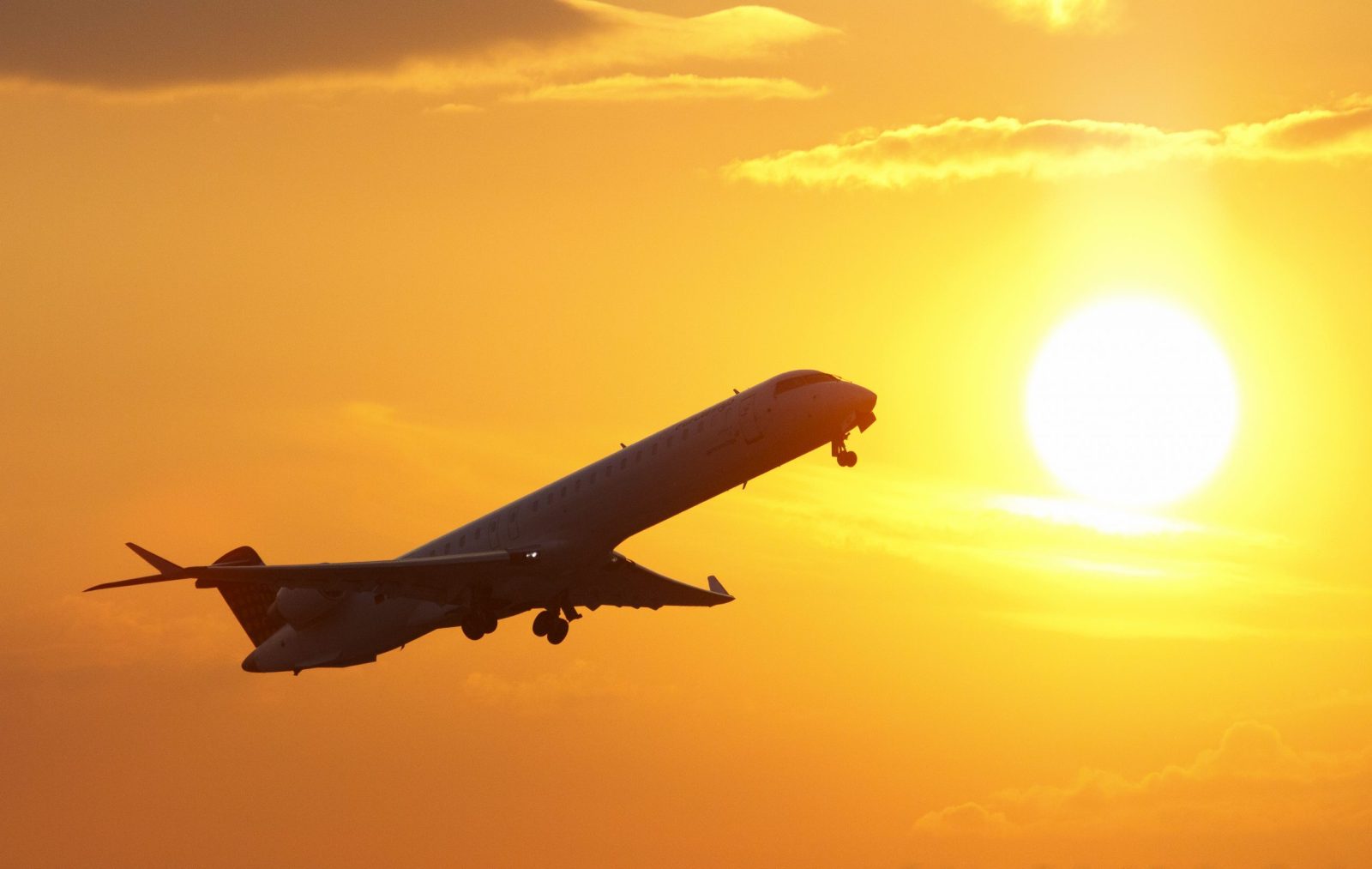
A Bombardier CRJ Series aircraft departs Düsseldorf.
A Bombardier CRJ Series aircraft. (Photo: AirlineGeeks / Fabian Behr)

Guadeloupe-based Air Antilles has been ordered to liquidate.

According to Le Journal de Saint-Barth, a court in Pointe-à-Pitre rejected takeover offers for the airline, which has been in receivership since February, and began the process of “judicial liquidation.”

The court found that Air Antilles’ liabilities, totaling €56 million, made a recovery through continued operations impossible.

The carrier is majority owned by the French overseas collectivity of Saint Martin. It lost its French air operator certificate last year and operated under a provisional license while attempting to stabilize its financial situation.

In December, French regulators grounded Air Antilles’ aircraft over concerns about safety-related documentation. One month later, the airline declared that it would halt all payments, effectively an admission of insolvency.

Air Antilles formerly served destinations such as San Juan, Puerto Rico; Antigua; Barbados; Santo Domingo, Dominican Republic; Martinique; Saint Barthélemy; Saint Lucia; and Saint Martin.

Zach Vasile

Zach Vasile is a writer and editor covering news in all aspects of commercial aviation. He has reported for and contributed to the Manchester Journal Inquirer, the Hartford Business Journal, the Charlotte Observer, and the Washington Examiner, with his area of focus being the intersection of business and government policy.

Lufthansa Introduces ‘Economy Basic’ Fare

The option will be available on select short- and medium-haul flights.

A Lufthansa A320neo in Frankfurt. (Photo: Lufthansa Media)

Lufthansa is set to introduce a new “economy basic” fare for short- and medium-haul flights next month.

The product, which will be available only on select routes, comes into service on May 19.

The new light fare comes with Europe’s smallest free cabin baggage allowance.

The Independent reported that the offering includes a smaller cabin baggage allowance than either Ryanair or Wizz Air. These budget carriers allow free cabin bags measuring 40 x 30 x 20 cm, with a volume of 24 liters.

Lufthansa’s new economy basic cabin baggage limit is smaller, with the dimensions 40 x 30 x 15 cm. This enables a maximum volume of 18 liters.

The fare has been introduced to offer an attractive entry-level option and position Lufthansa to better compete with budget carriers.

Lorne Philipot

Lorne is a South Africa-based aviation journalist. He was captivated and fascinated by flying from the day he took his first airline flight. With a passion for aviation in his blood, he has flown to destinations in all corners of the globe. Lorne has traveled extensively and lived in various countries. Drawing on his travels and passion for aviation, Lorne enjoys writing about airlines, routes, networks, and new developments.

Alaska Launches First Route to Europe

Service will operate daily through Oct. 23.

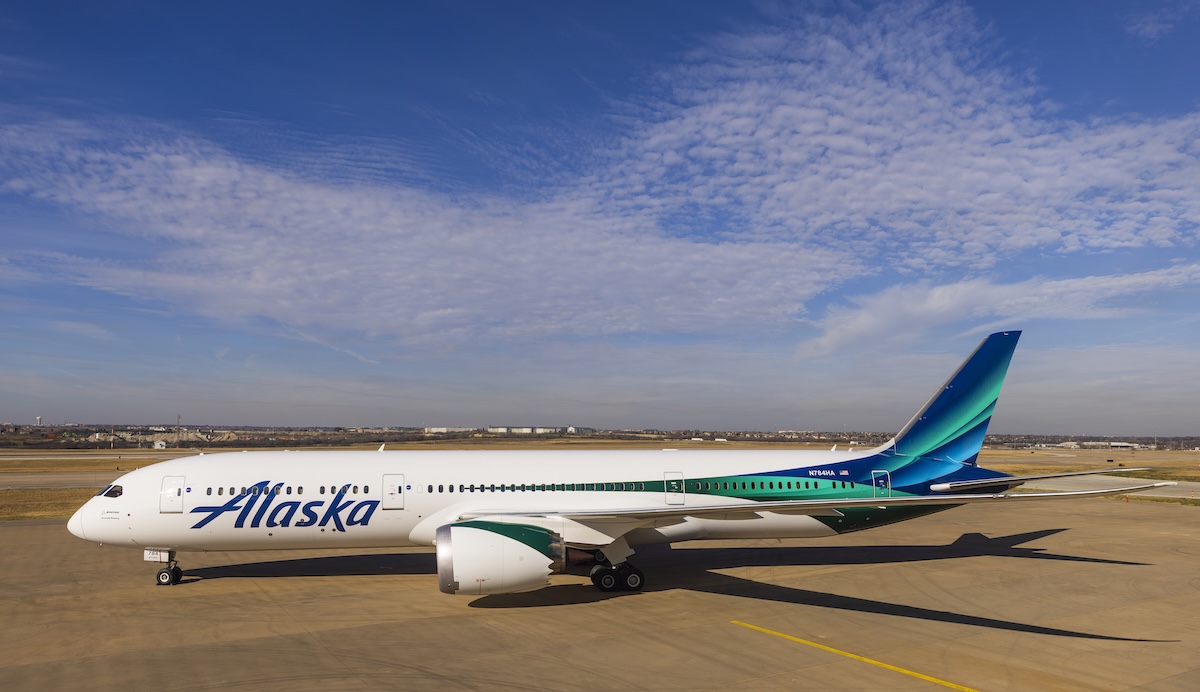
Alaska's Boeing 787 Dreamliner
Alaska Boeing 787 Dreamliner. (Photo: Alaska Airlines)

Alaska Airlines has landed in Europe.

The carrier operated its first nonstop revenue flight between Seattle and Rome on Tuesday. The connection is Alaska’s first to continental Europe, and the first-ever nonstop link between Seattle and Rome.

Flights will operate daily through Oct. 23. Alaska is using a Boeing 787-9 on the route.

“Launching our first flight to Europe is a significant step in executing our long-term growth strategy,” Alaska Air Group CEO Ben Minicucci said in a news release. “Service to Rome expands how we connect our guests to the world, strengthens Seattle’s role as a global gateway, and is made possible by our people who deliver safety, care, and performance with every flight.”

Officials also said the route will improve connectivity between Hawaii and Europe via Seattle.

Alaska will expand its European footprint later this spring with new connections to London and Reykjavík, Iceland.

Zach Vasile

Zach Vasile is a writer and editor covering news in all aspects of commercial aviation. He has reported for and contributed to the Manchester Journal Inquirer, the Hartford Business Journal, the Charlotte Observer, and the Washington Examiner, with his area of focus being the intersection of business and government policy.

JetBlue to Continue Capacity Cuts, Slow Hiring

The carrier posted a net loss of $319 million for the first quarter.

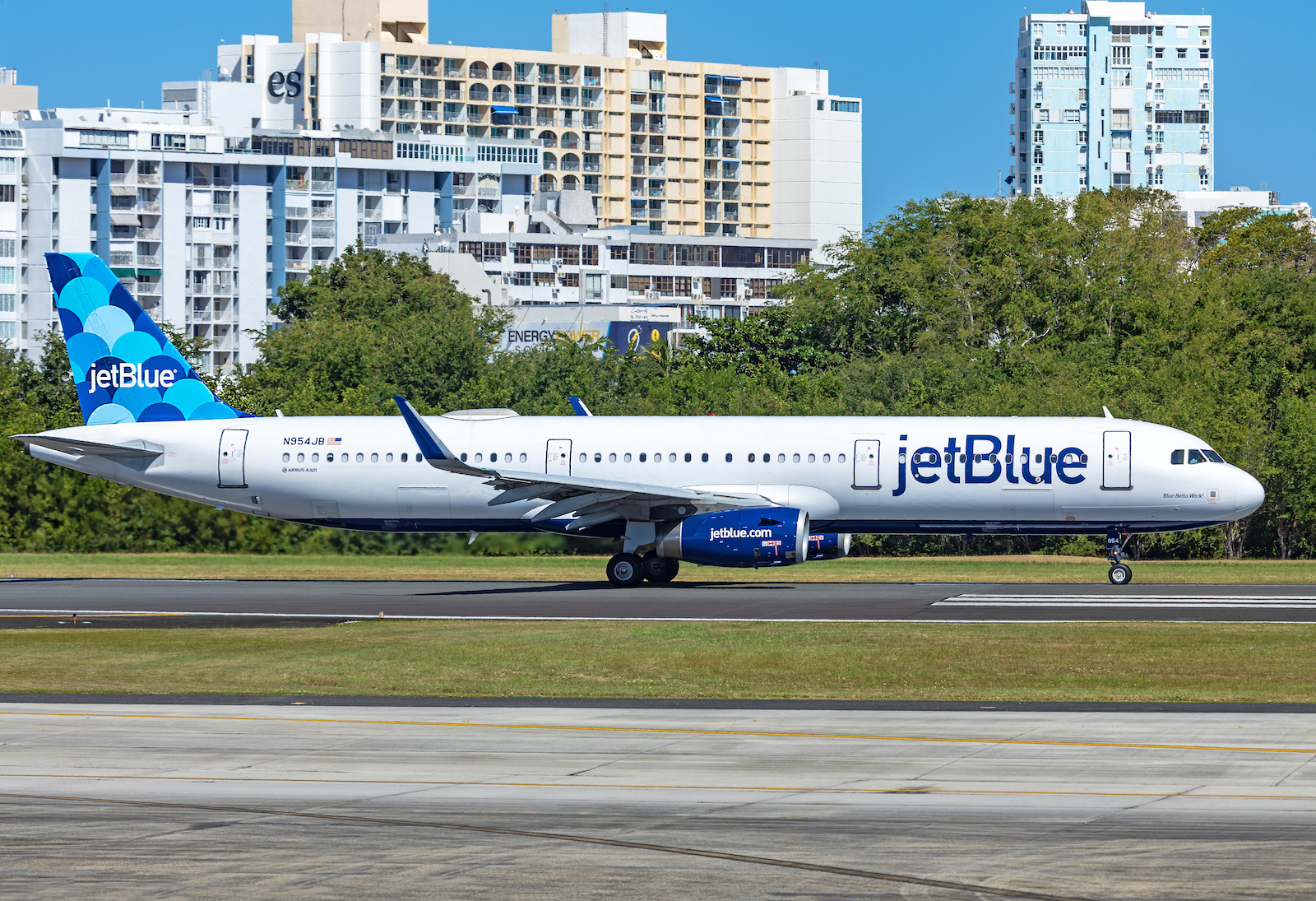
JetBlue A321
A JetBlue A321 aircraft. (Photo: AirlineGeeks | William Derrickson)

JetBlue will continue to adjust capacity and ticket prices in an effort to stay ahead of rising expenses from jet fuel, officials said this week.

During the company’s first-quarter earnings call on Tuesday, CEO Joanna Geraghty said JetBlue has three “levers” available to manage the fuel crisis – adjusting fares, “moderating unproductive capacity,” and pursuing other cost-saving activities. Expanding on those points, Geraghty said the carrier will continue to “aggressively” cut capacity this summer and simultaneously slow hiring.

JetBlue has not recorded a full-year net profit since 2019, and the spiraling cost of jet fuel threatens to bog down the carrier’s turnaround strategy, referred to by leadership as “JetForward.” The plan involves restructuring its network and phasing out less efficient aircraft.

Earlier this month, Geraghty reportedly told employees that the company is not considering declaring bankruptcy in 2026.

JetBlue posted an operating loss of $224 million and a net loss of $319 million – or 86 cents per undiluted share – for the first three months of the year, falling short of Wall Street expectations. The carrier posted a net loss of $208 million during the corresponding quarter of 2025.

The airline also suspended its full-year guidance due to changing fuel economics.

Still, Geraghty said she is optimistic about JetBlue’s trajectory and cited upcoming developments that should improve profitability, including the introduction of domestic first class, a new airport lounge, and the expansion of JetBlue’s Blue Sky partnership with United. She also noted that, despite the recent increase in fares, travel demand remains strong.

Zach Vasile

Zach Vasile is a writer and editor covering news in all aspects of commercial aviation. He has reported for and contributed to the Manchester Journal Inquirer, the Hartford Business Journal, the Charlotte Observer, and the Washington Examiner, with his area of focus being the intersection of business and government policy.

Copa Orders Dozens of 737 MAX Aircraft

The Panama-based carrier is expanding its all-737 fleet.

Copa Airlines' first Boeing 737 MAX aircraft. (Photo: Copa Airlines)

Panamanian flag carrier Copa Airlines this week placed an order for up to 60 Boeing 737 MAX jets.

The manufacturer said Tuesday that Copa signed an agreement for 40 MAX aircraft and has options for up to 20 more. No financial details were disclosed.

The Panama City-based airline now has more than 100 MAX airplanes on its order book between this latest purchase and prior deals.

Copa operates an all-737 fleet, including the MAX, 737 Next Gen, and 737 converted freighter.

“The addition of new aircraft will be key to continuing to expand our operations and route network, while supporting the economic development of Panama and the region, generating new jobs and growth in the tourism sector,” Copa CEO Pedro Heilbron said in a news release.

The carrier plans to use the new aircraft to support high-density short-haul routes, as well as longer connections to North and South America, officials added.

Copa serves 88 destinations in 32 countries across the Western Hemisphere.

Zach Vasile

Zach Vasile is a writer and editor covering news in all aspects of commercial aviation. He has reported for and contributed to the Manchester Journal Inquirer, the Hartford Business Journal, the Charlotte Observer, and the Washington Examiner, with his area of focus being the intersection of business and government policy.

American Updates Rules for Portable Chargers

The carrier announced new limits on battery allowances, capacity, and in-flight use.

An American 737 MAX at New York's LaGuardia Airport. (Photo: AirlineGeeks | William Derrickson)

American Airlines is putting new rules in place for portable device chargers.

Starting May 1, passengers will be limited to two portable chargers, neither of which can exceed 100 watt-hours. They cannot be stored in overhead bins or recharged during flight.

Additionally, passengers will have to keep their chargers visible and within reach while using them.

“We know our customers rely on portable chargers to keep devices powered throughout their journey,” the airline said in a statement. “To support safety on board while ensuring our customers continue to have the ability to charge when on the go, American is requiring customers to keep these devices easily accessible during flight.”

Almost all portable power banks use lithium-ion batteries, which have been responsible for dozens of battery fires on flights in recent years. American said its new policy will allow crewmembers to respond quickly to battery malfunctions.

The FAA does not regulate passengers’ use of portable chargers but has raised concerns about the growing prevalence of battery fires. Carriers such as Delta and Southwest have implemented their own limits on the devices to mitigate risks to passengers and crew.

Zach Vasile

Zach Vasile is a writer and editor covering news in all aspects of commercial aviation. He has reported for and contributed to the Manchester Journal Inquirer, the Hartford Business Journal, the Charlotte Observer, and the Washington Examiner, with his area of focus being the intersection of business and government policy.

Fiji Airways Cuts Longest Scheduled Route

The carrier cites high fuel prices and shifting demand as it axes one of its newest long-haul additions.

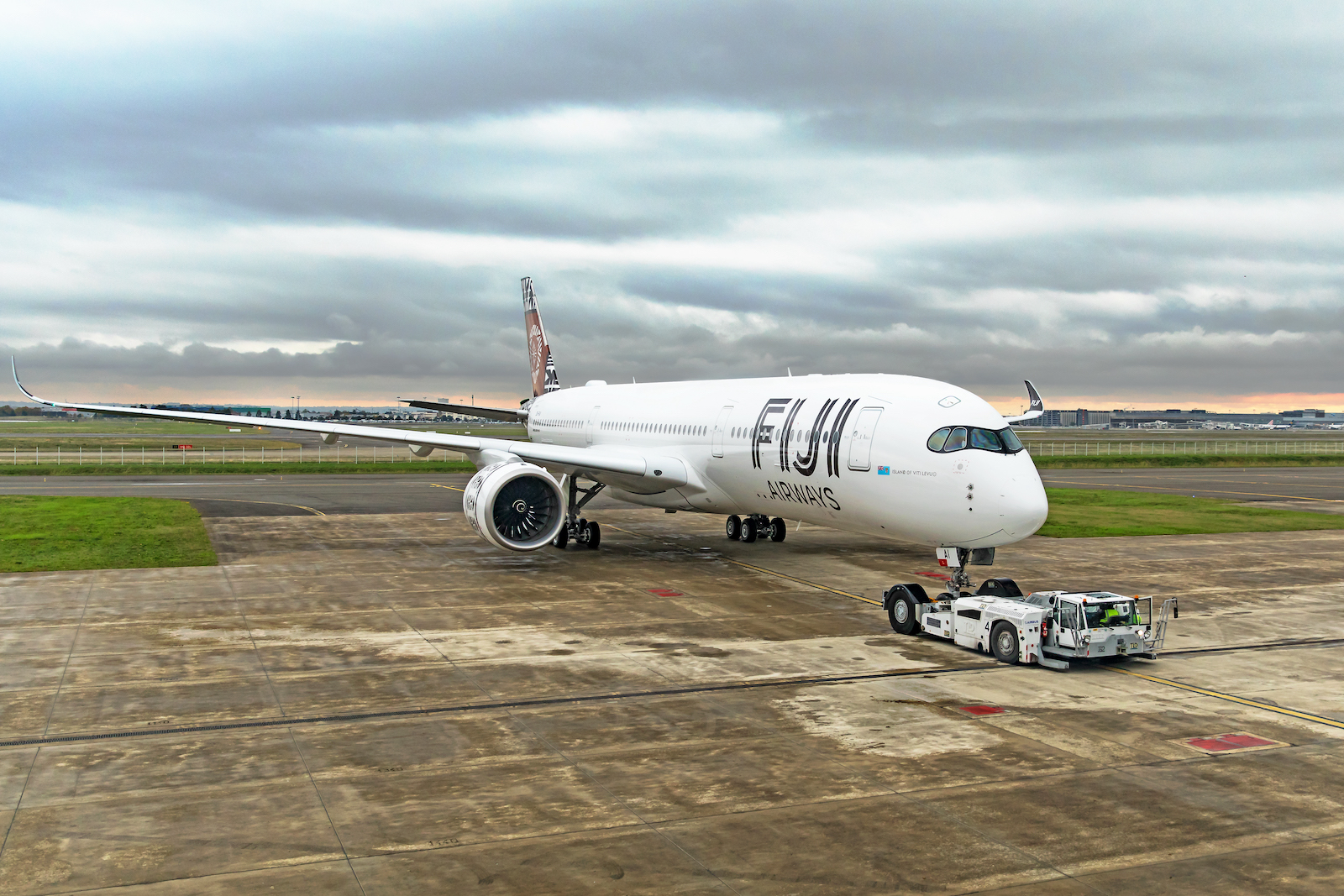
A Fiji Airways Airbus A350 aircraft
A Fiji Airways Airbus A350 aircraft (Photo: AirlineGeeks | William Derrickson)

Fiji Airways is pulling out of one of its newest long-haul markets less than two years after launching service.

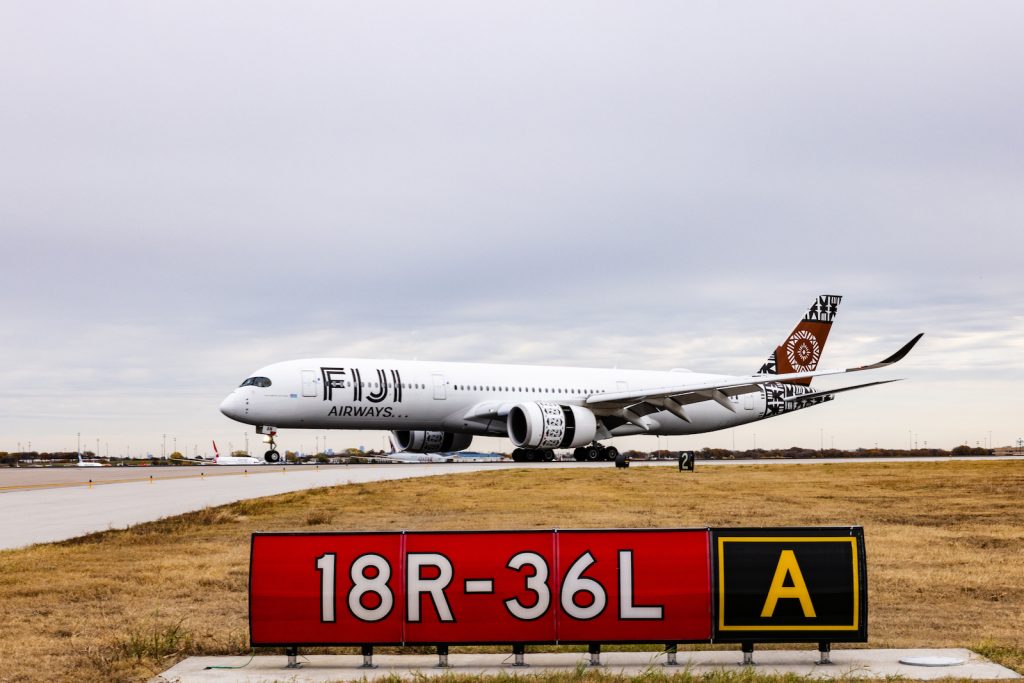
The airline will suspend flights between Nadi and Dallas/Fort Worth effective Sept. 7, citing the ongoing impact of high jet fuel prices and changes in passenger demand. The route is the carrier’s longest scheduled service and was launched in December 2024 as Fiji Airways’ newest U.S. route.

“Due to the ongoing impact of high jet fuel prices and changes in passenger demand, Fiji Airways will suspend its Nadi–Dallas service effective 7 September,” the airline said in a statement.

The route is currently operated with an Airbus A350-900 aircraft. When launched, it marked the first nonstop link between Fiji and Texas, adding a new gateway into the South Pacific from American’s largest hub.

Fiji Airways arrives in Dallas/Fort Worth (Photo: Fiji Airways)

Fiji Airways said affected passengers will be accommodated on alternative same-day routings through Los Angeles, San Francisco, or Vancouver.

The airline will continue serving the U.S. through Los Angeles and San Francisco, with up to 11 weekly flights between Fiji and the two California gateways. 

Fiji Airways Managing Director and CEO Paul Scurrah said the move is part of a broader effort to focus capacity on stronger-performing markets.

“These changes allow us to focus on markets where we are seeing the strongest and most sustainable demand,” Scurrah said. “This includes the upgauge of our three weekly Vancouver services from the A330 to our flagship A350 aircraft effective 8 September, as well as increasing Hong Kong frequencies to up to four flights per week year-round from 22 September.”

“At the same time, we remain committed to maintaining global connectivity for our customers,” he added.

The carrier said jet fuel prices have more than doubled since the start of the year, creating additional pressure across its network. Still, Fiji Airways said demand remains resilient in key markets, particularly Australia and New Zealand.

“Given Fiji has just hit an all-time visitor record for March, we know Fiji remains an attractive and accessible destination,” Scurrah said. “Our forward bookings continue to be encouraging and reflect a level of increased interest in Fiji as a safe and family friendly destination.”

The network change comes as Fiji Airways maintains other long-haul adjustments, including deploying its A350 to Vancouver and increasing Hong Kong service later this year.

Ryan Ewing

Ryan founded AirlineGeeks.com in February 2013 and has spent more than a decade covering the airline business. His work has been featured by CNN, WJLA, CNET, and Business Insider. His aviation experience spans airport operations, Part 135 regulatory compliance, and airline crew workforce planning, along with time behind the yoke of a Cessna 172 and interviews with airline executives. Ryan now serves as Group President of Firecrown Media’s Aviation Group. He holds a B.S. in Air Transportation Management and an MBA from Arizona State University and teaches Airline Management at Embry-Riddle Aeronautical University.
Sign-up for newsletters & special offers!

Get the latest stories & special offers delivered directly to your inbox

SUBSCRIBE