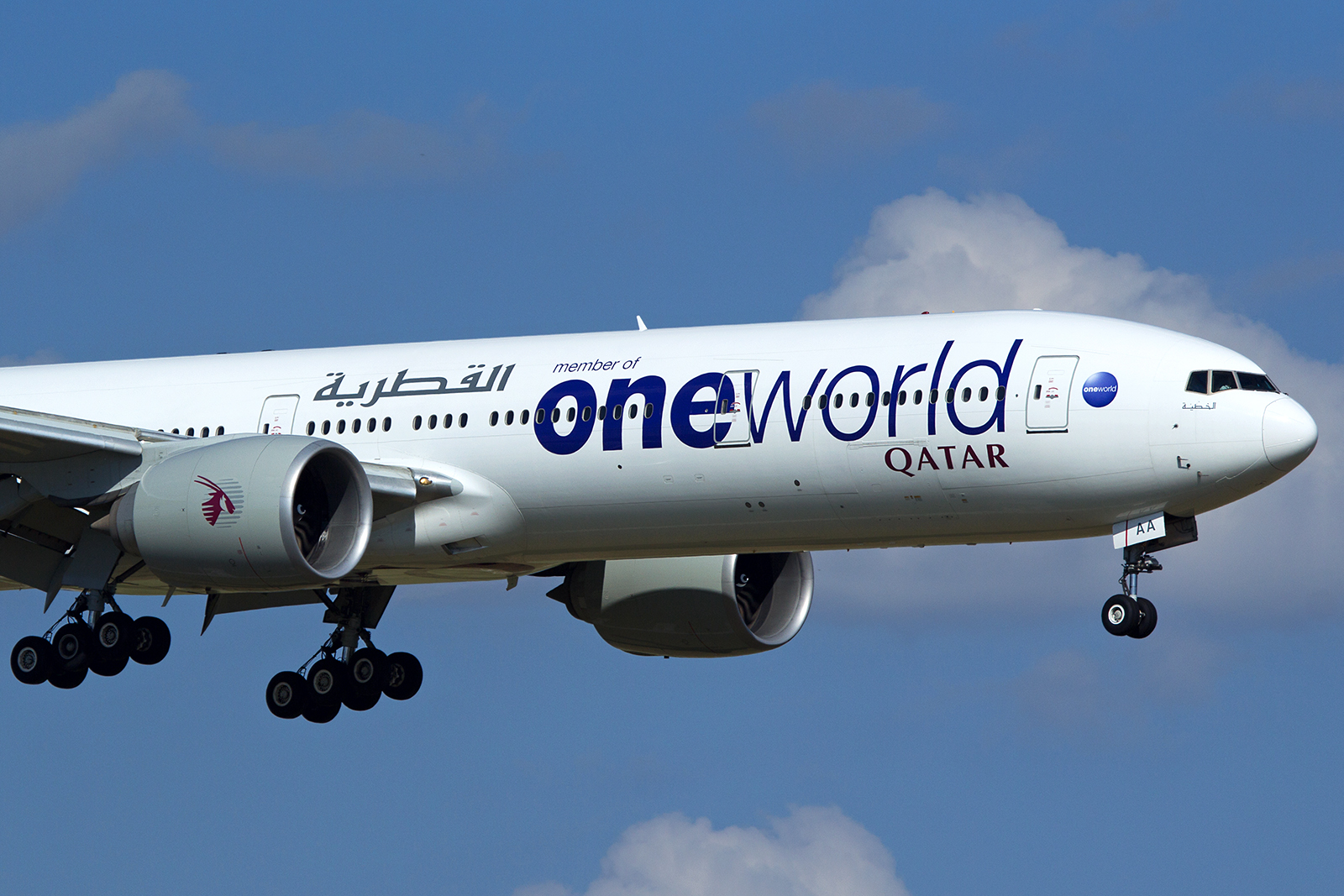
A Qatar Airways Boeing 777-300ER in a oneworld alliance livery. (Photo: AirlineGeeks | William Derrickson)
Oneworld, the Fort Worth, Texas-based alliance that includes American Airlines and Alaska Airlines, has named its next CEO.
Ole Orvér, who formerly served as chief commercial officer of alliance member Finnair, will take the helm at oneworld on April 1, officials said Monday. Orvér is a Swedish national.
Prior to Finnair, Orvér served as senior vice president of network management at another member carrier, Qatar Airways. He also held leadership roles at Air Berlin, LOT Polish Airlines, and SAS Scandinavian Airlines.
Ole Orvér. (Photo: Oneworld)
“We are pleased to welcome Ole as CEO of oneworld as the alliance leads the world in redefining the full breadth of value it provides to member airlines and their customers,” American CEO and oneworld board Chairman Robert Isom said in a news release. “With his proven track record of driving commercial performance, deep knowledge of airline partnerships, and extensive international experience, he will continue to deliver on the slate of forthcoming customer-first initiatives that further strengthen oneworld’s position as the world’s premium airline alliance.”
Orvér will replace outgoing CEO Nathaniel Pieper, who recently joined American.
“I am honored to be joining oneworld at a pivotal moment for global travel,” Orvér said in a statement. “Together with our member airlines, we will continue the work to showcase the world’s premium alliance, elevate the customer journey, and unlock new tools and technology.”
Other oneworld members include British Airways, Qantas, Cathay Pacific, Japan Airlines, Iberia, and Royal Jordanian.
Zach Vasile is a writer and editor covering news in all aspects of commercial aviation. He has reported for and contributed to the Manchester Journal Inquirer, the Hartford Business Journal, the Charlotte Observer, and the Washington Examiner, with his area of focus being the intersection of business and government policy.
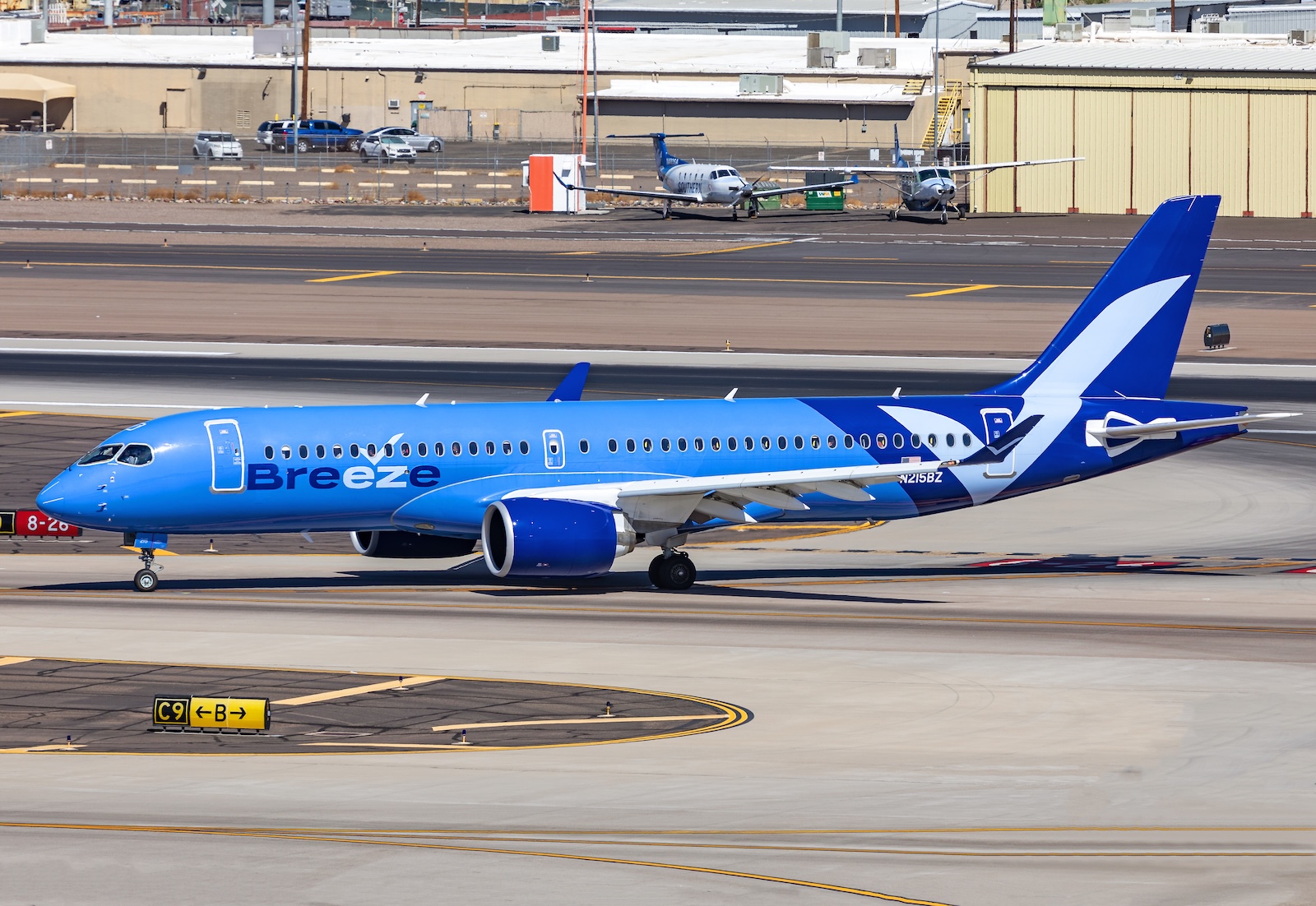
The Utah-based low-cost airline said Tuesday that it will connect Tallahassee, Florida, and Birmingham, Alabama, starting in July. Service between Tallahassee and Fort Lauderdale, Florida, and Raleigh-Durham, North Carolina, will commence July 2, officials said, while flights between Birmingham and Fort Lauderdale and Raleigh-Durham will launch one day later, on July 3.
The carrier is also adding routes beyond its two new locations, with a focus on building connectivity to and within Florida. The additional routes are:
Akron-Canton, Ohio, to Portland, Maine, seasonal, starting July 2
Atlantic City, New Jersey, to Tampa, Florida, starting July 1
Charleston, South Carolina, to Fort Lauderdale, starting July 2
Cincinnati, Ohio, to Greenville-Spartanburg, South Carolina, seasonal, starting July 3
Cincinnati to Portland, seasonal, starting July 3
Columbus, Ohio, to Savannah, Georgia, starting July 1
Columbus to Tampa, starting July 3
Fort Lauderdale to Charleston, starting July 2
Fort Lauderdale to Greenville-Spartanburg, starting July 2
Fort Lauderdale to Jacksonville, Florida, starting July 1
Fort Lauderdale to Salisbury, Maryland, starting July 1
Fort Lauderdale to Tampa, starting July 1
Fort Lauderdale to Wilkes-Barre/Scranton, Pennsylvania, starting July 1
Myrtle Beach to Pittsburgh, starting July 3
Myrtle Beach to Portland, starting July 2
Portland to Savannah, starting July 1
The carrier is also set to expand frequencies on certain existing routes.
“For nearly five years, Breeze has been filling a long-overlooked gap in the industry by connecting underserved markets with affordable, nonstop service,” Breeze founder and CEO David Neeleman said in a news release. “The addition of these new cities and routes will give even more travelers the opportunity to save precious hours that would otherwise be spent flying through hubs or driving.”
Customers can book tickets for the new and expanded routes starting Tuesday.
Zach Vasile is a writer and editor covering news in all aspects of commercial aviation. He has reported for and contributed to the Manchester Journal Inquirer, the Hartford Business Journal, the Charlotte Observer, and the Washington Examiner, with his area of focus being the intersection of business and government policy.
Spirit Reaches Deal to Exit Second Bankruptcy
The ultra-low-cost carrier laid out some broad next steps as it plans for the future.
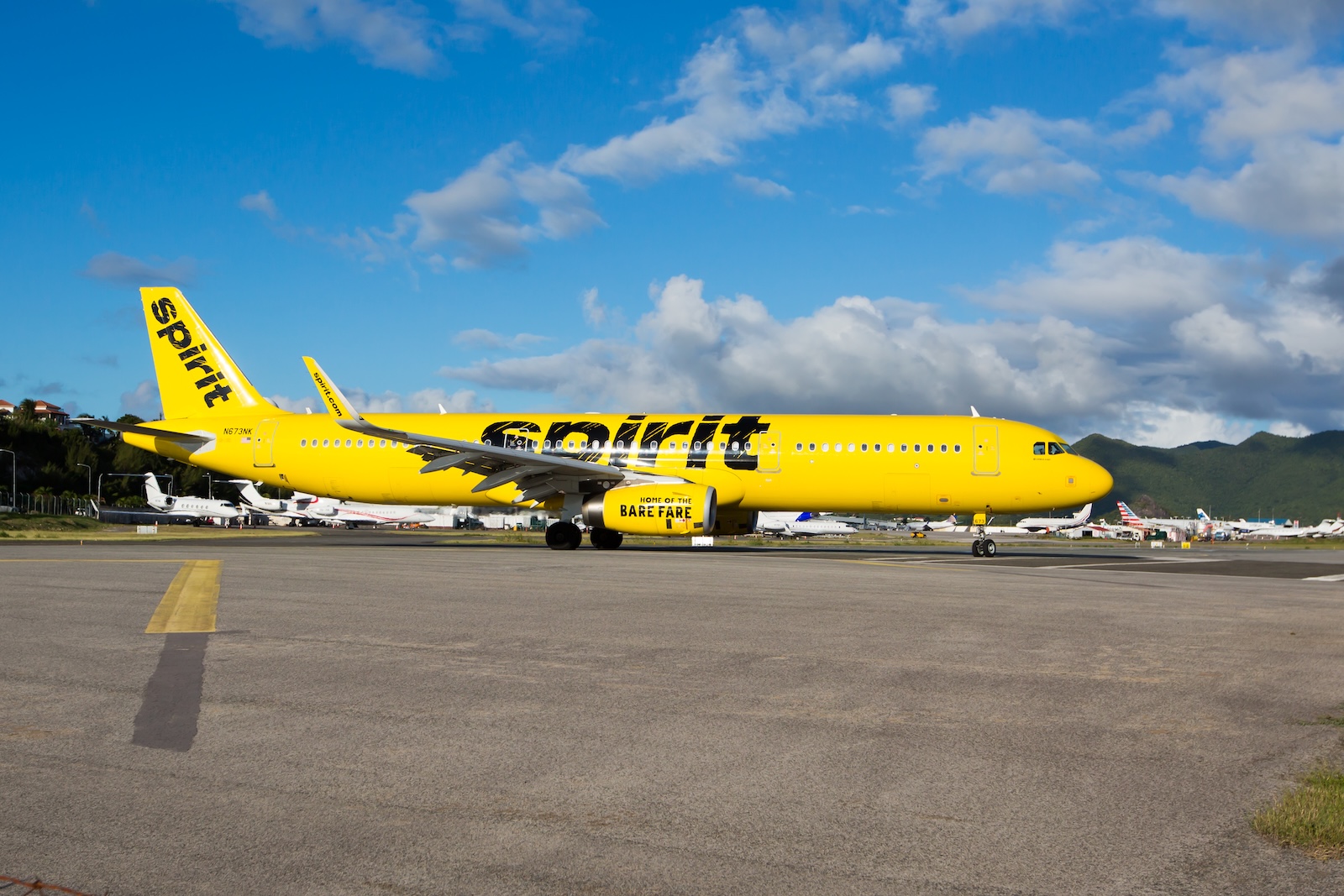
A Spirit Airbus A321. (Photo: Shutterstock | Skycolors)
Spirit has reached a tentative agreement with its creditors that will allow the budget airline to emerge from bankruptcy by the late spring or early summer, officials announced Tuesday.
The deal provides Spirit with the “financial support needed to finalize its restructuring and complete the remaining changes necessary to optimize the company’s fleet, network and cost structure,” according to a statement.
The “new Spirit” will exit bankruptcy in a much stronger position, Spirit leaders said, with lower costs, a right-sized fleet, increased aircraft utilization rates, less off-peak flying, and expanded premium products, such as Spirit First and Premium Economy.
“This agreement in principle is the result of months of hard work and allows Spirit to move toward completing its transformation,” said Spirit President and CEO Dave Davis. “Spirit will emerge as a strong, leaner competitor that is positioned to profitably deliver the value American consumers expect at a price they want to pay.”
The Wall Street Journal reported earlier Tuesday that Spirit will present further details to the court overseeing its bankruptcy. The airline is expected to shrink to a much smaller version of its former self, with considerably fewer aircraft and routes, the newspaper said.
Spirit’s statement did not mention a merger or sale. The carrier is believed to have discussed the prospect of a sale with fellow discount carrier Frontier and investment company Castlelake, but no agreements were ever announced.
Spirit filed for bankruptcy protection in August in the face of climbing costs and ballooning debt. It has laid off corporate staff, furloughed pilots and flight attendants, canceled routes, pulled out of certain markets, and sold off aircraft in a bid to reduce expenses and show viability to its lenders, who have provided millions of dollars in support through a revolving credit facility.
This is the airline’s second stint in bankruptcy. It emerged from its first restructuring in March 2025.
Some U.S. airlines reportedly planned to redeploy resources in and around Florida if Spirit ultimately collapsed. Its critics maintained that multiple ultra-low-cost carriers could not survive in a post-COVID environment of higher costs and supply chain complications.
Zach Vasile is a writer and editor covering news in all aspects of commercial aviation. He has reported for and contributed to the Manchester Journal Inquirer, the Hartford Business Journal, the Charlotte Observer, and the Washington Examiner, with his area of focus being the intersection of business and government policy.
Contour Sets Start Date For New EAS Route
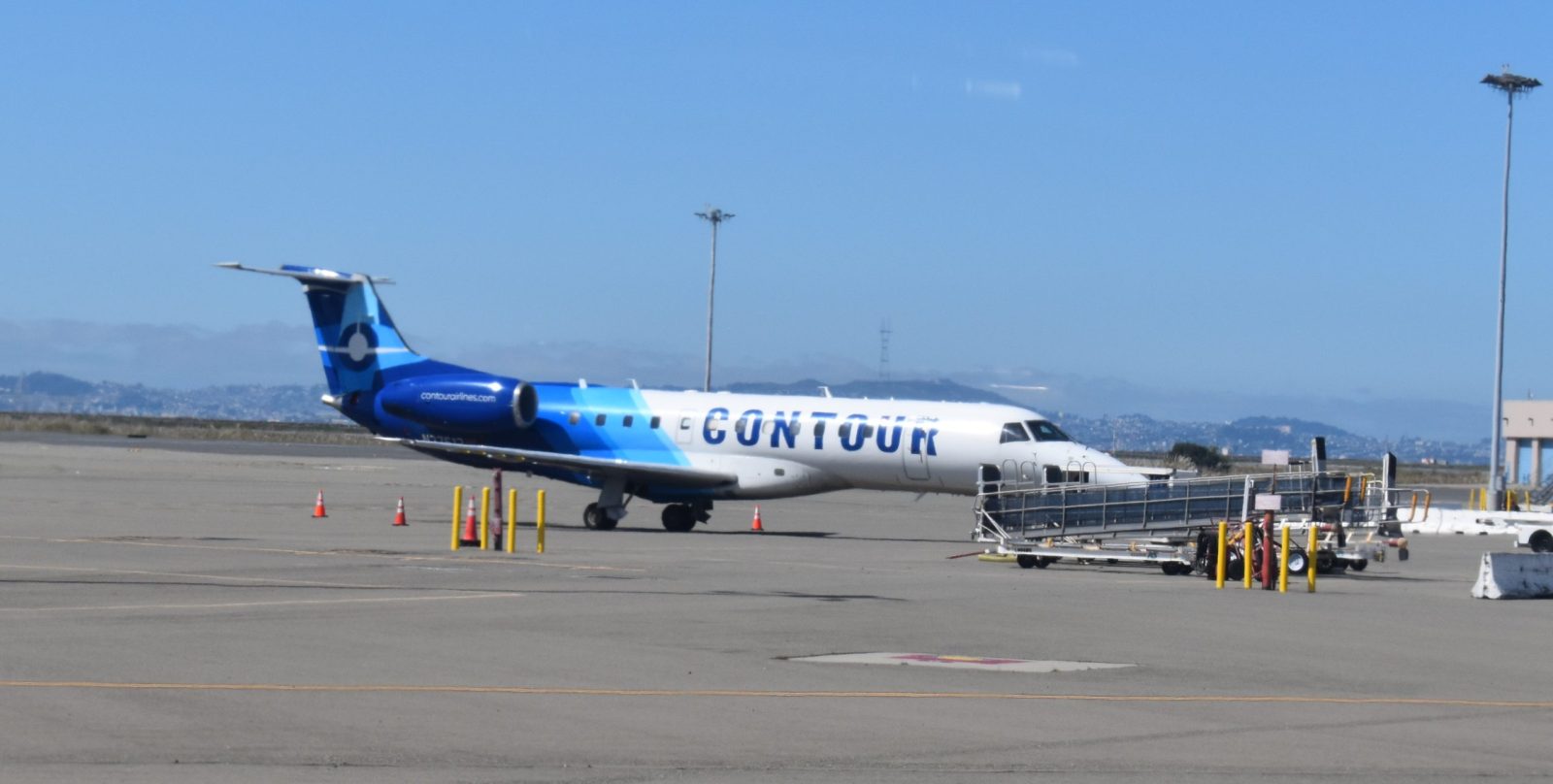
The airline will reconnect a regional airport that has been without commercial service for months.
The U.S. Department of Transportation selected Contour as the airport’s new service provider last year after a bidding process.
Flights will operate up to three times daily, officials said.
From El Dorado, morning and evening flights will operate each day, with additional early afternoon flights available on Mondays, Thursdays, Fridays, and Sundays. From Dallas, afternoon and evening flights will run daily, with expanded morning service on Mondays, Thursdays, Fridays, and Sundays.
“This new service highlights Contour’s commitment to connecting underserved communities with major markets,” Contour President Ben Munson said in a news release. “By launching nonstop flights from South Arkansas Regional Airport to Dallas/Fort Worth, we’re giving travelers a convenient, reliable option while maintaining the high level of comfort and service our customers expect.”
Passengers from Arkansas will also be able to book interline flights with partners such as United, American, Alaska, and JetBlue, Contour leaders said.
Contour flies primarily in the South, Midwest, and Southwest, as well as in the eastern Caribbean.
Zach Vasile is a writer and editor covering news in all aspects of commercial aviation. He has reported for and contributed to the Manchester Journal Inquirer, the Hartford Business Journal, the Charlotte Observer, and the Washington Examiner, with his area of focus being the intersection of business and government policy.
Frontier Axes Nine Routes
The carrier will significantly reduce its presence in New York.
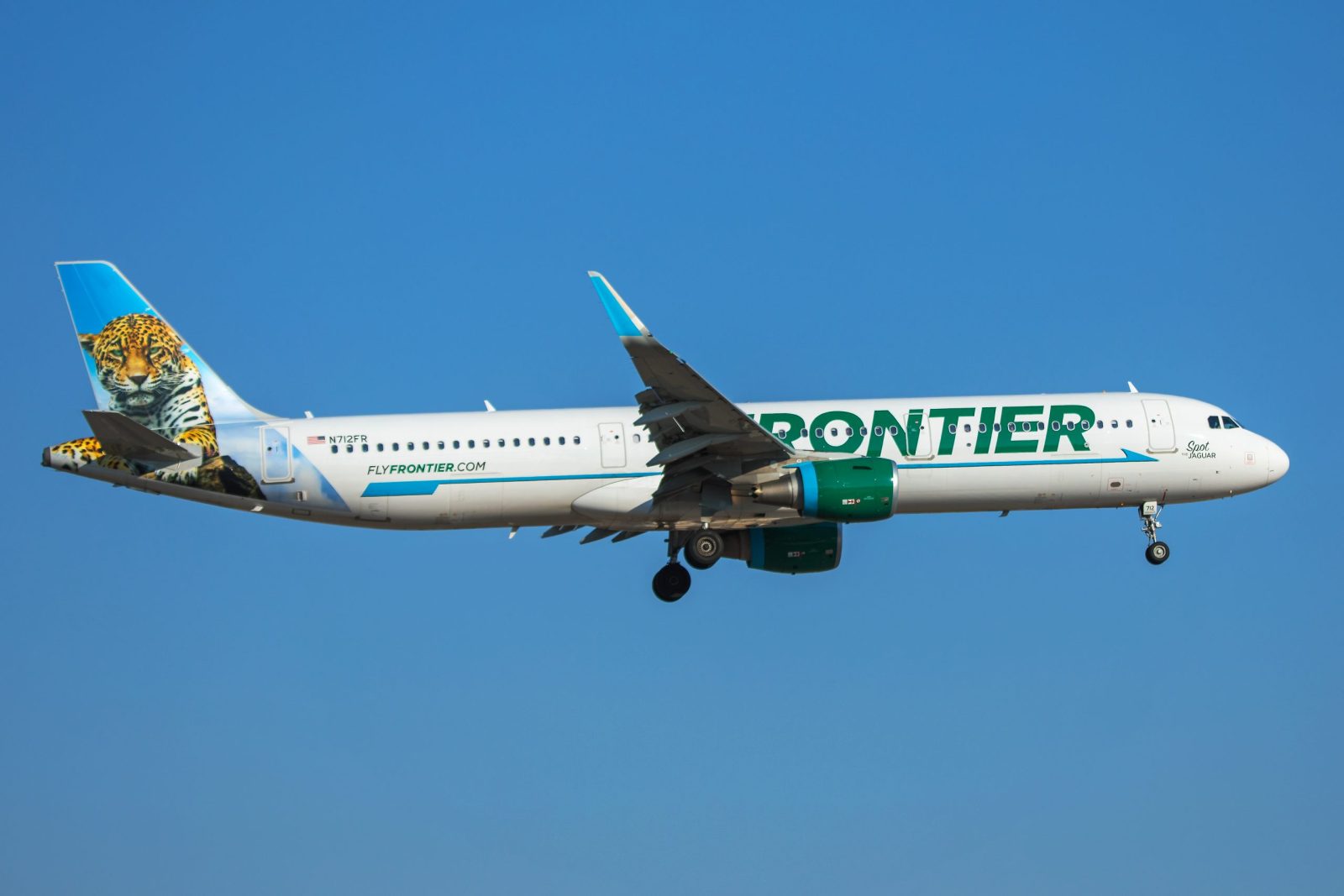
During the peak summer months, the airline initially planned to connect New York-JFK and San Juan, Puerto Rico; Atlanta; Chicago O’Hare, Las Vegas; along with Atlanta. Frontier has also linked the New York airport with other markets in the past, including Dallas/Fort Worth; Tampa, Florida; Miami; Denver; and Los Angeles.
Starting in mid-April, the carrier’s New York-JFK will be reduced to a single route to Atlanta, according to schedule data from Cirium. This service is slated to operate once per day.
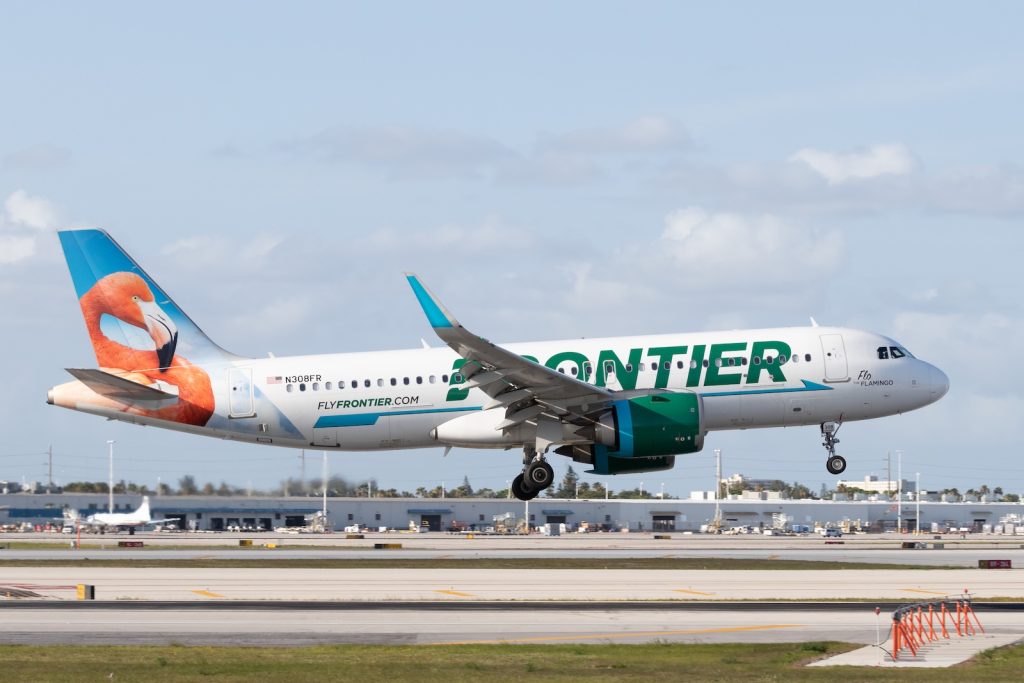
A Frontier A320neo aircraft. (Photo: Shutterstock | Omar F Martinez)
“We periodically review and update routes based on market demand, seasonality, costs associated with operating from a particular airport, and other factors,” an airline spokesperson said as part of a statement to AirlineGeeks. Frontier will continue to service New York via LaGuardia and Newark.
With these cuts, Frontier’s capacity in New York will be down nearly 33% year-over-year in May.
Editor’s Note: This story was updated on Monday, Feb. 23, 2026 at 4:47 p.m. ET to correct an error with the airline’s capacity change figure.
Ryan founded AirlineGeeks.com in February 2013 and has spent more than a decade covering the airline business. His work has been featured by CNN, WJLA, CNET, and Business Insider. His aviation experience spans airport operations, Part 135 regulatory compliance, and airline crew workforce planning, along with time behind the yoke of a Cessna 172 and interviews with airline executives. Ryan now serves as Group President of Firecrown Media’s Aviation Group. He holds a B.S. in Air Transportation Management and an MBA from Arizona State University and teaches Airline Management at Embry-Riddle Aeronautical University.
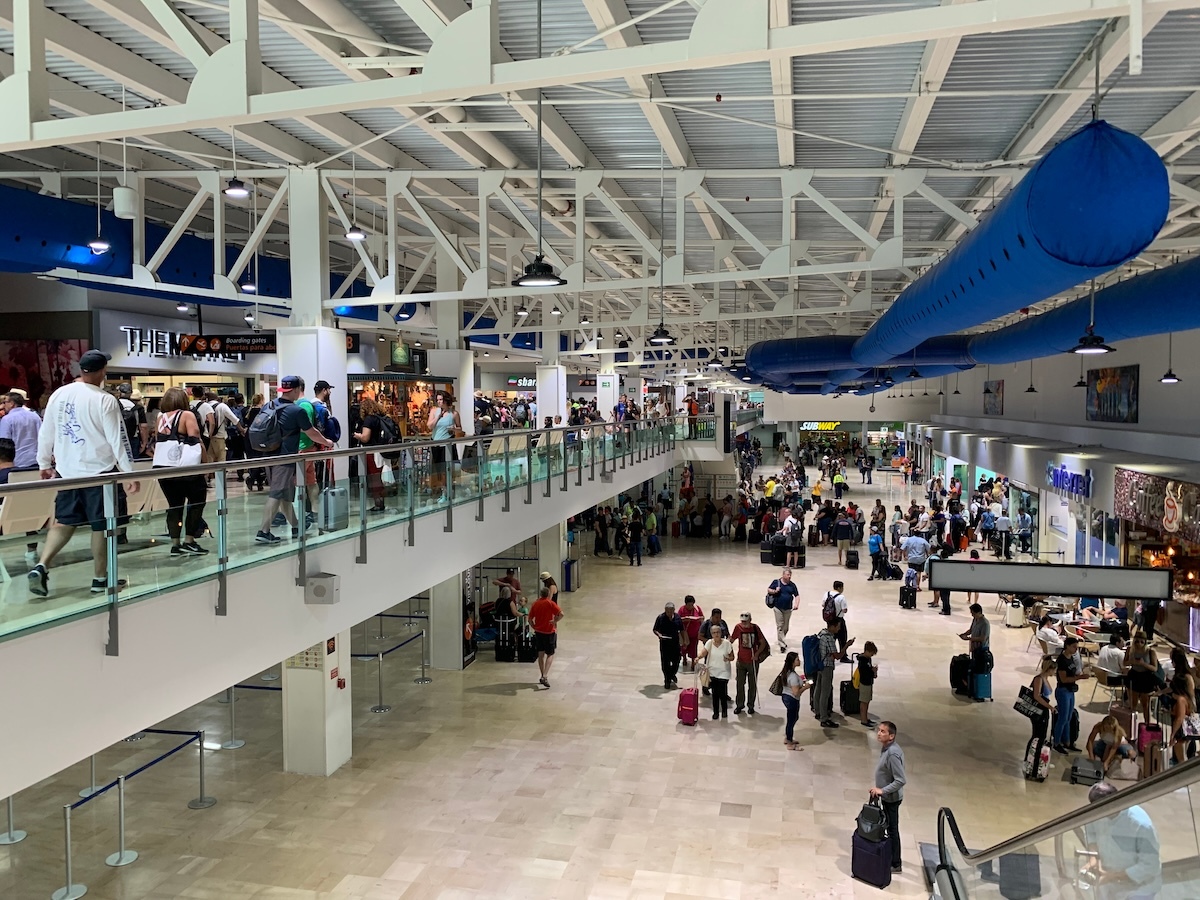
Puerto Vallarta International Airport. (Photo: Shutterstock | 1000Photography)
Airlines are pausing flights to Puerto Vallarta and Guadalajara, Mexico, after a sudden surge in violence following the killing of a drug cartel chief on Sunday.
United, Delta, American, Southwest, Air Canada, and WestJet, among others, canceled flights to the two cities and waived change fees for affected passengers.
Puerto Vallarta, located on Mexico’s Pacific coast in the state of Jalisco, is a major tourism destination. It is especially popular with vacationers from the western and southern U.S. due to the availability of nonstop flights.
Unrest broke out in Jalisco and several other states following a Mexican Army raid targeting the Jalisco New Generation Cartel. Soldiers attempted to capture leader Nemesio “El Mencho” Oseguera Cervantes, but he was wounded during the operation and died en route to a hospital.
In retaliation, cartel members have stolen and burned vehicles, including buses, to serve as roadblocks in and around Puerto Vallarta and Guadalajara. They also attacked convenience stores, bank branches, pharmacies, and gas stations.
Dozens of Mexican National Guard soldiers, cartel members, and civilians have been killed.
The U.S. Embassy in Mexico City issued an alert Sunday advising Americans in several Mexican states to shelter in place until further notice. They are being asked to avoid crowds and areas of police activity, monitor the news for updates, and keep family members and friends in the U.S. informed of their location and well-being.
As of midday Monday, the State Department has not upgraded its overall travel advisory for Mexico, which remains at “exercise increased caution.” Jalisco is marked level three – “reconsider travel.” Several Mexican states, including Sinaloa and Michoacán, have been marked “do not travel” since 2023.
The White House said Sunday that the U.S. provided intelligence to the Mexican Army in advance of the operation.
Zach Vasile is a writer and editor covering news in all aspects of commercial aviation. He has reported for and contributed to the Manchester Journal Inquirer, the Hartford Business Journal, the Charlotte Observer, and the Washington Examiner, with his area of focus being the intersection of business and government policy.
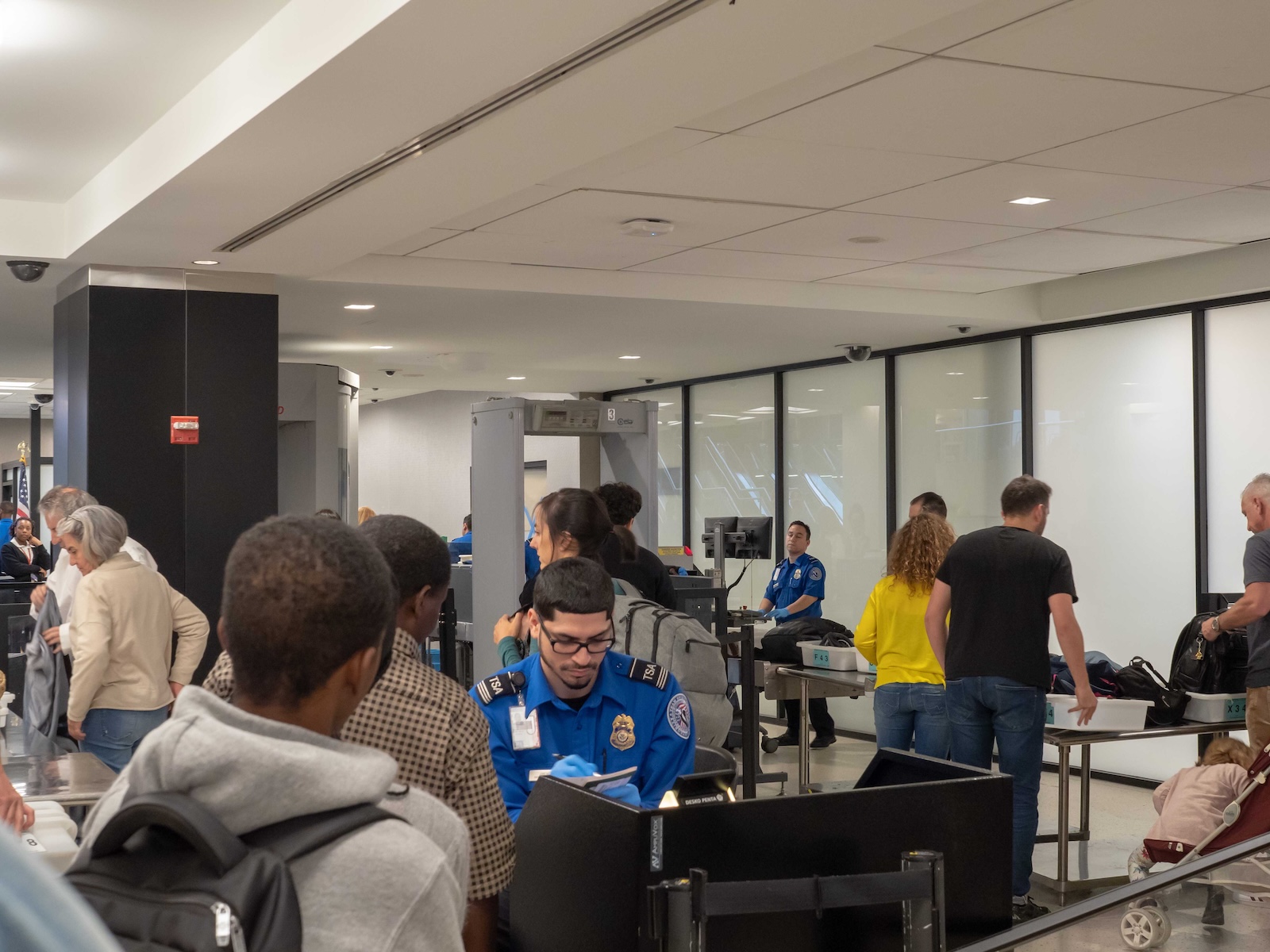
A TSA checkpoint. (Photo: Shutterstock | David Tran Photo)
The U.S. Department of Homeland Security has partially reversed plans to suspend two popular trusted traveler programs.
Homeland Security Secretary Kristi Noem announced early Sunday that, due to the ongoing partial government shutdown, TSA PreCheck and Global Entry will not be available. She framed the decision as a matter of workforce and resource management, as her department has been temporarily cut off from federal funding.
But within hours, the TSA clarified that PreCheck, which allows members to undergo expedited security screenings, will remain up and running.
“At this time, TSA PreCheck remains operational with no change for the traveling public,” the agency wrote on social media. “As staffing constraints arise, TSA will evaluate on a case by case basis and adjust operations accordingly.”
According to The New York Times, Global Entry remains suspended. The program was not operating at several airports as of late Sunday, including Boston and Austin, Texas, ABC News reported.
Global Entry is administered by Customers and Border Protection and allows pre-approved, low-risk travelers to clear customs faster than the general public.
The plan to suspend PreCheck drew strong backlash on social media and from Democratic members of Congress, who blocked funding to DHS in hopes of implementing stricter federal oversight of another department branch, Immigration and Customs Enforcement. Several Democrats argued that PreCheck and Global Entry actually reduce the workload of TSA agents at airports, and said suspending the programs was a pressure tactic from the Trump administration.
Despite the pause in funding, most DHS functions are continuing as normal. Many TSA, ICE, and Customs staff are considered essential and must continue to report to work.
TSA also said over the weekend that courtesy escorts for members of Congress have been suspended.
Zach Vasile is a writer and editor covering news in all aspects of commercial aviation. He has reported for and contributed to the Manchester Journal Inquirer, the Hartford Business Journal, the Charlotte Observer, and the Washington Examiner, with his area of focus being the intersection of business and government policy.
Thousands of Flights Canceled, Delayed Due to Northeast Storm
The system brought near hurricane-force winds and heavy snow.
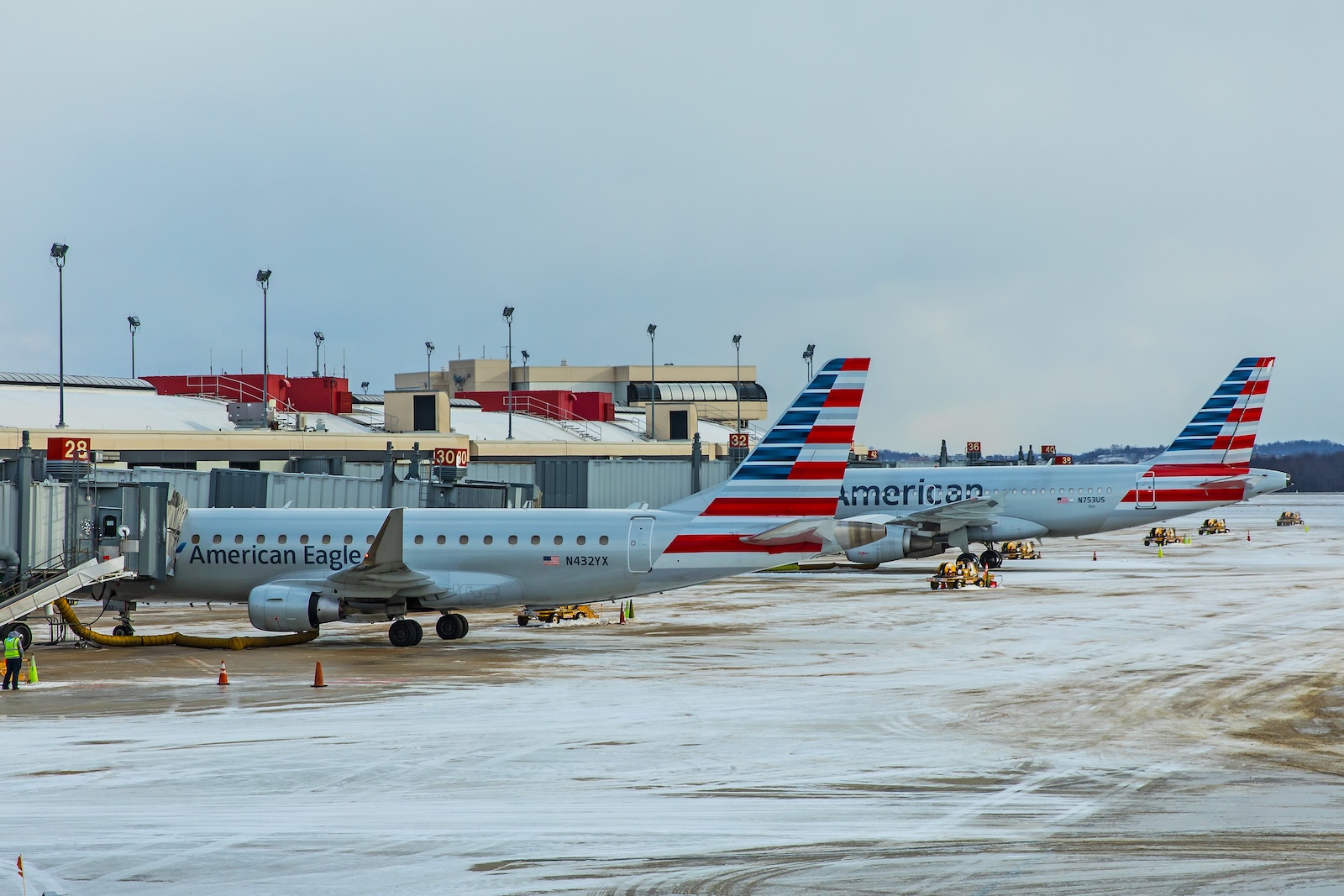
American Airlines aircraft in Pittsburgh. (Photo: AirlineGeeks | William Derrickson)
A powerful bomb cyclone all but shut down air travel in the Northeast late Sunday and early Monday, with thousands of flights canceled or delayed.
According to tracking website FlightAware, over 5,300 U.S. flights were canceled as of Monday morning, and over 800 were delayed. Almost all flights at New York-LaGuardia and Boston were called off, and JFK, Philadelphia, Newark, New Jersey, Hartford, Connecticut, and Providence, Rhode Island, saw over 80% of their daily schedules canceled. Also affected were Reagan National and Baltimore/Washington, though not quite as severely.
JetBlue, which has hubs at JFK and Boston, was hit harder than most U.S. carriers, with about 80% of all flights canceled, FlightAware data showed. United, Delta, and American hovered below 20%.
Arriving on Sunday, the storm has battered much of the Northeast with near hurricane-force winds and heavy snow. In some areas, over two feet of snow has fallen, and ground travel has been restricted in parts of New York, New Jersey, and New England due to near whiteout conditions.
Over 400,000 people in the region are reportedly without power.
As of Monday morning, the worst of the storm had moved to Rhode Island and parts of eastern Massachusetts, including Boston. About 40 million people remain under a blizzard warning.
Zach Vasile is a writer and editor covering news in all aspects of commercial aviation. He has reported for and contributed to the Manchester Journal Inquirer, the Hartford Business Journal, the Charlotte Observer, and the Washington Examiner, with his area of focus being the intersection of business and government policy.
Watchdog Faults FAA’s Oversight of United’s Maintenance Practices
Investigators pointed to low staffing levels and inadequate resources.
The Department of Transportation’s Office of Inspector General said it began looking into the FAA’s supervision of United after several concerning in-flight incidents, including engine failures and emergency landings.
The office has investigated federal oversight of several other carriers in recent years, including American, Allegiant, and Southwest.
The OIG’s final report on the FAA and United, made public on Wednesday, said the certificate management office responsible for United does not have enough inspectors. The situation has increased workloads, the office said, and is contributing to high turnover.
The OIG faulted the FAA for relying on virtual inspections when it does not have sufficient staffing, rather than postponing the inspections in accordance with the FAA’s own requirements. In addition, inspections conducted without adequate resources are not being appropriately factored into the FAA’s and United’s risk profile.
Extended job vacancies at the CMO are also delaying inspections and making it more difficult to retain valuable institutional knowledge, investigators said.
“As a result of these unfilled positions, the CMO has been unable to complete all its required essential maintenance provider (i.e., repair stations) inspections,” the report stated. “Our analysis of required inspections at United’s 22 domestic and international essential maintenance providers showed that the CMO was unable to complete 8 of 22 (36%) inspections in fiscal year 2023 and 13 of 22 (59%) inspections in fiscal year 2024.”
The report called particular attention to supervision of United’s Boeing 737 fleet. The FAA has only one avionics partial program manager, one maintenance partial program manager, and two assistant partial program managers overseeing 521 737 aircraft, according to the OIG, which is in line with the FAA’s rules but “not sufficient to accomplish all required surveillance on the B737.”
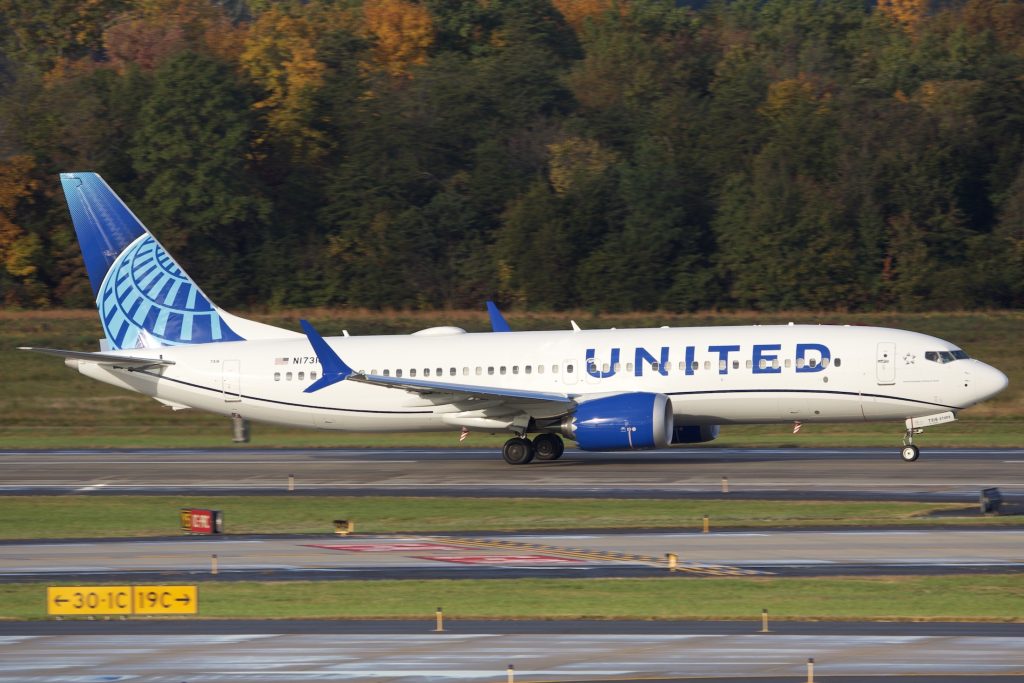
A United 737 MAX 8. (Photo: AirlineGeeks | Noah Escobar)
The imbalance is especially concerning because, according to CMO managers, the 737s have the most unplanned events and are “very different than other aircraft series, especially in terms of avionics.”
SMS Access
The OIG also found that the FAA has not effectively educated inspectors on how to access, obtain, and manage carriers’ safety management system data. This prevents inspectors from properly assessing a carrier’s SMS and determining the root causes of maintenance problems, investigators said.
Airlines are reluctant to provide access to SMS records because they are not categorically protected from Freedom of Information Act requests, the report stated, but FAA inspectors are allowed to request and review them provided certain conditions are met.
Additionally, FAA regulations allow carriers to mark SMS data as confidential, indicating that it should be withheld from public disclosure.
FAA personnel reported some difficulty accessing United’s SMS data and were apparently not aware of their ability to request and review that information.
“Inspectors stated that they encounter challenges requesting and obtaining United’s SMS data, including safety risk assessments, making it difficult to oversee United’s SMS,” investigators wrote. “FAA inspectors we interviewed stated that United does not allow remote access to the air carrier’s SMS records but will hold virtual meetings and show snippets of the air carrier’s SMS where inspectors can take notes. However, photos and screenshots are not allowed.”
“Additionally, FAA inspectors stated that they can go to a United facility to view the air carrier’s SMS with supervision from United personnel but cannot take SMS records away.”
The OIG recommended that the FAA develop and implement a policy for personnel to determine when an inspection should be postponed; reevaluate staffing rules by taking fleet size and requirements into account; arrange an independent workplace survey of the United CMO to determine how inspector fleet assignments and workload distribution are impacting office culture; establish and implement an action plan to address staffing shortages; develop a plan to provide outreach and education to the entire inspector workforce on the protections of SMS data; and provide analytical support from its Safety Analysis Branch to CMOs to gather, analyze, and trend data for inspection questions that have been answered “not observable.”
In its reply, the FAA said it concurred wholly or partially with all of the recommendations. The agency said it will complete actions to address the recommendations by Dec. 31 of this year.
Zach Vasile is a writer and editor covering news in all aspects of commercial aviation. He has reported for and contributed to the Manchester Journal Inquirer, the Hartford Business Journal, the Charlotte Observer, and the Washington Examiner, with his area of focus being the intersection of business and government policy.
Southwest Preparing for 737 MAX 7 Debut in 2027
Officials said they’re optimistic that the first of the type will be delivered later this year.
Boeing's 737 MAX 7 aircraft (Photo: AirlineGeeks | Chuyi Chuang)
Southwest expects its first 737 MAX 7s to arrive later this year and enter service in 2027, according to a report from Aviation Week.
The industry news website cited recent remarks from Ken Barone, Southwest’s fleet asset management director, at its AeroEngines Americas conference.
“We’re being told, later this year they will get regulatory approval,” Barone said. “I have no concerns about anything getting in the way of that. And once that happens, we’ll spend about four to six months getting them ready to get into service.”
If certification happens in the second half of this year, he added, Southwest could begin operating the type by early next year.
The 737 MAX 7 was supposed to begin commercial service in 2019, with Southwest as its launch customer. It has faced numerous delays in certification, mainly due to issues with its engine deicing system. Late last year, the aircraft’s projected certification date was pushed back to 2026.
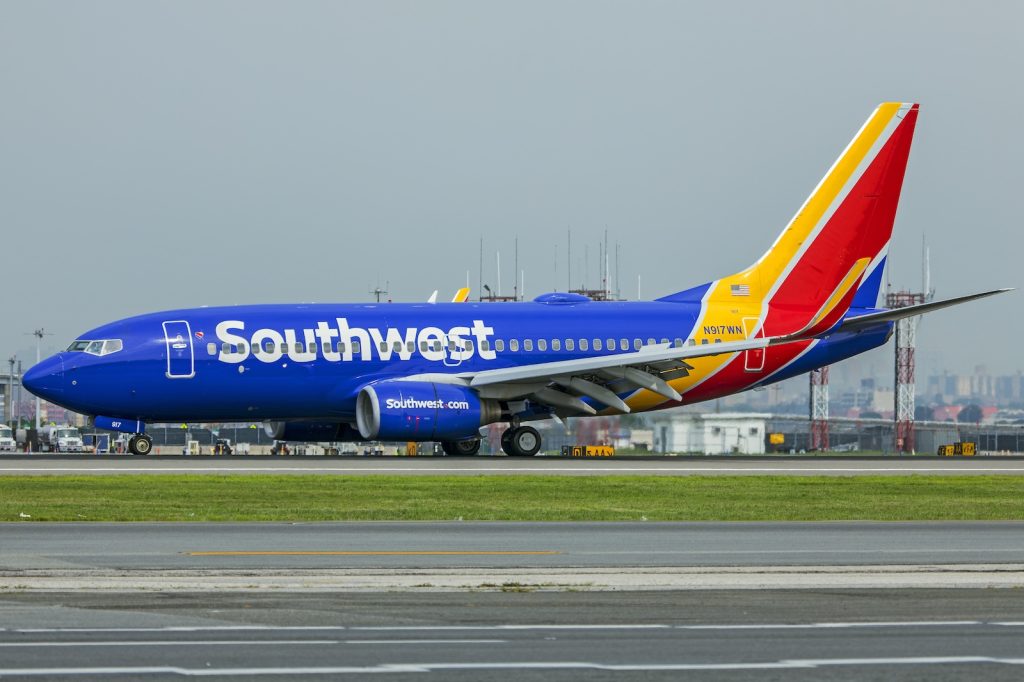
A Southwest Boeing 737-700. (Photo: AirlineGeeks | William Derrickson)
Southwest has an enormous investment in the eventual success of the 737 MAX 7, as it has ordered 268 of the type. The jets will replace Southwest’s 737-700s.
The carrier currently operates the MAX 8, together with older -700s and -800s.
Zach Vasile is a writer and editor covering news in all aspects of commercial aviation. He has reported for and contributed to the Manchester Journal Inquirer, the Hartford Business Journal, the Charlotte Observer, and the Washington Examiner, with his area of focus being the intersection of business and government policy.
Sign-up for newsletters & special offers!
Get the latest stories & special offers delivered directly to your inbox