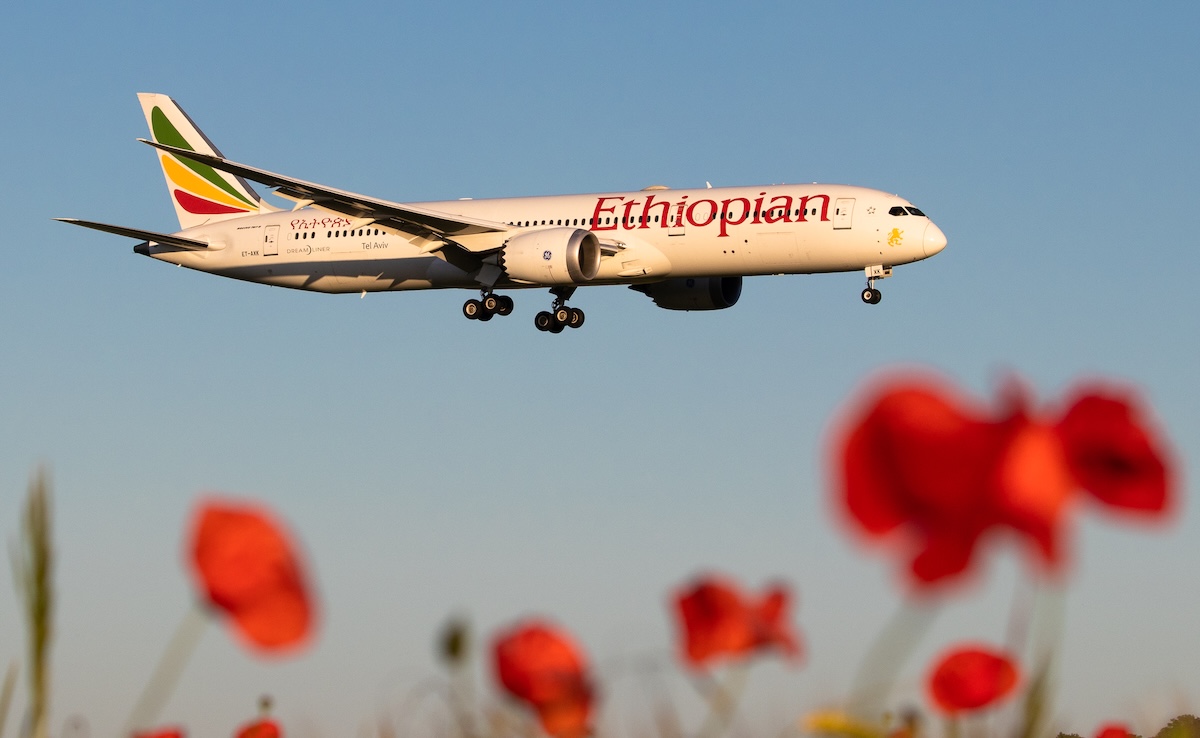
The order was finalized in December at the same time as a separate, previously announced commitment for 11 737 MAX jets.
The new 787s will be used to support and grow Ethiopian’s international network, the carrier said.
“This order underscores our continued commitment to enhancing our fleet with modern, fuel-efficient aircraft, thereby further strengthening our customer service,” Ethiopian Airlines Group CEO Mesfin Tasew said in a news release. “We will continue to acquire more aircraft and adopt the latest technologies as part of our strategic vision to advance sustainable aviation.”
Ethiopian Airlines is already the largest operator of the 787 in Africa. It operates the 787-8 and 787-9 on intercontinental routes from Addis Ababa to destinations in North America, Europe, and Asia, as well as on some routes within Africa.
Zach Vasile is a writer and editor covering news in all aspects of commercial aviation. He has reported for and contributed to the Manchester Journal Inquirer, the Hartford Business Journal, the Charlotte Observer, and the Washington Examiner, with his area of focus being the intersection of business and government policy.
Ryanair CEO, Elon Musk Clash Over Starlink
Michael O’Leary has ruled out using the satellite-based internet service.
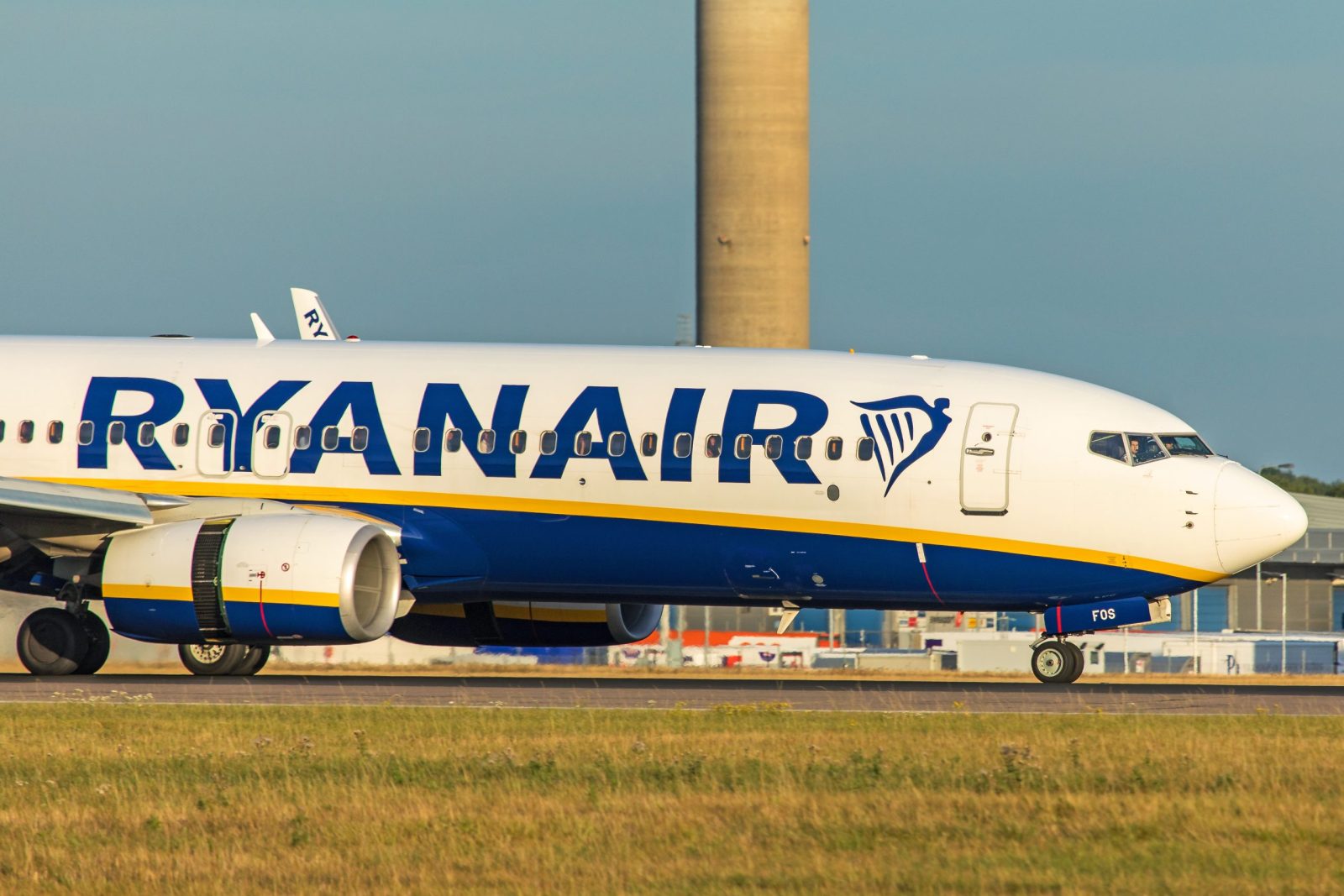
A Ryanair 737 taxiing in London. (Photo: AirlineGeeks | William Derrickson)
Ryanair CEO Michael O’Leary and tech entrepreneur Elon Musk traded barbs this week after the airline boss passed on using Starlink, the satellite internet service owned by Musk’s SpaceX.
O’Leary told Reuters on Wednesday that Ryanair would not use Starlink because its antennas increase drag on aircraft. He also doubted that passengers would pay for the service, considering the budget airline’s average flight is about one hour long.
Musk weighed in on social media site X, which he owns, and said Ryanair risked losing customers to carriers that do provide internet access.
O’Leary, known for his blunt critiques, answered back in an interview with Irish radio station Newstalk.
“What Elon Musk knows about flight and drag would be zero,” he said. “We have to put an aerial antenna on top of the aircraft. It would cost us about $200, $250 million a year. In other words, about an extra dollar for every passenger we fly. And the reality for us is, we can’t afford those costs.”
“I would pay no attention whatsoever to Elon Musk,” O’Leary continued. “He’s an idiot. Very wealthy, but he’s still an idiot.”
Musk replied on social media on Friday.
“Ryanair CEO is an utter idiot,” he wrote. “Fire him.”
A number of airlines, including Ryanair competitor Lufthansa Group, have signed on to use Starlink WiFi, which is faster and more reliable than most existing forms of onboard wireless internet. The technology allows passengers to stream content, make video calls, and work much as they would at home.
Other users or soon-to-be users include United, Alaska Airlines, Qatar Airways, and Air France.
Zach Vasile is a writer and editor covering news in all aspects of commercial aviation. He has reported for and contributed to the Manchester Journal Inquirer, the Hartford Business Journal, the Charlotte Observer, and the Washington Examiner, with his area of focus being the intersection of business and government policy.
United Converts Dreamliner Order to Larger 787-10
The airline is looking to maximize capacity amid constraints from air traffic control and a scarcity of available airport gates.
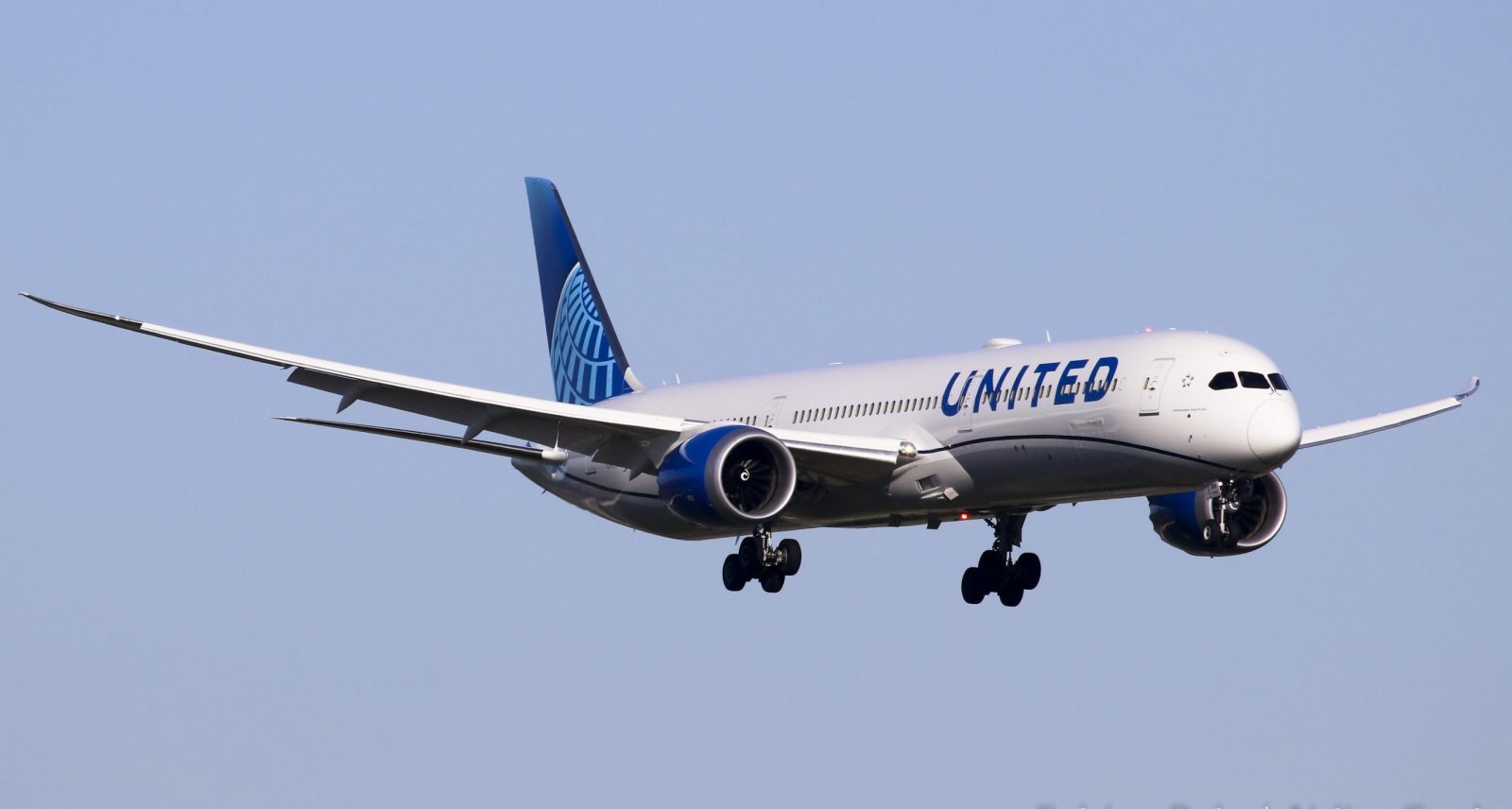
A United 787 Dreamliner descends into Amsterdam. (Photo: AirlineGeeks | Fabian Behr)
United has converted an order for dozens of Boeing 787-9s to larger 787-10s.
The Air Current reported Friday that United exercised options to convert 56 787-9s to -10s. Deliveries of those aircraft are expected to begin in 2028.
The aviation news site linked the order modification to increasingly constrained ground operations, and the carrier’s difficulty getting parts for its older 777s.
United is one of the largest operators of the Dreamliner in the world, and operates all three variants, the 787-8, -9, and -10. The airline expects to receive over 100 more of the type in the coming years.
United has not yet selected an engine for the 787-10s, The Air Current reported. Its options are the Rolls-Royce Trent 1000 and the General Electric GEnx.
Zach Vasile is a writer and editor covering news in all aspects of commercial aviation. He has reported for and contributed to the Manchester Journal Inquirer, the Hartford Business Journal, the Charlotte Observer, and the Washington Examiner, with his area of focus being the intersection of business and government policy.
Livery of the Week: EVA Air
A timeless dark-green design that has defined one of Asia’s most recognizable premium carriers.
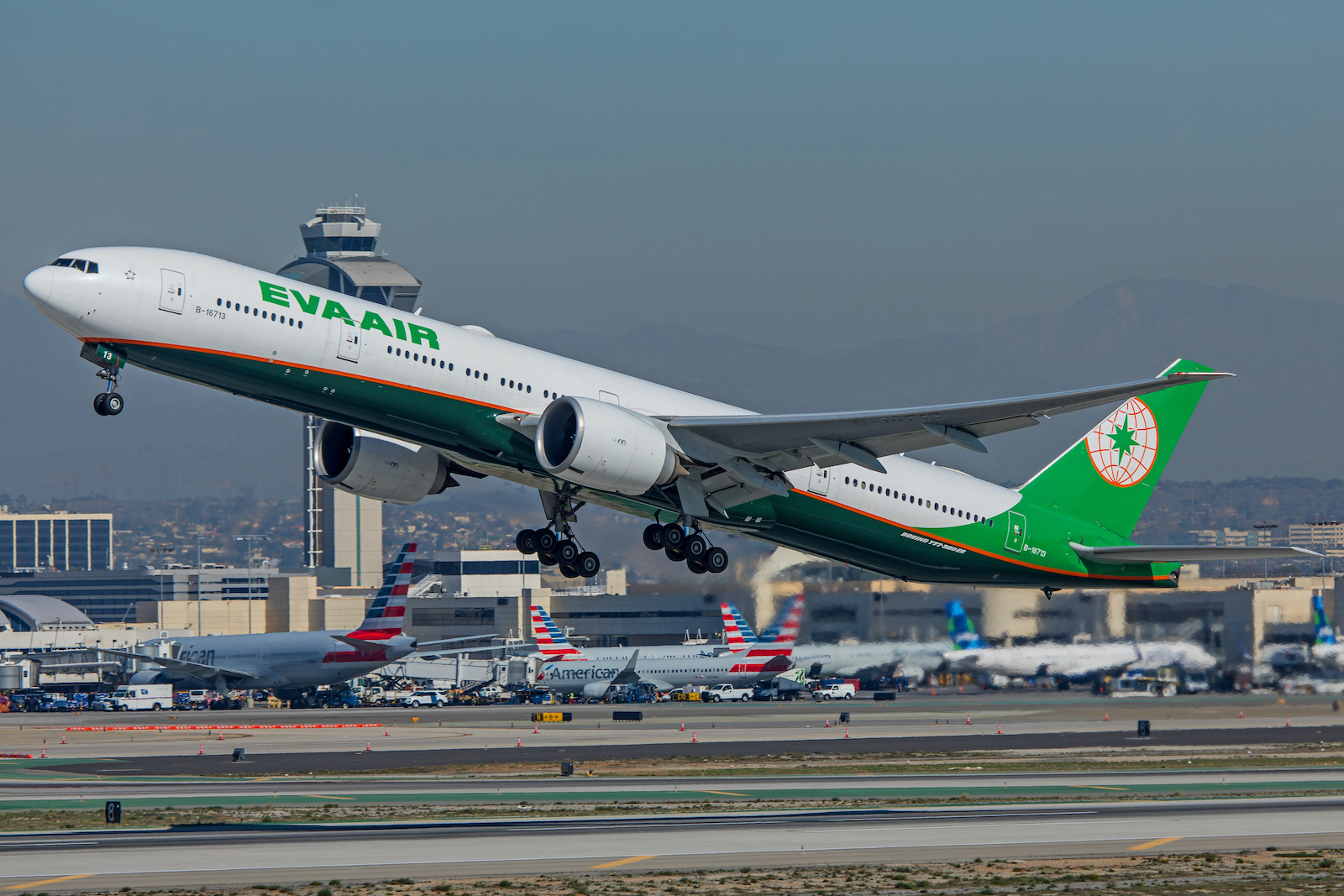
An EVA Air 777-300ER in Los Angeles (Photo: AirlineGeeks | William Derrickson)
Editor’s Note: AirlineGeeks is proud to present our ‘Livery of the Week’ series. Every Friday, a team member will share an airline livery, which can be from the past, present, or even a special scheme. Some airline liveries are works of art. The complexity associated with painting around critical flight components and the added weight requires outside-the-box thinking from designers. The average airliner can cost upwards of $200,000 to repaint, creating a separate aircraft repainting industry as a result.
Have an idea for a livery that we should highlight? Drop us a line.
EVA Air’s standard livery is built around a deep evergreen green that has become synonymous with the Taiwanese carrier since its founding in 1989. The bold color dominates the vertical stabilizer and sweeps forward in a curved band along the rear fuselage, creating a distinctive look that is instantly identifiable on ramps around the world.
At the center of the tail sits EVA Air’s stylized globe logo, rendered in lighter green and gold tones. The emblem represents the airline’s international reach and its affiliation with the Evergreen Group, which also operates one of the world’s largest shipping companies. The circular motif has remained a consistent element of the brand even as the airline has modernized its fleet and cabin products over time.
The fuselage is primarily white, allowing the dark green accent to stand out without overwhelming the aircraft’s overall appearance. “EVA AIR” titles are placed in matching green along the forward fuselage, paired with smaller Chinese characters that reflect the carrier’s Taiwanese roots. Gold trim appears subtly within the tail emblem, adding a premium touch without complicating the design.
An EVA Air Boeing 787-9 Dreamliner (Photo: Shutterstock | eric1207cvb)
Across its widebody fleet — including the Boeing 777, 787 Dreamliner, and Airbus A330 — the livery is applied with minor variations in stripe placement and proportions, but the core visual identity remains consistent. This uniformity has helped EVA Air maintain strong brand recognition as it has expanded throughout Asia, Europe, and North America.
Unlike many carriers that frequently refresh their branding, EVA Air has kept its foundational color palette largely intact for decades. The green scheme aligns with the airline’s positioning as a full-service, premium carrier and complements its reputation for high-quality onboard service.
Looking for a new airplane model? Head over to our friends at the Midwest Model Store for a wide selection of airlines and liveries.
Ryan founded AirlineGeeks.com in February 2013 and has spent more than a decade covering the airline business. His work has been featured by CNN, WJLA, CNET, and Business Insider. His aviation experience spans airport operations, Part 135 regulatory compliance, and airline crew workforce planning, along with time behind the yoke of a Cessna 172 and interviews with airline executives. Ryan now serves as Group President of Firecrown Media’s Aviation Group. He holds a B.S. in Air Transportation Management and an MBA from Arizona State University and teaches Airline Management at Embry-Riddle Aeronautical University.
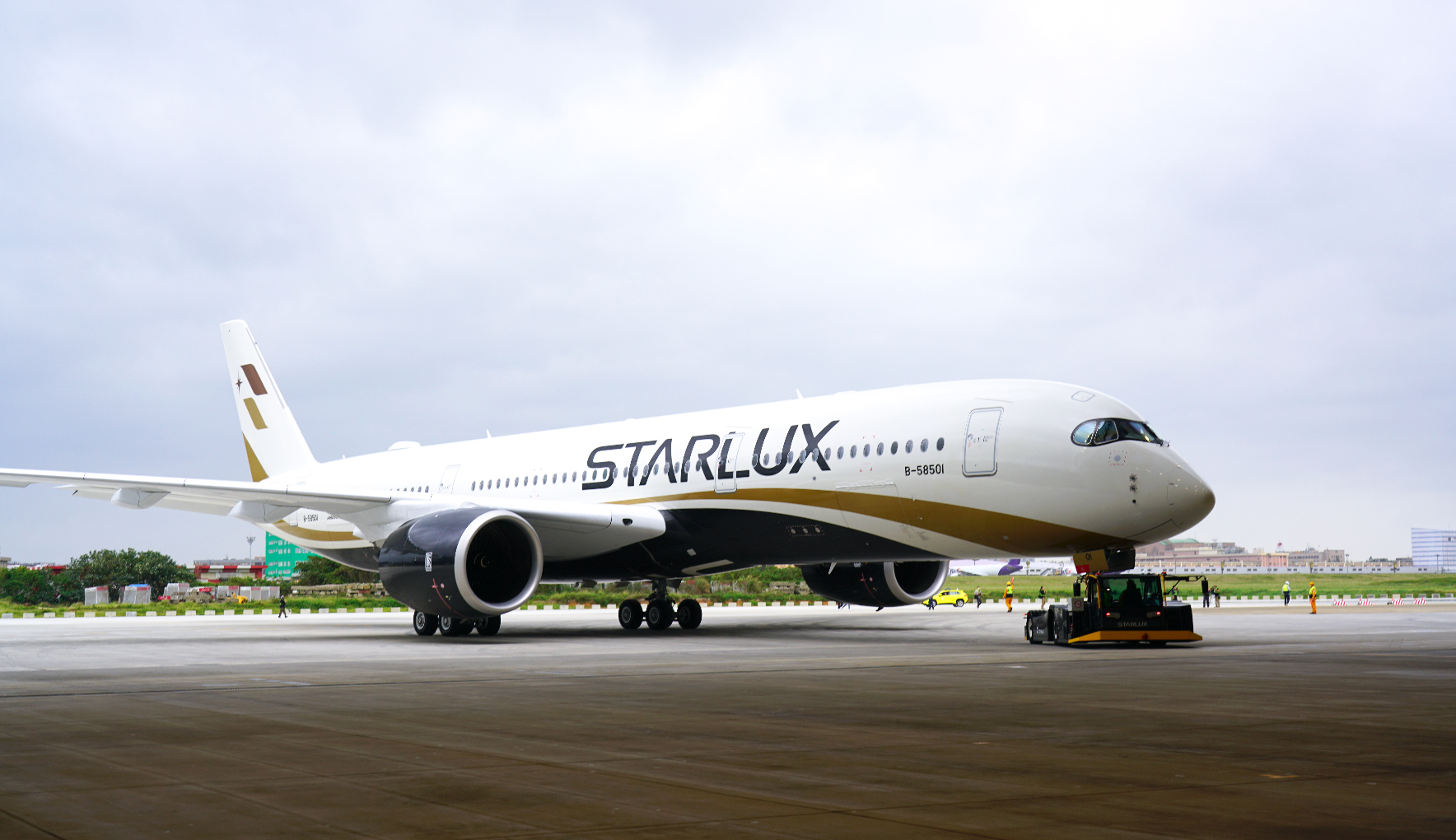
Starlux's first Airbus A350-900 at Taiwan Taoyuan International Airport after its delivery flight. (Photo: Starlux)
Taiwanese carrier Starlux on Thursday operated its first nonstop flight from Taipei to Phoenix, its fifth destination in the U.S.
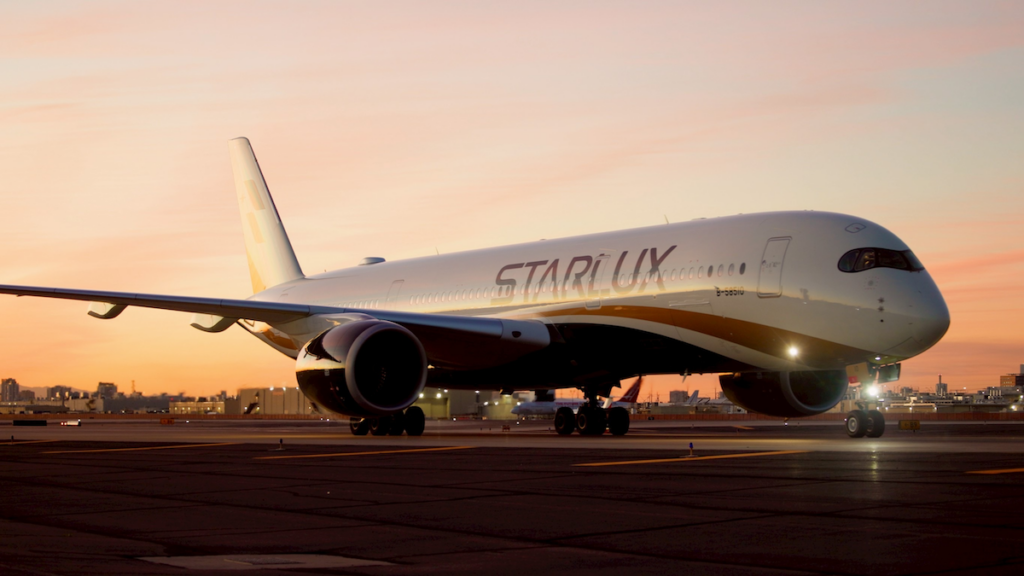
The Airbus A350-900 aircraft flying the route touched down at Phoenix Sky Harbor International Airport around 5:40 p.m. local time and received a water cannon salute.
“Today, Starlux delivers our promise to Phoenix,” Starlux CEO Glenn Chai said in a news release. “We are truly grateful and proud to realize this vision… Today’s launch reflects our confidence in the region and our commitment to strengthening travel and trade links between the U.S. Southwest, Taiwan, and the broader Asia-Pacific region.”
Starlux will operate the Phoenix-Taipei route three times weekly, on Tuesdays, Thursdays, and Sundays.
Starlux’s first flight to Phoenix touches down at the airport. (Photo: Starlux)
The connection was first announced in May 2025. At the time, it was expected to be the first nonstop route between Phoenix and Asia, but China Airlines took that distinction by launching service between Phoenix and Taipei in December.
In the U.S., Starlux also serves Los Angeles, San Francisco, Seattle, and Ontario, California.
Zach Vasile is a writer and editor covering news in all aspects of commercial aviation. He has reported for and contributed to the Manchester Journal Inquirer, the Hartford Business Journal, the Charlotte Observer, and the Washington Examiner, with his area of focus being the intersection of business and government policy.
TSA Expanding PreCheck Touchless ID to 65 Airports
The option is available to current PreCheck travelers with a valid passport.
In a statement, the agency said Touchless ID will be available at 65 U.S. airports this spring. United, Delta, American Airlines, Alaska Airlines, and Southwest are all participating in the program.
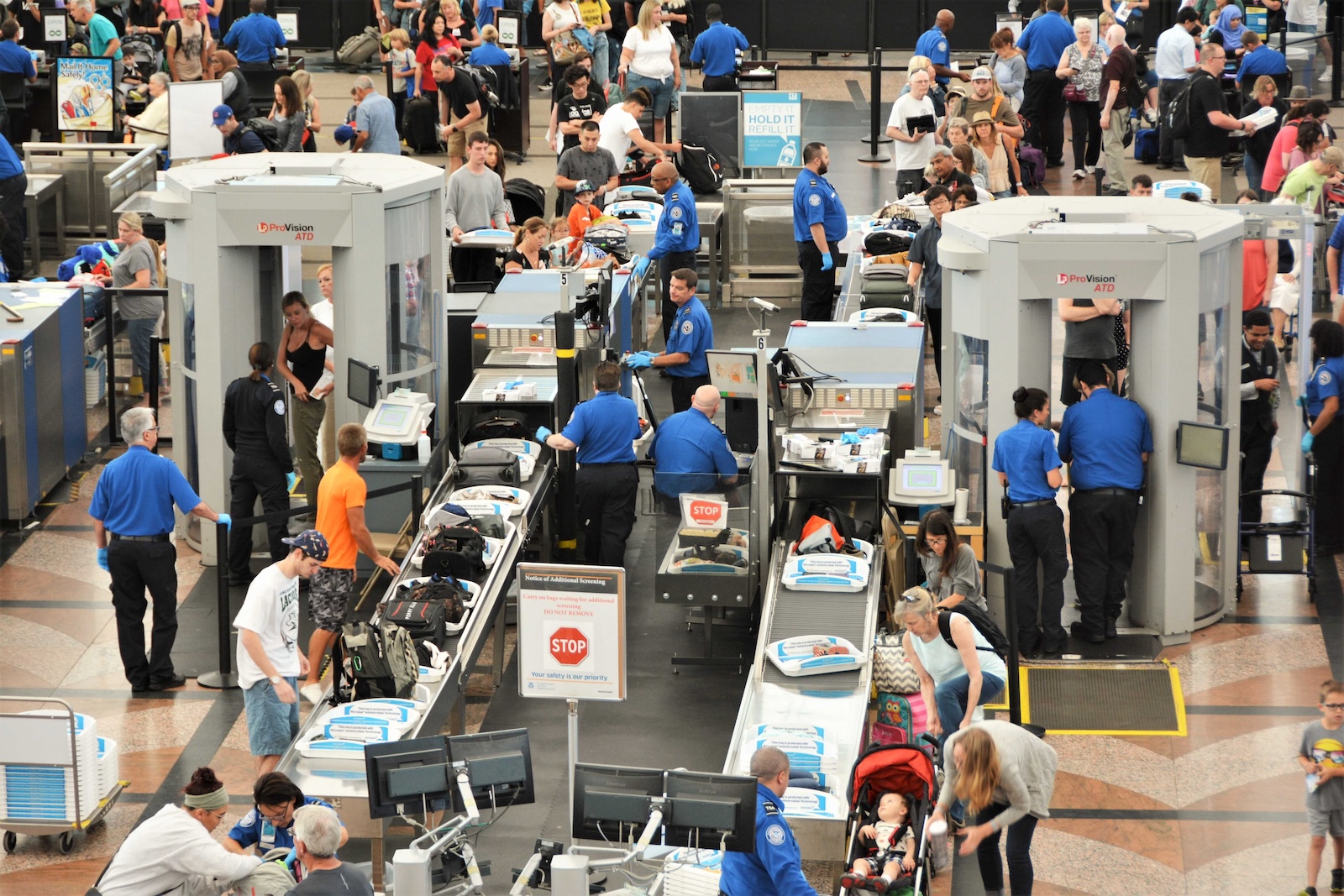
With Touchless ID, passengers clear airport security checkpoints with a facial scan and do not have to present a physical ID or boarding pass. Travelers must have TSA PreCheck, an active profile with a participating airline, and a valid passport to qualify.
According to TSA, collected images are not used for law enforcement or surveillance purposes, and passengers’ photos and personal data are deleted from the system within 24 hours of their scheduled flight departure.
The agency listed currently participating airports for each airline:
Alaska: Atlanta, Washington National, Denver, New York-JFK, Las Vegas, Los Angeles, Chicago O’Hare, Portland, Oregon, Seattle, San Francisco, and Salt Lake City.
American: Atlanta, Charlotte, North Carolina, Washington National, Denver, Dallas/Fort Worth, Newark, New Jersey, Washington Dulles, Houston, New York-JFK, Las Vegas, Los Angeles, New York-LaGuardia, Minneapolis/Saint Paul, Chicago O’Hare, Palm Beach, Florida, Portland, Oregon, Philadelphia, San Francisco, Seattle, and Salt Lake City.
Delta: Atlanta, Washington National, Denver, Detroit, Newark, New Jersey, New York-JFK, Las Vegas, Los Angeles, New York-LaGuardia, Chicago O’Hare, Portland, Oregon, Seattle, San Francisco, and Salt Lake City.
Southwest: Atlanta, Denver, Los Angeles, New York-LaGuardia, Chicago O’Hare, Portland, Oregon, Seattle, San Francisco, and Salt Lake City.
United: Atlanta, Washington National, Denver, Newark, New Jersey, Las Vegas, Los Angeles, New York-LaGuardia, Chicago O’Hare, Portland, Oregon, Seattle, San Francisco, and Salt Lake City.
Zach Vasile is a writer and editor covering news in all aspects of commercial aviation. He has reported for and contributed to the Manchester Journal Inquirer, the Hartford Business Journal, the Charlotte Observer, and the Washington Examiner, with his area of focus being the intersection of business and government policy.
FAA Orders Fix After Pratt Engine Fires
The airworthiness directive applies to around 586 PW1100Gs on U.S.-registered aircraft.
GTF engine on a Delta A321neo. (Photo: AirlineGeeks | Ryan Ewing)
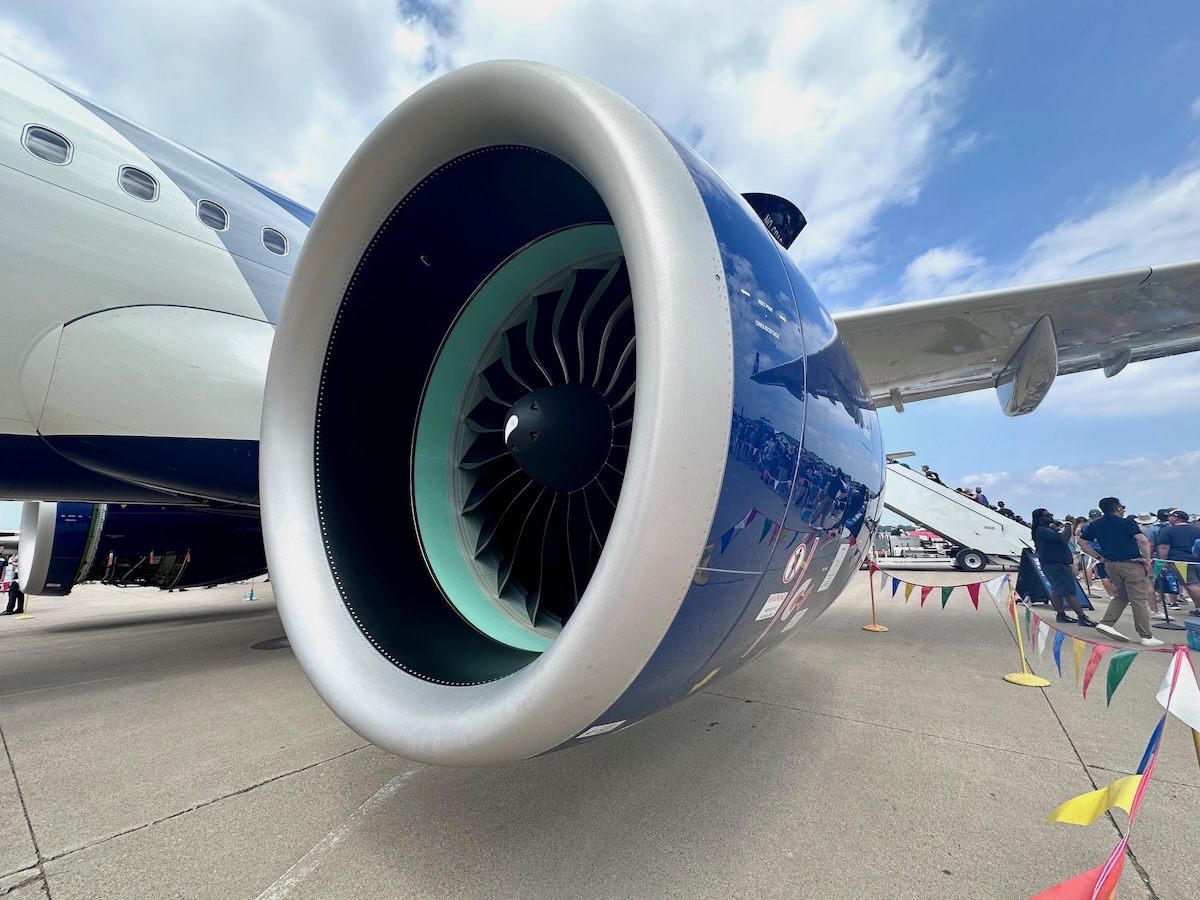
The FAA this week ordered modifications to Pratt & Whitney’s PW1100G geared turbofan engine after receiving reports of fan blade breaks and fires.
An airworthiness directive issued on Monday requires airlines to replace thermal management system mounts within an estimated 586 engines.
“This AD was prompted by multiple reports of fan blade fracture events, three of which resulted in an engine under cowl fire or pool fire,” the agency wrote. “The FAA is issuing this AD to prevent a fuel leak resulting from a fan blade fracture. The unsafe condition, if not addressed, could result in an uncontrolled engine fire and damage to the airplane.”
The order is effective as of Feb. 17, and operators will have 30 days from that date to complete the modifications.
The PW1100G is used to power Airbus A320neo-family aircraft.
The FAA noted that Pratt has already made maintenance recommendations to customers to address the issue.
Specifically, the directive “requires removal of one loop cushion clamp from the hydraulic fuel pressure fuel oil cooler fuel tube assembly (CP09 tube assembly), replacement of the thermal management system (TMS) clevis mounts with redesigned TMS clevis mounts, and reinstallation of the loop cushion clamp.”
The FAA estimates the modifications will take 125 work-hours to complete.
Zach Vasile is a writer and editor covering news in all aspects of commercial aviation. He has reported for and contributed to the Manchester Journal Inquirer, the Hartford Business Journal, the Charlotte Observer, and the Washington Examiner, with his area of focus being the intersection of business and government policy.
United Adds 14 Routes for 2026
New daily year-round markets and seasonal summer service announced from multiple hubs.
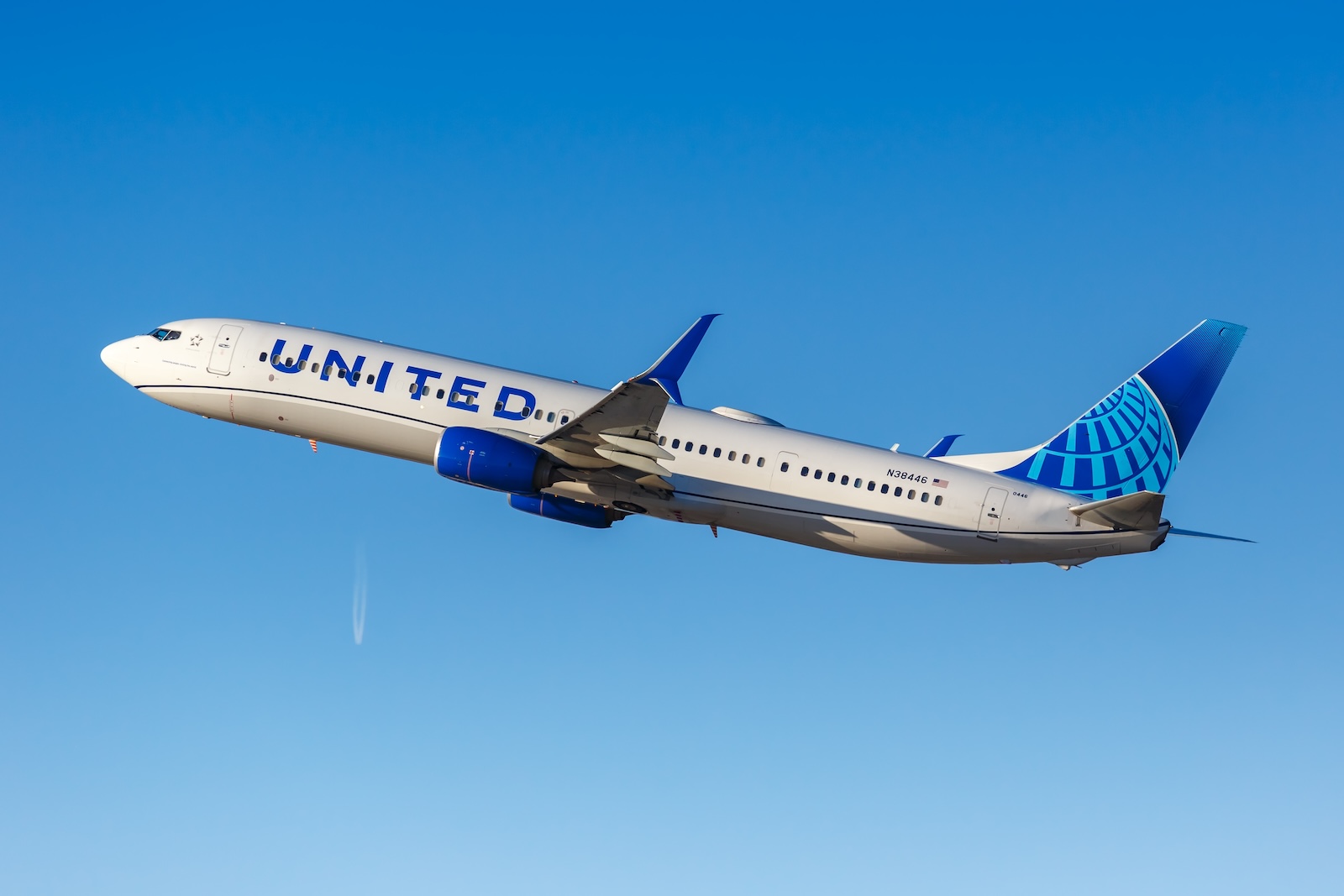
A United Boeing 737-800. (Photo: Shutterstock | Markus Mainka)
United is planning a series of new domestic routes beginning in spring and summer 2026, adding both daily, year-round service and a slate of seasonal summer flights across its U.S. network.
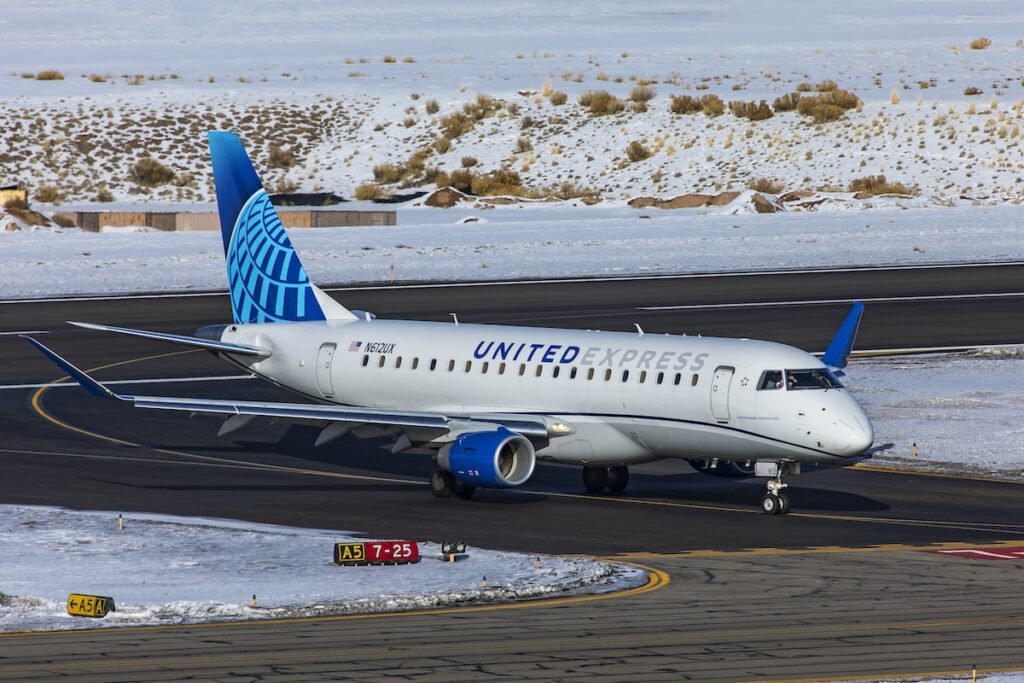
According to a statement shared by a United spokesperson, the carrier will introduce several new daily routes using Boeing 737-800 and Embraer E175 aircraft.
Among the daily, year-round additions, United will begin once-daily service between Denver and Albany, New York, on April 30, 2026, operated by a Boeing 737-800. On May 21, 2026, the airline will launch daily 737-800 service between Houston and Hartford, Connecticut.
From the West Coast, United plans to add multiple new nonstop routes from Los Angeles, including daily service to Columbus, Ohio, and Pittsburgh, Pennsylvania, starting March 29, 2026, both operated by a 737-800.
A United Embraer E175 operated by SkyWest (Photo: AirlineGeeks | William Derrickson)
A new daily Los Angeles–Kansas City, Missouri, route will follow on April 6, using an E175.
Seasonal Routes
In addition to the year-round routes, United is also scheduling a number of Saturday-only seasonal services for the summer 2026 travel period. From Denver, the airline will add seasonal service to Bangor, Maine, between June 27 and Sept. 5, using a 737-800, as well as flights to Chattanooga, Tennessee, operating from May 23 through Aug. 8, with an E175.
From Washington Dulles, United will introduce summer seasonal service to Halifax, Nova Scotia, operating from May 23 through Sept. 19, and to Quebec City, Quebec, running from May 23 through Oct. 24. Both routes will operate once weekly on Saturdays using E175 aircraft.
Houston will also see new seasonal routes, with Saturday-only service to Spokane, Washington, and Burlington, Vermont, operating between May 23 and Aug. 8, both flown by E175 aircraft.
Additional summer service includes a new Saturday-only route between Los Angeles and Portland, Maine, from June 27 through Sept. 19, operated by a 737-800, as well as seasonal flights between San Francisco and Portland, Maine, running Saturdays from June 27 through Sept. 19, also using a 737-800.
United will also add seasonal service between Chicago and Cody, Wyoming, operating from May 22 through Sept. 19. Flights will operate on Fridays from Chicago to Cody and Saturdays from Cody to Chicago, using an E175.
Ryan founded AirlineGeeks.com in February 2013 and has spent more than a decade covering the airline business. His work has been featured by CNN, WJLA, CNET, and Business Insider. His aviation experience spans airport operations, Part 135 regulatory compliance, and airline crew workforce planning, along with time behind the yoke of a Cessna 172 and interviews with airline executives. Ryan now serves as Group President of Firecrown Media’s Aviation Group. He holds a B.S. in Air Transportation Management and an MBA from Arizona State University and teaches Airline Management at Embry-Riddle Aeronautical University.
Commercial airlines could be in line to benefit from the recent boom in weight loss drugs.
Analysts at Jefferies said this week that widespread adoption of GLP-1 drugs in pill form could meaningfully reduce the weight of the average U.S. passenger flight. With a lighter load, carriers would not have to use as much jet fuel to power their aircraft, they said, resulting in savings.
“A slimmer society = lower fuel consumption,” the firm wrote in a note to clients. “Airlines have a history of being vigilant around aircraft weight savings, from olives (pitless, of course) to paper stock.”
Jefferies estimates that a 10% reduction in average passenger weight could lower fuel costs by as much as 1.5%. Those savings could boost earnings per share by around 4%.
Across the major U.S. airlines, fuel accounts for about 20% of operational expenses.
While any future savings is purely speculative, Jefferies said a 2% decline in average passenger weight could translate to EPS gains of about 3.5% for United, 2.8% for Delta, 11.7% for American, and 4.2% for Southwest. Those calculations were based on the carriers’ current operations and exposure to changes in fuel costs.
Danish pharmaceutical company Novo Nordisk recently won approval for a pill version of GLP-1 drug semaglutide, and some patients are already getting access to it. A similar product from Eli Lilly is in the works and could be available within months.
Zach Vasile is a writer and editor covering news in all aspects of commercial aviation. He has reported for and contributed to the Manchester Journal Inquirer, the Hartford Business Journal, the Charlotte Observer, and the Washington Examiner, with his area of focus being the intersection of business and government policy.
Grounded: Vanguard Airlines
The short-lived carrier offered some of the lowest fares of the 1990s but folded in 2002 amid a severe cash shortage and a post-9/11 drop in air travel.
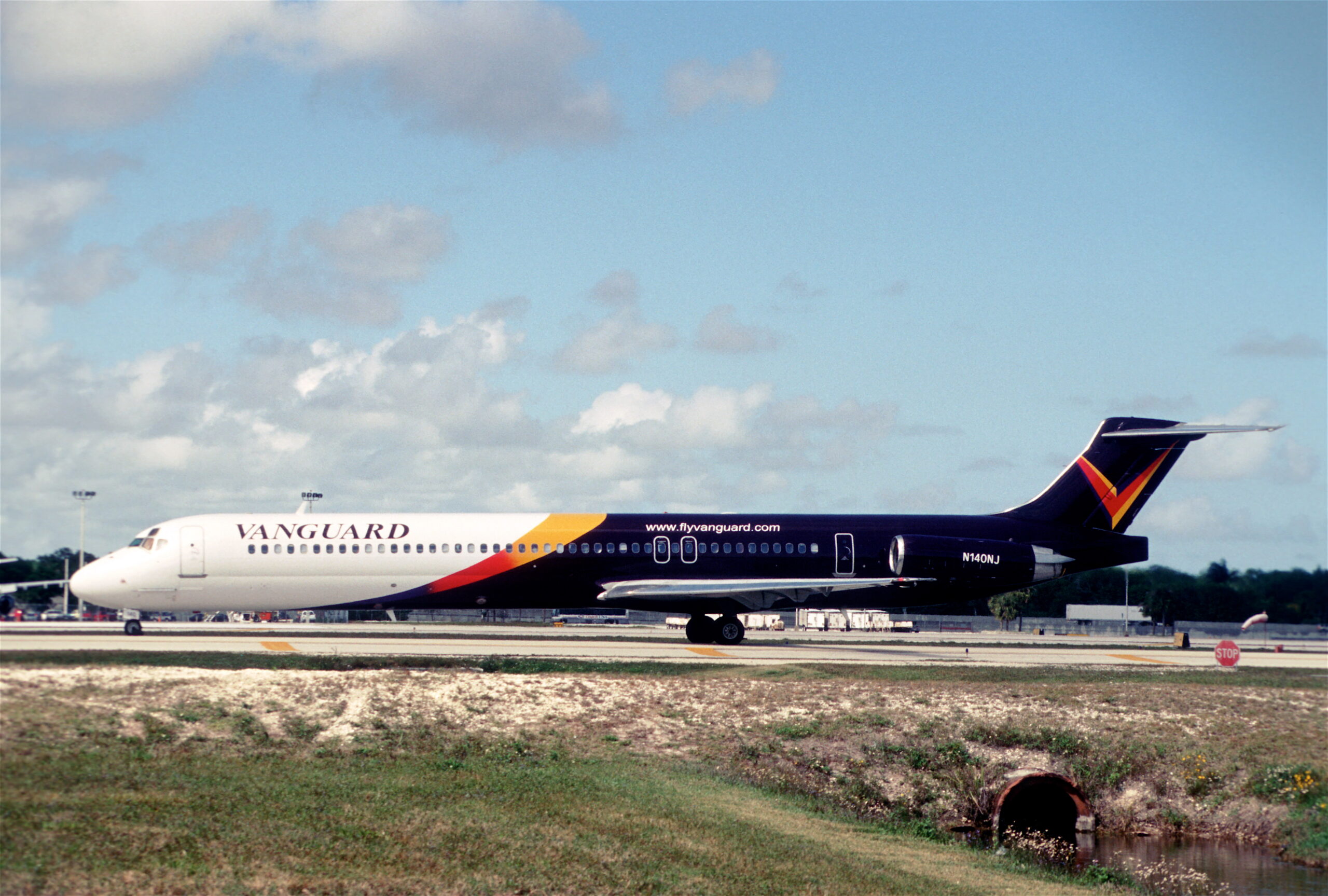
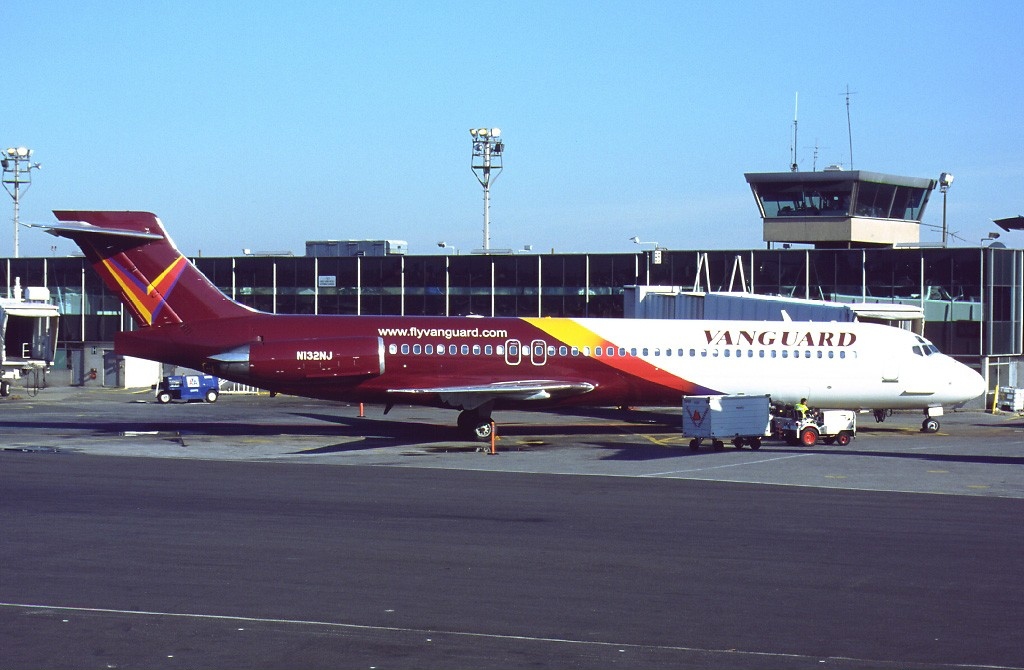
A Vanguard Airlines MD-82. (Photo: Aero Icarus from Zürich, Switzerland, CC BY-SA 2.0 [https://creativecommons.org/licenses/by-sa/2.0], via Wikimedia Commons)
Grounded is AirlineGeeks.com’s look back at airlines that once shaped the industry but no longer take to the skies. Each story revisits a carrier that influenced routes, fleets, or fares—and explores what ultimately led to its final descent.
Vanguard Airlines’ main claim to fame was its ultra-low prices. It offered regular fares as low as $29, and sales sometimes drove that figure down as low as $10. While difficult to confirm, these may have been the lowest ticket prices listed by any U.S. airline during the 1990s.
By the time Vanguard came onto the scene, however, the major airlines had learned how to undercut their low-cost challengers with targeted fare reductions, and the carrier struggled to turn a profit. It took on significant debt, and while an attempted reinvention in 2000 produced some green shoots, the airline was not prepared for the steep drop in air travel after the 9/11 terrorist attacks.
A series of missteps during those critical months sealed Vanguard’s fate, and by 2002 it had ceased operations.
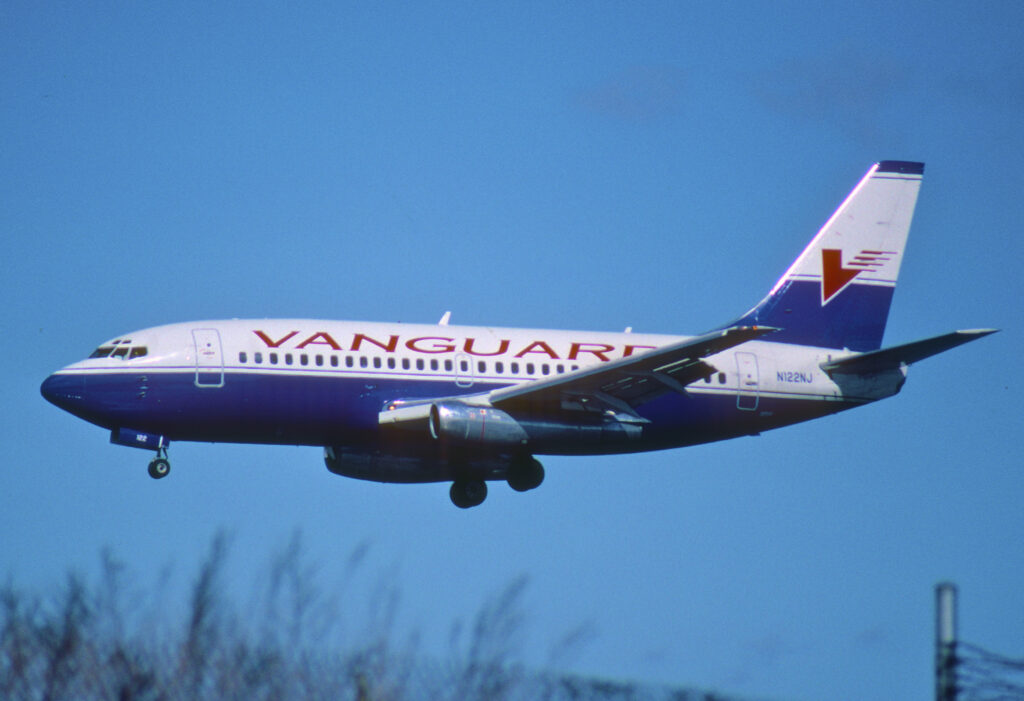
From the start, the airline’s goal was to attract customers with unbeatably low prices, and to that end all costs were tightly controlled. Vanguard leased used Boeing 727s, 737s, and McDonnell Douglas MD-80s during its run, and they were configured into a single class with few amenities.
The carrier’s operation was not quite as threadbare as some of its low-priced contemporaries, however. Aircraft were well-maintained, seats were relatively large and comfortable, and there was no charge for baggage. This made the airline’s offering plenty attractive to customers looking for the most economical ticket available, especially college students and families on vacation.
Vanguard’s earliest routes connected its Kansas City hub with destinations such as Dallas/Fort Worth, Chicago Midway, Denver, Milwaukee, Salt Lake City, and Wichita, Kansas. The airline typically entered new markets with a splash, aggressively advertising its low fares and setting off pricing wars with larger, more established competitors.
These battles were not always decided in Vanguard’s favor. In Wichita, for instance, American Airlines responded by matching Vanguard’s prices and adding flights, and in a matter of months the upstart carrier was forced to withdraw.
Still, Vanguard won points with the flying public for tending to drive down prices wherever they set up shop.
By the late 1990s, Vanguard had expanded its network to include Los Angeles, Atlanta, San Francisco, New York-JFK, Washington Dulles, Pittsburgh, and Las Vegas, among other large- and medium-sized cities. Chicago Midway became an unofficial secondary hub, with short-haul connections to Midwest and Northeast markets like Buffalo, Cincinnati, and Minneapolis/St. Paul.
Attempted Reinvention
Despite its significant network growth, Vanguard was rarely profitable on a quarterly basis, and by 1999 and 2000 executives were working to reinvent the brand.
A frequent flyer program was introduced, aircraft liveries were refreshed, and on-time performance improved. These changes required capital investments, and to cover them, ticket prices increased. Vanguard’s fares were still lower than the major airlines, but the days of $29 tickets were over for all but full-coach passengers.
The new business model worked, at least for a time. Vanguard recorded its best financial performance ever in the summer of 2001 and seemed poised for a highly profitable 2002. Plans were laid for another “opening spree,” which would have seen the carrier expand and strengthen operations in the Northeast and South.
The terrorist attacks of Sept. 11, 2001, sapped Vanguard’s momentum and began its downward spiral. While the airline weathered the immediate aftermath as well as any U.S. operator, the sharp drop in domestic air travel between late 2001 and early 2002 erased the limited progress produced by the reinvention strategy and forced the carrier to take on debt. To keep operations stable, workers were laid off and some routes were canceled.
A combination of other factors made a full recovery increasingly unlikely. Difficulties adopting the SABRE reservation system cost the airline millions of dollars, and by 2002, Vanguard’s debt had ballooned to $80 million. As the situation worsened, credit card processors demanded greater and greater assurances that they would be protected if the airline went out of business. The surety rate reportedly imposed by these companies only pushed Vanguard further into the red.
Executives grasped for a lifeline in the form of a federal loan guarantee that would have allowed Vanguard to raise fresh capital. This plan was rejected twice by the federal government, however, leaving the airline to face a growing liquidity crisis on its own.
Vanguard reached a final breaking point in July 2002, when it filed for bankruptcy and ceased operations. According to media reports at the time, the airline made arrangements for Frontier and National Airlines to accommodate Vanguard passengers who otherwise would have been left stranded.
Despite its collapse, Vanguard played an important role in the evolution of U.S. low-cost airlines, and some elements of its strategy and business model can be seen today in carriers such as Allegiant and Spirit.
Zach Vasile is a writer and editor covering news in all aspects of commercial aviation. He has reported for and contributed to the Manchester Journal Inquirer, the Hartford Business Journal, the Charlotte Observer, and the Washington Examiner, with his area of focus being the intersection of business and government policy.
Sign-up for newsletters & special offers!
Get the latest stories & special offers delivered directly to your inbox