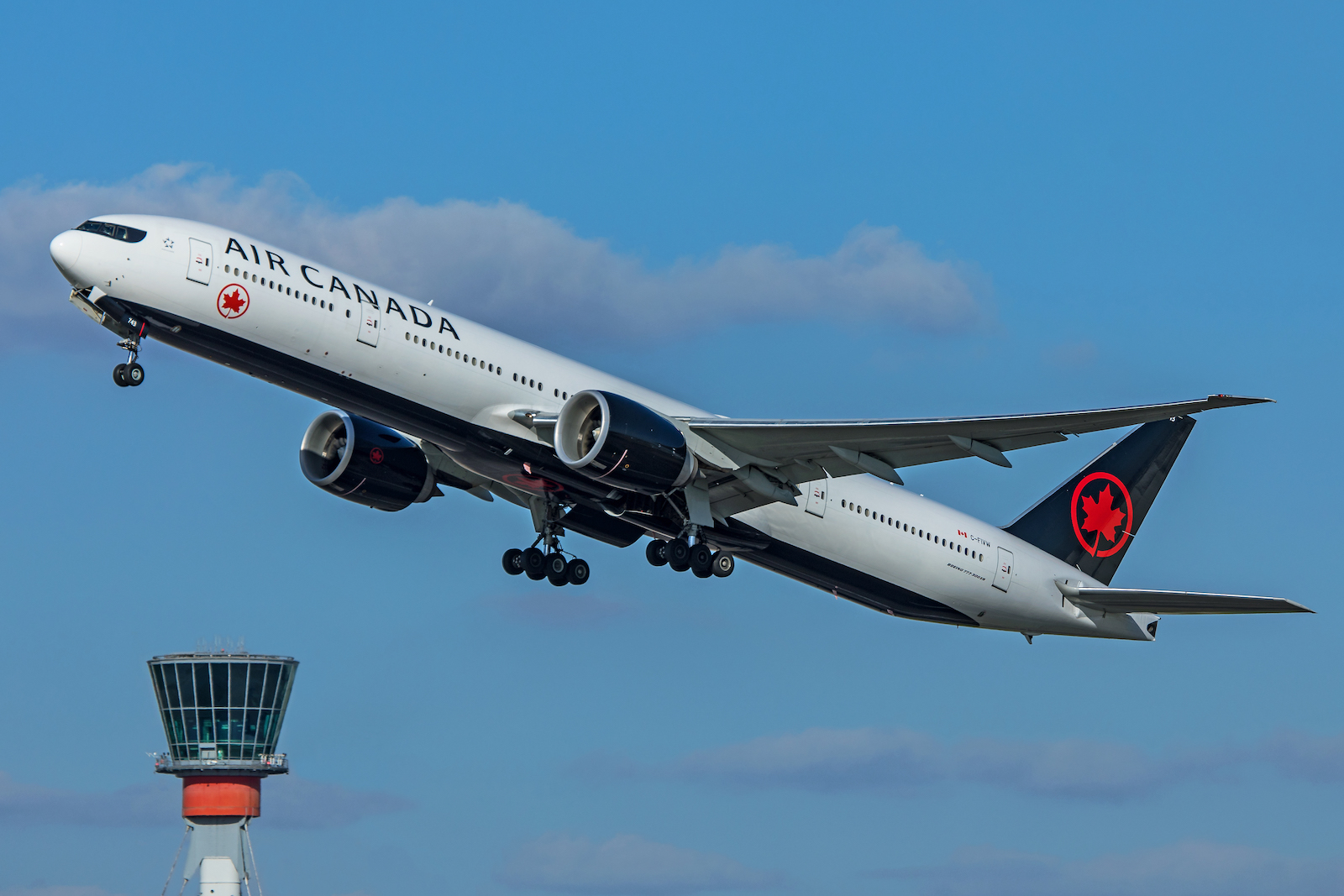
An Air Canada Boeing 777-300ER departing London Heathrow (Photo: AirlineGeeks | William Derrickson)
Air Canada pilots voted in favor of a new collective bargaining agreement Thursday that includes several pay increases and quality-of-life improvements. Described as the airline’s largest-ever labor contract, the deal moves pilot compensation more in line with that of their U.S. peers.
The agreement, which was reached between Air Canada and the Air Line Pilots Association, International (ALPA), representing over 5,200 pilots, was ratified by 99% of the workforce. According to the union, 67% of Air Canada’s pilots voted in favor of the agreement.
Pilots are set to receive an average 26% retroactive pay increase to September 2023, followed by additional 4% raises each year through 2026. This adjustment aims to bring their compensation closer in line with what their counterparts earn at U.S. airlines, addressing long-standing concerns over wage disparity.
“This contract is the largest labour agreement in Air Canada’s history and reflects contributions that our pilots bring to the success of our airline. This agreement helps restore what Air Canada pilots have lost over the past two decades and creates a strong foundation from which to build on,” said First Officer Charlene Hudy, chair of the Air Canada ALPA Master Executive Council, in a news release. “We look forward to working under these improved pay rates and working conditions while continuing to connect our passengers to Canada, North America, and the world.”
According to The Globe and Mail, the contract is valued at approximately $1.9 billion.
“We are very pleased this new collective agreement has been approved by our pilot group. The agreement is mutually beneficial and it will keep our pilots the best compensated in Canada and provide the work-life balance improvements they were seeking. At the same time, the agreement gives our company flexibility and creates a framework for future growth of the airline and its network. We look forward to working with our pilots under this renewed partnership,” said Michael Rousseau, president and chief executive of Air Canada, in a news release from the airline.
In September, the airline and its pilots averted a potential strike, reaching the last-minute deal just hours before scaling down the carrier’s operations.
Ryan founded AirlineGeeks.com in February 2013 and has spent more than a decade covering the airline business. His work has been featured by CNN, WJLA, CNET, and Business Insider. His aviation experience spans airport operations, Part 135 regulatory compliance, and airline crew workforce planning, along with time behind the yoke of a Cessna 172 and interviews with airline executives. Ryan now serves as Group President of Firecrown Media’s Aviation Group. He holds a B.S. in Air Transportation Management and an MBA from Arizona State University and teaches Airline Management at Embry-Riddle Aeronautical University.
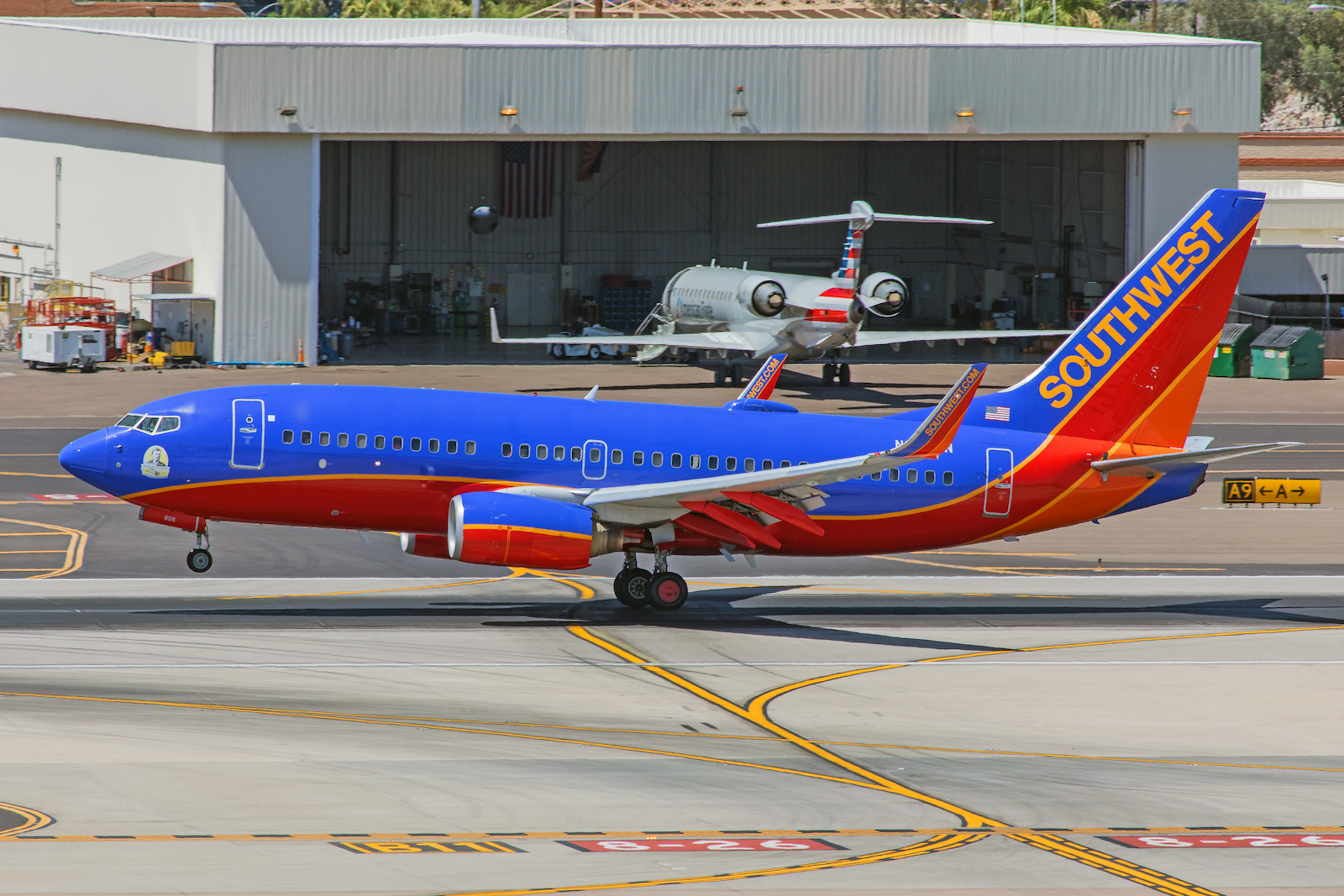
A Southwest 737-700 in the 'Canyon Blue' livery. (Photo: AirlineGeeks | William Derrickson)
Southwest has gradually retired some of its aging Boeing 737-700s in recent years with plans to remove up to 31 in 2024. The airline updated its livery a decade ago, though just a handful of 737-700s maintained the original “Canyon Blue” colors.
This week, the last aircraft to wear the legacy livery — registered as N786SW — was retired, marking the paint scheme’s demise. The Canyon Blue colors were unveiled in 2001.
In September 2014, the Dallas-based airline moved away from the Canyon Blue livery on its fleet. The carrier unveiled a new livery, which was rolled out on a 737-800 named “Heart One.”
Southwest unveiled its current livery in 2014. (Photo: Stephen M. Keller | Southwest Airlines)
Several of its 737-700s were never painted in the new colors as they were set to be retired.
One Canyon Blue jet remains, but it is a retro livery. Although no 737 MAX 8s were ever originally painted in the colors, Southwest recently repainted one with a retro paint scheme, which is registered as N872CB.
N786SW was ferried to a Birmingham, Alabama, storage facility on Thursday morning.
Ryan founded AirlineGeeks.com in February 2013 and has spent more than a decade covering the airline business. His work has been featured by CNN, WJLA, CNET, and Business Insider. His aviation experience spans airport operations, Part 135 regulatory compliance, and airline crew workforce planning, along with time behind the yoke of a Cessna 172 and interviews with airline executives. Ryan now serves as Group President of Firecrown Media’s Aviation Group. He holds a B.S. in Air Transportation Management and an MBA from Arizona State University and teaches Airline Management at Embry-Riddle Aeronautical University.
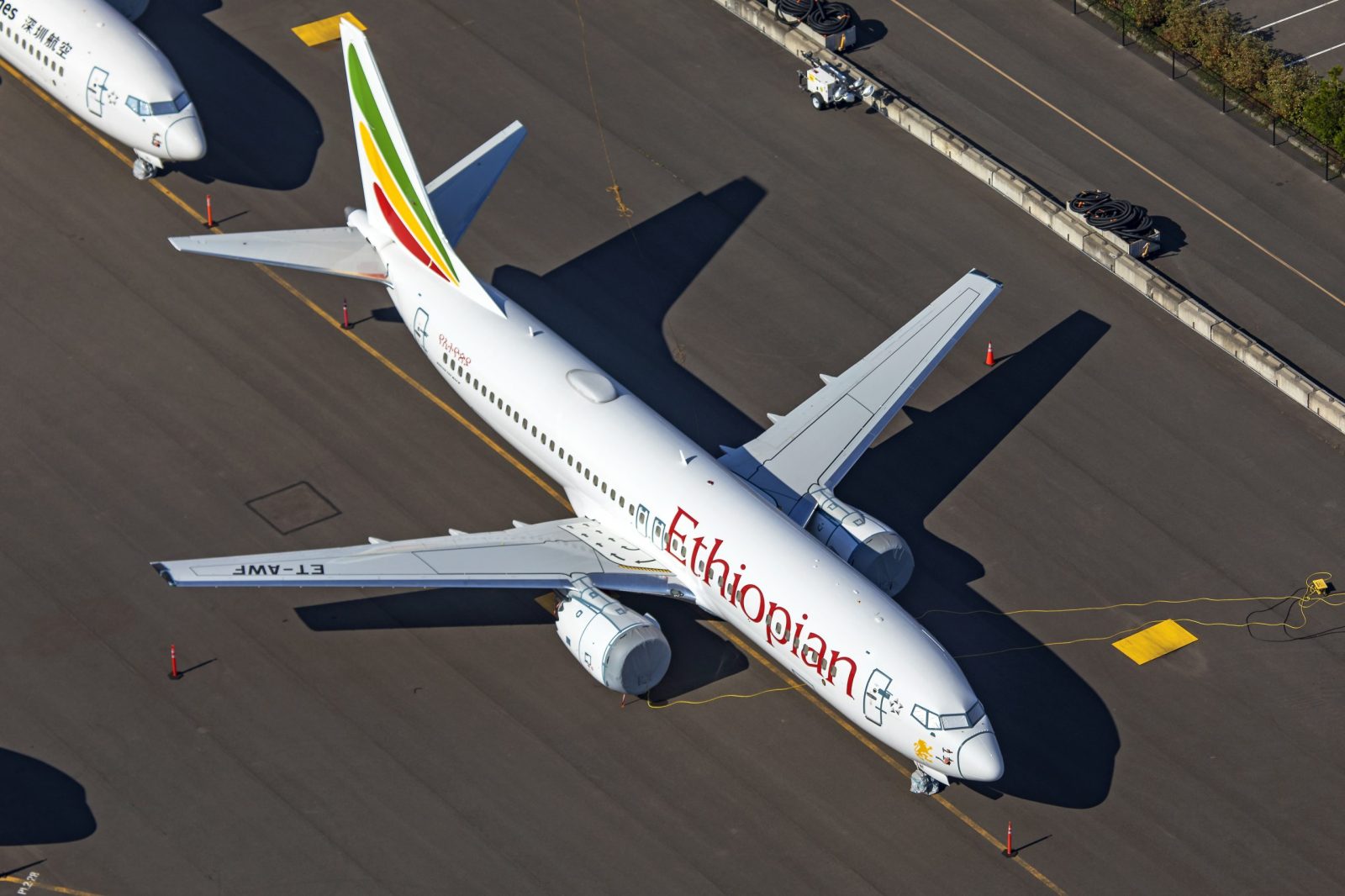
An Ethiopian Airlines 737 MAX 8. (Photo: AirlineGeeks | William Derrickson)
Boeing is facing new scrutiny over its handling of the 737 MAX MCAS (Maneuvering Characteristics Augmentation System) situation. The New York Times (NYT) reported today (Oct. 9) it has uncovered emails supporting claims that Ethiopian Airlines’ chief pilot reached out to the manufacturer in late 2018 with an “urgent” request for information a month after the MCAS-related crash of a Lion Air 373 MAX in Indonesia, but Boeing declined to respond. Three months after the chief pilot’s request, an Ethiopian Airlines 737 MAX crashed shortly after takeoff killing all 157 on board. The main cause of the accident was determined to be a failure of the MCAS related to a faulty angle-of-attack sensor.
The Allied Pilots Association (APA) supports the airline in its claim, citing that after the Lion Air crash, Boeing had proactively reached out to U.S. airlines and pilots to explain technical MCAS safety issues, such as how the system interacts with angle-of-attack data. Boeing 737 MAX pilot Dennis Tajer, APA’s spokesman, said, “Who knows what [Ethiopian Airlines] would have done with the information, but not having it seals the deal. Any information given the Ethiopian pilots, like we had, could have made the difference between life and death.”
The December 2022 Ethiopian aviation authority’s accident report read, in part, “The investigation found the questions raised by the airline to be safety critical, and if Boeing had answered the questions raised by the training department either directly or indirectly [the accident might not have happened].”
Boeing’s claim that it was prohibited from discussing details of the MCAS technology with Ethiopian Airlines was based on Annex 13 established by the International Civil Aviation Organization (ICAO) to address crash investigations. One of the elements of Annex 13 is that it is meant to provide safety information but is also designed to avoid establishing blame in accidents. Boeing claimed that the National Transportation Safety Board (NTSB) supported its decision not to share information with Indonesian Airlines based on the Annex 13 provision. But former NTSB Chair Jim Hall said of Annex 13, “I am not aware of any incidents where that article has been used to prevent the transfer of critical safety information.”
Editor’s Note: This story first appeared on AvWeb.
AirlineGeeks.com was founded in February 2013 as a one-person blog in Washington D.C. Since then, we’ve grown to have 25+ active team members scattered across the globe. We are all here for the same reason: we love deep-diving into the fascinating realm of the airline industry.
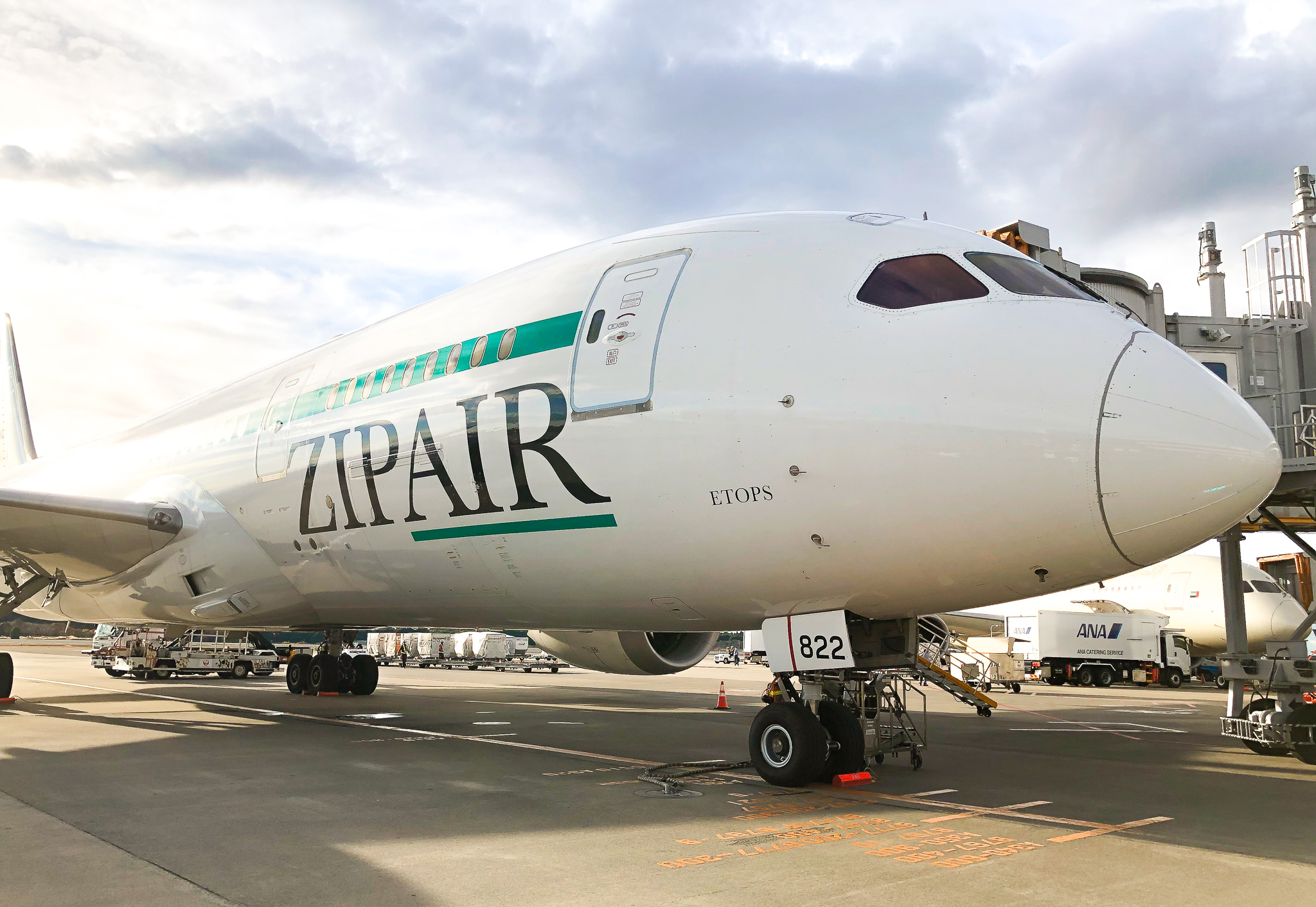
On Thursday, Japan’s Zipair announced plans to expand its long-haul network with a new route between Tokyo Narita and Houston’s George Bush Intercontinental Airport. The new service is set to begin on March 4, 2025.
Flights will operate twice per week, leaving Tokyo on Tuesdays and Thursdays. Return flights will depart Houston on Saturdays and Sundays.
Zipair will compete directly with United in the market, which also serves Tokyo Narita. All Nippon Airways flies between Houston and Tokyo Haneda.
The Houston service will mark the airline’s fifth route across the Pacific, following Los Angeles, San Francisco, San Jose, California, and Vancouver, British Columbia. Zipair is a wholly owned subsidiary of Japan Airlines.
Ryan founded AirlineGeeks.com in February 2013 and has spent more than a decade covering the airline business. His work has been featured by CNN, WJLA, CNET, and Business Insider. His aviation experience spans airport operations, Part 135 regulatory compliance, and airline crew workforce planning, along with time behind the yoke of a Cessna 172 and interviews with airline executives. Ryan now serves as Group President of Firecrown Media’s Aviation Group. He holds a B.S. in Air Transportation Management and an MBA from Arizona State University and teaches Airline Management at Embry-Riddle Aeronautical University.
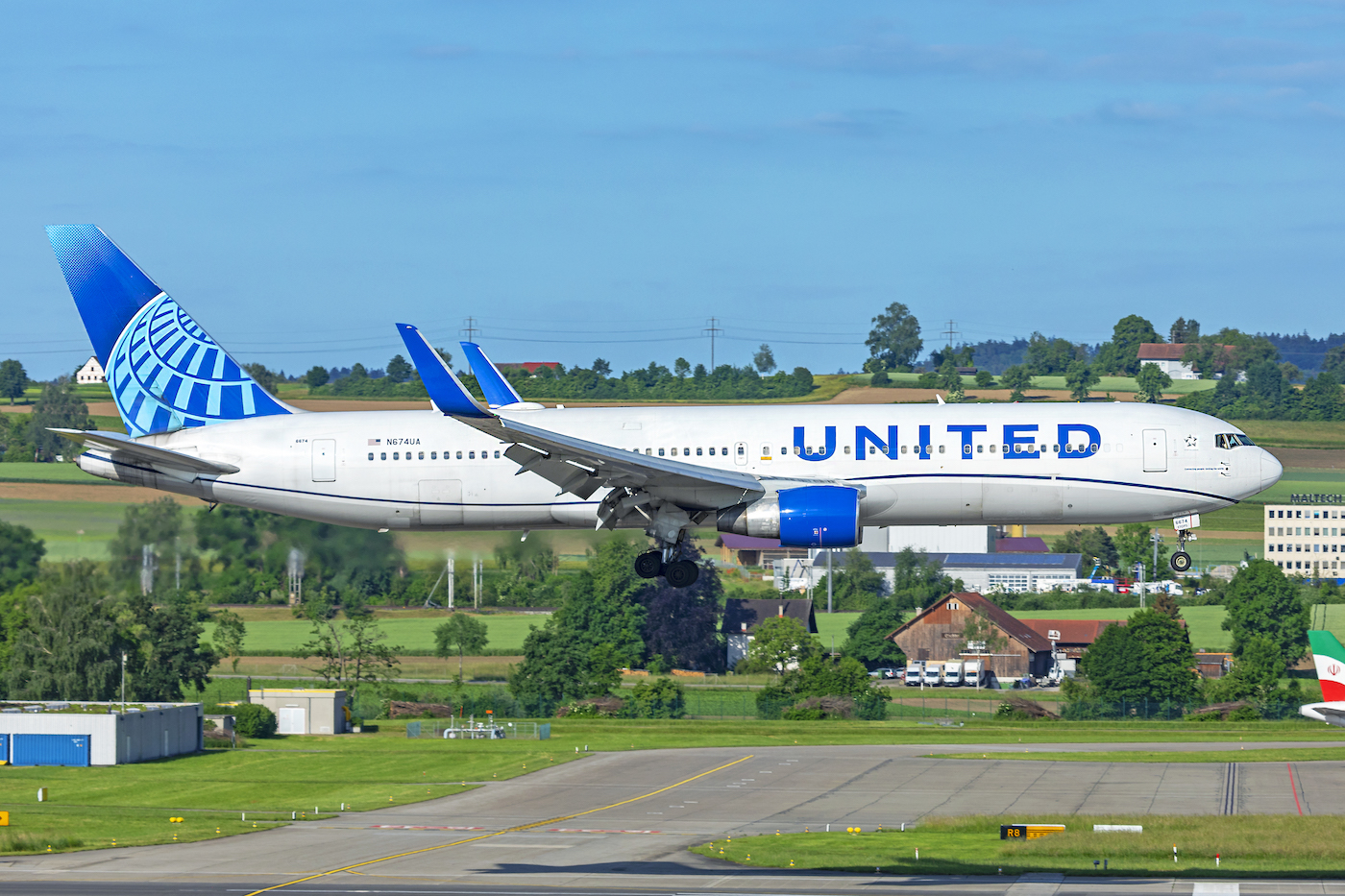
A United 767-300. (Photo: AirlineGeeks | William Derrickson)
United is bolstering its international network next year with new routes to destinations across Europe, Asia, and Africa. The new routes are part of the airline’s “largest network expansion in its history.”
With the network adds, the Chicago-based carrier will fly to 40 international destinations that no other major U.S. airline serves.
Asia
The airline is doubling down in Asia with new flights from Tokyo Narita. Starting on July 11, 2025, the carrier will serve Kaohsiung, Taiwan, from Tokyo year-round.
Launching on May 1, United will connect Tokyo Narita with Ulaanbaatar, Mongolia, becoming the only U.S. carrier to serve the country. Service will operate on a seasonal basis.
In addition, the airline plans to add year-round service between Tokyo Narita and Koror, Palau.
Africa
With a new route between its Washington Dulles hub and Dakar, Senegal, the airline is expanding its presence in the African market.
Flights are slated to begin on May 23, operating three times per week year-round. United also serves Cape Town and Johannesburg, South Africa; Accra, Ghana; and Lagos, Nigeria; and it has seasonal service to Marrakech, Morocco.
Central America
Starting on April 5, United will serve Puerto Escondido, Mexico. The new service will be operated from the carrier’s Houston hub once per week with a year-round Mesa Airlines Embraer E175.
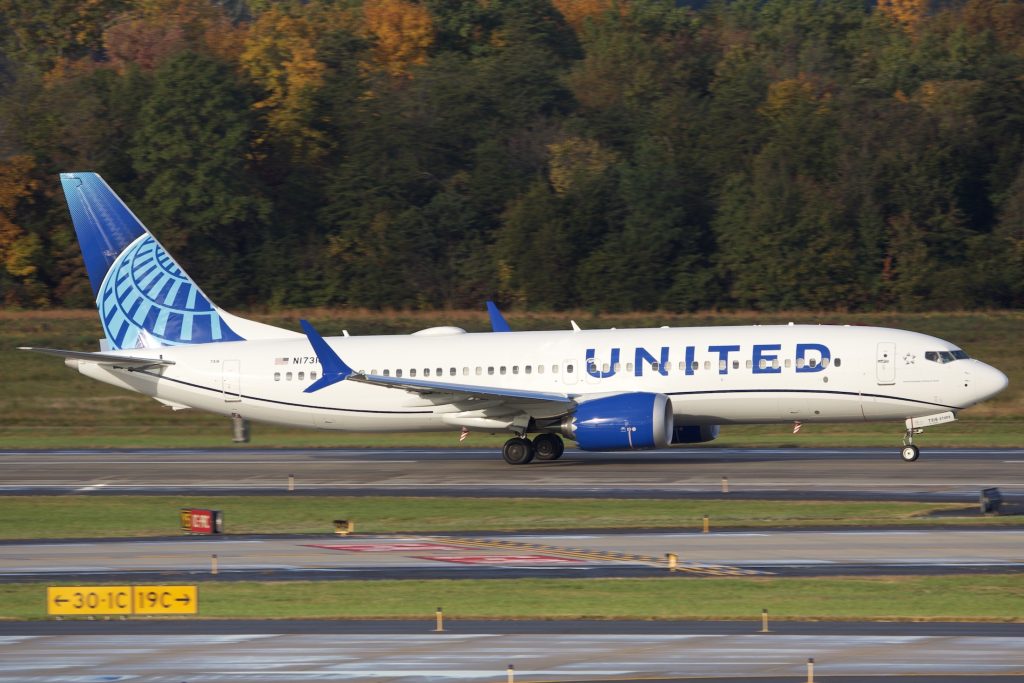
Later, on May 22, the carrier will connect its San Francisco hub with San Jose, Costa Rica. This new route will operate daily with a Boeing 737 MAX 8 aircraft.
A United 737 MAX 8 (Photo: AirlineGeeks | Noah Escobar)
The new route will be served from the carrier’s Newark, New Jersey, hub on a seasonal, twice-weekly basis.
Beginning on May 21, the airline will add three-times-weekly, seasonal service between Newark and Palermo, Italy. Flights will be operated by a Boeing 767-400 aircraft.
The carrier is also growing in Spain with a new route between Newark and Bilbao starting on May 31. Flights are slated to operate three times per week.
In Portugal, United is adding routes to Madeira Island and Faro from Newark. Faro will begin on May 16, operating four times weekly, while Madeira starts on June 7 with three-times-weekly service.
From Washington Dulles, the airline will add new daily service to Venice, Italy, starting May 22. Also, the airline is adding four-times-weekly flights to Nice, France, on May 24. Both routes will operate seasonally.
Ryan founded AirlineGeeks.com in February 2013 and has spent more than a decade covering the airline business. His work has been featured by CNN, WJLA, CNET, and Business Insider. His aviation experience spans airport operations, Part 135 regulatory compliance, and airline crew workforce planning, along with time behind the yoke of a Cessna 172 and interviews with airline executives. Ryan now serves as Group President of Firecrown Media’s Aviation Group. He holds a B.S. in Air Transportation Management and an MBA from Arizona State University and teaches Airline Management at Embry-Riddle Aeronautical University.
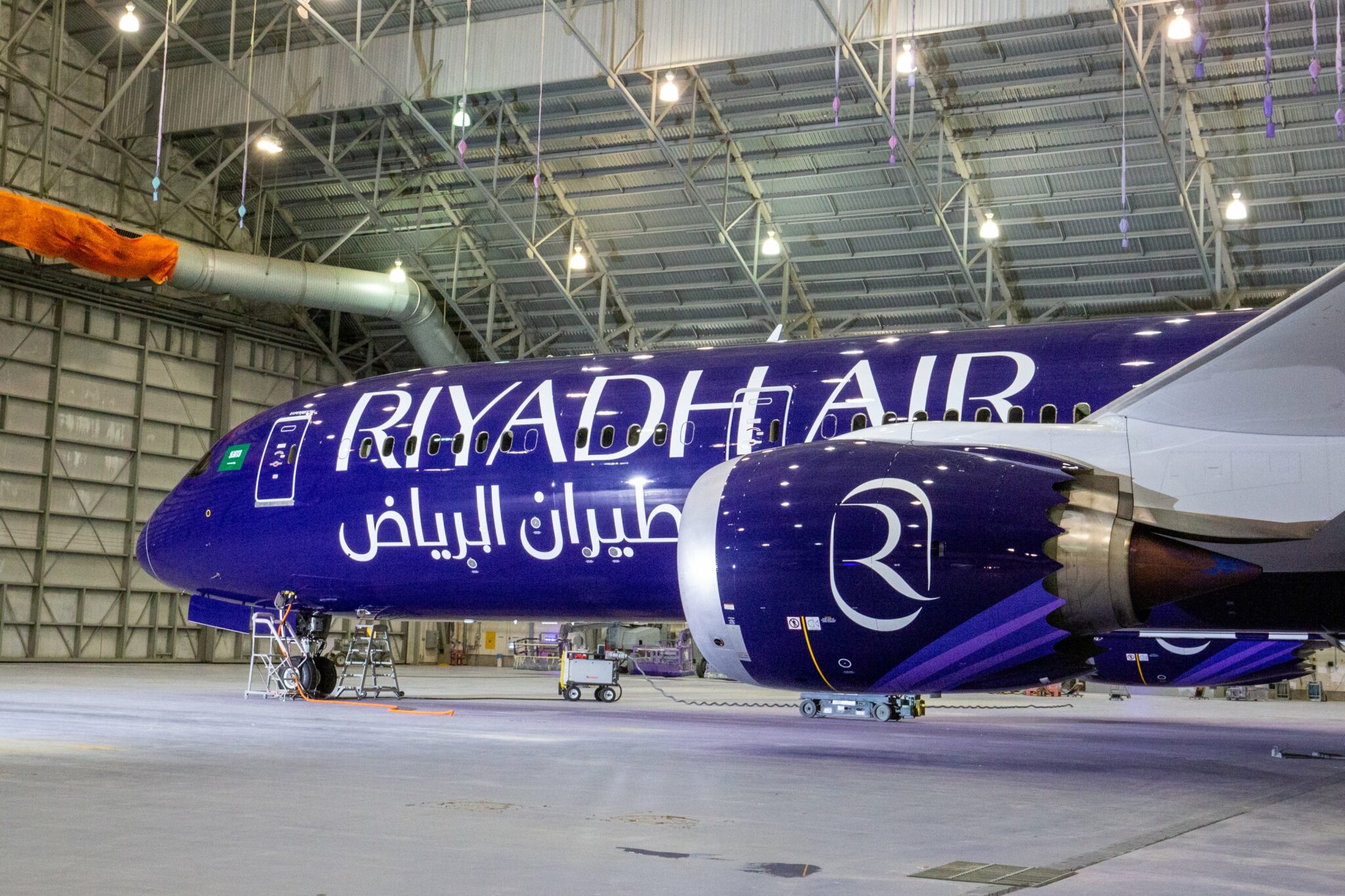
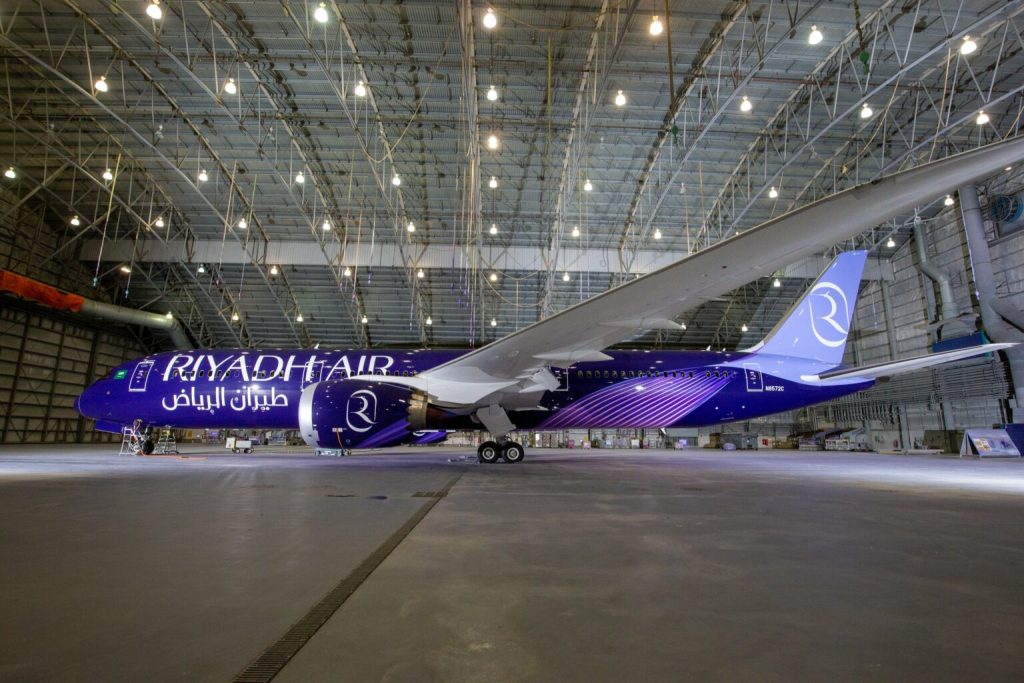
The fuselage of a Riyadh Air Boeing 787 Dreamliner. (Photo: Riyadh Air)
The tale of made-from-scratch carrier Riyadh Air, a new would-be global carrier made in Saudi Arabia that is planning to take commercial aviation by storm courtesy of the Public Investment Fund’s checkbook, has undoubtedly been one of the most fascinating of 2024.
The airline made a big splash last year by ordering 39 brand-new Boeing 787-9 aircraft, with 33 more options for the same model, and more recently wowed the world with its purple livery, but so far this potential disruptor of the skies is still very much a paper airline since there is only one aircraft, which is currently performing certification flights to obtain the Air Operator’s Certificate (AOC).
At the Routes World Conference 2024 in Bahrain, Riyadh Air’s CEO Tony Douglas was one of the most awaited keynote speakers and, in line with the tradition and ambition of the carrier, made some bold statements about the near and not-so-near future. After all, that’s all he can do for now.
A Digitally-Led Business
“We believe Riyadh Air will have an AOC by the end of the year,” said Douglas, setting a long-awaited milestone that will see a wild concept turn into a proper airline. Although Riyadh Air does not define itself as an airline: “We have the opportunity to start from a blank sheet of paper, and this is a gift,” explained Douglas to a full house of delegates at Routes World 2024.”And instead of being the latest airline to do things ‘the old way,’ we want to embrace the chance to be the first airline to develop in the digital age.”
“Our vision is to be a digitally-led business that enables travel, and we are doing so through an obsessive attention to detail and customer service, by being digitally native and by being a leader in environmental sustainability.”
The airline already has its IATA code (RX) and has just moved into its new headquarters next to Riyadh International Airport. By the end of October, version 1.0 of Riyadh Air’s digital interface will be revealed at the Future Investment Initiative flagship conference in the Saudi Arabian capital. “It will be an iPhone-type of launch, we want the experience of our purchasing a flight through our interface to be similar to buying goods on Amazon,” said Douglas, adding that every announcement will be as grand as it can be.
“We Will Stand Out”
Right now, a lot of energy is going towards building the brand; and while the flying part of the business is not yet here, there is time to use some of that blank sheet of paper to design a very strong brand. The sound for Riyadh Air has just been recorded in the Abbey Road studio in London, where the Saudi Philharmonic Orchestra and the London Philharmonic Orchestra have performed together to create a very distinctive tune that will be instantly recognizable. Or at least so they say.
“Riyadh Air will always stand out,” proclaimed Douglas. “Our livery will stand out on the apron, our crew uniforms will stand out at airports or hotels, just like the Pan Am uniforms used to stand out, our online experience will be truly Riyadh Air, just like our music. We will always stand out.”
Riyadh Air’s first 787 (Photo: Riyadh Air)
First 25 Destinations Announced in 2025
With an AOC on its way hopefully by the end of 2024, the announcement for the first 25 destinations will follow shortly at the beginning of 2025, with the start of operations to be penciled in by the end of the same year. “We have changed the timeline for Riyadh Air three times, but for Saudi Arabia our launch could not come early enough. Saudi Arabia is the fastest-growing economy of the G20 group, and it has very little air connectivity. And this hurts the economy: there are no direct flights to Tokyo, to Seoul, to Shanghai, the entire Asia is underserved. We don’t have to create a market, the market is already there.”
The launch will take place with the Boeing 787-9s on order, and it will focus on balancing a network through long connections to Europe and shorter flights to India, in order to keep the utilization high and offset the advantage of starting services with very large aircraft.
A new order for narrowbody aircraft will follow in due course and it will be of a similar size to the one placed for the Boeing 787s. With narrowbodies starting to go online as of the second year of operations, the network will become more diversified and it will be possible to more closely match capacity with demand. The vision is to have 100 destinations served after five years.
Partners Chosen to Cover the World
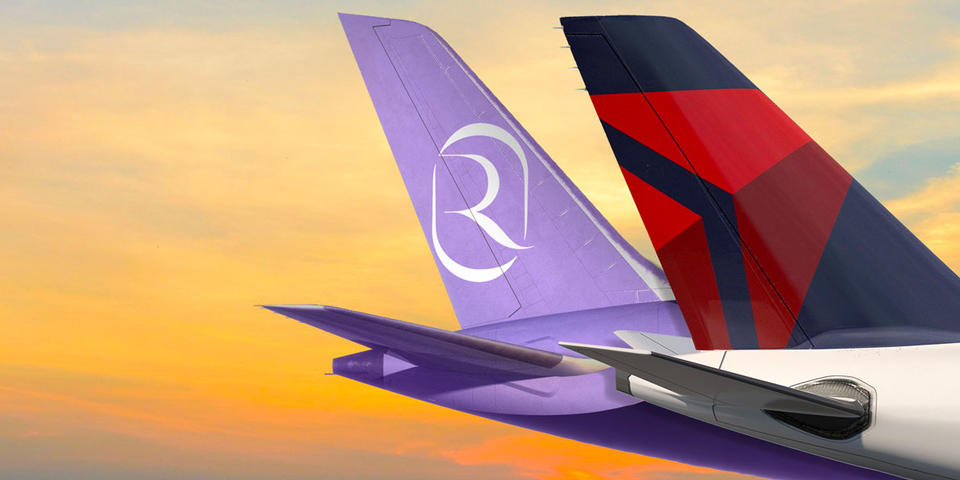
As aircraft availability is one of the problems all airlines have to face, Riyadh has decided to sign some partnerships to help the carrier achieve a global scale more quickly. The first partners will be Star Alliance carriers Turkish Airlines and Singapore Airlines, then there is the landmark agreement signed with Delta.
“At the moment we have no desire to cover Australia,” explained Douglas. “That’s why it was important to have an agreement with Singapore Airlines that can help us do that. The same logic goes for the partnership with Delta Air Lines, since the United States is a market we won’t be able to serve directly for some time.”
With Riyadh Air wanting to maintain its digitally-native ethos, partnerships will require a lot of “translations” to make sure the information needed by “analog carriers” to carry RX’s passengers is transmitted in a digestible manner. The airline industry is currently undergoing a landmark project led by IATA (International Air Transport Association) called ONE Order.
The industry has never departed from the legacy concepts of “tickets” and “reservations” that were created in the 1950s when financial transactions and seat inventories had to be managed in very different manners. Nowadays the world has changed, computers are much more powerful and the need for that distinction does not exist any longer. For this reason, the industry is embarking on a project to make sure it can similarly sell its products and services to what other industries do.
Delta Air Lines and Riyadh Air announced a new partnership on July 9, 2024 (Photo: Delta Air Lines)
It appears Riyadh Air has decided to be a pioneer in this manner, which could lead to a sustainable competitive advantage should they manage to appeal to the digitally-native Gen Z, but could also cause interoperability issues with their partners and, if not managed properly, could lead to a “Galapagos effect” that could prove problematic a few years down the road.
17 Sustainability Initiatives
No good brand these days can afford to leave sustainability off its mission statement, and Riyadh Air is no exception. The existential crisis the airline industry is facing with its quest for net-zero emissions by 2050 is a problem every airline CEO is keen to discuss: “We have seventeen initiatives to ensure the sustainability of our operations, and all these initiatives are tracked and measured. There is no silver bullet to achieve the 2050 target, and good ideas come in all shapes and sizes. We want to make sure all our operation is built with sustainability in mind.”
Vanni fell in love with commercial aviation during his undergraduate studies in Statistics at the University of Bologna, when he prepared his thesis on the effects of deregulation on the U.S. and European aviation markets. Then he pursued his passion further by obtaining a Master’s Degree in Air Transport Management at Cranfield University in the U.K. followed by holding several management positions at various start-up carriers in Europe (Jet2, SkyEurope, Silverjet). After moving to Canada, he was Business Development Manager for IATA for nine years before turning to his other passion: sports writing.
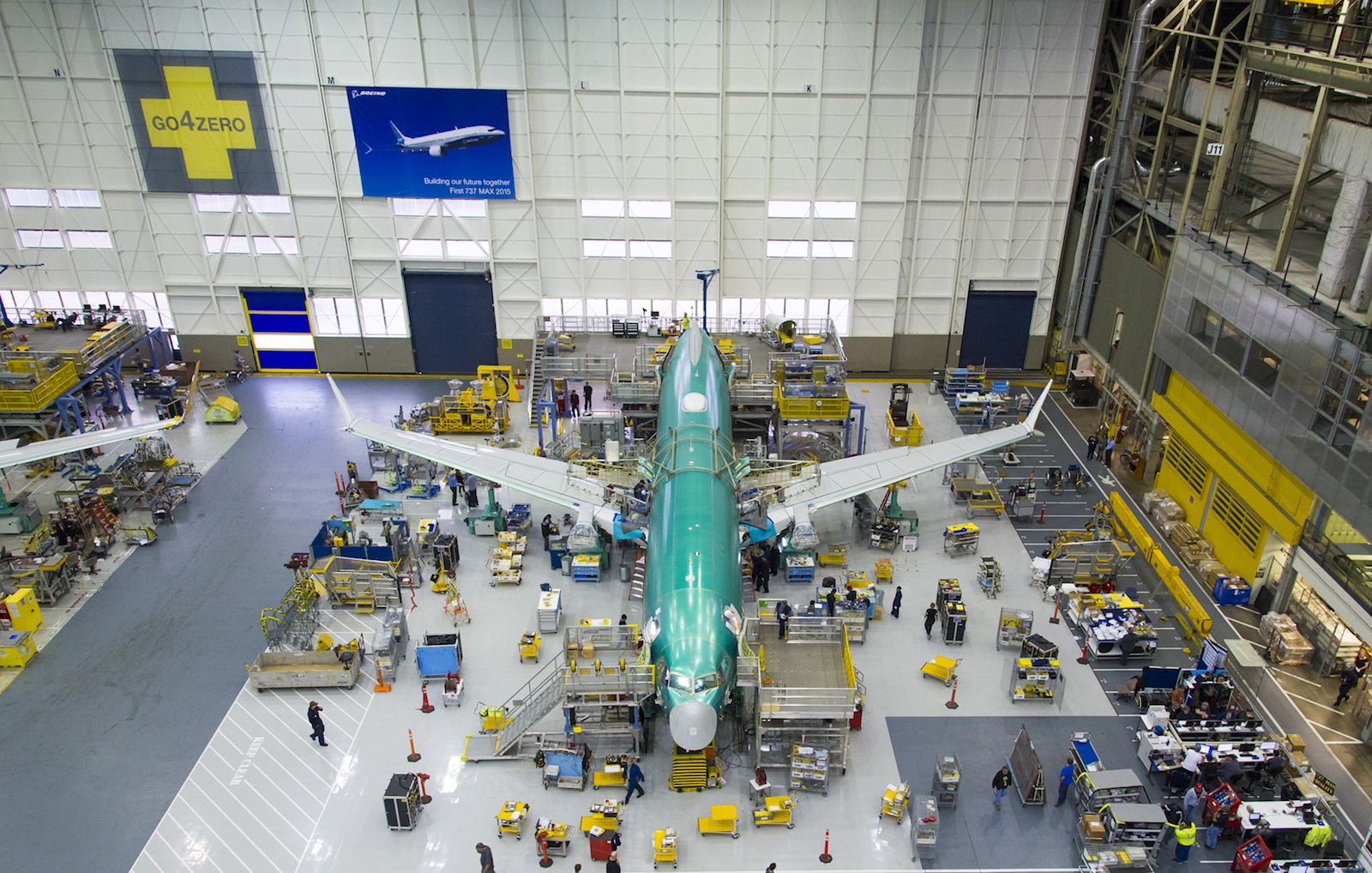
Boeing Considers ‘Next Steps’ After Pulling Contract Offer for Striking Workers
Boeing announced Tuesday that the company has withdrawn its contract offer to striking machinists union workers as it considers “next steps.”
Boeing COO Stephanie Pope said in a message to employees that the strike in the Pacific Northwest has deeply affected Boeing’s business, its customers, and its communities.
“We understand that the steps we’re taking to preserve cash affect you and your loved ones,” Pope said. “We do not take these impacts lightly as we take actions and consider next steps.”
She said that Boeing’s leadership team recently concluded a third round of bargaining with a federal mediator, which included two days of negotiations this week.
“Our team bargained in good faith and made new and improved proposals to try to reach a compromise, including increases in take-home pay and retirement,” Pope said. “Unfortunately, the union did not seriously consider our proposals. Instead, the union made non-negotiable demands far in excess of what can be accepted if we are to remain competitive as a business. Given that position, further negotiations do not make sense at this point and our offer has been withdrawn.
“This is a disappointing outcome and not one we wanted. We remain committed to finding a resolution and will work with the union when they are ready to bargain an agreement that recognizes our employees and preserves our company’s future,” she added.
In a statement posted Tuesday by IAM District 751 in Seattle, Washington, IAM said that Boeing refused to propose any wage increases, vacation/sick leave accrual progression, ratification bonus, 401(k) match/SCRC contribution or reinstate workers’ benefit pension.
“By refusing to bargain the offer sent to the media, the company made it harder to reach an agreement,” the IAM statement continued. “Your negotiating committee attempted to address multiple priorities that could have led to an offer we could bring to a vote, but the company wasn’t willing to move in our direction. Through the mediator, Boeing has now withdrawn its September 23 offer.”
The IAM statement said that a survey of the union’s members showed the contract offer wasn’t good enough. It said that the union’s negotiating committee remains ready to continue talks.
AirlineGeeks.com was founded in February 2013 as a one-person blog in Washington D.C. Since then, we’ve grown to have 25+ active team members scattered across the globe. We are all here for the same reason: we love deep-diving into the fascinating realm of the airline industry.
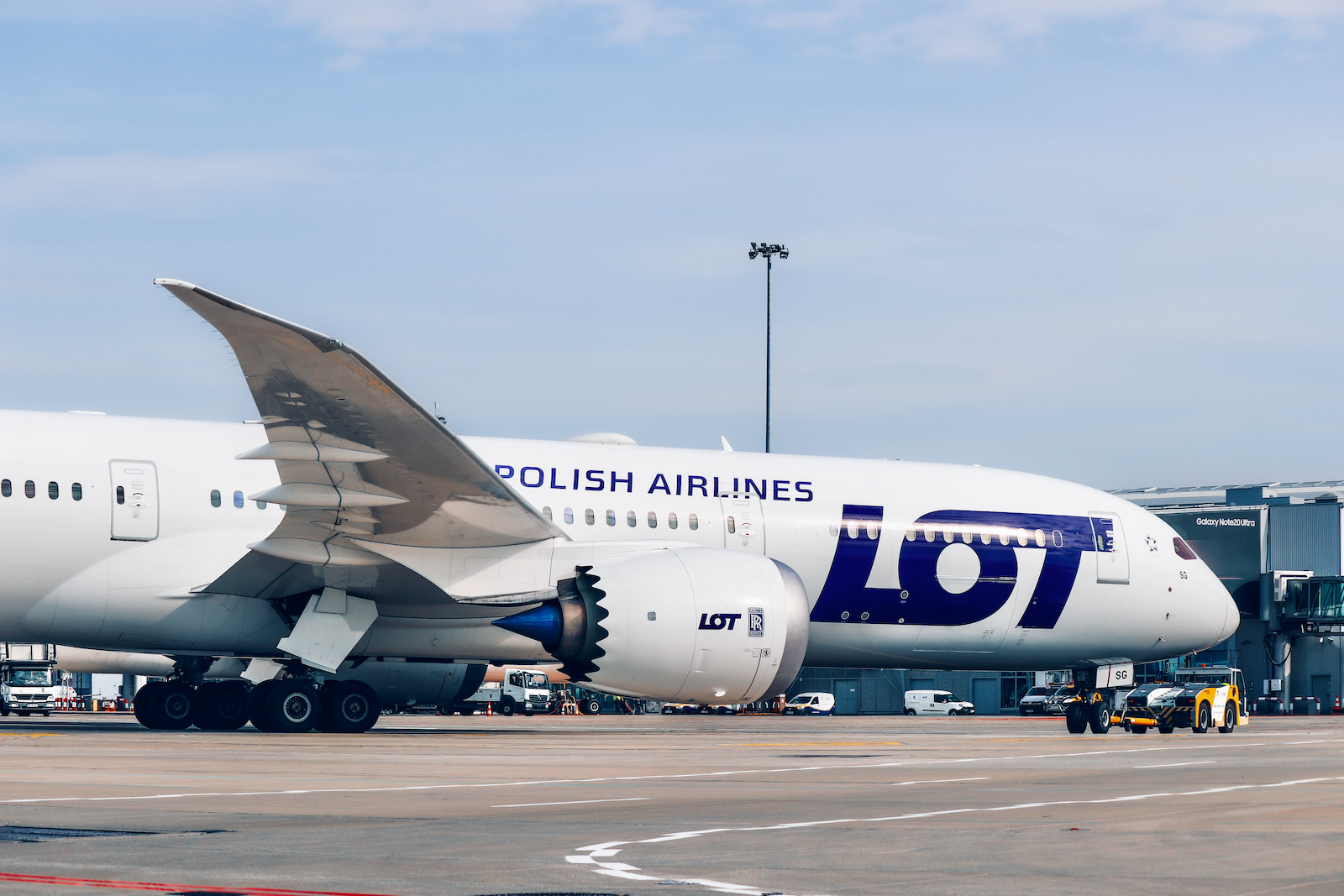
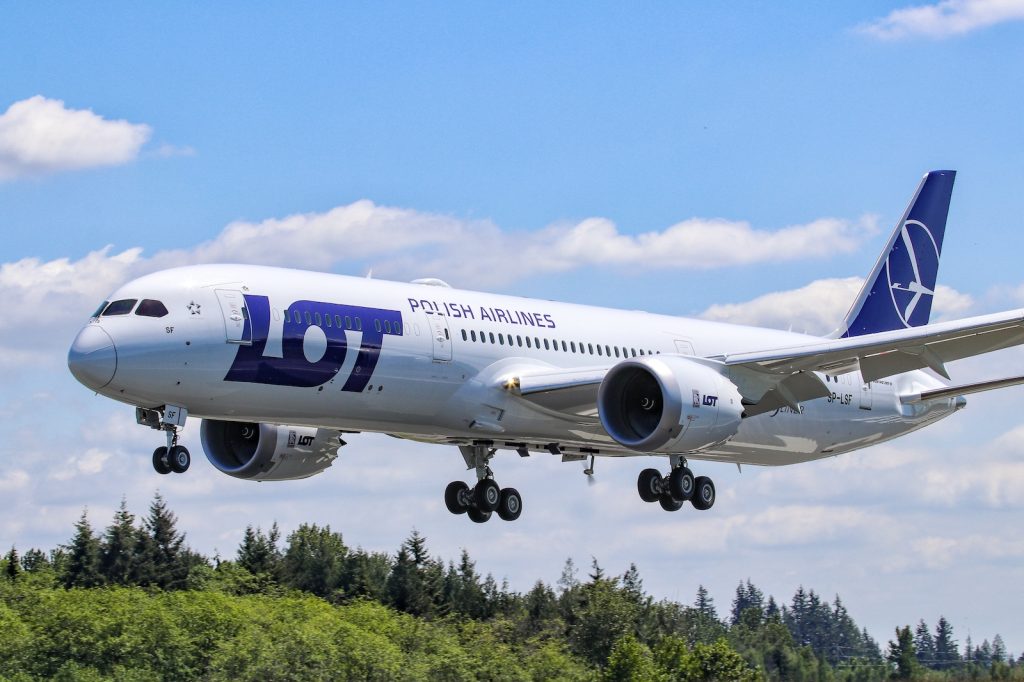
A LOT Polish Airlines Boeing 787 Dreamliner. (Photo: LOT Polish Airlines)
SkyTeam carrier SAS is set to cut its sole connection to mainland China this November when it cancels its decades-long flight between Copenhagen and Shanghai. The airline currently flies the route three times a week on its flagship A350. The two cities will no longer be connected after its exit.
Polish national carrier LOT has also announced the termination of its long-running Warsaw to Beijing route. When Beijing service ends, the airline will no longer have a presence in China. The airline previously served both the Daxing and Capital sirports in the Chinese capital. However, Warsaw will still be connected to Beijing by Air China, a fellow Star Alliance member.
A LOT Boeing 787 in Everett, Wash. (Photo: AirlineGeeks | Katie Zera)
SAS’ Second to Last Asian Destination
From November, SAS’ only year-round destination in Asia will be Tokyo Haneda, while Bangkok is served seasonally. Before the pandemic, the carrier also flew to Beijing and Hong Kong, both of which were never resumed. The airline recently joined SkyTeam and is partly owned by Air France-KLM, which boasts an extensive Asian network and can connect to more destinations in Europe via its hubs in Paris and Amsterdam.
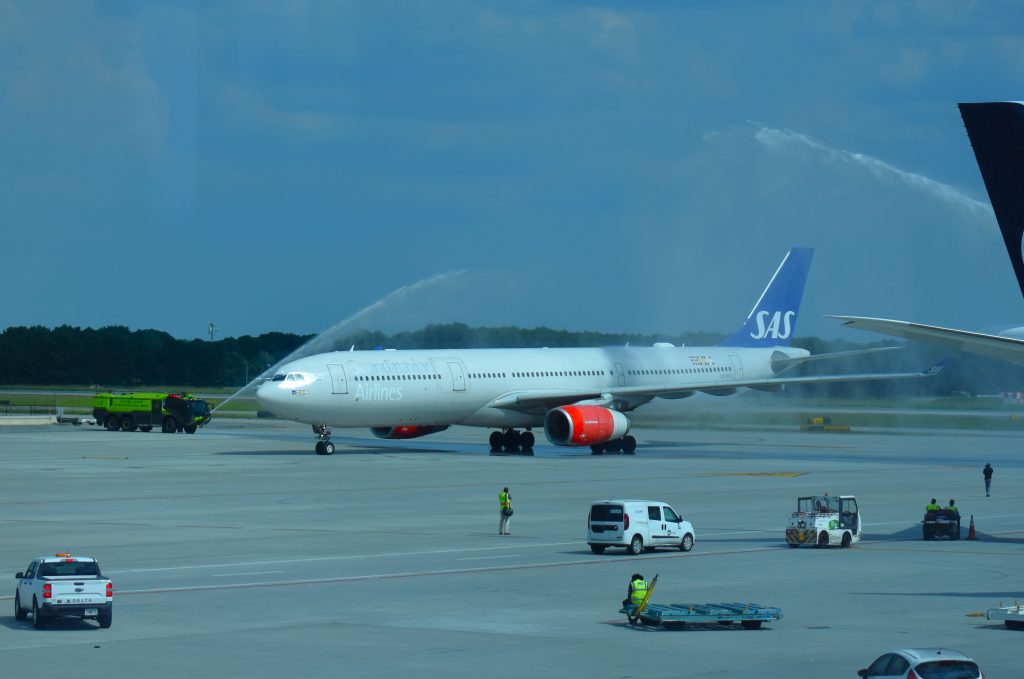
A SAS Airbus A330 arriving in Atlanta for the first time to a water cannon salute (Photo: AirlineGeeks | Joey Gerardi)
With the unavailability of Russian airspace, which incurs higher costs and flying time, along with the capacity dump by Chinese carriers, European airlines are struggling to compete with their Asian counterparts. The scale-down of SAS’ operation was, according to Luchtvaartnieuws, due to “difficult market conditions.”
At the same time, Chinese carriers are ramping up their capacity into Europe, partially driven by free widebody equipment previously used for flights to North America. The number of seats offered by Chinese carriers has far exceeded pre-pandemic levels and continues to rise.
Many European carriers have called on the European Union to take action, including imposing a levy on the unleveled playing field. However, no agenda has been made so far to protect European airlines.
Anthony is an aviation enthusiast who grew up around the world from St. Louis to Singapore, and now lives in Amsterdam. He loves long-haul flying and finds peace in the sound of engine cruising. He aspires to share his passion for the sky though writing and providing another angle on the stories.
Air Asia Exploring Two South African Routes
Asia's largest low-cost carrier Air Asia is considering introducing flights to Johannesburg and Cape Town in South Africa.
Asia’s largest low-cost carrier Air Asia is considering introducing flights to Johannesburg and Cape Town in South Africa.
Flights to South Africa
Air Asia’s Chief Commercial Officer Paul Carroll told Tourism Update that the carrier is exploring options for scheduled flights to Cape Town and Johannesburg.
“We are still negotiating this but hope to have the flights in place by the fourth quarter of 2025.” Carroll said. He noted that the Nairobi route will be used as a case study for route expansion into Africa.
“The Nairobi route will test demand for flights into and from Africa,” he said.
The route will be operated four times a week, using an Airbus A330-300 aircraft, seating up to 377 passengers.
The eight-hour service is expected to carry 16,000 passengers between Nairobi and Malaysia in 2024. In 2025, more than 140,000 passengers are projected to travel on this route.
Previous Indian Ocean Route
The airline’s new Nairobi route marks Air Asia’s first real foray into Africa. In 2016, Air Asia commenced scheduled services from Kuala Lumpur to the Indian Ocean island of Mauritius.
However, Air Asia terminated the route in 2017, deciding to redeploy the aircraft in more profitable markets.
Lorne is a South Africa-based aviation journalist. He was captivated and fascinated by flying from the day he took his first airline flight. With a passion for aviation in his blood, he has flown to destinations in all corners of the globe. Lorne has traveled extensively and lived in various countries. Drawing on his travels and passion for aviation, Lorne enjoys writing about airlines, routes, networks, and new developments.
How Airports Are Preparing for Hurricane Milton
Major airports throughout the state have halted operations completely, including Tampa International Airport, which shut down on Tuesday morning.
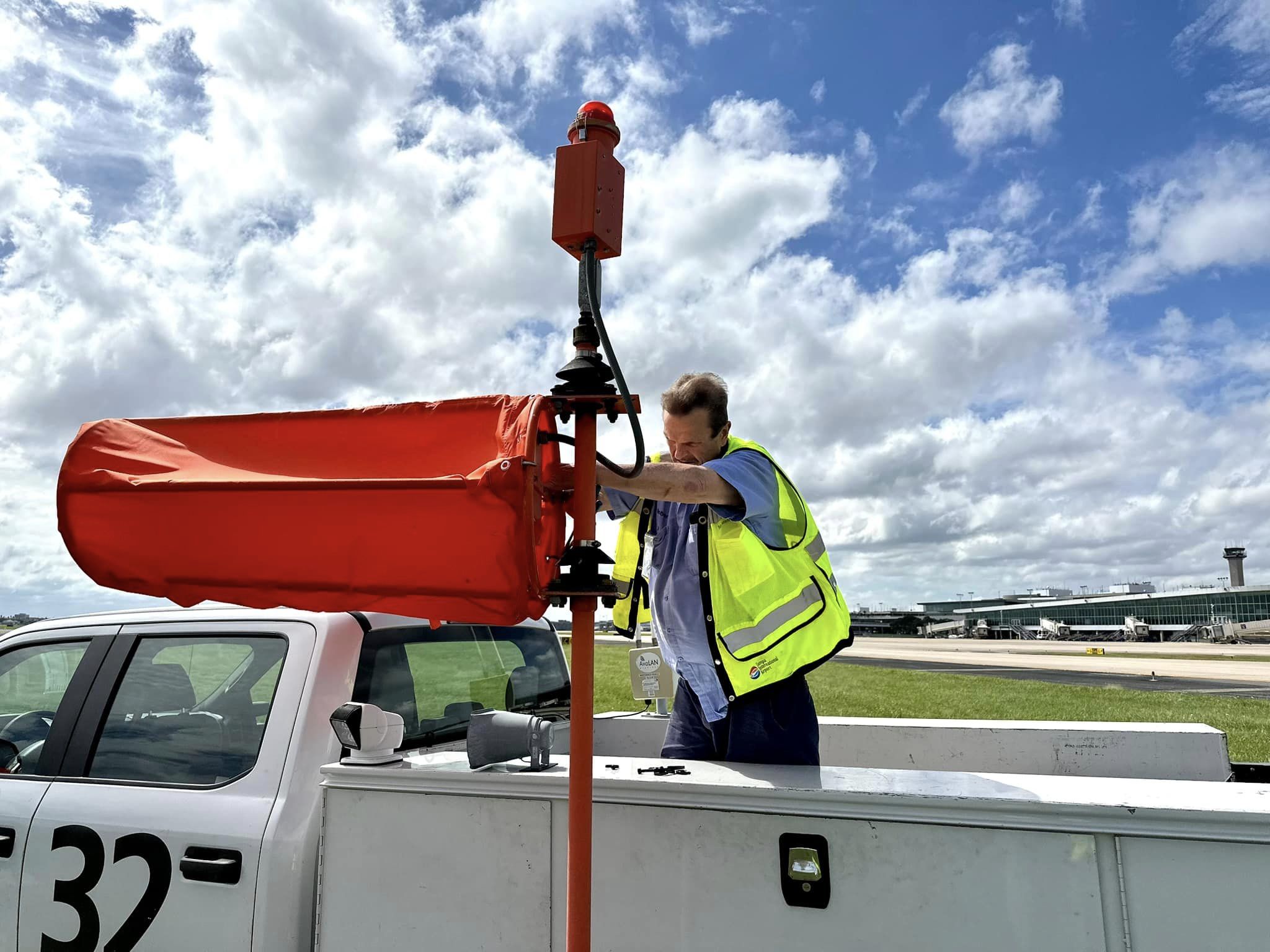
Crew secure airfield equipment ahead of Hurricane Milton (Photo: Tampa International Airport)
Florida is bracing for Hurricane Milton as it barrels toward the state’s Gulf Coast. Airlines have canceled 2,400 flights so far on Wednesday in preparation for the storm, according to FlightAware.
Major airports throughout the state have halted operations completely, including Tampa International Airport, which shut down on Tuesday morning. Orlando International Airport remains open but has paused all commercial operations.
Sarasota Bradenton International Airport also closed on Tuesday afternoon.
Crews at Tampa International Airport brace for Hurricane Milton (Photo: Tampa International Airport)
‘Batten Down the Hatches’
Tampa is among the cities set to be hit the hardest by Milton. The city’s main airport — the state’s fourth-busiest — shut down early to prepare facilities for the storm. John Tiliacos, the airport’s executive vice president of airport operations, said this process takes up to 24 hours.
“Our team has been planning and executing all of the preparation that we need to take for Hurricane Milton’s arrival,” Tiliacos said during a press conference.
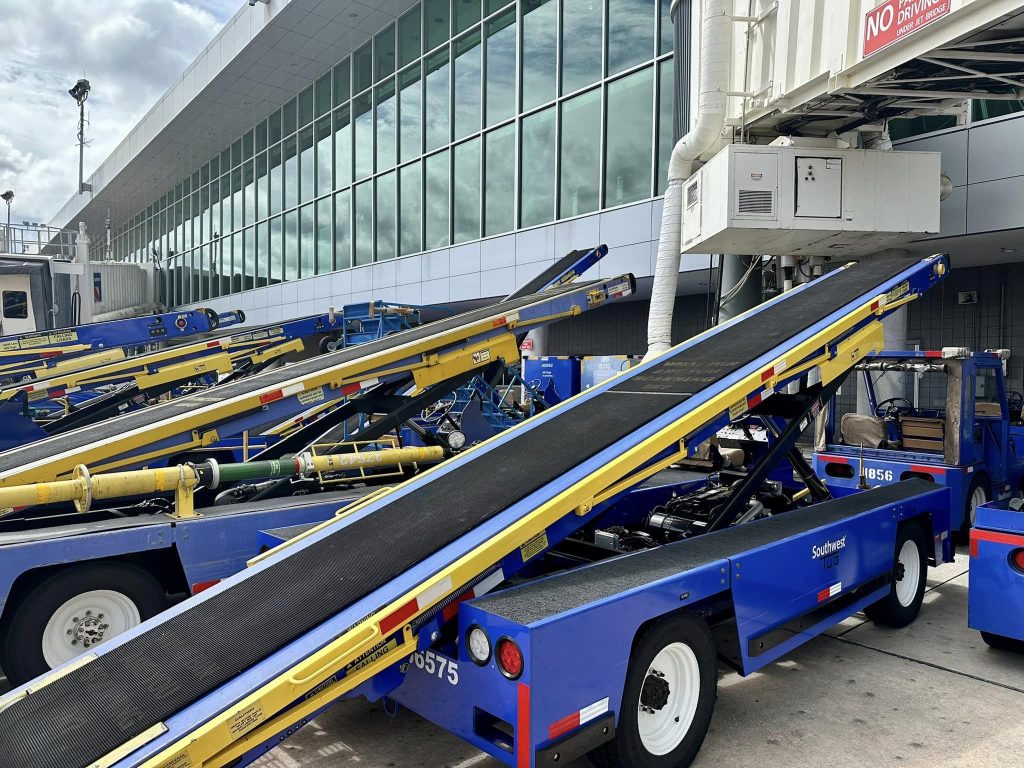
In a Facebook post, the airport said its team has been working around the clock to “batten down the hatches.” The airport has 58 jet bridges, each of which needs to be chained down, which can take around an hour each to complete.
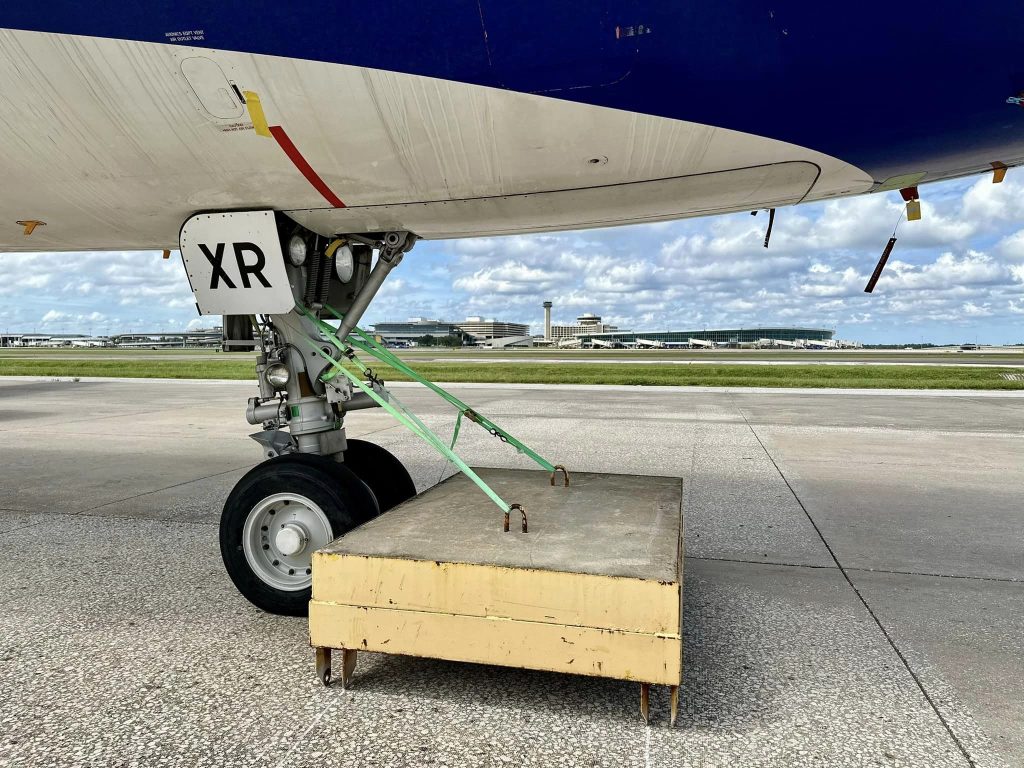
Crews secure airport equipment (Photo: Tampa International Airport)
Aircraft and other airfield equipment also need to be secured in advance of the storm.
“Tampa International Airport is extremely close to Tampa Bay and storm surge and flooding are a top concern for us. … [I]f you consider that we may potentially face 10 to 15 feet of storm surge, we are talking about a lot of water that will find its way onto the airport,” Tiliacos added.
Crews secure jet bridges in Tampa (Photo: Tampa International Airport)
The airport says it will reopen after a damage assessment is conducted.
Ryan founded AirlineGeeks.com in February 2013 and has spent more than a decade covering the airline business. His work has been featured by CNN, WJLA, CNET, and Business Insider. His aviation experience spans airport operations, Part 135 regulatory compliance, and airline crew workforce planning, along with time behind the yoke of a Cessna 172 and interviews with airline executives. Ryan now serves as Group President of Firecrown Media’s Aviation Group. He holds a B.S. in Air Transportation Management and an MBA from Arizona State University and teaches Airline Management at Embry-Riddle Aeronautical University.