Low-cost Asian carrier Air Asia X is slated to introduce scheduled services to its first destination in Africa in the next few months. Though there has not been an official announcement from Air Asia as of yet, a representative from the airline attended the AviaDev conference – an event focusing on route development in Africa, held in Windhoek last week. Furthermore, Air Asia’s flights to Nairobi are already showing in airline analytics platforms including Cirium and OAG.
This will be Air Asia’s first foray into Africa, with scheduled services scheduled to be introduced between Malaysia and the Kenyan capital, Nairobi. The airline previously operated flights to the Indian Ocean region but dropped these some years back. Air Asia X offered long-haul services to the island of Mauritius in 2016 and 2017.
Launching Nairobi Services
According to data from airline analytics platform Cirium, AirAsia X will offer services between Kuala Lumpur and Nairobi from November 15. The long-haul route will be operated four times a week, using an Airbus A330-300 which seats up to 377 passengers.
Kuala Lumpur is ideally located to become a hub for Air Asia’s Nairobi service. The low-cost Asian carrier has an extensive route network throughout Asia and beyond, which passengers can use to travel to other destinations served from its Kuala Lumpur hub. Furthermore, Air Asia will offer an alternative to Kenya Airways, which offers flights from Nairobi to Bangkok.
The 3 900 nautical mile (7 223 km) route heralds AirAsia X’s first route to mainland Africa. Air Asia’s Nairobi services will become the carrier’s longest route. Currently, Air Asia’s longest route is its scheduled service to Jeddah, Saudi Arabia.
Challenges in Establishing the Nairobi Route
While it would be great for Air Asia to offer African connectivity in its route network, it is not going to be all smooth sailing for the Asian low-cost carrier as it launches services into Kenya.
Air Asia is expected to face some challenges in making the route economically sustainable. Lack of brand awareness in Kenya – and Africa, as well as its traditional distribution methods are likely to be initial obstacles for Air Asia as it gets the route off the ground.
As reported by Simple Flying, African Aviation consultant Sean Mendis, said that Air Asia might experience some obstacles when establishing itself in the Kenya market.
“They will have challenges with the distribution on the African side of the route given AirAsia’s traditional dependence on direct sales and its relative lack of brand recognition in Africa. They will need to leverage the Kuala Lumpur hub to feed the flights from all over Southeast Asia to make this work,” he noted.
That said, other major low-cost carriers have managed to make inroads in Kenya. This includes India’s Indigo and Dubai’s FlyDubai, which currently offer long-haul scheduled services into Nairobi.
Lorne is a South Africa-based aviation journalist. He was captivated and fascinated by flying from the day he took his first airline flight. With a passion for aviation in his blood, he has flown to destinations in all corners of the globe. Lorne has traveled extensively and lived in various countries. Drawing on his travels and passion for aviation, Lorne enjoys writing about airlines, routes, networks, and new developments.
Embraer Pursuing LOT Narrowbody Order
The CEO of Embraer reiterated the company's commitment towards securing a large narrowbody aircraft order from LOT Polish Airlines in the near future.
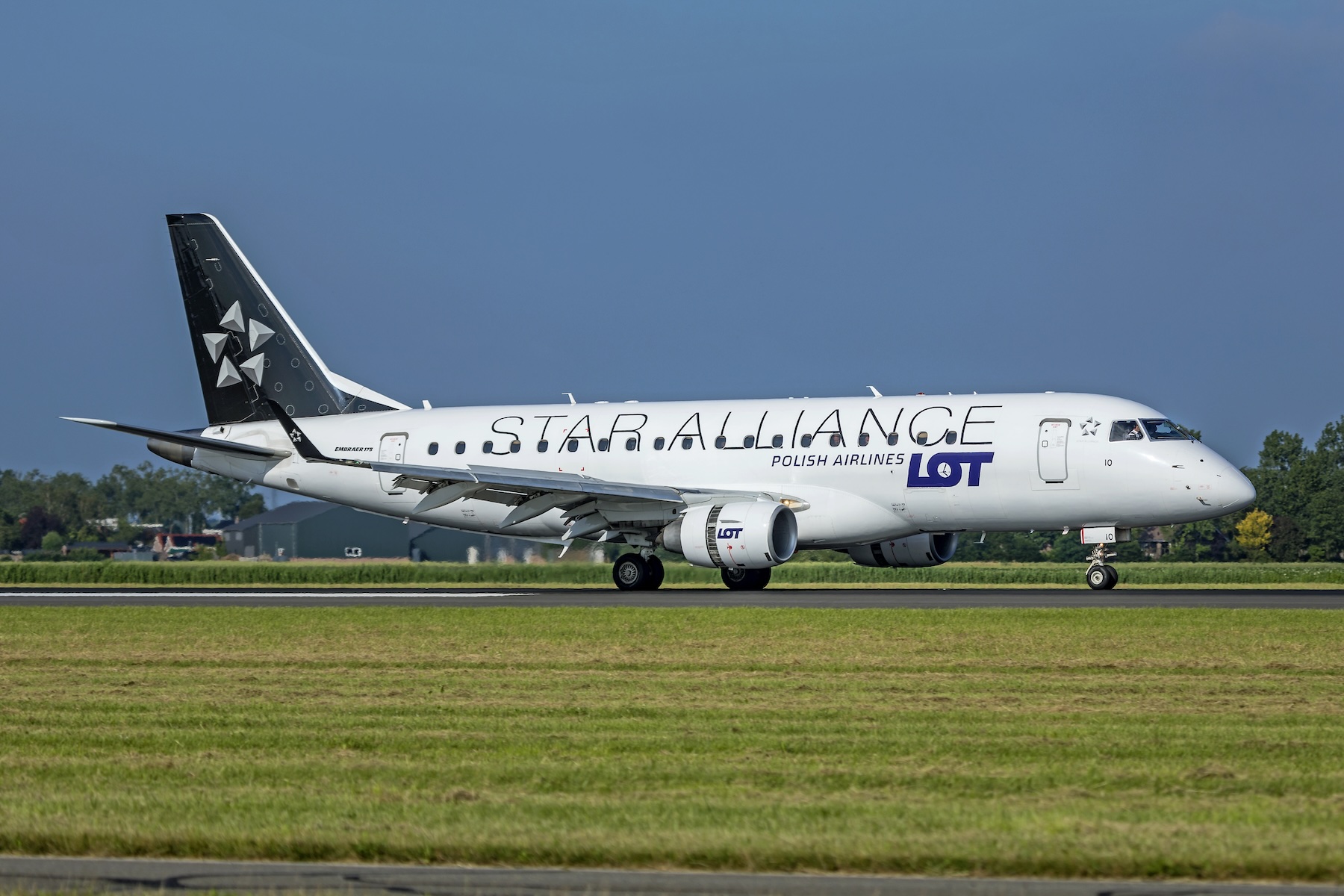
A LOT Polish Airlines Embraer jet (Photo: AirlineGeeks | William Derrickson)
In a recent interview for money.pl, the CEO of Brazilian aircraft manufacturer Embraer, Francisco Gomes Neto, reiterated the company’s commitment towards securing a large narrowbody aircraft order from LOT Polish Airlines in the near future.
Long-Standing Relationship
The Embraer E2 family is one of the two possible outcomes of the search for the future narrowbody fleet backbone of LOT Polish Airlines. The jet stands in a side-to-side competition with the Airbus A220 family. The CEO of LOT, Michal Fijol, is on record for saying that the final decision will most likely be made by the end of the year.
LOT is already an active Embraer customer. Different variants of the Brazillian regional jet comprise more than half of the carrier’s fleet, counting 43 airframes out of 77. The joint history of the two companies started in 1999 with an Embraer ERJ-145 delivery and was further deepened with LOT taking delivery of its first E-Jet in 2004.
Even during the purchasing proceedings, as recently as May, LOT announced that three Embraer E2s will join the fleet. This is a major point for the manufacturer as it will be an opportunity to put its best foot forward before the final decision is concluded. Those will be the first E2s to join the carrier’s fleet, with all other jets being the older variants.
The Embraer Strengths
Francisco Gomes Neto points out numerous Embraer E2 family characteristics and each counts as an advantage over the competitor. He mentions how a capacity increase from the first generation is an added value. Coincidentally he also points out that a smaller number of seats in comparison to the competitor is also an advantage as an airline doesn’t have to sell out cheap seats just to fill the plane.
For context, various variants of the E2 family are seating between 90 and 146 passengers in a single-class layout. The Airbus A220 seats between 135 and 160 passengers in a similar setup. That being said, the lower-capacity variant E175 E2 is a good replacement for LOT’s current Embraer fleet which has already taken over for the recently retired Bombardier Q400s, seating around 80 passengers.
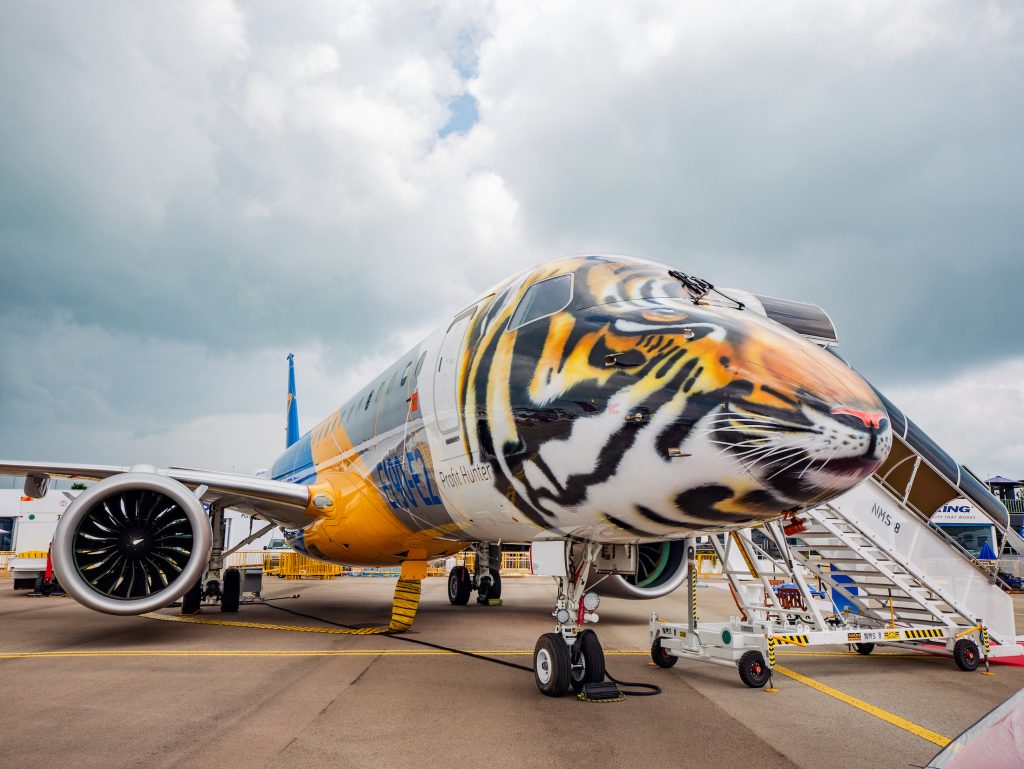
An Embraer E190-E2 with the front section decorated as a tiger head, on display during the Singapore Airshow in 2018. (Photo: Shutterstock)
Further in the interview, the executive brings up the topic of seating configuration. The mentioned advantage of Embraer is the lack of middle seats on the airplane. The 2-2 configuration guarantees that the customer will be able to enjoy either a window seat or direct aisle access. This is also targeted to highlight the alleged superiority over the Airbus A220’s unique 2-3 configuration.
Setting aside any discussions about the delivery schedule, the transition period and maintenance costs will probably play a significant role in the deal. With LOT already operating a major fleet of Embraer jets and taking further steps with introducing the three E2s into the fleet, this gives the manufacturer a headstart. Phasing out the entire fleet just to introduce the new aircraft one by one, thus maintaining two completely separate fleets for years, would be a significant cost and also an operational challenge. The outcome of the purchasing proceedings will be interesting news, but it is hard to not wonder if it is just a formality.
A passionate aviation enthusiast that started off his career as an aerospace engineer, but found his true calling on the commercial side of the airline business. Now as a finance guy among avgeeks and an avgeek among finance guys, he has experience working in the Revenue Divisions of three airlines. In his spare time he enjoys traveling, but admittedly sometimes is more about the journey than the destination.
Aer Lingus Braces For Pilots’ Strike, Cancels Flights
A work-to-rule industrial action by Aer Lingus pilots is poised to affect hundreds of flights throughout the week.
An Aer Lingus Airbus A320. (Photo: AirlineGeeks | William Derrickson)
Irish flag carrier Aer Lingus is about to face some very tough days as more and more travelers take to the skies in Europe for the start of their summer holidays. The Irish Air Line Pilots Association (IALPA) has declared a five-day “work-to-rule” protest to protest over the lack of progress in the salary talks with the airline.
Pilots will refuse to work overtime between Wednesday, June 26 and Sunday, July 2, and alongside this a fully-fledged strike will take place on Saturday, Jun. 29 between 5 a.m. and 1 p.m. BST, affecting approximately 15,000 passengers.
The airline has pre-emptively canceled over 200 flights during the affected period, affecting travel plans of more than 35,000 passengers.
New talks planned to avert industrial action
The Union is asking for a 24% pay rise across the next three years, which they claim is due to recoup the purchasing power eroded by inflation since the last agreement signed in 2019. The airline is offering a 12.5% increase, which could become more substantial if “improvements in efficiency and flexibility” are discussed, Belfast Live reports.
Despite the distance between the two parties and the very tight deadline, IALPA and Aer Lingus are meeting on Tuesday at Ireland’s Labour Court in Dublin to understand if the industrial action can be averted, The Irish Sun reports.
In the meantime, Aer Lingus says it has arranged alternative plans for 80% of passengers affected, who have either found alternative flights or been issued a refund. Aer Lingus is an E.U. carrier and as such it is required to comply with E.U. Regulation 261/2004 which regulates passengers’ rights in case of cancelations or delays. However, industrial actions affecting flight operations are considered causes outside the airline’s control, and therefore no cash compensation is due to affected passengers, but the airline is still responsible for providing alternative options or a full refund.
Vanni fell in love with commercial aviation during his undergraduate studies in Statistics at the University of Bologna, when he prepared his thesis on the effects of deregulation on the U.S. and European aviation markets. Then he pursued his passion further by obtaining a Master’s Degree in Air Transport Management at Cranfield University in the U.K. followed by holding several management positions at various start-up carriers in Europe (Jet2, SkyEurope, Silverjet). After moving to Canada, he was Business Development Manager for IATA for nine years before turning to his other passion: sports writing.
Manchester Airport Hit By Major Power Outage
Manchester Airport, the gateway to Northern England, was hit by a major power outage. Passengers were left stranded in Terminals 1 and 2 on Sunday morning.
Check-in area at Manchester Airport's new Terminal Two extension (Photo: Manchester Airport)
Manchester Airport, the gateway to Northern England, was hit by a major power outage. Passengers were left stranded in Terminals 1 and 2 on Sunday morning.
The airport said the electric supply went off at about 1:30 in the morning with passengers facing severe delays as a result. Terminal 1 and 2 passengers were told not to go to the airport until further notice. However, Terminal 3 operated as normal.
According to the BBC, a number of flights have been cancelled and some arriving flights were diverted to other airports. Large queues were spotted and further disruption occurred throughout the day. Passengers were warned their baggage might not be on flights.
“Manchester Airport was affected by a major power cut in the area earlier this morning. This has caused widespread disruption and flights from Terminal 1 and 2 are being cancelled,” the airport said in a statement.
The power was later restored and the airport said it was “working to get those passengers already at the airport onto flights as soon as possible”.
AirlineGeeks.com was founded in February 2013 as a one-person blog in Washington D.C. Since then, we’ve grown to have 25+ active team members scattered across the globe. We are all here for the same reason: we love deep-diving into the fascinating realm of the airline industry.
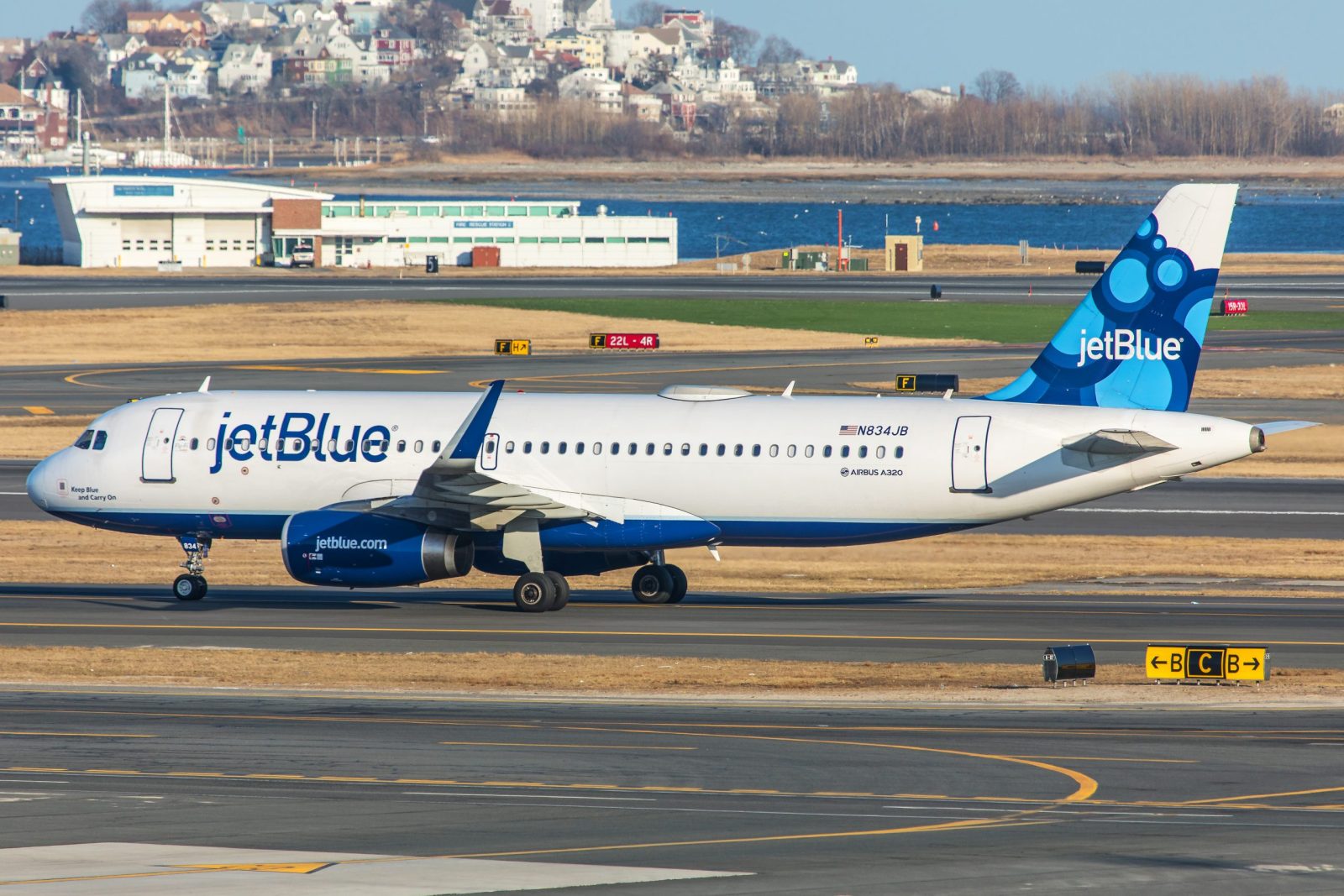
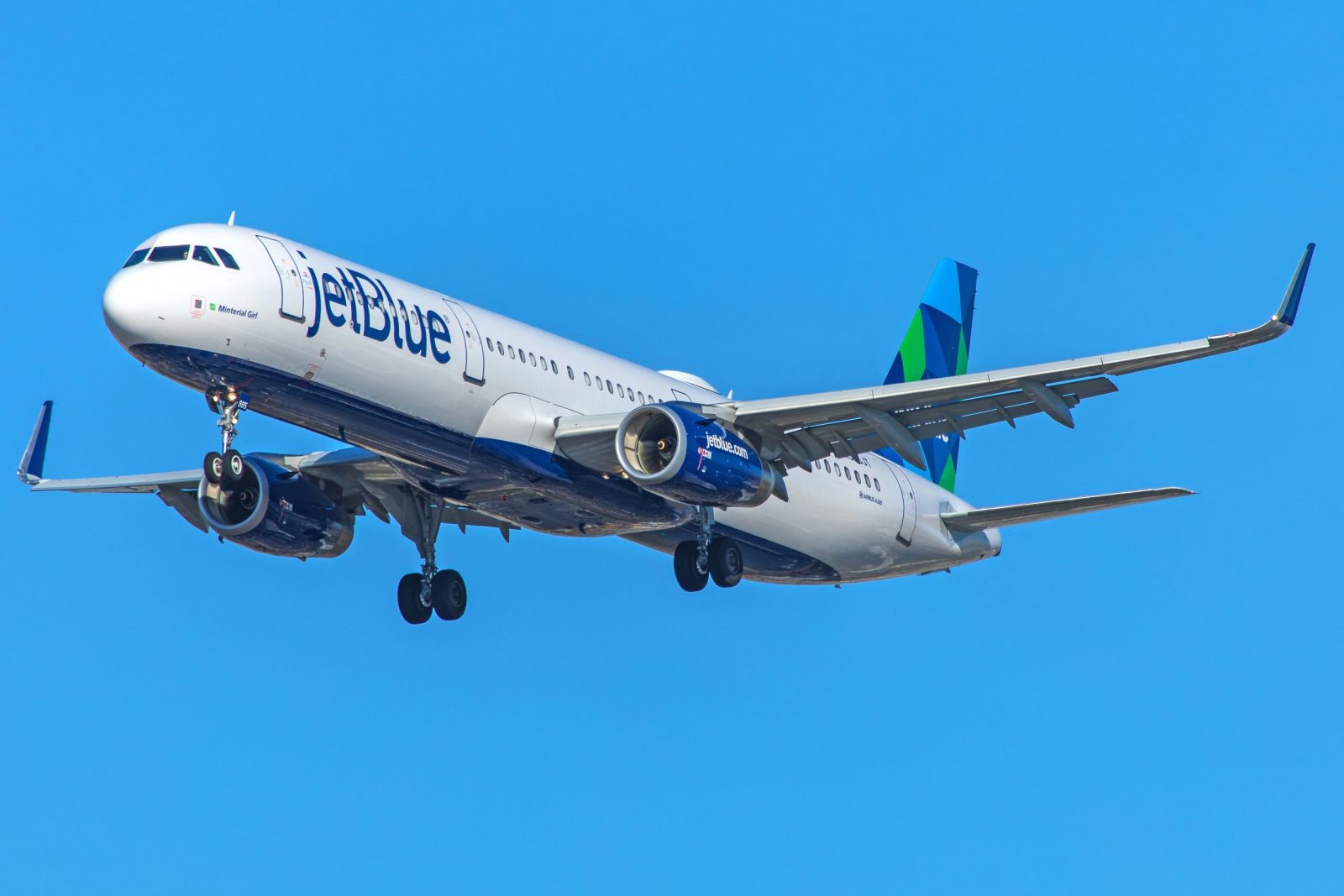
A JetBlue A320 in Boston. (Photo: AirlineGeeks | William Derrickson)
JetBlue has had a rough time. The airline initially had a great strategy planned out with American Airlines in the Northeast but that ended up being plagued by legal issues brought on by the government and was ultimately canned.
The New York-based carrier also tried merging with Spirit as a quick way to get assets and become bigger. That ended up falling through as well. This has left the airline in a tricky situation. It needs to find ways to innovate to survive. JetBlue has had a lot of misses and needs some wins to get back on the right path.
The airline had one big staffing win with the return of Marty St. George to the airline as President. Marty was previously a senior executive at the airline and had left to work for a South American carrier.
The next win was recently announced and will be something that many customers will appreciate. Beginning Sept. 6, 2024, passengers flying on the airline’s basic economy fare, Blue Basic, will be able to bring on a carry-on bag for free. This is a big benefit for what is the lowest cost fare that often has the fewest included benefits.
It’s clear that JetBlue is looking to win over those leisure customers who often travel on low-cost carriers where basic economy has no included perks. Marty St. George said in a statement that “carry-on bags are an important part of travel to customers, and when presented with a choice between JetBlue’s award winning service and another carrier’s basic offering, we want JetBlue to be the easy winner.”
At this point, the airline’s value proposition greatly increases on leisure routes where competition is the fiercest for price-sensitive travelers.
Increased Competitiveness and Network Optimization
The airline is going toe-to-toe with Frontier down in Puerto Rico, a large leisure market. The airline is increasing flights to San Juan from the continental United States and offering more flights that originate in San Juan for travelers going to other parts of the Caribbean, Mexico, and South America.
JetBlue is also going to make life easier for many Long Islanders with three new flights to Florida. In October, JetBlue will start flights from Long Island MacArthur Airport to Orlando, Palm Beach, and Fort Lauderdale.
These flights. along with the additional flying from San Juan, seem to suggest that the airline has Frontier dead in its sights and is looking to win passengers from it. Frontier already flies to all of these destinations from Long Island.
The airline is also looking to streamline operations and move aircraft around to more profitable routes. It is cutting back service from New York’s LaGuardia and focusing on its more substantial operations at JFK instead, all while cutting back transatlantic flying over the winter. The aircraft pulled off from transatlantic flying will be used to offer Mint class premium cabin offerings on new routes within the United States and Canada.
For a while, there was a lot of doubt as to what JetBlue will do. It had a long streak of bad luck and the future of the airline was uncertain. With all of these changes, it really does seem like the airline is taking itself seriously and doubling down on its core competencies.
Hemal took his first flight at four years old and has been an avgeek since then. When he isn't working as an analyst he's frequently found outside watching planes fly overhead or flying in them. His favorite plane is the 747-8i which Lufthansa thankfully flies to EWR allowing for some great spotting. He firmly believes that the best way to fly between JFK and BOS is via DFW and is always willing to go for that extra elite qualifying mile. Hemal's opinions are his own and do not reflect those of his employer.
Allegiant Shuts Down Austin Crew Base
After nearly three years in operation, ultra-low-cost carrier Allegiant is closing down its Austin base early next year.
An Allegiant A320 on final approach to Austin-Bergstrom International Airport. (Photo: AirlineGeeks | Mateen Kontoravdis)
After nearly three years in operation, Allegiant is closing down its Austin base. As first reported by Aero Crew News and Enilria, the ultra-low-cost carrier (ULCC) plans to shut down the base effective Jan. 7, 2025.
Allegiant opened its Austin base in November 2021 with initial plans to create roughly 89 ‘high-wage’ jobs, the carrier said in a press release. The airline had also planned to base three Airbus A320 jets at the airport.
According to Cirium Diio schedule data, the airline scaled back year-over-year capacity in Austin by 33% in the first quarter. In June 2024, Allegiant operates up to 20 peak-day flights in the market.
In Austin, Allegiant flies from the airport’s South Terminal, which is slated to be demolished to make way for a new midfield concourse. The airport says it expects the terminal to remain operational until early 2026.
“Austin is an important city to our network. However, due to airport constraints following the planned closure of the South Terminal, Allegiant will end base operations at AUS Jan 7, 2025. Because of the South Terminal’s closure, Allegiant will eventually relocate to the main terminal. Unfortunately, the gate space we have been offered will not allow us to sustain our base at AUS. However, we will continue to serve Austin with all flights operating as turns from other bases, providing our customers with the exceptional service they have come to expect from Allegiant,” the airline said in a statement.
Ryan founded AirlineGeeks.com in February 2013 and has spent more than a decade covering the airline business. His work has been featured by CNN, WJLA, CNET, and Business Insider. His aviation experience spans airport operations, Part 135 regulatory compliance, and airline crew workforce planning, along with time behind the yoke of a Cessna 172 and interviews with airline executives. Ryan now serves as Group President of Firecrown Media’s Aviation Group. He holds a B.S. in Air Transportation Management and an MBA from Arizona State University and teaches Airline Management at Embry-Riddle Aeronautical University.
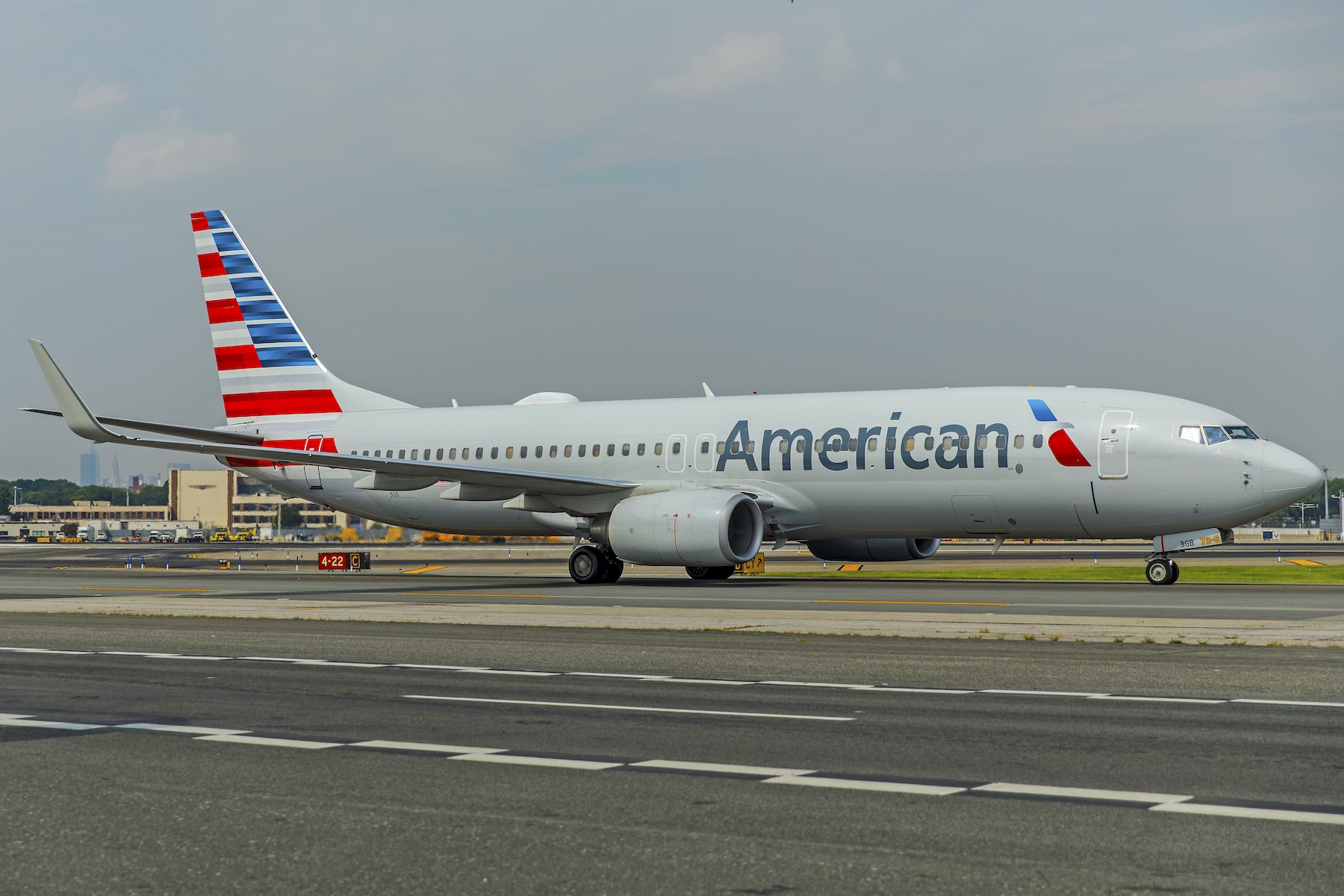
An American 737-800 at New York's LaGuardia Airport (Photo: AirlineGeeks | William Derrickson)
American is adding a batch of routes from New York’s LaGuardia Airport starting in November 2024. The flights are scheduled to be operated by mainline aircraft.
Data from aviation analytics company Cirium shows the carrier adding service between LaGuardia and New Orleans, Orlando, and Palm Beach. New Orleans is a completely new route for post-merger American while Orlando and Palm Beach have been served in the past.
LaGuardia to New Orleans
Service to New Orleans is slated to begin on Nov. 5, 2024. Flights will operate daily on an Airbus A320.
American has yet to serve the New York-New Orleans market from either JFK or LaGuardia since 2008. The airline will compete directly with Delta, which serves the market from both airports. Southwest also serves New Orleans from LaGuardia.
In addition, JetBlue flies the route from both JFK and LaGuardia, however, service to the latter ends in late October as part of recently announced route cuts.
LaGuardia to Orlando
The airline will also add more flights in Orlando. Starting on Nov. 5, 2024, American plans to add twice-daily service from LaGuardia to Orlando on a Boeing 737-800.
This market is widely served by Delta, Southwest, Frontier, Spirit, and JetBlue. American will offer a 7 a.m. and 2:30 p.m. outbound departures on the route.
American last flew regular service between the two cities in November 2021.
LaGuardia to Palm Beach
Lastly, American plans to add service from LaGuardia to Palm Beach. Similar to the Orlando route, flights will be operated twice-daily on a Boeing 737-800 aircraft starting on November 5.
Delta, JetBlue, and Spirit also serve the market. American previously served LaGuardia-Palm Beach on a regular basis in March 2020.
Ryan founded AirlineGeeks.com in February 2013 and has spent more than a decade covering the airline business. His work has been featured by CNN, WJLA, CNET, and Business Insider. His aviation experience spans airport operations, Part 135 regulatory compliance, and airline crew workforce planning, along with time behind the yoke of a Cessna 172 and interviews with airline executives. Ryan now serves as Group President of Firecrown Media’s Aviation Group. He holds a B.S. in Air Transportation Management and an MBA from Arizona State University and teaches Airline Management at Embry-Riddle Aeronautical University.
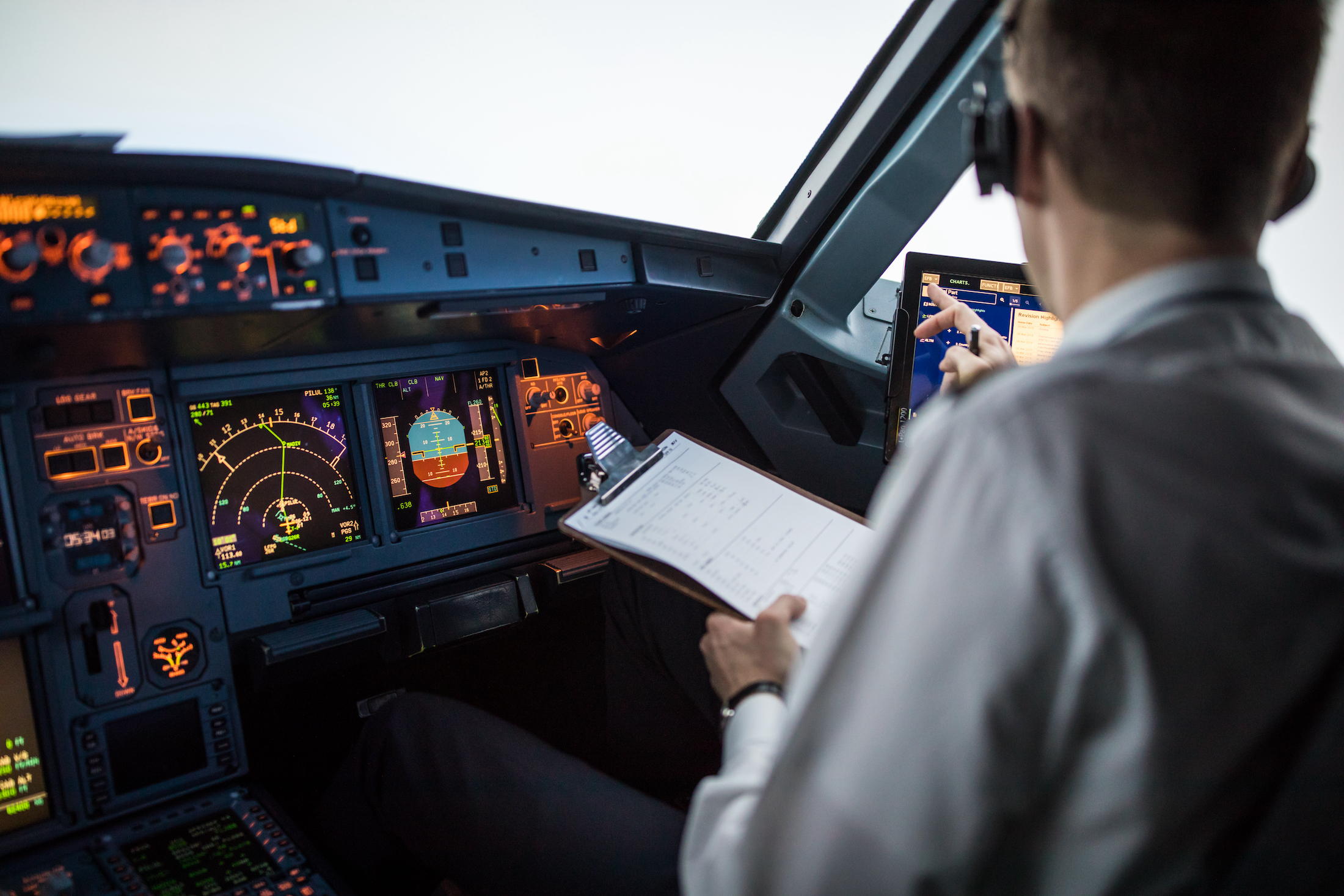
Pilot executing pre-flight procedures in a commercial airliner cockpit before takeoff. (Photo: Shutterstock | l i g h t p o e t)
In the early months of 2024, many airlines in the United States have made headlines for their decisions to slow or pause pilot hiring. Large carriers like American Airlines and Southwest Airlines have halted their new hire pilot classes amid a slowdown in hiring across major carriers.
However, the trend is not universal across the entire industry. Regional airlines are still in great need of new pilots after many pilots left these carriers for higher-paying positions at major airlines between 2021 and 2023.
Some of these carriers are even offering generous incentives for new hires. Here are the airlines that are currently offering sign-on bonuses to new pilots:
GoJet Airlines
GoJet currently has sign-on bonuses for both first officers and captains. New hire first officers are being offered an $18,000 sign-on bonus that will be paid daily over 24 months. GoJet also has a hiring stream for experienced first officers who are close to meeting captain requirements. These new hires are being offered a $20,000 hiring bonus, a $40,000 upgrade bonus at the time of upgrade to the left seat, and an additional $25,000 sign-on bonus if they already hold a CRJ type rating.
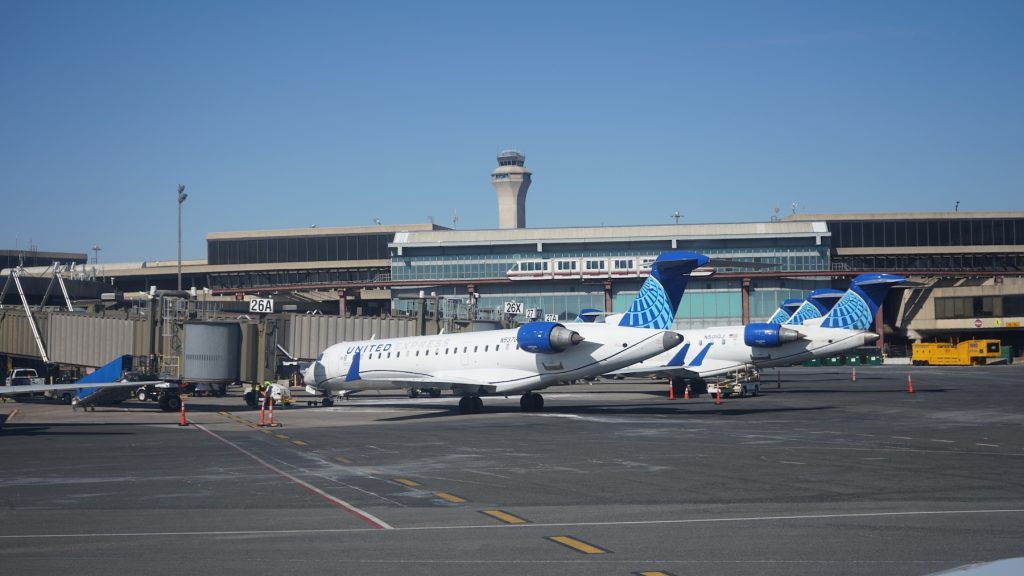
Meanwhile, direct entry captains are being given a $175,000 sign-on bonus and an additional $25,000 if they have previous Part 121 experience, to be paid out over 12 months. GoJet exclusively operates Bombardier CRJ-550 jets under the United Express banner. The airline has crew bases in Chicago (ORD), Newark (EWR), St. Louis (STL), and Washington, D.C. (IAD).
United Express CRJ aircraft operated by GoJet in Newark (Photo: Shutterstock)
Air Wisconsin
Air Wisconsin is offering captain-qualified new hires a $200,000 bonus within 18 months of completing their initial operating experience. New hires will not need to sign a contract to receive this bonus. The regional carrier has crew bases in Chicago (ORD), Dayton (DAY), and Milwaukee (MKE) and operates a fleet of Bombardier CRJ-200 aircraft. Air Wisconsin flies under the American Eagle brand out of American’s Chicago (ORD) and Philadelphia (PHL) hubs.
CommuteAir
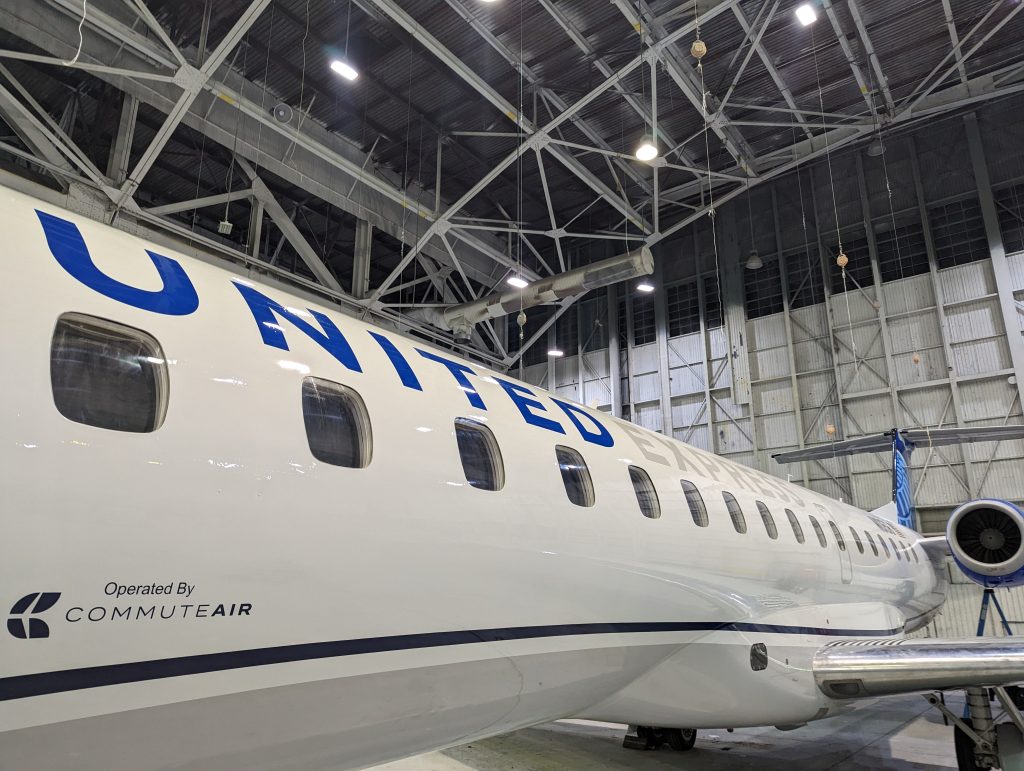
CommuteAir currently has sign-on bonuses for new first officers as well as retention bonuses for both first officers and captains. New hire first officers are being offered a $20,000 sign-on bonus and retention bonuses of $5,000 in the first year of employment and $25,000 the following year. Retention bonuses are $50,000 per year for captains. CommuteAir flies Embraer ERJ-145s for United Express, with crew domiciles in Houston (IAH) and Washington, D.C. (IAD).
A CommuteAir Embraer E145 aircraft (Photo: CommuteAir)
Endeavor Air
The Delta subsidiary is offering generous sign-on and retention bonuses to new pilots and a guaranteed career path to Delta. For experienced first officers with qualifying Part 121 or Part 135 experience, Endeavor Air is offering a sign-on bonus of $20,000 to $40,000, based on experience and up to $110,000 in retention bonuses following a Captain upgrade.
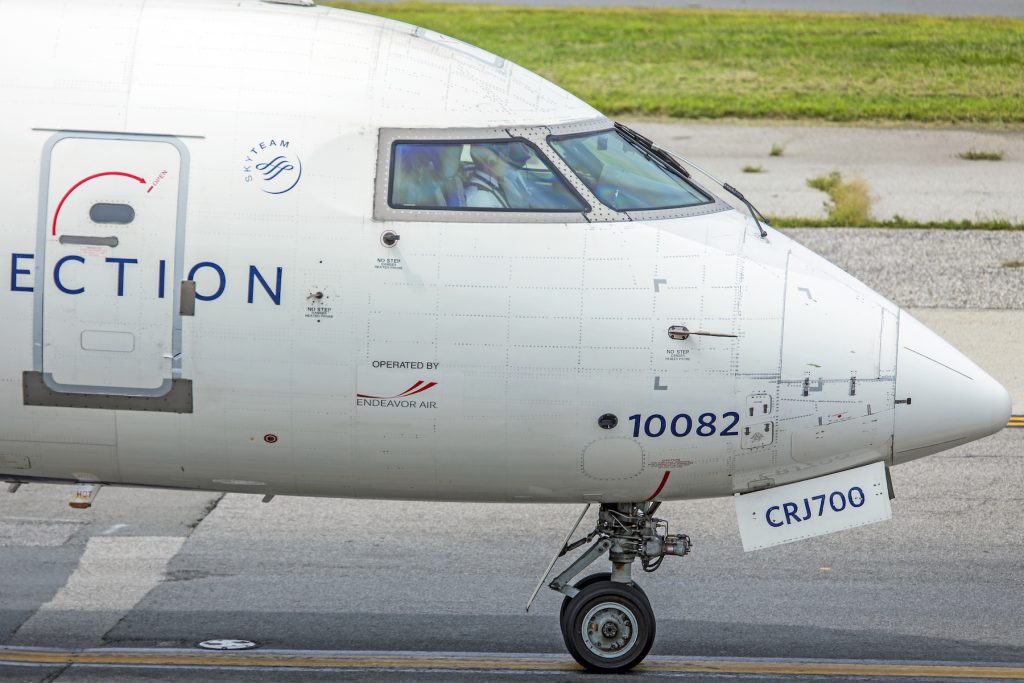
Direct entry captains are being offered a $40,000 sign-on bonus at the end of their initial operating experience and up to $110,000 in retention bonuses afterward. The retention bonuses are being provided in exchange for a commitment to remain at Endeavor during the pilots’ waiting period to advance to Delta. Endeavor pilots fly Bombardier CRJ-700s and CRJ-900s out of the airline’s hubs in Atlanta (ATL), Cincinnati (CVG), Detroit (DTW), Minneapolis (MSP) and New York (JFK and LGA).
An Endeavor Air CRJ-700 aircraft at New York’s LaGuardia airport (Photo: AirlineGeeks | William Derrickson)
Horizon Air
Alaska Air Group subsidiary Horizon Air is offering sign-on bonuses for new first officers with FAA-approved prior qualifying time. Those with 500 to 999 hours are being offered $25,000 and those with 1,000 hours or more will receive $50,000. Horizon Air operates Embraer 175s and has crew bases in Anchorage (ANC), Boise (BOI), Medford (MFR), Portland (PDX), Spokane (GEG) and Seattle (SEA and PAE).
A Horizon Air Embraer E175 operating for Alaska Airlines (Photo: AirlineGeeks | Katie Zera)
Piedmont Airlines
Piedmont Airlines is offering sign-on bonuses for new first officers and direct entry captains. Those with 950 or more hours of qualifying time will receive a $100,000 bonus on their first paycheck. New hires with 500-949 hours of qualifying time will earn $75,000. In addition, pilots with 500 or more hours of qualifying time and a type rating for the Embraer 135/150/145 are being offered an additional $50,000 bonus.
Piedmont is a wholly-owned subsidiary of the American Airlines Group and operates Embraer ERJ-145s under the American Eagle banner. The airline has crew bases in Charlotte (CLT), Harrisburg (MDT), and Philadelphia (PHL).
PSA Airlines
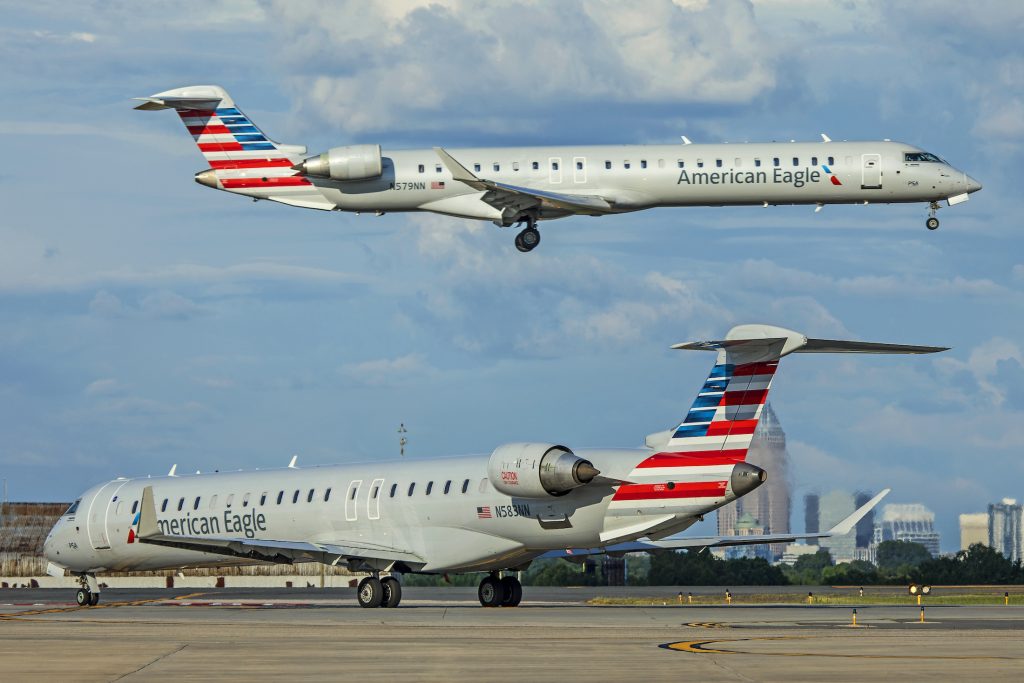
PSA Airlines currently has a $100,000 bonus for direct entry captains. The carrier is another wholly-owned subsidiary of the American Airlines Group. PSA operates Bombardier CRJ-700s and CRJ-900s under the American Eagle brand and has crew bases in Charlotte (CLT), Dallas/Fort Worth (DFW), Dayton (DAY), Philadelphia (PHL) and Washington, D.C. (DCA).
PSA aircraft in Charlotte (Photo: AirlineGeeks | William Derrickson)
Republic Airways
Republic Airways is offering up to $100,000 in sign-on bonuses to new captains. The airline flies Embraer 170 and 175 aircraft for American Eagle, Delta Connection, and United Express. Republic has bases in Boston (BOS), Chicago (ORD), Columbus (CMH), Indianapolis (IND) Louisville (SDF), New York (LGA), Newark (EWR), Philadelphia (PHL), Pittsburgh (PIT) and Washington, D.C. (DCA).
SkyWest Airlines
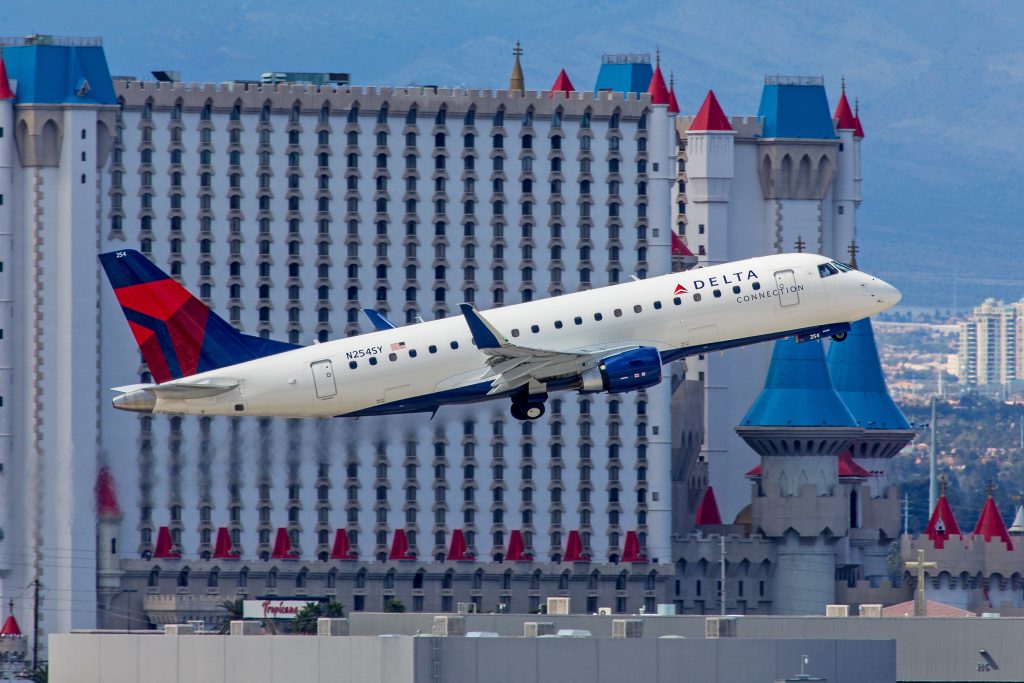
The country’s largest regional carrier is offering new hires with CRJ or Embraer 170/190 type ratings a $7,500 sign-on bonus. SkyWest has 20 crew bases across the country and operates Bombardier Regional Jets and Embraer 175 aircraft. The airline flies under its own charter brand and for Alaska Airlines, American Eagle, Delta Connection, and United Express.
A SkyWest Embraer E-170 in Las Vegas. (Photo: AirlineGeeks | William Derrickson)
Looking for pilot jobs? FindaPilot.com posts new openings every day. Get a 20% discount on any plan. Just use the promo code AG20 when purchasing a plan. You’ll get a 20% discount on your first three months as a member.
Andrew is a lifelong lover of aviation and travel. He has flown all over the world and is fascinated by the workings of the air travel industry. As a private pilot and glider pilot who has worked with airlines, airports and other industry stakeholders, he is always excited to share his passion for aviation with others. In addition to being a writer, he also hosts Flying Smarter, an educational travel podcast that explores the complex world of air travel to help listeners become better-informed and savvier travelers.
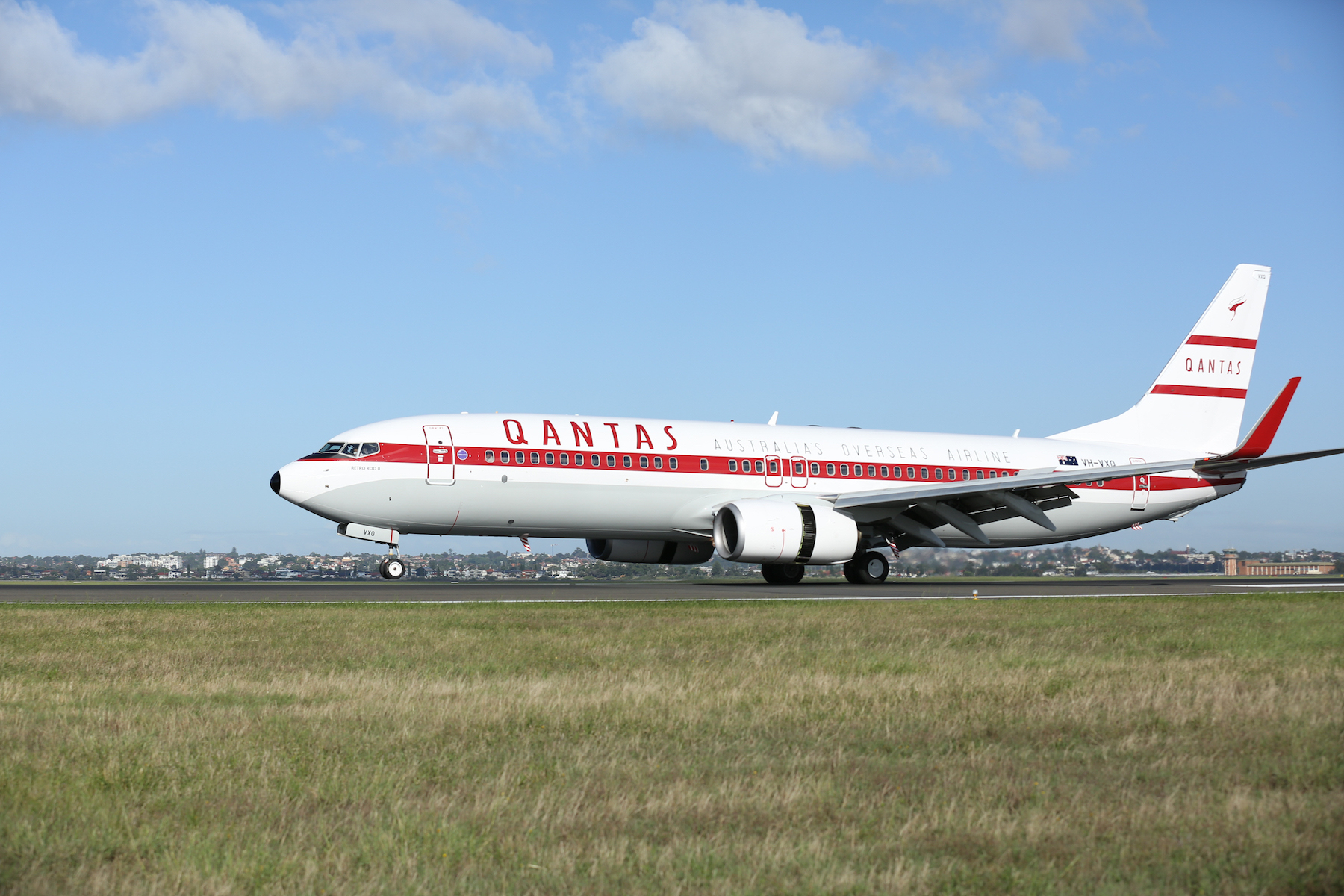
A retro livery on one of Qantas' 737s (Photo: Qantas)
Editor’s Note: AirlineGeeks is proud to present our ‘Livery of the Week’ series. Every Friday, a team member will share an airline livery, which can be from the past, present, or even a special scheme. Some airline liveries are works of art. The complexity associated with painting around critical flight components and the added weight requires outside-the-box thinking from designers. The average airliner can cost upwards of $200,000 to repaint, creating a separate aircraft repainting industry as a result.
Have an idea for a livery that we should highlight? Drop us a line.
Qantas, the Australian national carrier, has a unique way of celebrating its rich history. In 2015, they unveiled a special Boeing 737-800 painted in a vintage livery, nicknaming it “Retro Roo II.” This particular design pays homage to the Boeing 707 jets that Qantas operated starting in 1959.
The “Retro Roo II” livery features a design aesthetic reminiscent of the 1960s. The aircraft boasts a predominantly white fuselage with a red cheatline running along its side.
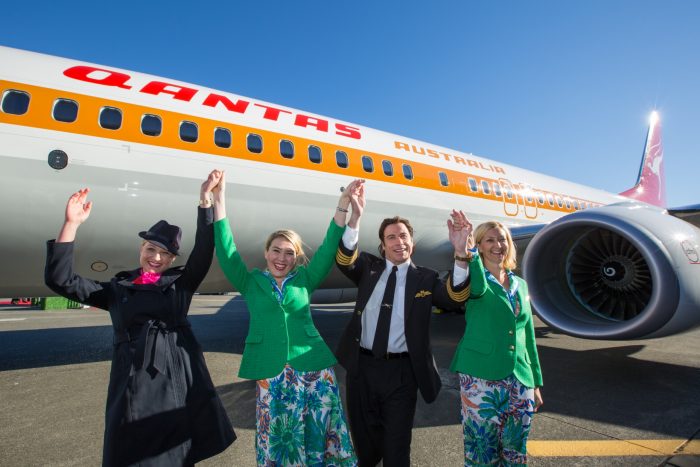
Qantas unveiled one of two retro liveries in 2014 (Photo: Qantas)
The Qantas name is displayed in a bold, stylized font, and a small kangaroo adorns the vertical stabilizer.
This Boeing 737 with a retro twist wasn’t the first for Qantas. In fact, “Retro Roo II” followed “Retro Roo I,” a 737 unveiled in 2014 that sported the livery used from 1971 to 1984. These special liveries have proven popular, not only serving as a reminder of Qantas’ long history, but also generating excitement among aviation enthusiasts who flock to airports to catch a glimpse of these unique planes.
Looking for a new airplane model? Head over to our friends at the Midwest Model Store for a wide selection of airlines and liveries.
Ryan founded AirlineGeeks.com in February 2013 and has spent more than a decade covering the airline business. His work has been featured by CNN, WJLA, CNET, and Business Insider. His aviation experience spans airport operations, Part 135 regulatory compliance, and airline crew workforce planning, along with time behind the yoke of a Cessna 172 and interviews with airline executives. Ryan now serves as Group President of Firecrown Media’s Aviation Group. He holds a B.S. in Air Transportation Management and an MBA from Arizona State University and teaches Airline Management at Embry-Riddle Aeronautical University.
JetBlue To Include Full-Size Carry-Ons in Basic Fares
As the airline industry in the U.S. is gearing up for its busiest summer on record, some good news for budget-conscious travelers arrived from JetBlue.
A JetBlue Airbus A321. (Photo: AirlineGeeks | William Derrickson)
As the airline industry in the U.S. is gearing up for its busiest summer on record, some good news for budget-conscious travelers arrived from JetBlue. The New York-based carrier has decided its carry-on policy for customer traveling on their cheapest fares (Basic Blue).
For all flights departing on Sept. 6, 2024 onwards, customers who have purchased Basic Blue fares will be allowed to carry onboard a full-size standard carry-on (22” x 14” x 9”) in addition to a personal item (17” x 13” x 8”).
“Carry-on bags are an important part of travel to customers, and when presented with a choice between JetBlue’s award-winning service and another carrier’s basic offering, we want JetBlue to be the easy winner,” said Marty St. George, President of JetBlue, in a press release. “We’re always looking for ways to evolve our offering in response to customer preferences. This is a win-win as we improve the customer experience and keep JetBlue competitive in our industry.”
A Departure from the ULCC Model
During the past few years, all full-service and hybrid carriers have introduced a new family of fares to compete with ultra-low-cost carriers like Spirit or Frontier for the business of the most price-sensitive customers, those who just look for the cheapest fare, no matter what the level of service is. In order to do that, these fares have been stripped of most features, like the ability to collect frequent flier miles, the possibility to change or cancel the trip, or the option to select a seat at check-in.
Some carriers also decided to reduce the carry-on allowance by limiting those passengers to a small personal item: United Airlines and, until now, JetBlue, were among those, while the other two big U.S. network carriers, American Airlines and Delta Air Lines, did not go that far and still allowed all customers, regardless of the fare purchased, to carry onboard a full-size carry-on bag.
The creation of a new fare family offering a product very similar to what ULCCs provide stemmed from the need to be competitively positioned in the ‘price grid,’ the most common output of a price search in most comparison websites. JetBlue is now departing from this approach, focusing on the concept of “value” rather than trying to match the lowest fare at all costs.
Is the ‘Small Backpack’ World Starting to Collapse?
At least in the U.S., a reality where it is considered normal to travel thousands of miles from home just with the clothes on one’s back and a small personal item fitting under the seat in front, could soon be confined to the ULCC arena if United decides to follow JetBlue’ decision.
In Europe, the big low-cost carriers Ryanair, Wizz Air, and easyJet have taken the concept one step forward by revenue managing bag fees based on demand. Traveling with a full-size carry-on or checking a bag does not have a set price any longer, but its cost varies depending on the destination, the day and time of the flight, and based on the time of booking, just like with seats.
Adding a carry-on or a suitcase to a booking can double or triple the cost of a trip, with permitted sizes varying considerably between one carrier and another, to the point that the European Parliament is considering a specific regulation to eliminate extra charges for hand baggage “on condition that such hand baggage meets reasonable requirements in terms of its weight and dimensions, and complies with applicable security requirements.”
The U.S. environment is usually more inclined to let the market decide the appropriate level of service, but this decision by JetBlue could be the first step towards a return to a still recent past.
Vanni fell in love with commercial aviation during his undergraduate studies in Statistics at the University of Bologna, when he prepared his thesis on the effects of deregulation on the U.S. and European aviation markets. Then he pursued his passion further by obtaining a Master’s Degree in Air Transport Management at Cranfield University in the U.K. followed by holding several management positions at various start-up carriers in Europe (Jet2, SkyEurope, Silverjet). After moving to Canada, he was Business Development Manager for IATA for nine years before turning to his other passion: sports writing.
Sign-up for newsletters & special offers!
Get the latest stories & special offers delivered directly to your inbox