










Stories

Pilot Shortage ‘Isn’t Real,’ ALPA Says

The Air Line Pilots Association (ALPA) is saying that there is a surplus of commercial aviators and that the pilot shortage "isn't real."

A Horizon Air Embraer E175 at Paine Field.
A Horizon Air Embraer E175 at Paine Field. [AirlineGeeks - Katie Zera]

Following several years of record pilot hiring at U.S. airlines, the Air Line Pilots Association (ALPA) is saying that there is a surplus of commercial aviators and that the pilot shortage “isn’t real.” In a recent Tweet, the world’s largest pilots union – which represents over 77,000 pilots at mainline and regional carriers – pushed back against ongoing legislative efforts to raise the retirement age from 65 to 67.

“The pilot shortage isn’t real. In fact, there’s a surplus of airline pilots. Yet Congress is considering raising the pilot retirement age to 67, which will hurt air travel,” the Thursday post said. The union has strongly opposed proposals to raise the mandatory retirement age, citing a slew of potential operational and training issues.

In February, the Senate Commerce Committee voted 14-13 to reject a proposal raising the mandatory retirement age for airline pilots. Both ALPA and the Allied Pilots Association (APA) – which represents American Airlines pilots – say that similar proposals are still on the table in Congress.

“The argument hinges on a false claim that there’s a pilot shortage, even though there are more than enough pilots to meet current demand, with plenty more in the training pipeline,” ALPA said in a recent Politico article. “Raising the retirement age from 65 to 67 to address this fake pilot shortage is nothing more than an ill-conceived plan to a fake problem.”

Despite ALPA’s claims, consultancy firm Oliver Wyman expects the gap between pilot supply and demand to be around 13,300 by 2032, which is a 23% improvement from the group’s 2022 projections. In 2023, the Federal Aviation Administration (FAA) also issued a record number of Airline Transport Pilots (ATP) certifications.

Regional Airlines Still Struggling

Regional carriers continue to be some of the hardest hit by a shortage of pilots. In a recent presentation, the Regional Airline Association (RAA) – a trade group – said, “We can’t believe we have to say this, but an abrupt, temporary hiring disruption — driven entirely by an abrupt aircraft delivery disruption — is not the same thing as fixing the pilot shortage.”

The RAA claims that an aging pilot workforce coupled with aircraft delivery woes at mainline carriers is only temporarily moderating the pilot shortage. Several regional airlines continue to shell out lucrative sign-on bonuses, especially for captains as they look to retain pilots in the left seat.

On Thursday, regional carrier GoJet announced a new bonus structure for direct-entry captains with up to $200,000 “paid out within the first 12 months without any contractual obligations or strings attached.” The company says that captains will have the ability to earn over $400,000 during their first year of employment. ALPA represents GoJet pilots along with aviators at several other regional operators in the U.S. and Canada.

“We can hire first officers. I think almost every regional airline right now has a stack of first officers,” said CommuteAir CEO Rick Hoefling during an October 2023 interview with AirlineGeeks. “The problem is building their time at the same time you’re attriting out captains at a pretty high rate in the industry. We went from a pilot shortage to a captain shortage now in the industry. So the pendulum is starting to move.”

Major airlines – including Southwest, Delta, and United – have slowed or completely halted pilot hiring in 2024.

Ryan Ewing

Ryan founded AirlineGeeks.com in February 2013 and has spent more than a decade covering the airline business. His work has been featured by CNN, WJLA, CNET, and Business Insider. His aviation experience spans airport operations, Part 135 regulatory compliance, and airline crew workforce planning, along with time behind the yoke of a Cessna 172 and interviews with airline executives. Ryan now serves as Group President of Firecrown Media’s Aviation Group. He holds a B.S. in Air Transportation Management and an MBA from Arizona State University and teaches Airline Management at Embry-Riddle Aeronautical University.

Two Southwest 737s Remain in Legacy ‘Canyon Blue’ Livery

Southwest will soon bid farewell to the two remaining Boeing 737-700s in its legacy ‘Canyon Blue’ livery as they enter retirement.

A Southwest 737-700 in the 'Canyon Blue' livery. (Photo: AirlineGeeks | William Derrickson)

Southwest will soon bid farewell to the two remaining Boeing 737s in its legacy ‘Canyon Blue’ livery. The third to last aircraft bearing this livery – N762SW – was retired on April 14 at a Birmingham, Ala. storage facility.

The affectionately named ‘Canyon Blue’ design was first unveiled in 2001 as part of a brand shake-up from the 53-year-old airline’s original ‘desert gold’ colors.

In September 2014, the Dallas-based airline pivoted away from the ‘Canyon Blue’ livery on its fleet. The carrier unveiled a new livery, which was first rolled out on a 737-800 named ‘Heart One.’

Southwest unveiled its current livery in 2014. (Photo: Stephen M. Keller | Southwest Airlines)

After unveiling this new paint scheme, Southwest slowly updated its fleet in the new colors. With some of its older 737-700 series aircraft set to be retired, a handful remained in the previous design.

Currently, both N7813P and N786SW remain in the ‘Canyon Blue’ design. According to a Reddit post, these two-decade-old aircraft are set to be retired in October 2024.

Although no 737 MAX 8s were ever originally painted in the ‘Canyon Blue’ design, Southwest recently repainted one with a retro livery, which is registered as N872CB. The carrier also has a retro livery for the ‘desert gold’ design on N871HK.

Ryan Ewing

Ryan founded AirlineGeeks.com in February 2013 and has spent more than a decade covering the airline business. His work has been featured by CNN, WJLA, CNET, and Business Insider. His aviation experience spans airport operations, Part 135 regulatory compliance, and airline crew workforce planning, along with time behind the yoke of a Cessna 172 and interviews with airline executives. Ryan now serves as Group President of Firecrown Media’s Aviation Group. He holds a B.S. in Air Transportation Management and an MBA from Arizona State University and teaches Airline Management at Embry-Riddle Aeronautical University.

Boeing Workers Reluctant to Speak Up, FAA Panel Tells Senate

Engineers and technicians responsible for the building of Boeing aircraft are reluctant to speak up about safety concerns, witnesses told Senate lawmakers.

Boeing 777X
A Boeing 777X test bed flares for landing on a test flight. (Photo: AirlineGeeks | Katie Zera)

Engineers and technicians responsible for the building of Boeing aircraft are reluctant to speak up about safety concerns, and when they do, they are not being heard, a panel of witnesses told Senate lawmakers Wednesday.

Three members of an FAA-appointed safety panel created to review Boeing’s safety culture following 737 Max crashes appeared before the U.S. Senate Commerce Committee in Washington, D.C., to review its findings in a February report that were critical of the aerospace giant.

Also testifying Wednesday in a separate hearing on Capitol Hill was Sam Salehpour, a Boeing engineer and whistleblower, who told the Senate Homeland Security and Governmental Affairs Committee’s investigations subcommittee that more than 1,000 Boeing 787s should be grounded due to safety risks.

“Good engineering wins the day, but you have to listen to them,” said Senator Maria Cantwell (D-Wash.),  who also chairs the Commerce Committee, said during the hearing to determine if there are more steps the federal government can take to ensure Boeing aircraft are safe to fly.

In 2018, Lion Air Flight 610 crashed, killing all 189 on board. The next year, 157 died when Ethiopian Airlines Flight 302 crashed shortly after takeoff. Following the incidents, investigators determined that both crashes were attributed to the Maneuvering Characteristics Augmentation System, commonly referred to as MCAS, acting on false data from a single angle of attack sensor that put the aircraft into unrecoverable dives shortly after takeoff.

In response, the FAA grounded the jets worldwide for several months while the cause of the crashes were investigated. The investigation pointed to a series of faulty technical assumptions by Boeing’s engineers, a lack of transparency on the part of the company’s management, and what was described as “grossly insufficient oversight” by the FAA.

The FAA panel reviewing Boeing consisted of 24 members, all considered experts in their field. Among them, Javier de Luis, an aeronautics lecturer at the Massachusetts Institute of Technology, whose sister was killed in the 2019 Ethiopian Airlines crash. De Luis noted the panel spent a year reviewing 4,000 pages of documents provided by Boeing and interviewed 250 company employees at all levels of the organization, across six Boeing locations. The effort resulted in “27 findings and 53 recommendations” for the improvement of safety at the company, he told lawmakers Wednesday.

According to the panel’s findings, Boeing has made changes since the 737 Max crashes, but there is still room for improvement. Although management tells the employees to speak up if they have a safety concern, they are reluctant to do so, fearing retaliation. Others interviewed by the panel noted that their concerns—even when raised— are ignored.

An engineer, for example, warned Boeing about the potential for lithium-ion batteries aboard the Boeing 787 Dreamliners to overheat due to thermal runaway. The Dreamliner entered service in 2011 and was grounded by FAA emergency order in 2013 due to fires from overheated batteries.

“There exists a disconnect between the words that are being said by Boeing management and what is being seen and experienced by the technicians and engineers,” de Luis said.

Following the hearing, Boeing released a statement, saying it took the FAA review panel’s critiques “to heart and will act on their findings and feedback. Since 2020, Boeing has taken important steps to foster a safety culture that empowers and encourages all employees to raise their voice. We know we have more work to do, and we are taking action across our company.”

According to the company, employee reports through its “Speak Up” portal increased 500 percent since January, which it said indicated “progress toward a robust reporting culture that is not fearful of retaliation.”

The FAA panel released its findings in February just a few days after a Boeing 737 Max 9 experienced explosive decompression when it lost a door plug in its fuselage midflight while en route to California from Portland, Oregon.

The accident resulted in a mass grounding of the aircraft and reopened questions about the manufacturer’s process and attention to safety, including the documentation of repairs made during the production phase. It was determined the bolts that hold the door plug in place had not been reinstalled after corrective maintenance on a line of rivets in the fuselage.

Boeing was given 90 days to issue a plan to address the results and recommendations. That deadline for release of the plan is May 28.

During Wednesday’s hearing, Senator Eric Schmitt (R-Mo.) noted there were no representatives from Boeing in attendance: “We should be hearing directly from Boeing.”

The 737 is not the only aircraft under scrutiny. The 787 Dreamliner is under examination as well.

Salehpour, who has worked for Boeing for 10 years as a quality engineer, called for a global grounding of the 787 Dreamliners, saying the shortcuts he allegedly witnessed on the factory floor during the building of 787s and 777s that may have led to the misalignment of parts in the jet fuselage. In an interview with NBC, he suggested that employees took shortcuts that may have resulted in parts of the jet being misaligned, which could lead to metal fatigue and weakened fuselage.

Boeing pushed back on those claims.

“Extensive and rigorous testing of the fuselage and heavy maintenance checks of nearly 700 in-service airplanes to date have found zero evidence of airframe fatigue,” Boeing said in a statement Wednesday. “Under FAA oversight, we have painstakingly inspected and reworked airplanes and improved production quality to meet exacting standards that are measured in the one hundredths of an inch. We are fully confident in the safety and durability of the 787 Dreamliner.”

WATCH: Whistleblower Testifies at Senate Hearing on Boeing Safety Culture

Editor’s Note: This story first appeared on FlyingMag.com

AirlineGeeks.com Staff

AirlineGeeks.com was founded in February 2013 as a one-person blog in Washington D.C. Since then, we’ve grown to have 25+ active team members scattered across the globe. We are all here for the same reason: we love deep-diving into the fascinating realm of the airline industry.

Aegean Invests in Four A321neos for Long Distance Routes

Greece's Aegean says it will take delivery of four Airbus A321neo aircraft equipped with extended-range capabilities and improved onboard amenities.

Aegean A321neo
Aegean's first A321neo at Athens International Airport. (Photo: Konstantinos Chatzigeorgiadis)

Aegean will take delivery of four Airbus A321neo aircraft equipped with extended-range capabilities. These aircraft will be used to service routes outside of the European Union (EU). In addition, the aircraft will feature new high-comfort configurations.

The extended-range aircraft will operate routes outside of Europe, where flight times are between four and seven and a half hours in duration. The strategic decision to invest in these specially adapted aircraft creates a sub-fleet of A321neo aircraft which Aegean plans to use to extend its reach.

Expansion Opportunities for Aegean

The Athens-based airline states that this special-purpose sub-fleet of A321neos will operate services to destinations in the Gulf. This includes Dubai, Riyadh, and Jeddah and other potential new destinations including Bahrain, Doha, and Oman. The specially adapted aircraft could also be deployed on routes to Central Africa such as Lagos, Nigeria; Addis Ababa, Ethiopia and Nairobi, Kenya.

Since the aircraft will be equipped with additional fuel tanks, providing operational capability for flights up to seven and a half hours, it would also be possible for Aegean to fly to destinations in Asia including Delhi and Mumbai in India and Almaty in Kazakhstan. Due to longer flight times, these non-EU destinations are generally served from European capitals, by airlines using aircraft with higher comfort levels and lower seat density than the typical intra-European cabin configuration.

Aegean CEO Dimitris Gerogiannis said, “We believe in the great opportunity for Aegean and for our country that lies in developing markets beyond the EU, either in the Gulf area, Africa, or in regions of Asia which could be served with a special, extended range, version of the A321neo given our location in the southeast edge of Europe.”

With these new aircraft and quality service, Aegean Airlines aims to serve and develop such markets with an appropriately upgraded product. The new upgraded specially adapted aircraft will be delivered to the carrier in 2026 and 2027.

Improved Comfort Levels

The cabin configuration for the four narrowbody aircraft will be significantly improved. These A321neos will offer higher levels of comfort for both Economy and Business Class passengers. The seat count will be reduced from 220 seats – typically seen on Aegean’s standard A321neo aircraft, to less than 180 seats.

Additional features will also include satellite connectivity, in-flight entertainment (IFE screens) in every seat, and a premium lie-flat seat in Business Class. Gerogiannis said, “We further recognize the necessity of a cabin with significantly higher comfort and experience features to effectively represent Aegean’s service values, for our passengers in these markets. We are making a significant investment in the extended range and a totally new level of comfort for an initial four aircraft sub-fleet to give our crews the right tool to best represent Aegean values for these longer flight markets.”

A Special Sub-Fleet

Late last year, the Greek carrier exercised options on three additional Airbus A321neo aircraft under a purchase agreement with Airbus. The airline has now proceeded, converting this to a firm order for five A321neo aircraft instead of previously ordered A320neos. Converting these options to orders will take the total number of A320/321 family aircraft already received or on order to 50, of which 29 are the A321neo variant.

Among the 29 A321neos, 25 will come with the current standard configuration while four will be upgraded with the new “special purpose” longer range capabilities and higher comfort configurations for Aegean’s longer distance flights. To date, 28 Airbus 321/321neo aircraft have been delivered, while a further 22 are expected to be delivered between 2024 and 2028.

“It’s one more big step towards growing our reach and capabilities and we look forward to welcoming our passengers from these markets to this new level of experience with us in the years to come.” Gerogiannis added.

Lorne Philipot

Lorne is a South Africa-based aviation journalist. He was captivated and fascinated by flying from the day he took his first airline flight. With a passion for aviation in his blood, he has flown to destinations in all corners of the globe. Lorne has traveled extensively and lived in various countries. Drawing on his travels and passion for aviation, Lorne enjoys writing about airlines, routes, networks, and new developments.

United Inks LOI For 35 A321neos, Converts 110 737 MAX Orders

United has taken significant steps to adjust its fleet plan in light of ongoing challenges with aircraft deliveries and certification delays at Boeing.

A United A321neo at Airbus' Toulouse facility (Photo: Airbus)

United has taken significant steps to adjust its fleet plan in light of ongoing challenges with aircraft deliveries and certification delays at Boeing. The Chicago-based carrier recently signed letters of intent (LOI) to lease 35 new Airbus A321neos, which are scheduled to begin flying in 2026 and 2027. United says these aircraft will be equipped with CFM engines and acquired from two unnamed lessors.

This move comes as part of United’s efforts to maintain a consistent delivery schedule of about 100 narrowbody jets annually from 2025 through 2027. The decision to lease the A321neos is a response to delays in the certification of Boeing’s 737 MAX 10 aircraft, which have pushed the delivery timeline for these jets into 2025 or later.

Additionally, United has opted to convert a portion of its Boeing 737 MAX 10 orders to the smaller and already certified MAX 9 variant. The airline currently holds firm commitments for 167 MAX 10s and 144 MAX 9s. Previously, United had 277 commitments for 737 MAX 10 aircraft, per a February 2024 SEC filing.

“This delivery schedule provides fleet renewal, steady growth and addresses the bow wave of aircraft delivery delays that had been building,” United CFO Mike Leskinen said during the company’s first-quarter earnings call on Wednesday.

The company has also faced other challenges in recent months, including a grounding of Boeing 737 MAX 9 aircraft earlier in the year due to safety concerns. This grounding resulted in approximately $200 million in lower revenue for the carrier.

Ryan Ewing

Ryan founded AirlineGeeks.com in February 2013 and has spent more than a decade covering the airline business. His work has been featured by CNN, WJLA, CNET, and Business Insider. His aviation experience spans airport operations, Part 135 regulatory compliance, and airline crew workforce planning, along with time behind the yoke of a Cessna 172 and interviews with airline executives. Ryan now serves as Group President of Firecrown Media’s Aviation Group. He holds a B.S. in Air Transportation Management and an MBA from Arizona State University and teaches Airline Management at Embry-Riddle Aeronautical University.

How Do Low-Cost Airlines Make Tickets So Cheap?

The likes of Ryanair and easyJet are some of the most successful airlines, with the former consistently being in the top three airlines by passengers carried.

Ryanair passengers loading on aircraft
People queuing while boarding a Ryanair aircraft (Photo: Shutterstock)

The likes of Ryanair, easyJet, and Southwest are some of the most successful airlines in history, with the former consistently being in the top three airlines by passengers carried. But, with prices as low as $30 for flights, how do these airlines manage to stay profitable, let alone be as successful as they are?

The Point-to-Point Model

Perhaps the biggest difference between low-cost carriers (LCCs) and their legacy counterparts is the destinations in which they operate. Legacy carriers tend to use a ‘Hub and Spoke’ model, meaning that the airline will have one or a few main hubs that almost all flights will operate to and from. For example, British Airways has all flights operating from London, and Singapore Airlines has all flights operating from Singapore Changi Airport.

However, this model comes with a downside; outbound flights have to wait for connecting inbound flights to allow for reasonable connection times. This is expensive, as aircraft are sitting around and not making money. So, to combat this, LCCs try and have their fleet in the air as much as possible.

Budget airlines tend not to offer connections, as they would result in an increase in cost to the airline, such as a more complicated ticketing system, or compensation if the first flight is delayed. Instead, they offer a ‘point to point’ model, which tries to connect as many destinations directly as possible. This overall increases their network’s reach, allowing more passengers to be transported.

Low-cost carriers have an incredible amount of power in that they can create new demand, simply because their flights are so cheap. While they may not see much business travel, leisure traffic is sufficient enough to bring in positive financial results.

Buying in Bulk

A good fleet is something essential to every operator. Low-cost carriers want to have the most efficient aircraft and do so for the lowest price. They do so by buying the newest aircraft possible, as the reduced fuel costs from more efficient aircraft outweigh the initial increased purchase price of a modern fleet.

Budget airlines will almost always buy aircraft of the same type, to reduce training costs for the entire team. For instance, Ryanair only operates Boeing 737s and the same with Southwest. Buying at the right time can also be important, which is why financial crashes can often mean that a low-cost carrier’s fleet increases in size, as aircraft prices can drop.

One thing possible to reduce the cost of new aircraft purchases is to buy in bulk. There will be deals made with the manufacturer to have discounts when in this manner, a compromise that has been popular with LCCs in the past.

Airports

Far-fetched, distant locations can often be the new destinations of low-cost airlines, as they bring with them cheap landing slots. For example, London, Gatwick, Luton and Stansted became major destinations for LCCs.

Because there is often little other traffic at these airports, bargaining power is at an all-time high. This means that should the airport do something to anger an airline, such as increase the cost of landing slots, the airline can just leave and severely impact the traffic for that airport. This allows for the cheapest prices available to airlines.

Jetways are expensive, which is why it’s rare to see a Ryanair aircraft at one. Instead, the airline will have passengers walk or take a bus to the plane.

Onboard the Aircraft

In-flight service is a way in which airlines can make a large amount of their profit. Onboard an easyJet aircraft, nothing is free, including the food. These all allow the Luton-headquartered carrier to make money, without having to increase the cost of your ticket.

Low-cost airlines have managed to do so well for themselves based on the principle that lowering the costs of operation means lowering ticket prices. This in turn brings in more passengers.

Ryanair boss Michael O’Leary has been very open about his interest in unique ways of making more money, such as charging for the use of restrooms or creating a standing cabin. While they initially may seem bad for the consumer, they still contribute to lowering the initial ticket price.

Sam Jakobi

Sam Jakobi is a young aviation journalist based in London, U.K. A lifelong Airbus fan, he has adored aviation for as long as he can remember. Sam writes articles and conducts interviews with members of the aviation community.

Inside Look: United Debuts America’s First Airline-Owned Early Baggage System

United’s Early Baggage System (EBS) at George Bush Intercontinental Airport (IAH) has gone live, marking the opening of the first of its kind system in the U.S.

An overview of United's Early Baggage System at Houston George Bush Intercontinental Airport (Photo: AirlineGeeks | Andrew Chen)

United Airlines’ Early Baggage System (EBS) at George Bush Intercontinental Airport (IAH) in Houston has gone live, marking the opening of the first-of-its-kind system in the United States. The new facility – which is the first privately owned early baggage system in the country – became operational earlier this month and is now processing up to 80,000 bags per day.

A New State-of-the-Art Baggage System

The EBS is a processing and storage system that stores bags from passengers who have arrived early for their flights or have long layovers at the airport. During irregular operations that lead to delays and cancellations, bags belonging to delayed passengers can also be stored at the EBS facility.

The system consists of an intricate network of tracks, trays, storage shelves and supporting structures. With a throughput of 40 bags per minute – meaning that it can accept 40 bags and release 40 bags each minute – the EBS places each bag on a tray that moves throughout the system. Throughout the system, there are a total of 3,476 trays – with each one having the ability to hold one bag – and a total of 3,300 storage spots. A sophisticated computer system tracks each bag and releases them based on flight times.

Inside United’s new Early Baggage System at IAH (Photo: AirlineGeeks | Andrew Chen)

Built in a six-story building that sits above a terminal access road, the EBS facility is a new structure that is connected to IAH’s Terminal C. The $90 million EBS was constructed as part of a larger $365 million replacement of the Terminal C and Terminal E baggage system.

Although the EBS is physically connected to the baggage systems for Terminal C and Terminal E, bags from all terminals can be sent to the facility. The EBS operates a crew of approximately four to seven people, including one system subject matter expert and one supervisor.

United’s new Early Baggage System at IAH, as seen from the ground level (Photo: AirlineGeeks | Andrew Chen)

United’s EBS was designed by German technology conglomerate Siemens AG, which has also installed similar systems at airports including Kuala Lumpur International Airport and Seoul Incheon International Airport.

Reducing Lost and Delayed Baggage

According to Paul Young, United’s Facility/Bag System Manager at IAH, the threshold for bags to be sent to the EBS is two hours, meaning that bags that arrive at the airport early by two hours or more will be sent to the facility.

Some of the 3,476 trays and 3,300 storage spots in United’s new Early Baggage System at IAH (Photo: AirlineGeeks | Andrew Chen)

During a visit to the EBS, Young told AirlineGeeks that bags that arrived early would previously be sent to the bag room at the departure concourse for the bag’s next flight, leaving them more prone to missing the flight. Airline bag rooms can rely heavily on manual processing, exposing bags to a higher risk of being missed, misplaced or forgotten.

The EBS is expected to address these challenges, as the system stores bags in a computer-tracked system that prioritizes the release of baggage according to flight time. To further increase the efficiency and reliability of the airline’s baggage delivery at IAH, the EBS is also able to automatically release bags early in the event that a passenger changes their flight.

Andrew Chen

Andrew is a lifelong lover of aviation and travel. He has flown all over the world and is fascinated by the workings of the air travel industry. As a private pilot and glider pilot who has worked with airlines, airports and other industry stakeholders, he is always excited to share his passion for aviation with others. In addition to being a writer, he also hosts Flying Smarter, an educational travel podcast that explores the complex world of air travel to help listeners become better-informed and savvier travelers.

SkyWest to Open Austin Crew Base

SkyWest is slated to open a new crew base in Austin starting on June 1, 2024, primarily operating flights on behalf of Delta Connection.

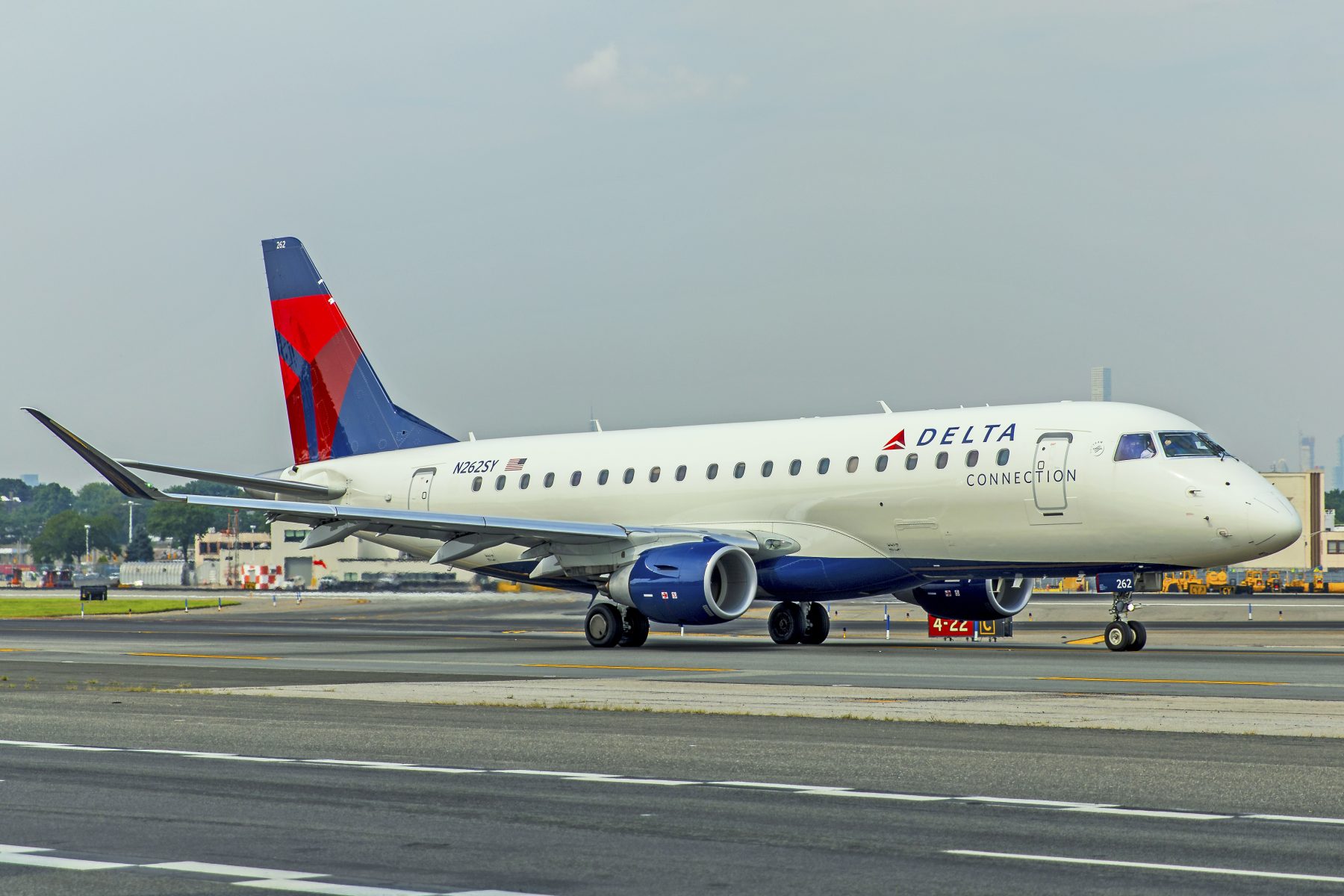
A SkyWest Embraer aircraft operating for Delta Connection. (Photo: AirlineGeeks | William Derrickson)

SkyWest is slated to open a new crew base in Austin starting on June 1, 2024. According to sources, the base will be for Embraer E175 operations.

Austin will be the carrier’s third crew base in Texas, joining Dallas/Fort Worth and Houston, along with the 20th overall. SkyWest confirmed the new crew domicile in a recent Instagram post.

According to Cirium Diio data, SkyWest is scheduled to operate 721 E175 flights to and from Austin in June. The regional carrier primarily operates on behalf of Delta in the Austin market, including the airline’s new routes to McAllen and Midland, Texas. From Austin, SkyWest also operates a handful of E175 flights for United Express to both Houston and Los Angeles.


View this post on Instagram


A post shared by SkyWest Airlines (@skywestairlines)

The new base announcement comes just months after American said it would cut over 20 routes from Austin, the majority of which were operated by regional aircraft. SkyWest flies CRJ-700 aircraft on behalf of American Eagle in Austin.

SkyWest will join ultra-low-cost carrier (ULCC) Allegiant, which also maintains a crew domicile in the Texas capital.

Ryan Ewing

Ryan founded AirlineGeeks.com in February 2013 and has spent more than a decade covering the airline business. His work has been featured by CNN, WJLA, CNET, and Business Insider. His aviation experience spans airport operations, Part 135 regulatory compliance, and airline crew workforce planning, along with time behind the yoke of a Cessna 172 and interviews with airline executives. Ryan now serves as Group President of Firecrown Media’s Aviation Group. He holds a B.S. in Air Transportation Management and an MBA from Arizona State University and teaches Airline Management at Embry-Riddle Aeronautical University.

American Returns Last COVID-Grounded 737 to Service

American returned its last remaining Boeing 737-800 grounded as a result of the COVID-19 pandemic to revenue service last week.

American 737 aircraft
An American 737-800 in Phoenix. (Photo: AirlineGeeks | William Derrickson)

American returned its last Boeing 737-800 grounded as a result of the COVID-19 pandemic to revenue service last week. Registered as N920AN, the nearly 25-year-old aircraft had been in storage for more than four years.

In 2020, the Fort Worth-based airline placed over 70 so-called ‘Block 1’ 737-800 aircraft – those delivered from 1999 to 2001 – into long-term storage programs. American gradually returned these aircraft to revenue service as demand for air travel increased during the pandemic.

According to Cirium Fleet Analyzer data, N920AN was the last remaining 737-800 in a long-term storage program within American’s fleet. In November 2023, it ferried from the carrier’s storage facility in Roswell, N.M. to Jacksonville, Fla.’s Cecil Airport, presumably for interior retrofits and return to service checks.

An American 737-800 and MD-80 in Roswell, N.M. (Photo: AirlineGeeks | William Derrickson)

As first pointed out by aviation watchdog JonNYC on Twitter/X, the 737 re-entered revenue service on April 8, 2024. American has over 300 Boeing 737-800 in addition to nearly 60 737 MAX jets.

Due to the COVID-19 pandemic, American retired a handful of fleet types in 2020, including the Embraer E190, Airbus A330, Boeing 757, and Boeing 767. The airline also placed several aircraft into storage programs as worldwide travel demand slumped.

Ryan Ewing

Ryan founded AirlineGeeks.com in February 2013 and has spent more than a decade covering the airline business. His work has been featured by CNN, WJLA, CNET, and Business Insider. His aviation experience spans airport operations, Part 135 regulatory compliance, and airline crew workforce planning, along with time behind the yoke of a Cessna 172 and interviews with airline executives. Ryan now serves as Group President of Firecrown Media’s Aviation Group. He holds a B.S. in Air Transportation Management and an MBA from Arizona State University and teaches Airline Management at Embry-Riddle Aeronautical University.

Cairo International Airport Sets New Passenger Records

The Aïd al-Fitr holidays this year, celebrated during the Ramadan festival, showcased exceptional performance for Cairo International Airport.

Terminal 1 at Cairo Airport (Photo: Shutterstock)

The Aïd al-Fitr holidays this year, celebrated during the Ramadan festival, showcased exceptional performance for Cairo International Airport. April 13, 2024 will remain etched in history as the airport handled 746 flights (arrivals and departures) and accommodated 94,000 passengers, setting a new daily record since the start of its commercial operations in 1945.

From April 9 to 14, Cairo International Airport, situated in Heliopolis, Cairo, Egypt, greeted an impressive 3,636 flights, carrying a total of 500,000 passengers. This surge in travel activity represents a significant peak for the airport.

In response to the increased demand, the airport administration deployed all available resources according to a action plan developed by the Ministry of Civil Aviation in collaboration with relevant authorities.

This plan aimed to efficiently manage the influx of passengers and air traffic, especially during holidays and peak periods. Acting upon the directives of Mohammed Abbas Helmy, Minister of Civil Aviation, airport staff worked to ensure the provision of necessary facilities and services to travelers. Additionally, special attention was given to pilgrims returning from the Holy Lands, with dedicated 24-hour teams stationed in passenger terminals to facilitate smooth transitions and provide assistance as needed.

Continued Growth

This remarkable performance underscores the ongoing growth in traffic to Egypt’s primary aviation gateway. The previous daily record, set just a year ago on April 24, 2023, saw the airport handle 612 flights and accommodate 82,000 passengers. Before that, the record dated back to Dec. 30, 2022, with 77,000 passengers welcomed in a single day.

Beyond these peak periods, Cairo’s airport was the most sought-after in Africa in 2022, accommodating 20,009,336 travelers, according to ACI Africa, the continental branch of the Airports Council International (ACI).

Earlier on January 15, the Egyptian government unveiled plans to double Cairo International Airport’s capacity. This project entails the construction of a new passenger terminal, poised to accommodate 30 million passengers annually, effectively more than doubling its existing capacity.

Furthermore, the Minister of Civil Aviation, Mohamed Abbas Helmy, announced that Egypt will initiate an international bidding process to oversee and manage Egyptian airports. Speaking during an interview with CNBC Arabic on February 26, Helmy confirmed that the bid would encompass all airports, including Cairo International Airport.

In alignment with previous reports, Prime Minister Mostafa Madbouly emphasized the importance of engaging private sector entities in managing and operating Egyptian airports. Notably, the Egyptian government disclosed plans in November 2023 to tender contracts to private firms for airport management and operation. Prime Minister Madbouly reiterated the government’s commitment to fostering partnerships with the private sector, affirming its intent to delegate airport management and operation to private entities in the foreseeable future.

Victor Shalton

Victor Shalton's love for aviation can be traced to when he was 11-years-old. As a seasoned aviation writer, he takes pride in providing the best aviation coverage around the globe and is passionate about advancing his skills in the aviation space. In addition, he loves travelling, writing, arts and while his speaking engagements have taken him around the world, he is proud to call Nairobi home.
Sign-up for newsletters & special offers!

Get the latest stories & special offers delivered directly to your inbox

SUBSCRIBE

Uh-oh! It looks like you're using an ad blocker.

Our website relies on ads to provide free content and sustain our operations. By turning off your ad blocker, you help support us and ensure we can continue offering valuable content without any cost to you.

We truly appreciate your understanding and support. Thank you for considering disabling your ad blocker for this website