JetBlue has announced that it will be expanding its operations in the New York metropolitan area by starting flights at Long Island MacArthur Airport (ISP).
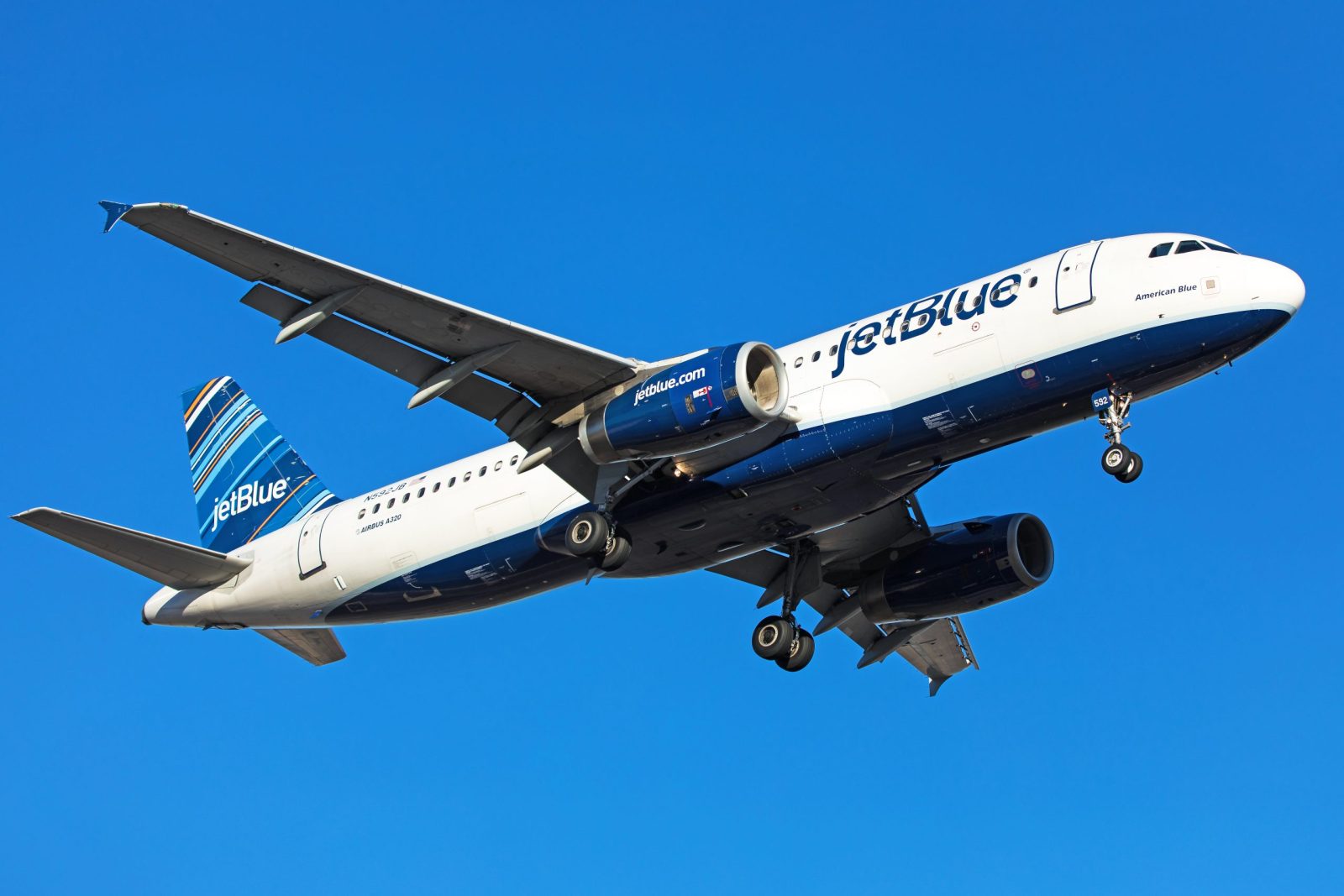
A JetBlue Airbus A320 (Photo: AirlineGeeks | William Derrickson)
JetBlue has announced that it will be expanding its operations in the New York metropolitan area by starting flights at Long Island MacArthur Airport (ISP). The airline plans on introducing flights to three destinations in October.
Details: JetBlue’s New Long Island Flights
The New York-based airline will fly to three destinations from Long Island. Daily flights to and from Orlando International Airport (MCO) are scheduled to start on Oct. 24, 2024. The airline will also fly to Palm Beach International Airport (PBI) four times per week starting on that day as well. The third destination, Fort Lauderdale–Hollywood International Airport (FLL), will see four weekly flights starting on Oct. 25, 2024.
All flights will be operated by JetBlue’s Airbus A320-200 aircraft. The airline’s new presence in Long Island will add to its existing operations at John F. Kennedy International Airport (JFK), LaGuardia Airport (LGA), and Newark Liberty International Airport (EWR). JetBlue already serves all three Florida airports from its three other New York-area airports.
Growing Opportunities for Long Island’s Airport
JetBlue will join Breeze, Frontier, and Southwest to become the fourth carrier at Long Island MacArthur Airport. Although the airport saw the likes of carriers such as Allegheny, American, Eastern, Sprit, United, and USAir from the 1960s to 1990s, these airlines began to leave ISP in favor of other New York area airports. The airport now sees between one million and 1.5 million passengers each year.
“It’s no secret that Long Island loves JetBlue, for years residents have asked, and we’ve been listening. As the Town Supervisor, I can say that we are thrilled to embark on this new partnership,” Islip Town Supervisor Angie Carpenter said about the new flights. “We are committed to ensuring the success of our business partners at Long Island MacArthur Airport. Our airport is one of our region’s greatest economic assets, and JetBlue’s success at ISP will certainly enrich our community and beyond.”
Andrew is a lifelong lover of aviation and travel. He has flown all over the world and is fascinated by the workings of the air travel industry. As a private pilot and glider pilot who has worked with airlines, airports and other industry stakeholders, he is always excited to share his passion for aviation with others. In addition to being a writer, he also hosts Flying Smarter, an educational travel podcast that explores the complex world of air travel to help listeners become better-informed and savvier travelers.
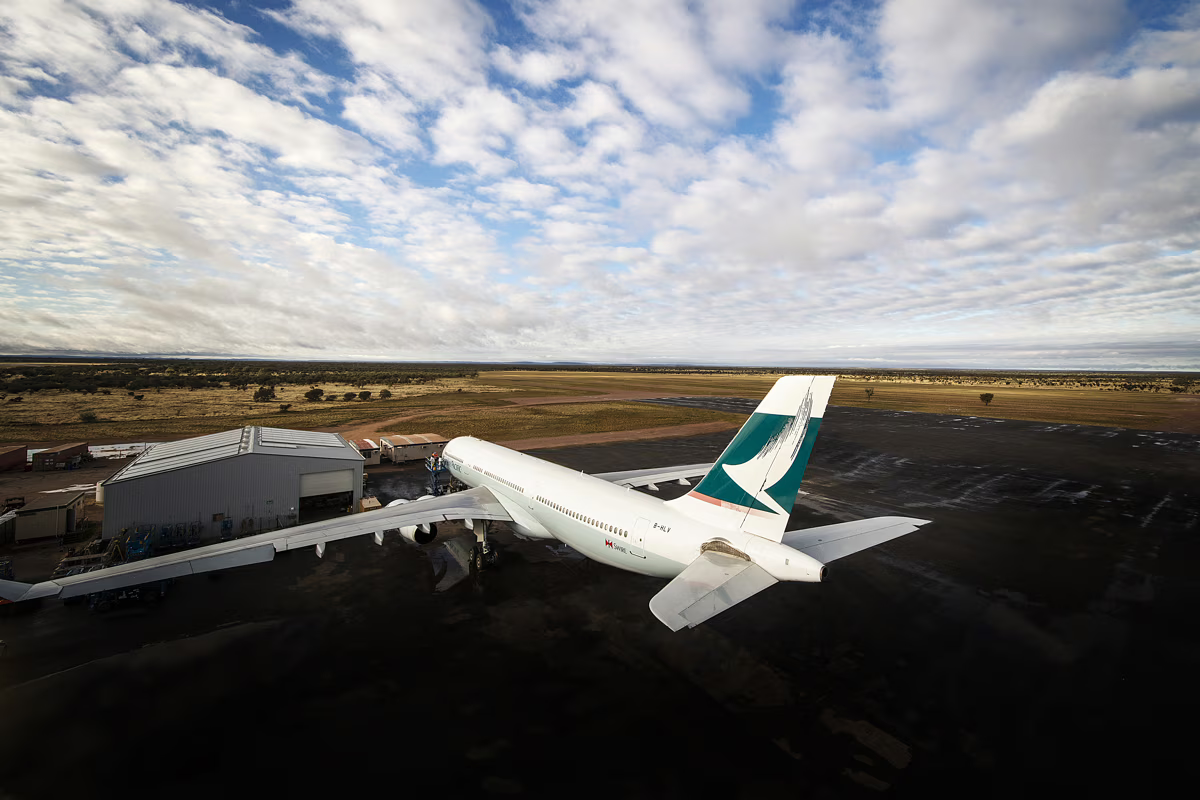
A Cathay Pacific Airbus A330 in storage (Photo: Cathay Group)
Cathay Pacific announced the return of its final aircraft that had been parked overseas during the COVID-19 pandemic. The aircraft has been in storage for nearly four years.
An Airbus A330 – registered as B-HLV – arrived in Hong Kong on June 6 after sitting in the Central Australian desert. The aircraft, which belongs to Cathay Pacific, was the first from the Cathay Group to be placed in long-term storage in July 2020 as air travel declined sharply due to COVID-19.
At the height of the pandemic, Cathay Pacific and HK Express parked a large portion of their passenger fleet at Hong Kong International Airport and overseas locations like Alice Springs, Australia and Ciudad Real, Spain. As travel restrictions eased, Cathay Group began a systematic process of reactivating these aircraft.
As of March 2023, IATA estimates show that 6,300 commercial aircraft were in storage, an 83% increase from pre-pandemic times.
“The parking and reactivation of so many aircraft is a historic undertaking for Cathay,” said Alex McGowan, Chief Operations and Service Delivery Officer at Cathay Pacific. “Our teams around the world worked tirelessly to ensure these valuable assets were cared for and are now ready to return to service.”
Cathay Group expressed gratitude to the Hong Kong Civil Aviation Department for its support throughout the process. The company also highlighted the dedication of its staff and partners like HAECO, Boeing, Airbus, and Asia Pacific Aircraft Storage (APAS) for their contributions to the successful aircraft storage and reactivation program.
Ryan founded AirlineGeeks.com in February 2013 and has spent more than a decade covering the airline business. His work has been featured by CNN, WJLA, CNET, and Business Insider. His aviation experience spans airport operations, Part 135 regulatory compliance, and airline crew workforce planning, along with time behind the yoke of a Cessna 172 and interviews with airline executives. Ryan now serves as Group President of Firecrown Media’s Aviation Group. He holds a B.S. in Air Transportation Management and an MBA from Arizona State University and teaches Airline Management at Embry-Riddle Aeronautical University.
This is because no potential buyers have submitted binding offers to buy the airline.
No Interested Buyers
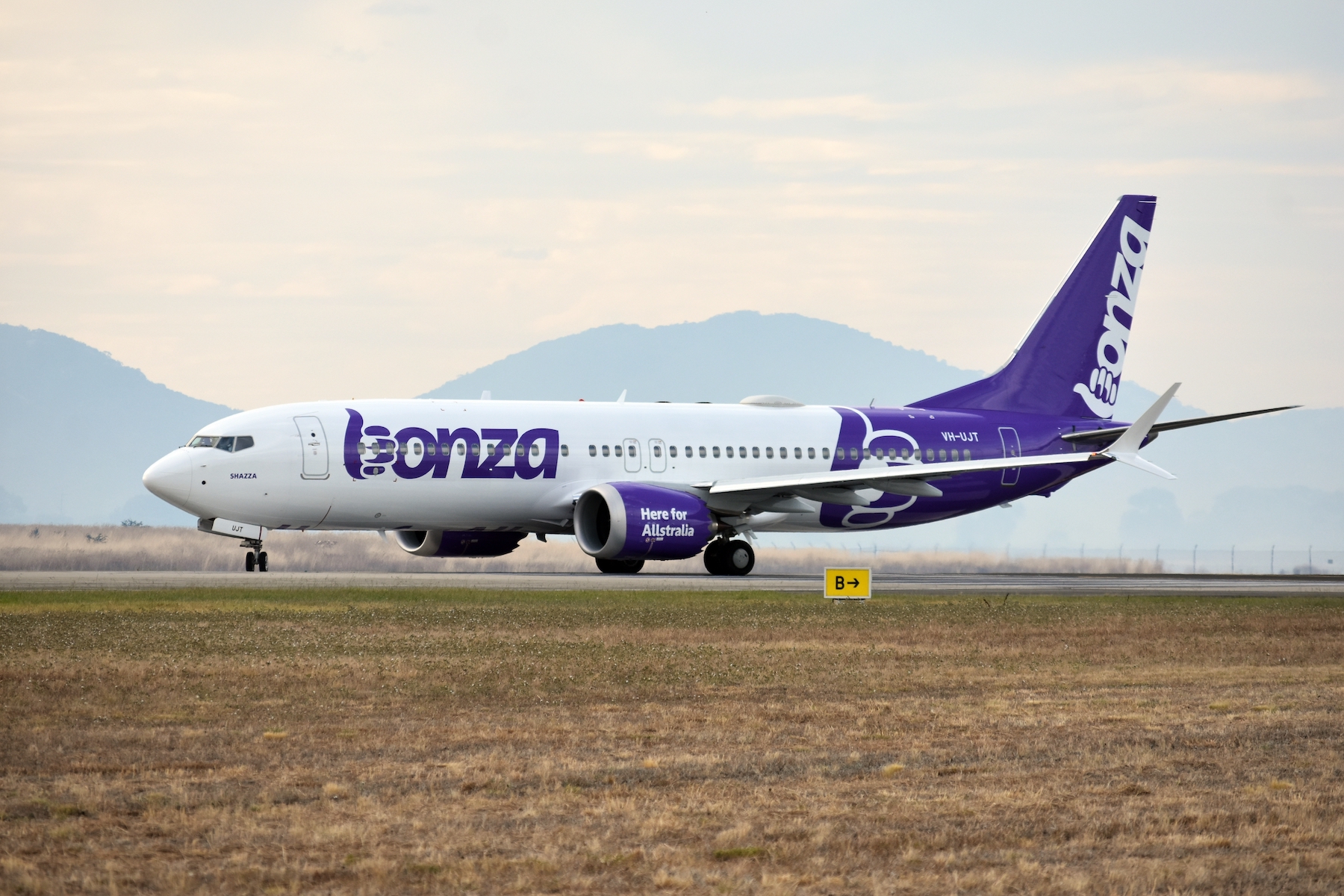
It is almost probable that Bonza will be shut down for good after no interested parties submitted bids to buy the collapsed airline.
The airline’s administrators assisted a number of interested parties through the sale process, allowing them to conduct due diligence and formulate offers.
However, none of the parties that showed an interest in buying the budget airline submitted an offer by the deadline of last Friday. The administrator, Hall Chadwick, did not receive any binding offers.
Employees Let Go
More than 300 of Bonza’s employees were informed by the administrators that their employment had been terminated. Speaking after the news of Bonza’s staff retrenchments, Australia’s Transport Workers’ Union (TWU) said it was a bleak day for the country’s aviation industry.
“This is incredibly difficult news for Bonza employees who have received no pay for more than two months after the airline’s sudden collapse,” TWU National Secretary Michael Kaine said.
All of the airline’s future flights have also been officially canceled. Customers must be given clarity on the airline’s situation and the way forward regarding the operation of future flights.
The low-cost carrier went into administration on April 30 – after its aircraft were seized two weeks after Bonza was issued with default notices from AIP Capital, the company that owns its aircraft.
A Glimmer of Hope?
A creditors’ meeting will now be called, where the future of the company will be decided.
It is not yet known when the creditors’ meeting will take place. Hall Chadwick said that there was still a chance buyers might submit a proposal to buy the airline in this period.
Lorne is a South Africa-based aviation journalist. He was captivated and fascinated by flying from the day he took his first airline flight. With a passion for aviation in his blood, he has flown to destinations in all corners of the globe. Lorne has traveled extensively and lived in various countries. Drawing on his travels and passion for aviation, Lorne enjoys writing about airlines, routes, networks, and new developments.
Air Mauritius to Stick With Airbus A350 Widebodies
Air Mauritius CEO, Charles Cartier, said that the airline favors the Airbus A350 aircraft for its growing widebody operations.
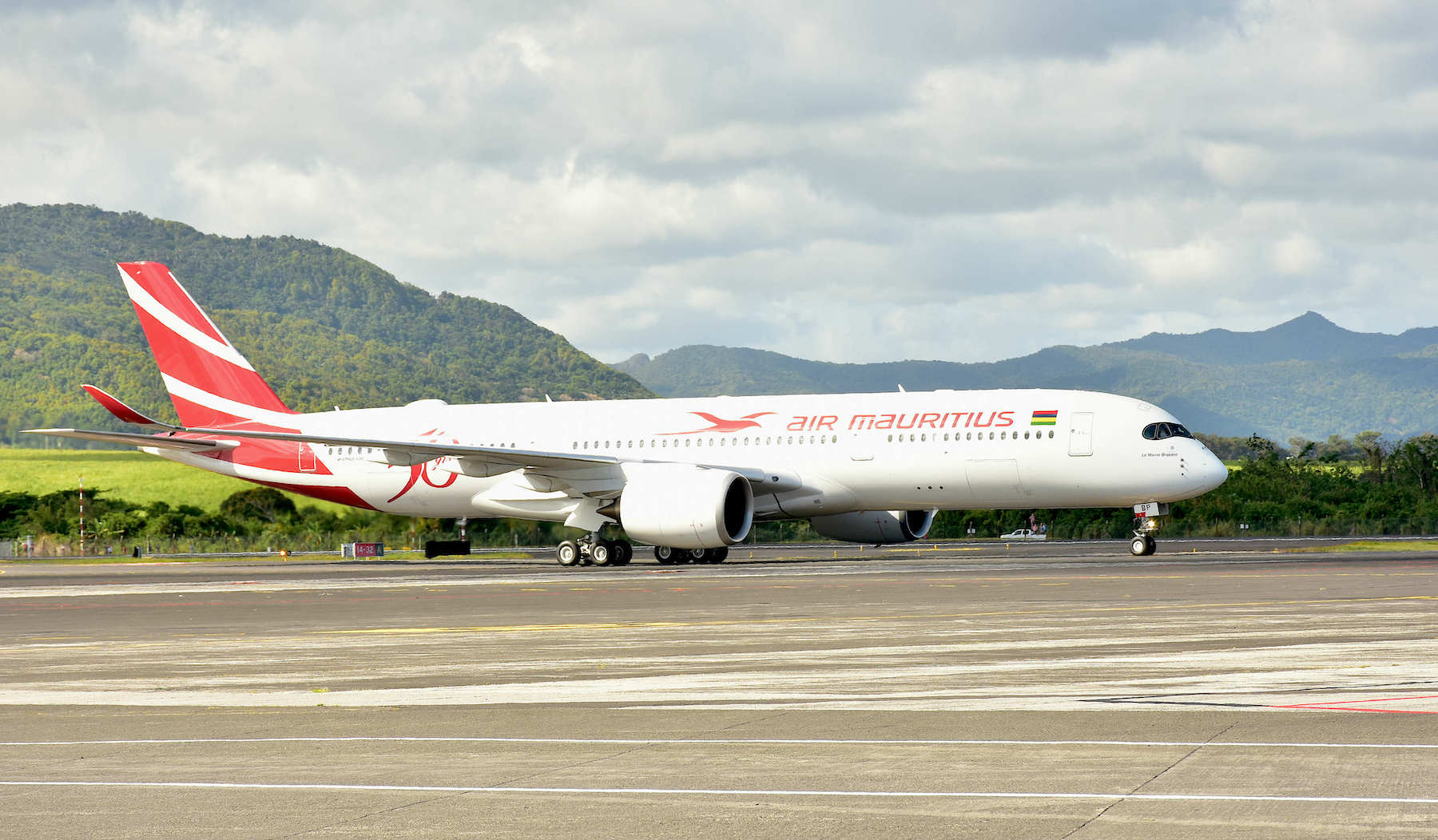
Air Mauritius CEO, Charles Cartier, said that the airline favors the Airbus A350 aircraft for its widebody operations. Speaking to ch-aviation at the 80th IATA AGM and World Air Transport Summit in Dubai, UAE last week, Cartier said that the airline looks to solely operate Airbus A350s for widebody flight routes.
Air Mauritius’ Route Network
Air Mauritius currently has a fleet of 12 aircraft, which service its route network consisting of 15 destinations. The airline operates 27 scheduled flights a day. Most of the flights in its route network are long-haul services, operated with widebody aircraft. This is owing to the airline’s geographical location.
The flag carrier operates services to London, Paris, Geneva, Perth; Australia, Kuala Lumpur; Malaysia, Delhi, Mumbai and Chennai in India, Johannesburg and Cape Town in South Africa with widebody aircraft. It is set to commence flights to Rome in the near future.
Mauritius’ national airline flies to other islands in the Indian Ocean including Reunion, Madagascar and Rodriques. Air Mauritius fleet does not have any regional jets at present. It has three ATR72-500s and one ATR72-600.
Widebody Fleet
The airline currently operates four A350-900s, two A330-200s, and two A330-900Ns. Cartier said that three additional A350- 900 aircraft are on order. The first is set to be delivered in 2026, and a further two in 2027.
“We are very happy with the A350-900s; they fit very well with our ambitions and our main traditional markets, being the UK and France. They are very good for these flights. We also use them for other flights, like Perth International, and even to India. We are also growing in Europe. We are starting Rome Fiumicino, which will allow us to increase frequencies,” he added.
Future Aircraft Orders
Air Mauritius aims to grow its fleet in the next decade. This is so that the carrier can become a strong regional player and expand its traditional long-haul routes to France and the United Kingdom. However, Cartier said that new aircraft orders would have to align with Air Mauritius’ plans to grow its hub and expand its regional network.
He said that Airbus A350-900s would eventually replace the airline’s A330-200s, but these will not be phased out before the new A350s arrive. Other than three A350-900s due for delivery in 2027, Air Mauritius is not currently considering ordering additional widebody aircraft.
Cartier noted that Air Mauritius is not in favor of operating a mixed fleet of aircraft types. He said that the aim when building a fleet is reliability and consistency; having too many aircraft types is costly and can lead to operational inefficiencies.
“We are very happy with the A350-900s. They fit very well with our ambitions and our main traditional markets, being the UK and France. They are very good for these flights. We also use them for other flights, like Perth, and even to India. We are also growing in Europe. We are starting Rome Fiumicino, which will allow us to increase frequencies,” he explained.
Future Expansion Plans
The airline carrier aims to expand regionally. It already serves as a growing hub in the Indian Ocean. However, Air Mauritius seeks to build on this and to expand its network in the next decade.
Mauritius’ flag carrier aims to become a strong regional hub serving various destinations in the Indian Ocean area. It will focus on expanding its operations in the Indian Ocean rim, which are destinations located in or near the Indian Ocean. This area includes the African coast along the Indian Ocean, the Middle East, Asia, and Australia.
Lorne is a South Africa-based aviation journalist. He was captivated and fascinated by flying from the day he took his first airline flight. With a passion for aviation in his blood, he has flown to destinations in all corners of the globe. Lorne has traveled extensively and lived in various countries. Drawing on his travels and passion for aviation, Lorne enjoys writing about airlines, routes, networks, and new developments.
Mexico’s Military-Run Airline Eyes U.S. Service
The reincarnated Mexicana - now operated by the Mexican military - is looking to bolster its route network with new international service.
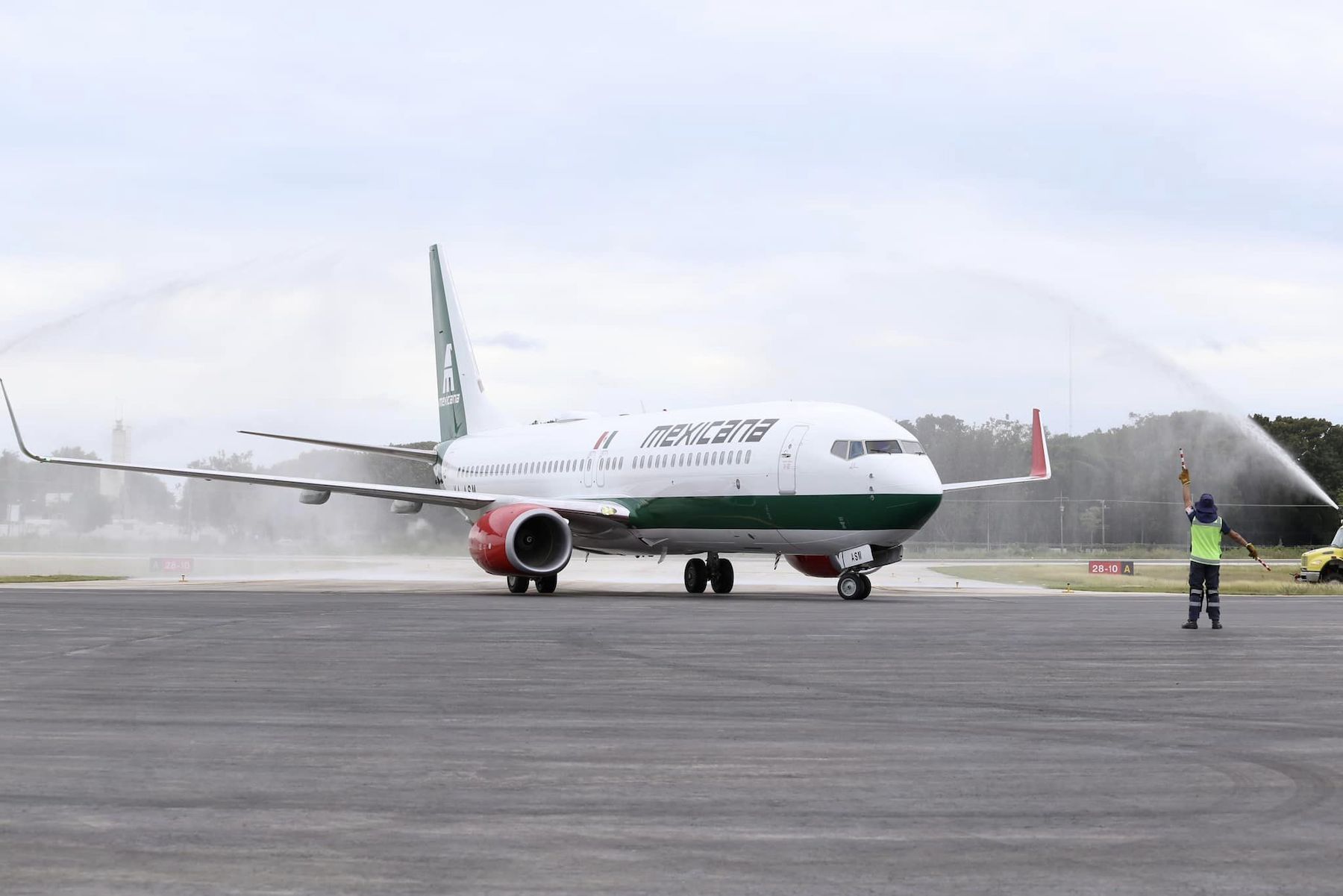
A Mexicana Boeing 737-800 (Photo: Government of Quintana Roo)
The reincarnated Mexicana – now operated by the Mexican military – is looking to bolster its route network with new international service, including routes to the U.S. The airline began operations late last year and says it has flown nearly 141,000 passengers so far.
In a recent press briefing, the general director of the Olmeca-Maya-Mexica, S.A. de C.V. José Gerardo Vega Rivera, which operates Mexicana, said the company plans to add 11 new destinations. These include Chicago, Dallas, San Francisco, Houston, New York, Atlanta, Miami, Havana, San Jose, Costa Rica, Panama, and Bogotá, all of which would depart from Mexico City’s new Felipe Angeles airport.
The airline also plans to open new operating bases in Tijuana and Tulum. From these bases, the government says it can expand the carrier’s route offerings to include Montreal, Ottawa, and Vancouver along with Portland. In addition, the carrier could add service to Punta Cana, Caracas, and Lima.
“Mexicana is working very well and will consolidate itself with the acquisition of these 20 new aircraft. The operation has already been carried out, the contracts have already been signed and it is always thinking that there is competition so that the consumer, who needs a service, is charged fairly, that there are no monopolies. This is going to help a lot to maintain good prices on plane tickets,” Mexican president Andrés Manuel López Obrador said during the briefing.
Ryan founded AirlineGeeks.com in February 2013 and has spent more than a decade covering the airline business. His work has been featured by CNN, WJLA, CNET, and Business Insider. His aviation experience spans airport operations, Part 135 regulatory compliance, and airline crew workforce planning, along with time behind the yoke of a Cessna 172 and interviews with airline executives. Ryan now serves as Group President of Firecrown Media’s Aviation Group. He holds a B.S. in Air Transportation Management and an MBA from Arizona State University and teaches Airline Management at Embry-Riddle Aeronautical University.
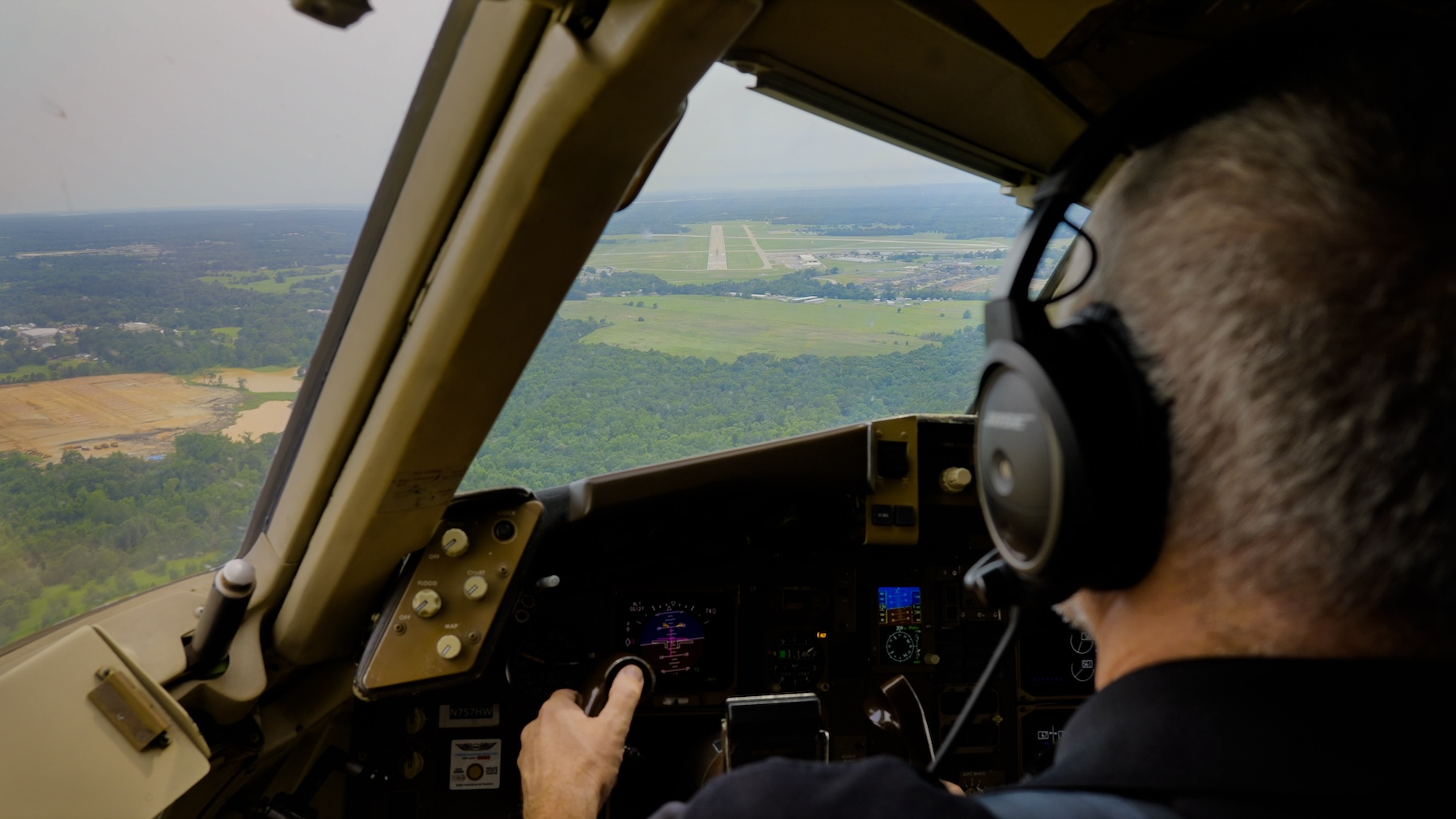
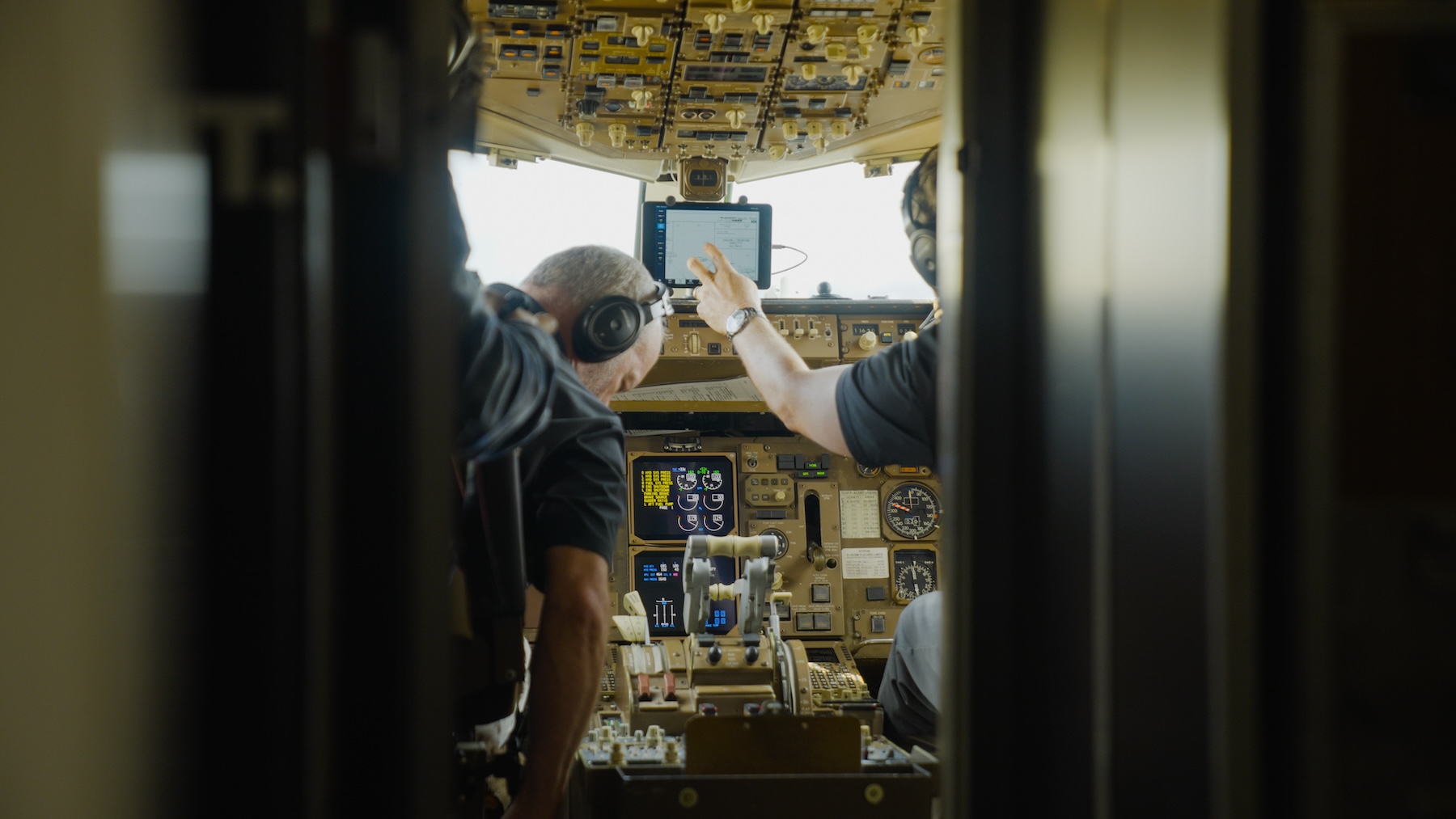
Onboard Honeywell's Boeing 757 test aircraft (Photo: AirlineGeeks | Jon Whittle)
Runway incursions are on the rise in the U.S. Amid a flurry of high-profile near-collisions over the last two years, the National Transportation Safety Board (NTSB) cited data from the Federal Aviation Administration (FAA) that shows 2023 was the highest year in a decade for serious runway incursion events per one million airport operations.
More airports are set to receive the technology as part of the FAA Reauthorization Act of 2024. With the broader adoption of airport surface detection equipment still far on the horizon, avionics manufacturers are looking to add incursion prevention capabilities right in the cockpit.
Honeywell Aerospace, which is in the process of developing the new technology, touts it as the ‘next big thing’ in aviation. The company calls the system Surface Alert (or ‘SURF-A’), adding that it can work hand-in-hand with existing airport-based surface detection equipment.
Honeywell’s Boeing 757 tests some of the latest tech in aviation. (Photo: AirlineGeeks | Jon Whittle)
“We interviewed and visited a lot of our airline customers and they are interested now. And so we are, as a company, transitioning this from a research project to offering it for retrofit as well as for forward fit aircraft,” said Thea Feyereisen, a senior technical fellow at Honeywell, during a press event.
Building Upon Existing Capabilities
SURF-A joins Honeywell’s existing SMART-X system, which is already used on over 5,000 commercial aircraft. SMART-X helps pilots avoid wrong surface landings – such as the 2017 incident where an Air Canada flight nearly landed on a San Francisco taxiway – along with runway excursion events, including overruns.
The existing SMART-X system gives crews additional call-outs during critical phases of flight by utilizing various databases.
Honeywell hopes that SURF-A can become a so-called ‘third set of eyes’ for pilots by directly accessing ADS-B data from aircraft and vehicles in the runway engagement zone. This data then gives an audible and visual cue in the flight deck, alerting pilots to the potential danger.
With runway incursions increasing at an ‘unacceptable’ rate, Honeywell says, the company stepped up its efforts to roll out SURF-A. The technology initially began development in 2018.
For airlines and aircraft owners already using the company’s systems, Honeywell notes that adding SURF-A may be as simple as a software upgrade once it becomes certified.
Demonstrating the New Tech
Honeywell plans to have SURF-A certified within 18-24 months and has been conducting a variety of test flights with the new system activated. In December 2023, the aerospace company successfully tested the system on a handful of flights.
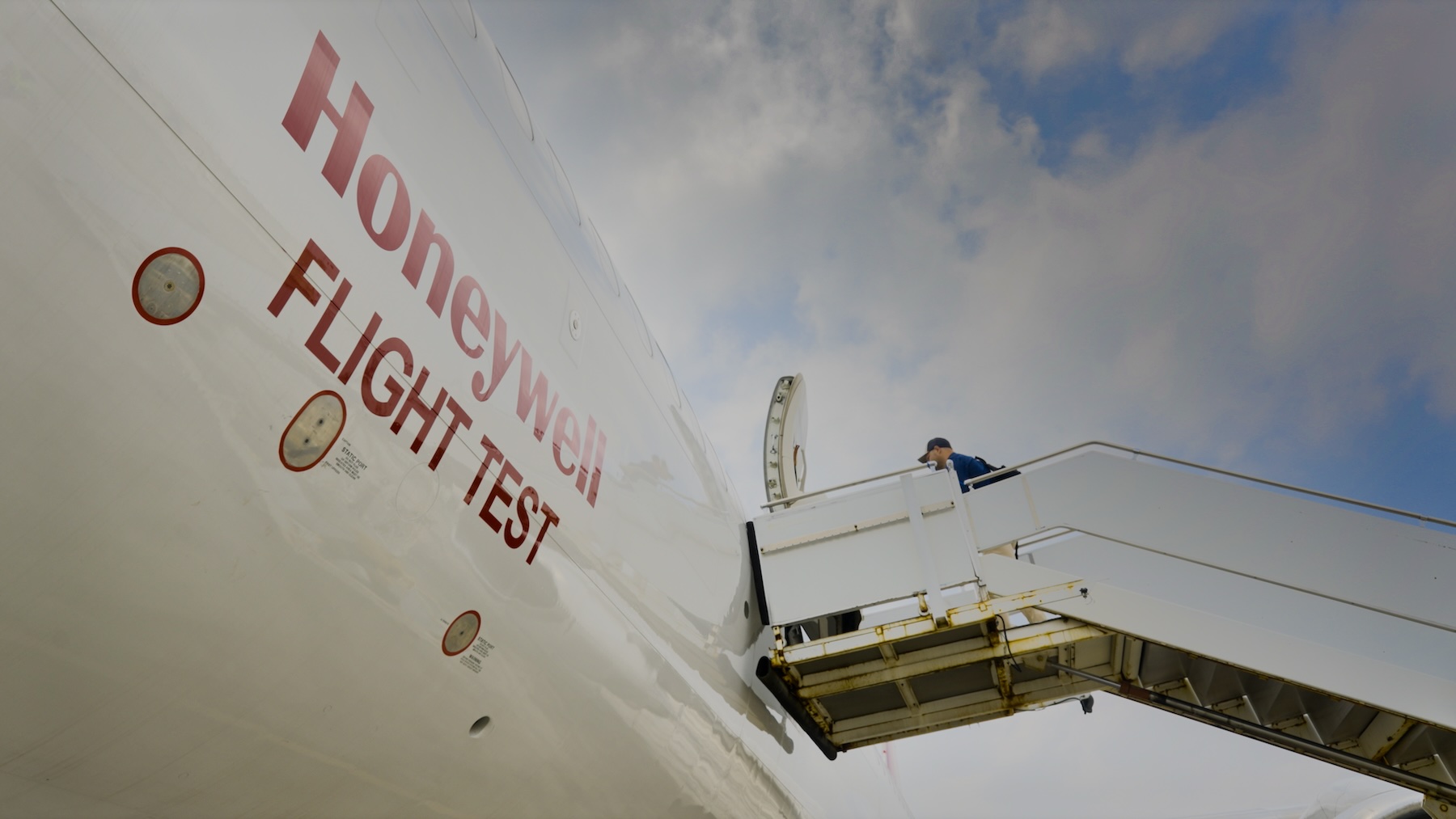
The company’s over 41-year-old Boeing 757-200 often tests the latest aviation tech, including engines with its mounted pylon. But now, the aircraft is being sent around the U.S. and even to London on a series of test flights, giving regulators, airline representatives, and reporters a first look at SURF-A.
Honeywell’s Boeing 757 testbed aircraft (Photo: AirlineGeeks | Jon Whittle)
AirlineGeeks joined Honeywell on a June 4 test flight from Dallas’ Love Field Airport. In addition to demonstrating SMART-X’s capabilities, the company showcased SURF-A in action.
With another testbed aircraft – Honeywell’s Falcon 900 – as the intruder, the system alerted the pilots to each incursion with an audible “traffic on runway” announcement and bright yellow text on a flight display. The first alert comes 30 seconds prior to a collision and another 15 seconds before.
Honeywell’s SURF-A technology alerts pilots to potential incursions (Photo: AirlineGeeks | Jon Whittle)
In terms of the JFK incident, Honeywell estimates that – had SURF-A been installed on the Delta 737 – the pilots would have known about the approaching American 777 roughly 12 seconds sooner. A final NTSB report on this incident is expected in the coming months.
Growing Interest
Following both the Austin and New York near-collision events, the NTSB issued some early recommendations for operators to consider systems like SURF-A in their flight decks.
“The NTSB recommended the FAA collaborate with aircraft and avionics manufacturers to develop a system that would alert flight crews of traffic on a runway or taxiway and traffic on approach to land and require that both newly manufactured and existing transport category airplanes have such systems installed,” the agency said in a recent press release.
During a June hearing on the Austin incident, NTSB Chair Jennifer Homendy said the industry is “trending in the wrong direction” regarding runway incursions. “You need technology that provides the backup…the additional layer of protection,” she added.
Ryan founded AirlineGeeks.com in February 2013 and has spent more than a decade covering the airline business. His work has been featured by CNN, WJLA, CNET, and Business Insider. His aviation experience spans airport operations, Part 135 regulatory compliance, and airline crew workforce planning, along with time behind the yoke of a Cessna 172 and interviews with airline executives. Ryan now serves as Group President of Firecrown Media’s Aviation Group. He holds a B.S. in Air Transportation Management and an MBA from Arizona State University and teaches Airline Management at Embry-Riddle Aeronautical University.
Air India to Launch Non-Stop Flights Between Bengaluru and London Gatwick
Bengaluru International Airport (BLR) revealed on Friday that the country’s flag carrier would begin operating flights connecting the city with London Gatwick.
An Air India Boeing 787-8. (Photo: AirlineGeeks | William Derrickson)
Bengaluru International Airport (BLR) revealed in a press release on Friday that the country’s flag carrier would begin operating flights connecting the city with London Gatwick. The flights will be operated using a Boeing 787-8 Dreamliner.
According to the press release, the new route should operate between the two cities five times weekly. However, the route won’t be operated uniquely, with Air India joining its two biggest competitors when linking India to the U.K., British Airways and Virgin Atlantic.
The Boeing 787-8 is an aircraft that makes up the backbone of Air India’s long-haul fleet, with it being idyllic for starting routes given its lower capacity. This means that it can be trialed to adapt to demand, and if demand is steady or increasing, it can be substituted for a larger aircraft.
Bengaluru in particular is an increasingly popular destination for international travel, seeing flights to popular European destinations such as Frankfurt and Munich with Lufthansa, Paris with Air France, and Amsterdam with KLM. The new route is one of the longest to serve Bengaluru, falling short of the ultra-long-haul route flown by Air India’s Boeing 777s to San Francisco. It will add to the near-100 weekly routes serving India’s third most populous city.
Satyaki Raghunath, Chief Operating Officer at BLR said that he was “thrilled about this new development, which strengthens our ongoing partnership with Air India and greatly enhances our connectivity to London. This new route will boost trade, tourism, and cultural exchange. London is one of our busiest long-haul markets and the new service will allow our passengers have a choice of airports in London to travel to. We look forward to adding more destinations to our network, thereby reinforcing our position as the Gateway to South and Central India.”
Sam Jakobi is a young aviation journalist based in London, U.K. A lifelong Airbus fan, he has adored aviation for as long as he can remember. Sam writes articles and conducts interviews with members of the aviation community.
How President Biden Could Prevent a Flight Attendant Strike This Summer
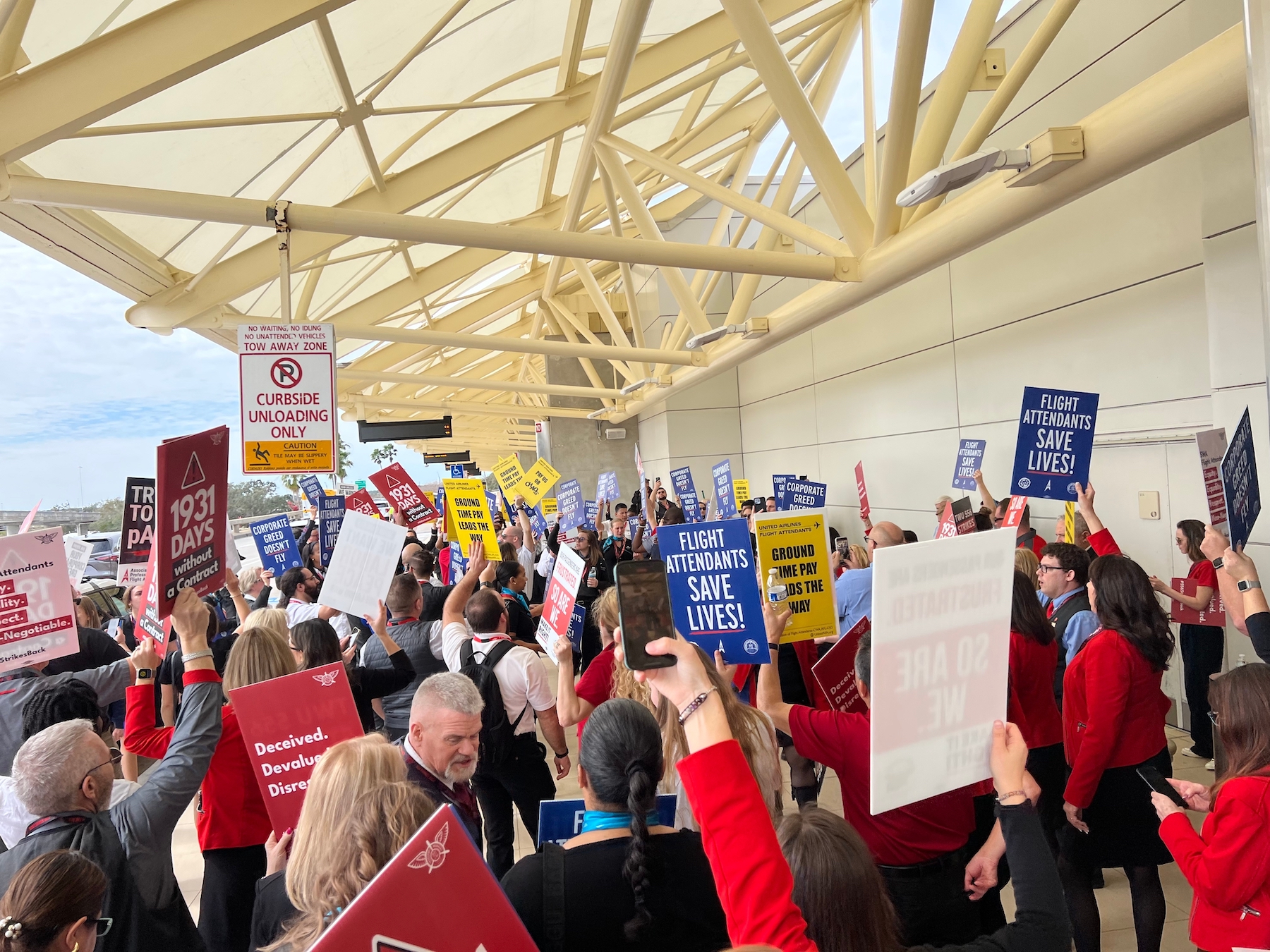
Several flight attendant unions and U.S. airlines are currently in the negotiating process as they look to ink new collective bargaining agreements (CBAs).
“Will my summer travel plans be disrupted because of a flight attendant strike?” I’ve gotten this question several times now. The short answer here is probably not.
But at this rate, it’s not completely impossible.
Several flight attendant unions and U.S. airlines are currently engaged in negotiations as they look to ink new collective bargaining agreements (CBAs). This process is governed by Section 6 of the Railway Labor Act (RLA), a 1920s-era law that regulates labor relations for both railroads and air carriers. In a nutshell, the RLA prioritizes mediation to avoid the effects of a potential labor action on interstate commerce.
The National Mediation Board (NMB) – a federal agency – is in a sense ‘the administrator’ for the RLA. If a union and company are unable to reach an agreement through regular negotiations, the NMB can step in, if requested by either party, to facilitate discussions in an effort to reach a tentative agreement.
Many labor disputes don’t even make it to the NMB and it is rather rare for parties to exhaust the board’s mediation process. Still, it has happened before, and it could happen again.
Roughly 28,000 American Airlines flight attendants – represented by the Association of Professional Flight Attendants (APFA) – are at this juncture. After several years of negotiating, the union and company are being called in by the NMB next week for a ‘last ditch’ attempt at a deal.
With such little progress being made and both parties saying they are still ‘far apart’ on several issues, it is difficult to imagine the NMB forcing the parties into additional mediated sessions. So, what happens next?
The RLA stipulates that if the NMB releases the parties from mediation for ‘self-help,’ it triggers a 30-day cooling-off period, during which time, both parties are prohibited from taking any self-help actions, such as a strike or lock-out. The NMB may proffer final and binding arbitration to both parties as a next step in the resolution process. However, if either party rejects arbitration, the 30-day cooling-off period clock continues ticking.
The NMB might then move to advise President Biden of the impasse between the parties and recommend the establishment of a Presidential Emergency Board (PEB) if it believes that a strike could inflict severe harm on the economy and interstate commerce.
Biden did this with the freight rail workers in 2022, so presidential intervention isn’t uncharted territory for the current Administration. Even so, the parties are not compelled to accept the PEB’s recommendations and would be free to exercise self-help at the end of the PEB’s process.
Following failure of the PEB process, Congress can also step in to pass legislation resolving the dispute, however, this is rare on the airline front. Again, this did resolve the rail workers’ dispute two years ago, which was on the verge of a strike action.
American flight attendants have gone on strike before in 1993. That strike resulted in mass cancellations just days before Thanksgiving. And of course at the time, American was a much smaller airline than it is today. But four days into the strike, President Clinton stepped in and successfully persuaded the parties to return to the table for final and binding arbitration, effectively ending the action.
Biden could certainly help broker a deal in this case, too, although it’s an election year, and he’s one of the most pro-union presidents in recent decades.
Assuming these so-called last-ditch mediation sessions fail next week, Biden will be left with some tough decisions to make and each one carries enormous political ramifications.
On one side, Biden could block a vocal labor group from striking as a pro-union candidate. On the other, he could risk economic harm, even if the world’s largest airline were to shut down for just a day.
Ryan founded AirlineGeeks.com in February 2013 and has spent more than a decade covering the airline business. His work has been featured by CNN, WJLA, CNET, and Business Insider. His aviation experience spans airport operations, Part 135 regulatory compliance, and airline crew workforce planning, along with time behind the yoke of a Cessna 172 and interviews with airline executives. Ryan now serves as Group President of Firecrown Media’s Aviation Group. He holds a B.S. in Air Transportation Management and an MBA from Arizona State University and teaches Airline Management at Embry-Riddle Aeronautical University.
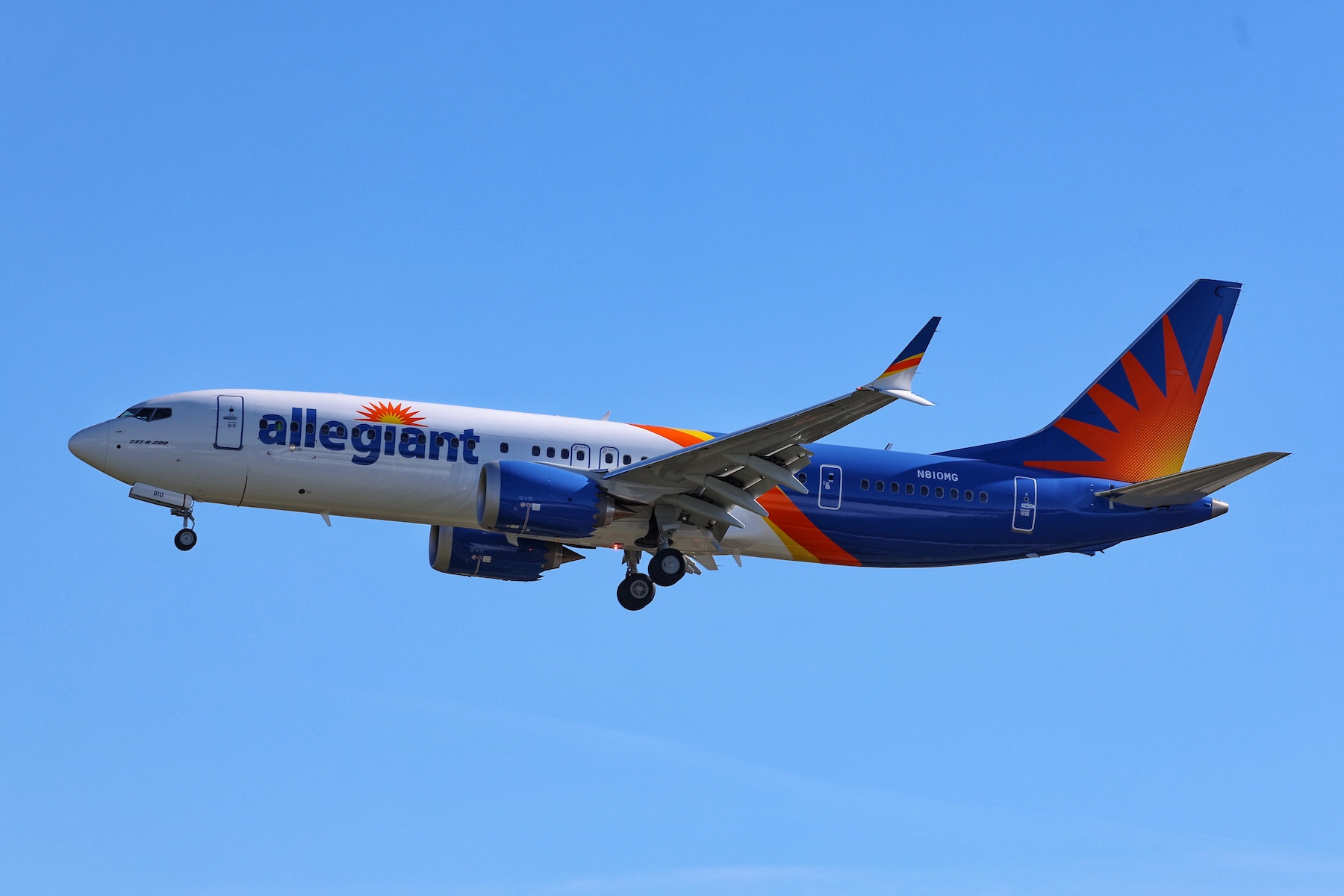
An Allegiant Boeing 737 MAX on a test flight in Washington State (Photo: AirlineGeeks | Katie Zera)
Allegiant is once again delaying its Boeing 737 MAX entry into service, this time by nearly three months. During its Q1 2024 earnings call, the ultra-low-cost carrier (ULCC) initially expected to begin revenue service with the new aircraft by Q3, however, this has slipped to Q4.
According to this weekend’s Cirium Diio schedule update, Allegiant 737 MAX service is now slated for early October, delayed from August. The aircraft’s first scheduled flight is set for October 2.
Earlier this year, the carrier announced that it would cut its Boeing delivery estimates in half with expectations for six 737 MAXs instead of 12. Allegiant currently operates an all-Airbus fleet.
The Las Vegas-based airline planned to receive its first MAX in January 2024, but slowdowns in production and delivery at the manufacturer have created mounting delays. Allegiant has up to 130 Boeing 737 MAX 7 and 737 MAX 8200 variants on order, according to Aviation Week.
“We are updating our delivery expectations and planning the business for delivery of six aircraft this year rather than the 12 previously communicated,” added the airline’s finance chief Robert Neal during a first-quarter earnings call. Neal noted that these were not based on forecasts by Boeing, but rather on the airline’s “best estimate.”
In the latest schedule update, the 737 MAXs will initially fly from the airline’s Orlando Sanford base, replacing older A319 and A320 aircraft. The new jets will feature 190 seats.
Ryan founded AirlineGeeks.com in February 2013 and has spent more than a decade covering the airline business. His work has been featured by CNN, WJLA, CNET, and Business Insider. His aviation experience spans airport operations, Part 135 regulatory compliance, and airline crew workforce planning, along with time behind the yoke of a Cessna 172 and interviews with airline executives. Ryan now serves as Group President of Firecrown Media’s Aviation Group. He holds a B.S. in Air Transportation Management and an MBA from Arizona State University and teaches Airline Management at Embry-Riddle Aeronautical University.
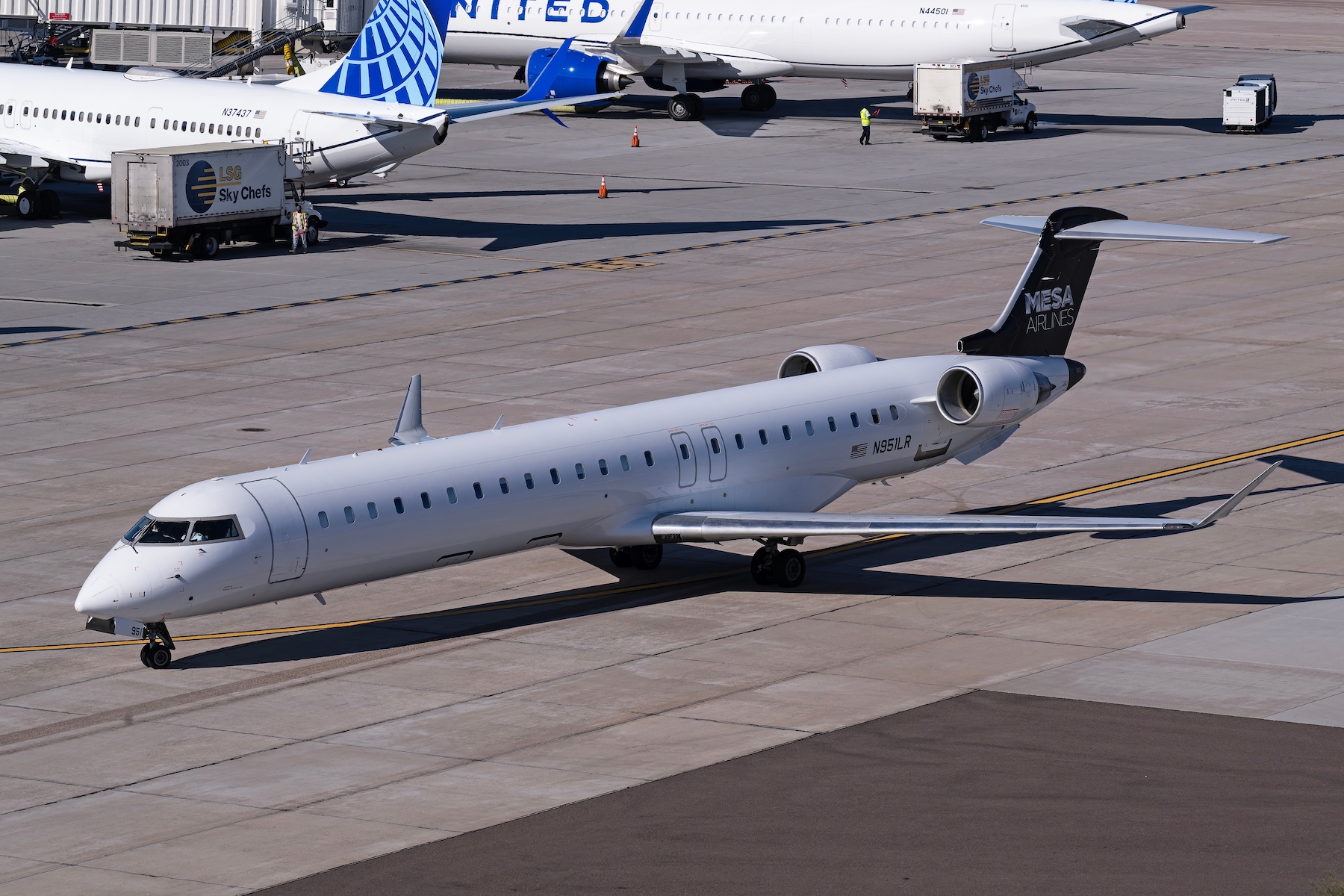
A Mesa Airlines CRJ-900 in Phoenix. (Photo: Shutterstock | Robin Guess)
Mesa Airlines announced that it completed the sale of six CRJ-900s and 10 associated engines as part of its Regional Aircraft Securitization Program (RASPRO). The batch is part of 15 surplus aircraft and 30 powerplants set to go to two unnamed third parties.
In Q1 2024, the Phoenix-based carrier’s revenue was down 19% compared to the same period last year. The company posted a $57.9 million net loss last quarter.
The airline says it has reduced its lease purchase obligations from $50.4 million to $27.3 million as of late May.
“Addressing the RASPRO lease has been one of the top priorities for our surplus asset sale efforts over the past year-and-a-half,” said Jonathan Ornstein, Mesa’s Chairman and CEO, in a press release. “This is a significant financial obligation that we are putting behind us, and we are increasingly able to prioritize the future of the company for our investors and people. We look forward to enhancing our focus on returning to profitable performance and executing other strategic actions while closing the remaining transactions related to the RASPRO assets in the coming months.”
Mesa has 69 active aircraft in its fleet, including 17 CRJ-900s and 52 Embraer E175s. After ending its contract with American in early 2023, the regional carrier exclusively flies under the United Express brand.
In February 2024, Mesa and DHL ‘mutually agreed’ to end their partnership, citing a reduction in cargo demand. Mesa had operated two 737-400s for DHL since 2020.
Transitioning E175s to SkyWest
In its Q1 2024 earnings call, fellow regional operator SkyWest announced that it would receive 20 additional E175s owned by United. The carrier’s commercial chief Wade Steel said these jets would come from another United Express carrier, but did not specify which.
“During the quarter, we announced a new flying agreement for 20 United-owned E175s to replace 20 CRJ200s under our United contract. These aircraft are coming from another United Express carrier,” Steel shared.
Per Cirium Fleet Analyzer data, these aircraft appear to be coming from Mesa. So far this year, nine E175s have been transitioned from Mesa to SkyWest.
The Utah-based regional carrier says it expects to transition all 20 E175s by the end of the year.
Ryan founded AirlineGeeks.com in February 2013 and has spent more than a decade covering the airline business. His work has been featured by CNN, WJLA, CNET, and Business Insider. His aviation experience spans airport operations, Part 135 regulatory compliance, and airline crew workforce planning, along with time behind the yoke of a Cessna 172 and interviews with airline executives. Ryan now serves as Group President of Firecrown Media’s Aviation Group. He holds a B.S. in Air Transportation Management and an MBA from Arizona State University and teaches Airline Management at Embry-Riddle Aeronautical University.