










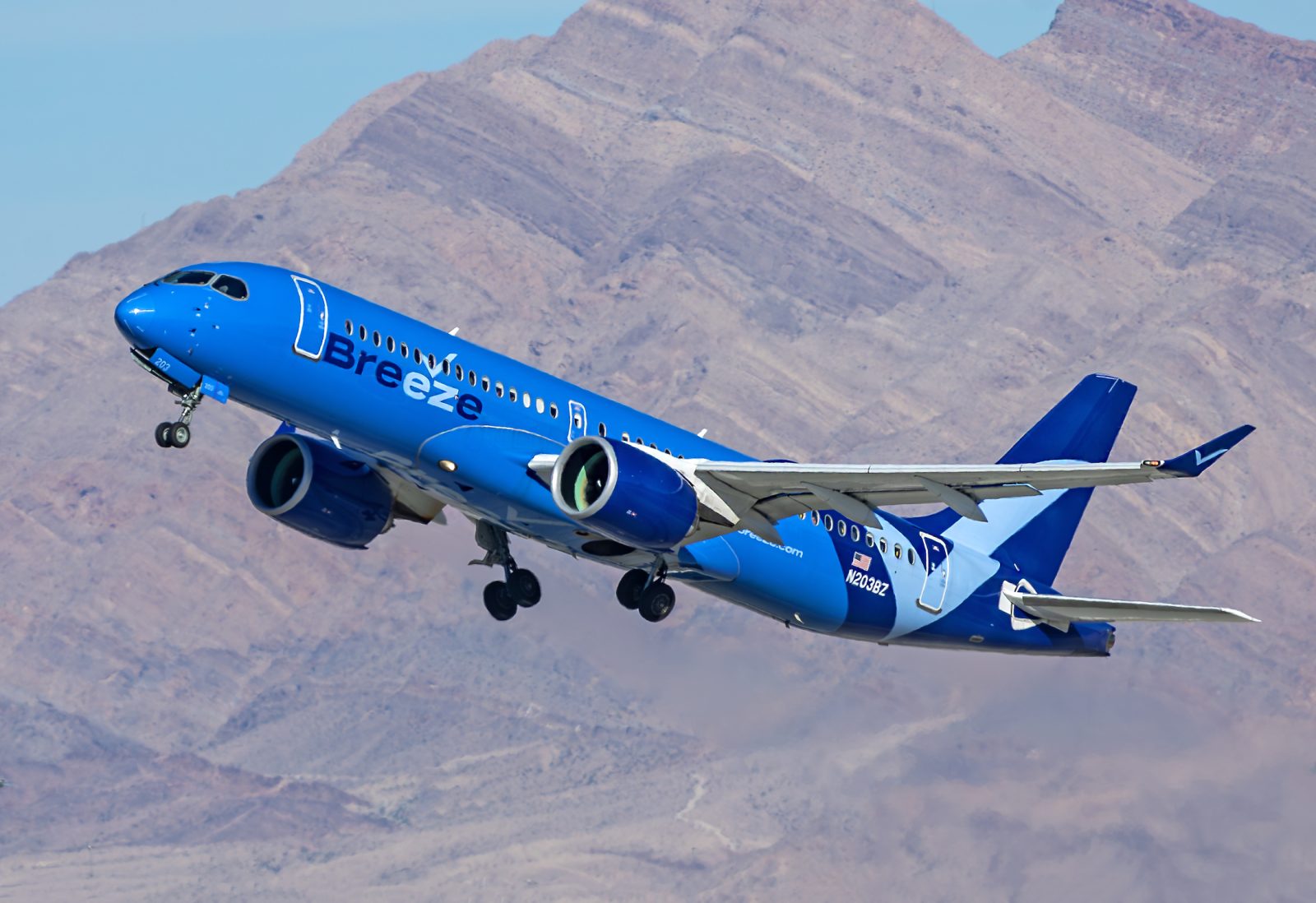
Kučko, the former CEO of Gulf Air, faced suspension less than a year into his tenure, along with the airline’s Chief Financial Officer (CFO), Jean Laval Ah Chip, for reasons concerning “good governance.” This decision came after allegations emerged regarding their acceptance of an all-expenses-paid stay in a hotel in France offered by one of the national carrier’s suppliers, as stated in Air Mauritius’ announcement on Sept. 15, 2023. Kučko was appointed as CEO of Air Mauritius on Dec. 6, 2022.
With no prior aviation experience, Cartier, formerly the founding Chairman of the Economic Development Board, which was established in January 2018 through the merger of three government agencies, brings 25 years of experience to his new role. He has held leadership positions in multinational companies and national organizations, both public and private. He becomes the 13th Chief Executive Officer (CEO) since the creation of Air Mauritius in 1967 and the 11th since the year 2000.
Speaking at a press briefing in Port Louis, Cartier outlined his priorities, with a strong emphasis on improving the traveler experience. He stated, “The traveler experience will be the focal point. We need all travelers to become fans of Air Mauritius and Mauritius. All Air Mauritius teams will prioritize making the in-flight experience as enjoyable as possible.”
Additionally, Cartier highlighted the importance of strategic positioning for the airline, including considerations for the fleet and strategic partnerships. He acknowledged challenges such as delays and cancellations, stating, “We know that in the background, there are bad experiences such as delays and cancellations. This problem needs to be resolved.” According to Marday Venketasamy, Chairman of the Board of Air Mauritius, Cartier “has all the qualities to fully assume the role of CEO of Air Mauritius.”
Another Resignation
Meanwhile, Ken Arian, CEO of Airport Holdings Ltd (AHL), resigned from the airline’s Board last Monday. Arian’s resignation came with a message to Radio Plus the following day, stating, “Cannot and will not condone bad governance,” according to media reports. However, Marday Venketasamy, the board Chairman of Air Mauritius, when asked for comments on Ken Arian’s resignation, clarified that Arian’s official resignation letter did not provide a reason related to his statement. Kantabye Babajee, Permanent Secretary, has since replaced Arian on the Board.
It’s worth noting that AHL, the holding company that owns Air Mauritius, is jointly owned by the Government (51%) and the Mauritius Investment Corporation (MIC), a subsidiary of the Bank of Mauritius (49%).
Victor Shalton's love for aviation can be traced to when he was 11-years-old. As a seasoned aviation writer, he takes pride in providing the best aviation coverage around the globe and is passionate about advancing his skills in the aviation space. In addition, he loves travelling, writing, arts and while his speaking engagements have taken him around the world, he is proud to call Nairobi home.
Last week's string of incidents will only enhance the public's distrust, even if there's no correlation to Boeing's more recent manufacturing troubles.
A Boeing 737 MAX 8 after it skidded off the runway in Houston last week. (Photo: Nathan Moeller)
Knowing your audience is perhaps one of the most critical components of running any successful niche media outlet. And after more than a decade of being at the helm of AirlineGeeks, I’d like to say I know a thing or two about what our readers want to see.
So that’s why last week—as back-to-back stories continued to flood mainstream media outlets concerning faults on Boeing jets—I opted not to cover them on this platform. Our readers come to stir the conversation on topics very few outside of the commercial aviation space would find interesting. As with most highly saturated and mainstream aviation stories, I figure most of our readers are already being inundated anyway, whether it be video of a 265-pound falling 777 wheel or a muddied 737 MAX in Houston.
United flight 35 from San Francisco to Osaka lost a tire from one its main landing gear struts on departure.
As an aviation outlet, we can cover these stories with more in-depth analysis and detailed reporting. The problem with last week’s string of incidents is that there isn’t much of that to do, except tell the story of what likely was a very grueling few days for the PR teams at United and Boeing.
Contrary to what is being alluded to in the mainstream press, these incidents show no indication of being linked whatsoever. Is it unlucky that multiple Boeing aircraft suffered highly visible incidents just two months after a door plug flew off a 737 MAX 9? Yes, absolutely. But none of these incidents appear likely to drastically change the air safety landscape.
But here’s the flip side. Myself along with other industry insiders know all of this, and that includes most of our readers. The general public, however, does not.
We insiders sit and roll our eyes as the morning news talk shows try to draw comparisons between a nearly 22-year-old 737-900ER’s engine failure and Boeing’s more serious quality control woes. The consumers of this coverage who might know little about aviation may be biting their nails, worrying about their next commercial flight.
You don’t have to go far to see these worries becoming more vocalized. On X (formerly Twitter), one user posted the question: “What the f—- is going on with the aviation industry?”
The short answer is nothing out of the ordinary. Commercial airliners are designed to fail. Layers of redundancy are the common thread.
In what some might call my glass-half-full assertion, the bottom line in all of these incidents is that no loss of life—or even severe injury—occurred. Commercial aviation continues to be the safest mode of transportation by a long shot.
So are these headlines a result of just “seeing more” in an age of increased social media use? Or perhaps these minor incidents are a result of industry growing pains in a post-COVID world? Either question is almost impossible to answer right now.
What is easier to conclude, though, is that we humans love to string together patterns of events in order to produce a narrative. The problem becomes when that story detracts from more relevant and deeper issues, including serious manufacturing problems at one of the U.S.’s largest aerospace exporters.
Ryan founded AirlineGeeks.com in February 2013 and has spent more than a decade covering the airline business. His work has been featured by CNN, WJLA, CNET, and Business Insider. His aviation experience spans airport operations, Part 135 regulatory compliance, and airline crew workforce planning, along with time behind the yoke of a Cessna 172 and interviews with airline executives. Ryan now serves as Group President of Firecrown Media’s Aviation Group. He holds a B.S. in Air Transportation Management and an MBA from Arizona State University and teaches Airline Management at Embry-Riddle Aeronautical University.
A Boeing 777X testplane taxis out for its first flight. (Photo: AirlineGeeks | Katie Zera)
John Barnett, a 62-year-old former Boeing quality manager who raised concerns about production standards on the company’s airplanes, was found dead last week in his truck at a Charleston, S.C. hotel. Barnett was scheduled to participate in a follow-up deposition related to a whistleblower lawsuit he filed against Boeing in 2020, according to the BBC.
Barnett’s attorney, Brian Knowles, confirmed the death but withheld details on the cause, citing the ongoing investigation. In a statement, Knowles called the death “tragic.”
Barnett’s lawsuit alleged retaliation from Boeing after he flagged quality control issues during his tenure at the company. He specifically raised concerns about parts manufactured for Boeing’s 787 Dreamliner program. The lawsuit was filed under the provisions of the AIR21 Whistleblower Protection Program, which protects whistleblowers who report safety concerns within the aviation industry.
In a statement to the BBC, Boeing said, “We are saddened by Mr. Barnett’s passing, and our thoughts are with his family and friends.” The company previously denied the allegations in Barnett’s lawsuit, stating they addressed his concerns appropriately and did not retaliate against him.
Barnett’s case comes amid ongoing scrutiny of Boeing’s production practices following two fatal crashes of the company’s 737 MAX airplane in 2018 and 2019. Most recently, a door plug flew off an Alaska 737 MAX 9, prompting investigations into the manufacturer’s quality control processes.
The Charleston Police Department confirmed on Tuesday that it is investigating Barnett’s death. Initial reports indicate that Barnett died from an apparent self-inflicted gunshot wound.
“Detectives are actively investigating this case and are awaiting the formal cause of death, along with any additional findings that might shed further light on the circumstances surrounding the death of Mr. Barnett,” said Sgt. Gibson of the Charleston Police told WCBD-TV.
Ryan founded AirlineGeeks.com in February 2013 and has spent more than a decade covering the airline business. His work has been featured by CNN, WJLA, CNET, and Business Insider. His aviation experience spans airport operations, Part 135 regulatory compliance, and airline crew workforce planning, along with time behind the yoke of a Cessna 172 and interviews with airline executives. Ryan now serves as Group President of Firecrown Media’s Aviation Group. He holds a B.S. in Air Transportation Management and an MBA from Arizona State University and teaches Airline Management at Embry-Riddle Aeronautical University.
A China Eastern 777 turns onto the runway in Los Angeles.
(Photo: AirlineGeeks | William Derrickson)
The U.S. Department of Transportation (DOT) approved increased frequency for China-U.S. flights in late February, allowing Chinese passenger airlines to boost their weekly round-trip U.S. flights to 50 starting on March 31. While the new rate is higher than the current 35 flights, it only returns the market to one-third of pre-pandemic levels.
Air China
An Air China 747-8i at San Francisco International Airport (Photo: AirlineGeeks | William Derrickson)
Air China currently operates 11 U.S. flights out of the 35 permitted, the most of any Chinese carrier. In its latest filing, the flag carrier proposed three additional flights.
2x weekly between Beijing Capital and Los Angeles, the new flights will depart on Mondays and Fridays. This change is in addition to the 1x weekly flights on Thursdays.
1x weekly flights between Beijing and New York JFK on Sundays, which will bring the total number on the route to 5x weekly.
The latest change also removed the 2x weekly stop-over at LAX on the JFK to Beijing route. The Beijing-based carrier plans to operate a total of 14 weekly flights under the new schedule.
China Southern
A China Southern 787 in Beijing (Photo: Shutterstock)
China’s largest airline currently operates seven flights a week. In its latest filing, the carrier added frequency to its Los Angeles route and shuffled its other routes.
1x weekly new frequency on Sundays between Guangzhou and Los Angeles
2x weekly flights between Guangzhou and San Francisco on Tuesdays and Saturdays
In addition to the new flights, the airline will also move its Wuhan, China to San Francisco flight from Thursdays and Saturdays to Wednesdays and Sundays.
The Guangzhou-based carrier has a total of ten flights per week in its proposed schedule.
Hainan Airlines
A Hainan Airlines 787 departs from Boeing’s manufacturing facility in Charleston, S.C. (Photo: Boeing)
Hainan Airlines currently offers three weekly flights between Beijing, Boston, and Seattle. The carrier flies from Beijing to Boston and then stops in Seattle on its way back. The airline started the flight with Seattle as a technical stop and subsequently received approval to pick up additional passengers on the stop.
The latest filing has China’s fourth-largest airline returning one of its most popular routes and a new connection to the southwest. The latest filing includes the following rules,
3x weekly flights between Beijing and Seattle on Tuesdays, Thursdays and Saturdays
1x weekly flight between Chongqing, China, and Seattle. The route is a first between the city pair, which will take over the Thursday slot from the Beijing flight after April 4
It plans to operate a total of six weekly flights under the new schedule.
Xiamen Airlines
A Xiamen 787 taxis in Amsterdam. (Photo: AirlineGeeks | Fabian Behr)
Xiamen Airlines operates three flights a week under its current schedule.
The Fuzhou, China-based airline plans to start the summer by expanding its current Xiamen, China to Los Angeles flight to five times weekly. After May, the company plans to add the following flights.
2x weekly flights between Fuzhou and New York JFK on Mondays and Fridays. The return flight will have a technical stop in Urumqi, China.
Sichuan Airlines
Sichuan Airlines operates a single route from Chengdu, China, to Los Angeles on a twice-weekly basis. It plans to add a third flight on Sundays.
China Eastern
As of this writing, the Shanghai-based carrier is the only Chinese carrier that has yet to file its application with the USDOT. The airline currently flies nine flights between the two countries. The carrier could add another three flights in the choreographed effort across the Chinese airlines.
Fangzhong grew up near an OEM airport in northeastern China, where he developed his enthusiasm for aviation. Taking upon his passion, he's now working as an aircraft interior design engineer. Besides working in the aerospace industry, Fangzhong enjoys trying out different types of airplanes and seeing how airplane interiors have evolved. So far, he's flown on over 80 types of aircraft. He also planespots in his spare time. His rarest catches included the 747 Shuttle Carrier Aircraft and AN-225.
Air New Zealand Puts Auckland-Chicago Service on Hold, Cites Engine Availability Issues
Air New Zealand announced on Tuesday that it will be pausing its service between Auckland and Chicago O'Hare from March 31, 2024 to Oct. 25, 2024.
An Air New Zealand Boeing 787-9 Dreamliner. (Photo: AirlineGeeks | Katie Zera)
Air New Zealand announced on Tuesday that it will be pausing its service between Auckland and Chicago O’Hare from March 31, 2024 to Oct. 25, 2024. The airline inaugurated the route in 2018.
The carrier cited ongoing challenges with the availability of Rolls-Royce Trent 1000 engines, which power its fleet of 14 Boeing 787 aircraft, as the reason for the suspension. Air New Zealand is also facing similar issues with its A320neo-family aircraft, suspending short-haul routes as it grapples with Pratt & Whitney PW1100G engine woes.
“Unfortunately, Air New Zealand continues to be impacted by challenges with availability of Rolls-Royce Trent 1000 engines, meaning we will now have up to three aircraft unavailable for an extended period, so we’ve had to review our schedule,” the carrier’s Chief Customer and Sales Officer Leanne Geraghty said in a press release.
Other U.S. Routes
Air New Zealand emphasized that this pause will not affect their overall service to the United States and Canada. The airline says it will still offer up to 35 flights per week to six different destinations in North America. Passengers booked on the affected Chicago route will be rebooked on flights with connections through other U.S. airports to reach their final destinations.
In a news release, the Auckland-based carrier noted that Rolls Royce is unable to provide replacement engines to meet its operational needs. Maintenance technicians recently determined that the Trent 1000 powerplants would require more frequent inspections at 750-850 cycles instead of the standard 1,000.
Ryan founded AirlineGeeks.com in February 2013 and has spent more than a decade covering the airline business. His work has been featured by CNN, WJLA, CNET, and Business Insider. His aviation experience spans airport operations, Part 135 regulatory compliance, and airline crew workforce planning, along with time behind the yoke of a Cessna 172 and interviews with airline executives. Ryan now serves as Group President of Firecrown Media’s Aviation Group. He holds a B.S. in Air Transportation Management and an MBA from Arizona State University and teaches Airline Management at Embry-Riddle Aeronautical University.
A 737 MAX 9 in the Boeing livery landing at Paine Field.
(Photo: AirlineGeeks | Katie Zera)
The Federal Aviation Administration (FAA) has proposed a new Airworthiness Directive (AD) for Boeing 737 MAX aircraft following multiple reports of faulty wires impacting the type’s spoilers, according to Aviation Week. This wiring issue can cause uncommanded rolls in flight that could lead to losses of control.
Spoilers are panels on top of wings that can extend upward to decrease (or “spoil”) lift and increase drag. They are secondary control surfaces that can have a number of impacts, such as helping pilots slow down, descend, or equalize the drag on both wings during commanded turns. Importantly, if spoilers deploy on one wing but not the other, the imbalance in lift and drag on both wings will roll the airplane into a turn.
The FAA says an investigation identified the potential that spoilers might deploy on one of an aircraft’s wings, reach their limit, and jam, causing the plane to exceed its full lateral control capability. In other words, the aircraft would enter a roll so steep that there would not be enough rudder authority to keep the nose aligned with the turn, potentially leading to a loss of control.
Per the FAA’s document, Boeing says this issue is due to “non-conforming installation of spoiler wire bundles that occurred during production.” 737 MAX operators were first made aware of the issue in July 2023 in which Boeing called for one-off inspections “of the clearance between the spoiler control wire bundles and the adjacent structure.”
According to Aviation Week’s report, the FAA’s new proposal is based on Boeing recommendations but does not specify a timeline to complete maintenance inspections. Airworthiness Directives generally require maintenance checks on a certain timeline, with inspections either being done once or completed on a timeline defined by flight hours or calendar segments.
John McDermott is a commercial pilot pursuing a career in professional flight. His passion for aviation began in an Ann Arbor bookstore with a tale of enemy pilots during World War 2, and he hasn't looked back. Besides flying and writing for AirlineGeeks, John volunteers with Professional Pilots of Tomorrow and travels whenever he gets the chance.
Pioneering Aviator Captain David Harris Dies at 89
David Harris, the first African American pilot to fly a commercial airliner for a major U.S. carrier, died Saturday at the age of 89.
Captain David Harris began his airline career at American in 1964. (Photo: American Airlines)
David Harris, the first African American pilot to fly a commercial airliner for a major U.S. carrier, died Saturday at the age of 89. American Airlines, where Harris was first hired in 1964, confirmed his passing.
“We are deeply saddened by the passing of Capt. David E. Harris, a trailblazer in aviation who became the first Black commercial airline pilot when he was hired by American Airlines in 1964. Capt. Harris opened the doors and inspired countless Black pilots to pursue their dreams to fly,” said American CEO Robert Isom in a statement. “We will honor his legacy by ensuring we continue to create access and opportunities for careers in aviation for those who otherwise might not know it’s possible.”
Prior to joining the airline industry, Harris served in the U.S. Air Force as a second lieutenant where he flew the B-47 Stratojet and B-52s. While a student at Ohio State University, he was rejected from the Air Force’s advanced ROTC (Reserve Officer Training Corps) program twice on racial grounds, according to NBC DFW.
After leaving the military in 1964, Harris joined American’s ranks after being denied by several other airlines. He flew the Boeing 747, Boeing 727, Boeing 767, Airbus A300, Douglas DC-6, BAC One-Eleven, and the McDonnell Douglas MD-11 during his tenure at the airline.
Harris flew for 30 years at American before his retirement in 1994 as a captain.
Harris also achieved the distinction of becoming the first African American captain for a major U.S. commercial airline. No cause of death has been made public.
Ryan founded AirlineGeeks.com in February 2013 and has spent more than a decade covering the airline business. His work has been featured by CNN, WJLA, CNET, and Business Insider. His aviation experience spans airport operations, Part 135 regulatory compliance, and airline crew workforce planning, along with time behind the yoke of a Cessna 172 and interviews with airline executives. Ryan now serves as Group President of Firecrown Media’s Aviation Group. He holds a B.S. in Air Transportation Management and an MBA from Arizona State University and teaches Airline Management at Embry-Riddle Aeronautical University.
Interview: Air Greenland CEO Talks Future Network Plans, Fleet Strategy
CEO of Air Greenland Jacob Nitter Sørensen talks about his airline's expansion at airports around the country, and possible future flights to the United States.
Air Greenland's sole Airbus A300-800neo seconds before touching down in Kangerlussuaq (Photo: AirlineGeeks | Joey Gerardi)
Air Greenland has an interesting history and an even more intriguing future ahead. With airport expansions taking place around the country and the delivery of the airline’s biggest investment ever, its flagship Airbus A330-800neo, the future for the airline is looking upward.
AirlineGeeks had the opportunity to interview the CEO of the airline, Jacob Nitter Sørensen, and ask him some questions not only about the airline itself but also about infrastructure growth plans across Greenland.
The author at Air Greenland’s headquarters in Nuuk, Greenland (Photo: AirlineGeeks | Joey Gerardi)
AirlineGeeks (AG): Once your newer runways open in Nuuk, Ilulissat, and others, are you going to phase out your international hub there in Kangerlussuaq?
Jacob Nitter Sørensen (JNS): Yeah, so today with Kangerlussuaq being the main hub, of course, the idea is to switch the main hub to Nuuk, and with Ilulissat as a secondary hub. We’ll still be flying into Kangerlussuaq with domestic aircraft, and hopefully, there will also be demand for international charter flights to Kangerlussuaq in the future, because I believe that Kangerlussuaq will continue to be an attractive destination both for, tourism purposes, but also with increased military activities. So, in terms of being the main hub, yes we are gonna switch to Nuuk, but we’ll still be flying to Kangerlussuaq.
(AG): Will you shift your new seasonal Kangerlussuaq to Billund service to Nuuk once the runway opens?
(JNS): Yeah, most likely that’s going to be the case. Around 50 to 60 percent of the passengers, total passengers, are going to need, Nuuk as the final destination. So it makes sense also to switch the Billund service to here [Nuuk] in the future.
The terminal in Kangerlussuaq (Photo: AirlineGeeks | Joey Gerardi)
(AG): Will the service with your A330-800neo to Copenhagen alternate between Nuuk and Ilulissat, or will it primarily fly out of Nuuk?
(JNS): It’s probably going to be primarily Nuuk, and then in the high season we will alternate a little bit. The seasonal demand in Ilulissat is very variable, with very high demand in the summer months and very low demand in the wintertime. So, in the summer months, that will make sense with the 330 [Airbus A330-800neo], but not in the winter time, where we’ll probably be utilizing, and dispatching narrow-body aircraft to Ilulissat.
(AG): You recently announced that you’re going to resume flying to Iqaluit in May of 2024. How do you plan on expanding your newly announced partnership with Canadian North out of their hub in Iqaluit?
(JNS): Yeah, so, we’re very excited to start flying that route again, there are many many ties between our regions, our countries, both cultural and also business-wise. So, I think it’s going to make a big difference that we have the direct route [to Iqauluit] and of course, Canadian North is a very important partner in making the route viable, and maybe even making the route a year-round route. Of course, with their network, they are key in securing as many passengers as possible with their routes to Toronto, Ottawa, Montreal, and so on. I think that’s gonna make a difference. So they have a seasonal route to Toronto and hopefully, that will also at some point turn into an all-year route.
But anyway, the Canadian North network is key to making our new route to Iqaluit a success, so now we’re gonna start up, and hopefully, it will be off to a good start next year. And then I think when the market sees the opportunities, I’m sure that we’re going to see taking off in a positive way, both in terms of tourism, but also within the mineral exploration sector. A lot of Canadians are working in agreement in the mineral exploration field. And also the new airport being built in South Greenland is by a Canadian company, so there’s definitely a basis for passengers from Southern Canada, as well as New England.
(AG): I know briefly you served the United States in the early 2000s through Baltimore. With these new runways opening up and the hopefully increased tourism, do you plan on ever resuming a route to the United States, whether that be Baltimore or somewhere else?
(JNS): Well, it’s not going to be Baltimore, but we’re definitely looking at the United States. There’s a great interest in Greenland in the United States, and it’s actually a very short flight from Greenland to say, New York, and it’s actually a shorter flight than the Copenhagen flight. So, yes, we are definitely looking at expanding towards the west, but the main constraint at the moment is that all the hotel capacity, the receiving capacity increment is close to maximum at the moment, so we could open a route, but then we’ll just cannibalize passengers from other regions because the whole system is running at close to max capacity at the moment. When the new airports open that will definitely make investing easier and more attractive, and we are seeing a lot of projects at the moment maturing. So, I think within a few years time, we’ll definitely see expansion toward the west.
(AG): In the 2022 annual report, Air Greenland mentioned they signed a letter of intent to increase strategic cooperation through codeshare with Icelandair. What does this mean exactly and how do you continue to act upon this going forward into the future?
(JNS): Icelandair is geographically well located in the North Atlantic and they have a very strong international network. Especially the North American network is very interesting for agreement, and as I mentioned earlier if we’re going to increase [service] towards the west, to the U.S., the codeshare agreement with Icelandair is a very important step in building the traffic and can benefit both airlines, especially at the current time where, as I mentioned, the capacity is constrained.
So, I think through Icelandair we will be able to expand and build the Greenlandic tourism industry in sort of organic implements, utilizing their very strong international network to the benefit of both companies. One of the prerequisites for such a partnership is IOSA certification, and we estimate to be IOSA certified by the spring of next year [Spring 2024], and then we can start acting upon the intentions that we have signed together.
(AG): It’s been just slightly over a year since your new flagship A330-800neo was delivered to you. How has the first year been with the aircraft? Have you seen any challenges that have been unexpected or expected?
(JNS): The first year has been great and the aircraft has outperformed the expectations both in terms of reliability and in terms of fuel consumption, and it’s also been very, very well received by the passengers, so in every way, it has been a great success. It was at the time, and it is still is the biggest investment in the company’s history, so of course as CEO, you are a little bit anxious when you get the keys and you start operating the aircraft. But, a year down the road it’s all smiles and we are so happy with the aircraft, and it has been the right decision for our airline. The only problem was with two GPS antennas, and we had those switched and that’s the only problem that we’ve had with the aircraft itself.
There was a ground handling incident in Copenhagen, where the handling agent towed the aircraft into an A320 and both aircraft lost [and were damaged], but you can’t really blame that on the aircraft. So, apart from that, we haven’t had any issues at all.
Passing by the Airbus A330-800neo engine (Photo: AirlineGeeks | Joey Gerardi)
(AG): What is the first thing that you want passengers to know when they step on board your new flagship versus the older A330-200?
(JNS): Well, first of all, we want people to feel that they are already in Greenland when they enter the aircraft, and that was true in the old aircraft and in the new aircraft. But of course, with the new aircraft, we want our customers, our passengers to feel that they have entered into a modern aircraft and feel that this is a professional airline that operates modern, well-maintained, and nice-looking aircraft, equipment, that is comfortable for the passengers and I think you get that feel when you get into the aircraft that it’s well maintained, it’s nice looking, it’s well thought out, and that’s basically what we want people to feel. With the IFE, the inflight entertainment system, which is all designed in-house by our own marketing people, it’s the same thing, we want to give people a different experience than just your standard IFE, we want people to get the feel for everything that Greenland has to offer in terms of culture, people, nature, experiences, and so on.
(AG): I know the trunk route of your airline is your Greenland to Copenhagen flight. Do you tend to see more passengers or more cargo on that route?
(JNS): Well we definitely see a year-on-year growth in passengers. I think on the cargo side, the demand is there, but with the current infrastructure we have bottlenecks that limit the amount of cargo that we can bring in, and especially in times of bad weather and irregularities, the cargo is held up for quite a long time and it takes a long time to clear the backlogs, and that sort of puts a limit to the cargo growth. But I think with the new airport opening in June, we will also see significant growth in cargo numbers. So over the last few years, it’s definitely had passenger growth, not cargo, but I expect the cargo to pick up as soon as we have the bottlenecks removed with the new infrastructure.
Long Dash 8 Flights
(AG): You also fly a route to Iceland from Greenland, does that route see more cargo or passengers given it’s on a Dash 8?
(JNS): That’s definitely passengers because it’s a very long flight in a Dash 8, so you’re limited on your payload. This basically means that there are times with headwinds where you can’t even do a full load of passengers and that also limits the amount of cargo that we can bring on that job, so that’s definitely a passenger-focused route and not so much cargo.
An Air Greenland Dash-8~200 (Photo: AirlineGeeks | Joey Gerardi)
(AG): You operate a single long-haul aircraft, the A330neo, eight Dash-8s, helicopters, and medevac. How does the airline handle the complexity of this multi-aircraft system as each plane is so very different from the next?
(JNS): That’s a difficult task, and the only way that we can handle it is by employing really, really, really skilled people with many years of experience and professionals who know their stuff. So, we have probably, within the European system, the most complicated Air Operator Certificate of all. And, that of course is a difficult task, but I’ll definitely hand that to our very, very skilled people and our very engaged and loyal staff. Whether it be in flight operations or technical ground operations, and that’s, that’s how we make it work. We’re not a lot of people here but we have very dedicated people that have been doing this for a long, long time, so it’s people who make it work.
(AG): As the Dash-8s increase in cycles/hours flown, will they be replaced with other newer Dash-8s or with a different aircraft type?
(JNS): The Dash-8~200 that we operate, they’re all modified by the way to fit our current operating environment. It’s a great aircraft, but it’s also getting old as you mentioned, and today there isn’t really a potential replacement aircraft. We are anxious to see the new ATR-42~600 STOL [Short Takeoff and Landing] version and what the capabilities of that aircraft are. So basically we have only very few options and one of them is of course expanding the runways that we operate into, and that discussion is slowly starting to unfold with the government, but we don’t really have very many options. Fortunately, the Dash-8 aircraft is limited by cycles, and we operate long legs, which means that we don’t put very many cycles on the aircraft. We still have quite a few years to go before they reach the limits, but of course, the older an aircraft gets, the more difficult it gets to get spare parts, the more expensive spare parts get, so it’s something that we’re looking at closely and following and in a few years, we need to have a plan for replacing those aircraft. Replacing them with new Dash-8s is not really an option, because they are fairly new, I think the last ~200 was built in 2009, so that’s not really an option.
(AG): You briefly mentioned that the Dash 8s are modified. How and what do you do to modify these aircraft there in Greenland?
(JNS): So all the Dash-8~200s, the ~200 was born without ground spoilers, so we’ve modified all the ~200s with ground spoilers, that’s basically to reduce the takeoff distance required and thereby increasing the potential payload during takeoffs. We also have aircraft with long-range tanks that extends the range of the aircraft. We have put glass cockpits in some of the aircraft as well. And we have also modified, or basically purchased, and developed performance data that fits our current operation in Greenland.
(AG): Interesting, I believe I was on one of those aircraft with the extended range tanks, I believe it was OY-GRP when I flew from Iceland to Greenland.
(JNS): Yeah, correct, so we increased the fuel capacity from about 2, 500 kilos (5,511.557 lbs) to 4, 500 kilos (9,920.802 lbs), which is almost an 80 percent increase of capacity, which helps.
(AG): So we’re kind of at the end of COVID now, but how did that affect your operations not only there in Greenland, but on your international flights to Iceland and Copenhagen?
(JNS): So COVID hit us really hard, in the beginning, everything was of course shut down, but we didn’t have COVID in Greenland, the government managed to keep COVID out of Greenland for a long, long time. But they were very strict on who they let into the country, so our international flights reduced to one a week in the beginning with only passengers allowed by the government. But because of the cargo demand, we had to increase the flights to three a week which were full of cargo, but we only had like 34 passengers on these flights, it’s not allowed unless you’re 30. And, the domestic network we also had to keep, you know, going around and medicine and COVID samples and so on.
So, we entered an agreement with the government, who basically purchased flight hours at cost, the cost of producing the hours, and thereby we could keep the airline going, while we didn’t have very many passengers. We had to let go of about 20, 25% of the workforce, it was pretty, it was pretty tough, but we quickly, quickly came back. We had the 2021 summer season which was really, really good, and once everyone got omicron in the beginning of 2022 and after that, you know, everyone just started flying again. we are way above pre-COVID levels now, so we are trying to forget COVID and just look forward.
(AG): Other than your flight to Iceland, I’ve noticed that there seem to be dramatically fewer flights on Sundays in your system than on any other day of the week. Why is this?
(JNS): Yeah, that’s a really, really good question because Sunday is typically the, the most busy day of the week for an airline. But that’s basically because of the system here with the airports, they are manned for six days a week so if we want to fly on Sundays, you’ll have to pay quite substantial opening fees for the airports, so it’s not really economically viable to operate a full Sunday [schedule]. We do in the summertime because we need to, but not in the wintertime, and that’s, of course, because the airports they are staffed, and if they want to do a seven-day-a-week thing with opening hours, they have to employ, of course, more staff, and there’s only one customer, and that’s an agreement. So, that’s just too expensive.
(AG): I just saw they put in new landing systems in Nuuk a couple of weeks ago with your new runway opening there in Nuuk. How do you expect the newer landing systems to affect, or I guess in this case, improve your operating there in Nuuk?
(JNS): I think it’s going to be a game-changer and is going to make a huge difference. So we’re going to get ILS, instrument landing system category one, which is of course not the best you can have, but it’s a great improvement compared to what we have today. I used to fly the Dash-8 myself as a pilot, and for the nerds out there, today we operate what is called an offset localizer approach, which basically means that you’re coming off at an angle to the airport, you’re not coming straight in, and you have to be able to see the airport today from 1.8 nautical miles away, and you can go down to about 600 feet, that’s a long way from the airport. And with a new ILS system, you can go down to 200 feet and you’ll have glideslope guidance, you’ll have nice approach slides, a wider runway, and everything. So I think that’s going to greatly improve the operational reliability and the regularity in and out of Nuuk, so we’ll be looking forward to that definitely.
Banking over Nuuk (Photo: AirlineGeeks | Joey Gerardi)
(AG): I know you said you won’t be opening any new routes from Nuuk in the short term due to hotel constraints, but do you see other airlines starting new flights here? And if so, how is Air Greenland prepared to handle this competition that they’ve never really had in the past?
(JNS): Yeah, that’s a good question. Of course, if you’re looking at Nuuk and Ilulissat, there’s definitely going to be interest from other airlines, especially in the summertime because that’s when the passenger numbers are higher. If you look at the unit costs, Air Greenland is competitive, but the way the system works today where you have a combination of, you know, the domestic network and the international network, today, all international passengers, they fly on a domestic flight either going to or from. Both the international flights and the domestic flights are paying for the whole system, so to speak. So if we get into a very competitive situation, that’s going to affect the domestic network because we’ll of course have to match the prices of our competitors and that means that we’ll have to increase the prices on the domestic network and that’s going to be, of course a problem and a challenge.
As I said in the beginning of my answer, the unit cost for operating the international routes, they’re competitive, but our prices are probably a little bit higher than other operators, and that’s because we’re using that excess money to fund the domestic network, whereas in the US, you have the Essential Air Service, In Europe, you have the PSO system where the government funds some of the thinner routes. We don’t really have that system on the domestic network in Greenland, so that’s gonna be interesting to see how that plays out. If we’re gonna see too much cherry-picking from other airlines, it’s gonna be a big problem, for the whole system. Of course, we are preparing by having a competitive schedule, having a competitive product and hopefully, the passengers will choose Air Greenland over some of the other competitors that are starting services.
(AG): Your A330-800neo flies on 5% sustainable aviation fuel (SAF), which is really great. Is there anything else you plan on doing to increase your sustainability, not only on your A330, but your domestic flights around the country?
(JNS): That’s also a good question because one of the reasons for investing in a 5% sustainable aviation fuel was to increase and to boost investments in a sustainable aviation fuel, we were that we were made possible to get SAF out of Copenhagen airport, and that’s really, really great. The big issue for airlines today is that, well, the adoption of SAF is not ramped up, it’s not scaled up to a level where anyone can get it, and so if you take too much, then you just drive up the price. So it’s a balance right now, of supply and demand, and of course, we wanna fly with as much sustainable aviation fuel as possible, but it’s also a matter of driving inventions. If you look at the helicopters we’ve switched the whole helicopter fleet, and especially the change from the old Bell 212 helicopters to the new Airbus 155 helicopters, reduces CO2 emissions by around 40%, which is, you know, a great reduction. On the Dash-8 domestic fleet, we have a lot of initiatives on direct routings, optimum descents, apps that optimize our settings on each flight, and so on. So, yes, we’re doing a lot of things, we are changing all our ground equipment to electrified equipment and so on, so we’re doing all, all that we can. And, of course, we don’t think it’s going fast enough but we are trying to drive the initiatives as far as we can.
One of Air Greenland’s now retired Bell 212’s (Photo: AirlineGeeks | Joey Gerardi)
(AG): Iif there was one thing you could improve about the airline, what would it be?
(JNS): Definitely better weather, I would improve the weather. The weather is our biggest challenge, and so, of course, I can’t change the weather. But, if we were to improve our operations, and if we could deal with the weather conditions in a more optimum way, that would increase the experience for our customers. So we are lacking approach aids at many of the airports. If we could get better landing systems, not just in Nuuk and Ilulissat, but also on the coastal airports, that would greatly improve the operation.
Editor’s Note: A video account of this interview can be found below.
Joey has always been interested in planes for as long as he can remember. He grew up in Central New York during the early 2000s when US Airways Express turboprops ruled the skies. Being from a non-aviation family made it harder for him to be around planes and would only spend about three hours a month at the airport. He was so excited when he could drive by himself, the first thing he did with his driver's license was get ice cream and go plane spotting for the entire day. He graduated from Western Michigan University in 2022 with a B.S. in Aviation Management & Operations and a Minor in Business, and currently works for a major airline in his hometown.
FedEx Pilots Seek Release From Federally Mediated Contract Talks
The union representing some 5,800 pilots at FedEx Express has asked the National Mediation Board to be officially released from mediation.
A Fedex 767 in Las Vegas (Photo: AirlineGeeks | William Derrickson)
The union representing some 5,800 pilots at FedEx Express has asked the National Mediation Board to be officially released from mediation for the purpose of being able to go on strike against the company to achieve a new contract.
The Air Line Pilots Association (ALPA) announced Friday that it asked the federal agency to declare an impasse in contract negotiations and move the process to binding arbitration. The request is designed to clear the way for a potential strike against the company in a heavily regulated bargaining process. Talks, which have been underway for nearly three years, have broken down over retirement, pay and quality of life.
The sides reached a tentative agreement that was endorsed by the FedEx ALPA Master Executive Council, but narrowly rejected by membership in July. It would have raised pilot pay 30% over four years. Mediated negotiations resumed in November.
“While ALPA has been generous in our movement on positions, FedEx’s incremental movement on some items and refusal to accept many of ALPA’s items indicate an unwillingness to ever reach an agreement,” Captain Christopher Comer and First Officer Jose Gomez, local FedEx union leaders, said Wednesday in a letter to fellow pilots obtained by FreightWaves.
FedEx said internal divisions within the pilots’ union are the main reason for the lack of a deal.
“We strongly disagree that a release from mediation is appropriate. This is a common union tactic that does not impact our outstanding service to customers around the world,” the company said in a statement.
“We have already reached one tentative agreement with our pilots that ALPA leadership supported and hailed as ‘the highest value achieved among major carriers in the last twenty years.’ Despite active support by its leadership, FedEx pilots narrowly voted it down last summer, and since that time we have seen continuous changes in union direction and leadership that have hindered progress toward a new deal. FedEx remains steadfastly committed to bargaining in good faith and reaching an agreement that is fair to all stakeholders. We believe the mediation process under the supervision of the National Mediation Board – which ALPA requested – remains the best way to achieve that goal.”
The pilots said FedEx apparently doesn’t intend to offer more money to a new contract proposal that it did last year. The comment indirectly referenced a FreightWaves article from January in which Pat DiMento, FedEx’s vice president of flight operations and training, was reported saying the company plans to offer the same amount of total money to the pilots as it did in the tentative agreement, but reallocate it differently between retirement, higher pay scales, signing bonuses or other areas.
“The intransigence of the company should not be a surprise to us, nor should it be used as an excuse for lowering our expectations. Rather, it should be the motivation for our deliberate, intentional demonstration of our unwavering will and unflinching determination to achieve the recognition that we have earned and that we deserve,” the letter said.
Pilots are also concerned about how pilots are paid when removed from trips for student training and language regarding medical mandates, such as vaccines, according to a Jan. 26 message from the FedEx negotiating committee to the pilot group.
ALPA notes that FedEx Express accounted for nearly half of the corporation’s $90 billion in revenue last year, is also in the midst of a $5 billion stock buyback and that 18 days of flying would pay for the entire increase pilots seek in a four-year contract.
But the union ask comes at a fraught time for FedEx, which is under shareholder pressure to increase profitability after a prolonged stretch of weaker parcel demand. This lack in demand previously spurred management to undertake an ambitious restructuring strategy designed to improve network efficiency and save $6 billion in structural costs.
At the same time, the future of FedEx’s contract with the U.S. Postal Service is an open question with the Postal Service motivated to shift more volume to cheaper ground transportation and FedEx considering whether to walk away from the business if it can’t get higher rates needed to make its daytime flying profitable.
FedEx pilots are making much less money than they did two years ago because there are fewer flight hours. Management has indicated a desire to offer early retirement packages to hundreds of pilots once a new contract is finalized, FreightWaves reported in January.
“In this business environment, as a pilot you can’t go in there asking for the world. It’s just not going to happen,” DiMento privately told a group of FedEx evaluators late last year.
Next Steps
The Master Executive Council plans to organize an informational picket on Wall Street on March 21 to coincide with the release of FedEx’s quarterly earnings, according to the letter.
Collective bargaining for airlines is governed under the Railway Labor Act, which is much more restrictive than general labor law.
Under federal rules designed to prevent work interruptions in critical interstate commerce, workers are prohibited from striking and companies from locking out workers until a lengthy series of bargaining steps, including federal mediation, are completed. The federal mediator has the power to hold the parties in mediation indefinitely.
Before a strike can take place, the National Mediation Board (NMB) must first decide that additional mediation efforts would not be productive and offer the parties an opportunity to arbitrate the dispute before a special panel.
If either side declines the arbitration, both parties enter a 30-day “cooling off” period, after which the parties can engage in self-help — a strike by the union or a lockout by management.
Arbitration in the airline industry is rare because both sides must agree to it. And, the NMB historically has been very reluctant to open the door to potential strikes, which airlines often use to their advantage in negotiations.
And getting to the point of a legal strike doesn’t end there. The law allows the president to create an emergency board to investigate a labor dispute and issue a report within 30 days if the parties reject binding arbitration. That is followed by another 30-day period to consider the board’s recommendations and reach an agreement. If no agreement is reached at the end of the second cooling-off period, the parties may take action.
The pilot union at Air Transport International, a cargo subsidiary of Air Transport Services Group, in late January also asked the National Mediation Board to end contract talks and allow the process to move to arbitration.
Editor’s Note: This story first appeared on FreightWaves.
AirlineGeeks.com was founded in February 2013 as a one-person blog in Washington D.C. Since then, we’ve grown to have 25+ active team members scattered across the globe. We are all here for the same reason: we love deep-diving into the fascinating realm of the airline industry.
Introduced in 1982, this paint scheme became synonymous with the airline during the 1980s and early 1990s, displayed on several different aircraft types.
A Delta 727 aircraft (Photo: G B_NZ, CC BY-SA 2.0 , via Wikimedia Commons)
Editor’s Note: AirlineGeeks is excited to launch our ‘Livery of the Week’ series. Every Friday, a team member will share an airline livery, which can be from the past, present, or even a special scheme. Some airline liveries are works of art. The complexity associated with painting around critical flight components and the added weight requires outside-the-box thinking from designers. The average airliner can cost upwards of $200,000 to repaint, creating a separate aircraft repainting industry as a result.
Have an idea for a livery that we should highlight? Drop us a line.
The Dark-Nose Widget livery featured a prominent element – a dark blue section extending from the cockpit towards the passenger cabin. This design element contrasted with the airline’s white fuselage and gave the aircraft a distinct, two-toned appearance.
A key feature was Delta’s “Widget” logo, a stylized red and dark blue triangle designed by Robert Bragg in 1962. In this livery design, the Widget logo appeared prominently on both the tailfin and the forward fuselage.
Complementing the dark blue and white color scheme was a cheatline – a thin red stripe above a thicker black stripe – that ran along the length of the aircraft. This design element added a touch of dynamism and helped visually break up the white fuselage.
The Dark-Nose Widget livery adorned a wide range of Delta’s fleet, including Boeing 727s, 737s, 757s, 767s, and MD-80s. It also appeared in slightly modified forms on the carrier’s L-1011 Tristar.
Later Paint Schemes
While the Dark-Nose Widget livery served Delta faithfully for over 15 years, the airline eventually introduced a new color scheme in 1997. The so-called “Ron Allen” interim livery, which preceded the current design, saw the return of the words “Delta Air Lines” to the fuselage and a revised color palette.
A Boeing 757 on exhibit at the Delta Flight Museum, located at the Hartsfield-Jackson Atlanta International Airport (ATL). (Photo: Shutterstock)
Unlike its U.S. airline peers, Delta does not have any retro liveries. However, the Dark-Nose Widget livery can still be found on Boeing 757-200 and 767 aircraft static displays at the Delta Flight Museum in Atlanta.
Looking for a new airplane model? Head over to our friends at the Midwest Model Store for a wide selection of airlines and liveries.
Ryan founded AirlineGeeks.com in February 2013 and has spent more than a decade covering the airline business. His work has been featured by CNN, WJLA, CNET, and Business Insider. His aviation experience spans airport operations, Part 135 regulatory compliance, and airline crew workforce planning, along with time behind the yoke of a Cessna 172 and interviews with airline executives. Ryan now serves as Group President of Firecrown Media’s Aviation Group. He holds a B.S. in Air Transportation Management and an MBA from Arizona State University and teaches Airline Management at Embry-Riddle Aeronautical University.