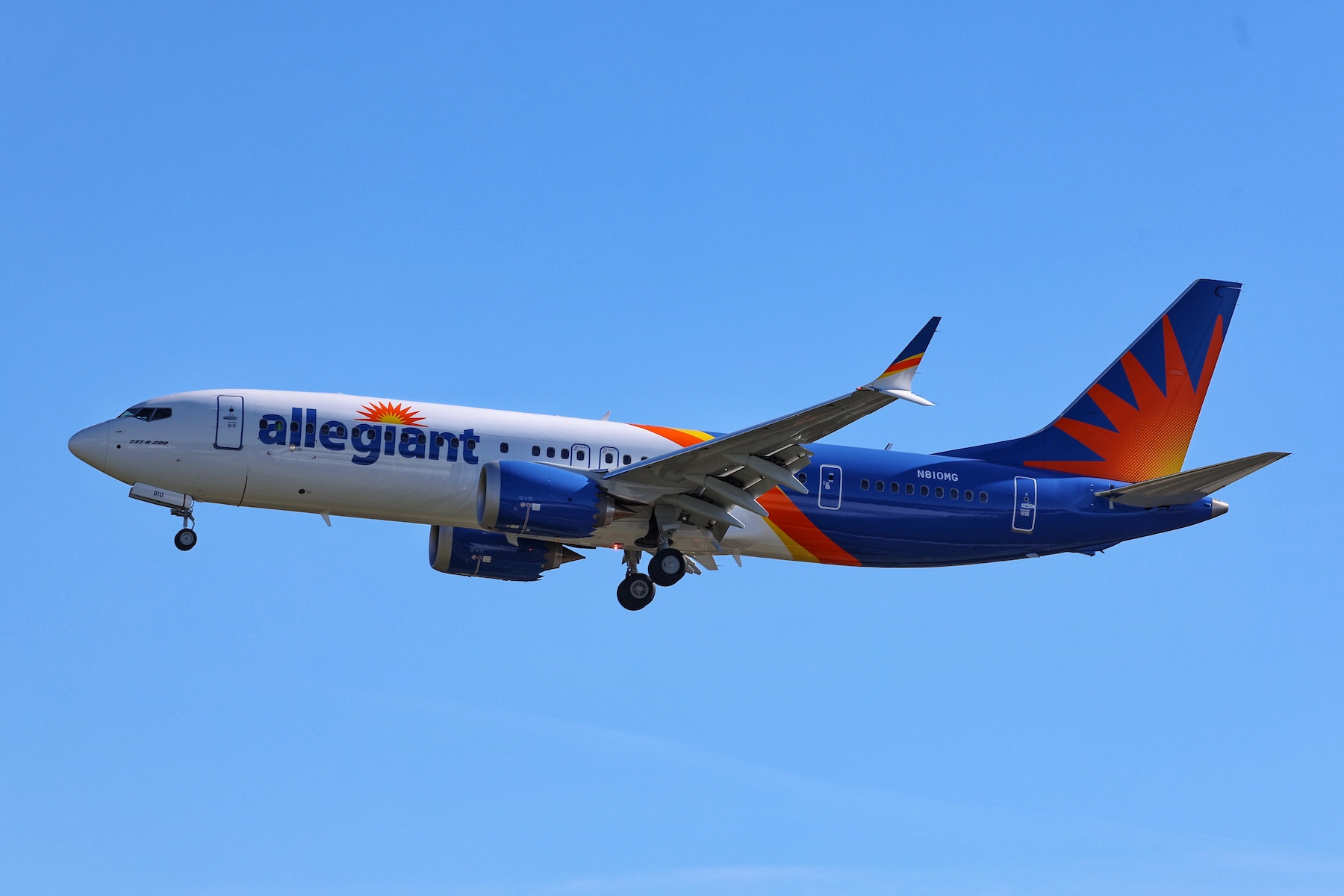
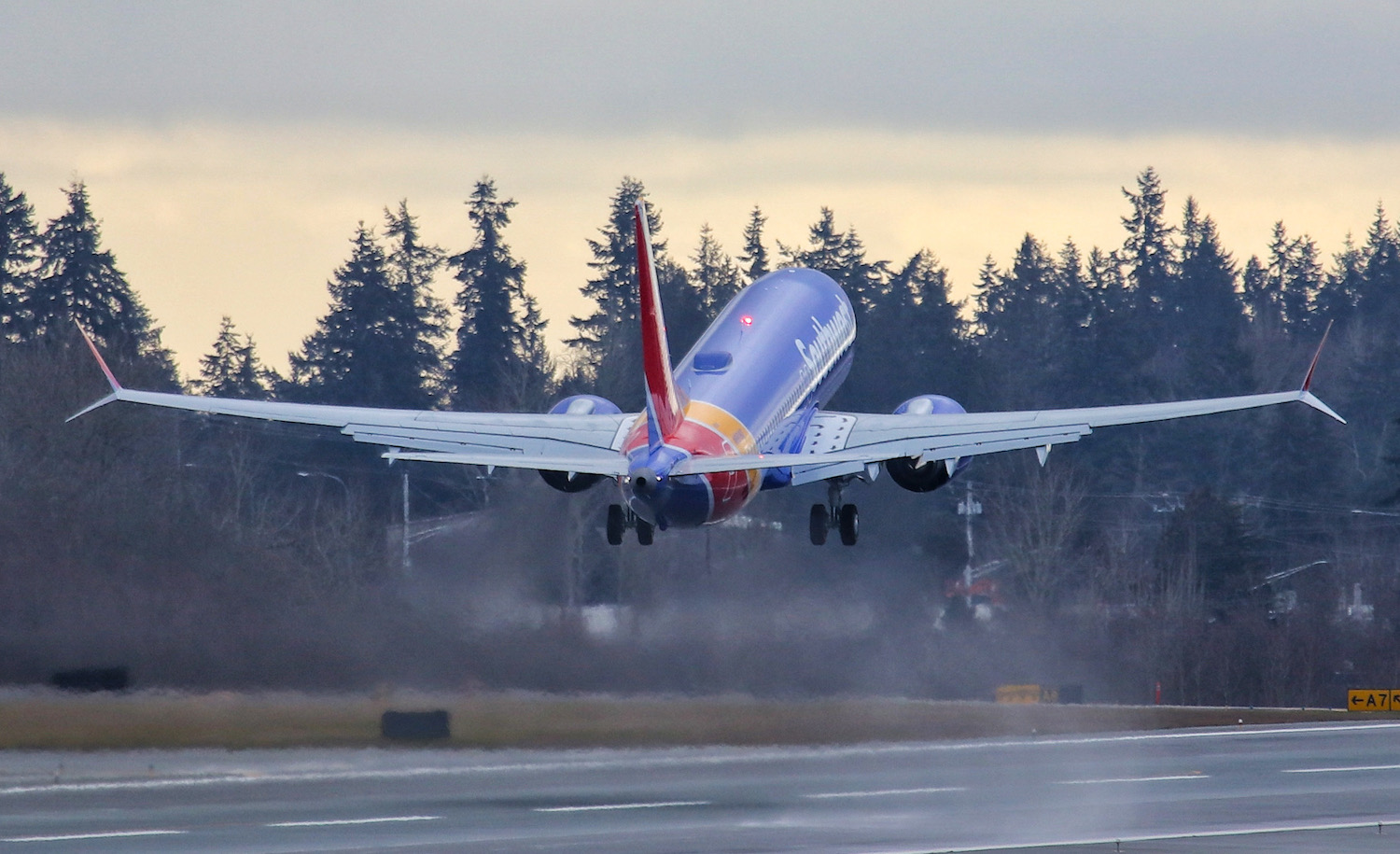
An Allegiant Boeing 737 MAX on a test flight in Washington State (Photo: AirlineGeeks | Katie Zera)
Allegiant has revised its expectations for the Boeing 737 MAX aircraft, cutting back on the number of deliveries anticipated for this year. The airline is now expecting to receive six 737 MAXs in 2024.
This adjustment is down from the originally planned 12 deliveries. The first of these aircraft is now expected to begin revenue service in the third quarter, almost a year behind schedule.
“We are updating our delivery expectations and planning the business for delivery of six aircraft this year rather than the 12 previously communicated,” added the airline’s finance chief Robert Neal during a first-quarter earnings call on Tuesday. Neal noted that these were not based on estimates by Boeing, but rather on the airline’s “best estimate.”
The ongoing delivery delays have broader implications for Allegiant, as it has already invested in preparing for the arrival of the new aircraft type. Prior to the aircraft entering service, the airline incurred costs related to training pilots on the new type, planning its network, and making other necessary preparations.
The delay in deliveries has also contributed to Allegiant’s recent financial performance, with the company reporting a $919,000 loss in the first quarter of 2024.
The Las Vegas-based airline holds unfilled orders for 50 737 MAX and options for a further 80 of the Boeing narrowbodies, as it moves away from its status as an all-Airbus operator.
Ryan founded AirlineGeeks.com in February 2013 and has spent more than a decade covering the airline business. His work has been featured by CNN, WJLA, CNET, and Business Insider. His aviation experience spans airport operations, Part 135 regulatory compliance, and airline crew workforce planning, along with time behind the yoke of a Cessna 172 and interviews with airline executives. Ryan now serves as Group President of Firecrown Media’s Aviation Group. He holds a B.S. in Air Transportation Management and an MBA from Arizona State University and teaches Airline Management at Embry-Riddle Aeronautical University.
Financial Pressures Force Air Vanuatu to Ground Flights and Seek Restructuring
Facing financial pressures and a lessor's insolvency claim, Air Vanuatu has entered a period of uncertainty as the government considers administration.
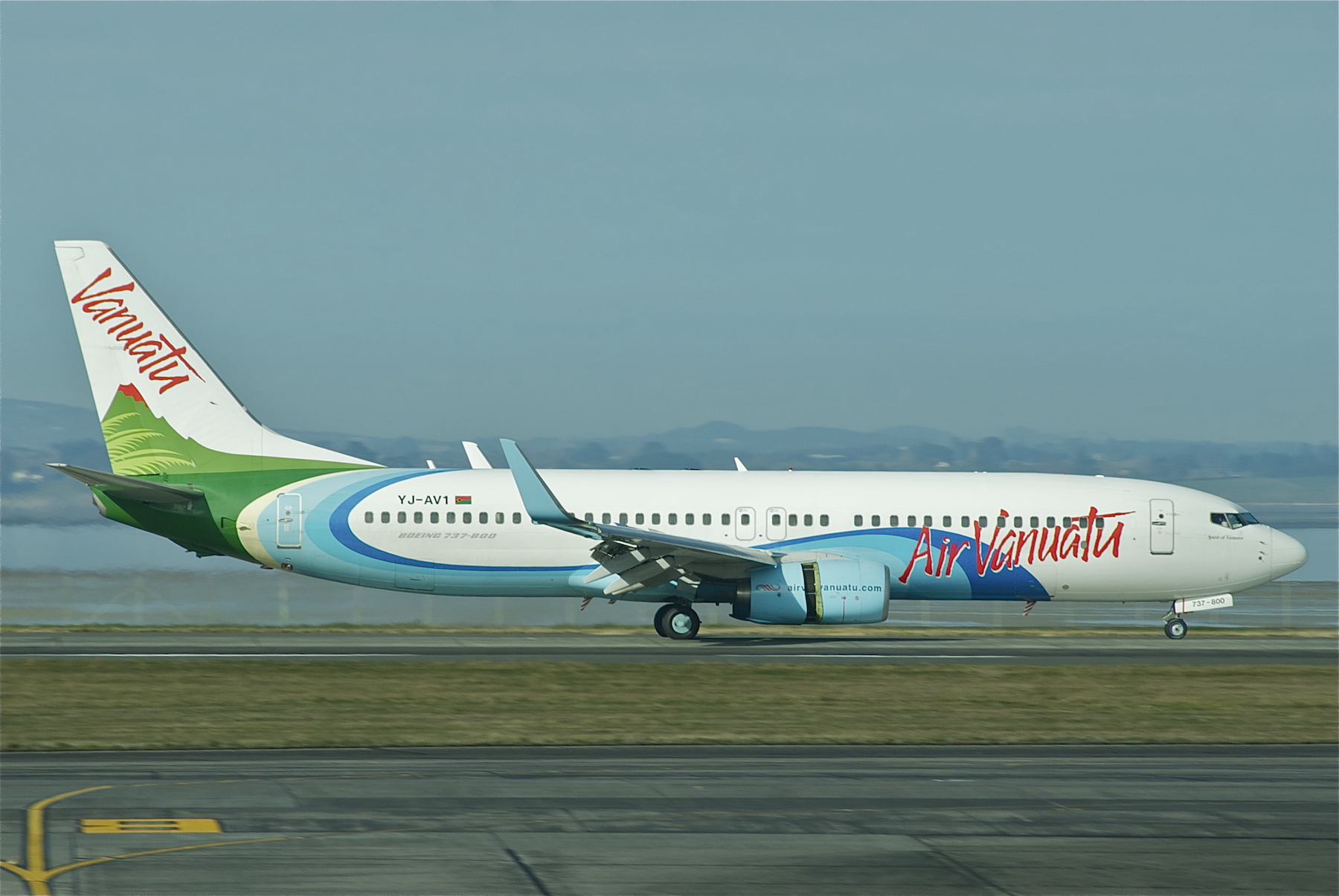
An Air Vanuata 737-800 (Photo: Aero Icarus from Zürich, Switzerland, CC BY-SA 2.0 , via Wikimedia Commons)
Air Vanuatu, the national carrier of Vanuatu, has found itself in a precarious position. The airline has been forced to take drastic measures, grounding its aircraft, canceling flights, and even dissolving its board of directors. This turmoil comes after seeking guidance from Ernst & Young, a prominent consulting firm, on the possibility of entering voluntary administration, a form of bankruptcy.
The situation began to unravel on May 6, according to Alain Lew, the former chairman of the board. The Vanuatu government, facing mounting financial pressures within the airline, approached Ernst & Young to explore different options. This decision closely followed an insolvency claim filed against Air Vanuatu by a lessor, further highlighting the airline’s financial woes.
The immediate consequences for passengers are significant. Air Vanuatu has been forced to cancel approximately 20 flights to Australia, New Caledonia, and New Zealand, with cancellations extending through May 12. The fate of flights beyond that date remains unclear, leaving many travelers in limbo.
In an attempt to manage the crisis, the Vanuatu government released a statement on May 8. The statement acknowledged the possibility of placing Air Vanuatu in voluntary administration and confirmed the appointment of Ernst & Young. Their role will be to meticulously evaluate the airline’s financial health and present recommendations to the government on the best course of action.
Mounting Financial Pressures and a Looming Crisis
This situation exposes a deeper financial struggle that Air Vanuatu has been grappling with for some time. Last month, Vanuatu’s finance minister downplayed rumors of the airline’s instability, calling them mere “rumor-mongering on Facebook.” However, he acknowledged long-standing challenges that the airline had been facing.
Adding another layer of complexity is the absence of Air Vanuatu’s sole jet, a Boeing 737-800. The aircraft has been grounded since January for a critical C-check in Melbourne, Australia. To maintain some semblance of operation, Air Vanuatu has resorted to wet-leasing aircraft from Nauru Airlines and Solomon Airlines.
Further complicating matters, a legal battle lost by Air Vanuatu in 2018 has recently resurfaced. The judgment, only released in February 2024, revealed that the airline had unsuccessfully appealed a hefty VUV150 million (USD $1.25 million) judgment in favor of Isleno Leasing Co Ltd. This failed appeal likely played a role in Isleno’s decision to initiate liquidation proceedings against Air Vanuatu on May 2.
With the arrival of Ernst & Young representatives in Port Vila, a period of intense financial scrutiny has begun for Air Vanuatu. The consulting firm will work closely with the Vanuatu government and the airline’s remaining team to assess the situation and determine the best path forward. The future of Air Vanuatu hangs in the balance, with the outcome impacting not only the airline’s employees and passengers but also Vanuatu’s vital tourism industry.
Tolga is a dedicated aviation enthusiast with years of experience in the industry. From an early age, his fascination with aviation went beyond a mere passion for travel, evolving into a deliberate exploration of the complex mechanics and engineering behind aircraft. As a writer, he aims to share insights , providing readers with a view into the complex inner workings of the aviation industry.
Emirates Expands Aircraft Retrofit Program
Emirates announced an expansion of its already massive effort to refurbish existing Airbus A380 and Boeing 777 aircraft, which began in 2022.
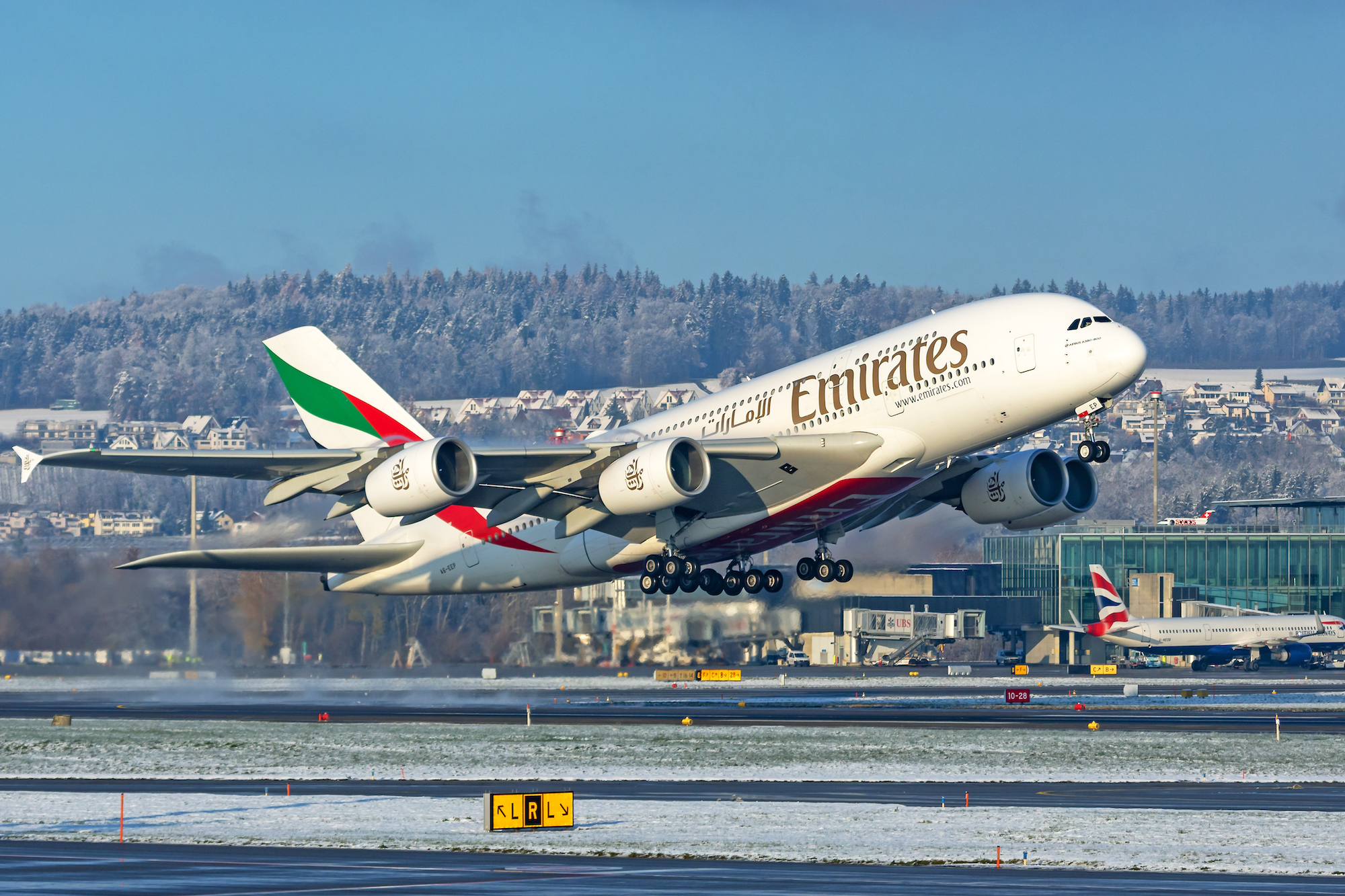
An Emirates Airbus A380. (Photo: AirlineGeeks | William Derrickson)
Emirates announced an expansion of its already massive effort to refurbish existing aircraft. In 2022, the airline announced a $2 billion aircraft retrofit program that was aimed at refreshing interiors of 67 Airbus A380 and 53 Boeing 777 aircraft. This has now expanded to another 43 A3380 and 28 Boeing 777 aircraft.
This brings the total number of aircraft being refurbished under this program to 191. The goal of the expansion is to ensure more aircraft have the newer interiors that currently reflect Emirates’ new color scheme and branding while also installing premium economy on aircraft.
22 A380s have been retrofitted so far and starting this July, the first Boeing 777 will start refurbishment. It will take approximately two weeks to complete and other Boeing 777 aircraft are expected to be refurbished at a similar pace.
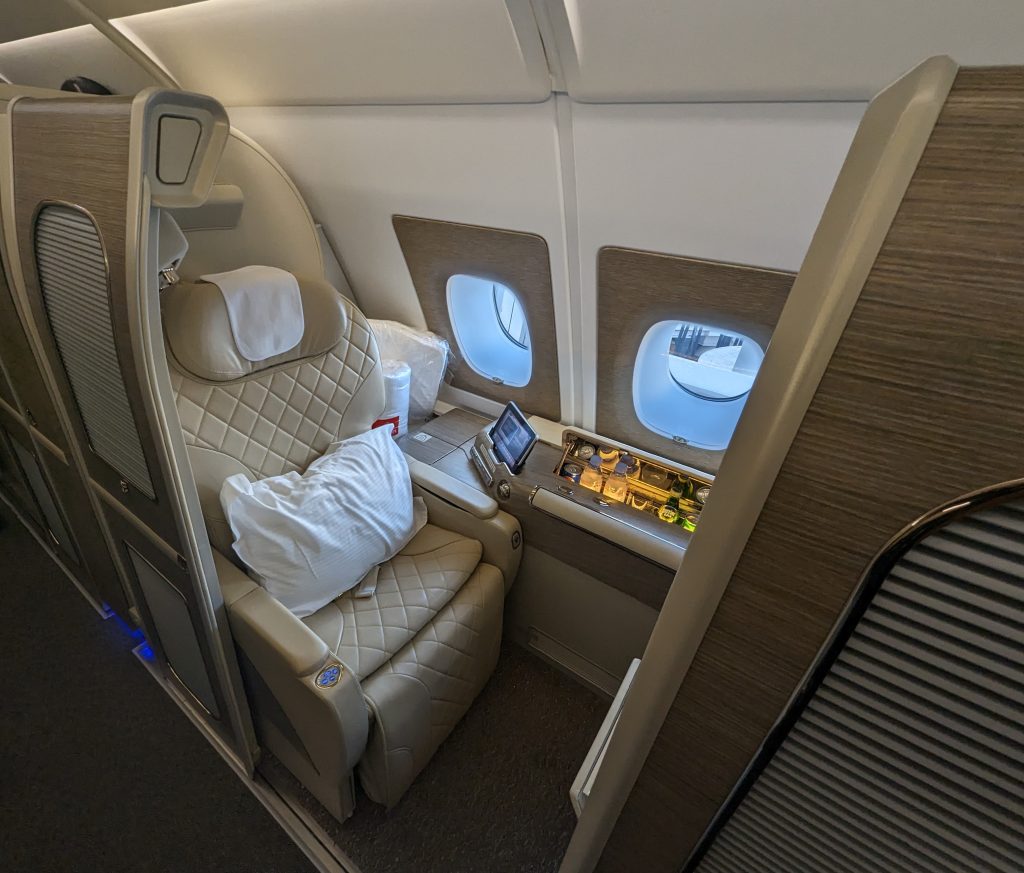
First class will now have a revised color scheme with changes to panels and upholstery. A brand new 1-2-1 configuration business class cabin will be added to the aircraft along with 24 premium economy seats. Details of the new business class cabin have yet to be revealed.
The addition of premium economy will impact the overall seat count on the aircraft. Refurbished Boeing 777 aircraft will have eight first class seats, 40 business class seats, 24 premium economy seats, and 260 economy seats. This marks a reduction of 50 economy seats which are being removed to make space for the premium economy cabin.
These new seats will all feature updated cabin designs that will be similar to what is found on the refurbished A380s already in service.
Emirates A380 first class seat (Photo: AirlineGeeks | Hemal Gosai)
All of this work is being done by the Emirates Engineering Centre right in Dubai. At the end of the refurbishment project, the airline will have installed 8,104 premium economy seats, 1,894 refreshed first class suites, 11,182 upgraded business class seats, and 21,814 economy seats.
These new interiors reflect the next generation of Emirates a more mature brand. The airline is dropping much of the dark wood paneling and gold finishes to a lighter and brighter color scheme. Emirates is going for subtle elegance across the fleet.
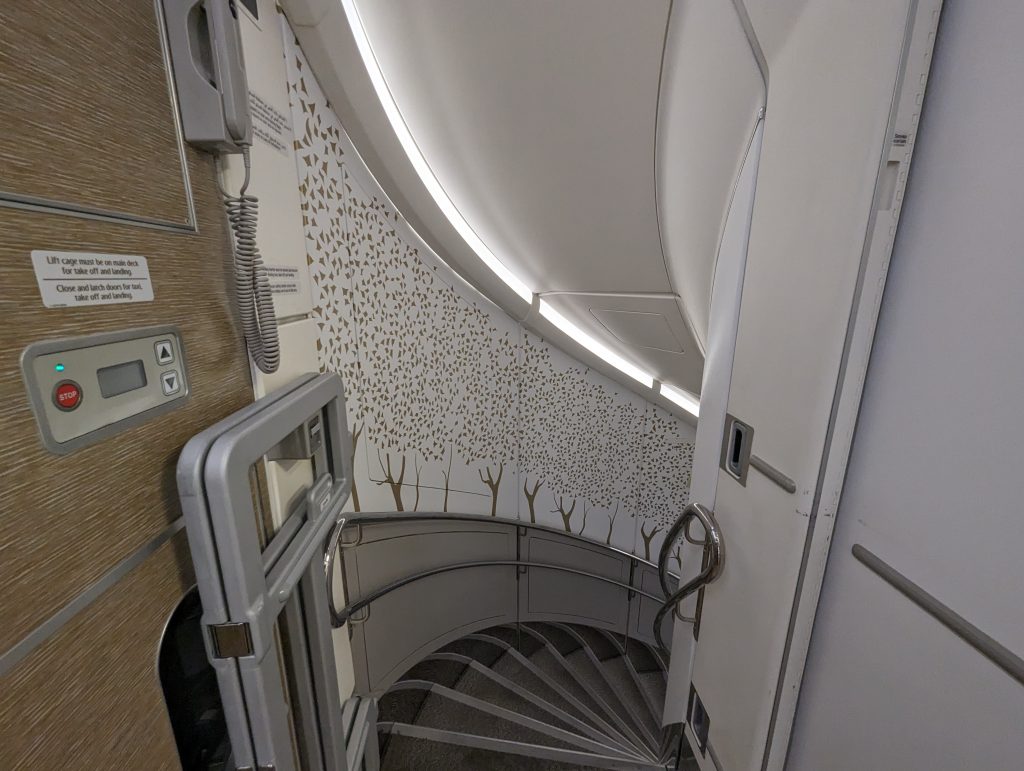
No renderings of the Boeing 777 interiors have been released yet but hopefully the airline will continue to highlight the ghaf tree, the national tree of the United Arab Emirates, across the fleet. The refurbished A380 aircraft in the fleet all have hand-painted ghaf trees across bulkheads and various other parts of the cabin adding a cultural touch to the airline.
Staircase to lower deck (Photo: AirlineGeeks | Hemal Gosai)
Hemal took his first flight at four years old and has been an avgeek since then. When he isn't working as an analyst he's frequently found outside watching planes fly overhead or flying in them. His favorite plane is the 747-8i which Lufthansa thankfully flies to EWR allowing for some great spotting. He firmly believes that the best way to fly between JFK and BOS is via DFW and is always willing to go for that extra elite qualifying mile. Hemal's opinions are his own and do not reflect those of his employer.
JetBlue Redeploys Capacity to Add New Mint and Puerto Rico Routes
JetBlue has unveiled a suite of network changes, including an expansion of its Puerto Rico operations and several new Mint routes.
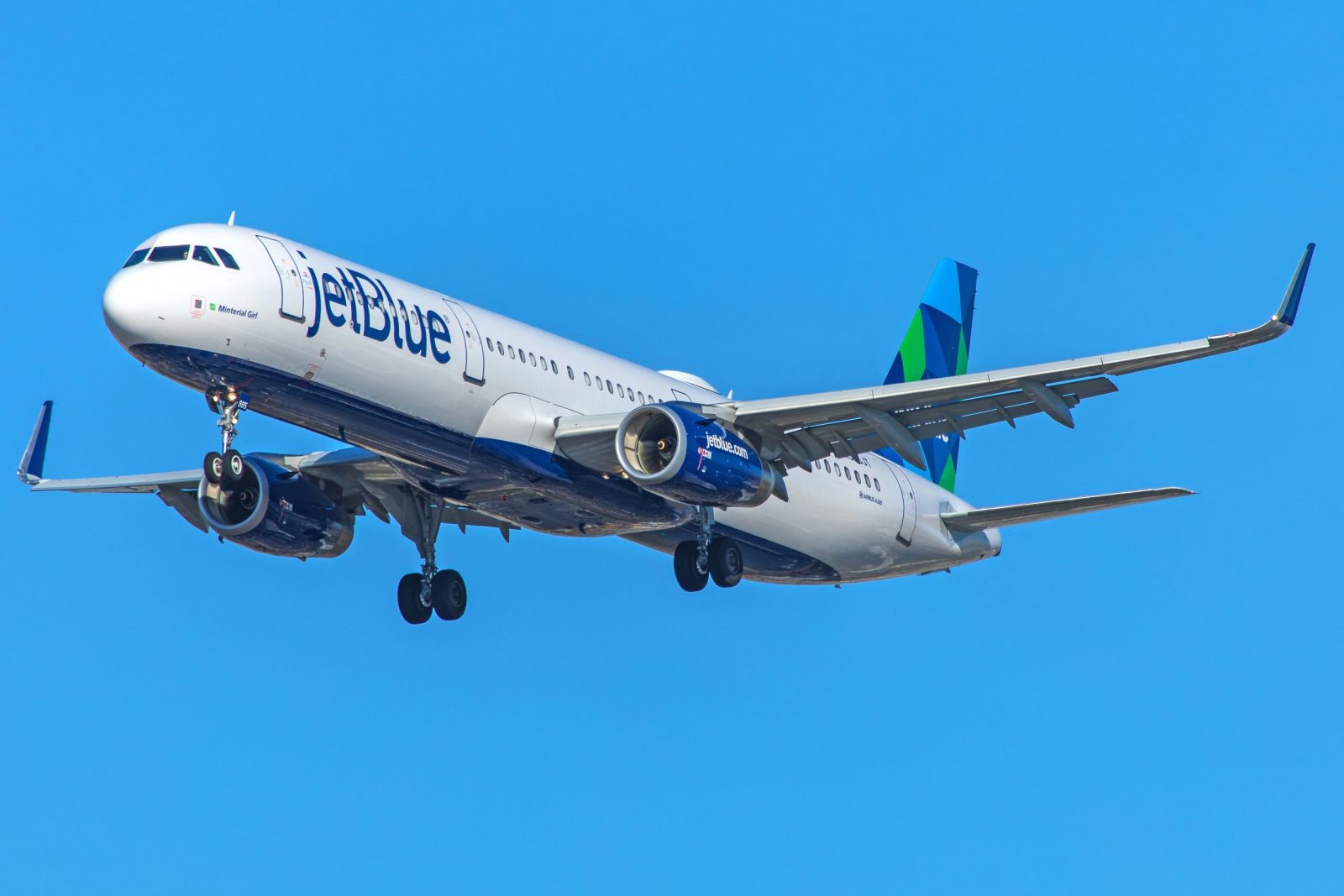
A JetBlue Airbus A321. (Photo: AirlineGeeks | William Derrickson)
JetBlue has unveiled a suite of network changes, including an expansion of its Puerto Rico operations and several new Mint routes. The airline will also be reducing its flying from LaGuardia Airport in New York.
Expanding Flights From Puerto Rico
The network expansion includes a slate of new routes out of San Juan, Puerto Rico. Since making the Puerto Rican capital a focus city in 2012, JetBlue has become largest carrier at Luis Muñoz Marín International Airport.
New JetBlue routes from San Juan include daily service to Providence, R.I., Westchester County, N.Y. and Santiago, Dominican Republic. JetBlue will also offer four weekly flights between San Juan and Medellin in Colombia and three weekly flights between San Juan and Cancun in Mexico. These routes are scheduled to begin in late October.
Starting in December, the airline will also resume service to St. Croix in the United States Virgin Islands, with a daily flight to and from San Juan. The carrier previously served St. Croix between 2011 and 2019.
“JetBlue has been a proud part of the Puerto Rican community for over twenty years, and we’re excited to deepen our roots with this expansion,” said JetBlue President Marty St. George. “Our decades-long history with this vibrant community drives our enthusiasm to not only increase our service but also to strengthen our relationships and presence in the region.”
More JetBlue Mint Destinations
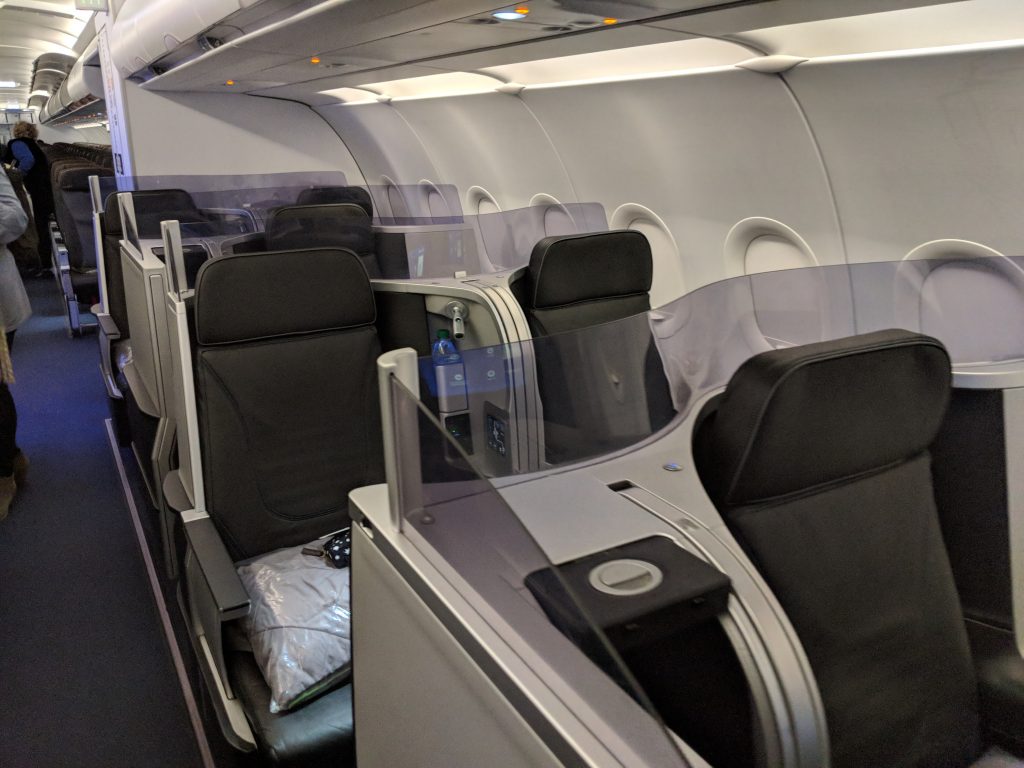
JetBlue is also bringing its lie-flat premium experience – known as Mint – to three new cities: Phoenix, Vancouver and San Juan. Flights from New York–JFK to Vancouver and San Juan will see year-round Mint service with the airline’s Airbus A321 aircraft.
Meanwhile, all JetBlue flights to and from Phoenix Sky Harbor International Airport will have Mint for the upcoming winter season. JetBlue’s Phoenix service consists of flights between the Arizonan capital and JetBlue’s bases in Boston and New York–JFK. The airline will also deploy Mint-equipped aircraft on its Fort Lauderdale–Las Vegas route for the winter season.
JetBlue Mint seats on an Airbus A321-200 (Photo: AirlineGeeks | Hemal Gosai)
Redeploying Capacity: Two New Caribbean Destinations and Reduced Flying at LaGuardia
The New York-based carrier has also revealed two destinations for the company. Starting in the fall, JetBlue will begin flights from New York’s John F. Kennedy International Airport (JFK) to Argyle International Airport in St. Vincent and the Grenadines and Flamingo International Airport in Bonaire.
Amid challenges with aircraft availability, the company has stated that its new routes will be added by redeploying capacity within its network. As of late October, JetBlue is ending flights between New York’s LaGuardia Airport (LGA) and Atlanta, New Orleans, Nassau, Tampa, and Fort Myers. The carrier is also reducing frequencies on its routes between LaGuardia and Boston, Fort Lauderdale, and Orlando. According to the airline, these service reductions are the result of the end of its Northeast Alliance with American Airlines.
JetBlue is also exiting a few other markets elsewhere in its network. Flights to Puerto Vallarta from New York–JFK and Los Angeles will be ending in June, marking the airline’s departure from the popular Mexican vacation destination. As of late October, the airline is ending its Los Angeles–Newark and Los Angeles–Orlando routes.
Andrew is a lifelong lover of aviation and travel. He has flown all over the world and is fascinated by the workings of the air travel industry. As a private pilot and glider pilot who has worked with airlines, airports and other industry stakeholders, he is always excited to share his passion for aviation with others. In addition to being a writer, he also hosts Flying Smarter, an educational travel podcast that explores the complex world of air travel to help listeners become better-informed and savvier travelers.
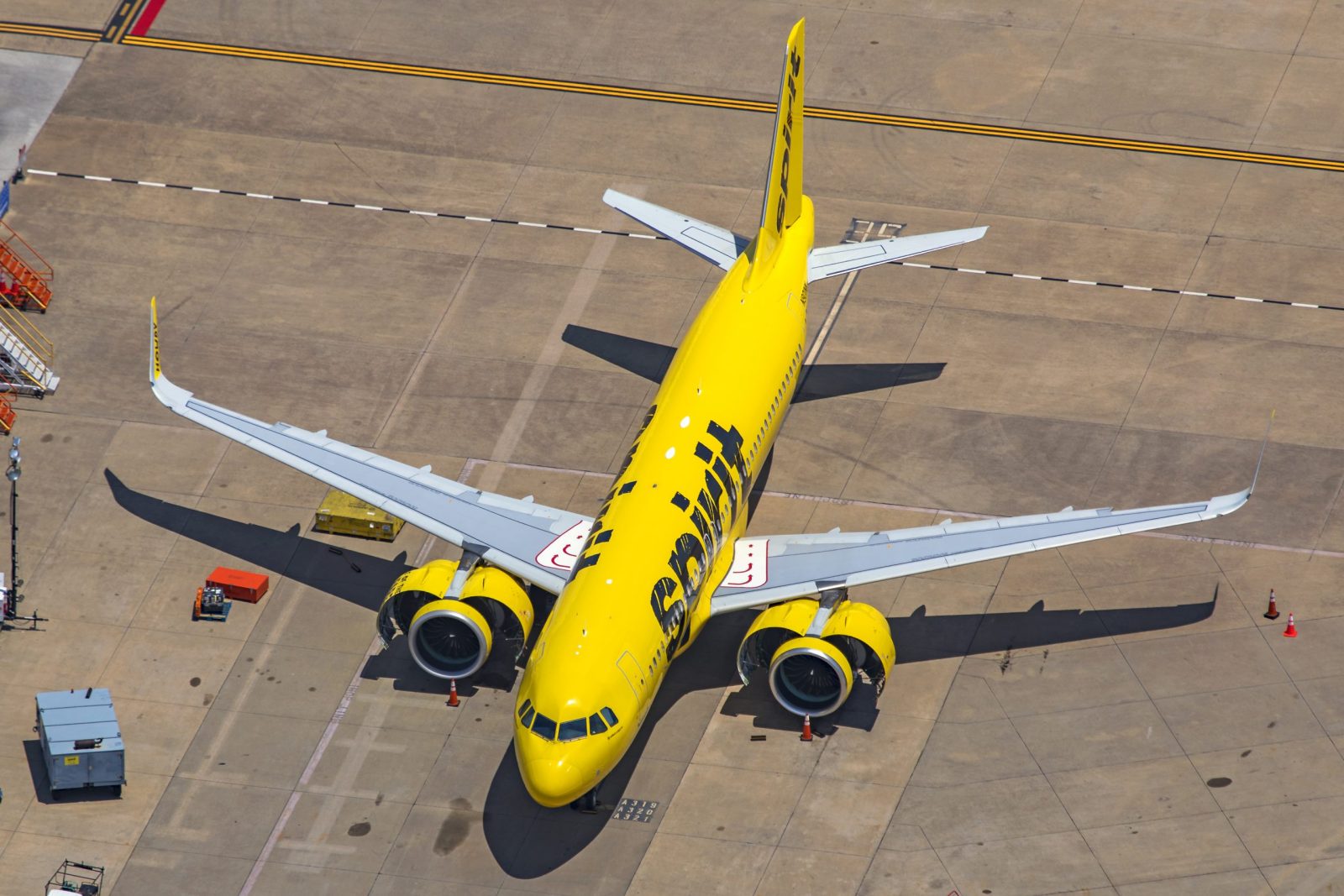
A Spirit A320neo. (Photo: AirlineGeeks | William Derrickson)
As the airline continues to grapple with ongoing Pratt & Whitney GTF engine issues, Spirit says it expects to finish 2024 with 40 Airbus A320neo series aircraft grounded. This figure represents nearly 20% of the airline’s entire fleet.
“Looking further out, the GTF engine availability issues and the phasing of AOG aircraft being taken out of service, together with limited visibility on when these aircraft will be returned to service, makes it difficult to accurately predict the number of assets we will have to produce capacity,” said company chief commercial officer Matt Klein during an earnings call earlier this week. “For the full year 2024, we estimate we will have an average of about 25 [Aircraft on Ground] (AOGs), finishing the year with about 40 AOGs.”
As a result, the carrier says it expects capacity growth to be flat or slightly up compared to 2023. Last month, Spirit announced it would defer new aircraft deliveries slated for mid-2025 into late 2026 to the 2030s and furlough 260 pilots.
“The impact on our business associated with these Pratt engine issues cannot be understated,” added Spirit’s finance chief Scott Haralson on the call. Like many other operators of the issue-plagued engine type, Spirit says it receives credits from Pratt & Whitney for the groundings.
In the first quarter, Spirit received nearly $31 million in AOG credits. According to data from Cirium Fleet Analyzer, the carrier has a total of 207 aircraft in its fleet with 18 A320neos and one A321neos in storage.
So far this year, the airline has seen an average of nearly 18 grounded aircraft each month.
Ryan founded AirlineGeeks.com in February 2013 and has spent more than a decade covering the airline business. His work has been featured by CNN, WJLA, CNET, and Business Insider. His aviation experience spans airport operations, Part 135 regulatory compliance, and airline crew workforce planning, along with time behind the yoke of a Cessna 172 and interviews with airline executives. Ryan now serves as Group President of Firecrown Media’s Aviation Group. He holds a B.S. in Air Transportation Management and an MBA from Arizona State University and teaches Airline Management at Embry-Riddle Aeronautical University.
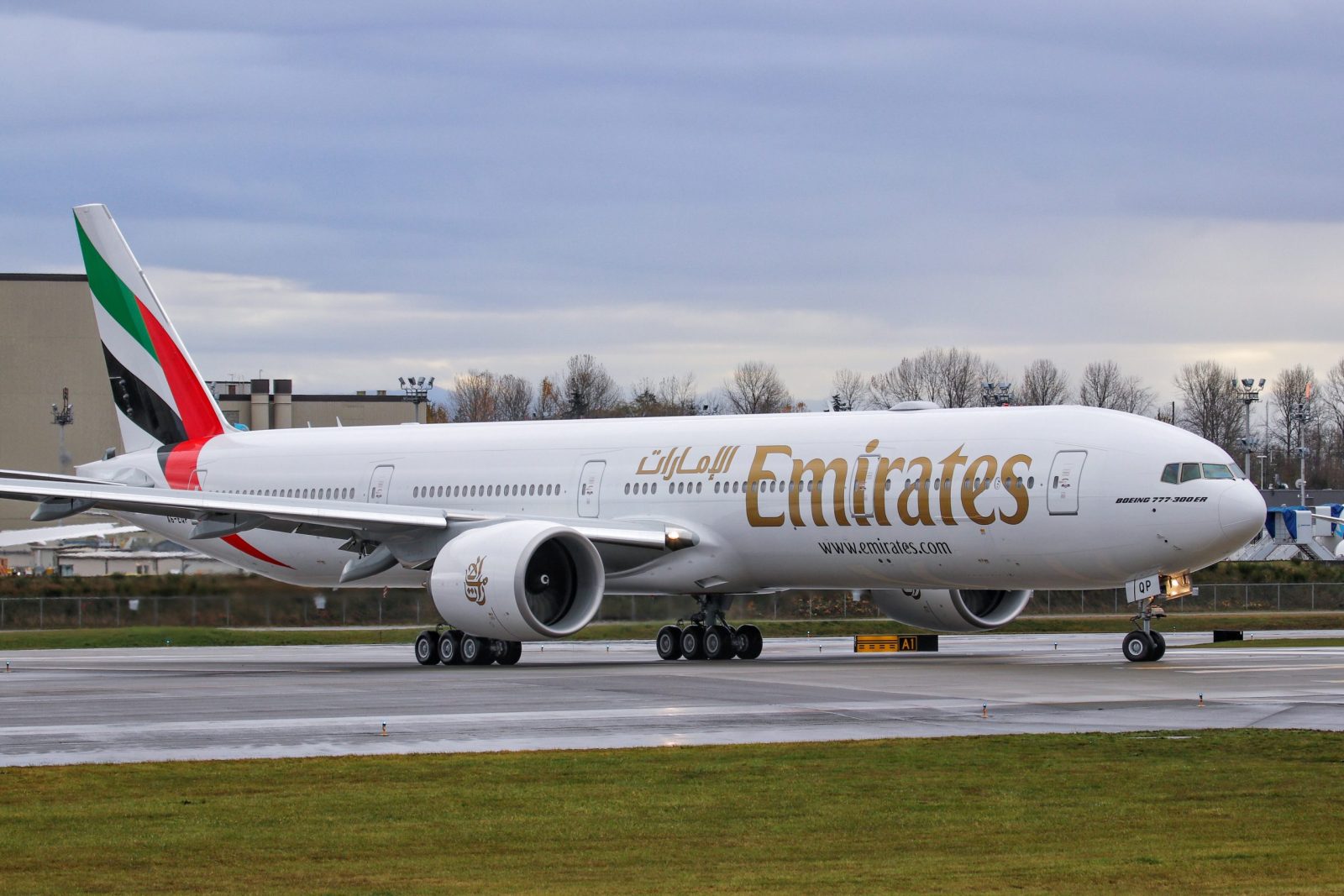
Emirates is the largest operator of Boeing 777-300ER aircraft with 134 jets in the fleet. (Photo: AirlineGeeks | Katie Zera)
Emirates has operated scheduled services to South Africa for almost three decades. The airline has established itself as a top choice for many travelers to and from the country. How did it achieve this?
Since the introduction of scheduled flights to South Africa over 29 years ago, Emirates has expanded operations, introduced innovative services, and formed strategic partnerships in the market.
Growth in the South African Market
Emirates currently operates 42 weekly flights between Dubai and South Africa. The airline introduced flights to South Africa in 1995.
Initially, it operated only three flights a week between Dubai and Johannesburg. This has grown to three daily rotations.
The Dubai-based airline also introduced flights to Cape Town – in 2008 – and Durban – in 2009. It operates daily services on these routes.
Strategic Partnerships
Partnerships are key to Emirates’ expansion in South Africa. The airline has influenced South Africa’s travel landscape through strategic partnerships and collaborations.
One of its key collaborations includes a partnership with South African Tourism. Under the agreement, Emirates promotes South Africa as a destination, showcasing the country’s cultural heritage, natural beauty, and diverse attractions.
The carrier also has partnerships with various local airlines, enabling travelers to reach a large number of destinations in Southern Africa. It has codeshare agreements and interline partnerships with South African Airways, Airlink, Cemair, and low-cost airline FlySafair.
Emirates’ collaborations with local airline partners have been pivotal for the airline’s growth in South Africa. They enable the Middle East carrier to reach nearly 60 regional destinations in Africa.
Expanded Reach
Emirates’ interline agreements with local airlines operating in South Africa enable improved connectivity for passengers flying with the Dubai-based carrier.
With Cemair, Emirates passengers can access some of South Africa’s luxury travel destinations including Margate and Plettenberg Bay. An interline agreement with FlySafair enables passengers to reach various local domestic destinations, including Port Elizabeth, East London, and George.
Emirates’ codeshare partnership with Airlink, provides seamless connectivity to 44 cities in the region via its three gateways. According to Bizcommunity, the carrier’s partnership with South African Airways dates back to 1997. It extends to Emirates’ loyalty program, enabling passengers to earn and redeem Skywards Miles on South African Airways flights.
Lorne is a South Africa-based aviation journalist. He was captivated and fascinated by flying from the day he took his first airline flight. With a passion for aviation in his blood, he has flown to destinations in all corners of the globe. Lorne has traveled extensively and lived in various countries. Drawing on his travels and passion for aviation, Lorne enjoys writing about airlines, routes, networks, and new developments.
Breeze Flight Attendants Vote Overwhelmingly to Unionize
Flight attendants at start-up carrier Breeze Airways have voted overwhelmingly to unionize, the AFA announced on Tuesday.
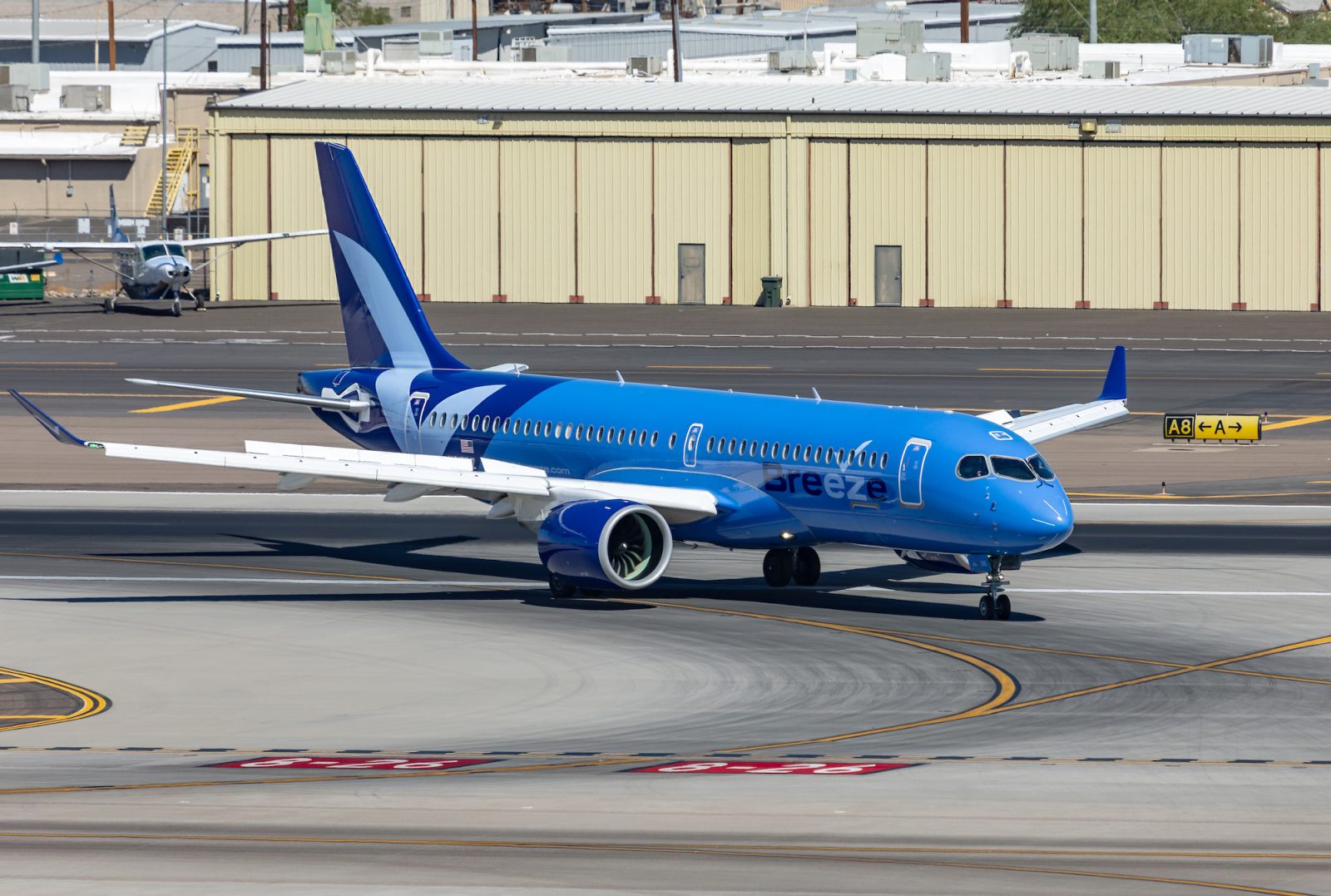
A Breeze A220 in Phoenix. (AirlineGeeks - William Derrickson)
Flight attendants at start-up carrier Breeze have voted overwhelmingly to unionize. The National Mediation Board (NMB) certified the election results on Tuesday, confirming that 76.3% of the airline’s flight attendants supported joining the Association of Flight Attendants-CWA (AFA). This decision will now see the roughly 600 flight attendants at the Utah-based airline represented by the union.
The campaign for unionization was notably swift, with flight attendants filing for an election just two weeks after announcing their intention to join the AFA. According to the union, flight attendants faced an “aggressive anti-union campaign run by management up to the CEO with consultants from Ford and Harrison.”
AFA International President Sara Nelson touted the vote in a press release. “Breeze Flight Attendants filed for an election two weeks after taking their campaign public in January and kept organizing together to turn out a clear mandate to address their concerns at work. Today they gain the legal right to bargain and have a voice in their future at Breeze. We are inspired by their solidarity and thrilled to welcome them to our AFA family,” she said.
The unionization of Breeze Airways flight attendants follows a similar successful effort by the airline’s pilots, who voted to unionize with the Air Line Pilots Association (ALPA) in August 2022. The company and its pilots are currently in the process of negotiating a collective bargaining agreement (CBA).
In response to the vote, a spokesperson for Breeze Airways added, “Although this was not the outcome we had hoped for, we pledge to work alongside the AFA and our Flight Attendants to build on the already tremendous success of our young airline.”
The majority of U.S.-based flight attendants are unionized with the AFA representing over 50,000 at 20 different carriers. Cabin crew at Delta and SkyWest are among the non-union minority.
Ryan founded AirlineGeeks.com in February 2013 and has spent more than a decade covering the airline business. His work has been featured by CNN, WJLA, CNET, and Business Insider. His aviation experience spans airport operations, Part 135 regulatory compliance, and airline crew workforce planning, along with time behind the yoke of a Cessna 172 and interviews with airline executives. Ryan now serves as Group President of Firecrown Media’s Aviation Group. He holds a B.S. in Air Transportation Management and an MBA from Arizona State University and teaches Airline Management at Embry-Riddle Aeronautical University.
A British Airways A380 approaches Heathrow. (Photo: AirlineGeeks | William Derrickson)
Arriving passengers are facing hours-long delays at U.K. airports nationwide. The U.K. government acknowledged a technical issue affecting passport control e-gates has been causing long queues at airports in the country.
The Home Office said it would “resolve the issue as soon as possible and apologize to all passengers for the inconvenience caused.”
The e-gate system allows passengers to scan their own passports to enter the country. In response to the chaos, contingency plans are in place and extra staff will be on hand to assist travelers. The system is not only for Britain; passengers from the U.S., Canada, and some other countries can use the system too.
Airports around the country including London’s Heathrow, Gatwick, and Stansted, along with Manchester, Edinburgh, and Bristol are suffering from the technical glitch. But the government didn’t go into details.
Other Options
Manchester Airport said, ”UK Border Force is experiencing nationwide issues affecting at a number of airports, including Manchester. Our teams are supporting UK Border Force staff to minimise disruption to passengers while they fix the problem. We apologize for any inconvenience caused during this time and thank you for your patience.”
According to Sky News, passengers are being queued for up to three hours at London’s Stansted. In the meantime, some passengers couldn’t disembark because of the “huge queue” at passport control. Even the pilot told the passengers “he has not been given any time frame.”
The e-gate outage has been a sense of déjà vu; travelers nationwide suffered from the glitch for several hours around the same time last year.
AirlineGeeks.com was founded in February 2013 as a one-person blog in Washington D.C. Since then, we’ve grown to have 25+ active team members scattered across the globe. We are all here for the same reason: we love deep-diving into the fascinating realm of the airline industry.
Causes and Effects of Reducing Southwest Pilots’ Hours
According to a Reuters report over the weekend, Southwest plans to offer its pilots reduced hours as it continues to wait on delayed aircraft deliveries.
A Southwest 737 MAX at Paine Field (Photo: AirlineGeeks | Katie Zera)
According to a Reuters report over the weekend, Southwest plans to offer its pilots reduced hours, and thus reduced pay, as it continues to wait on delayed aircraft deliveries from Boeing. The company’s order of 737 MAX 7 aircraft seems delayed indefinitely as the aircraft awaits FAA certification, and fewer 737 MAX 8s will be delivered compared to expectations as Boeing undergoes additional scrutiny from the regulator.
Reducing pilot hours will allow the airline to lower what it pays in salaries without needing to furlough crews, the report said. Pilots will be scheduled so that they meet all FAA pilot currency requirements, allowing Southwest to increase capacity at a moment’s notice. This is undoubtedly a lesson learned from the COVID-19 pandemic; as demand picked up sooner and faster than expected, airlines lost out on revenues because they had to send pilots to simulator training before sending them back to fly the line.
“Achieving our financial goals is an immediate imperative. The recent news from Boeing regarding further aircraft delivery delays presents significant challenges for both 2024 and 2025,” Southwest CEO Bob Jordan said during the company’s first-quarter earnings call.
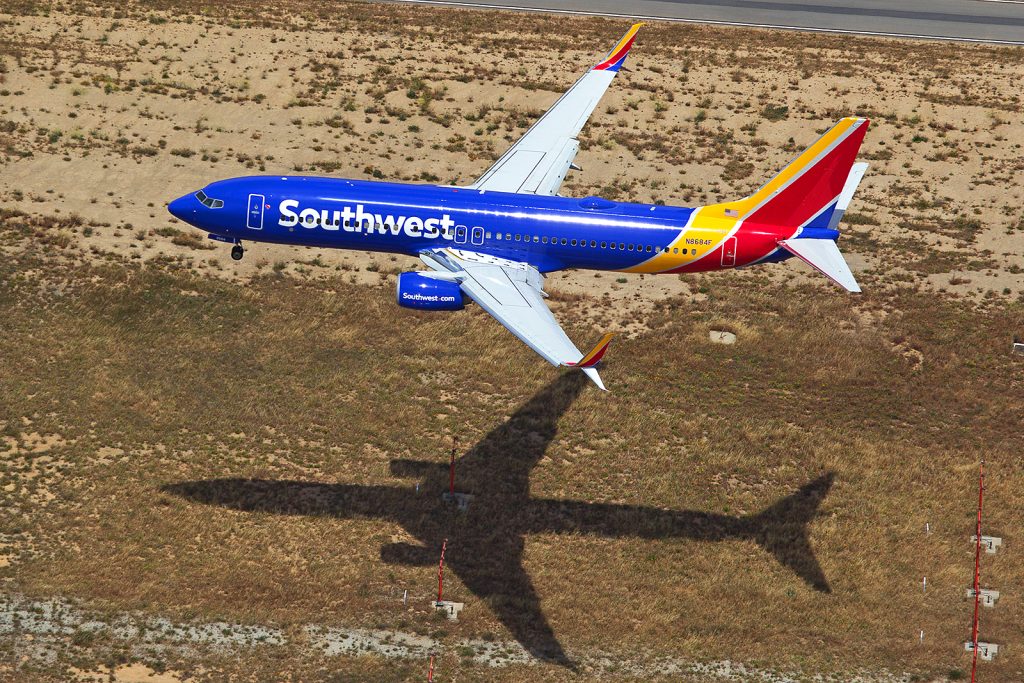
A Southwest Airlines 737 on final approach to Los Angeles International Airport. (Photo: AirlineGeeks | William Derrickson)
“We are reacting and replanning quickly to mitigate the operational and financial impacts while maintaining dependable and reliable flight schedules for our customers,” Jordan continued.
Southwest’s plan will take effect in September. The relatively long wait time signals that the carrier is prepared to use the tactic for a prolonged period if needed. Hundreds of pilots will be offered entry into the program, sources told Reuters. The company says it is still working with the Southwest Airlines Pilots Association (SWAPA), the union that represents the airline’s pilots, to reach an agreement in order to effectively roll out the program.
“There hasn’t been an official decision from SWA leadership to address the continued Boeing delays. We’ve had very preliminary talks, but they do need our agreement to offer any voluntary paid time off. We will continue to work with them to address Boeing’s failings,” the President of SWAPA told FOX News.
Southwest’s Financial Savings
Many airline unions have minimum required hours for which pilots must be paid no matter how they fly. If SWAPA requires that pilots be paid for only 75 hours per month, for example, Southwest Airlines could save nearly $3000/month in pay for one junior pilot if they only fly 75 hours instead of 100. Multiply that by 12,000 people and the company could theoretically save tens of millions of dollars per month before factoring in salaries at the upper end of the scale.
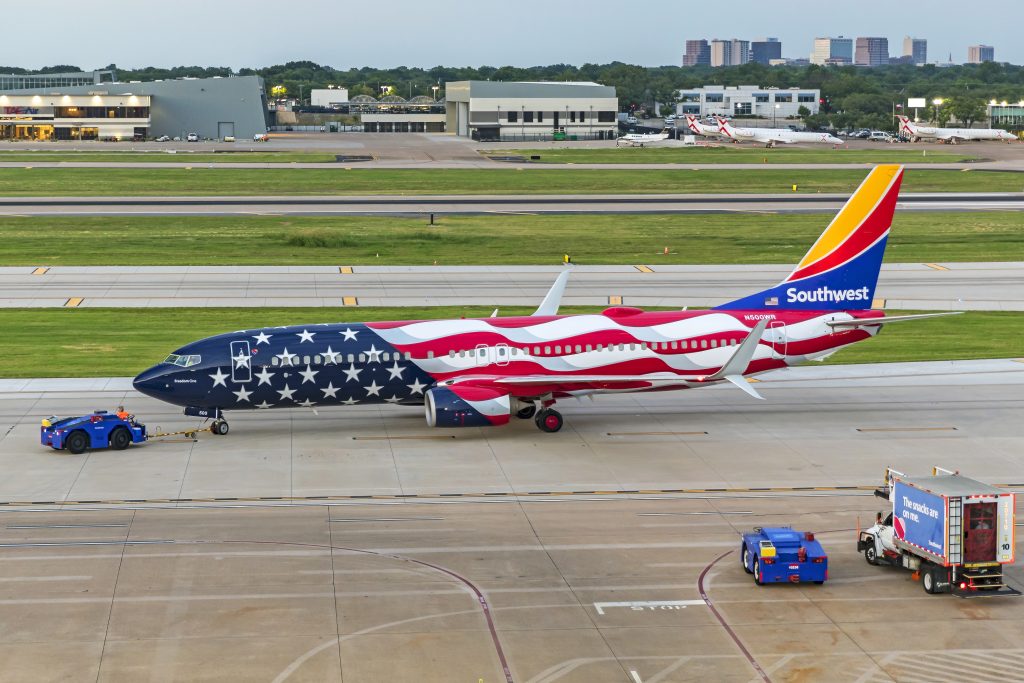
Southwest’s Freedom One aircraft under tow at Dallas Love Field. (Photo: AirlineGeeks | William Derrickson)
For the time being, Southwest is also completely pausing pilot hiring and has cut services to several airports in an effort to save money. However, by avoiding furloughs, Southwest won’t be in the same camp as Spirit, which announced it would send home over 250 pilots.
The last time Southwest was planning a major aircraft order, it publicly threatened to purchase aircraft from a Boeing competitor in an apparent attempt to force Boeing’s hand at bigger discounts. While the airline said after making a purchase with Boeing that it was never seriously considering buying from Airbus, Embraer, or Bombardier, SWAPA still retained two law firms in March to prepare in case Southwest attempted to merge with or buy a competitor. Such a move would give Southwest access to more airplanes, more crews, and more airport slots to allow it to start expanding again.
Hope For the Best, Prepare for the Worst
Southwest seems to be taking preemptive steps to keep it from getting into a position similar to Spirit or JetBlue, which is also working on restructuring its route network and debts at the moment. By cutting costs voluntarily now, Southwest could avoid a situation where it’s forced to later.
Many expect that hiring, suspended services, and more will pick up the moment deliveries return to expected levels. However, there is no telling when that will be for Boeing, as the FAA’s heightened oversight of the manufacturer is continuing. 737 MAX monthly delivery numbers have never recovered to the numbers seen before the MCAS crashes in 2018 and 2019.
John McDermott is a commercial pilot pursuing a career in professional flight. His passion for aviation began in an Ann Arbor bookstore with a tale of enemy pilots during World War 2, and he hasn't looked back. Besides flying and writing for AirlineGeeks, John volunteers with Professional Pilots of Tomorrow and travels whenever he gets the chance.
GoJet Receives FAA Part 145 Certification
GoJet Airlines, a regional carrier based in St. Louis, announced it has received FAA Part 145 certification to operate a large aircraft repair station.
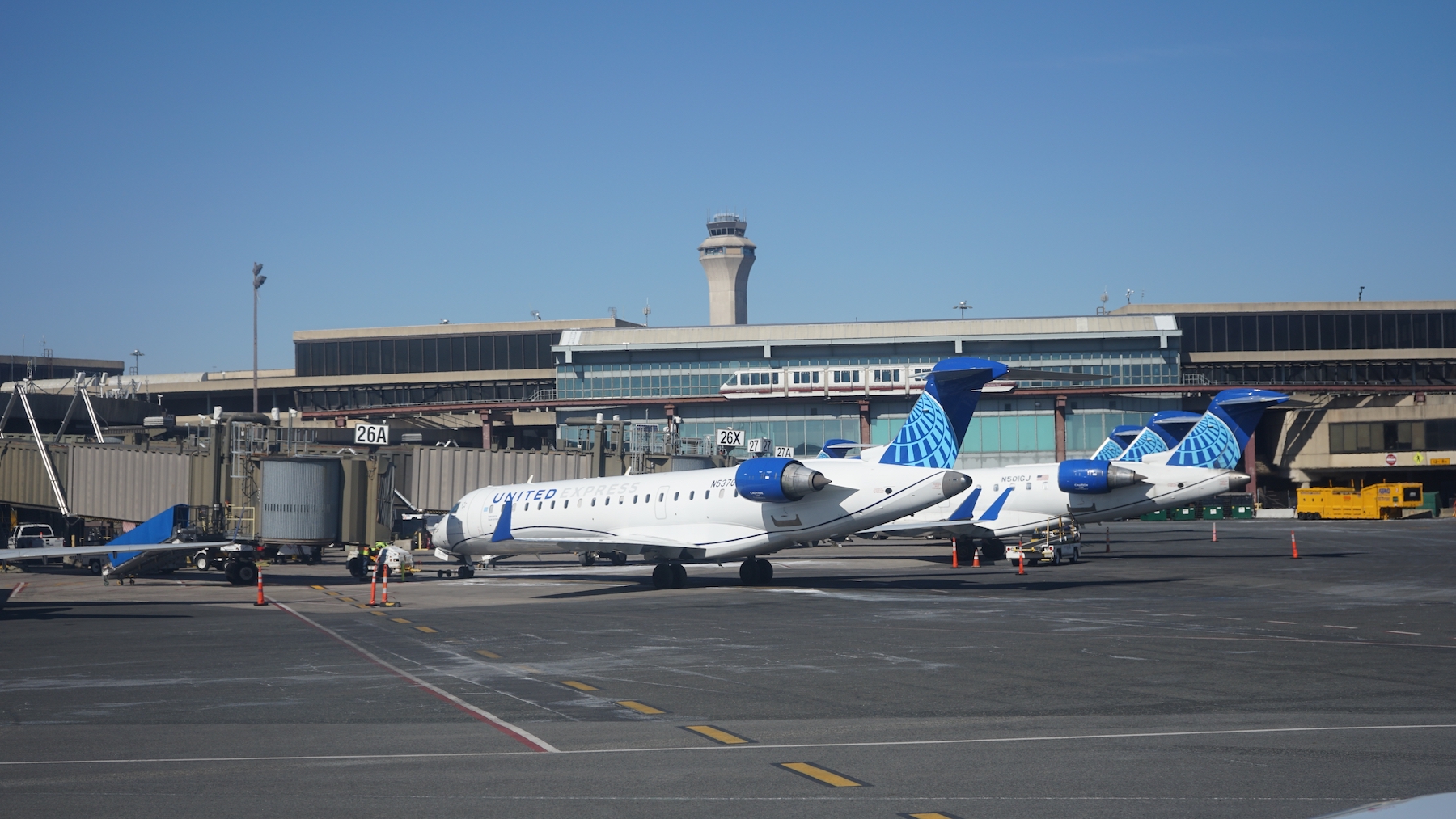
A United Express CRJ aircraft in Newark. (Photo: Shutterstock - Bui Le Manh Hung)
GoJet Airlines, a regional carrier based in St. Louis, announced it has received FAA Part 145 certification to operate a large aircraft repair station. This certification allows the carrier to establish a new Maintenance, Repair, and Overhaul (MRO) facility, creating over 150 new jobs in the St. Louis area by October 2024.
“We understand that there are other quality maintenance providers in the market. However, being one of the few Part 121 operators offering this service, and only one of two regional airlines, GoJet now has a unique opportunity,” the carrier’s CEO Rick Leach said in a news release.
The company notes a “growing need for MRO services,” particularly for regional airlines as aircraft return to commercial service from storage programs. GoJet plans to leverage this growth by offering MRO services to regional carriers and others.
“Our offering of this new service not only highlights our dedication to the regional market but should also provide our prospective airline customers with an additional level of comfort and support,” Leach added.
GoJet’s MRO facility will offer specialized maintenance programs, interior and composite capabilities, and aircraft modifications. The company emphasizes “efficient turnaround times, quality workmanship, and personalized service.”
The airline says it is actively seeking clients and securing long-term maintenance contracts. GoJet operates a fleet of over 30 CRJ-550 aircraft on behalf of United Express.
Ryan founded AirlineGeeks.com in February 2013 and has spent more than a decade covering the airline business. His work has been featured by CNN, WJLA, CNET, and Business Insider. His aviation experience spans airport operations, Part 135 regulatory compliance, and airline crew workforce planning, along with time behind the yoke of a Cessna 172 and interviews with airline executives. Ryan now serves as Group President of Firecrown Media’s Aviation Group. He holds a B.S. in Air Transportation Management and an MBA from Arizona State University and teaches Airline Management at Embry-Riddle Aeronautical University.