










Stories

SkyWest Acquires Stake in Contour Airlines, Bolsters Charter Presence

The regional operator is continuing its foray into the Part 135 charter market with a recent investment in Contour Airlines.

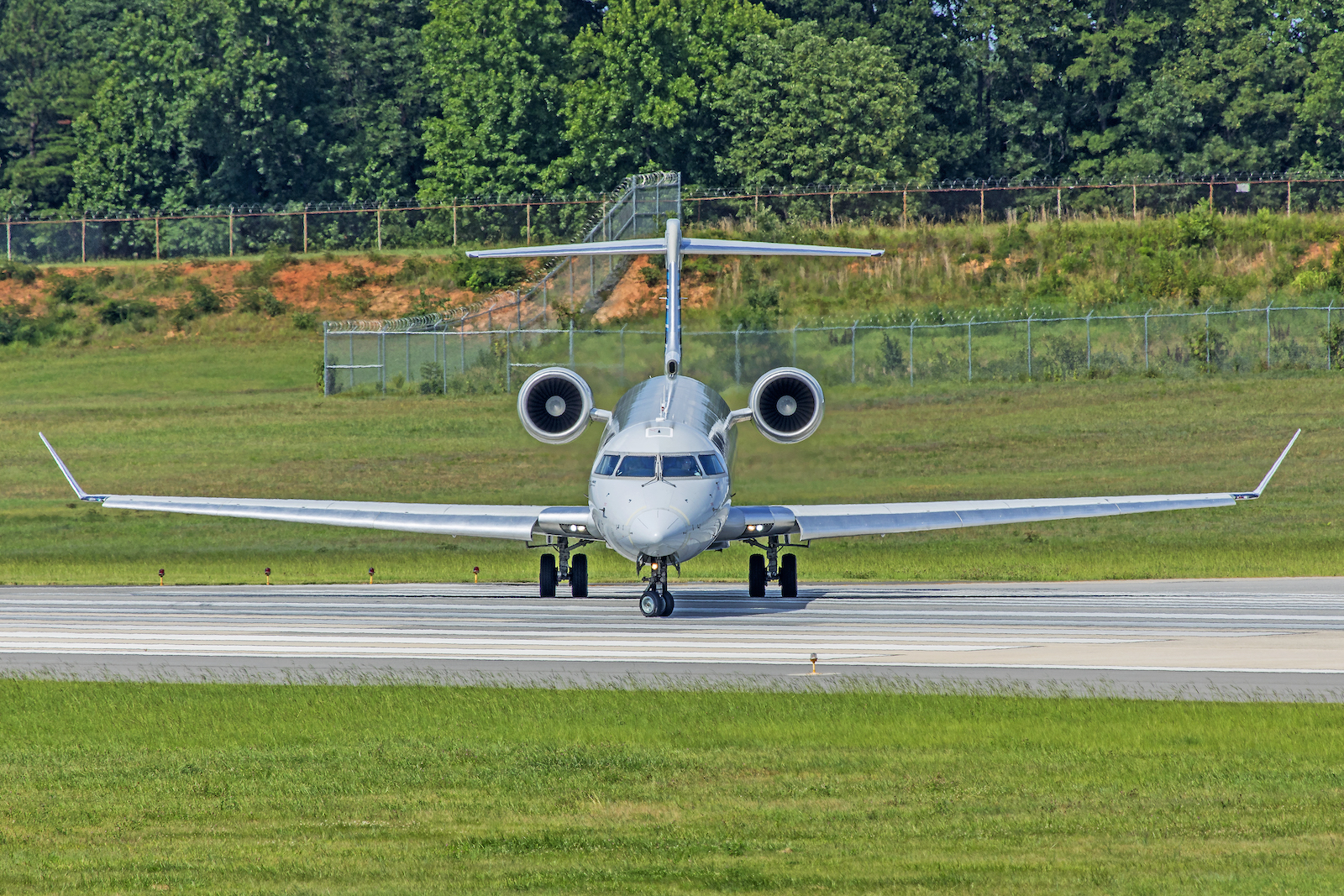
A SkyWest Airlines Bombardier CRJ-700
A SkyWest Airlines Bombardier CRJ-700 aircraft on final approach at O'Hare International Airport. (Photo: Shutterstock | Carlos Yudica)

During a fourth-quarter earnings call on Thursday, SkyWest, the U.S.’s largest regional operator, announced that it had acquired a 25% stake in Contour Airlines, a Tennessee-based Part 135 operator. The acquisition includes supplying Contour with Bombardier CRJ airframes, engines, and parts. Specific financial terms were not disclosed.

“Shifting gears, we recently completed the acquisition of a 25% stake of Contour Airlines, a small operator in the Part 135 space for $25 million,” said SkyWest President and CEO Chip Childs during the call. “This minority interest stake strategically positions us to further monetize our existing CRJ assets through an asset provisioning agreement and to establish another pipeline for pilot supply.”

Expanding into the Charter Market

Contour Airlines operates over 20 Embraer E-Jets largely to smaller communities, aligning with SkyWest’s newly launched SkyWest Charter (SWC) initiative. With the acquisition, SkyWest is looking for broader access to Contour’s infrastructure, personnel, and operational expertise in the Part 135 charter market.

A Contour Embraer E135 nicknamed “Pride of Contour” (Photo: AirlineGeeks | Joey Gerardi)

“To be candid, Contour is almost exactly like SWC and what we would like to accomplish with SWC,” Childs added. “There is a lot of alignment… with what both of the carriers could do.”

Like many of its regional peers, SkyWest continues to face pilot shortage headwinds, particularly related to captain retention. While the company says this trend has improved, SkyWest executives say that the Contour acquisition will create additional opportunities to manage captain retention.

“Now, the most important part that we probably would tag on to that is we’re working very diligently with partners in creative ways in which we can produce captains faster than what we producing today. That’s the Contour investment. That’s the pilot program investment with United,” Childs continued. SkyWest recently entered into a pilot pathway agreement with United last year.

Ryan Ewing

Ryan founded AirlineGeeks.com in February 2013 and has spent more than a decade covering the airline business. His work has been featured by CNN, WJLA, CNET, and Business Insider. His aviation experience spans airport operations, Part 135 regulatory compliance, and airline crew workforce planning, along with time behind the yoke of a Cessna 172 and interviews with airline executives. Ryan now serves as Group President of Firecrown Media’s Aviation Group. He holds a B.S. in Air Transportation Management and an MBA from Arizona State University and teaches Airline Management at Embry-Riddle Aeronautical University.

Delta Expands Winter Service to Latin America and the Caribbean

Delta announced an expansion of its winter service to Latin America and the Caribbean, offering new routes and increased frequencies.

Delta aircraft parked on the ramp in Boston. (Photo: AirlineGeeks | William Derrickson)

On Friday, Delta Air Lines announced an expansion of its winter service to Latin America and the Caribbean, offering new routes and increased frequencies to a handful of destinations. The Atlanta-based airline plans to add new service to Barbados, Puerto Plata, and Mazatlán from its U.S. hubs.

New Routes

Starting Nov. 23, 2024, Delta will add daily service from Atlanta to Barbados and Puerto Plata, Dominican Republic. These flights are set to be operated by the carrier’s 737-800 fleet, which is set to undergo a cabin refresh.

Additionally, Saturday-only flights from New York-JFK to Barbados begin December 21. Three-times-weekly service from Minneapolis/St. Paul to Mazatlán, Mexico also starts on December 21. These new routes will be operated by the carrier’s 737-800 aircraft.

Increased Frequencies

Joining the new route announcement, Delta is also upping its Saturday-only route from Atlanta to Curaçao to daily service starting November 23.

“Delta is establishing vital connections from Atlanta and across the U.S. that allow our customers to reach their dream vacation destinations with ease,” said Joe Esposito, Delta’s Senior Vice President of Network Planning, in a press release. “This latest schedule gives travelers unparalleled choice, with up to 1,000 weekly flights to distinctive places throughout Latin America and the Caribbean.”

Overall, Delta will serve 50 cities in Latin America and the Caribbean this winter, with connections available from nearly 200 cities worldwide through its Atlanta, New York-JFK, and Minneapolis/St. Paul hubs. The expanded schedule features up to 1,000 weekly flights to various destinations in the region, according to the airline.

Ryan Ewing

Ryan founded AirlineGeeks.com in February 2013 and has spent more than a decade covering the airline business. His work has been featured by CNN, WJLA, CNET, and Business Insider. His aviation experience spans airport operations, Part 135 regulatory compliance, and airline crew workforce planning, along with time behind the yoke of a Cessna 172 and interviews with airline executives. Ryan now serves as Group President of Firecrown Media’s Aviation Group. He holds a B.S. in Air Transportation Management and an MBA from Arizona State University and teaches Airline Management at Embry-Riddle Aeronautical University.

How Aircraft Sale and Leaseback Transactions Work

Sale leaseback transactions are a tool airlines can use to help shore up liquidity and manage cash flows relatively quickly.

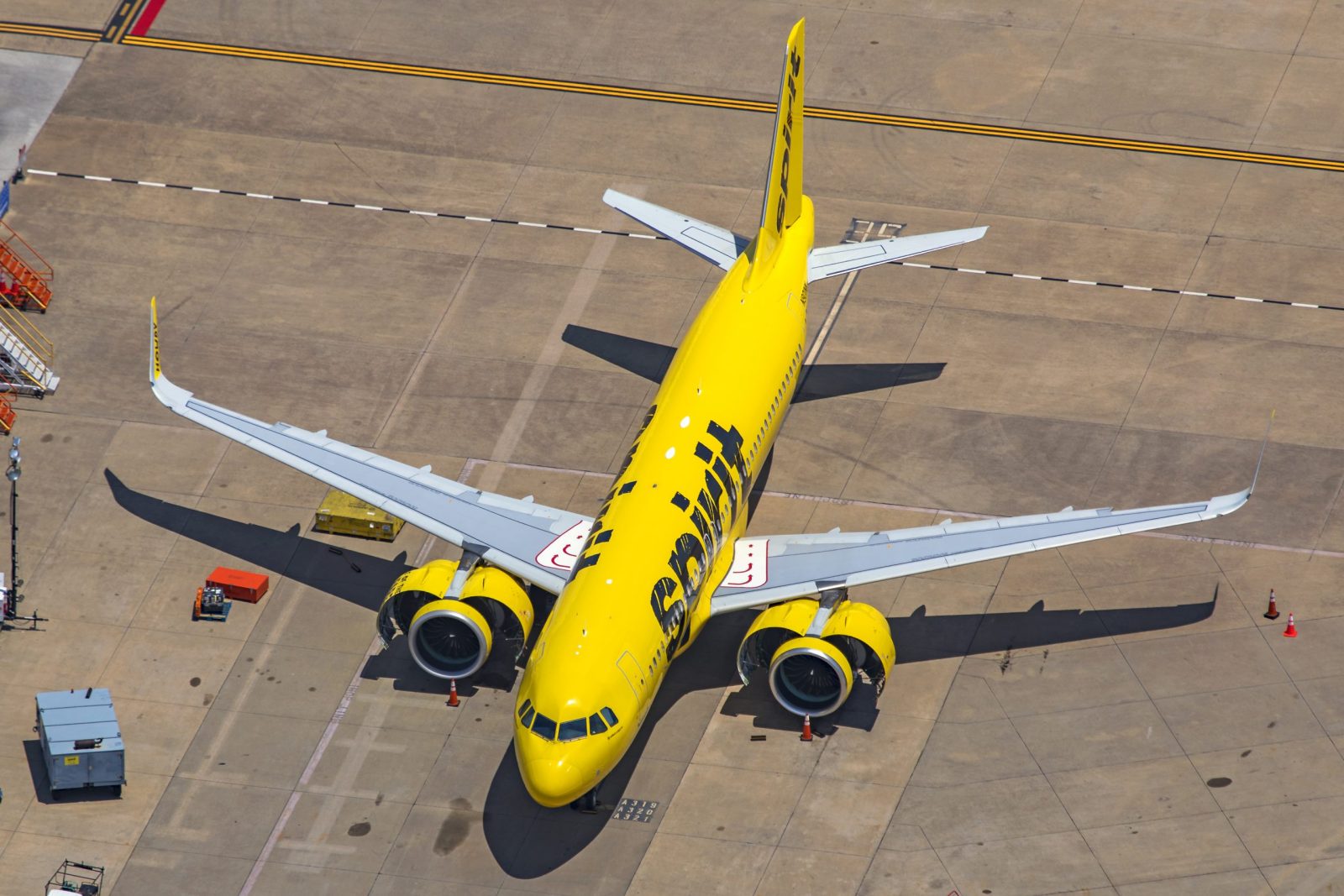
Spirit A320neo
A Spirit A320neo. (Photo: AirlineGeeks | William Derrickson)

In the world of commercial aviation, an airline may not always own all the aircraft that it flies. In some cases an airline will purchase aircraft through various financing mechanisms and other times it may lease aircraft from lessors for a fixed regular payment. In simpler terms, the carriers are effectively renting the aircraft.

There are various types of transactions that an airline can undertake when leasing aircraft such as wet and dry leasing, but for this article, we’ll be looking at the sale-leaseback transaction.

The term is relatively self-explanatory, an airline owns an aircraft which it then sells to an aircraft lessor and the aircraft lessor promptly leases it back to the airline. An airline may do this for a couple of reasons, the main one being it needs liquidity relatively quickly.

Unlocking Equity

A sale and leaseback would allow an airline to access the equity it may have had in aircraft. If the airline had initially bought an aircraft for $200 million and has made $100 million in financing payments, the equity in the aircraft is $100 million.

The airline can then attempt to sell the aircraft and use the proceeds from the sale to pay off the remaining debt and pocket the leftover cash. It would then immediately enter a leasing agreement with the lessor and continue using the same aircraft. The only difference now is that the airline no longer owns the aircraft and is now making lease payments instead of financing payments.

The catch there though is that the aircraft still needs to retain some value. If the airline is trying to sell the aircraft they acquired for $200 million with half the value still financed and can only find a buyer at $110 million, the end result isn’t entirely helpful to the airline.

Views above a crowded Pinal Airport with stored jets due to COVID-19. (Photo: AirlineGeeks | Ryan Ewing)

The opposite holds true as well when it comes to relatively new aircraft. If an airline acquires an aircraft and tries to sell it in a sale and leaseback transaction, it likely won’t have enough equity built up in the aircraft yet to make the transaction worthwhile.

Market values of aircraft and built-up equity need to be appropriate to make these transactions have any sort of meaningful cash release for the airline.

Another benefit of this type of transaction is that it makes managing the airline’s cash flows somewhat easier. The airline would be able to reduce some of its aircraft financing expenses and instead make lease payments. Lease payments would most likely be significantly lower than financing costs.

This is an important benefit for cash-strapped airlines and serves as a tool to raise cash quickly and reduce financing expenses at the same time.

Spirit Airlines

Some notable sale and lease buyback transactions occurred during the start of the COVID-19 pandemic when airlines were struggling for cash. More recently Spirit Airlines entered into sale and leaseback transactions for 25 aircraft which netted the airline around $419 million in cash after paying off debt obligations for the aircraft.

The airline will need to get creative as losses continue and Spirit faces mounting losses and a challenging future with many doubting the airline’s ability to survive given the JetBlue merger was shot down by the courts in January. JetBlue and Spirit have filed for an expedited appeal of the ruling in an attempt to reverse the previous court’s decision blocking the merger.

Hemal Gosai

Hemal took his first flight at four years old and has been an avgeek since then. When he isn't working as an analyst he's frequently found outside watching planes fly overhead or flying in them. His favorite plane is the 747-8i which Lufthansa thankfully flies to EWR allowing for some great spotting. He firmly believes that the best way to fly between JFK and BOS is via DFW and is always willing to go for that extra elite qualifying mile. Hemal's opinions are his own and do not reflect those of his employer.

Emirates Launches New Business Class Amenities

Starting February 1, all passengers in business class will receive new inflight amenities in the form of lounge wear, slippers, and eye masks.

Emirates 777-300ER
An Emirates 777-300ER. (Photo: AirlineGeeks | Katie Zera)

On Wednesday, Emirates announced an enhancement for its business class cabins fleet-wide. After a trial period on routes to New York and Boston, starting February 1, all passengers in business class will receive new inflight amenities in the form of loungewear, slippers, and eye masks.

The airline pitches the loungewear as a “flight fit” that can not only be used for sleeping during the flight, but also for lounging around the inflight bar and breezing through arrivals after landing. It’s important to note that the airline wants to focus on the fact that these are loungewear garments and not pajamas.

Emirates notes a difference between the two with loungewear being garments that would be appropriate to be seen in public wearing as compared to pajamas which would raise eyebrows and draw stares.

Passengers on flights nine hours or more will receive the full set of amenities: a loungewear set, slippers, and eye masks. On flights of two and a half hours or more but less than nine hours, passengers will receive slippers and eye masks.

New Emirates loungewear (Photo: Emirates)

Upcoming New Business Class Seats

This comes as the Emirates brand continues to evolve and the airline invests in the next generation of cabins and service offerings. The airline is well underway on a large retrofit project of existing airplanes adding new finishes that align better with the brand’s new image.

Both business and first class cabins have seen meal enhancements such as better curated wine lists and the expansion of dining menus with higher-quality ingredients.

This all comes as the airline is expected to launch a new business class this year. Emirates’ existing Boeing 777-300 fleet will begin a refurbishment program this summer. The refurbishment will introduce a new business class product to the aircraft with seating in a 1-2-1 configuration. While these aircraft are being refurbished, the airline will also be adding a premium economy cabin.

Emirates will also be taking delivery of its first Airbus A350 aircraft this year. The airline has 65 A350-900s on order with the first set for delivery in later 2024. These aircraft should all be delivered by 2028.

While the exact layout of these soon-to-be-delivered aircraft is unknown, it is expected that the retrofitted Boeing 777 aircraft and the new Airbus A350s will both receive the new business class seats. It’s expected that the Boeing 777X aircraft the airline also has on order will have the same seats but delivery of these aircraft is unclear given Boeing’s delays finalizing the new aircraft.

Ultimately, the new business class seats will revamp the current Emirates business class product on the Boeing 777 fleet which are angle-flat seats and do not provide all seat aisle access.

Hemal Gosai

Hemal took his first flight at four years old and has been an avgeek since then. When he isn't working as an analyst he's frequently found outside watching planes fly overhead or flying in them. His favorite plane is the 747-8i which Lufthansa thankfully flies to EWR allowing for some great spotting. He firmly believes that the best way to fly between JFK and BOS is via DFW and is always willing to go for that extra elite qualifying mile. Hemal's opinions are his own and do not reflect those of his employer.

American Adds Its Longest Nonstop Route, New Destinations

American Airlines will operate for the first time to Brisbane, Australia from Dallas/Fort Worth, which is set to be the longest route in the carrier's network.

An American 787-9 Dreamliner. (Photo: AirlineGeeks | William Derrickson)

This Thursday, American announced multiple international routes to be launched by the Fort Worth-based carrier. Utilizing Boeing 787-9 aircraft, American will begin service to Brisbane, Australia from Dallas/Fort Worth in October of this year. This new announcement comes days after the carrier publicized its intentions to offer nonstop flights to Tokyo’s Haneda Airport from New York’s John F. Kennedy Airport in the coming months. 

The new daily seasonal service to Brisbane will launch on October 27 this year. American’s partnership with Qantas will allow significant opportunities for customers to connect throughout Oceana. 

The route will be the longest in the carrier’s network, with the distance between the city pair being a whopping 7,216 nautical miles according to gcmap. The carrier is deploying the 787-9 aircraft with an updated interior. The aircraft will have 51 new Flagship Suite seats onboard and 32 Premium Economy seats with additional economy seats. American’s current 787-9 fleet has 30 business class seats and 21 Premium Economy seats.

First announced in 2022, all new 787-9 and A321XLR aircraft will be delivered with the new seats. The carrier’s fleet of Boeing 777-300ER aircraft will begin being retrofitted this year. 

A rendering of American’s new Flagship Suite premium cabin (Photo: American Airlines)

Additional International Routes

While the launch of a new city is a big announcement, the carrier isn’t stopping there, specifically on October 27. American will also launch new daily service from Dallas/Fort Worth to Rio de Janeiro utilizing Boeing 787-8 aircraft while also expanding JFK to Rio de Janeiro to daily service on the 777-200 aircraft the same day. Los Angeles to Aukland will remain a seasonal flight on the 787-9 aircraft, however will start earlier on December 5 this year. 

The international short-haul network will see an expansion from Dallas/Fort Worth this summer as well. The carrier will expand service by offering twice daily flights on Saturdays to Grand Cayman, Cayman Islands, Providenciales, Turks and Caicos, and St. Thomas, U.S. Virgin Islands beginning on June 8. Another new city will be added in June as well, with American launching a route to Veracruz, Mexico from Dallas/Fort Worth on June 12. 

Hawaiian Expansion

The Hawaiian Islands will see a boost in service as well. American will increase service to Kahului to twice daily from December 19 to January 6. The carrier will resume service from Dallas/Fort Worth to Kona on a seasonal basis beginning October 27. 

“American is thrilled to grow our international network to give customers more ways to escape the cold next winter,” said Brian Znotins, American’s Senior Vice President of Network and Schedule Planning in a press release. “Together with Qantas, customers can enjoy more ways to explore new destinations across one of the most comprehensive networks connecting the United States and the South Pacific.”

Zach Cooke

Zach’s love for aviation began when he was in elementary school with a flight sim and model planes. This passion for being in the air only intensified throughout high school when he earned his Private Pilot Certificate. He then attended Embry-Riddle Aeronautical University, earning his certificates and ratings to later flight instruct and share his passion for aviation with others. He now resides in the North East living out his dream as an airline pilot.

Laser Strikes on Aircraft Hit Record High in 2023, FAA Warns of Dangers

The FAA recently reported a concerning increase in laser strikes on civilian aircraft, reaching an unprecedented peak in 2023.

A Delta 737-900ER in Las Vegas. (Photo: AirlineGeeks | William Derrickson)

In a recent announcement, the Federal Aviation Administration (FAA) revealed a concerning escalation in the number of laser strikes directed at aircraft, reaching an unprecedented peak in 2023. This poses a significant threat to the safety of both pilots and passengers.

According to the FAA, pilots reported an alarming 13,304 laser strikes in the past year, marking a worrisome 41% increase compared to the figures recorded in 2022.

“The FAA is committed to maintaining the safest air transportation system in the world. Aiming a laser at an aircraft is a serious safety hazard that puts everyone on the plane and on the ground at risk,” said FAA Administrator Michael Whitaker in a statement.

Factors Fueling the Rise in Laser Incidents

The rise in reported laser strikes can be attributed to several key factors. Firstly, the easy availability and affordability of laser devices contribute significantly, with these devices widely accessible in both physical stores and online platforms. The growing trend of gifting lasers also amplifies their distribution, adding to the potential for misuse.

Technological advancements play a role, with heightened power levels in lasers enabling them to reach higher altitudes and pose a more significant threat to aircraft. The increased visibility of green lasers, compared to red ones, further complicates the issue, making detection more likely and escalating potential risks, particularly in aviation settings.

A crucial factor in the rise of reported incidents is the heightened awareness among pilots. The FAA has launched extensive outreach programs to educate pilots about the dangers of laser strikes and encourage prompt reporting. This increased vigilance has resulted in a surge in reported incidents, highlighting the true scope of the problem.

The FAA’s Multi-Faceted Approach to Combating Laser Strikes

The FAA works closely with federal, state, and local law enforcement agencies to pursue civil and criminal penalties against people who purposely aim a laser at an aircraft.  Shining a laser at an aircraft is not just an irresponsible but a federal crime.

For each incident, offenders face penalties of up to $11,000, with repeat offenders risking even steeper fines reaching $30,800, the FAA emphasized. Additionally, they could face criminal charges from federal, state, and local law enforcement agencies.

In addition to legal consequences, officials emphasize the importance of public awareness and education. They encourage pilots, crew members, air traffic controllers, and individuals to report any laser strikes they witness to the FAA or local law enforcement. The FAA also provides various accessible resources to educate the public about the dangers of laser strikes. Their engaging video showcases the potential consequences and a comprehensive fact sheet offers detailed information on the risks and legal repercussions.

Tolga Karadeniz

Tolga is a dedicated aviation enthusiast with years of experience in the industry. From an early age, his fascination with aviation went beyond a mere passion for travel, evolving into a deliberate exploration of the complex mechanics and engineering behind aircraft. As a writer, he aims to share insights , providing readers with a view into the complex inner workings of the aviation industry.

Avelo Launches First International Service

Avelo officially launched its first international service departing from Lansing's Capital Region International Airport (LAN).

An Avelo Airlines Boeing 737-800. (Photo: Joe Scarnici/Getty Images for Avelo Air)

On Jan. 27, 2024, Avelo officially launched its first international service. Departing from Lansing’s Capital Region International Airport (LAN), the new venture, undertaken in partnership with Apple Vacations, offers scheduled public charter flights and vacation packages to three popular destinations in the Caribbean and Mexico.

Passengers departing from Lansing can now choose from nonstop connections to Cancun (CUN) with three weekly flights on Saturdays, Mondays, and Wednesdays, Montego Bay, Jamaica (MBJ) with one weekly flight on Fridays, and Punta Cana (PUJ) with two weekly flights on Sundays and Thursdays.

The ultra-low-cost start-up says this international foray marks a significant expansion and strengthens its presence in Lansing. “These three tropical destinations Avelo will operate for Apple Vacations from Lansing are the perfect debut of Avelo’s international service,” Avelo’s Chairman and CEO Andrew Levy said in a press release. “We look forward to offering the same reliable and friendly experience to Apple Vacations’ Customers that we’ve been providing Avelo’s Capital Region Customers since we took flight at LAN 15 months ago. Apple Vacations’ selection of Avelo to operate their flights to these three popular destinations is a testament to positive reputation we’ve built in Michigan and across the country.”

In addition to the international destinations, Avelo currently flies from Lansing to Orlando with twice-weekly service. The airline – which began operations in April 2021 – now serves 43 destinations across its route network.

Avelo has operated private charters to international destinations in the past. However, the carrier stated that this weekend’s flight to Cancun marked its first-ever scheduled international service.

Ryan Ewing

Ryan founded AirlineGeeks.com in February 2013 and has spent more than a decade covering the airline business. His work has been featured by CNN, WJLA, CNET, and Business Insider. His aviation experience spans airport operations, Part 135 regulatory compliance, and airline crew workforce planning, along with time behind the yoke of a Cessna 172 and interviews with airline executives. Ryan now serves as Group President of Firecrown Media’s Aviation Group. He holds a B.S. in Air Transportation Management and an MBA from Arizona State University and teaches Airline Management at Embry-Riddle Aeronautical University.

Turkish Airlines Adds New Pharmaceutical Cargo Transport Options

Turkish Airlines now offers new temperature-controlled shipping options for sensitive pharmaceutical products being shipped by air.

A Turkish Cargo 777 (Photo: Turkish Cargo)

More items than we would think get transported around the world by air cargo. Fresh fruit is picked right at peak season in some countries and flown to grocery stores across the world in a matter of days. Flowers being sold by florists were picked in South America, processed in Europe, and sold on the streets of New York. Everything from food to pandas can be shipped by air cargo.

A growing sector of the air cargo business is pharmaceuticals. These high-technology products require very specific shipment specifications to ensure product integrity at delivery. Shipping pharmaceuticals is becoming increasingly a high-tech logistical operation that many airlines are focusing on.

One such airline is Turkish Airlines, which, for years, has been a well-known operator in both passenger and air cargo operations. This has helped the airline control seven percent of all air cargo when it comes to pharmaceuticals and medical products with eyes on more.

The airline is announcing new shipment offerings that focus on one of the most sensitive aspects of transporting pharmaceuticals: temperature. Long deviations outside of acceptable temperature ranges can destroy pharmaceutical products, therefore it is imperative to ensure that temperatures are controlled along the entire delivery chain. Any degradation in product is an extremely expensive mistake that can cost the lives of people.

Active and Passive Temperature Control

Turkish Airlines accomplishes this through two methods. The first is a standard passive temperature control method. The pharmaceutical shipments come with insulation and are always transported in temperature-controlled dollies to aircraft with continuous monitoring from a central location.

The second offering is an active/hybrid method involving containers that can regulate internal temperatures from -94 degrees Fahrenheit to 86 degrees Fahrenheit depending on customer specifications.

Originating and connecting cargo get to spend time in the airline’s expansive temperature-controlled storage facilities at its home base at Istanbul Airport for pharmaceuticals that are waiting for their next flight. These facilities are also where shipments can be broken down and sorted in a temperature-controlled environment for onward flights.

This is very similar to the massive pharmaceutical air cargo operation that American Airlines runs out of Philadelphia Airport. The airline offers fully integrated end-to-end transport services for pharmaceutical companies.

The pharmaceutical industry really has taken advantage of globalization on a massive scale. Components of pharmaceuticals are manufactured across the globe and are carried from one facility to another across countries and continents until a finished product is finally made. As advanced therapeutics continue to come to market, it can be expected that the market for shipping temperature-controlled pharmaceuticals will continue to grow.

Hemal Gosai

Hemal took his first flight at four years old and has been an avgeek since then. When he isn't working as an analyst he's frequently found outside watching planes fly overhead or flying in them. His favorite plane is the 747-8i which Lufthansa thankfully flies to EWR allowing for some great spotting. He firmly believes that the best way to fly between JFK and BOS is via DFW and is always willing to go for that extra elite qualifying mile. Hemal's opinions are his own and do not reflect those of his employer.

Ethiopian to Connect Warsaw and Addis Ababa

Ethiopian Airlines is set to introduce the first-ever regular connection between Warsaw Chopin Airport and Addis Ababa, Ethiopia.

An Ethiopian Airlines Boeing 787-9 prepares to land in Brussels. (Photo: AirlineGeeks | Fabian Behr)

Ethiopian Airlines is set to introduce the first-ever regular connection between Warsaw Chopin Airport and Addis Ababa, Ethiopia. The eagerly awaited route, scheduled to launch in July this year, signifies a significant stride in enhancing air connectivity between Poland and Africa.

The confirmed plans, verified by Przedsiębiorstwo Państwowe Porty Lotnicze (PPL) press office, the state-owned company that operates the key elements of Poland’s airport infrastructure, highlight the use of Boeing 787 Dreamliners, capable of accommodating 270 passengers per flight. The specific flight frequency is yet to be disclosed, but PPL assures that details will soon be available in the airline’s reservation system.

The collaboration between Ethiopian Airlines and Warsaw Chopin Airport makes the Star Alliance carrier the first scheduled carrier from Africa at the Polish airport. Stanisław Wojtera, President of Polish Airports and Member of the Board of ACI Europe, emphasizes the significance of the connection, providing an excellent opportunity for passengers in Warsaw to explore Africa. Anticipating not only a surge in point-to-point travel but also a substantial impact on transfer passengers and cargo transport, Wojtera envisions this connection as a catalyst for further global reach.

“I am glad that after months of talks between PPL’s management and representatives of the Ethiopian line, we can share great news with you. This summer, for the first time in history, regular flights to Ethiopia will start from Warsaw. Addis Ababa is one of the destinations designated for Chopin Airport as a strategic,” Wojtera notes.

Obtaining New Slots

Previous reports speculating on Ethiopian Airlines’ interest in establishing a link with Warsaw have now been substantiated. The airline has secured 135 slots for flights to Addis Ababa, accompanied by the intriguing addition of 1 slot for flights to Athens.

The Ethiopian carrier’s expansion aligns with its ambitious target of securing a spot among the top twenty airlines globally by 2035. The selection of Warsaw as a hub, courtesy of its partnership with another Star Alliance airline, LOT Polish Airlines, positions Ethiopian Airlines strategically, opening avenues to explore new European destinations.

In addition to Warsaw, the airline is eyeing Amsterdam, Dublin, Lisbon, and the potential for nonstop flights to Manchester, bypassing Geneva. The rationale behind choosing these European cities is deeply rooted in strategic partnerships and proven market potential. Warsaw and Amsterdam, in particular, stand out due to the hub status of Chopin Airport and Schiphol Airport, respectively, serving as crucial gateways.

Victor Shalton

Victor Shalton's love for aviation can be traced to when he was 11-years-old. As a seasoned aviation writer, he takes pride in providing the best aviation coverage around the globe and is passionate about advancing his skills in the aviation space. In addition, he loves travelling, writing, arts and while his speaking engagements have taken him around the world, he is proud to call Nairobi home.

United Eyeing Hawaiian’s Returned Haneda Slot

Hawaiian Airlines has given up slots for flights to Tokyo's Haneda airport from Honolulu and Kona effective April 2, blaming "current market conditions."

A United 777-300ER touching down at Paine Field after a test flight. (Photo: AirlineGeeks | Katie Zera)

Hawaiian Airlines has given up slots for flights to Tokyo’s Haneda airport from Honolulu and Kona effective April 2, blaming “current market conditions.”

The island airline only restarted service between Tokyo’s Haneda Airport and Ellison Onizuka Kona International Airport on Oct. 29, 2023. The airline’s March schedule showed thrice-weekly flights between the cities. In addition to the three flights departing Kona, the returned slot is also used for four weekly flights between Tokyo and Honolulu.

“Hawaiian did not take this decision lightly,” the company filed with the U.S. Department of Transportation (DOT) on January 26. “Having invested significant time and resources into building its Haneda operation, Hawaiian resumed the night-time service in October 2023 and has incrementally increased service throughout the current winter scheduling season.”

While international travel has seen a strong recovery in 2023, the Japanese overseas travel demand has not returned to pre-pandemic levels. The weak Japanese Yen has made traveling to the tropical island more expensive than it used to be. The strong U.S. domestic demand also drove the cost of visiting Hawaii even higher, barring a significant return of Japanese tourists to the island.

Feud with United

In September 2023, United filed a complaint with the Department of Transportation requesting the department to take back the night-time slot at Haneda allotted for Hawaiian due to underutilization of the asset. 

Hawaiian was not using the slot under COVID-19 exemptions. The incumbent carrier rebutted and announced the service restart, preventing the agency from taking its slot.

The third-largest U.S. airline also fought fiercely for Delta’s returned slot that was used for the Portland flight. However, American was recently awarded said slot as the department deemed United’s intention to switch its current Narita to Houston flight to Haneda not beneficial for the market.

United’s Plan

The Chicago-based airline applied for the Haneda night-time slots shortly after Hawaiian filed its withdrawal on January 28. The company plans to inaugurate daily flights between Guam and Haneda. It currently flies multiple daily flights between the Pacific Island and Tokyo’s primary international airport, Narita International Airport. 

“United reiterates that for the proposed summer schedule, United flight UA849 will depart Guam at (7 p.m.) and arrive at Haneda at (10 p.m.) the same day. On the return, flight UA849 will depart Haneda at (11:55 p.m.) and arrive at Guam at (4:45 a.m.) the next day,” the application said.

The application to DOT renews the previous application that DOT dismissed without prejudice last year. The dismissal was made with the note “that if an opportunity becomes available for any reason, noted will be free to submit its application.”

Fangzhong Guo

Fangzhong grew up near an OEM airport in northeastern China, where he developed his enthusiasm for aviation. Taking upon his passion, he's now working as an aircraft interior design engineer. Besides working in the aerospace industry, Fangzhong enjoys trying out different types of airplanes and seeing how airplane interiors have evolved. So far, he's flown on over 80 types of aircraft. He also planespots in his spare time. His rarest catches included the 747 Shuttle Carrier Aircraft and AN-225.
Sign-up for newsletters & special offers!

Get the latest stories & special offers delivered directly to your inbox

SUBSCRIBE

Uh-oh! It looks like you're using an ad blocker.

Our website relies on ads to provide free content and sustain our operations. By turning off your ad blocker, you help support us and ensure we can continue offering valuable content without any cost to you.

We truly appreciate your understanding and support. Thank you for considering disabling your ad blocker for this website