









Stories

U.K. Airports Could Miss The Deadline To Install New Scanners

The 100ml liquid ban could be extended after some airports failed to install new security screening technology. Airports could face penalties as a result.

IMG_1755
British Airways tails at Heathrow Airport. (Photo: AirlineGeeks | James Dinsdale)

U.K. airports could fall short of upgrading their screening equipment by June 1. As a result, Britons and travelers around the world won’t see speedier queues at the security checkpoints. Back in 2022, the U.K. government scrapped the current 100ml liquid rule.

The strict rules were introduced in 2006 following a terrorist threat. The liquids have been limited to 100ml or under and must be in a transparent plastic bag with passengers being asked to remove some items from hand luggage, such as laptops and liquids. In 2019, the government announced an end to the strict rule by the end of 2022 with the computed tomography (CT) scanner.

Passengers could bring up to two liters of liquid in response to the new scanner. The new scanner also removes the requirement for cosmetics to be placed in separate bags. According to the U.K. government, CT scanner could provide a 3D image of what’s in the passenger’s bag and deploy highly advanced threat detection algorithms. More importantly, the passengers could stand to benefit from the new scanner, which are in use by Atlanta’s Hartsfield-Jackson, Chicago’s O’Hare, and New York’s LaGuardia airports among others.

“We are in regular contact with airports as they move towards June 2024 deadline for upgrading their screening equipment and processes. For security reasons we don’t talk in detail about aviation security measures,” a Department for Transport spokesperson said.

Most airports in the U.K. have missed the mark, but two airports successfully rolled out the new scanner in 2023, Teesside International Airport became the first airport to introduce the new scanner in the U.K. Afterwards, London City Airport followed in Teesside’s footsteps to use the new technology. According to London City Airport, the new technology processes 30% more passengers per hour.

The major airports in the country are expected to miss the deadline to install the new scanners.

Big Three Airports Could Miss The Deadline

According to I News, London’s Heathrow Airport couldn’t guarantee the new scanner rollout by June, but the airport has begun introducing the new scanner in three of its four terminals. Heathrow must meet the challenge of “fitting the new scanners and retraining staff without impacting the flow of passengers.” Heathrow revealed that the new equipment could cost £50 million ($63.7 million). Meanwhile, London’s Gatwick Airport said does not expect to finish installation until early next year.

Manchester Airports Group (MAG) also said the installation won’t be completed until 2025. The group owns Manchester Airport, London Stansted Airport and East Midlands Airport in the country,

The government may consider allowing the airports to extend the deadline for installing the equipment. However, the airports could face penalties without the agreement from the government.

United Adds Four Seasonal Routes, One New Destination

United brings back three pre-Covid routes, as well as one completely new route, including one of the longest domestic 737 flights in the U.S.

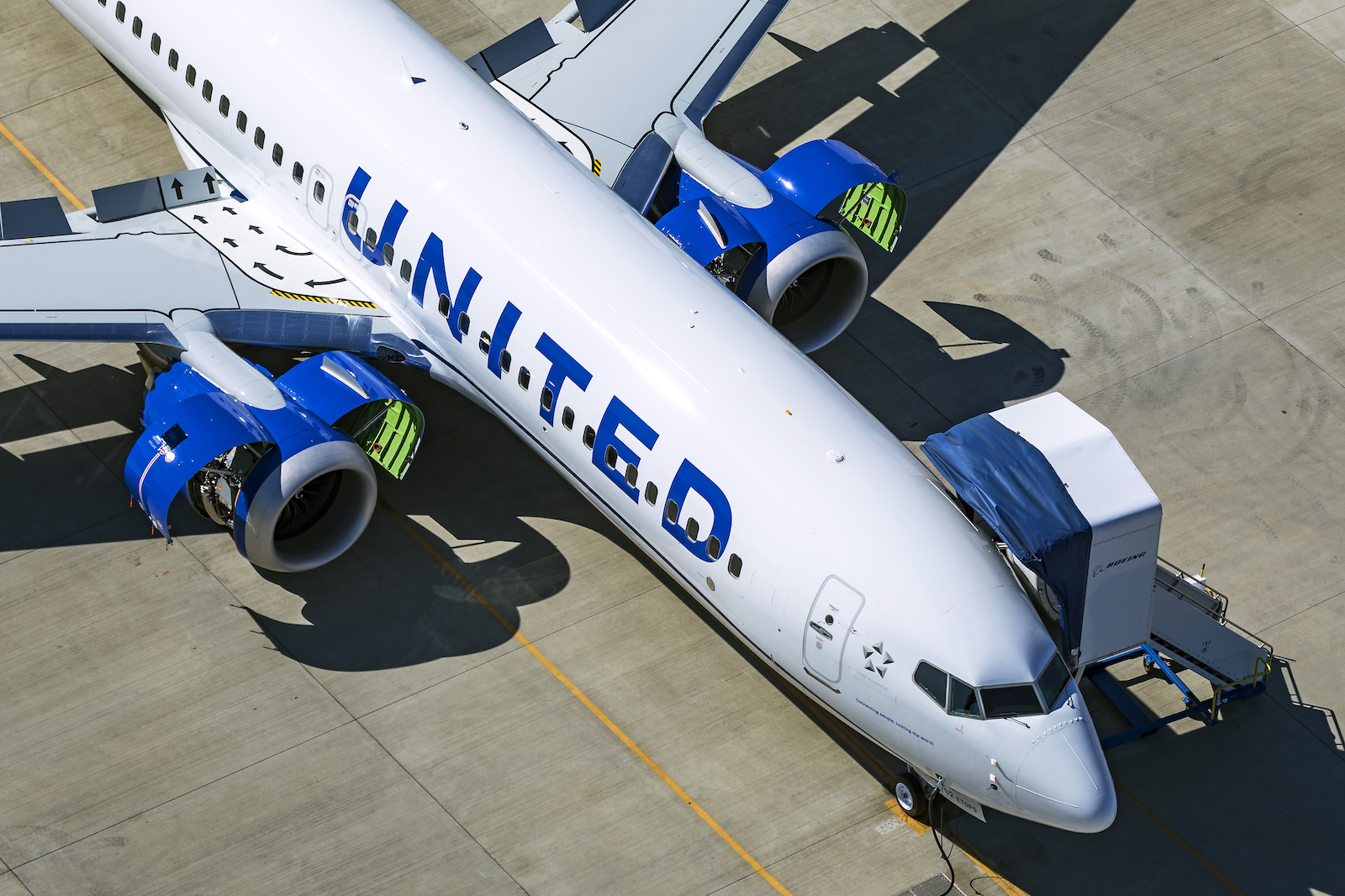
A United 737 MAX 8
A United 737 MAX 8. (Photo: AirlineGeeks | Noah Escobar)

United Airlines has announced the introduction of four new seasonal routes to their network, one of which will bring the carrier to a new destination.

The first two new seasonal routes are from Alaska, with a route from the state’s busiest airport in Anchorage to the airline’s Washington Dulles hub. The second new route out of Alaska will be from slightly further north, Fairbanks, with the airline restarting the seasonal link from the city to Denver, Colo.

The airline has served the Fairbanks to Denver route in the past, with the route last operating in the summer before the pandemic, while Anchorage to Washington Dulles is a completely new route for the airline. Both of these routes will be served by the airline’s Boeing 737 MAX 8 aircraft and will both begin on May 23.

The third route is another resumption of a pre-COVID route, Vancouver in British Colombia to Washington Dulles. With the addition of this route on May 2, United will now serve every single one of their U.S. hubs out of Vancouver, giving United passengers even more opportunities to connect onward in their network. This route will also be served using the airline’s Boeing 737 MAX 8.

The fourth route will still be in Canada, but on the other side of the country from Halifax in Nova Scotia. The carrier will resume flights to Newark using its Embraer E175 aircraft on May 23.

United isn’t the first airline that has announced an expansion in Halifax, with Delta announcing a resumption of service to the city for the first time in over five years. American resumed service to the city last summer but will add a fourth nonstop destination from Halifax this summer. This will be the first summer since 2019 that the three major airlines in the United States will offer service to Halifax.

All routes are seasonal and will end in the fall, but that may change depending on the demand and popularity of the routes and how they perform. All schedules and flights are subject to change.

Joey Gerardi

Joey has always been interested in planes for as long as he can remember. He grew up in Central New York during the early 2000s when US Airways Express turboprops ruled the skies. Being from a non-aviation family made it harder for him to be around planes and would only spend about three hours a month at the airport. He was so excited when he could drive by himself, the first thing he did with his driver's license was get ice cream and go plane spotting for the entire day. He graduated from Western Michigan University in 2022 with a B.S. in Aviation Management & Operations and a Minor in Business, and currently works for a major airline in his hometown.

Air France Adds New Phoenix Route

Air France is growing its network in the U.S. with a new route from Paris-CDG to Phoenix Sky Harbor International Airport (PHX)

A 787-9 Dreamliner destined for Air France during its checks at Paine Field. (Photo: AirlineGeeks | Katie Zera)

Air France is growing its network in the U.S. with a new route from Paris-CDG to Phoenix Sky Harbor International Airport (PHX). Slated to launch on May 23, 2024, the new route is the carrier’s 17th U.S. destination.

The new Paris-Phoenix flight will operate three times per week operated by a Boeing 787-9 Dreamliner. AF68 will depart CDG at 10:10 a.m. local time and arrive in Phoenix at 12:10 p.m.  AF69 departs PHX at 2:10 p.m. local time, arriving in Paris at 9:15 a.m. the next day.

Air France will be the third European airline to serve Phoenix. The Valley of the Sun currently has service from both British Airways and Condor.

The city estimates that the new route will bring with it $30 million in annual economic impact. The number of passengers flying between Phoenix and Paris has grown by nearly 40% from 2019 levels, according to the city.

Prior to the COVID-19 pandemic, Paris was Phoenix’s largest underserved market in Europe, Phoenix Mayor Kate Gallego said during a news conference. In addition, the new route will start in time for the 2024 Summer Olympics in Paris.

The French flag carrier recently announced it is resuming service to Minneapolis this summer. The airline also plans to extend its service from Paris to Raleigh-Durham with up to seven weekly flights.

Ryan Ewing

Ryan founded AirlineGeeks.com in February 2013 and has spent more than a decade covering the airline business. His work has been featured by CNN, WJLA, CNET, and Business Insider. His aviation experience spans airport operations, Part 135 regulatory compliance, and airline crew workforce planning, along with time behind the yoke of a Cessna 172 and interviews with airline executives. Ryan now serves as Group President of Firecrown Media’s Aviation Group. He holds a B.S. in Air Transportation Management and an MBA from Arizona State University and teaches Airline Management at Embry-Riddle Aeronautical University.

Southwest Pilots Ratify New $12 Billion Contract

Southwest pilots overwhelmingly approved a new contract on Monday, which includes 50% pay raises over the life of the agreement.

Southwest 737
A Southwest Airlines 737-700 pushing back in Pittsburgh. (Photo: AirlineGeeks | William Derrickson)

Southwest pilots – represented by the Southwest Airlines Pilots Association (SWAPA) – overwhelmingly approved a new contract on Monday, which includes 50% pay raises over the life of the agreement. According to the union, 98.8% of its members voted on the new contract with 92.73% voting in favor and 7.27% against.

Valued at $12 billion, the airline is the last major U.S. carrier to ink a new pilot contract. American, Delta, and United ratified new collective bargaining agreements (CBAs) with their pilot groups last year.

Southwest pilots are set to receive an immediate 29.15% pay increase upon ratification followed by 4% incremental raises in 2025, 2026, and 2027, and a 3.25% raise in 2028. The new contract also includes quality-of-life enhancements and modifications to scheduling procedures among other changes. SWAPA also notes that the CBA includes ‘continued industry-leading Scope protections.’

The Dallas-based airline has recently faced pilot attrition woes. According to a December Bloomberg report, pilots have used Southwest as a stepping stone between flying at a regional carrier and a larger carrier, something the airline hasn’t widely seen in its over 50-year history.

Southwest’s Chief Operating Officer Andrew Watterson called this increasing phenomenon “resume washing.”

“So they use us as a premeditated way station. They come to Southwest, get hired, trained, spend six months and then they flip their resume and apply somewhere else,” Watterson told Bloomberg.

The new CBA is set to better position top-of-scale pay rates with those of American, Delta, or United. Unlike many other airlines, Southwest has over 11,000 pilots in its ranks and hired nearly 2,000 in 2023.

Other Southwest Labor Groups

Since October 2022, Southwest says it has ratified new agreements with nine of its union-represented workgroups. The carrier’s flight attendants recently rejected a tentative agreement (TA), which would boost pay by 36% over the agreement’s five-year term. The Transport Workers Union (TWU)-represented flight attendants are set to revote on the agreement.

Ryan Ewing

Ryan founded AirlineGeeks.com in February 2013 and has spent more than a decade covering the airline business. His work has been featured by CNN, WJLA, CNET, and Business Insider. His aviation experience spans airport operations, Part 135 regulatory compliance, and airline crew workforce planning, along with time behind the yoke of a Cessna 172 and interviews with airline executives. Ryan now serves as Group President of Firecrown Media’s Aviation Group. He holds a B.S. in Air Transportation Management and an MBA from Arizona State University and teaches Airline Management at Embry-Riddle Aeronautical University.

Visionary Training Resources and CommuteAir Partner to Bring VR to Pilot Training

The Cleveland-based airline is the first U.S.-based regional operator to utilize virtual reality technology in a training environment.

CommuteAir E145
A CommuteAir Embraer E145 aircraft (Photo: CommuteAir)

Visionary Training Resources (VTR), a Tampa-based developer of virtual reality (VR) flight training devices, and CommuteAir, a regional airline operating as United Express, recently inked a partnership to incorporate VTR’s technology into CommuteAir’s pilot training program.

This collaboration will see CommuteAir pilots utilizing VTR’s FlightDeckToGo system to gain an immersive and realistic training experience. The initial focus will be on Embraer ERJ-145 ground-based procedural flows, with potential expansion to cover other non-normal and emergency scenarios in the future.

“We look forward to expanding our rapidly growing customer base with a leader in the U.S. regional airline market. CommuteAir is fully committed to providing a world-class training experience for their pilots, and we are excited to be their partner in the VR space,” said Captain Evey Cormican, VTR’s Founder and Chief Executive Officer, in a press release.

The airline says that VR headsets will be issued to new pilots during the first several weeks of their initial training, allowing them to practice during ground training at the location of their choice. VR will supplement CommuteAir’s current use of Graphical Flight Simulation (GFS).

According to a press release, CommuteAir spent over two years evaluating VR solutions and has been actively integrating VR into its pilot training infrastructure for the past year. This partnership paves the way for hundreds of new and current CommuteAir aviators to use VR training over the next two years, starting with basic flight deck procedures.

Virtual reality headset for CommuteAir (Photo: Visionary Training Resources)

“VTR’s virtual reality headsets and handsets will enhance our current training program for the more than 200 pilots we’re hiring annually by enabling them to familiarize themselves with our aircraft’s cockpit using a realistic simulation. CommuteAir trainees will practice flight deck orientation, flows, and procedures with the assistance of the VTR’s virtual instructor and eye-tracking features,” Lance Lau, the airline’s Director of Flight Crew Training, added.

VTR was founded by pilots with ‘extensive safety and training backgrounds.’ Since its inception in 2017, the company has partnered with a handful of airlines and flight schools to deliver virtual reality to pilot training programs, including Atlas Air and JetBlue.

Ryan Ewing

Ryan founded AirlineGeeks.com in February 2013 and has spent more than a decade covering the airline business. His work has been featured by CNN, WJLA, CNET, and Business Insider. His aviation experience spans airport operations, Part 135 regulatory compliance, and airline crew workforce planning, along with time behind the yoke of a Cessna 172 and interviews with airline executives. Ryan now serves as Group President of Firecrown Media’s Aviation Group. He holds a B.S. in Air Transportation Management and an MBA from Arizona State University and teaches Airline Management at Embry-Riddle Aeronautical University.

Airbus’ Record-Breaking 2023 Orders and Deliveries

Airbus beat both its competitor, Boeing, and also industry records when it comes to annual orders and deliveries in 2023.

Airbus' A321XLR on display at the 2023 Paris Airshow (Photo: AirlineGeeks | William Derrickson)

Just a day after Boeing, its U.S. competitor, Airbus announced the company’s orders and deliveries figures for 2023.

Deliveries Reached the Target

Rumors had it in December that Airbus was already on the way to reach its deliveries target of 720 units. This could mean that the end-year push got Airbus employees to deliver 50 planes in just over 10 days near the year’s end as compared to mid-December figures published by Reuters. The final number of deliveries stands at 735 units.

Airbus deliveries in 2023 (Photo: Airbus – 2023 Commercial Aircraft highlights)

Still, the supply chain and manufacturing constraints hadn’t allowed it to break the high watermark of 863 set in 2019. According to the manufacturer, 2024 will not get any easier but the company is yet to publish the official targets for the year.

New Capabilities

In recent years, Airbus saw its manufacturing capabilities improve with the introduction of Airbus Mobile and Airbus Tianjin assembly lines.  Since its official inauguration in 2015, the Airbus Mobile facility has received Airbus A320 family parts, including fuselage parts, from across the Atlantic.

Adding to that, in 2019 a second production line for Airbus A220 was also opened at Mobile. This helped to take the workload from the previously only manufacturing facility for the type in Mirabel, Quebec. The 11% year-over-year Airbus production increase from 2022 can be accredited predominantly to those two models

The Airbus Tianjin assembly line contributes to its production of two aircraft types, the Airbus A320 and A330. It is a joint venture between Airbus and a consortium of Tianjin Free Trade Zone and China Aviation Industry Corporation. It is also the first widebody aircraft production site outside of Europe. The facility opened in 2017 and in October 2020 already celebrated the 500th aircraft produced onsite.

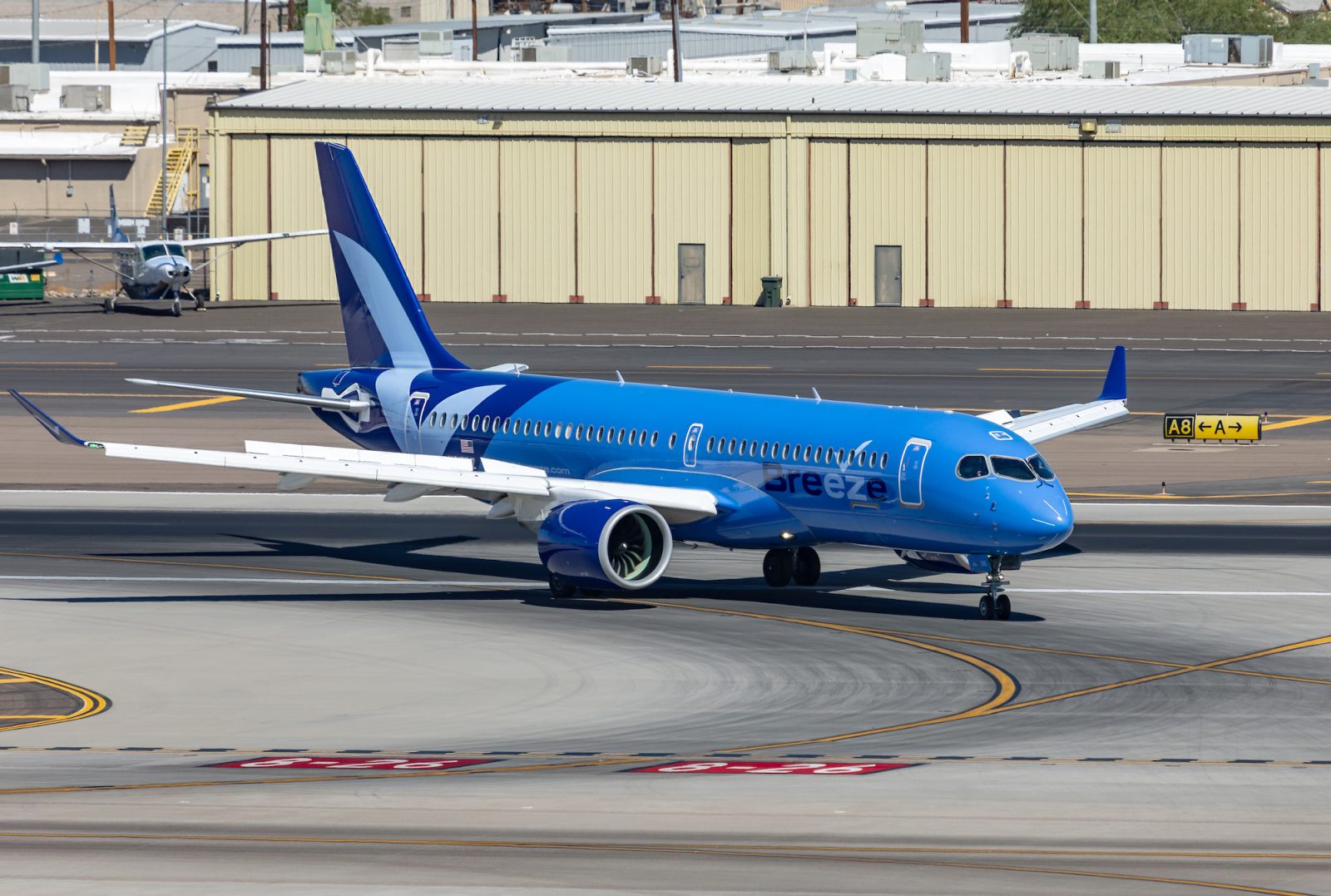
A Breeze A220 in Phoenix (Photo: AirlineGeeks | William Derrickson)

Boeing Left Behind

Over recent years, Airbus seems to be ahead of its main rival Boeing. The commercial airplane manufacturing division of the American company continues to see numerous challenges, most of which are connected to Boeing’s longtime workhorse, the Boeing 737. The more than 56-year-old design can not compete with its 20 years younger Airbus A320 counterpart.

The 735 units delivered by Airbus is 39% above Boeing’s 528 aircraft. This is the fifth year in a row that the European manufacturer is holding the prime spot when it comes to aircraft manufacturing. The prognosis for the future is painted in the same colors as Airbus put an additional 2,094 aircraft orders on the books, which similarly is 59% above Boeing’s result of 1,314.

Filip Kopeć

A passionate aviation enthusiast that started off his career as an aerospace engineer, but found his true calling on the commercial side of the airline business. Now as a finance guy among avgeeks and an avgeek among finance guys, he has experience working in the Revenue Divisions of three airlines. In his spare time he enjoys traveling, but admittedly sometimes is more about the journey than the destination.

Livery of the Week: KLM

KLM Royal Dutch Airlines boasts one of the most recognizable liveries in the skies, a striking combination of blue, white, and the Dutch tricolor.

A KLM Cityhopper Embraer E190. (Photo: AirlineGeeks | William Derrickson)

Editor’s Note: AirlineGeeks is excited to launch our ‘Livery of the Week’ series. Every Friday, a team member will share an airline livery, which can be from the past, present, or even a special scheme. Some airline liveries are works of art. The complexity associated with painting around critical flight components and the added weight requires outside-the-box thinking from designers. The average airliner can cost upwards of $200,000 to repaint, creating a separate aircraft repainting industry as a result. 

Have an idea for a livery that we should highlight? Drop us a line

KLM Royal Dutch Airlines boasts one of the most recognizable liveries in the skies, a striking combination of blue, white, and the Dutch tricolor. But this iconic design wasn’t always the one gracing KLM’s fleet. Its evolution mirrors the airline’s own journey, reflecting changing trends and a connection to its Dutch heritage.

Early Beginnings

KLM’s first aircraft, an Airco DH-16, took to the sky in 1920 sporting a simple livery of silver with black and red accents. This minimalist design reflected the early days of aviation, a time when practicality trumped aesthetics.

Blue Takes Flight

The iconic Delft blue entered the picture in 1937, adorning the nose and tail of the Fokker F.XX. This elegant shade added a touch of sophistication and instantly linked KLM to its cultural roots. Over the years, the blue gradually expanded, covering the entire upper fuselage and creating the design known today.

Modern Twist

KLM’s livery has undergone subtle refinements over the decades, each iteration retaining the core elements while keeping pace with contemporary design trends. The typeface used for the airline’s logo has evolved from a serifed font to a clean sans-serif style, reflecting a shift towards modernity. The white cheatline, separating the blue upper fuselage from the lower section, has also become thinner and more streamlined.

A KLM 737-800 in Amsterdam (Photo: AirlineGeeks | William Derrickson)

Orange Pride

In 2016, KLM unveiled a special livery called “Orange Pride,” featuring a vibrant orange nose section adorned with the Dutch flag. This temporary design, applied to a single Boeing 777-300ER, paid homage to the Netherlands’ national color and was a hit with passengers and aviation enthusiasts alike. In 2023, KLM introduced a slightly modified version of the Orange Pride livery, featuring a larger Dutch flag that spans the entire length of the aircraft.

A KLM 777 departing in 2019. (Photo: AirlineGeeks | William Derrickson)

Today, KLM’s livery remains a timeless symbol of Dutch aviation. Its instantly recognizable combination of blue, white, and the Dutch tricolor evokes feelings of reliability, sophistication, and national pride. It’s a testament to the airline’s rich history and its enduring commitment to connecting the Netherlands to the world.

Looking for a new airplane model? Head over to our friends at the Midwest Model Store for a wide selection of airlines and liveries.

Ryan Ewing

Ryan founded AirlineGeeks.com in February 2013 and has spent more than a decade covering the airline business. His work has been featured by CNN, WJLA, CNET, and Business Insider. His aviation experience spans airport operations, Part 135 regulatory compliance, and airline crew workforce planning, along with time behind the yoke of a Cessna 172 and interviews with airline executives. Ryan now serves as Group President of Firecrown Media’s Aviation Group. He holds a B.S. in Air Transportation Management and an MBA from Arizona State University and teaches Airline Management at Embry-Riddle Aeronautical University.

Indian Airlines Directed to Comply With New Rules Affecting Disrupted Flights

The Directorate General of Civil Aviation (DGCA) of India has issued new rules to airlines with regard to the handling of fog-induced flight disruptions.

IndiGo A321neo landing
An IndiGo Airbus A321neo at Delhi Airport. (Photo: AirlineGeeks | Vihaan Kushwaha)

The Directorate General of Civil Aviation (DGCA) of India has issued new rules to airlines with regard to the handling of fog-induced flight disruptions. This comes after the impact to passengers of several days of flight delays and cancellations due to dense fog across the country and follows a DGCA SOP (standard operating procedure) for airlines to give ‘real-time updates on flight delays.’

Indian Aviation Minister Jyotiraditya Scindia stated: “One of the things that we have done in those SOPs is that we have instructed airlines that if they think the flight will be delayed by more than three hours, they must treat that flight as canceled. So, this question of six-hour delays and eight-hour delays should now become a thing of the past.” The Times of India reported that some flights had been delayed by as much as 17 hours due to the dense fog.

According to the BBC, Delhi’s Indira Gandhi International Airport (DEL) was seriously affected by the fog brought about by cold weather in northern areas of the country. DEL is the hub for India’s largest carrier IndiGo as well as national carrier Air India and though fog is not an unusual seasonal occurrence at the airport it was compounded this year by ‘parking shortages due to grounded aircraft and a runway being shut for maintenance.’ On Monday morning alone, 333 flights at DEL and 129 flights at Hyderabad’s Rajiv Gandhi International Airport (HYD) had been delayed.

Operational ‘War Rooms’

The new rules regarding fog-induced flight disruptions require airlines to set up ‘war rooms’ to deal with passenger issues. Carriers must also report any incidents related to fog and other ‘adverse weather conditions.’ The Business Standard reported the aviation minister as saying that the government will take “very strict” action for violations of the new rules.

Passengers had been critical of the lack of communication from airlines and at airports during the prolonged weather event. The BBC reported that passenger frustration boiled over to an alleged assault against an IndiGo co-pilot with the assailant being arrested and later released on bail.

Many other passengers across the country posted their frustrations on social media including high profile celebrities. Accounts ranged from the emotional toll of not getting home to family, to being locked in an airbridge without access to food, water and sanitation.

“In terms of cancellations and delays, in terms of the war rooms that I have asked every airline to set up at every airport, in terms of informing passengers on SMS, email or WhatsApp — all these SOPs are being monitored by the DGCA on a thrice-daily basis,” Scindia added.

John Flett

John has always had a passion for aviation and through a career with Air New Zealand has gained a strong understanding of aviation operations and the strategic nature of the industry. During his career with the airline, John held multiple leadership roles and was involved in projects such as the introduction of both the 777-200 and -300 type aircraft and the development of the IFE for the 777-300. He was also part of a small team who created and published the internal communications magazines for Air New Zealand’s pilots, cabin crew and ground staff balancing a mix of corporate and social content. John is educated to postgraduate level achieving a masters degree with Distinction in Airline and Airport Management. John has held the positions of course director of an undergraduate commercial pilot training programme at a leading London university. In addition he is contracted as an external instructor for IATA (International Air Transport Association) and has been a member of the Heathrow Community Fund’s ‘Communities for Tomorrow’ panel.

Akasa Air Places Massive Boeing 737 MAX Order

An Akasa Air Boeing 737-8 MAX (Photo: bfi_watch_ca350 (CC BY-SA 4.0 DEED), via Wikimedia Commons)

In a major win for Boeing, India’s Akasa Air has placed an order for 150 Boeing 737 MAX aircraft. The announcement signals the first Boeing 737 MAX order since the door plug blowout and subsequent decompression event on an Alaska Airlines Boeing 737-9 MAX in early January.

Details: Akasa Air’s Boeing 737 MAX Order

Akasa Air has placed a firm order for 150 Boeing 737 MAX aircraft, in a deal that was revealed at the WINGS India 2024 airshow in Hyderabad. The purchase consists of the high-density Boeing 737-8-200 variant and the Boeing 737-10 MAX.

The order will add to the 54 Boeing 737 MAX jets that the airline already has on Boeing’s order book. Founded in 2021, the Mumbai-based airline operates an all-Boeing fleet of 22 Boeing 737 MAX aircraft to approximately 15 destinations in India. The carrier’s fleet currently consists of 21 Boeing 737-8 MAX aircraft and a single Boeing 737-8-200 MAX jet.

“This large and historic aircraft order puts Akasa on a path of becoming one of the top 30 leading airlines in the world by the turn of this decade,” Akasa’s Founder and Chief Executive Officer, Vinay Dube, said at the airshow.

Akasa’s remarkable growth testifies the sheer promise that India holds as an aviation market, and we are thrilled to be a part of this journey,” Dube added.

A Show of Confidence in Boeing

Public opinion and regulator confidence in the Boeing has dropped significantly since the latest Boeing 737 MAX incident. On January 5, 2024, an a door plug on an Alaska Airlines Boeing 737-9 MAX blew out shortly after takeoff, leading to an explosive decompression and a subsequent grounding of the aircraft type. Akasa’s order does not include the Boeing 737-9 MAX.

The fallout from the latest incident added to residual distrust in the aircraft type among some travelers left over from two fatal Boeing 737 MAX crashes in 2018 and 2019. These fatal incidents led to a yearslong worldwide grounding of the 737 MAX.

While Akasa’s latest order was quietly finalized last month, the announcement is still a major confidence boost for Boeing. Speaking to Reuters, Akasa’s Chief Legal, Regulatory and Strategic Relations Officer, Priya Mehra, said that the airline felt “very confident” about the Boeing 737 MAX.

“This milestone demonstrates the strength of our partnership with Akasa Air and is a testament to the capabilities of the 737 MAX family to further the airline’s operational priorities,” said Stephanie Pope, Boeing’s Chief Operating Officer, in a press release. “The efficiency and versatility of the 737-10 and 737-8-200 will support Akasa Air’s expansion to meet soaring demand for air travel in the region for many years to come.”

Andrew Chen

Andrew is a lifelong lover of aviation and travel. He has flown all over the world and is fascinated by the workings of the air travel industry. As a private pilot and glider pilot who has worked with airlines, airports and other industry stakeholders, he is always excited to share his passion for aviation with others. In addition to being a writer, he also hosts Flying Smarter, an educational travel podcast that explores the complex world of air travel to help listeners become better-informed and savvier travelers.

Additional Passengers Sue Alaska Airlines, Boeing

Four more passengers aboard Alaska Airlines Flight 1282 are suing the air carrier along with Boeing for allegedly endangering them.

An Alaska Airlines 737 MAX 9
An Alaska Airlines 737 MAX 9. (Photo: AirlineGeeks | Katie Zera)

Four more passengers aboard Alaska Airlines Flight 1282 are suing the air carrier along with Boeing for allegedly endangering them by allowing the Boeing 737 Max 9 to fly on January 5. According to the lawsuit filed Tuesday in Superior Court in Seattle, the airline was aware of problems with the aircraft’s pressurization system.

There were 177 on board when the aircraft lost a door plug while climbing through 16,000 feet and experienced explosive decompression, resulting in a door-sized hole on the left side of the fuselage. The accident happened 13 minutes after takeoff from Portland International Airport (KPDX) in Oregon. The aircraft was bound for Ontario, California.

The four passengers are represented by Mark Lindquist, a Seattle-area personal injury attorney who also represented the families of dozens of victims after the 2018 and 2019 fatal crashes involving the Boeing 737 Max 8.

The airliner that became Flight 1282 was delivered to Alaska Airlines in October 2023. Prior to the Flight 1282 blowout, three different flight crews noticed issues with the aircraft pressurization system and wrote it up after receiving warning lights. The system has a triple redundancy. The first and second systems are activated by computer. The third system requires manual activation. The FAA allows the aircraft to fly with warnings from the system because of the triple redundancy.

In response to the maintenance write-ups, Alaska Airlines pulled the aircraft from overwater operations but allowed it to fly over land.

According to Lindquist, Alaska Airlines is also named as a defendant.

“Alaska Airlines management decided the subject plane was not safe to fly over the ocean but was somehow safe enough to fly over land,” Lindquist said. “[This] risky decision [endangered passengers]. There’s no reasonable way for an airline executive to explain to the jury how they thought the plane was not safe to fly over the ocean but was safe to fly over land.”

At the time of the blowout, the airplane was still climbing, and all the passengers were still wearing their seat belts. The flight back to Portland was terrifying, Lindquist alleged, as the “passengers did not know if the plane could continue to fly while depressurized with a gaping hole in the fuselage.”

The seats directly next to the door plug were unoccupied, although a 15-year-old boy sitting close to it had his shirt torn from his body by the force of the decompression, and loose objects in the cabin, such as cellphones and stuffed animals, were sucked out into the night sky.

The airplane returned safely to Portland, where some passengers were treated for non-life-threatening injuries. Alaska Airlines swiftly grounded its fleet of 737 Max 9s, and within hours the FAA made the grounding a countrywide event.

“It took the FAA three months and a second crash to ground the Max 8,” Lindquist said, “so it’s good to see this quick action. Lessons were learned by the FAA, if not Boeing.”

According to information Lindquist sent to FLYING, the passengers aboard Flight 1282 described hearing “a loud bang and blare as a door plug blew out of the fuselage and the plane rapidly depressurized. This shocking blowout caused intense fear, distress, anxiety, trauma, physical pain, and other injuries to plaintiffs and fellow passengers.”

Lindquist added that Boeing “has long been on notice of quality control issues” and faced allegations the company “puts profits ahead of safety.”

The lawsuit alleges that “Boeing delivered a plane with a faulty door plug that blew out of the fuselage at 16,000 feet and air masks that apparently did not function properly. Plaintiffs feared the gaping hole in the fuselage, rapid depressurization, and general havoc was a prelude to the plane’s destruction and their own likely death.”

According to Lindquist, “Some passengers were sending what they thought would be their final text messages in this world.”

One plaintiff wrote, “Mom our plane depressed. We’re in masks. I love you.”

The lawsuit charges three counts: one count of negligence against Boeing, one count of strict product liability against Boeing under Washington state’s Product Liability Act of 1981, and one count of negligence against Alaska Airlines.

A few days after the Max 9 incident, Boeing CEO Dave Calhoun referred to the blowout as a “quality escape,” which Lindquist cited in the lawsuit. Calhoun explained “quality escape” was “anything that could potentially lead to an accident.” The lawsuit alleges the CEO thus admitted “a mistake” by Boeing.

In the Max 8 disasters, Boeing initially denied responsibility. “It’s encouraging to see the CEO step up this time and recognize the importance of accountability,” Lindquist said.

The Investigation

The door plug was recovered in the backyard of a Portland high school teacher. The door has been shipped to the NTSB lab in Washington, D.C., for study. Investigators want to know if the four bolts designed to hold the door in place failed, or if they were mistakenly left out of the aircraft at assembly.

“Though it’s too soon to know for sure what exactly went wrong, we do know Boeing is ultimately responsible for the safety of their planes, and Alaska Airlines is ultimately responsible for the safety of their passengers,” Lindquist said.

NTSB investigators locate missing plug door from Alaska flight 1282 (Photo: NTSB)

After the aircraft returned to Portland, passengers were offered other flights to get to their destination of Ontario, California. In addition, the airline sent an email to each passenger offering them $1,500 each. According to Lindquist, many passengers were offended by both the amount and lack of a personal touch.

“While all the passengers have some things in common, their injuries are different based on where they were seated, their individual reactions, and how they are faring,” Lindquist said. “Each passenger is an individual with individual interests.”

FLYING reached out to both Alaska Airlines and Boeing for comment. Boeing replied that it had nothing to add, and Alaska Airlines stated that it does not comment on pending litigation.

On Wednesday morning, Alaska Airlines CEO Ben Minicucci sent an explanatory email to its customers to update them on the situation.

Minicucci apologized to the passengers of Flight 1282 and also to customers whose travel plans have been upset by the grounding of the Max 9. The model makes up 20 percent of Alaska Airlines’ fleet.

“Since Alaska Airlines and the FAA have grounded these aircraft, that means we are canceling between 110 to 150 flights every day,” said Minicucci, adding that because of the cancellations he has asked the reservations team to notify customers as soon as possible.

“Our reservations team is working around the clock to accommodate people on other flights. To all who’ve been impacted by these interruptions, I am sorry. When you make plans, you put your trust in us, and we haven’t been able to deliver over the past week.”

About the Inspections

According to Minicucci, the inspections of the aircraft began on Saturday, January 13, and are a joint effort by the airline, FAA, and Boeing. The information gathered will be compiled by Boeing and the FAA to determine the appropriate next steps in order to return the Max 9 fleet safely back to service.

“At this time we do not yet know how long this process will take, but we will keep you updated as much as we can,” Minicucci said. “Aviation safety is based on having multiple levels of quality control and safety assurance, much like system redundancies that are built into an aircraft for operational safety together.”

In addition, Alaska Airlines is having its quality and audit team begin a thorough review of production, quality, and control systems, including vendor oversight.

“They will partner with our maintenance team on the design of enhanced processes for our own quality control over aircraft and Boeing,” Minicucci said. “And starting this week, we will have our own quality oversight of Alaska aircraft on the Boeing production line, adding more experienced professionals to the teams that validate work and quality on the production line for the 737.”

Editor’s Note: This story first appeared on FlyingMag.com.

AirlineGeeks.com Staff

AirlineGeeks.com was founded in February 2013 as a one-person blog in Washington D.C. Since then, we’ve grown to have 25+ active team members scattered across the globe. We are all here for the same reason: we love deep-diving into the fascinating realm of the airline industry.
Sign-up for newsletters & special offers!

Get the latest stories & special offers delivered directly to your inbox

SUBSCRIBE

Uh-oh! It looks like you're using an ad blocker.

Our website relies on ads to provide free content and sustain our operations. By turning off your ad blocker, you help support us and ensure we can continue offering valuable content without any cost to you.

We truly appreciate your understanding and support. Thank you for considering disabling your ad blocker for this website