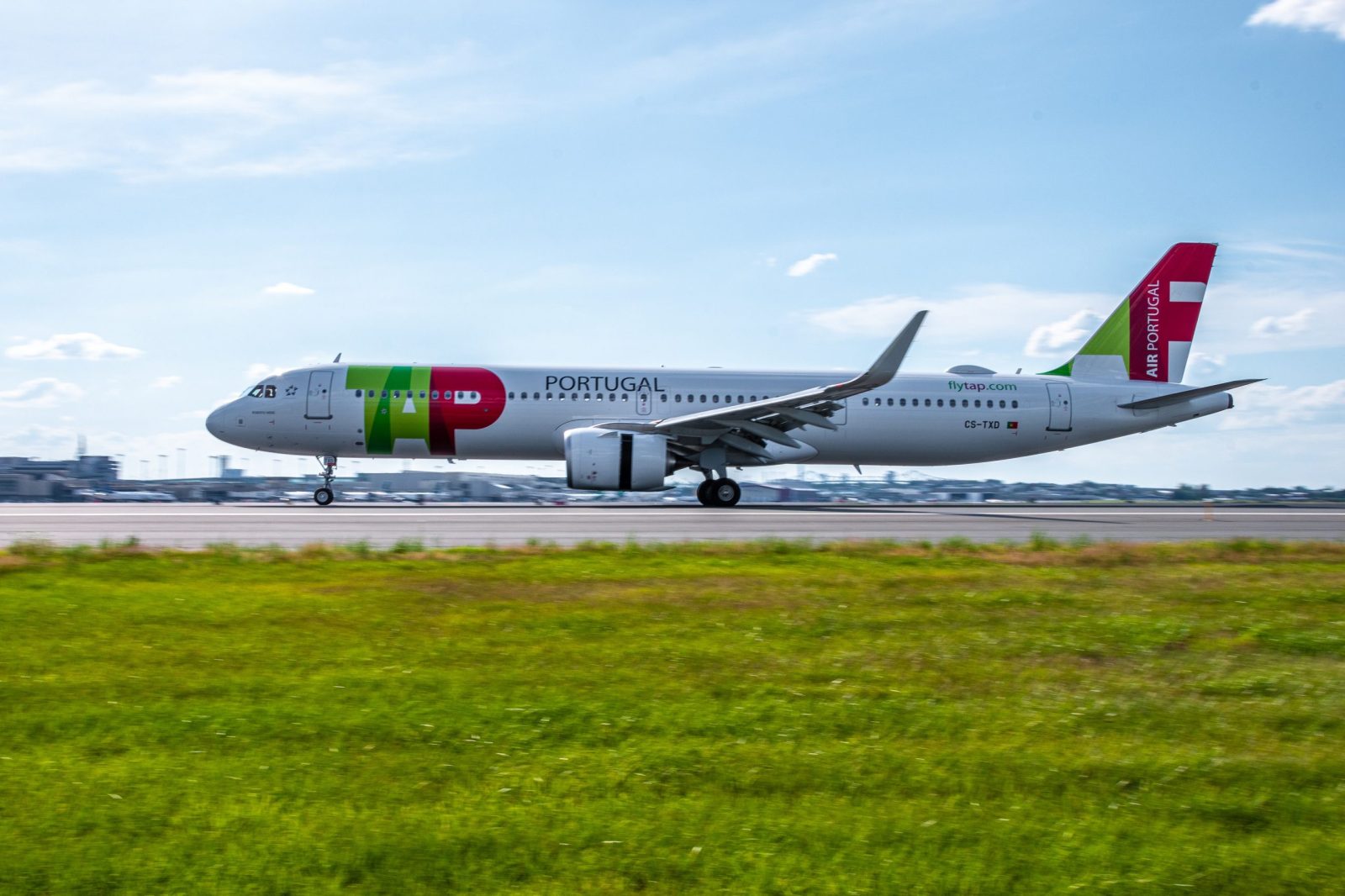
TAP's first flight from the Azores arriving in Boston.
(Photo: TAP Air Portugal)
Portuguese flag carrier TAP Portugal is the latest European airline to garner interest in a region undergoing consolidation. The Portuguese government has had plans to privatize or partially privatize the national carrier for some time. In June, the Minister of Finance of Portugal Fernando Medina indicated that there was ‘no rush’ for the sale to be completed and that the government would “ensure a privatization process that reinforces TAP’s strategic role in the Portuguese economy.”
In the last week, the Portuguese cabinet approved consideration of a privatization strategy that would see at least 51 percent of the carrier offered for sale. The Financial Times reported that the move could see a ‘potential bidding war’ between Air France-KLM and IAG (International Airlines Group), the parent company of British Airways.
IAG’s chief executive Luis Gallego said: “We’ll have to study the process [of privatisation] and carefully consider the details, but we feel optimistic and believe that TAP can become another success story within IAG.” Reuters reported an Air France-KLM spokesperson confirming that the consortium maintained a ‘strong interest’ in purchasing TAP Portugal following the announcement of its bid for 19.9 percent of SAS this week. The bid for part of SAS is dependent on approval from European and U.S. regulators.
Lufthansa Group Looks at Options
Reuters also reported that TAP Portugal’s Star Alliance partner airline Lufthansa may also be a contender for the Portuguese airline. The Air France-KLM stake in SAS announced this week is set to see the Scandinavian carrier exit the Star Alliance in the near future. The German airline consortium has previously announced plans to invest in Italian carrier ITA Airways. The deal would see Lufthansa take a 41 percent stake in ITA Airways which is currently sitting with European regulators.
The delay in approval for the Lufthansa-ITA Airways deal was questioned last month by Italian Prime Minister Giorgia Meloni. “Something curious is going on,” Reuters reported Prime Minister Meloni saying at the G20 summit in September. “The same European Commission which asked us for years to find a solution to the ITA problem then blocks it when we do come up with a solution. So we don’t really understand, and we would like an answer.” In response, the European Commission noted that the Lufthansa-ITA Airways deal had yet to be lodged with the Commission.
Reuters cites a source ‘with knowledge of the Portuguese government’s position as saying “One thing is certain: Portugal would want the buyer of TAP to be a reputable and strong airline…and at the same time enhance not only the Lisbon hub, but also other airports like Porto.” There appears to be some way to go with the privatization of TAP Portugal and with three high profile airline consortiums showing interest it will have an influential impact on the European airline landscape.
John has always had a passion for aviation and through a career with Air New Zealand has gained a strong understanding of aviation operations and the strategic nature of the industry. During his career with the airline, John held multiple leadership roles and was involved in projects such as the introduction of both the 777-200 and -300 type aircraft and the development of the IFE for the 777-300. He was also part of a small team who created and published the internal communications magazines for Air New Zealand’s pilots, cabin crew and ground staff balancing a mix of corporate and social content.
John is educated to postgraduate level achieving a masters degree with Distinction in Airline and Airport Management. John has held the positions of course director of an undergraduate commercial pilot training programme at a leading London university. In addition he is contracted as an external instructor for IATA (International Air Transport Association) and has been a member of the Heathrow Community Fund’s ‘Communities for Tomorrow’ panel.
Livery of the Week: The United ‘Tulip’
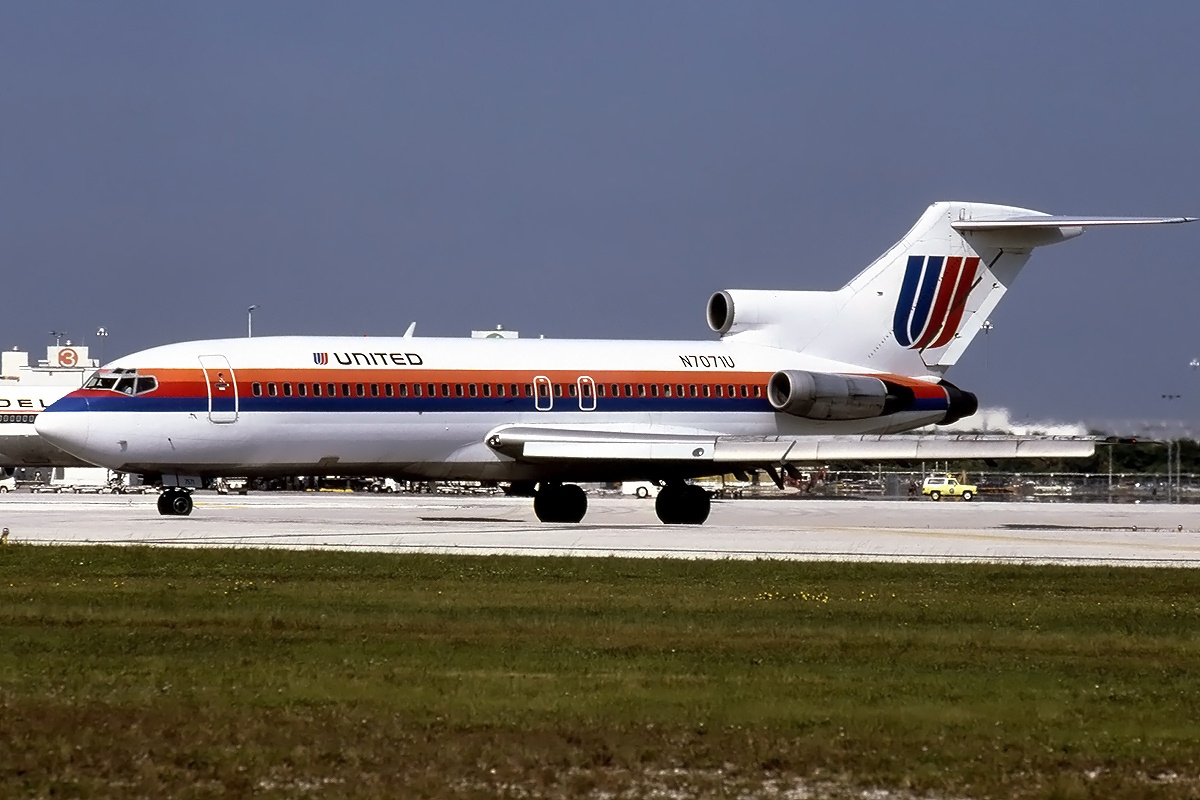
Beloved by many aviation enthusiasts, the United 'Tulip' design inspired several liveries and brands over time with its iconic look.
A United 727 (Photo: Peter Duijnmayer (GFDL 1.2 or GFDL 1.2 ), via Wikimedia Commons)
Editor’s Note: AirlineGeeks is excited to launch our ‘Livery of the Week’ series. Every Friday, a team member will share an airline livery, which can be from the past, present, or even a special scheme. Some airline liveries are works of art. The complexity associated with painting around critical flight components and the added weight requires outside-the-box thinking from designers. The average airliner can cost upwards of $200,000 to repaint, creating a separate aircraft repainting industry as a result.
United Airlines’ ‘Tulip’ logo and various liveries hold a special place in the hearts of aviation enthusiasts. Gracing the skies from the 1970s to the early 2000s, this timeless design remained through multiple United branding iterations.
Home of the ‘Fly the Friendly Skies’ slogan, United maintained a more simplified red, white, and blue paint scheme along with a tail widget from 1957 to the early 1970s. This design also had multiple evolutions over time, including the iconic ‘Friendship’ livery, according to YesterdaysAirlines.com.
The ‘Tulip’ Livery: Beloved by Many
The original ‘Tulip’ livery, introduced in 1974, was a departure from United’s previous designs. In 1973, the carrier commissioned designer Saul Bass, who was best known in Hollywood for his work around film identities. His work would yield a white fuselage with orange, blue, and red stripes; the new ‘Tulip’ logo had been placed on the tail.
A United 747-100 in the iconic ‘Saul Bass’ livery seen at London Heathrow (Photo: Dean Morley/CC BY-ND 2.0/https://www.flickr.com/photos/33465428@N02/3863157068/in/photolist-7CQaJL-6TnG1m-ag9w8-527E2U-6StkvZ-51yJaD-7CQqAy-8U2x2s-58AAUX-as7Vk5-rciwF1-8zEGZ5-7v2enZ-8txaxj-8TYoGT-axzk3K-8TYpWi-n1tsKr-7v6ujC-dD9PwZ-WB39v-9eyC5v-8TYuWt. No changes made)
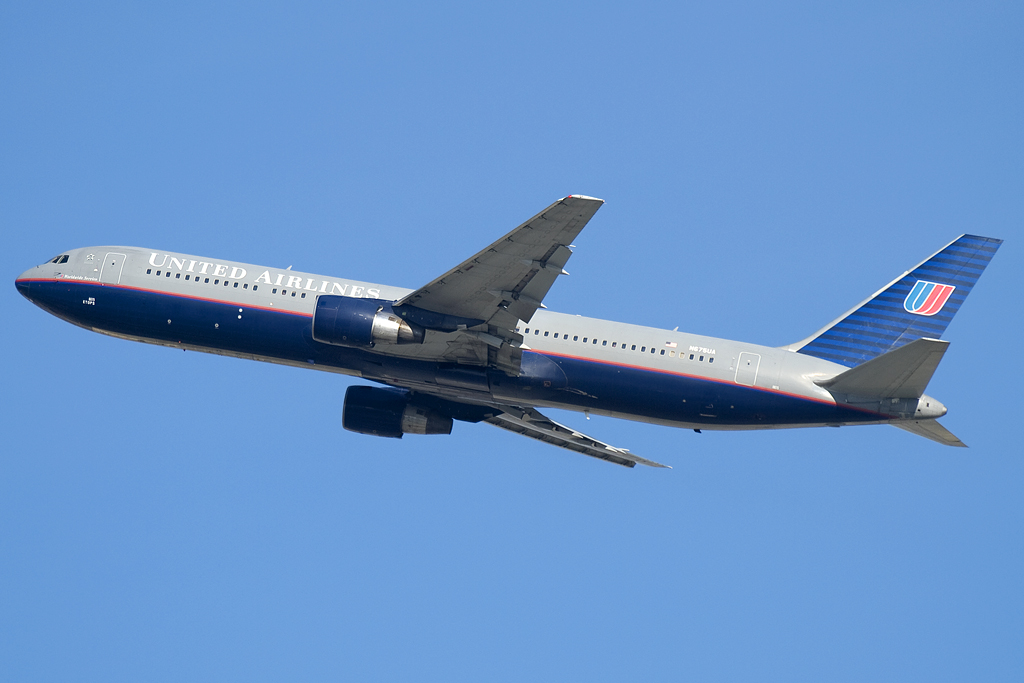
Twenty years later in 1993, United once again evolved its branding with a new dark blue and grey livery. Affectionately dubbed as the ‘Battleship’ livery, the update included Times New Roman font and a more professional overall look. Despite the change, Saul Bass’ ‘Tulip’ still existed in the logo and on the tail.
United’s ‘Battleship’ livery (Photo: AirlineGeeks | William Derrickson)
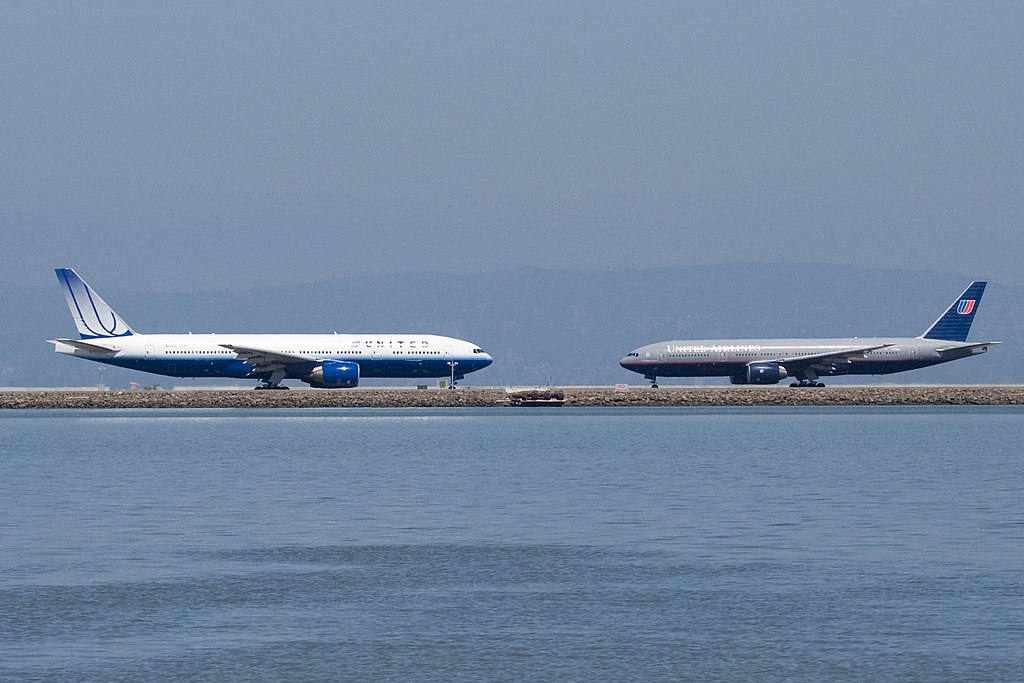
United commissioned another design firm in 1997 to refresh its brand yet again. This would eventually yield the so-called ‘Blue Tulip’ livery, which featured a lighter blue and white palette coupled with a larger ‘Tulip’ design on the tail and logo. In 2004, the livery was officially rolled out across the carrier’s fleet, which was intended to drive some post-bankruptcy positivity.
United’s old and new ‘Tulip’ liveries (Photo: Dylan Ashe from San Jose, USA, CC BY-SA 2.0 <https://creativecommons.org/licenses/by-sa/2.0>, via Wikimedia Commons)
Later Evolution of United’s Livery
As time passed, United Airlines evolved, and with it, its livery. In 2010, the airline merged with Continental Airlines, leading to a new corporate identity. The iconic ‘Tulip’ livery eventually gave way to Continental’s original design featuring a predominantly white fuselage, blue and gold accents, and a globe on the tail.
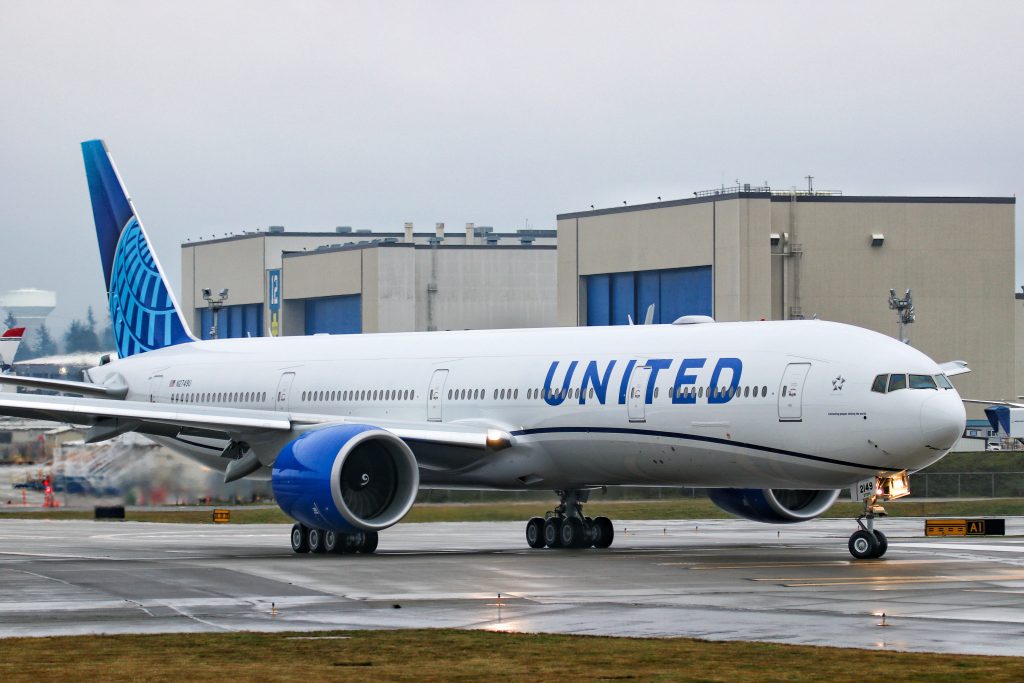
In 2019, United revealed its now standard brand, keeping Continental’s globe, but adding in blue accents and more contemporary styling. Per BlueSkyPit.com, 43% of United’s fleet now wears the updated livery as of April 2023.
A United 777-300ER at Paine Field. (Photo: AirlineGeeks | Katie Bailey)
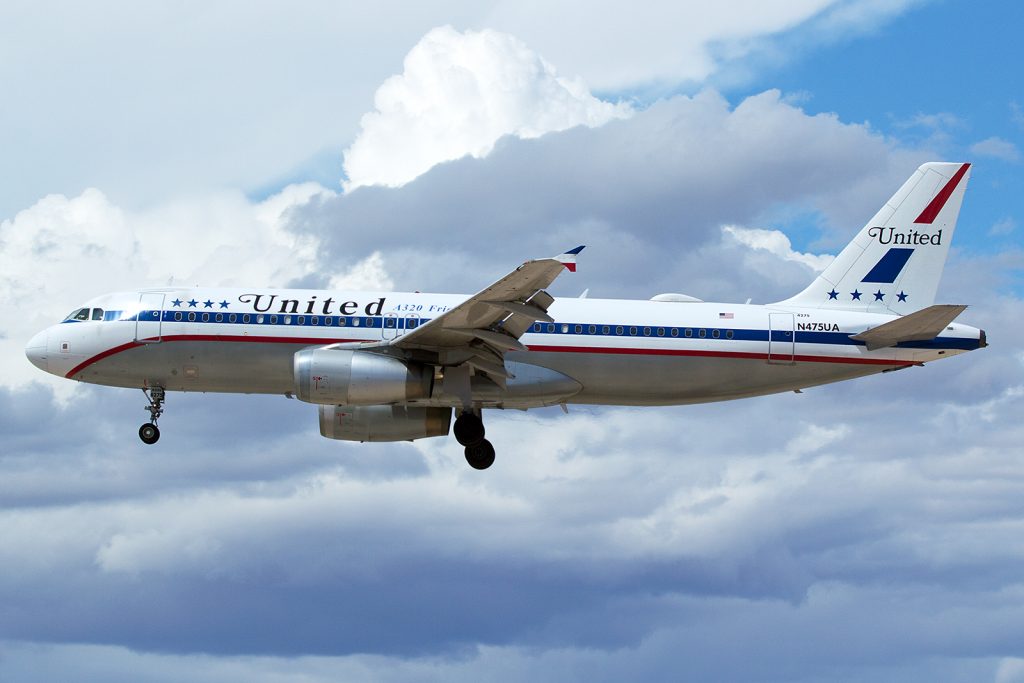
The airline does maintain several retro and special liveries. Among them is an ode to the ‘Friendship’ design on an A319 along with a retro Continental livery on a 737-900ER. Much to the dismay of the aviation enthusiast community, United has not officially announced plans to have a retro ‘Tulip’ livery.
A United A320 in a retro livery landing in Las Vegas. (Photo: AirlineGeeks | William Derrickson)
United’s ‘Tulip’ livery remains a cherished part of aviation history, representing an era of unique designs. While the airline has moved forward, the spirit of the ‘Tulip’ lives on in the hearts of aviation enthusiasts who appreciate the timeless beauty of this iconic livery, which includes a Facebook group solely devoted to it.
Ryan founded AirlineGeeks.com in February 2013 and has spent more than a decade covering the airline business. His work has been featured by CNN, WJLA, CNET, and Business Insider. His aviation experience spans airport operations, Part 135 regulatory compliance, and airline crew workforce planning, along with time behind the yoke of a Cessna 172 and interviews with airline executives. Ryan now serves as Group President of Firecrown Media’s Aviation Group. He holds a B.S. in Air Transportation Management and an MBA from Arizona State University and teaches Airline Management at Embry-Riddle Aeronautical University.
The Boeing 737 MAX 8 features a slightly redesigned flight deck compared to past 737 variants (Photo: William Derrickson)
My brother asked me a while back how airline pilots can be safe and proficient in emergencies. His idea was that, considering how safe commercial aviation is, pilots’ ability to enact emergency procedures will atrophy, making emergencies that much riskier for everyone involved.
Luckily, the FAA has already thought of this. Aviation professionals and enthusiasts alike are aware of the concept of “recurrent training,” when crewmembers are sent to the simulators every 6 months to practice emergencies and make sure their abilities are still sharp.
Airline Recurrent Training
What non-pilots and non-crew-managers might not realize is that this recurrent training is regulatory. 14 CFR 121.427 outlines the requirements for regular pilot retraining in the air carrier world. The very first paragraph outlines that this training “must ensure that each crewmember or aircraft dispatcher is adequately trained and currently proficient with respect to the type airplane and crewmember position involved.”
The regulation also outlined the required components of this recurrent training. Some critical elements include a quiz or review to determine the crewmember’s knowledge in relation to the airplane and position involved; crew resource management training; a minimum amount of simulator training; and additional recurrent ground training for pilots serving as pilot in command of an aircraft.
The regulation also outlines the specific minimum training that the aforementioned training items must include. This must include information on the differences between each aircraft type a pilot flies if they presently fly more than one aircraft for the carrier.
The Flight Review Requirement
General aviation has a similar requirement, known as a “flight review.” 14 CFR 61.56 dictates that a flight review, which must be completed no less than every 24 calendar months, must include at least 1 hour of ground instruction and 1 hour of flight instruction from an authorized flight instructor.
However, the rules for what a flight review are a bit more vague. The flight review must include “a review of the current general operating and flight rules of part 91 of the federal aviation regulations” and “a review of those maneuvers and procedures that, at the discretion of the person giving the review, are necessary for the pilot to demonstrate the safe exercise of the privileges of the pilot certificate.”
This means that the basic requirement for pilots who do not fly professionally for a major air carrier are vague and infrequent. Simply following what the FAA outlines might leave a pilot unprepared for critical mid-flight possibilities, not to mention that the procedures the pilot practices are, in some sense, at the mercy of the instructor giving the proficiency check. Some items may be routinely left out, leaving their practice even more absent than it is in a recreational pilot’s limited flying experience.
For the record, this is not to imply that non-professional pilots are underprepared or undertrained across the board, nor that flight instructors are constantly failing to provide high-quality instruction. On the contrary, American flight instructors are some of the best trained in the world, and they too are required to go through regular recurrent training to keep their flight instructor qualifications from expiring.
Gaps in the Mandated Flight Review
However, compared to the regulations for air carriers, general aviation pilots see gaps between the type of flying they do (and therefore the types of situations they must be proficient in and prepared for) and what they are required to regularly practice, at least on paper.
This gap is surely in large part due to the wide variety of experiences that general aviation pilots have. Some are regulars in the skies, whether that be because they are training to pursue professional flight, they fly for business, or they have the time and means to fly regularly. Meanwhile, some pilots fly more sparingly, might rarely fly alone, and tend not to leave the local area where they are based.
Admittedly, it is difficult to mandate specific minimum required training for people who, relatively speaking, don’t fly all that often. After all, airline pilots fly much bigger, faster, heavier jets that are more complex and require incredibly quick thinking. It makes logical sense that those pilots require more recurrent training, and more specific types of recurrent training, than a pilot who takes a flying club’s Cessna 150 for an hour-local flight once a month.
Cirrus SR-20 aircraft at the United Aviate Academy (Photo: AirlineGeeks | Ryan Ewing)
Growing WINGS
The question becomes, then, how private pilots themselves can learn from professional regulations to make their own flying safer. Maybe a full flight review every 6 months isn’t the most practical thing in the world. There must, then, be other ways to maintain high levels of proficiency so a pilot can be prepared for any situation that comes their way.
A major resource a pilot can utilize is none other than the FAA WINGS program. The WINGS program is a computer-based program that allows pilots to receive training on a wide variety of topics from the comfort of their own home. Whether it be on an area of operation they’re already familiar with, such as emergency descents in single-engine airplanes, or a new topic to expand their knowledge, such as high-performance operations, the WINGS program is one of the lowest-effort ways for a pilot to maintain their proficiency without needing to pay a flight instructor or go all the way to the airport for a flight review.
Many pilots have likely already heard of the WINGS program. It is commonly mentioned in private pilot training as a resource that can be used for credit towards an FAA flight review, and many pilots use it just for that purpose. But it is also a tremendous resource for refresher training in between flight reviews. The wide variety of topics allows pilots to delve into aeronautical knowledge topics they may not have accessed in some time, thus, brushing them up on critical knowledge essential to being a safe pilot.
WINGS training has even in the past been accepted as appropriate remedial action after a pilot deviation to such an extent that pilots have avoided certificate action because they were proactive about completing training through WINGS to address their deviation. WINGS isn’t just some resource, it’s one of the best programs pilots can use to maintain their proficiency, and the FAA widely accepts it as a top-tier training program.
So, you’ve done your WINGS training. But that might not bring your stick-and-rudder skills to standards after some time out of the cockpit. While a flight review might not be needed or practical more than every 2 years, that does not, and should not, preclude a pilot from seeking occasional training with a CFI.
This WINGS training, in some sense, completes the high-level training that airline pilots go through on a regular basis. Of course the type of training in both instances isn’t a perfect one-to-one match, but the idea remains: pilots are their safest when they receive continual in-depth training in the types of flying that are most applicable to them. Just like recurrent training does that for airline pilots – practicing critical procedures on the aircraft they fly day in and day out – the WINGS training can provide private pilots with one of the best training programs they can have access to.
Get a Semi-Flight Review
In order to make that occasional training more efficient, pilots might consider coming in to a lesson with a couple tasks to practice to ensure their proficiency. Someone who has been lucky to have months of smooth flying might practice an emergency procedure or two as well as some crosswind landings. Someone who feels secure in their skills might consider receiving training in a more advanced aircraft, such as a complex or high-performance aircraft.
The whole point of this exercise is to keep the most critical flying skills sharp. Just like professional pilots are tested on critical emergency procedures during recurrent training, a private pilot can receive training in similar emergencies or in aircraft that are faster and more complex, where they might be reminded of the importance of procedures, planning, and smooth control inputs in a plane where more is happening a little faster than they are used to.
All of this training – airline pilots doing emergencies in the sim and GA pilots flying new aircraft – primarily serves to keep pilots from getting complacent. Instead of just falling into a routine over years and years of the same type of flying in the same airplane, pilots must be challenged and put in new situations to make sure they continue to use, apply, and grow their aeronautical knowledge to be the safest pilot possible.
Train With the Top Guys
Private pilots can also consider flying with a senior pilot, instructor, or examiner. A chief pilot who has been teaching pilots for years have incredible perspectives to offer and knowledge and skills to impart on every pilot. They have also had plenty of experience fine-tuning their explanations of difficult tasks that tend to stump pilots, so if you find yourself in a roadblock on a particular maneuver or procedure, spending time with a senior pilot may help you gain insights that improve you knowledge, your skills, and your experience as a pilot.
This is a practice similar to airline pilots flying with senior check airmen, an occasional practice used to further their training in real-world situations outside of the simulator. A private pilot could even consider flying a cross-country with a senior pilot or instructor to have someone to help fine-tune their standard day-to-day flying to a higher degree, once again helping to combat complacency at all points in flying.
How About Another Checkride?
A pilot could even consider pursuing a new certificate or add an additional rating to their existing certificate to gain more experience and proficiency. Even if they have no aspirations of flying professionally, getting a commercial pilot certificate challenges a private pilot not only to make their own flying more precise (thanks to the more precise certification standards at the commercial pilot level), but it also invites them to train new maneuvers that expand their abilities to apply basic airmanship skills to their flying.
There is high value, for example, in not only knowing how to fly an emergency approach to a landing in a field but also in demonstrating your proficiency at doing so during a power off 180 accuracy approach. The same can be then said for making a power-off steep spiral from 5,000’ to join an airport traffic pattern and use precise control and judgment to glide to a power-off landing on a specific spot on that runway.
The view out the front of our Tailwind Air Cessna 208B. (Photo: AirlineGeeks | Katie Bailey)
The same thing can be said about getting an instrument rating. A pilot may never plan to step foot in IMC conditions – heck their airplane of choice might not even be IFR capable – but doing instrument training teaches a pilot a completely different type of flying that demands a unique type of precision and control that is not practiced in private pilot training. (As a sidenote, you don’t even receive instrument instruction during private pilot training…it’s a tricky distinction, but you receive “training on aircraft control by reference to the flight instruments;” on paper, the FAA considers “instrument training” a whole nother beast.)
By training for that new certification, the private pilot has performed a new level of “recurrent training” that challenges them to think outside the bounds of the certification they already have. They learn to think more critically, fly more smoothly, and use more options when they encounter an emergency situation. They get experience in a wider array of situations that can guide them through the flying they do at home.
Nobody is Exempt from Safety
I’ve been referring to non-professional pilots as “private” pilots a lot throughout this article so far, but make no mistake: this type of GA “recurrent training” must not be limited to private pilots. Commercial pilots and CFIs who primarily fly small piston planes can benefit equally from this type of recurrent training. If anything, as role models in the aviation community, they should be expected to take their training one step further, even if they don’t exercise the privileges of a commercial pilot or flight instructor.
Just like airline captains have a special air about them even when they’re out of the flight deck, a pilot with the words “commercial pilot” on their certificate have an incredible incentive to maintain a high level of proficiency and professionalism to set a high standard of safety and proficiency for all around them.
What can a CFI do to think outside the box and maintain proficiency? Every instructor knows that there are certain ways they must renew their flight instructor certification every two years, but if you sign off enough students for checkrides and they do well enough on those tests, CFIs aren’t required to do any recurrent training outside of the standard flight review to act as PIC.
CFIs can work recurrent training into their regimen by doing a flight instructor refresher course every two years when their certificate comes up for renewal, even if they satisfy another renewal requirement. They can also – and I know I might not make friends by saying this – go and take a checkride every two years. Consider doing a checkride to instruct another category or class of aircraft.
And before you ask how you’ll get a CFI add-on without the additional category and class: use a checkride to add the new category and class to your pilot certificate to satisfy your flight review one year, then take the CFI checkride in that category or class the next year to renew your instructor certificate.
Proficiency is Always Important
All this to say: safety is more important in an airplane at 5,000’ and 120 miles per hour than in most other situations in a pilot’s life. Whether someone regularly flies at a mach number in the flight levels or fights to achieve 100 knots at the lowest VFR cruising altitude, maintaining proficiency and skill is the best thing a pilot can do to keep themselves, their passengers, and bypassers on the ground as safe as possible.
While more thorough recurrent training might not eliminate all GA accidents, it will give GA pilots a constant method by which to keep themselves safe, proficient, and current; it might even inspire them to pursue training in a higher certification or explore a new area of flying they haven’t considered before.
When one pilot is safer and more proficient, the American skies are safer for everyone. Building high-level recurrent training into your schedule will ensure smoother flying and safer travels for you and those around you…and you might just be able to impress a friend or two with the latest add-on to your pilot certificate.
Editor’s Note: Welcome back to the Private to Professional series. Each week, we will take time to break down a new regulation written for professional pilots in Part 121 and Part 135 flying, and we will consider different ways to apply those regulations to general aviation. Some regulations have straightforward applications to general aviation, but there is usually more that meets the eye. Thus, we will take time to explore a wide variety of ways general aviation pilots can apply even simple things, like minimum rest requirements, to their own flying. Check back in next week for the next installment of the series.
John McDermott is a commercial pilot pursuing a career in professional flight. His passion for aviation began in an Ann Arbor bookstore with a tale of enemy pilots during World War 2, and he hasn't looked back. Besides flying and writing for AirlineGeeks, John volunteers with Professional Pilots of Tomorrow and travels whenever he gets the chance.
LAX Debuts New Airside Link as Transformation Continues
LAX has connected all terminals airside for the first time in its nearly century of existence and will continue to see improvements over the next year.
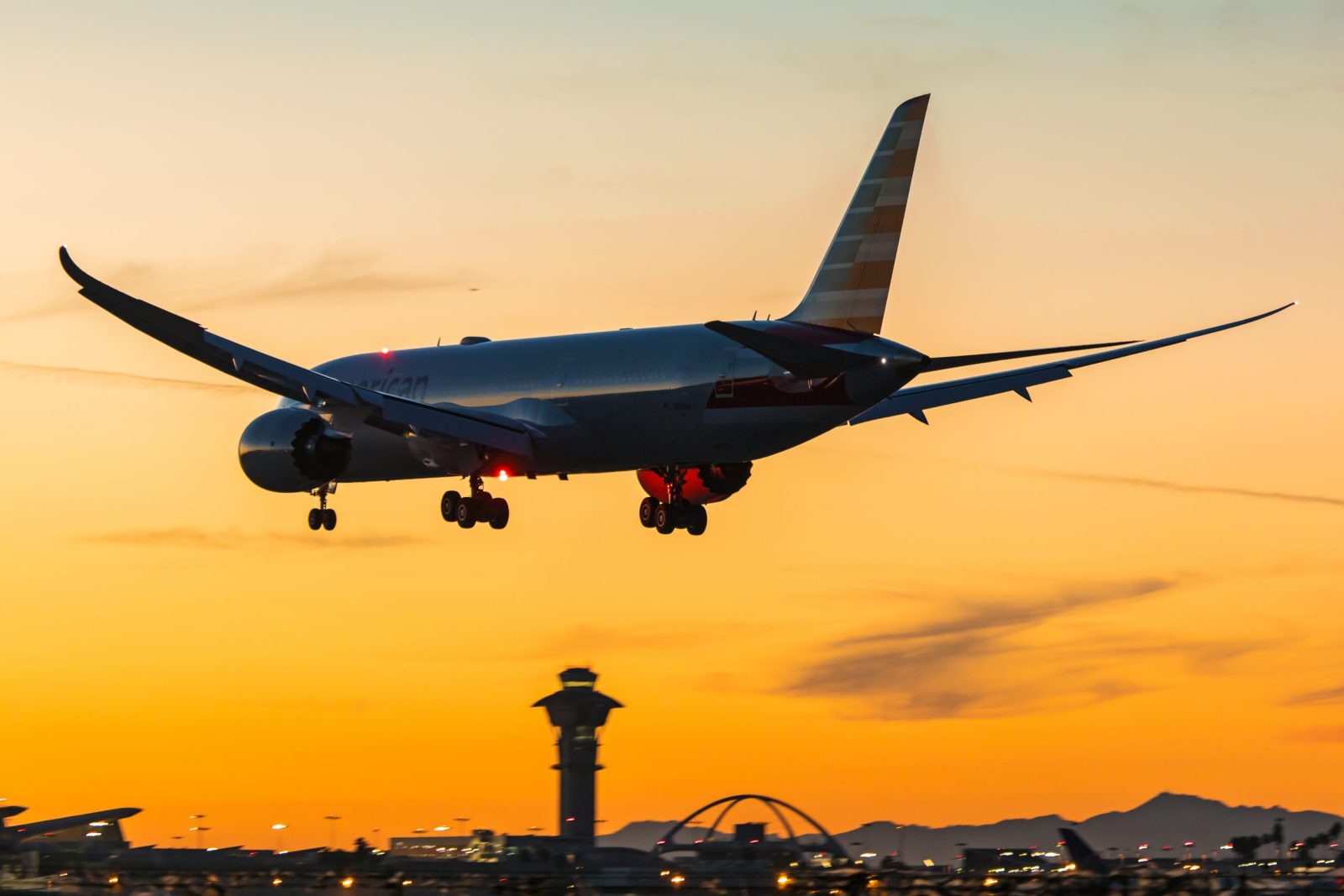
An American Airlines Boeing 787 Dreamliner on approach to Los Angeles.
(Photo: AirlineGeeks | William Derrickson)
Los Angeles International Airport, famously known as LAX, is an iconic symbol of aviation understood across the globe. Built in 1928, the airport has seen almost a century of change. From the pioneer days of aviation to the eras of luxury liners caressing the skies, the airport has been a hub for those connecting to go across the globe.
In the past 15 years alone, the airport has seen close to 1 billion passengers traverse through. The annual number of passengers traveling into and out of the airport is continuing to increase and is expected to rapidly with Los Angeles hosting the 2028 Summer Olympic Games. To keep up with demand, the airport has continued to expand and build on what has previously been.
This past Wednesday, the airport completed the opening of the airside connector from Terminal 3 to the Tom Bradley International Terminal (TBIT). This represents the first time in the airport’s almost century of existence that all terminals will be physically connected airside or post-security. Prior to the walkway opening, passengers were required to use a shuttle bus that ran airside to connect between Terminal 3 and TBIT.
The connection now allows passengers to walk the entire two-mile journey from Terminal 1 to Terminal 8. Passengers now have the opportunity to utilize restaurants, lounges and shops in other terminals without having to exit and re-enter the sterile area.
Justin Erbacci, Chief Executive Officer for Los Angeles World Airports, believes that this is just one of many future improvements for the airport positively impacting travelers, saying, “This is just one vital update in a collection of many that are making travel at LAX efficient, dependable and user-friendly.”
An Improved Experience
In recent years, the airport opened a new economy parking facility offering 4,300 additional parking spaces for travelers originating out of LAX. Coming in 2024, the Automated People Mover (APM) is being implemented to reduce ground congestion landside of the terminals.
Costing $2 billion, the APM will pick up passengers at three locations central to the outlying terminals connecting them to the parking facility recently built along with the metro connection station and consolidated rental car facility. The APM will have a varying schedule operating 24 hours, however, will have trains leaving every two minutes between 9 A.M. and 11 P.M. Tracks will accommodate the movement of up to nine trains simultaneously.
Currently, the airport does not have a direct train service from the city. Current travelers who use the metro system to get to the airport must take the train to a station nearby and then transfer to a bus which is subject to traffic and road congestion.
The APM will allow passengers to transfer directly from the metro to the train directly to one of the three terminal stops. Thus eliminating the need to use the bus service on the busy roadway. The consolidated rental car facility will also give passengers the opportunity to take the train without having to wait for company-specific busses to reach the provider’s off-airport location.
All of these improvements are a part of the Los Angeles World Airports (LAWA) Landside Access Modernization Program (LAMP). The entire $5.5 billion project will be completed and ready for use in 2024, well before the city hosts the 2028 Olympic Games.
Zach’s love for aviation began when he was in elementary school with a flight sim and model planes. This passion for being in the air only intensified throughout high school when he earned his Private Pilot Certificate. He then attended Embry-Riddle Aeronautical University, earning his certificates and ratings to later flight instruct and share his passion for aviation with others. He now resides in the North East living out his dream as an airline pilot.
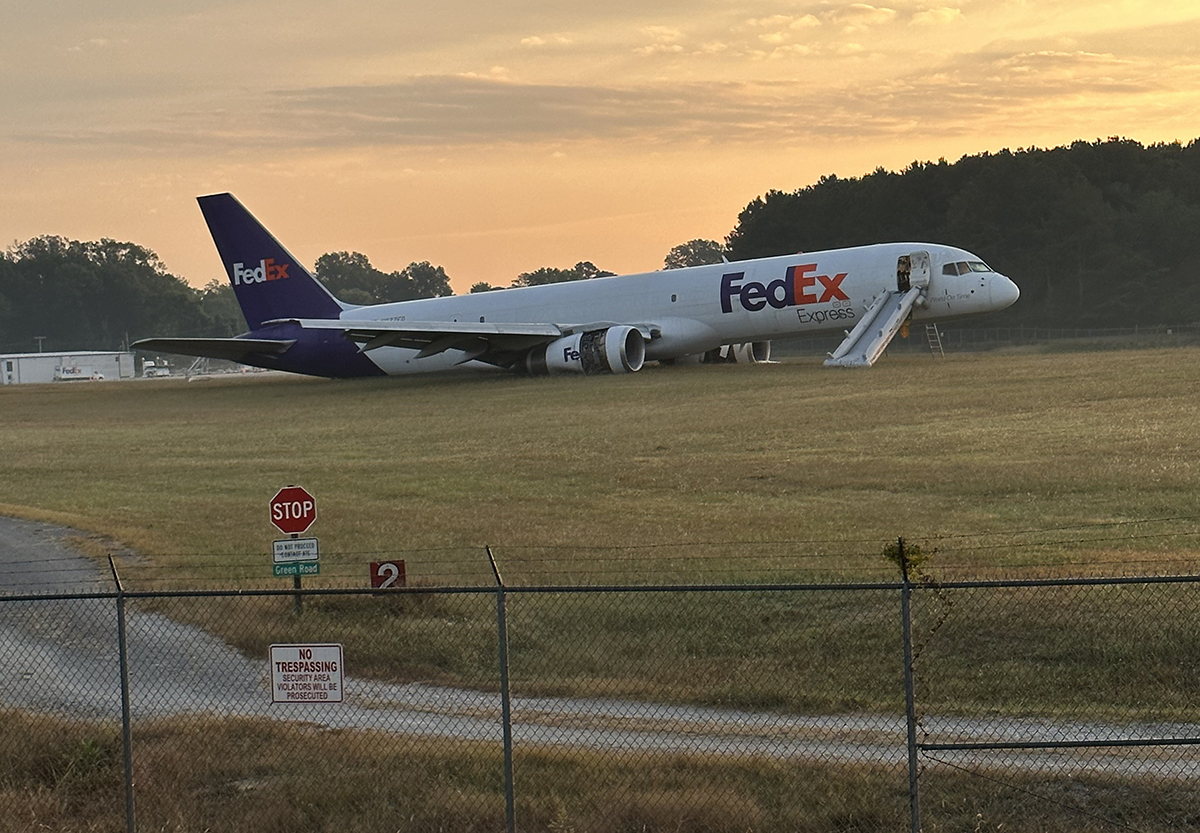
FedEx Jet Goes Off Runway in Chattanooga
The National Transportation Safety Board (NTSB) reports it will be on scene Thursday to begin the investigation of what happened to the jet.
Federal and local authorities in Chattanooga, Tenn., are investigating an emergency landing of a FedEx aircraft Wednesday night. According to the Chattanooga Fire Department, the FedEx Boeing 757 discovered a problem with the landing gear as it approached Chattanooga Metropolitan Airport (KCHA).
According to FlightAware.com, FedEx flight 1376 took off from KCHA at 10:24 p.m. EDT destined for Memphis International Airport (KMEM).
The LiveATC recording of the conversation between FedEx 1376 and air traffic control reveals that approximately 22 seconds after contacting departure and receiving clearance to 10,000 feet, the flight reports it is working “a minor issue.” The pilot requests to remain on runway heading and be cleared to an altitude of 5,000 feet. The controller approves the request and advises the flight that he will be vectoring it to the west and north to keep it within his airspace.
At approximately 1:29 minutes into the conversation, the controller asks if the flight needs assistance, and the pilot responds they are talking with the company and getting instructions.
The next transmission from the pilot states that the flight needs to return to Chattanooga and requests vectors that will allow it time to run more checklists and configure the aircraft for landing.
ATC replies it will keep the airplane north for vectors. At 2:16 into the conversation, ATC asks if the flight is declaring an emergency, and the pilot replies “negative.”
ATC asks the flight to confirm it is not declaring an emergency. The pilot replies, “Negative. It is a flight control issue.” ATC responds, “Just let me know if you need any assistance,” then tells the crew to expect the localizer approach for Runway 20.
A few seconds later, the pilot reports they are getting an unsafe gear indication and would like to break off the approach. ATC approves the request, sending the aircraft back up to 5,000 feet.
The pilot advises that they are not going to be able to steer on the runway and requests the FedEx tug be standing by for assistance. At this time, the pilot declares an emergency, indicating the flight has three souls on board and an hour and a half of fuel remaining.
There are subsequent exchanges with ATC as the crew attempts to lower the landing gear by multiple means and asks ATC for a low pass over the runway to have persons on the ground check the position of the landing gear.
The request is approved, and moments later ATC advises both the tower and ground crew “no landing gear observed.”
The pilot replies, “We’re going to plan on a no-gear landing.”
The flight crew makes one more unsuccessful attempt to get the landing gear down then advises it needs to land.
The airport is closed and FedEx flight 1376 performs a belly landing on Runway 20, skidding off the end and coming to rest between a runway and nearby road.
Officials on the scene said there was smoke from the engines but no fire from the landing.
FedEx responded to FLYING’s request for information with a statement: “FedEx Express Flight 1376 from Chattanooga to Memphis experienced an issue just after takeoff on Wednesday evening. Our crew is safe and any additional questions should be referred to the NTSB.”
The National Transportation Safety Board reports it will be on scene Thursday to begin the investigation. This will include examining the aircraft, reviewing its maintenance records, requesting any air traffic communications, looking at weather information, analyzing the cockpit voice recorder and flight data recorder, interviewing witnesses, and looking at the backgrounds of the pilots.
This story first appeared on AirlineGeeks’ sister publication FLYING by Meg Godlewski.
AirlineGeeks.com was founded in February 2013 as a one-person blog in Washington D.C. Since then, we’ve grown to have 25+ active team members scattered across the globe. We are all here for the same reason: we love deep-diving into the fascinating realm of the airline industry.
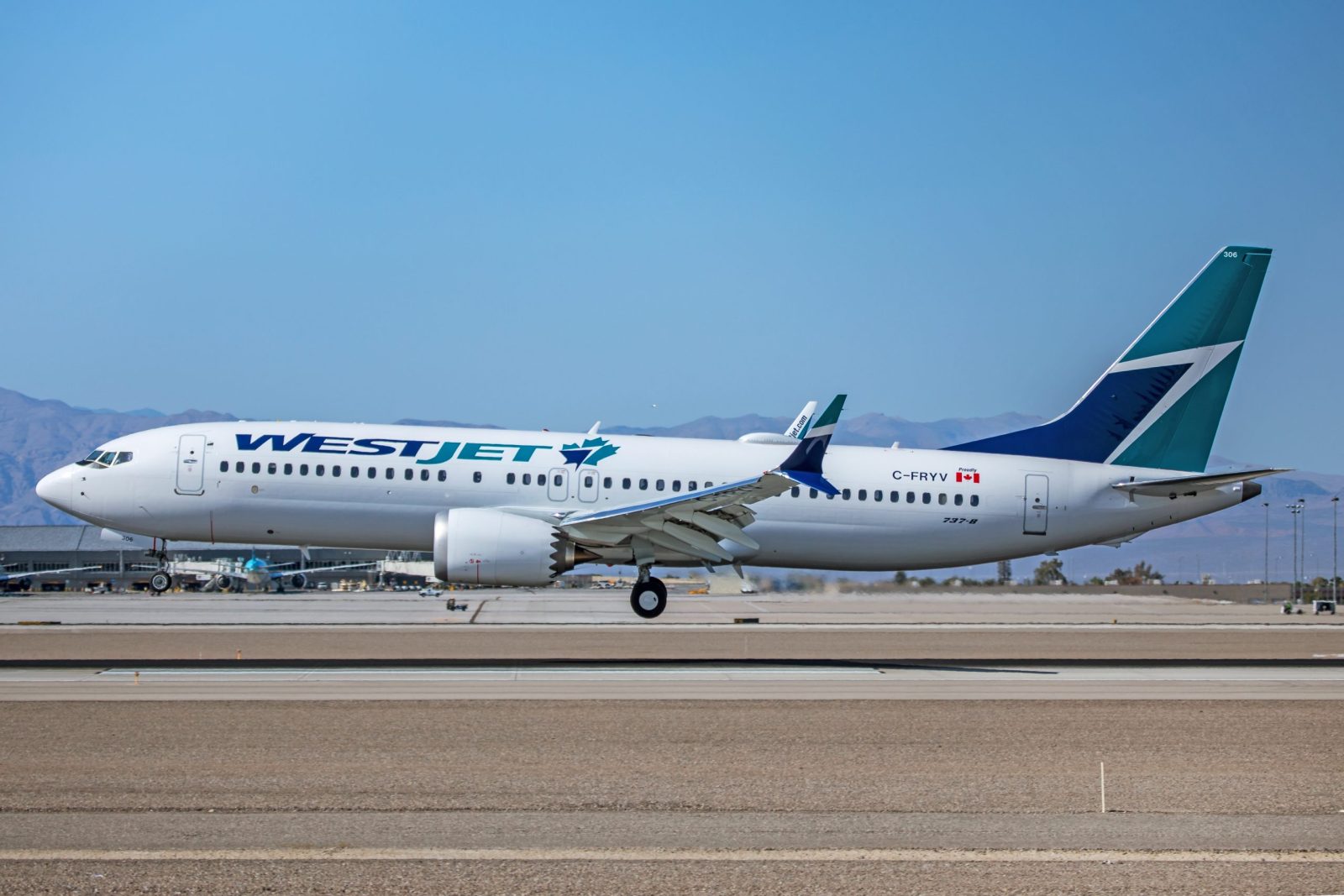
A WestJet Boeing 737 MAX 8 at Harry Reid International Airport in Las Vegas. (Photo: AirlineGeeks | William Derrickson)
Canada’s second-largest airline is suspending flights between the country’s two most populous cities. As first reported by CTV News, WestJet will not be flying between Toronto and Montreal during the upcoming winter season.
Canada’s Busiest Air Corridor
The route between Toronto Pearson International Airport and Montréal-Pierre Elliott Trudeau International Airport has historically been Canada’s busiest air corridor. Flights between these two airports are supplemented by service between Montreal and Billy Bishop Toronto City Airport, located in downtown Toronto.
WestJet has confirmed that it will be suspending flights between Toronto Pearson International Airport and Montréal-Pierre Elliott Trudeau International Airport for the winter 2023-2024 season, with a planned resumption in April of 2024. WestJet does not serve Billy Bishop Toronto City Airport.
In a statement to CBC News, the Calgary-based airline stated that the suspension is “as a result of performance and in alignment with our strategic direction to expand our presence in Eastern Canada this winter, with increased non-stop connectivity to Western Canada, as well as providing more affordable leisure and sun travel opportunities across Canada.”
The Toronto–Montreal market is currently dominated by Air Canada and Porter Airlines, with over 80 daily flights between the two carriers. Air Canada flies between Toronto Pearson and Montreal using a variety of aircraft ranging from its widebody Airbus A330-300s to 76-seat Embraer 175s operated by Jazz Aviation under the Air Canada Express brand. Porter flies between the two airports with its Embraer E195-E2 jets as part of its expansion into jet flying at Toronto Pearson. WestJet currently only operates a single daily flight between the two airports, down by 80 percent when compared to 2019 service levels.
Leisure carrier Air Transat and WestJet-owned Sunwing Airlines also operate a few flights between Toronto Pearson and Montreal each week during some parts of the year as well. At Billy Bishop Toronto City Airport in downtown Toronto, both Air Canada and Porter have service to Montreal using De Havilland Canada Dash 8-400 turboprop aircraft.
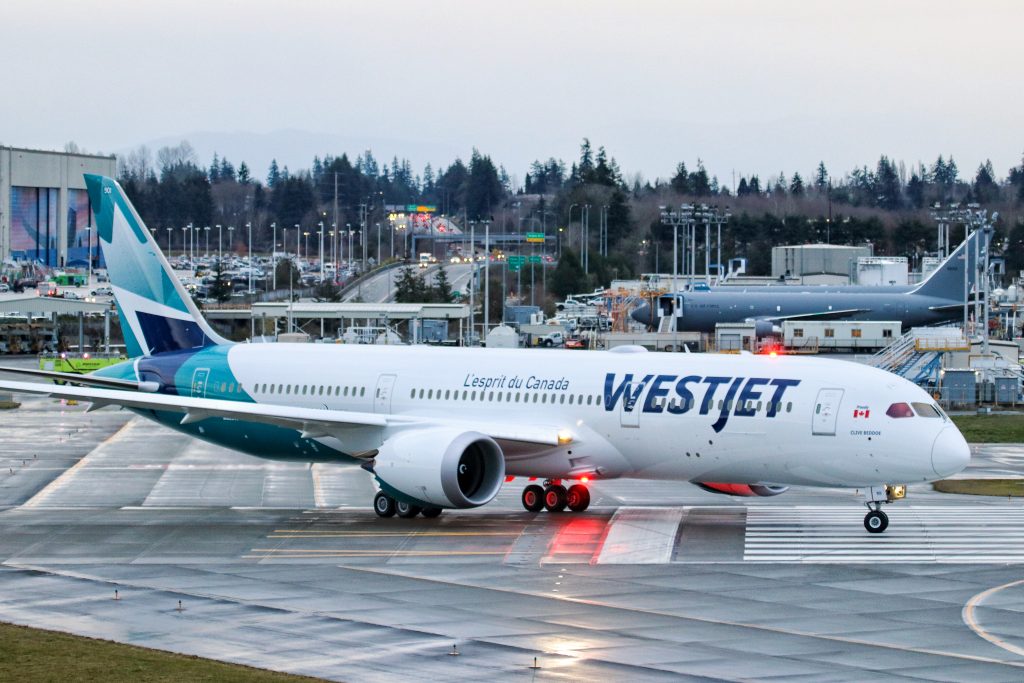
A WestJet Boeing 787 enters the runway at Paine Field in Washington. (Photo: AirlineGeeks | Katie Bailey)
Western Canada Consolidation
In June 2022, WestJet announced a new strategic path for the company following the appointment of the new Chief Executive Officer Alexis von Hoensbroech a few months prior. The airline indicated that it would be focusing on Western Canada and strengthening its base in its hometown of Calgary, Alberta.
The airline has since taken numerous steps towards this goal, such as consolidating its long-haul operations in Calgary and cutting service throughout Eastern Canada. For example, WestJet reduced is service between Toronto Pearson and Canada’s capital city of Ottawa – another busy Canadian air corridor – from three flights daily to one daily back in May.
WestJet’s moves are part of a shifting landscape in the Canadian air travel market. WestJet’s renewed focus in Calgary will allow Air Canada to expand its already massive presence in Eastern Canada. Porter Airlines’ aggressive expansion with its new jets has added a new competitor on many routes that were traditionally only served by one or two airlines. Newer low-cost carriers like Flair Airlines and Lynx Air are also driving up competition across the country. Challenges with labor and aircraft supply are also putting strains on the industry and are likely also contributing to WestJet’s network changes.
Andrew is a lifelong lover of aviation and travel. He has flown all over the world and is fascinated by the workings of the air travel industry. As a private pilot and glider pilot who has worked with airlines, airports and other industry stakeholders, he is always excited to share his passion for aviation with others. In addition to being a writer, he also hosts Flying Smarter, an educational travel podcast that explores the complex world of air travel to help listeners become better-informed and savvier travelers.
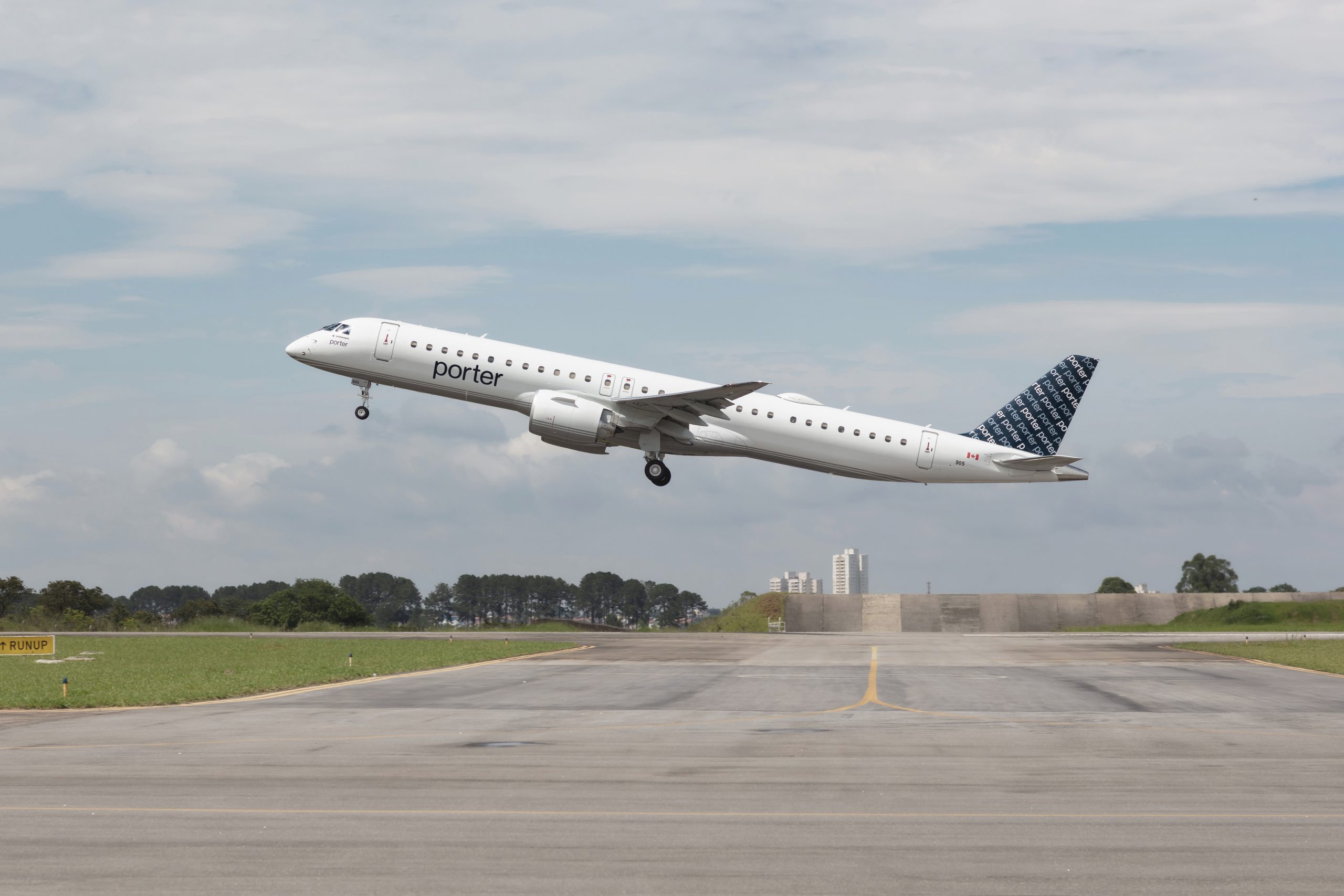
A Porter Airlines Embraer 195-E2. (Photo: Embraer)
Porter Airlines has announced its first transcontinental routes to the United States. The airline revealed plans to begin flying to Los Angeles and San Francisco in January 2024.
Airline’s California Routes
The airline has announced that it will start once daily service from Toronto’s Pearson International Airport to Los Angeles International Airport and San Francisco International Airport. Flights to Los Angeles will start on Jan. 16 and flights to San Francisco are slated to begin on Jan. 25.
The Toronto to Los Angeles flight will depart daily at 10:30 a.m. and arrive at 1:05 p.m. The return flight is scheduled to depart at 2:45 p.m. and arrive at 10:32 p.m. The daily San Francisco service is slated to depart Toronto at 10:30 a.m. as well, with an arrival time of 1:22 p.m. The return flight from San Franscico to Toronto is scheduled to leave at 2:50 p.m. and land in Toronto at 10:36 p.m.
These flights to California will be Porter’s first routes to the west coast of the United States. They will also be the longest U.S. routes in the airline’s history, with that title previously being held by the airline’s turboprop flights from Toronto and Ottawa to Melbourne Orlando International Airport in Florida.
Porter’s Ongoing U.S. Expansion
Porter has long had a presence United States. From its founding in in 2006 through 2022, the airline exclusively operated a fleet of Dash 8 Q-400 turboprops. The airline had a network of short-haul flights centered around its base at Billy Bishop Toronto City Airport in downtown Toronto. Porter turboprops have been a regular sight at airports like Boston Logan International Airport and Newark Liberty International Airport for many years.
However, the carrier had limited growth options due to the range of the Dash 8 Q-400 as well as Toronto Billy Bishop Airport’s size and prohibition on jet aircraft. This changed when the airline ordered 30 Embraer E195-E2 jets in 2021. After taking delivery of these aircraft, the airline began E195-E2 operations from Toronto’s Pearson International Airport.
Since then, the airline has rapidly expanded its operations at Toronto Pearson. It has added several domestic Canadian routes and announced a handful of U.S. destinations as well, including Miami, Tampa, Orlando and Fort Myers, all of which are in Florida. The latest route announcement is a continuation of Porter’s ambitious growth plans.
One of the key challenges for Porter at Toronto Pearson is competition with other carriers. In particular, Porter does not have the large connecting networks of well-established players like Air Canada and WestJet. As it grows its network though, Porter is starting to offer more connection options. With the introduction of its E195-E2 jets, Porter also brought in a revamped economy class product, and its onboard passenger experience has proven to be very competitive.
“Porter’s onboard experience focuses on providing economy travelers with service that is unmatched by any carrier in North America,” Kevin Jackson, Porter’s Executive Vice President and Chief Commercial Officer said, in a press release announcing the new routes to Los Angeles and San Francisco.
“We believe that every passenger deserves genuine hospitality and high-quality service that makes time onboard our aircraft something to look forward to,” Jackson added. “Our arrival in California will be welcomed by those looking for a new way to travel between the west coast and Canada.”
Andrew is a lifelong lover of aviation and travel. He has flown all over the world and is fascinated by the workings of the air travel industry. As a private pilot and glider pilot who has worked with airlines, airports and other industry stakeholders, he is always excited to share his passion for aviation with others. In addition to being a writer, he also hosts Flying Smarter, an educational travel podcast that explores the complex world of air travel to help listeners become better-informed and savvier travelers.
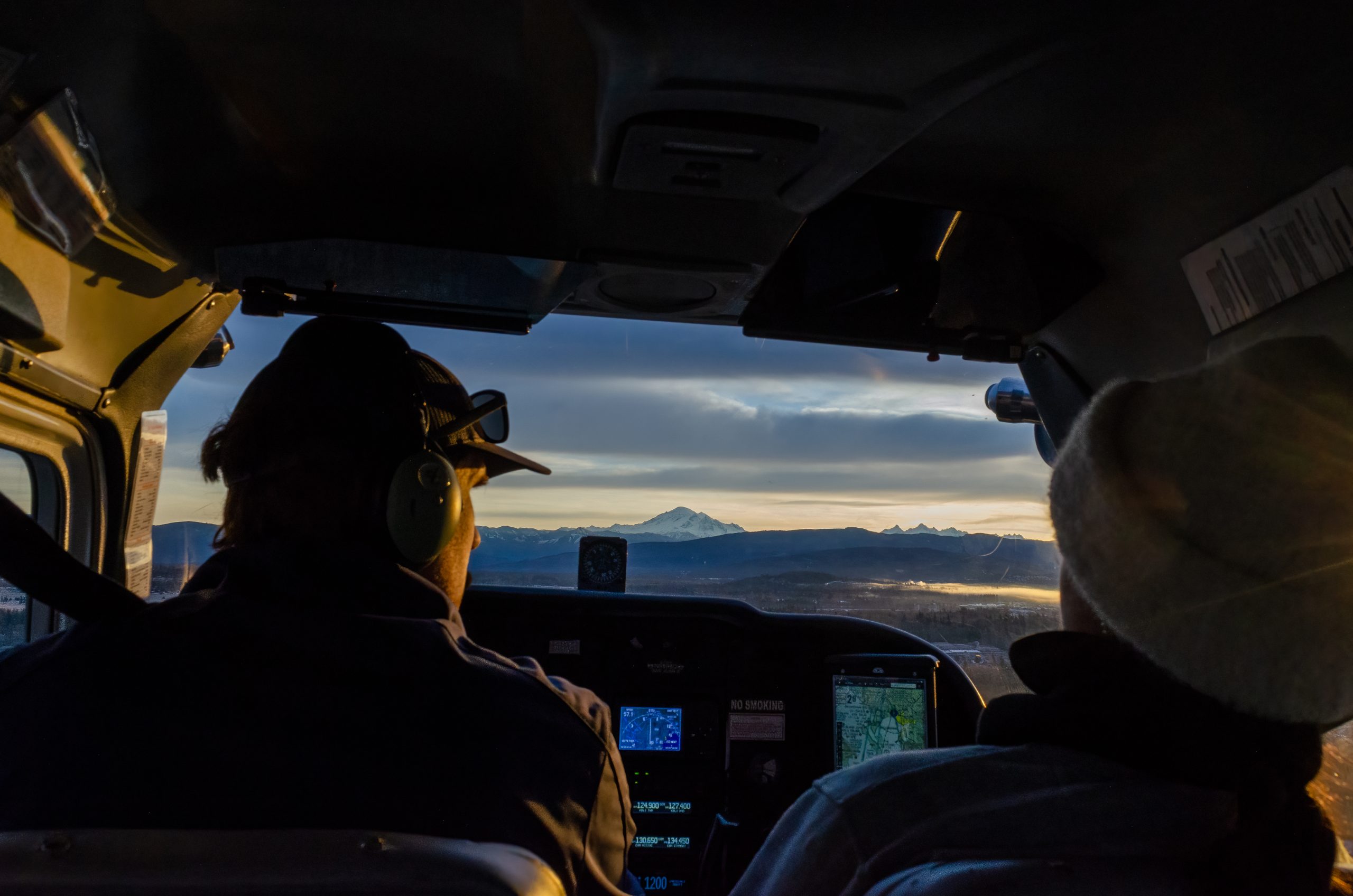
A glorious sunrise in the Cessna looking toward Mt Baker. (Photo: AirlineGeeks | Fangzhong Guo)
Florida-based flight training academy Skyborne Airline Academy has appointed Dan Peterson as its managing director. The September move follows the retirement of Ed Davidson and underscores Skyborne’s commitment to strengthening its presence in the U.S.
Peterson brings more than two decades of experience in senior educational roles to his new position at Skyborne. Most recently, he served as the president of Herzing University’s online division, where he achieved significant growth in student enrollment and launched five new programs.
Peterson holds a doctorate in curriculum and instruction from Utah State University and is a U.S. Air Force and Utah Air National Guard veteran with 23 years of experience. He retired from the military as a commander in 2008. Skyborne said his unique combination of educational expertise and military leadership makes him a valuable addition to its team.
Dan Peterson (Photo: Skyborne Aviation Academy)
Lee Woodward, CEO of Skyborne, expressed his confidence in Peterson.
“Dan’s career demonstrates a track record of success and growth, focused on helping the next generation to thrive,” Woodward said in a press release. “At Skyborne, he will play an active role in overseeing flight training operations and enhancing our growing network of airline partners. I believe Dan will be a valuable asset to our team as we continue our upward trajectory.”
Peterson also is enthusiastic about this new chapter.
“Joining Skyborne enables me to combine my passions for aviation and education and apply them to the ultimate combination—an academy that excels in developing pilots with character,” Peterson said. “I am looking forward to working with Skyborne’s CEO, Lee Woodward, and COO Ian Cooper to continue to open up flight training and genuine career options to the best and the brightest.”
Davidson, the former managing director at Skyborne, reflected on his tenure.
“Leading the Skyborne Vero Beach [Florida] team has been the highlight of my 50-year aviation career,” he said. “Since March 2022, there has been a 220 percent increase in students, with more than 300 individuals currently in training and 5,500 training hours per month. I wish Dan all the best in his new role and am confident that he will make a significant impact on Skyborne’s growth and development.”
Skyborne Aviation Academy boasts campuses in Vero Beach and Gloucestershire, U.K.
This story was originally published on AirlineGeeks’ parent site FLYING by Amy Wilder.
AirlineGeeks.com was founded in February 2013 as a one-person blog in Washington D.C. Since then, we’ve grown to have 25+ active team members scattered across the globe. We are all here for the same reason: we love deep-diving into the fascinating realm of the airline industry.
Joby’s Electric Air Taxi Is Now Flying with Pilots on Board
Joby Aviation’s preproduction prototype electric vertical takeoff and landing (eVTOL) air taxi has been flying for months, but never with pilots onboard.
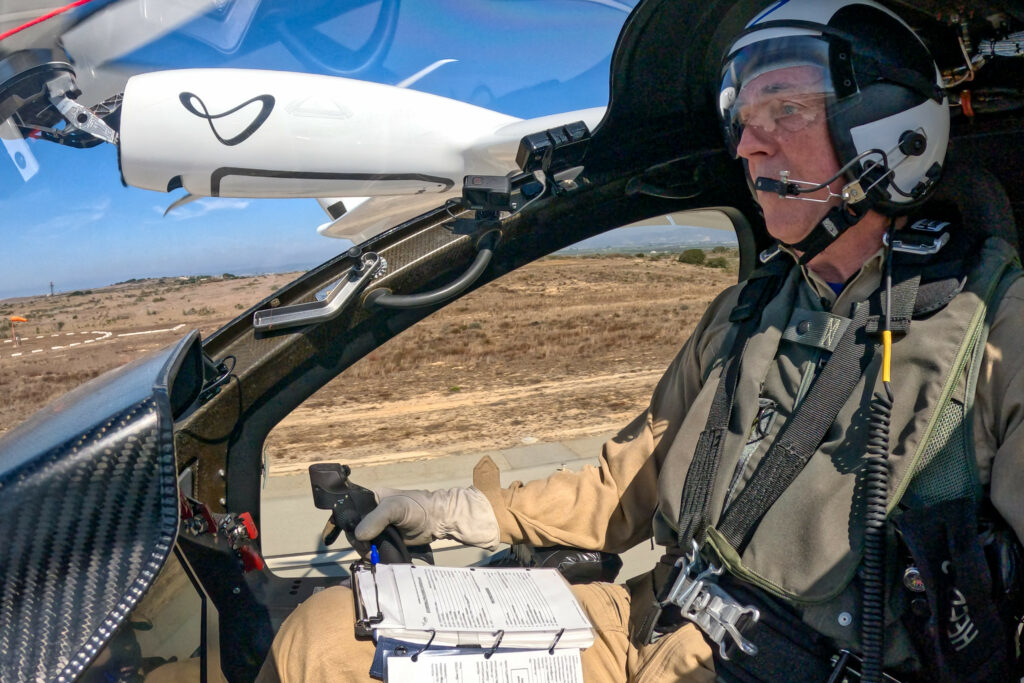
Joby experimental test pilot Zach Reeder conducts flight tests onboard the Joby air taxi in Marina, Calif. (Photo:: Joby Aviation)
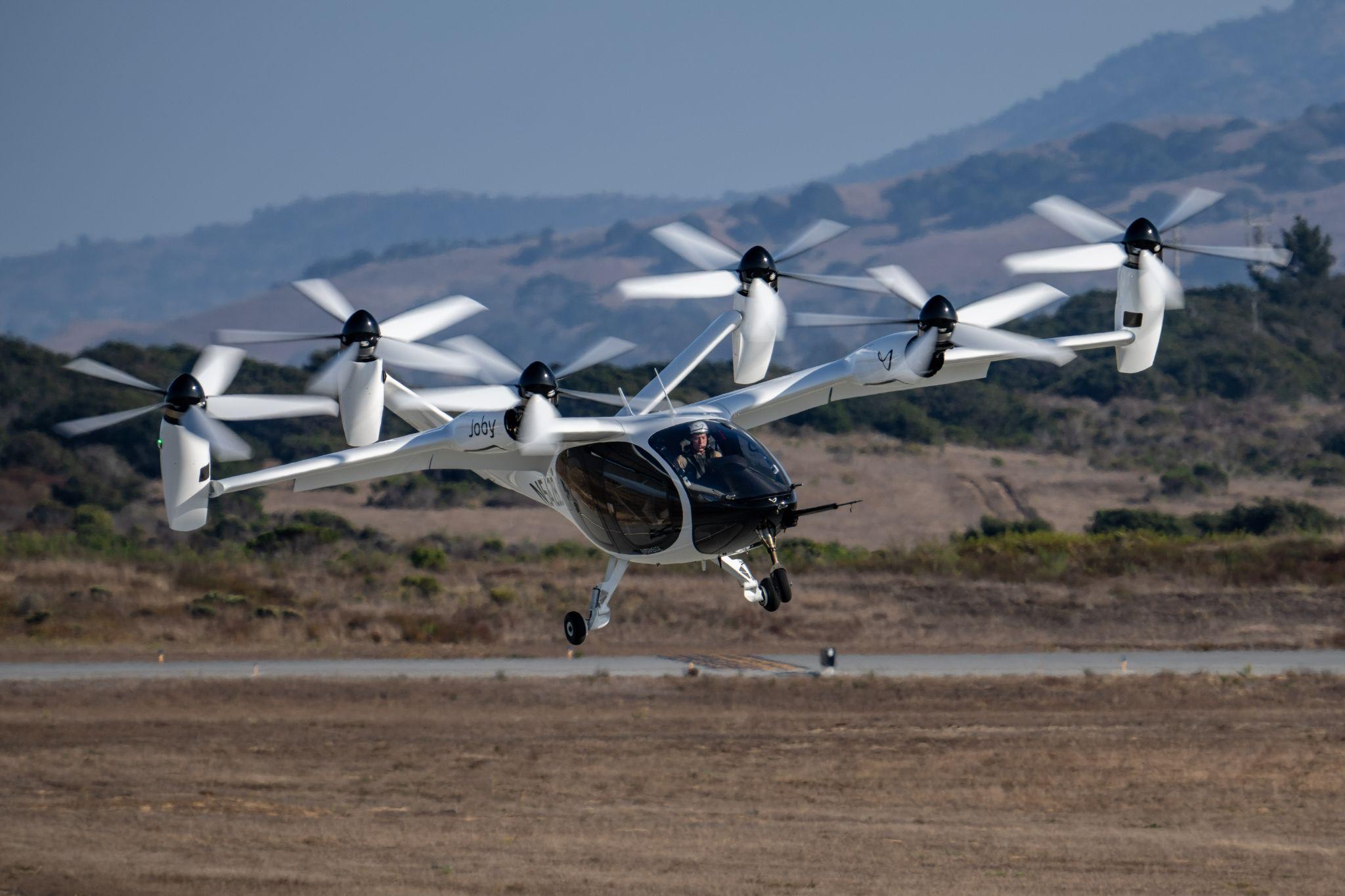
Joby Aviation’s preproduction prototype electric vertical takeoff and landing (eVTOL) air taxi has been flying for months since the manufacturer began flight testing in June. Now, the company’s test pilots have joined it in the skies.
On Wednesday, Joby revealed that four test pilots have now completed flights aboard its air taxi, marking the firm’s transition to crewed flight testing. The addition of onboard pilots is a major boon to Joby’s efforts to type certify the aircraft with the FAA. The initial crewed tests, which took place at the company’s pilot production facility in Marina, Calif., covered free thrustborne hovers and forward transitions to semi-thrustborne flight.
Joby’s tiltrotor eVTOL is designed to carry a pilot and four passengers over a distance up to 100 sm (87 nm), cruising at 200 mph (174 knots). The company says the aircraft’s quiet noise profile will make it barely audible within a city’s soundscape.
The recent flights build on the surprise delivery of the first Joby eVTOL to Edwards Air Force Base in California, originally scheduled for early 2024. There, Joby and Air Force pilots will evaluate the aircraft’s capabilities in settings similar to those it will face when it begins flying air taxi routes with Delta Air Lines. That service is expected to launch in 2025, beginning in New York and Los Angeles.
James “Buddy” Denham, Joby’s chief test pilot, led the pilot-on-board campaign, which was designed to gather data on the air taxi’s handling abilities and pilot control interface. Denham left the Naval Air Systems Command—where he pioneered a concept for aircraft carrier precision landings and led research and development of the Unified Control Concept, which was integrated into F-35B STOVL aircraft—to join Joby in 2019.
Joby test pilots, including James “Buddy” Denham (pictured), collected data on the air taxi’s control systems to gauge how simple it is to fly. (Photo: Joby)
Joby credited Denham as a major influence in the development of its own flight controls. The chief test pilot had some nice things to say about the company as well.
“Having helped design and test flight controls for a wide variety of aircraft, including all three variants of the F-35 Joint Strike Fighter, nothing compares to the simplicity and grace of the Joby aircraft,” said Denham. “After completing more than 400 vertical takeoffs and landings from the ground, it is a privilege to sit in the cockpit of our aircraft and experience firsthand the ease and intuitive nature of the design that the Joby team has developed.”
During testing, pilots assessed the ease of conducting maneuvers that will become routine when commercial operations begin. These included vertical takeoffs, acceleration and transition to forward flight, runway centerline tracking, and deceleration into vertical landings.
Joby said appraisals of the flights will aid its progress toward type certification, as well as its activities with the Air Force’s Agility Prime program. Agility Prime is the vertical lift division of AFWERX, the Air Force’s innovation arm. Earlier this year, Joby and Agility Prime extended their research and development contract, bringing its total value to $131 million.
Type Certification: On the Horizon?
Previously, Joby tested its eVTOL with pilots on the ground, using a ground control station equipped with state-of-the-art communications systems to guide it remotely. Those flights gave the company data on the aircraft’s performance in a wide array of operational conditions. But the beginning of crewed testing figures to be more consequential.
After pilot-on-board testing of the preproduction prototype is complete, the stage will be set for Joby to begin “for credit” flight testing with the FAA, using a full-scale production prototype. That model may be built at the company’s scaled manufacturing plant in Dayton, Ohio, which was first announced last month.
Dayton’s claim to fame is that the Wright brothers lived, worked, and opened the nation’s first airplane factory there (hence the Flyers mascot). It’s also home to Dayton International Airport (KDAY), where Joby will build its manufacturing plant on a 140-acre-site. The space is large enough for the company to one day install up to 2 million square feet of facilities. It is expected to produce 500 aircraft per year and create as many as 2,000 jobs.
Construction will begin next year, with full-scale operations scheduled for 2025. In the meantime, Joby will use nearby existing buildings to begin initial manufacturing activities. The goal will be to wheel the first service-ready aircraft off the production line within two years, in time for the company’s commercial launch with Delta.
In addition, Joby has commercial operational deals in place with Japan’s ANA Holdings and South Korea’s TMAP and SK Telecom to launch services in those countries. It also has an agreement with Uber—part of the 2020 acquisition of Uber Elevate—to integrate its ridesharing service into the company’s app.
However, all of this hinges on Joby’s ability to prove to the FAA that its air taxi is airworthy. Luckily, rivals such as Archer Aviation and Lilium are going through the same (lengthy) process. Archer, for its part, also received the FAA greenlight to begin flight testing its preproduction prototype in August. Lilium, meanwhile, is the only eVTOL manufacturer to obtain certification bases from both the FAA and the European Union Aviation Safety Agency (EASA).
The three firms—plus Boeing-owned Wisk Aero and Germany’s Volocopter—are all competing to be top dog in the advanced air mobility (AAM) industry, which is expected to take off soon with the FAA’s announcement of the Innovate28 plan for early eVTOL operations. Whichever firm achieves type certification first will realize a lot of lift.
This story was originally published on AirlineGeeks’ parent site FLYING by Jack Daleo.
AirlineGeeks.com was founded in February 2013 as a one-person blog in Washington D.C. Since then, we’ve grown to have 25+ active team members scattered across the globe. We are all here for the same reason: we love deep-diving into the fascinating realm of the airline industry.
An Etihad Airways A380 poses in front of a Singapore Airlines A380 at New York-JFK (Photo: AirlineGeeks | Shaquille Khan)
United Arab Emirates’ Etihad Airways has been expanding its network since the end of the pandemic. The airline has extended its route map again by adding the new flight services to Osaka, Japan; Copenhagen, Denmark; and Dusseldorf, Germany.
In addition, a new service to St. Petersburg will be launched on Oct. 29, and flights to Indian cities Kozhikode and Thiruvananthapuram will be launched on Jan. 01.
In the meantime, the airline will ramp up its services to European cities in November, such as Madrid and Milan. By popular demand, the airline will also scale up flight operations to Kuala Lumpur, Malaysia and Colombo, Sri Lanka.
“The new flights are the next important steps as we enhance our network delivering greater connectivity for our guests, and serving their demand for more opportunities to visit Abu Dhabi,” Antonoaldo Neves, Chief Executive Officer of the airline said.
Abu Dhabi-based airline launches the new route with an eye to attracting more visitors to the city. Earlier this year, Etihad and Emirates Airlines, its main rival, have signed a Memorandum of Understanding (MOU) to boost the country’s tourism. Both airlines expand their interline agreement and provide travelers additional itinerary options when visiting the country. Etihad touts the new routes could play a vital role in supporting Abu Dhabi.
The airline has recently awarded as a Five-star Global Airline by the Airline Passenger Experience Association (APEX) for the third consecutive year.
Meanwhile, Neves has revealed the airline’s strategy for expanding the network. The airline would suspend a route after falling short of making profit within three to six months, and it has leaned toward developing medium and long-haul flight in recent years.
In the meantime, Etihad aims to triple its passenger volume to 30 million and double its fleet to 150 aircraft by 2030. According to its website, the airline owns a fleet of 79 aircraft, ranging from the Boeing 787 Dreamliner to the Airbus A380.
High Hope For Chinese Market
Meanwhile, Etihad is set to introduce daily flights to Beijing and Shanghai soon. Flights between two countries has recovered to 91% of pre-pandemic levels in mid-September.
“We hope to expand Etihad Airways’ presence in China through China Eastern (Airlines)’ network,” Neves SAID. Etihad recently deepened codeshare agreement with China Eastern Airlines.
Earlier, the airline signed a MOU with China Southern Airlines as well. It came after the first flight between Abu Dhabi and Beijing Daxing Airport. Etihad has high hope for the Chinese market, expecting a strong recovery by next year and tripling its capacity from its current level within 18 months.
However, Etihad is facing a setback. As a result of the policy of Bangladesh, the flight to Dhaka will be suspended on Oct.29. Bangladesh requests the foreign airline needs to appoint a Bangladeshi-owned General Sales Agents. But the airline refuses to comply with the policy.