








Stories

Royal Air Maroc Celebrates 2 Years of Oneworld Membership

Royal Air Maroc Chief Finance Officer, Karim Benchekroun (Left) and Rob Gurney Chief Executive Officer of oneworld (Right) (Photo: AirlineGeeks | John Flett)

Royal Air Maroc officially joined the Oneworld global strategic alliance on 1 April 2020 but celebrations at the time were muted due to the Covid-19 pandemic. As Morocco’s flagship carrier marks two years of membership today the airline has recently held events to promote the second anniversary of the North African airline’s entry to Oneworld.

The airline chose Abidjan, Côte d’Ivoire and Lagos, Nigeria for the events in March and AirlineGeeks attended the latter. Representing Royal Air Maroc in Nigeria was Monsieur Karim Benchekoun the airline’s chief finance and support officer. Rob Gurney the chief executive officer of Oneworld made the trip to Nigeria after an alliance board meeting in Morocco.

Royal Air Maroc was first announced to be joining Oneworld in December 2018 and Mr. Gurney commended the airline and its staff on completing the integration into the alliance in fifteen months. The carrier adds 30 new destinations to OneWorld’s network, all of which are on the African continent. M. Benchekoun said that Oneworld was the perfect fit for Royal Air Maroc given the existing partnerships the airline had with Oneworld member airlines such as American Airlines and Iberia. However, the main reason for joining Oneworld was the lack of an African partner for the airline industry’s second global strategic alliance formed in 1999.

Nigeria is the largest country by population in Africa with just over 215 million people and with that number expected to exceed over 400 million by 2050 according to the United Nations, there is a burgeoning aviation market. M. Benchekoun announced that Royal Air Maroc had “big plans to develop the Nigerian market for obvious reasons” given the different types of markets that the country attracts: business, tourism, shopping.  The airline had previously operated services to the country’s capital Abuja and currently operates a daily service to Lagos, Nigeria’s commercial center to the airline’s Casablanca hub.

Royal Air Maroc’s Casablanca to Lagos service departs late evening and arrives in Nigeria early morning with a one-hour turnaround so may be perceived as not ideal for certain markets. The return arrival time back in Casablanca does however offer multiple connections to the airline’s U.S. and European services.

The airline operates a flexible capacity between Lagos and Casablanca with a mix of Boeing aircraft: the 737-800; 787-8 and 787-9. In addition to the late departure time from Casablanca Moroccans’ ability to obtain a Nigerian visa may also be seen as an impediment to growth within the leisure market. M. Benchekoun said that the airline would be seeking to minimize these barriers and in addition to talks with consulate staff on the visa issue was looking to “push for more slots with Nigerian Civil Aviation.” The director-general of Nigeria Civil Aviation Captain Musa Shuaibu Nuhu was present at a later event hosted by Royal Air Maroc and the Oneworld alliance.

With the Kingdom of Morocco re-opening to fully vaccinated tourists on 7 February M. Benchekoun added that demand across the airline’s network had recovered very quickly. “We are now at 70 percent of 2019 demand levels, at 100 percent of the 2019 levels in certain European markets. In terms of network recovery, we are at 85 percent, with a significant increase of aircraft use. We completely resumed our Africa network except for Luanda for the time being.”

Benchekoun said Royal Air Maroc has a 2022-23 strategy of “capacity focus and frequency” with new routes being added to a “medium-haul plan”. He noted that prior to the Open Skies agreement with the European Union Royal Air Maroc had a 55 percent market share of flights into and out of Morocco but this is now sitting at 32 percent. In March the airline began its inaugural service to Tel Aviv, Israel from Casablanca servicing an ex-pat community and opening up opportunities for business and leisure travel between the countries. The route began with an initial four-times per week flight schedule though further frequency is expected to be added soon.

The recent signing by the Kingdom of Morocco on 9 March of the ‘Revised Constitution of the African Civil Aviation Commission (AFCAC)’ and the ‘Memorandum of Implementation (MoI) of the Single African Air Transport Market (SAATM)’ may assist Royal Air Maroc in expanding frequency and markets across the continent to further assist the reach of the Oneworld alliance.

Morocco joins over 30 other African Union (AU) states that have joined SAATM and have opened up their markets to each other. SAATM seeks to remove restrictions in terms of frequency, capacity and granting to each other traffic rights that seek to enable intra-African transport connectivity and support the improvement of trade and tourism. These AU states represent a total population of more than 800 million people and account for 89 percent of the intra-African air transport market.


The author’s trip to Morocco and Nigeria was provided by Royal Air Maroc.

John Flett

John has always had a passion for aviation and through a career with Air New Zealand has gained a strong understanding of aviation operations and the strategic nature of the industry. During his career with the airline, John held multiple leadership roles and was involved in projects such as the introduction of both the 777-200 and -300 type aircraft and the development of the IFE for the 777-300. He was also part of a small team who created and published the internal communications magazines for Air New Zealand’s pilots, cabin crew and ground staff balancing a mix of corporate and social content. John is educated to postgraduate level achieving a masters degree with Distinction in Airline and Airport Management. John has held the positions of course director of an undergraduate commercial pilot training programme at a leading London university. In addition he is contracted as an external instructor for IATA (International Air Transport Association) and has been a member of the Heathrow Community Fund’s ‘Communities for Tomorrow’ panel.

Aeroméxico Increases Fleet, Could Suspend Flights to South Korea

Aeromexico Boeing 787
An Aeromexico Boeing 787 Dreamliner flares for landing. (Photo: AirlineGeeks | William Derrickson)

Air Lease Corporation (ALC), Aeroméxico’s main aircraft lessor, will lease nine Boeing 737 aircraft to Aeroméxico made up of two 737-8s and seven 737-9s. These aircraft will be delivered between July 2022 and August 2023, depending on ALC’s order book with Boeing. The deal comes after Aeroméxico said last week it would spend $5 billion over the next five years on improvements to both its fleet and customer services.

Thus, the Mexican airline expects to have 147 aircraft in its fleet by the end of the year. On the other hand, Aeroméxico also hopes to continue with the quality of its onboard service, differentiating itself from other Mexican airlines. For Aeroméxico, travelers seek the comfort of the flight, as well as acquiring better experiences during their trip.

Longer connections imply more travel time, and this is where the user seeks comfort, looking for operations that have less travel time. This market is the carrier’s objective, which is mainly concentrated on international operations. During 2020 and 2021, Aeroméxico was impacted by its competitors Volaris and Viva Aerobus, who took part in the Mexican market with their lower price strategy.

Despite this, Aeroméxico is confident that its differentiated service will recover the market it has lost.

Aeroméxico Could Suspend Flights to South Korea

The Mexican airline Aeroméxico is the only Latin American carrier that operates direct flights to Asia, its destinations being the cities of Seoul, Shanghai, and Tokyo. Aeroméxico began operations at Incheon International Airport, in South Korea on July 1, 2017. This route has been operated since its inauguration date aboard one of the Boeing 787-8 Dreamliner that the Mexican airline possesses.

Seoul was Aeroméxico’s third destination on the Asian continent after Shanghai and Tokyo. This route has been operated with 4 weekly flights, from Mexico City: Monday, Wednesday, Friday, and Saturday, and from Seoul: Monday, Wednesday, Friday, and Sunday. Although the COVID-19 pandemic caused many airlines to stop operating in Asia, Aeroméxico continued to operate its routes to this continent.

After almost 5 years of operating this route, Aeroméxico could suspend its flights to Seoul. According to a statement from the Union Association of Aviation Flight Attendants of Mexico, the CDMX-MTY-ICN flight AM90 would be suspended from next May. According to Milenio, this suspension would be motivated by avoiding the use of Russian airspace, since this has modified the extension of flight days and services.

The Union Association of Aviation Flight Attendants has requested Aeroméxico to modify the conditions of the cabin crew, such as recess of not less than 48 hours for the workers, payment of an extra day of per diem and that in the months of November and December the operation is escalated.

Juan Pedro Sanchez Zamudio

The three things Juan Pedro loves most about aviation are aircraft, airports, and traveling thousands of miles in just a few hours. What he enjoys the most about aviation is that it is easier and cheaper to travel around the world and this gives you the opportunity to visit places you thought were too far away. He has traveled to different destinations in North, Central, South America and Asia. Born, raised and still living in Perú, Juan is a lawyer, soccer lover, foodie, passionate traveler, dog lover, millennial and curious by nature.

Spirit Airlines Looks To Speed Up Check-in Process at Atlanta

Spirit Airlines A319
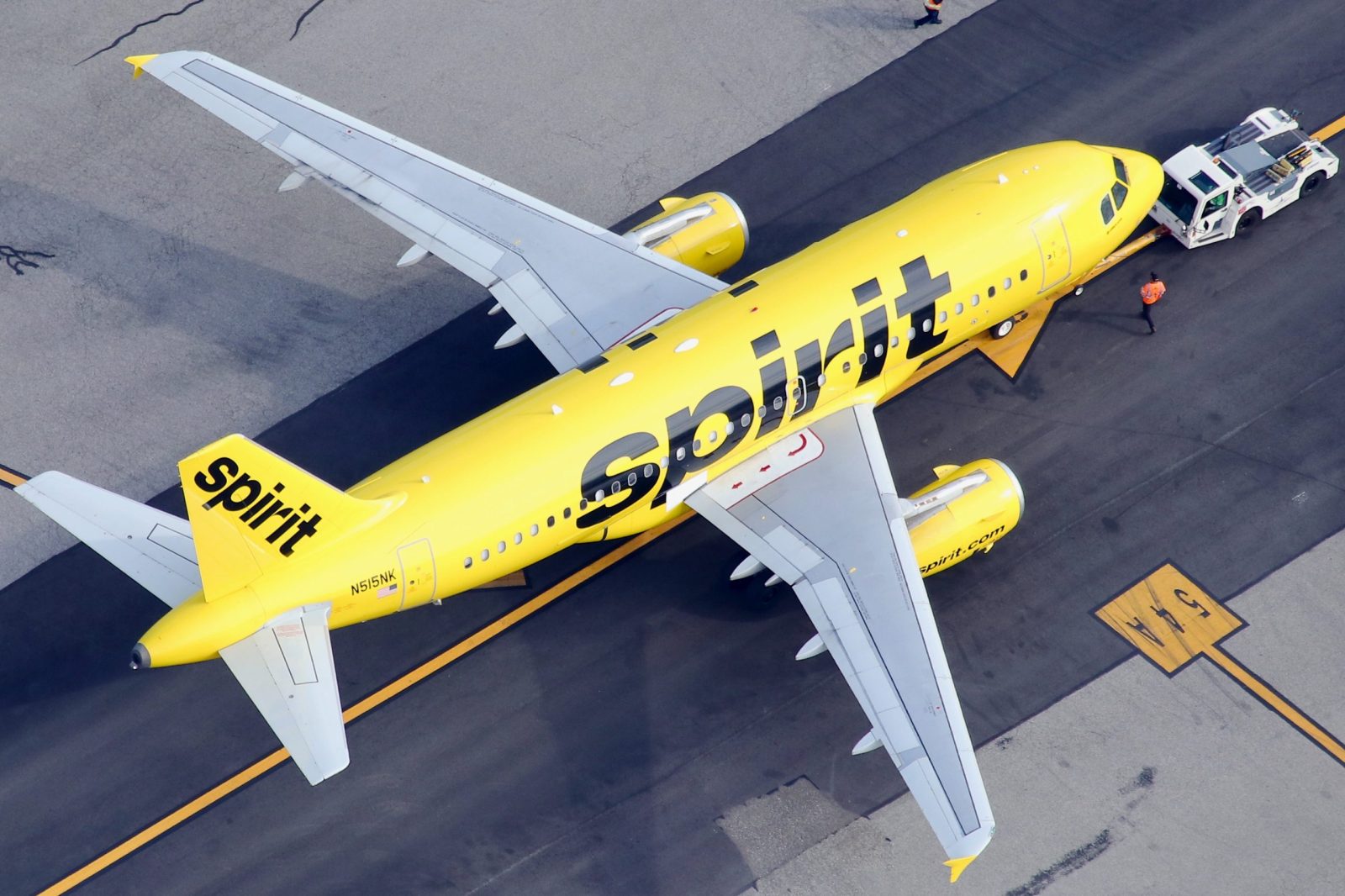
A Spirit Airbus A319 pushing back at LAX. (Photo: AirlineGeeks | James Dinsdale)

Spirit Airlines on Wednesday unveiled a new innovative way to speed up the check-in process at Georgia’s Hartsfield-Jackson Atlanta International Airport (ATL). Recognized as the “Best Airport Innovation” of  2021 by APEX/IFSA Awards, the new technology looks to streamline the check-in process by utilizing Spirit’s automated self-bag drop and biometric photo-matching system. 

The biometric photo-matching solution was first developed and introduced by the Miramar, Fla., based carrier and its partner, Materna Intelligent Passenger Solutions (IPS) in 2019 at Fort Lauderdale’s Hollywood International Airport. 

The system removes one point of contact at the airport through the use of a high-resolution 3D camera that connects to the Customs and Border Protection Traveler Verification System. The image from the gate is then matched against images from the CBP’s database. After the system has made the match, the gate will allow the passenger to board the flight, and they will also be marked as boarded in Spirit’s systems.

Spirit has taken the biometric photo-matching system one step further by combining it with an automated self-bag drop system. The self-bag drop removes a point of contact as customers are now able to check-in their luggage directly, no longer having to work with an agent.

More specifically, the solution will eliminate having to hand your government-issued identification card to an agent while checking in baggage by use of a biometric photo-matching system that compares a scan of government-issued identification with a photo of the guest for verification when dropping off the bags. The system utilizes software capable of analyzing key physical features on more than 50,000 forms of ID from nearly 200 countries. The software confirms the authenticity of an ID and rejects fraudulent documents as guests check their baggage.

Currently, this system is also operating at New York’s LaGuardia Airport (LGA), Chicago O’Hare (ORD) and Dallas Fort Worth (DFW), and will be fully operational at ATL following an initial testing period at ATL with both manual ID check and biometric opt-in.

Prior to the agreement of the Spirit and Frontier Airlines merger. Spirit was checking an annual daily average of 1,000 bags at their Atlanta location. Through the use of the integrated self-drop baggage and biometric systems, the average processing time is dropped to 70 seconds per guest, a reduction of 30 percent. 

How the Process Works

Customers begin by going to the Spirit’s respective kiosk area. From here, they will check in with the kiosk, tag their own luggage, and proceed to self-bag drops. Once at the self-bag drop, guests will scan their boarding pass and are then advised of the biometric option. They are given the choice to opt-in or opt-out of the self-bag drop. If a guest chooses to opt-out, they will proceed to agent-assisted service.

If they choose the “opt-in” option, they are then given instructions to scan their ID. The system will compare the ID photo with a facial scan captured by the onboard camera, and compare this data with the guest’s reservation details. From here, the system will either reject or accept the collected information. A successful match allows the customer to continue with the process by instructing them to place their bags on the conveyor belt. The unit will scan the bag and weigh it, and then it can accept payment for any additional services. From there, the guest may continue to TSA.

As Spirit continues to incorporate these units throughout its network, the quicker their guest’s check-in process will become. Spirit hopes the streamlined process will create satisfaction amongst its customers through ease and reliability of the system, ultimately fostering a better overall experience with the carrier. 


Chase Hagl

Chase Hagl grew up in Twin Falls, Idaho. His love and passion for Aviation landed him in Orem, Utah where he obtained a B.S. in Aviation Management with a minor in Business Management from Utah Valley University. Chase currently works as a flight attendant in Charleston, SC and is also the primary Inflight ASAP ERC representative for startup airline, Breeze Airways. His experience in the aviation industry spans back four years, working in areas including agriculture application, customer service, maintenance, and flight ops. In his free time, Chase enjoys road biking, astronomy, and flying.

Major Recommendations for Australian General Aviation

A Qantas A380 touches down in Sydney (Photo: AirlineGeeks | Hisham Qadri)

The Australian Senate’s Rural and Regional Affairs and Transport Legislation Committee has released its long awaited interim report. The report begins with a 12-item list of recommendations for the Australian general aviation industry, many of which highlight the Committee’s disappointment with the current direction and approach of the Civil Aviation Safety Authority (CASA).

Among the 12 items, the report recommends an independent review into CASA’s organizational culture and an independent industry complaints commission be implemented. The list of recommendations reflect the negative commentary of much of Australia’s aviation industry toward CASA, including the suggestion that CASA audit its framework so that it “aligns and complements the regulatory framework of other jurisdictions, specifically the US Federal Aviation Administration and New Zealand’s Civil Aviation Authority.”

CASA, Australia’s aviation authority and regulator, has been criticized for failing to promote a financially viable and safe aviation industry, and its “systemic, structural and process problems that exist within the organization,” illustrated by the failure of CASA to properly assist the Australian Transport Safety Bureau (ATSB) with a fatal general aviation accident in 2020. The ATSB was unable to complete a full investigation as a result of CASA not providing the requested information.

Recommendations To Improve General Aviation Industry

The report lists 12 major recommendations, summarised as:

  1. CASA review their cost recovery process and the clarity surrounding them, including how the costs are determined, and further consider caps on charges.
  2. CASA should, with the involvement of third parties, consider simplifying regulations, improve training of pilots in basic maintenance and permit them to do so, and review its controversial fatigue management system.
  3. CASA should streamline its licencing requirements to avoid duplicating and acquiring multiple licences.
  4. The Australian Government amend the Civil Aviation Act 1988 to include an obligation to support the Australian aviation
    sector to develop and compete nationally and internationally.
  5. CASA should audit its regulatory framework to align and complement the framework of organisations, like the FAA, where possible.
  6. CASA should explore opportunities for mutual recognition of international licences and qualifications.
  7. The Minister for Infrastructure, Transport and Regional Development instigate an immediate independent review into the organizational culture at the Civil Aviation Safety Authority. The review should be completed no later than Dec. 31, with the findings publicly reported.
  8. A new aviation Industry Complaints Commission be established as a statutory authority. The Commission should sit outside the organisational structure of and be independent from CASA. The new Commission should have the power to investigate and respond to
    complaints concerning CASA employees, the Director of Aviation Safety and the CASA Board, with financial support and reporting to Parliament.
  9. The Australian Government, as part of its Aviation Recovery Framework, initiates a holistic training review of aviation training pathways. This review should be conducted in consultation with representatives from across the commercial and general aviation sectors.
  10. The Australian Government should promote careers in aviation to support both the commercial and general aviation sectors, considering the broader aviation ecosystem.
  11. The Australian Government establish a legislative framework and associated guidelines for a Regional Aerodrome Infrastructure Fund. The Fund should be accessible to operators of regional and remote aerodromes, and should be provided with ongoing and long-term funding.
  12. The committee recommends the Australian Government ensures that representatives from the general aviation sector are regularly consulted as part of the modernisation of regulations under the Airports Act 1996.

Improving Australian General Aviation

The report, while primarily addressing CASA and its impacts on Australian general aviation industry, highlighted the downturn in Australia’s aviation over the period of national COVID-19 lockdowns and international flight restrictions. According to the report, Australia experienced a decrease of 67.7% in scheduled commercial flights between 2019 and 2020.

While the report is sobering, the recommendations aim to provide specific direction for the improvement of Australia’s aviation industry. The final report is due Oct. 20.

Mike Mangano

Mike’s love affair with flight and mechanical objects in the sky began at an early age, fascinated by space documentaries and the vintage Flight Simulator ’95. He currently works as an instructor for UAVs and is training to receive his Private Pilot Licence with the goal of working in manned flight instruction. An avid reader of all things aviation and manned space flight, Mike stays close to developments in aerospace while reminiscing and sharing the rich history of flight with others. He loves writing, engineering and science.

The View Aboard Tailwind Air’s First Flight of the Season Between New York and Boston

A Tailwind Air Cessna 208B. (Photo: AirlineGeeks | Katie Zera)

New York-based Tailwind Air began it’s seasonal New York Skyport to Boston Harbor service on March 25. The approximately one hour 30 minute flight is served by an amphibious Cessna 208B EX that seats eight passengers in addition to the crew of two pilots.

Tailwind Air’s primary seaplane base is the New York Skyport, which is situated near Manhattan’s lower east side on the East River between the Williamsburg Bridge and the Queens Midtown Tunnel.

The service departs the Skyport Marina and flies into a floating dock in the middle the Boston Main Channel between the Ted Williams and Lieutenant William E Callaghan Tunnels, adjacent to Logan International Airport. Passengers are met by the Boston Water Taxi Service, which takes them to the Fan Pier Park Marina.

The Boston water taxi service provided to passengers upon landing. (Photo: AirlineGeeks | Katie Bailey)

Tailwind Air invited AirlineGeeks to the season’s inaugural flight. We arrived at the Skyport Marina after taking the subway and a short walk. There is a parking garage attached to the Skyport Marina building, and a bus service is also available. It was an easy check-in that took about a minute.

The newer Amphibious Caravan arrived on time to pick us up on the dock. Avgeeks will rejoice in the giant G1000 screens and the ease of cockpit viewing the aircraft offers. The other feature of interest for the aviation crowd — sometimes you fly directly over LaGuardia Airport and when landing in Boston you come in right next to Logan Airport, which is great for spotting.

The cockpit view aboard our Tailwind Air flight. (Photo: AirlineGeeks | Katie Bailey)

The flight to Boston took about an hour and ten minutes due to a 25 knot tailwind. Landing in Boston Harbor, you land and taxi to a remote dock. The water taxi arrived almost at the same time we deplaned. It is only about a three to five minute ride from plane to Fan Pier.

The reverse flight was equally efficient, although that tailwind turned to a headwind, and the flight took a bit longer. We sat at the front of the plane on the way back making it easy to see that the flight seems to stay between 3,500 and 4,500 feet with extremely gentle ascent and decent rates making it easier on those suffering spring allergies or sinus/ear pain.

Landing in New York aboard a Tailwind Air Cessna 208B. (Photo: AirlineGeeks | Katie Bailey)

The company will fly four daily trips Monday through Friday, with weekend flights coming to the schedule soon. They boast a time saving trip of 40-60% over taking common commercial planes or trains, part of the time savings is their short arrival times, they ask you arrive no later than 20 minutes prior to departure, no need to clear long security lines or long distances to gates. They are currently the only company servicing these routes.

In addition to servicing New York and Boston, they also fly to Bridgeport, Conn. East Hampton Airport, Nantucket Airport and Shelter Island.

Tailwind Air was founded in 2014 flying scheduled and chartered flights. It is based at Westchester Airport and Sikorsky Memorial Airport. They have grown to a fleet of 16 jet and prop planes.

The view out the front of our Tailwind Air Cessna 208B. (Photo: AirlineGeeks | Katie Bailey)

AirlineGeeks.com Staff

AirlineGeeks.com was founded in February 2013 as a one-person blog in Washington D.C. Since then, we’ve grown to have 25+ active team members scattered across the globe. We are all here for the same reason: we love deep-diving into the fascinating realm of the airline industry.

Ten Days After the Fatal Crash of China Eastern MU5735, What Do We Know So Far?

China Eastern 737-800
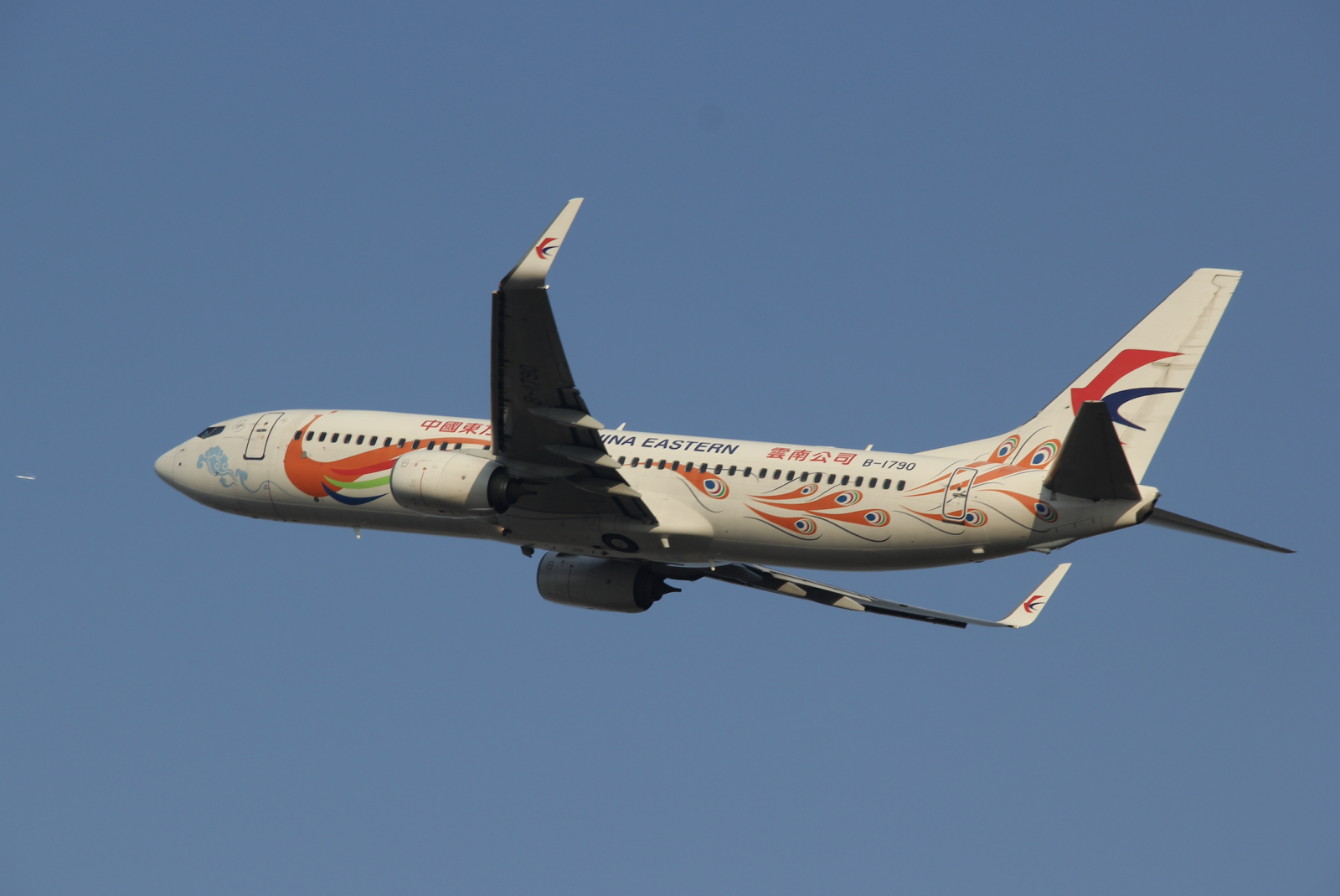
A China Eastern Boeing 737-800 (Photo: AirlineGeeks | Lei Yan)

On March 21, a China Eastern Boeing 737-800 crashed in mountains near Wuzhou, China. The aircraft, B-1791, was operating flight MU5735 from Kunming to Guangzhou. As of this moment, all 132 passengers and crews onboard were confirmed lost in this tragic accident. Both black boxes, the flight data recorder (FDR) and the cockpit voice recorder (CVR) have been recovered from the crash site. However, the cause of this accident still remains unclear at this time.

The Crew and Aircraft

The aircraft operating MU5735, B-1791, was a Boeing 737-800 delivered to China Eastern in 2015. At the time of the flight, the aircraft only operated 8,986 flights with 18,239 flight hours. China Eastern is one of the largest carriers in China, and the company has rich experience operating this type of aircraft. The carrier maintained a good track record, with no fatal crashes in 18 years.

According to China Eastern, the nine crew members onboard were all highly skilled and experienced. The captain had 6,700 hours of Boeing 737, and the first officer of the day had over 31,000 flight hours in a variety of aircrafts. A flight cadet was also on board as a second officer with 500 flight hours.

China Eastern grounded all of its Boeing 737-800 fleet as a precautionary measure. Other carriers in China are operating the aircraft as usual.

According to the air traffic controller at the time, MU5735 did not send any distress signals between the time it started to dive and crashed into the mountains. The controller noticed the unusual descent and repeatedly called the crew over the radio. However, there was no response.

From The Crash Site

Both black boxes, the FDR and the CVR, have been recovered from the crash site. Officials say that the exterior of both recorders is severely damaged, and they have been sent to experts in Beijing for decoding.

DNA of all 132 passengers and crews were identified from the crash site, along with a handful of their personal belongings. Authorities organized their families to visit the site. Nobody on the ground was injured or killed.

There were no signs of explosives found on the crash site. The evidence shows that the aircraft was likely not brought down by a terrorist attack.

The aircraft was completely disintegrated into pieces because of the severe impact. According to the videos released to social media, the aircraft appeared to be completely vertical just moments before impacting the ground. However, a rare edge of the aircrafts winglet was found 10 kilometers away from the crash site. Experts are trying to use all those clues to paint a picture of what could have caused MU5735 to take a fatal dive.

International Partners

As the manufacturers country, The United States expressed its condolences to the families of the deceased and committed to helping the Chinese authorities to investigate the accident. Air China has dispatched charters in recent days to Washington DC and Seattle. Charters appear to be chartered flights for Boeing and National Transportation Safety Board (NTSB) investigators. Chinese authority has already issued visas to the NTSB investigators and experts. Of course, in the same way that people involved in car accidents use a car accident lawyer, we would expect the family of those involved to obtain legal advice.

Lei Yan

Lei is from Inner Mongolia, China, and now lives in Guangzhou. He grew up in an aviation family, where his passion began. During his time at Penn State University, he studied Industrial Engineering specializing in operations research, and he graduated with an honor’s thesis on airport gate assignment optimization. Now, he is a Purchasing Manager with Procter & Gamble. In his free time, he enjoys flying, reading, and wandering around the city.

Ethiopian Airlines CEO Tewolde GebreMariam Retires

An Ethiopian Airlines Boeing 787-8 Dreamliner. (Photo: Wikimedia Commons)

Last week, Ethiopian Airlines confirmed that CEO Tewolde GebreMariam has taken early retirement after more than a decade at the helm.

Tewolde Gebremariam, through a correspondence with Reuters, said last Wednesday he had resigned from his position which he held for 11 years, to focus on his medical treatment. He has been receiving medical treatment in the U.S for the past six months.

GebreMariam became the CEO of Ethiopian in January 2011 at a time when the airline operated around 33 aircraft. Over the past decade, its fleet has increased to 120 aircraft — with a further 36 on order.

His retirement as the CEO of the largest African airline is the latest in a leadership change at the continent’s largest carrier, and the new executives are tasked with driving the airline’s recovery in the post-pandemic time period.

Under GebreMariam’s leadership, the airline has grown by fourfold in all measurements and built more than USD 700 million worth of vital infrastructures like Africa’s biggest hotel, Cargo terminal, MRO hangars and shops, Aviation Academy and Full Flight Simulators.

His career also included a win for a number of accolades including “African CEO of the Year” and “Best African Business Leader.” GebreMariam has been at the airline for 37 years.

Airline’s New CEO

Meanwhile, Mesfin Tasew Bekele has been named as his replacement. He has 38 years of experience in airline management and operations. He has been the CEO of Lomé, Togo-based ASKY Airlines – a private multinational passenger airline serving west and central Africa where Ethiopian Airlines is a 40% shareholder since 2021.

Prior to that, Bekele also served as Ethiopian’s CCO from 2010 until leaving for ASKY.

Speaking on his appointment, Mesfin Tassew said, “I am honored and humbled to be appointed as the Chief Executive Officer of Ethiopian Airlines Group which I have been serving for nearly four decades in various positions. My new role gives me the opportunity to carry on with the fast and profitable growth of our beloved airline and take it to the next level. I call on all my colleagues at Ethiopian to join hands and forge ahead for further success.”

OAG Schedules Analyser data shows that capacity increased from 8.3 million seats in 2012 to 21.5 million in 2019, during GebreMariam’s time in charge,

However, passenger capacity dropped to 11.8 million due to the coronavirus-induced travel slow down in 2020, which then rebounded to 14.8 million last year. Operational figures from March 2022 show that the carrier is operating about 1.3 million monthly seats — about 77% of the total offered in March 2019 before the pandemic

In terms of destinations, Ethiopian is currently flying to 114 destinations around the world from its hub in Addis Ababa, Ethiopia.

Victor Shalton

Victor Shalton's love for aviation can be traced to when he was 11-years-old. As a seasoned aviation writer, he takes pride in providing the best aviation coverage around the globe and is passionate about advancing his skills in the aviation space. In addition, he loves travelling, writing, arts and while his speaking engagements have taken him around the world, he is proud to call Nairobi home.

London’s Gatwick Airport Reopens South Terminal

Looking out at an easyJet aircraft at London-Gatwick (Photo: Gatwick Airport)

London Gatwick Airport’s South Terminal has resumed its services on Mar. 27 — after a 21-month hiatus. According to the airport, it handled 570 flights, which was an increase from 300 flights a day, after the reopening of the South Terminal.

The South Terminal has been closed since Jun 2020 as a result of weak travel demand due to the pandemic.

“Reopening our South Terminal and the increase in the choice of flights our airlines are offering is also great news for our local communities, particular people and their families who rely on the airport for their livelihood and also a large number of support and supply businesses that demand on a successful airport,” Stewart Wingate, CEO of Gatwick said.

In the wake of the South Terminal’s reopening, the airport has created 5,000 jobs across the airport and needed to hire 400 employees.

“This is an important moment, not only for Gatwick but for the whole aviation sector,” Robert Courts, Aviation Minister, said.

Following the U.K. government has scrapped the travel restriction on Mar. 18. The former second busiest airport is expecting a strong travel demand in summer. According to Gatwick, travelers can fly to over 30 long-haul destinations this summer.

After the pandemic, British Airways will resume its short-haul operations with 18 aircraft flying 35 routes under its brand-new Euroflyer at Gatwick. Meanwhile, EasyJet has leased British Airways’ slots — operating the greatest capacity at London’s Gatwick Airport with 120 routes and utilizing 79 aircraft.

Also, Air Transat is going to start operating in Montreal, Canada and Quebec, Canada in May. Gatwick will become the only airport in London to provide direct services to Quebec, Canada.

Earlier, Norse Atlantic Airways, a new Norwegian carrier, secured the slots at the airport, but the routes and date of launching remain uncertain due to the invasion of Ukraine. The new carrier has initially expected to start its first flights in June.

Gatwick has become the third busiest airport in the nation after the pandemic following London’s Heathrow and Stansted. It handled 6.2 million passengers in 2021. Despite facing a significant drop in passenger capacity, the airport proposed a second runway. If the project is approved, the airport can handle 75 million passengers by 2038.

Nationwide Airtravel Rebound

Gatwick is not the only sector to experience recovery. London City Airport one of Gatwick’s rivals recorded its fourth consecutive busiest week. The airport has seen the return of business travelers after easing the travel restrictions.

Meanwhile, in response to the ease of travel restrictions, Manchester, U.K. Airport has announced the gradual reopening of Terminal Three on Mar. 27. and the aircraft will resume operating from both runways.

However, Manchester, U.K. Airport has been experiencing a shortage of staff during the demand surge for international travel. The travelers have been suffering from the long queue for passport control, check-in and baggage reclaim. Manchester airport has apologized to the travelers who were affected — anticipating that the current situation couldn’t be solved for several weeks.

Opinion: A Look into Qatar Airways’ Adoption of Avios

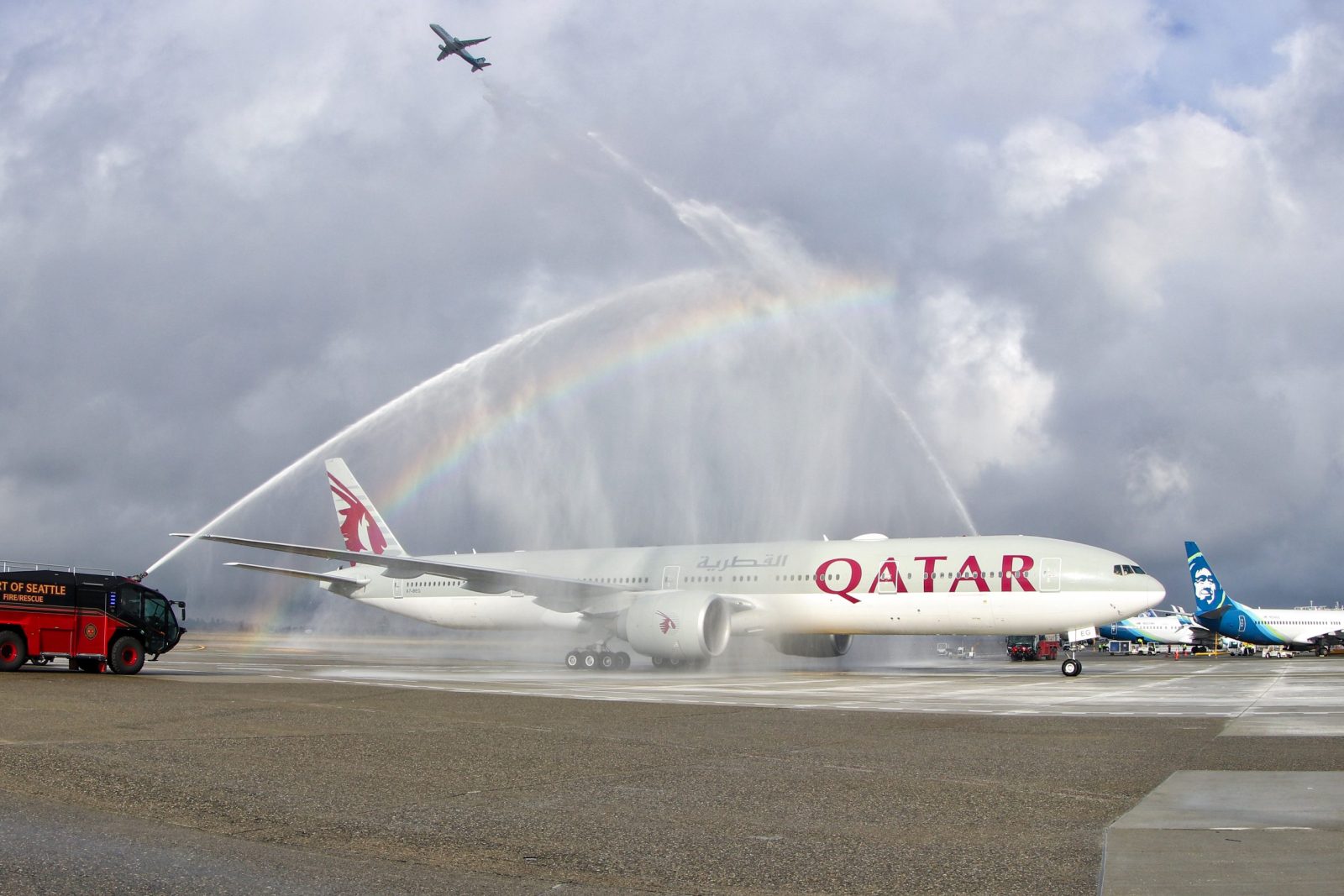
A Qatar Airways Boeing 777 (A7-BEG) receives a water cannon salute as it arrives in Seattle. (Photo: AirlineGeeks | Katie Zera)

Last year,  I wrote about how Qatar Airways has a lot of potential with its loyalty program. The carrier had made a number of positive changes to its loyalty program during a time when a lot of airlines were cutting back on benefits and subsequently devaluing their programs.

Earlier this year in February, Qatar Airways announced that the airline will drop its QMiles and instead will be using Avios — the same loyalty program currency used by the International Airlines Group (IAG) carriers such as British Airways and Iberia. This made sense given that Qatar Airways owns a quarter of IAG.

There were some mixed thoughts about this. British Airways used Avios as their loyalty program currency and it wasn’t that compelling. High redemption costs and high fuel surcharges and taxes made the program relatively unattractive. There was concern that Qatar Airways may follow the same route as British Airways since they’d both be using Avios. However, it’s pretty clear now that Qatar Airways has realized its full potential when it comes to offering a valuable loyalty program.

Surcharges

Fortunately for consumers, this turned out to not be the case. The adoption of Avios did not mean that Qatar Airways would also be adopting British Airways’ loyalty business model.

Qatar Airways is charging some surcharges, but they’re relatively modest and in the hundreds of dollars that often come from redeeming Avios in the British Airways program. This is probably one of the biggest positives to come out of the program. This really makes it compelling for people to put effort into accruing Avios in Qatar Airways’ program because it genuinely provides a better alternative than certain other airlines.

Earning and Using Miles

In addition, there are a number of other benefits that come out of this switch to Avios.

The first and most notable is that Qatar Airways is now offering a commitment that on every flight, they will have at least 2 premium cabin award seats and 5 economy award seats available. This increases opportunities for frequent flyer program members to use their miles.

Over the past couple of months, Qatar Airways has made a concerted effort to improve its loyalty program and make it more relevant to people outside of its home base in Qatar. The airline offers a great product when it comes to flying but in many cases, the loyalty program was lacking. These recent changes are really changing the dynamic. The folks at Qatar Airways are figuring out how to leverage their brand through the loyalty program to drive people to Avios and therefore Qatar Airways.

In the United States, Avios is not a foreign loyalty program and is a common, popular mileage program for frequent fliers to use when planning a trip. People may already have Avios from flights flown on British Airways or Iberia.

In addition to that, it’s considerably easy for people to jump into the Avios program at Qatar Airways because people with points in banking and credit card loyalty programs can easily transfer their points into Avios to redeem, for flights with Qatar Airways.

This instant start with Qatar Airways allows someone who doesn’t regularly fly with the airline to build up a balance and start redeeming right away.

It took Qatar Airways some time to put the pieces together. However, they have finally realized their full potential and have put together a highly compelling loyalty program for people in both North America and Europe to easily participate in during their travels.

Hemal Gosai

Hemal took his first flight at four years old and has been an avgeek since then. When he isn't working as an analyst he's frequently found outside watching planes fly overhead or flying in them. His favorite plane is the 747-8i which Lufthansa thankfully flies to EWR allowing for some great spotting. He firmly believes that the best way to fly between JFK and BOS is via DFW and is always willing to go for that extra elite qualifying mile. Hemal's opinions are his own and do not reflect those of his employer.

Breaking: Southern Airways Express Acquires Air Choice One

The logos of each airline, on their respective Cessna 208B Caravan (Photo: AirlineGeeks | Joey Gerardi)

Palm Beach, Fla.-based Southern Airways Express announced it is acquiring St. Louis, Mo.-based Air Choice One. This announcement also comes less than a month after major EAS carrier SkyWest requested to terminate 29 Essential Air Service cities around the country on March 10. While the deal hasn’t officially been approved by the DOT, the airline believes it will not have any regulatory difficulty as the carriers do not overlap on any routes or in any cities.

In a press release provided by the Southern, the airline said the move will “strengthen the Essential Air Service offerings to the marketplace.”

Although the Air Choice One branding will be retired soon, the carrier’s operating certificate won’t be terminated any time soon and will continue to operate under Air Choice One’s airline code, 3E.  The three cities that Air Choice One currently operates in will be rebranded as Southern Airways Express by mid-Summer.

Air Choice One Cessna 208’s in Fort Dodge, a city they no longer fly to (Photo: AirlineGeeks | Joey Gerardi)

In addition, passengers to those former Air Choice One cities will be able to take advantage of Southern’s ticketing and baggage agreements with Alaska, American and United Airlines around mid-summer as well. Air Choice One doesn’t have any interline or codeshare agreements. Current Air Choice One Chief Executive Officer Chane Storz will join the Southern Airways Express team as the Executive Vice President.

“This is yet another example of how Southern quickly adapts to the changing marketplace, Air Choice One has an incredibly positive reputation,” Southern Chairman and CEO Stan Little said in the statement. “So, combining their leadership team and assets into our company will allow us to quickly respond to the immediate need of providing affordable and reliable air service to more of rural America.”

This is the fifth airline Southern Airway Express has acquired in its short nine-year history.

Southern Airways Express was founded in 2013, and only a year later it acquired its first airline, Executive Express Aviation. With this acquisition, the airline gained an FAA charter certificate. In 2016, the company acquired Sun Air Express, which gave the carrier many of its currently operating EAS cities in the Northeast. With this merger, the company gained nine Piper PA-31 Navajos, which were soon retired in favor of Sun Air’s Cessna 208s, which are still with the airline.

Southern Airways Express current EAS cities in the northeast United States (Photo: Southern Airways Express)

In 2019, the company acquired Hawaii-based Mokulele Airlines, which is still operating as a separate brand in the islands and is now a parent company of Southern Airways Express. Although the exact number is unclear, this merger gave the Southern a total of at least 15 Cessna 208’s that Mokulele now uses in its Hawaii operations.

Mokulele Cessna 208’s in Honolulu (Photo: AirlineGeeks | Joey Gerardi)

The fourth merger happened in the early days of the pandemic — March 2020. Southern acquired another Hawaii-based airline, Makani Kai Air, merged its operations with the Mokulele’s Hawaii bases, and painted those aircraft into the Mokulele livery. The airline gained six Cessna 208’s from this deal, and it also took hold of a few King Air 300s and a single Piper PA-31. Both of the latter types have been retired since 2020.

This most recent acquisition will give Southern Airways Express 12 more Cessna 208s and two Beech-1900s. These additional Cessna 208’s will bring the total number of aircraft operating under Southern Airways Express up to nearly 50. The total fleet consists of three King Air 200s and two Saab340s, while the remaining nearly 45 aircraft are all Cessna-208s. The airline mentioned that the Air Choice One’s B1900 may stick around for a few weeks, but with the new Saab340 at Southern, the B1900 is not part of the airline’s long-range plan.

A Southern Airways Express Cessna 208 (Photo: AirlineGeeks | Joey Gerardi)

This will also bring the number of destinations served by the carrier up to 41 cities and with 222 peak day departures. The airline will only be gaining three new destinations — St. Louis, Nashville, and Jonesboro, Ark. the latter of which is an EAS city — and two routes from Air Choice One.

The airline’s destinations will stretch from Nantucket in the northeast to Honolulu in the southwest. The airline operates hubs in Dallas, Denver, Honolulu, Kahului, Los Angeles, Memphis, Pittsburgh, and Washington D.C. This number also includes flights under seaplane airline Tailwind, which operates a hub in Manhattan and partners with Southern Airways Express on the routes.

Southern Airways Express current route map, not including Air Choice One cities (Photo: Southern Airways Express)

Despite the large number of destinations it operates and the complexity of its network, the airline has consistently been ranked as one of the most reliable and on-time airlines in the country, completing 99.3% of its nearly 64,000 annual flights on time, excluding issues due to weather.

While the airline said it cannot disclose its strategy prior to the EAS bid deadline, the company did tell AirlineGeeks that, regarding the 29 EAS communities SkyWest to which has announced it will terminate service, “It is highly likely that Southern will bid on a majority of these cities.”

Joey Gerardi

Joey has always been interested in planes for as long as he can remember. He grew up in Central New York during the early 2000s when US Airways Express turboprops ruled the skies. Being from a non-aviation family made it harder for him to be around planes and would only spend about three hours a month at the airport. He was so excited when he could drive by himself, the first thing he did with his driver's license was get ice cream and go plane spotting for the entire day. He graduated from Western Michigan University in 2022 with a B.S. in Aviation Management & Operations and a Minor in Business, and currently works for a major airline in his hometown.
Sign-up for newsletters & special offers!

Get the latest stories & special offers delivered directly to your inbox

SUBSCRIBE

Uh-oh! It looks like you're using an ad blocker.

Our website relies on ads to provide free content and sustain our operations. By turning off your ad blocker, you help support us and ensure we can continue offering valuable content without any cost to you.

We truly appreciate your understanding and support. Thank you for considering disabling your ad blocker for this website