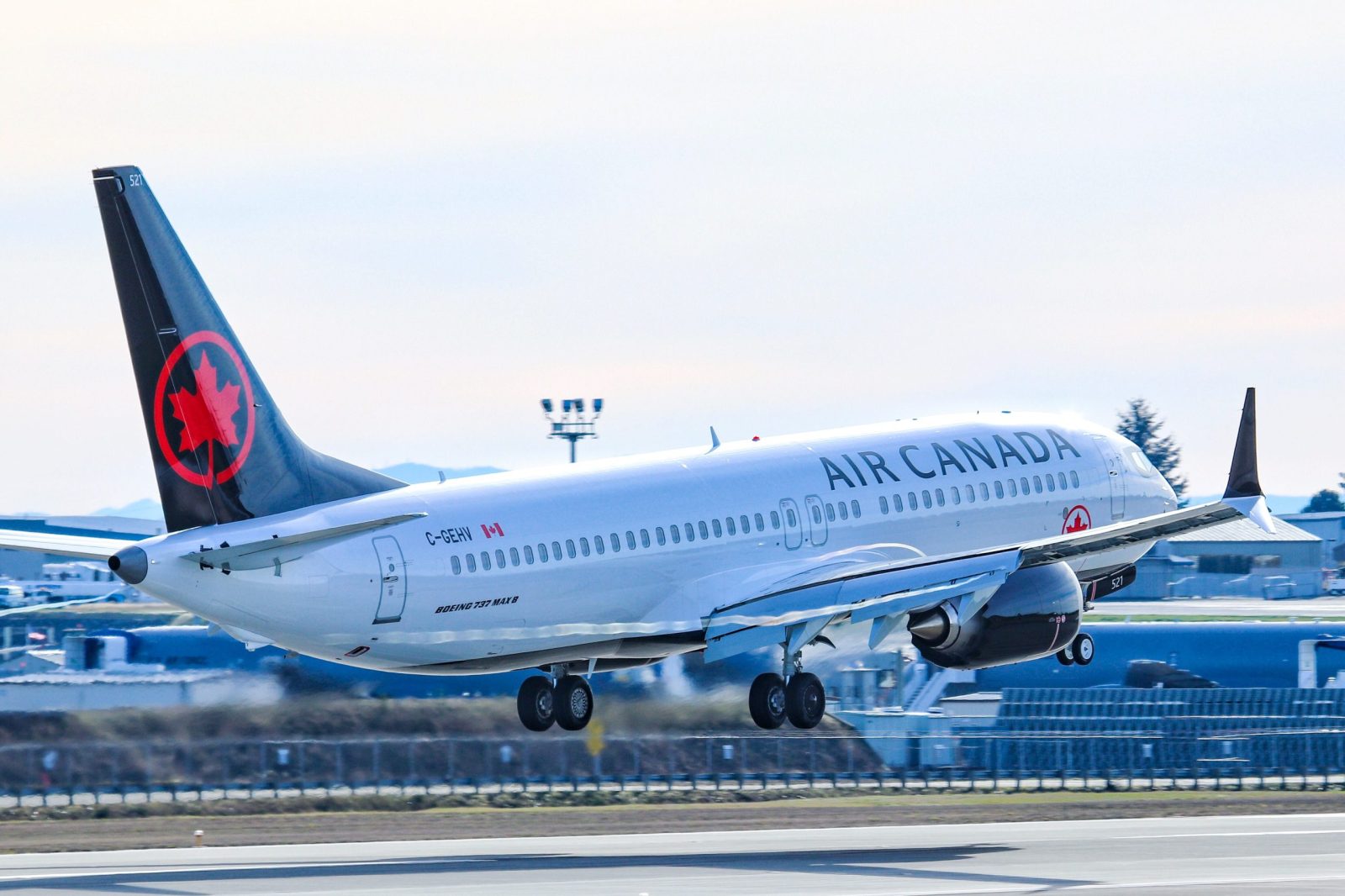
An Air Canada Boeing 737 MAX (Photo: AirlineGeeks | Katie Zera)
Canada’s largest airline has unveiled several new and returning routes for summer of 2025. The network expansion covers flights to the United States, Europe, and Asia.
New and Returning U.S. Routes
Air Canada will introduce seasonal flights between Vancouver and Nashville next summer, with flights being operated three times weekly. Previously announced transborder route additions include a new service between Montreal and Cincinnati and a resumption of flights between Toronto and Jacksonville.
The airline also plans on adding extra daily frequencies from Toronto to Indianapolis, Boston, Tampa, and Dallas-Forth Worth, as well as increased frequencies from Montreal to Denver, Nashville, Raleigh-Durham, and Tampa.
European Network Additions
New routes to Europe for the airline include Montreal – Naples, Italy and Montreal – Porto, Portugal. Both routes are slated to be operated four times per week. Flights to Naples will be flown with a Boeing 787-8 and flights to Porto will use the Boeing 737 MAX 8.
Air Canada has also announced that it will once again connect the capitals of Canada and the United Kingdom with the return of its Ottawa to London Heathrow service next summer. The airline is also adding frequencies to various European routes for the season.
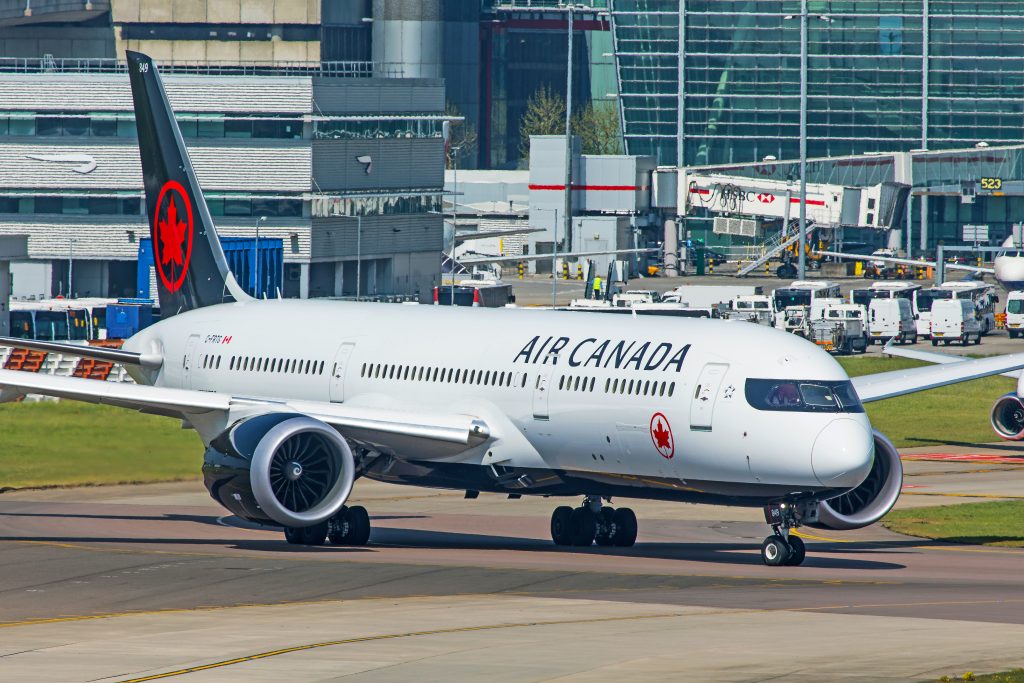
An Air Canada Boeing 787-9 Dreamliner at London Heathrow Airport (Photo: AirlineGeeks | William Derrickson)
Seasonal Transpacific Routes Return
In 2025, the carrier will also bring two back two summer seasonal routes to Asia that debuted this year. Air Canada is planning on resuming its summer flights between Montreal and Seoul and between Toronto and Osaka. Both routes will be operated by the company’s Boeing 787 fleet.
“Air Canada is pleased to provide our customers a wide array of destinations for their Summer 2025 travel,” said Mark Galardo, Air Canada’s executive vice president of revenue and network planning, in a press release. “Serving destinations across the six inhabited continents, Air Canada’s global network continues to be the bridge that brings the world closer, and we look forward to welcoming our customers onboard with our enhanced Summer 2025 schedule.”
Andrew is a lifelong lover of aviation and travel. He has flown all over the world and is fascinated by the workings of the air travel industry. As a private pilot and glider pilot who has worked with airlines, airports and other industry stakeholders, he is always excited to share his passion for aviation with others. In addition to being a writer, he also hosts Flying Smarter, an educational travel podcast that explores the complex world of air travel to help listeners become better-informed and savvier travelers.
Aspiring flight attendants can explore diverse career paths in 2024. Learn about skills, picking the right airline, and current job prospects in the industry.
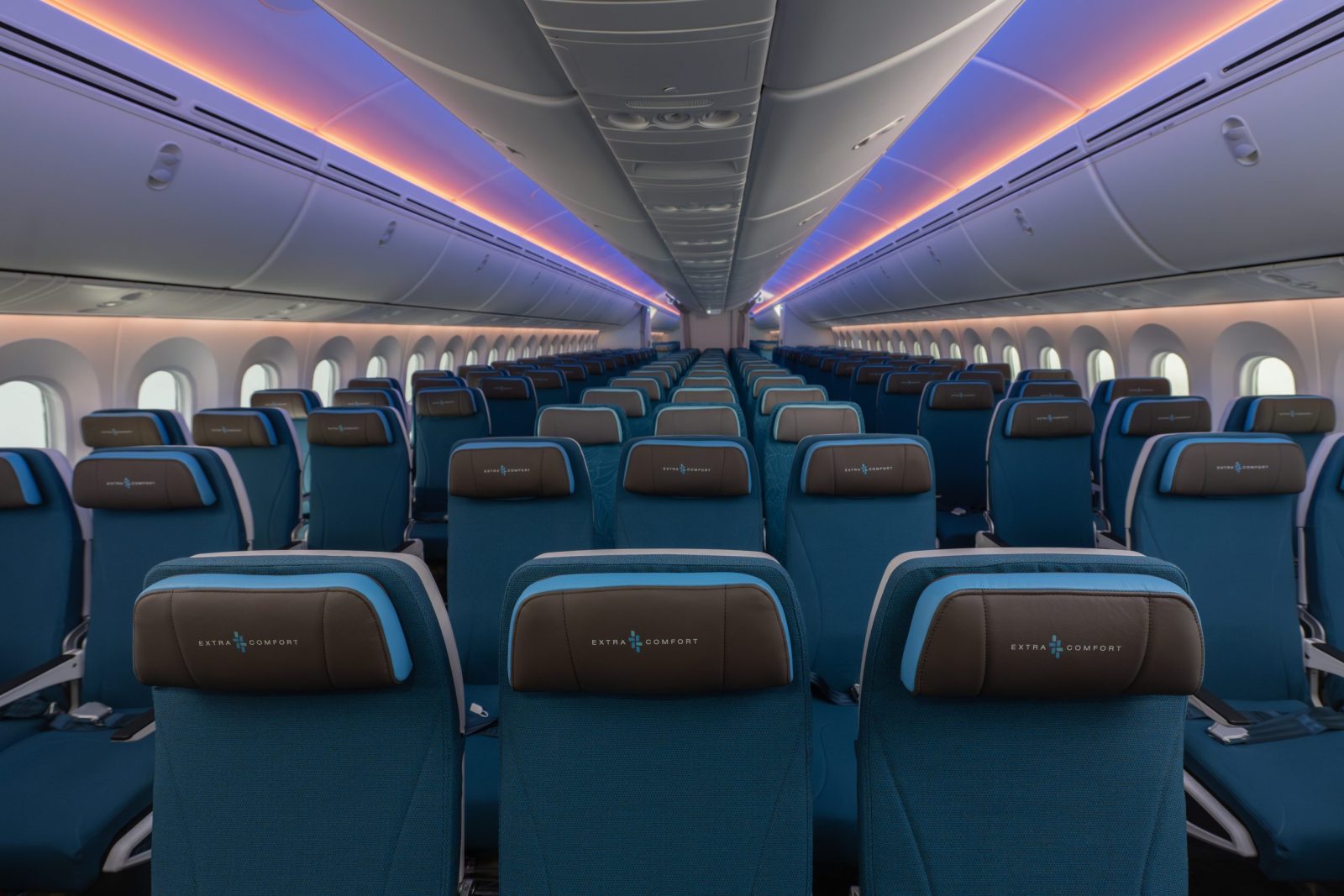
Hawaiian Airlines Boeing 787-9 economy class cabin (Photo: Hawaiian Airlines)
The allure of professional flight is attractive to many, and people across the country and around the world dream of getting paid to live in the flight levels. While many people decide to go the pilot route, others – whether due to a diverse skill set, differing values, or inability to become a pilot – decide to become a flight attendant.
Cabin crewmembers play essential roles in maintaining the safety and comfort of a flight. They oversee dozens, or hundreds, of passengers and work in a closely-knit team to ensure continued safety in all phases of flight.
Just as with pilots, flight attendants can go a number of ways in their careers. Airline flight attendants are the most visible, as they interact with the general public on a daily basis. However, some flight attendants work in corporate flight departments and charter companies.
Picking an Employer
There are a number of ways that flight attendants can pick which company they want to work for. The process varies a bit from pilot hiring, as flight attendants tend to get hired directly by an airline or other operator that provides their training. This varies from pilots, who tend to pay for their initial training out of pocket and build time for years to be eligible for airline work; even then, some pilots still pay for the advanced training – Airline Transport Pilot certificates and type ratings – that airlines would otherwise supply.
The different process makes some aspects of finding work easier for flight attendants. A new applicant can more easily hand-pick companies that they want to work for, either based on quality of life or nearby bases. It also lowers the barriers to entry for flight attendants so that some even use the job as a stepping stone into the flight deck.
Generally speaking, besides bases and quality of life, applicants can choose who to fly for based on how long trips are – do you want to stay near home with a regional airline or travel far away on a legacy airline – or what each company values. Some also pick based on the clientele they want to work with.
Desirable Skills
Airlines look for flight attendants with good interpersonal skills and customer service backgrounds. It is important that flight attendants can work well in a team environment and think on their feet in critical safety situations.
Some airlines look for specialized skills in their hiring pool. Companies that fly internationally hire cabin crew fluent in the languages of various foreign countries to make it easier to communicate with locals. Special focus will be placed on languages in countries that airlines have large presences in or close relationships with.
Legacy Airlines
United Airlines is currently hiring flight attendants with special emphasis on people who speak foreign languages. Positions are available in most bases across the country – most openings are available on both coasts as well as in the Midwest – with the latest job listings posted just this week.
GoJet, a regional carrier that flies exclusively for United, is also currently hiring with a number of bases. Most are centered in the Midwest and East Coast at major United hubs. Also present is a St. Louis base.
Delta and its wholly-owned regional subsidiary, Endeavor Air, are also hiring. Endeavor offers flight attendants a direct pathway to Delta for those interested in flying bigger aircraft over longer distances.
Though mainline American Airlines is not hiring flight attendants, regional partner PSA Airlines is. Though currently advertising a Charlotte base, PSA has multiple domicilies across the country.
On the West Coast, Alaska Airlines subsidiary Horizon Air is hiring flight attendants in Anchorage and Portland. For those who live nearby and don’t want to commute across the country, the Alaska Air Group could be a good way to launch a career close to home.
A Horizon Air Embraer E175 operating for Alaska Airlines. (Photo: AirlineGeeks | Katie Zera)
Regional Airlines
Besides those that work closely with legacy carriers, other independent regional airlines are also hiring. SkyWest Airlines, the largest regional in the United States, is currently hiring cabin crew at multiple locations. With bases across the country and two aircraft types, SkyWest crews get excellent flexibility to define their careers as they choose.
Denver Air Connection, another independent regional that specializes in Essential Air Service travel, is hiring predominantly in the Midwest. DAC connects major cities like Denver, Chicago, and Minneapolis to small, underserved communities in the United States.
Low-Cost Carriers
Low-cost airlines are hiring just as aggressively as other major airlines. They tend to serve popular vacation destinations across the United States, and their bases are disproportionately concentrated in destination states like Florida, Arizona, and California. Some low-cost carriers focus on secondary markets like Rhode Island, Connecticut, and Delaware.
Allegiant Airlines is hiring for a number of bases across the country. They operate a fleet of Airbus and Boeing airplanes and have four bases spread across the Tampa and Orlando areas alone. They take people from smaller areas – like Rockford and Peoria in Illinois, both at least two hours from Chicago – to popular destinations in Florida, Arizona, and beyond.
Frontier Airlines, among the largest low-cost carriers in the U.S., is also hiring flight attendants. It has a wider range of bases than Allegiant as well as more daily departures. As Allegiant already does, Frontier is shifting to an out-and-back business model that will allow their crews to be at home most nights instead of at outstations.
Picking the right airline to work for can make a big difference in your perception of the career. Consider what you value in your aviation career and which job will get you to your goals the soonest. Some crews are willing to take a pay cut to be at home more, while others want to fly big jets to far-away destinations.
Ultimately, as you start your career as a flight attendant, be sure to prioritize safety above all else. Though flight attendants do play a significant role in customer service, they also work with the flight crew to ensure the safe completion of each flight. The job can be quite rewarding and inspiring – and the first step to success is to apply.
John McDermott is a commercial pilot pursuing a career in professional flight. His passion for aviation began in an Ann Arbor bookstore with a tale of enemy pilots during World War 2, and he hasn't looked back. Besides flying and writing for AirlineGeeks, John volunteers with Professional Pilots of Tomorrow and travels whenever he gets the chance.
American Deploys Its Largest Jet to Charlotte
On Tuesday, the Fort Worth, Texas-based carrier began regularly scheduled Boeing 777-300ER service to Charlotte for the first time.
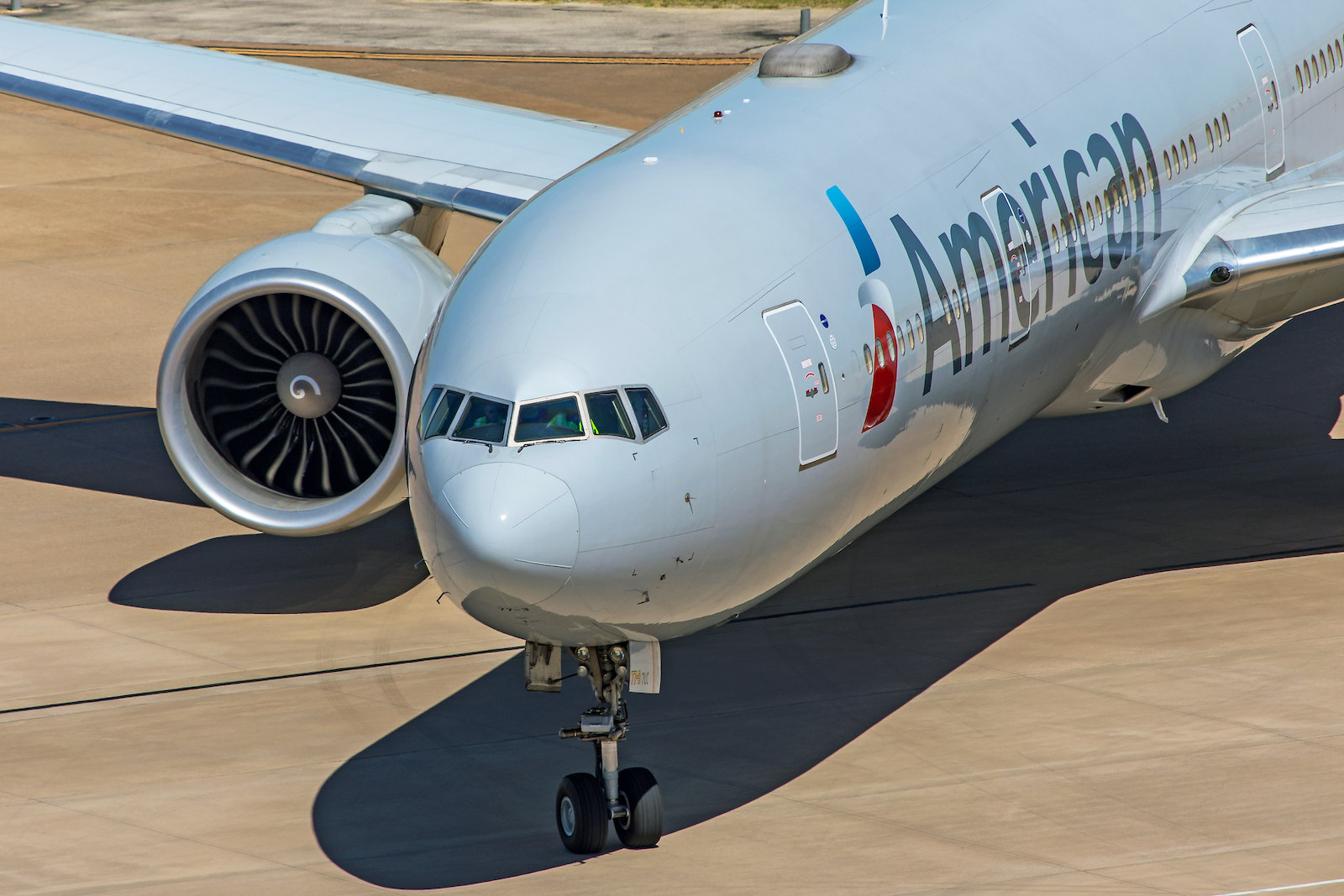
An American 777-300ER aircraft. (Photo: AirlineGeeks | William Derrickson)
American is adding more capacity between its Charlotte, North Carolina, hub and London Heathrow in the coming months. The airline operates three daily flights between the two cities.
On Tuesday, the Fort Worth, Texas-based carrier began regularly scheduled Boeing 777-300ER service to Charlotte for the first time. The aircraft — American’s largest — will operate one of the three daily Charlotte-London flights.
The aircraft can accommodate up to 304 passengers and has eight Flagship First seats. This new service will also mark the first time American has offered the long-haul first class product from Charlotte.
With service to several European markets, American regularly flies its 777-200 aircraft to Charlotte. Overall, the 777-300ER can seat 31 more passengers than the smaller 777-200 variant.
In addition, the 777-300ER will be among the airport’s largest-ever aircraft, second only to Lufthansa’s 318-seat A350s. However, the Boeing jet beats the A350-900 by length and wingspan.
Ryan founded AirlineGeeks.com in February 2013 and has spent more than a decade covering the airline business. His work has been featured by CNN, WJLA, CNET, and Business Insider. His aviation experience spans airport operations, Part 135 regulatory compliance, and airline crew workforce planning, along with time behind the yoke of a Cessna 172 and interviews with airline executives. Ryan now serves as Group President of Firecrown Media’s Aviation Group. He holds a B.S. in Air Transportation Management and an MBA from Arizona State University and teaches Airline Management at Embry-Riddle Aeronautical University.
European Officials Investigate Air Shipments of Incendiary Devices
Two incendiary devices bound for delivery by DHL from Europe to North America were discovered this summer, prompting officials to investigate their origin.
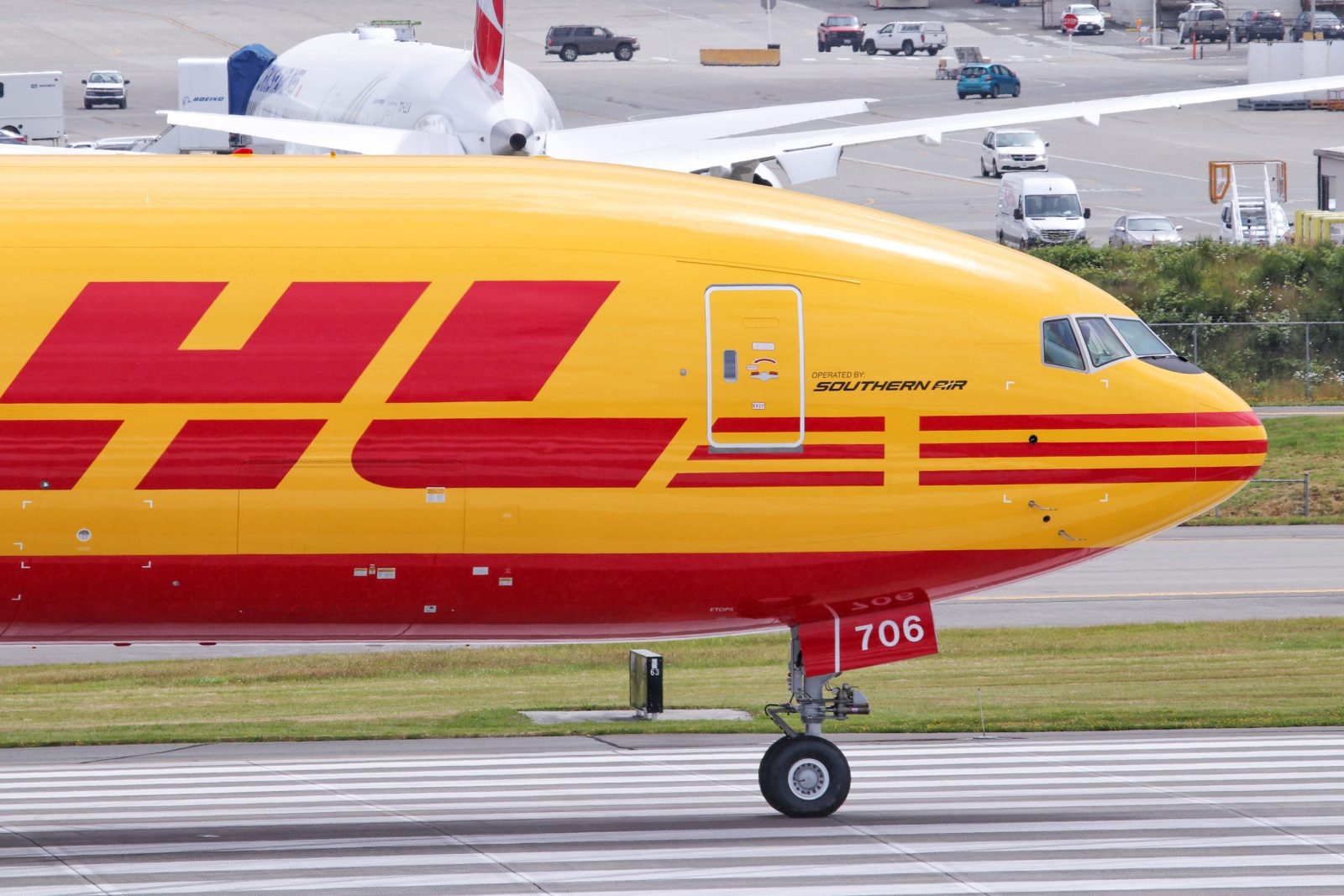
A DHL 777F taxies for takeoff at Paine Field Airport.
(Photo: AirlineGeeks | Katie Zera)
Two incendiary devices bound for delivery by DHL from Europe to North America were discovered this summer, prompting Western officials to investigate their origin.
A Wall Street Journal report broke the news on Monday that the devices caught fire at DHL’s logistics hubs in Leipzig, Germany, and Birmingham, England, in July. The report stated that investigators in Europe have determined the electric massagers implanted with a flammable substance were part of a larger Russian sabotage operation.
“Security officials say the electric massagers, sent to the U.K. from Lithuania, appear to have been a test run to figure out how to get such incendiary devices aboard planes bound for North America,” the report stated.
One suspect, Alexander Suranovas, going by the alias Igor Prudnikov, was arrested for sending four incendiary devices from Vilnius, Lithuania. The report stated that Poland has also arrested four people in connection to the fires and is working with other countries to find at least two additional suspects.
Kremlin spokesperson Dmitry Peskov said he had not heard any official accusations of Russian involvement, and any insinuation of such was unsubstantiated.
AP News reported that the U.S. Transportation Security Administration has added security measures for certain cargo shipments imported to the U.S., though public statements have not yet been made by any U.S. agencies on the matter.
Glennah Ivey-Walker, head of DHL corporate communications for the Americas region, provided the following emailed statement to AirlineGeeks from DHL Group:
“We are aware of two recent incidents involving shipments in our network,” She said. “We are fully cooperating with the relevant authorities to protect our people, our network and our customers’ shipments.”
AirlineGeeks.com was founded in February 2013 as a one-person blog in Washington D.C. Since then, we’ve grown to have 25+ active team members scattered across the globe. We are all here for the same reason: we love deep-diving into the fascinating realm of the airline industry.
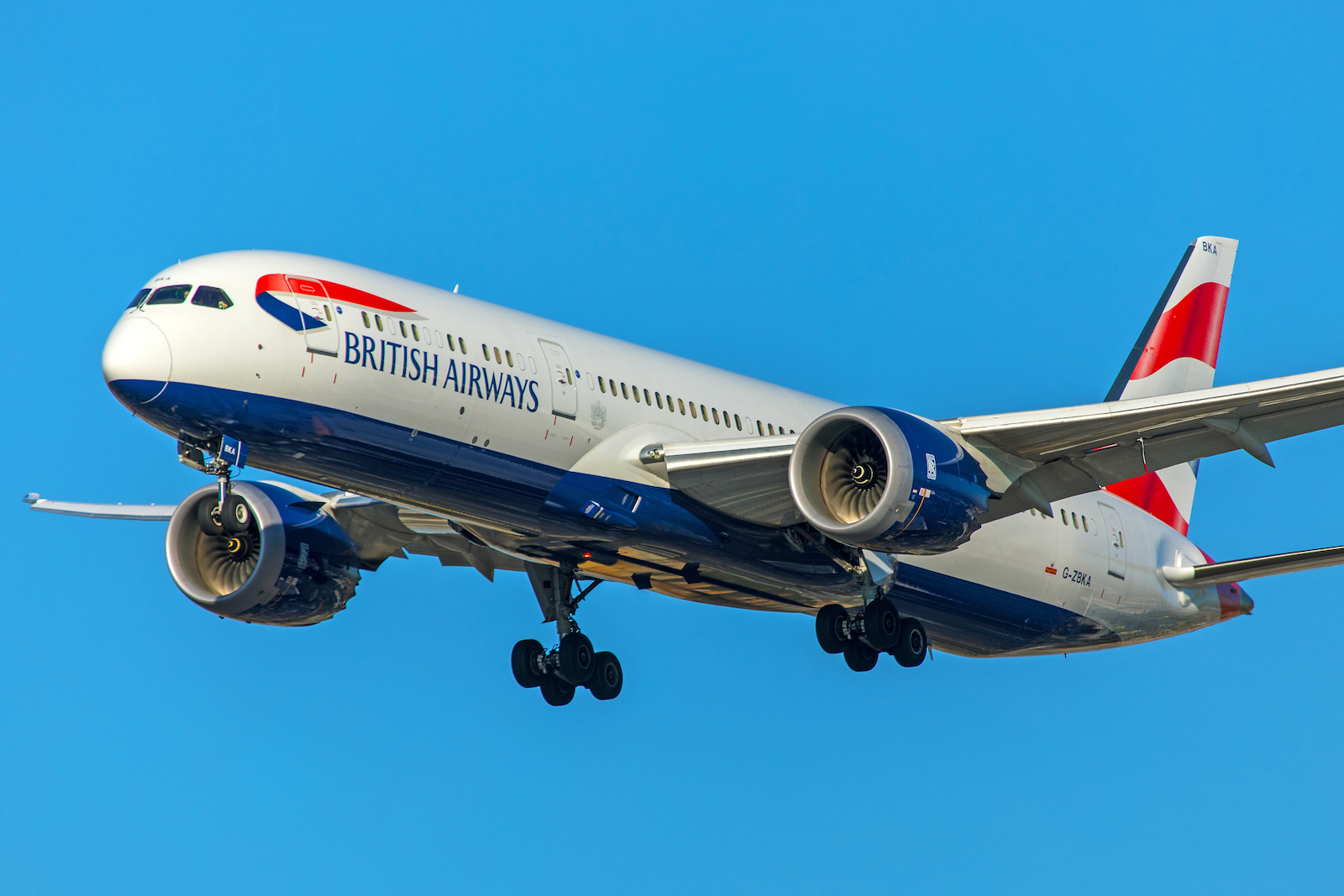
A British Airways 787-9 Dreamliner. (Photo: AirlineGeeks | William Derrickson)
British Airways is slated to cut two U.S. flights next summer as the carrier continues to face Rolls-Royce engine troubles. Last month, the U.K.-based carrier said it would reduce frequencies to New York and axe service to Kuala Lumpur during the winter.
As first reported by Ishrion Aviation on Twitter/X, the airline removed its daily flights from London Heathrow to Dallas/Fort Worth during the upcoming summer season. The service cut is presumably temporary, starting on March 30, 2025, through Oct. 25.
American recently added a fifth daily flight between the two cities, planned for the same time as British Airways’ service. The British carrier already slashed capacity on the route in October 2024, swapping daily A380 flights with A350-1000 service.
Miami Reduction
In addition, British Airways is set to remove its second daily flight from London to Miami, which was just announced in September. The airline previously planned to operate these twice-daily flights on a year-round basis.
The airline also plans to open a new lounge in Miami next year. Like Dallas/Fort Worth, American will pick up the slack in Miami, resuming its second-daily flight to London Heathrow.
A spokesperson from the airline confirmed the network changes in a statement on Wednesday.
“We’re disappointed that we’ve had to make further changes to our schedule as we continue to experience delays to the delivery of engines and parts from Rolls-Royce – particularly in relation to the Rolls-Royce Trent 1000 engines fitted to our 787 aircraft,” the spokesperson shared. “We’ve taken this action because we do not believe the issue will be solved quickly, and we want to offer our customers the certainty they deserve for their travel plans. We’ve apologised to those affected and are able to offer the vast majority a flight the same day with British Airways or one of our partner airlines. We continue to work closely with Rolls-Royce to ensure the company is aware of the impact its issues are having on our schedule and customers, and seek reassurance of a prompt and reliable solution.”
Ryan founded AirlineGeeks.com in February 2013 and has spent more than a decade covering the airline business. His work has been featured by CNN, WJLA, CNET, and Business Insider. His aviation experience spans airport operations, Part 135 regulatory compliance, and airline crew workforce planning, along with time behind the yoke of a Cessna 172 and interviews with airline executives. Ryan now serves as Group President of Firecrown Media’s Aviation Group. He holds a B.S. in Air Transportation Management and an MBA from Arizona State University and teaches Airline Management at Embry-Riddle Aeronautical University.
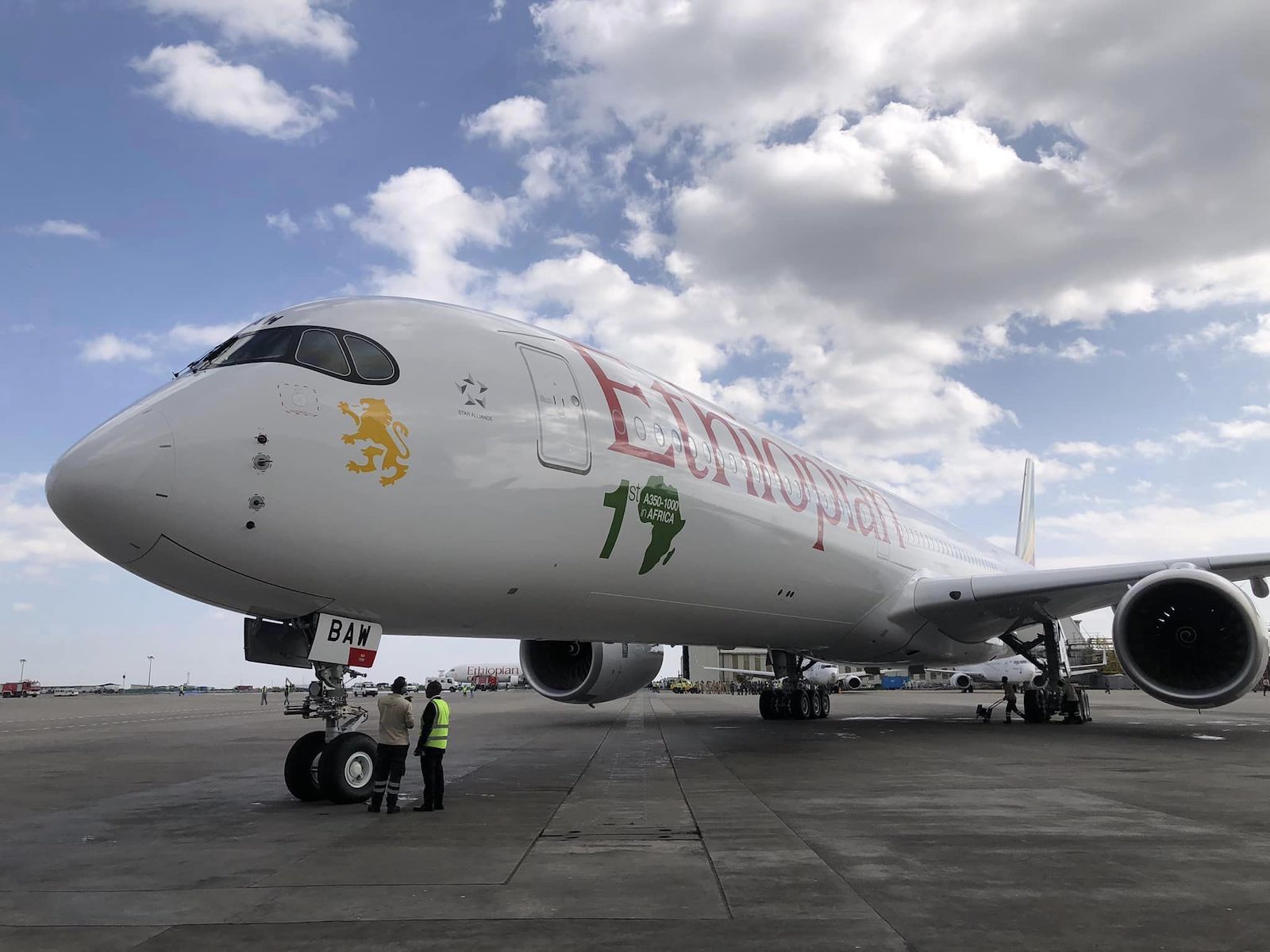
An Ethiopian Airlines A350-1000 (Photo: Ethiopian Airlines)
Ethiopian Airlines became the first airline in Africa to add the Airbus A350-1000 to its fleet. Ethiopia’s flag carrier has taken delivery of the first of four Airbus A350-1000s from Airbus in Toulouse.
Though Ethiopian operates a large number of Boeing aircraft, the airline is Africa’s largest operator of Airbus aircraft. To date, the Addis Ababa-based carrier operates a sub-fleet of 21 Airbus A350 aircraft.
A total of fourteen additional A350 aircraft are set to join the airline’s fleet in the future, including eleven A350-900s and three additional A350-1000s.
Additional Capacity
With a total of 395 seats, the A350-1000 will increase Ethiopian Airlines’ passenger capacity and provide enhanced passenger experience in the largest business class cabin in the airline’s fleet. In addition, Ethiopian will introduce Airbus’ new HBCplus satcom connectivity solution on this aircraft, thereby offering seamless, high-speed gate-to-gate connectivity.
The A350-1000 will provide operational commonality with Ethiopian’s A350-900 fleet, ensuring seamless integration with shared pilots and mechanics simplifying training and maintenance processes. It is set to serve more premium destinations, including Washington D.C., London, Paris and Frankfurt.
Lorne is a South Africa-based aviation journalist. He was captivated and fascinated by flying from the day he took his first airline flight. With a passion for aviation in his blood, he has flown to destinations in all corners of the globe. Lorne has traveled extensively and lived in various countries. Drawing on his travels and passion for aviation, Lorne enjoys writing about airlines, routes, networks, and new developments.
United Takes Delivery of First 787 in 20 Months
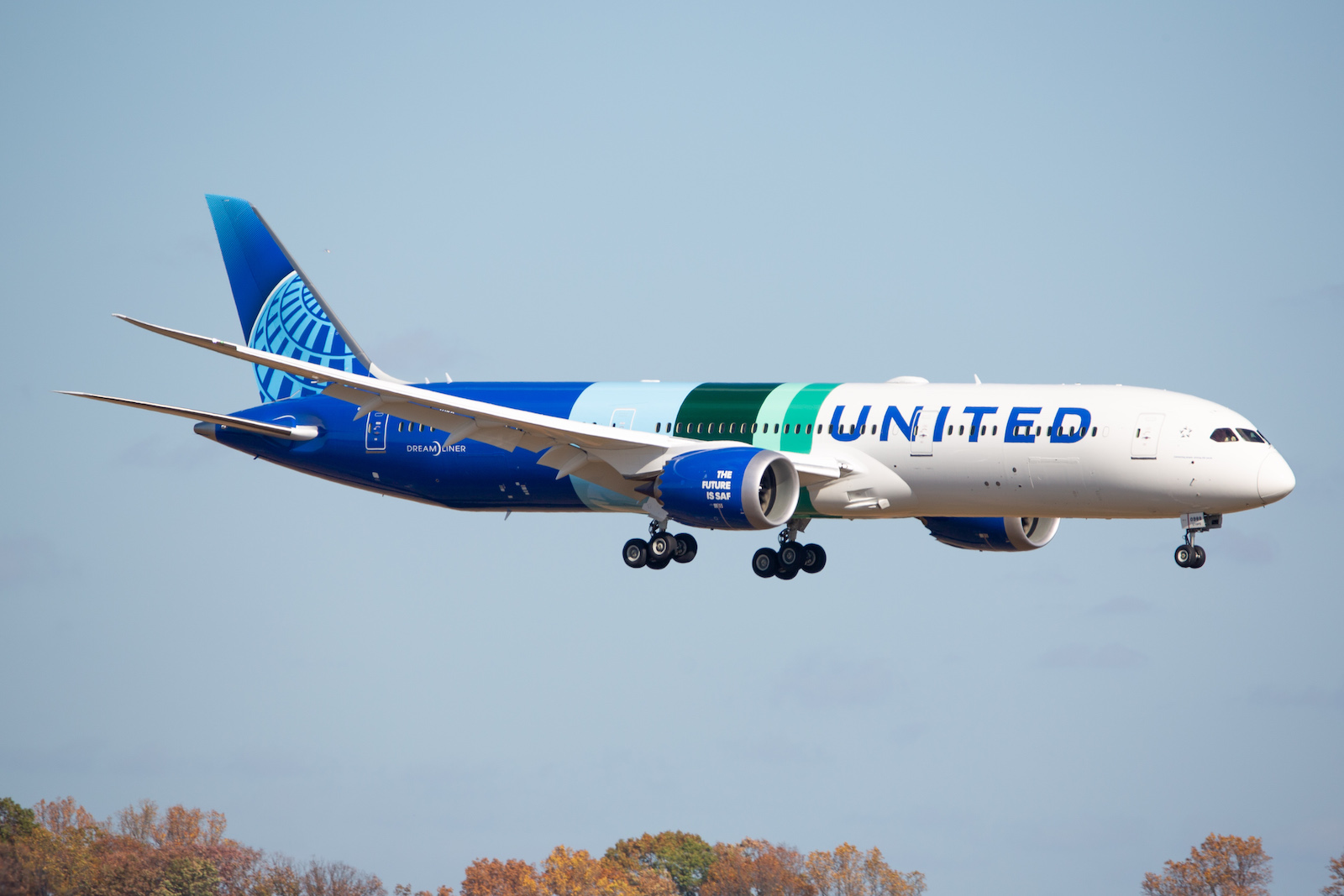
United took delivery of its first Boeing 787 Dreamliner since March 2023 this week. The new aircraft features a special paint scheme.
Its newest Dreamliner is the first in this order, which was touted as the largest single widebody aircraft purchase by a U.S. carrier at the time. The airline has firm orders for 100 787s along with 100 options, including the 787-8, 787-9, and 787-10 variants.
These aircraft were set for delivery between 2024 and 2032. In the coming years, the 787s are expected to replace United’s aging 767 and 777 aircraft.
Looks like the first 789 of the big UA 787 order will be in SAF special livery pic.twitter.com/9VpbHpJdum
Registered as N24988, United’s latest Dreamliner ferried from Boeing’s facility in North Charleston, South Carolina, to the carrier’s Washington Dulles hub on Tuesday. According to Cirium Fleet Analyzer data, the airline’s last 787 delivery — a 787-10 with registration N13014 — was on March 23, 2023.
The newest 787-9 also features a special livery called “The Future is SAF,” recognizing the airline’s investments in sustainable aviation fuel. United has a similar livery on a not-yet-delivered Boeing 737 MAX 10, which is still awaiting type certification by the FAA.
Boeing 737 MAX 10 EcoDemonstrator wearing United’s SAF special livery. (Photo: AirlineGeeks | Fangzhong Guo)
Ongoing Boeing delivery delays have prompted United to scale down its fleet outlook. Earlier this year, the airline was expecting to receive seven 787 aircraft in 2024, per FlightGlobal, but further reduced its plan to just three aircraft. Currently, United has 71 Boeing 787s in revenue service.
Ryan founded AirlineGeeks.com in February 2013 and has spent more than a decade covering the airline business. His work has been featured by CNN, WJLA, CNET, and Business Insider. His aviation experience spans airport operations, Part 135 regulatory compliance, and airline crew workforce planning, along with time behind the yoke of a Cessna 172 and interviews with airline executives. Ryan now serves as Group President of Firecrown Media’s Aviation Group. He holds a B.S. in Air Transportation Management and an MBA from Arizona State University and teaches Airline Management at Embry-Riddle Aeronautical University.
Frankfurt Airport tests new asphalt. (Photo: Fraport)
Fraport AG, the operator of Frankfurt Airport, is kickstarting a new approach to sustainable construction by testing a 200-meter stretch of road on the airfield made from cashew-based asphalt. This material, developed by the startup B2Square, is the first of its kind to be used at an airport.
Traditional asphalt is produced from petroleum by-products. In contrast, B2Square’s biogenic asphalt utilizes a natural hydrocarbon resin combined with an organic extract from cashew shells.
This process reduces the material’s carbon footprint and enhances its durability, the airport said in a news release. By incorporating carbon dioxide from the atmosphere into the asphalt, the material helps offset greenhouse gas emissions. Additionally, the low-temperature application method further minimizes energy consumption.
Fraport’s environmental management department views this sustainable asphalt as a significant step toward reducing the airport’s carbon footprint. If the test proves successful, the airport could expand the use of this material throughout the apron area.
According to the airport, the test stretch is being closely monitored by an independent laboratory to assess the asphalt’s long-term performance and durability over the next two years.
Ryan founded AirlineGeeks.com in February 2013 and has spent more than a decade covering the airline business. His work has been featured by CNN, WJLA, CNET, and Business Insider. His aviation experience spans airport operations, Part 135 regulatory compliance, and airline crew workforce planning, along with time behind the yoke of a Cessna 172 and interviews with airline executives. Ryan now serves as Group President of Firecrown Media’s Aviation Group. He holds a B.S. in Air Transportation Management and an MBA from Arizona State University and teaches Airline Management at Embry-Riddle Aeronautical University.
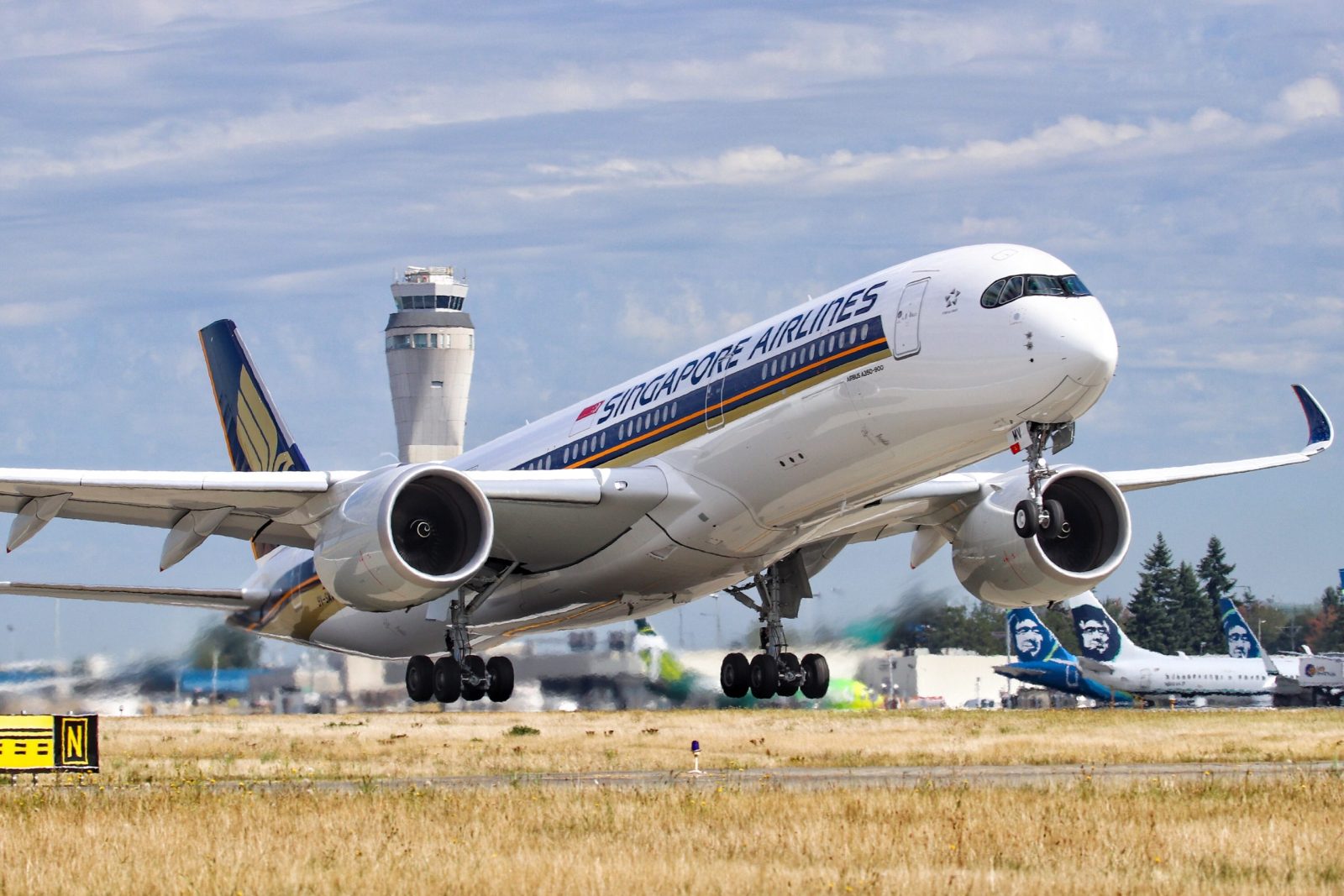
A Singapore Airlines A350 performing the inaugural flight from Seattle. (Photo: AirlineGeeks | Katie Zera)
Singapore Airlines is investing $835 million on new cabin products for its Airbus A350 fleet. The airline will roll out brand new First Class and Business Class products across its fleet. The renewal will start with A350-900 aircraft, with the first refurbished jet expected in the second quarter of 2026, continuing into 2030.
A total of 41 A350s will be refurbished with the new products, which will be the same designs as seats on the future Boeing 777-9s. All four cabins will see new features, together with a new version of the in-flight entertainment system.
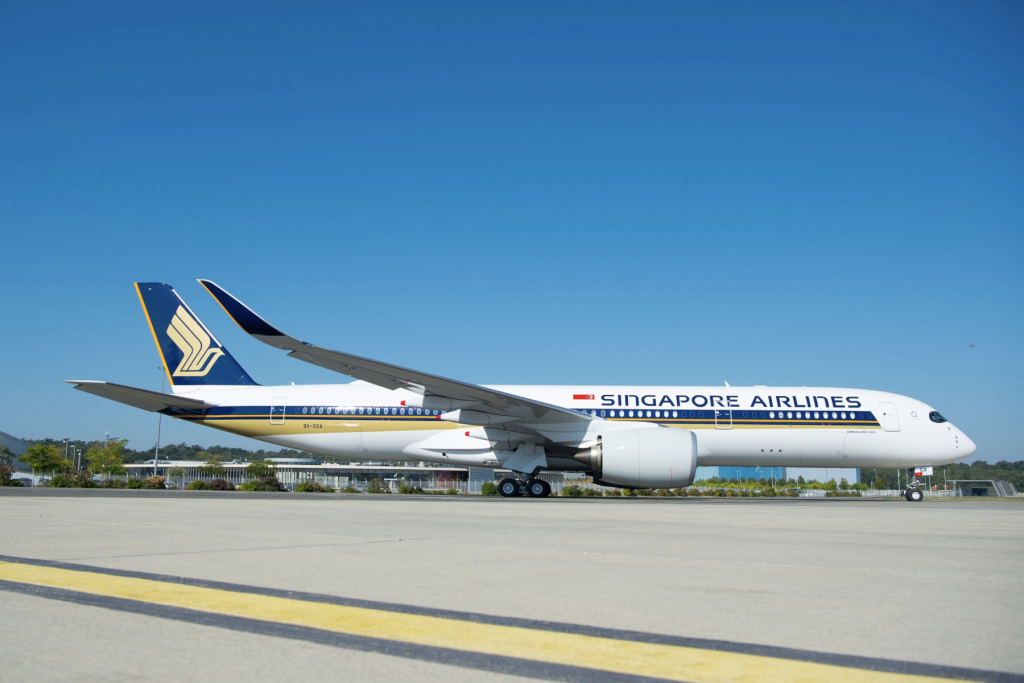
Singapore Airlines’ first Airbus A350-900ULR upon delivery in Singapore (Photo: Singapore Airlines)
Longest Flight in the World Gets First Class
The airline’s famous A350-900ULRs (Ultra Long Range), which are used for the world’s longest flights between Singapore and New York, will have a First Class cabin for the first time. The airline previously configured the seven A350s with 67 Business Class seats and 94 Premium Economy seats. Already the most premium A350 with the least seats in the world, the total seat count will go down even further to just 132 seats in total, including four in First, 70 in Business, and 58 in Premium Economy.
These Ultra Long Range jets operate Singapore Airlines’ longest routes to two New York City airports: JFK and Newark. The airline currently operates one daily flight to each airport exclusively deploying A350-900ULRs. Beyond the U.S. East Coast, these aircraft are also used on some flights to the West Coast, including to Los Angeles and San Francisco.
A Singapore Airlines Airbus A350-900XWB departing from San Francisco. (Photo: AirlineGeeks | Parker Davis)
Meeting Industry Standard
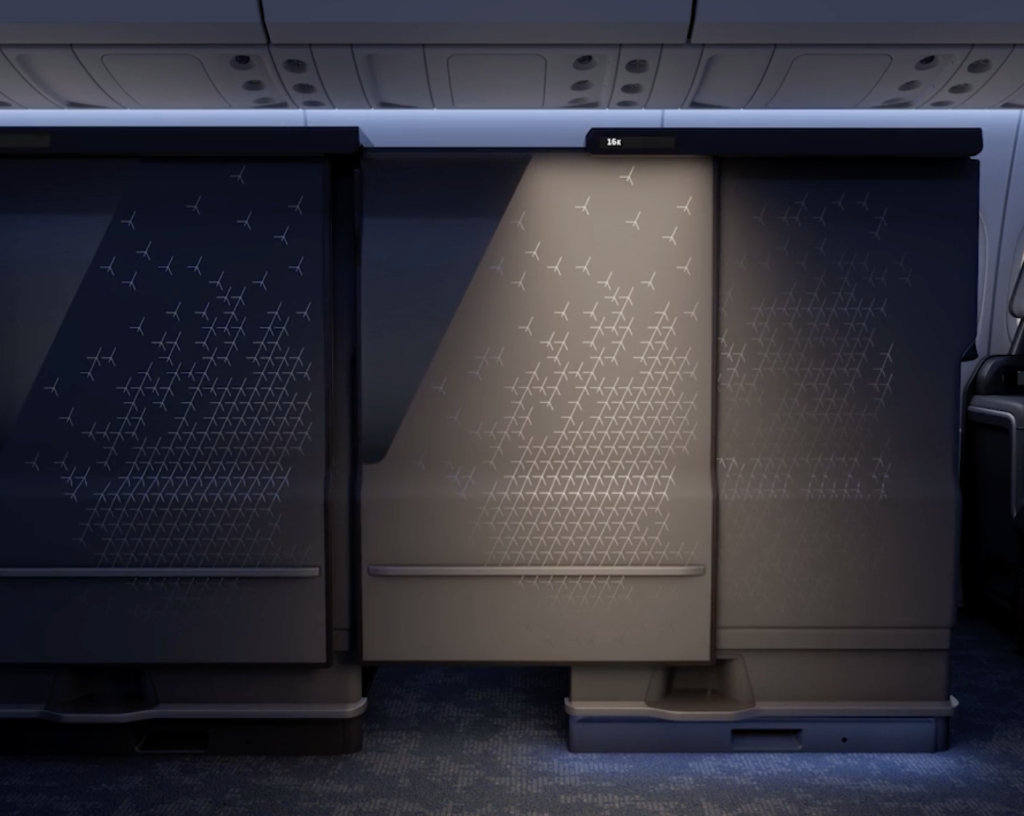
The business class will feature a closing door, which is slowly becoming the industry standard. Products such as Delta One, or the recently revealed Aria Suite by Cathay Pacific, Singapore Airlines’ regional rival, all include a closing door in Business Class.
The new Business Class seat will feature sliding doors for privacy. (Photo: Singapore Airlines)
More First Class Seats
As part of the renewal program, Singapore Airlines is introducing a new First Class product on its fleet of A350-900ULRs. The new seat is set to feature new in-flight entertainment screens, sliding doors, and will “set [an] industry benchmark.” The video teaser released by Singapore Airlines also shows electric blinds for the First Class cabin, similar to those on British Airways.
Singapore Airlines’ new First Class cabin (Photo: Singapore Airlines)
With the introduction of First Class seats on the A350-900ULRs, the airline is adding 28 First Class seats to its fleet, representing an 18% increase in the airline’s First Class capacity. The carrier currently has First Class cabins on its fleet of A380s and 777s.
First Class has fallen out of fashion for the world’s major carriers, with most airlines either reducing the number of seats or ditching the cabin altogether, as Business Class seats become increasingly premium and differentiation between cabins proves difficult.
Anthony is an aviation enthusiast who grew up around the world from St. Louis to Singapore, and now lives in Amsterdam. He loves long-haul flying and finds peace in the sound of engine cruising. He aspires to share his passion for the sky though writing and providing another angle on the stories.
Michigan Enters the All-Jet Era
Michigan has entered the age of all-jet service with the last propeller-driven scheduled flight leaving the state in October.
A Horizon Air Bombardier Dash 8 Q400. (Photo: AirlineGeeks | William Derrickson)
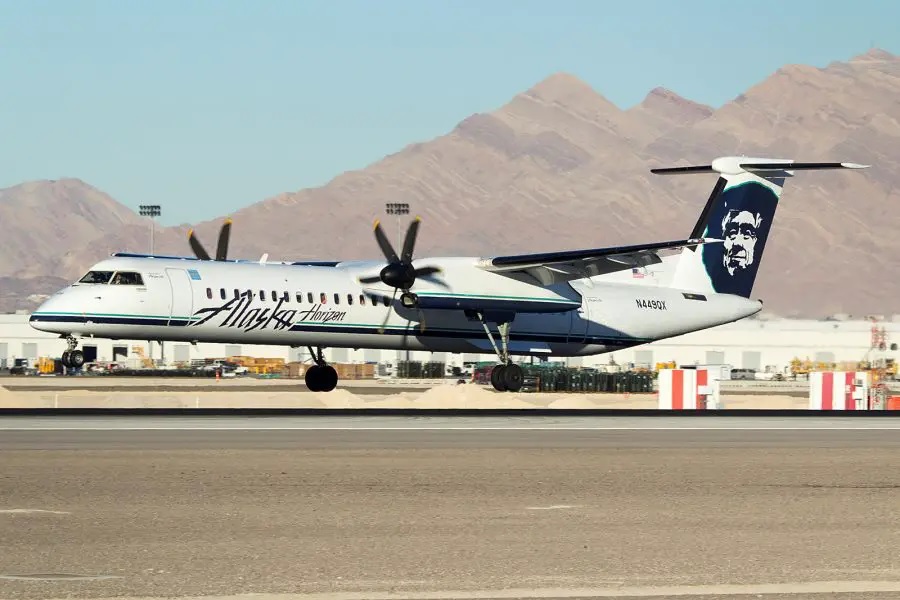
In the past, since propeller-driven aircraft were usually smaller in size, airlines commonly used them to operate many frequencies between cities. Except for Florida-based Silver Airways and its ATRs, most turboprop aircraft in the U.S. only operate to small communities, and especially the Essential Air Service communities around the country.
There are still a handful of commuter airlines in the U.S. that operate small 8-9 seat prop aircraft on commercial passenger flights to small communities. However, even these EAS communities have slowly been seeing the disappearance of turboprop aircraft with passengers preferring comfort and speed over frequency. Airlines like Advanced Air, Contour, and Denver Air Connection which operate small 30-seat jet aircraft have been thriving in the past few years.
Michigan’s Prop Loss History
There are many EAS airports around the country, with some states having one or two and some having a lot more like Alaska, which due to its remote nature, has over 60 of them. In the lower 48 states, Michigan has the most with nine of the state’s airports being in the federally-subsidized program.
Over the years the state has slowly lost its commercial airline turboprop service. Back when Northwest was still around, Mesaba used the Saab 340 and operated from most of the airports in the state.
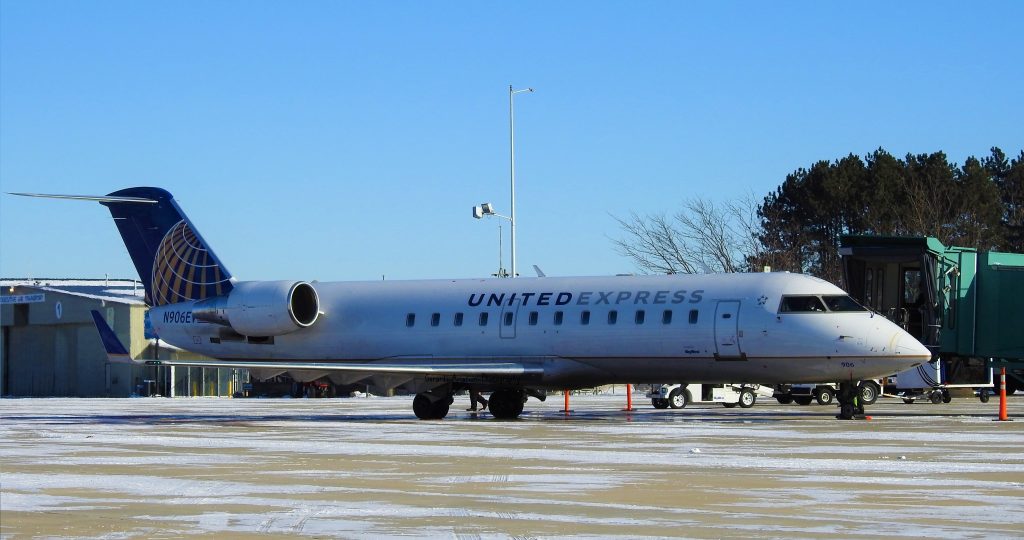
Houghton and Muskegon were the first two Michigan EAS cities to lose propeller service. Both in 2009, Mesaba lost the EAS contract in both communities to SkyWest under the United Express brand with 50-seat CRJ-200s to Chicago O’Hare. Muskegon later went back to propeller service for a brief time.
United Airlines CRJ-200 operated by SkyWest at Muskegon-County Airport (Photo: AirlineGeeks | Joey Gerardi)
Iron Mountain, Escanaba, Pellston, Sault Ste. Marie and Alpena were the next to lose prop service, and all at the same time, in December 2011 when Delta retired the Saab 340 from its regional fleet. Delta only gained the Saab due to its merger with Northwest, and all of these aircraft were operated by Mesaba at the time of their retirement.
Mesaba was folded into Pinnacle Airlines not even a month after the Saab 340’s retirement, in January 2012. Service in all of these communities was onboard the SkyWest CRJ-200 until the retirement of the type in late 2023, and are now all on the CRJ-700, CRJ-900, and soon the CRJ-550.
Ironwood is an interesting story; it had Frontier Express service up until March 8, 2012, although it is unclear whether that service was on propeller aircraft or regional jets. Either way, another prop operator started service to the town on March 17, 2012, Great Lakes Airlines with its Beechcraft 1900s, and it continued the flights until Jan. 31, 2014.
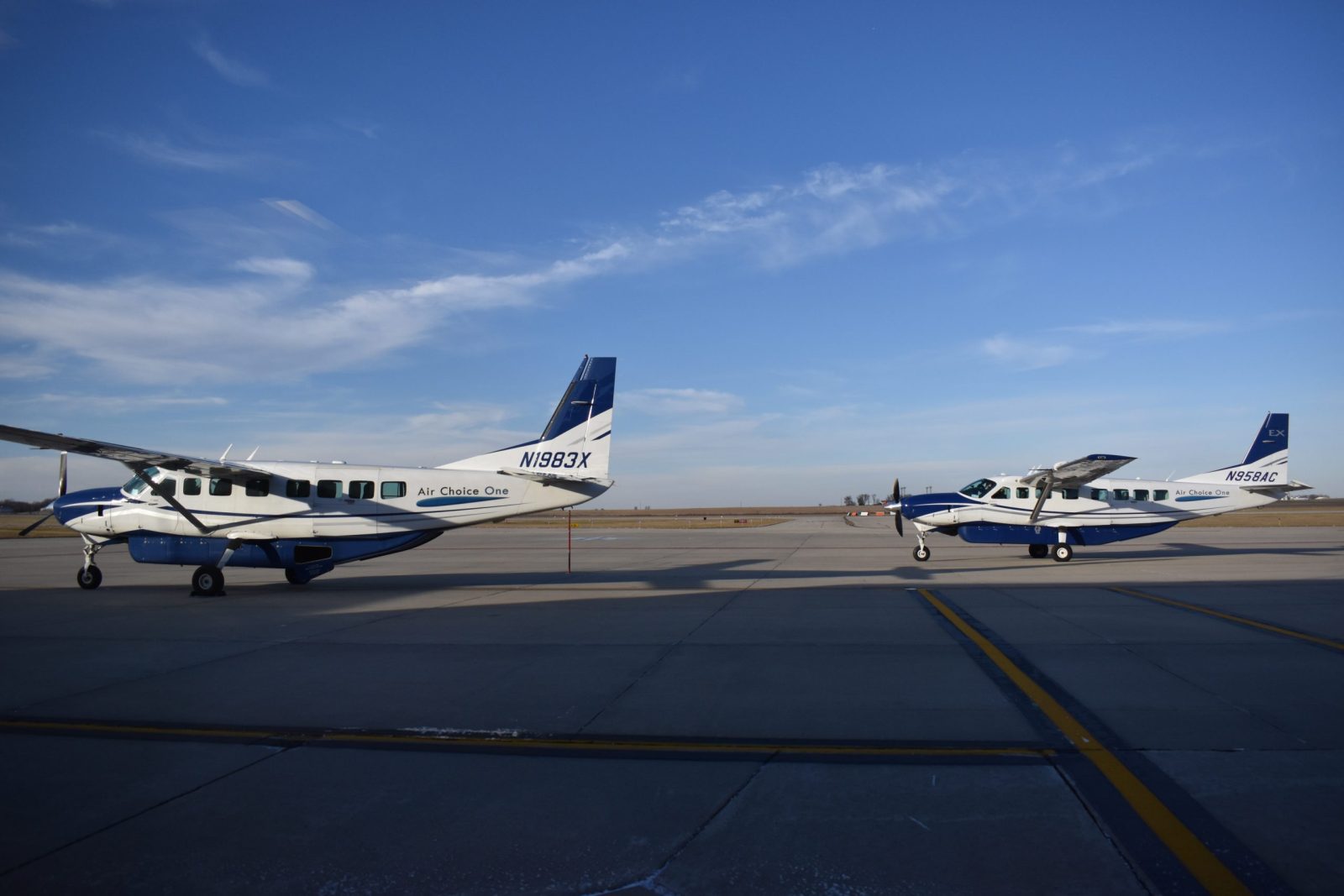
Air Choice One was later awarded the EAS contract on board its Cessna 208s or single Beech 1900C, and began service on July 7, 2014, which continued for six years until July 31, 2020.
Boutique Air then started flying to Ironwood on Aug. 1, 2020 using Pilatus PC12s. It was supposed to be the carrier for two years, but the airport board had some safety concerns after a wheel fell off an airplane during flight and a cargo door opened during takeoff, Boutique then requested to terminate the contract on its own. The airport finally lost prop service when Denver Air Connection was chosen as the airline for the EAS contract and began serving the community on October 1, 2021, with a 30-seat Dornier328Jet and 50-seat Embraer E145s.
The next city in Michigan to lose prop service was Manistee which had flights onboard NorthCountry Sky on a mix of Dornier328Jets and Beech 1900Cs. Cape Air began service on Oct. 1, 2020, and AirlineGeeks had the opportunity to go on the inaugural flight.
Cape Air served the community with 8-seat Tecnam P2012s, or Cessna402s when the Tecnam had maintenance issues. The carrier’s last day with propeller aircraft was almost exactly four years later, on Sept. 30, 2024, Cape Air lost the EAS contract in Manistee, and Contour Air began flights on Oct. 1, 2024, with 30-seat Embraer E135s or 50-seat CRJ-200s and E145s.
The last airport in the state of Michigan to have commercial airline flights on a propeller aircraft: Muskegon. As mentioned previously, the airport did lose prop service in 2009 when SkyWest won the contract, but in the summer of 2022, the airline requested to terminate 29 EAS contracts due to a pilot shortage and Muskegon did end up getting cut.
On Oct. 1, 2022, Southern Airways Express began serving the community. Service to Muskegon with the carrier was on its 8-seat Cessna 208s, flying to the community for just over two years, but due to some reliability issues in the community, they decided to recommend a new operator. Denver Air Connection was awarded the contract for Muskegon and is contracted to operate the 50-seat Embraer E145 to the community.
Finally, the last domino fell on Oct. 31, 2024, and the final commercial flight on a propeller-driven aircraft left Michigan. It’s a little unclear when the last flight actually was, but if flight trackers are correct, it looks like Southern Airways Express’ last flight out of Muskegon was cancelled, and the true final flight was later that day.
DAC’s first flight out of Muskegon (Photo: Variable Visuals | MKG Airport Facebook page)
Denver Air Connection’s inaugural departure from Muskegon on Nov. 1 was accompanied by a water cannon salute as it left, and it marks an event in history that not many in Muskegon realized. This was not only a significant event for the community, but the entire state of Michigan as well. The time when prop aircraft ruled the skies over the United States is gone, and jets are slowly taking over.
Joey has always been interested in planes for as long as he can remember. He grew up in Central New York during the early 2000s when US Airways Express turboprops ruled the skies. Being from a non-aviation family made it harder for him to be around planes and would only spend about three hours a month at the airport. He was so excited when he could drive by himself, the first thing he did with his driver's license was get ice cream and go plane spotting for the entire day. He graduated from Western Michigan University in 2022 with a B.S. in Aviation Management & Operations and a Minor in Business, and currently works for a major airline in his hometown.
Sign-up for newsletters & special offers!
Get the latest stories & special offers delivered directly to your inbox