Stories

Streamlining The Fleet: Lufthansa Group

Years ago Lufthansa Group embarked on a journey to simplify its diverse fleet. How are they doing?

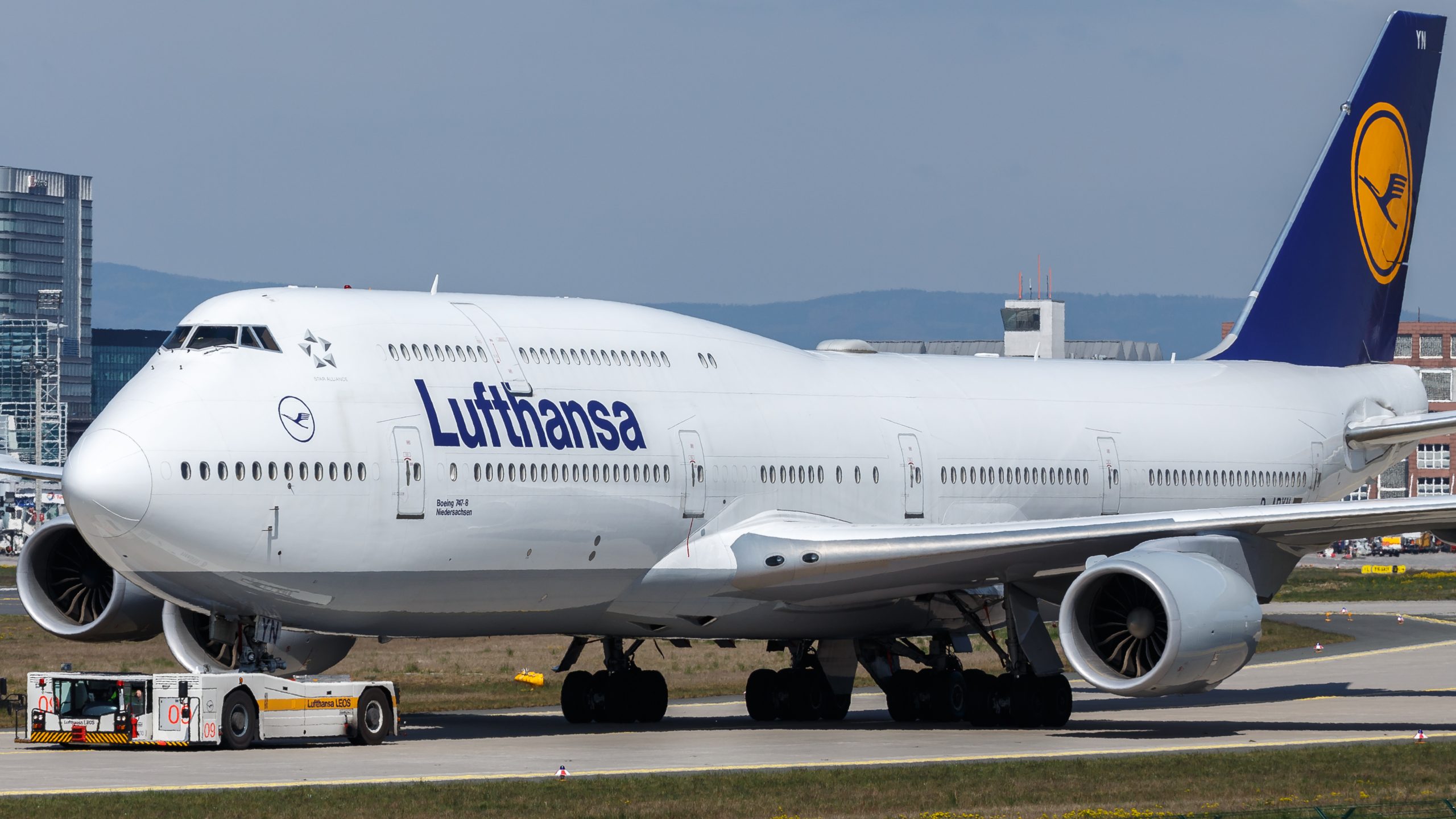
Lufthansa Boeing 747 (Photo: TJDarmstadt | flickr)

With a number of 710 units, Lufthansa Group holds the title for the biggest aircraft fleet in Europe. Last week we reported on the planned configuration of the coming Airbus A350-900 for SWISS International Airlines. The entire group bets strongly on the type. What else is in the cards for the Lufthansa Group?

Bug Or Feature?

It is an interesting fact about the Group’s fleet that it contains virtually every modern type of widebody aircraft on the market. It is at Lufthansa itself that, on one side, the passengers could still experience the icons of the skies – Airbus A340 and Boeing 747. On the other side, it is not hard to spot a brand new Airbus A350 or Boeing 787, and in a few short years – even the upcoming Boeing 777-X. The diversity might be a feast for aviation enthusiasts but is probably a nightmare for the maintenance, fleet planning or financial departments at the company’s premises.

In its 2022 Annual Report, the Group provides detailed information on the current state of the fleet. Unsurprisingly, the total number of aircraft decreased from 2019 by 53 units – from 763 to 710. With the retirement of 15 Bombardier Q Series aircraft, Austrian Airlines took the biggest hit proportionally to the total fleet size. The rest of the reductions might be accredited to parts of Lufthansa’s Airbus A319, Boeing 747 and Bombardier CRJ fleets being retired.

What is surprising is that the Airbus A380 fleet remained technically intact, although most of the planes are still parked on the ground. Be that as it may, this is a temporary solution that some carriers introduced to mitigate the impact of still ruptured supply chains and subsequent delivery delays on the new aircraft.
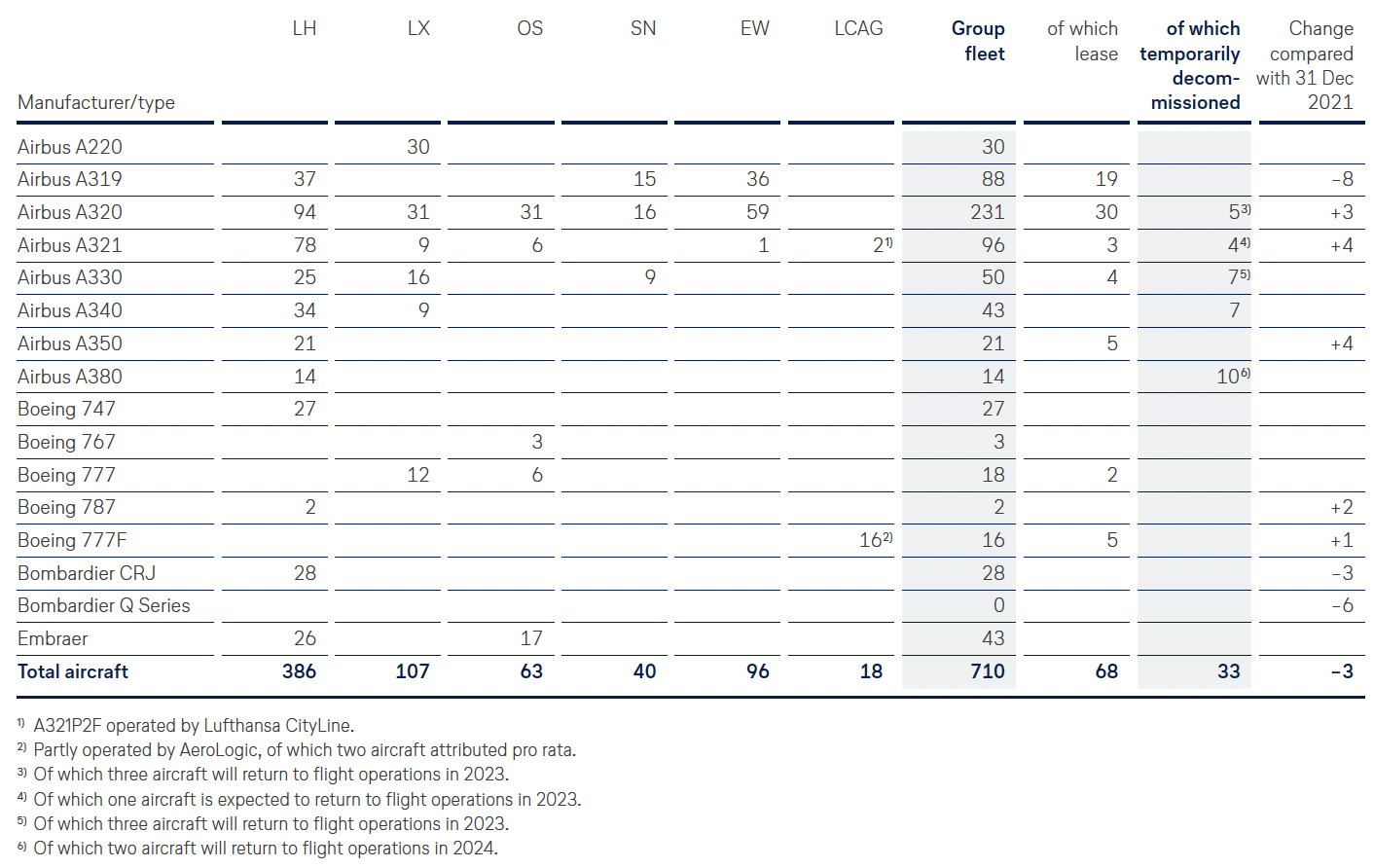
Lufthansa Group fleet at the end of 2022. (Lufthansa Group Annual Report)

Not For Long…

…or at least not for too long. Back in 2020 Lufthansa presented a plan to arrive at the “New Normal”. The streamlined fleet will be lighter by 6 older aircraft types. It’s the Airbus A380 and both variants of Airbus A340 together with the Boeing 747-400 “classic” from the four-engine bunch. A significant reduction that leaves Lufthansa with only the most modern variant of the 747 Jumbojet.

From the Boeing 777 and Airbus 330 fleets, the smaller “-200” variants are deemed to be retired, leaving the larger ones still in the fleet. Last but not least the Boeing 767 frame will be retired completely.

The replacement plan for the mentioned types is already on the way. The Group will still operate a diverse group of widebody aircraft, but the key will be the allocation among the brands. While SWISS will be assigned only the 777s and A350s, Austrian will be equipped with a fleet of 787s to tackle its thinner routes, and Brussels Airlines together with Eurowings will utilize A330s for the low-yielding markets.
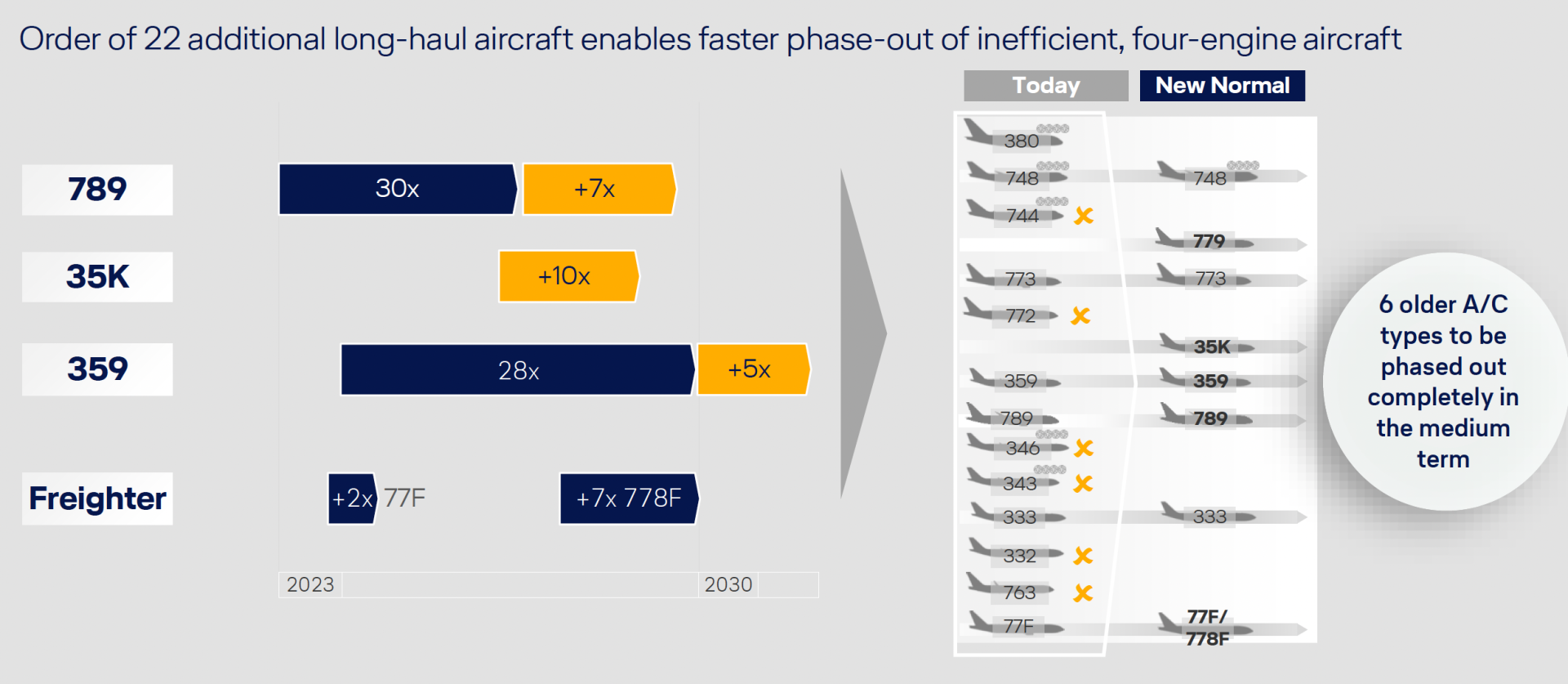
Lufthansa Group widebody fleet replacement scheme (Lufthansa Group Annual Report)

While the current state of the Lufthansa Group fleet is far from ideal, the set long-term vision is strongly pursued. Lufthansa’s scale allows to support multiple different aircraft types, but it is not necessary to have all the different aircraft types. It is a very distinct feat of the Lufthansa Group that the different brands, operating from different hubs, allow for an interesting dimension of fleet planning.

Filip Kopeć

A passionate aviation enthusiast that started off his career as an aerospace engineer, but found his true calling on the commercial side of the airline business. Now as a finance guy among avgeeks and an avgeek among finance guys, he has experience working in the Revenue Divisions of three airlines. In his spare time he enjoys traveling, but admittedly sometimes is more about the journey than the destination.

Emirates Hiring Direct Entry A380 Captains

Even for the largest passenger jet in the world, the Dubai-based airline joins a growing list of global airlines struggling to find pilots for the left seat.

An Emirates A380 departs from Sydney (Photo: AirlineGeeks | Hisham Qadri)

Middle Eastern airline giant Emirates is the latest company to put out a call for direct entry captains. The company is looking for pilots to command its Airbus A380 aircraft. Emirates is the largest operator of the A380 in the world, with roughly 120 of the type.

Emirates has placed significant minimums on the position; the ideal candidate has at least 7,000 hours flying multi-crew, multi-engine aircraft. Having 3,000 hours in command of Airbus widebody aircraft, such as the A330, A340, A350, and A380, is an additional requirement.

In addition to the Direct Entry Captain program, Emirates is also offering an Accelerated Command Program: current Airbus captains who have 1,500 hours in Airbus fly-by-wire aircraft can join Emirates as A380 officers and upgrade to captain after 700 flight hours and two successful recurrent checks.

Filling Captain Gaps

Emirates already has 1,515 A380 pilots. However, as with many other airlines around the world, Emirates has been forced to grapple with a travel rebound years ahead of expected initial forecasts after the COVID-19 pandemic hit.

Many airlines around the world offered early retirement to pilots in 2020 and 2021 to cut costs with the expectation that air travel would not rebound until 2023 or 2024. However, when passengers took to the skies en masse in 2021, companies were found with a shortage of pilots that eventually manifested as a shortage of captains. Regional airline captains upgraded to mainline carriers faster than regional first officers could upgrade to replace them. However, the massive retirement packages offered to senior captains also meant that there are not enough captains to fill the sudden return to flying, let alone massive aircraft orders, airlines have implemented in the past couple of years.

Airlines have offered massive signing bonuses to direct entry captains to try to fill the gap they need to continue operating their flights. In its press release announcing the direct entry captain program, Emirates is highlighting that pilots will enjoy a tax-free salary, spacious living quarters, and generous insurance coverage if they join the Dubai-based carrier. Additional benefits include chauffeur services to and from work, laundry services, confirmed business class tickets for annual leave, and travel benefits for friends and family, according to the airline.

Especially notable is Emirates’ focus on the potential for upgrades to management pilots, recruitment pilots, training captains, examiners, instructors, and more.

Emirates has brought on 172 new pilots over the past five months through its Direct Entry Captain, Accelerated Command, and First Officer programs. The company says that 40% of its pilots have been at the airline for over 10 years.

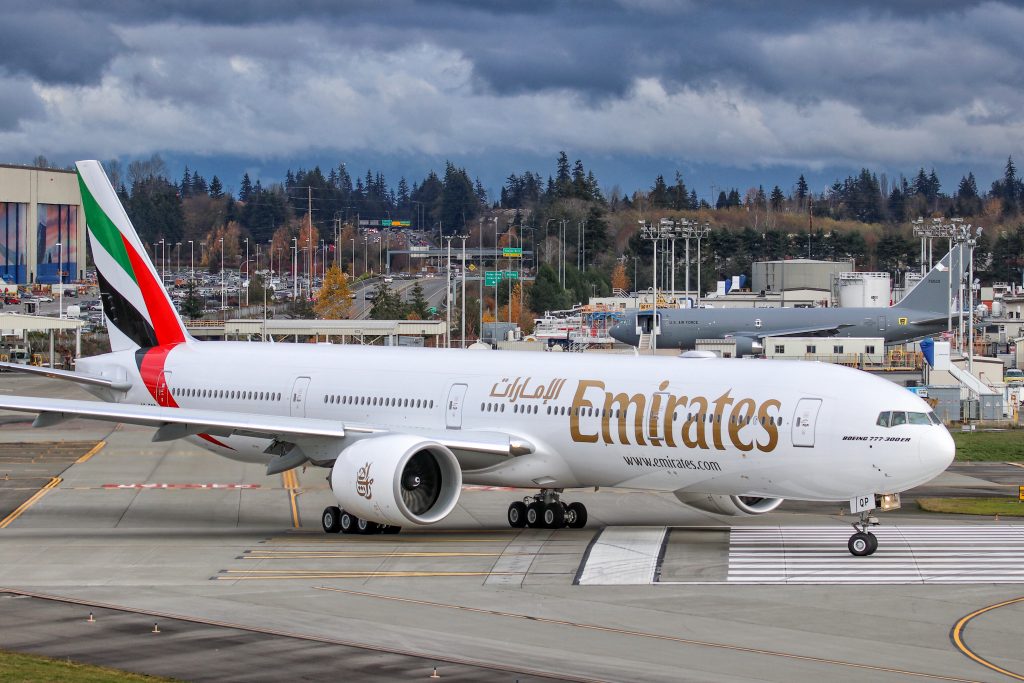
An Emirates 777-300ER lines up on the runway for a test flight at Paine Field. (Photo: AirlineGeeks | Katie Bailey)

Emirates has expressed firm confidence in the Airbus A380 even as it has expanded its fleet to include the A350, which it will receive in mid-2024, and Boeing 777X in 2025. Having pilots with a wide range of Airbus experience will prove useful for the company long-term, as it will be easier for the company to assign pilots across similar fleets more easily.

Emirates has an in-house pilot training program with 10 full-flight simulators. A new $135 million training facility is set to open in the Spring, increasing pilot training capacity by 54% and adding six new simulators, including for the A350 and Boeing 777.

Editor’s note: this article has been updated to correct an error regarding Emirates’ A380 fleet size

John McDermott

John McDermott is a commercial pilot pursuing a career in professional flight. His passion for aviation began in an Ann Arbor bookstore with a tale of enemy pilots during World War 2, and he hasn't looked back. Besides flying and writing for AirlineGeeks, John volunteers with Professional Pilots of Tomorrow and travels whenever he gets the chance.

Qatar Airways Cargo Adds New Destinations

Air cargo remains a pivotal component of the Qatar Airways'network with destinations across the globe.

Qatar's 747-8F cargo aircraft (Photo: AirlineGeeks | Chuyi Chuang)

Qatar Airways Cargo has added Huntsville, Ala. as a new cargo destination within the U.S. in a strategic partnership with DSV Global Transportation and Logistics. The airline will operate a twice-weekly flight using Boeing 777 freighter aircraft that will originate in Mexico City and terminate in Doha via Luxembourg.

Service began earlier in September and comes in as Qatar Airways Cargo’s 22nd destination in the Americas that offers cargo either through dedicated cargo aircraft or in the belly of passenger aircraft. It’s expected that the route will offer 200 tons of capacity and will likely become a favorite of the auto industry found within Alabama looking to send vehicles and other automotive parts to Europe via Luxembourg and beyond through Doha.

Mazda Toyota Manufacturing has a massive plant located right outside of Huntsville that is a quick 15-minute drive to the cargo terminal at Huntsville International Airport. Other automakers such as Honda, Hyundai, and Mercedes-Benz have a significant presence in the state as do OEM manufacturers such as Navistar. It is expected that all of these manufacturers will be taking advantage of the growth in cargo capacity.

The Mexico City, Huntsville, Luxembourg, and Doha corridor is also expected to be a hit with the petroleum and pharmaceutical industries which all have a significant presence along the entire route.

Air Cargo Growth

This is one of the latest steps in the growth of the cargo business for the airline. Qatar Airways’ cargo operations include over 70 dedicated cargo destinations served by a fleet of cargo aircraft. This fleet consists of two Boeing 747-8s, two Boeing 747-400s, 26 Boeing 777s, and one Airbus A310. The airline also offers cargo service to over 150 destinations it serves using passenger aircraft.

Alongside the Qatar Airways fleet itself, the airline has also recently partnered with Xiamen Airlines to increase cargo capacity from Doha to Mainland China.

As part of the agreement Xiamen Airlines seven times a week from Beijing’s Daxing International Airport to Doha’s Hamad International Airport using Boeing 787-9 aircraft and twice a week from Xiamen, China using Boeing 787-8 aircraft.

This adds to the already significant cargo capacity available between the two countries with Qatar Airways serving nine destinations in Mainland China and offering over 2,800 weekly tonnes of cargo capacity.

Cargo will continue to be a key growth area for the airline as it continues to add more destinations and create partnerships to add capacity. Overall, global air cargo traffic is forecasted to grow at a tremendous four percent per year through 2039. It’s an absolutely massive industry with IATA estimating that 2023 cargo revenues across the airline industry to be $142.3 billion in 2023.

Hemal Gosai

Hemal took his first flight at four years old and has been an avgeek since then. When he isn't working as an analyst he's frequently found outside watching planes fly overhead or flying in them. His favorite plane is the 747-8i which Lufthansa thankfully flies to EWR allowing for some great spotting. He firmly believes that the best way to fly between JFK and BOS is via DFW and is always willing to go for that extra elite qualifying mile. Hemal's opinions are his own and do not reflect those of his employer.

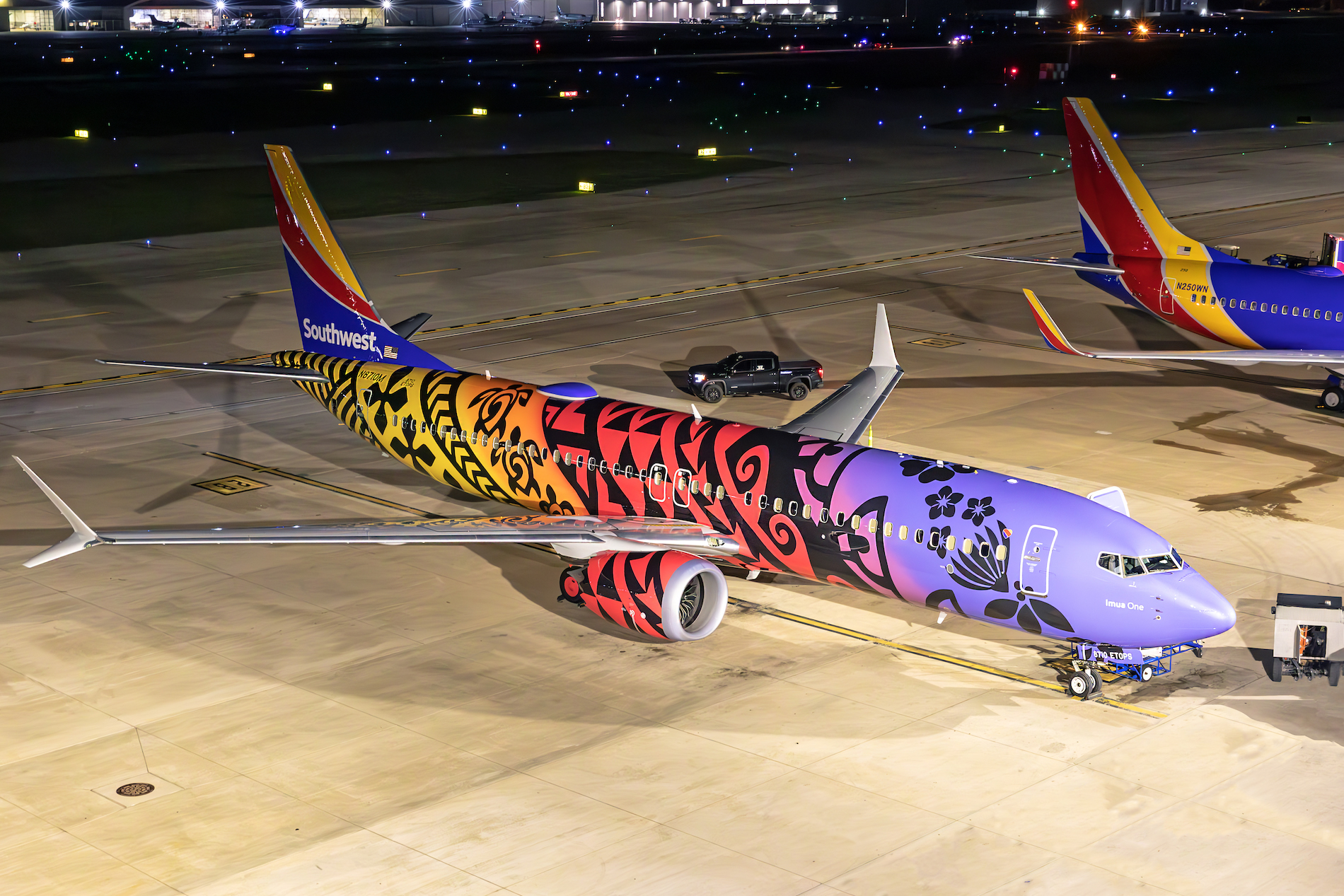
Livery of the Week: Southwest’s ‘Imua One’

This vibrant Hawaiian-inspired special livery turns an ordinary 737 MAX into a visually-appealing masterpiece, blending in with the state's natural beauty.

Southwest's 'Imua One' at Dallas Love Field (Photo: AirlineGeeks | William Derrickson)

Editor’s Note: AirlineGeeks is excited to launch our ‘Livery of the Week’ series. Every Friday, a team member will share an airline livery, which can be from the past, present, or even a special scheme. Some airline liveries are works of art. The complexity associated with painting around critical flight components and the added weight requires outside-the-box thinking from designers. The average airliner can cost upwards of $200,000 to repaint, creating a seperate aircraft repainting industry as a result.

Special liveries are a crafty way for airlines to adorn their aircraft with a visual masterpiece, many of which fall under the marketing cost center. Southwest’s ‘Imua One’ livery is no exception.

‘Imua One’ is the latest addition to the Southwest special livery line-up. It is one of only three special liveries on the carrier’s 737 MAX fleet. Eager planespotters can find the ‘Imua One’ livery on N8710M.

Southwest Airlines’ new Imua One on display at Long Beach Airport.
(Photo: Southwest Airlines)

An Island Inspiration

During the unveiling of ‘Imua One’ in April 2023, Southwest emphasized its importance in recognizing the Hawaiian community. Following an unveiling ceremony in Long Beach, Calif., the vibrantly-colored 737 MAX visited all of Southwest’s stations in Hawaii.

Designed by an Oahu-based creative firm, the livery features eight elements that represent concepts in Hawaiian culture. The design also has stars for each of the five airports in Hawaii that the carrier serves: Honolulu, Lihue, Maui, Kona, and Hilo. Imua is a rallying cry in the Hawaiian language that “translates to an urging forward, and it underscores a key value at Southwest—Teamwork.”

Southwest describes the detail of Imua One in a press release: “…six turtles in two groups of three to represent harmony and balance. Emblazoned near the nose of the aircraft, a lei honors unique Islands through their official flowers. Reflective of distinctive colors in the Southwest Heart livery, including bold blue, warm red, and sunrise yellow, a gradient transition from blue to yellow represents the evolution from night to day, and honors Hawaiian history of journeying the Pacific using wind, and following the guidance of the sun, stars, and moon to navigate.”

The Dallas-based carrier is no stranger to the special livery space. Per PlaneCaptures, Southwest has over 35 of its 737-series jets painted in different paint jobs, mostly celebrating the various states that the airline serves.

Imua One is undoubtedly a coruscating kaleidoscope of rich designs and colors, highlighting native Hawaiian beauty. This pairs with Southwest’s relatively new service offering to The Aloha State, which started in 2019.

Ryan Ewing

Ryan founded AirlineGeeks.com in February 2013 and has spent more than a decade covering the airline business. His work has been featured by CNN, WJLA, CNET, and Business Insider. His aviation experience spans airport operations, Part 135 regulatory compliance, and airline crew workforce planning, along with time behind the yoke of a Cessna 172 and interviews with airline executives. Ryan now serves as Group President of Firecrown Media’s Aviation Group. He holds a B.S. in Air Transportation Management and an MBA from Arizona State University and teaches Airline Management at Embry-Riddle Aeronautical University.

Breeze Airways Boosts Service To Florida

Breeze Airways Embraer 190 at Palm Beach International Airport. (Photo: AirlineGeeks | Vanni Gibertini)

This past week, Utah-based carrier Breeze Airways announced a continuation of its expansion to Florida, in addition to launching service to a new state. Breeze also announced two new flights, one of which will be of benefit to those traveling from Canada along with those residing in the Northern New York area. 

Situated in the center of Illinois, Springfield’s Abraham Lincoln Capital Airport has just two carriers currently operating out of the airport, Allegiant and American. The city has an essential air service (EAS) route to Chicago O’Hare operated by American Eagle twice daily utilizing CRJ-200 aircraft. Allegiant operates a twice-weekly route to Punta Gorda, Fla. Breeze will become the third carrier to operate out of the airport this December, bringing the airport to three destinations in Florida and four total. 

Breeze will operate to Orlando and Tampa,Fla. twice weekly, utilizing Airbus A220-300s. Beginning Dec. 8, the carrier will operate to Orlando on Fridays and Mondays. Service to Tampa will begin Dec. 4 and will operate on Fridays and Mondays as well. Tom Doxey, President of Breeze, believes this new service fits perfectly into the carrier’s ideals and said, “Breeze is all about adding service to underserved markets and city pairs, and we can’t wait to give the community of Springfield some new destinations with Breeze’s added convenience, affordability, and flexibility.”

Other New Flights to Florida

In addition to the most recent announcement of service to Springfield, the carrier will also inaugurate service to Plattsburgh, New York from Orlando on Nov. 28 and will operate three times weekly. Situated on the United States-Canadian border, Plattsburgh is an airport that sees a lot of travelers traversing from Quebec by road to fly out. Breeze plans to give those looking to escape the cold Canadian winter the opportunity to easily travel to sunny Florida with the carrier’s President stating “[W]e’re excited to welcome new snowbird Guests from Montreal soon”.

In addition to operating flights to northern N.Y., the airline will add service to Portland, Maine. Flights will operate to Fort Myers seasonally twice weekly beginning Nov. 15. Both routes are slated to be operated by Airbus A220-300 aircraft. 

While Breeze is headquartered in Utah, the carrier has been making a name for itself in Florida. Through the end of the year, Breeze will inaugurate 21 new routes to and from Florida continuing aggressive expansion. In 2022, the carrier’s Florida operation consisted of 492 flights between 21 city pairs.

This year, Breeze significantly boosted operations out of the Sunshine State increasing service by 185 percent and operating 1,402 flights between 51 city pairs. The airline recently took delivery of the 50th Airbus A220 to roll off the assembly line in the United States bringing the carrier to have 16 of the type and boasting a fleet of 34 aircraft.

Zach Cooke

Zach’s love for aviation began when he was in elementary school with a flight sim and model planes. This passion for being in the air only intensified throughout high school when he earned his Private Pilot Certificate. He then attended Embry-Riddle Aeronautical University, earning his certificates and ratings to later flight instruct and share his passion for aviation with others. He now resides in the North East living out his dream as an airline pilot.

San Antonio Set to Receive First Ever Scheduled Long-Haul Route

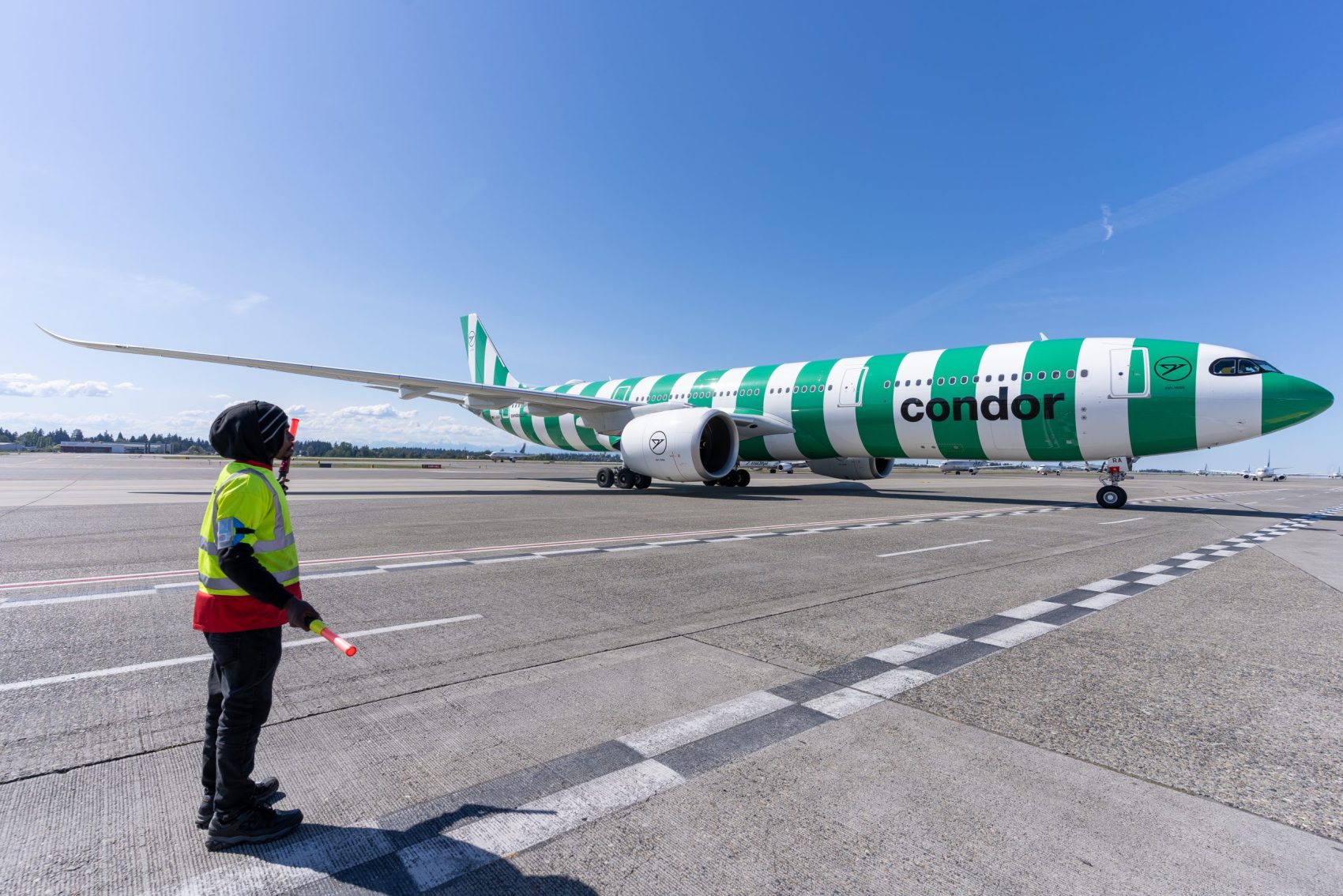
A Condor Airlines Airbus A330-900 arriving at the gate at Seattle-Tacoma International Airport.
A Condor Airlines Airbus A330-900 arriving at the gate at Seattle-Tacoma International Airport. (Photo: AirlineGeeks | Fangzhong Guo)

As pointed out by Ishrion Aviation on Twitter (X), San Antonio, Texas is slated to receive its first-ever long-haul route in 2024. The airport, which saw nearly 9.5 million passengers in 2022, has yet to receive any scheduled nonstop air service outside of North and Central America.

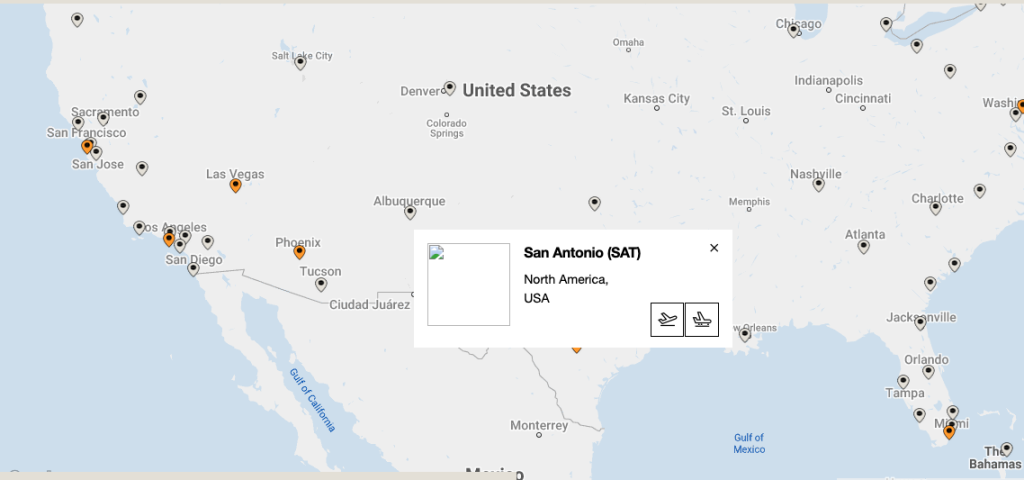
Low-cost carrier Condor plans to start service from its Frankfurt hub (FRA) to San Antonio (SAT) on May 17, 2024. The service will operate three times per week, according to the Tweet.

The flight is scheduled to depart Frankfurt at 2:00 p.m., arriving in San Antonio at 6:25 p.m. The flight will then turn around, leaving SAT at 8:25 p.m. and arrive in FRA the next day at 1:40 p.m.  All times are local.

Currently, nearby Austin–Bergstrom International Airport (AUS) sees regular transatlantic service from British Airways and Virgin Atlantic to London Heathrow. Lufthansa and KLM also serve Austin.

New Central Texas Long-Haul Flights

Airports and their respective jurisdictions often compete heavily for new air service, especially to long-haul markets. Many will offer lucrative incentives to lure new airlines.

On Twitter (X), San Antonio International Airport teased the new service on Wednesday, setting the stage for an official Thursday announcement. Condor also placed the central Texas city on its route map.

Condor’s route map showing San Antonio (Photo: Condor)

According to Texas Demographics, San Antonio is the second largest city in Texas by population and seventh in the U.S. The new flight is now bookable on Condor’s website.

AirlineGeeks.com Staff

AirlineGeeks.com was founded in February 2013 as a one-person blog in Washington D.C. Since then, we’ve grown to have 25+ active team members scattered across the globe. We are all here for the same reason: we love deep-diving into the fascinating realm of the airline industry.

A Look at JetBlue’s Creative Aircraft Names and Liveries

A series of JetBlue tails (Photo: JetBlue)

America’s most blue airline has a history of giving its aircraft creative names and adorning them in a series of different tail designs and special liveries. Each aircraft in JetBlue’s fleet features a clever name that often features some sort of pun or wordplay. The airline’s aircraft also feature a lineup of blue-themed tail designs, giving the fleet a diverse yet cohesive look.

From Bluebird to A Defining MoMint

JetBlue began service on February 11, 2000 with flights between their new home base at New York’s John F. Kennedy International Airport and its first two destinations: Buffalo Niagara International Airport in Upstate New York and Fort Lauderdale-Hollywood International Airport in Florida.

A few months earlier, the newly-formed brainchild of airline entrepreneur David Neeleman had received its first aircraft, an Airbus A320-200 registered as N503JB. The airline named the aircraft “Bluebird,” presumably as a nod to the airline’s chosen theme color and the many flights that the aircraft would undertake.

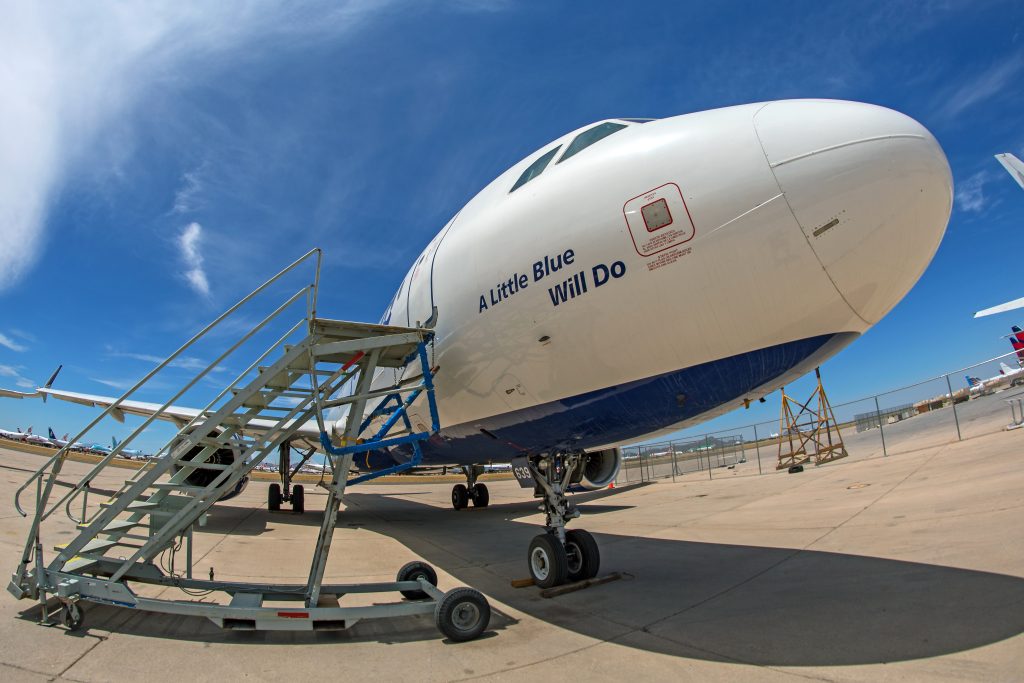
Since then, each of JetBlue’s planes has received a unique name. Often involving a pun or play on words, most of these are themed around the word “blue.” Names include “Big Blue Bus,” “Blue La La” and “Blue Jersey.” Other names are longer, such as “May The Force With Blue” and “Objects In Mirror Are Bluer Than They Appear.”

A JetBlue A320 named “A Little Blue Will Do” (Photo: AirlineGeeks | William Derrickson)

Aircraft that have the airline’s business class – known as Mint – have names featured around that product’s name. Examples include “Mint for Each Other” and “A Mint Summer Night’s Dream.” JetBlue’s first aircraft in its new livery is called “A Defining MoMint.”

Some names deviate from the color-based naming scheme. For example, the airline has a few aircraft named after significant individuals, including founder David Neeleman, former JetBlue board member Frank Sica, and Rob Dewar, the head of the team responsible for the development and delivery of the Airbus A220.

Other creative names include one that has “JetBlue Loves You” drawn out in American Sign Language and “How’s My Flying? Call 1-800-JetBlue.” The airline also had a special livery dedicated to the launch of its inflight WiFi – known as “Fly-Fi” – which had a name involving the word “blue” spelled out in binary code, but that A320 has since been repainted and renamed as “My Other Ride is a JetBlue A220.”

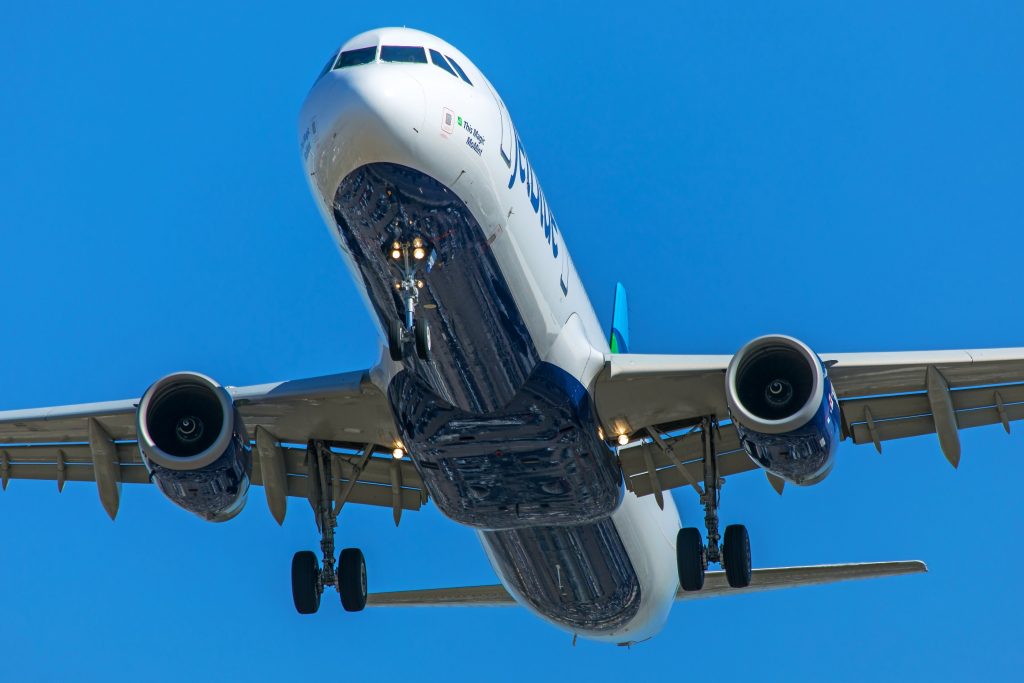
A JetBlue Airbus A321 named “This Magic MoMint” (Photo: AirlineGeeks | William Derrickson)

JetBlue holds contests for its employees to name new aircraft. Employees who submit names that get selected win some sort of prize. In the past, winners have received things like a model aircraft of the plane that they named and even the opportunity to fly on the delivery flight of the aircraft.

Balloons, Blue Monster & Blueprint

The airline’s creative juices go beyond aircraft naming. JetBlue has a series of tail designs across its fleet. Each design has its own name as well. The “Balloons” design features stacked circles in five different shades of blue, for example, while the “Highrise” design has tall rectangles in a wavy pattern.

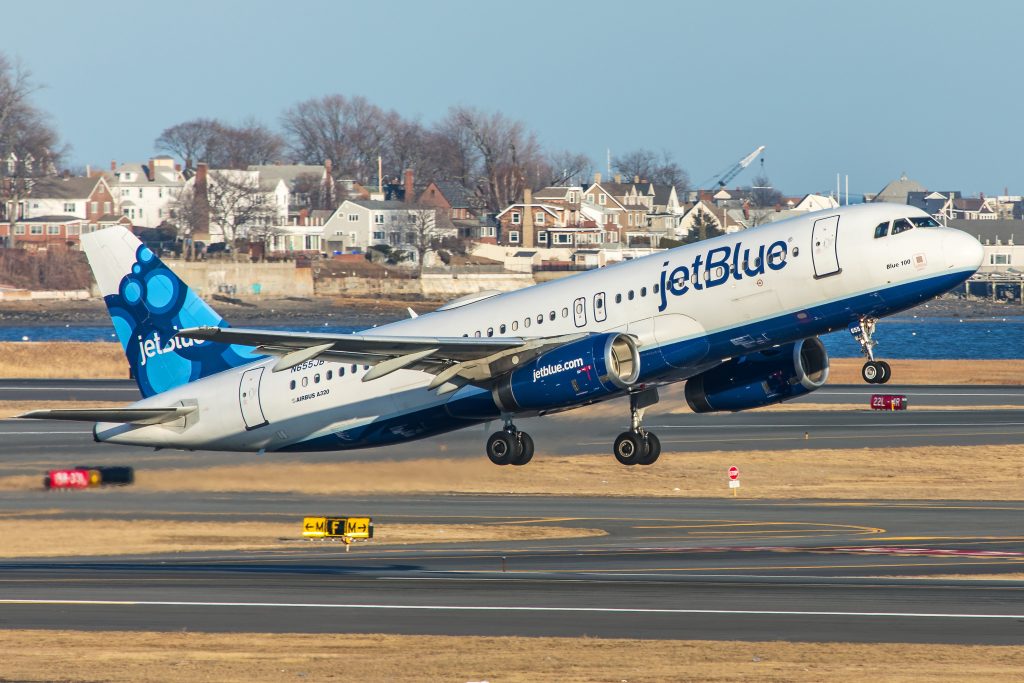
A JetBlue A320 named “Blue 100” with the “Blueberries” tail fin design (Photo: AirlineGeeks | William Derrickson)

On older aircraft, the different tail schemes are spread across the fleet on a somewhat random basis. For example, the “Barcode,” “Blueberries” and “Tartan” tail fin designs can be found on JetBlue’s Airbus A320s and Embraer E190s and both of those types of aircraft have multiple other tail designs as well. In recent years, the airline has been moving towards a more structured approach with its tail fins. For example, all of JetBlue’s A220s have the “Hops” tail design and all Airbus A321-200s with Mint have the “Prisim” tail design.

JetBlue also has a series of special liveries. A few of them pay tribute to sports teams in the airline’s focus city in Boston. These include “Blue Monster,” a Boston Red Sox livery named after the Green Monster left field wall at Fenway Park in Boston, as well as “Lucky Blue,” celebrating the airline’s status as the official airline of the Boston Celtics.

JetBlue’s special livery aircraft highlighting its partnership with the Boston Celtics (Photo: JetBlue)

The airline also has special liveries dedicated to veterans, the New York City Police Department and the New York City Fire Department. There is also an Embraer E190 named “Blueprint” and has a livery showing various items inside the aircraft. Other special liveries include “I <3 Blue York,” a tribute to the airline’s hometown and a fictional 1960s retrojet livery.

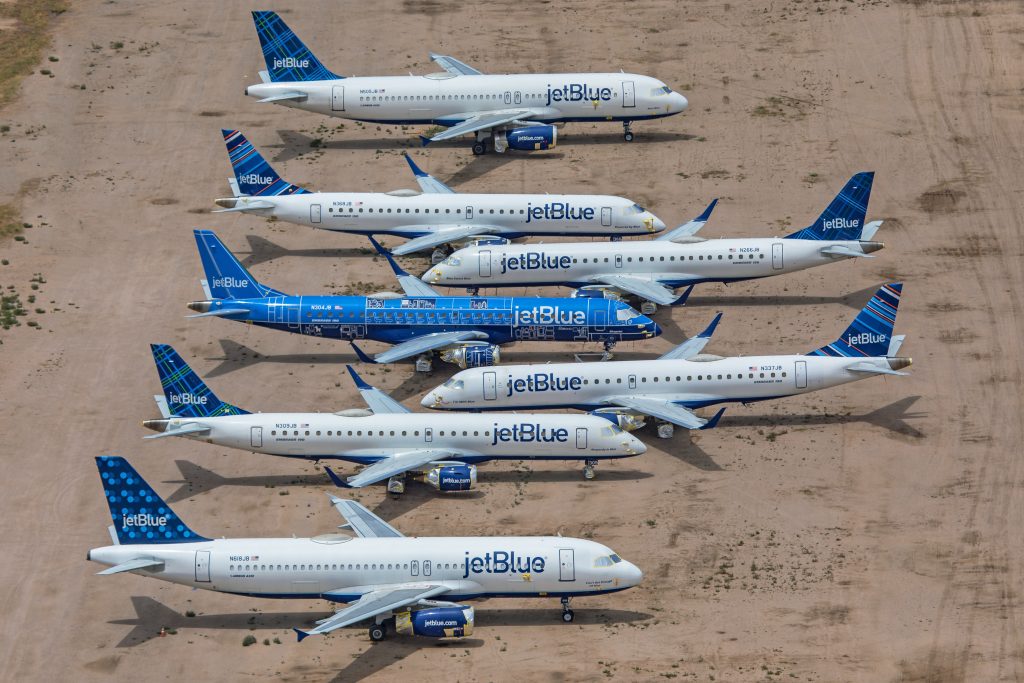
JetBlue aircraft parked in Marana, Ariz during the COVID-19 pandemic, including “Blueprint” (Photo: AirlineGeeks | William Derrickson)

In June of this year, JetBlue announced a new livery that will be featured on all Mint aircraft. The airline appears to be streamlining its tail fin and livery approach with the new livery and its standardized painting practices in recent years. However, it has also stated that refreshed versions of its existing patterns will be unveiled later in the fall. With these developments, JetBlue appears to be setting itself up for keeping a diverse lineup of aircraft paint jobs in the skies for years to come.

Andrew Chen

Andrew is a lifelong lover of aviation and travel. He has flown all over the world and is fascinated by the workings of the air travel industry. As a private pilot and glider pilot who has worked with airlines, airports and other industry stakeholders, he is always excited to share his passion for aviation with others. In addition to being a writer, he also hosts Flying Smarter, an educational travel podcast that explores the complex world of air travel to help listeners become better-informed and savvier travelers.

Face of Hawaiian Airlines Brand Passes Away at 77

The face behind Hawaiian's iconic logo has passed away, according to local reports.

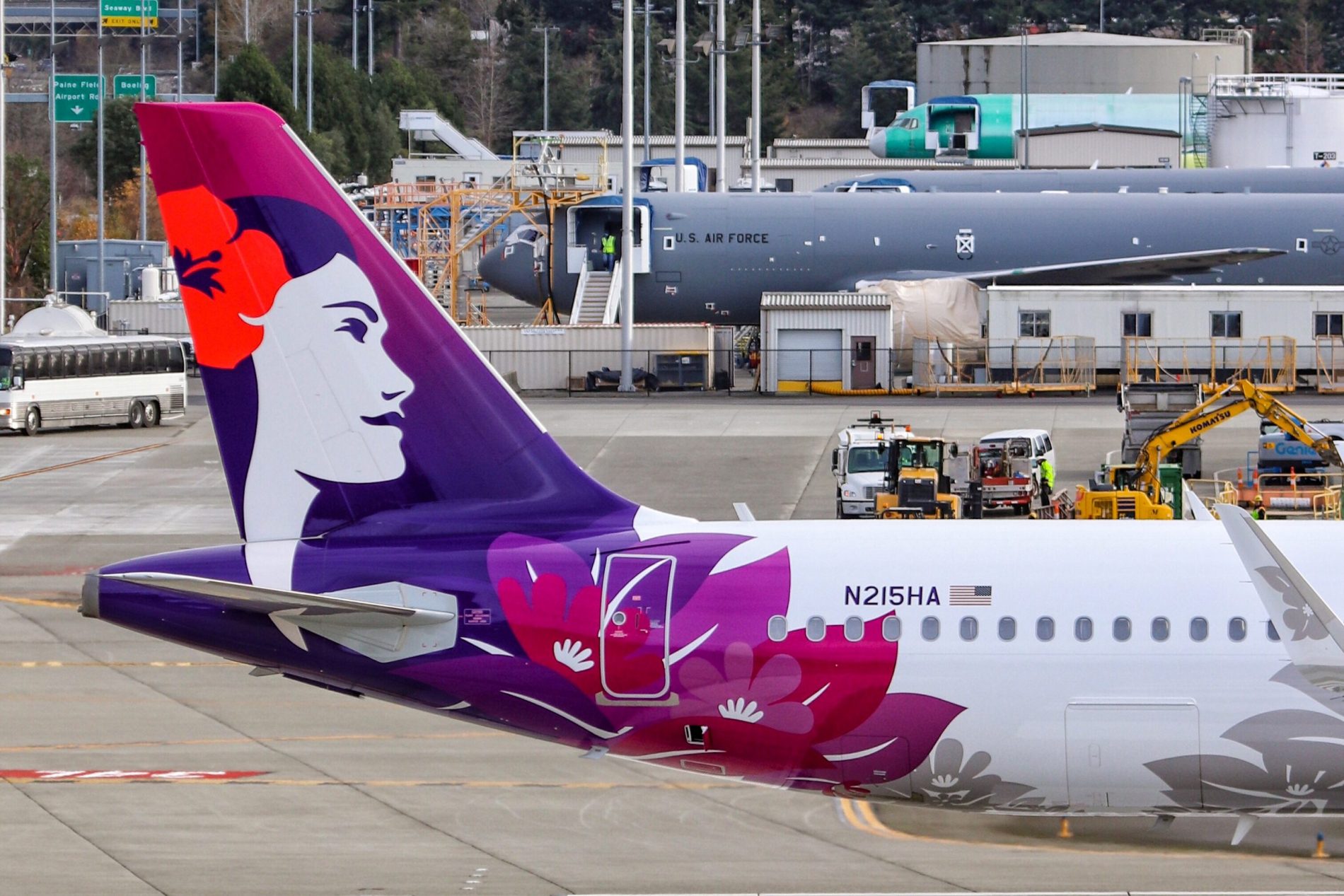
A Hawaiian Airlines A321neo at Paine Field. (Photo: AirlineGeeks | Katie Bailey)

Miss Hawaii 1964 winner and inspiration behind Hawaiian Airlines’ iconic logo has died at 77. A Maui native, Leina’ala Ann Teruya Drummond was no stranger to the airline industry, having trained as a Hawaiian Airlines flight attendant at 18 years old.

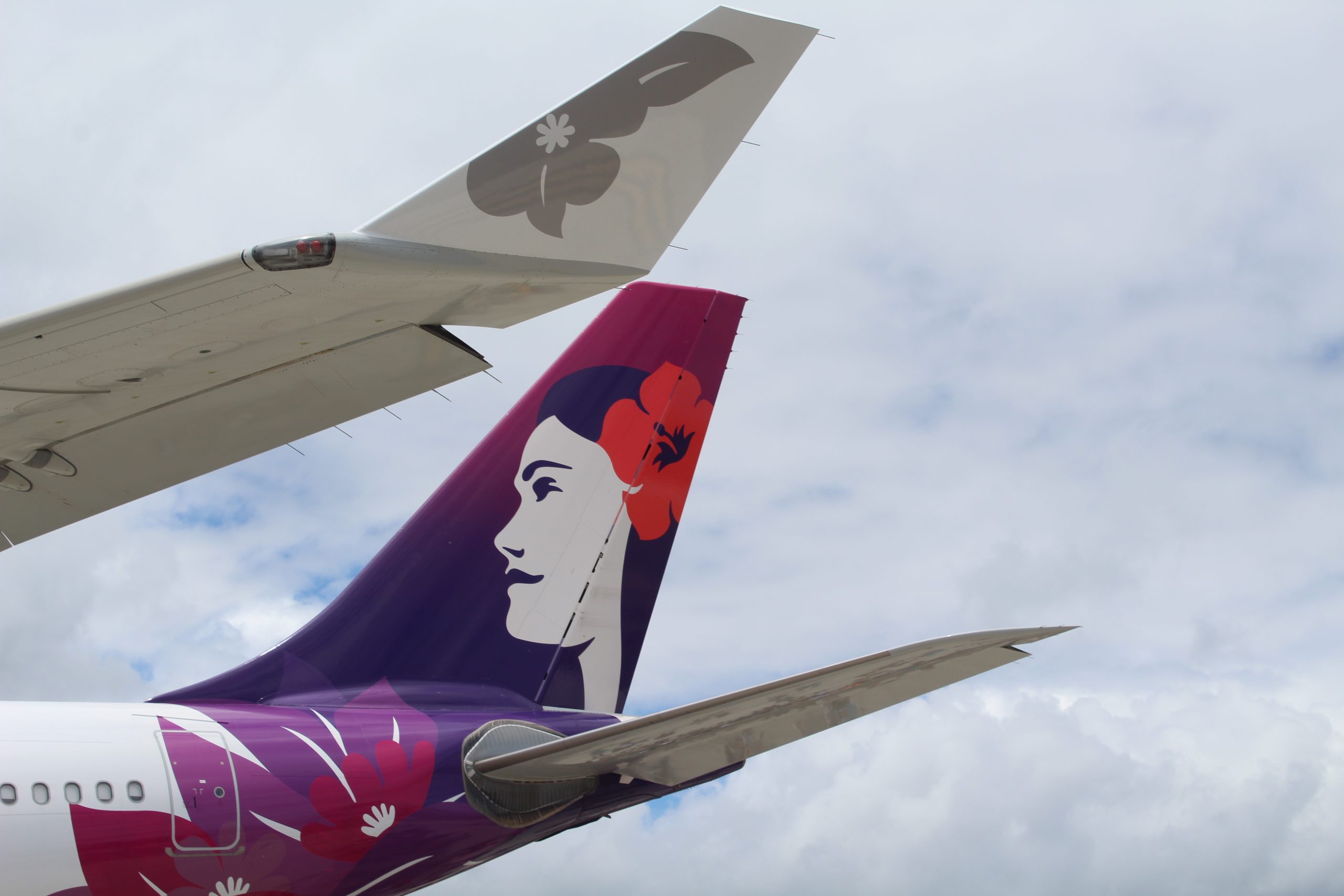
According to KITV, Drummond also graduated from Cannon’s Business College in Honolulu, where she later became a successful businesswoman. Her profile adorns the tails of 66 active Hawaiian jets, including the airline’s new Boeing 787 Dreamliner.

It wouldn’t be an Hawaiian air show without Hawaiian Airlines. (Photo: AirlineGeeks | Mike Mangano)

‘Flower of the Sky’

Pualani – which means ‘Flower of the Sky’ in Hawaiian – is the inspiration behind the airline’s emblematic logo. Hawaiian would not roll out this design until the early 1970s before a 2001 update was made.

“Designed with input from the airline’s employees, the new Pualani is intended to reflect Hawaiian’s proud Island heritage with a sense of grace, elegance and caring. At the same time, her expression is seen to capture the strength, determination, spirit and confidence of the people of Hawaiian Airlines,” according to Images of Old Hawai’i.

Despite a handful of iterations, Drummond’s profile continues to serve as the inspiration for the airline’s logo. She leaves behind two children.

Miss Hawaii 1964 Leina’ala Ann Teruya and original Pualani “Flower of the sky” Hawaiian Air logo 1973
byu/NebojsaDeLuka inOldSchoolCool

Ryan Ewing

Ryan founded AirlineGeeks.com in February 2013 and has spent more than a decade covering the airline business. His work has been featured by CNN, WJLA, CNET, and Business Insider. His aviation experience spans airport operations, Part 135 regulatory compliance, and airline crew workforce planning, along with time behind the yoke of a Cessna 172 and interviews with airline executives. Ryan now serves as Group President of Firecrown Media’s Aviation Group. He holds a B.S. in Air Transportation Management and an MBA from Arizona State University and teaches Airline Management at Embry-Riddle Aeronautical University.

A320 May Fly Out Of Field

The Herald said the airline announced Sept. 17 that the aircraft will fly again “soon” but didn’t give a timeline. Presumably the takeoff will have to wait until the ground has firmed up, perhaps with colder fall temperatures.

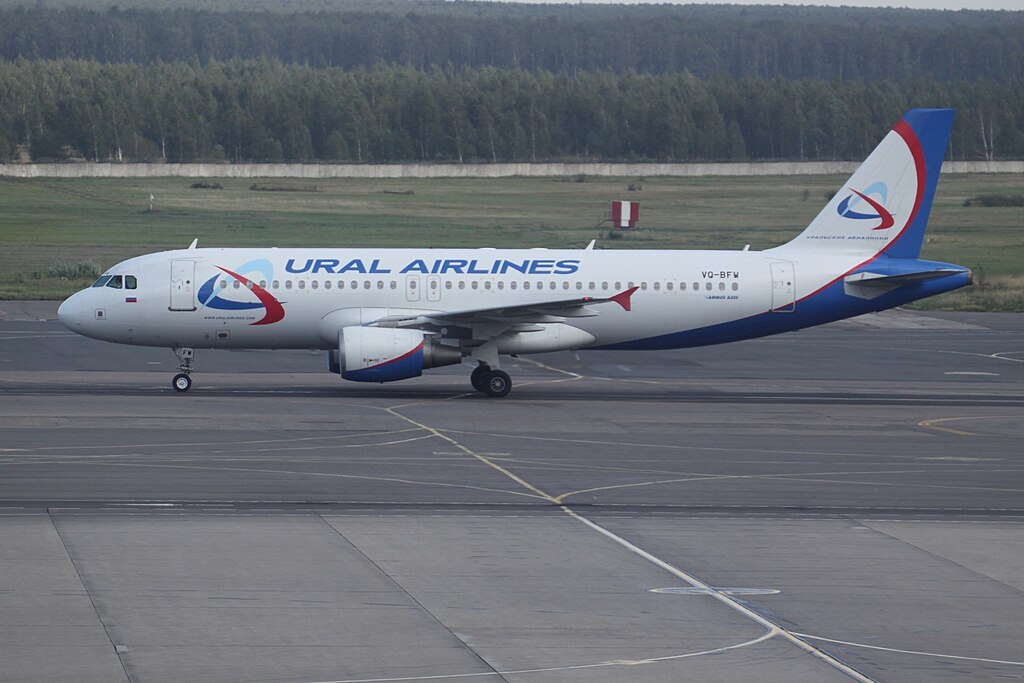
A Ural Airlines A320 (Photo: aeroprints.com, CC BY-SA 3.0 , via Wikimedia Commons)

The Aviation Herald is reporting that Ural Airlines appears to be getting ready to fly an A320 out of a Russian field where it landed a week ago. The publication, citing local observers,  said the aircraft has been jacked out of the ruts it dug in the soft ground, the engines serviced and covered and all the emergency slides stowed. The story included a photo of the buttoned-up airplane saying it was taken on Sept. 17.

The Herald said the airline announced Sept. 17 that the aircraft will fly again “soon” but didn’t give a timeline. Presumably the takeoff will have to wait until the ground has firmed up, perhaps with colder fall temperatures.

The Herald has uncovered new details about the events that led to the off-airport landing. It was initially reported that the flight diverted from its intended destination of Omsk because of a hydraulic failure. The Herald is now saying the hydraulics failed during a weather-related go around. The crew calculated there was enough fuel to get to Novosibirks, about 300 miles east but the gear may not have retracted properly, leaving the nose gear doors open. The resulting drag chewed up the fuel supply and local authorities said there was less than 500 pounds of fuel (about five minutes of flying time) left when the plane landed about 100 miles from its new destination. The only damage was to the nose gear and none of the 167 people onboard was hurt.

This article was originally published on AirlineGeeks’ sister publication AvWeb

AirlineGeeks.com Staff

AirlineGeeks.com was founded in February 2013 as a one-person blog in Washington D.C. Since then, we’ve grown to have 25+ active team members scattered across the globe. We are all here for the same reason: we love deep-diving into the fascinating realm of the airline industry.

iAero Airways Files for Bankruptcy Protection

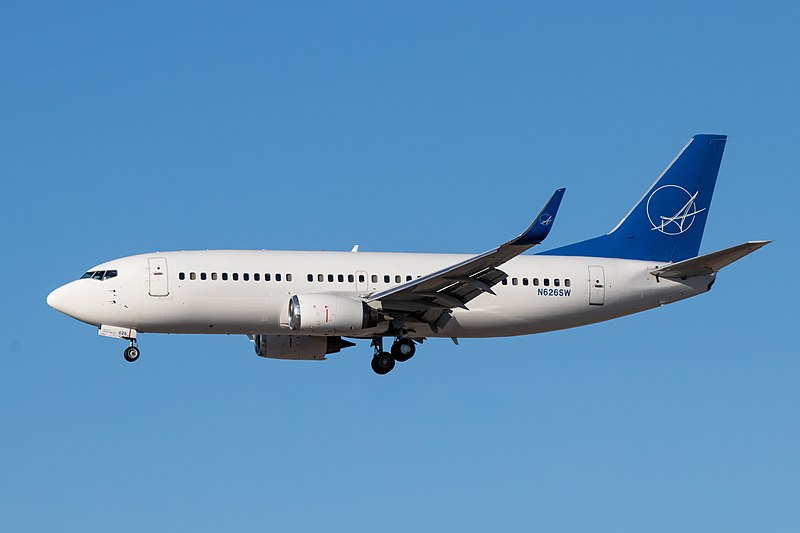
An iAero 737 (Photo: Ganbaruby, CC BY-SA 4.0 , via Wikimedia Commons)

iAero Airways, previously known as Swift Air, has filed for Chapter 11 bankruptcy protection, Aero Crew News reports. The company is among the largest Boeing 737 charter airlines in the United States.

iAero Airways was established in 2019 when iAero acquired Swift Air. The company offers charters, ACMI leasing, and cargo flights on behalf of major international couriers.

iAero’s fleet currently consists of 18 Boeing 737-400s, nine 737-800BDSFs, eight Boeing 737-300s, five Boeing 737-800s, two Boeing 737-400SFs, and one Boeing 737-300SFs.

Swift Air History

Swift Air began operating in 1997 with Embraer ERJ-135 aircraft. The aircraft was authorized for operations under Part 121 in 2006, and it subsequently began flying Boeing 737-400s in premium all-first-class configurations.

Swift Air was purchased by iAero in 2019 and rebranded as iAero Airways later that year. It retained its corporate identity as Swift Air, LLC in order to keep its air operating certificates.

The company played a critical role in the third revival of the Eastern Air Lines brand. It owns the intellectual property belonging to the famous Eastern Air Lines, which went defunct in 1991; Swift purchased the company’s second iteration after its bankruptcy in 2017. When Dynamic Airways, part of which is owned by the co-owner of Swift Air, arose from bankruptcy in 2018, it acquired a license from Swift to use the Eastern intellectual property in order to brand itself as Eastern Airlines while operating on the Dynamic Air Operator’s Certificate.

iAero is one of the few American companies that still operates the Boeing 737 Classic family. While major airlines have transitioned to 737NG and 737 MAX aircraft, iAero’s fleet has remained a mainstay of historical aviation in the United States. While the fleet is rarely available for the public to travel on, they are still visible to the public at commercial airports around the country.

Swift acquired 737-800s while planning for the latest iteration of Eastern. One of the airline’s aircraft is painted in Eastern colors to protect the trademarks.

A Swift Air Boeing 737-400 in the Fyre Festival special livery. (Photo: John Klos [CC BY-SA 2.0 (https://creativecommons.org/licenses/by-sa/2.0)])
Swift’s journey to this Chapter 11 filing has been somewhat volatile. It has received publicity for operating flights on behalf of John McCain’s 2008 presidential campaign. The aircraft McCain used was called the “Straight Talk Express” for the duration of the election cycle. The aircraft has also been notable for operating on behalf of Immigration and Customs Enforcement.

However, the airline’s bid to start international flights in 2011 failed within one month. The carrier suspended its Part 121 operations for a week during the same month it tried international flights due to an FAA inquiry.

The airline was also tapped to operate charter flights on behalf of the notorious Fyre Festival, which attracted visitors with promises of spectacular music and arts only to provide incredibly lackluster amenities and facilities.  Swift was forced into a PR crisis in which it distanced itself from festival organizers.

Bankruptcy Filing

Swift Air says it has the support of lenders through commitments for approximately $22.5 million in debtor-in-possession financing to allow iAero Airways to operate as usual.

“After careful consideration, our board determined it was necessary to take this step now to address our financial strength and restructure certain of our contractual relationships and legacy balance sheet liabilities,” said Timothy Rainey, President of iAero Airways in a press release. “We believe this Chapter 11 filing provides the most effective means to restructure with minimal impact on the business and our customers and we are committed to moving through this process as expeditiously as possible so the company can emerge from Chapter 11 well-positioned to maximize our long-term prospects for the benefit of our customers, employees and other stakeholders.”

“Our customers remain our top priority and they can continue to depend on us for the same safe, reliable travel and high-quality service they know and expect from us,” Rainey continued

“The company is optimistic about its long-term future upon emergence as it stabilizes its businesses following a global pandemic that placed unprecedented pressures on the airline industry and significantly deleverages its balance sheet during these Chapter 11 cases,” the company wrote while announcing its filing.

In addition to continuing operations now, iAero says it is working with courts to seek relief that will ensure normal operations long-term. The company also stressed its dedication to keep paying employees and providing promised benefits without interruption.

John McDermott

John McDermott is a commercial pilot pursuing a career in professional flight. His passion for aviation began in an Ann Arbor bookstore with a tale of enemy pilots during World War 2, and he hasn't looked back. Besides flying and writing for AirlineGeeks, John volunteers with Professional Pilots of Tomorrow and travels whenever he gets the chance.
Sign-up for newsletters & special offers!

Get the latest stories & special offers delivered directly to your inbox

SUBSCRIBE

Uh-oh! It looks like you're using an ad blocker.

Our website relies on ads to provide free content and sustain our operations. By turning off your ad blocker, you help support us and ensure we can continue offering valuable content without any cost to you.

We truly appreciate your understanding and support. Thank you for considering disabling your ad blocker for this website