








Stories

Suid Cargo Takes Off as South Africa’s Newest Cargo Airline

An Eva Air Cargo 747 (Photo: AirlineGeeks | Terrill Murriel)

South Africa is set to welcome a new cargo airline, Suid Cargo, which will commence non-scheduled cargo flights from Johannesburg’s OR Tambo International Airport in the second quarter of 2023.

The airline plans to operate to over 20 destinations across Southern, West and East Africa, including Mozambique, Madagascar, Malawi, Mauritius, Zambia, Namibia, D R Congo, Kenya, Uganda, Tanzania, Angola, and Rwanda.

The carrier, 25% owned by Kenya-based cargo airline Astral Aviation, will begin by leasing a Boeing 727-200 freighter from Astral Aviation and will subsequently acquire additional freighters such as Embraer 190 Freighter and Airbus 320F or Boeing 737-800F in 2024. The airline’s long-term goal is to transition to a scheduled carrier in 2024 and to operate on the domestic network.

Announcing the new airline at Air Cargo Africa event in Johannesburg, Kevin Moodley, Commercial Director of Suid Cargo Airlines, has said that the new airline will promote exports from South Africa in addition to transit shipments to over 20 African destinations. The airline will also have a unique Sea-Air Cargo product from the Ports of Durban and Cape Town, reducing transit time to landlocked regions in Africa.

The announcement comes amidst heightened competition in the air freight industry, with other carriers like Ethiopian Cargo, Kenya Airways Cargo, RwandAir Cargo, and Astral Aviation reinforcing their fleets to meet the growing cargo demand.

Air freight has witnessed a tremendous surge over the past few years, especially during the pandemic when commercial passenger flights were grounded.

The CEO of Astral Aviation, Sanjeev Gadhia, has expressed his delight at supporting South Africa’s newest cargo airline, Suid Cargo Airlines, and is confident that the start-up cargo airline can scale its operations to cover Southern, West and East Africa, including Asia, the Middle East, and Europe, using their B747-400F, B767F and B757F on a charter basis.

Thomas Honiball, Accountable Manager, and CEO of Suid Cargo has expressed his excitement at the launch of the new cargo airline and is optimistic about the growth prospects of the African air freight market. The cargo airline’s focus on exports and transit shipments aligns with the South African government’s efforts to promote trade and investments in the continent.

The launch of Suid Cargo Airlines is a positive development for the air freight industry in South Africa and the wider African continent. The airline’s unique Sea-Air Cargo product and its focus on exports and transit shipments will enable it to cater to the growing demand in the region. With plans to acquire additional freighters and transition to a scheduled carrier in 2024, Suid Cargo is set to be a major player in the African air freight industry.

Victor Shalton

Victor Shalton's love for aviation can be traced to when he was 11-years-old. As a seasoned aviation writer, he takes pride in providing the best aviation coverage around the globe and is passionate about advancing his skills in the aviation space. In addition, he loves travelling, writing, arts and while his speaking engagements have taken him around the world, he is proud to call Nairobi home.

Cathay Pacific Adds Flights to Japan As Travel Restrictions Are Pulled Back

A Cathay Pacific 777 lifts off from Dusseldorf, Germany. (Photo: AirlineGeeks | Fabian Behr)

Cathay Pacific has confirmed that it will ramp up the flight frequencies to Japan. It comes after the announcement of Japan to scrap the travel restrictions. Japan has limited the number of flights from Hong Kong since the announcement of China to reopen its border.

“We welcome the decision made by the Japanese government to remove the maximum number of flights each carrier can operate from Hong Kong SAR to Japan,” Cathay Pacific said in a statement.

Hong Kong Express, Cathay Pacific’s low-cost carrier, will adjust its frequencies in response to the new policies. Earlier, Hong Kong Express has cancelled over 100 flights to Japanese destinations, such as Fukuoka, Okinawa, Osaka and Tokyo’s Narita and Haneda Airport for March.

Cathay Pacific said it will operate 83 and 94 flights in April and May respectively, compared to March, it provides 72 flights to Japan every week. However, it is expected the schedule couldn’t rebound to pre-covid levels due to the shortage of staff in Japan.

Cathay Pacific has more than its fair share, cancelling the flights to Japan during the Lunar New Year Holidays in January.

“Unfortunately, despite demand being high for Japan, we had to cancel some of our flight due to restrictions.” Lavinia Lau, Chief Customer and Commercial Officer said.

Meanwhile, South Korea is expected to lift its travel restrictions in March as well. Earlier, the flights coming from Hong Kong and Macau must landed at Seoul’s Incheon Airport. Also, the passengers from both cities are not allowed to transit at Incheon. It is expected Hong Kong carrier could touch down other airports in the country again, such as Jeju and Busan.

In addition, Taiwan has fully reopened to Hong Kong citizens on Feb. 20. The long-awaited decision is paving the way for the recovery of aviation industry. Taiwan is one of Hongkongs’s favorite travel destinations as well. China Airlines, the main rivals of Cathay Pacific, has announced that it will operate 40 weekly flights in March. EVA Air will also enhance its services by the end of March.

Hit One Million Milestone

Cathay Pacific has struggled to keep its head above water during the Covid. After three years of the pandemic, the carrier revealed that it had carried over 1 million passengers in January, an increase of 4,000% compare with same time last year. It was the first time the airline reached a million passengers since the pandemic began in early 2020. However, the traffic was only 33% of pre-Covid levels.

The flag carrier saw the demand of leisure travel over the Lunar New Year Holidays was strong, particularly to Japan, Thailand and Singapore. It also resumed the flight operation to Phuket, Thailand. As a result of the surged demand to China, the airline has resumed the services to Xian, operating up to three daily flights Shanghai, 11 flights per week to Beijing.

IAG Acquires Full Control of Air Europa

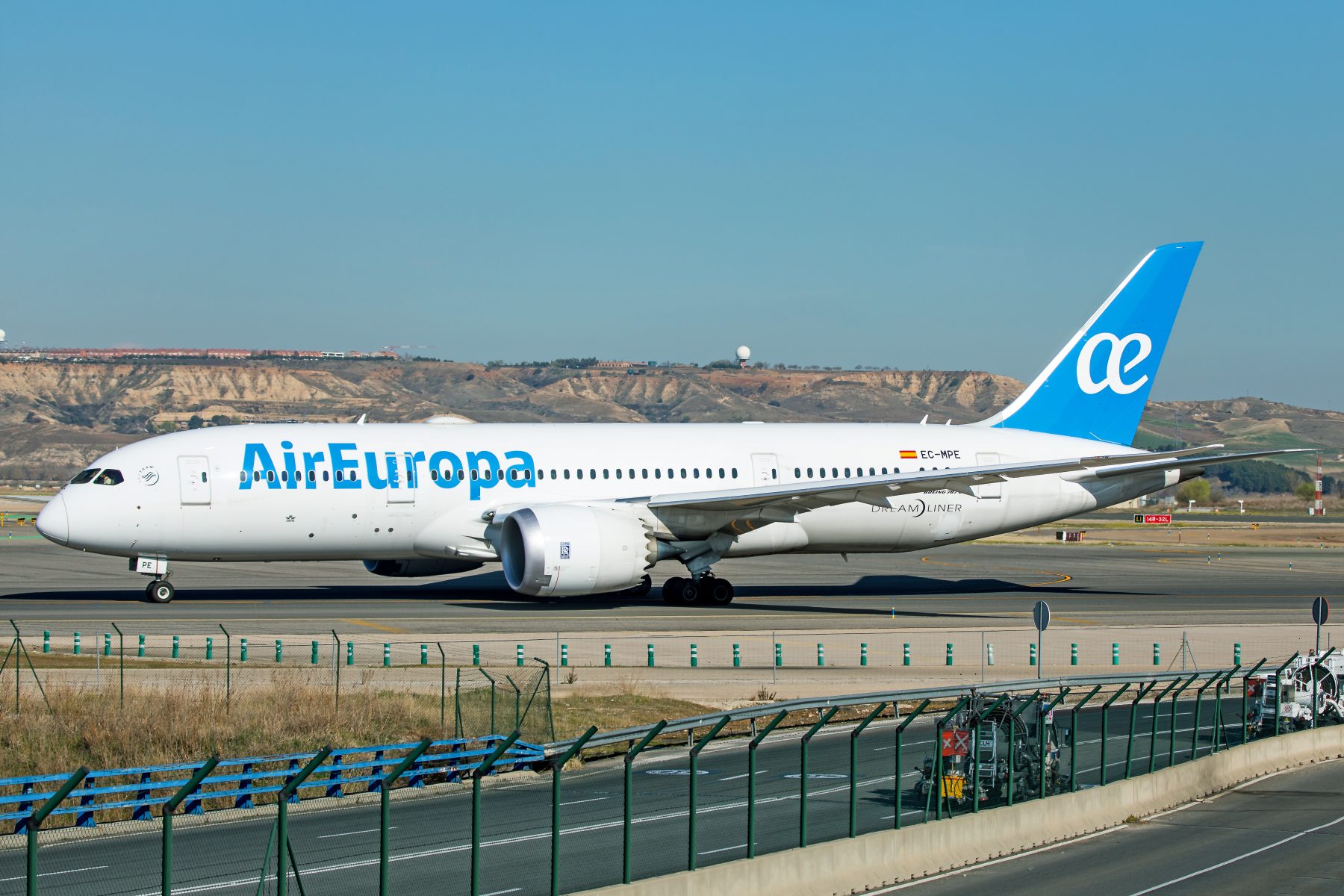
Air Europa 787
An Air Europa 787-8 in Madrid. (Photo: AirlineGeeks | William Derrickson)

International Airlines Group (IAG) has agreed to purchase the remaining 80% stake of Air Europa that it did not already own from Spanish company Globalia. In announcing strong financial results for 2022 and a positive outlook for 2023, IAG revealed that it had finalized an agreement to pay 400 million Euros ($422 million) to acquire full control of the Spanish airline.

The Acquisition

IAG is the holding company that owns Aer Lingus, British Airways, Iberia, LEVEL and Vueling. It first announced its intention to acquire Air Europa for one billion Euros in November of 2019. However, the deal was not finalized before the COVID-19 pandemic and the purchase price had dropped to 500 million euros by January of 2021. IAG later backed out of the deal before converting a loan to a 20% stake in Air Europa in August of 2022.

Payments to acquire the remaining 80% stake are structured as follows: 200 million Euros will be paid when the deal is approved by regulators. Once the deal closes, 100 million euros will be paid in IAG shares, and the final 100 million Euros will be paid in cash. The transaction is expected to be completed in about 18 months.

IAG intends to maintain Air Europa and Iberia as separate brands. Air Europa — which is currently a member of SkyTeam — is likely to leave the alliance to join British Airways and Iberia, to become a Oneworld member. However, it is unclear whether Air Europa will join the oneworld transatlantic joint venture.

Air Europa currently operates a fleet of approximately 40 aircraft, consisting of Boeing 737 and Boeing 787 Dreamliners. The carrier operates short-haul routes within Europe as well as long-haul transatlantic flights from its hub at Madrid’s Adolfo Suárez Madrid–Barajas Airport. Air Europa has a strong presence in Latin America and the proposed transaction would allow for IAG to strengthen its position in the region.

Market Consolidation and Regulatory Approvals

Since IAG already owns the two largest airlines in Spain, Vueling and Iberia, the acquisition of Air Europa would solidify the group’s dominance in the Spanish air travel market. The transaction has drawn the attention of regulators in the past and IAG has noted that the acquisition is subject to regulatory approval.

A previous iteration of the deal saw opposition from the European Commission, which stated that the proposed transaction could significantly reduce competition on 70 origin and destination city pairs. It further expressed concerns that existing competitors would not provide sufficient competition against IAG.

Nevertheless, IAG is optimistic about the deal, with Chief Executive Officer Luis Gallego stating that, “This acquisition will enable us to grow Madrid as a hub, offering a gateway to Latin America and beyond, with benefits for customers, employees and shareholders.”

Andrew Chen

Andrew is a lifelong lover of aviation and travel. He has flown all over the world and is fascinated by the workings of the air travel industry. As a private pilot and glider pilot who has worked with airlines, airports and other industry stakeholders, he is always excited to share his passion for aviation with others. In addition to being a writer, he also hosts Flying Smarter, an educational travel podcast that explores the complex world of air travel to help listeners become better-informed and savvier travelers.

United Puts an End to Erroneous Fares

A United 737 MAX 9 on the ground in Houston. (Photo: AirlineGeeks | Peter Weiland)

Mistake fares are one of the most exciting things people can stumble upon when looking up flights online. The prospect of finding that first or business class ticket for what can be pennies on the dollar. This exciting prospect has led to communities all over the web that share this information. Today, however, United decided to put a stop to that. The Chicago-based carrier made updates to their contracts of carriage that gives United airlines the ability to not honor a fare that was booked for a lower fare.

The new section is as follows in Rule 4, subsection F of United’s contract of carriage:

“UA does not intend to file tickets priced at a zero or close to zero fare. If an erroneous fare or a fare that is reasonably apparent as erroneous is inadvertently published for sale and a ticket is issued at the erroneous fare before it has been corrected, UA reserves the right to cancel the ticket purchase and refund all amounts paid by the purchaser or, at the purchaser’s option, to reissue the ticket for the correct fare. In this event, UA will also reimburse any reasonable, actual, and verifiable out-of-pocket expenses incurred by the purchaser in reliance upon the ticket purchase. The purchaser must provide receipts or other evidence of such actual costs incurred in support of any reimbursement request.”

What is an Error Fare?

An error fare is a ticket that is being sold well below what it should be due to a mistake that was made by the online system that lists fares. By shopping error fares, passengers save insane amounts of money. With this update to their CoC United has made a statement in saying that they will cancel your ticket if you’re booked with one of these mistake fares.

Additionally, United is attempting to combat travelers booking tickets on already delayed flights and submitting a claim for reimbursement. This is noted in what United calls “improper reservations” in Rule 5 Subsection H, “Reservations made for flights that are or likely will be delayed with the intention of making a claim against or receiving a benefit from United concerning the flight delay.”

Effects on Passengers

Right now, unless the traveler is an avid “travel hacker”, this should nott affect a family trip or quick weekend away, but if it works out in United’s favor expect to see other U.S. carriers like American, Delta and Southwest follow suit without delay.

As it stands now, it is understandable for a business to want to protect themselves from people trying to game the system,  but if United or any other airline makes a mistake with fare prices, it is under the impression that the ticket should be honored. Time will tell if United truly tries to combat error fares on a large scale.

Qantas Reveals Project Sunrise A350 Premium Cabins

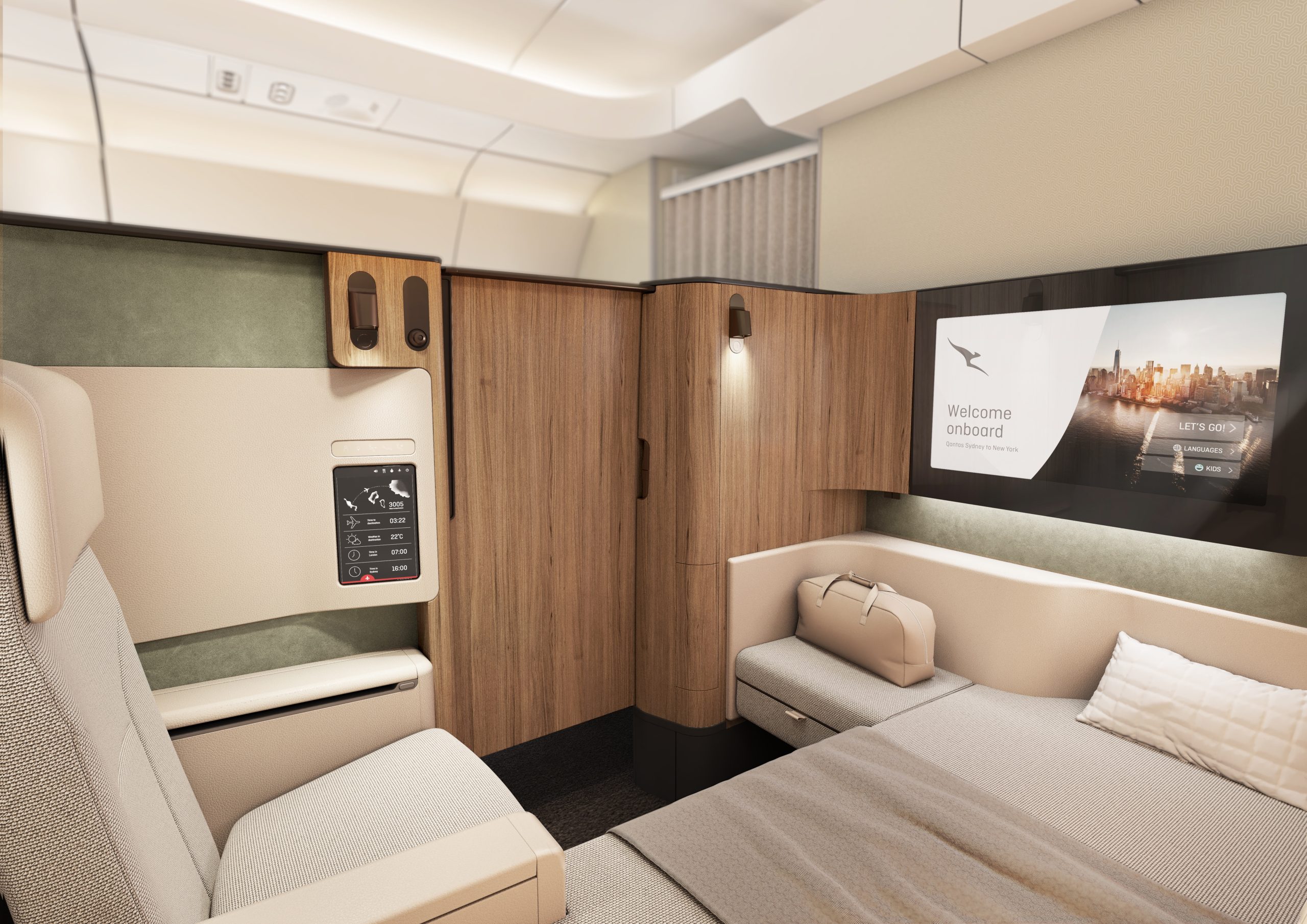
Qantas A350-1000 First Class suite rendering (Photo: Qantas)

Qantas has unveiled the premium cabins that will be installed on their new Airbus A350-1000 aircraft. These jets are slated to enter service in 2025 and will be used on the airline’s ultra long-haul Project Sunrise flights.

The Australian flag carrier is configuring its A350-1000s with only 238 seats, in contrast to the typical 300+ seats seen on other airlines. This will make the Qantas jets the least densely configured A350-1000s in the world. The low-density configuration will allow the airline to lower the weight of the aircraft while offering passengers more space. Qantas A350-1000s will have six First Class seats, 52 Business Class Seats, 40 Premium Economy Class seats and 140 Economy Class seats.


Background: Project Sunrise

In 2017, Qantas announced Project Sunrise, its effort to fly nonstop from the eastern Australian cities of Sydney, Melbourne and Brisbane to destinations such as London, Paris and New York. In late 2019, the carrier operated Boeing 787-9 test flights from New York and London to Sydney.

However, Qantas announced that December that the Airbus A350-1000 was its preferred aircraft for Project Sunrise. In May of 2022, the airline formally placed an order for 12 Airbus A350-1000s with deliveries to commence in 2025. The airline plans to start nonstop service between Australia and London and New York late that year.


Qantas A350 First and Business Class Seats

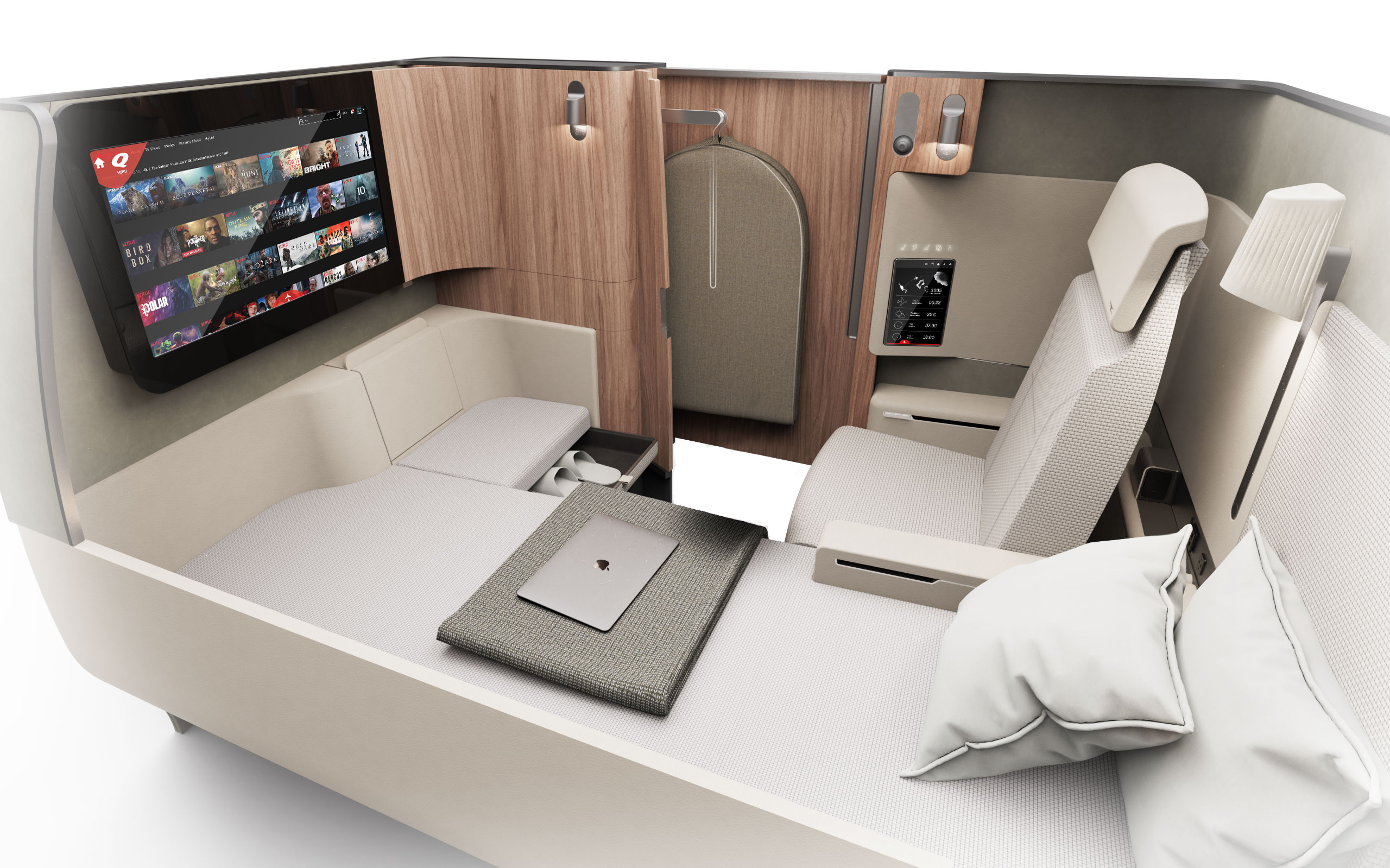
Qantas has recently revealed details of its A350 First and Business Class cabins. First Class will feature fully enclosed suites. Similar to those found on Singapore Airlines’ A380s, these suites will have a reclining seat with a separate two-meter fixed bed. They will also have a touchscreen seat controller, a dining table for two and a 32-inch ultra-high definition television. Passengers will also have numerous storage options with a full-length personal wardrobe and multiple other personal storage areas.

Qantas A350-1000 First Class suite rendering (Photo: Qantas)

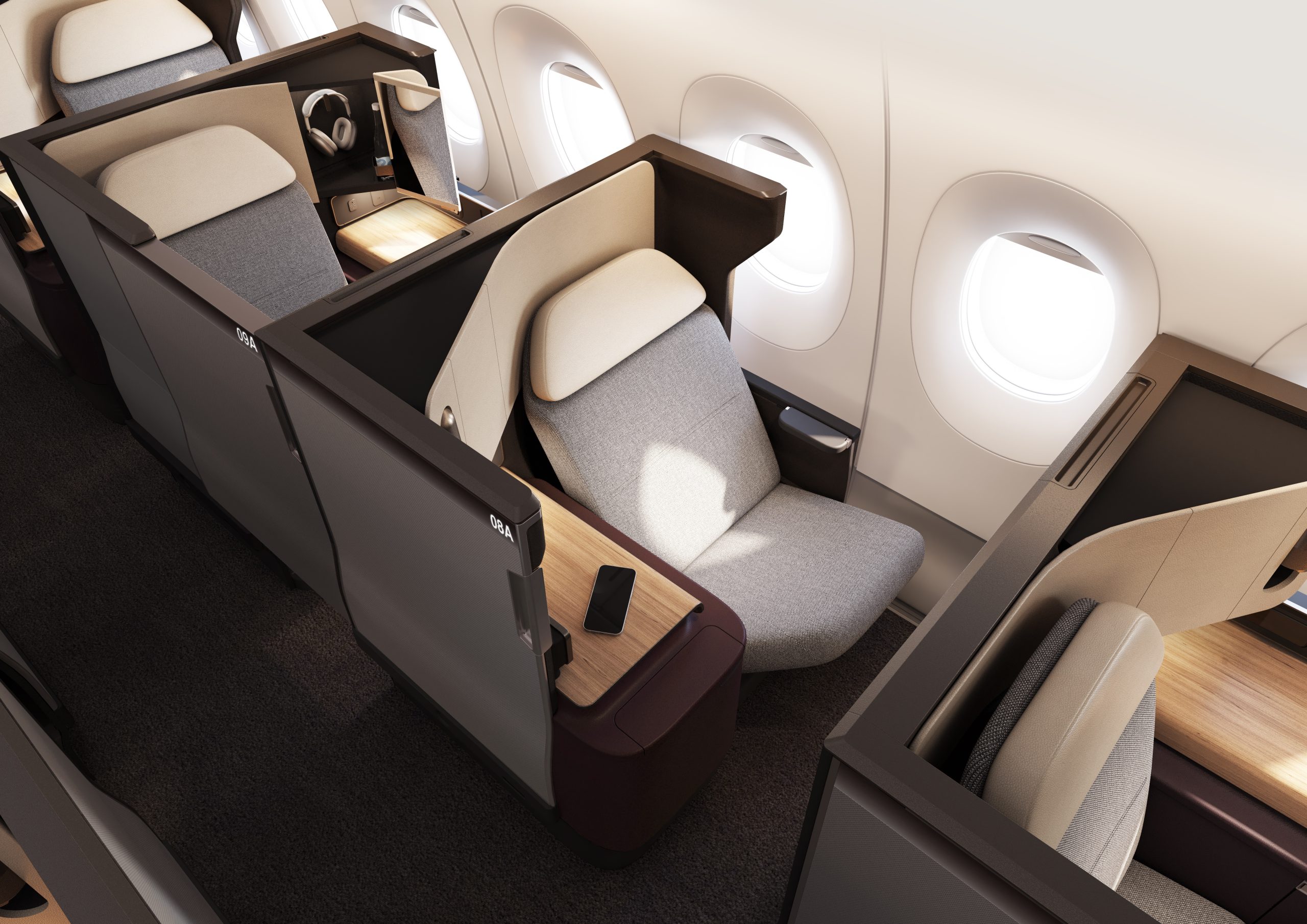
Business Class seats on Qantas’ A350s will be lie-flat suites with sliding doors. The cabin will be in a 1-2-1 configuration, meaning that every seat will have direct aisle access. The seats will also be two meters long and feature a cushioned leather ottoman as well as an 18-inch ultra-high definition touchscreen television. Both First and Business Class suites will have multiple device charging options including USB-A, USB-C, AC power and wireless induction charging.

Qantas A350-1000 Business Class rendering (Photo: Qantas)

Qantas will also offer free high-speed Wi-Fi on its A350s, in partnership with Viasat. This offering will be a major step forward for the carrier, which currently only offers Wi-Fi on some domestic flights. The aircraft will also have Bluetooth technology that will allow passengers to connect their own wireless headphones to the aircraft’s in-flight entertainment system.

“Qantas has been the leader in opening up new long-haul flights for most of our history, and we’re bringing everything we’ve learned, both technically and in terms of passenger comfort, to Project Sunrise flying,” said Qantas Group Chief Executive Officer Alan Joyce in a press release.

“We think our A350 cabins have the most sophisticated and thoughtful design of any airline, combining cutting-edge technology with sleep research to shape the look and feel for what is effectively a new era of travel. We’re building on the customer experience of our extremely popular non-stop flights from Perth to London as we keep working to make it easier to connect Australia with the rest of the world.”

Andrew Chen

Andrew is a lifelong lover of aviation and travel. He has flown all over the world and is fascinated by the workings of the air travel industry. As a private pilot and glider pilot who has worked with airlines, airports and other industry stakeholders, he is always excited to share his passion for aviation with others. In addition to being a writer, he also hosts Flying Smarter, an educational travel podcast that explores the complex world of air travel to help listeners become better-informed and savvier travelers.

Raleigh/Durham: Breeze Airways Launches Nonstop Flights to New Orleans, Hartford, and Providence

Breeze Airways Embraer 190 at Palm Beach International Airport. (Photo: AirlineGeeks | Vanni Gibertini)

On February 16 Breeze Airways landed in Raleigh/Durham (RDU) with nonstop flights to New Orleans (MSY), Hartford (BDL) and Providence (PVD). In addition, the airline will have new service to Columbus (CMH), Jacksonville (JAX), Los Angeles (LAX), Louisville (SDF) and Pittsburgh (PIT) beginning in May.

The first service was flight MX 332 operated on an Embraer E195 with registration N140BZ, which took off from Louis Armstrong International Airport (MSY) at 13:45 local time and landed at Raleigh/Durham Airport (RDU) at 16:23, after one hour and 38 minutes.

“Breeze has already demonstrated that it is fully committed to serving the Research Triangle region by announcing more nonstop destinations even before it will launch its first flight at RDU,” said Michael Landguth, president and CEO of Raleigh-Durham Airport Authority.

The airline will have an 1,888-seat weekly offering at Raleigh/Durham (RDU) in March. Breeze and RDU’s partnership will continue to grow as the airline looks for new options to meet demand for new nonstop service.

“As we launch service at Raleigh-Durham, we are proud to introduce new nonstop destinations from the airport at really low fares,” said Tom Doxey, president of Breeze Airways.

Breeze is the 14th airline to serve Raleigh/Durham Airport (RDU), offering customers new travel options at affordable fares.

This article was originally published by Rainer Nieves Dolande on Aviacionline in syndication with AirlineGeeks.

Spain: World2fly Expands Its Caribbean Network with Flights to Santiago de los Caballeros

A350-900 World2Fly
The new A350-900 for World2Fly in its first test flight. (Photo: Airbus)

World2fly expands its network in the Caribbean starting in June with a new seasonal service between Madrid (MAD) and Santiago de los Caballeros (STI). With this route, the airline will offer three non-stop connections between Spain and the Dominican Republic.

The Spanish leisure carrier will be the only long-haul operator at Cibao International Airport (STI) with a service to Europe. Previously, in December last year, Plus Ultra offered several special flights for the end-of-year season to Santiago de los Caballeros (STI).

According to data obtained through Cirium, World2fly in July will offer 5,960 weekly seats between the Dominican Republic and Spain. In addition to its new route, the airline also offers nonstop flights from Madrid (MAD) to Santo Domingo (SDQ) and Punta Cana (PUJ).

Flight Itinerary

  • Madrid – Santiago de los Caballeros Flight 2W 3317 MAD 16:30 – STI 19:20 Wednesday.
  • Santiago de los Caballeros – Madrid Flight 2W 3318 STI 21:20 – MAD 11:50+1 Wednesday.

Route details

  • The service will be available from June 21 to October 25.

The route will be operated on Airbus A330-300 aircraft with a capacity of 388 passengers in single economy class configuration and promotional fares are available from EUR 444 each way.

According to data obtained through Aena Estadística, the Dominican Republic was Spain’s main Caribbean market in 2022, handling 825,873 passengers and 8,591.5 tons of cargo in 2,907 operations between the two nations. World2fly will be the second largest operator in this segment in terms of seats per kilometers offered (ASK) with a 28.17% market share.

The leisure carrier will also offer non-stop flights from Lisbon (LIS) to Punta Cana (PUJ) and Samaná (AZS) and will be the European airline offering the most destinations in the Dominican Republic. In addition, and taking advantage of this new service, the operator Newblue is finalizing the last details to launch tour packages to the Puerto Plata area.

See also: Dominican Republic and Canada sign open skies agreement

This article was originally published by Rainer Nieves Dolande on Aviacionline in syndication with AirlineGeeks.

Jamaica: Frontier Airlines Offers Low Fares for Non-Stop Flights from St. Louis and Denver to Montego Bay

Jamaica: Frontier Airlines Offers Low Fares for Non-Stop Flights from St. Louis and Denver to Montego Bay
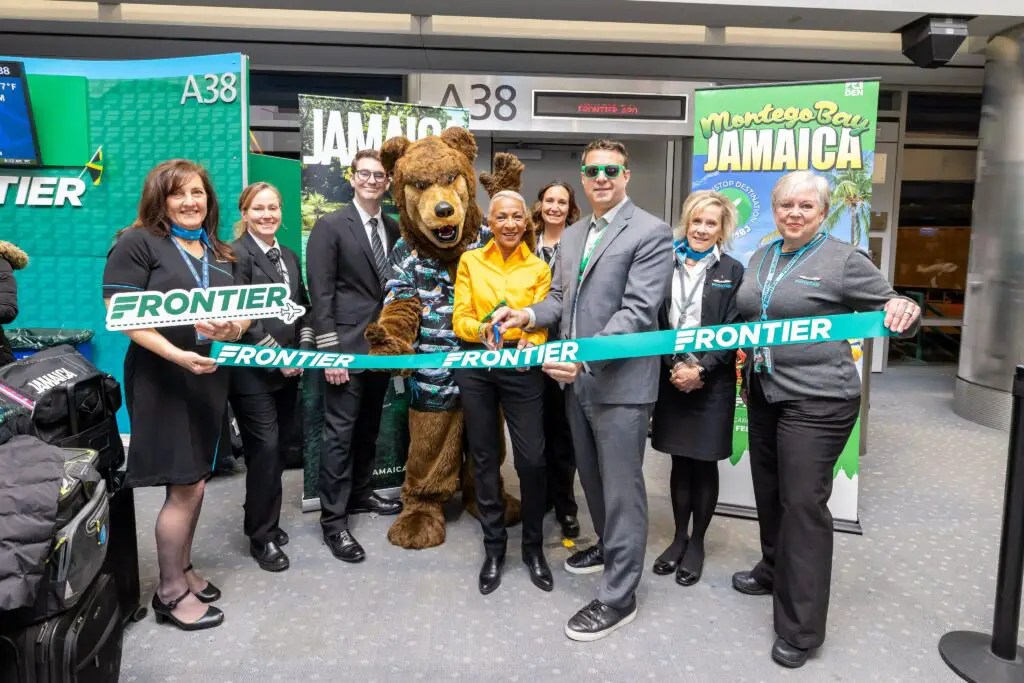
Jamaica: Frontier Airlines Offers Low Fares for Non-Stop Flights from St. Louis and Denver to Montego Bay (Photo: Frontier)

Frontier Airlines inaugurated two new routes from St. Louis (STL) and Denver (DEN) to Montego Bay (MBJ), expanding its offerings in Jamaica. The company also offers non-stop flights to Sangster International Airport (MBJ) from Orlando (MCO), Philadelphia (PHL), Chicago – Midway (MDW) and Atlanta (ATL).

According to data obtained through Cirium, Frontier will offer 5,296 weekly seats between the U.S. and Montego Bay (MBJ) next March.

St. Louis (STL)

Flight F9 14 was operated on an Airbus A320neo registered with the license plate with registration N309FR, which took off from Lambert International Airport (STL) at 10:12 local time and landed at Sangster International Airport (MBJ) at 14:33, after three hours and 21 minutes.

“We know those in the St. Louis area appreciate the option to fly non-stop to popular Caribbean destinations like Jamaica. Consumers can now take advantage of Frontier’s ‘Low Fares Done Right’ to escape the cold this winter and enjoy this beautiful island paradise – get ready to save money on your next tropical getaway!” said Daniel Shurz, senior vice president commercial, Frontier Airlines.


Flight Itinerary
  • St. Louis – Montego Bay Flight F914 STL 10:17 – MBJ 14:52 Tuesday, Thursday and Sunday.
  • Montego Bay – St. Louis Flight F915 MBJ 16:03 – STL 18:53 Tuesday, Thursday and Sunday.

The route will be operated on Airbus A320neo aircraft with a capacity of 186 seats in a single configuration and promotional fares are available from USD 147 each way.

Denver (DEN)

This Friday, Frontier began operations between Denver (DEN) and Montego Bay (MBJ), the only airline to connect the state of Colorado with Jamaica. DEN will be connected to 26 nonstop international destinations in 14 countries.

“This new international destination for DEN not only enhances the value we offer our customers, but also brings us one step closer to our Vision 100 goals and provides another incredible beach destination for our customers also brings us one step closer to our Vision 100 goals and provides another incredible beach destination for Colorado travelers,” said Phillip A. Washington, DEN CEO.


Prior to the start of this route, Montego Bay (MBJ) was Denver’s (DEN) largest international market with no direct flights, prior to the pandemic nearly 900 passengers flew between the two cities. DEN was also the second largest U.S. market without service to Sangster International Airport (MBJ), behind only Los Angeles (LAX).

Flight Itinerary

  • Denver – Montego Bay Flight F9 420 DEN 07:15 – MBJ 14:52 Tuesday, Thursday and Sunday.
  • Montego Bay – Denver Flight F9 247 MBJ 15:36 – DEN 18:54 Tuesday, Thursday and Sunday.

The service will be operated in Airbus A320neo aircraft with a capacity of 186 seats in single configuration and promotional fares are available from USD 179 one way.

See also: Frontier Airlines sets its largest flight offer expansion in Puerto Rico with eight new routes


This article was originally published by Rainer Nieves Dolande on Aviacionline in syndication with AirlineGeeks.

The End Is Near: Viva Colombia Grounds Five Aircraft, Waits For Takeover By Avianca To Be Approved

https://images.prismic.io/vivaair-cms/2b1ddd53-afef-4fbb-8865-2938c3f6a4cd_CAP_1944-HDR_Viva-min.jpg?auto=compress,format
A Viva Air Airbus A320 sits on the tarmac. (Photo: Viva Air)

In an unsurprising new chapter of Viva’s crisis, the Colombian airline informed its employees that, due to a lessor’s claim for unpaid fees, five of its aircraft will be grounded and stored in the United States.

«After taking advantage of Decree 560 for the Business Recovery Process, there have been important negotiations with the aircraft owners to reach agreements on how to continue our operations. Despite this, we have been notified by one of them that we must leave five of their aircraft on the ground for the time being until further notice in the United States,» Viva informed its employees in a communication reported by the Colombian media Portafolio.

The withdrawal of these five aircraft from active service will force the company to reschedule its operations as of February 21. The company has been notifying affected passengers during the last week, but not all of them were able to reschedule their itineraries. Viva had already grounded two Airbus A320neo in December.

LATAM Colombia, in view of the delicate situation of Viva’s passengers, made available to affected passengers who purchased their tickets before February 20 the seats it has available between February 21 and 27 on the routes impacted by the rescheduling.

LATAM indicated that it is carrying out this initiative «in order to help protect Viva’s passengers».

Aerocivil moves forward with Avianca integration, but it takes time

While the future of Viva is getting darker and darker, the Colombian aeronautical authority continues to evaluate the integration request submitted by Avianca and the oppositions submitted by other companies to be evaluated, considering what will be the composition of the market after an eventual approval and, of course, to support the expressions of interest of some of these parties for the operation of Viva.

Thus, by means of Resolution 300/2023, Aerocivil informed that Avianca and Viva were submitted to the process and that in addition to the integration request submitted by them, the agency had opened a period in which third parties could submit documentation that could provide useful elements for the analysis of the requested integration.

In those 10 working days Aerolíneas Argentinas, Ultra Air, Wingo, LATAM Colombia, JetSMART and the competition law expert Jorge Enriquez Sanchez Medina (as a private individual) requested to be recognized as third parties.

The integration request, after this resolution, gives Avianca and Viva 15 business days to analyze and answer the third parties’ oppositions. These three weeks of time seem to be a step prior to approval, in the event that Viva and Avianca yield positions and that the concessions satisfy the parties.

Time does not play in favor of Avianca and Viva, and 15 working days seems an eternity for the low-cost airline, which is betting everything on Aerocivil’s approval but has not yet secured it, and at this moment, it seems way too far from that.

This article was originally published by Pablo Diaz on Aviacionline in syndication with AirlineGeeks.

Air Canada, United to Grow Trans-border Network

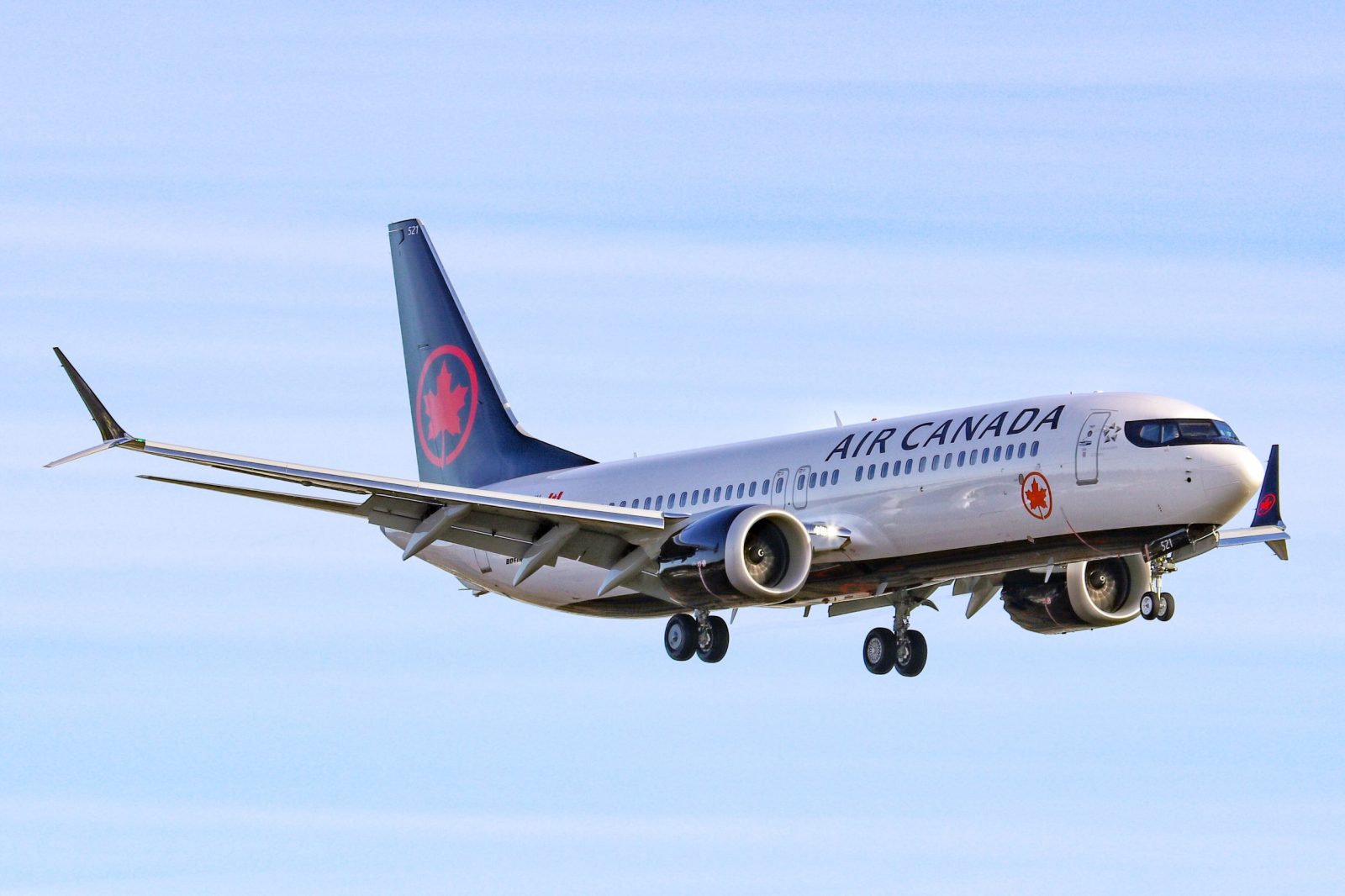
Air Canada 737 MAX
An Air Canada 737 MAX (Photo: AirlineGeeks | Katie Zera)

Air Canada and United Airlines have announced details of a proposed expansion of their transborder joint service agreement signed in July 2022. Though subject to applicable government and regulatory conditions, if approved the Star Alliance partners would operate more than 260 daily flights on over 80 transborder codeshare routes increasing summer capacity by 20 percent. According to the airlines ‘in 2019, the U.S.-Canada transborder market was the second-largest international passenger air transportation market in the world and the largest international market for both Canada and the U.S., as measured by seats.’

In addition to increased frequencies on existing routes, the agreement will add two new routes with non-stop flights between Washington-Dulles and Vancouver and Calgary, Canada. United Airlines will operate an Airbus A319 between Dulles and Calgary, and Air Canada will operate a Boeing 737 MAX 8 service between Dulles and Vancouver.

The coordinated scheduling of flights will result in up to 120 daily departures between the airlines’ hub markets. Under the proposal, a ‘shuttle style’ hourly schedule will operate between Toronto and Newark with 16 daily services. Similarly, 13 flights per day will operate between YYZ and Chicago and 11 daily flights between YVY and San Francisco.

Patrick Quayle, United Airlines’ Senior Vice President of Global Network Planning and Alliances stated in a press release: “We’re proud of our continued work with Air Canada to provide customers with even greater transborder connectivity, including adding more flights and new direct service to Calgary and Vancouver from Washington Dulles. With schedules designed to give customers more flexibility with timing and more convenient connection options, as well as the ability to enjoy the benefits of both airlines’ loyalty programs, our agreement with Air Canada makes United the premier U.S. airline for travel to Canada.”

The Air Canada-United Airlines announcement follows a similar release detailing a domestic and transborder expansion by Air Canada’s main rival WestJet on February 13. The Calgary-based carrier will see increased services of up to nearly 30 percent in Calgary, 50 percent in Edmonton and 10 percent in Vancouver. A number of WestJet’s added services will be feeding into their alliance partner Delta Air Lines hubs across the U.S. including Atlanta, Minneapolis and Detroit.

John Flett

John has always had a passion for aviation and through a career with Air New Zealand has gained a strong understanding of aviation operations and the strategic nature of the industry. During his career with the airline, John held multiple leadership roles and was involved in projects such as the introduction of both the 777-200 and -300 type aircraft and the development of the IFE for the 777-300. He was also part of a small team who created and published the internal communications magazines for Air New Zealand’s pilots, cabin crew and ground staff balancing a mix of corporate and social content. John is educated to postgraduate level achieving a masters degree with Distinction in Airline and Airport Management. John has held the positions of course director of an undergraduate commercial pilot training programme at a leading London university. In addition he is contracted as an external instructor for IATA (International Air Transport Association) and has been a member of the Heathrow Community Fund’s ‘Communities for Tomorrow’ panel.
Sign-up for newsletters & special offers!

Get the latest stories & special offers delivered directly to your inbox

SUBSCRIBE

Uh-oh! It looks like you're using an ad blocker.

Our website relies on ads to provide free content and sustain our operations. By turning off your ad blocker, you help support us and ensure we can continue offering valuable content without any cost to you.

We truly appreciate your understanding and support. Thank you for considering disabling your ad blocker for this website