










Stories

Air Choice One, Down to a Single Route

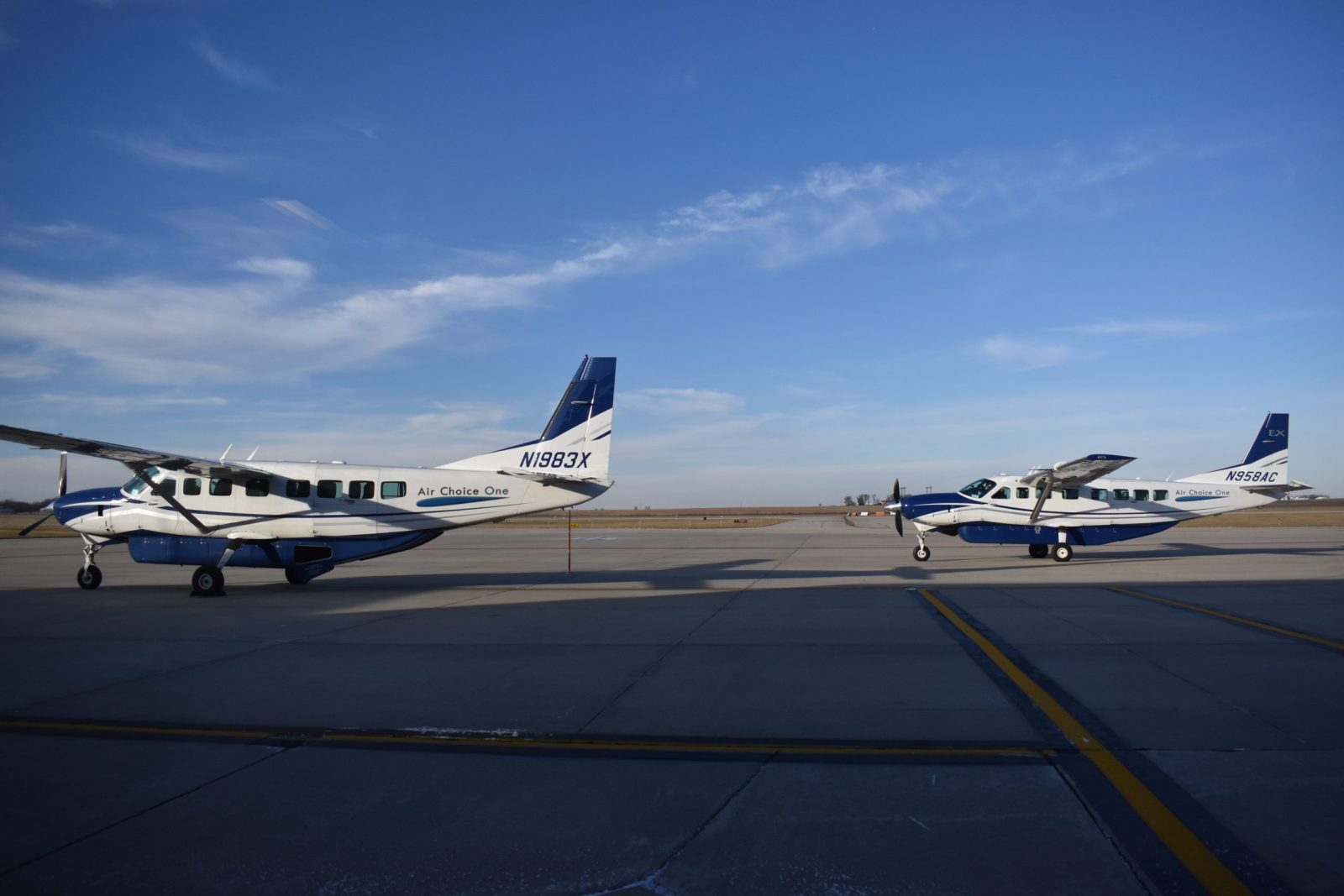
Air Choice One Cessna 208s (Photo: AirlineGeeks | Joey Gerardi)

Over the course of an airline’s lifetime, there are natural lulls and peaks, new destinations are added while other destinations are discontinued and this is just normal for any and all airlines around the globe, but this carrier has had nothing but a decline in recent years. Air Choice One wasn’t by any means a large carrier to begin with compared to the likes of Delta, American, or United, but as far as smaller EAS carriers go, they operated to a fair number of destinations.

Back in July of 2020, the airline operated to a total of 15-routes to 11-destinations, all of which were linked to an Essential Air Service contract. So, unlike the larger carriers, they can’t blame the closing of destinations on the pandemic as all of the flying was government-funded.

Air Choice One’s route map in July of 2020 (Photo: Air Choice One)

Just recently the Department of Transportation announced that the EAS contract in Burlington, Iowa, code ‘BRL’ on the above map, was given to Massachusetts-based Cape Air for flights to Chicago O’Hare and St. Louis. According to the DOT contract, which can be found on regulations.gov, Cape Air is scheduled to begin flights to Burlington, Iowa on Feb. 1, 2022. This means that come Feb. of 2022 Air Choice One will only have one route, to two cities. Jonesboro, Arkansas is the only EAS contract that Air Choice One will have after Feb. 1, 2022, and the other city it will serve as the carrier’s ‘hub’ in St. Louis which is linked to the contract in the northern Arkansas community.

During every EAS bidding process, the community and its citizens recommend the airline that they want in their city. There are many different things the community looks at when recommending air service but such basic items are what aircraft type it will use, what cities it will operate to, how much marketing it will do on top of a whole host of other topics. But arguably, the biggest thing communities look for is the ease of connecting passengers to a major airline network.

This easy connecting is done through the use of codeshares, interline, and baggage agreements with larger mainline carriers, which makes it so passengers don’t have to re-check bags and re-clear security at the large hubs. Air Choice One doesn’t have any codeshares, interline, or baggage agreements to speak of at all, which is the main reason why they are losing out on EAS contracts and has been seen many times in the comments of citizens in each respective community.

As previously mentioned Jonesboro, Ark. is in the midst of its EAS bidding process, and despite the lack of any airline agreements, the community has recommended that Air Choice One be re-selected for the EAS contract again. So, there is still a chance that the airline will keep the contract in this community, but the decision whether they do is now completely up to the Department of Transportation.

The loss of the airline’s contract over the past two years are as follows;

August 1, 2020 – Boutique Air took the Ironwood, Mich. contract, which now belongs to Denver Air Connection.

March 1, 2021 – SkyWest, under the United Express banner, took the contracts for the communities of both Mason City, Iowa, and Fort Dodge, Iowa. This also caused the Minneapolis-St. Paul hub to close.

June 1, 2021 – Boutique Air took the contract for Jackson, Tenn. and the loss of this contract also forced them to close Atlanta and Destin, Fla.

February 1, 2022 – Cape Air will take the EAS contract for Burlington, Iowa, which will cause them to close Chicago O’Hare.

Air Choice One’s route map come Feb.1, 2022, edited to show only STL and JBR (Photo: Air Choice One, edited Joey Gerardi | AirlineGeeks)

I took a flight with the airline back in November of 2020, when they still operated Fort Dodge and Mason City, and wrote a trip report about it which can be found HERE. The airline operates Spirit Airlines like service as they charge for carry-on bags despite being a very small regional airline that flies primarily 8-seat Cessna 208’s and a small number of Beech-1900’s.

AirlineGeeks did reach out to Air Choice One via. Instagram in the spring of 2021 when they announced the loss of Jackson in the state of Tennessee, and we inquired to them what their plans would be after they lost that city. They responded with, “Just wait and see where we fly to after June 1st 🙂 “. That date has since come and gone long ago, and they still sit at the current number of four destinations, which is soon to be only two destinations.

AirlineGeeks has reached out to the carrier once again recently to inquire just what their plans are when they drop down to their final route in February of 2022, but have failed to respond in time for the publication. This article will be updated when more information becomes available.

Joey Gerardi

Joey has always been interested in planes for as long as he can remember. He grew up in Central New York during the early 2000s when US Airways Express turboprops ruled the skies. Being from a non-aviation family made it harder for him to be around planes and would only spend about three hours a month at the airport. He was so excited when he could drive by himself, the first thing he did with his driver's license was get ice cream and go plane spotting for the entire day. He graduated from Western Michigan University in 2022 with a B.S. in Aviation Management & Operations and a Minor in Business, and currently works for a major airline in his hometown.

India to Resume International Flights from December 15

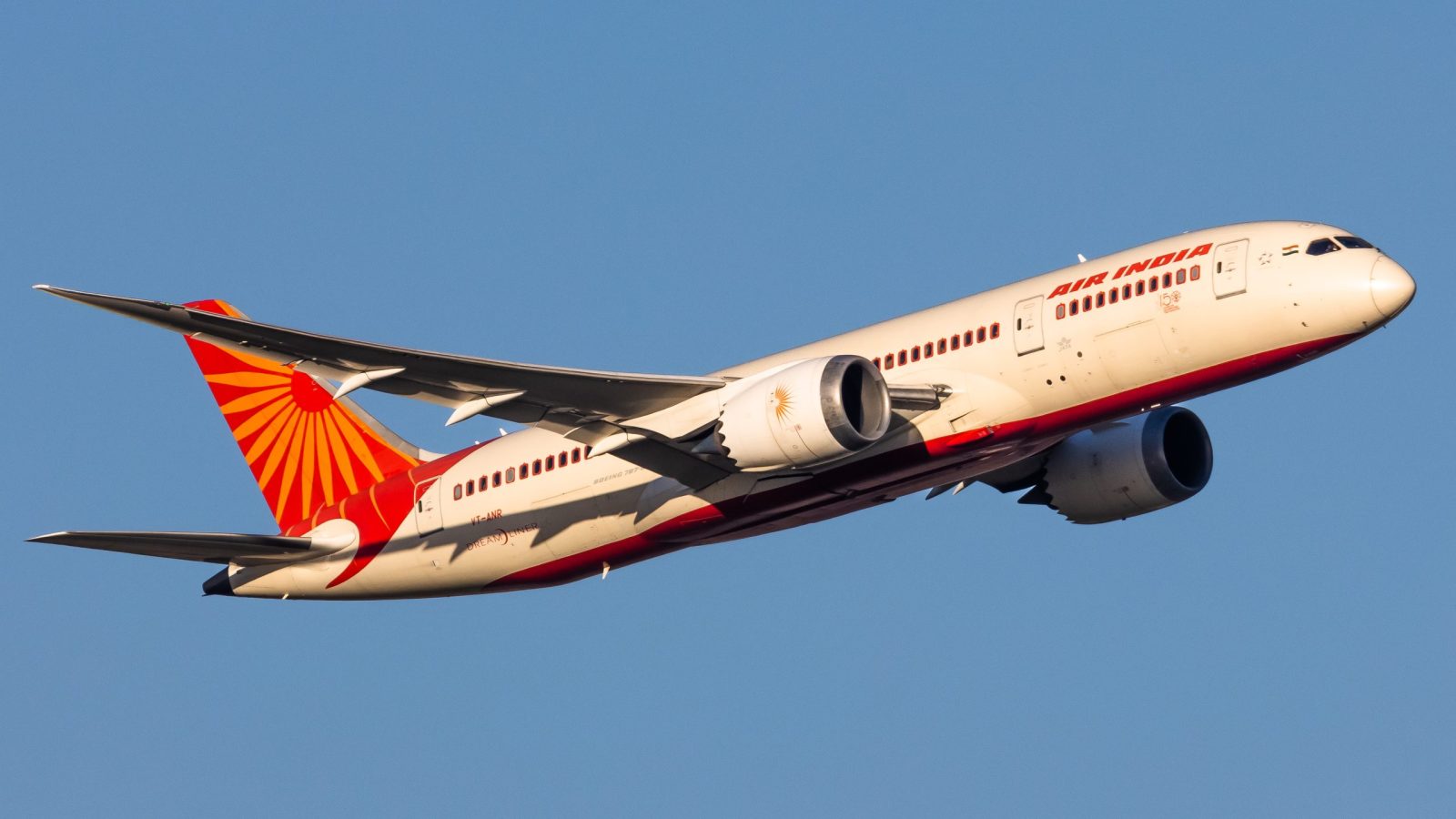
An Air India Boeing 787 Dreamliner departing London Heathrow.
An Air India Boeing 787 Dreamliner departing London Heathrow. (Photo: James Dinsdale)

After a coronavirus-induced suspension, India will restart scheduled foreign flights on December 15, the Aviation Ministry said on Friday. In a statement, the Civil Aviation Ministry said the issue of resuming scheduled commercial international passenger services had been looked into in cooperation with the Ministries of Home Affairs, External Affairs, and Health and Family Welfare.

“The matter of resuming scheduled commercial international passenger services to and from India has been examined in consultation with the Ministries of Home Affairs, External Affairs, and Health and Family Welfare, and it has been decided that scheduled commercial international passenger services to and from India may be resumed as early as December 15, 2021,” according to the statement.

The statement comes two days after Civil Aviation Secretary Rajiv Bansal stated that international airline operations should resume “before the end of this year.” Due to the Covid-19 epidemic, scheduled foreign flights have been stopped in India since March 23 of last year. The ban has been extended until November 30, with specific cargo flights and commercial flights covered by air-bubble agreements with the destination nations exempted.

Special international passenger flights, however, have been running since July of last year, thanks to air bubble agreements reached with some 28 nations. India had declared earlier in October that it will open its borders to properly immunized overseas travelers. Those planning to go to India on regular commercial flights would have to wait until November 15. “Foreign visitors flying into India other than chartered aircraft would be permitted to do so only with effect from November 15, on fresh Tourist Visas,” the Home Ministry said in a statement.

Issues

India has maintained a tight stance since foreign flights began last summer. Foreign airlines were mainly barred from carrying two-way repatriation flights initially, with the exception of one-off repatriations. India approved “travel bubbles” in July, allowing individual nations reciprocal flying privileges.

These “travel bubbles” did, however, come with a set of regulations. The Indian government was in charge of the total number of aircraft and prevented Indian tourists from connecting. This meant that only a certain number of point-to-point flights could be approved at any given time. While this was OK last year, when traffic increased this year, travelers began to have problems.

Due to the scarcity of choices, airline fares skyrocketed this fall. Hundreds of thousands of passengers traveled overseas, resulting in a six-fold increase in ticket costs to the United States and the United Kingdom is only a few days. Some people were obliged to adopt difficult itineraries with breaks or pay excessive ticket fees as a result of this.

Flight normalization will provide travelers with the much-needed option of connecting flights between Europe and the Middle East. It would also improve connection to East Asian countries that have had their borders blocked since last year.

Putu Deny Wijaya

Putu Deny Wijaya was always an aviation enthusiast by heart, growing up in Indonesia where air transport is very vital. His first love is The Queen of The Skies, serving the trunk routes between Jakarta and Denpasar. He brought along this passion with him throughout college by conducting his bachelor study abroad in the Netherlands for the purpose of experiencing a nonstop 14-hour long-haul flight. For Putu the sky's the limit when talking about aviation. He hopes that he would be able to combine his passion for aviation and knowledge of finance at the same time.

LATAM Airlines Group Stands for Its Sustainability

LATAM
A LATAM Brasil A320 taxies in São Paulo/Guarulhos. (Photo: AirlineGeeks | João Machado)

The S&P Global Corporate Sustainability Assessment (CSA) is an annual evaluation of companies’ sustainability practices, covering over 10,000 companies from around the world. The CSA focuses on sustainability criteria that are both industry-specific and financially material and has been doing so since 1999.

LATAM Airlines Group obtained fourth place worldwide in Standard & Poor’s Global Corporate Sustainability Assessment (CSA) and has positioned itself as the airline with the best sustainability performance in the American continent, according to the most recent results published last Nov. 12.

In this ranking, the leading carriers above LATAM Airlines Group are ANA, Air France – KLM, and China Airlines.

In a press release, the Chilean group informed that during this year, the group launched its sustainability strategy based on three pillars: Climate Change, Circular Economy and Shared Value, which highlights its commitment to the protection of strategic ecosystems in South America, migration to a zero-waste model to landfills, and making its connectivity capacity available for the benefit of the communities of the region.

The strategy was designed collaboratively with experts and environmental organizations throughout the region and seeks to make the group carbon neutral by 2050.

Climate Change

The group will seek to reduce its emissions by incorporating sustainable fuels and new aviation technologies that will be available from 2035.

In addition, it will promote a program that will allow passengers, corporate and cargo customers the option of offsetting emissions from CO2 associated with their travels by supporting iconic projects in the region and as part of its value proposition, LATAM will match the number of tons of CO2 offset.

In line with its objective of contributing to the protection and recovery of ecosystems, LATAM Airlines Group recently announced the first conservation project to advance carbon neutrality: CO2BIO.

An initiative that will conserve 200 thousand hectares of flooded savanna, habitat of more than 2,200 species and that has the potential to capture up to 2.8 million tons of CO2 by the year 2025.

Circular Economy

LATAM Airlines Group is also committed to promoting a culture of elimination, reduction, reuse, and recycling throughout its operation to reach 2027 as a group that generates zero waste to landfills.

Single-use plastics will be eliminated before 2023 and, currently, recycling actions are being implemented such as the “Recycle your Trip” program (segregation of waste generated onboard such as aluminum, glass, and plastic), in addition to the recycling program of uniforms to use them as raw material in new products.

Shared Value

Finally, the group will expand its capacity to transport cargo and people for health programs, natural disasters, and care for the environment.

Along this line is the “Avión Solidario” program, which collaborates with the communities, through agreements, offering free expertise, infrastructure, connectivity, and speed of transport through passages and cargo transfers.

Since the beginning of the COVID-19 pandemic, to date, the program has allowed transporting more than 165 million vaccines, more than 1 million tons of cargo of medical supplies, 3,233 health professionals and more than 1,800 organs and skins for free.

Juan Pedro Sanchez Zamudio

The three things Juan Pedro loves most about aviation are aircraft, airports, and traveling thousands of miles in just a few hours. What he enjoys the most about aviation is that it is easier and cheaper to travel around the world and this gives you the opportunity to visit places you thought were too far away. He has traveled to different destinations in North, Central, South America and Asia. Born, raised and still living in Perú, Juan is a lawyer, soccer lover, foodie, passionate traveler, dog lover, millennial and curious by nature.

Boeing 737 MAX Is Taking Steps Toward Flying in China Again

Air China's first 737 MAX 8 taking off (Photo: Boeing)

Recently, the Civil Aviation Administration of China (CAAC) issued a notice of inquiry to recertify Boeing 737MAX. The jet has been grounded in China for 20 months after two fatal crashes, one each in Ethiopia and Indonesia. Internal sources say Air China and China Southern are in the process of unsealing a number of Boeing 737 MAX. Once the jet is recertified and cleared to fly in China again, the largest carrier can quickly put the capacity into the Spring Festival travel rush.

Currently, 97 Boeing 737 MAX aircraft are sealed in China and have been since the grounding of the jet. Over 100 jets are sitting at Boeing field, pending delivery to Chinese customers. Previously, Boeing CEO David Calhoun optimistically projected that the jet will receive Chinese authorities’ approval to fly again by the end of 2021.

A China Southern 737 MAX heads to storage in Everett, Wash. (Photo: AirlineGeeks | Katie Bailey)

Uneasy to Fly Again

On the other hand, the CAAC emphasized its three key principles of approving the Boeing 737 MAX to fly again:

  1. Recertification of design change made on the aircraft;
  2. Adequate training for pilots, and regaining the confidence of pilots;
  3. Clear conclusion on the reasons attributed to the two fatal crashes, and valid redesigns to bridge the gaps identified;

In August, Boeing sent a 737 MAX 7 jet to China for a test flight before recertification of the jet. The public has viewed this action as significant progress for the Boeing 737 MAX to return to China. Boeing’s stock price fained after the successful test flight in China.

At the same time, Boeing shared on social media its latest livery on a Boeing 737 created by Boeing Zhoushan. This action was read as a symbol that Boeing’s Zhoushan facility is ready to use once the authority approves the jet to fly again.

An Air China 737 MAX 8 (Photo: AirlineGeeks | Katie Bailey)

Boeing opened its delivery center in Zhoushan, China in December 2018, striving to better serve its customers in the region, and leverage the strong manufacturing and supply chain capability of China. However, merely two jets were delivered to Chinese carriers before the grounding of the jet.

Airbus’s Steps Forward

As the rival of Boeing 737 MAX, Airbus’s A320 took a step further for its presence in China. Opened in 2008, Airbus’s Tianjin, China plant is producing A320 families for customers around East Asia. Nowadays, the plant is also serving as a finishing and delivery center for Airbus A350 XWB. The plant will be briefly closed in 2022 for renovation to expand its production capacity for Airbus A321.

During the grounding of Boeing 737MAX, the long-term Boeing-only airline Xiamen Airlines announced its plan to introduce 15 Airbus A321s into its fleet starting in January 2022. XiamenAir had added no new aircraft since March of 2019 when the 737 MAX was grounded. This action was widely perceived as the airline’s efforts to continue its growth of capacity to match the growth of China’s domestic market.

Long Way to Go

While Boeing is optimistic about the return of its 737 MAX in China soon, many variables still need to be settled. The amount of time to train the pilots and unseal a large number of aircraft is a huge effort for both airlines and Boeing.

Passenger confidence towards this aircraft is still relatively low compared to competitors of the 737 MAX. Finally, the political uncertainties between the two superpowers may also impact the approval for Boeing 737 MAX to fly again. At this time, Boeing still has a long way to go before it can have 737 MAX fly again in China.

Lei Yan

Lei is from Inner Mongolia, China, and now lives in Guangzhou. He grew up in an aviation family, where his passion began. During his time at Penn State University, he studied Industrial Engineering specializing in operations research, and he graduated with an honor’s thesis on airport gate assignment optimization. Now, he is a Purchasing Manager with Procter & Gamble. In his free time, he enjoys flying, reading, and wandering around the city.

South African Airways, Kenya Airways Sign Strategic Partnership

Kenya Airways B787-8 LHR William Derrickson
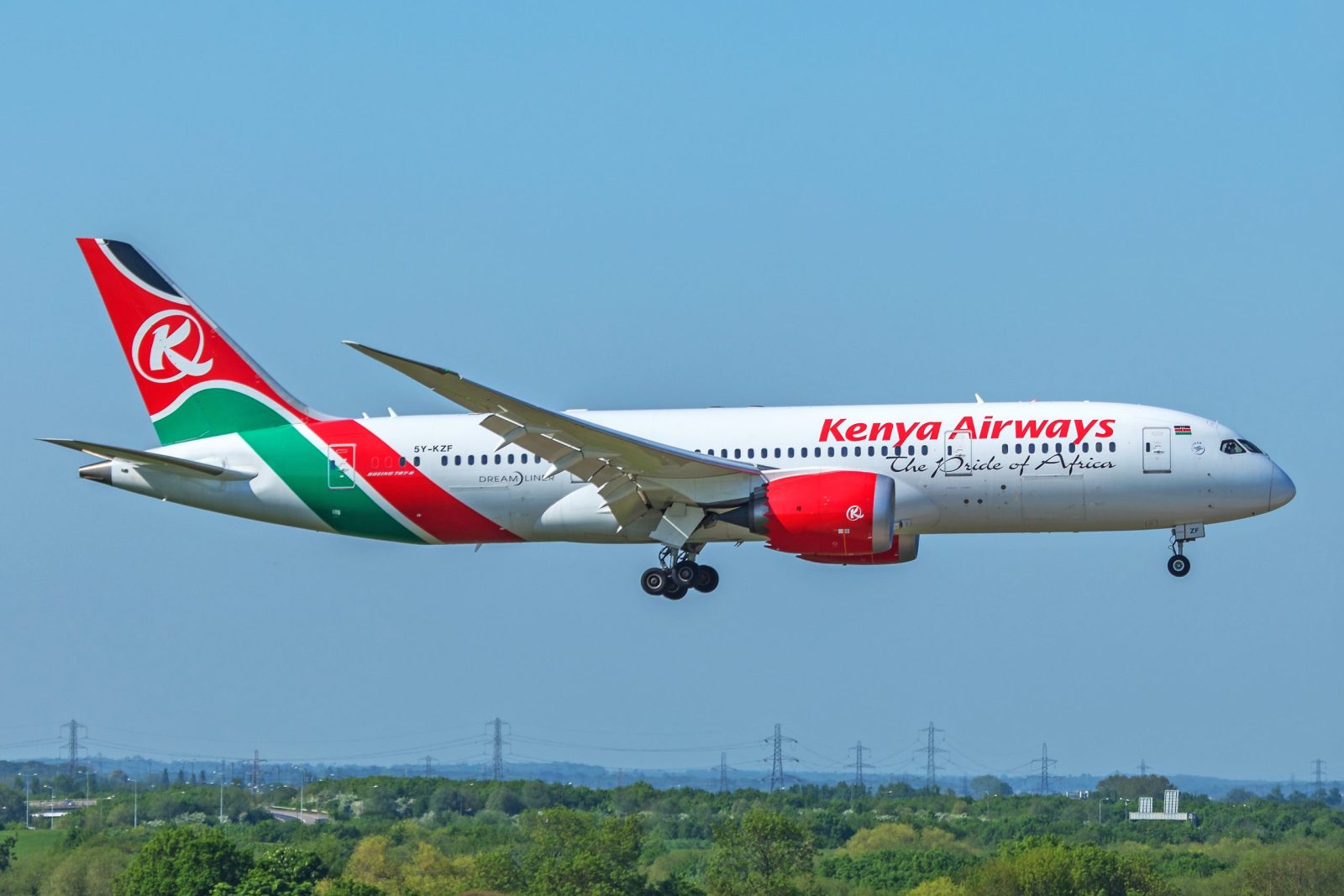
A Kenya Airways Boeing 787 landing in London. (Photo: AirlineGeeks | William Derrickson)

Kenya Airways and South African Airways this week signed a strategic partnership framework that may be the pathway to co-starting a Pan-African airline group by 2023. This follows the September signing of a memorandum of cooperation between the two national carriers. This week’s signing was undertaken by the chairmen of both airlines during a state visit to South Africa by Kenya’s president. Both the Kenyan president and the South African president witnessed the event held in Johannesburg.

“The Strategic Partnership Framework will improve the financial viability of both airlines by creating the most formidable air transport connection in Africa by benefiting from at least two attractive hubs of Johannesburg and Nairobi. It will ignite the Kenya and South Africa tourism circuits, which account for significant portions of the respective country’s GDP,” said South African Airways Chairman John Lamola.

“This cooperation aligns with Kenya Airways’ core purpose of ‘Contributing to the sustainable development of Africa’ and is based on mutual benefits,” Kenya Airways Chairman Michael Joseph said in a statement. “It will increase connectivity through passenger traffic, cargo opportunities, while enhancing the implementation of the Africa Continental Free Trade Area Agreement. The geolocation of the two countries will make the Pan-African Airline Group attractive by creating the most formidable Airline Group that is expected to take advantage of strengths in South Africa, Kenya, and Africa.”

The Africa Continental Free Trade Area Agreement Joseph referenced aims to provide “a single market for goods and services, facilitated by movement of persons and goods to deepen the economic integration and prosperity of the African continent.”

Both airlines have suffered during the coronavirus pandemic and have implemented financial turnaround strategies to better their business positions. According to the announcement, the strategic partnership framework is “one of the pillars to achieve this is coming together and combining assets to provide a more robust and ultimately competitive aviation ecosystem to pursue the commercial viability of both carriers.”

South African Airways had been in a serious financial position for several years prior to the pandemic and went into business rescue in December 2019. All South African Airways commercial flights ceased operation in May 2020 and it was only on 23 September that the airline recommenced commercial domestic flights. A strategic equity partner for South African is currently undergoing due diligence and, according to local outlet News24, is expected to invest 3 billion rand ($190 million) in the airline over a three-year period.

Kenya Airways Chief Executive Officer Allan Kilavuka last week acknowledged that the airline was in talks with the Kenyan Government to settle $250 million in debt accrued during the pandemic. The Kenyan government is a 48.9% stakeholder in the airline though there have been plans to renationalize the airline in recent years. From a financial standpoint, Kenya Airways has not made a profit since 2012.

The strategic partnership framework signed this week will hopefully go some way to fulfilling Mr. Lamola’s vision of improving “the financial viability of both airlines by creating the most formidable air transport connection in Africa by benefiting from at least two attractive hubs of Johannesburg and Nairobi. It will ignite the Kenya and South Africa tourism circuits, which account for significant portions of the respective country’s GDP.”

John Flett

John has always had a passion for aviation and through a career with Air New Zealand has gained a strong understanding of aviation operations and the strategic nature of the industry. During his career with the airline, John held multiple leadership roles and was involved in projects such as the introduction of both the 777-200 and -300 type aircraft and the development of the IFE for the 777-300. He was also part of a small team who created and published the internal communications magazines for Air New Zealand’s pilots, cabin crew and ground staff balancing a mix of corporate and social content. John is educated to postgraduate level achieving a masters degree with Distinction in Airline and Airport Management. John has held the positions of course director of an undergraduate commercial pilot training programme at a leading London university. In addition he is contracted as an external instructor for IATA (International Air Transport Association) and has been a member of the Heathrow Community Fund’s ‘Communities for Tomorrow’ panel.

Hi Fly Peforms Successful Airbus A340 Antarctica Mission

Hi Fly's first Airbus A340 landing in Antarctica. (Photo: Hi Fly)

Antarctica is a land of ice and snow located at the bottom of the globe, featuring remote wilderness that’s only accessible by air or sea.

While flying is a commonly used form of transportation that is convenient,  there are currently no scheduled flights to Antarctica as only chartered flights are available, mainly due to its harsh and unpredictable weather, making air travel more challenging than usual.

Historic Flight

Challenging is definitely not impossible, because, for the first time ever in history, an Airbus A340-300 managed to land on Antarctica.

This historic flight was operated by Lisbon-based Hi Fly — a charter airline — who specializes in wet leases by hiring out both aircraft and aircrew, handling logistics such as insurance and maintenance.

Having been commissioned by Wolf’s Fang — an upscale adventure camp project from White Desert, the high-end Antarctica tourism company — the flight helped to bring in essential supplies to the adventure resort all the way from Cape Town, South Africa.

Usually, White Desert deploys the Gulfstream 550 for its operations. The small business jet allows for passenger comfort and reliability in harsh weather conditions, but it does not provide much space. As a result, the company looked at adding on a widebody aircraft, particularly the A340 due to the quadjet’s bigger capacity that would allow a wider range of transportation of both human and cargo.

The A340 might get to join the small fleet in the next year or so, as it continues to be a reliable and comfortable aircraft with the perfect range and engine redundancies for such remote operations, as shown in the relative success of Hi Fly’s Antarctic mission.

Captain’s Log

On November 2, HFM801 departed from Cape Town to Antarctica and was skillfully piloted by Hi Fly’s Vice President, Captain Carlos Mirpuri and his crew.  The flight was operated by a 19-year-old A340-300 registered as 9H-SOL. The return flight to Cape Town was operated as HFM802.

Having been with Hi Fly since 2018, the quad-jet was originally configured with 35 Business Class and 218 Economy Class, but has since been specially re-configured with 24 passengers seats and plenty of cargo space, earning the nickname of the “preighter”.

Wolf’s Fang Runway was the designated C-Level airport that has a blue-ice runway, meaning that only highly specialized and skilled crew can fly there with such challenging conditions present. As noted in his captain’s log, Mirpuri explained that “the cooler it is the better” for such a heavy aircraft like the A340.

Mirpuri added, “It is not easy to spot the runway, but at one point we have to see it, as absolutely no navigation aids exist in WFR and from around 20 miles we must be in visual contact,” to further elaborate on just how daunting flying to Antarctica was,

Mirpuri pointed out that “the altimeters in cold weather also suffer from temperature errors, and need adjustments,” in regards to extremely cold temperatures, which is essential to keep in mind.

Eventually, Mirpuri joyfully notes that the landing and later take-off was successfully uneventful as per the textbook, as well as that the turnaround time was much faster than expected, showcasing that this mission to Antarctica was indeed a success.

Charlotte Seet

Fascinated by aircraft from a very young age, Charlotte’s dream was to work alongside the big birds one day. Pursuing her dream, she went on to achieve her diploma in Aviation Management and is currently working on her degree in Aviation Business in Administration with a minor in Air Traffic Management. When she’s not busy with school assignments, you can find her aircraft spotting for long hours at the airport. In Charlotte’s heart, the Queen of the Skies will always be her favorite aircraft.

Textron’s Beechcraft Denali Completes Its First Flight

Beechcraft Denali Makes First Flight Marking Start To Their Flight Test Program (Photo: Textron)

On Tuesday, Textron Aviation’s Beechcraft Denali  — the manufacturer’s brand new single-engine turboprop aircraft — took off for the skies and completed its first flight. With high hopes of certification by 2023, the flight marks the beginning of the aircraft’s “flight test” phase and looks to potentially prove the aircraft’s top-of-the-line performance.

Formed in 2014, the aircraft manufacture, Textron Aviation, consists of well-recognized brands including that of Cessna, Beechcraft and Hawker. 

“Today’s landmark flight is not only a significant occasion for the Denali, it’s a truly great moment for our employees, our suppliers, and the customers who will be flying this aircraft,” stated Ron Draper, president and CEO, Textron Aviation in a press release on Tuesday. “With its more environmentally friendly engine and largest cabin in its class, this is an aircraft that will change the landscape for high-performance single-engine turboprop aircraft. Today’s flight is just the beginning for what we anticipate will be a long list of important accomplishments as we prepare the aircraft for certification and customer deliveries.”

Taking off from runway 19R at the Wichita, Kansas’ Eisenhower National Airport on Tuesday, the aircraft flew for approximately 2-hours and 50-minutes, reaching an altitude of 15,600 ft with a top speed of 180 knots. 

In the cockpit piloting the clean-sheet design aircraft was senior test pilot Peter Gracey and chief test pilot Dustin Smisor.

The flight consisted of a wide range of tests, including the aircraft’s performance, stability and control, as well as propulsion, environmental, flight controls and avionics systems.

“From the beginning of the flight to the end, the Denali was simply flawless,” Gracey said, following the flight. “It’s just a great aircraft to fly. The Catalyst engine was outstanding, and the aircraft performed to the levels we were anticipating. First flights really can’t go more smoothly than this. We are really off to an excellent start for the Denali flight test program.”

The Specifications

The aircraft flaunts General Electrics’ high-performing Catalyst engine — first introduced in 2015 — making it the first aircraft to ever be powered by said engine. The engine can be powered with more sustainable aviation fuels and is capable of burning up to 20 percent less fuel than the older existing turboprop engines flying today.

Subsequently, its engines play an important role in contributing to the aviation industry’s ongoing trend for shifting away from traditional fossil fuels and reducing emissions.  The Denali utilizes a five-bladed, 105-inch diameter, composite constant speed propeller designed by McCauley — a notable company in propeller manufacturing. 

Equipped with top-of-the-line technology and equipment, the Denali is engineered to reach cruise speeds of 285 knots at 1,6000 nautical miles on a full fuel payload of 1,100 pounds with one pilot and four passengers.

Apart from its performance, the Denali displays a spacious flat-floor cabin that offers its customers flexibility between cargo and passenger configurations. The standard configuration for the aircraft makes use of six individual reclining seats with the option of up to nine. The cabin includes large cabin windows, a refreshment cabinet towards the front of the aircraft, an inflight accessible baggage compartment, and the option for a lavatory in the aft of the cabin. 

The Denali’s performance, combined with its comfortability and sustainability make for a very appealing aircraft to buyers in the market today. Once certified, the aircraft has great potential to become a leader in its specific segment for years to come.

Chase Hagl

Chase Hagl grew up in Twin Falls, Idaho. His love and passion for Aviation landed him in Orem, Utah where he obtained a B.S. in Aviation Management with a minor in Business Management from Utah Valley University. Chase currently works as a flight attendant in Charleston, SC and is also the primary Inflight ASAP ERC representative for startup airline, Breeze Airways. His experience in the aviation industry spans back four years, working in areas including agriculture application, customer service, maintenance, and flight ops. In his free time, Chase enjoys road biking, astronomy, and flying.

Why Aeromexico Will Not Fly From Mexico City’s New International Airport

An Aeromexico 787-8 landing at London Heathrow. (Photo: AirlineGeeks | William Derrickson)

Aeromexico recently confirmed it would not operate from Mexico City’s brand-new Felipe Ángeles International Airport, after much speculation whether the Mexican flag carrier would operate from the capital’s newest airport once it opens in early 2022.

The airline advised its decision was firm and that it would instead focus its efforts on financial restructuring. The carrier will also concentrate on strengthening its position at Mexico City’s Benito Juárez Airport where it is currently based. Aeromexico has previously indicated that due to its operations model, it prefers to maintain its base of operations at Benito Juárez Airport.

“There may be a market (at Felipe Ángeles), but for the moment we have not seen it,” José Zapata, Aeromexico’s Vice President of Sales, said to a local news agency. “Why would we put airplanes there at this time if there are no (passengers) to fly?”

Zapata, however, stressed the airline remains open to future changes. “If market conditions change, we will re-analyze it,” Zapata added.

As proof of its objective to grow at Benito Juárez Airport, Aeromexico said prior to its announcement about Felipe Ángeles that it would move 20 flights operated by Aeromexico Connect to Terminal 1 where they haven’t operated for 13 years since moving to Terminal 2.

Although the Mexican government has promoted Felipe Ángeles Airport as an “impressive” and “world-class” facility, some critics have deemed the airport controversial due to its construction timeline and distance from the city center. The new airport — located about 28 miles north of the capital on Santa Lucía Air Force Base — broke ground in 2019 and is being built by the Mexican army.

The Mexican government has advised it would limit operations per day at Benito Juárez Airport in 2022 and 2023 to help distribute flights to Felipe Ángeles Airport.

With thousands of workers still working against the clock inside and outside of the project, the Mexican army has already opened up the airport’s grounds to the media and potential operators to help boost confidence in the U.S. $3.8 billion projects, which also includes a new highway linking the airport to the city center.

Low-cost Carriers’ Verdict

Thus far, Aeromexico and Air Canada are the only airlines to say no flying to the capital’s newest airport.

Aeromexico’s statement contradicts what was announced by low-cost carriers Volaris and VivaAerobus, both of which will begin operating domestic flights from the airport in late March. According to Juan Carlos Zuazua, VivaAerobus’ Chief Executive Officer, the airport will be a success as long as it has convenient and cheap ground transportation to the city center.

Mexican low-cost carriers Volaris and VivaAerobus confirmed earlier this month they would operate domestic flights from the airport. Volaris has opened up reservations for flights to Cancún and Tijuana, while VivaAerobus has advised it would determine the destinations for Felipe Ángeles once rates to operate the airport are published. Volaris will be the first carrier to fly out of the airport when it opens on March 21, 2022.

Albert Kuan

Most people hate long flights or overnight layovers, but Albert loves them. The airport and flying parts of traveling are the biggest highlights of any trip for him – as this avgeek always gets a thrill from sampling different airline cabin products and checking out regional developments happening at local U.S. airports. He’s flown on almost every major carrier in the U.S. and Asia Pacific, and he hopes to try out the new A350s soon. Albert recently completed his undergraduate studies in Business Accounting at USC in Los Angeles and he is currently recruiting for a corporate analyst position at one of the U.S. legacy carriers. During his college years, he interned at LAX for Los Angeles World Airports working behind-the-scenes (and on the ramp) in public relations and accounting. Outside of writing for AirlineGeeks, he enjoys trekking the Hollywood hills, visiting new hotspots throughout SoCal, and doing the occasional weekender on Spirit Airlines.

Greater Bay Airlines Expects to Launch in 2022

The first look at the Greater Bay Airlines 737. (Photo: Oriental Daily)

Algernon Yau — the chief executive officer of Greater Bay Airlines — hopes to launch the brand-new Hong Kong airline with its maiden flight in the second quarter of 2022 after failing to start its business on Oct.1.

The airline had been granted the Air Operator’s Certificate (AOC) in August and expected the Air Transport License would be received as soon as September. However, the airline hasn’t been granted a license from the Hong Kong government. According to local media, a licensing hearing will be hosted for December, GBA is optimistic about the license.

GBA is expected to start operation with three Boeing 737-800s.  Two aircraft are already delivered and the third aircraft will be delivered after February.

Yau admitted the delay of the license could be an impact to the carrier as the airline is burning cash but insisted the company finance is not under pressure.

Recently, Thailand and Singapore have lifted the travel restrictions, allowing foreigners to go to the two countries without quarantine. Yau believed the airline will launch Hong Kong – Bangkok,  Hong Kong – Phuket, Thailand and Hong Kong – Singapore routes in the early phase. In the meantime, the airline is trying to launch flights to Beijing and Shanghai, China. Earlier, the airline revealed the routes are the most profitable. Yau believed the airline will rely on cargo services before the travel restrictions are lifted. According to Hong Kong International Airport, the cargo throughput has recorded an almost 15% increase, compared to the same time last year.

Greater Bay Airlines is well known for mainly focusing on the Greater Bay Area and the Guangdong province near Hong Kong, which has a population of 85 million. The airline said that it will entice the citizens living in Greater Bay to commence their journey from Hong Kong. Yau said the potential of the Greater Bay area is huge, but Hong Kong aviation industry was not doing enough for them in the past.

Yau also mentioned the airport competitions in the region and believed Hong Kong International Airport has the advantages of more international routes, compared to Guangzhou, China and Shenzhen, China — the neighboring cities of Hong Kong.

Earlier, Yau said the carrier aligns itself as a “Value Carrier” — an airline that places itself between being a traditional and a low-cost carrier. The airline could consider providing more options to its customers’ amenities in the future, such as in-flight meals.

Strict Travel Restrictions In Place

In the meantime, Cathay Pacific has revealed its passenger capacity in October was only approximately 10% of pre-pandemic. The government is determined to carry out a “zero covid” policy before opening its border. Although the Covid-19 cases remain very low in Hong Kong, the city is still implementing tough travel restrictions. Most travelers who come to Hong Kong need to take 14 or 21 days quarantine before entering the city.

After 22 months of the pandemic, Cathay Pacific is not out of the woods and said October was “more challenging”. The strict travel restrictions have left the aviation industry behind, but the government has no sign of lifting its rules.

Virgin Australia Rebounds One Year After Relaunch

A Virgin Australia A320. The airline retired all but its Boeing 737s and select regional and charter aircraft. (Photo: Virgin Australia)

One year after new owners Bain Capital took charge, Virgin Australia expanded its fleet and is looking forward to restarting normal operations as border restrictions ease.

In April 2020, Australia’s second-largest airline went into voluntary administration. The effects of the pandemic took their toll on the airline’s finances, and it was unable to secure the required support. The new owners took over on Nov. 17, 2020, and following a difficult 12 months with border closures and travel restrictions, all of Virgin Australia’s staff will finally be back at work by Dec. 1.

Virgin Australia CEO Jayne Hrdlicka spoke at a staff event recently and confirmed the entire workforce would be stood up by next month. In addition, a further 600 roles will be advertised across five states to support the introduction of new aircraft, including engineering, pit crew, cabin crew and corporate positions.

On top of that, the Virgin Australia Group has just signed letters of intent for seven new Boeing 737NG aircraft. After starting with an initial 58 737s, these new aircraft will bring a total of 737s to 84 aircraft in the airline’s fleet. It has also just added a further 2 Airbus A320s to their Regional Airline branch based in Perth, Australia, giving it a total of seven in addition to their Fokker 100s.

International operations will also resume in December. Australia endured 20 months of isolation from the rest of the world, but international borders were finally allowed to reopen from some states in November. With many Australian citizens desperate to get away, Virgin Australia has scheduled some popular holiday destinations just in time for Christmas. Flights to Fiji will resume on Dec. 16, followed by Indonesia and New Zealand.

“We are really positive about travel restarting as borders open more fully. We have used our time well while the industry was quiet and are well advanced on all aspects of our transformation strategy and we fully intend to continue growing with demand to ensure we operate at roughly 33 percent of the domestic market,” Hrdlicka said. “This enables us to continue to deliver the right mix of destinations with high frequency to support both our business and leisure purpose guests. It also means continued jobs growth at Virgin Australia and our team are delighted to be welcoming new family members to the organisation.”

The Rise Of Domestic Competition

Virgin Australia’s growth comes as Australia’s domestic borders gradually open up. After being locked down for the last several months, most domestic borders should be open by next month as states reach the 80% vaccination target. The airline has also announced 12 new domestic routes in the last couple of months.

This time, Virgin Australia faces new competition in the domestic market. It was the airline’s demise in 2020 that spurred Regional Express to expand its fleet and network, as it saw an opportunity to compete against national carrier Qantas. 

Australia’s largest independent regional airline took delivery of six B737s last year and after a few months on the sidelines, they have just re-entered service. Primarily competing on the golden triangle routes between Melbourne, Australia; Brisbane, Australia and Sydney. In addition, a brand-new Australian airline plans to start operations in 2022 called Bonza.


Mark Evans

Mark has been interested in aviation since the age of eight when he first went plane spotting at Manchester Airport, England. Trips around various European airports in the following years and then to the USA as a teenager furthered his desire. This led to Mark wanting to work in the industry and at the age of twenty one was accepted to train as an Air Traffic Controller. After training and working for several years in England, Mark moved to Bahrain in the Middle East where he worked for six years. He then moved to Sydney, Australia where he resides today after twenty years in the profession. Mark's pursuit to see planes has seen him visit over 140 countries and territories, including places, like North Korea, Sudan and Iran. He has flown over 1,100 times, visited over 700 airports and can always be found researching his next trip.
Sign-up for newsletters & special offers!

Get the latest stories & special offers delivered directly to your inbox

SUBSCRIBE