Stories

British Airways Plans Austin and San Diego resumption

A British Airways Boeing 747-400 flying over downtown San Diego, Calif. (Photo: AirlineGeeks | Joey Gerardi)

The Covid-19 virus has caused havoc all over the planet and brought virtually all international leisure travel to a standstill. Over the last couple of months, there have been signs of recovery in air travel, with domestic flight numbers increasing. Another major sign of recovery is surfacing, the resumption of long-haul international flights to leisure destinations.

British Airways flights to both Austin, Texas and San Diego, Calif. ceased in March of 2020, just like most international passenger flights and finally, after nearly 18 months, they will be resuming. San Diego made the announcement of the service resumption on Sept. 15, 2021, and the city of Austin made the announcement roughly a week later, on Sept. 23, 2021. Despite the week difference in the announcement date, flights to both cities will resume on Oct. 13, 2021, and will both operate three times a week, Wednesday’s, Friday’s, and Sunday’s.

The press release didn’t mention which aircraft would be flown to San Diego, but booking sites currently show flight being operated on a Boeing 777 although they didn’t specify which variant of the aircraft. Flights to Austin will be using the Boeing 787-9. Flights to both cities will be using the aircraft they originally began services with years ago, essentially going back to the basics of their respective routes.

There will be one big change that will be noticeable, the lack of the Boeing 747-400. Prior to the pandemic, British Airways used the Boeing 747-400 during the summers in Austin and they used the Boeing 777 during the rest of the year. San Diego saw receiving year-round service using the Boeing 747-400, which became a familiar and common sight almost daily in the skies over downtown, unfortunately, will never be seen again.

Passengers aren’t the only ones excited that the two routes will be returning. The head of North American Sales for British Airways, Marie Hilditch, did have something to say about the relaunch of San Diego, “We can’t wait to welcome our customers back on board our San Diego flights and we are honored to be playing our part in reuniting families and friends with their loved ones after such a long time apart.” Chief Executive Officer of the Austin Airport, Jacqueline Yaft, had something to say at the press conference about Austin’s re-launch; “We are thrilled to be welcoming back British Airways to Austin and celebrate the return of nonstop service to London-Heathrow, The resumption of nonstop transatlantic between our two cities is great news for both business and leisure travelers alike.”

Flights and Schedules are subject to change.

Joey Gerardi

Joey has always been interested in planes for as long as he can remember. He grew up in Central New York during the early 2000s when US Airways Express turboprops ruled the skies. Being from a non-aviation family made it harder for him to be around planes and would only spend about three hours a month at the airport. He was so excited when he could drive by himself, the first thing he did with his driver's license was get ice cream and go plane spotting for the entire day. He graduated from Western Michigan University in 2022 with a B.S. in Aviation Management & Operations and a Minor in Business, and currently works for a major airline in his hometown.

Brussels Airlines Anticipates Growth In Corporate Travel

Brussels Airlines A320 London Heathrow approach
A Brussels Airlines A320 in London (Photo: AirlineGeeks | William Derrickson)

Throughout the span of the ongoing Covid-19 crisis, the airline industry continues to experience the ebb and flow of passenger travel demand. Initially, the major carriers encountered a sharp decline in travel demand and load factors at the start of the ordeal. Even so, in response to the significant push for vaccinations, international borders reopened and travel restrictions were eased, causing a substantial surge in leisure travel demand. However, business travel demand was virtually non-existent as many companies shifted and transitioned towards virtual meetings and worked from home. While signs show that business travel may not experience a full and complete recovery, corporate travel is gradually growing and rebounding as Brussels Airlines’ operations suggest.

Corporate travel bookings experienced a weekly increase of between 30 to 40 percent out of Belgium. The Belgian flag carrier plans to continue flying to popular corporate hotspots across Europe such as Italy, Spain, Austria, Switzerland and Germany, among several other countries where business travel involving political institutions, universities and the production industry are one of the major markets. 

 In addition, recently the U.S. government under the Biden administration announced the end of the entry travel ban and restrictions for Europeans and other foreign nationals to welcome those who are vaccinated. The Star Alliance carrier intends to operate four weekly flights to New York’s John F. Kennedy International Airport, in response to the expected rise in business travel to the U.S., as businesses are anticipated to ease their travel policies, ultimately allowing corporate travel to potentially not be forgotten. 

Race For Transatlantic Travel Market

As the U.S. reopens, several major carriers such as British Airways, Lufthansa, Air France, Delta, American and United are all eager to reclaim as much of the remaining market for transatlantic travel. Meanwhile,  Brussels Airlines anticipates travel to the U.S. will rise, but Belgium’s largest airline, which is also a part of the Lufthansa Group, has not announced any flight schedules yet. However, Lufthansa plans to continue flying more than 200 weekly flights to 17 destinations in its U.S. route network.

Carsten Spohr, CEO Deutsche Lufthansa AG said, “The removal of travel restrictions to the USA is not only a major step out of the crisis for our airlines but also terrific news for the transatlantic partnership. As of November, families and friends will finally be able to see each other again, and business partners will be able to re-establish and deepen relationships in person. Together with the decided capital increase for the early repayment of the state stabilization funding, there have been two major course-setting events within 24 hours on our way out of the crisis and for the sustainable success of Lufthansa.”

Clearly, Brussels Airlines recognizes the rise and re-emergence of business travel and prepares to operate flights to accommodate the market for corporate travelers. The observation will play a large role in allowing the carrier to operate transatlantic and intra-European flights, as it focuses on a different type of traveler, compared to that of the leisure traveler or tourist. However, it is essential for the airline to monitor and adapt to the effects of the COVID-19 ordeal, as the airline can have the opportunity to adjust its business model, in favor of one that does not solely stimulate business travel.

Benjamin Pham

Benjamin has had a love for aviation since a young age, growing up in Tampa with a strong interest in airplane models and playing with them. When he moved to the Washington, D.C. area, Benjamin took part in aviation photography for a couple of years at Gravelly Point and Dulles Airport, before dedicating planespotting to only when he traveled to the other airports. He is an avid, world traveler, having been able to reach 32 countries, yearning to explore and understand more cultures soon. Currently, Benjamin is an Air Transporation Management student at Arizona State University. He hopes to enter the airline industry to improve the passenger experience and loyalty programs while keeping up to how technology is being integrated into airports.

The Importance Of Airline Uniforms

Air Canada Rouge's crew have received a new uniform, more in line with the mainline uniform. (Photo: Air Canada)

Fashion plays an integral role in the airline industry, as it is the foundation for creating the uniforms for each individual airline’s workforce. The frontline employees, who are the backbone of the airline industry’s operations, from ticketing and gate agents to flight attendants and pilots,  don their uniforms every time they report to work and represent their respective carriers while interacting with passengers. They routinely display the airline’s identity through not only their actions but also by what they are accustomed to wearing while working to be recognizable. 

Nevertheless, the consistent expression of the carrier’s distinctiveness begs the question of whether or not the airline’s image, the sense of elegance, professionalism, cultural attributes and functionality can continue to be upheld against societal trends and obstacles.

Early Beginnings of Airline Uniforms

In the early developments of the airline industry, the carriers each had their respective, colorful uniforms that followed the attitudes and cultures of the era. At first, air travel and flying in an aircraft were luxuries where the upper class and those who could afford it participated in what was considered the glamourous mode of transportation. The uniforms consisted of clothing that blended together to create a balance of fashionable and functionalism and the now-defunct carriers, Braniff International Airways, Pan American World Airways (Pan Am), and those who still operate today such as KLM, United and Delta among many others, were known to follow this trend.

During this era, the fashionable uniforms that were in style followed the trend for nurse-inspired attire, cosmopolitan glamor and the statures from the growing global fashion capitals, such as Paris and New York. Afterward, the identity of each airline shifted towards becoming more in favor of self-expression involving mix-and-match of clothing articles, boldness in leadership through apparel and casual elegance.

Challenges Arise In The Current Industry

This past summer’s travel season was not like last summer’s that was the height of the COVID-19 crisis, as several major airlines experienced a significant spike in passenger travel demand. In response, the carriers rapidly adjusted flight schedules, increased flight frequencies and inaugurated new flight routes for competition and to fill as many seats as possible. However, the sudden surge in passengers eager to travel brought attention to certain obstacles with flight operations as was the case with Spirit, American and Southwest, among many carriers. 

According to Business Insider, Spirit was one of the major U.S. carriers that experienced a substantial operational disruption, involving a shortage of staff and weather,  that forced hundreds of flights to cancel and left many passengers traveling on the ultra-low-cost carrier who is known for its focus on leisure travel. In addition, the airline’s airport employees in San Juan were asked to change our of their uniforms for their safety against the crowds of infuriated passengers.

“What started with weather and its associated delays led to more and more crew members getting dislocated and being unable to fly their assigned trips. Ultimately, the number of crews facing those issues outpaced the crew scheduling department’s capacity for getting them back in place. We’ve spent years investing in the reliable, on-time experience you’ve come to expect with Spirit, and this week we fell short. We’re going to do everything we can to earn back your loyalty,” Ted Christie, President and CEO, Spirit, said, in a statement regarding the travel disruptions, earlier in August.

Spirit’s recent operational disturbance was a prime example where the disarray impacted the airline’s image and the morale of its employees, who are recognizable by the airline’s signature black uniforms with a hint of yellow. There is no question that the lengthy, ongoing COVID-19 complication and its effects also caused turmoil with other major carriers and their workforce, especially given the unforeseen rise in unruly passengers.

However, during the entire ordeal, some of the major carriers such as Air Canada Rouge, American, Turkish Airlines and Delta unveiled and announced new uniforms for its employees. In spring 2020, American revealed its new uniforms where the airline plans to partner with Lands End and its clothing collection, while recently Air Canada Rouge revealed a new line of uniforms once the airline resumed flights.

Rise In Masks Requirements

One of the notable additions to each airline employee’s uniform is the facemask, especially in the U.S. where the federal mask mandate was recently extended to January 18, 2022. The mask requirements for airports and onboard aircraft went into effect earlier this year on Feb.1.

“Our mask requirement has been and will continue to be a critical component of our comprehensive effort to protect the health and well-being of our customers and team members during the pandemic,” David Seymour, Chief Operating Officer, American, said, in a press release earlier this year. “This federal mandate will provide additional support to our crew members who are working diligently to enforce our policy and further reinforce the safety of air travel during COVID-19.”

American would then go on to enforce the mask policy on its aircraft and at the airport while denying boarding to those who failed or refused to comply with the federal mask mandate. Passengers flying on the prominent Oneworld carrier who have disabilities that prevent them from wearing a mask are expected to notify the carrier’s Special Assistance department to receive exemption prior to travel.

Masks are one of the most recent insertions into the everyday uniform for the frontline employees who are also required to ensure each passenger is wearing one as well. They have grown in importance during this predicament and are the new, consistent standard or norm that every airline shares.

There is no doubt that airline uniforms and attire are a crucial piece of the industry, and they play a significant role in shaping the airlines themselves, along with flight operations, route networks and onboard products and services. However, the question still remains whether or not the new additions and uniforms created during this time period will be carried onward into the post-COVID-19 world, and if so, how will they impact the individual carrier’s reputation and identity.


 

Benjamin Pham

Benjamin has had a love for aviation since a young age, growing up in Tampa with a strong interest in airplane models and playing with them. When he moved to the Washington, D.C. area, Benjamin took part in aviation photography for a couple of years at Gravelly Point and Dulles Airport, before dedicating planespotting to only when he traveled to the other airports. He is an avid, world traveler, having been able to reach 32 countries, yearning to explore and understand more cultures soon. Currently, Benjamin is an Air Transporation Management student at Arizona State University. He hopes to enter the airline industry to improve the passenger experience and loyalty programs while keeping up to how technology is being integrated into airports.

Avianca Announces New Domestic, International Routes

An Avianca Airbus A321 at LAX (Photo: AirlineGeeks | Jace Moseley)

Avianca continues to expand its network of destinations and strengthen connectivity both within Colombia and across the Americas.

After announcing the launch of five new routes that will begin to operate at the end of the year, in addition to the reactivation of seven more routes from September, the Colombian carrier is continuing with its plan to establish a greater presence in the markets it occupies.

On this occasion, Avianca confirmed the sale — beginning Wednesday — of a new international route between Bogotá and Toronto that will begin operating in December.

“With the launch of this new route, we want to connect our travelers in Colombia with Canada directly and nonstop, recognizing the great growth that this country has had as a tourist, academic and business destination. Thus, we continue to add more routes, more destinations and more options to our network with our promise of competitive prices and tailored products. We are sure that this will also be good news for the reactivation of tourism and the economy,” stated Ana María Copete, Avianca’s Sales Director, in a statement released by the airline.

Avianca will operate three roundtrip flights per week between Bogotá and Toronto. These flights will be operated on Tuesdays, Fridays and Saturdays using its Airbus A320 family aircraft, which have capacity for 150 passengers. This will represent an offering of about 1,000 seats per week for customers in both directions.

In addition, Avianca announced the sale of the new Colombian domestic route between Medellín and San Andrés and the reactivation of its Medellín to Bucaramanga route, both of which will also begin in December.

The Colombian carrier will operate six weekly flights with an offering of about 1,000 seats per week between Medellín and San Andrés and 14 weekly flights between Medellín and Bucaramanga with more than 2,000 seats per week available. The two routes will be operated by Airbus A320 family aircraft, too.

“Medellín is a strategic city for Avianca’s operation, and for the tourist and economic recovery of the country. For this reason, we continue to bet on expanding the national and international connectivity of our travelers in Antioquia,” Copete said in a separate statement. “This year we inaugurated the Medellín-Cancún and Medellín-Punta Cana routes; and by December we will add Medellín-San Andrés and we will resume Medellín-Bucaramanga with our proposal of: low prices, tailored products, and a robust network, with a punctual, biosecure and reliable service.”

Avianca currently has an offering of 10 domestic routes from Medellín — including flights to Barranquilla, Bogotá, Cali, Cartagena, Santa Marta and Montería — and five international destinations — Cancún, Mexico; New York; Miami and Punta Cana, Dominican Republic — with more than 380 flights per week and more than 58,000 weekly seats operating out of the city.

The Colombian carrier offers 99 routes, more than 2,680 flights per week and nearly 400,000 weekly seats in one of the most robust networks in Latin America.

Juan Pedro Sanchez Zamudio

The three things Juan Pedro loves most about aviation are aircraft, airports, and traveling thousands of miles in just a few hours. What he enjoys the most about aviation is that it is easier and cheaper to travel around the world and this gives you the opportunity to visit places you thought were too far away. He has traveled to different destinations in North, Central, South America and Asia. Born, raised and still living in Perú, Juan is a lawyer, soccer lover, foodie, passionate traveler, dog lover, millennial and curious by nature.

Swiss Returns Broad Group of Routes, Capacity Remains Below Pre-Pandemic Levels

SWISS is the launch customer for the C Series (Photo: Bombardier)

Swiss International Airlines announced on Wednesday that it will continue to ensure Switzerland’s connection to the rest of the world, bolstering its network to include more than 90 destinations from both Zurich and Geneva. However, while the number of points served from the two airports is similar to 2019, capacity will be at roughly 50% of what it was pre-pandemic.

“We have crafted our schedules for the coming winter timetable period to give our customers the widest possible range of air services and connections while still maintaining a robust and reliable route network,” Swiss Chief Commercial Officer Tamur Goudarzi Pour said in a statement.

Regarding fleet composition for the 2021-2022 winter season he said, “Of the 92 aircraft that make up the Swiss fleet, our winter schedules will see us operating up to 47 short-haul transports plus four aircraft of our wet-lease partner Helvetic Airways, along with 22 long-haul aircraft.”

The majority of the fleet is based in Zurich, which will lead the airline to continue to serve the greatest number of destinations — 81 – out of Switzerland’s largest city. The airline plans to serve 60 short-haul and 21 long-haul destinations from the city during the upcoming period.

Cities from Zurich with the most number of frequencies include Berlin; Hamburg, Germany; Lisbon, Portugal; London; Malaga, Spain; Stockholm; Belgrade, Serbia and Kyiv, Ukraine. With regard to long-haul destinations, Swiss will focus on routes to U.S. cities including Chicago, Miami and New York as well as elsewhere, with current plans to fly to Tel Aviv, Israel; São Paulo; Dubai and Johannesburg. Certain destinations that were previously exclusive to the summer season — a list including Alicante, Spain; Malta; Marseille, France; Palermo, Italy; Thessaloniki, Greece; Sarajevo, Bosnia and Herzegovina; Tallinn, Estonia and Tirana, Albania — will continue to be operated during the winter months from Zurich.

Geneva will also see the reintroduction of a vast majority of destinations with flights to 26 cities currently planned. The reintroduction of services between Swiss’s only long-haul destination from Geneva, New York, will be reintroduced in mid-December. The airline plans to operate the route four times per week starting on Dec. 14.

The remaining 25 destinations will mainly focus on European and North African destinations. Cities with the most frequencies include Athens, Greece; Lisbon and Porto, Portugal. Similar to Zurich, certain summer exclusive destinations will be rolled over to the winter season with the continuation of flights to Madeira, Portugal; Sharm El Sheikh, Egypt and Tenerife, Spain. Swiss also plans to introduce new services between Geneva and Copenhagen, Denmark. The start date of the new service has yet to be confirmed. Furthermore, the airline will focus on the large winter sports season from Geneva especially from the U.K. and Scandinavian markets.

The current winter period will run from Oct. 31 to March 27, 2022, with definite schedules to be posted in mid-October.

Matteo Giardini

Originally from Italy, Matteo has spent the majority of his life living in Asia. He had his first flight when he was less than a year old on an MD-11 from Milan Malpensa to Osaka Kansai. When he was younger, airplanes would fly over his school on their way to Shanghai Pudong International Airport and he would spend much of his recess time plane-spotting. Today he is continuing with his passion for aviation and is now finishing his Master in Air Transport Management at Cranfield University in the United Kingdom.

Brazilian Carrier GOL Signs Letter of Intent for 250 eVTOL Aircraft

A GOL 737 MAX at Paine Field. (Photo: AirlineGeeks | Katie Bailey)

Low-cost airline GOL Linhas Aéreas Inteligentes S.A., one of Brazil’s leading carriers based in Rio de Janeiro, announced that they have signed a non-binding letter of intent with Avolon for purchase and/or lease of 250 electric vertical takeoff and landing aircraft (eVTOL). 

Avolon is the world’s third-largest leasing business specializing in providing aircraft leases and lease management services to airlines and their investors. The company is based in Dublin, Ireland with offices worldwide including in the United States, Dubai, Hong Kong, Shanghai and Singapore. Currently, Avalon’s fleet consists of 837 aircraft, including aircraft leased by US carriers American Airlines, Delta Airlines, Hawaiian Airlines and Southwest Airlines. 

“Today’s announcement represents a significant step in building an eVTOL ride sharing platform that will reshape the commercial aviation market in Brazil. Gol and Grupo Comporte both bring broad and diverse networks, along with proven track records in scaling multiple businesses, making them the ideal strategic partners for Avolon,” stated Avolon’s CEO Dómhnal Slattery. “Their unparalleled market access, coupled with our deep knowledge and relationships in the Brazilian aviation market, leaves us strongly positioned to capitalise on the expected demand for VA-X4 zero-emissions, ultra-short-haul transport.”

The Brazilian carrier placed the order for 250 VA-X4 eVTOL aircraft manufactured by Vertical Aerospace, a British aircraft manufacturer. Founded in 2016 and based in Bristol, England, Vertical Aerospace specializes in the designing and building of zero carbon, electric vertical take-off and landing aircraft. 

Faster, Quieter, Greener, Cheaper

The Vertical Aerospace VA-X4 aircraft prides itself on its speed, quietness, affordability and sustainability. Reaching speeds higher than 200 mph, the vehicle is 100 times quieter than a helicopter at cruise. The eco-friendly aircraft produces zero emissions and is capable of carrying one pilot and four passengers at ranges of 100+ miles. Maximum performance of the aircraft is achieved through its lightweight carbon fiber composite airframe. 

“The VA-X4 is ideal for a city like Sao Paolo with a population of over 22 million people. Our eVTOLs will transform how we travel around high population density cities that are clogged with traffic by taking to the skies with zero emissions aircraft,” said Vertical Aerospace CEO Stephen Fitzpatrick. “We look forward to working with our existing partners Avolon and our newest partners Gol and Grupo Comporte, on bringing this revolution in air travel to Brazil.”

The entity helping fund the project is Grupo Comporte, an entity in conjunction with the airline’s leading shareholder. 

Founded in 2001, GOL currently operates a fleet of 127 Boeing 737 aircraft. Utilizing these aircraft, the airline leads in Brazil’s corporate and leisure segments and continues to operate with the lowest unit cost in Latin America. 

The VA-X4 could quite possibly be the first commercial aircraft utilized by airlines that has a zero carbon footprint. It will be exciting to see how the carrier decides to utilize the aircraft and which direction they move in developing this unique route network. The aircraft will help GOL further capitalize in the corporate and leisure market segments with its plans to begin operations in 2025. 

Chase Hagl

Chase Hagl grew up in Twin Falls, Idaho. His love and passion for Aviation landed him in Orem, Utah where he obtained a B.S. in Aviation Management with a minor in Business Management from Utah Valley University. Chase currently works as a flight attendant in Charleston, SC and is also the primary Inflight ASAP ERC representative for startup airline, Breeze Airways. His experience in the aviation industry spans back four years, working in areas including agriculture application, customer service, maintenance, and flight ops. In his free time, Chase enjoys road biking, astronomy, and flying.

How AirBaltic Is Preparing For Next Summer

An AirBaltic Airbus A220 painted in Estonia's flag. (Photo: AirlineGeeks | Fabian Behr)

The lengthy, ongoing circumstances and challenges from the Covid-19 pandemic are evolving and continue to be at large as new scientific developments emerge. Simultaneously, the airline industry has been attempting to be constantly responsive and alert, adapting to overcome obstacles from the dilemma. Passenger travel demand continues to experience ebb and flow, gradually rising as travel restrictions are eased and more borders reopen.

While some travel safety protocols remain in place, the higher passenger load factors encouraged several major airlines like airBaltic to hire more staff to accommodate the surge ahead of time, along with adding new flight frequencies while expanding its fleet in favor of more efficient aircraft.

Currently, 320 brand new crew members consisting of 120 pilots and 200 flight attendants are expected to join ahead of the summer 2022 holiday and leisure travel season. The Latvian flag carrier plans to welcome back former pilots who were released from duties at the height of the Covid-19 predicament last year as well as graduates from the airline’s pilot academy. 

“We are pleased to see a growing demand for travel and have launched various new destinations this year. In line with an increasing vaccination coverage worldwide and eased travel restrictions, we are ready to scale our flight operations again. That is why we have come to a decision to rehire our former employees and add new team members to our crew for the next summer season,” Martin Gauss, Chief Executive Officer of airBaltic, said.

Meanwhile, as the airline’s workforce returns and grows for its flight operations, the carrier intends to expand its fleet of Airbus A220-300s by the end of next year after recently receiving its 31st aircraft, which was the carrier’s sixth of seven deliveries expected this year. The Riga-based carrier solely operates this aircraft variant after strategically planning and deciding to phase out its older and less efficient Boeing 737s in 2019 and 2020. 

Gauss added, “In 2022, we also plan to receive eight additional brand new Airbus A220-300 aircraft. By hiring additional flight crew now, we will continue our preparations for performing flights with a fleet of 40 aircraft which we expect to have by the end of 2022.”

airBaltic’s Regional Presence

Throughout the Covid-19 conundrum, airBaltic sustained its flight operations, which potentially played a significant role in staying afloat and preserving its route network. In mid-September, the carrier announced that its current route network exceeded its offering from 2019. The airline currently flies nearly 90 routes from its hubs in Riga, Latvia; Tallinn, Estonia and Vilnius, Lithuania.

“airBaltic connects the Baltic region with over 30 different countries. Thanks to a strong codeshare network of 24 different partners, many of whom offer global connectivity, airBaltic passengers can conveniently reach many regions of the world,” Gauss said, a philosophy accurately portrayed by the carrier’s strategy and the decision to receive more aircraft, pump hundreds of more seats and strengthen its workforce.

Clearly, airBaltic is preparing itself to have a larger presence across Europe and being attentive to the ongoing trends within the aviation industry. There is no doubt that passengers are eager to travel next year as well, and crew members are needed to operate the flights. However, it is imperative that airBaltic is aware of the new costs and smoothly integrating the staff and aircraft back into operations.

Benjamin Pham

Benjamin has had a love for aviation since a young age, growing up in Tampa with a strong interest in airplane models and playing with them. When he moved to the Washington, D.C. area, Benjamin took part in aviation photography for a couple of years at Gravelly Point and Dulles Airport, before dedicating planespotting to only when he traveled to the other airports. He is an avid, world traveler, having been able to reach 32 countries, yearning to explore and understand more cultures soon. Currently, Benjamin is an Air Transporation Management student at Arizona State University. He hopes to enter the airline industry to improve the passenger experience and loyalty programs while keeping up to how technology is being integrated into airports.

First COMAC C919 Sets to Deliver by the End of 2021

The Comac C919 after receiving its type inspection authorization. (Photo: Comac)

The first deliverable COMAC C919, a Chinese-designed narrow-body jet, is now entering the final assembly process at the manufacturer’s Shanghai factory, aiming for a year-end delivery for this highly anticipated jet. China Eastern will be the owner of the first C919, and its maiden flight is projected to take off in the first half of 2022.

The C919 roll out marked a milestone for Comac. (Photo: Zhang Anchao/Comac)

According to the news shared by the Eastern China division of the Civil Aviation Administration of China (CAAC), the Production Certification Board (PCB) of the division audited the manufacturing plan and overall testing of the jet before the first deliverable C919 entered the final assembly. The C919 was originally planned to be delivered to customers by 2016. However, the timing was pushed back multiple times due to technical difficulties.

Currently, the aircraft has over 900 orders, three hundred and fifty of which are confirmed orders; the only confirmed order from a company outside of Greater China is an order for 10 C919s from GE Capital Aviation Services (GECAS), and the ordered jets will likely be leased to Chinese airlines as well.

C919 Development Process

The first COMAC C919 completed production in November 2015 and took off for the first time on May 5, 2017. A fleet of six test aircraft are completing certification at multiple airports in China. Like other mainstream aircrafts, C919 has a global supply chain to obtain the more advanced aviation technology.

The Aviation Industry Corporation of China (AVIC) will produce the fuselage and many other components for C919. Additionally, the aircraft is equipped with LEAP-1C engines made by CFM International, the same manufacturer that makes engines for the Boeing 737MAX and Airbus A320neo. The Chinese-made engine for the aircraft is still under development and is planned to enter service by 2025.

Other than AVIC and CFM, Honeywell, Rockwell Collins, and many other leading aviation manufacturers will be suppliers for C919. Leveraging established foreign suppliers for C919 is also one of the strategies of COMAC to have global customers trusting its product.

The C919’s Role in the Global Fleet Outlook

According to the latest forecast by Boeing, until 2040, the global narrow-body aircraft market is projected to need more than 32,500 new aircraft, three times the current on-hand orders of Boeing 737MAX and Airbus A320neo planes. Among the 32,500 new aircrafts, 8,700 will be delivered to Chinese carriers.

New players are joining the competition for the enormous unfulfilled demands of the market. Russia’s Irkut MS-21 is also targeting this market, and Irkut is expected to make the first delivery of MS-21 to Rossiya Airlines, a subsidiary of Aeroflot, in 2022. C919’s entrance to the market will likely not cause any short-term impact to Boeing or Airbus. However, the Chinese state-owned manufacturer is likely to obtain help from the government to push sales to the largest airlines in China, which are state-owned as well. That may cause Boeing and Airbus to lose sales to major customers such as Air China, China Southern and China Eastern, all of which have hundreds of 737s and A320s.

As one of the nation’s most ambitious projects to uplift development, the Comac C919 is certainly bearing the hope of China to demonstrate the country’s rejuvenation. However, with all the uncertainties of international relations and geopolitical situations, only time will tell whether this aircraft can carry the wish of the entire nation to climb through the cloud.

Lei Yan

Lei is from Inner Mongolia, China, and now lives in Guangzhou. He grew up in an aviation family, where his passion began. During his time at Penn State University, he studied Industrial Engineering specializing in operations research, and he graduated with an honor’s thesis on airport gate assignment optimization. Now, he is a Purchasing Manager with Procter & Gamble. In his free time, he enjoys flying, reading, and wandering around the city.

ITA Prepares To Bid For Alitalia’s Brand

An Alitalia A321 (Photo: AirlineGeeks | William Derrickson)

The change of the guard between the historic Alitalia and the newly created ITA as Italian flag carrier is less than a month away, but the situation is far from defined. Alitalia is going through its bankruptcy procedure and will stop flying on Oct. 15; on the same date, the new state-owned carrier Italia Trasporto Aereo (ITA) will take over some of its routes and will begin its adventure with 52 aircraft and 2,800 employees, putting it at roughly half the size of its predecessor.

The latest phase of Alitalia’s bankruptcy is quite delicate as the Alitalia brand has been put up for auction, and it will be awarded to the best bidder. The European Commission did not allow ITA and Alitalia to include the brand in the transfer of the assets that built ITA’s skeleton since one of the guiding principles of this operation was the need for a clear break between the old company and the new one. However, ITA could really use Alitalia’s brand: it would save the new carrier a lot of time and money exploiting the awareness that the green, white and red ‘A’ logo already has around the world.

Despite being evaluated approximately 150 million Euros ($175.9 million) on Alitalia’s books, the brand is being put for auction at a starting price of 290 million Euros, plus 22% V.A.T. and related fees. Parties interested have until Sept. 30 to request access to the data room and until Oct. 4 to place a binding offer with a 40 million Euros advance. Should there be no offers during this period, there will be a second auction with no minimum starting price.

Of course, ITA appears to be the most obvious bidder for the Alitalia brand: it certainly has more value to them than to anyone else, but there could be other bidders that may take part in the auction just to deprive ITA of a useful tool like an already established brand and force them to start from the beginning or to push the price higher in order to compel ITA to burn a higher percentage of the 1.3 billion Euros they have available to start operations, from the total of 3 billion Euros earmarked for ITA by the Italian Government.

The most obvious culprit for the predatory operation could be Irish low-cost airline Ryanair, which has already complained many times about the multiple state handouts Alitalia has benefited from in the past.

But the auction of the Alitalia brand is not the only problem ITA has to face just weeks before its inaugural flight. Negotiations between the company and trade unions for the work contract of the 2,800 employees broke down earlier this week, and a strike has been declared for Friday, Sept. 25. The Unions are trying to preserve as many jobs as possible for the almost 6,000 existing Alitalia employees who may or may not be called to join the new ITA, and they are also requesting the same conditions granted at Alitalia to remain in the new company.

A new industrial action, however, is only going to weaken even further a carrier whose operations are winding down and that is already in a very dire financial situation. Italian financial newspaper “Il Sole 24 Ore” reported that Alitalia’s debts towards Italian airports have already surpassed 100 million Euros and have reached “unsustainable levels.” Furthermore, public support for protesting Alitalia’s employees is at an all-time low, as those who will not be able to join ITA will benefit from a very generous arrangement granted by the Italian law that will see them continue to receive 80% of their salaries for up to seven years, with full pension contributions paid by the Italian taxpayers.

Vanni Gibertini

Vanni fell in love with commercial aviation during his undergraduate studies in Statistics at the University of Bologna, when he prepared his thesis on the effects of deregulation on the U.S. and European aviation markets. Then he pursued his passion further by obtaining a Master’s Degree in Air Transport Management at Cranfield University in the U.K. followed by holding several management positions at various start-up carriers in Europe (Jet2, SkyEurope, Silverjet). After moving to Canada, he was Business Development Manager for IATA for nine years before turning to his other passion: sports writing.

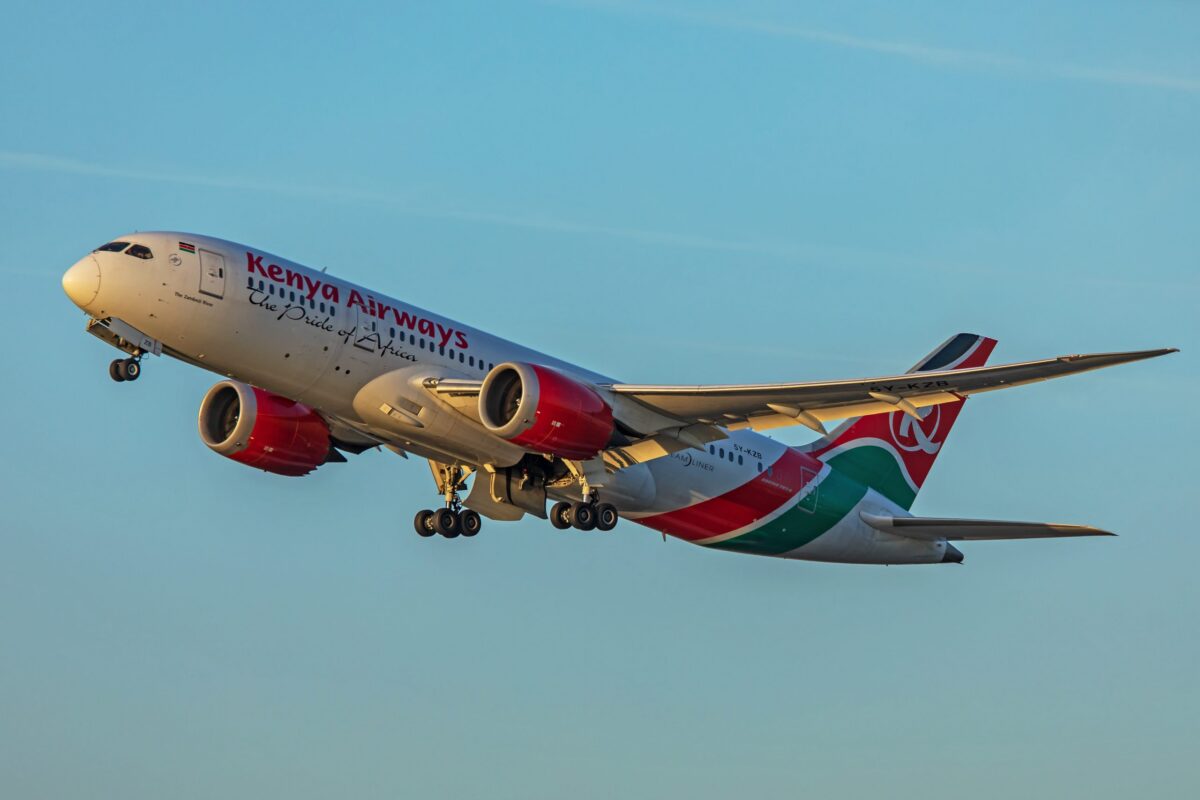
Kenya Airways Leases Embraer Aircraft to Congo Airways, Leverages On New Partnership

Kenya Airways 787
A Kenya Airways Boeing 787 Dreamliner (Photo: AirlineGeeks | William Derrickson)

Kenya Airways and Congo Airways entered into an aircraft leasing agreement that saw Congo Airways begin wet-leasing two Embraer E190 from Kenya Airways on September 15, 2021, actualizing a Memorandum of Understanding (MoU) between Kenya Airways and Congo Airways originally signed on April 2021 in Kinshasa, Congo which was witnessed by Kenya’s President Uhuru Kenyatta and DRC’s President Felix Tshisekedi.

According to CH-Aviation, 5Y-FFM and 5Y-FFL, both Embraer E190 aircraft, were ferried from Nairobi to Kinshasa on September 15 and 16, respectively, and are expected to boost domestic operations and flight frequencies in the Democratic Republic of Congo.

The two aircraft mark the beginning of E190 service at Congo Airways and joins a current fleet of two Dehavilland 8-Q400s and two Airbus A320-200s.

Congo Airways also has two E190-E2s and two E195-E2s on firm order from Embraer. The E190-E1s are scheduled to be delivered in December 2021 and May 2022, while the larger units will deliver in the fourth quarter of 2022.

Congo Airways’ CEO Pascal Kasongo Mwema Mwenda said, “Increased air connectivity will offer more choices to passengers in the DRC and between the two countries. It will also provide better connectivity to international destinations, enabling both countries to fly to a better future and build a resilient aviation industry that can stand the test of time.”

“The Government has reduced fares on domestic routes. The demand became high and Congo Airways needs more capacity,” Director (Cooperation and Cargo) Norbert Sengamali Lukukwa speaking to media outlet ch-aviation.

Part of the strategic partnership between the two carriers, Kenya Airways will offer courses through its Pride Centre and explore the exchange of technical personnel in various areas to ensure skills transfer between the two airlines.

Kenya Airways Group MD and CEO Allan Kilavuka hailed the partnership as the first of many steps in actualizing Pan Africanism by creating a model for cooperation between two African Airlines, which will contribute to Africa’s socioeconomic development.

“KQ is a key player in the aviation space in Africa, and with over 40 years of experience, this is an important step in enhancing cooperation to increase air connectivity and offer greater passenger and cargo options between the two countries,” said CEO Allan Kilavuka.

“The timing of this agreement is correct, considering the severe impact of the COVID-19 pandemic on the aviation industry, as it will increase the utilisation of our aircraft,” he added.

Increased Cargo Operations 

Besides the lease agreements, Kenya Airways commenced direct cargo flights from Johannesburg to Lubumbashi in the DRC.

Speaking about the newly launched cargo direct flights between Johannesburg and Lubumbashi, Kilavuka added that, “Cargo has provided new opportunities in the face of the pandemic, and we are keen to continue building our operations and leveraging partnerships.”

“The enhanced network is built around KQ’s southern Africa operations in Johannesburg and is expected to provide further connections to additional points within the DRC and Africa. This will provide customers with more convenient schedules and capacity at a time when the global industry has suffered capacity shortfall due to the pandemic as well as improve profitability of KQ’s regional freighters on the return sector from Johannesburg,” he explained.

The two airlines will also codeshare on Kenya Airways’ cargo network.

Victor Shalton

Victor Shalton's love for aviation can be traced to when he was 11-years-old. As a seasoned aviation writer, he takes pride in providing the best aviation coverage around the globe and is passionate about advancing his skills in the aviation space. In addition, he loves travelling, writing, arts and while his speaking engagements have taken him around the world, he is proud to call Nairobi home.
Sign-up for newsletters & special offers!

Get the latest stories & special offers delivered directly to your inbox

SUBSCRIBE

Uh-oh! It looks like you're using an ad blocker.

Our website relies on ads to provide free content and sustain our operations. By turning off your ad blocker, you help support us and ensure we can continue offering valuable content without any cost to you.

We truly appreciate your understanding and support. Thank you for considering disabling your ad blocker for this website